

AP GOV WEEK 4 Flashcards
Terms : Hide Images
| 14802902201 | Agenda | A list of potential policy ideas, bills, or plans to improve society | 0 | |
| 14802902202 | Bonds | Securities or government IOUS | 1 | |
| 14802902203 | Discount rate | Interest rate at which the government loans actual dollars to commercial banks | 2 | |
| 14802902204 | Entitlements | Include Social Security, Medicare, Medicaid, block grants, financial aid, food stamps, money owed on bonds, and the government's other contractual obligations | 3 | |
| 14802902205 | Federal Reserve Board | Called the "The Fed", sets monetary policy by buying and selling securities or bonds, regulating money reserves required at commercial banks, and setting interest rates | 4 | |
| 14802902206 | Fiscal policy | Part of economic policy that is concerned with government spending and taxation | 5 | |
| 14802902207 | Flat tax | Taxes citizens at the same rate | 6 | |
| 14802902208 | Inflation | Rising prices and devaluation of the dollar | 7 | |
| 14802902209 | Internal Revenue Service (IRS) | Oversees the tax collection process | 8 | |
| 14802902210 | Mandatory spending | Congress awards cash to individuals, groups, local, those who are legally entitled to these funds | 9 | |
| 14802902211 | Means Test | Test to determine which citizens qualify for aid | 10 | |
| 14802902212 | Medicaid | Provides health insurance coverage for the poorest Americans | 11 | |
| 14802902213 | Medicare | Helps ease the medical costs of seniors over the age of 65 | 12 | |
| 14802902214 | Monetary policy | How the government manages the supply and demand of its currency and the value of the dollar | 13 | |
| 14802902215 | North American Free Trade Agreement (NAFTA) | Lifted trade barriers and removed import taxes between Canada, Mexico, and the USA | 14 | |
| 14802902216 | Patient Protection and Affordable Care Act | Called "Obamacare", an expansion of government regulation of health insurance and making services more affordable | 15 | |
| 14802902217 | Progressive tax | One's tax rate increases, or progresses, as one's income increases | 16 | |
| 14802902218 | Reserve requirement | How much cash commercial banks must keep in their vaults | 17 | |
| 14802902219 | Social Security Act | Government insurance program that required the employed to pay a small contribution via a payroll tax into an insurance fund designed to assist the unemployed needs | 18 | |
| 14802902220 | Social welfare | Support for disadvantaged people to meet their basic needs | 19 | |
| 14802902221 | Supply-side economics | Belief that the govt should leave as much of the money supply as possible with people, letting the laws of the marketplace to govern the market a.k.a. laissez-faire | 20 | |
| 14802902222 | Trade balance | A nation that exports more than it imports has a favorable trade balance. One that imports more than it exports has a trade deficit. The balance between surplus and deficit measures economic success | 21 |
Flashcards
Flashcards
AMSCO AP US History Chapter 4 Flashcards
AMSCO United States History 2015 Edition, Chapter 5 The American Revolution and Confederation, 1774-1787
Terms : Hide Images
| 14497280279 | Intolerable Acts | In 1774, the British Parliament passed the Intolerable Acts, which intensified the conflict between the colonies and Great Britain. (p. 85) |  | 0 |
| 14497280284 | Patrick Henry | Radical delegate from Virginia to the Continental Congress. Radical delegates were those demanding the greatest concessions from Great Britain. (p. 85) |  | 1 |
| 14497280285 | Samuel Adams | Radical delegate from Massachusetts to the Continental Congress. He started Committees of Correspondence. (p. 85) |  | 2 |
| 14497280286 | John Adams | Radical delegate from Massachusetts to the Continental Congress. He had acted as a lawyer for British soldiers involved in the Boston Massacre. (p. 85) |  | 3 |
| 14497280287 | John Dickinson | Moderate delegate from Pennsylvania to the Continental Congress. He wrote "Letters from a Farmer in Pennsylvania". (p. 85) |  | 4 |
| 14497280288 | John Jay | Conservative delegate from New York to the Continental Congress, favored a mild statement of protest. (p. 85) |  | 5 |
| 14497280289 | First Continental Congress | In September 1774, all of the colonies except Georgia sent delegates to a convention in Philadelphia. The purpose was to determine how the colonies should react to the threat to their rights and liberties caused by Intolerable Acts. (p. 85) |  | 6 |
| 14497280290 | Joseph Galloway | Conservative delegate from Pennsylvania to the Continental Congress. He proposed a plan that would have reordered relations with Parliament, but the plan lost by one vote. (p. 86) |  | 7 |
| 14497280291 | Suffolk Resolves | The First Continental Congress adopted this statement. It rejected the Intolerable Acts and called for their repeal. It also urged the colonies to make military preparations and organize boycotts against British goods. (p. 86) |  | 8 |
| 14497280292 | Declaration for Rights and Grievances | The First Continental Congress passed this resolutions urging the king to make right colonial grievances and restore colonial rights. (p. 86) |  | 9 |
| 14497280293 | economic sanctions | In September 1774, the First Continental Congress created the Continental Association, a network of committees to enforce the economic sanctions of the Suffolk Resolves. (p. 86) |  | 10 |
| 14497280294 | Second Continental Congress | In May 1775, representatives met in Philadelphia. They adopted the Declaration of the Causes and Necessities for Taking Up Arms. In July 1775 they sent the Olive Branch Petition to King George III. (p. 87) | | 11 |
| 14497280295 | Olive Branch Petition | In July 1775, the Second Continental Congress tried a last effort for peace. Colonists pledged their loyalty and asked the king to go to Parliament to secure peace and protect their colonial rights. (p. 87) |  | 12 |
| 14497280296 | Declaration of the Causes and Necessities for Taking Up Arms | In May 1775, in Philadelphia, delegates to the Sencond Continental Congress met. This declaration called on all colonies to provide troops to the central government. (p. 87, 128) |  | 13 |
| 14497280297 | Thomas Jefferson | In 1776, he was the primary author of the Declaration of Independence. (p. 88) |  | 14 |
| 14497280298 | Declaration of Independence | This declaration, written by Thomas Jefferson, declared independence and expressed the basic principles of the American revolution. It was ratified on July 4, 1776. (p. 88) |  | 15 |
| 14497280299 | George Washington | Moderate delegate from Virginia to the Continental Congress. In 1775, at the Second Continental Congress he was appointed commander-in chief of a new colonial army and sent to Boston to lead the Massachusetts militia and volunteer units from other colonies. He later became the first president of the United States. (p. 88-89) |  | 16 |
| 14497280300 | Land Ordinance of 1785 | A policy that established surveying and selling of western lands. It was part of the Articles of Confederation. (p. 93) |  | 17 |
| 14497280301 | Northwest Ordinance of 1787 | Created the Northwest Territory (area north of the Ohio River and west of Pennsylvania), established conditions for creating new states. Granted limited self-government and prohibited slavery in the region. (p. 93) |  | 18 |
| 14497280302 | Paul Revere | He warned the militia that the British were coming along with William Dawes at the Battle of Lexington and Concord. (p. 86) |  | 19 |
| 14497280303 | William Dawes | Warned the militia that the British were coming along with Paul Revere at the Battle of Lexington and Concord. (p. 86) |  | 20 |
| 14497280280 | Lexington | On April 18, 1775 British soldiers in Boston marched to this town to seize colonial military supplies. This is where the first shot of the Revolutionary War was fired. (p. 86) |  | 21 |
| 14497280281 | Concord | After the British had marched to Lexington, they marched on to this town to destroy colonial military supplies. (p. 86) |  | 22 |
| 14497280304 | Battle of Bunker Hill | On June 17, 1775 a colonial militia lost this battle to British on the outskirts of Boston. However, the British suffered heavy casualties in this first true battle of the Revolutionary War. (p. 87) |  | 23 |
| 14497280305 | Battle of Saratoga | In October 1777, General John Burgoyne's British forces were defeated by American Generals Horatio Gates and Benedict Arnolds army. This was a turning point of the war because it led to the French joining the war against Great Britain. (p. 90) |  | 24 |
| 14497280306 | George Rogers Clark | In 1778-1789, he led the capture of series of British forts in the Illinois country. (p. 90) |  | 25 |
| 14497280307 | Battle of Yorktown | In 1781, the last major battle of the Revolutionary War was fought on the shores of Chesapeake Bay. Supported by French naval and military forces, Washington's army forced the surrender of a large British army commanded by General Charles Cornwallis. (p. 90) |  | 26 |
| 14497280308 | Articles of Confederation | Adopted by Congress in 1777, it created a central government with limited powers. In 1788, it was was replaced by the Constitution. (p. 91) |  | 27 |
| 14497280309 | unicameral Legislature | The Articles of Confederation established a central government that consisted of just one body, a Congress. In this unicameral (one-house) legislature, each state was given one vote, with at least 9 of 13 votes required to pass important laws. (p. 92) |  | 28 |
| 14497280310 | absolute monarch | Although France had this kind of government, King Louis XVI decided to help the colonies succeed in their rebellion in order to weaken Great Britain. (p. 90) |  | 29 |
| 14497280311 | Prohibitory Act | In August 1775, Britain's King George III agreed to this act passed by Parliament, and declared the colonies were in rebellion. (p. 87) |  | 30 |
| 14497280312 | Treaty of Paris | In 1783, this treaty between Britain and the United States brought an end to the Revolutionary War. It stated that: 1. Britain would recognize the existence of the US. 2. The Mississippi River would be the western border of the US. 3. Americans would have fishing rights off the coast of Canada. 4. Americans would pay debts owed to British merchants and honor Loyalist claims for property confiscated during the war. (p. 91) |  | 31 |
| 14497280282 | Thomas Paine; Common Sense | In January 1776, Thomas Paine wrote this pamphlet that argued in clear and forceful language that the colonies should break with Britain. (p. 88) |  | 32 |
| 14497280313 | Patriots | Most of these soldiers came from New England or Virginia and wanted freedom for the colonies. (p. 88) |  | 33 |
| 14497280283 | Loyalists (Tories) | The pro-British Loyalists, the majority of this group tended to be wealthy and conservative and many were clergy and government officials. (p. 89) |  | 34 |
| 14497280314 | Minutemen | The colonial militia. (p. 86) |  | 35 |
| 14497280315 | Continentals | Paper money issued by Congress which became almost worthless due to inflation. (p. 90) |  | 36 |
| 14497280316 | Abigail Adams | She was the wife of John Adams. During the Revolutionary War, she wrote letters to her husband describing life on the homefront. She urged her husband to remember America's women in the new government he was helping to create. (p. 94) |  | 37 |
| 14497280317 | Deborah Sampson | At the age of 21, she dressed up as a man in order to fight in the Revolutionary War. (p. 94) |  | 38 |
| 14497280318 | Valley Forge | Washington's troops spent the harsh winter of 1777-1778 here after losing Philadelphia to the British. (p. 89) |  | 39 |
| 14497280319 | Mary McCauley (Molly Pitcher) | Also know as Molly Pitcher, she carried water to soldiers during the Battle of Monmouth Court House and took over her husband's gun when he was overcome by heat. (p. 94) |  | 40 |
| 14497280320 | Shay's Rebellion | Daniel Shays led other farmers in this uprising against high state taxes, imprisonment for debt, and lack of paper money. (p. 93) | 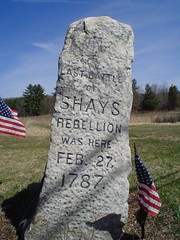 | 41 |
Flashcards
Flashcards
Flashcards
Flashcards
AMSCO AP US History Chapter 28 Flashcards
AMSCO United States History 2015 Edition, Chapter 28 Promise and Turmoil, The 1960s
Terms : Hide Images
| 10489516070 | Election of 1960 | In this election, Democrat John F. Kennedy ran against Republican Richard M. Nixon. Television was perhaps the most decisive factor in this very close race which Kennedy won. (p. 601) |  | 0 |
| 10489516082 | John F. Kennedy | In 1960, this 43 year old senator from Massachusetts appeared more vigorous and comfortable on the first televised debates than Richard Nixon. He won the presidency in a very close election, and was a symbol to many young democrats of the possible change in America. (p. 601) |  | 1 |
| 10489516083 | New Frontier | President Kennedy proposed new domestic programs such as aid to education, federal support of health care, urban renewal, and civil rights. These programs did not become law until many of them passed in the Lyndon Johnson administration. (p. 601) |  | 2 |
| 10489516084 | Jacqueline Kennedy | As first lady in the early 1960s, she brought style, glamor, and appreciation of the arts to the White House. (p. 601) |  | 3 |
| 10489516085 | Robert Kennedy | He was attorney general during his brother John Kennedy's administration. In 1964, he was elected as a senator in New York. In 1968, he decided to enter the presidential race after Eugene McCarthy's strong showing in New Hampshire. On June 5, 1968, he won a major victory in the California Democratic primary but was shot and killed just after his victory speech. (p. 616) |  | 4 |
| 10489516086 | Warren Commission | Chief Justice Earl Warren headed this commission which concluded that Lee Harvey Oswald was the lone assassin in President Kennedy's murder. Many unanswered questions lead to various theories about the assassination. For many Americans, this marked the beginning of the loss of credibility in government. (p. 604) |  | 5 |
| 10489516087 | Peace Corps | In 1961, President Kennedy set up this organization, which recruited young American volunteers to give technical aid to developing countries. (p. 602) |  | 6 |
| 10489516088 | Bay of Pigs | In April 1961, the Central Intelligence Agency (CIA) trained Cuban exiles to attempt the invasion of Cuba and the overthrow of Fidel Castro. The invasion failed and Castro tightened his grip on Cuba. (p. 602) |  | 7 |
| 10489516089 | Berlin Wall | In 1961, the East Germans, with Soviet backing built this wall around West Berlin to stop East Germans from escaping to West Germany. (p. 602) |  | 8 |
| 10489516090 | Cuban missile crisis | In October 1962 the United States discovered that the Soviets were building underground offensive missile sites in Cuba. President Kennedy responded by announcing a naval blockade of Cuba until the missiles were removed. Nuclear war seemed possible until Soviet premier Nikita Khrushchev agreed to remove the missiles in exchange for a pledge that the U.S. would not invade Cuba and the U.S. would remove some missiles from Turkey. (p. 602) |  | 9 |
| 10489516091 | Nuclear Test Ban Treaty | In 1963, the United States and 100 other nations signed this agreement to end the testing of nuclear weapons in the atmosphere. (p. 603) |  | 10 |
| 10489516092 | Lyndon B. Johnson | On November 22, 1963, just two hours after John Kennedy's assassination he took presidential oath of office aboard an airplane at the Dallas airport. In the 1964 presidential election he easily defeated Senator Barry Goldwater. In 1968, he decided to not run for president again. (p. 604) |  | 11 |
| 10489516093 | Great Society | President Lyndon Johnson was determined to expand the social reforms of the New Deal and passed a long list of new programs that would have a lasting effect on American society. (p. 604) |  | 12 |
| 10489516094 | War on Poverty | In 1964, President Johnson declared "an unconditional ________ _____ ____________". This led to his development of the Great Society, which provided government assistance to society's most vulnerable (poor, uneducated, elderly, and handicapped) (p. 604) |  | 13 |
| 10489516071 | Election of 1964 | In this presidential election, Democrats Lyndon Johnson and Hubert Humphrey ran against the very conservative Senator Barry Goldwater of Arizona. Johnson and Humphrey easily won, capturing 61 percent of the popular vote. (p. 605) | | 14 |
| 10489516095 | Barry Goldwater | The Republican presidential candidate in 1964. He was an Arizona Senator who advocated ending the welfare state, including TVA and Social Security. (p. 605) |  | 15 |
| 10489516096 | Medicare | Part of the Great Society, this program provides health insurance program for all people 65 years of age and older. (p. 605) |  | 16 |
| 10489516072 | Medicaid | Part of the Great Society, this program provides funds to states to pay for medical care for the poor and disabled. (p. 605) | 17 | |
| 10489516073 | DOT and HUD | President Lyndon Johnson established the Department of Transportation (DOT) and the Department of Housing and Urban Development (HUD). (p. 606) |  | 18 |
| 10489516097 | Unsafe at Any Speed | Ralph Nader's 1965 book lead Congress to pass automobile industry regulations that would save thousands of lives, including the use of seat belts. (p. 606) |  | 19 |
| 10489516098 | Silent Spring | Rachel Carson's 1962 book exposed the use of pesticides and would lead Congress to pass clean air and water laws. (p. 606) |  | 20 |
| 10489516099 | Lady Bird Johnson | This first lady contributed to improving the environment with her Beautify America campaign which lead to the Highway Beautification Act. (p. 606) |  | 21 |
| 10489516100 | Civil Rights Act of 1964 | This act made segregation illegal in all public facilities and gave the federal government additional powers to enforce school desegregation. (p. 606) |  | 22 |
| 10489516101 | Equal Employment Opportunity Commission | This agency was created to end discrimination in employment on the basis of race, religion, sex, or national origin. (p. 606) |  | 23 |
| 10489516102 | 24th Amendment | In 1964, this amendment abolished the practice of collecting a poll tax, one of the measures that discouraged poor people from voting. (p. 606) |  | 24 |
| 10489516103 | Voting Rights Act of 1965 | In 1965, this act ended literacy tests and provided federal registrars in areas in which blacks were kept from voting. (p. 606) |  | 25 |
| 10489516104 | James Meredith | In 1962, a young African American air force veteran who attempted to enroll in the University of Mississippi. President Kennedy sent 400 federal marshals and 3,000 troops to protect his rights to attend the university. (p. 607) |  | 26 |
| 10489516105 | George Wallace | Dixiecrat governor of Alabama who tried to personally prevent blacks from attending University of Alabama. In 1968, he was the American Independent party presidential candidate. The growing hostility of many whites to federal desegregation, antiwar protests, and race riots was tapped by his campaign. (p. 616) |  | 27 |
| 10489516106 | Martin Luther King Jr. | Leader of SLCC and one of the most famous figures of the civil rights movement. He promoted the idea of non-violent protest. In August 1963, he led 200,000 people in a peaceful March on Washington. (p. 607) |  | 28 |
| 10489516107 | March on Washington | In August 1963, Dr. Martin Luther King led one of the largest and most the successful demonstrations in U.S. history when about 200,000 blacks and whites took part in this peaceful march. The highlight was Dr. King's famous "I Have a Dream Speech" at the Lincoln Memorial. (p. 607) |  | 29 |
| 10489516074 | March to Montgomery | In 1965, this was a voting rights march from Selma Alabama to the capitol in Montgomery. Television showed protesters being beaten and tear gassed and the march was a turning point in the civil rights movement. President Johnson sent federal troops to protect the marchers. (p. 607) |  | 30 |
| 10489516108 | Malcom X | One of the most significant figures in the civil rights movement, he began as a member of the Black Muslims, although later separated from the group. He criticized Martin Luther King as "an Uncle Tom" and advocated self-defense against white violence. (p. 608) |  | 31 |
| 10489516109 | Student Nonviolent Coordinating Committee | This civil rights organization of young blacks, influenced by Malcolm X, repudiated non-violence and advocated "black power" and racial separatism. (p. 608) |  | 32 |
| 10489516110 | Congress of Racial Equality | This civil rights organization of young blacks was influenced by Malcolm X. (p. 608) |  | 33 |
| 10489516111 | Stokely Carmichael | The leader of the Student Nonviolent Coordinating Committee (SNCC) repudiated non-violence and advocated "black power" and racial separatism. (p. 608) |  | 34 |
| 10489516112 | Black Panthers | In 1966, this organization was founded by Huey Newton, Bobby Seale and other militants as a revolutionary socialist movement advocating self-rule for American blacks. (p. 608) |  | 35 |
| 10489516113 | Watts riot | In the summer of 1965 the arrest of a black motorist in the Watts neighborhood of Los Angeles led to a six-day riot that resulted in the deaths of 34 people and the destruction of 700 buildings. (p. 608) |  | 36 |
| 10489516075 | de facto segregation | Segregation and discrimination caused by racists attitudes in the North and the West. This is segregation that is considered a social rule or norm, although not actually a law. (p. 608) |  | 37 |
| 10489516114 | Warren Court | The Supreme Court under Earl Warren. It had an impact on the nation comparable to that of the John Marshall Court. (p. 609) |  | 38 |
| 10489516115 | Gideon v. Wainwright | In 1966, this Supreme Court case ruled that that state courts must provide counsel for poor defendants. (p. 609) |  | 39 |
| 10489516116 | Miranda v. Arizona | In 1966, the Supreme Court extended the ruling in Escobedo to include the right to a lawyer being present during questioning by the police. (p. 609) |  | 40 |
| 10489516117 | Engel vs. Vitale | In 1962, the Supreme Court ruled that state laws requiring prayers and Bible readings in the public schools violated the first amendments provision for separation of church and state. (p. 610) | 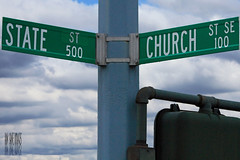 | 41 |
| 10489516076 | Griswold v. Connecticut | In 1965, the Supreme Court ruled that in recognition of a citizen's right to privacy, a state could not prohibit the use of contraceptives by adults. (p. 610) |  | 42 |
| 10489516118 | counterculture | Expressed by young people in their rebellious styles of dress, music, drug use, and for some, communal living. (p. 611) |  | 43 |
| 10489516077 | Woodstock | In the summer of 1969, about 500,000 million young people descended on upper New York State farm for what turned into a free music festival. In the early morning hours of the last day Jimi Hendrix played his jaw dropping version of the "Stars Spangled Banner" featuring amplifier feedback to convey bombs falling, jets overhead, and cries of human anguish. (p. 611) |  | 44 |
| 10489516078 | Alfred Kinsey | In the late 1940s he did pioneering surveys of sexual practice. (p. 611) |  | 45 |
| 10489516119 | sexual revolution | One aspect of counterculture that continued beyond the 1960s was a change in many Americans' attitudes toward sexual expression. (p. 611) |  | 46 |
| 10489516120 | women's movement | The increased education and employment of women in the 1950s, the civil rights movement, and the sexual revolution all contributed to a renewal of this movement in the 1960s. (p. 612) |  | 47 |
| 10489516121 | The Feminine Mystique | Betty Friedan gave the women's movement a new direction by encouraging middle-class women to seek fulfillment in professional careers rather than confining themselves to the roles of wife, mother, and homemaker. She wrote about the "unsaid problem" in her famous book which included letters from unsatisfied housewives. (p. 612) |  | 48 |
| 10489516122 | National Organization for Women | In 1966, this organization was formed. They adopted activist tactics of other civil rights movements to secure equal treatment of women, especially for job opportunities and pay. (p. 612) |  | 49 |
| 10489516123 | Equal Pay Act | In 1963, this act prohibited discrimination in employment and compensation on the basis of gender. (p. 612) |  | 50 |
| 10489516124 | Equal Rights Amendment (ERA) | This proposed constitutional amendment stated that "equality of rights under the law shall not be denied or abridged by the United States or by any state on account of sex". It just missed being passed. (p. 612) |  | 51 |
| 10489516125 | Gulf of Tonkin Resolution | In 1964, North Vietnamese gunboats allegedly fired on U.S. warships off the coast of Vietnam. Congress gave approval for President Johnson to wage war in Vietnam. (p. 613) |  | 52 |
| 10489516079 | credibility gap | The media's term for President Johnson's reluctance to speak frankly with the American people about the scope and costs of the Vietnam war. (p. 614) |  | 53 |
| 10489516126 | Tet Offensive | In January 1968, the Vietcong (North Vietnam troops) launched an all-out surprise attack on almost every provincial capital and American base in South Vietnam. The U.S. military counterattacked and recovered the lost territory. However, the destruction viewed on television in the United States, appeared as a setback for the U.S. efforts. (p. 615) |  | 54 |
| 10489516127 | hawks and doves | Hawks believed that the Vietnam War was part of a Soviet-backed Communist master plan to conquer all of Southeast Asia. Doves believed it was a civil war, fought by Vietnamese nationalists and some Communists who wanted to unite their country by overthrowing a corrupt Saigon government. (p. 615) |  | 55 |
| 10489516080 | Chicago Riots | The 1968 Democratic Convention was held in this city. Television showed what looked like a "police riot" as antiwar protesters were brutally beaten. (p. 616) |  | 56 |
| 10489516081 | Richard Nixon | He served as vice president under Eisenhower from 1953 to 1960. He was nominated as the Republican candidate for president in 1960, but lost the close election to John Kennedy. In 1968 he was elected president, and again in 1972. However, he was forced to resign the presidency in 1974. (p. 600) | 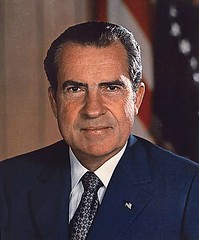 | 57 |
Pages

Need Help?
We hope your visit has been a productive one. If you're having any problems, or would like to give some feedback, we'd love to hear from you.
For general help, questions, and suggestions, try our dedicated support forums.
If you need to contact the Course-Notes.Org web experience team, please use our contact form.
Need Notes?
While we strive to provide the most comprehensive notes for as many high school textbooks as possible, there are certainly going to be some that we miss. Drop us a note and let us know which textbooks you need. Be sure to include which edition of the textbook you are using! If we see enough demand, we'll do whatever we can to get those notes up on the site for you!
