

Flashcards
Flashcards
AP Language Flashcards
Terms : Hide Images
| 13721456915 | Rhetoric | the art of effective or persuasive speaking or writing, especially with the use of figures of speech and other compositional techniques. (The very act of defending has itself been a central part of rhetoric). |  | 0 |
| 13721456916 | Bombastic | High sounding but with little meaning; inflated;grandiloquent. |  | 1 |
| 13721456917 | Ethos | Appeal based on the character of speaker. Meaning convincing someone of the character or credibility of the persuader (speaker). |  | 2 |
| 13721456918 | Logos | An appeal to logic or reason. For example scholarly documents. |  | 3 |
| 13721456919 | Pathos | Appeal on emotion. The quality that evokes pity or sadness. |  | 4 |
| 13721456920 | Capricious | Impulsive; unpredictable. Sudden and unaccountable changes of mood or behavior. |  | 5 |
| 13721456921 | Tone | Writer's attitude, mood or moral outlook toward the subject and/or the readers. |  | 6 |
| 13721456922 | Appeal | the power of arousing a sympathetic response, to arouse a sympathetic response. |  | 7 |
| 13721456923 | Argument | Discourse intended to persuade; process of reasoning; exchange of diverging/ opposite views. |  | 8 |
| 13721456924 | Colloquialism (Colloquial) | a word or phrase that is not formal or literary. It is still used in literature to provide a sense of actual conversation and the use of pronunciation, grammar, and vocabulary of everyday speech. |  | 9 |
| 13721456925 | Connotation | and idea or feeling that a word evokes in addition to its literal or primary meaning. Words imply or suggest qualities, attributes, and characteristics. |  | 10 |
| 13721456926 | Apathy | lack of interest, enthusiasm or concern. No emotion |  | 11 |
| 13721456927 | Dialect | A variety of language confined to a region or group, manner or means of expressing oneself. |  | 12 |
| 13721456928 | Understatement | Statement which says less than is really meant. Opposite of hyperbole. Made smaller, worse, or less important than really is. Minimizing. |  | 13 |
| 13721456929 | Hyperbole | Deliberate and obvious exaggeration for effect. |  | 14 |
| 13721456930 | Anecdote | a short and amusing or interesting story about a real person or incident. | 15 | |
| 13721456931 | Condescending | Having or feeling superior. patronizing or assuming superiority. |  | 16 |
| 13721456932 | Voice | An authors distinctive literary style, basic vision and general attitude toward the world. Revealed through the use of Syntax, Diction, Punctuation, Characterization, and Dialogue. |  | 17 |
| 13721456933 | Syntax | Sentence construction |  | 18 |
| 13721456934 | Diction | Author's choice of words. Distinctive vocabulary. |  | 19 |
| 13721456935 | Assertion | A confident and forceful statement of fact or belief. A declaration that's made em pathetically in an argument as it to be understood as a statement of fact. |  | 20 |
| 13721456936 | Cogent | (of an argument or case) clear, logical, and convincing. |  | 21 |
| 13721456937 | Coherent | (of an argument, theory, or policy) logical and consistent |  | 22 |
| 13721456938 | Cohesive | characterized by or causing cohesion (act or state of being uniting, cohering, or sticking together). |  | 23 |
| 13721456939 | Didactic | intended to teach, particularly in having moral instruction as an ulterior motive. |  | 24 |
| 13721456940 | Discourse | written or spoken communication or debate. (verb) speak or write authoritatively about a topic. |  | 25 |
| 13721456941 | Eloquence | fluent or persuasive speaking or writing. |  | 26 |
| 13721456942 | Fluid | able to flow easily. | 27 | |
| 13721456943 | implication | the conclusion that can be drawn from something, although it is not explicitly stated. |  | 28 |
| 13721456944 | lucid | expressed clearly; easy to understand |  | 29 |
| 13721456945 | rhetor | a teacher of rhetoric |  | 30 |
| 13721456946 | Arbiter | a person who settles a dispute or has ultimate authority in a matter |  | 31 |
| 13721456947 | Biased | unfairly prejudiced for or against something or someone. |  | 32 |
| 13721456948 | Exculpate | show or declare that (someone) is not guilty of wrongdoing |  | 33 |
| 13721456949 | Impartial | treating all rivals or disputants equally; fair and just. |  | 34 |
| 13721456950 | Incontrovertible | not able to be denied or disputed. |  | 35 |
| 13721456951 | Integrity | the quality of being honest and having strong moral principles; moral uprightness. | 36 | |
| 13721456952 | Objectivity | the quality of being objective; justice; neutrality | 37 | |
| 13721456953 | Plausible | (of an argument or statement) seeming reasonable or probable. | 38 | |
| 13721456954 | Substantiated | provide evidence to support or prove that truth of. |  | 39 |
| 13721456955 | vindicated | clear (something) of blame or suspicion. |  | 40 |
| 13721456956 | Condescending | Having or feeling superior. patronizing or assuming superiority. | 41 | |
| 13721456957 | Contemptuous | showing contempt; scornful |  | 42 |
| 13721456958 | Despotic | of, relating to, or characteristics of a despot (ruler with total power; usually unfair) |  | 43 |
| 13721456959 | Dictatorial | of or typical of a ruler with total control |  | 44 |
| 13721456960 | Disdain | the feeling that someone or something is unworthy of one's consideration or respect; contempt. |  | 45 |
| 13721456961 | Haughty | arrogantly superior and disdainful. |  | 46 |
| 13721456962 | Imperious | assuming power or authority without justification; arrogant and domineering. |  | 47 |
| 13721456963 | Patronizing | treat with an apparent kindness that betrays a feeling of superiority. |  | 48 |
| 13721456964 | Listless | lacking energy or enthusiasm. |  | 49 |
| 13721456965 | Melancholy | a feeling of pensive sadness, typically with no obvious cause. |  | 50 |
| 13721456966 | Torpor | a state of physical or mental inactivity |  | 51 |
| 13721456967 | alliance | a relationship based on an affinity in interests, nature, or qualities. |  | 52 |
| 13721456968 | disparity | a great difference, imbalance. |  | 53 |
| 13721456969 | impinge | have an affect or impact, especially a negative one. Influence. | 54 | |
| 13721456970 | Paradox | a state or proposition that, despite reasoning, leads to a conclusion that seems senseless, logically unacceptable, self-contradictory. |  | 55 |
| 13721456971 | allusion | an expression to call something to mind without mentioning it exactly; an indirect or passing reference. | 56 | |
| 13721456972 | parallelism | the act of being parallel or corresponding in some way. |  | 57 |
| 13721456973 | indolent | wanting to avoid activity or exertion; lazy. |  | 58 |
| 13721456974 | insipid. | lacking flavor, vigor or interest. |  | 59 |
| 13721456975 | lament | a passionate expression or grief or sorrow. |  | 60 |
| 13721456976 | Sanction | a threatening penalty for disobeying a law or rule |  | 61 |
| 13721456977 | servile | having or showing an excessive willingness to serve or please others. |  | 62 |
| 13721456978 | suppressed | forcibly to an end to. |  | 63 |
| 13721456979 | Embellish | make (something) more attractive by the addition of decorative details or features. |  | 64 |
| 13721456980 | florid | having a red or flushed complexion | 65 | |
| 13721456981 | opulent | ostentatiously rich and luxurious or lavish |  | 66 |
| 13721456982 | ornate | made in an intricate shape or decorated with complex patterns. |  | 67 |
| 13721456983 | ostentatious | characterized by vulgar or pretentious display; designed to impress or attract notice. |  | 68 |
| 13721456984 | poignant | evoking a keen sense or sadness or regret. |  | 69 |
| 13721456985 | Ebullience | the quality of being cheerful and full of energy; exuberance. |  | 70 |
| 13721456986 | effusive | expressing feelings of gratitude, pleasure, or approval in an unrestrained or heartfelt manner. | 71 | |
| 13721456987 | egregious | outstandingly bad; shocking. | 72 | |
| 13721456988 | frenetic | fast and energetic in a rather wild and uncontrolled way. |  | 73 |
| 13721456989 | gratuitous | uncalled for; lacking good reason; unwarranted |  | 74 |
| 13721456990 | flagrant | (of something considered wrong or immoral) conspicuously or obviously offensive | 75 | |
| 13721456991 | superfluous | unnecessary, especially through being more than enough. |  | 76 |
| 13721456992 | convoluted | extremely complex and difficult to follow (especially or a story, sentence, or argument). | 77 | |
| 13721456993 | cryptic | having a meaning that is mysterious or obscure |  | 78 |
| 13721456994 | Obscure | uncertain; not discovered or know about. |  | 79 |
| 13721456995 | futile | incapable of producing any useful result; pointless. |  | 80 |
| 13721456996 | impede | delay or prevent by obstructing them; hinder. |  | 81 |
| 13721456997 | quandary | a state of perplexity or uncertainty over what what to do in a difficult situation. |  | 82 |
| 13721456998 | alleviate | make (suffering or a problem) less severe. |  | 83 |
| 13721456999 | asylum | the protection granted by a nation to someone who has left their native country as a political refugee. ( or it can be a mental hospital). |  | 84 |
| 13721457000 | auspicious | conductive to success; favorable. |  | 85 |
| 13721457001 | benevolent | well meaning and kindly | 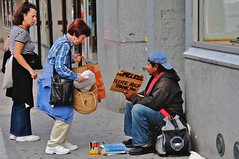 | 86 |
| 13721457002 | benign | gentle, kindly. |  | 87 |
| 13721457003 | Mollify | appease the anger or anxiety of (someone) |  | 88 |
| 13721457004 | reclamation | reclaiming; reformation, recovery. (or it can be land obtained from water) | 89 | |
| 13721457005 | Sanction | Approval or permission for an action |  | 90 |
| 13721457006 | Dubious | Not to be relied upon; suspect (hesitating or doubting) |  | 91 |
| 13721457007 | Fabricated | invent or concoct (something), typically with deceitful intent | 92 | |
| 13721457008 | Hypocrisy | the practice of claiming to have moral standards or beliefs to which one's own behavior does not conform; pretense |  | 93 |
| 13721457009 | Slander | make false and damaging statements about (someone). |  | 94 |
| 13721457010 | spurious | not being what it purports to be; false or fake |  | 95 |
| 13721457011 | Astute | having or showing an ability to accurately assess situations or people and turn this to one's advantage |  | 96 |
| 13721457012 | clandestine | operation is an intelligence or millitary operation carried out in such a way that the operation goes unnoticed by the general population |  | 97 |
| 13721457013 | disingenuous | not candid or sincere, typically by pretending that one knows less about something than one really does. |  | 98 |
| 13721457014 | ruse | an action intended to deceive someone; a trick |  | 99 |
| 13721457015 | stratagem | a plan or scheme, especially one used to outwit an opponent or achieve an end |  | 100 |
| 13721457016 | surreptitious | kept secret, especially because it would not be approved of. |  | 101 |
| 13721457017 | wary | feeling or showing caution about possible dangers or problems |  | 102 |
| 13721457018 | wily | skilled at gaining an advantage, especially deceitfully. |  | 103 |
| 13721457019 | inconsequential | not important or significant |  | 104 |
| 13721457020 | superficial | existing or occurring at or on the surface. (appearing to be true or real only until examined more closely). | 105 | |
| 13721457021 | tenuous | very weak or slight >( small in degree). |  | 106 |
| 13721457022 | trivial | of little value or importance |  | 107 |
| 13721457023 | coup | a sudden, violent, and illegal seizure of power from a government. |  | 108 |
| 13721457024 | Ambiguous | (of language) open to more than one interpretation; having a double meaning. |  | 109 |
| 13721457025 | ambivalent | having mixed feelings or contradictory ideas about something or someone. |  | 110 |
| 13721457026 | apathetic | showing or feeling no interest, enthusiasm, or concern. |  | 111 |
| 13721457027 | Arbitrary | based on random choice or personal whim, rather than any reason or system. | 112 | |
| 13721457028 | capricious | given to sudden and unaccountable changes of mood or behavior | | 113 |
| 13721457029 | equivocate | use ambiguous language so as to conceal the truth or avoid committing oneself. |  | 114 |
| 13721457030 | indifferent | having no particular interest or sympathy; unconcerned. | | 115 |
| 13721457031 | whimsical | playfully quaint or fanciful, especially in an appealing and amusing way |  | 116 |
| 13721457032 | assiduous | showing great care and perseverance |  | 117 |
| 13721457033 | compelling | evoking interest, attention, or admiration in a powerfully irresistible way |  | 118 |
| 13721457034 | diligent | having or showing care and conscientiousness in one's work or duties |  | 119 |
| 13721457035 | dogged | having or showing tenacity and grim persistence. |  | 120 |
| 13721457036 | endure | suffer (something painful or difficult) patiently |  | 121 |
| 13721457037 | intrepid | fearless; adventurous (often used for rhetorical or humorous effect) |  | 122 |
| 13721457038 | maverick | an unorthodox or independent-minded person |  | 123 |
| 13721457039 | obdurate | stubbornly refusing to change one's opinion or course of action |  | 124 |
| 13721457040 | obstinate | stubbornly refusing to change one's opinion or chosen course of action, despite attempts to persuade one to do so |  | 125 |
| 13721457041 | proliferate | increase rapidly in numbers; multiply |  | 126 |
| 13721457042 | tenacity | the quality or fact of being able to grip something firmly; grip. |  | 127 |
| 13721457043 | vitality | the state of being strong and active; energy | 128 | |
| 13721457044 | assimilation | the process by which a person or a group's language and/or culture come to resemble those of another group |  | 129 |
| 13721457045 | consensus | general agreement. |  | 130 |
| 13721457046 | context | the set of facts or circumstances that surround a situation. | 131 | |
| 13721457047 | derived | obtain something from (a specified source) | 132 | |
| 13721457048 | incumbent | necessary for (someone) as a duty or responsibility. |  | 133 |
| 13721457049 | inevitable | certain to happen; unavoidable |  | 134 |
| 13721457050 | malleable | easily influenced; pliable |  | 135 |
| 13721457051 | subdue | overcome, quieten, or bring under control (a feeling or person) |  | 136 |
| 13721457052 | Inoculate | medical : to give (a person or animal) a weakened form of a disease in order to prevent infection by the disease | 137 | |
| 13721457053 | Lurid | : causing shock or disgust : involving sex or violence in a way that is meant to be shocking : shining or glowing with a bright and unpleasant color | 138 | |
| 13721457054 | Putrefying | to be slowly destroyed by natural processes : to rot and become putrid | 139 | |
| 13721457055 | Somnolent | 1 : of a kind likely to induce sleep 2 a : inclined to or heavy with sleep : drowsy | 140 | |
| 13721457056 | Dour | serious and unfriendly : silent and gloomy | 141 | |
| 13721457057 | Errant | serious and unfriendly : silent and gloomy | 142 | |
| 13721457058 | Bewildered | 1 : to cause to lose one's bearings 2 : to perplex or confuse especially by a complexity, variety, or multitude of objects or considerations | 143 | |
| 13721457059 | Astroturfed | —used for an artificial surface that resembles grass | 144 | |
| 13721457060 | Geriatric | An old person y | 145 | |
| 13721457061 | Tromped | 1 : tramp 1
2 : to step hard : stamp | 146 | |
| 13721457062 | Connoisseur | : a person who knows a lot about something (such as art, wine, food, etc.) : an expert in a particular subject | 147 | |
| 13721457063 | Attesting | to show, prove, or state that something is true or real | 148 | |
| 13721457064 | Soporific | : causing a person to become tired and ready to fall asleep | 149 |
Flashcards
Flashcards
APES Unit 4 Flashcards
Terms : Hide Images
| 15972732336 | ecosystem diversity | variety of ecosystems | 0 | |
| 15941185159 | species diversity | variety of species in a given ecosystem | 1 | |
| 15941185160 | genetic diversity | variety of genes with in a species | 2 | |
| 15941257361 | species | A group of similar organisms that can breed and produce fertile offspring. | 3 | |
| 15941446816 | species richness | the number of different species in a community | 4 | |
| 15941449518 | species evenness | relative abundance of each species | 5 | |
| 15941466021 | phylogeny | branching pattern of evolutionary relations that indicate how closely related they are -morphology -behavior -genetics | 6 | |
| 15941470405 | ecological succession | the predictable replacement of one group of species by another group of species over time | 7 | |
| 15941470406 | primary succession | succession that occurs on surfaces where no soil exists | 8 | |
| 15941484285 | secondary succession | succession that starts with soil | 9 | |
| 15941505408 | pioneer species | first species to populate an area during succession | 10 | |
| 15941507553 | climax community | a stable community that no longer goes through major ecological changes doesnt truly exist | 11 | |
| 15941512534 | island biogeography | •dispersing species are more likely to find larger>smaller habitats •at any latitude, larger habitats support more species and larger populations •larger habitats contain a wider range of environ conditions and in therefore more niches and greater opportunity for speciation | 12 | |
| 15941556836 | evolution | a change in the genetic composition of a population over time | 13 | |
| 15941560724 | microevolution | evolutionary change within a species or small group of organisms, especially over a short period. | 14 | |
| 15941563265 | macroevolution | large-scale evolutionary changes that take place over long periods of time give rise to new species | 15 | |
| 15941563266 | genes | the biochemical units of heredity that make up the chromosomes; a segment of DNA | 16 | |
| 15941597859 | phenotype | actual set of traits physically expressed | 17 | |
| 15941597860 | genotype | complete set of genes in an individual | 18 | |
| 15941600430 | mutation | a random error in gene replication that leads to a change | 19 | |
| 15941600431 | recombination | the genetic process by which one chromosome breaks off and attaches to another chromosome during reproductive cell division produces novel traits | 20 | |
| 15941604900 | artificial selection | human breeding of organisms with specific traits in order to produce offspring with identical traits. | 21 | |
| 15941644053 | natural selection | the environment determines which organisms (and therefore traits) survive | 22 | |
| 15941647488 | fitness | ability to survive and reproduce | 23 | |
| 15941647489 | adaptations | traits that improve fitness | 24 | |
| 15941668125 | gene flow | process by which individuals move from one population to another and alter the genetic composition of both | 25 | |
| 15941668126 | genetic drift | A change in the gene pool of a population due to chance | 26 | |
| 15941729233 | bottleneck effect | a reduction in the genetic diversity of a population caused by a reduction in its size higher risk of extinction | 27 | |
| 15941821215 | extinction | A term that typically describes a species that no longer has any known living individuals. | 28 | |
| 15941825900 | founder effect | change in genetic composition due to a small number of colonizers moving | 29 | |
| 15941858265 | geographic isolation | physical separation of a group from others of the same species | 30 | |
| 15941858266 | allopatric isolation | The process of speciation that occurs in geographic isolation | 31 | |
| 15949933064 | reproductive isolation | Separation of species or populations so that they cannot interbreed | 32 | |
| 15949934822 | sympatric speciation | the evolution of one species into two, without geographic isolation | 33 | |
| 15950260851 | genetically modified organisms; gmo | scientists copy genes of desired traits and insert them to make ... | 34 | |
| 15950265308 | range of tolerance | the limits to the abiotic conditions that a species can tolerate | 35 | |
| 15950272013 | fundamental niche | The suite of abiotic conditions under which a species can survive, grow, and reproduce | 36 | |
| 15950272014 | realized niche | the range of abiotic and biotic conditions under which a species actually lives | 37 | |
| 15950274882 | distribution | areas of the world in which a species lives | 38 | |
| 15950274883 | niche generalists | a species that can live under a wide range of abiotic or biotic conditions | 39 | |
| 15950276645 | niche specialists | a species that is specialized to live in a specific habitat or to feed on a small group of species more vulnerable to environmental change | 40 | |
| 15970542009 | mass extinction | event in which many types of living things become extinct at the same time | 41 | |
| 15970542010 | sixth mass extinction | current mass extinction caused primarily by habitat loss due to human actions | 42 | |
| 15970551808 | Marine Mammal Protection Act | prohibits the killing of all marine mammals in the U.S. and prohibits the import or export of any marine mammal body parts. | 43 | |
| 15970551809 | endangered species | A species whose numbers are so small that the species is at risk of extinction | 44 | |
| 15970554995 | threathened species | a species that is likely to become endangered in the foreseeable future | 45 | |
| 15970554996 | CITES | agreement to ban/limit trade in endangered species | 46 | |
| 15970564939 | Convention on Biological Diversity | An international treaty to help protect biodiversity | 47 | |
| 15970564940 | edge habitat | A habitat that occurs where two different communities come together, typically forming an abrupt transition | 48 | |
| 15970570761 | biosphere reserves | protected areas consisting of zones that vary in the amount of permissible human impact | 49 | |
| 15970570762 | core zone | no human activity allowed best biodiversity | 50 | |
| 15970573651 | buffer zone | area of a reserve that is minimally impacted by humans | 51 | |
| 15970573652 | transition zone | area of reserve where human activity progresses like normal | 52 | |
| 15970577485 | Paine's experiment | hypothesis: if the starfish is removed then the ecosystem will collapse independent: presence of starfish dependent: ecosystem diversity experimental: the tide pool without starfish control: the natural tide pool results: saw the ecosystem collapse and become a mussel monoculture | 53 | |
| 15995424225 | 78 | __% of earth's atmosphere is nitrogen | 54 | |
| 15995431682 | Trophosphere | layer of Earth's atmosphere closest to Earth's surface where weather takes place and where most pollution occurs | 55 | |
| 15995448166 | stratosphere | 2nd layer of atmosphere; extends from 10 to 30 miles up; location of ozone layer; absorbs 95% of Ultraviolet radiation; temperature increases with altitude increase. | 56 | |
| 15995458283 | mesosphere | 3rd + coldest layer of the atmosphere | 57 | |
| 15995464658 | Thermosphere | The uppermost layer of the atmosphere, in which temperature increases as altitude increases | 58 | |
| 15995473102 | Albedo | Ability of a surface to reflect light | 59 | |
| 15995478080 | equator | region of the earth where the sun hits at the most direct angle | 60 | |
| 15995537538 | rises | warm air ____ | 61 | |
| 15995562149 | sinks | cold air ____ | 62 | |
| 15995572621 | intertropical convergence zone; itcz | The latitude that receives the most intense sunlight, which causes the ascending branches of the two Hadley cells to converge | 63 | |
| 15995576578 | hadley cells | a large-scale atmospheric convection cell in which air rises at the equator and sinks at medium latitudes, typically about 30° north or south. | 64 | |
| 15995589925 | Coriolis effect | Causes moving air and water to turn left in the southern hemisphere and turn right in the northern hemisphere due to Earth's hemisphere. | 65 | |
| 15995660551 | gyres | A large-scale pattern of water circulation that moves clockwise in the Northern Hemisphere and counterclockwise in the Southern Hemisphere | 66 | |
| 15995666296 | upwelling | the upward movement of ocean water toward the surface as a result of diverging currents | 67 | |
| 15995669684 | downwelling | The movement of water from the surface to greater depths. | 68 | |
| 15995674933 | thermohaline circulation | a worldwide current system in which warmer, fresher water moves along the surface; and colder, saltier water moves deep beneath the surface | 69 | |
| 15995693987 | El Nino | an irregularly occurring and complex series of climatic changes affecting the equatorial Pacific region and beyond every few years, characterized by the appearance of unusually warm, nutrient-poor water | 70 | |
| 15995707898 | la nina | A climate event in the eastern Pacific Ocean in which surface waters are colder than normal. | 71 | |
| 15995711271 | windward side | side of the mountain where rain and other weather are expected | 72 | |
| 15995714076 | leeward side | side of mountain that gets very little precipitation and can be desert like | 73 | |
| 15995729112 | rainshadow effect |  | 74 | |
| 15995736316 | rain shadow | A dry area on the downwind side of a mountain. | 75 | |
| 15995739204 | Permafrost | permanently frozen layer of soil beneath the surface of the ground | 76 |
AP Macroeconomics Unit 1 Flashcards
Terms : Hide Images
| 14968572856 | economics | the study of how people try to satisfy seemingly unlimited wants with limited resources; the study of how society allocates scarce resources | 0 | |
| 14968572857 | factors of production | inputs or resources that go into the production function to produce goods and services: land, labor, capital, entrepreneurship | 1 | |
| 14968572858 | inputs | resources such as people, raw materials, energy, information, or finance that are put into a system (such as an economy, manufacturing plant, computer system) to obtain a desired output. Inputs are classified under costs in accounting. | 2 | |
| 14968572859 | capital | resources (buildings, machinery, and equipment) used to produce goods and services; also called investment goods. | 3 | |
| 14968572860 | microeconomics | portion of economics concerned with the individual elements that make up the economy; households, firms, government, and resource input prices | 4 | |
| 14968572861 | macroeconomics | the portion of economics concerned with the overall performance of the economy; focused on aggregate demand-aggregate supply relationship, and the resultant output, income, employment, and price levels | 5 | |
| 14968572862 | positive economics | (as opposed to normative economics) is the branch of economics that concerns the description and explanation of economic phenomena. It focuses on facts and cause-and-effect behavioral relationships and includes the development and testing of economics theories. | 6 | |
| 14968572863 | normative economics | (as opposed to positive economics) is a part of economics that expresses value or normative judgments about economic fairness or what the outcome of the economy or goals of public policy ought to be. | 7 | |
| 14968572864 | ceteris paribus | with other conditions remaining the same. | 8 | |
| 14968572866 | scarcity | the imbalance between limited productive resources and unlimited human wants | 9 | |
| 14968572867 | opportunity cost | the value of the sacrifice made to pursue a course of action | 10 | |
| 14968572869 | Production possibilities | the different quantities of goods that an economy can produce with a given amount of scarce resources |  | 11 |
| 14968572871 | law of increasing opportunity cost | the principle that as the production of a good increases, the opportunity cost of producing an additional unit rises. | 12 | |
| 14968572870 | constant costs | an industry in which the ratio comparing units produced to production cost per unit remains the same regardless of industry volume or demand growth. This supply-curve equilibrium occurs when input costs do not increase in response to increased demand. | 13 | |
| 14968572872 | absolute advantage | the ability to produce more of a good than all other producers | 14 | |
| 14968572873 | comparative advantage | the ability to produce a good at lower opportunity cost than all other producers | 15 | |
| 14968572874 | specialization | production of goods, or performance of tasks, based upon comparative advantage | 16 | |
| 14968572875 | terms of trade | the ratio of an index of a country's export prices to an index of its import prices. | 17 | |
| 14968572876 | Demand | the quantity of a good or service that buyers wish to buy at various prices |  | 18 |
| 14968572877 | law of demand | all else equal, when the price of a good rises, the quantity demanded of that good falls | 19 | |
| 14968572878 | quantity demanded | various amounts along a consumer demand curve showing the quantity consumers will buy at various prices | 20 | |
| 14968572879 | market demand | market demand is the sum of the individual demand for a product from buyers in the market. | 21 | |
| 14968572880 | Substitutes | two goods are consumer substitutes if they provide essentially the same utility to the consumer | 22 | |
| 14968572881 | complements | two goods that provide more utility when consumed together than all other producers | 23 | |
| 14968572882 | normal goods | a good for which demand increases with an increase in consumer income | 24 | |
| 14968572883 | inferior goods | a good for which demand decreases with an increase in consumer income | 25 | |
| 14968572884 | supply | supply is a fundamental economic concept that describes the total amount of a specific good or service that is available to consumers. Supply can relate to the amount available at a specific price or the amount available across a range of prices if displayed on a graph. |  | 26 |
| 14968572885 | law of supply | all else equal, when the price of a good rises, the quantity supplied of that good rises | 27 | |
| 14968572886 | quantity supplied | various amounts along a producer supply curve showing the quantity producers will sell at various prices | 28 | |
| 14968572887 | market equilibrium | exists at the only price where the quantity supplied equals the quantity demanded. Or, it is the only quantity where the price consumers are willing to pay is exactly the price producers are willing to accept. |  | 29 |
| 14968572888 | equilibrium price | price at which the quantity demanded and the quantity supplied are equal (intersect), shelves clear, and price stability occurs | 30 | |
| 14968572889 | equilibrium quantity | quantity demanded and supplied at the equilibrium price | 31 | |
| 14968572890 | unemployment | Unemployment is a phenomenon that occurs when a person who is actively searching for employment is unable to find work. ... The most frequently measure of unemployment is the unemployment rate, which is the number of unemployed people divided by the number of people in the labor force. | 32 | |
| 14968572891 | economic growth | the increase in an economy's PPF over time | 33 | |
| 14968572892 | marginal | additional | 34 | |
| 14968572893 | utility | ability or capacity of a good or service to be useful and give satisfaction to someone. | 35 | |
| 14968600338 | 3 Shifters of the PPC | 1. change in resource quantity or quality 2. change in technology 3. change in trade | 36 |
AP English Terms Flashcards
Terms : Hide Images
| 14971850775 | active voice | the subject of the sentence performs the action | 0 | |
| 14971854126 | allusion | a reference to another work of literature, person, or event | 1 | |
| 14971860756 | alter-ego | one's other self | 2 | |
| 14971881406 | anecdote | short account of event | 3 | |
| 14971909743 | antecedent | the word, phrase, or clause referred to by a pronoun. | 4 | |
| 14971917758 | classicism | art or literature characterized by a realistic view of people and the world; sticks to traditional themes and structures. | 5 | |
| 14971998315 | comic relief | a humorous scene or speech intended to lighten the mood | 6 | |
| 14972003107 | diction | the choice and use of words and phrases in speech or writing. | 7 | |
| 14972011010 | colloquial | characteristic of ordinary conversation rather than formal speech or writing | 8 | |
| 14972068263 | connotation | the implied or associative meaning of a word | 9 | |
| 14972075996 | denotation | the literal meaning of a word | 10 | |
| 14972079944 | jargon | special words or expressions that are used by a particular profession or group and are difficult for others to understand. | 11 | |
| 14972092932 | vernacular | the language or dialect spoken by the ordinary people in a particular country or region. | 12 | |
| 14972098901 | didactic | intended to teach | 13 | |
| 14972146036 | adage | folk saying with a lesson | 14 | |
| 14972153351 | allegory | a story, fictional or nonfictional, in which characters, things and events represent qualities or concepts | 15 | |
| 14972206043 | aphorism | a concise statement of a truth or principle | 16 | |
| 14972262661 | ellipsis | the omission of a word or phrase which is grammatically necessary but can be deduced from the context | 17 | |
| 14972318693 | euphemism | a more agreeable or less offensive substitute for a generally unpleasant word or concept | 18 | |
| 14972344304 | figurative language | writing or speech that is not meant to be taken literally | 19 | |
| 14972348243 | analogy | a comparison of two different things that are similar in some way | 20 | |
| 14972356977 | hyperbole | exaggeration | 21 | |
| 14972356978 | idiom | a common, often used expression that doesn't make sense if you take it literally. | 22 | |
| 14972365236 | metaphor | comparison not using like or as | 23 | |
| 14972374051 | metonymy | the substitution of the name of an attribute or adjunct for that of the thing meant | 24 | |
| 14972390495 | synecdoche | a kind of metonymy when a whole is represented by naming one of its parts, or vice versa. | 25 | |
| 14972414759 | simile | comparing two things using like or as | 26 | |
| 14972427280 | synesthesia | describing one kind of sensation in terms of another | 27 | |
| 14972437305 | personification | the giving of human qualities to an animal, object, or idea | 28 | |
| 14972443874 | foreshadowing | the use of hints and clues to suggest what will happen later in a plot | 29 | |
| 14972448329 | genre | a major category or type of literature | 30 | |
| 14972462065 | gothic | writing characterized by gloom, mystery, fear and/or death. | 31 | |
| 14972479207 | imagery | description that appeals to the senses (sight, sound, smell, touch, taste) | 32 | |
| 14972490304 | invective | abusive language | 33 | |
| 14972496657 | irony | when the opposite of what you expect to happen does | 34 | |
| 14972548165 | verbal irony | irony in which a person says or writes one thing and means another, or uses words to convey a meaning that is the opposite of the literal meaning. | 35 | |
| 14972553772 | dramatic irony | when a reader is aware of something that a character isn't | 36 | |
| 14972580995 | situational irony | irony involving a situation in which actions have an effect that is opposite from what was intended, so that the outcome is contrary to what was expected. | 37 | |
| 14972607047 | juxtaposition | placing two elements side by side to present a comparison or contrast | 38 | |
| 14972612222 | mood | feeling or atmosphere that a writer creates for the reader | 39 | |
| 14972620938 | motif | A recurring theme, subject or idea in literary work | 40 | |
| 14972633348 | oxymoron | conjoining contradictory terms (as in 'deafening silence') | 41 | |
| 14972639940 | pacing | the movement of a literary piece from one point or one section to another | 42 | |
| 14972651162 | paradox | a contradiction or dilemma | 43 | |
| 14972666412 | parallelism | phrases or sentences of a similar construction/meaning placed side by side, balancing each other | 44 | |
| 14972713935 | anaphora | the repetition of a word or phrase at the beginning of successive clauses | 45 | |
| 14972722014 | chiasmus | same words used twice in succession | 46 | |
| 14972730521 | antithesis | two opposite or contrasting word with parallel structure | 47 | |
| 14972759097 | zuegma (syllepsis) | when a single word governs or modifies two or more other words, and the meaning of the first word must change for each of the other words it governs or modifies. "The butler killed the lights, and then the mistress." "I quickly dressed myself and the salad." | 48 | |
| 14972788271 | parenthetical idea | parentheses are used to set off an idea from the rest of the sentence. | 49 | |
| 14972806008 | parody | a work which imitates another in a ridiculous manner | 50 | |
| 14972811087 | persona | the fictional mask or narrator that tells a story. | 51 | |
| 14972833830 | polysyndeton | the deliberate use of a series of conjunctions. | 52 | |
| 14972848030 | pun | a humorous play on words | 53 | |
| 14972887475 | rhetoric | the art of effective communication | 54 | |
| 14972922873 | aristotle's rhetorical triangle | the relationships between the writer, the audience, and the subject |  | 55 |
| 14972937628 | rhetorical question | a question asked merely for effect with no answer expected. | 56 | |
| 14972946646 | romanticism | literature characterized by an idealistic view of people and the world | 57 | |
| 14972971424 | sarcasm | harsh, cutting language or tone intended to ridicule | 58 | |
| 14972981080 | satire | a work that reveals a critical attitude toward some element of human behavior by portraying it in an extreme way. It doesn't simply abuse (as in invective) or get personal (as in sarcasm). It targets groups or large concepts rather than individuals. | 59 | |
| 14973001585 | style | choices that a writer makes in diction, tone, and syntax | 60 | |
| 14973018947 | symbol | anything that stands for or represents something else | 61 | |
| 14973034640 | syntax/sentence variety | grammatical arrangement of words, grouping of words | 62 | |
| 14973038618 | theme | the central idea of a work | 63 | |
| 14973051440 | thesis | focus statement of a work | 64 | |
| 14973063589 | tone | the general character or attitude of a place, piece of writing, situation, etc. | 65 | |
| 14973070048 | understatement | the presentation of something as being smaller, worse, or less important than it actually is. | 66 | |
| 14973078428 | litotes | a form of understatement that involves making an affirmative point by denying its opposite | 67 |
AP Review - #1 Flashcards
Terms : Hide Images
| 13519976030 | Thomas Hobbes | wrote "Leviathan" and believed people were naturally cruel, greedy, and selfish; he also believed only a powerful government could keep an orderly society |  | 0 |
| 13520022193 | State of Nature | a hypothetical condition in which there is no government |  | 1 |
| 13520031843 | John Locke | English philosopher who advocated the idea of a "social contract" in which government powers are derived from the consent of the governed and in which the government serves the people; also said people have natural rights to life, liberty and property. -social contract theory |  | 2 |
| 13520042491 | 4 theories of the origin of the state | 1) Force Theory: idea that early govs were a result of one person or small group claiming control over an area and forced those on it to submit to their rule 2) Evolutionary Theory: idea that state developed naturally out of the early family. Primitive fam of which 1 person was the head of 3) Divine Right Theory: the right to rule derives from God --> Kings 4) Social Contract Theory: state arose out of a voluntary act by free people | 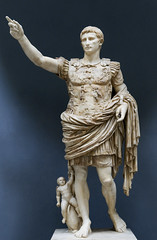 | 3 |
| 13520094631 | demagogue | a leader who seeks support by appealing to popular passions rather than rational argument |  | 4 |
| 13520116040 | Jean-Jacques Rousseau | A French man who believed that Human beings are naturally good & free & can rely on their instincts. Government should exist to protect common good, and be a democracy. Social Contract |  | 5 |
| 13520129389 | Utilitarianism | idea that the goal of society should be to bring about the greatest happiness for the greatest number of people |  | 6 |
| 13520132260 | John Stuart Mill | Arguably the most famous English philosopher and politician of the 1800s. Champion of liberty over unlimited state control. Also famous for adding falsification as a key component of the scientific method. |  | 7 |
| 13520141665 | Hobbes vs Locke | Compare: Both agree that original state of humankind is STATE OF NATURE and rulership is SOCIAL CONTRACT not divine right. Contrast: Hobbes- Government protects us from ourselves, sovereignty with the monarch, no government power limit, and no right to revolution. Locke- Government to protect natural rights, sovereignty resides with the people, power can be limited and they have right of revolution. |  | 8 |
| 13520150863 | Popular Sovereignty | A government in which the people rule by their own consent. |  | 9 |
| 13520156984 | 4 Components of a State | 1. population- small or large, not necessarily homogeneous 2. territory- known and recognized boundaries 3- sovereignty 4. gov't- way a state exerts its will and accomplishes its goals |  | 10 |
| 13520168912 | 3 Major Powers of Government | 1) Legislative: Make Laws 2)Executive: Enforce Laws 3) Judicial: Interpret Laws |  | 11 |
| 13520204059 | Aristocracy | A government in which power is in the hands of a hereditary ruling class or nobility |  | 12 |
| 13520207399 | plutocracy | government of the wealthy |  | 13 |
| 13520211340 | Corporatocracy | a system of government that serves the interests of corporations and that involves ties between government and business |  | 14 |
| 13520222866 | Presidential vs. Parliamentary Systems | presidential= executive and legislative chosen separately parliamentary=legislative chooses executive |  | 15 |
| 13520231758 | coalition government | When two or more parties join together to form a majority in a national legislature. This form of government is quite common in the multiparty systems of Europe. |  | 16 |
| 13520246595 | Unitary Government | A government that gives all key powers to the national or central government. ex: Dr.Carcara |  | 17 |
| 13520253528 | Confederate Government | there are local and national governments. However, the local governments have the most power. -Central power has little power and answers to the local govs. ex: confederacy in US EU |  | 18 |
| 13520279152 | Federal Government | system that divides power of gov bt the national gov and state and local govs -each level of gov has sovereignty in some areas and shares powers in other areas |  | 19 |
Pages

Need Help?
We hope your visit has been a productive one. If you're having any problems, or would like to give some feedback, we'd love to hear from you.
For general help, questions, and suggestions, try our dedicated support forums.
If you need to contact the Course-Notes.Org web experience team, please use our contact form.
Need Notes?
While we strive to provide the most comprehensive notes for as many high school textbooks as possible, there are certainly going to be some that we miss. Drop us a note and let us know which textbooks you need. Be sure to include which edition of the textbook you are using! If we see enough demand, we'll do whatever we can to get those notes up on the site for you!
