

Flashcards
AMSCO AP US History Chapter 9 Flashcards
AMSCO United States History 2015 Edition, Chapter 9 Sectionalism, 1820-1860
Terms : Hide Images
| 7984501360 | Northeast | In the early 19th century, the area which included New England and the Middle Atlantic states. (p. 173) |  | 0 |
| 7984501361 | Old Northwest | In the early 19th century, the territory which stretched from Ohio to Minnesota. (p. 173) |  | 1 |
| 7984501362 | sectionalism | Loyalty to a particular region of the country. (p. 173) |  | 2 |
| 7984501363 | Nativists | Native-born Americans who reacted strongly against the immigrants, they feared the newcomers would take their jobs and weaken the culture of the Protestant and Anglo majority. (p. 176) |  | 3 |
| 7984501364 | American party | In the early 1850s, this party which opposed immigrants, nominated candidates for office. They were also called the Know-Nothing party. (p. 176) |  | 4 |
| 7984501365 | Supreme Order of the Star-Spangled Banner | A secret anti-foreign society in the 1840s. In the 1850s the society turned to politics by forming the American party. (p. 176) |  | 5 |
| 7984501366 | Know-Nothing Party | Nativists, also known as the American party. (p. 176) |  | 6 |
| 7984501367 | Free African Americans | By 1860 as many as 250,000 African Americans in the South were free citizens. Most of them lived in the cities where they could own property. However, they were not allowed to vote or work in most skilled professions. (p. 179) |  | 7 |
| 7984501368 | planters | The South's small wealthy elite that owned more than 100 slaves and more than 1000 acres. (p. 180) |  | 8 |
| 7984501369 | Codes of Chivalry | The Southern aristocratic planter class ascribed to a code of chivalrous conduct, which included a strong sense of personal honor, defense of womanhood, paternalistic attitudes toward all who were deemed inferior. (p. 180) |  | 9 |
| 7984501370 | poor whites | The term for the three-fourths of the South's white population who owned no slaves. (p. 180) |  | 10 |
| 7984501371 | hillbillies | Derisive term for poor white subsistence farmers, they often lived in the hills and farmed less productive land. (p. 180) |  | 11 |
| 7984501372 | mountain men | In the 1820s, these were the earliest white people in the Rocky Mountains. They trapped for furs and served as guides for settlers traveling to the West coast. (p. 181) |  | 12 |
| 7984501373 | the West | The term that referred to the new area that was being settled, the location changed as the white settlements moved westward. (p. 181) |  | 13 |
| 7984501374 | the frontier | The area that was newly settled in the West, it moved further west over time. (p. 181) |  | 14 |
| 7984501375 | Deep South | The cotton rich area of the lower Mississippi Valley. (p. 178) |  | 15 |
| 7984501376 | American Indian removal | By 1850, most American Indians were living west of the Mississippi River. The Great Plains provide temporary relief from white settlers encroaching on their territory. (p. 181) |  | 16 |
| 7984501377 | Great Plains | Native Americans in this area used the horse to hunt buffalo. Tribes such as the Cheyenne and the Sioux, became nomadic hunters following the buffalo herds. (p. 181) |  | 17 |
| 7984501378 | white settlers | In the 1840s and 1850s, they settled the Western frontier. They worked hard, lived in log cabins or sod huts. Disease and malnutrition were even greater dangers than attacks by American Indians. (p. 182) |  | 18 |
| 7984501379 | urbanization | Early 19th century urban working class neighborhoods featured crowded housing, poor sanitation, infectious diseases, and high rates of crime. (p. 174) |  | 19 |
| 7984501380 | urban life | The North's urban population grew from about 5 percent of the population in 1800 to 15 percent by 1850. (p. 174) |  | 20 |
| 7984501381 | new cities | After 1820, Buffalo, Cleveland, Detroit, Chicago, Cincinnati, and St. Louis developed as transportation points for shipping agricultural products to the East, and receiving manufactured goods from the East. (p. 175) |  | 21 |
| 7984501382 | Irish potato famine | From 1820 to 1860, almost 2 million immigrants came from Ireland. Most of them were tenant farmers driven from their homeland by potato crop failures. (p. 176) |  | 22 |
| 7984501383 | Roman Catholic | Most of the Irish were this religion and they faced strong discrimination because of it. (p. 176) |  | 23 |
| 7984501384 | Tammany Hall | New York City's Democratic organization. (p. 176) |  | 24 |
| 7984501385 | Germans | In the 1840s and 1850s, because of economic hardship and the failure of democratic revolutions, one million of these people came to the United States. They often established homesteads in the Old Northwest and generally prospered. (p. 176) |  | 25 |
| 7984501386 | immigration | From the 1830s to the 1850s, four million people came from northern Europe to the United States. (p. 175) |  | 26 |
| 7984501387 | King Cotton | By the 1850s, this agricultural product was by far the South's most important economic force. (p. 177) |  | 27 |
| 7984501388 | Eli Whitney | The United States inventor of the mechanical cotton gin, which made cotton affordable throughout the world. (p. 178) |  | 28 |
| 7984501389 | peculiar institution | A term that referred to slavery because many southern whites were uneasy with the fact that slaves were human beings yet treated so unfairly. Some used historical and religious arguments to support their claim that it was good for both slave and master. (p. 178) |  | 29 |
| 7984501390 | Denmark Vesey | In 1822, he led a major slave uprising which was quickly and violently suppressed. However, it gave hope to enslaved African Americans, drove Southern states to tighten already strict slave codes, and demonstrated to many the evils of slavery. (p. 179) |  | 30 |
| 7984501391 | Nat Turner | In 1831, he led a major slave uprising. (p. 179) |  | 31 |
| 7984501392 | slave codes | In parts of the Deep South, slaves made up nearly 75 percent of the population. Fearing slave revolts, laws were passed which restricted blacks movements and education. (p. 178) |  | 32 |
| 7984501393 | Industrial Revolution | Originally this revolution was centered in the textile industry, but by the 1830's, northern factories were producing a wide range of goods - everything from farm implements to clocks and shoes. (p. 174) |  | 33 |
| 7984501394 | unions | For a brief period in the 1830s an increasing number of urban workers joined unions and participated in strikes. (p. 174) |  | 34 |
| 7984501395 | Commonwealth v. Hunt | In 1842, the Massachusetts Supreme Court ruled that peaceful unions had the right to negotiate labor contracts with employers. (p. 174) |  | 35 |
| 7984501396 | ten-hour workday | During the 1840s and 1850s, most northern state legislatures passed laws establishing a ten-hour workday for industrial workers. (p. 174) |  | 36 |
| 7984501397 | Cyrus McCormick | United States inventor and manufacturer of a mechanical reaper, which made farms more efficient. (p. 175) |  | 37 |
| 7984501398 | John Deere | United States inventor of the steel plow, which made farms more efficient. (p. 175) |  | 38 |
| 7984501399 | Daniel Webster | A senator, who warned that sectionalism was dangerous for the United States. (p. 173) |  | 39 |
| 7984501400 | environmental damage | This term, described what occurred when settlers cleared forests and exhausted the soil. (p. 182) |  | 40 |
| 7984501401 | extinction | This term, described what trappers and hunters did to the beaver and buffalo populations. (p. 182) |  | 41 |
Flashcards
World History Unit 1 Flashcards
Terms : Hide Images
| 10589927252 | civilization | a complex culture that is able to produce extra food; has large cities or towns with some form of government and has people performing different jobs | 0 | |
| 10589927253 | artifacts | objects--such as tools, clothing, works of art, weapons, and toys--made and used by hominids that we study today | 1 | |
| 10589927255 | cultural diffusion | the spread of ideas and other aspects of culture from one area to another | 2 | |
| 10589927256 | agriculture | the raising of crops for food | 3 | |
| 10589927257 | culture | a set of beliefs, knowledge, and patterns of living that a group of people develop | 4 | |
| 10589927259 | hominids | term used to describe humans as well as earlier humanlike creatures | 5 | |
| 10589927260 | anthropologist | A person who studies the origins and development of people and their societies. | 6 | |
| 10589927262 | Neolithic agricultural revolution | The long process known as the ______________ marks the important shift from food gathering to food producing. | 7 | |
| 10589927263 | hunter-gatherers | In a group of ______________________, men hunt animals and women stay near the campsites to gather plants and fruit. | 8 | |
| 10589927266 | nomads | ____________________ were people who wandered from place to place in search of food. | 9 | |
| 10589927277 | animism | Belief that objects, such as plants and stones, or natural events, like thunderstorms and earthquakes, have a discrete spirit and conscious life. | 10 | |
| 10589927311 | polytheistic | belief in many gods | 11 | |
| 10589927326 | cradle of civilization | the spot where organized human communities began |  | 12 |
| 10589927330 | Sumerians | The name of the first culture in the world to develop cities. |  | 13 |
| 10589927361 | cuneiform | Sumerian writing system, made up of wedge shapes. | 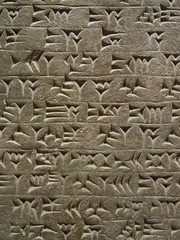 | 14 |
| 10589927383 | hieroglyphics | By About 3000BC Nile River Valley people developed a form of writing called? |  | 15 |
| 10589967879 | Prehistory | A period of time that refers to events or objects that date before the written record existed. | 16 | |
| 10589976771 | archaeologist | a scientist who learns about ancient people by studying the things they left behind | 17 | |
| 10589984318 | Paleolithic Era | called the old stone age (from 10,000 to 2.5 million years ago); they were concerned with food supply; they used stone as well as bone tools; they were nomadic hunters and gatherers. | 18 | |
| 10589995959 | Nile River Valley Civilization | people living along the nile river valley who built pyramids, developed irrigation methods, and designed the 365 day calendar | 19 | |
| 10589998676 | Yellow River Valley Civilization | Named for its light colored loess soil, which made it appear yellow, the Yellow, or Huang He River plain was the site of China's earliest civilization, the Shang. The plain's fertile farmland sometimes suffered from such great flooding that the river became known as "China's Sorrow | 20 | |
| 10590001725 | Indus River Valley Civilization | civilization from 2600 BC-1900 BC; entire Indian subcontinent-peninsula; possibly had twin capitals called Harappa and Mohenjo-Daro; well organized government | 21 | |
| 10590003839 | Olmec civilization | earliest known American civilization, located in southern Mexico and known for its pyramids and huge stone heads | 22 | |
| 10590008277 | city-state | A city with political and economic control over the surrounding countryside | 23 | |
| 10590021990 | Australopithecus | the earliest humanlike creature that flourished in eastern and southern Africa 2 to 3 million years ago | 24 | |
| 10590025977 | Homo sapiens | A species of the creatures Hominid who have larger brains and to which humans belong | 25 | |
| 14792267787 | Phoenicians | located on eastern Mediterranean coast; invented the alphabet which used sounds rather than symbols like cuneiform | 26 | |
| 14792270286 | Hebrews | Early group of people who lived in lands between Mesopotamia and Egypt. They developed the religion Judaism. | 27 | |
| 14792283910 | Mayans | A Mesoamerican civilization of Central America and southern Mexico. Achievements include mathematics, architecture, and a 365 day a year calendar. They flourished between the 4th and 12th centuries C.E.. | 28 | |
| 14792292188 | Monotheism | Belief in one God | 29 |
Flashcards
AP US History Chapter 7 Flashcards
Terms : Hide Images
| 14961091740 | "Intolerable Acts" (1774) | Series of punitive measures passed in retaliation for the Boston Tea Party, closing the Port of Boston, revoking a number of rights in the Massachusetts colonial charter, and expanding the Quartering Act to allow for the lodging of soldiers in private homes. In response, colonists convened the First Continental Congress and called for a complete boycott of British goods. | 0 | |
| 14961091741 | admiralty courts | Used to try offenders for violating the various Navigation Acts passed by the crown after the French and Indian War. Colonists argued that the courts encroached on their rights as Englishmen since they lacked juries and placed the burden of proof on the accused. | 1 | |
| 14961091742 | Boston Massacre (1770) | Clash between unruly Bostonian protestors and locally stationed British redcoats, who fired on the jeering crowd, killing or wounding eleven citizens. | 2 | |
| 14961091743 | Boston Tea Party (1773) | Rowdy protest against the British East India Company's newly acquired monopoly on the tea trade. Colonists, disguised as Indians, dumped 342 chests of tea into Boston harbor, prompting harsh sanctions from the British Parliament. | 3 | |
| 14961091744 | Camp followers | Women and children who followed the Continental Army during the American Revolution, providing vital services such as cooking and sewing in return for rations. | 4 | |
| 14961091745 | committees of correspondence | Local committees established across Massachusetts, and later in each of the thirteen colonies, to maintain colonial opposition to British policies through the exchange of letters and pamphlets. | 5 | |
| 14961091746 | Daughters of Liberty | Patriotic groups that played a central role in agitating against the Stamp Act and enforcing non-importation agreements. (See also Sons of Liberty) | 6 | |
| 14961091747 | Declaratory Act (1766) | Passed alongside the repeal of the Stamp Act, it reaffirmed Parliament's unqualified sovereignty over the North American colonies. | 7 | |
| 14961091748 | First Continental Congress (1774) | Convention of delegates from twelve of the thirteen colonies that convened in Philadelphia to craft a response to the Intolerable Acts. Delegates established Association, which called for a complete boycott of British goods. | 8 | |
| 14961091749 | Lexington and Concord, Battles of (April 1775) | First battles of the Revolutionary War, fought outside of Boston. The colonial militia successfully defended their stores of munitions, forcing the British to retreat to Boston. | 9 | |
| 14961091750 | Mercantilism | Economic theory that closely linked a nation's political and military power to its bullion reserves. Mercantilists generally favored protectionism and colonial acquisition as means to increase exports. | 10 | |
| 14961091751 | Nonimportation agreements | Boycotts against British goods adopted in response to the Stamp Act and, later, the Townshend and Intolerable Acts. The agreements were the most effective form of protest against British policies in the colonies. | 11 | |
| 14961091752 | Quartering Act (1765) | Required colonies to provide food and quarters for British troops. Many colonists resented the act, which they perceived as an encroachment on their rights. | 12 | |
| 14961091753 | Quebec Act (1774) | Allowed the French residents of Québec to retain their traditional political and religious institutions, and extended the boundaries of the province southward to the Ohio River. Mistakenly perceived by the colonists to be part of Parliament's response to the Boston Tea Party. | 13 | |
| 14961091754 | radical whigs | Eighteenth-century British political commentators who agitated against political corruption and emphasized the threat to liberty posed by arbitrary power. Their writings shaped American political thought and made colonists especially alert to encroachments on their rights. | 14 | |
| 14961091755 | republicanism | Political theory of representative government, based on the principle of popular sovereignty, with a strong emphasis on liberty and civic virtue. Influential in eighteenth-century American political thought, it stood as an alternative to monarchical rule. | 15 | |
| 14961091756 | Sons of Liberty | Patriotic groups that played a central role in agitating against the Stamp Act and enforcing non-importation agreements. (See also Daughters of Liberty) | 16 | |
| 14961091757 | Stamp Act Congress (1765) | Assembly of delegates from nine colonies who met in New York City to draft a petition for the repeal of the Stamp Act. Helped ease sectional suspicions and promote intercolonial unity. | 17 | |
| 14961091758 | stamp tax (1765) | Widely unpopular tax on an array of paper goods, repealed in 1766 after mass protests erupted across the colonies. Colonists developed the principle of "no taxation without representation" which questioned Parliament's authority over the colonies and laid the foundation for future revolutionary claims. | 18 | |
| 14961091759 | Sugar Act (1764) | Duty on imported sugar from the West Indies. It was the first tax levied on the colonists by the crown and was lowered substantially in response to widespread protests. | 19 | |
| 14961091760 | The Association | Non-importation agreement crafted during the First Continental Congress calling for the complete boycott of British goods. | 20 | |
| 14961091761 | Townshend Acts (1767) | External, or indirect, levies on glass, white lead, paper, paint and tea, the proceeds of which were used to pay colonial governors, who had previously been paid directly by colonial assemblies. Sparked another round of protests in the colonies. | 21 | |
| 14961091762 | Valley Forge (1777-1778) | Encampment where George Washington's poorly equipped army spent a wretched, freezing winter. Hundreds of men died and more than a thousand deserted. The plight of the starving, shivering soldiers reflected the main weakness of the American army—a lack of stable supplies and munitions. | 22 |
AP US History Chapter 17 Flashcards
Terms : Hide Images
| 11293127940 | management revolution | An internal management structure adopted by many large, complex corporations Sig: that distinguished top executives from those responsible for day-to-day operations and departmentalized operations by function. | 0 | |
| 11293127943 | deskilling | The elimination of skilled labor under a new system of mechanized manufacturing, in which workers completed discrete, small-scale tasks rather than crafting an entire product. Sig: With deskilling, employers found they could pay workers less and replace them more easily. | 1 | |
| 11293127944 | mass production | A phrase coined by Henry Ford who helped invent a system of mass production Sig: Allowed more products to be produced for less money in less time. | 2 | |
| 11293127945 | scientific management | A system of organizing work developed by Frederick Taylor. Sig: Designed to get the maximum output from the individual worker, increase efficiency, and reduce the cost of production. |  | 3 |
| 11293127950 | Granger laws | Economic regulatory laws passed in some Midwestern states Sig: triggered by pressure from farmers and the Greenback-Labor Party. | 4 | |
| 11293127951 | Knights of Labor | The first mass labor organization Sig: attempted to bridge the boundaries of ethnicity, gender, ideology and race, and occupation to build a "universal brotherhood of all workers. | 5 | |
| 11293127954 | Farmer's Alliance | A rural movement founded in Texas during the Depression of the 1870's that spread across the Plains States and the South. Sig: It advocated cooperative stores and exchanges that would circumvent middle men, called for greater government aid to farmers and strict regulation of railroads. | 6 | |
| 11293127955 | Interstate Commerce Act | An 1887 act that created a federal regulatory agency Sig: oversaw the railroad industry and prevented collusion and unfair rates. | 7 | |
| 11293127957 | American Federation of Labor | Organization created by Samuel Gompers that coordinated the craft unions Sig: called for direct negotiation with employers in order to achieve benefits for skilled labor. | 8 | |
| 11293127958 | horizontal integration | A business concept invented in the late 19th century. Sig: pressured competitors and forced rivals to merge their companies into a conglomerate. | 9 |
AP US History: Chapter 4 Flashcards
Terms : Hide Images
| 11310380622 | Glorious Revolution | A bloodless revolt in England against Catholic King James II that led to his overthrow and the appointment of Protestant daughter Mary to the throne. These events in England allowed many colonists in America to get rid of hated officials too | 0 | |
| 11310380623 | Iroquois Confederacy | a powerful group of Native Americans in the eastern part of the United States made up of five nations: the Mohawk, Seneca, Cayuga, Onondaga, and Oneida | 1 | |
| 11310380624 | Mercantilism | government policy aimed at achieving national economic self-sufficiency; govt regulates the nation's commercial interests | 2 | |
| 11310380625 | Navigation Acts | A series of British regulations which taxed goods imported by the colonies from places other than Britain, or otherwise sought to control and regulate colonial trade. Increased British-colonial trade and tax revenues. The Navigation Acts were reinstated after the French and Indian War because Britain needed to pay off debts incurred during the war, and to pay the costs of maintaining a standing army in the colonies. | 3 | |
| 11310380626 | French West Indies | group of small islands in the Caribbean that were conquered by the French; cash crop = sugar | 4 | |
| 11310380627 | Scots-Irish | A group of restless people who fled their home in Scotland in the 1600s to escape poverty and religious oppression. They first relocated to Ireland and then to America in the 1700s. They mainly lived in western PA, Virginia, Georgia, and the Carolinas. | 5 | |
| 11310380628 | Philadelphia | A city in southeastern Pennsylvania, named by William Penn; a major United States port; largest city in colonial America | 6 | |
| 11310380629 | convict labor | England had too many prisoners for their prisons so they started sending them to the colonies as cheap labor; Georgia | 7 | |
| 11310380630 | Middle Passage | the route in between the western ports of Africa to the Caribbean and southern U.S. that carried the slave trade | 8 | |
| 11310380631 | Stono Rebellion | 100 slaves rebelled in South Carolina, killing 100 whites and attempting to escape to Florida; whites quickly suppress rebellion; led Southern legislatures to pass strict slave laws and harsh punishments | 9 | |
| 11310380632 | Ohio River Valley | Fertile and strategic point of interest, became the center of many conflicts between the French and the British; significant for its fur trade and transportation | 10 | |
| 11310380633 | Covenant Chain | An alliance between the Iroquois Confederacy and the colony of New York which sought to establish Iroquois dominance over all other tribes and thus put New York in an economically and politically dominant position among the other colonies | 11 | |
| 11310380634 | Walking Purchase | A fraudulent transaction in 1737 whereby Pennsylvania Governor James Logan acquired a large tract of land by hiring runners to mark land; the Lenni Lanape Indians had agreed to cede land that a man could walk in thirty-six hours. | 12 | |
| 11310380635 | James Oglethorpe | Founder and governor of the Georgia colony. He ran a tightly-disciplined, military-like colony. Slaves, alcohol, and Catholicism were forbidden in his colony. Eventually Oglethorpe was dismissed and slavery was allowed | 13 | |
| 11310380636 | Florida | Spanish territory; refuge for escaped slaves from the English colonies | 14 | |
| 11310380637 | Colonial Assemblies | American representative assemblies that wished to limit the powers of crown officials (following Glorious Revolution). They gradually won control of taxation and local appointments. Members were almost always members of the upper classes of colonial society (had to own at least 1,000 acres to get elected.) | 15 | |
| 11310380638 | Power of the Purse | Eighteenth century legislatures challenged the powers of the colonial governors and won the power of the purse. The power of the purse meant that they had control over how much money was to be made by taxes, and how that money was to be spent. | 16 | |
| 11310380639 | Zenger trial | First court case in America that dealt w/ freedom of the press; Established the principle that truthful statements about public officials could not be prosecuted as libel. | 17 | |
| 11310380640 | Enlightenment | A movement of ideas that occurred in Europe between 1680 and 1790. Attempted to apply reason to understand, explain and even change the world. | 18 | |
| 11310380641 | Benjamin Franklin | American intellectual, inventor, and politician | 19 | |
| 11310380642 | John Locke | 17th century English philosopher who opposed the Divine Right of Kings and who asserted that people have a natural right to life, liberty, and property. | 20 | |
| 11310380643 | Deism | 18th Century (1700's) concept which held that God created the world according to rational laws and that he was like a clockmaker who would not interfere in the natural order of things. | 21 | |
| 11310380644 | Great Awakening | (1730s and 1740s) Religious movement characterized by emotional preaching. Associated with the democratization of religion (Black Protestantism); new churches were established along with colleges to train clergy | 22 | |
| 11310380645 | Jonathan Edwards | A Congregationalist preacher of the Great Awakening who spoke of the fiery depths of hell. "Sinners in the Hands of an Angry God" | 23 | |
| 11310380646 | George Whitefield | Credited with starting the Great Awakening, also a leader of the "New Lights." | 24 |
Flashcards
Pages

Need Help?
We hope your visit has been a productive one. If you're having any problems, or would like to give some feedback, we'd love to hear from you.
For general help, questions, and suggestions, try our dedicated support forums.
If you need to contact the Course-Notes.Org web experience team, please use our contact form.
Need Notes?
While we strive to provide the most comprehensive notes for as many high school textbooks as possible, there are certainly going to be some that we miss. Drop us a note and let us know which textbooks you need. Be sure to include which edition of the textbook you are using! If we see enough demand, we'll do whatever we can to get those notes up on the site for you!
