

AP Psychology AP Review Flashcards
Terms : Hide Images
| 13887328661 | psychology | the study of behavior and mental processes | 0 | |
| 13887328662 | psychology's biggest question | Which is more important in determining behavior, nature or nurture? | 1 | |
| 13887328663 | psychology's three levels of analysis | biopsychosocial approach (looks at the biological, psychological, and social-cultural approaches together) | 2 | |
| 13887328664 | biological approach | genetics, close-relatives, body functions | 3 | |
| 13887328665 | evolutionary approach | species - helped with survival (ancestors) | 4 | |
| 13887328666 | psychodynamic approach | (Freud) subconscious, repressed feelings, unfulfilled wishes | 5 | |
| 13887328667 | behavioral approach | learning (classical and operant) observed | 6 | |
| 13887328668 | cognitive approach | thinking affects behavior | 7 | |
| 13887328669 | humanistic approach | becoming a better human (behavior, acceptance) | 8 | |
| 13887328670 | social-cultural approach | cultural, family, environment | 9 | |
| 13887328671 | two reasons of why experiments are important | hindsight bias + overconfidence | 10 | |
| 13887328672 | types of research methods | descriptive, correlational, and experimental | 11 | |
| 13887328673 | descriptive methods | case study survey naturalistic observation (DON'T SHOW CAUSE/EFFECT) | 12 | |
| 13887328674 | case study | studies one person in depth may not be typical of population | 13 | |
| 13887328675 | survey | studies lots of people not in depth | 14 | |
| 13887328676 | naturalistic observation | observe + write facts without interference | 15 | |
| 13887328677 | correlational method | shows relation, but not cause/effect scatterplots show research | 16 | |
| 13887328678 | correlation coefficient | + 1.0 (both increase) 0 (no correlation - 1.0 (one increases, other decreases) | 17 | |
| 13887328679 | experimental method | does show cause and effect | 18 | |
| 13887328680 | population | type of people who are going to be used in experiment | 19 | |
| 13887328681 | sample | actual people who will be used (randomness reduces bias) | 20 | |
| 13887328682 | random assignment | chance selection between experimental and control groups | 21 | |
| 13887328683 | control group | not receiving experimental treatment receives placebo | 22 | |
| 13887328684 | experimental group | receiving treatment/drug | 23 | |
| 13887328685 | independent variable | drug/procedure/treatment | 24 | |
| 13887328686 | dependent variable | outcome of using the drug/treatment | 25 | |
| 13887328687 | confounding variable | can affect dependent variable beyond experiment's control | 26 | |
| 13887328688 | scientific method | theory hypothesis operational definition revision | 27 | |
| 13887328689 | theory | general idea being tested | 28 | |
| 13887328690 | hypothesis | measurable/specific | 29 | |
| 13887328691 | operational definition | procedures that explain components | 30 | |
| 13887328692 | mode | appears the most | 31 | |
| 13887328693 | mean | average | 32 | |
| 13887328694 | median | middle | 33 | |
| 13887328695 | range | highest - lowest | 34 | |
| 13887328696 | standard deviation | how scores vary around the mean | 35 | |
| 13887328697 | central tendency | single score that represents the whole | 36 | |
| 13887328698 | bell curve | (natural curve) |  | 37 |
| 13887328699 | ethics of testing on animals | need to be treated humanly basically similar to humans | 38 | |
| 13887328700 | ethics of testing on humans | consent debriefing no unnecessary discomfort/pain confidentiality | 39 | |
| 13887328701 | sensory neurons | travel from sensory receptors to brain | 40 | |
| 13887328702 | motor neurons | travel from brain to "motor" workings | 41 | |
| 13887328703 | interneurons | (in brain and spinal cord) connecting motor and sensory neurons | 42 | |
| 13887328895 | neuron |  | 43 | |
| 13887328704 | dendrites | receive messages from other neurons | 44 | |
| 13887328705 | myelin sheath | protects the axon | 45 | |
| 13887328706 | axon | where charges travel from cell body to axon terminal | 46 | |
| 13887328707 | neurotransmitters | chemical messengers | 47 | |
| 13887328708 | reuptake | extra neurotransmitters are taken back | 48 | |
| 13887328709 | excitatory charge | "Let's do it!" | 49 | |
| 13887328710 | inhibitory charge | "Let's not do it!" | 50 | |
| 13887328711 | central nervous system | brain and spinal cord | 51 | |
| 13887328712 | peripheral nervous system | somatic nervous system autonomic nervous system | 52 | |
| 13887328713 | somatic nervous system | voluntary movements | 53 | |
| 13887328714 | autonomic nervous system | involuntary movements (sympathetic and parasympathetic nervous systems) | 54 | |
| 13887328715 | sympathetic nervous system | arousing | 55 | |
| 13887328716 | parasympathetic nervous system | calming | 56 | |
| 13887328717 | neural networks | more connections form with greater use others fall away if not used | 57 | |
| 13887328718 | spinal cord | expressway of information bypasses brain when reflexes involved | 58 | |
| 13887328719 | endocrine system | slow uses hormones in the blood system | 59 | |
| 13887328720 | master gland | pituitary gland | 60 | |
| 13887328721 | brainstem | extension of the spinal cord responsible for automatic survival | 61 | |
| 13887328722 | reticular formation (if stimulated) | sleeping subject wakes up | 62 | |
| 13887328723 | reticular formation (if damaged) | coma | 63 | |
| 13887328724 | brainstem (if severed) | still move (without purpose) | 64 | |
| 13887328725 | thalamus | sensory switchboard (does not process smell) | 65 | |
| 13887328726 | hypothalamus | basic behaviors (hunger, thirst, sex, blood chemistry) | 66 | |
| 13887328727 | cerebellum | nonverbal memory, judge time, balance emotions, coordinate movements | 67 | |
| 13887328728 | cerebellum (if damaged) | difficulty walking and coordinating | 68 | |
| 13887328729 | amygdala | aggression, fear, and memory associated with these emotions | 69 | |
| 13887328730 | amygdala (if lesioned) | subject is mellow | 70 | |
| 13887328731 | amygdala (if stimulated) | aggressive | 71 | |
| 13887328732 | hippocampus | process new memory | 72 | |
| 13887328733 | cerebrum | two large hemispheres perceiving, thinking, and processing | 73 | |
| 13887328734 | cerebral cortex | only in higher life forms | 74 | |
| 13887328735 | association areas | integrate and interpret information | 75 | |
| 13887328736 | glial cells | provide nutrients to myelin sheath marks intelligence higher proportion of glial cells to neurons | 76 | |
| 13887328737 | frontal lobe | judgement, personality, processing (Phineas Gage accident) | 77 | |
| 13887328738 | parietal lobe | math and spatial reasoning | 78 | |
| 13887328739 | temporal lobe | audition and recognizing faces | 79 | |
| 13887328740 | occipital lobe | vision | 80 | |
| 13887328741 | corpus callosum | split in the brain to stop hyper-communication (eliminate epileptic seizures) | 81 | |
| 13887328742 | Wernicke's area | interprets auditory and hearing | 82 | |
| 13887328743 | Broca's area | speaking words | 83 | |
| 13887328744 | plasticity | ability to adapt if damaged | 84 | |
| 13887328745 | sensation | what our senses tell us | 85 | |
| 13887328746 | bottom-up processing | senses to brain | 86 | |
| 13887328747 | perception | what our brain tells us to do with that information | 87 | |
| 13887328748 | top-down processing | brain to senses | 88 | |
| 13887328749 | inattentional blindness | fail to "gorilla" because attention is elsewhere | 89 | |
| 13887328750 | cocktail party effect | even with tons of stimuli, we are able to pick out our name, etc. | 90 | |
| 13887328751 | change blindness | giving directions and person is changed and we don't notice | 91 | |
| 13887328752 | choice blindness | when defending the choice we make, we fail to notice choice was changed | 92 | |
| 13887328753 | absolute threshold | minimum stimulation needed in order to notice 50% of the time | 93 | |
| 13887328754 | signal detection theory | we notice what is more important to us (rather hear a baby crying) | 94 | |
| 13887328755 | JND (just noticeable difference) | (Weber's law) difference between different stimuli noticed in proportion | 95 | |
| 13887328756 | sensory adaptation | tired of noticing (Brain says, "Been there, done that. Next?" | 96 | |
| 13887328757 | rods | night time | 97 | |
| 13887328758 | cones | color | 98 | |
| 13887328759 | parallel processing | notice color, form, depth, movement, etc. | 99 | |
| 13887328760 | Young-Helmholtz trichromatic theory | 3 corresponding color receptors (RGB) | 100 | |
| 13887328761 | Hering's opponent-process theory | after image in opposite colors (RG, YB, WB) | 101 | |
| 13887328762 | trichromatic + opponent-process | Young-Helmholtz -> color stimuli Hering -> en route to cortex | 102 | |
| 13887328763 | frequency we hear most | human voice | 103 | |
| 13887328764 | Helmoltz (hearing) | we hear different pitches in different places in basilar membrane (high pitches) | 104 | |
| 13887328765 | frequency theory | impulse frequency (low pitches) | 105 | |
| 13887328766 | Helmholtz + frequency theory | middle pitches | 106 | |
| 13887328767 | Skin feels what? | warmth, cold, pressure, pain | 107 | |
| 13887328768 | gate-control theory | small fibers - pain large fibers - other senses | 108 | |
| 13887328769 | memory of pain | peaks and ends | 109 | |
| 13887328770 | smell | close to memory section (not in thalamus) | 110 | |
| 13887328771 | grouping | Gestalt make sense of pieces create a whole | 111 | |
| 13887328772 | grouping groups | proximity similarity continuity connectedness closure | 112 | |
| 13887328773 | make assumptions of placement | higher - farther smaller - farther blocking - closer, in front | 113 | |
| 13887328774 | perception = | mood + motivation | 114 | |
| 13887328775 | consciousness | awareness of ourselves and the environment | 115 | |
| 13887328776 | circadian rhythm | daily biological clock and regular cycle (sleep and awake) | 116 | |
| 13887328777 | circadian rhythm pattern | - activated by light - light sensitive retinal proteins signal brains SCN (suprachiasmatic nucleus) - pineal gland decreases melatonin | 117 | |
| 13887328778 | What messes with circadian rhythm? | artificial light | 118 | |
| 13887328779 | The whole sleep cycle lasts how long? | 90 minutes | 119 | |
| 13887328780 | sleep stages | relaxed stage (alpha waves) stage 1 (early sleep) (hallucinations) stage 2 (sleep spindles - bursts of activity) (sleep talk) stage 3 (transition phase) (delta waves) stage 4 (delta waves) (sleepwalk/talk + wet the bed) stage 5 (REM) (sensory-rich dreams) (paradoxical sleep) | 120 | |
| 13887328781 | purpose of sleep | 1. recuperation - repair neurons and allow unused neural connections to wither 2. making memories 3. body growth (children sleep more) | 121 | |
| 13887328782 | insomnia | can't sleep | 122 | |
| 13887328783 | narcolepsy | fall asleep anywhere at anytime | 123 | |
| 13887328784 | sleep apnea | stop breathing in sleep | 124 | |
| 13887328785 | night terrors | prevalent in children | 125 | |
| 13887328786 | sleepwalking/sleeptalking | hereditary - prevalent in children | 126 | |
| 13887328787 | dreaming (3) | 1. vivid bizarre intense sensory experiences 2. carry fear/survival issues - vestiges of ancestors' survival ideas 2. replay previous day's experiences/worries | 127 | |
| 13887328788 | purpose of dreaming (5 THEORIES) | 1. physiological function - develop/preserve neural pathways 2. Freud's wish-fulfillment (manifest/latent content) 3. activation synthesis - make sense of stimulation originating in brain 4. information processing 5. cognitive development - reflective of intelligence | 128 | |
| 13887328789 | 1. Can hypnosis bring you back in time? 2. Can hypnosis make you do things you wouldn't normally do? 3. Can it alleviate pain? 4. What state are you in during hypnosis? 5. Who is more susceptible? | 1. cannot take you back in time 2. cannot make you do things you won't do 3. can alleviate pain 4. fully conscious ((IMAGINATIVE PEOPLE MORE SUSCEPTIBLE)) | 129 | |
| 13887328790 | depressants | slows neural pathways | 130 | |
| 13887328791 | alcohol | ((depressant)) disrupts memory formation (REM) lowers inhibition expectancy effect | 131 | |
| 13887328792 | barbituates (tranquilizers) | ((depressant)) reduce anxiety | 132 | |
| 13887328793 | opiates | ((depressant)) pleasure reduce anxiety/pain | 133 | |
| 13887328794 | stimulants | hypes neural processing | 134 | |
| 13887328795 | methamphetamine | ((stimulant)) heightens energy euphoria affects dopamine | 135 | |
| 13887328796 | caffeine | ((stimulant)) | 136 | |
| 13887328797 | nicotine | ((stimulant)) CNS releases neurotransmitters calm anxiety reduce pain affects (nor)epinephrine and dopamine | 137 | |
| 13887328798 | cocaine | ((stimulant)) euphoria affects dopamine, serotonin, and norepinephrine | 138 | |
| 13887328799 | hallucinogen | excites neural activity | 139 | |
| 13887328800 | ecstasy | ((hallucinogen)) reuptake is blocked affects dopamine and serotonin | 140 | |
| 13887328801 | LSD | ((hallucinogen)) affects sensory/emotional "trip" (+/-) affects serotonin | 141 | |
| 13887328802 | marijuana | ((hallucinogen)) amplify sensory experience disrupts memory formation | 142 | |
| 13887328803 | learning | organism changing behavior due to experience (association of events) | 143 | |
| 13887328804 | types of learning | classical operant observational | 144 | |
| 13887328805 | famous classical psychologists | Pavlov and Watson | 145 | |
| 13887328806 | famous operant psychologist | Skinner | 146 | |
| 13887328807 | famous observational psychologists | Bandura | 147 | |
| 13887328808 | classical conditioning | outside stimulus | 148 | |
| 13887328809 | Pavlov's experiment | Step 1: US (food) -> UR (salivation) Step 2: NS (bell) -> US (food) -> UR (salivation) Later... CS (bell) -> CR (salivation) | 149 | |
| 13887328810 | Watson's experiment | white rat was given to Little Albert Step 1: US (noise) -> UR (cry) Step 2: NS (rat) -> US (noise) -> UR (cry) Later... CS (rat) -> CR (cry) | 150 | |
| 13887328811 | generalization | any small, white fluffy creature will make Albert cry now | 151 | |
| 13887328812 | discriminate | any large, white fluffy creature won't make Albert cry | 152 | |
| 13887328813 | extinction | stop "treating" with conditioned response | 153 | |
| 13887328814 | spontaneous recovery | bring stimulus back after a while | 154 | |
| 13887328815 | operant conditioning | control by organism | 155 | |
| 13887328816 | Skinner's experiment | operant chamber / Skinner box (lead to shaping) | 156 | |
| 13887328817 | shaping | get animal closer to doing what you want them to do | 157 | |
| 13887328818 | reinforcers | want to continue behavior (positive reinforcement: give money to do laundry) (negative reinforcement: do to avoid nagging) | 158 | |
| 13887328819 | punishments | want to stop behavior (positive reinforcement: smack) (negative reinforcement: take away phone) | 159 | |
| 13887328820 | fixed ratio | happens a certain number of times (Starbucks punch card) | 160 | |
| 13887328821 | variable ratio | happens an unpredictable number of times (winning the lottery) | 161 | |
| 13887328822 | organism must do these (2 times) | fixed ratio and variable ratio | 162 | |
| 13887328823 | fixed interval | happens at a certain time (mailman comes to the house at 10:00 AM) | 163 | |
| 13887328824 | variable interval | happens at any time (receive texts from friends) | 164 | |
| 13887328825 | these things happen regardless (2 times) | fixed interval and variable interval | 165 | |
| 13887328826 | Which (fixed/variable) conditions better? | variable | 166 | |
| 13887328827 | criticisms of Skinner | doesn't take into account intrinsic motivation | 167 | |
| 13887328828 | intrinsic motivation | doing something for yourself, not the reward | 168 | |
| 13887328829 | extrinsic motivation | doing something for reward | 169 | |
| 13887328830 | Skinner's legacy | use it personally, at school, and at work | 170 | |
| 13887328831 | famous observational experiment | Bandura's Bobo doll | 171 | |
| 13887328832 | famous observational psychologist | Bandura | 172 | |
| 13887328833 | mirror neurons | "feel" what is observed happens in higher order animals | 173 | |
| 13887328834 | Bobo doll experiment legacy | violent video games/movies desensitize us see good: do good see evil: do evil | 174 | |
| 13887328835 | observational learning | biological behaviors work best | 175 | |
| 13887328836 | habituation | get used to it -> stop reacting | 176 | |
| 13887328837 | examples for observational learning | lectures and reading | 177 | |
| 13887328838 | serotonin involved with memory | speeds the connection between neurons | 178 | |
| 13887328839 | LTP | ((long-term potentiation)) strengthens potential neural forming (associated with speed) | 179 | |
| 13887328840 | CREB | protein that can switch genes on/off with memory and connection of memories | 180 | |
| 13887328841 | glutamate involved with memory | neurotransmitter that enhances LTP | 181 | |
| 13887328842 | glucose involved with memory | released during strong emotions ((signaling important event to be remembered)) | 182 | |
| 13887328843 | flashbulb memory | type of memory remembered because it was an important/quick moment | 183 | |
| 13887328844 | amygdala (memory) | boosts activity of proteins in memory-forming areas to fight/flight | 184 | |
| 13887328845 | cerebellum (memory) | forms and stores implicit memories ((classical conditioning)) | 185 | |
| 13887328846 | hippocampus (memory) | active during sleep (forming memories) ((information "moves" after 48 hours)) | 186 | |
| 13887328847 | memory | learning over time contains information that can be retrieved | 187 | |
| 13887328848 | processing stages | encoding -> storage -> retrieval | 188 | |
| 13887328849 | encoding | information going in | 189 | |
| 13887328850 | storage | keeping information in | 190 | |
| 13887328851 | retrieval | taking information out | 191 | |
| 13887328852 | How long is sensory memory stored? | seconds | 192 | |
| 13887328853 | How long is short-term memory stored? | less than a minute | 193 | |
| 13887328854 | How many bits of information is stored in short-term memory? | 7 | 194 | |
| 13887328855 | How many chunks of information is stored in short-term memory? | 4 | 195 | |
| 13887328856 | How many seconds of words is stored in short-term memory? | 2 | 196 | |
| 13887328857 | short term memory goes to ______________ | working memory | 197 | |
| 13887328858 | working memory | make a connection and process information to mean something | 198 | |
| 13887328859 | working memory goes to _________________ | long-term memory | 199 | |
| 13887328860 | How much is stored in long-term memory? | LIMITLESS | 200 | |
| 13887328861 | implicit memory | naturally do | 201 | |
| 13887328862 | explicit memory | need to explain | 202 | |
| 13887328863 | automatic processing | space, time, frequency, well-learned information | 203 | |
| 13887328864 | effortful processing | processing that requires effort | 204 | |
| 13887328865 | spacing effect | spread out learning over time | 205 | |
| 13887328866 | serial position effect | primary/recency effect | 206 | |
| 13887328867 | primary effect | remember the first things in a list | 207 | |
| 13887328868 | recency effect | remember the last things in a list | 208 | |
| 13887328869 | effortful processing (4 things) | 1. recency effect 2. spacing effect 3. testing effect 4. serial position effect | 209 | |
| 13887328870 | semantic encoding (1) meaning (2) how to | make meaning out of something --- chunk, hierarchy, or connect to you | 210 | |
| 13887328871 | if we can't remember a memory... | 1. change memory to suit us 2. fill in the blanks with logical story | 211 | |
| 13887328872 | misinformation effect | not correct information | 212 | |
| 13887328873 | imagination inflation | imagine or visualize something that isn't real | 213 | |
| 13887328874 | source amnesia | what is the truth? (is it a dream, story, memory, etc.?) | 214 | |
| 13887328875 | priming | association (setting you up) | 215 | |
| 13887328876 | context | environment helps with memory | 216 | |
| 13887328877 | state-dependency | you may remember something if you go back to the state you were in (go back to high) | 217 | |
| 13887328878 | mood-congruency | emotion will bring back similar emotional memories | 218 | |
| 13887328879 | forgetting curve | forget after 5 days forget after 5 years | 219 | |
| 13887328880 | the forgetting curve was created by | Ebbinghaus | 220 | |
| 13887328881 | proactive interference | old information interferes with the new | 221 | |
| 13887328882 | retroactive interference | new information interferes with the old | 222 | |
| 13887328883 | children can't remember before age __ | 3 | 223 | |
| 13887328884 | Loftus | connected to abuse cases/childhood | 224 | |
| 13887328885 | prototypes | generalize | 225 | |
| 13887328886 | problem-solving (4) | trial + error algorithms heuristic (representative + availability) insight - "AHA!" | 226 | |
| 13887328887 | against problem-solving | fixation | 227 | |
| 13887328888 | mental set | what has worked in the past | 228 | |
| 13887328889 | functional fixedness | only way to do this is with this | 229 | |
| 13887328890 | Chomsky (nature or nurture?) | "born with language" (nature) | 230 | |
| 13887328891 | Skinner (nature or nurture?) | language is learned (nurture) | 231 | |
| 13887328892 | grammar is _________ | universal | 232 | |
| 13887328893 | phonemes | smallest sound unit | 233 | |
| 13887328894 | morphemes | smallest meaning unit | 234 |
Flashcards
AP US History: Chapter 25 Flashcards
Terms : Hide Images
| 13018782531 | The major factor in drawing country people off the farms and into the big cities was | the availability of industrial jobs | 0 | |
| 13018792601 | One of the early symbols of the dawning era of consumerism in urban America was | the rise of large department stores | 1 | |
| 13018800156 | The New Immigrants who came to the United States after 1880 | were culturally different from previous immigrants | 2 | |
| 13018806076 | Most Italian immigrants to the United States between 1880 and 1920 came to escape | the poverty and backwardness of southern Italy | 3 | |
| 13018815370 | A "bird of passage" was an immigrant who | came to America to work for a short time and then returned to Europe | 4 | |
| 13018819128 | Most New Immigrants | tried to preserve their Old Country culture in America | 5 | |
| 13018835405 | The Darwinian theory of organic evolution through natural selection affected American religion by | creating a split between religious conservatives who denied evolution and "accommodationists" who supported it | 6 | |
| 13018854446 | Settlement houses such as Hull House engaged in all of the following activities EXCEPT | instruction in socialism | 7 | |
| 13018875738 | The place that offered the greatest opportunities for American women in the period 1865-1900 was | the big city | 8 | |
| 13018893523 | In the 1890s, positions for women as secretaries, department store clerks, and telephone operators were largely reserved for | the native born | 9 | |
| 13018900602 | Labor unions favored immigration restriction because most immigrants were all of the following EXCEPT | opposed to factory labor | 10 | |
| 13087104085 | The American Protective Association supported | immigration restrictions | 11 | |
| 13087112246 | The religious denomination that responded most favorably to the New Immigration were | Roman Catholics | 12 | |
| 13087121695 | The new, research-oriented modem American university tended to | de-emphasize religious and moral instruction in favor of practical subjects and professional specialization. | 13 | |
| 13087142734 | The "pragmatists" were a school of American philosophers who emphasized | that ideas were largely worthless and only practical experience should be pursued. | 14 | |
| 13087149148 | Americans offered growing support for a free public education system because | they accepted the idea that a free government cannot function without educated citizens. | 15 | |
| 13087157387 | Booker T. Washington believed that the key to political and civil rights for African Americans was | economic independence | 16 | |
| 13087164115 | The post-civil War era witnessed | an increase in compulsory school-attendance laws | 17 | |
| 13087192896 | What was the view of W. E. B. Du Bois? | That a "talented tenth" of American blacks should lead the race to full social and political equality with whites | 18 | |
| 13087200579 | The Morrill Act of 1862 | granted public lands to states to support higher education. | 19 | |
| 13087214163 | Black leader Dr. W. E. B. Du Bois | demanded complete equality for African Americans | 20 | |
| 13087227930 | The University of California, Johns Hopkins University, the University of Chicago, and Stanford University were among the | major new research universities founded in the post-Civil War era. | 21 | |
| 13087259692 | The public library movement across America was greatly aided by | the generous financial support from Andrew Carnegie | 22 | |
| 13087268463 | American newspapers expanded their circulation and public attention by | printing sensationalist stories of sex and scandal | 23 | |
| 13087277958 | Henry George believed that the root of social inequality and social injustice lay in | landowners who gained unearned wealth from rising land values | 24 | |
| 13087288230 | General Lewis Wallace's book Ben Hur defended | Christianity against Darwinism | 25 | |
| 13087312200 | Match each of these late nineteenth century writers with the theme of his work A. Lewis Wallace B. Horatio Alger C. Henry James D. William Dean Howells 1. success and honor as the products of honesty and hard work 2. anti-Darwinism support for the Holy Scriptures 3. contemporary social problems like divorce, labor strikes, and socialism 4. psychological realism and the dilemmas of sophisticated women. | A-2, B-1, C-4, D-3 | 26 | |
| 13087363937 | American novelists' turn from romanticism & transcendentalism to rugged social realism reflected | materialism (consumerism) & conflicts of new industrial society | 27 | |
| 13087380521 | Which of the following post-Civil War writers did NOT reflect the increased attention to social problems by those from less affluent backgrounds? | Henry Adams | 28 | |
| 13087389218 | In the decades after the Civil War, changes in sexual attitudes and practices were reflected in | - soaring divorce rates - the spreading practice of birth control - increasingly frank discussion of sexual topics - more women working outside the home | 29 | |
| 13087418863 | In the course of the late nineteenth century family size | gradually decreased | 30 | |
| 13087424225 | By 1900, advocates of women's suffrage argued that | the vote would enable women to extend their roles as mothers and homemakers to the public world | 31 | |
| 13087435038 | One of the most important factors leading to an increased divorce rate in the late nineteenth century was | the stresses of urban life | 32 | |
| 13087447375 | The National American Woman Suffrage Association limited its membership to | whites | 33 | |
| 13087450461 | The term Richardsonian in the late nineteenth century pertained to | architecture | 34 | |
| 13087455589 | During industrialization, Americans increasingly shared | a common and standardized popular culture | 35 | |
| 13087472776 | Sports developed after the Civil War | - Basketball - Bicycling (huge craze once "safety bicycle" was invented - Wright Brothers owned a bicycle shop in Dayton, Ohio) - Croquet - College Football (very dangerous compared to today b/c of rules not yet applied, lack of protection) | 36 |
Flashcards
Flashcards
Flashcards
Flashcards
AP Psychology History & Approaches Flashcards
Terms : Hide Images
| 8817921771 | empiricism/empirical methods | Information is collected by objective observations and experimentation using the scientific method. |  | 0 |
| 8817921772 | structuralism | An early school of psychology that used introspection to explore the elemental structure of the human mind (WUNDT, TITCHENER). |  | 1 |
| 8817921773 | functionalism | A school of psychology that focused on how our mental and behavioral processes function - how they enable us to adapt, survive, and flourish (JAMES). |  | 2 |
| 8817921774 | behaviorism/behavioral perspective | A theoretical orientation based on the premise that scientific psychology should study only observable behavior (LEARNING, REWARDS, PUNISHERS) |  | 3 |
| 8817921775 | humanistic perspective | Perspective that emphasizes the growth potential of healthy people and the individual's potential for personal growth (NEEDS, SELF-ACTUALIZATION) | 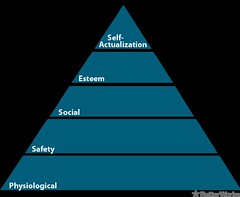 | 4 |
| 8817921776 | biological/biopsychological perspective | Looking at the physical and genetic determines of behavior (BRAIN, BODY, GENES, HORMONES) |  | 5 |
| 8817921777 | psychology | Scientific study of behavior and mental processes | 6 | |
| 8817921778 | nature-nurture issue | The longstanding controversy over the relative contributions that genes and experience make to the development of psychological traits and behaviors |  | 7 |
| 8817921779 | Survival of the Fittest (Natural Selection) | Process by which individuals that are better suited to their environment survive and reproduce most successfully (related to evolutionary approach) |  | 8 |
| 8817921780 | biopsychosocial approach | An integrated approach that incorporates biological, psychological, and social-cultural levels of analysis (ECLECTIC) |  | 9 |
| 8817921781 | evolutionary perspective | A relatively new specialty in psychology that sees behavior and mental processes in terms of their genetic adaptations for survival and reproduction (SURVIVAL VALUE, OFFSPRING) |  | 10 |
| 8817921782 | psychodynamic/psychoanalytic perspective | A branch of psychology that studies how unconscious drives and conflicts influence behavior, and uses that information to treat people with psychological disorders (UNCONSCIOUS, CHILDHOOD) |  | 11 |
| 8817921783 | cognitive perspective | an approach to psychology that emphasizes internal mental processes (THINKING!) |  | 12 |
| 8817921784 | social-cultural perspective | the study of how situations and cultures affect our behavior and thinking (SOCIETY, CULTURE, GROUPS) |  | 13 |
| 8817921785 | psychometrics | the scientific study of the measurement of human abilities, attitudes, and traits |  | 14 |
| 8817921786 | basic research | Pure science that aims to increase the scientific knowledge base. |  | 15 |
| 8817921787 | developmental psychology | A branch of psychology that studies physical, cognitive, and social change throughout the life span |  | 16 |
| 8817921788 | educational psychology | the study of how psychological processes affect and can enhance teaching and learning |  | 17 |
| 8817921789 | personality psychology | the study of an individual's characteristic pattern of thinking, feeling and acting | 18 | |
| 8817921790 | social psychology | The scientific study of how we think about, influence, and relate to one another | 19 | |
| 8817921791 | applied psychology | The branch of psychology concerned with everyday, practical problems, e.g., a psychologist who works directly with a client with problems is considered an applied psychologist | 20 | |
| 8817921792 | industrial-organizational psychology | application of psychological concepts and methods to optimizing human behavior in workplaces (HR help, employee incentive programs) |  | 21 |
| 8817921793 | human factors psychology | A branch of psychology that explores how people and machines interact and how machines and physical environments can be made safe and easy to use (psychology + engineering) |  | 22 |
| 8817921794 | counseling psychology | A branch of psychology that assists people with problems in living (often related to school, work, or marriage) and in achieving greater well-being |  | 23 |
| 8817921795 | clinical psychology | A branch of psychology that studies, assesses, and treats people with psychological disorders |  | 24 |
| 8817921796 | psychiatry | A branch of medicine dealing with psychological disorders; practiced by physicians who sometimes provide medical/drug treatments as well as psychological therapy. Medical degree M.D. |  | 25 |
| 8817921797 | 1879 | Year psychology became a science. First lab opened by father of psychology Wilhelm Wundt! |  | 26 |
| 8817921798 | Mary Calkins | Denied Harvard PhD, but became first female head of American Psychological Association. |  | 27 |
| 8817921799 | Margaret Floy Washburn | First women to get a PhD in psychology. |  | 28 |
| 8817921800 | Gestalt psychology | Focuses on how we organize the world around us - perception. We create order out of chaos and make things "whole". |  | 29 |
| 8817921801 | Sigmund Freud | Most famous psychologist of all time. Developed the psychoanalytic approach. Ideas heavily influenced by Darwin. |  | 30 |
| 8817921802 | John Locke | Nurture. "tabula rasa" - we are born a blank slate. |  | 31 |
| 8817921803 | Plato and Socrates | Knowledge is inborn/innate (NATURE) | 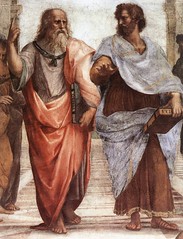 | 32 |
| 8817921804 | Aristotle | Knowledge comes from experience (NURTURE) |  | 33 |
AP Literature Crash Course Vocabulary Flashcards
Terms : Hide Images
| 13873850955 | Diction | The author's choice of words | 0 | |
| 13873850956 | Connotation | The emotional sense or cultural meaning of a word | 1 | |
| 13873850957 | Denotation | The dictionary or precise meaning of a word | 2 | |
| 13873850958 | Style | Authoritative Emotive Didactic Objective Ornate Plain Scholarly Scientific | 3 | |
| 13873850959 | Types of Imagery | Visual Auditory Tactile Olfactory Gustatory Kinesthetic Kinetic Organic | 4 | |
| 13873850960 | Effects of Imagery | Establishes tone Creates realistic settings Creates empathy in readers for character Helps readers imagine themselves as part of a narrative | 5 | |
| 13873850961 | Tone | The attitude of the speaker toward another character, a place an idea or a thing | 6 | |
| 13873850962 | Effects of Tone | "Emotional quality" Diction and tone help create | 7 | |
| 13873850963 | Mood | As the emotional quality of setting | 8 | |
| 13874350774 | Syntax | The order of words in a senctence | 9 | |
| 13874350775 | Effects of Syntax | Impacts the pace of a passage Emphasizing ideas | 10 | |
| 13874350776 | Types of Sentences | Periodic Loose Parallel Repetition Gramatical | 11 | |
| 13874350777 | Types of Gramatical Sentences | Simple sentences Compound sentence Complex sentence Compound complex | 12 | |
| 13874350778 | Climax | Main point or idea of a sentence | 13 | |
| 13874350779 | Cadence | Rhythm or music of a sentence | 14 | |
| 13874350780 | Narrative pace | Speed influenced by the length of words, omission of words and punctuation, length of sentences, and repetition of sounds | 15 | |
| 13874350781 | Prominence | importance of a given idea in a sentence | 16 | |
| 13874350782 | Position | Where the key idea is located | 17 | |
| 13874350783 | Pace | Speed of the text | 18 | |
| 13874350784 | Point of View | Speaker's responses and attitude | 19 | |
| 13874350785 | Figurative Language | Language not meant to be taken literally | 20 | |
| 13874350786 | Literary terminology | Allusion Allegory Anecdote Anti hero Archetype Atmosphere Irony Symbol Understatement Metaphor Simile Metonymy(hyperbole) Paradox Overstatement Personification Synecdoche Atmosphere Epiphany Eulogy Extended metaphor Foil Imagery Invocation Mood Motif Parable Parody Soliloquy Syntax Tone Verisimilitude Vernacular | 21 | |
| 13874350787 | Epistrophe | Repetition at the end | 22 | |
| 13874350788 | Asyndeton | Conjunctions are omitted between words and phrases | 23 | |
| 13874350789 | Polysyndeton | Use of conjunctions between each word, phrase or clause | 24 | |
| 13874350790 | Anaphora | Repetition at the start | 25 | |
| 13874350791 | Chiasmus | Pairs of sentences in a/b/b/a form | 26 | |
| 13874350792 | Types of repetition | Epistrophe Anaphora Chiasmus Asyndeton Polysyndeton | 27 | |
| 13874350793 | Elements of Classical Tragedy | Catharsis Chorus Hamartia Hubris Tragedy Tragic hero | 28 | |
| 13874350794 | Types of Novels | Bildungsroman Dystopian Epistolary Gothic Historical Novella Novel Picaresque Social Utopian | 29 | |
| 13874350795 | Elements of Poetry | Rhyme Metaphor Epigram Anthropomorphism Stanza Structure | 30 | |
| 13874350796 | Types of Rhyme | Exact Slant Internal End Alliteration Assonance Cacaphony Euphony Meter | 31 | |
| 13874350797 | Types of Poems | Ballad Elegy Epic Lyric Narrative Ode Prose Poem | 32 | |
| 13874350798 | Rhetoric | Abstraction Abstract noun Analogy Antecedent Antithesis Catalog Circumlocution Double entendre Euphemism Ethos Sature Understatement Verb phrase Hyperbole Juxtapose Lists Oxymoron Paradox Parody Parallel structure Pathos Repetition Rhetoric Rhetorical study Vernacular | 33 |
Pages

Need Help?
We hope your visit has been a productive one. If you're having any problems, or would like to give some feedback, we'd love to hear from you.
For general help, questions, and suggestions, try our dedicated support forums.
If you need to contact the Course-Notes.Org web experience team, please use our contact form.
Need Notes?
While we strive to provide the most comprehensive notes for as many high school textbooks as possible, there are certainly going to be some that we miss. Drop us a note and let us know which textbooks you need. Be sure to include which edition of the textbook you are using! If we see enough demand, we'll do whatever we can to get those notes up on the site for you!
