AP Notes, Outlines, Study Guides, Vocabulary, Practice Exams and more!

UHS AP Literature Vocab 3 Flashcards

Terms : Hide Images
8386694204propinquity (n)nearness, closeness, proximity; can be a relationship or a location0
8386700074putative (adj)supposed or known; commonly accepted1
8470873837blandish (v)to coax or flatter in order to persuade; to cajole2
8470876316vitiate (v)to impair, make something ineffective/less effective, bring to a lower level3
8470880206ineluctable (adj)inevitable, unstoppable4
8470881936fustigate (v)to criticize severly5
8470884322neophyte (n)a beginner/novice at something6
8470886168pusillanimous (adj)weak, having no courage7
8470887500tantalize (v)to tempt8
8470887502veracity (n)truthfulness9
8470889460ennui (n)weariness or boredom10
8470894026hebetude (n)dullness or lethargy11
8470895263quid pro quo (n)an even exchange of information or a favor12
8470897139a priori (adj)presumptive, assume something before having the facts13
8470899098non sequitur (n)the information doesn't follow whatever comes before it14
8470900701clairvoyant (adj)unusually perceptive; sense things other people cannot15
8470905261ascetic (adj)related to religion, practice strict rules of self-discipline16
8470908041mnemonic (adj)designed to assist with memory17
8470909562acumen (n)the ability to be mentally sharp, shrewdness, can decipher correctly18
8470911538lucrative (adj)profitable, will make money from it19
8470918816moot (adj)insignificant or so debatable it's not conclusive20
8470920843transmogrify (v)to change an appearance, usually for numerous purposes21
8470922788harry (v)to raid, pillage, or put under constant attack22
8470924577loath (adj)unwilling or reluctant23
8470927514indefeasible (adj)cannot undo it; irreversible; very permanent24
8470929728surfeit (n)excess or abundance or a gluttony for something; an indulgence25
8470934571lissone (adj)flexible, nimble, agile26
8470936474propitious (adj)auspicious or of a good omen/a good sign27
8470939199jurisprudence (n)the system or body of law or justice28
8470942660ribaldry (n)vulgar or offensive humor29
8470944766acerbic (adj)biting or sharp with speech30
8470944767caveat (n)a warning or cautionary note31
8470947343didactic (adj)educational to the extreme; instructional32
8470952344erudite (adj)educated, well-read, learned33
8470954406inane (adj)pointless, unsupported, or off-topic34
8470954407indolent (adj)lazy to the point of avoiding all work35
8470958398loquacious (adj)very talkative36
8470960107vilify (v)to defame or cast someone in a very negative light37
8470961990reticent (adj)reserved in speech; doesn't openly communicate; taciturn38
8470963988pernicious (adj)deadly, dangerous39
8470966328antithesis (n)the opposite of something40
8470966329condone (v)allow or accept41
8470969472eschew (v)to deliberately avoid42
8470969473extrapolate (v)to elaborate or predict based on previous information43
8470987651cadre (n)a nucleus or small group of specifically trained personnel44
8470983169sage (n)someone who is wise45
8470973269prognosticate (v)to predict or forecast future events or ideas; element of prophesizing46
8470972636pejorative (adj)negative or belittling language47
8470971884myriad (n/adj)an uncountable number of things or options48
8481286770spurious (adj)not real or genuine49

AP World History Period 4 Flashcards

Terms : Hide Images
11497332732absolutismconcept of government developed during rise of nation-states in western Europe during the 17th century; featured monarchs who passed laws without parliament's, appointed professionalized armies and bureaucracies, established state churches, imposed state economic policies - eg. Louis XIV of France0
11497332733divine rightthe idea that monarchs are God's representatives on earth and are therefore answerable only to God1
11497332734Parliamentary monarchyoriginated in England and the Netherlands in the 17th century. Kings are partially checked by significant legislative powers in parliaments2
11497332735ethnocentrismregarding one's own race or cultural group as superior to others3
11497332736conquistadorthe Spanish soldiers, explorers, and fortune hunters who took part in the conquest of the Americas in the 16th century4
11497332737colonialismcontrol by one power over a dependent area or people5
11497332738Viceroymember of the nobility appointed to rule a country or province as the deputy of the sovereign - means in place of the king6
11497332739Columbian Exchangeglobal transfer of foods, plants, and animals during the colonization of the Americas7
11497332740JanissariesOttoman infantry divisions that dominated Ottoman armies - had a great deal of political influence after 15th century8
11497332741Devshirmein the Ottoman Empire, the policy of taking children from conquered Christian peoples to be trained as Muslim soldiers9
11497332742ShahKing, title of the Mughal and Safavid emperors10
11497332743Vizierhead of the Ottoman bureaucracy, after the 15th century often more powerful than the sultan11
11497332744Sultanthe ruler of a Muslim country (especially of the former Ottoman Empire)12
11497332745Haremthe women in a Muslin household, including the mother, sisters, wives, concubines, daughters, entertainers, and servants - the Ottoman Sultans had large harems13
11497332746tsar, czarRussian emperor (from the Roman title Caesar)14
11497332747Cossackspeasants recruited to migrate to lands in the southern parts of Russia, combined agriculture with military conquests15
11497332748Westernizationto influence with ideas, customs, practices, etc. of western Europe16
11497332749mercantilisman economic policy under which nations sought to increase their wealth and power by obtaining large amounts of gold and silver and by selling more goods than were purchased. Often led to the hoarding of wealth, for because it could be needed unexpectedly for war.17
11497332750Joint-Stock CompanyA commercial venture that spurred exploration by bringing together many investors and merchants in order to minimize the risks and costs of the investment. Started by the Dutch East Indian Trading Co. A significant part of mercantilism, in bringing raw materials from colonies.18
11497332751encomiendaa grant of land made by Spain to a settler in the Americas, including the right to use Native Americans as laborers on it. Established a framework for relations based on economic dominance19
11497332752Mita (aka repartimiento)forced labor system replacing Indian slaves and encomienda workers; used to mobilize labor for mines and other projects. European adaptation of the Inca system that required all able-bodied subjects to work for the state a certain numbers of days each year20
11497332753Silver in Colonial Latin Americamining in Mexico and Peru. The Spanish coerced (forced) natives to work in the mines. Spain became very wealthly and powerful from silver profits, using it to trade around the world, especially in China.21
11497332754haciendasrural agricultural and herding estates; produced for consumers in America; basis for wealth and power of the local aristocracy22
11497332755plantations/plantation systemsa large estate, especially in a tropical or semitropical country, where cash crops such as cotton, tobacco, coffee, sugarcane are cultivated, using a form of coercive labor (usually slavery)23
11497332756peninsularesSpanish-born residents of the New World. (Born on the Iberian Peninsula.)24
11497332757creoles/criollosin Spanish colonial society, colonists who were born in Latin America to Spanish parents25
11497332758mestizomixed Spanish and Native American ancestry26
11497332759mulattoesmixed Spanish and African ancestry27
11497332760zambosthose of mixed indigenous and African ancestry28
11497332761galleonslarge, heavily armed ships used to carry silver from the New World Colonies to Spain; basis of convoy system utilized for transportation of silver bullion29
11497332762triangular tradethe transatlantic trading network along which slaves and other goods were carried between Africa, England, Europe, the West Indies, and the colonies in North America30
11497332763middle passagethe voyage that brought captured Africans to the West Indies, and later to North and South America, to be sold as slaves -- so called because it was considered the middle leg of the triangular trade31
11497332764Chattel slaveryconcept of believing that slaves were merely objects, not humans32
11497332765Secularconcerned with worldly rather than spiritual matters33
11497332766Protestanta member of the Christian church founded on the principles of the Reformation34
11497332767indulgencesa pardon releasing a person from punishments due for a sin, sold by the Catholic Church to help raise $$35
11497332768Bartolomeu DiasPortuguese explorer who sailed around the southernmost tip of Africa in 1488 and discovered the Cape of Good Hope36
11497332769Christopher Columbusexplorer and navigator who completed four voyages across the Atlantic Ocean opened up the Americas to European exploration. Sailed for the Spanish crown in an attempt to find a new trade route to the East Indies37
11497332770Martin Lutherwrote the 95 Theses as a critique of the Catholic Church while serving as a monk in Germany and is credited with starting the Protestant Reformation38
11497332771Hernan CortesSpanish conquistador who led an expedition into the Aztec Empire and later caused the fall of the empire39
11497332772Francisco PizarroSpanish conquistador in South America who conquered the Incan Empire40
11497332773Vasco de GamaPortuguese explorer. Commanded the first ships to sail directly from Europe to India41
11497332774Ferdinand MagellanPortuguese navigator in the service of Spain, First to circumnavigate the globe.42
11497332775AkbarRuler of the Mughals known for having a liberal outlook on all faiths and beliefs. He expanded the empire.43
11497332776Shah JahanAkbar's Grandson and king. ruled 1628-1658, built the Taj Majhal44
11497332777AtahualpaLast Inca emperor before the Spanish conquest; was in the middle of a civil war with his brother when Francisco Pizarro arrived.45
11497332778Montezuma IIAztec ruler during the Spanish conquest of modern day Mexico. Expanded the empire's boundaries and was killed during an attack on the capital city, Tenochtitlan46
11497332779Elizabeth Ilast monarch of the Tudor dynasty. Her reign was called the "Golden Age of England," known for the flourishing of English drama and the skilled adventurers47
11497332780Louis XIVAKA Sun King. Consolidated a system of absolute monarchical rule in France and was mimicked by many other rulers during this time period. Built the Palace of Versailles and relocated the French court out there.48
11497332781Ivan IV (Ivan the Terrible)Grand Prince of Moscow - first ruler to be crowned as Czar of all the Russias and managed many changes that allowed Russia to become an empire49
11497332782Peter the GreatRussian tsar who presided over the Westernization of the empire. He moved the capital to St. Petersburg and changed the social and political systems of Russia into more modern, scientific and European-oriented systems50
11497332783King Nzinga/Afonso Iruler of the Kingdom of the Kongo during the height of the Portuguese slave trade in the region. Converted to Christianity and adopted some European ideas during his reign51
11497332784Tokugawa Ieyasulast of the three great unifiers of Japan and founder of the Tokugawa shogunate, which lasted until the mid-19th century. Presided over the beginning of Japanese isolationism52
11497332785Shah Ismail Ifounder of the Safavid dynasty, Persia, modern-day Iran.53
11497332786AurangzebMughal emperor. He expanded the empire, but abandoned the policies of religious toleration set in place by his predecessors54
11497332787Suleyman the MagnificentOttoman ruler known for his reconstruction of the Ottoman legal system, which gave him the nickname "the Lawgiver." Presided over the apex of Ottoman military, political, and economic power55
11497332788John Calvinpastor during the Protestant Reformation who preached the idea of predestination56
11497332789Scientific Revolutiona series of events that led to the birth of modern science; it lasted from about 1540 to 1700. Renaissance -> Scientific Revolution -> Enlightenment.57
11497332790Galileo GalileiItalian physicist, mathematician, astronomer, and philosopher who played a major role in the Scientific Revolution. Was put on trial by the Catholic Church for defending Copernicus' heliocentric theory.58
11497332791Nicolaus CopernicusRenaissance mathematician and astronomer - discovered the heliocentric theory of the universe but waited until he was on his deathbed to publish his findings. His theory was rejected by the Catholic Church59
11497332792Sir Issac Newtoncombined Galileo's laws of terrestrial motion and Johannes Kepler's laws of planetary motion to publish a work on gravitational force called Principia60
11497332793Thomas HobbesEnglish philosopher who lived during the English Civil War. He was a champion of absolutism for the sovereign and the idea of "social contract" - the people give up their rights to the absolute authority of the government61
11497332794King Henry VIIIRuled 1509-1547. Major figure of the Protestant reformation who married women to try and have a male heir to succeed him62
11497332795Anglican ChurchChurch of England (Protestant Church established by Henry VIII)63
11497332796maritime empiresempires based on sea travel64
11497332797Prince Henry the Navigatorthe first in a series of European royalty to sponsor seafaring expeditions, searching for an all-water route to the east as well as for African gold65
11497332798caravela small, three-masted sailing ship developed by the Portuguese in the fifteenth century. Allowed sailors to survive storms at sea better than earlier-designed ships66
11497332799Hispaniolathe name Columbus gave to the island now occupied by Haiti and the Dominican Republic67
11497332800Treaty of TordesillasSpain and Portugal divided the Americas between them, Spain reserving all land to the west of a meridian and Portugal reserving all land to the east of that meridian68
11497332801Sikhismblended Islamic and Hindu beliefs. a monotheistic religion founded in Punjab in the 15th century by Guru Nanak.69
11497332802Little Ice Age300-year mini-ice age from 1550 to 1850. Led to mass starvation and peasant rebellions in Ming Dynasty China.70
11497332803Ming Dynasty1368-1644, Dynasty who sent Zheng He on a series of naval voyages. Built the majority of the parts of the Great Wall that still exists.71
11497332804Zheng He• Chinese admiral and diplomat during Ming dynasty • explored as far as Africa • traded & collected tribute72
11497332805Qing DynastyAKA Manchus (ethnic group). TAfricanhe last imperial dynasty of China (from 1644 to 1912) which was overthrown by revolutionaries73
11497332806AstrolabeA navigational instrument used to determine latitude by measuring the position of the stars74
11497332807African DiasporaName given to the spread of African peoples across the Atlantic via the Trans-Atlantic trade.75
11497332808Printing Press1440. invented by Guttenberg; led to more literacy and spread of ideas76
11497332809Tokugawa Period1603-1867 period of rule during which the Tokugawa family held power as Shoguns. Pax Tokugawa. Generally isolationist, but traded with the Portuguese, who brought the first guns to Japan.77
11497332810Songhay Empire1464-1591. Became the dominate kingdom in West Africa after Mail collapsed around 1500; this empire controlled Timbuktu. Islamic.78
11497332811Kingdom of KongoCentral African kingdom that converted to Christianity via trade with the Portuguese.79

apes Flashcards

Terms : Hide Images
9134889191driftnearly horizontal tunnels access on a hillside0
9134889192slopediagonally sloping access shafts.1
9134889193shrinkage stopecreating a vertical shaft downward then mining upward on a slope2
9134889474longwallgrinding ore surface away along a wall3
9134892946room and pillarremoving ore from a space underground and leaving columnar pillars to stabilize adjacent4

Ap Quiz Flashcards

Terms : Hide Images
10895225308Migrationmovement of people from one place to another0
10895225309Emmigrationmovement of individuals out of an area1
10895225310Immigrationmovement of individuals into an area occupied by an existing population2
10895225311The number of immigrants exceeds the number of emigrants (positive)Net in migration3
10895225312The number of emigrants exceeds the number of immigrants (negative)Net out migration4
10895225313mobilityAll types of movement from one location to another.5
10895225314The relegation of activities/ movement on a daily basisCirculation6
10895225315Most people migrate for ______________________ reasons.economic7
10895225316Cultural and environmental factors also createMigration8
10895225317push factorsa factor that causes people to leave their homelands and migrate to another region9
10895225318pull factorsFactors that induce people to move to a new location.10
10895225319RefuggesA person who has been forced to leave their country in order to escape war, persecution, or natural disaster11
10895225320FloodplainThe area subject to flooding during a given number of years according to historical trends.12
10895225321intervening obstacleAn environmental or cultural feature of the landscape that hinders migration.13
10895225322Ravenstiens migration theories1) most migrants relocate short distance and remain in the same country 2) long distance migrants to other countries head to major centers of economic activity14
10895225323International MigrationPermanent movement from one country to another.15
10895225324Internal MigrationPermanent movement within a particular country.16
10895225325Interregional MigrationPermanent movement from one region of a country to another.17
10895225326Intraregional MigrationPermanent movement within one region of a country.18
10895225327Voluntary Migrationmovement in which people relocate in response to perceived opportunity; not forced.19
10895225328Forced Migrationpermanent movement, usually compelled by cultural factors20

AP World History Period 1 Flashcards

From Hunting and Gathering to Civilizations, 2.5 million-1000 B.C.E.: Origins
Original from MrsBHatchTEACHER

Terms : Hide Images
10629645525hunting and gatheringMeans of obtaining subsistence by humans before the mastery of sedentary agriculture; normally typical of tribal social organization0
10629645526civilizationSocieties with reliance on sedentary agriculture, ability to produce food surpluses, and existence of nonfarming elites, along with merchant and manufacturing groups1
10629645527neolithicThe New Stone Age between 8000 and 5000 B.C.E.; period in which adaptation of sedentary agriculture occurred; domestication of plants and animals accomplished2
10629645528nomadic societieslivestock hearding societies that do not have a permanent settlement. normally found on the fringes of civilized (urban) societies; commonly referred to as "barbarian" by civilized societies3
10629645529cultureCombination of ideas, objects, and patterns of behavior that result from human social interaction4
10629645530agrarian revolutionOccurred between 8000 and 5000 B.C.E.; transition from hunting and gathering to sedentary agriculture5
10629645531pastoralismA nomadic agricultural lifestyle based on herding domesticated animals; tended to produce independent people capable of challenging sedentary agricultural societies6
10629645532Catal HuyukEarly urban culture/civiization based on sedentary agriculture; located in modern southern Turkey; larger in population than Jericho, had greater degree of social stratification7
10629645533Bronze AgeFrom 4000 to 3000 B.C.E.; increased use of plow, metalworking; development of wheeled vehicles, writing8
10629645534MesopotamiaLiterally "between the rivers"; the civilization that arose in the alluvial plain of the Tigris-Euphrates river valleys9
10629645535potter's wheelA technological advance in pottery making; invented circa 6000 B.C.E.; encouraged faster and higher-quality ceramic pottery products10
10629645536SumeriansPeople who migrated into Mesopotamia circa 4000 B.C.E.; created the first civilization within the region; organized area into city-states11
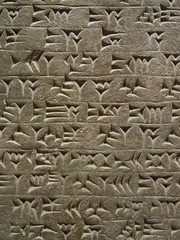
10629645537cuneiformA form of writing developed by the Sumerians using a wedge-shaped stylus and clay tablets12
10629645538city-stateA form of political organization typical of Mesopotamian civilization; consisted of agricultural hinterlands ruled by an urban-based king13
10629645539ziggurata massive tower building usually associated with Mesopotamian temple connections14
10629645540Babylonian EmpireUnified all of Mesopotamia circa 1800 B.C.E.; collapsed due to foreign invasion circa 1600 B.C.E.15
10629645541HammurabiThe most important Babylonian ruler; responsible for codification of the law16
10629645542PharaohThe term used to denote the kings of ancient Egypt; the term, "great house" refers to the palace of the pharaohs17
10629645543pyramidsMonumental architecture typical of Old Kingdom Egypt; used as burial sites for pharaohs18
10629645544hieroglyphsForm of writing developed in ancient Egypt; more pictorial than Mesopotamian cuneiform19
10629645545KushAfrican state that developed along the upper reaches of the Nile circa 1000 B.C.E.; conquered Egypt and ruled it for several centuries20
10629645546monotheismThe exclusive worship of one god; introduced by Jews into Middle Eastern civilization21
10629645547PhoeniciansSeafaring civilization located on the shores of the eastern Mediterranean; established colonies throughout the Mediterranean22
10629645548Harappa and Mohenjo DaroMajor urban complexes of Harappan civilization; laid out on planned grid pattern23
10629645549AryansIndo-European nomadic, warlike, pastorialists who replaced Harappan civilization24
10629645550Huanghe (Yellow) River BasinSite of the development of sedentary agriculture in China25
10629645551Shang1st Chinese dynasty (after the legendary Xia)26
10629645552OraclesShamans or priests in Chinese society who foretold the future through interpreting animal bones cracked by heat; inscriptions on bones led to Chinese writing27
10629645553ideographic writingPictograph characters grouped together to create new concepts; typical of Chinese writing28
10629645554Big GeographyA term that draws attention to the global nature of world history.29
10629645555PaleolithicThe period that ended about 3,000 years after the end of the last Ice Age, it lasted until about 10,000 years ago. (Old Stone Age) The period of the Stone Age associated with the evolution of humans. It predates the Neolithic period.30
10629645556Human migration during Paleolithic eramovement of humans from Africa to Eurasia, Australia, and the Americas31
10629645557eglitarianequality among people (no social levels)32
10629645558toolsHumans developed a wider range of ____ specially adapted to different environments from tropics to tundra33
10629645559Neolithic Revolutionperiod of change from hunter-gatherer lifesyle to agricultural lifestyles associated with domestication, farming, and settlement34
10629645560patriarchyfather based/male dominated society35
10629645561climatic changePermanent agricultural villages emerged first in the lands of the eastern Mediterranean, possibly as a response to what?36
10629645562weaponsPastoralists were often the developers and disseminators of of ____ and forms of transportation that transformed warfare in agrarian civilizations37
10629645563horsesname one mode of new transportation by the pastoralists38
10629645564artElites, both political and religious, promoted ____.39
10629645565record-keeping systems___ arose independently in all early civilization sand subsequently were diffused40
10629645566Nile RiverThis river flooded regularly.41
10629645567Tigris RiverThis river's floods were unpredictable.42
10629645568MesopotamianUnpredictable weather patterns affected the development of the _____ civilization.43
10629645569Egyptian_______art demonstrated little change for nearly 1000 years.44
10629645570Nubia and KushKingdoms upriver from Egypt.45
10629645573Standard of Ur46
10629645574Harappan King or Priest Figure47
10629645571JerichoOne of the earliest cities: located in modern Israel.48
10629645572Catal-HyoukOne of the earliest cities: located in modern Turkey.49

AP Literature Chapter 14 - Jest Flashcards

Terms : Hide Images
11629168636Banterplayful teasing; joking; raillery0
11629171629Caricaturedrawing, imitation, or description that ridiculously exaggerates peculiarities or defects1
11629174224Drollodd and laughter-provoking2
11629178638Facetious1. in the habit of joking 2. said in jest without serious intent3
11629181577Flippanttreating serious matters lightly4
11629184289Harlequinbuffoon; clown5
11629184290Hilariousboisterously merry; very funny6
11629188344Hilaritynoisy gaiety; mirth; jollity; glee7
11629192304Ironic (or ironical)containing or expressing irony8
11629197428Irony1. species of humor whose intended meaning is the opposite of the words used 2. state of affairs contrary to what would normally be expected9
11629201098Jocosegiven to jesting; playfully humorous; jocular10
11629203752Levitylack of proper seriousness; trifling gaiety; frivolity11
11629211020Ludicrousexciting laughter; ridiculous; farcical; absurd12
11629213838Parodyhumorous imitation13
11629216484Sarcasmsneering and often ironic language intended to hurt a person's feelings14
11629218978Sarcasticgiven to or expressing sarcasm15
11629224252Sardonicbitterly sarcastic; mocking; sneering16
11629227169Satirelanguage or writing that exposes follies or abuses by holding them up to ridicule17
11629232501Satiric (or satirical)given to or expressing satire18
11629232502Travestyimitation that makes a serious thing seem ridiculous; mockery19

AP Flashcards

Terms : Hide Images
11317155297karapatang pantaoTaglay ng lahat mula simula0
11317155298Karapatang sibilBuhay, kalayaan at seguridad1
11317155299Karapatang politikalMakilahok sa pagpapasiyang politikal2
11317155300Karapatang ekonomiko at sosyalPag-unlad at pagbabago ng pamumuhay ng isang indibidwal3
11317155301Karapatang kulturalMakibahagi sa kultural4
11317155302UDHRDokumento sa kasaysayan ng laban para sa Human Rights5
11317155303Customary International LawPandaigdigang obligasyon na mula sa mga pangkalahatang at nakagawiang gawain6
11317155304Humanitaryong krisisPangyayari na nagdudulot ng malawakang pagkawala ng ariarian7
11317155305OHCHRAhensiya ng Un na nagmomonitor ng koordinasyong ng mga bansa8
11317155306Charter based bodiesBinuo sang ayon sa karta ng Un9
11317155307Treaty based bodiesBinuo ng UN para maniguro ang pagpapatupad ng kasunduan10
11317155308CHRbinuo ng saligang batas 198711
11317155309UNCHRpangunahing tagataguyod ng Human Rights12
11317155310ImpunityKasunduan ng di paparusa sa kasalanan13

Pages

Subscribe to CourseNotes RSS

Need Help?

We hope your visit has been a productive one. If you're having any problems, or would like to give some feedback, we'd love to hear from you.

For general help, questions, and suggestions, try our dedicated support forums.

If you need to contact the Course-Notes.Org web experience team, please use our contact form.

Need Notes?

While we strive to provide the most comprehensive notes for as many high school textbooks as possible, there are certainly going to be some that we miss. Drop us a note and let us know which textbooks you need. Be sure to include which edition of the textbook you are using! If we see enough demand, we'll do whatever we can to get those notes up on the site for you!