AP Notes, Outlines, Study Guides, Vocabulary, Practice Exams and more!

DSST Environment Science Flashcards

Terms : Hide Images
8458353362taigaA cool forest biome of conifers in the upper Northern Hemisphere; Largest biome0
8458353363tundraBiome associated with tree growth greatly hindered by low temps and short growing season; in the extreme north1
8458353364strip farmingcultivating crops in parallel strips that can be harvested and tilled at different times - ensures that some areas will always be covered by vegetation and helps maintain soil nutrients.2
8458353366disinfectionadding chlorine is an example of this water treatment; process of adding chemicals to kill bacteria3
8458353367WWF (World Wide Fund for Nature)classified the world's biomes into 14 different types4
8458353368Ogallala Aquiferaquifer that stretches from South Dakota to Texas (largest US aquifer)5
8458353369compressed organic materialsmain ingredient the produces fossil fuels6
8458353370too much phosphoruspromotes algea7
8458353371chlorinationdisinfection of water by the addition of small amounts of chlorine or a chlorine compound to kill bacteria8
8458353372oilliquid that doesn't mix with water; not an alternative to fossil fuel9
8458353373meltdownwhat happened at Chernobyl Nuclear Reactor in 198610
8458353374rangelandyou find a shortgrass prairie in this environment11
84583533758.5%with 85 deaths in a population of 1000, what is death rate?12
8458353376photosynthesisConversion of light energy from the sun into chemical energy; plants absorb carbon monoxide and produce oxygen13
845835337750%percentage of plant varieties found in tropical rain forest14
8458353378phytoplanktonautotroph in ocean; produces its own energy without consuming other organisms, similar to algae and seaweed15
8458353379eutrophicationwhen in a lake or other body of water, a substance (natural or artificial) is introduced that affects the wildlife; often we hear about it when the process by which nutrients in a lake build up over time (like phosphorus), causing an increase in the growth of algae.16
8458353380orchidexample of a tropical organism that's a heterotroph17
8458353381heterotrophAn organism that obtains organic food molecules by eating other organisms or substances derived from them; consumer18
8458353382stratosphere2nd layer of atmosphere; extends from 10 to 30 miles up; location of ozone layer; absorbs 95% of Ultraviolet radiation; temperature increases with altitude increase.19
8458353383electrostatic precipitatorsuccessful in reducing particulate emissions from power plants, used in almost all new systems; removes particles by applying high-voltage electrostatic charge and collective particles on charged plates; only 50% effective for small, harmful particulates20
8458353384desertificationThe process by which formerly fertile lands become increasingly arid and unproductive, (desert-like);often caused by over-farming21
8458353385ecologystudy of living organisms and their effect on each other and their surroundings; (branch of biology studying relation of organisms to one another and their physical surroundings)22
8458353386gulf of Mexicoending of Mississippi river23
8458353387natural gasafter coal, next biggest producer of energy in US power plants; flammable gas, consisting largely of methane and other hydrocarbons, occurring naturally underground (often in association with petroleum) used as fuel24
8458353388biomesame types of plants and animals that live there; ecosystem or group of ecosystems with similar climates and organisms25
8458353389population ecologylooks at the population sizes or organisms in the same ecosystem and how they change over time26
8458353390sun and bacteriamost oil removed after a big spill27
8458353391evolutionchange over time, the process by which modern organisms have descended from ancient organisms; Charles Darwin in founder28
8458353392nuclear powerenergy from breaking apart atomic nuclei (fission), produces less greenhouse gas emissions than fossil fuels but nuclear waste is highly radioactive29
8458353393bioaccumulationthe build up of a substance (usually a toxin) as it passes through a food chain30
8458353394filtrationProcess of passing a liquid or gas through a filter to remove wastes31
8458353395settlingprocess of slowing down water flow so pollutants sink to the bottom; the trapped fine sediment particles that settle to the bottom of water32
8458353396fertilizerscause of more phosphorus than ever being introduced into the lakes and stream; main source of nitrate and phosphate pollution33
8458353397wind powerrenewable, variable34
8458353398clean air actSet emission standards for cars, and limits for release of air pollutants35
8458353399heterotrophsOrganisms that must ingest nutrients rather than synthesize them36
8458353400ambient temperatureThe temperature of the surrounding environment.37
8458353401detrivorea scavenger, such as an earthworm, that feeds on dead plant and animal matter38
8458353402lithospherethe rigid outer part of the earth, consisting of the crust and upper mantle.39
8458353403mesosphere3rd layer of the atmosphere; The layer of Earth's atmosphere immediately above the stratosphere40
8458353404troposphereThe lowest layer of Earth's atmosphere; its MASS contains 99% water - responsible for weather41
8458353405biofuelfuel source blamed for increased food prices; Fuel from organic sources; 'fuel from biological carbon fixation'42
8458353406coral reefaccount for 25% of all marine organisms; found in warm and cold water43
8458353407chemical treatmentChemicals added to water that are used to control algae, sludge, scale buildup, or to improve dental care such as fluoride44
8458353408house of representativesafter being approved by a committee, legislative bill come here to be voted on45
8458353409wet scrubberremoves particles/gases from industrial exhaust such as in a paint manufacturing plant46
8458353410strip croppingalternating crops in strips, helps anchor soil by creating barriers so dirt is not washed away47
8458353411dilutiondispersing pollutants into larger bodies of water (often first step in water treatment)48
8458353412carbon fixationthe initial incorporation of carbon into organic compounds; carbon dioxide is changed into organic material like with photosynthesis used carbon dioxide to create energy49
8458353413aging populationbirth and death rates decline; a demographic trend that occurs as the average age of a population rises50
8458353414biomagnificationa build-up of substance in a food chain as when mercury is found in a large fish who obtained the mercury by consuming other fish exposed to mercury51
8458353415solarbest source of electricity in a village without infrastructure; energy from the sun52
8458353416wind turbinescapture energy from wind; earliest example of wind power is from the ships using sails to harness the wind53
8458353417wet scrubbinggas being blasted through a wet solution to remove particles/pollutants54
8458353418floodsdo not affect climate change (may be a result of climate change but not a cause)55
8458353419GAB Great Artisan Basinlargest aquifer in the world located in Australia56
8458353420recyclingnumber prevention method for waste disposal57
8458353421mangrovebiome usually found in coastal locations and consists of plants that can thrive in coastal conditions58
8458353422carnivoreA consumer that eats only animals, such as a lion59
8458353423sunfirst step of the energy cycle60
8458353424Chernobyllargest nuclear disaster; 30km radius evacuation from area after accident in 198661
8458353425magnetic fieldprotects earth from sun's energy62
8458353426Clean Air Actpassed in 1970; provides standards for motor vehicle emissions63
8458353427Chlorinationinitial chemical treatment to arrest/stop biological growth in the water; kills waterborne diseases (same concept for swimming pools/hot tubs)64
8458353428Environmental Protection Agency (EPA)responsible for ensuring regulations are in place for drinking water quality in the US65
8458353429Renewable energypart of our natural ecosystem; examples are wind, solar/sun, waves, hydropower66
8458353430burning coalsingle biggest human activity to increase carbon dioxide CO2 levels in the atmosphere67
8458353431population growthgrowth of landfills are directly related to this; more people, more garbage68
8458353432keystonea species that has an large effect on its ecosystem69
8458353433committeewhere a bill begins its life in congress70
8458353434acid rainwhen elevated sulphur dioxide and nitrogen oxide chemical mix with water molecule in the atmosphere, this can happen71
8458353435carbon dioxidegas both naturally gathered and released by plants that is believed to be a major contributor to global warming72
8458353436thermospherelayer between exosphere and mesosphere; largest atmospheric layer starting at 50 above the earth's surface73
8458353437Senateonce a bill passes a vote in the House of Representatives it goes here74
8458353438tropical rainforestwhich biome contains the most plant and animal diversity (50% of all species); located on the equator with an average rainfall of over 69 inches, temps stay above 64°75
8458353439phosphourusnumber one cause of eutrophication in lakes and rivers; promotes algae76
8458353440Gulf of MexicoMississippi runs into it77
8458353441omnivoreAn animal that eats both plants and animals; humans, bears, pigs, rats are examples78
8458353442coagulation and flocculationadding chemicals to water to cause pollutants to stick together so they are easier to filter out later79
8458353443combustible enginesnumber one cause of harmful levels of CO2 in the atmosphere80
8458353444CO2carbon dioxide81
8458353445USAlargest producer of hazardous waste in the world82
8458353446exospherecontain excess carbon dioxide from earth; results in thickening the layer of the atmosphere decreasing the earth's ability to dispel heat resulting in global warming83
8458353447POTUSPresident of the United States; when a bill is passed in the Senate it goes here next84
8458353448nonpoint source pollutionpollution that comes from many sources rather than from a single, specific site85
8458353449geothermalname of energy derived from heat from the earth's core86
8458353450National Ambient Air Quality StandardsPRIMARY standards that were set to protect children with respiratory illness and the elderly from EPA via the Clean Air Act87
8458353451ambience temperaturemeasures humidity; temperature taken of air at any given point88
8458353452contour farmingplugging crops following the natural contours of the landscape89
8458353453global warmingtheory that the heating process of the earth and lower atmosphere is due to man-made pollution90
8458353454birth ratemeasurement of the number of births per 1000 people so 30 birth per 1000 people be 3%91
8458353455herbivoreA consumer that eats only plants, like a horse92
8458353456greenhouse gasesGases such as carbon dioxide, methane, nitrous oxide, water vapor, and ozone trap solar energy and redirect it back to the earth's surface causing the greenhouse effect.93
8458353457nuclear powerenergy produces toxic waste that is radioactive; power is generated by nuclear fission94
8458353458secondary standardsprotect public welfare from any hazardous effects from pollutants in air; not sure human health like the primary standards from the National Ambient Air Quality Standards95
8458353459sustainable developmentthe use of natural resources that protect the environment; doesn't destroy environment but protects for future generations96
8458353460fossil fuelsoriginated from plants and animals that are fossilized organic material high in carbon (after hundreds of millions of years of the earth's pressure and heat, they are converted into these fossil fuels)97
8458353461transportmajor factor in fossil fuel consumption (about 70% due to transportation)98

AP Literature Poetry Forms & Terms3 Flashcards

Terms : Hide Images
8050751268BalladPopular narrative song passed down orally. Follows a form of rhymed (ABCB) quatrains alternating four-stress and three-stress lines. Folk ballads are anonymous and recount tragic, comic, or heroic stories.0
8050751269Blank VerseUnrhyming iambic pentameter, also called heroic verse1
8050751270ElegyOften a melancholy poem (deals with death) that laments its subject's death but ends in consolation2
8050751271EpicLong poem, typically derived from oral tradition, narrating the deeds and adventures of heroic or legendary figures3
8050751272Free VerseNonmetrical, nonrhyming lines that closely follow the natural rhythms of speech. A regular pattern of sound of rhythm may emerge in free verse lines, but the poet does not adhere t a metrical plan in their composition4
8050751273Lyrica short poem of songlike quality that is also very personal5
8050751274NarrativePoetry that has a plot. The poems that make up this genre may be short or long6
8050751275OdeFormal often ceremonious lyric poem tat addresses and often celebrates a person, place, thing or idea. Stanza forms vary7
8050751276PastoralPoets writing in English drew on the pastoral tradition by retreating from the trappings of modernity to the imagined virtues and romance of rural life. Its themes persist in poems that romanticize rural life or reappraise the natural world.8
8050751277SonnetA 14-line poem with a variable rhyme scheme. Literally a "little song," the sonnet traditionally reflects upon a single sentiment, with a clarification or "turn" of thought in its concluding lines.9
8050751278Versesingle metrical line in a poetic composition10
8050751279AlliterationThe repetition of initial stressed, consonant sounds in a series of words within a phrase or verse line. Alliteration need not reuse all initial consonants11
8050751280AnapestA metrical foot consisting of two short or unstressed syllables followed by one long or stressed syllable.12
8050751281Caesurapause near the middle of a line13
8050751282ConceitAn elaborate, usually intellectually ingenious poetic comparison or image, such as an analogy or metaphor, in which one's lover, say, is compared to a ship, a planet, etc. The comparison may be brief or extended14
8050751283CoupletA pair of successive rhyming lines, usually of the same length15
8050751284EnjambmentIn poetry, the use of successive lines with no punctuation or pause between them16
8050751285Envoyshort closing stanza in certain verse forms summarizing its main ideas17
8050751286Female Rhymesimilarity in sound between the last two syllables of a word or verse; occurs in a final unstressed syllable: pleasure/leisure, longing/yearning18
8050751287FootUnit of metrical pattern in poetry; The five most common types of foot in English poetry are iamb (v -), trochee (- v), dactyl (- vv), spondee ( -- ), and anapest (vv -); the symbol v stands for an unstressed syllable and - for a stressed one.19
8050751288Iambmetrical foot consisting of one short (or unstressed) syllable followed by one long (or stressed) syllable.20
8050751289Iambic Pentameterrhythmical pattern of syllables. The iambic part means that the rhythm goes from an unstressed syllable to a stressed one, as happens in words like divine, caress, bizarre, and delight. It sounds sort of like a heartbeat: daDUM, daDUM, daDUM. Each iambic unit is called a foot (the term foot is also applied to other rhythmical units, such as trochaic [DUMda], dactyllic [DUMdada], and anapestic [dadaDUM]). The pentameter part means that this iambic rhythm is repeated five times, or has five feet: daDUM daDUM daDUM daDUM daDUM[da]21
8050751290Meterexact arrangements of syllables into repeated patterns called feet within a line22
8050751291Dimetertwo feet23
8050751292Trimeterthree feet24
8050751293tetrameterfour feet25
8050751294pentameterfive feet26
8050751295hexametersix feet27
8050751296hepatmeterseven feet28
8050751297octametereight feet29
8050751298MoodThe atmosphere or feeling created by a literary work, partly by a description of the objects or by the style of the descriptions. A work may contain a mood of horror, mystery, holiness, or childlike simplicity, to name a few, depending on the author's treatment of the work. Not to be confused with tone, which is one quality of a speaker or narrator's voice.30
8050751299RefrainA phrase or line repeated at intervals within a poem, especially at the end of a stanza.31
8050751300Rhyme SchemeThe pattern of rhyme used in a poem, generally indicated by matching lowercase letters to show which lines rhyme.32
8050751301Stanzatwo or more lines of poetry that together form one of the divisions of a poem. The stanzas of a poem are usually of the same length and follow the same pattern of meter and rhyme and are used like paragraphs in a story33
8050751302Stressemphasis that falls on certain syllables and not others; the arrangement of stresses within a poem is the foundation of poetic rhythm34
8050751303ToneThe author or narrator's attitude toward the subject and/or the readers, expressed primarily through his or her tone of voice35
8050751304QuatrainStanzas of four lines which can be written in any rhyme scheme36
8050751305End-stoppedA term that describes a line of poetry that ends with a natural pause37
8050751306explicationThe interpretation or analysis of a text38
8050751307heroic coupletTwo rhymed lines written in iambic pentameter and used widely in eighteenth-century verse39
8050751308idylla lyric poem or passage that describes an ideal life or place.40
8050751309light versea variety of poetry meant to entertain or amuse, but sometimes with a satirical thrust.41
8050751310ottava rimaan eight-line rhyming stanza of a poem42
8050751311prosodythe grammar of meter and rhythm in poetry43
8050751312quatraina four -line poem or a four-line unit of poetry44
8050751313versificationThe structural form of a line of verse as revealed by the number of feet it contains45
8050751314aubadea poem about morning46
8050751315Synesthesiathe perception or description of one kind of a sense in words usually to describe a different sense.47

AP World History Chapter 17 Vocabulary Flashcards

Terms : Hide Images
8190885680Nomadic peoplePeople who have no fixed home and move according to the seasons from place to place in search of food, water, and grazing land. The people of central Asia were pastoralists who drove their animals to lands with abundant grass and then moved them along as the animals thinned the vegetation. Two social classes were generated by these people—elites and commoners. These people made their influence felt throughout much of Eurasia as early as classical times, but they became more prominent than ever between the eleventh and the fifteenth centuries.0
8191048545KarakorumThe location of the Mongol capital. It is located about 300 kilometers west of the modern Mongolian capital of Ulaanbaatar. The city symbolized a source of Mongol authority superior to the clan or the tribe. Many thirteenth-century roads led to this location. Guillaume Boucher, the Goldsmith of the Mongolian Steppe, lived here for 15 years, and Flemish missionary William of Rubruck visited here in 1254.1
8191141687TurksThese people never formed a single, homogeneous group but organized themselves into clans and tribes that fought with one another. They spoke related languages, and all were nomads or descendants of nomads. They expanded their influence until they dominated the steppes of central Asia, along with settled societies in Persia, Anatolia, and India.2
8191183419SteppeOne of the vast, usually level and treeless tracts in southeastern Europe or Asia.3
8191212573YurtsTents used by nomadic Turkish and Mongol tribes.4
8191225125KumissAn alcoholic drink of the nomadic groups of Central Asia made of fermented mare's milk.5
8191239454ShamansReligious specialists who the Turks believed possessed supernatural powers and who they thought had communicated with the gods and the spirits of nature.6
8191272939KhanA ruler among the nomads who ruled through the leaders of allied tribes.7
8191317004Seljuk TurksLarge numbers of these people served in Abbasid armies and lived in the Abbasid realm. By the mid-eleventh century, they overshadowed the Abbasid caliphs. These people inflicted a devastating defeat on the Byzantine army at Manzikert in eastern Anatolia and took the Byzantine emperor captive. The peasants of Anatolia often looked upon these people as liberators instead of as conquerors.8
8191399077Abbasid EmpireCosmopolitan Arabic dynasty (750-1258) that replaced the Umayyads; founded by Abu al-Abbas and reached its peak under Harun al-Rashid. From about the mid-eighth to the mid-tenth century, Turkish people lived mostly on the borders of this realm. By the mid- to late tenth century, large numbers of Seljuk Turks served in armies here and lived in the realm. For the last two centuries of this state, actual governance of it lay in the hands of the Turkish sultans.9
8191451151PersiaA Turkish ruling clan known as the Seljuqs migrated to this area in hopes of improving their fortunes through alliance with Abbasid authorities and service to the caliphate. The Turkish people approached this area much as Germanic peoples had earlier approached the Roman empire.10
8191575639AnatoliaKnown as the rich land and breadbasket of the Byzantine empire, the Seljuq Turkish peoples began migrating into this area in large numbers in the early eleventh century. The Turks transformed the area by displacing Byzantine authorities and setting up their own political and social institutions.11
8191659997Tughril BegThe Seljuq leader who the Abbasid caliph recognized as sultan in 1055. He first consolidated his hold on the Abbasid capital at Baghdad, and then he and his successors extended Turkish rule to Syria, Palestine, and other parts of the realm.12
8191687916SultanTerm that means chieftain or ruler.13
8191700550ManzikertIn 1071, Seljuq forces inflicted a devastating defeat on the Byzantine army here in eastern Anatolia and took the Byzantine emperor captive. Following this victory, the Seljuqs and other Turkish groups entered Anatolia almost at will.14
8191746106Byzantine EmpireLong-lasting empire centered at Constantinople; it grew out of the end of the Roman empire, carried the legacy of Roman greatness, and was the only classical society to survive into the early modern age; it reached its early peak during the reign of Justinian (483-565).15
8191774338Ghaznavid TurksThis group conducted raids on lucrative sites in northern India. Their principal goal was plunder, but they gradually became more interested in permanent rule. They asserted their authority first over the Punjab and then over Gujarat and Bengal.16
8191821297MahmudThe leader of the Turks in Afghanistan, he was a determined and ruthless warrior who spent much of his time in the field with his armies. He was a zealous foe of Buddhism and Hinduism and launched frequent raids on shrines, temples, and monasteries. His forces stripped Buddhist and Hindu establishments of their wealth, destroyed their buildings, and often slaughtered their residents and attendants.17
8191935940Sultanate of DelhiBy the thirteenth century, this group of Turks claimed authority over all of India. Several of these made plans to conquer southern India and extend Muslim rule there. They faced constant challenges from Hindu princes in neighboring lands and sometimes had to defend their northern frontiers from new Turkish or Mongol invaders.18
8192065579MongolsFor most of their history, these nomadic peoples lived on the high steppe lands of eastern central Asia and displayed deep loyalty to kin groups organized into families, clans, and tribes. They often allied with Turkish peoples but rarely played a leading role in the organization of states before the thirteenth century.19
8192076498Genghis KhanHe forged the various Mongol tribes into a powerful alliance that built the largest empire the world has ever seen. After bringing all the Mongol tribes into a single confederation, he was proclaimed universal ruler. His policies greatly strengthened the Mongol people. His conquests in central Asia were important because they protected him against the possibility that other nomadic leaders might challenge his rule. By the time of his death, he had united the Mongols, established Mongol supremacy in central Asia, and extended Mongol control to northern China in the east and Persia in the west.20
8192140592TibetRegion of southwestern China on a high plateau north of the Himalayas and bordering on India, Nepal, Bhutan, and Myanmar (Burma); the capital is Lhasa. Genghis Khan attacked the various Turkish people ruling here.21
8192212438Marco PoloThis Venetian explorer traveled extensively through central Asia and China in the late thirteenth century. His book of travel writings is a source of valuable information about the Mongol age. He lived almost two decades at Khubilai Khan's court, praised him for his generosity toward the poor and his efforts to build roads.22
8192262567Khubilai KhanOne of Genghis Khan's grandsons, he was perhaps the most talented of the great conqueror's descendants. The consolidation of Mongol rule in China came during his reign. He ruthlessly attacked enemies, but he also took an interest in cultural matters and worked to improve the welfare of his subjects. He also promoted Buddhism and provided support for Daoists, Muslims, and Christians.23
8192299864KamikazeA Japanese term meaning "divine wind" that is related to the storms that destroyed Mongol invasion fleets; the term is symbolic of Japanese isolation and was later taken by suicide pilots in World War II.24
8192328007Yuan DynastyThis was created by Khubilai Khan in 1279, when he proclaimed himself emperor. It ruled China until its collapse in 1368.25
8192377476The Golden HordeMongol tribe that controlled Russia from the thirteenth to the fifteenth century. Mongols of this tribe prized the steppes north of the Black Sea as prime pastureland for their horses and maintained a large army on the steppes from which they mounted their raids into Russia. They did not occupy Russia, which they thought of as unattractive land, but they extracted tribute from the Russian cities and agricultural provinces.26
8192417451Ilkhanate of PersiaMongol state that ruled Persia after abolition of the Abbasid empire in the thirteenth century. Khubilai Khan's brother, Hulegu, established this. It lasted until the last of the Mongol rulers died without an heir in 1335, when it simply collapsed.27
8192538967TamerlaneDuring the late fourteenth and early fifteenth centuries, this Turkic-Mongol conqueror built a central Asian empire rivaling that of Genghis Khan. His empire deeply influenced three surviving Turkish Muslim states—the Mughal empire in India, the Safavid empire in Persia, and the Ottoman empire based in Anatolia. He was born as Timur, but since he walked with a limp, people referred to him as Timur-i-lang (Timur the Lame). He was a charismatic leader and a courageous warrior. By 1370, he had extended his authority throughout the khanate of Chaghatai and started to build a magnificent imperial capital in Samarkand. He spent almost his entire life planning and fighting military campaigns.28
8192625773OttomansThe followers of Osman came to be known as this term. During the 1350s, they gained a big advantage over their Turkish rivals when they established a foothold across the Dardanelles at Gallipoli on the Balkan peninsula. By the 1380s, they had become the most powerful people on the Balkan peninsula, and by the end of the century, they were poised to capture Constantinople and take over the Byzantine empire. They eventually ruled all of Greece and the Balkan region and extended their rule to southwest Asia, southeastern Europe, Egypt, and north Africa.29
8192742980OsmanA Turkish leader who during the late thirteenth and early fourteenth centuries carved a small state for himself in northwestern Anatolia. In 1299, he declared independence from the Seljuq sultan and launched a campaign to build a state at the expense of the Byzantine empire.30
8192772448Mehmed IIIn 1453, this sultan captured the city of Constantinople, thus bringing an end to more than 1,000 years of Byzantine rule. He made this city his own capital under the Turkish name of Istanbul. With Istanbul as a base, the Ottomans quickly absorbed the remainder of the Byzantine empire.31

AP World History Period 1 Flashcards

From Hunting and Gathering to Civilizations, 2.5 million-1000 B.C.E.

Terms : Hide Images
11149691219hunting and gatheringMeans of obtaining subsistence by humans before the mastery of sedentary agriculture; normally typical of tribal social organization0
11149691220civilizationSocieties with reliance on sedentary agriculture, ability to produce food surpluses, and existence of nonfarming elites, along with merchant and manufacturing groups1
11149691221neolithicThe New Stone Age between 8000 and 5000 B.C.E.; period in which adaptation of sedentary agriculture occurred; domestication of plants and animals accomplished2
11149691222nomadic societieslivestock hearding societies that do not have a permanent settlement. normally found on the fringes of civilized (urban) societies; commonly referred to as "barbarian" by civilized societies3
11149691223cultureCombination of ideas, objects, and patterns of behavior that result from human social interaction4
11149691224agrarian revolutionOccurred between 8000 and 5000 B.C.E.; transition from hunting and gathering to sedentary agriculture5
11149691225pastoralismA nomadic agricultural lifestyle based on herding domesticated animals; tended to produce independent people capable of challenging sedentary agricultural societies6
11149691226Catal HuyukEarly urban culture/civiization based on sedentary agriculture; located in modern southern Turkey; larger in population than Jericho, had greater degree of social stratification7
11149691227Bronze AgeFrom 4000 to 3000 B.C.E.; increased use of plow, metalworking; development of wheeled vehicles, writing8
11149691228MesopotamiaLiterally "between the rivers"; the civilization that arose in the alluvial plain of the Tigris-Euphrates river valleys9
11149691229potter's wheelA technological advance in pottery making; invented circa 6000 B.C.E.; encouraged faster and higher-quality ceramic pottery products10
11149691230SumeriansPeople who migrated into Mesopotamia circa 4000 B.C.E.; created the first civilization within the region; organized area into city-states11
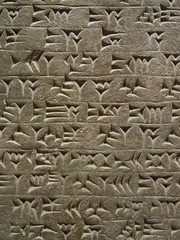
11149691231cuneiformA form of writing developed by the Sumerians using a wedge-shaped stylus and clay tablets12
11149691232city-stateA form of political organization typical of Mesopotamian civilization; consisted of agricultural hinterlands ruled by an urban-based king13
11149691233ziggurata massive tower building usually associated with Mesopotamian temple connections14
11149691234Babylonian EmpireUnified all of Mesopotamia circa 1800 B.C.E.; collapsed due to foreign invasion circa 1600 B.C.E.15
11149691235HammurabiThe most important Babylonian ruler; responsible for codification of the law16
11149691236PharaohThe term used to denote the kings of ancient Egypt; the term, "great house" refers to the palace of the pharaohs17
11149691237pyramidsMonumental architecture typical of Old Kingdom Egypt; used as burial sites for pharaohs18
11149691238hieroglyphsForm of writing developed in ancient Egypt; more pictorial than Mesopotamian cuneiform19
11149691239KushAfrican state that developed along the upper reaches of the Nile circa 1000 B.C.E.; conquered Egypt and ruled it for several centuries20
11149691240monotheismThe exclusive worship of one god; introduced by Jews into Middle Eastern civilization21
11149691241PhoeniciansSeafaring civilization located on the shores of the eastern Mediterranean; established colonies throughout the Mediterranean22
11149691242Harappa and Mohenjo DaroMajor urban complexes of Harappan civilization; laid out on planned grid pattern23
11149691243AryansIndo-European nomadic, warlike, pastorialists who replaced Harappan civilization24
11149691244Huanghe (Yellow) River BasinSite of the development of sedentary agriculture in China25
11149691245Shang1st Chinese dynasty (after the legendary Xia)26
11149691246OraclesShamans or priests in Chinese society who foretold the future through interpreting animal bones cracked by heat; inscriptions on bones led to Chinese writing27
11149691247ideographic writingPictograph characters grouped together to create new concepts; typical of Chinese writing28
11149691248Big GeographyA term that draws attention to the global nature of world history.29
11149691249PaleolithicThe period that ended about 3,000 years after the end of the last Ice Age, it lasted until about 10,000 years ago. (Old Stone Age) The period of the Stone Age associated with the evolution of humans. It predates the Neolithic period.30
11149691250Human migration during Paleolithic eramovement of humans from Africa to Eurasia, Australia, and the Americas31
11149691251eglitarianequality among people (no social levels)32
11149691252toolsHumans developed a wider range of ____ specially adapted to different environments from tropics to tundra33
11149691253Neolithic Revolutionperiod of change from hunter-gatherer lifesyle to agricultural lifestyles associated with domestication, farming, and settlement34
11149691254patriarchyfather based/male dominated society35
11149691255climatic changePermanent agricultural villages emerged first in the lands of the eastern Mediterranean, possibly as a response to what?36
11149691256weaponsPastoralists were often the developers and disseminators of of ____ and forms of transportation that transformed warfare in agrarian civilizations37
11149691257horsesname one mode of new transportation by the pastoralists38
11149691258artElites, both political and religious, promoted ____.39
11149691259record-keeping systems___ arose independently in all early civilization sand subsequently were diffused40
11149691260Nile RiverThis river flooded regularly.41
11149691261Tigris RiverThis river's floods were unpredictable.42
11149691262MesopotamianUnpredictable weather patterns affected the development of the _____ civilization.43
11149691263Egyptian_______art demonstrated little change for nearly 1000 years.44
11149691264Nubia and KushKingdoms upriver from Egypt.45
11149691267Standard of Ur46
11149691268Harappan King or Priest Figure47
11149691265JerichoOne of the earliest cities: located in modern Israel.48
11149691266Catal-HyoukOne of the earliest cities: located in modern Turkey.49

AP Literature: literary terms Flashcards

Terms : Hide Images
4763652651Allegorya story, poem, or picture that can be interpreted to reveal a hidden meaning, typically a moral or political one Ex:The Girl that had clear blue eyes was interpreted as pure of heart.0
4763653741Alliterationhe occurrence of the same letter or sound at the beginning of adjacent or closely connected words. Ex: Some Snug Slug1
4763653742Allusionis a brief and indirect reference to a person, place, thing or idea of historical, cultural, literary or political significance. It does not describe in detail the person or thing to which it refers. Ex:"This place is like a Garden of Eden."2
4763655338Antagonistan antagonist is a character or a group of characters which stand in opposition to the protagonist or the main character. Ex: Antagonist in hunger games is president snow3
4763656731Apostropheis a rhetorical device used by playwrights and authors whenever their characters address a character that isn't present in the scene. Ex: oh romeo! wherefore art thou romeo!4
4763657027Assonancetakes place when two or more words close to one another repeat the same vowel sound but start with different consonant sounds Ex:mEn sEll the wEdding bElls5
4763657265Blank VerseBlank verse is a literary device defined as un-rhyming verse written in iambic pentameter.6
4763658295Cacophonythe term refers to the use of words with sharp, harsh, hissing and unmelodious sounds primarily those of consonants to achieve desired results. Ex:Pow!!!!7
4763658950Caesuraa rhythmical pause in a poetic line or a sentence Ex: the man laughed but soon the joke grew old8
4763660399Characterizationcharacterization is the process by which the writer reveals the personality of a character. Characterization is revealed through direct characterization and indirect characterization. Direct Characterization tells the audience what the personality of the character is. Ex:In the hunger games prim is shown as delicate yet strong.9
4763660400Climaxthe most intense, exciting, or important point of something; a culmination or apex Ex: a climax can be a fight in which a character may die10
4763661684Commercial FictionCommercial fiction is sometimes called genre fiction because books of this type often fall into categories, such as western, gothic, romance, historical, mystery and horror. Ex: goose bumps11
4763661685ConflictIn literature, the literary element conflict is an inherent incompatibility between the objectives of two or more characters or forces. Conflict creates tension and interest in a story by adding doubt as to the outcome. A narrative is not limited to a single conflict. Ex: In the great Gatsby there are problems in valley of the ashes and in west egg12
4763662613ConsonanceConsonance refers to repetitive sounds produced by consonants within a sentence or phrase. This repetition often takes place in quick succession such as in pitter, patter. It is classified as a literary term used in both poetry as well as prose. Ex.pitter patter13
4763663063ConnotationConnotation refers to a meaning that is implied by a word apart from the thing which it describes explicitly. Words carry cultural and emotional associations or meanings in addition to their literal meanings or denotations. Ex:bobby was blue after his dog passed away14
4763677604CoupletA couplet is a literary device which can be defined as having two successive rhyming lines in a verse and has the same meter to form a complete thought. It is marked by a usual rhythm, rhyme scheme and incorporation of specific utterances. Ex:I sat with a fat cat on my lap as i got up the fat cat sat on the floor.15
4763681949DenotationThe literal or primary meaning of a word, in contrast to the feelings or ideas that the word suggests. Ex: the boy wore a blue shirt16
4763682458Dues Ex Machinaan unexpected power or event saving a seemingly hopeless situation, especially as a contrived plot device in a play or novel. Ex: when aurther can pull out the sword out of the rock17
4763682859Didactic PoetryA didactic poem is directly and unapologetically instructional or informational: it teaches or explains something, such as a truth or moral. The English word "didactic" derives from the Greek didaktikos ("able to teach"). Ex: Chicken Soup For The Soul18
4763685241DilemmaDilemma is a Greek word, which means double proposition, or perplexing situation, which presents two different possibilities, and both of them seem practically acceptable. Ex: tortoise and the hare19
4763697712Direct PresentationIn direct presentation, a character is described by the author, the narrator or the other characters. Ex: usually happens with the main character20
4763699604Dramatic Ironya literary technique, originally used in Greek tragedy, by which the full significance of a character's words or actions are clear to the audience or reader although unknown to the character. Ex: A man about to die but does not know it only the audience since we can see the killer.21
4763700765Dramatizationthe act of dramatizing. Ex: Exaggeration of a little paper cut22
4763701880Dynamic Or Developing CharactersDynamic or developing characters A static character, in this vocabulary, is one that does not undergo important change in the course of the story, remaining essentially the same at the end as he or she was at the beginning. A dynamic character, in contrast, is one that does undergo an important change in the course of the story. scrooge changes at the end of a Christmas carol23
4763716917Shakespearean SonnetShakespeare's Sonnets is the title of a collection of 154 sonnets by William Shakespeare, which covers themes such as the passage of time, love, beauty and mortality. The first 126 sonnets are addressed to a young man; the last 28 to a woman.24
4763717222EpiphanyAn epiphany is an experience of sudden and striking realization. Generally the term is used to describe scientific breakthrough, religious or philosophical discoveries, but it can apply in any situation Ex:realizing someone is pregnant25
4763717422Euphonythe quality of being pleasing to the ear, especially through a harmonious combination of words. Ex: Music26
4763718206Falling Actionthe part of a literary plot that occurs after the climax has been reached and the conflict has been resolved. Compare rising action. Ex: Going to celebrate after good news27
4763774764FantasyFantasy literature is the body of written works that employ the motifs, themes, and stylistic approaches expected in the fantasy genre. Historically, most works of fantasy were written pieces of literature.28
4763775250Figurative LanguageFigurative language is using figures of speech to be more effective, persuasive and impactful. Figures of speech such as metaphors, similes, allusions go beyond the literal meanings of the words to give the readers new insights Ex: The boy was as fat as a cow29
4763776869First Person Point Of ViewFirst person narrative is a point of view (who is telling a story) where the story is narrated by one character at a time. This character may be speaking about him or herself or sharing events that he or she is experiencing.30
4763777739Flat CharactersFlat characters: flat characters are two-dimensional in that they are relatively uncomplicated and do not change throughout the course of a work. By contrast, round characters are complex and undergo development, sometimes sufficiently to surprise the reader. Ex:The flat characters are seen on the first page of the book as an illustration of their physical appearance.31
4763778407Free Versepoetry that does not rhyme or have a regular meter.32
4763778547ImageryImagery means to use figurative language to represent objects, actions and ideas in such a way that it appeals to our physical senses. Usually it is thought that imagery makes use of particular words that create visual representation of ideas in our minds. The word imagery is associated with mental pictures. Ex: The sun kissed the floor as it slowly faded away33
4763779073Indirect PresentationIndirect presentation is a writing technique related to characterization. Through indirect presentation, the reader learns about the character's personality through his thoughts, words and actions, and through the way other characters react to him. Ex: the boy is known to be antisocial due too his actions34
4763779370IronyThe expression of one's meaning by using language that normally signifies the opposite, typically for humorous or emphatic effect. Ex: "oh sure let him wack him self silly with a bat" said Ashley "Really"? replied Alex NO! Said Ashley35
4763791565Literary FictionLiterary fiction comprises fictional works that hold literary merit; that is, they involve social commentary, or political criticism, or focus on the human condition. Ex:The hunger games36
4763791749Metaphora figure of speech in which a word or phrase is applied to an object or action to which it is not literally applicable. Ex: He is such a dog37
4763792011Metera rhythm of accented and unaccented syllables which are organized into patterns, called feet. In English poetry, the most common meters are these: Iambic: a foot consisting of an unaccented and accented syllable. Ex:unstressed and stressed38
4763792385Metonymyis metaphor in which an object is used to describe something that's closely related to it. Ex: president can be called the man39
4763792684MysteryThe mystery genre is a type of fiction in which a detective, or other professional, solves a crime or series of crimes. It can take the form of a novel or short story. This genre may also be called detective or crime novels Ex: crime plot40
4763793448Objective Point Of Viewthe writer tells what happens without stating more than can be inferred from the story's action and dialogue. The narrator never discloses anything about what the characters think or feel, remaining a detached observer. Ex:The man was convicted of many crimes and put in a cell for many years.41
4763793640OctaveAn octave is a verse form consisting of eight lines of iambic pentameter (in English) or of hendecasyllables (in Italian). The most common rhyme scheme for an octave is abba abba. An octave is the first part of a Petrarchan sonnet, which ends with a contrasting sestet.42
4763794597Omniscient Point Of Viewa literary technique of writing narrative in third person in which a narrator knows the feelings and thoughts of every character in the story.43
4763795255Onomatopoeiaa word which imitates the natural sounds of a thing. It creates a sound effect that mimics the thing described, making the description more expressive and interesting. Ex: sssssssssssss44
4763795610Overstatementis an act of stating something more than it actually is in order to make the point more serious or important or beautiful. In literature, writers use it as a literary technique for the sake of humor, and for laying emphasis on a certain point. Ex:The man had a paper cut and he bleed out45
4763798241ParadoxThe term Paradox is from the Greek word "paradoxon" that means contrary to expectations, existing belief or perceived opinion. It is a statement that appears to be self-contradictory or silly but may include a latent truth. Ex: Seeing a duplicate of yourself46
4763798445PersonificationGiving something human like quality Ex: the flower danced in the rain47
4763800035Petrarchan Sonnetconsisting of an octave with the rhyme scheme abbaabba and of a sestet with one of several rhyme schemes, as cdecde or cdcdcd. Expand. Also called Italian sonnet.48
4763800463Plotthe main events of a play, novel, movie, or similar work, devised and presented by the writer as an interrelated sequence. Ex: The story took place in a dark room where everything that happened in there was chaotic49
4763801129Poetryliterary work in which special intensity is given to the expression of feelings and ideas by the use of distinctive style and rhythm; poems collectively or as a genre of literature. Ex: where writers express their emotion50
4763801431Point Of Viewliterary work in which special intensity is given to the expression of feelings and ideas by the use of distinctive style and rhythm; poems collectively or as a genre of literature. Ex:people can have different perspectives about thing and see thing differently due to the POV.51
4763801726Protagonistis the central character or leading figure in poetry, narrative, novel or any other story. A protagonist is sometimes called a "hero" by the audience or readers. The word originally came from the Greek language and in Greek drama which refers to the person who led the chorus. Ex: spider man52
4763801933Quatrainis a verse with four lines, or even a full poem containing four lines, having an independent and separate theme. Often one line consists of alternating rhyme.53
4763803800Rhetorical Poetryhetoric is a technique of using language effectively and persuasively in spoken or written form. It is an art of discourse, which studies and employs various methods to convince, influence or please an audience. Ex: Used to convey something to an audience54
4763803938Rhymecorrespondence of sound between words or the endings of words, especially when these are used at the ends of lines of poetry. Ex: Roses are red violets are blue55
4763810410Rhythmstrong, regular, repeated pattern of movement or sound. Ex: Music56
4763806886Rising Actionin a plot is a series of relevant incidents that create suspense, interest and tension in a narrative. In literary works, a rising action includes all decisions, characters' flaws and background circumstances that together create turns and twists leading to a climax.57
4763806980Round CharactersA round character is a major character in a work of fiction who encounters conflict and is changed by it.Round characters tend to be more fully developed and described than flat, or static, characters. Ex: gru from despicable me is very complex.58
4763807446Sarcasmthe use of irony to mock or convey contempt. Ex: Teenagers use alot of sarcasm59
4763807447SatireSatire is a technique employed by writers to expose and criticize foolishness and corruption of an individual or a society by using humor, irony, exaggeration or ridicule. It intends to improve humanity by criticizing its follies and foibles. Ex: the onion60
4763807915Sestetthe last six lines of a sonnet.61
4763808162Short Storyan invented prose narrative shorter than a novel usually dealing with a few characters and aiming at unity of effect and often concentrating on the creation of mood rather than plot.62
4763808421Simileis a figure of speech that makes a comparison, showing similarities between two different things using the words "like" or "as". Ex: he is as lazy as a rock63
4763810659Situational Ironyoccurs when there is an incongruity between what is expected to happen and what actually happens. Authors use this device to create a more relatable situation or character within literature. It can also be used to change the tone or mood of a written work. Ex: some one is very sick and expected to die however survives64
4763810660Sonnetis derived from the Italian word "sonetto". It means a small or little song or lyric. In poetry, a sonnet has 14 fourteen lines and is written in iambic pentameter. Each line has 10 syllables. It has a specific rhyme scheme and a "volta" or a specific turn.65
4763811720Static CharactersA static character is one that does not undergo inner changes or undergoes a little change. Ex: The narrow minded man does not change his mind66
4763812226Stock Charactersis a stereotypical person whom audiences readily recognize from frequent recurrences in a particular literary tradition. Stock characters are archetypal characters distinguished by their flatness. As a result, they tend to be easy targets for parody and to be criticized as clichés.67
4763812512Structure:The most common elements of the narrative structure are setting, plot, and theme.68
4763812957SuspenseThe condition of being suspended; cessation for a time. the pleasurable emotion of anticipation and excitement regarding the outcome or climax of a book, film etc. The unpleasant emotion of anxiety or apprehension in an uncertain situation. Ex: Horror movies69
4763813320Symbolsignify ideas and qualities by giving them symbolic meanings that are different from their literal sense. Symbolism can take different forms. Generally, it is an object representing another to give it an entirely different meaning that is much deeper and more significant. Ex: In a Christmas carol the ghost of Marley had chains on him to represent his past life70
4763813608Synecdocheis a literary device in which a part of something represents the whole or it may use a whole to represent a part. Synecdoche may also use larger groups to refer to smaller groups or vice versa.71
4763814080Synesthesiasynesthesia refers to a technique adopted by writers to present ideas, characters or places in such a manner that they appeal to more than one senses like hearing, seeing, smell etc. at a given time. Ex: the humid damp smell filled the room as the rain hit the hot pavement72
4763814310ThemeTheme is defined as a main idea or an underlying meaning of a literary work that may be stated directly or indirectly.73
4763814508Third Person Point Of ViewThird person P.O.V: uses pronouns like he, she, it, or they. It differs from the first person, which uses pronouns such as I and me, and from the second person, which uses pronouns such as you and yours. Ex: She took the money off the table74
4763816038Third Person Limited Point Of viewThe narrator only knows the thoughts and feelings of one character. All characters are described using pronouns, such as 'they', 'he', and 'she'. But, one character is closely followed throughout the story, and it is typically a main character75
4763816039Tone, in written composition, is an attitude of a writer toward a subject or an audience. Tone is generally conveyed through the choice of words or the viewpoint of a writer on a particular subject.76
4763816236UnderstatementA figure of speech in which a writer or speaker deliberately makes a situation seem less important or serious than it is. A statement which lessens or minimizes the importance of what is meant. Restraint or lack of emphasis in expression, as for rhetorical effect. Ex: A man gets stabbed and refers to it as just a scratch77
4763816469Verbal Ironyirony in which a person says or writes one thing and means another, or uses words to convey a meaning that is the opposite of the literal meaning. Examples from the Web for verbal irony Expand.78
4766957745Villanelle79

biotechnology terminology Flashcards

Terms : Hide Images
10787415748biotechnologyThe manipulation of living organisms or their components to produce useful products.0
10787425912selective breedingThe process of selecting a few organisms with desired traits to serve as parents of the next generation1
10787432295fermentationThe chemical action of yeast, bacteria or enzymes on sugars2
10798483376BioprocessingA technique in which microorganisms, living cells, or their components are used to produce a desired end product.3
10798489819genetic engineeringartificially combining DNA from 2 different sources4
10798502015protein engineeringMaking proteins that don't exist in nature5
10798513554gene cloninginsertion of a plasmid DNA into a gene.6
10798526638reproductive cloningcopying an entire organism from a single somatic cell nucleus7
10798540231monoclonal antibodiesa collection of identical antibodies that interact with a single antigen site8
10798551850Use of monoclonal antibodiesdetection of disease, pregnancy, cancer, contaminants9
10798564078plant and animal cell culturehaving an animal grow more of the same tissue10
10798581062organism level of biotechnologyworking with complete intact organisms or their cells11
10798592754BiosensorsMicrobes that can locate biologically active pollutants12
10798595931use of biosensorsmeasure food freshness and blood glucose in diabetics13
10798608742molecular level of biotechnologyuse of gene engineering by taking a gene, isolating it, cutting it and moving it into a cell of another organism.14
10798644112safety symbol of acutely toxic15
10803780838safety symbol for harmful to skin eyes irritant16
10803844981safety symbol for oxidizer17
10803852194safety symbol for explosive18
10803857705safety symbol for burns skin/corrosive to metal19
10803865227safety symbol for gas under pressure20
10803895415safety symbol for flammable21
10803937175safety symbol for toxic to aquatic life22
10803953556safety symbol for carcinogen, mutagen, reproductive toxin/ toxic if aspirated23
10804013572Chemical Hazard Label Upper quadrant ( red) warns about whatFire Hazard24
10804027609Chemical Hazard Label Right quadrant (yellow) warns about whatinstability/reactivity25
10804048563Chemical Hazard Label bottom quadrant (white) warns about whatspecific hazard (acid, alkali, corrosive, oxidizer, radioactive, use no water)26
10804072597Chemical Hazard Label left quadrant (blue) warns about whatHealth Hazard27
10804121947Liters measure what?volume28
10804125273Meters measure what?length/distance29
10804132880grams measure what?mass30
10804141736rule for multiplying in scientific notationmultiply coefficient and add exponents31
10804146475rule for adding in scientific notationmake both addends have the same exponent. Keep exponent same in answer, add coefficient32
10804175512rule for dividing in scientific notationdivide the coefficients and subtract exponents33
10804204257rule for subtracting in scientific notationmake both numbers have the same exponent. Keep exponent same in answer, subtract coefficients34
10804254210How many grams are in one kilogram?1000 grams35
10804259850how many milligrams are in one gram1000 mg36
10804355149how many micrograms are in a gram1 million micrograms37
10804367705How do you find formula weight of a moleculeusing a periodic table, add all the atomic masses together.38
10804388512Which formula do you use when trying to dilute a stock solution to make a set amount of the diluted solution you want?C1V1 = C2V239
10804408331Which formula do you use if you need to know how many grams of a compound you need to make certain volume of a solution of a certain molarityFW X M X L40

Pages

Subscribe to CourseNotes RSS

Need Help?

We hope your visit has been a productive one. If you're having any problems, or would like to give some feedback, we'd love to hear from you.

For general help, questions, and suggestions, try our dedicated support forums.

If you need to contact the Course-Notes.Org web experience team, please use our contact form.

Need Notes?

While we strive to provide the most comprehensive notes for as many high school textbooks as possible, there are certainly going to be some that we miss. Drop us a note and let us know which textbooks you need. Be sure to include which edition of the textbook you are using! If we see enough demand, we'll do whatever we can to get those notes up on the site for you!