AP Notes, Outlines, Study Guides, Vocabulary, Practice Exams and more!

Fundamental Anatomy Flashcards

Terms : Hide Images
10659928938MedialToward the midline of the body0
10659933253ProximalCloser to the trunk or midline1
10659936535SuperiorAbove or toward the head2
10659938023AnteriorToward the front of the body3
10659941319VentralOn the front of the body4
10659944990SuperficialToward the skin5
10659947756LateralAway from the midline6
10659949742DistalAway from the trunk or midline7
10659957241InferiorBelow or away from the head8
10659958984DorsalOn the back of the body9
10659958985DeepInside the body10

AP Psychology Unit 3 Flashcards

Eve Roebke
Mr. Morrow
AP Psych

Terms : Hide Images
10885973695biological psychologiststhe scientific study of the links between biological and psychological processes.0
10885973696neurona nerve cell; the basic building block of the nervous system.1
10885973697dendritesthe bushy, branching extensions of a neuron that receive messages and conduct impulses toward the cell body.2
10885973698axonthe neuron extension that passes and electrical messages through its branches to other neurons or to muscles or glands.3
10885973699myelin sheatha layer of fatty tissue segmentally encasing the fibers of many neurons; enables vastly greater transmission speed of neural impulses as the impulse hops from one node to the next.4
10885973700action potentiala neural impulse; a brief electrical charge that travels down an axon.5
10885973701refractory perioda period of inactivity after a neuron has fired.6
10885973702thresholdthe level of stimulation required to trigger a neural impulse.7
10885973703all-or-nothing responsea neuron's reaction of either firing or not firing.8
10885973704synapsethe junction between the axon tip of the sending neuron and the dendrite or cell body of the receiving neuron. The tiny gap at this junction is called the synaptic gap or synaptic cleft.9
10885973705neurotransmitterschemical messengers that cross the synaptic gaps between neurons. When released by the sending neuron, they travel across the synapse and bind to receptor sites on the receiving neuron, thereby influencing whether that neuron will generate a neural impulse.10
10885973706reuptakea neurotransmitter's reabsorption by the sending neuron.11
10885973707endorphins"morphine within"—natural, opiate-like neurotransmitters linked to pain control and to pleasure.12
10885973708AgonistA chemical that mimics the action of a neurotransmitter.13
10885973709AntagonistsChemical substances that block or reduce a cell's response to the action of other chemicals or neurotransmitters.14
10885973710nervous systemthe body's speedy, electrochemical communication network, consisting of all the nerve cells of the peripheral and central nervous systems.15
10885973711Central nervous system (CNS)the brain and the spinal cord16
10885973712Peripheral nervous system (PNS)the sensory and motor neurons that connect the central nervous system to the rest of the body17
10885973713nervesbundled axons that form neural "cables" connecting the central nervous system with muscles, glands, and sense organs.18
10885973714sensory (afferent) neuronsneurons that carry incoming information from the sensory receptors to the brain and spinal cord.19
10885973715motor (efferant) neuronsneurons that carry outgoing information from the brain and spinal cord to the muscles and glands.20
10885973716interneuronsneurons within the brain and spinal cord that communicate internally and intervene between the sensory inputs and motor outputs.21
10885973717Somatic nervous systemthe division of the peripheral nervous system that controls the body's skeletal muscles (skeletal nervous system)22
10885973718Autonomic nervous systemthe part of the peripheral nervous system that controls the glands and the muscles of the internal organs. It's sympathetic system arouses and parasympathetic calms.23
10885973719Sympathetic nervous systemthe division of the autonomic nervous system that arouses the body, mobilizing its energy in stressful situations. (If you get scared)24
10885973720Parasympathetic nervous systemthe division of the autonomic nervous system that calms the body, conserving its energy (Your PARents come home and calm you down)25
10885973721Reflexessimple, automatic responses to sensory stimuli, such as the knee-jerk response26
10885973722Endocrine systemthe body's "slow" chemical communication system; a set of glands that secrete hormones into the bloodstream27
10885973723Hormoneschemical messengers that are manufactured by the endocrine glands, travel through the bloodstream, and affect other tissues28
10885973724Adrenal glandsa pair of endocrine glands that sit just above the kidneys and secrete hormones (epinephrine and norepinephrine) that help arouse the body in times of stress29
10885973725Pituitary gland"THE MASTER GLAND" the endocrine system's most influential gland under the influence of the hypothalamus, the pituitary regulates growth and controls other endocrine glands30
10885973726Lesiontissue destruction. It can occur naturally or experimentally by the caused distruction/remove of brain tissues31
10885973727Electroencephalogram (EEG)An amplified recording of the waves of electrical activity that sweep across the brain's surface. These waves are measured by electrodes placed on the scalp.32
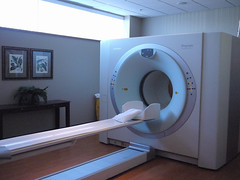
10885973728CT (computed tomography) scana series of x-ray photographs taken from different angles and combined by computer into a composite representaion of a slice through the body. Aslo called a CAT scan33
10885973729(PET) Positron emission tomography scanA visual display of brain activity that detects where a radioactive form of glucose goes while the brain performs a given task.34
10885973730MRI (magnetic resonance imaging)a TECHNIQUE THAT USES MAGNETIC FIELDS AND RADIO WAVES TO PRODUCE COMPUTER generated images that distinguish among different types of soft tissues.35
10885973731fMRI (functional MRI)A technique for revealing bloodflow and, therefore, brain activity by comparing successive MRI scans. fMRI scans show brain function.36
10885973732Brainstemthe oldest part and central core of brain. AKA reticular formation, or reticular activating system. In charge of automatic survival functions37
10885973733MeduallaThe base of the brainstem. Controls heartbeat and breathing.38
10885973734Ponssleep and arousal39
10885973735Thalamusthe brains 'sensory switch board' Located at top of brainstem; directs messages to the sensory areas and transmits them to cerebellum and medulla.40
10885973736Reticular FormationPlays an important role in controlling arousal.41
10885973737Cerebellum"little brain" at the rear of the brainstem; functions including processing sensory input, coordinating movement output and balance, and enabling nonverbal learning and memory.42
10885973738Limbic systemA system of neural structures at the border of brainstem. Associated with emotions like fear, agression, and drives such as those for food and sex. Includes the Hippocampus, Amygdala and hypothalamus.43
10885973739Amygdala2Lima bean sized neural clusters in the limbic system, linked to emotion. Includes rage and fear.44
10885973740HippocampusLimbic system. Learning and memory matcher.45
10885973741hypothalamousA neural structure lying below the thalamus, it directs several maintenance activities (eating, drinking, body temperature) helps govern the endocrine system via the pituitary gland, and is linked to emotion and reward.46
10885973742Cerebral cortexFabric of interconnected neuron cells. Higher order thinking. Takes meaning and puts it to focus. The body's ultimate control and information-processing center.47
10885973743Glial CellsCells in the nervous system that support, nourish, and protect neurons.48
10885973744Frontal Lobesthe portion of the cerebral cortex lying just behind the forehead; involved in speaking and muscle movements and in making plans and judgements.49
10885973745Parietal lobesThe portion of the cerebral cortex lying at the top of the head and toward the rear; includes the sensory cortex. Receives sensory input for touch and body position.50
10885973746Occipital lobesthe portion of the cerebral cortex lying at the back of the head; includes the visual areas, which receive visual info from the opposite visual feild.51
10885973747Temporal lobesThe portion of the cerebral cortex lying roughyl above the ears; includes the auditory areas, each of which revieves aditory info primarily from the opposite end.52
10885973748motor cortexan area at the rear of the frontal lobes that controls voluntary movements.53
10885973749somatosensory cortexthe area at the front of the parietal lobes that registers and processes body touch and movement sensations.54
10885973773association areasareas of the cerebral cortex that are not involved in primary motor or sensory functions; rather, they are involved in higher mental functions such as learning, remembering, thinking, and speaking55
10885973750PlasticityThe brain's ability to change, especially during childhood, by reorganizing after damage or by building new pathways based on experience.56
10885973751NeurogenesisFormation of new neurons57
10885973752Corpus CallosumLarge band of neural fibers connecting the two brain hemispheres and carrying messages between them.58
10885973753Split BrainA conditioning resulting from surgery that isolates the brain's two hemispheres by cutting the fibers connecting them.59
10885973754Consciousnessour awareness of ourselves and our environment.60
10885973755Cognitive NeuroscienceThe interdisciplinary study of the brain activity linked with cognition. (including perception, thinking, memory and language.)61
10885973756Dual Processinga phenomenon can occur in two different ways, or as a result of two different processes, The principle that information is often simultaneously processed on separate conscious and unconscious tracks62
10885973757behavior geneticsthe study of the relative power and limits of genetic and environmental influences on behavior63
10885973758environmentevery nongenetic influence, from prenatal nutrition to the people and things around us, Every nongenetic influence, from prenatal nutrition to the people and things around us.64
10885973759chromosomesthreadlike structure made of DNA molecules that contain the genes65
10885973760DNA (deoxyribonucleic acid) .(deoxyribonucleic acid) a complex molecule containing the genetic information that makes up the chromosomes66
10885973761genesthe biochemical units of heredity that make up the chromosomes; segments of DNA capable of synthesizing a protein67
10885973762genomethe complete instructions for making an organism, consisting of all the genetic material in that organism's chromosomes68
10885973763identical twins (monozygotic)twins who develop from a single fertilized egg that splits in two, creating two genetically identical organisms69
10885973764fraternal twins (dizygotic)twins who develop from separate fertilized eggs; no genetically closer than brothers and sisters, but they share a fetal environment70
10885973765molecular geneticistssubfield of biology that study the molecular structure and function of genes71
10885973766heritabilitythe proportion of variation among individuals that we can attribute to genes; this may vary depending on population range and the environment being studied72
10885973767interactionthe interplay that occurs when the effect of one factor (such as environment) depends on another factor (such as heredity)73
10885973768epigeneticsThe study of environmental influences on gene expression that occur without a DNA change.74
10885973769evolutionary psychologistsThe study of the evolution of behavior and the mind, using principles of natural selection.75
10885973770natural selectionthe principle that, among range of inherited trait variations, those that lead to increased reproduction and survival will most likely be passed on to succeeding generations76
10885973771mutationsA random error in gene replication that leads to a change77

Immune System - AP Biology Flashcards

Terms : Hide Images
11111336587Innate ImmunityGeneral, non-specific protection to the body, including the skin (barrier), gastric acid, phagocytes, and lysozyme.0
11111336588First Line of DefenseNonspecific barrier to keep out pathogens includes skin, mucous membranes, and normal microbiota1
11111336589Second Line of DefenseNonspecific defense and inflammatory response initiated by chemical signals to attack and isolate invading pathogens; includes response by phagocytes2
11111336590Inflammatory ResponseVasodilation, phagocytosis, and increase in body temperature3
11111336591Histamineschemical signals that trigger vasodilation, increasing blood supply to area4
11111336592PhagocytesWhite blood cells that engulf invading pathogens e.g., neutrophils, macrophages5
11111336593Chemokineschemical signals secreted by blood vessel cells that attract more white blood cells (phagocytes) to the area6
11111336594Adaptive (Acquired) immunitySpecific immunity; B and T cells; humoral and cell-mediated response7
11111336595LymphocytesT cells, B cells, and NK cells8
11111336596MacrophagesAPC that engulfs large numbers of pathogens; presents antigen to activate T cells9
11111336597MHC Imolecules found on all nucleated cells...Self vs nonself10
11111336598MHC IImolecules found on macrophages, B cells, and activated T cells; signal helper T cells. self vs nonself11
11111336599Memory CellsResponsible for lifelong immunity; B and T cells that are able to more quickly fight secondary infection12
11111336600AntibodyY-shaped protein with variable antigen binding region; slows pathogens to facilitate destruction13
11111336601Antigenany molecule that elicits an immune response; the body sees as foreign14
11111336602Passive ImmunityTemporary immunity where antibodies are transferred from another animal ex: mother transfers some of her antibodies to her nursing child15
11111336603HIVA retrovirus that attacks helper T cells16
11111336604Autoimmune diseasefailure of immune tolerance; the body does not properly distinguish self from nonself17
11111336605AllergyHypersensitive immune response to certain substances that causes that release of histamine18
11111336606B CellsCells involved in humoral response; produce antibodies; activated by Th cells or free antigens19
11111336607Cytotoxic T CellsCells involved in cell-mediated response; specifically kills body cells that have been infected with pathogens and cancer cells; stimulated by APCs (antigen presenting cells) and helper T-cells; also known as CD8+ T cells20
11111336608Helper T CellsSet off an alarm to the immune system that pathogens have broken through the body's line of defense; binds to class II MHC; also known as CD4+ T cells21
11111336609Effector CellShort-lived lymphocyte such as a B cell or cytotoxic T lymphocyte that can take immediate action against an antigen.22
11111336610Natural Killer CellsA type of white blood cell that can non-specifically kill tumor cells and virus-infected cells; an important component of innate immunity.23
11111336611Mast CellsCells that release chemicals (such as histamine) that promote inflammation.24
11111336612Humoral ResponseThe branch of acquired immunity that involves the activation of B cells and that leads to the production of antibodies, which defend against bacteria and viruses in body fluids.25
11111336613Cell-mediated ResponseThe branch of acquired immunity that involves the activation of cytotoxic T cells, which defend against infected cells and cancer cells.26
11111336614NeutrophilsThe most abundant type of white blood cell. Phagocytic and tend to self-destruct as they destroy foreign invaders, limiting their lifespan to a few days. (aka: Pus)27
11111336615epitoperegion of an antigen to which an antibody binds; also called antigenic determinant28
11111336616immunoglobulin (Ig)class of proteins that function as antibodies29
11111336625pathogenan organism that causes a disease or illness30
11111336627clonal selectionprocess by which an antigen only activates lymphocytes with receptors that specifically bind it -- these lymphocytes proliferate into clones that respond to that specific antigen; accounts for specificity and memory of acquired immune response31
11111336628cardinal signs of inflammation1. redness 2. heat 3. swelling 4. pain (sometimes loss of function)32
11111336629white blood cellsneutrophils, lymphocytes, monocytes/macrophages, eosinophils, basophils33
11111336630primary immune responseresponse after first exposure to a particular pathogen34
11111336631secondary immune responseresponse after the second exposure to a particular pathogen; faster than primary due to memory cells35

AP Literature: Hamlet Quotes Flashcards

Terms : Hide Images
8089393791"A little more that kin and less than kind"Hamlet0
8089393792"With an auspicious and a dropping eye. With mirth in funeral and with dirge in marriage."Claudius1
8089393793"This above all else, to thine own self be true."Polonius (to Laertes)2
8089393794"Something is rotten in the state of Denmark"Marcellus (to Horatio)3
8089393795"Taint not thy mind, nor let thy soul contrive against thy mother aught."Ghost4
8089393796"The time is out of joint. O cursed spite. That ever I was born to set it right."Hamlet5
8089393797"I did repel his letters and denied his access to me."Ophelia (to Polonius about Hamlet)6
8089393798"Brevity is the soul of wit...your noble son is mad."Polonius (to Laertes)7
8089393799"The very substance of ambition is merely the shadow of a dream."Guildenstern8
8089393800"What a piece of work is a man, how noble in reason, how infinite in faculties."Hamlet9
8089393801"The play's the thing wherein I'll catch the conscience of the King."Hamlet (plan for play)10
8089393802"To be or not to be: that is the question"Hamlet11
8089393803"Get thee to a nunnery. Why woulds't though be a breeder of sinners"Hamlet (to Ophelia)12
8089393804"Give me some light. Away."Claudius13
8089393805"The lady doth protest too much methinks"Gertrude14
8089393806"O, my offense is rank, it smells to heaven, It hath the primal eldest curse upon't"Claudius15
8089393807"These words like dagger enter my ears. No more, sweet Hamlet."Gertrude (to Hamlet)16
8089393808"But we will ship him hence and this vile deed."Claudius17
8089393809"My thoughts be bloody or be nothing worth"Hamlet18
8089393810"Let come what comes, only I'll be revenged most thoroughly for my father"Laertes19
8089393811"I do not know from what part of the world I should be greeted, if not from Lord Hamlet."Horatio20
8089393812"Til that her garments heavy with their drink pulled the poor wretch from her melodious lay to muddy death."Gertrude (about Ophelia)21
8089393813"Alas poor Yorick, I knew him. Horatio, a fellow of infinite jest."Hamlet22
8089393814"The devil take thy soul"Laertes (to Hamlet)23
8089393815"Here's to thy health. Give him the cup."Claudius24
8089393816"Now cracks a noble heart. Good night, sweet Prince. And flight of angels sing thee to thy rest."Horatio (to Hamlet)25
8089393817"For me, with sorrow I embrace my fortune."Fortinbras26

AP Literature Terms Flashcards

Terms : Hide Images
10575530431Zeitgeistthe general cultural, artistic, religious, and philosophic climate of an era0
10575537895Dialectical Clashclashing of two ideas: thesis, antithesis, synthesis1
10575548615HumanismA Renaissance intellectual movement in which thinkers studied classical texts and focused on human potential and achievements2
10575561238Synesthesiadescribing one kind of sensation in terms of another ("a loud color", "a sweet sound")3
10575567848MotifA recurring theme, subject or idea in literary work Ex. green light in gatsby4
10575575266Archetypea symbol that transcends time and culture5
10575599783collective unconsciousCarl Jung's concept of a shared, inherited reservoir of memory traces from our species' history6
10575616617signan object, picture, or word which signifies something other than itself7
10575623583SymbolismA person, place or object which has a meaning in itself but suggests other meanings as well. Built upon individual, cultural, and archetypal associations8
10575657677narrative poema poem that tells a story in verse9
10575663369Ballada songlike poem that tells a story, often about adventure or romance.10
10575668315Epiclong narrative poem where the hero embodies the values and aspirations of the poet's culture11
10575678923dramatic poema poem which makes use of the conventions of drama12
10575684867dramatic monologuePoem or speech in which an imaginary character speaks to a silent listener13
10575699562dramatic dialogueA poem in which two speakers converse with one another14
10575706554lyric poema melodic poem that expresses the observations and feelings of a single speaker15
10575982203elegya poem of serious reflection, typically a lament for the dead.16
10575986271Odea long, formal lyric poem, usually meditative, that treats a noble or otherwise elevated subject in a dignified manner17
10575995577Sonneta poem of fourteen lines using any of a number of formal rhyme schemes, usually about love18
10576003831StanzaA group of lines in a poem19
10576005947Poetic Shiftwithin poetry, a dramatic change in the speaker's thoughts, tone, and/or message20
10576012319Enjambmentwhen the physical end of a line of poetry does not coincide with the grammatical end of the line21
10576018255end-stopped linewhen the physical end of a line of poetry matches the grammatical end of the line22
10576024894concrete poetrywhen the physical shape of the poem enhances the meaning23
10576044207Plotthe pattern that results from the events in a story and the order in which they are presented24
10576050013ExpositionA narrative device, often used at the beginning of a work that provides necessary background information about the characters and their circumstances.25
10576057995ConflictA struggle between opposing forces26
10576062623external conflictperson vs. person person vs. nature person vs. society person vs. the supernatural27
10576073182internal conflictperson vs. self28
10576075231rising actionincrease in tension in a story. introduction of minor conflicts29
10576089562Climax/Epiphanythe highest point of tension in a story when the protagonist makes a decision for better or worse30
10576097097falling actionthe release of tension in the story as elements become inevitable for better or worse31
10576105796denouementhow the story turns out; introducing a new status quo or the restoration of an old one32
10576131063direct characterizationAuthor directly describes character to the reader33
10576133634indirect characterizationThe character is revealed through their personality, appearance, words, actions, and effect on others34
10576141349static characterA character who does not change during the story.35
10576143586round characterA character who demonstrates some complexity and who develops or changes in the course of a work36
10576146111flat charactera stereotypical character37
10576176688dynamic characterA character who grows, learns, or changes as a result of the story's action38
10576182319FoilA secondary character who contrasts and parallels the main character in a play or story. Ex. Ismene39
10576188571ProtagonistMain character in a story40
10576190396AntagonistA character or force in conflict with the main character41
10635262719human conditionthe characteristics, key events, and situations which compose the essentials of human existence, such as birth, growth, emotionality, aspiration, conflict, and mortality42
10635279287Major Themes• Human Nature • The Nature of Society • Fate and Freedom • Ethics43
10635288139English/Shakespearean Sonnet1) rhyme scheme of 3 quatrains followed by a couplet 2) 10 beats per line 3) written in iambic pentameter44
10635303410CoupletTwo consecutive lines of poetry that rhyme45
10635305824Tercetthree lines that rhyme46
10635309874Quatrainfour lines that rhyme47
10635316165Sestetsix lines that rhyme with a varying pattern such as CDECDE or CDCCDC48
10635319097Octaveeight lines that rhyme49
10635333949blank verseunrhymed iambic pentameter50
10635338139Line groupingslines that are grouped by a certain rhyme scheme51
10635344203Rhythmstressed and unstressed syllables in a line52
10635346760stressed syllableVoice goes up53
10635351709unstressed syllablevoice goes down54
10635353687footpattern of stressed and unstressed syllables55
10635359256meternumber of feet in a line56
10635362122ScansionThe process of marking lines of poetry to show the type of feet and the number of feet they contain57
10635368210Iamban unstressed syllable followed by a stressed syllable58
10635372670iambic pentametera poetic meter that is made up of 5 stressed syllables each followed by an unstressed syllable59
10635398297rhyme schemethe pattern of rhyme in a poem60
10635400100Rhymewhen the last vowel and consonant of one line are repeated in another line61
10706913672Metaphysicsthe study of existence62
10706917194EpistemologyThe study of knowledge or how we know about existence63
10706925702Ethicsstudy of how we act in existence64
10706929040existential crisisa moment at which an individual questions the very foundations of their life: whether this life has any meaning, purpose, or value65
10706942358epistemological crisisdoubting your ability to know about your existence66
10706948961Politicsethics applied to a group of people67
10706953099Estheticsstudy of art68
10707009820actdivision in a play; classically, they break down along the plot structure line69
10707022387sceneminor division of an act70
10738230921Metaphora figure of speech in which a word or phrase is applied to an object or action to which it is not literally applicable71
10738234293Similea comparison of two unlike things72
10738243486MetonymA word is substituted for one closely related Ex. the white house released a statement73
10738258210Synecdochewhen you replace one word for another using part-whole Ex. all hands on deck74
10738269528Hyperboleextreme exaggeration75
10738274935Understatementthe presentation of something as being smaller, worse, or less important than it actually is76
10738277166Personificationthe attribution of a personal nature or human characteristics to something nonhuman77
10738285557Connotationemotional and psychological associations of a word78
10738292699denotationThe dictionary definition of a word79
10738294615clicheoverused expression ex. easy as pie80
10738302100Punto use a word that sounds like another word for humerous effect. can also be when one word has two meanings81
10738742973Paradoxwhen you have two contradictory statements that present a truth ex. you're never more alive until you're almost dead82
10738762919Oxymorona figure of speech in which apparently contradictory terms appear in conjunction ex. cruel kindness, living death83
10738787259Foreshadowingwriter hints at what is to come later in the story84
10738815398Soliloquya speech given by a character who is normally alone and it is understood that the character is sharing his thoughts with the audience85
10738829569Asidea moment when the character breaks from the action and dialogue, sometimes literally turning to the audience and giving a thought that is not heard by anyone on stage86
10738847515Bildungsromana novel in which an individual moves from childhood to maturity87
10738858247TragedyA serious form of drama dealing with the downfall of a heroic or noble character88
10738866373mytha traditional story, especially one concerning the early history of a people or explaining some natural or social phenomenon, and typically involving supernatural beings or events.89
10908989196deus ex machinadevice used to fix problems in the play. writer writes himself into a corner90
10909014777point of viewthe vantage point from which a story is told91
109090220071st persontold from the point of view of a single character92
109090339612nd personrare form of literature which places the reader into the narrative93
109090429163rd person omniscientstory narrated by a god like being who can shift from character to character94
109090554103rd person limitedstory is portrayed through the eyes of a single character95
10909075332Unobtrusive NarratorThere is no commentary from the narrator; the narrator is objective and detached from the story96
10909080837unreliable narratora narrator who seems trustworthy at first, but the reader starts questioning the validity of the story being told97
10909288248Sensuous Worldthe description of the physical place through any of the five senses98
10909298404time periodwhen historically the story takes place99
10909302878time of the narrativewhen historically the story is being told from100
10909310599chronological arrangementA=chronological beginning B=chronological end ex. A-Z, Z-A-Y, M-Z, A-M, G-R101
10909339778Societal Environmentthe manners, customs, culture, and moral values that govern the historic time102
10909353411atmospherenormally created by the sensuous world of the piece of fiction. the emotional reaction the reader and the characters have to the setting103
11052014230Apostrophea rhetorical device in which the writer breaks out of the flow of the writing to directly address a person or personified object. ex. Feet, don't fail me now!104
11052041258metaphysical poemslyrical poems in the form of an argument. Normally witty and intellectual105
11052044803seduction poemspoems used to seduce a person106
11052048433carpe diem poemsargue for a person to make the most out of their life107
11052052918metaphysical conceita complex comparison between two highly dissimilar things. Normally a startling comparison.108
11309511082Alliterationrepetition of initial sounds of words109
11309519282Assonancesimilar vowel sounds amidst dissimilar consonant sounds ex. fate and cave110
11309531742Consonancesimilar consonant sounds amidst dissimilar vowel sounds ex. lid and bed111
11309541768half rhymeproduct of assonance or consonance; comes at the end of the word ex. heave and cave112
11309552869internal rhymewhen a rhyme occurs in a line of poetry ex. once upon a midnight dreary, as I pondered weak and weary.113
11407843230Allusiona reference to a religious book, a historical person or event, a work of art, mythological story, pop cultural reference, or a literary work114
11407860099frame storya plot structure in which 1 narrative is told within the middle of another story115
11407878312In Medias Rea novel or story that begins in the middle and goes back to how it got to that point116
11407891334epistolarya novel or story written through a series of letters117
11560143625Ironyunexpected occurs with a special significance118
11560146352verbal ironywhen what is said is not what is meant. Creates sarcasm119
11560151376dramatic ironywhen the audience has knowledge that is withheld from the characters120
11560155643Romantic IronyWhen audience is deceived by story teller121
11560159166cosmic ironywhen a character falsely believes that he or she has freewill122
11560164365situational ironywhen an event occurs that is unexpected with special significance ex. person gets over a fear of flying and the plane crashes123
11560174723structural ironywhen the mode does not match the meaning or the form does not match the function ex. love letter written in business format124
121719256515 branches of philosophyMetaphysics Epistemology Ethics Politics Aesthetics125
12171980713Existentialismessence precedes existence126
121720025194 aspects of existentialismmoral individualism, subjectivity, choice and commitment, dread and anxiety127
12172016348Moral Individualisma person has to decide for themselves the correct course of action. there are no universal guidelines128
12172024069Subjectivityonly the person in the situation truly knows the right choice to make129
12172032225Choice and Commitmentyou have the freedom to make choices in this world and you are defined by these choices. when you choose, you choose not only for yourself, but for all of humankind130
12172047768dread and anxietyallows a person to confront nothingness and the impossibility of finding ultimate justification for the choices he or she must make131
12172082403Idbasic drive to survive132
12172085454egodecision making following the reality principle - tries to please the id without hurting the super-ego133
12172115332super egomoral principle - stealing is wrong, so I will not steal134
12172137880nihilismbelief in nothing135
12172166575Dualismhumans have both a physical and spiritual beings136
12172553186Renaissance"rebirth" learning spree in Europe starting in the 14th century in Italy. Renewed interest in and study of classical antiquity137
12172572983Great Chain of Beingevery existing thing in the universe had its "place" in a divinely planned hierarchical order138
12172590683PuritanismThe religion of a group of religious dissidents who came to the New World so they would have a location to establish a "purer" church than the one that existed in England139
121726133595 points of Calvinism (puritan beliefs)Total Depravity Unconditional Election Limited Atonement Irresistible Grace Perseverance of the Saints140
12172620532Total Depravityconcept of original sin. because of Adam and Eve's fall, every person is born sinful141
12172630308Unconditional Electiongod saves those he elects. humans are viable to save themselves. no amount of good deeds will save a person142
12172648120Limited Atonementman's hereditary corruption (original sin) is partially atoned for by Christ, and this atonement is provided to elect through the holy spirit143
12172667159Irresistible Gracethe grace of god is given to the elect. the saving and transfiguring power of god.144
12172681441Perseverance of the Saintsthose elected by God have full power to interpret the will of God145
12172695188Enlightenmentthe mirror - tried to measure and quantify what was actually there -object is sum of its parts -social contract146
12172716884Romanticismthe lamp - the poet is transforming the world with the light of their imagination. -object has more: has emotional implications -society corrupts people147
12172756264Neitzscheideas are the synthesis of enlightenment skepticism and romantic imagination -bridge between romanticism and modernism148
12172778631will to powereveryone is exerting their will at all times, and some have greater access to their will149
12172800903Stages of CivilizationPre-moral moral supra-moral150
12172808917Pre-moral stagewhat is good is what is powerful. The most powerful is the master151
12172817877moral stageslave morality (Christianity): the weakest in society gain more power over the powerful152
12172835401supra-moral stagehumanistic movement toward greater power153
12172917135Ubermenschthe ideal superior man of the future who could rise above conventional Christian morality to create and impose his own values. idea rises in the supra-moral stage of civilization154
12172980864SyntaxIn linguistics, syntax is the set of rules, principles, and processes that govern the structure of sentences in a given language, usually including word order.155
12173009496inverted syntaxreversing the normal word order of a sentence156
12173034634literal imagerywhile figurative language uses similes, metaphors, hyperbole, and personification to describe something often through comparison with something different. ex. the grass looks green157
12173048575figurative imageryLanguage that goes beyond the literal meaning, such as simile, metaphor, personification and hyperbole158
12173115619tonethe author's attitude toward the subject159
12173125562Hero CycleI. Departure II. Initiation III. Return160
12173133287departurefirst part of the hero cycle; the hero ventures forth from the world of the common day into a region of supernatural wonder. crosses threshold161
12173154535initiation2nd part of hero cycle; hero must prove him/herself worthy of "hero status" so, he/she must face a series of challenges or trials162
12173178559returnresurrection/rebirth: Entrance back into the normal world with newfound knowledge and power163
12173213560Allegorya story in which every element is to be taken symbolically164
12173233381Utopicmodeled on or aiming for a state in which everything is perfect; idealistic.165
12173237056dystopica community or society that is undesirable or frightening166

AP World History Time Period 2 Flashcards

Terms : Hide Images
12106691856Ahura MazdaIn Zoroastrianism, the good god who rules the world.0
12106691857Alexander the GreatAlexander III of Macedon (356-323 B.C.E.), conqueror of the Persian Empire and part of northwest India.1
12106691858AryansIndo-European pastoralists who moved into India about the time of the collapse of the Indus Valley civilization; their role in causing this collapse is still debated by historians.2
12106691859AshokaThe most famous ruler of the Mauryan Empire (r. 268-232 B.C.E.), who converted to Buddhism and tried to rule peacefully and with tolerance.3
12106691860Caesar AugustusThe great-nephew and adopted son of Julius Caesar who emerged as sole ruler of the Roman state at the end of an extended period of civil war (r. 31 B.C.E.-14 C.E.).4
12106691861Cyrus (the Great)Founder of the Persian Empire (r. 557-530 B.C.E.); a ruler noted for his conquests, religious tolerance, and political moderation.5
12106691862Darius IGreat king of Persia (r. 522-486 B.C.E.) following the upheavals after Cyrus's death; completed the establishment of the Persian Empire.6
12106691863Greco-Persian WarsTwo major Persian invasions of Greece, in 490 B.C.E. and 480 B.C.E., in which the Persians were defeated on both land and sea.7
12106691864Gupta EmpireAn empire of India (320-550 C.E.).8
12106691865Han dynastyChinese dynasty that restored unity in China softened legalist policies. Begun in 202 B.C. by Liu Bang, the Han ruled China for more than 400 years.9
12106691866Hellenistic eraThe period from 323 to 30 B.C.E. in which Greek culture spread widely in Eurasia in the kingdoms ruled by Alexander's political successors.10
12106691867HerodotusGreek historian known as the "father of history" (ca. 484-ca. 425 B.C.E.). His Histories enunciated the Greek view of a fundamental divide between East and West, culminating in the Greco-Persian Wars of 490-480 B.C.E.11
12106691868hopliteA heavily armed Greek infantryman. Over time, the ability to afford a military wares and to fight for the city came to define Greek citizenship.12
12106691869IoniaThe territory of Greek settlements on the coast of Anatolia; the main bone of contention between the Greeks and the Persian Empire.13
12106691870Mandate of HeavenThe ideological underpinning of Chinese emperors, this was the belief that a ruler held authority by command of divine force as long as he ruled morally and benevolently.14
12106691871Battle of MarathonAthenian victory over a Persian invasion in 490 B.C.E.15
12106691872Mauryan EmpireA major empire (322-185 B.C.E.) that encompassed most of India.16
12106691873PatriciansWealthy, privileged Romans who dominated early Roman society.17
12106691874Pax RomanaThe "Roman peace," a term typically used to denote the stability and prosperity of the early Roman Empire, especially in the first and second centuries C.E.18
12106691875Peloponnesian WarGreat war between Athens (and allies) and Sparta (and allies), lasting from 431 to 404 B.C.E. The conflict ended in the defeat of Athens and the closing of Athens's Golden Age.19
12106691876PersepolisThe capital and greatest palace-city of the Persian Empire, destroyed by Alexander the Great.20
12106691877Persian EmpireA major empire that expanded from the Iranian plateau to incorporate the Middle East from Egypt to India; flourished from around 550 to 330 B.C.E.21
12106691878PlebiansPoorer, less privileged Romans who gradually won a role in Roman politics.22
12106691879Punic WarsThree major wars between Rome and Carthage in North Africa, fought between 264 and 146 B.C.E., that culminated in Roman victory and control of the western Mediterranean.23
12106691880Qin DynastyA short-lived (221-206 B.C.E.) but highly influential Chinese dynasty that succeeded in reuniting China at the end of the Warring States period.24
12106691881Qin ShihuangdiLiterally "first emperor" (r. 221-210 B.C.E.) forcibly reunited China and established a strong and repressive state.25
12106691882SolonAthenian statesman and lawmaker (fl. 594-560 B.C.E.) whose reforms led the Athenians toward democracy.26
12106691883WudiHan emperor (r. 141-86 B.C.E.) who began the Chinese civil service system by establishing an academy to train imperial bureaucrats.27
12106691884XiongnuNomadic peoples to the north of the Great Wall of China who were a frequent threat to the stability of the Chinese state.28
12106691885AristotleA Greek polymath philosopher (384-322 B.C.E.); student of Plato and teacher of Alexander the Great.29
12106691886AtmanThe human soul, which in classic Hindu belief seeks union with Brahman.30
12106691887Bhagavad GitaA great Hindu epic text, part of the much larger Mahabharata, which affirms the performance of caste duties as a path to religious liberation.31
12106691888BrahmanThe "World Soul" or final reality in upanishadic Hindu belief.32
12106691889BrahminsThe priestly caste of India.33
12106691890BuddhismThe cultural/religious tradition first enunciated by Siddhartha Gautama34
12106691891ConfucianismThe Chinese philosophy first enunciated by Confucius, advocating the moral example of superiors as the key element of social order.35
12106691892ConfuciusThe founder of Confucianism (551-479 B.C.E.); an aristocrat of northern China who proved to be the greatest influence on Chinese culture in its history.36
12106691893ConstantineRoman emperor (r. 306-337 C.E.) whose conversion to Christianity paved the way for the triumph of Christianity in Europe.37
12106691894DaodejingThe central text of Daoism; translated as The Way and Its Power.38
12106691895DaoismA Chinese philosophy/popular religion that advocates simplicity and understanding of the world of nature, founded by the legendary figure Laozi.39
12106691896Filial pietyrespect shown by children for their parents and elders40
12106691897Greek rationalismA secularizing system of scientific and philosophic thought that developed in classical Greece in the period 600 to 300 B.C.E.; it emphasized the power of education and human reason to understand the world in nonreligious terms.41
12106691898HinduismA word derived from outsiders to describe the vast diversity of indigenous Indian religious traditions.42
12106691899HippocratesA very influential Greek medical theorist (ca. 460-ca. 370 B.C.E.); regarded as the father of medicine.43
12106691900Jesus of NazarethThe prophet/god of Christianity(ca. 4 B.C.E.-ca. 30 C.E.).44
12106691901YahwehA form of the Hebrew name of God used in the Bible. The monotheistic religion developed by the Hebrews, emphasizing a sole personal god with concerns for social justice.45
12106691902KarmaIn Hinduism, the determining factor of the level at which the individual is reincarnated, based on purity of action and fulfillment of duty in the prior existence.46
12106691903LaoziA legendary Chinese philosopher of the sixth century B.C.E.; regarded as the founder of Daoism.47
12106691904LegalismA Chinese philosophy distinguished by an adherence to clear laws with vigorous punishments.48
12106691905Mahayana"Great Vehicle," the popular development of Buddhism in the early centuries of the Common Era, which gives a much greater role to supernatural beings and proved to be more popular than original (Theravada) Buddhism.49
12106691906MokshaIn Hindu belief, liberation from separate existence and union with Brahman.50
12106691907NirvanaThe end goal of Buddhism, in which individual identity is "extinguished" into a state of serenity and great compassion.51
12106691908PlatoA disciple of Socrates whose Dialogues convey the teachings of his master while going beyond them to express Plato's own philosophy; lived from 429 to 348 B.C.E.52
12106691909PythagorasA major Greek philosopher (ca. 560-ca. 480 B.C.E.) who believed that an unchanging mathematical order underlies the apparent chaos of the world.53
12106691910Siddhartha Gautama (the Buddha)The Indian prince turned ascetic (ca. 566-ca. 486 B.C.E.) who founded Buddhism.54
12106691911SocratesThe first great Greek philosopher to turn rationalism toward questions of human existence (469-399 B.C.E.).55
12106691912Theravada"The Teaching of the Elders," the early form of Buddhism according to which the Buddha as a wise teacher but not divine and which emphasizes practices rather than beliefs.56
12106691913UpanishadsIndian mystical and philosophical works, written between 800 and 400 B.C.E.57
12106691914VedasThe earliest religious texts of India, a collection of ancient poems, hymns, and rituals that were transmitted orally before being written down ca. 600 B.C.E.58
12106691915Warring States PeriodPeriod in China from 403 to 221 B.C.E. that was typified by disorder and political chaos.59
12106691916Yin and YangExpression of the Chinese belief in the unity of opposites.60
12106691917ZarathustraA Persian prophet, traditionally dated to the sixth or seventh century B.C.E. (but perhaps much older), who founded Zoroastrianism.61
12106691918ZoroastrianismPersian monotheistic religion founded by the prophet Zarathustra.62
12106691919caste as varna and jatiThe system of social organization in India that has evolved over millennia; it is based on an original division of the populace into four inherited classes, with the addition of thousands of social distinctions based on occupation, which became the main cell of social life in India.63
12106691920dharmaIn Indian belief, performance of the duties appropriate to an individual's caste; good performance will lead to rebirth in a higher caste.64
12106691921helotsThe dependent, semi-enslaved class of ancient Sparta whose social discontent prompted the militarization of Spartan society.65
12106691922KshatriyaThe Indian social class of warriors and rulers.66
12106691923latifundiaHuge estates operated by slave labor that flourished in parts of the Roman Empire67
12106691924PericlesA prominent and influential statesman of ancient Athens (ca. 495-429 B.C.E.); presided over Athens's Golden Age.68
12106691925scholar-gentry classA term used to describe members of China's landowning families, reflecting their wealth from the land and the privilege that they derived as government officials.69
12106691926SudraThe lowest Indian social class of varna; regarded as servants of their social betters; eventually included peasant farmers70
12106691927the "three submissions"In Chinese Confucian thought, the notion that a woman is permanently subordinate to male control: first that of her father, then of her husband, and finally of her son.71
12106691928UntouchablesAn Indian social class that emerged below the Sudras and whose members performed the most unclean and polluting work.72
12106691929VaisyaThe Indian social class that was originally defined as farmers but eventually comprised merchants.73
12106691930AxumClassical-era kingdom of East Africa, in present-day Eritrea and northern Ethiopia; flourished from 100 to 600 C.E. and adopted Christianity.74
12106691931Bantu expansionGradual migration of peoples from their homeland in what is now southern Nigeria and the Cameroons into most of eastern and southern Africa, a process that began around 3000 B.C.E. and continued for several millennia. The agricultural techniques and ironworking technology of these farmers gave them an advantage over the gathering and hunting peoples they encountered.75
12106691932Coptic ChristianityThe Egyptian variety of Christianity, distinctive in its belief that Christ has only a single, divine nature.76
12106691933Silk RoadTrade route stretching from China into Europe.77
12106691934syncretisma blending of beliefs and practices from different religions into one faith78
12106691935monasticismThe lifestyle of a monk or nun, characterized by prayer and solitude79
12106691936Judaismthe monotheistic religion of the Jews having its spiritual and ethical principles embodied chiefly in the Torah80
12106691937TorahA Hebrew word meaning "law," contains the basic laws for Jews, referring to the first five books of the Hebrew Scriptures.81
12106691938Christianitythe religion based on the person and teachings of Jesus of Nazareth, originated as an offshoot from Judaism82
12106691939Ancestor VenerationVeneration of the dead or ancestor reverence is based on the beliefs that the dead have a continued existence, and may possess the ability to influence the fortune of the living, the worship of deceased ancestors83
12106691940Empirea major political unit having a territory of great extent - OR - a number of territories or peoples under a single sovereign authority84

Pages

Subscribe to CourseNotes RSS

Need Help?

We hope your visit has been a productive one. If you're having any problems, or would like to give some feedback, we'd love to hear from you.

For general help, questions, and suggestions, try our dedicated support forums.

If you need to contact the Course-Notes.Org web experience team, please use our contact form.

Need Notes?

While we strive to provide the most comprehensive notes for as many high school textbooks as possible, there are certainly going to be some that we miss. Drop us a note and let us know which textbooks you need. Be sure to include which edition of the textbook you are using! If we see enough demand, we'll do whatever we can to get those notes up on the site for you!