

Flashcards
Flashcards
Biochemistry Flashcards
Terms : Hide Images
| 9624611853 | Enzymatic catalysis | Glucokinase | 0 | |
| 9624616129 | Mechanical support | Collagen | 1 | |
| 9624616130 | Storage | Myoglobin | 2 | |
| 9624621696 | Transport | Serum albumin | 3 | |
| 9624623445 | Control of differentiation | Glucose transport protein (GLUTs) | 4 | |
| 9624636716 | Coordinated motion | Myosin | 5 | |
| 9624639546 | Immune protection | Antibodies | 6 | |
| 9624641136 | Control of growth | Growth hormone (GH) | 7 |
AP Language: Essential Terminology and Concepts Flashcards
Terms : Hide Images
| 12482112713 | English | English | 0 | |
| 12482112714 | adage | a proverb or commonly used wise saying that escape the rhetorical malaise of cliche in their used context. (ex: Things are not always as they seem.) |  | 1 |
| 12482112715 | allegory | a story in which people, things and happenings have a hidden or symbolic meaning. (fables, parables, apologue have meanings on two or more levels.) EX: 'The Crucible' by Arthur Miller is an allegory for the McCarthy Era and HUAC committee investigations; and Dr. Seuss's 'The Butter Battle Book' is an allegory on the 1950's Cold War idea of Mutually Assured Destruction |  | 2 |
| 12482112716 | alliteration | words used in quick succession and begin with letters belonging to the same sound group; a repetition of similar sounds or letters in the sentence. (Wicked witch of the west went her own way.) |  | 3 |
| 12482112717 | allusion | a passing reference to a commonly-known historical, cultural, religious, literary, or mythical person, place, event, or work of art, whereby the reader must make the connection within the current text. |  | 4 |
| 12482112718 | ambiguity | multiple meanings, either intentional or unintentional, of a word, phrase, passage or sentence which can lead reader (intentionally or unintentionally) toward uncertainty of meaning |  | 5 |
| 12482112719 | analogy | establishing a relationship based on similarities between two concepts or ideas; helps convey meaning of a new idea |  | 6 |
| 12482112720 | anaphora | the deliberate repetition of the first part of the sentence in order to achieve an artistic effect; most commonly found in the Bible (O Lord,.for I am weak.O Lord, heal me. O Lord, have mercy on me.) |  | 7 |
| 12482112721 | anecdote | short and interesting story or an amusing event often proposed to support or demonstrate some point and make readers and listeners laugh; Anecdotes can include an extensive range of tales and stories |  | 8 |
| 12482112722 | antecedent | word, phrase, or clause that is replaced by a pronoun |  | 9 |
| 12482112723 | antimetabole | repetition of words in reverse grammatical order; Ex: "Fair is foul and foul is fair." |  | 10 |
| 12482112724 | antithesis | parallel structures of the contrasted phrases or clauses, i.e. the structures of phrases and clauses are similar in order to draw the attention of the listeners or readers; Ex: "One small step for man, one giant leap for mankind." |  | 11 |
| 12482112725 | apostrophe | speaker talks to someone or something that is obviously not present |  | 12 |
| 12482112726 | appositive | a renaming of a noun or noun phrase immediately after first stating the noun |  | 13 |
| 12482112727 | archetype | A detail, image, or character type that occurs frequently in literature and myth and is thought to appeal in a universal way to the unconscious and to evoke a response |  | 14 |
| 12482112728 | argument | a statement put forth and supported by evidence |  | 15 |
| 12482112729 | asyndeton | author purposely leaves out conjunctions in the sentence, while maintaining the grammatical accuracy of the phrase; shortening the statement for greater impact; "Reduce, reuse, recycle." |  | 16 |
| 12482112730 | audience | those to whom a piece of literary work is being presented |  | 17 |
| 12482112731 | cacophony | Tremendous noise, disharmonious sound created by the combination of certain words and phonemes. |  | 18 |
| 12482112732 | characterization | Actions, dialogue, and narrative description that reveal a sense of a character's personality to the reader. |  | 19 |
| 12482112733 | circumlocution | an indirect or wordy way of expressing an idea which leaves the reader perplexed; exaggeratedly long and complex sentences in order to convey a meaning that could have otherwise been conveyed through a shorter, much simpler sentence |  | 20 |
| 12482112734 | climax | that point in a plot that creates the greatest intensity, suspense, or interest. Also called "turning point" |  | 21 |
| 12482112735 | colloquial | Characteristic of ordinary conversation rather than formal speech or writing |  | 22 |
| 12482112736 | concession | An argumentative strategy by which a speaker or writer acknowledges the validity of an opponent's point. |  | 23 |
| 12482112737 | conceit | A fanciful expression, usually in the form of an extended metaphor or surprising analogy between seemingly dissimilar objects; unusual and unlikely comparisons between two things |  | 24 |
| 12482112738 | connotation | associations people make with words that go beyond the literal or dictionary definition |  | 25 |
| 12482112739 | context | The parts before or after a word or statement that influence its meaning |  | 26 |
| 12482112740 | counter argument | an argument or set of reasons put forward to oppose an idea or theory developed in another argument. |  | 27 |
| 12482112741 | cumulative sentence | a sentence in which the main independent clause is elaborated by the successive addition of modifying clauses or phrases |  | 28 |
| 12482112742 | denotation | Dictionary definition of a word; literal meaning |  | 29 |
| 12482112743 | denouement | an outcome or solution; the unraveling of a plot |  | 30 |
| 12482112744 | detail | The facts revealed by the author or speaker that support the attitude or tone in a piece of poetry or prose. |  | 31 |
| 12482112745 | diction | A writer's or speaker's choice of words |  | 32 |
| 12482112746 | elegy | a mournful, melancholy, or plaintive poem, especially a funeral song or a lament for the dead. |  | 33 |
| 12482112747 | ellipsis | in a sentence, the omission of a word or words replaced by three periods ... | 34 | |
| 12482112748 | epic | A long narrative poem, written in heightened language, which recounts the deeds of a heroic character who embodies the values of a particular society |  | 35 |
| 12482112749 | ethos | One of the fundamental strategies of argumentation identified by Aristotle. Ethos is basically an appeal to credibility. The writer is seeking to convince you that he or she has the background, history, skills, and/or expertise to speak on the issue. |  | 36 |
| 12482112750 | euphemism | From the Greek for "good speech," euphemisms are a more agreeable or less offensive substitute for a generally unpleasant word or concept - POLITICALLY CORRECT |  | 37 |
| 12482112751 | exposition | Background information presented in a literary work. |  | 38 |
| 12482112752 | hyperbole | A figure of speech using deliberate exaggeration or overstatement. (The literal Greek meaning is "overshoot.") Hyperboles often have a comic effect; however, a serious effect is also possible. Often, hyperbole produces irony. |  | 39 |
| 12482112753 | imagery | use of words and phrases to create "mental images" for the reader; helps the reader visualize more realistically the author's writings through the usage of metaphors, allusions, descriptive words and similes |  | 40 |
| 12482112754 | imperative sentences | gives a command or request; often subject is understood and sentence ends with ! |  | 41 |
| 12482112755 | inversion | A sentence in which the verb precedes the subject. |  | 42 |
| 12482112756 | verbal irony | Sarcasm; what is said is the opposite of what is meant |  | 43 |
| 12482112757 | juxtaposition | placing an idea next to its opposite to emphasize contrast and comparison |  | 44 |
| 12482112758 | logos | An appeal to reason. Logos is one of the fundamental strategies of argumentation identified by Aristotle. It occurs when a writer tries to convince you of the logic of his argument. writers may use inductive argumentation or deductive argumentation, but they clearly have examples and generally rational tome to their language. The problem with logos is that is can appear reasonable until you dissect the argument and then find fallacies that defeat the viability of the argument on the reader's eyes. Of course, that presupposes that the readers is able to identify the fallacies. |  | 45 |
| 12482112759 | metaphor | A figurative comparison of two unlike things without using the word like or as |  | 46 |
| 12482112760 | metonymy | (mĕtŏn′ ĭmē) A term from the Greek meaning "changed label" or "substitute name," metonymy is a figure of speech in which the name of one object is substituted for that of another closely associated with it. For example, a news release that claims "the White House declared" rather than "the President declared" is using metonymy; Shakespeare uses it to signify the male and female sexes in As You Like It: "doublet and hose ought to show itself courageous to petticoat." The substituted term generally carries a more potent emotional impact. | 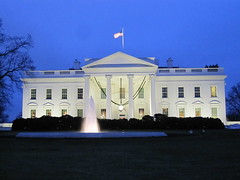 | 47 |
| 12482112761 | mood | Feeling or atmosphere that a writer creates for the reader; using specific diction, description, setting, and characterization to create the atmosphere |  | 48 |
| 12482112762 | motif | A recurring theme, subject or idea |  | 49 |
| 12482112763 | narrative | a fiction, nonfiction, poetic, or dramatic story, actual or fictional, expressed orally or in text. |  | 50 |
| 12482112764 | non sequitur | A statement that does not follow logically from evidence | 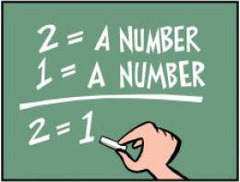 | 51 |
| 12482112765 | occasion | the time and place a speech is given or a piece is written |  | 52 |
| 12482112766 | onomatopoeia | A figure of speech in which natural sounds are imitated in the sounds of words. Ex: buzz, hiss, hum, crack, whinny, and murmur. |  | 53 |
| 12482112767 | organization | In a composition, the arrangement of ideas, incidents, evidence, or details in a perceptible order in a paragraph or essay. |  | 54 |
| 12482112768 | oxymoron | A figure of speech consisting of two apparently contradictory terms; The richest literary oxymora(paradoxes) seem to reveal a deeper truth through their contradictions. Ex: "without laws, we can have no freedom." Shakespeare's Julius Caesar also makes use of a famous oxymoron: "Cowards die many times before their deaths" |  | 55 |
| 12482112769 | pace | Speed with which the author delivers the story controlled by language, mood, emotion played out in speech, dialogue, descriptions. |  | 56 |
| 12482112770 | parable | A simple story used to illustrate a moral or spiritual lesson |  | 57 |
| 12482112771 | paradox | A statement or proposition that seems self-contradictory or absurd but in reality expresses a possible truth. |  | 58 |
| 12482112772 | parallel structure | repetition of the same pattern of words or phrases within a sentence or passage to show that two or more ideas have the same level of importance. |  | 59 |
| 12482112773 | parody | A humorous or satirical imitation of a serious piece of literature or writing |  | 60 |
| 12482112774 | pathos | An appeal to emotion. This is one of the fundamental strategies of argumentation identified by Aristotle. Typically, pathos arguments may use loaded words to make you feel guilty, lonely, worried, insecure, or confused. |  | 61 |
| 12482112775 | persona | An individual's characteristic pattern of thinking, feeling, and acting. |  | 62 |
| 12482112776 | personification | author presents or describes concepts, animals, or inanimate objects by endowing them with human attributes or emotions. |  | 63 |
| 12482112777 | point of view | Perspective from which a story is told; omniscient point of view= the person telling the story or narrator knows everything that's going on in the story; first- person point of view the narrator is a character in the story; limited third-person point of view the narrator is outside the story- like an omniscient narrator- but tells the story from the vantage point of one character." |  | 64 |
| 12482112778 | polemic | a controversial argument, esp. attacking a particular opinion |  | 65 |
| 12482112779 | propaganda | A negative term for writing designed to sway opinion rather than present information. |  | 66 |
| 12482112780 | prose | written or spoken language in its ordinary form, without metrical structure. |  | 67 |
| 12482112781 | purpose | One's intention or objective in a speech or piece of writing. |  | 68 |
| 12482112782 | refutation | The part of an argument wherein a speaker or writer anticipates and counters opposing points of view. |  | 69 |
| 12482112783 | repetition | Repeated use of sounds, words, or ideas for effect and emphasis |  | 70 |
| 12482112784 | rhetoric | From the Greek for "orator," this term describes the principles governing the art of writing effectively, eloquently, and persuasively. |  | 71 |
| 12482112785 | rhetorical appeals | Rhetorical techniques used to persuade an audience by emphasizing what they find most important or compelling. The three major appeals are to ethos (character), logos (reason), and pathos (emotion). |  | 72 |
| 12482112786 | rhetorical question | A question whose answer is assumed; a rhetorical question is designed to force the reader to respond in a predetermined manner and to propel an argument emotionally. |  | 73 |
| 12482112787 | rhetorical triangle | A diagram that represents a rhetorical situation as the relationship among the speaker, the subject, and the audience ex:Aristotelian triangle |  | 74 |
| 12482112788 | satire | A work that reveals a critical attitude toward some element of human behavior by portraying it in an extreme way. It doesn't simply abuse (as in invective) or get personal (as in sarcasm). It targets groups or large concepts rather than individuals. |  | 75 |
| 12482112789 | simile | A comparison of two things using like or as |  | 76 |
| 12482112790 | symbolism | An ordinary object with an extraordinary significance |  | 77 |
| 12482112791 | synecdoche | A figure of speech in which a part is used for the whole (as hand for sailor), the whole for a part (as the law for police officer), the specific for the general (as cutthroat for assassin), the general for the specific (as thief for pickpocket), or the material for the thing made from it (as steel for sword). |  | 78 |
| 12482112792 | syllogism | A form of deductive reasoning consisting of a major premise, a minor premise, and a conclusion. |  | 79 |
| 12482112793 | syntax | Language rules that govern how words can be combined to form meaningful phrases and sentences |  | 80 |
| 12482112794 | thesis | Focus statement of an essay; premise statement upon which the point of view or discussion in the essay is based. |  | 81 |
| 12482112795 | tone | A writer's attitude toward his or her subject matter revealed through diction, figurative language, and organization on the sentence and global levels. |  | 82 |
| 12482112796 | transition | A word or phrase that links one idea to the next and carries the reader from sentence to sentence, paragraph to paragraph |  | 83 |
| 12482112797 | voice | In grammar, a term for the relationship between a verb and a noun (active or passive voice). In rhetoric, a distinctive quality in the style and tone of writing. |  | 84 |
Flashcards
Flashcards
Biochemistry Flashcards
Terms : Hide Images
| 7344225026 | Polar Molecule | Centroid of the positive charges is different from the centroid of the negative charges | 0 | |
| 7344227101 | Hydrogen Bond | A hydrogen atom that has a covalent link with one of the electronegative atoms | 1 | |
| 7344229881 | Mixture | 2 | ||
| 7344232670 | Solvent | A liquid in which substances are dissolved forming a solution | 3 | |
| 7344234615 | Solution | A homogeneous mixture composed of two or more substances | 4 | |
| 7344253577 | Solute | A substance dissolved in another substance | 5 | |
| 7344253578 | Acid | A molecule or other entity that can donate a proton or accept an electron | 6 | |
| 7344254756 | Base | Are substances that, in aqueous solution, are slippery to touch | 7 | |
| 7344258415 | pH | A measure of hydrogen ion concentration | 8 | |
| 7344260078 | Buffer | A solution that can maintain a nearly constant pH | 9 | |
| 7344261304 | Macromolecule | is a very large molecule, such as protein | 10 | |
| 7344265148 | Polymer | A compound formed from two or more polymeric compound | 11 | |
| 7344268290 | Carbohydrate | Is an organic compound that occurs in living tissues or food that can be broken down | 12 | |
| 7344269402 | Lipid | it comprises a group of naturally occurring molecules that include fats | 13 | |
| 7344282201 | protein | Large molecules composed of one or more chains of amino acids | 14 | |
| 7344299225 | Amino Acid | A class of organic compounds | 15 |
Biochemistry Flashcards
Terms : Hide Images
| 10625846979 | proton | a positively charged subatomic particle | 0 | |
| 10625851874 | electron | a negatively charged subatomic particle | 1 | |
| 10641903159 | ionic bond | a bond formed between oppositely charged ions due to the giving/taking of electrons | 2 | |
| 10641904977 | covalent bond | a bond formed when 2 atoms SHARE electrons | 3 | |
| 10641906193 | the chemical form for water | H2O | 4 | |
| 10641909599 | polar | since water has opposite charges on each end, it is considered | 5 | |
| 10641911188 | magnet | because water has opposite charges on each end and it behaves like a | 6 | |
| 10641912364 | Cohesion | water molecules stick together | 7 | |
| 10641915346 | adhesion | water molecules stick to other substances | 8 | |
| 10641916997 | capillary action | the ability of water to climb up thin tubes | 9 | |
| 10641918266 | surface tension | water molecules cling to eac other on surface of water forming a skin | 10 | |
| 10641922544 | Why is it important to life on Earth that ice floats? | if ice sank, ponds/lakes would freeze solid and kill all life in that body of water | 11 | |
| 10641924996 | solution | a mixture of two substances | 12 | |
| 10641927212 | solute | the substance that is dissolved | 13 | |
| 10641925774 | solvent | the substance that does the dissolving (water) | 14 | |
| 10641928109 | Why is carbon so important? | It can form bonds | 15 | |
| 10641931581 | carbohydrates | stores energy, structure | 16 | |
| 10641932190 | lipids | stores energy, protection | 17 | |
| 10641932786 | proteins | workhorse of the cell | 18 | |
| 10641934389 | nucleic acids | stores genetic information | 19 | |
| 10641935522 | polysaccharides (starch) | polymer of carbohydrates | 20 | |
| 10641936286 | Triglycerides | polymer of lipids | 21 | |
| 10641939041 | polypeptide | polymer of protein | 22 | |
| 10641939579 | nucleic acid | polymer of nucleic acids | 23 | |
| 10641942304 | monosaccharides (glucose) | monomer of carbohydrates | 24 | |
| 10641943175 | glycerol, fatty acids | monomer of lipids | 25 | |
| 10641943979 | amino acids | monomer of proteins | 26 | |
| 10641944635 | monomer of nucleic acids | nucleotides | 27 | |
| 10641946678 | elements of carbohydrates and lipids | C, H, O | 28 | |
| 10641947134 | elements of proteins | C, H, O, N | 29 | |
| 10641947800 | elements of nucleic acids | C, H, O, N, P | 30 | |
| 10641948817 | nucleic acid |  | 31 | |
| 10641950681 | carbohydrate |  | 32 | |
| 10641951640 | protein |  | 33 | |
| 10641952382 | lipid |  | 34 | |
| 10650941169 | nucleus of and atom | protons are located in the | 35 | |
| 10650948032 | electron cloud | electrons are located in the | 36 |
Flashcards
Pages

Need Help?
We hope your visit has been a productive one. If you're having any problems, or would like to give some feedback, we'd love to hear from you.
For general help, questions, and suggestions, try our dedicated support forums.
If you need to contact the Course-Notes.Org web experience team, please use our contact form.
Need Notes?
While we strive to provide the most comprehensive notes for as many high school textbooks as possible, there are certainly going to be some that we miss. Drop us a note and let us know which textbooks you need. Be sure to include which edition of the textbook you are using! If we see enough demand, we'll do whatever we can to get those notes up on the site for you!
