

AP Language Rhetorical Terms Set 1 Flashcards
Terms : Hide Images
| 12257373297 | abstract | Refers to language that describes concepts rather than concrete images |  | 0 |
| 12257373298 | allusion | A direct or indirect reference to something which is presumably commonly known, such as an event, book, myth, place, or work of art. Allusions can be historical, literary, religious, topical, or mythical. There are many more possibilities, and a work may simultaneously use multiple layers of allusion. |  | 1 |
| 12257373299 | analogy | A similarity or comparison between two different things or the relationship between them. An analogy can explain something unfamiliar by associating it with or pointing out its similarity to something more familiar. Analogies can also make writing more vivid, imaginative, or intellectually engaging. |  | 2 |
| 12257373300 | anecdote | is a brief, engaging account of some happening, often historical, biographical, or personal. As a technique in writing, anecdote is especially, effective in creating interesting essay introductions, and also an illuminating abstract concepts in the body of the essay. |  | 3 |
| 12257373301 | antecedent | The word, phrase, or clause referred to by a pronoun. The AP language exam occasionally asks for the antecedent of a given pronoun in a long, complex sentence or in a group of sentences. |  | 4 |
| 12257373302 | antithesis | is the balancing of one idea or term against another for emphasis |  | 5 |
| 12257373303 | assumption | in argumentation is anything taken for granted or presumed to be accepted by the audience and therefore understated. This can be dangerous because the audience might not accept the idea implicit in them (circular reasoning, begging the question) |  | 6 |
| 12257373304 | colloquial language | Slang or common language that is informal |  | 7 |
| 12257373305 | connotation | An idea or feeling that a word invokes in addition to its literal or primary meaning, "shades of meaning" |  | 8 |
| 12257373306 | deductive reasoning | reasoning in which a conclusion is reached by stating a general principle and then applying that principle to a specific case (The sun rises every morning; therefore, the sun will rise on Tuesday morning.) |  | 9 |
AP World History - Chapter 19 Flashcards
Terms : Hide Images
| 7395503052 | 1. What were the four dimensions of European imperialism that showed how China, the Ottoman Empire, and Japan were active participants in the global drama of the 19th C. world history and not merely passive victims or beneficiaries? | They faced the immense military power and political ambitions of rival European states. They were enmeshed in networks of trade, investment, and sometimes migration that radiated out from an industrializing and capitalist Europe to generate a new world economy. They were touched by various aspects of traditional European cultures, as some among them learned French, English, or German language; converted to Christianity; or studied European literature and philosophy Asians and Africans engaged with the culture of modernity—its scientific rationalism; its technological achievements; its belief in a better future; and its ideas of nationalism, socialism, feminism, and individualism. (Original: p. 560; With Sources: p. 878) | 0 | |
| 7395503053 | 2. In what ways did the Industrial Revolution shape the character of 19th C. European imperialism? | The enormous productivity of industrial technology and European's growing affluence now created the need for extensive raw material and agricultural products. Europe needed to sell its own products and saw the social benefits to foreign markets. Imperialism promised to solve the class conflicts of an industrializing society while avoiding revolution or the serious redistribution of wealth. (Original: p. 560-561; With Sources: pp. 879-880) | 1 | |
| 7395503054 | 3. What were the criteria by which Europeans judged both themselves and the rest of the world? | They unlocked the secrets of nature, created a society of unprecedented wealth, and used both to produce unsurpassed military power. (Original: p. 563; With Sources: p. 881) | 2 | |
| 7395503055 | 4. What contributed to changing European views of Asians and Africans in the 19th C.? | With the industrial age, Europeans developed a secular arrogance that fused with or in some cases replaced their long-standing notions of religious superiority. Europeans viewed the people through the lens of racism that had been expressed in terms of science. Europeans saw themselves as superior in a social hierarchy. Darwinism served to "weed out" the weaker peoples of the world. (Original: p. 563; With Sources: pp. 881-882) | 3 | |
| 7395503056 | 5. In what ways was China a victim of its earlier success? | Overpopulation and agricultural production couldn't keep up. China's centralized bureaucracy didn't enlarge itself to keep up with the growing population. It couldn't effectively deal with the tax collection, flood control, social welfare, and public security. (Original: p. 565; With Sources: p. 883) | 4 | |
| 7395503057 | 6. What was the culmination of China's internal crisis by 1850? Why? | The Taiping Uprising between 1850-1864. Its leaders rejected Confucianism, Daoism, and Buddhism alike, finding their ideology in a unique form of Christianity instead. (Original: p. 565; With Sources: p. 883) | 5 | |
| 7395503058 | 7. What did the revolutionary leaders insist on changing? | They called for abolition of private property; a radical redistribution of land; the equality of men and women; the end of footbinding, prostitution, and opium smoking; and the organization of society in segregated military camps of men and women. (Original: p. 566; With Sources: p. 884) | 6 | |
| 7395503059 | 8. What destroyed the revolutionary rebels? | Qing loyalists had Western military support, and provincial gentry landowners mobilized their own armies. (Original: p. 566; With Sources: p. 884) | 7 | |
| 7395503060 | 9. What were the consequences of saving the Qing Dynasty? | The conservatism of both imperial authorities and their gentry supporters postponed any resolution of China's peasant problem, delayed any real change for China's women, and deferred any vigorous efforts at modernization until the communists came into power in the mid-twentieth century. It disrupted and weakened China's economy. Vast expanses of the Yangzi River Valley became vast wastelands. Many people had lost their lives and it was the most costly conflict in the world in the 19th C. (Original: p. 566; With Sources: p. 884) | 8 | |
| 7395503061 | 10. How did Western pressure stimulate change in China during the 19th C. to its end? | China was forced to import opium. British restrictions on Chinese sovereignty forced China to cede Hong Kong to them and to open five ports to trade. Fixed the tariff on imported goods to a low 5% granted foreigners the right to live in China under their own laws and could own land opened the country to Christian missionaries permitted Western powers to patrol some of China's interior waterways China lost control of Vietnam, Korea, and Taiwan. By the end of the 19th C., Western nations, plus Japan and Russia, all had carved out spheres of influence within China, granting them special privileges to establish military bases, extract raw materials, and build railroads. (Original: p. 567-568; With Sources: pp. 885-886) | 9 | |
| 7395503062 | 11. What strategies did China adopt to confront its various problems during the 1860s and 1870s? | instituted a "self-strengthening" program to rejuvenate a sagging dynasty and a failing society revamped the examination system with qualified candidates for official positions established a number of modern arsenals and shipyards supported foreign-language schools, translation services, and scientific personnel produced textiles, and steel and coal mines were expanded a telegraph system was initiated (Original: p. 570; With Sources: p. 888) | 10 | |
| 7395503063 | 12. Explain the Boxer Rebellion of 1900. | It was an anti-foreign movement that erupted in northern China. Led by militia organizations calling themselves the Society of Righteous and Harmonious Fists, the "Boxer" killed numerous European and Chinese Christians and laid siege to the foreign embassies in Beijing. When Western powers and Japan occupied Beijing to crush the rebellion and imposed a huge payment on China as a punishment, it was clear that China remained a dependent country, substantially under foreign control. (Original: p. 570; With Sources: p. 888) | 11 | |
| 7395503064 | 13. Why was the Ottoman Empire known as "The Sick Man of Europe"? | By the end of the 19th century, the Ottoman Empire was no longer able to deal with Europe from a position of equality, let alone superiority. It was unable to prevent region after region from falling under the control of Christian powers. (Original: p. 571; With Sources: p. 889) | 12 | |
| 7395503065 | 14. What two forces helped to diminish the size of the Ottoman Empire? | Foreign aggression and nationalist movements. (Original: p. 572; With Sources:) | 13 | |
| 7395503066 | 15. What were the political and economic problems of the Ottoman Empire? | Politically, the central state had weakened and couldn't raise revenues, as provincial authorities and local warlords gained great power. Additionally, the Janissaries—the elite military corps of the Ottoman state—had become reactionary defenders of the status quo whose military ineffectiveness was obvious; and foreign consuls granted privileges to Ottoman citizens (Jews, Greeks, Armenians) which effectively removed them from Ottoman control. Economically, there was a huge technological gap with the West; commerce diminished as Europeans achieved direct oceanic access to the East; competition from European manufactured goods led to protesting foreign imports; and foreign merchants were immune from Ottoman laws. (Original: p. 573; With Sources: p. 891) | 14 | |
| 7395503067 | 16. Compare Ottoman Empire reforms with China during the 19th century. | The Ottoman's program of defensive modernization was earlier, more sustained, and far more vigorous than the timid and half-hearted measures of self-strengthening China. Ottomans had no internal upheaval as did China with the Taiping Uprising. The Ottoman's experienced nationalist revolts on its periphery, rather than rebellion at the center. There was no great population growth in the Middle East as there had been in China. Lastly, the long-established Ottoman leadership was Turkic and Muslim, culturally similar to its core population whereas Qing dynasty rulers were widely regarded as foreigners from Manchuria. (Original: p. 573; With Sources: p. 891) | 15 | |
| 7395503068 | 17. In what ways did the Ottoman state try to reform itself in its attempt to modernize? | Sultan Selim III attempted to set up new military and administrative structures beside traditional institutions. Selim sent ambassadors to European courts to study administrative methods, imported European advisors, and established technical schools. Tanzimat reforms, after 1839, sought to provide the economic, social, and legal foundations for a strong and newly recentralized state. The long process of modernization began with factories producing cloth, paper, and weapons; modern mining operations; reclamation and resettlement of land; telegraphs, steamships, railroads, and modern postal service; Western-style law codes and courts; and new elementary and secondary school. (Original: p. 574; With Sources: pp. 892-893) | 16 | |
| 7395503069 | 18. Explain the "Young Ottomans" urgings of Islamic Modernism. | Young Ottomans believed that Muslim societies needed to embrace Western technical and scientific knowledge while rejecting its materialism, to overcome backwardness and preserve the state against European aggression. Furthermore, they believed it was possible to find in Islam itself the basis for freedom, progress, rationality, and patriotism. It wasn't necessary to choose between Western-style modernity and Islam. The growing influence of the Young Ottomans was reflected in the adoption of a short-lived constitution for the empire in 1876, which limited the authority of the sultan and established a representative government. (Original: pp. 575-576; With Sources: p. 893) | 17 | |
| 7395503070 | 19. How did Sultan Abd al-Hamid II rule the Ottoman Empire (1876-1909) after he had taken office? | He was a reactionary, autocratic leader who defined the empire as a despotic state with Pan-Islamic identification. He suspended the constitution and purged his government of the more radial reformers. He suppressed liberal and nationalist sentiments, though he continued many of the educational, economic, and technical reforms of the earlier era. He bolstered his authority by claiming that the Ottoman rulers were caliphs, speaking for the entire Islamic community. He restored the Ulama to a position of prestige and re-introduced the distinction between Muslim and non-Muslim subjects. (Original: p. 576) | 18 | |
| 7395503071 | 20. What did the Young Turks do to oppose the revived despotism of the Sultan? | Opposition to this revived despotism surfaced among both military and civilian elites known as the Young Turks. They largely abandoned any reference to Islam and advocated instead a militantly secular public life. Some among them began to think of the empire as neither a dynastic state nor a Pan-Islamic empire, but rather as a Turkish national state. A military coup in 1908 allowed the Young Turks to exercise real power. They pushed for a radical secularization of schools, courts, and law codes; permitted elections and competing parties; established a single Law of Family Rights for all regardless of religion; and encouraged Turkish as the official language of the empire. They opened up modern schools for women, allowed them to wear Western clothing, restricted polygamy, and permitted women to obtain divorces in some situations. (Original: p. 576; With Sources: p. 893) | 19 | |
| 7395503072 | 21. Compare the outcomes of China and the Ottoman Empire by the twentieth century. | (Original: p. 577; With Sources: p. 894) China Similarities Ottoman Empire The collapse of the imperial system was followed by a vast Both had experienced the consequences of a rapidly shifting balance The collapse of the Ottoman Empire after WWI led to a creation of revolutionary upheaval that by 1949 led to a Communist regime within the territorial space of the old empire. China's 20th C. revolutionaries rejected traditional Confucian culture far more thoroughly than the secularizing leaders of modern Turkey rejected Islam. China had a more elitist and secular outlook of Confucianism. of global power. As "semi-colonies," neither was able to create industrial economies or strong states. Both gave rise to new nationalist conceptions of society. Both empires had collapsed. a new but smaller nationstate in the Turkish heartland of the old empire, having lost its vast Arab and European provinces. Almost everywhere in the Islamic world, traditional religion retained its hold on the private loyalties of most people and later in the 20th C. became a basis for social renewal in many places. It had many independent centers and was never closely associated with a single state. It was embedded in a deeply religious tradition. | 20 | |
| 7395503073 | 22. What was the chief task of the Tokagawa shogunate? | It was to prevent the return of civil war among some 260 rival feudal lords, known as daimyo, each of whom had a group of armed retainers, the famed samurai warriors of Japanese tradition. (Original: p. 578; With Sources: p. 895) | 21 | |
| 7395503074 | 23. Explain the role of the daimyo under the Tokagawa shogunate (1600-1850). | The shoguns regulated internal travel of the daimyos and required them to spend alternate years in the capital of Edo. Powerful daimyos retained autonomous independence in their own domain and operated like independent states with separate military forces, law codes, tax systems, and currencies. As a result, Tokagawa Japan was not unified. (Original: p. 578; With Sources: p. 895) | 22 | |
| 7395503075 | 24. With no national army, no uniform currency, and little central authority, how did the Tokagawa regime stabilize the country? | It issued highly detailed rules governing the occupation, residence, dress, hairstyles, and behavior of the four hierarchically ranked status groups into which Japanese society was divided—samurai at the top, then peasants, artisans, and, at the bottom, merchants. (Original: p. 578; With Sources: p. 895) | 23 | |
| 7395503076 | 25. In what ways was Japan changing during the Tokagawa era? | Samurai evolved into a salaried bureaucratic or administrative class. Centuries of peace contributed to a remarkable burst of economic growth, commercialization, and urban development. Japan had become the world's most urbanized country. Education was encouraged and this generated a high literacy rate. Many merchants from the lowest-ranking status group prospered in the new commercial environment and supported a vibrant urban culture, while many daimyo found it necessary to seek loans from these social inferiors. Thus, merchants had money, but little status, whereas samurai enjoyed high status but were often indebted to inferior merchants. Many peasants moved to the cities, becoming artisans or merchants and imitating the ways of their social betters. Corruption undermined the Tokagawa regime. Increasing waves of local peasant uprisings and urban riots expressed the many grievances of the poor. Original: p. 578-579; With Sources: pp. 895-896) | 24 | |
| 7395503077 | 26. In what ways did the Japanese modernize under the Meiji restoration? | Abolished the daimyo and replaced it with a system of prefectures (districts), whose appointed governors were responsible to the central government Government collected the nation's taxes and raised a national army based on conscription (draft) from all social classes Dismantled the samurai as class restrictions on occupation, residence, marriage, and clothing were abolished, and almost all Japanese became legally equal as commoners Limitations on travel and trade fell. Knowledge about the West was sought out regarding science and technology,; its various political and constitutional arrangements; its legal and educational systems; its dances, clothing, and hairstyles. Hundreds of students were sent to study abroad. Japan proceeded to borrow more selectively and to combine foreign and Japanese elements in distinctive ways. The constitution of 1889 drew heavily on German experience, introduced an elected parliament, political parties, and democratic ideals, but that constitution was presented as a gift from a sacred emperor descended from the Sun Goddess. Parliament could advise, but ultimate power, and particularly control of the military, lay with the emperor and with an oligarchy of prominent reformers acting in his name. The government took over and modernized Tokagawa and daimyo enterprises, such as iron foundries, munitions plants, and dockyards. It established modern factories to produce cement, chemicals, glass, sugar, and silk and cotton goods. It also opened mines, built railroads, and established postal, telegraph, and banking systems. (Original: p. 581-583; With Sources: pp. 898-900) | 25 | |
| 7395503078 | 27. What was the view of those who directly experienced Japanese imperialism in Taiwan or Korea? | They had a less positive view, for its colonial policies matched or exceeded the brutality of European practices. In the 20th C., China and much of Southeast Asia suffered bitterly under Japanese imperial aggression. (Original: p. 585; With Sources: p. 902) | 26 | |
| 7395503079 | Social Darwinism | An application of the concept of "survival of the fittest" to human history in the 19th C. (p. 564; With Sources: p. 882) | 27 | |
| 7395503080 | Ulama | Islamic religious scholars (p. pp. 575-576; With Sources: p. 891) | 28 | |
| 7395503081 | Shogun | A military ruler in Japan who controlled the daimyo (p. 578; With Sources: p. 895) | 29 | |
| 7395503082 | Commodore Matthew Perry | U.S. navy commodore who in 1853 presented the ultimatum that led Japan to open itself to more normal relations with the outside world (p. 580; With Sources: p. 897) | 30 | |
| 7395503083 | Russo-Japanese War (1904-1905) | Ending in a Japanese victory, this war established Japan as a formidable military competitor in East Asia and precipitated the Russian Revolution of 1905. (Original: p. 584; With Sources: p. 901) | 31 |
Flashcards
Period 4 - AP World History Flashcards
Hello, welcome to the ultimate study guide for the AP World History exam. Have fun, and good luck. This is basically a compilation of every notecard term in the unit.
Terms : Hide Images
| 12250087414 | Dates of Period 4 | the time period of 1450 - 1750 | 0 | |
| 12250087415 | Catholic Reformation | the church's actions to revive their reputation and membership roles in 1545 (regained control of most of southern Europe, Austria, Poland, and much of Hungary) | 1 | |
| 12250087416 | Jesuits | a religious order converting people to return to the church (went to Asia + Americas in 1500's) | 2 | |
| 12250087417 | Thirty Years War | War within the Holy Roman Empire between German Protestants and their allies (Sweden, Denmark, France) and the emperor and his ally, Spain; ended in 1648 after great destruction with Treaty of Westphalia | 3 | |
| 12250087419 | English Civil War | This was the revolution as a result of whether the sovereignty would remain with the king or with the Parliament. Eventually, the kingship was abolished. | 4 | |
| 12250087420 | Scientific Revolution | a new vision of science developed during the renaissance in the 17th + 18th century | 5 | |
| 12250087421 | Scholasticism | Scholars based their inquiry on the principles established by the church, which sometimes resulted in clases between science and religion | 6 | |
| 12250087425 | Humanism | interest in the capabilities and accomplishments of individuals | 7 | |
| 12250087426 | Patrons | supporters of the arts, with payment and such, they found talented artists, often when they were young | 8 | |
| 12250087427 | Medici | was a powerful family of Florence in the mid to late 1400s that sponsored artists as a rich merchant family |  | 9 |
| 12250087429 | Johan Gutenberg | a German goldsmith and printer, who created the printing press, in 1454 |  | 10 |
| 12250087430 | Nicolo Machiavelli | a Renaissance writer who wrote, "The Prince" which was a famous philosophical view of the ideal political leader in the 16th century, in Italian city states | 11 | |
| 12250087431 | Protestant Reformation | a religious movement of the 16th century that began as an attempt to reform the Roman Catholic Church and resulted in the creation of Protestant churches |  | 12 |
| 12250087432 | Indulgences | The Catholic Church's grants of salvation for money in the 1500s, and was part of the growing corruption of the church. |  | 13 |
| 12250087433 | John Calvin | A protestant who established a variation of his beliefs on a stern and vengeful God. |  | 14 |
| 12250087434 | Anglican Church | A form of Christianity established by Henry VIII that was not decided on the grounds of religious belief, but because the pope would not allow him to divorce his wife. |  | 15 |
| 12250087437 | Martin Luther | a German monk who wrote the 95 theses in 1517, which were 95 propositions that criticized the Catholic Church |  | 16 |
| 12250087438 | Renaissance Man | Title of a person who was smart and genius in the Renaissance Era. |  | 17 |
| 12250087439 | Deism | God built the universe and let it run. Clockmaker theory. |  | 18 |
| 12250087440 | Land-based Powers | A shift in land based powers where governments controlled lands by building armies, bureaucracies, road, canals, and walls that unified and protected | 19 | |
| 12250087441 | Sea-based Powers | Sea people built their power by controlling water routes, developing technology to cross the seas, and gaining wealth from trade and land claims. | 20 | |
| 12250087442 | Renaissance | A heightened intellectual and artistic advance from about 1450s, that changed Europe forever |  | 21 |
| 12250087443 | Adam Smith | He analyzed the natural law of supply and demand that governed economies in his classic book, "The Wealth of Nations" | 22 | |
| 12250087444 | New Monarchies | Monarchies that emerged that differed from their medieval predecessors in having greater centralization of power, more regional boundaries, and stronger representative institutions | 23 | |
| 12250087445 | Constitutional Monarchy | States where rulers shared power with a parliament, a body of representatives selected by the nobility and urban citizens | 24 | |
| 12250087446 | Gentry | the most powerful members of a society, and landowners that affected the style of the old aristocracy |  | 25 |
| 12250087447 | Enlightenment | the emphasis on human abilities and accomplishments and the importance of independent and rational thought | 26 | |
| 12250087448 | John Locke | sought to understand the impact of the "laws of nature" on human liberties | 27 | |
| 12250087449 | Thomas Hobbes | English materialist and political philosopher who advocated absolute sovereignty as the only kind of government that could resolve problems caused by the selfishness of human beings (1588-1679) | 28 | |
| 12250087451 | Voltaire | wrote witty criticisms of the French monarchy and the Roman Catholic Church. He believed both institutions to be despotic and intolerant, limiting freedoms | 29 | |
| 12250087453 | Hapsburg | A powerful family with land claims all over Europe from Spain to Italy to the Netherlands to Hungary, as all the Holy Roman Emperor's had been Hapsburg since 1273 |  | 30 |
| 12250087454 | Holy Roman Empire | a place/time where religion remained very important, and religious issues continued to fragment, and strong kings emerged in the 16th century |  | 31 |
| 12250087455 | Reconquest | the retaking of land in Iberia by Spain and Portugal in a religious crusade to expand. This conquest advanced in waves over several centuries. |  | 32 |
| 12250087456 | Phillip II | ruled Spain at the height of its power in the 15th century | 33 | |
| 12250087457 | Divine Right | with God's blessing of the king's authority, the legitimacy of royalty across Europe was enhanced, and occurred under the reign of Louis XIV during the 17th and 18th centuries |  | 34 |
| 12250087458 | Louis XIV | Understood the importance of a "theatre state", by building a magnificent palace at Versailles, and the apex of absolutism occurred under him |  | 35 |
| 12250087459 | Absolute Monarchies vs. limited monarchies | absolute monarchies held complete control over their kingdom vs. the limited power. | 36 | |
| 12250087460 | Capitalism | an economic system based on private ownership of property and business that provide goods to be bough and sold in a free manner | 37 | |
| 12250087461 | Mercantilism | the responsibility of government to promote the states economy to improve the revenues and limit imports to prevent profits from going to outsiders (allows industry to develop their own business) |  | 38 |
| 12250087462 | Joint-stock Companies | these companies organized commercial ventures on a large scale by allowing investors to buy and sell shares. The new capitalist system largely replaced the old guild system of the middle ages. | 39 | |
| 12250087464 | Bourgeoise | middle class; factory owners who put long hours and much of their profits into their businesses | 40 | |
| 12250087465 | Balance of Power | states forming a temporary alliance to prevent the state form being too powerful. (Russia emerged as a major power in Europe after its mediterranean armies got Sweden in the GNW) | 41 | |
| 12250087466 | Versailles | a place where Louis' palace was built symbolizing the French's triumph over the traditional rights of the nobility and clergy. This kept nobles away from plotting rebellions, and 'distracted europe'. |  | 42 |
| 12250087467 | Zheng He | led expiditions in Chinese junks across the atlantic ocean, with one goal being to assert Chinas power after the demise of the Yuan dynasty. |  | 43 |
| 12250087469 | Henry the Navigator | the third son of the portuguese king; devoted his life to navigation, creating a navigation school, which became a magnet for the cartographers of the world | 44 | |
| 12250087470 | Caravel | a new ship developed by the portuguese, which was much smaller than the junk, but size allowed for exploration of shallower coastal areas |  | 45 |
| 12250087471 | Vasco da Gama | set out to find the tip of Africa and connect it to the Indian Ocean, and discovered the fastest and safest ways to travel to Portugal |  | 46 |
| 12250087472 | Christopher Columbus | A Genoese mariner who convinced Isabella and Ferdinand to sponsor a voyage across the Atlantic after he was turned down by the Genoese and Portugal. He believed he could reach east Asia by sailing West. | 47 | |
| 12250087473 | Treaty of Tordesillas | a treaty making Spain and Portugal land claim boundary. Portugal pushes its explorations to India and beyond. |  | 48 |
| 12250087474 | Magellan | had a ship that was first to circumnavigate the glove, even though Magellan himself died in the phillipines |  | 49 |
| 12250087475 | Conquistadors | went to search for gold and convert the natives to Christianity in the interior of Mexico |  | 50 |
| 12250087476 | Cortes | sought to find the Aztec capital, and took over the Aztec land - with help of Amerindians, disease, and technology | 51 | |
| 12250087477 | Moctezuma | the Aztec emperor, who welcome the Spaniards at Tenochtitlan, seeing them as god-like. This was a mistake, as this allowed everyone to conquer him. | 52 | |
| 12250087478 | Francisco Pizzaro | led a group of soldiers to the Andes to find the Inca. The Incas were weak; Pizzaro conquered and got gold. |  | 53 |
| 12250087479 | Ethnocentrism | the term that describes the tendency of human beings to view their own culture as superior |  | 54 |
| 12250087480 | De La Casas | a conquistador priest who dedicated himself to protecting Amerindian rights |  | 55 |
| 12250087481 | Franciscans | peoples who converted new world people to christianity, and took care of the poor. | 56 | |
| 12250087482 | Encomenderos | Spanish settlers who were in charge of the natives working on the encomiendas | 57 | |
| 12250087483 | Peninsularies | a fading social class in the new world, composed of the people born in the old world | 58 | |
| 12250087484 | Mestizos | composed of European and Amerindian children, part of the castas |  | 59 |
| 12250087485 | Mulattoes | composed of European and African children, also part of the castas |  | 60 |
| 12250087486 | Council of Indies | supervised all government and commercial activity in the Spanish colonies | 61 | |
| 12250087487 | Bartholomew Dias | set out to find the tip of Africa and connect beyond it to the Indian Ocean, as well as discovering the fastest and safest ways back to Portugal |  | 62 |
| 12250087488 | Encomienda | the system in which conquistadors had forced natives to do work for them |  | 63 |
| 12250087489 | Creoles | composed of those born in the new world; a quickly growing class |  | 64 |
| 12250087490 | Protestant work ethic | a work ethic of the protestants that encouraged individual endeavors towards gaining wealth | 65 | |
| 12250087491 | Dutch East India Company | a joint stock company that specialized in the spice and luxury trade of the East Indies and quickly gained control of Dutch Trading in the Pacific |  | 66 |
| 12250087492 | Lost Colony | The colony of Walter Raleigh, as well as the first venture to North America by the British on the Carolina Coast. | 67 | |
| 12250087493 | Indentured Servitude | a system which was usually ethnically the same as a free settler, but he or she was bound by an "indenture" (contract) to work for a person for four to seven years, in exchange for payment of the new world voyage | 68 | |
| 12250087494 | Columbian exchange | the global diffusion of crops, other plants, human beings, animals, and distance that took place after the European exploring voyages of the New World |  | 69 |
| 12250087495 | Middle Passage | the first leg of the atlantic circuit, where ships took slaves to the new world |  | 70 |
| 12250087496 | Manila Galleons | ships that traveled across the pacific ocean picking up and trading goods, like Asian luxury goods, and silver |  | 71 |
| 12250087498 | Pilgrims | settled first in New England, and wanted to break away completely from the Church of England, sought to pursue spiritual ends in new lands | 72 | |
| 12250087499 | Puritans | wanted to purify Church of England, not break with it | 73 | |
| 12250087502 | Manumission | legal grant of freedom to an individual slave | 74 | |
| 12250087505 | African Diaspora | The spreading of Africans to many other parts of the world, especially the Americas. This is one of the most important demographic changes during 1450 - 1750 |  | 75 |
| 12250087508 | Shah Abbas I | brought the Safavids to the peak of the power, slave infantrymen |  | 76 |
| 12250087509 | Devshirme | a system that required Christian's of the area to contribute young boys to be the sultans slaves |  | 77 |
| 12250087510 | Battle of Chaldrian | The Shi'ite versus Sunni conflict at Chaldrian over religious differences, that set the limits for Shi'ite expansion | 78 | |
| 12250087511 | Gunpowder Empires | an age of time where almost all powerful states used guns to build control/attack (included Russia, Ming and Qing, Japan, the Ottoman Empire, the Safavid and the Mughal empire) |  | 79 |
| 12250087512 | Suleiman the Magnificent | ruled the Ottomans as the empire reached the height of its power. The Ottomans controlled much of the water traffic between the Black Sea and the Mediterranean sea |  | 80 |
| 12250087513 | Janissaries | Checked the military power of the sultan, being an elite military group |  | 81 |
| 12250087514 | Vizier | head of the imperial administration in the Ottoman empire who took care of the day to day work of the empire, aiding the Sultan | 82 | |
| 12250087516 | Safavid Empire | an empire that grew from a turkish nomadic group, that were Shi'ite muslims |  | 83 |
| 12250087517 | Imams | heirs of Muhammad according to Shi'ite muslims | 84 | |
| 12250087519 | Babur | founded the Mughal empire, claimed to be a descendant of Timur and Genghis Khan (1526) |  | 85 |
| 12250087521 | Akbar | the grandson of Babur, who brought the height of the Mughal empire. Also expanded his empire to control much of the subcontinent. | 86 | |
| 12250087522 | Taj Mahal | a building of beauty built as a tomb for Mumtaz Mahal's wife. |  | 87 |
| 12250087523 | Sati | the ritual suicide of widows by jumping into their husbands pyres, representing the low status of women | 88 | |
| 12250087524 | Mughal Empire | an empire that that was a mixture of Mongol and Turkish peoples from Central Asia, which dominated India until the early 1700s |  | 89 |
| 12250087525 | Sikhism | started by Nanuk, who became the first Guru of Sikhism. Sikhism was a following of people who formed a community free of caste divisions |  | 90 |
| 12250087526 | Ivan IV | Ivan the Terrible (his nickname) reflected problems that tsars faced as power increased |  | 91 |
| 12250087527 | Great Northern War | War that was long and costly which came from Peter's modernized armies breaking Swedish control of the Baltic Sea, forcing Europe to see Russia as a major power |  | 92 |
| 12250087528 | Kabuki | a form of drama that consisted of several acts and separate skits with singing, dancing, and elaborate staging. (Actors became well known starts) |  | 93 |
| 12250087529 | Ivan III | declared himself as "tsar" (means Caesar) with the claim he was establishing the "Third Rome" |  | 94 |
| 12250087530 | Boyars | The nobility of the Russia feudal based economic system. They also had military responsibilities to overlords, including the tsar |  | 95 |
| 12250087531 | Time of Trouble | The time of following Ivan's rule. Ivan executed his oldest son, touching off competition among Boyars for the throne. | 96 | |
| 12250087532 | Peter the Great | The tsar of Russia in 1682 to 1724, who was most responsible for transforming Russia into a great world power. He understood how things worked globally, and expanded water ports | | 97 |
| 12250087533 | St. Petersburg | The "Window to the West" established by Peter the Great, which was a capital built on the shoes of the newly accessed Baltic Sea (a port for the new navy + allowed closer access to western countries) | 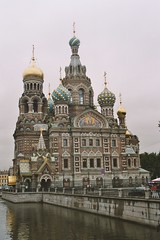 | 98 |
| 12250087534 | Table of Ranks | A system by Peter the Great that allowed officials to attain gov't posistions based on merit, not on aristocracy status (reorganization of Bureaucracy) | 99 | |
| 12250087535 | Tsar | a derivative of "Caesar", establishing a "3rd rome". This was a major propaganda for Russia | 100 | |
| 12250087536 | Daimyo | Japanese territorial lords, who held local control of areas. Some Daimyos had more influence than others, but each maintained his own governments and had his own samurai | 101 | |
| 12250087537 | Tokugawa leyasu | Founder of the Tokugawa shogunate |  | 102 |
| 12250087538 | Tokugawa Shogunate | a centralized government established in 1603 in present day Tokyo. Also called a tent government, which was temporary | 103 | |
| 12250087543 | Macartney Mission | the dispatch of Lord Macartney with other people to China, showing Britain's great interest in the Qing empire, as well the d Macartney esire to reuse the trade system | 104 | |
| 12250087544 | Qing Dynasty | The name of the empire after the Ming; seized China from the emperors who could no longer defend their borders from the Manchu | 105 | |
| 12250087545 | Forbidden City | was the home of the emperor and his family, which expanded service people to 20,000; as the government returned to Beijing from Manjing |  | 106 |
| 12250087546 | Kowtow | a special, often deep bow to the Chinese emperor. In the Qing dynasty, those who came to see the emperor had to do a special bow consisting of 3 separate kneeling |  | 107 |
| 12303406607 | Chinapas | Floating gardens used by the Aztecs | 108 |
Flashcards
Flashcards
Flashcards
AP World History - Period 3 Flashcards
The Post-Classical World, 500-1450
Terms : Hide Images
| 9656522980 | Bedouin | nomadic pastoralists of the Arabian peninsula with a culture based on herding camels and goats | 0 | |
| 9656522981 | Mecca | Arabian commercial center; dominated by the Quraysh; the home of Muhammad and the future center of Islam | 1 | |
| 9656522982 | Medina | town northeast of Mecca; asked Muhammad to resolve its intergroup differences; Muhammad's flight to Medina, the hijra, in 622 began the Muslim calendar | 2 | |
| 9656522983 | Umayyad | clan of the Quraysh that dominated Mecca; later an Islamic dynasty | 3 | |
| 9656522984 | Muhammad | (570-632); prophet of Allah; originally a merchant of the Quraysh | 4 | |
| 9656522985 | Qur'an | the word of god as revealed through Muhammad; made into the holy book of Islam | 5 | |
| 9656522986 | Umma | community of the faithful within Islam | 6 | |
| 9656522987 | Five Pillars | the obligatory religious duties for all Muslims; confession of faith, prayer, fasting during Ramadan, zakat, and hajj (pilgrimage to Mecca) | 7 | |
| 9656522988 | Caliph | the successor to Muhammad as head of the Islamic community | 8 | |
| 9656522989 | Ali | cousin and son-in-law of Muhammad; one of the orthodox caliphs; focus for the development of shi'ism | 9 | |
| 9656522990 | Abu Bakr | succeeded Muhammad as the first caliph | 10 | |
| 9656522991 | Jihad | Islamic holy war | 11 | |
| 9656522992 | Sunnis | followers of the majority interpretation within Islam; included the Umayyads | 12 | |
| 9656522993 | Shi'a | followers of Ali's interpretation of Islam | 13 | |
| 9656522994 | Abbasids | dynasty that succeeded the Umayyads in 750; their capital was at Baghdad | 14 | |
| 9656522995 | Hadiths | "traditions" of the prophet Muhammad; added to the Qur'an, form the essential writings of Islam | 15 | |
| 9656522996 | Wazir | chief administrative official under the Abbasids | 16 | |
| 9656522997 | Dhows | Arab sailing vessels; equipped with lateen sails; used by Arab merchants | 17 | |
| 9656522998 | Seljuk Turks | nomadic invaders from central Asia; staunch Sunnis; ruled from the 11th c. in the name of the Abbasids | 18 | |
| 9656522999 | Crusades | invasions of western Christians into Muslim lands, especially Palestine; captured Jerusalem and established Christian kingdoms enduring until 1291 | 19 | |
| 9656523000 | Ulama | Islamic religious scholars; pressed for a more conservative and restrictive theology; opposed to non-Islamic thinking | 20 | |
| 9656523001 | Sufis | Islamic mystics; spread Islam to many Afro-Asian regions | 21 | |
| 9656523002 | Mongols | central Asian nomadic peoples; captured Baghdad in 1258 and killed the last Abbasid caliph | 22 | |
| 9656523003 | Chinggis Khan | (1162-1227); Mongol ruler; defeated the Turkish Persian kingdoms | 23 | |
| 9656523004 | Mamluks | Rulers of Egypt; descended from Turkish slaves | 24 | |
| 9656523005 | Shrivijaya | trading empire based on the Malacca straits; its Buddhist government resisted Muslim missionaries; when it fell, southeastern Asia was opened to Islam | 25 | |
| 9656523006 | Malacca | flourishing trading city in Malaya; established a trading empire after the fall of Shrivijaya | 26 | |
| 9656523007 | Mali | state of the Malinke people centered between the Senegal and Niger rivers | 27 | |
| 9656523008 | Mansa | title of the ruler of Mali | 28 | |
| 9656523009 | Ibn Battuta | Arab traveler throughout the Muslim world | 29 | |
| 9656523010 | Sundiata | created a unified state that became the Mali empire; died in 1260 | 30 | |
| 9656523011 | Songhay | successor state to Mali; dominated middle reaches of the Niger valley; capital at Gao | 31 | |
| 9656523012 | East African trading ports | urbanized commercial centers mixing African and Arab cultures; included Mogadishu, Mombasa, Malindi, Kilwas, Pate, and Zanzibar | 32 | |
| 9656523013 | Great Zimbabwe | with massive stone buildings and walls, incorporates the greatest early buildings in sub-Saharan Africa | 33 | |
| 9656523014 | Icons | images of religious figures venerated by Byzantine Christians | 34 | |
| 9656523015 | Iconoclasm | the breaking of images; religious controversy of the 8th c; Byzantine emperor attempted, but failed, to suppress icon veneration | 35 | |
| 9656523016 | Cyril and Methodius | Byzantine missionaries sent to convert eastern Europe and Balkans; responsible for creation of Slavic written script called Cyrillic | 36 | |
| 9656523017 | Kiev | commercial city in Ukraine established by Scandinavians in 9th c; became the center for a kingdom that flourished until 12th c | 37 | |
| 9656523018 | Rurik | legendary Scandinavian, regarded as founder of Kievan Rus' in 855 | 38 | |
| 9656523019 | Vladmir I | ruler of Kiev (980-1015); converted kingdom to Orthodox Christianity | 39 | |
| 9656523020 | Russian Orthodoxy | Russian form of Christianity brought from Byzantine Empire | 40 | |
| 9656523021 | Tatars | Mongols who conquered Russian cities during the 13th c; left Russian church and aristocracy intact | 41 | |
| 9656523022 | Middle Ages | the period in western European history between the fall of Roman Empire and the 15th c | 42 | |
| 9656523023 | Gothic | an architectural style developed during the 13th and 14th c in western Europe; featured pointed arches and flying buttresses as external support on main walls | 43 | |
| 9656523024 | Vikings | seagoing Scandinavian raiders who disrupted coastal areas of Europe from the 8th to 11th c; pushed across the Atlantic to Iceland, Greenland, and North America; formed permanent territories in Normandy and Sicily | 44 | |
| 9656523025 | Manorialism | rural system of reciprocal relations between landlords and their peasant laborers during the Middle Ages; peasants exchanged labor for use of land and protection | 45 | |
| 9656523026 | Serfs | peasant agricultural laborers within the manorial system | 46 | |
| 9656523027 | Three-field system | practice of dividing land into thirds, rotating between two different crops and pasturage-- an improvement making use of manure | 47 | |
| 9656523028 | Carolingians | royal house of Franks from 8th c to 10th c | 48 | |
| 9656523029 | Charles Martel | first Carolingian king of the Franks; defeated Muslims at Tours in 732 | 49 | |
| 9656523030 | Charlemagne | Carolingian monarch who established large empire in France and Germany circa 800 | 50 | |
| 9656523031 | Holy Roman Emperors | political heirs to Charlemagne's empire in northern Italy and Germany; claimed title of emperor but failed to develop centralized monarchy | 51 | |
| 9656523032 | Feudalism | personal relationship during the Middle Ages by which greater lords provided land to lesser lords in return for military service | 52 | |
| 9656523033 | Vassals | members of the military elite who received land or a benefice from a lord in return for military service and loyalty | 53 | |
| 9656523034 | William the Conqueror | invaded England from Normandy in 1066; established tight feudal system and centralized monarchy in England | 54 | |
| 9656523035 | Magna Carta | Great charter issued by King John of England in 1215; represented principle of mutual limits and obligations between rulers and feudal aristocracy, and the supremacy of law | 55 | |
| 9656523036 | Parliaments | bodies representing privileged groups; institutionalized the principle that kings ruled with the advice and consent of their subjects | 56 | |
| 9656523037 | Hundred Years War | conflict between England and France over territory (1337-1453) Established a since of Nationalism with each country. Joan of Arc united the French and promoted French patriotism. | 57 | |
| 9656523038 | Pope Urban II | organized the first Crusade in 1095; appealed to Christians to free the Holy Land from Muslim control | 58 | |
| 9656523039 | Investiture Controversy | the practice of appointment of bishops; Pope Gregory attempted to stop lay investiture, leading to a conflict with the Holy Roman Emperor Henry IV | 59 | |
| 9656523040 | Gregory VII | 11th c pope who attempted to free church from secular control; quarreled with Holy Roman Emperor Henry IV over practice of lay investiture of bishops | 60 | |
| 9656523041 | Thomas Aquinas | creator of one of the great syntheses of medieval learning; taught at University of Paris; author of Summas; believed that through reason it was possible to know much about natural order, moral law, and nature of God | 61 | |
| 9656523042 | Scholasticism | dominant medieval philosophical approach; so-called because of its base in the schools or universities; based on use of logic to resolve theological problems | 62 | |
| 9656523043 | Hanseatic League | an organization of north German and Scandinavian cities for the purpose of establishing a commercial alliance | 63 | |
| 9656523044 | Guilds | associations of workers in the same occupation in a single city; stressed security and mutual control; limited membership, regulated apprenticeships, guaranteed good workmanship; held a privileged place in cities | 64 | |
| 9656523045 | Black Death | bubonic plague that struck Europe in the 14th c; significantly reduced Europe's population; affected social structure; decimated populations in Asia | 65 | |
| 9656523046 | Jinshi | title given students in Post Classical China who passed the most difficult examinations; became eligible for high office | 66 | |
| 9656523047 | Mahayana Buddhism | emphasized salvationist aspects of Chinese Buddhism; popular among the masses in East Asia | 67 | |
| 9656523048 | Wuzong | Tang emperor (841-847); persecuted Buddhist monasteries and reduced influence of Buddhism in favor of Confucianism | 68 | |
| 9656523049 | Southern Song | smaller surviving dynasty (1127-1279); presided over one of the greatest cultural reigns in world history. Fell to the Mongols in 1276 and eventually taken over in 1279. | 69 | |
| 9656523050 | Grand Canal | great canal system begun by Yangdi; joined Yellow River region to the Yangtze basin | 70 | |
| 9656523051 | Junks | Chinese ships equipped with watertight bulkheads, stern-post rudders, compasses, and bamboo fenders; dominant force in Asian seas east of the Malayan peninsula | 71 | |
| 9656523052 | Flying money | Chinese credit instrument that provided vouchers to merchants to be redeemed at the end of a venture; reduced danger of robbery; an early form of currency | 72 | |
| 9656523053 | Footbinding | male imposed practice to mutilate women's feet in order to reduce size; produced pain and restricted movement; helped to confine women to the household; seen a beautiful to the elite. | 73 | |
| 9656523054 | Taika reforms | attempt to remake Japanese monarch into an absolutist Chinese-style emperor; included attempts to create professional bureaucracy and peasant conscript army | 74 | |
| 9656523055 | Bushi | regional warrior leaders in Japan; ruled small kingdoms from fortresses; administered the law, supervised public works projects, and collected revenues; built up private armies | 75 | |
| 9656523056 | Samurai | mounted troops of the bushi; loyal to local lords, not the emperor | 76 | |
| 9656523057 | Seppuku | ritual suicide in Japan; also known as hari-kiri; demonstrated courage and was a means to restore family honor | 77 | |
| 9656523058 | Bakufu | military government established by the Minamoto following Gempei wars; centered at Kamakura; retained emperor, but real power resided in military government and samurai | 78 | |
| 9656523059 | Shoguns | military leaders of the bakufu | 79 | |
| 9656523060 | Daimyos | warlord rulers of small states following Onin war and disruption of Ashikaga shogunate; holding consolidated into unified and bounded mini-states | 80 | |
| 9656523061 | Sinification | extensive adaptation of Chinese culture in other regions | 81 | |
| 9656523062 | Yi | dynasty (1392-1910); succeeded Koryo dynasty after Mongol invasions; restored aristocratic dominance and Chinese influence | 82 | |
| 9656523063 | Chinggis Khan | born in 1170s; elected supreme Mongol ruler (khagan) in 1206; began the Mongols rise to world power; died 1227 | 83 | |
| 9656523064 | Shamanistic religion | Mongol beliefs focused on nature spirits | 84 | |
| 9656523065 | Batu | grandson of Chinggis Khan and ruler of Golden Horde; invaded Russian in 1236 | 85 | |
| 9656523066 | Golden Horde | one of four regional subdivisions of the Mongol Empire after death of Chinggis Khan; conquered and ruled Russua during the 13th and 14th c | 86 | |
| 9656523067 | Ilkhan khanate | one of four regional subdivisions of the Mongol empire after the death of Chinggis Khan; eventually included much of former Abbasid empire | 87 | |
| 9656523068 | Hulegu | grandson of Chinggis Khan and rule of Ilkhan khanate; captured and destroyed Abbasid Baghdad | 88 | |
| 9656523069 | Mamluks | Muslim slave warriors; established dynasty in Egypt; led by Baibars defeated Mongols in 1260 | 89 | |
| 9656523070 | Kubilai Khan | grandson of Chinggis Khan; conquered China; established Yuan dynasty in 1271 | 90 | |
| 9656523071 | Ottoman Empire | Turkish empire established in Asia Minor and eventually extending through the Middle East and the Balkans; conquered Constantinople in 1453 and ended Byzantine Empire | 91 | |
| 9656523072 | Ming Dynasty | replaced Mongal Yuan dynasty in China in 1368; lasted until 1644; initially mounted large trade expeditions to southern Asia and Africa; later concentrated on internal development within China | 92 | |
| 9656523073 | Ethnocentrism | judging foreigners by the standards of one's own group; leads to problems in interpreting world history | 93 | |
| 9656523074 | Kingdom of Mali |  | 94 | |
| 9656523076 | Important continuity in social structure of states and empires 600-1450 | land holding aristocracies, patriarchies, peasant systems still in place | 95 | |
| 9656523077 | Champa Rice | tributary gift from Vietnam to China, led to population increase | 96 | |
| 9656523078 | Diasporic communities | merchant communities that introduced their own cultures into other areas | 97 | |
| 9656523079 | Trans Saharan trade | Dominated my Muslims in 13th century after rise of Islamic caliphates.. |  | 98 |
| 9656523080 | Effect of Muslim conquests | collapse of other empires, mass conversion | 99 | |
| 9656523081 | Tang Dynasty | followed Sui, established tributary states in Vietnam and Korea, influence Japan, Established strong Buddhist and Confucian presence | 100 | |
| 9656523082 | Black Death | plague that originated with Mongols, led to mass population decrease in Europe, later weakened faith in Christian church and increased the power of serfs/peasants. Led partly to fall of Feudal structures in Europe. |  | 101 |
| 9656523075 | Indian Ocean Maritime Trade |  | 102 | |
| 9656523083 | Cities that rose during this time due to increased trade | Novgorod, Constantinople, Timbuktu | 103 | |
| 9656523084 | Timbuktu | trade center of Mali, cosmopolitan city that saw the blending of many different cultures and people | 104 | |
| 9656523085 | Marco Polo | traveler/merchant from Europe who spend 17 years at court of Kublai Khan | 105 | |
| 9656523086 | Ibn Batuta | Mohammedan who described travels to Mecca and Far East | 106 |
Flashcards
Pages

Need Help?
We hope your visit has been a productive one. If you're having any problems, or would like to give some feedback, we'd love to hear from you.
For general help, questions, and suggestions, try our dedicated support forums.
If you need to contact the Course-Notes.Org web experience team, please use our contact form.
Need Notes?
While we strive to provide the most comprehensive notes for as many high school textbooks as possible, there are certainly going to be some that we miss. Drop us a note and let us know which textbooks you need. Be sure to include which edition of the textbook you are using! If we see enough demand, we'll do whatever we can to get those notes up on the site for you!
