

Flashcards
AP Psychology AP Review Flashcards
Terms : Hide Images
| 12233605775 | psychology | the study of behavior and mental processes | 0 | |
| 12233605776 | psychology's biggest question | Which is more important in determining behavior, nature or nurture? | 1 | |
| 12233605777 | psychology's three levels of analysis | biopsychosocial approach (looks at the biological, psychological, and social-cultural approaches together) | 2 | |
| 12233605778 | biological approach | genetics, close-relatives, body functions | 3 | |
| 12233605779 | evolutionary approach | species - helped with survival (ancestors) | 4 | |
| 12233605780 | psychodynamic approach | (Freud) subconscious, repressed feelings, unfulfilled wishes | 5 | |
| 12233605781 | behavioral approach | learning (classical and operant) observed | 6 | |
| 12233605782 | cognitive approach | thinking affects behavior | 7 | |
| 12233605783 | humanistic approach | becoming a better human (behavior, acceptance) | 8 | |
| 12233605784 | social-cultural approach | cultural, family, environment | 9 | |
| 12233605785 | two reasons of why experiments are important | hindsight bias + overconfidence | 10 | |
| 12233605786 | types of research methods | descriptive, correlational, and experimental | 11 | |
| 12233605787 | descriptive methods | case study survey naturalistic observation (DON'T SHOW CAUSE/EFFECT) | 12 | |
| 12233605788 | case study | studies one person in depth may not be typical of population | 13 | |
| 12233605789 | survey | studies lots of people not in depth | 14 | |
| 12233605790 | naturalistic observation | observe + write facts without interference | 15 | |
| 12233605791 | correlational method | shows relation, but not cause/effect scatterplots show research | 16 | |
| 12233605792 | correlation coefficient | + 1.0 (both increase) 0 (no correlation - 1.0 (one increases, other decreases) | 17 | |
| 12233605793 | experimental method | does show cause and effect | 18 | |
| 12233605794 | population | type of people who are going to be used in experiment | 19 | |
| 12233605795 | sample | actual people who will be used (randomness reduces bias) | 20 | |
| 12233605796 | random assignment | chance selection between experimental and control groups | 21 | |
| 12233605797 | control group | not receiving experimental treatment receives placebo | 22 | |
| 12233605798 | experimental group | receiving treatment/drug | 23 | |
| 12233605799 | independent variable | drug/procedure/treatment | 24 | |
| 12233605800 | dependent variable | outcome of using the drug/treatment | 25 | |
| 12233605801 | confounding variable | can affect dependent variable beyond experiment's control | 26 | |
| 12233605802 | scientific method | theory hypothesis operational definition revision | 27 | |
| 12233605803 | theory | general idea being tested | 28 | |
| 12233605804 | hypothesis | measurable/specific | 29 | |
| 12233605805 | operational definition | procedures that explain components | 30 | |
| 12233605806 | mode | appears the most | 31 | |
| 12233605807 | mean | average | 32 | |
| 12233605808 | median | middle | 33 | |
| 12233605809 | range | highest - lowest | 34 | |
| 12233605810 | standard deviation | how scores vary around the mean | 35 | |
| 12233605811 | central tendency | single score that represents the whole | 36 | |
| 12233605812 | bell curve | (natural curve) |  | 37 |
| 12233605813 | ethics of testing on animals | need to be treated humanly basically similar to humans | 38 | |
| 12233605814 | ethics of testing on humans | consent debriefing no unnecessary discomfort/pain confidentiality | 39 | |
| 12233605815 | sensory neurons | travel from sensory receptors to brain | 40 | |
| 12233605816 | motor neurons | travel from brain to "motor" workings | 41 | |
| 12233605817 | interneurons | (in brain and spinal cord) connecting motor and sensory neurons | 42 | |
| 12233606009 | neuron |  | 43 | |
| 12233605818 | dendrites | receive messages from other neurons | 44 | |
| 12233605819 | myelin sheath | protects the axon | 45 | |
| 12233605820 | axon | where charges travel from cell body to axon terminal | 46 | |
| 12233605821 | neurotransmitters | chemical messengers | 47 | |
| 12233605822 | reuptake | extra neurotransmitters are taken back | 48 | |
| 12233605823 | excitatory charge | "Let's do it!" | 49 | |
| 12233605824 | inhibitory charge | "Let's not do it!" | 50 | |
| 12233605825 | central nervous system | brain and spinal cord | 51 | |
| 12233605826 | peripheral nervous system | somatic nervous system autonomic nervous system | 52 | |
| 12233605827 | somatic nervous system | voluntary movements | 53 | |
| 12233605828 | autonomic nervous system | involuntary movements (sympathetic and parasympathetic nervous systems) | 54 | |
| 12233605829 | sympathetic nervous system | arousing | 55 | |
| 12233605830 | parasympathetic nervous system | calming | 56 | |
| 12233605831 | neural networks | more connections form with greater use others fall away if not used | 57 | |
| 12233605832 | spinal cord | expressway of information bypasses brain when reflexes involved | 58 | |
| 12233605833 | endocrine system | slow uses hormones in the blood system | 59 | |
| 12233605834 | master gland | pituitary gland | 60 | |
| 12233605835 | brainstem | extension of the spinal cord responsible for automatic survival | 61 | |
| 12233605836 | reticular formation (if stimulated) | sleeping subject wakes up | 62 | |
| 12233605837 | reticular formation (if damaged) | coma | 63 | |
| 12233605838 | brainstem (if severed) | still move (without purpose) | 64 | |
| 12233605839 | thalamus | sensory switchboard (does not process smell) | 65 | |
| 12233605840 | hypothalamus | basic behaviors (hunger, thirst, sex, blood chemistry) | 66 | |
| 12233605841 | cerebellum | nonverbal memory, judge time, balance emotions, coordinate movements | 67 | |
| 12233605842 | cerebellum (if damaged) | difficulty walking and coordinating | 68 | |
| 12233605843 | amygdala | aggression, fear, and memory associated with these emotions | 69 | |
| 12233605844 | amygdala (if lesioned) | subject is mellow | 70 | |
| 12233605845 | amygdala (if stimulated) | aggressive | 71 | |
| 12233605846 | hippocampus | process new memory | 72 | |
| 12233605847 | cerebrum | two large hemispheres perceiving, thinking, and processing | 73 | |
| 12233605848 | cerebral cortex | only in higher life forms | 74 | |
| 12233605849 | association areas | integrate and interpret information | 75 | |
| 12233605850 | glial cells | provide nutrients to myelin sheath marks intelligence higher proportion of glial cells to neurons | 76 | |
| 12233605851 | frontal lobe | judgement, personality, processing (Phineas Gage accident) | 77 | |
| 12233605852 | parietal lobe | math and spatial reasoning | 78 | |
| 12233605853 | temporal lobe | audition and recognizing faces | 79 | |
| 12233605854 | occipital lobe | vision | 80 | |
| 12233605855 | corpus callosum | split in the brain to stop hyper-communication (eliminate epileptic seizures) | 81 | |
| 12233605856 | Wernicke's area | interprets auditory and hearing | 82 | |
| 12233605857 | Broca's area | speaking words | 83 | |
| 12233605858 | plasticity | ability to adapt if damaged | 84 | |
| 12233605859 | sensation | what our senses tell us | 85 | |
| 12233605860 | bottom-up processing | senses to brain | 86 | |
| 12233605861 | perception | what our brain tells us to do with that information | 87 | |
| 12233605862 | top-down processing | brain to senses | 88 | |
| 12233605863 | inattentional blindness | fail to "gorilla" because attention is elsewhere | 89 | |
| 12233605864 | cocktail party effect | even with tons of stimuli, we are able to pick out our name, etc. | 90 | |
| 12233605865 | change blindness | giving directions and person is changed and we don't notice | 91 | |
| 12233605866 | choice blindness | when defending the choice we make, we fail to notice choice was changed | 92 | |
| 12233605867 | absolute threshold | minimum stimulation needed in order to notice 50% of the time | 93 | |
| 12233605868 | signal detection theory | we notice what is more important to us (rather hear a baby crying) | 94 | |
| 12233605869 | JND (just noticeable difference) | (Weber's law) difference between different stimuli noticed in proportion | 95 | |
| 12233605870 | sensory adaptation | tired of noticing (Brain says, "Been there, done that. Next?" | 96 | |
| 12233605871 | rods | night time | 97 | |
| 12233605872 | cones | color | 98 | |
| 12233605873 | parallel processing | notice color, form, depth, movement, etc. | 99 | |
| 12233605874 | Young-Helmholtz trichromatic theory | 3 corresponding color receptors (RGB) | 100 | |
| 12233605875 | Hering's opponent-process theory | after image in opposite colors (RG, YB, WB) | 101 | |
| 12233605876 | trichromatic + opponent-process | Young-Helmholtz -> color stimuli Hering -> en route to cortex | 102 | |
| 12233605877 | frequency we hear most | human voice | 103 | |
| 12233605878 | Helmoltz (hearing) | we hear different pitches in different places in basilar membrane (high pitches) | 104 | |
| 12233605879 | frequency theory | impulse frequency (low pitches) | 105 | |
| 12233605880 | Helmholtz + frequency theory | middle pitches | 106 | |
| 12233605881 | Skin feels what? | warmth, cold, pressure, pain | 107 | |
| 12233605882 | gate-control theory | small fibers - pain large fibers - other senses | 108 | |
| 12233605883 | memory of pain | peaks and ends | 109 | |
| 12233605884 | smell | close to memory section (not in thalamus) | 110 | |
| 12233605885 | grouping | Gestalt make sense of pieces create a whole | 111 | |
| 12233605886 | grouping groups | proximity similarity continuity connectedness closure | 112 | |
| 12233605887 | make assumptions of placement | higher - farther smaller - farther blocking - closer, in front | 113 | |
| 12233605888 | perception = | mood + motivation | 114 | |
| 12233605889 | consciousness | awareness of ourselves and the environment | 115 | |
| 12233605890 | circadian rhythm | daily biological clock and regular cycle (sleep and awake) | 116 | |
| 12233605891 | circadian rhythm pattern | - activated by light - light sensitive retinal proteins signal brains SCN (suprachiasmatic nucleus) - pineal gland decreases melatonin | 117 | |
| 12233605892 | What messes with circadian rhythm? | artificial light | 118 | |
| 12233605893 | The whole sleep cycle lasts how long? | 90 minutes | 119 | |
| 12233605894 | sleep stages | relaxed stage (alpha waves) stage 1 (early sleep) (hallucinations) stage 2 (sleep spindles - bursts of activity) (sleep talk) stage 3 (transition phase) (delta waves) stage 4 (delta waves) (sleepwalk/talk + wet the bed) stage 5 (REM) (sensory-rich dreams) (paradoxical sleep) | 120 | |
| 12233605895 | purpose of sleep | 1. recuperation - repair neurons and allow unused neural connections to wither 2. making memories 3. body growth (children sleep more) | 121 | |
| 12233605896 | insomnia | can't sleep | 122 | |
| 12233605897 | narcolepsy | fall asleep anywhere at anytime | 123 | |
| 12233605898 | sleep apnea | stop breathing in sleep | 124 | |
| 12233605899 | night terrors | prevalent in children | 125 | |
| 12233605900 | sleepwalking/sleeptalking | hereditary - prevalent in children | 126 | |
| 12233605901 | dreaming (3) | 1. vivid bizarre intense sensory experiences 2. carry fear/survival issues - vestiges of ancestors' survival ideas 2. replay previous day's experiences/worries | 127 | |
| 12233605902 | purpose of dreaming (5 THEORIES) | 1. physiological function - develop/preserve neural pathways 2. Freud's wish-fulfillment (manifest/latent content) 3. activation synthesis - make sense of stimulation originating in brain 4. information processing 5. cognitive development - reflective of intelligence | 128 | |
| 12233605903 | 1. Can hypnosis bring you back in time? 2. Can hypnosis make you do things you wouldn't normally do? 3. Can it alleviate pain? 4. What state are you in during hypnosis? 5. Who is more susceptible? | 1. cannot take you back in time 2. cannot make you do things you won't do 3. can alleviate pain 4. fully conscious ((IMAGINATIVE PEOPLE MORE SUSCEPTIBLE)) | 129 | |
| 12233605904 | depressants | slows neural pathways | 130 | |
| 12233605905 | alcohol | ((depressant)) disrupts memory formation (REM) lowers inhibition expectancy effect | 131 | |
| 12233605906 | barbituates (tranquilizers) | ((depressant)) reduce anxiety | 132 | |
| 12233605907 | opiates | ((depressant)) pleasure reduce anxiety/pain | 133 | |
| 12233605908 | stimulants | hypes neural processing | 134 | |
| 12233605909 | methamphetamine | ((stimulant)) heightens energy euphoria affects dopamine | 135 | |
| 12233605910 | caffeine | ((stimulant)) | 136 | |
| 12233605911 | nicotine | ((stimulant)) CNS releases neurotransmitters calm anxiety reduce pain affects (nor)epinephrine and dopamine | 137 | |
| 12233605912 | cocaine | ((stimulant)) euphoria affects dopamine, serotonin, and norepinephrine | 138 | |
| 12233605913 | hallucinogen | excites neural activity | 139 | |
| 12233605914 | ecstasy | ((hallucinogen)) reuptake is blocked affects dopamine and serotonin | 140 | |
| 12233605915 | LSD | ((hallucinogen)) affects sensory/emotional "trip" (+/-) affects serotonin | 141 | |
| 12233605916 | marijuana | ((hallucinogen)) amplify sensory experience disrupts memory formation | 142 | |
| 12233605917 | learning | organism changing behavior due to experience (association of events) | 143 | |
| 12233605918 | types of learning | classical operant observational | 144 | |
| 12233605919 | famous classical psychologists | Pavlov and Watson | 145 | |
| 12233605920 | famous operant psychologist | Skinner | 146 | |
| 12233605921 | famous observational psychologists | Bandura | 147 | |
| 12233605922 | classical conditioning | outside stimulus | 148 | |
| 12233605923 | Pavlov's experiment | Step 1: US (food) -> UR (salivation) Step 2: NS (bell) -> US (food) -> UR (salivation) Later... CS (bell) -> CR (salivation) | 149 | |
| 12233605924 | Watson's experiment | white rat was given to Little Albert Step 1: US (noise) -> UR (cry) Step 2: NS (rat) -> US (noise) -> UR (cry) Later... CS (rat) -> CR (cry) | 150 | |
| 12233605925 | generalization | any small, white fluffy creature will make Albert cry now | 151 | |
| 12233605926 | discriminate | any large, white fluffy creature won't make Albert cry | 152 | |
| 12233605927 | extinction | stop "treating" with conditioned response | 153 | |
| 12233605928 | spontaneous recovery | bring stimulus back after a while | 154 | |
| 12233605929 | operant conditioning | control by organism | 155 | |
| 12233605930 | Skinner's experiment | operant chamber / Skinner box (lead to shaping) | 156 | |
| 12233605931 | shaping | get animal closer to doing what you want them to do | 157 | |
| 12233605932 | reinforcers | want to continue behavior (positive reinforcement: give money to do laundry) (negative reinforcement: do to avoid nagging) | 158 | |
| 12233605933 | punishments | want to stop behavior (positive reinforcement: smack) (negative reinforcement: take away phone) | 159 | |
| 12233605934 | fixed ratio | happens a certain number of times (Starbucks punch card) | 160 | |
| 12233605935 | variable ratio | happens an unpredictable number of times (winning the lottery) | 161 | |
| 12233605936 | organism must do these (2 times) | fixed ratio and variable ratio | 162 | |
| 12233605937 | fixed interval | happens at a certain time (mailman comes to the house at 10:00 AM) | 163 | |
| 12233605938 | variable interval | happens at any time (receive texts from friends) | 164 | |
| 12233605939 | these things happen regardless (2 times) | fixed interval and variable interval | 165 | |
| 12233605940 | Which (fixed/variable) conditions better? | variable | 166 | |
| 12233605941 | criticisms of Skinner | doesn't take into account intrinsic motivation | 167 | |
| 12233605942 | intrinsic motivation | doing something for yourself, not the reward | 168 | |
| 12233605943 | extrinsic motivation | doing something for reward | 169 | |
| 12233605944 | Skinner's legacy | use it personally, at school, and at work | 170 | |
| 12233605945 | famous observational experiment | Bandura's Bobo doll | 171 | |
| 12233605946 | famous observational psychologist | Bandura | 172 | |
| 12233605947 | mirror neurons | "feel" what is observed happens in higher order animals | 173 | |
| 12233605948 | Bobo doll experiment legacy | violent video games/movies desensitize us see good: do good see evil: do evil | 174 | |
| 12233605949 | observational learning | biological behaviors work best | 175 | |
| 12233605950 | habituation | get used to it -> stop reacting | 176 | |
| 12233605951 | examples for observational learning | lectures and reading | 177 | |
| 12233605952 | serotonin involved with memory | speeds the connection between neurons | 178 | |
| 12233605953 | LTP | ((long-term potentiation)) strengthens potential neural forming (associated with speed) | 179 | |
| 12233605954 | CREB | protein that can switch genes on/off with memory and connection of memories | 180 | |
| 12233605955 | glutamate involved with memory | neurotransmitter that enhances LTP | 181 | |
| 12233605956 | glucose involved with memory | released during strong emotions ((signaling important event to be remembered)) | 182 | |
| 12233605957 | flashbulb memory | type of memory remembered because it was an important/quick moment | 183 | |
| 12233605958 | amygdala (memory) | boosts activity of proteins in memory-forming areas to fight/flight | 184 | |
| 12233605959 | cerebellum (memory) | forms and stores implicit memories ((classical conditioning)) | 185 | |
| 12233605960 | hippocampus (memory) | active during sleep (forming memories) ((information "moves" after 48 hours)) | 186 | |
| 12233605961 | memory | learning over time contains information that can be retrieved | 187 | |
| 12233605962 | processing stages | encoding -> storage -> retrieval | 188 | |
| 12233605963 | encoding | information going in | 189 | |
| 12233605964 | storage | keeping information in | 190 | |
| 12233605965 | retrieval | taking information out | 191 | |
| 12233605966 | How long is sensory memory stored? | seconds | 192 | |
| 12233605967 | How long is short-term memory stored? | less than a minute | 193 | |
| 12233605968 | How many bits of information is stored in short-term memory? | 7 | 194 | |
| 12233605969 | How many chunks of information is stored in short-term memory? | 4 | 195 | |
| 12233605970 | How many seconds of words is stored in short-term memory? | 2 | 196 | |
| 12233605971 | short term memory goes to ______________ | working memory | 197 | |
| 12233605972 | working memory | make a connection and process information to mean something | 198 | |
| 12233605973 | working memory goes to _________________ | long-term memory | 199 | |
| 12233605974 | How much is stored in long-term memory? | LIMITLESS | 200 | |
| 12233605975 | implicit memory | naturally do | 201 | |
| 12233605976 | explicit memory | need to explain | 202 | |
| 12233605977 | automatic processing | space, time, frequency, well-learned information | 203 | |
| 12233605978 | effortful processing | processing that requires effort | 204 | |
| 12233605979 | spacing effect | spread out learning over time | 205 | |
| 12233605980 | serial position effect | primary/recency effect | 206 | |
| 12233605981 | primary effect | remember the first things in a list | 207 | |
| 12233605982 | recency effect | remember the last things in a list | 208 | |
| 12233605983 | effortful processing (4 things) | 1. recency effect 2. spacing effect 3. testing effect 4. serial position effect | 209 | |
| 12233605984 | semantic encoding (1) meaning (2) how to | make meaning out of something --- chunk, hierarchy, or connect to you | 210 | |
| 12233605985 | if we can't remember a memory... | 1. change memory to suit us 2. fill in the blanks with logical story | 211 | |
| 12233605986 | misinformation effect | not correct information | 212 | |
| 12233605987 | imagination inflation | imagine or visualize something that isn't real | 213 | |
| 12233605988 | source amnesia | what is the truth? (is it a dream, story, memory, etc.?) | 214 | |
| 12233605989 | priming | association (setting you up) | 215 | |
| 12233605990 | context | environment helps with memory | 216 | |
| 12233605991 | state-dependency | you may remember something if you go back to the state you were in (go back to high) | 217 | |
| 12233605992 | mood-congruency | emotion will bring back similar emotional memories | 218 | |
| 12233605993 | forgetting curve | forget after 5 days forget after 5 years | 219 | |
| 12233605994 | the forgetting curve was created by | Ebbinghaus | 220 | |
| 12233605995 | proactive interference | old information interferes with the new | 221 | |
| 12233605996 | retroactive interference | new information interferes with the old | 222 | |
| 12233605997 | children can't remember before age __ | 3 | 223 | |
| 12233605998 | Loftus | connected to abuse cases/childhood | 224 | |
| 12233605999 | prototypes | generalize | 225 | |
| 12233606000 | problem-solving (4) | trial + error algorithms heuristic (representative + availability) insight - "AHA!" | 226 | |
| 12233606001 | against problem-solving | fixation | 227 | |
| 12233606002 | mental set | what has worked in the past | 228 | |
| 12233606003 | functional fixedness | only way to do this is with this | 229 | |
| 12233606004 | Chomsky (nature or nurture?) | "born with language" (nature) | 230 | |
| 12233606005 | Skinner (nature or nurture?) | language is learned (nurture) | 231 | |
| 12233606006 | grammar is _________ | universal | 232 | |
| 12233606007 | phonemes | smallest sound unit | 233 | |
| 12233606008 | morphemes | smallest meaning unit | 234 |
AP Literature Vocabulary (pt 3) Flashcards
Terms : Hide Images
| 5369569610 | Sarcasm | the use of words that mean the opposite of what you really want to say in order to insult someone, to show irritation, or to be funny | 0 | |
| 5369637296 | Irony | Statements that imply a meaning in opposition to their literal meaning. | 1 | |
| 5369659947 | Paradoy | A humorous imitation of a serious piece of literature or writing. | 2 | |
| 5371206760 | Paradox | What appears to be true but isn't | 3 | |
| 5371268387 | Malapropism | When you replace a word with one that sounds similar but becomes humorous because it wasn't the correct word. | 4 | |
| 5371270681 | Understatement | The presentation of something as being smaller, worse, or less important than it actually is | 5 | |
| 7007991823 | Epigraph | A saying or statement on the title page of a work or used as heading for a chapter | 6 | |
| 7007991824 | Epiphany | A moment of sudden revelation of insight | 7 | |
| 7007991825 | Epitaph | an inscription on a tombstone or burial place | 8 | |
| 7007991826 | Epithet | A term used to point out a characteristic of a person | 9 | |
| 7007991827 | eulogy | a formal speech praising a person who has died | 10 | |
| 7007991828 | Euphemism | An indirect, less offensive way of saying something that is considered unpleasant | 11 | |
| 7007991829 | exclamatory sentence | a sentence expressing strong feeling, usually punctuated with an exclamation mark | 12 | |
| 7007991830 | Expletive | An interjection to lend emphasis; sometimes, a profanity | 13 | |
| 7007991831 | Fable | A brief story that leads to a moral, often using animals as characters | 14 | |
| 7007991832 | Fantasy | A story containing unreal, imaginary features. | 15 | |
| 7007991833 | Flat Character | A character who is not very well developed; has few identifiable characteristics | 16 | |
| 7007991834 | frame device | a story within a story | 17 | |
| 7007991835 | Genre | a major category or type of literature | 18 | |
| 7007991836 | Homily | A sermon or lecture about a religious or moral topic | 19 | |
| 7007991837 | Hubris | excessive pride or arrogance that results in the downfall of the protagonist of a tragedy | 20 | |
| 7007991838 | hypothetical question | a question that raises a hypothesis, conjecture, or supposition | 21 | |
| 7007991839 | Idioms | An expression in a given language that cannot be understood from the literal meaning of the words in the expression | 22 | |
| 7007991840 | Imagery | The use of figures of speech to create vivid images that appeal to one of the senses | 23 | |
| 7007991841 | Implication | a suggestion an author or speaker makes (implies) without stating it directly | 24 | |
| 7009755824 | Inference | A conclusion reached on the basis of evidence and reasoning | 25 | |
| 7009755825 | Invective | An emotionally violent, verbal denunciation or attack using strong, abusive language. | 26 |
AP World History - Period 2 Review Flashcards
Terms : Hide Images
| 10975140226 | Ahura Mazda | In Zoroastrianism, the good god who rules the world. |  | 0 |
| 10975140227 | Alexander the Great | Alexander III of Macedon (356-323 B.C.E.), conqueror of the Persian Empire and part of northwest India. |  | 1 |
| 10975140228 | Aryans | Indo-European pastoralists who moved into India about the time of the collapse of the Indus Valley civilization; their role in causing this collapse is still debated by historians. |  | 2 |
| 10975140229 | Ashoka | The most famous ruler of the Mauryan Empire (r. 268-232 B.C.E.), who converted to Buddhism and tried to rule peacefully and with tolerance. |  | 3 |
| 10975140230 | Caesar Augustus | The great-nephew and adopted son of Julius Caesar who emerged as sole ruler of the Roman state at the end of an extended period of civil war (r. 31 B.C.E.-14 C.E.). |  | 4 |
| 10975140231 | Cyrus (the Great) | Founder of the Persian Empire (r. 557-530 B.C.E.); a ruler noted for his conquests, religious tolerance, and political moderation. |  | 5 |
| 10975140232 | Darius I | Great king of Persia (r. 522-486 B.C.E.) following the upheavals after Cyrus's death; completed the establishment of the Persian Empire. |  | 6 |
| 10975140233 | Greco-Persian Wars | Two major Persian invasions of Greece, in 490 B.C.E. and 480 B.C.E., in which the Persians were defeated on both land and sea. |  | 7 |
| 10975140234 | Gupta Empire | An empire of India (320-550 C.E.). |  | 8 |
| 10975140235 | Han dynasty | Chinese dynasty that restored unity in China softened legalist policies. Begun in 202 B.C. by Liu Bang, the dynasty ruled China for more than 400 years. |  | 9 |
| 10975140236 | Hellenistic era | The period from 323 to 30 B.C.E. in which Greek culture spread widely in Eurasia in the kingdoms ruled by Alexander's political successors. |  | 10 |
| 10975140237 | Herodotus | Greek historian known as the "father of history" (ca. 484-ca. 425 B.C.E.). His Histories enunciated the Greek view of a fundamental divide between East and West, culminating in the Greco-Persian Wars of 490-480 B.C.E. | 11 | |
| 10975140238 | hoplite | A heavily armed Greek infantryman. Over time, the ability to afford a military wares and to fight for the city came to define Greek citizenship. |  | 12 |
| 10975140239 | Ionia | The territory of Greek settlements on the coast of Anatolia; the main bone of contention between the Greeks and the Persian Empire. |  | 13 |
| 10975140240 | Mandate of Heaven | The ideological underpinning of Chinese emperors, this was the belief that a ruler held authority by command of divine force as long as he ruled morally and benevolently. | 14 | |
| 10975140241 | Battle of Marathon | Athenian victory over a Persian invasion in 490 B.C.E. | 15 | |
| 10975140242 | Mauryan Empire | A major empire (322-185 B.C.E.) that encompassed most of India. | 16 | |
| 10975140243 | Patricians | Wealthy, privileged Romans who dominated early Roman society. | 17 | |
| 10975140244 | Pax Romana | The "Roman peace," a term typically used to denote the stability and prosperity of the early Roman Empire, especially in the first and second centuries C.E. | 18 | |
| 10975140245 | Peloponnesian War | Great war between Athens (and allies) and Sparta (and allies), lasting from 431 to 404 B.C.E. The conflict ended in the defeat of Athens and the closing of Athens's Golden Age. |  | 19 |
| 10975140246 | Persepolis | The capital and greatest palace-city of the Persian Empire, destroyed by Alexander the Great. |  | 20 |
| 10975140247 | Persian Empire | A major empire that expanded from the Iranian plateau to incorporate the Middle East from Egypt to India; flourished from around 550 to 330 B.C.E. | 21 | |
| 10975140248 | Plebians | Poorer, less privileged Romans who gradually won a role in Roman politics. | 22 | |
| 10975140249 | Punic Wars | Three major wars between Rome and Carthage in North Africa, fought between 264 and 146 B.C.E., that culminated in Roman victory and control of the western Mediterranean. | 23 | |
| 10975140250 | Qin Dynasty | A short-lived (221-206 B.C.E.) but highly influential Chinese dynasty that succeeded in reuniting China at the end of the Warring States period. |  | 24 |
| 10975140251 | Qin Shihuangdi | Literally "first emperor" (r. 221-210 B.C.E.) forcibly reunited China and established a strong and repressive state. | 25 | |
| 10975140252 | Solon | Athenian statesman and lawmaker (fl. 594-560 B.C.E.) whose reforms led the Athenians toward democracy. | 26 | |
| 10975140253 | Wudi | Han emperor (r. 141-86 B.C.E.) who began the Chinese civil service system by establishing an academy to train imperial bureaucrats. | 27 | |
| 10975140254 | Xiongnu | Nomadic peoples to the north of the Great Wall of China who were a frequent threat to the stability of the Chinese state. | 28 | |
| 10975140255 | Aristotle | A Greek polymath philosopher (384-322 B.C.E.); student of Plato and teacher of Alexander the Great. | 29 | |
| 10975140256 | Bhagavad Gita | A great Hindu epic text, part of the much larger Mahabharata, which affirms the performance of caste duties as a path to religious liberation. | 30 | |
| 10975140257 | Brahman | The "World Soul" or final reality in upanishadic Hindu belief. | 31 | |
| 10975140258 | Brahmins | The priestly caste of India. | 32 | |
| 10975140259 | Buddhism | The cultural/religious tradition first enunciated by Siddhartha Gautama | 33 | |
| 10975140260 | Confucianism | The Chinese philosophy first enunciated by Confucius, advocating the moral example of superiors as the key element of social order. | 34 | |
| 10975140261 | Confucius | The founder of Confucianism (551-479 B.C.E.); an aristocrat of northern China who proved to be the greatest influence on Chinese culture in its history. | 35 | |
| 10975140262 | Constantine | Roman emperor (r. 306-337 C.E.) whose conversion to Christianity paved the way for the triumph of Christianity in Europe. |  | 36 |
| 10975140263 | Daoism | A Chinese philosophy/popular religion that advocates simplicity and understanding of the world of nature, founded by the legendary figure Laozi. | 37 | |
| 10975140264 | Filial piety | The honoring of one's ancestors and parents, a key element of Confucianism. | 38 | |
| 10975140265 | Greek rationalism | A secularizing system of scientific and philosophic thought that developed in classical Greece in the period 600 to 300 B.C.E.; it emphasized the power of education and human reason to understand the world in nonreligious terms. | 39 | |
| 10975140266 | Hinduism | A word derived from outsiders to describe the vast diversity of indigenous Indian religious traditions. | 40 | |
| 10975140267 | Hippocrates | A very influential Greek medical theorist (ca. 460-ca. 370 B.C.E.); regarded as the father of medicine. | 41 | |
| 10975140268 | Jesus of Nazareth | The prophet/god of Christianity(ca. 4 B.C.E.-ca. 30 C.E.). | 42 | |
| 10975140269 | Yahweh | A form of the Hebrew name of God used in the Bible. The monotheistic religion developed by the Hebrews, emphasizing a sole personal god with concerns for social justice. | 43 | |
| 10975140270 | Karma | In Hinduism, the determining factor of the level at which the individual is reincarnated, based on purity of action and fulfillment of duty in the prior existence. |  | 44 |
| 10975140271 | Laozi | A legendary Chinese philosopher of the sixth century B.C.E.; regarded as the founder of Daoism. | 45 | |
| 10975140272 | Legalism | A Chinese philosophy distinguished by an adherence to clear laws with vigorous punishments. | 46 | |
| 10975140273 | Moksha | In Hindu belief, liberation from separate existence and union with Brahman. | 47 | |
| 10975140274 | Nirvana | The end goal of Buddhism, in which individual identity is "extinguished" into a state of serenity and great compassion. | 48 | |
| 10975140275 | Plato | A disciple of Socrates whose Dialogues convey the teachings of his master while going beyond them to express Plato's own philosophy; lived from 429 to 348 B.C.E. | 49 | |
| 10975140276 | Pythagoras | A major Greek philosopher (ca. 560-ca. 480 B.C.E.) who believed that an unchanging mathematical order underlies the apparent chaos of the world. | 50 | |
| 10975140277 | Siddhartha Gautama (the Buddha) | The Indian prince (ca. 566-ca. 486 B.C.E.) who founded Buddhism. | 51 | |
| 10975140278 | Socrates | The first great Greek philosopher to turn rationalism toward questions of human existence (469-399 B.C.E.). | 52 | |
| 10975140279 | Upanishads | Indian mystical and philosophical works, written between 800 and 400 B.C.E. | 53 | |
| 10975140280 | Vedas | The earliest religious texts of India, a collection of ancient poems, hymns, and rituals that were transmitted orally before being written down ca. 600 B.C.E. | 54 | |
| 10975140281 | Warring States Period | Period in China from 403 to 221 B.C.E. that was typified by disorder and political chaos. | 55 | |
| 10975140282 | Yin and Yang | Expression of the Chinese belief in the unity of opposites. | 56 | |
| 10975140283 | Zoroastrianism | Persian monotheistic religion founded by the prophet Zarathustra. | 57 | |
| 10975140284 | caste as varna and jati | The system of social organization in India that has evolved over millennia; it is based on an original division of the populace into four inherited classes, with the addition of thousands of social distinctions based on occupation, which became the main cell of social life in India. | 58 | |
| 10975140285 | dharma | In Indian belief, performance of the duties appropriate to an individual's caste; good performance will lead to rebirth in a higher caste. | 59 | |
| 10975140286 | helots | The dependent, semi-enslaved class of ancient Sparta whose social discontent prompted the militarization of Spartan society. | 60 | |
| 10975140287 | Kshatriya | The Indian social class of warriors and rulers. | 61 | |
| 10975140288 | latifundia | Huge estates operated by slave labor that flourished in parts of the Roman Empire | 62 | |
| 10975140289 | Pericles | A prominent and influential statesman of ancient Athens (ca. 495-429 B.C.E.); presided over Athens's Golden Age. | 63 | |
| 10975140290 | Sudra | The lowest Indian social class of varna; regarded as servants of their social betters; eventually included peasant farmers | 64 | |
| 10975140291 | the "three submissions" | In Chinese Confucian thought, the notion that a woman is permanently subordinate to male control: first that of her father, then of her husband, and finally of her son. | 65 | |
| 10975140292 | Untouchables | An Indian social class that emerged below the Sudras and whose members performed the most unclean and polluting work. | 66 | |
| 10975140293 | Vaisya | The Indian social class that was originally defined as farmers but eventually comprised merchants. | 67 | |
| 10975140294 | Silk Road | Trade route stretching from China into Europe. | 68 | |
| 10975140295 | Arabic Numerals | A written number system created during the Gupta golden age in India, then adopted by the Islamic Empire before spreading further. Used throughout western civilization today. | 69 | |
| 10975140296 | Ancestor Veneration | Part of Confucianism, is about honoring and remembering family members who have died. Is an expression of Hsin (faithfullness). | 70 | |
| 10975140297 | Aqueducts | Bridge-like stone structures that carry water from the hills into Roman cities. | 71 | |
| 10975140299 | Bantu Migrations | As the Bantu people migrated, they spread the Bantu family of languages and culture. The Bantu also spread the use of iron, which improved farming techniques and agricultural efficiency, the greater food supply sparked economic development and population growth. The changes instigated by the Bantu migration increased the vitality of sub-Saharan Africa. | 72 | |
| 10975140302 | Bureaucracies | Large administrative agencies reflecting a hierarchical authority, job specialization, and rules and regulations that drive them. EX: Caste System, Tributary System, Han Governors, Proconsuls in Rome. | 73 | |
| 10975140303 | Caste System | A Hindu social class system that controlled every aspect of daily life. | 74 | |
| 10975140304 | Celestial Bureaucracy | Chinese dieties that are order in the power they have. EX: Kitchen god reports to the City god because he has more power. | 75 | |
| 10975140305 | Chinese Dynasties: Zhou, Qin, Han | Zhou: "Mandate of heaven" granted power to rule. virtues of restraint, humility, and advice. Moral character: determinant of right to rule and heaven serves as a moral force with interest in human affairs. encouraged ethical ruling. Qin: Shih Huang-ti became China's first emperor. He unified China, built roads and canals, and constructed the Great Wall to protect his empire. Han:Dynasty started by Lui Bang; a great and long-lasting rule, it discarded the harsh policies of the Qin dynasty and adopted Confucian principles; Han rulers chose officials who passed the civil service exams rather than birth; it was a time of prosperity. | 76 | |
| 10975140306 | Christianity | A monotheistic system of beliefs and practices based on the Old Testament and the teachings of Jesus as embodied in the New Testament and emphasizing the role of Jesus as savior. | 77 | |
| 10975140307 | Civil Service Examination | Exams that Chinese bureaucrats passed to serve in state, based on Confucian concepts, Han origins. | 78 | |
| 10975140308 | Classical Civilizations | Very Organized Civilizations that had strong Central Governments, made major Contributions to our Society (Architecture, Law, Government, Science), and developed large Trade Networks. | 79 | |
| 10975140309 | Coinages | Process of creating new words without employing any other word or word part already in existence. Similar linguistic patterns developed. | 80 | |
| 10975140311 | Constantinople | A large and wealthy city that was the imperial capital of the Byzantine empire and later the Ottoman empire, now known as Istanbul. | 81 | |
| 10975140312 | Corvee | Unpaid labor (as for the maintenance of roads) required by a lord of his vassals in lieu of taxes. | 82 | |
| 10975140314 | Deforestations | Destruction of the forest land, caused by terrible floods when monsoons rains were heavy. Or, destruction by man-made fires. | 83 | |
| 10975140315 | Democracy | A system of government by the whole population or all the eligible members of a state, typically through elected representatives. | 84 | |
| 10975140316 | Diffusion | The spread of ideas and technology from one place to another over time. | 85 | |
| 10975140317 | Diplomacy | A process of negotiation and communication between states that seeks to resolve conflict without recourse to war; an instrument of foreign policy. | 86 | |
| 10975140318 | Disease Pathogens | Physical, chemical, or biological factors that can cause disease. | 87 | |
| 10975140319 | East Rome v. West Rome | Thriving, center of vital and flourishing culture called Byzantine, had good emperors versus Rural because of barbarian invasions, smaller cities, isolated upper class, only high degreed institution was the christian church. Great Schism causes this. | 88 | |
| 10975140320 | Eastern Orthodoxy | Church established in the Byzantine Empire after the split from the Roman Catholic Church; Greek & Russian Orthodox Churches descend from this. | 89 | |
| 10975140321 | Enlightenment | (Hinduism and Buddhism) the beatitude that transcends the cycle of reincarnation. | 90 | |
| 10975140323 | Filial Piety | In Confucian thought, one of the virtues to be cultivated, a love and respect for one's parents and ancestors. All members of the family must be subordinate of the needs of the eldest male. | 91 | |
| 10975140324 | Germanic Invasions | Germanic tribes invaded the Roman Empire because they were pressured to do so by Asiatic people like the HUNS. Their conquest had several negative effects on the Empire. | 92 | |
| 10975140325 | Great Wall of China | A huge wall that is over 6000 miles, which was built to keep the Mongolians in the north out of China. Built by Qin Dynasty. | 93 | |
| 10975140327 | Greco-Roman Philosophy | Logic, empirical observation, nature of political power. Socrates, Plato wrote The Republic; Aristotle for science | 94 | |
| 10975140328 | Greek Dramas | Greek places were performed in large outdoor theaters with little or no scenery. Actors wore costumes and masks. Choruses sang. | 95 | |
| 10975140329 | Greek Philosophy | Which cultural tradition is particularly noted for its emphasis on logic and relentless questioning of received wisdom, without giving much role to the gods. | 96 | |
| 10975140330 | Hellenistic Culture | After Alexander's death, Greek art, education, and culture merged with those in the Middle East. Trade and important scientific centers were established, such as Alexandria, Egypt. | 97 | |
| 10975140331 | Hierarchies | A Social structure that organizes ranks people such as in a class system. | 98 | |
| 10975140333 | Codification of Religion | Changing of religion into specific rules and customs as defined and practiced by all believers; commonly done in Classical Era--except Hinduism which remains local and changes beliefs. | 99 | |
| 10975140334 | Indian Ocean Sea Lanes | Connected southeast China to Africa, mostly traveled in 3 legs: 1) southeast China to southeast Asia 2) to the eastern coast of India 3) the western coast of India to the Red Sea and East coast of Africa. | 100 | |
| 10975140335 | Jainism | A religion that branched off from Hinduism and was founded by Mahavira; its belief is that everything has a soul, and its purpose was to cleanse the soul. Some were extreme aesthetics. | 101 | |
| 10975140336 | Judaism | A religion with a belief in one god. It originated with Abraham and the Hebrew people. Yahweh was responsible for the world and everything within it. They preserved their early history in the Old Testament. | 102 | |
| 10975140340 | Mediterranean Sea Lanes | Trade routes that connected the Mediterranean civilizations together that increased trade and communications. | 103 | |
| 10975140341 | Monastic Life | A life dedicated to prayer, work, study, and the needs of society. | 104 | |
| 10975140342 | Monsoon | A regional scale wind system that predictably change direction with the passing of the seasons. These winds blow from land to sea in the winter, and from sea to land in the summer. In summer they are often accompanied with precipitation. | 105 | |
| 10975140345 | Paper | Advances in Technology during the Han Dynasty. Things could be written down as records. | 106 | |
| 10975140346 | Patriarchs | Bishops of the administrative centers for the church in the last years of the Roman empire. Eastern Roman Empire used them more often and were installed by Constantine. | 107 | |
| 10975140351 | Persian Empires | 500 BCE most impressive of the world's empires (North of Persian Gulf). very accepting of others cultures. conquered by Alexander the Great. Achaemenids, Seleucids, Parthians, and Sassanids. | 108 | |
| 10975140352 | Persian Satraps | Darius installed regional governors called satraps. It was a part of the empire and ruled by men called satraps and the land was called satrapies. Each satrapy had to pay taxes and the satraps/ governors of that land were checked on. | 109 | |
| 10975140353 | Philosophy | Characterized by a deep sense of wonder about the cosmos and humanity's place in nature. | 110 | |
| 10975140355 | Polis | A Greek city-state. | 111 | |
| 10975140357 | Provincial Governments | Responsible for education, health care, provincial taxation, provincial police, the management of natural resources, roads and bridges, workers' compensation programs, and housing. | 112 | |
| 10975140359 | Qanat Systems | A water management system used to provide a reliable supply of water for human settlements and irrigation in hot, arid and semi-arid climates. (Persians) | 113 | |
| 10975140360 | Reincarnation | In Hinduism and Buddhism, the process by which a soul is reborn continuously until it achieves perfect understanding. | 114 | |
| 10975140361 | Religious Toleration | Acceptance of religious differences. | 115 | |
| 10975140362 | Republic | A form of government in which the people select representatives to govern them and make laws. | 116 | |
| 10975140363 | Roman Catholicism | Branch of Christianity based in Rome, Italy and led by the Pope. Largest group within Christianity, it is popular in Latin America, southern Europe and areas of Africa that used to be French, Spanish or Portuguese colonies. | 117 | |
| 10975140364 | Roman Empire | An empire established by Augustus in 27 BC and divided in AD 395 into the Western Roman Empire and the Eastern or Byzantine Empire by Diocletian. | 118 | |
| 10975140365 | Roman Republic | The balanced constitution of Rome; featured an aristocratic Senate, a panel of magistrates, and several popular assemblies. | 119 | |
| 10975140366 | Royal Road | A road for the government use built by the ancient Persian ruler Darius which helped unite the empire. | 120 | |
| 10975140367 | Sanskrit | A formal, literary, and administrative language in India. | 121 | |
| 10975140369 | Shamanism | An animistic religion of northern Asia having the belief that the mediation between the visible and the spirit worlds is effected by shamans. | 122 | |
| 10975140370 | Silk | An ancient trade route between China and the Mediterranean Sea extending some 6,440 km (4,000 mi) and linking China with the Roman Empire. Marco Polo followed the route on his journey to Cathay. | 123 | |
| 10975140371 | Slavery | Classical empires saw a rise in this. This form of labor was a major part of the production of food and other goods (Corvée for example). Although some civilizations relied greatly on this (like Rome) while in others such as China it was an extremely small percentage of the population. | 124 | |
| 10975140374 | Spread of Buddhism | Founded by Siddhartha Gautama in the Himalayas. It was spread by monks who traveled to other countries to teach people the ways of Buddhism. The Silk Road brought the Chinese into contact with it. Each culture that made contact with Buddhism adapted it to their own needs. | 125 | |
| 10975140375 | Syncretism | In acculturation, the creative blending of indigenous and foreign beliefs and practices into new cultural forms. | 126 | |
| 10975140376 | Trans-Saharan Caravan Routes | Trading network linking North Africa with sub-Saharan Africa across the Sahara. | 127 | |
| 10975140377 | Tributary System | A system in which, from the time of the Han Empire, countries in East and Southeast Asia not under the direct control of empires based in China nevertheless enrolled as tributary states, acknowledging the superiority of the emperors in China and gave "tributes" to the central government in exchange for protection. | 128 | |
| 10975140380 | Ying-Yang | Forces of good and evil that control our world. good will happen if you follow forces of positive change. Daoism. | 129 | |
| 10975140386 | Diocletian | Emperor of Rome who was responsible for dividing Rome into different provinces and districts. Eventually, the eastern portions of the Empire became known as the Byzantine Empire. | 130 | |
| 10975140387 | Homer | A Greek poet, author of the Iliad and the Odyssey. | 131 | |
| 10975140389 | Julius Caesar | Roman general who ended Roman Republic. Conquered Gaul with his powerful army. Made himself Roman dictator in 46 BC. Assassinated by Brutus and others in 44 BC because he was too powerful. | 132 |
AP Biology Mitosis/Meiosis/Genetics Flashcards
Terms : Hide Images
| 6215417414 | Mitosis | in eukaryotic cells, a process of cell division that forms two new nuclei, each of which has the same number of chromosomes |  | 0 |
| 6215417415 | Meiosis | (genetics) cell division that produces reproductive cells in sexually reproducing organisms |  | 1 |
| 6215417416 | Cytokinesis | organic process consisting of the division of the cytoplasm of a cell following karyokinesis bringing about the separation into two daughter cells |  | 2 |
| 6215417417 | Chromatin | The complex of DNA and proteins that makes up a eukaryotic chromosome. When the cell is not dividing, it exists as a mass of very long, thin fibers that are not visible with a light microscope. |  | 3 |
| 6215417418 | Sister Chromatids | Replicated forms of a chromosome joined together by the centromere and eventually separated during mitosis or meiosis II. |  | 4 |
| 6215417419 | Centromere | a specialized condensed region of each chromosome that appears during mitosis where the chromatids are held together to form an X shape |  | 5 |
| 6215417420 | Cell Cycle | series of events that cells go through as they grow and divide |  | 6 |
| 6215417421 | Interphase | the period of the cell cycle during which the nucleus is not undergoing division, typically occurring between mitotic or meiotic divisions |  | 7 |
| 6215417422 | Centrioles | Located near the nucleus and help to organize cell division |  | 8 |
| 6215417423 | Nucleoli | dense masses of RNA and protein that manufacture ribosomes, several of these are located in the nucleus. |  | 9 |
| 6215417424 | Prophase | first and longest phase of mitosis, during which the chromosomes become visible and the centrioles separate and take up positions on the opposite sides of the nucleus |  | 10 |
| 6215417425 | Metaphase | second phase of mitosis, during which the chromosomes line up across the center of the cell |  | 11 |
| 6215417426 | Anaphase | the third phase of mitosis, during which the chromosome pairs separate and move toward opposite poles |  | 12 |
| 6215417427 | Telophase | the final stage of meiosis or mitosis, in which the separated chromosomes reach the opposite poles of the dividing cell and the nuclei of the daughter cells form around the two sets of chromosomes |  | 13 |
| 6215417428 | Cell Plate | A double membrane across the midline of a dividing plant cell, between which the new cell wall forms during cytokinesis. | 14 | |
| 6215417429 | Cleavage Furrow | pinching of the cell ("drawstring"): develops in animal cells only |  | 15 |
| 6215417430 | Meiosis II | the second phase of meiosis consisting of chromatids separating, along with the two diploid cells splitting in two |  | 16 |
| 6215417431 | Prophase I | The first phase of meiosis I. the replicated chromosomes condense, homologous chromsomes pair up, crossing over occurs between homologous chromosomes, the spindle is formed, and the nuclear envelope breaks apart into vesicles. the longest phase of meiosis. | | 17 |
| 6215417432 | Anaphase I | The third phase of meiosis I. the replicated homologous chromosomes are separated (the tetrad is split) and pulled to opposite sides of the cell. | | 18 |
| 6215417433 | Metaphase I | The second phase of meiosis I. the paired homologous chromsomes (tetrads) align at the center of the cell (the metaphase plate). | | 19 |
| 6215417434 | Telophase I | The fourth of meiosis I. the number of chromosoms is now reduced by half. After this phase the cell is considered to be haploid. Note however, that the chromosomes are still replicated, and the sister chromatids must still be separated during meiosis II. | | 20 |
| 6215417435 | Prophase II | The first phase of meiosis II. identical to the mitotic step, except that the number of chromosomes was reduced by half during meiosis I. |  | 21 |
| 6215417436 | Metaphase II | The second phase of meiosis II. identical to the mitotic step, except that the number of chromosomes was reduced by half during meiosis I. |  | 22 |
| 6215417437 | Anaphase II | The third phase of meiosis II. the sister chromatids are finally spearated at their centromeres and puled to opposite sides of teh cell. is identical to mitotic anaphase, excep the number of chromosmes was reduced by half during meiosis I. |  | 23 |
| 6215417438 | Telophase II | The fourth and final phase of meiosis II. the number of chromosomes was reduced by half during meiosis. I. |  | 24 |
| 6215417439 | Haploid | term used to refer to a cell that contains only a single set of chromosomes and therefore only a single set of genes |  | 25 |
| 6215417440 | Diploid | (genetics) an organism or cell having two sets of chromosomes or twice the haploid number | | 26 |
| 6215417441 | Synapsis | the side by side pairing of homologous maternal and paternal chromosomes at the start of meiosis |  | 27 |
| 6215417442 | Tetrads | the paired chromosomes consisting of four chromatids |  | 28 |
| 6215417443 | Crossing Over | the interchange of sections between pairing homologous chromosomes during the prophase of meiosis |  | 29 |
| 6215417444 | Somatic Cells | any cell other than a gamete, has 46 chromosomes, body cells |  | 30 |
| 6215417445 | Gametes | sex cells |  | 31 |
| 6215417446 | Zygote | a fertilized egg |  | 32 |
| 6215417447 | g1 Checkpoint | checks to see if cell size is adequate; chromosomes replication is successfully completed and checks for DNA errors | | 33 |
| 6215417448 | g0 Checkpoint | if condidtions are not apporpiate for the cell to divide or if it is not programmed to divide they are in this phase | | 34 |
| 6215417449 | g2 Checkpoint | asses if DNA replication has occured, go ahead signal triggers mitosis | | 35 |
| 6215417450 | Cyclin Dependent Kinases | cdk enzymes activate proteins to regulate the cell |  | 36 |
| 6215417451 | Growth Factors | factors that stimulate the cell to divide | 37 | |
| 6215417452 | Density Dependent Inhibition | The phenomenon observed in normal animal cells that causes them to stop dividing when they come into contact with one another. |  | 38 |
| 6215417453 | Anchorage Dependence | the requirement that to divide, a cell must be attached to a solid surface. |  | 39 |
| 6215417454 | allele | one of two alternate forms of a gene that can have the same locus on homologous chromosomes and are responsible for alternative traits |  | 40 |
| 6215417455 | Law of Segregation | Mendel's law that states that the pairs of homologous chromosomes separate in meiosis so that only one chromosome from each pair is present in each gamete |  | 41 |
| 6215417456 | Law of Independent Assortment | states that allele pairs separate independently during the formation of gametes |  | 42 |
| 6215417457 | Monohybrid Cross | hybridization using a single trait with two alleles (as in Mendel's experiments with garden peas) |  | 43 |
| 6215417458 | Dihybrid Cross | hybridization using two traits with two alleles each |  | 44 |
| 6215417459 | Incomplete Dominance | creates a blended phenotype; one allele is not completely dominant over the other |  | 45 |
| 6215417460 | Codominance | a condition in which both alleles for a gene are fully expressed |  | 46 |
| 6215417461 | Multiple Alleles | three or more forms of a gene that code for a single trait (such as blood types) |  | 47 |
| 6215417462 | Epistasis | A type of gene interaction in which one gene alters the phenotypic effects of another gene that is independently inherited., One gene masks the expression of a different gene for a different trait |  | 48 |
| 6215417463 | Pleiotropy | A single gene having multiple effects on an individuals phenotype (more than one phenotypic expression) |  | 49 |
| 6215417464 | Linked Genes | genes located on the same chromosome that tend to be inherited together in genetic crosses |  | 50 |
| 6215417465 | Sex Linked Inheritance | Traits located on the sex cells. EX: Colorblindness, hemophilia. | 51 | |
| 6215417466 | X Inactivation | During development, females inactivate half of their X gene elles in order to prevent producing double the amount of the protein. |  | 52 |
| 6215417467 | Nondisjunction | error in meiosis in which homologous chromosomes don't separate; gametes end up with wrong number of chromosomes |  | 53 |
| 6215417468 | Polyploidy | condition in which an organism has extra sets of chromosomes |  | 54 |
| 6215417469 | Point Mutations | changes in a DNA sequence caused by substitution of one nucleotide for another |  | 55 |
| 6215417470 | Aneuploidy | an abnormality involving a chromosome number that is not an exact multiple of the haploid number (one chromosome set is incomplete)(causes down sydrome and turners syndrome) |  | 56 |
| 6215417471 | karyotype | the appearance of the chromosomal makeup of a somatic cell in an individual or species (including the number and arrangement and size and structure of the chromosomes) |  | 57 |
| 6215417472 | homologous chromosomes | chromosomes that have the same sequence of genes, that have the same structured, and that pair during meisosis |  | 58 |
| 6215417473 | Autosomes | non-sex chromosomes | 59 | |
| 6215417474 | Down Syndrome | a congenital disorder caused by having an extra 21st chromosome |  | 60 |
| 6215417475 | Turners Syndrome | condition seen in individuals carrying single X chromosome but no other sex chromosome (XO) |  | 61 |
| 6215417476 | P Generation | parental generation, the first two individuals that mate in a genetic cross |  | 62 |
| 6215417477 | f1 Generation | the first offspring from a cross of two varieties in the parental (P) generation |  | 63 |
| 6215417478 | f2 Generation | the second generation of offspring, obtained from an experimental cross of two organisms; the offspring of the F1 generation |  | 64 |
| 6215417479 | Pedigree | a diagram that shows the occurrence of a genetic trait in several generations of a family |  | 65 |
| 6215417480 | Tay-Sachs | recessive, lipid build up, causes fat build up in brain. death by 2 |  | 66 |
| 6215417481 | Klinefelter Syndrome | syndrome in males that is characterized by small testes and long legs and enlarged breasts and reduced sperm production and mental retardation (XXY) |  | 67 |
| 6215417482 | Sickle cell anemia | A human genetic disease of red blood cells caused by the substitution of a single amino acid in the hemoglobin protein; it is the most common inherited disease among African Americans. |  | 68 |
| 6215417483 | Hemophilia | sex-linked recessive disorder defined by the absence of one or more proteins required for blood clotting |  | 69 |
| 6215417484 | Cystic fibrosis | a human genetic disorder caused by a recessive allele for a chloride channel protein; characterized by an excessive secretion of mucus and consquent vulnerability to infection; fatal if untreated (4% whites are carriers - most common lethal genetic disease) |  | 70 |
| 6215417485 | Huntington's disease | genetic disorder that causes progressive deterioration of brain cells. caused by a dominant allele. symptoms do not appear until the age of 30 or so | 71 | |
| 6215417486 | Albinism | Autosomal Recessive , a hereditary condition characterized by a partial or total lack of melanin pigment (particularly in the eyes, skin, and hair) |  | 72 |
AP Music Theory Terms Flashcards
Terms : Hide Images
| 4098952690 | Anacrusis | Pickup note(s) | 0 | |
| 4098952691 | Allegro | A fast tempo | 1 | |
| 4100730786 | Cadence | A stylized close which divides the music into periods or brings it to a full conclusion. | 2 | |
| 4100730960 | Cadential Extension | The prolongation (post-cadential extension) or delay (pre-cadential extension) of a cadence by the addition of material beyond (i.e. before or after) the point at which the cadence is expected. Codetta. | 3 | |
| 4100730961 | Coda | The concluding passage of a piece or movement, typically forming an addition to the basic structure. |  | 4 |
| 4100731343 | Codetta | ("little coda") A brief conclusion, a dominant-tonic cadence at the end of the exposition that may be repeated several times for emphasis. | 5 | |
| 4100731344 | Contour | The pitch contour of a sound is a function or curve that tracks the perceived pitch of the sound over time. | 6 | |
| 4100732558 | Countermelody | A subordinate melody accompanying a principal one | 7 | |
| 4100732559 | Elision | The process where the last note of one phrase serves as the first note of the next. | 8 | |
| 4100733118 | Fragment (fragmented motive) | The use of fragments or the division of a musical idea into segments. | 9 | |
| 4123436064 | Diminution | A Renaissance and Baroque ornamentation which consists of the restatement of a melody in which the note values are shortened, usually by half. | 10 | |
| 4123454705 | Disjunct | A melodic line that moves by leaps and skips rather than in steps. | 11 | |
| 4123456502 | Truncation | Shortening of a musical phrase. | 12 | |
| 4123473987 | Motive | A short tune or musical figure that characterizes and unifies a composition. | 13 | |
| 4123477712 | Turnaround | In jazz, a turnaround is a passage at the end of a section which leads to the next section. | 14 | |
| 4123545635 | Conclusive cadences | Authentic and plagal cadences. | 15 | |
| 4123548310 | Deceptive cadence (DC) | A chord progression where the dominant chord is followed by a chord other than the tonic chord usually the sixth chord or superdominant chord or submediant chord (V-VI), but sometimes something else. | 16 | |
| 4123555146 | Half cadence (HC) | A very common type of unstable or "progressive" cadence. The HC ends with the V chord, which can be preceded by any other chord. | 17 | |
| 4123555829 | Phrygian half cadence | A special name given to the iv6 - V HC in minor. | 18 | |
| 4123557266 | Inconclusive cadence | A cadence that makes a phrase sound incomplete, as though the music needs to continue further. Generally, either the soprano or the bass ends on a scale degree other than 1. | 19 | |
| 4123557267 | Plagal cadence | A IV-I cadence often also called an amen, or church cadence. | 20 | |
| 4123620848 | Arpeggiating 6/4 | These are chords where the bass is arpeggiating the SAME triad. | 21 | |
| 4123643526 | Cadential 6/4 | This type of 6/4 chord behaves like an appogiatura - it falls on a stronger beat than the chord of resolution, and upper voices resolve downwards by step. It may be approached by a leap but is often approached by step in the bass. The cadential 6/4 chord is always a tonic six-four, and the resolution chord is always V or V7. | 22 | |
| 4123645491 | Neighboring or pedal 6/4 | In this type of 6/4 chord, the bass note sustains like a pedal tone, or conversely you might say that two of the upper voices behave like neighbor tones. With a pedal six-four, the bass stays on the same note for three chords in a row - the six-four chord is the middle chord of the three. The bass note is doubled in all three chords. | 23 | |
| 4123648037 | Passing 6/4 | This type of 6/4 chord is used much like the non-chord tone called a passing tone. The bass note of this six-four chord behaves just like a passing tone - in other words, this bass note, the note before it, and the note after it will make a three note stepwise line, either ascending or descending. | 24 | |
| 4123655410 | Adagio | A slow tempo. | 25 | |
| 4123663452 | Allegro | A fast tempo. | 26 | |
| 4123667232 | Andante | A moderate, walking tempo. | 27 | |
| 4123670006 | Andantino | A moderate tempo, slightly faster than andante. | 28 |
APES Flashcards
Terms : Hide Images
| 12219664609 | geologic time scale | scale used by paleontologists to represent evolutionary time |  | 0 |
| 12219674726 | core | Center of the earth (inner and outer) |  | 1 |
| 12219728233 | mantle | the layer of the earth between the crust and the core | 2 | |
| 12219728410 | athenosphere | The soft layer of the mantle on which the tectonic plates move | 3 | |
| 12219728683 | lithosphere | A rigid layer made up of the uppermost part of the mantle and the crust. |  | 4 |
| 12219729320 | crust | Earth's outermost layer (also part of the lithosphere) |  | 5 |
| 12225965671 | pangaea | large, ancient landmass that was composed of all the continents joined together |  | 6 |
| 12225971566 | tectonic plates | Large movable plates under the Earth's surface (~12 plates, and plates are made out of mantle/crust) |  | 7 |
| 12225988637 | plate boundaries | the edges of tectonic plates | 8 | |
| 12225995861 | convergent boundary | A tectonic plate boundary where two plates collide, come together, or crash into each other |  | 9 |
| 12225999395 | divergent boundary | The boundary between two tectonic plates that are moving away from each other |  | 10 |
| 12225999789 | magma | Molten rock beneath the earth's surface |  | 11 |
| 12226064297 | basaltic | Igneous rock composed mostly of dark colored, dense, minerals containing compounds of iron and magnesium |  | 12 |
| 12226067781 | rhyolitic | high silica composition, high gas content, result of explosions |  | 13 |
| 12226084067 | pyroclastic flow | The expulsion of ash, cinders, bombs, and gases during an explosive volcanic eruption |  | 14 |
| 12226120185 | transform fault boundary | an area where tectonic plates move sideways past each other |  | 15 |
| 12226121131 | volcanoes | an opening in the Earth's crust through which molten lava, ash, and gases are ejected (magma = volcano) | 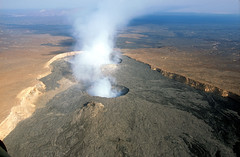 | 16 |
| 12226121949 | active volcanoes | Are currently erupting or show sign of erupting in the near future |  | 17 |
| 12226122522 | dormant volcano | A volcano that has not erupted for a long time, but may erupt again one day |  | 18 |
| 12226122806 | extinct volcano | A volcano that has not erupted for thousands of years and probably will not erupt again |  | 19 |
| 12226123950 | rift valley | a valley formed by the separation of tectonic plates |  | 20 |
| 12226125001 | subduction zones | places where plates are pushed down into the upper mantle |  | 21 |
| 12226125418 | hot spots | places where molten material from the mantle reaches the lithosphere |  | 22 |
| 12226126014 | shield volcanoes | broad base, gentle slopes, oceanic hot spot, mild eruption, slow lava flow. if contact w h20 occurs then it can lead to a pyroclastic flow |  | 23 |
| 12226127607 | composite volcanoes | broad base, steeper slope, subduction zones, violent eruptions, lava, water, gases, super heated ash and stones |  | 24 |
| 12226129138 | cider volcano | a volcano that formed when molten lava erupts and cools quickly in the air (hardening into rock) |  | 25 |
| 12226132082 | earthquakes | a sudden and violent shaking of the ground, sometimes causing great destruction, as a result of movements within the earth's crust or volcanic action. |  | 26 |
| 12226133260 | focus | Point at the depth where the rocks ruptured to produce earthquakes; place where quake waves originate |  | 27 |
| 12226133467 | epicenter | Point on Earth's surface directly above an earthquake's focus |  | 28 |
| 12226133847 | seismograph | A device that records ground movements caused by seismic waves as they move through Earth |  | 29 |
| 12226134399 | S waves | A type of seismic wave that moves the ground up and down or side to side |  | 30 |
| 12226134837 | richter scale | A scale that rates an earthquake's magnitude based on the size of its seismic waves. |  | 31 |
Flashcards
AP Human Geography Population Flashcards
These are the vocabulary words from Rubenstein's AP Human Geography textbook.
Chapter-1: Thinking Geographically
Chapter-2: Population
Chapter-3: Migration
Chapter-4: Folk and popular culture
Chapter-5: Language
Chapter-6: Religion
Chapter-7: Ethnicity
Chapter-8: Political Geography
Chapter-9: Development
Chapter-10: Agriculture
Chapter-11: Industry
Chapter-12: Services
Chapter-13: Urban Patterns
Chapter-14: Resource Issues
Terms : Hide Images
| 6616135461 | agricultural revolution | the development of farming |  | 0 |
| 6616135462 | arithmetic density | The total number of people divided by the total land area |  | 1 |
| 6616135463 | Census | A complete enumeration of a population |  | 2 |
| 6616135464 | Crude Birth Rate (CBR) | The number of live births in a year for every 1,000 people alive in a society |  | 3 |
| 6616135465 | Crude Death Rate (CDR) | The number of deaths in a year per 1,000 people alive in a society |  | 4 |
| 6616135466 | Demographic Transition | the process of change in a society's population as a combination of medical advances and economic development, affecting a population's desire and ability to control its own birth and death rates |  | 5 |
| 6616135467 | Demography | the scientific study of population characteristics |  | 6 |
| 6616135468 | Dependency ratio | the number of people under 15 and over 64 compared to the number of people in the workforce |  | 7 |
| 6616135469 | Doubling Time | the number of years it takes for an area's population to double |  | 8 |
| 6616135471 | Epidemiological transition | The a distinctive cause of death in each stage of the demographic transition. Explains how countries' population change. |  | 9 |
| 6616135472 | Infant Mortality Rate | The total number of deaths in a year among infants under one year old per 1000 live births in a society | 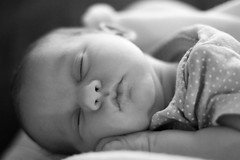 | 10 |
| 6616135473 | Life Expectancy | The average number of years an individual can be expected to live given current social, medical, and economic conditions. |  | 11 |
| 6616135474 | Medical Revolution | medical technology from Europe and North America that was used to eliminate many diseases in the developing world |  | 12 |
| 6616135475 | Megalopolis | Term used to designate large coalescing supercities that are forming in diverse parts of the world. |  | 13 |
| 6616135476 | Natural Increase Rate (NIR) | The percentage growth of a population in a year, computed as the crude birth rate minus the crude death rate (NIR=CBR-CDR) |  | 14 |
| 6616135477 | Overpopulation | a situation in which the number of people in an area exceeds the capacity of the environment to support life at a decent standard of living |  | 15 |
| 6616135478 | Physiological Density | The number of people per unit of area of arable land, which is land suitable for agriculture |  | 16 |
| 6616135479 | Population Composition | Structure of population in terms of age, sex and other properties such as marital status and education |  | 17 |
| 6616135480 | Population Density | A measurement of the number of people per given unit of land |  | 18 |
| 6616135481 | Population Distribution | Description of locations on Earth's surface where populations live |  | 19 |
| 6616135482 | Population Pyramid | A bar graph that represents the distribution of population by age and sex |  | 20 |
| 6616135483 | Sex ratio | the ratio of men to women |  | 21 |
| 6616135484 | Standard of living | Goods and services and their distribution within a population |  | 22 |
| 6616135485 | Total Fertility Rate (TFR) | The average number of children a woman will have during her childbearing years. |  | 23 |
| 6616135486 | Zero population growth (ZPG) | A decline of the total fertility rate to the point where the natural increase rate equals zero. | 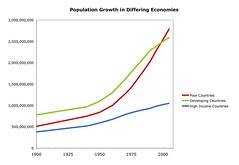 | 24 |
| 6616135487 | Agricultural Density | The ratio of the number of farmers to the total amount of land suitable for agriculture. |  | 25 |
| 6616135488 | Major Population Clusters -- East Asia | 1/4 global population: East China, Japan, Korea, and Taiwan |  | 26 |
| 6616135489 | Major Population Clusters -- South Asia | 1/4 of global population: India, Pakistan, Bangladesh, and Sri Lanka |  | 27 |
| 6616135490 | Major Population Clusters -- Southeast Asia | 600 million people: Indonesia, Philippines, and the river deltas of the Indochina peninsula |  | 28 |
| 6616135491 | Major Population Clusters -- Europe | 600 million people: 50 countries mostly clustered in Western Europe in Germany, Netherlands, Belgium, and France |  | 29 |
| 6616135492 | Industrial Revolution | a series of improvements in industrial technology that transformed the process of manufacturing goods and drastically altered society |  | 30 |
| 6616135493 | Thomas Malthus | (1766-1834) An English economist who argued that increases in population would outgrow increases in food production, which would lead to widespread famine and disease. |  | 31 |
| 6616135494 | One Child Policy | Chinese policy used to control population growth which began in the 1980's and restricted families to having only one child. |  | 32 |
| 6616135495 | Family Planning | The practice of controlling the number and frequency of children conceived usually through the use of contraception or voluntary sterilization. |  | 33 |
| 6616135496 | Sterilization | any process that eliminates a person's ability to produce children |  | 34 |
| 6616135497 | Epidemiology | The branch of medical science that is concerned with identifying, fighting, and preventing disease. |  | 35 |
| 6616135498 | Pandemic | Disease that occurs over a wide geographic area and affects a very high proportion of the population. | 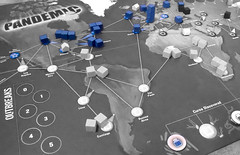 | 36 |
| 6616135500 | Sustainability | the level of development that can be maintained without depleting resources |  | 37 |
Pages

Need Help?
We hope your visit has been a productive one. If you're having any problems, or would like to give some feedback, we'd love to hear from you.
For general help, questions, and suggestions, try our dedicated support forums.
If you need to contact the Course-Notes.Org web experience team, please use our contact form.
Need Notes?
While we strive to provide the most comprehensive notes for as many high school textbooks as possible, there are certainly going to be some that we miss. Drop us a note and let us know which textbooks you need. Be sure to include which edition of the textbook you are using! If we see enough demand, we'll do whatever we can to get those notes up on the site for you!
