AP Notes, Outlines, Study Guides, Vocabulary, Practice Exams and more!

Biochemistry Flashcards

Terms : Hide Images
11831792922Competitive inhibtors( reversible )Increase Km making the enzyme look like it has less affinity for substreate. And slows the reaction down but has the same VMax0
11831792923Digitalis ((competitivee inhibitor)Inhibts NA K+ pumps1
11831792924Tetradotoxin (puffer fish) (competitive inhibitor)Inhibits NA channels2
11831792925Synthetic competitive inhibitor (Binds to homotropic site of enzyme3
11831792926Noncompetitive inhibitor (reversible Inhibitiion)Decrease Vmax because it wont allow. The enzyme to form a product. Km stays the. Same because it binds to the allosteric site because the inhibitor is a HETEROtropic inhibitor, not. Binding to the catalytic or homotropic site.4
11831792927Caffine is?Noncompetitive inhibitor (heterotropic)that binds to allotsteric site in phosodiesterase. Phosodiesterase normally breaks down cAMP. But this inhibitor allows cAMP to keep going. While this keeps going the more sugar and fat keeps being reeleased into the blood creating more energy.5
11831792928TomatoesNoncompetive inhibitor (caffic acid)inhibits lipyogenase.. tomatoes are nattural anti inflammatory food source, slowing prostaglanden6
11831792929Uncompetive inhibitorOnly binds to ES complex on allosteric site AFTER the enzyme has been bound. Tthis inhibitor prevents product formation. (Same with the others) DECREASE Vmax and DECREASE Km (making it seem like it has HIGHER affinity to the substrate). Pseudo Decrease in Km appears this way because, once uncompetitive inhibitor binds to ES Complex, it wont create product. This lack of creating products, will allow the other substrates to bind to free enzymes. Therefore making the enzymes seem like they have a HIGHER affinity.7
11831792930Uncompetitve inhibitors in line weaver berk plotWill have parallel lines to eachother because both vmax and km are different than normal.8
11831792932Suicide inhibitors9
11837243844NucleophileA negatively charge molecule, which attacks the nucleus (attracted to the protons) (reactive species) (o-,s-,c-,N-)10
11837243845ElectrophilePositively charged attracted to the electrons of the substrate (reactive species) (H+, C=O, C=NH+, O3-P=O11
11837243846Nucelophiles and electrophiles will make?Covalent bonds with another substrate, and creates the energy of the transition state to help make product formation12
11837243847Covalent catalysisActive site contains either a nucleophile or electrophile which creates a new transitional covalent bond with the intermediate.13
11837243848Acid base catalysisActive site is either a proton donor or a proton acceptor14
11837243849Metal ion catalysisA prosthetic group that has a negative or pos charge, that can create a nucleophile or electrophile attack.15
11837243850Catalysis by approximationTwo substrates, bind them in the catalytic site and by induce fit moving them so close together they get a charge that induce product formation16
11837243851Proteases (enzymes)Are found almost everywhere, uses hydrolysis and breaks the chemical bond of water and chemical bond of peptide bonds C-N, and will places the OH group to the carbon, and the H+ to the Nitrogen. And the unpaired electrons go back to the carbon and nitrogen17
11837243852ChymotrypsinA serine protease enzymee18
11837243853Chymotrypsin structure (Serine protease) has what components on the active site?hydrophobic pocket- to attract trp, tyr, Phe, Met. This hydrophobic pocket when bound to the substrate aligns the protein, And basically allows catalysis of the protein to proceed. Bonds above a serine, which basically allows that serine to become a nucleophile (reactive species) to attack the coo- of the peptide bond. Oxyanion hole- has NH groups (amine) on glycine, near catalytic site to form stabilizing H bonds with the Coo- of the protein. Catalytic triad- in every catalytic site of serine proteases, you will find a aspartate, a histidine, and serine. They work together to do both acid base and covalent catalysis reaction19
11837243854First step in catalytic traid?To create stabilizing H bonds with ASP and NH group of histidine. The ASP neg charge is so strong that it pulls the hydrogen of NH group on histidine, which allows it to be a strong base. This pull also pulls ALL positive charges of histidine, all thats left is electrons of nitrogen. Since Histidine has lost it's electrons, the Nitrogen of histidine on the left side will take the electrons of Serine.20
118372442452nd step of chymotrypsin serine proteaseThis pull also pulls ALL positive charges of histidine, all thats left is electrons of nitrogen. Since Histidine has lost it's electrons, the Nitrogen of histidine on the left side will take the proton of Serine. This only happens in the catalytic site at this time, there is NO WATER which allows these strong bonds to happen. When the Proton from serine leaves it creates a ALKOXIDE ION = O- . The oxyanion hole stabilizes the O- of serine, so it doesnt form free radicals.21
118372449193. Step chymotrypsin serine proteaseSerine is now a nucleophile because of the pull of the H bond from histidine. This serine will attack to partial postive charge of the C=O-. This creates a new covalent bond. This makes C have 5 covalent bond.22
11837245757Step 4 of chymotrpsin serine proteaseSince Carbon covalent bond has 5 covalent bonds, this puts stress on the C, creating reactive species. The electrons will move to the oxygen of the C=O and creates a full negative charge on the OXYGEN.23
11837246037Step 5 of serine proteaseNow carbon has 4 covalent bonds again, but once again the oxyanion hole, moves the electrons from the O- back onto the Carbon24
11837246640Step 6 of serine proteaseSince the carbon ONCE AGAIN has 5 bonds, it will move the electrons over to the nitrogen on the amine group of the peptide bond.25
11837587330Step 6 continued of serine proteaseOnce the electrons are moved from carbon to nitrogen of the amine group. THIS TIME it actually breaks the amine group off.26
11837587630Step 8 of serine proteaseSince half of the peptide is still there, and you have a Serine attached to the carbonyl group still, the enzyme has acylated" the serine oof the catalytic site R-C-R. It appears that the serine attached to the carbonyl group seem like its a suicide inhibitor. So now we need to break the acyl serine, to release the remainder of the substrate and we need to reset the enzyme. Since the serine is off the histidine H20 is able to be formed on to the histidine. Aspartate is still being a strong base. Now the histidine will take a H+ from water.27
11837587942Step 9 serine proteaseThe OH- from the breakage of water, goes on the carbonyl carbon. Which moves the electrons back onto the Oxygen creating O- once again.28
11837588385Step 10 serine protetaseThe oxyanion hole AGAIN stabilizes the bonds by moving the electrons from the oxygen (O-) attached to the carbonyl carbon to the carbon.29
11837260377Step 7 of serine proteaseThe H that was stolen from serine on and went to histidine, go onto the Amide group leaving and becomes NH2+30
11837586867Step 11 serine proteaseThe extra electrons on the carbonyl carbon will move onto the serine. Which breaks the Acyl bond R-C-R bond. The serine falls off.31
11837586868Step 12 serine proteaseSerine then goes back to the histidine thanks to the H+ that went on it from the water molecules. And the H+ will bond back to the O- on the serine. Resting the enzyme and allows it to work again.32
11837586869Chymotrypsin and most serine proteases works best in what PH?Alkaline ph less than 8 ph. The structure of chymotypsin works best in PH greater than 8 and others at PH of 7.4 physiological PH. This PH allows Histidine and aspartate to be a strong base. If the PH of the blood is low the histidine will be protonated not allowing the enzyme reaction to occur!33
11837586870What would happen if water couldnt form in the catalytic site of serine protease?Water allows the enzyme to reform, without water the Histidine would not be able to form back with the serine. The enzyme then could not be recycled.34
11842279757Tyrpsin has what type of binding pocket?A negative binding pocket that has aspartate in it. The aspartate pulls lysin and asparagine with + charged NH+ groups to the trypsin serine protease.35
11842279758Elastase has what type of binding pocket?Very narrow hydrophobic binding pocket, that restricts large hydrophobic molecules. Attracts glycine alanine and valine36
11842279759Isozyme vs enzymeEnzymes and isozymes can differ due to their amino acid structure. One example is tthe enzymes can have amide groups C-N) to the carbonyl carbon. While Esters (isozymes) can have ester groups attached to the carbonyl carbon (C-OR-37
11842279760ActylcholenesteraseEnzyme at the neuro muscular junction and at neuron to neuron synapses, that breaks the neurotransmitter acetylcholine. Its a serine protease, still uses catalytic triad, it hydrolyzees a ester bond at acetylcholine instead of a peptide bond. SO it's a SERINE PROTEASE ISOZYME because it breaks down ester instead.38
11842279761Cystein protease vs serine proteaseCystine protease replaces the. Serine group on the catalytic triad. Since cystine has the same resemlance as serine, only with a Sulfur instead..wworks the same as other proteases.39
11842279762Aspartyl proteases vs serine proteaseAspartate catalyzes an acid base reaction that lead to covalent catalysis. Uses aspartate as the initiator . Does not resemble and appearance. Like. Serine.40
11842279763Metaloproteases vs serine proteasesUses a. Metal ion to attract a partial negitive charge to initiate catalyst41
11842279764All proteases are similar due to the fact that?They all use acid base catalysis and covalent catalysis strategies, they just initiate the peptide differently.42
11842279765Metal. Ion catalysisMetal ion catalysis uses a metal ion to then become a nucleophile. Or electrophile43
11842279766Carbonic anhydrase is what type of catalysis?Metal ion catalysis44
11842279767Carbonic anhydrases. Use what to form bicarbonate ?C02 and H2045
11842279768Carbonic anhydrase increase the rate of reaction bicarbonate by?5000 times faster. It is the fastest enzyme approaching the rate of diffusion46
11842279850Carbonic anhydrase contains what type of. Prosthetic group?Zinc ion bound with 3 coordinate covalent bonds with histidines, and 1 coordinate covalent bond with H20. A 4th histidine at the catalytic site serves as base to extract hydrogen from water, which gives the acid base portion. The hydrogen is then released into the solution. Then you form covalent catalysis with the carbon dioxide molecule. So the OH- is the nucleophile and C02 molecule combining is the covalent catalyst portion. The OH- C02 now bonded (HCO3-) forming bicarbonate, but is still attached to the 4th coordinate covalent bond of histidine. Water will then come in and break the bond from zinc releasing the bicarbonate. And this resets the enzyme. The histidine that took the proton from water, can add water back onto the zinc again froming the h20 coordinate covalent bond once again.47
11842279769ProteolysisRegulates enzymes, enzymes that hydrolyze a peptide bond to allow the enzyme to be active again.48
11842279770Zymogen is what?An inactive enzyme precursor. Breaking part of. The zymogen will activate the enzyme, happens during a change in homeostasis.49
11842279771Fibrinogen is what?Is a ZYMOGEN (inactive precursor) that is used. To form clots when activated. Proteolysis is initiated by serine proteases thrombin. Thrombin binds to. Fibrinogen which breaks a part. Of fibrinogen and allows it to be activve to fibrin.50
11842279772Monosaccharaides areAre polyhydroxyls that have either a aldehyde group or a keytone group51
11842279999Where is the carbonyl in both aldehyde and keytone placed in a structure?Carbonyl is at the end of the carbohydrate structure which forms a aldehyde A keytone, the carbonyl is in the middle of the structure52
11842279773All monosaccharides have how many chiral carbons?They have at least ONE Chiral carbon except DHA53
11842280044Nomenclature of sugars54
11842279774Chiral carbons allow forStereoisomers (non super imposable images of one another)55
11842279775Most common sugars in nature are?D-Glucose, D-fructose, D-ribose, D-galactose56
11842279776Carbohydrate in bend light which way?D- to the right , L- to the left57
11842280118know how the structures are made for glucose, fructose, ribose, galatose58
11842279777D-aldohexoses are generated when?When the location of thee -OH group differs in either C2,C3,C459
11842279778D glucose and d galactose are epimers because?They only have one Carbon with hydroxl group difference. D glucose has its OH group on the right of chiral carbon 4 and D galactose has its OH group on the left at Chiral carbon #460
11842279779Congenital lactose intoleranceDue to failure of galactose epimerase, since the body only recognizes glucose for energy and not galactose, the liver has an enzyme called galactose epimerase that changes the epimer galactose into glucose, failure of this results in lactose intolerance.61
11842279780Glucose and mannose are epimers at which carbon?Carbon #262
11842279781Ketoses uses which suffix?-Ulose (ribulose) EXCEPT: fructose, sorbose63
11842279782Aldoses uses which suffix?-ose (fructose is a ketose)64
11842279783Fructose is found?In fruits, its commonly broken down into glucose for energy65
11842279784D-ribolose,D- xylulosePentuloses, for metabolism as well66
11842279785URONIC acidIs not a spontaneous reaction, O2 binds to the carbon at C6. This then forms a COOH carboxylic acid, which is a potential energy because COOH at 7.4 will creat a COO-, a Full negative charge will be place on the O. This O- can manipulate structures, to make them MORE water soluble.67
11842279786aldonic acidIs OXIDATION ON CARBON 1, NOT carbon 6. Which also can form a COOH carboylixic acid to form the ALDONIC acid (because aldose). This is used for carrier for drugs. remember COO- will make other groups water soluble68
11842279787Monosachharides cyclic structures happens how?In water aldohexoses or any monosaccharides potentially can have a nucleophile attack against itself. This is do to the presence of water, allow a hydroxyl (OH) group to have a negative charge do to the lone pair of electrons, that it took from water. This allows it to a be a nucleophile and can attack the 1st carbon, the carbonyl carbon. This attack breaks the C=O on the carbonyl and it forms a OH instead. The nucleophile OH group will lose its H+ and become only a O. It forms at the 5th carbon because its the most stable formation. NOTE* the nucleophile attack doesnt actually steal electrons, but the water encourages the nuucleophile attack69
11842279788Hemiacetal and hemiketalIs what the structure is called after a sugar 6 carbon, attacks itself (acetal if aldose) and ketal if ketone.70
11842280179How many different structures of hemiacetal are there?2, Alpha and beta. Alpha looks like a fish and faces down to the fishes. Beta looks at the Birds.71
11842279789Anomeric carbonAnomeric carbon is a non superimposable images, this is the nnew carbon. Its the only carbon bound by TWo electronegative Oxygen. All the other Carbons have only 1. Anomeric carbon in short is the new carbon in cyclic structure. Anomeric carbons have the strongest partial positive charge in the group72
11842279790How many electrons are gained or loss with the hemiacytal is formed?None, there are no loss or gain of electrons.73
11842280313How is the hemiketal group formed?In fructose, since it is a ketose. The OH group becomes the nucleophile in the 5th carbon OH group. But attacks the carbonyl group at C2. Anomeric carbon at C2. Its also a pentose74
11850757019Glycoside bondLinks two carbohydrates together, non spontaneous reaction(anabolic). Carbon 4 (nucleophile) of B-D glucose bonds to the anermeric carbon A-D glucose. The anomeric carbon has the highest partial postitive charge on the monnnosaccharide. Releasing H20...75
11850755685Which carbon hydroxyl group will become a nucleophile with disaccharides?ANY hydroxyl group can become the nucleophile on the monosaccharides76
11850756549Alpha 1-4 glycoside link1 carbon with 4 carbon on the beta d glucose77
11852637595Reducing surgarsAre sugars that still have a free anomeric carbon available to be oxidized. It must be a carbon still bounded to two O molecules.78
11850755686PolysaccharidesAre sugar molcules that must have a free reducing sugar (free hydroxyl group) carbon so it can attack incoming saccharides.79
11850755687AmyloseIs a alpha 1-4 glycosidic linkage of glucose, it makes a helical structure at 6 residues per turn (FOUND IN PLANTS)80
11852665969AmylopectinIs an alpha 1-4 glycosidic linkage, but at 24-30 residues it can have an alpha 1-6 glycossidic bond which causes branching and the branching allows my glucose molecules to bind, making it more complex. (Still in a helical structure) (FOUND IN PLANTS) glycogen is similar to amylopectin but 8-12 residues per turn.81
11850755688Why does glucose go into polymers of glycogen?Because if glucose was in a monomer form only, the water would accumulate too much towards the molecules, and osmolarity would be our demise in the liver 5 mm of glucose would turn into 400mm of glucose if we didn't have glycogen82
11850755689Cellulose uses which type of bonds?B-D glucose bonds 1-4 instead of Alpha. And forms a linear structure. Cellulose is used for plants walls. And only organisms that can digest these are cows, and termites due to symbiosis with bacteria and parasites inside them to break the cellulose.83
11850755690ChitinInsect exoskeleton that contains B 1-4 glucose. A lot like cellulose but C2 has a bound acetylmine84
11850755691GlucosamineAre acetylamine groups on glucose85
11850755692PeptidoglycanFound also in CELL WALL, you get B.1-4 anyactyle glucosmine and anactyle nueronic acid on the glucose. Enzyme on SKIN and TEARS can break the peptidoglycan bonds, which in bacteria wont allow it to stay living.86
11850755693AlagrosePolysaccharides found in red algae and seaweed, that is used for drug capsules and biotechnology.87
11850755694How are flavor receptors enhanced?By PAMS (positive allosteric modulators) binding at the allosteric site to allow for further increase in the stimulation. Of our taste senses.88
11850755695Glycosaminoglycans (sugar Protein sugar) (GAG)Are used in the ECM, only found in ANIMALS and BACTERIA. They are able to form because of uronic acid, which oxidizes carbon 6. And glycosaminoglycans are used for glycocalyx proteins on membranes. The negitive charge due to Uronic acid, allow for a much large water retention and use for other protiens89
11850755696Glycosaminoglycans (protein portion)Uses the uronic acid side on carbon 6 oxidized to form covalent or. Non covalent linked to proteins or. Membranes. They can also create. Branches here. It also helps stabillize to stay onto the sugar.90
11852665316Glycosaminoglycans structure (sugar side)Are LARGE repetatiive structures rodlike HELICES. Has COO- and. Sulfate on opposite sides of the helix. (Remember when moleculs bindto. The hydroxyl groups they are glycosamines91
11850755697Aggrecans (other sugar side)Similar. To linked. Protein which can bind covalently. Or. Non covalently to glucose. Polymer. But the aggrecan AGGREGATE. And form. Tthe other side of the sugar. Aggrecan. Core branches the glucose polymer off it92
11850755698Bristle brush (glycosaminoglycans)Created from the aggrecan core structure with the branches. Where you have a. Protein. Core as wire. Stick but the brissles. Are glycose polymers that have a FULL. Negative charge which supports the ECM. And also recruits proteins in signal transduction and communcation of the cell.93
11850755699Hyaluronan (application)Found in synovial fluid, has an EXTREME water retention and helps absorb and redistribute the water so it's less stressful compression (shock absorbers). Very important in bone articulation, bones will grind on eachother if this is impaired.94
11850755700Hyluronase are what?Enzymes in bacteria, that allows digestion of hyaluronan (GAGS) which does not allow the function of water retention and distribution properties.. This bacteria that causes this can be strepoccoccous, and staphlyoccous.95
11850755701Types. Of GAGS that are important to knowhyruluenate has COO- in. It's structure only Chondroitin has COO- ANd SO4- making it more electronegative (tendons Keratin sulfate- has ONLY SO4- on C4 no uronic acid.96
11850755702Heparan sulfateFound and produced in all animal cells. Its sulfates SO4- varries in each heparan sulfate, but the SO4- is still used for protein interaction and bondage.97
11850755703HerpARINHepARIN is a version of herpARAN but heparin uses more sulfates. Is produced by mast cells. It binds ot antithrombrin, and thrombrin both to create a bridge, when antithrombrin binds with thrombrin to prevent blood clots. SO basically Heparin is a version of heparan that has a strong NEGATIVE pull that pulls positive thrombrin and antithrombrin to bind together.98
11865046861ProteoglycanA macromolecule with one or more glycosaminoglycans covalently bound to membrane proteins or secreted proteins. Basically the bristle brushes attached to the membrane proteins99
11865046862Glycoprotein is bbigger or smaller than proteoglycan?Much smaller its an oligosaccharide bound to intracellular or extracelluar protein but both glycoproteins and proteoglycans form the glycocalyx.100
11865046863Proteoglycan and gllycoproteins both help in:-Protein binding -Recruiting hormones and ligands to receptors -concentrate a ligand at the cell surface - hold association of protein such as collogen for tensile strenght101
118650468642 ways carbs bind to proteins:1. O-linked- oxygen becomes a nucleophile and pulls the SER or THR to itself, 2. N-linked- ASP is the nucleophile and pulls the anomeric carbon.102

Biochemistry Ch.2 Flashcards

Terms : Hide Images
7255619639State the unusual properties of water and explain why these properties are observed (include the shape of the water molecule and ability to form hydrogen bonds)High melting + boiling point (b/c 4 H bonds between other water molecules -lots of energy to break H bonds) high heat of vaporization (same) Shape of water comes from two H atoms sharing electrons with one O atom (BENT). There is two bonds with H atoms and 2 with nonbonding orbitals making it nearly tetrahedron. This makes it polar creating attraction to bond to other water molecules. Hydrogen bonds occur because O is partially - while H's are partially +. This in turn causes the -O to hydrogen bond with the partial H+ from another water molecule, vice versa. This is an example of ELECTROSTATIC attraction0
7255619640define Amphipathiccompounds with regions that are polar and nonpolar1
7255620845define bond dissociation energyenergy required to break a bond, for H-bonds (23 kJ/mol)2
7255620846define clathratescrystalline compounds of nonpolar solutes and water. Ordering of water molecules reduces entropy. (causes water to become highly ordered.)3
7255621914define colligative propertiessolutes change certain physical properties of a solvent, water: vapor pressure, boiling point, melting point (freezing point), and osmotic pressure.4
7255621915define hydrogen bondWeak electrostatic attraction between one electronegative atom (N, O, F) and a hydrogen atom covalently linking to a second electronegative atom EX: interaction between the oxygen atom of one water molecule and the adjacent water molecule's hydrogen, due to electrostatic interactions.5
7255622828define hydrophiliccompounds that dissolve easily in water because they are "water-loving"6
7255622829define hydrophobiccompounds that do not dissolve easily in water because they are "water-fearing"7
7255623650define hydrophobic interactionsforces that hold the nonpolar regions of molecules together. Strength is not due to any nonpolar parts, rather from a system of thermodynamic stability by minimizing the number of ordered water molecules required to surround hydrophobic portions of the solute molecules.8
7255623651define hypertonic (solution)osmolarity is higher than that of the cytosol of a cell, cell shrinks as water moves out.9
7255623652define hypotonic (solution)osmolarity is lower than that of the cytosol of a cell, cell swells as water moves in.10
7255624675define isotonic (solution)solution's osmolarity is equal to that of the cell's cytosol11
7255624676define micellesAn aggregate of amphipathic molecules in water, with the nonpolar potions in the interior and the polar potions at the exterior surface, expose to water.12
7255626583define osmolarityConcentration of solution in terms of solutes per liter of solution.13
7255626584define osmosiswater movement through a semipermeable membrane driven by differences in osmotic pressure, important in life of most cells14
7255628995define van der waals interactionstwo dipoles (different molecules) weakly attracted to each other (polarization), bringing two nuclei closer15
7255631195Draw a diagram of the structure of ice and discuss the characteristics of the hydrogen bonding observed in ice and why ice is less dense than liquid waterFigure 2.2 solid water (ice) can form a maximum of four H-bonds, creating regular crystalline lattice which makes the ice less dense than water. (spaced evenly between). Water only has an average of 3.4 H-bonds and is spaced out more.16
7255632766Describe the interactions involved when polar and ionic solutes dissolve in waterPolar molecules dissolve in water because the partial negative part of the polar molecule attracts the partial positive hydrogen atom in water. Thus there is a change from solute-solute H-bond interaction. (polar biomolecules dissolve readily in water because they can replace water-water interactions with more energetically favorable water-solute interactions) Ionic molecules like salts can be hydrated and stabilized by water. For example, NaCl becomes Na+ and Cl- ions which attract water molecules (fig2-6) ion-dipole interaction17
7255635255Compare the types of weak interactions among biomolecules in strength to each other and to covalent bondsHydrogen Bonds -between neutral groups and peptide bonds (Carboxyl +amino) Ionic interactions -attraction and repulsion Hydrophobic interactions Van der Waals Interaction All of these interactions have a cumulative effect, thus playing important roles in macromolecular structures.18
7255636374Describe the ionization of water and the extent to which it occursSmall degree of ionization of water to hydrogen ions (H+) and hydroxide ions (OH-) Water molecules have a tendency to undergo reversible H20 (reversible arrows) (H+) + (OH-) Hydrogen ions are quickly hydrated to Hydronium ions (H30+)19
7255637671Define Kw and know how it is determined; know its value at 25 degrees Cequilibrium constant of water at 25 degrees C The product (55.5M)(Keq) at 25 degrees C = (ion product of water) Kw = [H+][OH-] = (55.5M)(1.8x10^-16M) = 1.0x10^-14M^2 This is the neutral pH where there are exactly equal concentrations of H+ and OH-20
7255639270Calculate pH or pOH at 25 degrees C given the [H+] or [OH-] of a solutionpH = -log[H+] pOH = -log[OH-] pH scale Table 2-621
7255645585Calculate pH (or [H+]), pKa (or Ka), or the concentration of a weak acid, given information on two of the three variablesKa is the ionization constants or acid dissociation constants Ka = [H+][A-] / [HA] = Keq pKa = -log Ka Henderson-Hasselbach Equation: pH = pKa + log (base/acid)22
7255647772Calculate the pH of a buffer or the proportions of conjugate acid and base present in a bugger using the Henderson-Hasselbach equationHenderson-Hasselbach Equation: pH = pKa + log (base/acid)23
7255650063Discuss how to choose and prepare an effective buffer for a given applicationA weak acid and its conjugate base, use the acid that corresponds to the desired equivalence zone from a titration24
7255650771Calculate the change in pH of a buffer when acid or base is addedpg. 66 (2-6)25
7255654773Identify the three reversible equilibria involved in the bicarbonate buffer system in animals with lungs and explain how changes in pH affect these equilibriaH2CO3 = Carbonic Acid (proton donor) HCO3- = Bicarbonate (proton acceptor) C02 (d) = dissolved carbon dioxide LOOK AT "NOTES"26
7255656551Explain what is meant by acidosis and how untreated diabetes leads to acidosisAcidosis occurs when the pH of blood is often below the normal value of 7.4 Lack of insulin or the insensitivity to insulin disrupts the uptake of glucose from blood into the tissues and forces the tissues to use stored fatty acid as their primary fuel. This leads to the accumulation of 2 carb acids, beta-hydroxybutyric acid and acetoacetic acid. The dissociation of these acids lead to acidosis.27
7256815519Define condensation reactionWhere elements of water are eliminated after a reaction occurs. (H20 is cleaved from reactants)28
7256815520Define hydrolasesexergonic reaction (release) that uses a catalytic enzyme for hydrolysis29
7256815907Define hydrolysis reactionCleavage accompanied by the addition of elements of water.30

Unit 3 600-1450 AP World History Flashcards

Terms : Hide Images
12354431688Silk Roadthe most famous of the trading routes established by pastoral nomads connecting the European, Indian, and Chinese; transmitted goods and ideas among civilizations0
12354431689Black DeathThe common name for a major outbreak of plague that spread across Asia, North Africa, and Europe in the mid-fourteenth century, carrying off vast numbers of persons.1
12354431690Indian Ocean trading networkThe world's largest sea-based system of comunication and exchange before 1500 C.E., Indian Ocean commerce stretched from southern China to eastern Africa and included not only the exchange of luxury and bulk goods but also the exchange of ideas and crops.2
12354431691SrivijayaA Malay kingdom that dominated the Straits of Malacca between 600 and 1075 CE. A state based on the Indonesian island of Sumatra, between the seventh and eleventh centuries C.E. It amassed wealth and power by a combination of selective adaptation of Indian technologies and concepts, and control of trade routes.3
12354431692Angkor WatThis place was first a Hindu (dedicated to the god Vishnu), then subsequently a Buddhist, temple complex in Cambodia and the largest religious monument in the world.4
12354431693Swahili civilizationan East African civilization that emerged in the 8th century ce from a blending of Bantu, Islamic, and other Indian Ocean trade elements5
12354431694Great ZimbabweCity, now in ruins (in the modern African country of Zimbabwe), whose many stone structures were built between about 1250 and 1450, when it was a trading center and the capital of a large state.6
12354431695Ghana, Mali, SonghayCapitalizing on the new Trans-Saharan trade routes, these kingdoms were established trading gold for salt and slaves7
12354431696Trans-Saharan slave tradeA fairly small-scale trade that developed in the twelfth century C.E., exporting West African slaves captured in raids across the Sahara for sale mostly as household servants in Islamic North Africa; the difficulty of travel across the desert limited the scope of this trade.8
12354431697pochtecaSpecial merchant class in Aztec society, specialized in long-distance trade in luxury items9
12354431698Sui dynastyThe short dynasty between the Han and the Tang; built the Grand Canal, strengthened the government, and introduced Buddhism to China10
12354431699Tang dynasty618-907 CE. Much like the Han using Confucianism. had the equal field system, a bureaucracy based on merit and a Confuciansim education system. Trained strong armies of almost a million troops to fight off nomadic powers from Asia. Made story cultural influence over Korea and Vietnam.11
12354431700Song dynastyDuring this Chinese dynasty (960 - 1279 AD) China saw many important inventions. There was a magnetic compass; had a navy; traded with india and persia (brought pepper and cotton); paper money, gun powder; landscape black and white paintings12
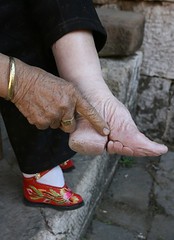
12354431701foot bindingPractice in Chinese society to mutilate women's feet in order to make them smaller; produced pain and restricted women's movement; made it easier to confine women to the household.13
12354431702tribute systemChinese method of dealing with foreign lands and people's that assumed the subordination of all non-Chinese authorities and required the payment of tribute --produce of value from their countries--to the Chinese emperor(although the Chines gifts given in return were often much more valuable).14
12354431703XiongnuA confederation of nomadic peoples living beyond the northwest frontier of ancient China. Chinese rulers tried a variety of defenses and stratagems to ward off these 'barbarians,' as they called them, and dispersed them in 1st Century. (168)15
12354431704HangulKorean written alphabet16
12354431705Chinese BuddhismChina's only large-scale cultural borrowing before the 20th century. This belief system entered China from India in the first and second centuries C.E but only became popular between 300-800 C.E through a series of cultural accommodations. At first supported by the state, it suffered persecution during the 9th century but continued to play a role in Chinese society.17
12354431706QuranThe holy book of Islam18
12354431707ummaThe community of all Muslims. A major innovation against the background of seventh-century Arabia, where traditionally kinship rather than faith had determined membership in a community.19
12354431708Pillars of IslamThe five core practices required of Muslims: a profession of faith, regular prayer, charitable giving, fasting during Ramadan, and a pilgrimage to Mecca (if physically and financially possible).20
12354431709hijraThe Migration of Muhammad from Mecca to Medina in A.D. 622, marking the founding of Islam21
12354431710shariaBody of Islamic law that includes interpretation of the Quran and applies Islamic principles to everyday life22
12354431711jizyatax paid by Christians and Jews who lived in Muslim communities to allow them to continue to practice their own religion23
12354431712ulamaMuslim religious scholars. From the ninth century onward, the primary interpreters of Islamic law and the social core of Muslim urban societies.24
12354431713Umayyad Caliphate(661-750 CE) The Islamic caliphate that established a capital at Damascus, conquered North Africa, the Iberian Pennisula, Southwest Asia, and Persia, and had a bureaucracy with only Arab Muslims able to be a part of it.25
12354431714Abbasid Caliphate(750-1258 CE) The caliphate, after the Umayyads, who focused more on administration than conquering. Had a bureaucracy that any Mulim could be a part of.26
12354431715SufismA branch of Islam, defined by adherents as the inner, mystical dimension of Islam; others contend that it is a perennial philosophy of existence that pre-dates religion, the expression of which flowered within Islam27
12354431716Ibn Battuta(1304-1369) Morrocan Muslim scholar, the most widely traveled individual of his time. He wrote a detailed account of his visits to Islamic lands from China to Spain and the western Sudan. His writings gave a glimpse into the world of that time period.28
12354431717TimbuktuMali trading city that became a center of wealth and learning29
12354431718Mansa MusaRuler of Mali (r. 1312-1337). His extravagant pilgrimage through Egypt to Mecca in 1324-1325 established the empire's reputation for wealth in the Mediterranean world.30
12354431719madrassasFormal colleges for higher institutions in the teaching of Islam as well as in secular subjects founded throughout the Islamic world in beginning in the 11th century31
12354431720Byzantine Empire(330-1453) The eastern half of the Roman Empire, which survived after the fall of the Western Empire at the end of the 5th century C.E. Its capital was Constantinople, named after the Emperor Constantine.32
12354431721ConstantinopleA large and wealthy city that was the imperial capital of the Byzantine empire and later the Ottoman empire, now known as Istanbul33
12354431722JustinianByzantine emperor in the 6th century A.D. who reconquered much of the territory previously ruler by Rome, initiated an ambitious building program , including Hagia Sofia, as well as a new legal code34
12354431723Eastern Orthodox ChristianityEastern branch of Christianity that evolved following the division of the Roman Empire and the subsequent development of the Byzantine Empire in the east and the medieval European society in the west. The church recognized the primacy of the patriarch of Constantinople35
12354431724iconsA painting of Christ or another holy figure, used as an aid to devotion in the Byzantine and other Eastern Churches.36
12354431725Prince Vladimir of Kievconverted to Orthodox Christianity, and allowed Byzantine influence in his realm37
12354431726Kievan RusA monarchy established in present day Russia in the 6th and 7th centuries. It was ruled through loosely organized alliances with regional aristocrats from. The Scandinavians coined the term "Russia". It was greatly influenced by Byzantine38
12354431727CharlemagneKing of the Franks (r. 768-814); emperor (r. 800-814). Through a series of military conquests he established the Carolingian Empire, which encompassed all of Gaul and parts of Germany and Italy. Illiterate, though started an intellectual revival.39
12354431728Holy Roman EmpireA medieval and early modern central European Germanic empire, which often consisted of hundreds of separate Germanic and Northern Italian states. In reality it was so decentralized that it played a role in perpetuating the fragmentation of central Europe.40
12354431729Roman Catholic churchOne of three major branches of Christianity, together with the Eastern Orthodox Church, a second of the three major divisions of Christianity, arose out of the division of the Roman empire into four governmental regions. In 1054 CE Christianity was divided along that same line when the Eastern Orthodox, centered in Constantinople, and the ______ ______ ______, centered in Rome, split.41
12354431730Western ChristendomWestern Europe was on the margins of world history for most of the postclassical millennium; It was far removed from the growing world trade routes; European geography made political unity difficult; Coastlines and river systems facilitated internal exchange;42
12354431731CrusadesArmed pilgrimages to the Holy Land by Christians determined to recover Jerusalem from Muslim rule. They brought an end to western Europe's centuries of intellectual and cultural isolation.43
12354431732pastoralismA type of agricultural activity based on nomadic animal husbandry or the raising of livestock to provide food, clothing, and shelter.44
12354431733Turks6th-10th centuries C.E. •Pastoral ethnic group that originated in northern Eurasia and spread into Central Asia and the Middle East •Had significant cultural and political interactions with China, Persia, Byzantium •Conversion to Islam 10th-14th centuries •Diffused Islam throughout Middle East, India, Anatolia(Turkey)45
12354431734Temujinleader of the largest Mongol clans; he unites them all(plans to conquer Asia); and receives title Genghis Khan(universal ruler)46
12354431735the Mongol worldEurasia, 13th-15th centuries •50-year period of conquests across Eurasia that created an empire •Subjected huge populations to their rule •Military strength allowed for rapid conquest •Their rule created interactions between diverse groups •Served to diffuse technology, culture, political and economic systems47
12354431736Yuan Dynasty(1279-1368 CE) The dynasty of Mongol rule in China; centralized with bureaucracy but structure is different: Mongols on top then Persian bureaucrats finally Chinese bureaucrats.48
12354431737Kublai Khan(1215-1294) Grandson of Genghis Khan and founder of the Mongol Yuan Dynasty in China.49
12354431738HuleguRuler of the Ilkhan khanate; grandson of Chinggis Khan; responsible for capture and destruction of Baghdad in 125750
12354431739Ming DynastySucceeded the Mongol Yuan dynasty in China in 1368; lasted until 1644; initially mounted huge trade expeditions to southern Asia and elsewhere, but later concentrated efforts on internal development within China.51
12354431740European Renaissancea "rebirth" of classical learning that is most often associated with the cultural blossoming of Italy is the period 1350-1500 and included Greek learning and growing secularism52
12354431741Zheng HeAn imperial eunuch and Muslim, entrusted by the Ming emperor Yongle with a series of state voyages that took his gigantic ships through the Indian Ocean, from Southeast Asia to Africa.53
12354431742Ottoman EmpireIslamic state founded by Osman in northwestern Anatolia. After the fall of the Byzantine Empire, the Ottoman Empire was based at Istanbul (formerly Constantinople) from 1453-1922. It encompassed lands in the Middle East, North Africa, the Caucasus, and eastern Europe.54
12354431743seizure of ConstantinopleThe city fell to army of Ottoman sultan Mehmed II "the Conqueror" in 1453, marking end of Christian Byzantium55
12354431744Safavid EmpireTurkish-ruled Iranian kingdom (1502-1722) established by Ismail Safavi, who declared Iran a Shi'ite state.56
12354431745Songhay EmpireA state located in western Africa. From the early 15th to the late 16th century, it was one of the largest Islamic empires in history.57
12354431746Mughal EmpireMuslim state (1526-1857) exercising dominion over most of India in the sixteenth and seventeenth centuries; a minority of Muslims ruled over a majority of Hindus.58
12354431747MalaccaPort city in the modern Southeast Asian country of Malaysia, founded about 1400 as a trading center.59
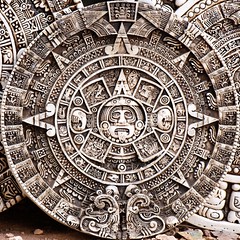
12354431748Aztec Empire1325-1500 CE. Also known as Mexica, they created a powerful empire in central Mexico. Forced defeated people to provide goods and labor as tax. At its best had complex myth and religious traditions and reached amazing architectural and artistic accomplishments.60
12354431749Inca Empire(1450-1572 CE), Largest Empire ever built in South America; territory extended 2,500 miles from north to south and embraced almost all of modern Peru, most of Ecuador, much of Bolivia, and parts of Chile and Argentina; maintained effective control from the early 15th century until the coming of Europeans in the early 16th century. The most powerful people of Andean America.61
12354431750Meccathe holiest city of Islam; Muhammad's birthplace; Muslims must make pilgrimage to here62
12354431751MuhammadArab prophet; founder of religion of Islam.63
12354431752MuslimA follower of Islam; one who submits64
12354431753Islama religion based on the teachings of Muhammad; Submission to the will of God65
12354431754Medinaa city in western Saudi Arabia; a city where Muhammad preached66
12354431755caliphatethe rule or reign of a caliph or chief Muslim ruler.67
12354431756Shi'itesMuslims that believe that only direct descendants of Muhammad should become caliph68
12354431757Sunnia branch of Islam that regards the first four successors of Muhammad as his rightful successors; Followers of Muhammad's example69
12354431758MamluksArabic word for "owned", slave soldiers used by muslim caliphs and the ottoman empire70
12354431759HadithThe compiled work of the life and teachings of Muhammad.71
12354431760medievalreferring to the Middle Ages in Europe or the period of history between ancient and modern times; period between Rome and the Renaissance72
12354431761schismpermanent division in a church73
12354431762manora lord's estate in feudal Europe74
12354431763serfA person who is bound to the land and owned by the feudal lord75
12354431764fiefland granted by a lord to a vassal in exchange for loyalty and service76
12354431765vassalA lord, or knight, who was granted land in exchange for service and loyalty to a greater lord77
12354431766papacyThe central administration of the Roman Catholic Church, of which the pope is the head.78
12354431767investiture controversystruggle between popes and kings regarding control of church offices and appointments79
12354431768monasticismpractice of living the life of a monk80
12354431769horse collarleather collar that rests around horses shoulders; allowed to carry more weight81
12354431770UighursTurkic empire of the steppes; flourished in eighth century CE82
12354431771Tibethome of the Dalai Lama; spiritual guide in Mahayana Buddhism83
12354431772junkChinese merchant ship84
12354431773gunpowderinvented by the Chinese-used for weapons and fireworks85
12354431774neo-Confucianisma new form of the ideas of the philosopher Confucius; included Buddhist and Daoist beliefs86
12354431775Zenthe practice of meditation; a school of Buddhism in Japan87
12354431776movable typeindividual characters that can be arranged to create a printing job and then be used over again88
12354431777KoryoKorean kingdom founded in 918 and destroyed by a Mongol invasion in 1259.89
12354431778FujiwaraAristocratic family that dominated the Japanese imperial court between the 9th and 12th centuries90
12354431779Kamakura ShogunateThe first of Japan's decentralized military governments. (1185-1333).91
12354431780Champa Ricedrought resistant crop, a gift from Vietnam to China, led to population increase92
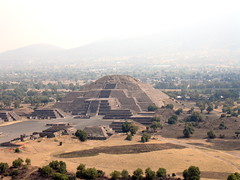
12354431781Teotihuacan"The Place of the Gods"; first planned city in the Americas in the Valley of Mexico93
12354431782chinampasRaised fields constructed along lake shores in Mesoamerica to increase agricultural yields.94
12354431783MayaAncient people of Mesoamerica, particularly the Yucatan Peninsula in Mexico95
12354431784ToltecsA group of American Indian people that flourished in Mexico before the Aztecs96
12354431785TenochtitlanThe captial city of the Aztecs.97
12354431786AnasaziAn early Native American people who lived in the American Southwest; cliff dwellers98
12354431787chiefdoma political economy that organizes regional populations through a hierarchy of the chiefs99
12354431788quipuIncan record keeping system using knots and beads on rope100
12354431789aylluAndean lineage group or kin-based community.101
12354431790mit'amandatory public service in the society of the Inca Empire102
12354431791MocheCulture that flourished along the northern coast of Peru from around A.D. 100 to A.D. 700103
12354431792Genghis KhanOne of the Mongol's greatest leaders and founder of the Mongol Empire.104
12354431793Il-khana khanate expanding through Armenia, Azerbaijan, Mesopotamia, and Iran,105
12354431794Golden HordeA famous horde of the Mongol Empire that conquered the region of modern-day Russia.106
12354431795TimurTurkic warrior, efforts to restore Mongol Empire devastated much of Persia, Russia, and India107
12354431796tsarThe Russian term for ruler or king; taken from the Roman word caesar.108
12354431797kamikaze"divine wind" in Japan; blew the Mongols away from invading Japan109
12354431798Monsoonrainy season in southern Asia when the southwestern monsoon blows, bringing heavy rains110
12354431799Dehli Sultanate(1206-1526) Centralized Indian empire of varying extent, created by Muslim invaders.111
12354431800dhowa ship with one or two masts, used in the Indian Ocean.112
12354431801Urduthe official literary language of Pakistan, mix of Persian and Hindu writing113
12354431802Latin Westterritories of Europe that practiced Christianity and used the Latin language114
12354431803three-field systemfarmland divided into three equal-sized fields, in which crops were rotated; developed in medieval Europe115
12354431804water wheelMechanism in which flowing water turns a wheel to grind grain or power machinery116
12354431805Hanseatic Leaguea group of Northern German cities and towns that worked together to promote and protect trade117
12354431806guildA medieval organization of crafts workers or trades people.118
12354431807gothic cathedralStained glass windows, flying buttresses, and high arches are all parts of this style119
12354431808scholasticismin medieval Europe, the school of thought that used logic and reason to support Christian belief120
12354431809humanistsEuropean scholars, writers, and teachers associated with the study of the humanities121
12354431810printing pressdevice that mechanically printed pages by pressing inked forms onto paper, invented around 1440; invented by Johann Gutenberg122
12354431811Great Western Schismthe period form 1378-1417 when two men claimed to be pope at the same time in known as the123
12354431812Hundred Years WarConflict between England and France that establishes each as a unified country (1337-1453)124
12354431813new monarchiesthe reestablished states of Spain, England and France after the Hundred Years' War125
12354431814reconquest of Iberiamilitary campaigns by various Iberian Christian states (Spain and Portugal) to recapture territory taken by the Muslims126
12354431815bananaslike rice in China, this food crop led to an increase in the Africa population127
12354431816flying casha paper currency developed in China that can be considered the first banknote, it made trade easier since merchants did not have to carry around coins128

Biochemistry Flashcards

Terms : Hide Images
8149616127Amphoteric Speciesi.e. Amino Acids Can accept or donate a proton depending on the pH of the environment. At low pH the ionizable groups will accept protons to become protonated. At high pH, they will donate protons to become deprotonated.0
8149639334pKaThe pKa value of a group = the pH at which half of the molecules of that species are deprotonated [protonated version of the ionizable group] = [deprotonated version of that group] AKA: [HA] = [A-] pH < pKa = Majority of that species is protonated pH > pKa = Majority is depronated1
8149680734Zwitterions and pHAcidic conditions = the [H+] is high = + charged AA The amino group and the carboxyl group on AA will both be protonated. The amino group is positively charged and the carboxyl group is nuetral. Physiological/Intermediate pH= neutral zwitterion Amino group is protonated and positively charged and the carboxyl group is deprotonated and negatively charged Basic conditions = high [-OH] = - charged AA The carboxyl group remains deprotonated and negatively charged and the amino group deprotonates to become neutral2
8149765500OligopeptidesPolypeptides made up of 20 or less residues3
8149780755Peptide BondSpecialized covalent amide bond formed via a dehydration/condensation rxn between the -COO- of one AA and the-NH3+ of another AA to form the functional group -C(O)NH-. This bond may be broken via a hydrolysis rxn. The electrophilic carbonyl (c=o) group on the first AA is attached by the nucleophilic amino group on the second AA --> the -OH group on the carbonyl is kicked off to form the amide bond The amide groups have delocalizable pie bond electrons that exhibit resonance to increase bond stability --> the C-N bond in the amide has partial double bond character restricting the movement around this bond4
8149857904Polypeptide TerminusC-terminus = right end of the polypeptide ending with a carboxyl group N-terminus = left end of a polypeptide beginning with an amino group5
8149871138Peptide Bond HydrolysisHydrolytic enzymes break apart the amide bond at specific amino acids by adding a H+ to the amide nitrogen and an -OH group to the carbonyl carbon = exact reverse of the dehydration/acyl substitution reaction6
8149903265Primary and Secondary Protein StructurePrimary = No interactions of r-groups, linear AA chain stabilized by covalent amide bonds. Can be determined by sequencing. Secondary= Backbone interactions only via intramolecular H-bonding between nearby AA residues to form alpha helices and beta-sheet structures7
8149932080Alpha HelicesSecondary protein structure stabilized by intramolecular hydrogen bonds between the carbonyl oxygen and the amide hydrogen. Coils clockwise around a central axis. The AA side chains point away from the helix core. Important component of Keratin8
8170025034Beta-Pleated SheetsSecondary protein structure stabilized by intramolecular h-bonding between the carbonyl oxygen on one chain and the amide H on the other. Can parallel (peptide chains run in the same direction) or antiparallel (run in opposing directions). The pleated conformation allows for the structure to accommodate as many h bonds as possible. The r-groups of the AAs point above and below the plane of the sheet.9
8170189797Secondary Structures and ProlineProline's five-membered ring structure will introduce a kink into the polypeptide chain when found in the middle of an alpha helix. Proline is rarely found in helices with exception to those that cross the cell membrane and rarely present in the middle of beta-pleated sheets.10
8170897730Tertiary and Quaternary Protein StructureTertiary: R-group interactions occur within one polypeptide chain and is primarily the result of hydrophobic side chains folding toward the interior of the 3D protein structure Note: the hydrophilic N-H and C=O bonds w/in the amide bonds get pulled in by the hydrophobic side chains form electrostatic interactions and h bonds that further stabilize the protein from the inside Quaternary: r-group interactions and disulfide salt bridges (oxidized cysteine residues form cystine + 2H + 2e- ) occur between the separate polypeptide subunits of the protein11
8171055498Molten GlobulesIntermediate states of protein folding12
8171115408Entropy and Protein foldingWhen a solute dissolve in a solvent, the solvent molecules will form a solvation layer around the solute. When AA are placed in a solvent (the cytoplasm) the water molecules cannot form h bonds with the hydrophobic residue side chains. In order to have a spontaneous (favorable) process which requires less energy while maximizing the stability of the protein structure, the hydrophobic residue side chains must fold towards the interior while the water molecules rearrange themselves to maximize h-bonding with the hydrophilic residue side chains on the exterior of the protein. This causes an increase in entropy (change in S>0) = spontaneous process = max stability13
8172511381Benefits of Quaternary protein Structure Formation1. This reduces the SA of the protein and increases its stability 2. It reduces the amount of DNA needed to be encoded 3. It can bring catalytic sites on the protein closer together and allow for faster transfer of intermediates from the first rxn to the second rxn 4. It can induce cooperativity/allosteric effects = the structural change of one subunit can increase or decrease the activity of the other subunits14
8172765387Conjugated ProteinsConjugation = existence of a link or connection between things These proteins derive part of the function from covalently attached prosthetic groups15
8172801421Prosthetic groupsCovalently attached molecules that determine the function of their conjugated proteins and may direct the protein to its specific location w/in the cell. Can be organic = vitamins or metal ions Types to know: 1. Lipid prosthetic groups = Lipoproteins 2. Carbohydrate prosthetic groups = Glycoproteins 3. Nucleic Acid prosthetic groups = Nucleoproteins16
8172879395DenaturationLoss of protein structure and its function Two causes: 1. Heat: when the temperature of a protein increases, its average kinetic energy increases. This extra energy eventually overcomes the hydrophobic interactions holding the protein together (electrostatic, H-bonds between the interior peptide chain N-H and C=O bonds pulled in by the hydrophobic side chains, etc.) causing the protein to unfold. 2. Solutes (such as Urea and SDS): directly interfere with the forces holding the protein together. Can disrupt quaternary and tertiary structure by breaking disulfide bridges via reduction and the H-bonding of secondary structures.17

The Post Classical Era - AP World History Flashcards

Terms : Hide Images
11364893083600CE-1450CEthe timeframe for the post-classical period0
11364893200Japanese Feudalism1
11364893201European Feudalism2
11364893084FeudalismBasic concept refers to the political and social order of medieval Europe; based on a hierarchy of lords and vassals who controlled political and military affairs3
11364893085Neo-ConfucianismA philosophy that emerged in Song-dynasty China; it revived Confucian thinking while adding in Buddhist and Daoist elements.4
11364893086Tang DynastyThis dynasty made good use of the Han's development of bureaucracy by recruiting government officials who were well educated, loyal, and efficient. Although powerful families used their resources to place relatives in government positions, most bureaucrats won their posts because of intellectual ability.5
11364893087bureaucracysystem of managing government through departments run by appointed officials (not elected)6
11364893088CaliphateOffice established in succession to the Prophet Muhammad, to rule the Islamic empire; also the name of that empire.7
11364893089CrusadesA series of holy wars from 1096-1270 AD undertaken by European Christians to free the Holy Land from Muslim rule.8
11364893090Islamthis religion was a unifying force in culture aspects of Eurasia and Africa - similar religion (Islam), similar language (Arabic), similar art (forbids art of humans.9
11364893091Arabesque designgeometric designs; no human figures in art10
11364893202Trans-Sahara trade11
11364893203Indian Ocean trade12
11364893204Silk routes13
11364893092Mongol EmpireAn empire founded in the 12th century by Genghis Khan, which reached its greatest territorial extent in the 13th century, encompassing the larger part of Asia and extending westward to the Dnieper River in eastern Europe.14
11364893093Mayan EmpireThe major civilization in Southern Mexico and the Yucatan Peninsula from 150 B.C.E. to 900 C. E.; kings were not divine, created calendars, used terraced farming, human sacrifices, and was the only Mesoamerican civilization to have a written language15
11364893094Muhammadconsidered by Muslims to be the last messenger and prophet sent by God to guide humanity to the right way16
11364893095JustinianEastern Roman emperor between 527 and 565 CE; tried to restore unity of old Roman Empire; issued most famous compilation of Roman Law; extended later Roman architecture17
11364893096Genghis Khan(1167?-1227) One of the Mongol's greatest leaders and founder of the Mongol Empire.18
11364893097Kubilai Khangrandson of Genghis Khan. He conquered China, founding and becoming the first emperor of the country's Yuan Dynasty19
11364893098Marco Polo(1254-1324) Italian explorer and author. He made numerous trips to China and returned to Europe to write of his journeys. He is responsible for much of the knowledge exchanged between Europe and China during this time period.20
11364893099Ibn Battuta(1304-1369) Morrocan Muslim scholar, the most widely traveled individual of his time. He wrote a detailed account of his visits to Islamic lands from China to Spain and the western Sudan. His writings gave a glimpse into the world of that time period.21
11364893100SaladinMuslim leader in the last decades of the 12th century; reconquered dost of the crusader outposts for Islam22
11364893101Mansa Musagreatest Mali king; brought Mali to its peak of power and wealth from 1312 the 1337; expanded borders, maintained peace and order, religious freedom and tolerance; hajj to Mecca; built Timbuktu23
11364893102Zheng Hea Chinese admiral that was sent on expeditions to form relationships between China and other countries (Ming Dynasty)24
11364893103Sui DynastyAs one of the ephemeral dynasties in Chinese history, this existed for only 38 years, was established by Yang Jian in 581. Built a strong central government with work done by peasants. Public works projects included palaces, granaries, and repair of defensive walls; Most elaborate project was the Grand Canal.25
11364893104Tang Dynasty(618-907 CE) The Chinese dynasty that was much like the Han, who used Confucianism. This dynasty had the equal-field system, a bureaucracy based on merit, and a Confucian education system.26
11364893105Song Dynasty(960 - 1279 CE); this dynasty was started by Tai Zu; by 1000, a million people were living there; started feet binding; had a magnetic compass; had a navy; traded with india and persia (brought pepper and cotton); first to have paper money, explosive gun powder; *landscape black and white paintings.27
11364893106Ming DynastySucceeded Mongol Yuan dynasty in China in 1368; lasted until 1644; initially mounted huge trade expeditions to southern Asia and elsewhere, but later concentrated efforts on internal development within China.28
11364893107Yuan Dynasty(1279-1368 CE) The dynasty with Mongol rule in China; centralized with bureaucracy but structure is different: Mongols on top->Persian bureaucrats->Chinese bureuacrats.29
11364893108Ghana Empire(800CE-1050CE) Complex societies based on trans-Saharan trade with salt and gold had existed in the region since ancient times located on Niger and Senegal River; "Land of Gold"30
11364893109Mali Empire(1235CE-1450CE) established by Sundial, their greatest emperor was Mansa Musa, expanded borders to Atlantic ocean and converted to Islam (located in northwestern Africa)31
11364893110Delhi SultanateCentralized Indian empire of varying extent, created by Muslim invaders. (1210 - 1256)32
11364893111Kievan RussiaA monarchy established in present day Russia in the 6th and 7th centuries. It was ruled through loosely organized alliances with regional aristocrats from. The Scandinavians coined the term "Russia". It was greatly influenced by Byzantine Empire. Conquered by the Mongols in the thirteenth century.33
11364893112Golden HordeOne of four regional subdivisions of the Mongol Empire after the death of Chinggis Khan; conquered and ruled Russia during the 13th and 14th centuries34
11364893113Ottoman Empire- Western Turkey, 1299-1923 - Conquered Byzantine Empire - Capital: Istanbul (formerly Constantinople) - Covered most of old Roman and Byzantine territories - Became very wealthy because ease of trade35
11364893114Mughal Empire- Ruled over India, 1526-1857 - Islam was the official religion - Known for building Taj Mahal36
11364893115Safavid Empire- Ruled over Iran, 501-1736 - Trade/Commerce experienced success through European participation in Iranian territories - Used missionaries to spread Shia Islam37
11364893116Qu'ranRevelations believed to be sacred words of Allah38
11364893117Umayyad Dynastyruled the dar al-islam as conquerors and their policies reflected the interests of the Arab military aristocracy. short dynasty39
11364893118Abbasid EmpireEmpire that: - Claimed descent from Muhammad's uncle; more acceptable to Shi'ites - Changed policies opening religion to all on equal basis - Helped est. Islam as a universalizing religion - Cosmopolitan mix of cultures emerged Golden Age of Islam Problems with governing vast area40
11364893119Bantu Migrationgroup of 300 common but distinct languages called Bantu ("people") 500 BCE to 1000 CE - massive transfer of Bantu languages and lifestyles southward from their home in modern Nigeria, creating Pan-African traditions and practices41
11364893120dhowsships used in the indian ocean trade routes42
11364893121Mit'aAndean labor system based on shared obligations to help kinsmen and work on behalf of the ruler and religious organizations.43
11364893122TerracingA soil conservation technique that prevents erosion on STEEP hills by heavy rains.44
11364893123ChinampasRaised fields constructed along lake shores in Mesoamerica to increase agricultural yields.45
11364893124ConstantinopleA large and wealthy city that was the imperial capital of the Byzantine empire and later the Ottoman empire, now known as Istanbul.46
11364893125Chinese JunkA very large flat-bottom sailing ship produced in the Tang and Song Empires, specially designed for long-distance commercial travel.47
11364893126BantuA major African language family. Collective name of a large group of sub-Saharan African languages and of the peoples speaking these languages. Famous for migrations throughout central and southern Africa.48
11364893127DhowArab sailing vessels with triangular or lateen sails; strongly influenced European ship design.49
11364893128Sui Dynasty(589-618 CE) The Chinese dynasty that was like the Qin Dynasty in imposing tight political discipline; this dynasty built the Grand Canal which helped transport the rice in the south to the north.50
11364893129VikingsDanes, Norse, ruled by kings and nobles, fairly democratic, hunters, gatherers, fishers, esp. farmers, raided Europe and the British Isles as the weather permitted, used slaves, assemblies of landowners made the laws, during the 800s famine, dominated the North Atlantic through the thirteenth century.51
11364893130TimbuktuMali trading city that became a center of wealth and learning52
11364893131Incan EmpireA Mesoamerican civilization in the Andes Mountains in South America that by the end of the 1400s was the largest empire in the Americas including much of what is now Peru, Ecuador, Bolivia, and Chile; conquered by Pizarro.53
11364893132Aztec EmpireCentral American empire constructed by the Mexica and expanded greatly during the fifteenth century during the reigns of Itzcoatl and Motecuzoma I. Conquered by Cortes.54
11364893133SwahiliBantu language with Arabic loanwords spoken in coastal regions of East Africa.55
11364893134Byzantine Empire(330-1453) The eastern half of the Roman Empire, which survived after the fall of the Western Empire at the end of the 5th century C.E. Its capital was Constantinople, named after the Emperor Constantine.56
11364893135AristocracyHighest class in certain societies or a form of government in which power is held by the nobility57
11364893136Angkor WatLargest religious monument in the world. It was originally a Hindu temple for god and then it became a Buddhist temple58
11364893137Great Zimbabwelocated in the modern African country of Zimbabwe, whose many stone structures were built between about 1250 and 1450, when it was a trading center and the capital of a large state.59
11364893138Hundred Years War (1337-1453)series of conflicts waged from 1337 to 1453 by the rulers of the Kingdom of England, against the rulers of the Kingdom of France, for control of the Kingdom of France60
11364893139Decline of Abbasid Caliphate- Hostility increased b/t Sunni/Shi'ites - Difficult to hold diverse empire together from one central location - Slave revolts and peasant uprisings Incompetent caliphs --- Abbasids hired Seljuk Turks as soldiers; gained power - Seljuk leader Tughril took over Baghdad; caliph is figurehead - Mongols seized throne in 125861
11364893140Early Middle Ages- Collapse of political, social, and military order left Europe in chaos - Continuing invasions and conflicts - The Church provided cultural unity and enabled the area to regain some control62
11364893141tribal chieftainsIn the Early Middle Ages, Roman governors were replaced with __________ __________.63
11364893142manorialismPolitical, economic, and social system by which the peasants of medieval Europe were tied to their land and their lord through serfdom; defined both economic and political obligations between lords and peasant laborers64
11364893143DividedAfter Charlemagne's death, the empire was ___________65
11364893144Monasteriesthe primary centers of learning and literacy in medieval Europe; played important role in providing stability during Dark Ages66
11364893145ConstantineWho moved the capital to Constantinople which made a split in political authority which further led to a split in religious authority?67
11364893146Benedictine RuleChurch supported monasteries in rural areas68
11364893147FeudalismWhat discouraged the growth of strong central government and political power of the Church countered power of the kings?69
11364893148Magna CartaGreat Charter issued by King John of England in 1215; confirmed feudal rights against monarchical claims; represented principle of mutual limits and obligations between rulers and feudal aristocracy.70
11364893149William of Normandy (the Conqueror)landed on the coast of England and defeated king Harold at the battle of hastings. took a census known as Domesday book, became king of England.71
11364893150GhettosEuropean Christians discriminated against Jews who lived in segregated communities, which are also know as:72
11364893151Carolingian Renaissancepertaining to the empire of Charlemagne • Revival of Book Making • Adoption of Roman Architectural Forms • Creation of Imperial Imagery73
11364893152scholasticismA method of doing theology and philosophy which aims at a better understanding of revealed truths; attempt to rationalize theology in order to support faith by reason74
113648931531453, IstanbulThe Byzantine Empire survived until ________; fell to Ottoman Turks and renamed __________.75
11364893154Hagia Sophiaone of the most important examples of Christian architecture in the world; a church built by Justinian with a magnificent domed structure that later became a mosque76
11364893155Corpus Juris CivilisThe Byzantines had the most important contribution codification of Roman Law; basis for civil law codes that developed throughout much of western Europe77
11364893156TheodoraEmpress _____________ had great influence over Justinian78
11364893157SuiWhich Dynasty established by northern Chinese noble family and reunited China?79
11364893158Grand Canalbuilt by Sui linked the Yellow and Yangzi as key component to the internal trade80
11364893159Eastern Orthodox Churchderived from the church of the Byzantine Empire81
11364893160Fiefsan estate of land, especially one held on condition of feudal service82
11364893161Civil Service Exams Systemtesting designed to select the most studious and learned candidates for appointment as bureaucrats in the Chinese government.83
11364893162Neo-ConfucianismAppeal of Buddhism and Emphasis on the importance of social life and rejection of withdrawal through meditation led to what?84
11364893163TrueDuring Tang and early Song women had more rights. True or False?85
11364893164CharlemagneKing of the Franks (r. 768-814); emperor (r. 800-814). Through a series of military conquests he established the Carolingian Empire, which encompassed all of Gaul and parts of Germany and Italy. Illiterate, though started an intellectual revival.86
11364893165Empress Wu Zhaoonly woman to rule in her own name in Chinese history (Song Dynasty)87
11364893166Fujiwara RuleJapanese aristocratic family in mid-9th century; exercised exceptional influence over imperial affairs; aided in decline of imperial power.88
11364893167Fall of MongolsDistance between the capital and borders made it impossible to maintain unity for long (similar to large empires before)89
11364893168Indian Ocean tradeAfter the Mongol Empire broke up, trade along the Silk Road ended and many turned to _______________.90
11364893169Toltecs- first to unify central Mexico after the people of Teotihuacan - Centralized state based on military power - Were replaced by the Aztecs91
11364893170AppealingPax Mongolica and Dar al-Islam (House of Islam) made travel more _______________.92
11364893171Angkor WatLargest religious monument in the world. It was originally a Hindu temple for god and then it became a Buddhist temple93
11364893172Dar-al-Islamareas of which Islam spread to; lands under Islamic influences94
11364893173Sunnimajor sect of islam "the traditionalists"95
11364893174Shiaminor sect of islam separated from the Sunni due to the belief that ali should be the first caliph after muhammad96
11364893175Berke(1257-1266) A ruler of the Golden Horde; converted to Islam; his threat to Hulegu combined with the growing power of Mamluks in Egypt forestalled further Mongol conquests in the Middle East97
11364893176JurchensFounders of the Qin kingdom that succeeded the Liao in northern China; annexed most of the Yellow River basin and forced Song to flee to south98
11364893177Xuanzanga Chinese Buddhist monk, scholar, traveller, and translator who described the interaction between China and India in the early Tang dynasty.99
11364893178Alhambrathe complete Arabic form of which was Qalat Al-Hamra, is a palace and fortress complex located in Granada, Andalusia, Spain.100
11364893179Pope Gregory VIIthe pope who fought to establish the supremacy of the pope over the Church and the supremacy of the Church over the state (1020-1085).101
11364893180Sufismystical Muslim group that believed they could draw closer to God through prayer, fasting, & simple life102
11364893181Hong WuHe established this Ming ("brilliant") dynasty, following the Yuang dynasty, in 1368; his immediate goal was to remove all signs of Mongol rule103
11364893182Holy Roman Empirea political entity in Europe that began with the papal coronation of Otto I as the first emperor in 962 and laster until 1806 when it was dissolved by Napoleon.104
11364893183Songhai(1450-1586CE) Leader (Sonni Ali) used powerful army to build largest state in West Africa; came after the fall of Mali105
11364893184Humanismfocus on humankind as center of intellectual and artistic endeavor; method of study that emphasized the superiority of classical forms over medieval styles, in particular the study of ancient languages.106
11364893185Italyestablished wealthy merchant classes (Medici, wealthiest family), Florence, focused a lot on education107
11364893186Petrachfather of Humanism; founded library which gave access to books to everyone108
11364893187ErasmusNew Greek edition of New Testament, which led to more people having the capability to read the bible.109
11364893188Dante Alighieriwrote the poem called Divine Comedy (which had depictions of hell, purgatory, and envisions of heaven) : actions determined fate110
11364893189Niccolo MachiavelliFlorence diplomat (observed royalty in other countries), published The Prince 1513 (somewhat guide for leaders)111
11364893190Act of Supremacy(1534) Act that made King Henry VIII the supreme leader of the Church of England, so that he could divorce his wife.112
11364893191Elizabethian Settlementa set of compromises by Queen Elizabeth, who restored unity to England113
11364893192Martin Luther(1483-1546) German monk; initiated Protestant Reformation in 1517 by nailing 95 theses to door to Wittenberg church; emphasized primacy of faith over works stressed in Catholic church; accepted state control of church.114
11364893193WariAnother civilization near Tiwanaku that flourished about the same time as Tiwanaku. It is theorized that this civilization was originally dependent on Tiwanaku, or that it and Tiwanaku were two parts of the same empire.115
11364893194MocheThe prominent civiliation in modern-day Peru around 600 C.E., before the rise of the Incan Empire; did not have any political unification, and instead depended on trade and agriculture.116
11364893195TiwanakuThe prominent civilization in the Andes Mountains before the rise of the Incan Empire; like the Moche, depended on trade among different agricultural areas in the empire.117
11364893196Calvinismsought the participation of all believers in church administration which had political implications of encouraging the ideal of wider access to the government; strong in Switzerland, parts of Germany & France, the Netherlands, England, and Scotland.118
11364893197Great Schism(1054) Event that precipitated the final separation between the Eastern Christian churches (led by the patriarch of Constantinople, Michael Cerularius) and the Western Church (led by Pope Leo IX)119
11364893198Protestantgeneral wave of religious dissent against Catholic church; generally held to have begun with Martin Luther's attack on Catholic beliefs in 1517; included many varieties of religious belief.120

Emergency Care 13th Edition Chapter 13 Flashcards

Terms : Hide Images
10583782228auscultationlistening. A stethoscope is used to auscultate for characteristic sounds.0
10583782229blood pressurethe force of blood against the walls of the blood vessels.1
10583782230blood pressure monitora machine that automatically inflates a blood pressure cuff and measures blood pressure.2
10583782231brachial arterythe major artery of the arm.3
10583782232brachial pulsethe pulse felt in the upper arm.4
10583782233bradycardiaa slow pulse, any pulse rate below 60 beats per minute.5
10583782234carotid pulsethe pulse felt along the large carotid artery on either side of the neck.6
10583782235constrictget smaller7
10583782236diastolic blood pressurethe pressure remaining in the arteries when the left ventricle of the heart is relaxed and refilling.8
10583782237dilateget larger9
10583782238oxygen saturation (SpO2)the ratio of the amount of oxygen present in the blood to the amount that could be carried, expressed as a percentage.10
10583782239palpationtouching or feeling. A pulse or blood pressure may be palpated with the fingertips.11
10583782240pulsethe rhythmic beats felt as the heart pumps blood through the arteries.12
10583782241pulse oximeteran electronic device for determining the amount of oxygen carried in the blood, known as the oxygen saturation or SpO2.13
10583782242pulse qualitythe rhythm (regular or irregular) and force (strong or weak) of the pulse.14
10583782243pulse ratethe number of pulse beats per minute.15
10583782244pupilthe black center of the eye.16
10583782245radial pulsethe pulse felt at the wrist.17
10583782246reactivityin the pupils of the eyes, reacting to light by changing size.18
10583782247respirationthe act of breathing in and breathing out.19
10583782248respiratory qualitythe normal or abnormal (shallow, labored, or noisy) character of breathing.20
10583782249respiratory ratethe number of breaths taken in one minute.21
10583782250respiratory rhythmthe regular or irregular spacing of breaths.22
10583782251sphygmomanometerthe cuff and gauge used to measure blood pressure.23
10583782252systolic blood pressurethe pressure created when the heart contracts and forces blood out into the arteries.24
10583782253tachycardiaa rapid pulse, any pulse rate over 100 beats per minute.25
10583782254vital signsoutward signs of what is going on inside the body, including respiration, pulse, skin color, temperature, and condition (plus capillary refill in infants and children), pupils, and blood pressure.26

Early Modern Key Terms, period 4 AP world History Flashcards

Terms : Hide Images
5890684211Imperialismthe policy of extending rule over foreign countries0
5890684212Nation-StateA sovereign state inhabited by a homogenous group of people1
5890684213Joint Stock CompaniesAn association of individuals who pooled resources and provided stock like a corporation2
5890684214MulattoesA person of mixed european and African descent3
5890684215MercantilismProsperity of a nation depends on its supply of resources4
5890684216SikhismSyncretic religion formed by Nanak5
5890684217MughalMuslim state that ruled india6
5890684218Columbian exchangethe exchange of plants and animals between the americas and the rest of the word, following columbus's expedition7
5890684219Jean Jacques RousseauChampion of democracy, all people are equal8
5890684220Zheng HeChinese admiral who led seven over seas trade expeditions under ming dynasty rule9
5890684221Encomienda systemA grant of Land made by the spaniards to a settler in the Americas, saying you can use native americans as slaves10
5890684222Laissez- Faire capitalismthe idea that economy can run itself11
5890684223Adam SmithScottish economist who advocated laissez faire12
5890684224SafavidThe Shi'a Islamic dynasty that ruled Persia in the 16th and 18th centuries13
5890684225CreolesDescendants of spaniards but born in South America14
5890684226MingChinese dynasty that focused on rejuvenating chinese culture after years of Mongol rule15
5890684227ShogunPowerful military lord in feudal Japan16
5890684228Dutch United East India CompanyPrivate merchants advanced funds to send ships to India and provide them the ability to trade17
5890684229SiberiaA vast asian region of Russia18
589068423095 ThesesPrimary catalyst for the protestant reformation19
5890684231CortesSpaniard who defeated the Aztecs20
5890684232Akbarthe most famous muslim ruler of India21
5890684233John LockeEnlightenment thinker who thought all people were equal and were essentially good22
5890684234PotosiA mine located in upper peru23
5890684235Middle Passagethe route in between western ports of africa and the carribean24
5890684236DaimyoJapanese military leaders25
5890684237OttomansTurkic empire established in Asia Minor26
5890684238SonghayPortion of Mali after the kingdom collapsed27
5890684239TokugawaA powerful Japanese family that ruled as shoguns28
5890684240Renaissancecultural and political movement in Italy during the 1400's29
5890684241Shah Abass the GreatSafavid ruler 1587-162930
5890684242Syncretic religionsReligions that combine two other religions31
5890684243HumanismA focus on humanity as the center of intellectual and artistic endeavor32
5890684244Absolute MonarchyThe king has all the power33
5890684245ShahTitle for the former hereditary monarch of Iraq/persia34
5890684246Scientific revolutionEuropean advancements in math and science, developed scientific method35
5890684247ManchusNortheast Asians who defeated the ming dynasty and started the qing dynasty36
5890684248English East india companyAn early joint stock company; granted on english royal charter with the intent of favoring trade privileges in India37
5890684249CopernicusA philosopher (discovered the solar system)38
5890684250MestizoA person of mixed racial ancestry39
5890684251PizarroSpaniard who Conquered the incas40
5890684252JanissariesChristian Boys taken from christian families, converted to Islam and trained to serve the sultan41
5890684253EnlightenmentA burst of thought and cultural advancement in Europe during the middle ages42
5890684254IndulgencesForgiveness of sins sold by the catholic church43
5890684255Vasco de GamaPortuguese Sailor, first to sail around Southern Africa to the Indian Ocean44
5890684256Viceroygovernor of a country that represents his king45
5890684257Maliformed when the Sundiata took control of the Ghana empire46
5890684258Lateen SailA triangular sail used on ships47
5890684259PatriarchyA society ruled by males48
5890684260Peter the Greay49

Cellular Reproduction Flashcards

Terms : Hide Images
6065491031Cell CycleThe life cycle of a cell.0
6065508179ChromosomesThe structures in the nucleus that contain DNA.1
6065515077Binary FissionCellular reproduction in prokaryotic cells. Means "Splitting into two parts"2
6065524801Homologous ChromosomesEach chromosome of a pair of similar chromosome3
6065532374ChromatidsThe two copies of the chromosome once it is duplicated4
6065541590CentromereWhere the chromatids are connected5
6065553527MitosisThe process of separating duplicated chromosomes in order to create a new cell.6
6065560800CytokinesisThe process where the cytoplasm splits in two7
6065568263BuddingA type of asexual reproduction, where a piece of the parents body develops into an independent organism8
6065574409RegenerationA type of asexual reproduction, where the organism breaks into two or more parts, each growing into a new organism that is genetically identical to the parent9
6065581799Sexual ReproductionThe production of offspring by combining the genetic material of more than one parent10
6065586212Asexual ReproductionA single parent has offspring that are identical to itself11
6065594928SpermThe male sex cell12
6065598433EggThe female sex cell.13
6065602183ZygoteThe new type of cell that is made when an egg's nucleus fuses with a sperm's nucleus14
6065606682SporesSmall reproductive cells that are protected by a thick cell wall15
6065612827Sex CellsSpecialized cells that combine to form a zygote, they have half the normal number of chromosomes, one of each pair.16
6065620503MeiosisA process where the chromosomes are copied and separated in such a way that each daughter cell has half the normal number of chromosomes. Creates sex cells.17
6065625363Sex ChromosomesThe chromosomes that carry the genes that determine gender.18
6065628781FertilizationThe joining of an egg and a sperm19
6065633057Cell PlateThe primary structure the leads to the new cell membranes between two plant cells during cytokinesis20
6065636482Spindle FibersFibers that connect to the centromeres of the chromosomes and that help push and pull the chromosomes apart during mitosis21
6065641890GeneA portion of DNA that controls the characteristics of an offspring.22

Asexual Reproduction Flashcards

Terms : Hide Images
85825909312 types of reproductionSexual and Asexual0
8582590932Asexual ReproductionA method of reproduction requiring only one parent1
8582590933Daughter cellscells that are genetically identical to the parent cell2
8582590935BINARY FISSIONA method of asexual reproduction where one single celled organism splits into 2 smaller but equal sized organisms: amoeba/paramecium3
8582590936BUDDINGa form of asexual reproduction in which a new individual organism develops on a parent organism and then separates.4
8582590937REGENERATIONGrowing back of a missing part Ex. Starfish and planaria5
8582625037FRAGMENTATIONReproduction of an entire organism from a piece of the parent organism6
8582642268PARTHENOGENESISgrowth of an organism from an unfertilized gamete, or sex cell7
8582687345DNAA molecule containing the genetic instructions for the development and functioning of all living organisms, found in the nucleus of a cell,8
8582734436GENEthe basic unit of heredity in a living organism; a segment of DNA9
8582748630MITOSISthe process of cell division where one cell splits into two identical cells10
8582822147GENETIC VARIATIONrange of differences in DNA among organisms (Diversity)11
8582854502BIODIVERSITYthe many different types of life that exist in an environment12
8582866881CHROMOSOMEa tightly wound bundle of DNA and proteins found in the nucleus of most living cells13

Pages

Subscribe to CourseNotes RSS

Need Help?

We hope your visit has been a productive one. If you're having any problems, or would like to give some feedback, we'd love to hear from you.

For general help, questions, and suggestions, try our dedicated support forums.

If you need to contact the Course-Notes.Org web experience team, please use our contact form.

Need Notes?

While we strive to provide the most comprehensive notes for as many high school textbooks as possible, there are certainly going to be some that we miss. Drop us a note and let us know which textbooks you need. Be sure to include which edition of the textbook you are using! If we see enough demand, we'll do whatever we can to get those notes up on the site for you!