

AP World History Religions Flashcards
Terms : Hide Images
| 9200983772 | Why did we develop belief systems? | Because humans have always needed to understand natural phenomenon | 0 | |
| 9200983773 | Polytheism | Belief in many gods |  | 1 |
| 9200983774 | Monotheism | Belief in one God | 2 | |
| 9200983775 | Animism | -They practice nature worship -They believe that everything has a spirit -They communicated with and showed respect to ancestors. -It is practiced worldwide but mostly in Africa and the Americas. | 3 | |
| 9200983776 | Shinto | A Japanese religion whose followers believe that all things in the natural world are filled with divine spirits -"Way of the Gods" -Founded around the year 500 BCE -The Emperor of Japan was considered to be divine and a direct descendant of the Sun Goddess. | 4 | |
| 9200983777 | Hinduism | A religion and philosophy developed in ancient India, characterized by a belief in reincarnation and a supreme being who takes many forms. -Polytheistic -A result of cultural diffusion between the Aryans and other native people in India. -Practiced in India -The Vedas, Upanishads, etc.. were all significant writings. | 5 | |
| 9200983778 | Atman | The spiritual oneness of the soul | 6 | |
| 9200983779 | Brahman | The term for The Universal Soul in Hinduism. | 7 | |
| 9200983780 | Moksha | The Hindu concept of the spirit's 'liberation' from the endless cycle of rebirths. | 8 | |
| 9200983781 | Samsara | The endless cycle of birth, death, and rebirth | 9 | |
| 9200983782 | Reincarnation | In Hinduism and Buddhism, the process by which a soul is reborn continuously until it achieves perfect understanding Basically Samsara | 10 | |
| 9200983783 | Karma | (Hinduism and Buddhism) the effects of a person's actions that determine his destiny in his next incarnation | 11 | |
| 9200983784 | Dharma | Fulfilling one's duty in life | 12 | |
| 9200983785 | Ahisma | That all life is sacred | 13 | |
| 9200983786 | Caste System | A Hindu social class system that controlled every aspect of daily life | 14 | |
| 9200983787 | Judaism | -A religion with a belief in one god (Monotheistic) -It originated with Abraham and the Hebrew people. -Practiced worldwide but most Jews are in Israel. -They have 10 commandments | 15 | |
| 9200983788 | Buddhism | A religion founded in India by Siddhartha Gautama which teaches that the most important thing in life is to reach peace by ending suffering. | 16 | |
| 9200983789 | The Four Noble Truths | The core of the Buddhist teaching. There is suffering. There is a cause to suffering. There is an end to suffering. The is a path out of suffering (the Noble 8-fold path). 1. Life is full of pain and suffering 2. human desire causes this suffering 3. By putting an end to desire, humans can end suffering 4. Humans can end desire by following the Eightfold Path | 17 | |
| 9200983790 | The Eightfold Path | 1. Know that suffering is caused by desire 2. Be selfless and love all life 3. Do not lie, or speak without a cause 4. Do not kill, steal, or commit other unrighteous acts 5. Do not do things which promote evil 6. Take effort to promote righteousness 7. Be aware of your physical actions, state of mind, and emotions. 8. Learn to meditate. | 18 | |
| 9200983791 | Confucianism | A philosophy that adheres to the teachings of the Chinese philosopher Confucius. It shows the way to ensure a stable government and an orderly society in the present world and stresses a moral code of conduct. | 19 | |
| 9200983792 | Five Relationships in Confucianism: | - Ruler to ruled - Father to Son - Older brother to Younger brother - Husband to Wife - Friend to Friend | 20 | |
| 9200983793 | Three concepts needed to be practiced: | Ren or Jen: human kindness Li: a sense of propriety, courtesy, respect, and deference to elders Xiao: Filial Piety | 21 | |
| 9200983794 | Taoism or Daoism | an ideology whose central theme is the Way, a philosophy teaching that eternal happiness lies in total identification with nature and deploring passion, unnecessary invention; simple life of individuals -Ying and Yang is used to illustrate the natural harmony in the world. |  | 22 |
| 9200983795 | Christianity | A monotheistic system of beliefs and practices based on the Old Testament and the teachings of Jesus as embodied in the New Testament and emphasizing the role of Jesus as savior. -Also has the Ten Commandments -Believe in the Holy Trinity Christians take part in sacraments. | 23 | |
| 9200983796 | The Holy Trinity | The Creator (Father), Redeemer (Son), and the Sustainer (Holy Spirit) | 24 | |
| 9200983797 | Sacraments | Religious practices such as baptism and receiving the Eucharist. There are 7 sacraments in total. | 25 | |
| 9200983798 | Islam | A religion based on the teachings of the prophet Mohammed which stresses belief in one god (Allah), Paradise and Hell, and a body of law written in the Quran. Followers are called Muslims. | 26 | |
| 9200983799 | The Five Pillars of Islam | 1. Confession of Faith 2. Prayer 3. Charity 4. Fasting 5. Pilgrimage | 27 | |
| 9200983800 | Zoroastrianism | - A dualistic faith, this means they believe in two gods representing good and evil -It was very important during the Sassanid Persian Dynasty. | 28 | |
| 9200983801 | Legalism | Chinese philosophy developed by Hanfeizi; taught that humans are naturally evil and therefore need to be ruled by harsh laws | 29 |
Flashcards
Flashcards
Flashcards
AP World History AMSCO 4 Flashcards
Terms : Hide Images
| 4894363281 | Republic | A state in which supreme power is held by the people and their elected representatives. | 0 | |
| 4894371347 | Senate | Any legislative or governing bodies. | 1 | |
| 4894380383 | Magistrates | Civil officers or judges who administer the law. | 2 | |
| 4894385838 | Tribunes | An official chosen by the plebians to protect their interests. | 3 | |
| 4894394238 | Consuls | One of 2 annually elected chief magistrates who ruled the republic. | 4 | |
| 4894407830 | Checks and Balances | Counterbalancing influences by which an organization or system is regulated | 5 | |
| 4894414204 | Pax Romana | The peace that existed between nationalities in the Roman Empire. | 6 | |
| 4894430991 | Edict of Milan | A letter signed by the Roman Emperors that proclaimed religious toleration | 7 | |
| 4894438930 | Patricians | An aristocrat or nobleman. | 8 | |
| 4894441671 | Plebians | A commoner or member of the lower class. | 9 |
Flashcards
AP World History: Ancient World Flashcards
First set of words in the AP World History book by the Princeton Review.
Terms : Hide Images
| 9933921844 | Agriculture | The deliberate effort to modify a portion of Earth's surface through the cultivation of crops and the raising of livestock for sustenance or economic gain. | 0 | |
| 9933921845 | Agrarian | pertaining to land or its cultivation; Ex. agrarian reform, agrarian society | 1 | |
| 9933921846 | Bands/ Clans | extended family groups that generally lived together | 2 | |
| 9933921847 | Barbarian | without civilizing influences | 3 | |
| 9933921848 | Bureaucracy | system of managing government through departments run by appointed officials (not elected) | 4 | |
| 9933921849 | Civilization | a society in an advanced state of social development (e.g., with complex legal and political and religious organizations) | 5 | |
| 9933921850 | City-States | different sections of land owned by the same country but ruled by different rulers (e.g. Greece) | 6 | |
| 9933921851 | Classical | of or characteristic of a form or system felt to be of first significance before modern times | 7 | |
| 9933921852 | Domestication | process of changing plants or animals to make them more useful to humans | 8 | |
| 9933921853 | Economy | system by which goods and services are produced and distributed to meet people's needs | 9 | |
| 9933921854 | Egalitarian | a person who believes in the equality of all people | 10 | |
| 9933921855 | Emperor | supreme ruler of an empire | 11 | |
| 9933921856 | Empire | many territories, countries, or peoples controlled by one government (also just any territory ruled by an emperor) | 12 | |
| 9933921857 | Feudalism | a political system and a social system where by a powerful lord would offer "protection" in return for "service" | 13 | |
| 9933921858 | Foraging | the process of scavenging for food | 14 | |
| 9933921859 | Hierarchy | a series of ordered groupings of people or things within a system | 15 | |
| 9933921860 | Hierarchical | Of, relating to, or arranged in a hierarchy | 16 | |
| 9933921861 | Hunter-Gatherer | A hunter-gatherer society is one whose primary subsistence method involves the direct procurement of edible plants and animals from the wild, foraging and hunting without significant recourse to the domestication of either plants nor animals | 17 | |
| 9933921862 | Irrigation | supplying dry land with water by means of ditches, sprinklers, etc. | 18 | |
| 9933921863 | Monarchy | a government in which power is in the hands of a single person who usually inherits their power | 19 | |
| 9933921864 | Monotheism | belief in a single God | 20 | |
| 9933921865 | Neolithic | The New Stone Age from circa 8500 to 4500 BCE: The period of the Stone Age associated with the ancient Agricultural Revolution(s) | 21 | |
| 9933921866 | Nomadic | (of groups of people) tending to travel and change settlements frequently | 22 | |
| 9933921867 | Pastoral | relating to shepherds or herdsmen or devoted to raising sheep or cattle (e.g. pastoral peoples) | 23 | |
| 9933921868 | Paleolithic | The Old Stone Age from circa 750,00 to 500,000 years BCE to 8,500 years BCE: The period of the Stone Age associated with the evolution of humans and the development of minor tools | 24 | |
| 9933921869 | Philosophy | the rational investigation of questions about existence, knowledge, and ethics | 25 | |
| 9933921870 | Polytheism | belief in multiple Gods | 26 | |
| 9933921871 | River Valley | the fertile land surrounding a river- the first civilizations arose near them | 27 | |
| 9933921872 | Sedentary | remaining in one place | 28 | |
| 9933921873 | Settlement | the act of colonizing or a small group of people in a sedentary position | 29 | |
| 9933921874 | Subsistence | the necessities of life, the resources of survival | 30 | |
| 9933921875 | Surplus | a quantity much larger than is needed | 31 | |
| 9933921876 | Sustenance | the act of sustaining life by food or providing a means of subsistence | 32 | |
| 9933921877 | Theocracy | government run by religious leaders | 33 | |
| 9933921878 | Traditional | consisting of or derived from tradition; customary practices | 34 | |
| 9933921879 | Urbanization | the social process whereby cities grow and societies become more urban | 35 | |
| 9933921880 | Vassals | lesser lords who pledged their service and loyalty to a greater lord -- in a military capacity | 36 | |
| 9933921881 | Alexander the Great | king of Macedon, conqueror of Greece, Egypt, and Persia; founder of Alexandria (356-323 BC) |  | 37 |
| 9933921882 | Analects of Confucius | "something that is repeated" - a collection of Confucius' famous sayings | 38 | |
| 9933921883 | Bronze Age | a period between the Stone and Iron ages, characterized by the manufacture and use of bronze tools and weapons |  | 39 |
| 9933921884 | Calendar | a system of timekeeping that defines the beginning and length and divisions of the year | 40 | |
| 9933921885 | Code of Hammurabi | the set of laws drawn up by Babylonian king Hammurabi dating to the 18th century BC, the earliest legal code known in its entirety |  | 41 |
| 9933921886 | Cuneiform | One of the first written languages known: A system of writing in which wedge-shaped symbols represented words or syllables. It originated in Mesopotamia and was used initially for Sumerian and Akkadian but later was adapted to represent other languages of western Asia. | 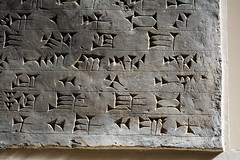 | 42 |
| 9933921887 | Democracy | a political system in which the supreme power lies in a body of citizens who can elect people to represent them | 43 | |
| 9933921888 | Eight Fold Path | Eight steps to end suffering and attain enlightenment according to Buddhist tradition. | 44 | |
| 9933921889 | Four Noble Truths | as taught by the Buddha, the four basic beliefs that form the foundation of Buddhism | 45 | |
| 9933921890 | Gothic Migrations | The Migration period, also called the Barbarian Invasions or German: Völkerwanderung (wandering of the peoples), was a period of human migration that occurred roughly between the years 300 to 700 CE in Europe, marking the transition from Late Antiquity to the Early Middle Ages. These movements were catalyzed by profound changes within both the Roman Empire and the so-called 'barbarian frontier'. Migrating peoples during this period included the Goths, Vandals, Bulgars, Alans, Suebi, Frisians, and Franks, among other Germanic and Slavic tribes. | 46 | |
| 9933921891 | Great Wall | a fortification 1,500 miles long built across northern China in the 3rd century BC | 47 | |
| 9933921892 | Han Dynasty | imperial dynasty that ruled China (most of the time from 206 BC to AD 220) and expanded its boundaries and developed its bureaucracy |  | 48 |
| 9933921893 | Hellenism | The ideals and principles that spread from Greece through much of the ancient world. Much of its influence such as philosophy, athletics, and architecture penetrated the Middle East. |  | 49 |
| 9933921894 | The Huns | Fierce warriors from Central Asia- First invaded southeastern Europe and then launched raids on nearby kingdoms | 50 | |
| 9933921895 | Indian Ocean Trade | connected to Europe, Africa, and China.; worlds richest maritime trading network and an area of rapid Muslim expansion. |  | 51 |
| 9933921896 | Iron Age | the period following the Bronze Age; characterized by rapid spread of iron tools and weapons | 52 | |
| 9933921897 | Jewish Diaspora | A "scattering" of the Jewish people | 53 | |
| 9933921898 | Legalism | In Chinese history, Legalism was one of the main philosophic currents during the Warring States Period- A philosophy of focusing on the text of written law to the exclusion of the intent of law, elevating strict adherence to law over justice, mercy and common sense |  | 54 |
| 9933921899 | Pax Romana | A period of peace and prosperity throughout the Roman Empire, lasting from 27 B.C. to A.D. 180. | 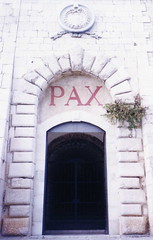 | 55 |
| 9933921900 | Pyramids | Huge stone tombs with four triangle-shaped walls that met in a point on top |  | 56 |
| 9933921901 | Roman Republic | The period from 507 to 31 B.C.E., during which Rome was largely governed by the aristocratic Roman Senate. | 57 | |
| 9933921902 | Roman Senate | a council of wealthy and powerful Romans that advised the city's leaders | 58 | |
| 9933921903 | Shang Civilization | China's first dynasty almost 2000 BCE | 59 | |
| 9933921904 | Shi Huang Di | harsh ruler who united China for the first time and used legalism in ruling (Qin China) |  | 60 |
| 9933921905 | Siddhartha Gautama | founder of Buddhism; born a prince; left his father's wealth to find the cause of human suffering; also know as Buddha |  | 61 |
| 9933921906 | Silk Road Trade | The most famous of the trading routes established by pastoral nomads connecting the Chinese, Indian, Persian, and Mediterranean civilizations; transmitted goods and ideas among civilization. |  | 62 |
| 9933921907 | The Torah | the most sacred text of Judaism | 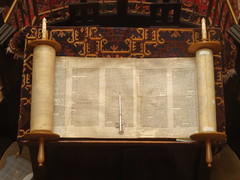 | 63 |
| 9933921908 | The Vedas of Hinduism | Aryan hymns originally transmitted orally but written down in sacred books from the 6th century B.C.E. |  | 64 |
| 9933921909 | Ziggurats | a temple or tomb of the ancient Assyrians, Sumerians, or Babylonians, having the form of a terraced pyramid of successively receding stories |  | 65 |
| 9933921910 | Christianity | Monotheistic religion born out of Judaism, preached by Jesus of Nazareth and later codified by his disciples. Persecuted by Romans early on; however, gained support under Constantine in the Rome. |  | 66 |
| 9933921911 | Buddhism | originally preached by Siddhartha and codified by his disciples into the sutras. Rejected Vedic rituals and the caste system. Spread throughout SE Asia and China and split into Mahayana(Buddha as a God, local gods tacked on as Bodhisativas) and Theravada(original, strict non-theistic version). | 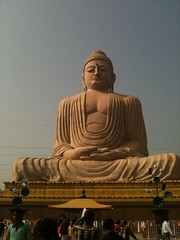 | 67 |
| 9933921912 | Asoka | Third ruler of the Mauryan Empire in India (r. 270-232 B.C.E.). He converted to Buddhism and broadcast his precepts on inscribed stones and pillars, the earliest surviving Indian writing. |  | 68 |
| 9933921913 | Hinduism | Term for a wide variety of beliefs and ritual practices that have developed in the Indian subcontinent since antiquity. It has roots in ancient Vedic, Buddhist, and south Indian religious concepts and practices. |  | 69 |
| 9933921914 | Trans Saharan | route across the sahara desert. Major trade route that traded for gold and salt, created caravan routes, economic benefit for controlling dessert, camels played a huge role in the trading |  | 70 |
| 9933921915 | Monsoons | Major winds in the Indian Ocean that blew into India for half the year, and blew away from India for the other half. Helped facilitate trade in the Indian Ocean. |  | 71 |
| 9933921916 | Sumerians | people who dominated Southern Mesopotamia through the end of the 3rd Millennium BCE. Responsible for the creation of irrigation technology, cuneiform, and religious conceptions. |  | 72 |
| 9933921917 | Indo-Europeans | Groups of people who came from the area north of the Caucasus mountains, which are between the Black and Caspian seas. Herded multiple animals. Rode into battle on chariots. The Indo-European language of Sanskrit, by the Aryans, are the basis of many languages today. Often accepted and adapted aspects of technology, religions, and social order of those with whom they came in contact. |  | 73 |
| 9933921918 | Before agriculture, men and women are believed to have a greater degree of equality. But after the rise of agriculture, most human societies became ________ as a result of greater male strength. | Patriarchal |  | 74 |
| 9933921919 | caste system | a set of rigid social categories that determined not only a person's occupation and economic potential, but also his or her position in society, there was virtually no social mobility |  | 75 |
| 9933921920 | Paleolithic | (Old Stone Age) a long period of human development before the development of agriculture |  | 76 |
| 9933921921 | Carthage | This city has existed for nearly 3,000 years, developing from a Phoenician colony of the 1st millennium BC into the capital of the Carthaginian Empire. Controlled commerce in the Mediterranean prior to the rise of Roman Power. The expanding Roman Republic took control of many of its outposts after the two Punic Wars. |  | 77 |
| 9933921922 | Hellenization | The spread of Greek language and culture (Hellenism) throughout the Mediterranean, starting with t he conquests of Alexander the Great. Upon Alexander's death at the age of thirty-three (323 B.C.E.), his realm was divided among his leading generals. During their reigns and those of their successors, Hellenism (i.e., Greek culture) continued to flourish in major urban centers around the eastern Mediterranean (less so in rural areas). People traveling to different areas could communicate with people of other kingdoms through Greek. More than at any time in previous history, the eastern Mediterranean that emerged in Alexander's wake experienced a form of cultural unity and cosmopolitanism (a "cosmopolite" is a "citizen of the world," as opposed to a person who belongs to only one locality). The Roman Empire arose in the context of the Hellenistic world and took full advantage of its unity, promoting the use of Greek language, accepting aspects of Greek culture, and even taking over features of the Greek religion, to the point that the Greek and Roman gods came to be thought of as the same, only with different names. This complex unity achieved culturally through Hellenization and politically through the conquests of Rome is summed up by the term Greco-Roman world. | 78 | |
| 9933921923 | Daoism | Chinese religion that believes the world is always changing and is devoid of absolute morality or meaning. They accept the world as they find it, avoid futile struggles, and deviate as little as possible from 'the way' or 'path' of nature. |  | 79 |
| 9933921924 | Bureaucrat | government official | 80 |
AP World History Chapter 1 Flashcards
Terms : Hide Images
| 8704117855 | Homo Sapiens | the species of humanity that emerged as most successful at the end of the Paleolithic., "wise, wise human being," a species that appeared in Africa between 150,000 and 200,000 years ago; they were the first anatomically modern humans | 0 | |
| 8704117856 | Paleolithic Age | The Old Stone Age, which lasted from 2.5 million to 8000 B.C. where the invention of tools, fire, and language took place. Nomadic hunters and gatherers | 1 | |
| 8704117857 | Homo Erectus | extinct species of primitive hominid with upright stature but small brain | 2 | |
| 8704117858 | Mesolithic | The "middle" Stone Age, between the Paleolithic and the Neolithic ages. 12,000 - 8,000 B.C.E. | 3 | |
| 8704117859 | Neolithic Age | The New Stone Age between 8000 and 3000 B.C.E.; period in which adaptation of sedentary agriculture occurred; domestication of plants and animals accomplished. | 4 | |
| 8704117860 | Neolithic Revolution | (10,000 - 8,000 BCE) The development of agriculture and the domestication of animals as a food source. This led to the development of permanent settlements and the start of civilization., The shift from hunting of animals and gathering of food to the domestication of animals and the growing of food on a regular basis around 8,000 BC | 5 | |
| 8704117861 | Agricultural Revolution | the time when human beings first domesticated plants and animals and no longer relied entirely on hunting and gathering | 6 | |
| 8704117862 | Bronze Age | from 4000 to 3000 B.C.E.; increased use of plow, metalworking; development of wheeled vehicles, writing., a period in human history during which people began using bronze, rather than copper or stone, to fashion tools and weapons. | 7 | |
| 8704117864 | Catal Huyuk | One of first true cities in history, created in the Neolithic Era in 6500 to 5500 BC, from which were created agriculture, trading, temples, housing, and religions, one of the world's first cities, remains were found in 1958 in modern Turkey | 8 | |
| 8704117865 | Civilization | complex society with cities, organized government, art, religion, class divisions, and a writing system | 9 | |
| 8704117866 | Cuneiform | a system of writing with wedge-shaped symbols, invented by the Sumerians around 3000 B.C. | 10 | |
| 8704117867 | Barbarian | a member of an uncivilized people | 11 | |
| 8704117868 | Mesopotamia | first civilization located between the Tigris & Eurphrates Rivers in present day Iraq; term means "land between the rivers;" Sumerian culture | 12 | |
| 8704117869 | Sumerians | The people who dominated southern Mesopotamia through the end of the third millennium B.C.E. They were responsible for the creation of many fundamental elements of Mesopotamian culture-such as irrigation technology, cuneiform, and religious conceptions. | 13 | |
| 8704117870 | Ziggurat | a tiered, pyramid-shaped structure that formed part of a Sumerian temple |  | 14 |
| 8704117871 | city-state | a city and its surrounding lands functioning as an independent political unit. | 15 | |
| 8704117872 | Babylonians | an ancient empire of Mesopotamia in the Euphrates River valley. It flourished under Hammurabi and Nebuchadnezzar II but declined after 562 B.C. and fell to the Persians in 539. | 16 | |
| 8704117873 | Hammurabi's Code | The first written codes of law during the Babylonian Empire, strict/ harsh punsihments, "an eye for an eye". Forst ever codified law |  | 17 |
| 8704117874 | Hammurabi | Amorite ruler of Babylon (r. 1792-1750 B.C.E.). He conquered many city-states in southern and northern Mesopotamia and is best known for a code of laws, inscribed on a black stone pillar, illustrating the principles to be used in legal cases. (p. 34) | 18 | |
| 8704117875 | Egyptian Civilization | civilization emerged in northern Africa along the Nile River by about 3000 B.C.E. It benefited from trade and influences from Mesopotamia, but it also produced its own distinct social structures and cultural expressions. Unlike Mesopotamia, civilization featured very durable and centralized institutions. Mathematical achievements and impressive architectural structures also characterized civilization. | 19 | |
| 8704117876 | Pharaoh | the title of the ancient Egyptian kings | 20 | |
| 8704117877 | Pyramids | monumental architecture typical of Old Kingdom Egypt; used as burial sites for pharaohs. | 21 | |
| 8704117878 | Kush | An African state that developed along the upper reaches of the Nile c. 100 B.C.E.; conquered Egypt and ruled it for several centuries. | 22 | |
| 8704117879 | Indus River Civilization | (c. 3300-1700 BCE, flourished 2600-1900 BCE), was an ancient civilization that flourished in the Indus and Ghaggar-Hakra river valleys primarily in what is now Pakistan and western India, parts of Afghanistan and Turkmenistan; major cities were Harappa and Mohenjo-Daro | 23 | |
| 8704117880 | Mohenjo-Daro | Largest city of the Indus Valley civilization. It was centrally located in the extensive floodplain of the Indus River. Little is known about the political institutions of Indus Valley communities, but the large-scale implies central planning. (p. 48) | 24 | |
| 8704117881 | Harappa | Site of one of the great cities of the Indus Valley civilization of the third millennium B.C.E. It was located on the northwest frontier of the zone of cultivation, and may have been a center for the acquisition of raw materials. | 25 | |
| 8704117886 | Phoenicians | Semitic-speaking Canaanites living on the coast of modern Lebanon and Syria in the first millennium B.C.E. Famous for developing the first alphabet, which was adopted by the Greeks. From major cities such as Tyre and Sidon, these merchants and sailors explored the Mediterranean, and engaged in widespread commerce. | 26 | |
| 8704117888 | Judaism | Monotheistic religion with its roots in the teachings of Abraham (from Ur), who is credited with uniting his people to worship only one god. According to Jewish teaching, Abraham and God have a covenant in which the Jews agree to worship only one God, and God agrees to protect his chosen people, the Jews. | 27 | |
| 8704117889 | Monotheism | belief in a single God | 28 | |
| 8704117890 | Ice Age | a cold period in which huge ice sheets spread outward from the polar regions, the last one of which lasted from about 1,900,000 to 10,000 B.C. | 29 | |
| 8704117891 | Polytheism | The belief in many gods | 30 | |
| 8704117894 | Neolithic revolution | The development of agriculture and the domestication of animals as a food source. This led to the development of permanent settlements and the start of civilization. | 31 |
AP Literature and Composition Terms Flashcards
Terms : Hide Images
| 6341160764 | act | a major unit of action in a drama or play. Each act can be further divided into smaller sections called scenes. | 0 | |
| 6341160765 | allegory | a story in which people, things and actions represent an idea about life; allegories often have a strong moral or lesson. | 1 | |
| 6341160766 | alliteration | the repetition of consonant sounds at the beginning of words (tongue twisters) | 2 | |
| 6341160767 | allusion | a reference in a literary work to a person, place, or thing in history or another work of literature. Allusions are often indirect or brief references to well-known characters or events. | 3 | |
| 6341160768 | analogy | a comparison of two or more like objects that suggests if they are alike in certain respects, they will probably be alike in other ways as well. | 4 | |
| 6341160769 | anecdote | a brief account of an interesting incident or event that usually is intended to entertain or to make a point. | 5 | |
| 6341160770 | aside | an actor's speech, directed to the audience, that is not supposed to be heard by other actors on stage. An aside is used to let the audience know what a character is about to do or what he or she is thinking | 6 | |
| 6341160771 | assonance | repetition of vowel sounds within a line of poetry. | 7 | |
| 6341160772 | audience | the particular group of readers or viewers that the writer is addressing. A writer considers his or her audience when deciding on a subject, a purpose for writing and the tone and style in which to write. | 8 | |
| 6341160773 | author | the writer of a book, article or other text. | 9 | |
| 6341160774 | author's purpose | an author's purpose is his or her reason for creating a particular work. The purpose can be to entertain, explain or inform, express an opinion, or to persuade. | 10 | |
| 6341160775 | autobiography | a form of nonfiction in which a person tells the story of his or her life. | 11 | |
| 6341160776 | ballad | is a poem that tells a story and is meant to be sung or recited. | 12 | |
| 6341160777 | biography | the story of a person's life that is written by someone else | 13 | |
| 6341160778 | blank verse | unrhymed iambic pentameter | 14 | |
| 6341160779 | caesura | a pause or a sudden break in a line of poetry | 15 | |
| 6341160780 | cause and effect | two events are related as cause and effect when one event brings about or causes the other. The event that happens first is the cause; the one that follows is the effect. | 16 | |
| 6341160781 | character | a person who is responsible for the thoughts and actions within a story, poem, or other literature. Characters are extremely important because they are the medium through which a reader interacts with a piece of literature. Every character has his or her own personality, which a creative author uses to assist in forming the plot of a story or creating a mood. | 17 | |
| 6341160782 | antagonist | a character in a story or poem who deceives, frustrates, or works against the main character, or protagonist, in some way. The antagonist doesn't necessarily have to be a person. It could be death, the devil, an illness, or any challenge that prevents the main character from living "happily ever after." | 18 | |
| 6341160783 | caricature | a picture or imitation of a person's habits, physical appearance or mannerisms exaggerated in a comic or absurd way. | 19 | |
| 6341160784 | foil | a character who serves as a contrast or a conflict to another character | 20 | |
| 6341160785 | hero/heroine | a character whose actions are inspiring or noble; often the main character in a story. | 21 | |
| 6341160786 | main character | the characters who are central to the plot of a story; main characters are usually dynamic and round. | 22 | |
| 6341160787 | minor characters | a less important character who interacts with the main characters, helping to move the plot along and providing background for the story. Minor characters are usually static and flat. | 23 | |
| 6341160788 | characterization | all of the techniques that writers use to create characters. | 24 | |
| 6341160789 | character trait | a character's personality; a trait is not a physical description of a character. | 25 | |
| 6341160790 | direct characterization | the author directly states a character's traits or makes direct comments about a character's nature. | 26 | |
| 6341160791 | dynamic character | a character who changes throughout the course of the story. | 27 | |
| 6341160792 | flat character | a character about whom little information is provided. | 28 | |
| 6341160793 | indirect characterization | the author does not directly state a character's traits; instead the reader draws conclusions and discovers a character's traits based upon clues provided by the author. | 29 | |
| 6341160794 | round character | is a character who is fully described by the author. (several character traits, background information, etc.) | 30 | |
| 6341160795 | static character | a character who does not change or who changes very little in the course of a story. | 31 | |
| 6341160796 | chronological order | the order in which events happen in time. | 32 | |
| 6341160797 | clarifying | the reader's process of pausing occasionally while reading to quickly review what he or she understands. By clarifying as they read, good readers are able to draw conclusions about what is suggested but not stated directly. | 33 | |
| 6341160798 | cliche | a type of figurative language containing an overused expression or a saying that is no longer considered original. | 34 | |
| 6341160799 | comedy | a dramatic work that is light and often humorous in tone and usually ends happily with a peaceful resolution of the main conflict. | 35 | |
| 6341160800 | comparison | the process of identifying similarities. | 36 | |
| 6341160801 | concrete poetry | a type of poetry that uses its physical or visual form to present its message. | 37 | |
| 6341160802 | conflict | the tension or problem in the story; a struggle between opposing forces. | 38 | |
| 6341160803 | central conflict | the dominant or most important conflict in the story. | 39 | |
| 6341160804 | external conflict | the problem or struggle that exists between the main character and an outside force. (ex: person vs. person, person vs. society, person vs. nature, person vs. the supernatural, person vs. technology, etc.) | 40 | |
| 6341160805 | internal conflict | the problem or struggle that takes place in the main character's mind (person vs. self). | 41 | |
| 6341160806 | connecting | a reader's process of relating the content of a literary work to his or her own knowledge and experience. | 42 | |
| 6341160807 | connotation | the idea and feeling associated with a word as opposed to its dictionary definition or denotation. | 43 | |
| 6341160808 | consonace | the repetition of consonant sounds anywhere within a line of poetry. Alliteration is a specific type of consonance. | 44 | |
| 6341160809 | context clues | hints or suggestions that may surround unfamiliar words or phrases and clarify their meaning. | 45 | |
| 6341160810 | contrast | the process of pointing out differences between things. | 46 | |
| 6341160811 | couplet | a rhymed pair of lines in a poem. One of William Shakespeare's trademarks was to end a sonnet with a couplet, as in the poem "Shall I Compare Thee to a Summer's Day": So long as men can breathe or eyes can see, So long as lives this, and this gives life to thee. two line stanza | 47 | |
| 6341160812 | denotation | is the opposite of connotation in that it is the exact or dictionary meaning of a word. | 48 | |
| 6341160813 | denouement | the final part of a play, movie, or narrative in which the strands of the plot are drawn together and matters are explained or resolved. | 49 | |
| 6341160814 | dialect | a form of language that is spoken in a particular place or by a particular group of people. | 50 | |
| 6341160815 | dialouge | The conversation between characters in a drama or narrative. A dialogue occurs in most works of literature. | 51 | |
| 6341160816 | drama | a form of literature meant to be performed by actors before an audience. In a drama, the characters' dialogue and actions tell the story. The written form of a play is known as a script | 52 | |
| 6341160817 | drawing conclusions | combining several pieces of information to make an inference is called drawing a conclusion. | 53 | |
| 6341160818 | dramatic monologue | a literary device that is used when a character reveals his or her innermost thoughts and feelings, those that are hidden throughout the course of the story line, through a poem or a speech. This speech, where only one character speaks, is recited while other characters are present onstage. This monologue often comes during a climactic moment in a work and often reveals hidden truths about a character, their history and their relationships. | 54 | |
| 6341160819 | elegy | a type of literature defined as a song or poem that expresses sorrow or lamentation, usually for one who has died. | 55 | |
| 6341160820 | enjambment | in poetry, the running over of a line or thought into the next of verse | 56 | |
| 6341160821 | epigram | a short poem or verse that seeks to ridicule a thought or event, usually with witticism or sarcasm. | 57 | |
| 6341160822 | epic | a long narrative poem about the adventures of a hero whose actions reflect the ideals and values of a nation or group. | 58 | |
| 6341160823 | epiphany | a sudden moment of understanding that causes a character to change or to act in a certain way. | 59 | |
| 6341160824 | epitaph | a short poem or verse written in memory of someone | 60 | |
| 6341160825 | essay | a short work of nonfiction that deals with a single subject. | 61 | |
| 6341160826 | expository essay | essay is one whose purpose is to explain and give information about a subject. | 62 | |
| 6341160827 | evaluating | the process of judging the value of something or someone. A work of literature can be evaluated in terms of such criteria as entertainment, believability, originality, and emotional power. | 63 | |
| 6341160828 | extended metaphor | a figure of speech that compares two essentially unlike things in great length. | 64 | |
| 6341160829 | fable | a brief tale that teaches a lesson about human nature. Fables often feature animals as characters. | 65 | |
| 6341160830 | fantasy | a work of literature that contains at least one fantastic or unreal element. | 66 | |
| 6341160831 | fiction | prose writing that tells an imaginary story. Includes both short stories and novels. | 67 | |
| 6341160832 | figurative language | expressions that are not literally true | 68 | |
| 6341160833 | flashback | an interruption of the chronological sequence (as in a film or literary work) of an event of earlier occurrence. A flashback is a narrative technique that allows a writer to present past events during current events, in order to provide background for the current narration. | 69 | |
| 6341160834 | folklore | traditions, customs and stories that are passed down within a culture. Contains various types of literature such as legends, folktales, myths, and fables. | 70 | |
| 6341160835 | folktale | a simple story that has been passed from generation to generation by word of mouth. Are told primarily to entertain rather than to explain or teach a lesson. | 71 | |
| 6341160836 | foot | a unit of meter within a line of poetry | 72 | |
| 6341160837 | foreshadowing | when the writer provides clues or hints that suggest or predict future event in a story. | 73 | |
| 6341160838 | free verse | poetry without regular patterns of rhyme and rhythm. Often used to capture the sounds and rhythms of ordinary speech. | 74 | |
| 6341160839 | generalization | a broad statement about an entire group. | 75 | |
| 6341160840 | genre | a type or category of literature. The four main literary ___ include: fiction, nonfiction, poetry, and drama. | 76 | |
| 6341160841 | haiku | a traditional form of Japanese poetry, usually dealing with nature. has three lines and describes a single moment, feeling or thing. The first and third lines contain five syllables and the second line contains seven syllables. | 77 | |
| 6341160842 | heroic couplet | a couplet consisting of two successive rhyming lines that contain a complete thought. | 78 | |
| 6341160843 | historical fiction | fiction that explores a past time period and may contain references to actual people and events of the past. | 79 | |
| 6341160844 | horror fiction | fiction that contains mysterious and often supernatural events to create a sense of terror. | 80 | |
| 6341160845 | humor | the quality that provokes laughter or amusement. Writers create humor through exaggeration, sarcasm, amusing descriptions, irony, and witty dialogue. | 81 | |
| 6341160846 | hyperbole | a figure of speech in which the truth is exaggerated for emphasis or humorous effect. | 82 | |
| 6341160847 | idiom | a phrase or expression that means something different from what the words actually say. (for example, using the phrase "over his head" instead of "He doesn't understand"). | 83 | |
| 6341160848 | imagery | the use of words and phrases that appeal to the five senses. Writers use sensory details to help readers imagine how things look, feel, smell, sound, and taste. | 84 | |
| 6341160849 | inference | is a logical guess based on evidence based on evidence in the text. | 85 | |
| 6341160850 | interview | a meeting in which one person asks another about personal matters, professional matters or both. | 86 | |
| 6341160851 | irony | a contrast between what is expected and what actually exists or happens. spices up a literary work by adding unexpected twists and allowing the reader to become more involved with the characters and plot. | 87 | |
| 6341160852 | verbal irony | occurs when the speaker means something totally different than what he or she is saying and often times the opposite of what a character is saying is true. | 88 | |
| 6341160853 | dramatic irony | occurs when facts are not known to the characters in a work of literature but are known by the audience. | 89 | |
| 6341160854 | cosmic irony | suggests that some unknown force brings about dire and dreadful events. | 90 | |
| 6341160855 | irony of situation | the difference between what is expected to happen and the way events actually work out. | 91 | |
| 6341160856 | legend | a story handed down from the past about a specific person, usually someone of heroic accomplishments. | 92 | |
| 6341160857 | limerick | a short humorous poem composed of five lines that usually has the rhyme scheme aabba, created by two rhyming couplets followed by a fifth line that rhymes with the first couplet. A limerick typically has a sing-song rhythm. | 93 | |
| 6341160858 | literal meaning | the actual meaning of a word or phrase. | 94 | |
| 6341160859 | lyric poetry | a song-like poem written mainly to express the feelings or emotions of a single speaker. | 95 | |
| 6341160860 | main idea | the most important point that a writer wishes to express. | 96 | |
| 6341160861 | memoir | a specific type of autobiography; like autobiography, a memoir is about the author's personal experiences. However, a memoir does not necessarily cover the author's entire life. | 97 | |
| 6341160862 | metaphor | a type of figurative language in which a comparison is made between two things that are essentially unalike but may have one quality in common. Unlike a simile, a metaphor does not contain an explicit word of comparison, such as "like" or "as". | 98 | |
| 6341160863 | meter | the regular pattern of accented and unaccented syllables.Although all poems have rhythm, not all poems have regular meter. Each unit of meter is known as a foot. The conventional symbols used to identify accented and unaccented syllables are: "/" to indicate an accented syllable; and an "X" or a small symbol shaped like a "U" to indicate an unaccented symbol. The metrical foot is the basic unit of meter. The most common metrical feet and their patterns of stressed and unstressed syllables are as follows: · iamb: X / · trochee: / X · anapest: X X / · dactyl: / X X · spondee: / / · pyrrhic: X X | 99 | |
| 6341160864 | metonymy | the metaphorical substitution of one word or phrase for another related word or phrase. Example: "The pen is mightier than the sword." The word "pen" is used in place of "words" and the word "sword" is used to represent the idea of fighting or war. | 100 | |
| 6341160865 | mood | a mood or atmosphere is the feeling that a literary work conveys to readers. Created through the use of plot, character, the author's descriptions, etc. | 101 | |
| 6341160866 | motif | a recurring object, concept, or structure in a work of literature. A motif may also be two contrasting elements in a work, such as good and evil. A motif is important because it allows one to see main points and themes that the author is trying to express, in order that one might be able to interpret the work more accurately. | 102 | |
| 6341160867 | motivation | the reason why a character acts, feels or thinks in a certain way. | 103 | |
| 6341160868 | myth | a traditional story that attempts to explain how the world was created or why the world is the way that it is. stories that are passed on from generation to generation and are of unknown authorship. | 104 | |
| 6341160869 | narrative | any writing that tells a story. Most novels and short stories are placed into the categories of first-person and third-person narratives, which are based on who is telling the story and from what perspective. | 105 | |
| 6341160870 | nonfiction | is prose writing that presents and explains ideas or that tells about real people, places, objects or events. | 106 | |
| 6341160871 | novel | a work of fiction that is longer and more complex than a short story. | 107 | |
| 6341160872 | ode | a lyric poem of some length, usually of serious or meditative nature and having an elevated style and formal structure. | 108 | |
| 6341160873 | onomatopoeia | the use of words whose sound suggest their meaning (ex. buzz, bang, hiss). | 109 | |
| 6341160874 | oral history | stories of people's lives related by word of mouth. These histories usually include both factual material and personal reactions. | 110 | |
| 6341160875 | oxymoron | a form of figurative language combining contradictory words or ideas (ex. jumbo shrimp, bittersweet). | 111 | |
| 6341160876 | paradox | a statement that seems to contradict itself but is, nevertheless, true. | 112 | |
| 6341160877 | parallelism | the use of similar grammatical constructions to express ideas that are related or equal in importance. For example: The sun rises. The sun sets. | 113 | |
| 6341160878 | paraphrasing | the restatement of a text by readers in their own words or in another form. | 114 | |
| 6341160879 | parody | a literary or artistic work that imitates the characteristic style of an author's work for comic effect or ridicule. | 115 | |
| 6341160880 | personification | a figure of speech where animals, ideas or inanimate objects are given human characteristics. | 116 | |
| 6341160881 | persuasion | persuasive writing is meant to sway readers' feelings, beliefs, or actions. normally appeals to both the mind and the emotions of readers. | 117 | |
| 6341160882 | plot | the sequence of related events that make up a story. | 118 | |
| 6341160883 | exposition | introduces the characters and the conflicts they face. | 119 | |
| 6341160884 | inciting incident | occurs after the exposition and introduces the central conflict within the story. | 120 | |
| 6341160885 | rising action | following the introduction of the central conflict; complications arise as the characters struggle with the conflict. | 121 | |
| 6341160886 | climax | the turning point, point of maximum interest, and highest tension in the plot of a story, play, or film. Usually occurs towards the end of story after the reader has understood the conflict and become emotionally involved with the characters. At the climax, the conflict is resolved, and the outcome of the plot becomes clear. | 122 | |
| 6341160887 | falling action | the end of the central conflict in a story, when the action starts to wind down. | 123 | |
| 6341160888 | resolution | occurs after the climax and is where conflicts are resolved and loose ends are tied up. | 124 | |
| 6341160889 | subplot | an additional minor plot that involves a secondary conflict in the story; may or may not affect the main plot. | 125 | |
| 6341160890 | poetry | a type of literature in which ideas and feelings are expressed in compact, imaginative, and often musical language. Poets arrange words in ways designed to touch readers' senses, emotions, and minds. Most poems are written in lines that may contain patterns of rhyme and rhythm. These lines may in turn be grouped in stanzas. See narrative, epic, ballad, lyric, haiku, limerick and concrete poetry. | 126 | |
| 6341160891 | point of view | perspective from which a story is told. Understanding the point of view used in a work is critical to understanding literature; it serves as the instrument to relay the events of a story, and in some instances the feelings and motives of the character(s). | 127 | |
| 6341160892 | predicting | the process of gathering information and combining it with the reader's own knowledge to guess what might occur in the story. | 128 | |
| 6341160893 | primary source | a first hand account of an event; primary sources include: diaries, journals, letters, speeches, news stories, photographs, and pieces of art. | 129 | |
| 6341160894 | propaganda | text that uses false or misleading information to present a slanted point of view. | 130 | |
| 6341160895 | prose | the ordinary form of spoken and written language; that is, language that lacks the special features of poetry. | 131 | |
| 6341160896 | simile | makes a comparison between two otherwise unlike objects or ideas by connecting them with the words "like" or "as." | 132 | |
| 6341160897 | soliloquy | a speech delivered by a character who is alone on the stage. | 133 | |
| 6341160898 | sonnet | a distinctive poetic style that uses a system or pattern of metrical structure and verse composition usually consisting of fourteen lines, arranged in a set rhyme scheme or pattern | 134 | |
| 6341160899 | speaker | the voice that talks to the reader in a poem, as the narrator does in a work of fiction. In a poet __ is not necessarily the poet. | 135 | |
| 6341160900 | stage directions | the instructions to the actors, director and stage crew in the script of a play. comparable to a paragraph in prose. | 136 | |
| 6341160901 | stanza | a grouping of two or more lines within a poem. | 137 | |
| 6341160902 | questioning | the process of raising questions while reading in an effort to understand characters and events. | 138 | |
| 6341160903 | realistic fiction | imaginative writing set in the real, modern world. The characters act like real people who use ordinary human abilities to cope with problems and conflicts typical of modern life. | 139 | |
| 6341160904 | refrain | repetition in literature of one or more lines at regular intervals; sometimes called the chorus. | 140 | |
| 6341160905 | repetition | a technique in which a sound, word, phrase, or line is repeated for effect or emphasis. | 141 | |
| 6341160906 | rhyme | repetition of an identical or similarly accented sound or sounds in a work. gives poems flow and rhythm, helping the lyricist tell a story and convey a mood. | 142 | |
| 6341160907 | rhythm | refers to the pattern of flow of sounds created by the arrangement of stressed and unstressed syllables in a line of poetry. The accented or stressed syllables are marked with: stressed or accented syllables: / unstressed or unaccented syllables: X or U | 143 | |
| 6341160908 | sarcasm | the use of praise to mock someone or something; the use of mockery or verbal irony | 144 | |
| 6341160909 | satire | a literary technique in which ideas or customs are ridiculed for the purpose of improving society. | 145 | |
| 6341160910 | scanning | the process of searching through writing for a particular fact or piece of information. | 146 | |
| 6341160911 | scene | a section in a play presenting events that occur in one place at one time. | 147 | |
| 6341160912 | sensory details | words and phrases that help readers see, hear, taste, feel, or smell what an author is describing. | 148 | |
| 6341160913 | sequence | the order in which events occur or in which ideas are presented. | 149 | |
| 6341160914 | setting | the time, place, physical details, and circumstances in which a story occurs. include the background, atmosphere or environment in which characters live and move, and usually include physical characteristics of the surroundings. Settings enables the reader to better envision how a story unfolds by relating necessary physical details of a piece of literature. | 150 | |
| 6341160915 | short story | brief work of fiction that generally focuses on one or two main characters who face a single problem or conflict. | 151 | |
| 6341160916 | stereotype | a broad generalization or an oversimplified view that disregards individual differences. | 152 | |
| 6341160917 | storymapping | a visual organizer that helps a reader understand a work of literature by tracking setting, characters, events and conflicts. | 153 | |
| 6341160918 | style | how a writer says something; many elements contribute to style, including word choice, sentence length, tone and figurative language | 154 | |
| 6341160919 | summarizing | the process of briefly recounting the main ideas of a piece of writing in a person's own words, while omitting unimportant details. | 155 | |
| 6341160920 | suspense | a feeling of growing tension and excitement. Writers create suspense by raising questions in readers' minds about what might happen. symbolism: using something specific to stand for something else, especially an idea. A symbol is a person, place, object or action that for something beyond itself. For example, a dove may represent peace. The dove can be seen and peace cannot. synecdoche: a literary technique in which the whole is represented by naming one of its parts (genus named for species), or vice versa (species named for genus). Example: "You've got to come take a look at my new set of wheels." The vehicle here is represented by its parts, or wheels. | 156 | |
| 6341160921 | symbolism | using something specific to stand for something else, especially an idea. | 157 | |
| 6341160922 | tall tale | a humorously exaggerated story about impossible events. | 158 | |
| 6341160923 | theme | a common thread or repeated idea that is incorporated throughout a literary work. a thought or idea the author presents to the reader about life or human nature. Generally, a theme has to be extracted as the reader explores the passages of a work. The author utilizes the characters, plot, and other literary devices to assist the reader in this endeavor. The author often intertwines the theme throughout the work, and the full impact is slowly realized as the reader processes the text. The ability to recognize a theme is important because it allows the reader to understand part of the author's purpose in writing the book. | 159 | |
| 6341160924 | tone | the writer's attitude or feeling about his or her subject. | 160 | |
| 6341160925 | tragedy | a dramatic work that presents the downfall of a dignified character or characters who are involved in historically or socially significant events. The events in a tragic plot are set in motion by a decision that is often an error in judgment. Succeeding events inevitably lead to a disastrous conclusion, usually death. | 161 | |
| 6341160926 | understatement | a statement that is restrained in ironic contrast to what might have been said; the opposite of hyperbole. Usually for a humorous effect | 162 | |
| 6341160927 | urban legend | a contemporary story that is told in many rumored versions that have little basis in fact. | 163 | |
| 6341160928 | voice | an author or narrator's distinctive style or manner of expression. can reveal much about the author or narrator's personality. | 164 | |
| 6341252798 | fact | a statement that can be proved | 165 | |
| 6341255236 | opinion | a statement that reflects the writer's or speaker's belief, but which cannot be supported by proof or evidence. | 166 | |
| 6341307951 | descriptive essay | describes a particular subject | 167 | |
| 6341309325 | formal essay | highly organized and thoroughly researched. | 168 | |
| 6341307952 | humorous essay | purpose is to amuse or entertain the reader. | 169 | |
| 6341312048 | informal essay | lighter in tone and usually reflects the writer's feelings and personality. | 170 | |
| 6341313836 | narrative essay | an essay that tells a story. | 171 | |
| 6341315213 | persuasive essay | attempts to convince a reader to adopt a particular option or course of action. | 172 | |
| 6356260546 | Number of feet per line | The meter of a poem is determined by the predominant metrical foot, and by the number of feet per line that predominates in the poem. The following terms indicate the number of feet per line: · monometer: one foot per line · dimeter: two feet per line · trimeter: three feet per line · tetrameter: four feet per line · pentameter: five feet per line · hexameter: six feet per line · heptameter: seven feet per line · octameter: eight feet per line A poem written in predominantly iambic meter, with five feet per line, would be called "iambic pentameter." One written in primarily trochaic meter, with four feet per line, would be "trochaic tetrameter." One written in anapestic meter, with three feet per line, would be "anapestic trimeter." | 173 | |
| 6356275833 | moral | a lesson that a story teaches. A moral is often stated directly at the end of a fable. | 174 | |
| 6356294194 | Narrative poetry | poetry that tells a story. A narrative poem can come in many forms and styles, both complex and simple, short or long, as long as it tells a story. Like fiction, narrative poetry contains characters, settings and plots. | 175 | |
| 6356294195 | narrator | one who tells a story; the speaker or the "voice" of an oral or written work. The narrator is not usually the same person as the author. The narrator is the direct window into a piece of work. Who the author chooses to narrate establishes the point of view in the story. | 176 | |
| 6356295729 | Unreliable narrator | one who gives his or her own understanding of a story, instead of the explanation and interpretation the author wishes the audience to obtain. This type of action tends to alter the audience's opinion of the conclusion. | 177 | |
| 6372396225 | first person point of view | the person telling the story is one of the characters in the story. It is the "I" point of view. It is the most limited among the types because the narrator can only state what he or she sees, feels, and hears. He or she cannot go into the minds of the other characters. | 178 | |
| 6372398920 | second person point of view | refers to the use of "you" in explanations or arguments. It is not frequently used, but is appropriate in certain circumstances. Most second person points of view occur within instructions that are meant to be followed. | 179 | |
| 6372401367 | third person limited or third person objective | the person telling the story is not one of the characters in the story. He or she is an outside observer. The reader can only know what one character learns through interaction with other characters or through overheard conversations. The narrator cannot supply the thoughts or feelings of other characters in the story. | 180 | |
| 6372401368 | third person omniscient | the narrator is not a character in the story, but the events in the story are seen through the eyes of more than one of the characters. The narrator is considered to be "all knowing" and cannot only see and hear everything that is happening to all characters in the story, but can also enter their minds and tell the reader what each is thinking and feeling. This is the least limited point of view because the narrator has knowledge of all the characters. | 181 | |
| 6372439998 | end or terminal rhymes | words that rhyme at the end of a verse-line. | 182 | |
| 6372439999 | eye rhymes | words that when written appear to rhyme, but when spoken do not (ex: dog/fog, cough/enough/bough, etc). | 183 | |
| 6372441549 | internal rhyme | rhyme found within a line of poetry (alliteration, assonance, and consonance). | 184 | |
| 6372441550 | slant rhyme (slänt rime) | also known as near rhyme, half rhyme, off rhyme, imperfect rhyme, oblique rhyme, or pararhyme. A distinctive system or pattern of metrical structure and verse composition in which two words have only their final consonant sounds and no preceding vowel or consonant sounds in common. Instead of perfect or identical sounds or rhyme, it is the repetition of near or similar sounds or the pairing of accented and unaccented sounds that if both were accented would be perfect rhymes (stopped and wept, parable and shell). Alliteration, assonance, and consonance are accepted as slant rhyme due to their usage of sound combinations (spilled and spoiled, chitter and chatter). | 185 | |
| 6372448696 | rhyme scheme | the pattern of end rhyme used in a poem, generally indicated by matching lowercase letters to show which lines rhyme. The letter "a" notes the first line, and all other lines rhyming with the first line. The first line that does not rhyme with the first, or "a" line, and all others that rhyme with this line, is noted by the letter "b", and so on. The rhyme scheme may follow a fixed pattern (as in a sonnet) or may be arranged freely according to the poet's requirements. | 186 | |
| 6372459780 | science fiction | prose writing in which a writer explores unexpected possibilities of the past or the future by using scientific data and theories as well as his or her imagination. | 187 | |
| 6372464330 | secondary source | presents information compiled from or based on other sources. | 188 | |
| 6372479961 | Italian/ Petrarchan sonnet | usually written in iambic pentameter. It consists first of an octave, or eight lines, which asks a question or states a problem or proposition and follows the rhyme scheme a-b-b-a, a-b-b-a. The sestet, or last six lines, offers an answer, or a resolution to the proposed problem, and follows the rhyme scheme c-d-e-c-d-e. | 189 | |
| 6372481747 | English/ Shakespearean sonnet | the octave and sestet were replaced by three quatrains, each having its own independent rhyme scheme typically rhyming every other line, and ending with a rhyme couplet. Instead of the Italianic break between the octave and the sestet, the break comes between the twelfth and thirteenth lines. The ending couplet is often the main thought change of the poem, and has an epigrammatic ending. It follows the rhyme scheme a-b-a-b, c-d-c-d, e-f-e-f, g-g. | 190 | |
| 6372504525 | speech | a talk given in public. | 191 | |
| 6372527520 | triplet or tercet | 3 line stanza | 192 | |
| 6372529181 | quatrain | 4 line stanza | 193 | |
| 6372530772 | cinquain or quintet | 5 line stanza | 194 | |
| 6372530773 | sestet or sextet | 6 line stanza | 195 | |
| 6372544470 | septet | 7 line stanza | 196 | |
| 6372544471 | octave | 8 line stanza | 197 | |
| 6372601833 | IMPRESSIONISM | a nineteenth-century movement in literature and art which advocated a recording of the artist's personal impressions of the world, rather than a strict representation of reality. | 198 | |
| 6372603307 | MODERNISM | a term for the bold new experimental styles and forms that swept the arts during the first third of the twentieth century. | 199 | |
| 6372605303 | NATURALISM | a nineteenth century literary movement that was an extension of realism and that claimed to portray life exactly as it was. | 200 | |
| 6372606971 | PLAIN STYLE | Writing style that stresses simplicity and clarity of expression (but will still utilize allusions and metaphors), and was the main form of the Puritan writers. | 201 | |
| 6372609146 | PURITANISM | Writing style of America's early English-speaking colonists. emphasizes obedience to God and consists mainly of journals, sermons, and poems. | 202 | |
| 6372611880 | RATIONALISM | a movement that began in Europe in the seventeenth century, which held that we can arrive at truth by using our reason rather than relying on the authority of the past, on the authority of the Church, or an institution. | 203 | |
| 6372626977 | NEOCLASSICISM AND AGE OF REASON REALISM | a style of writing, developed in the nineteenth century, that attempts to depict life accurately without idealizing or romanticizing it. | 204 | |
| 6372629698 | REGIONALISM | literature that emphasizes a specific geographic setting and that reproduces the speech, behavior, and attitudes of the people who live in that region. | 205 | |
| 6372631998 | ROMANTICISM | a revolt against Rationalism that affected literature and the other arts, beginning in the late eighteenth century and remaining strong throughout most of the nineteenth century. | 206 | |
| 6372633689 | SURREALISM | in movement in art and literature that started in Europe during the 1920s. Surrealists wanted to replace conventional realism with the full expression of the unconscious mind, which they considered to be more real than the "real" world of appearances. | 207 | |
| 6372636329 | SYMBOLISM | a literary movement that originated in late nineteenth century France, in which writers rearranged the world of appearances in order to reveal a more truthful version of reality. | 208 | |
| 6372638040 | TRANSCENDENTALISM | a nineteenth century movement in the Romantic tradition , which held that every individual can reach ultimate truths through spiritual intuition, which transcends reasons and sensory experience. | 209 | |
| 6372640536 | TIME LINE | Puritanism 1620 - 1770s Neoclassic 1770s - early 1800s Romanticism early 1800s - 1870s Realism 1850s -early 1900s Regionalism 1884 - early 1900s Naturalism - late 1800s - mid 1900s Modernism - 1920s - [1945] Post-Modernism - 1945 - present | 210 |
Pages

Need Help?
We hope your visit has been a productive one. If you're having any problems, or would like to give some feedback, we'd love to hear from you.
For general help, questions, and suggestions, try our dedicated support forums.
If you need to contact the Course-Notes.Org web experience team, please use our contact form.
Need Notes?
While we strive to provide the most comprehensive notes for as many high school textbooks as possible, there are certainly going to be some that we miss. Drop us a note and let us know which textbooks you need. Be sure to include which edition of the textbook you are using! If we see enough demand, we'll do whatever we can to get those notes up on the site for you!
