

us ap history : the us map Flashcards
Terms : Hide Images
| 7219839100 | california | 0 | ||
| 7219840215 | oregon | 1 | ||
| 7219841916 | washington | 2 | ||
| 7219842178 | idaho | 3 | ||
| 7219842696 | nevada | 4 | ||
| 7219843400 | arizona | 5 | ||
| 7219843746 | new mexico | 6 | ||
| 7219843982 | texas | 7 | ||
| 7219844909 | colorado | 8 | ||
| 7219845327 | utah | 9 | ||
| 7219845668 | wyoming | 10 | ||
| 7219846108 | montana | 11 | ||
| 7219846584 | north decoda | 12 | ||
| 7219846822 | south decoda | 13 | ||
| 7219847206 | nebraska | 14 |
AP US History Period 1 and 2 Flashcards
Terms : Hide Images
| 6710550971 | Columbian Exchange | Trade of goods/viruses/people from New to Old World | 0 | |
| 6710553729 | Economienda System | Lets Spanish settlers control the natives and establish a social hierarchy with them at the top | 1 | |
| 6710562211 | Spanish Armada | In 1588 the Brits defeat it and make colonization of the New World easier | 2 | |
| 6710564791 | Sextant | Device that makes it easier to cross the Atlantic | 3 | |
| 6710566497 | Joint Stock Company | People in Britain pool money for colonization Ex: VA company settling Jamestown in 1607 | 4 | |
| 6710572103 | Spanish Mission System | Converts Indians to Catholicism | 5 | |
| 6710575981 | Sir Walter Raleigh | Settles Roanoke which becomes the Lost Colony in 1587 |  | 6 |
| 6710578172 | Jamestown | Settled in 1607 by VA company Led by Capt. John Smith who declared "he who shall not work shall not eat" | 7 | |
| 6710586045 | Powhatans | Indians that live near Jamestown and supply them with food Once they stop the Virginians die of starvation | 8 | |
| 6710592357 | John Rolfe | Starts tobacco as a cash crop (the first one) and marries Pocahontas |  | 9 |
| 6710596764 | Indentured Servitude | Lucrative way to get Brits over to US by paying for journey but making them indentured servants for 7 years Had high death rate and only 50% made it to end of terms | 10 | |
| 6710605226 | headright system | Gave away free land to rich people who paid for the passage of indentured servant | 11 | |
| 6710609071 | House of Burgesses | Virginian democratic tradition with an elected house that used power of the purse on the Governor |  | 12 |
| 6710613019 | Puritanism | The belief of purifying the Anglican church from catholic practices | 13 | |
| 6710616797 | Separatists | Wanted to separate from Church of England and landed in Plymouth in 1620. More radical form of Puritanism. | 14 | |
| 6710621454 | Mayflower Compact | Signed by the Pilgrims on the ship that gave consent of the governed (not God), assemblies, and a legal code (1620) | 15 | |
| 6710627213 | Massachusetts Bay Colony | Founded by Puritans (non-separatists) in 1629 Saw themselves as the "city upon a hill" and believed they have a contract with God Had a protestant work ethic | 16 | |
| 6710645816 | John Winthrop | First gov/founder of the Mass. Bay Colony |  | 17 |
| 6710652282 | Roger Williams | Believed that church and state should be separate and was exiled to RI | 18 | |
| 6710655059 | Anne Hutchinson | Believed that the ticket to salvation was faith and a merciful god, not obeying moral authority and good deeds Was exiled from Mass. Bay | 19 | |
| 6710661228 | Proprietary Colonies | Gifts from the King to his friends/relatives CT, MD, PA, NJ Eventually converted to Royal Colonies |  | 20 |
| 6710818945 | Dominion of New England | (1686) Brits combined NH, RI, MA, CT under the command of Gov. Andros. The colonists revolted in 1692 and drove out the governor | 21 | |
| 6710833586 | Halfway Covenant | (1662) Allows more people to become members of the Puritan church without as much commitment | 22 | |
| 6710816920 | Salem Witch Trials | (1692) A hysterical reaction of the Dominion of New England or Halfway Covenant | 23 | |
| 6710664158 | Fundamental Orders | The first sort of constitution of the colonies in Connecticut (1639) | 24 | |
| 6710668284 | Maryland | Founded by Lord Baltimore as a gift from the King and a haven for catholics | 25 | |
| 6710670035 | Act of Toleration | To appeal Maryland to more people they allow all christian faiths (1649) | 26 | |
| 6710687577 | Native Conflicts | Pequot War and Metacom/King Philip's War | 27 | |
| 6710689178 | Pequot War | War over who controls CT, Mass Bay kills 400 Pequot people in vengeance for Pequot killing a few Mass Bay |  | 28 |
| 6710696935 | Metacom/King Philip's War | Ended the native presence in the colonies (1676) |  | 29 |
| 6710701721 | Slaves in Colonies | Come over in 1619 on Middle Passage of Triangular Trade Generally worked on plantations in the South growing cash crops such as indigo, cotton, tobacco, and rice Some worked in north in houses Only worked for the rich | 30 | |
| 6710710776 | Salutary Neglect | an English policy of relaxing the enforcement of regulations in its colonies in return for the colonies' continued economic loyalty Mid 1600s to mid 1700s | 31 | |
| 6710742510 | Mercantilism | Economic system in which the mother country tries to get a favorable balance of trade | 32 | |
| 6710742875 | Navigation Acts | Protectionist tariff for England that requires colonists to buy from them (1651-1673) Upholds mercantilism | 33 | |
| 6710768416 | Molasses Act | (1733) Import taxes on molasses coming from the West Indies to get colonists to buy English molasses Upholds mercantilism | 34 | |
| 6710777305 | Power of the purse | Early form of checking on the colonial governors in which the house/legislature would cut the salary of the governor to get their legislation through | 35 | |
| 6710786460 | New England Confederation | The first major attempt at consolidation among colonists | 36 | |
| 6710790146 | Bacon's Rebellion | (1676) Nathaniel Bacon wants William Berkley (governor) to let him start a militia to fight the Indians to get more land for new settlers in the west Berkley says no and Bacon starts a rebellion against him Bacon dies and his rebellion doesn't end up all that successful but it is the first populist uprising in America | 37 | |
| 6710798260 | William Berkely | Colonial gov. of VA during Bacon's Rebellion | 38 | |
| 6710801100 | Stono Rebelion | (1739) Rebel slaves escape and free a large number of slaves to contribute to their rebellion They loot and raid things from whites and kill a few on their way to Florida for freedom They get caught and killed and harsher slave codes are enforced | 39 | |
| 6710811505 | Slave Codes | Codes that limited the rights of slaves to prevent uprisings. Slaves were not allowed to learn to read or write. | 40 | |
| 6710841433 | First Great Awakening | Religious revival movement in the 1730s and 1740s. Preached more emotionally and emphatically, getting more of an audience. A reaction to the enlightenment in Europe away from emotion and to reason. | 41 | |
| 6710847619 | Jonathan Edwards | Gave "sinners at the hands of an angry God" speech and captivated his audience | 42 | |
| 6710853766 | George Whitfield | Methodist preacher who was emotional and spiritual | 43 | |
| 6710858498 | New England vs. Middle vs. South | New England: focuses on trade ports (Boston) and has only subsistence farming. Has a puritan work ethic. Middle: the Bread Basket colonies, they have lots of grain and are more diverse than NE. Also have port cities (NY) Chesapeake: A mixture of the lower south and the middle colonies. Major crop is tobacco Lower South: Has a stronger hierarchy and cash crops of cotton, rice, and indigo. | 44 |
AP US History Semester 1 REVIEW- laws, court cases, policies Flashcards
Terms : Hide Images
| 8359366268 | 3/5 Compromise | In the Constitution, enslaved blacks are counted as 3/5 of a person when calculating population for state taxes owed to federal government and for representation in house of representatives. | 0 | |
| 8359389947 | Bill of Rights | 10 amendments that Federalists promised would be added to Constitution if anti-Federalists would support ratification. | 1 | |
| 8359335089 | Alien & Sedition Acts | Acts that limited free speech on criticism of the government and restricted immigration. Signed by John Adams. |  | 2 |
| 8359410970 | Embargo | Thomas Jefferson made trade with Britain and France illegal to punish them for impressing American sailors and not respecting U.S. neutrality in their war. It backfired and hurt the U.S. economy more than Europe's. |  | 3 |
| 8359263405 | Marbury v Madison | Supreme Court Case that created judicial review, first major case under Marshall Court. |  | 4 |
| 8359263407 | McCulloch v Maryland | Supreme Court Case under Marshall. Maryland attempted to tax the B.U.S. This case ruled in favor of the Federal Bank, against Maryland. |  | 5 |
| 8359263421 | Monroe Doctrine | A US foreign policy regarding Latin American countries. It stated that further efforts by European nations to colonize land or interfere with states in North or South American would be viewed as acts of aggression. It directed a clear warning towards all foreign countries telling them to leave the US alone and to stop settling within the country's borders. (1823) |  | 6 |
| 8359432770 | Fugitive Slave Act | Requires northern free states to return escaped slaves to their owners. Was part of the constitution and was strengthened later as part of the Compromise of 1850. | 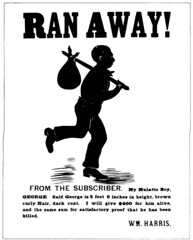 | 7 |
| 8359263420 | Treaty of Guadalupe Hidalgo | Treaty that ended the war between the US and Mexico, the war started with the US annexation of Texas and was the result of a disagreement over where the Mexican-American border should be. the US received Mexican territory and it raised the question of slavery in the new territory. |  | 8 |
| 8359475677 | Kansas-Nebraska Act | Act allowed for popular sovereignty in western territories, invalidated the Missouri Compromise. The effects of this act was Bleeding Kansas. |  | 9 |
| 8360307025 | Dred Scott | Court case that ruled that enslaved blacks are not citizens and do not have the right to freedom even living in a free state/ territory. |  | 10 |
| 8359507103 | Emancipation Proclamation | President Lincoln declared slaves free in all rebel states. |  | 11 |
| 8359303275 | 13th Amendment | X Amendment, ended slavery in the United States | 12 | |
| 8359263424 | 14th Amendment | X Amendment, granted citizenship to all persons born or naturalized in the US, which included former slaves. It defined citizenship within the US (1868). |  | 13 |
| 8359263425 | 15th Amendment | X Amendment, This stated that the rights of citizens to vote should not bed denied by the US in race or color. It allowed African American men to vote, though poll taxes and literacy tests still prevented them from doing so. (1870) |  | 14 |
| 8359517911 | black codes | laws were passed at the local and state level to continue discrimination based on race during Reconstruction. | 15 | |
| 8359263426 | Proclamation of 1763 | Issued by King George III following Great Britain's victory in the French & Indian War. It forbade settlers from settling past a line drawn along the Appalachian Mountains. It organized Britain's empire and stabilized relations with Native Americans through trade, settlement, and land purchases. |  | 16 |
| 8359263427 | Stamp Act | An act of the Parliament of Great Britain that taxed all printed materials and legal documents. It helped British troops who were stationed in North America, as the taxes went to their benefit. This angered the colonists. It was considered the last straw, leading to the Revolution. (1765) |  | 17 |
| 8359263430 | Intolerable Acts | A series of laws passed by the British Parliament after the Boston Tea Party intending to punish the Massachusetts colonists for their defiance. It was a wake up call for the colonies. The Boston harbor closed. England took over all governmental activities. (1774) |  | 18 |
| 8359263428 | Northwest Ordinance | It created the Northwest territory from lands beyond the Appalachian Mountains, between Canada and the Great Lakes. Rather than the expansion of existing states and their established sovereignty, it establish admission for new states. (1787) |  | 19 |
| 8359263445 | Tariff of Abominations | Southern nick-name for a protective tariff passed by the U.S. Congress in 1828; it was the highest tariff in U.S. peacetime and its goal was to protect industry in the northern United States from competing European goods by increasing the prices of European products. Caused the nullification crisis. | 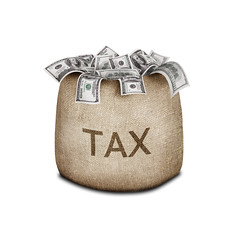 | 20 |
| 8359263429 | Compromise of 1850 | This admitted California as a free state while it also created fugitive slave laws to capture escaped slaves. It created a way for slaves to not be able to go to the North and be free. The North had to help the South. |  | 21 |
| 8359263431 | Missouri Compromise | It involved primarily the regulation of slavery in the western territories. It prohibited slavery in the Louisiana Territory north of the southern Missouri border. It became precedent for settling subsequent North and South disagreements over slavery and duty issues. (1820) |  | 22 |
| 8359263440 | Indian Removal Act | Act that led to the Trail of Tears and the Seminole Wars. Was signed into law by Andrew Jackson in 1830; strongly supported in the South where states were eager to gain access to lands occupied by the Five Civilized Tribes. |  | 23 |
| 8359558280 | Dawes Act | Act abolished Indian governments, divided up communal lands and created individual private property. This ended tribal land titles |  | 24 |
| 8359634700 | Homestead Act | encouraged Western migration by providing settlers 160 acres of public land |  | 25 |
AP US History: Imperialism Flashcards
Terms : Hide Images
| 6055697267 | Alfred Thayer Mahan | A United States Navy officer His ideas on the importance of sea power influenced navies around the world, and helped prompt naval buildups before World War I. The Influence of Seapower Upon History,1660-1783, published in 1890 | 0 | |
| 6055697270 | Theodore Roosevelt | 26th president, known for: conservationism, trust-busting, Hepburn Act, safe food regulations, "Square Deal," Panama Canal, Great White Fleet, Nobel Peace Prize for negotiation of peace in Russo-Japanese War. | 1 | |
| 6055697272 | Emilio Aguinaldo | Leader of the Filipino independence movement against Spain (1895-1898). He proclaimed the independence of the Philippines in 1899, but his movement was crushed and he was captured by the United States Army in 1901. | 2 | |
| 6055697273 | William Howard Taft | (1908-1912), was endorsed by Roosevelt because he pledged to carry on progressive program, then he didn't appoint any Progressives to the Cabinet, actively pursued anti-trust law suits, ran for re-election in 1912 but lost to Wilson. | 3 | |
| 6055697275 | Imperialism | A policy in which a strong nation seeks to dominate other countries poitically, socially, and economically. | 4 | |
| 6055697276 | Spheres of Influence | Areas in which countries have some political and economic control but do not govern directly. | 5 | |
| 6055697277 | Teller Amendment | Legislation that promised the US would not annex Cuba after winning the Spanish-American war. | 6 | |
| 6055697278 | Treaty of Paris | Signed by the United States and Spain in December 1898, this treaty ended the Spanish-American War. | 7 | |
| 6055697279 | Anti-Imperialist League | Group objected to the annexation of the Philippines and the building of an American empire. Idealism, self-interest, racism, constitutionalism, and other reasons motivated them, but they failed to make their case; the Philippines were annexed in 1900. | 8 | |
| 6055697280 | Boxer Rebellion | 1899 rebellion in Beijing, China started by a secret society of Chinese who opposed the "foreign devils". The rebellion was ended by British troops. | 9 | |
| 6055697281 | Rough Riders | volunteer Calvary, a mixure of Ivy League athletes and western frontiermen, volunteered to fight in the Spanish-American War. Enlisted by Theodore Roosevelt | 10 | |
| 6055697285 | Expansionism | The doctrine of expanding the territory or the economic influence of a country. | 11 | |
| 6055697288 | Mckinley Tariff | raised duties on hawaiian sugar and set off renewed efforts to secure the annexation of hawaii to the USA | 12 | |
| 6055697289 | McKinley Tariff effects | Decedents of missionares started farms in Hawaii selling sugar cane- because Hawaii was not a state, McKinley Tariff increased prices on sugar. Farmers revolt against Liliuokalani so that they can be annexed into US so they won't be subject to tariff. Pearl Harbor was another reason to annex Hawaii, but Cleveland denied annexation. McKinley passes it. | 13 | |
| 6055697290 | USS Maine | american battleship dispatched to keep a "friendly" watch over cuba in early 1898 it mysteriously blew up havana harbor on feb. 2 1898 w/260 sailors dead, explosion was accidental, USA thought it was spanish submarine fault and was ready for war | 14 | |
| 6055697293 | Platt Amendment | after us switched its original promise of giving cuba its ind. after usa defeat spanish (teller amendm.) USA forced into Cuban Constitution. Cuba could not make treaties with other nations; US had right to intervene in Cuba; US naval bases on Cuban land; Cuba cant borrow money from other countries | 15 | |
| 6055697294 | Open Door Policy | sent by John Hay to Germany, Russia, Great Britain, France, Italy & Japan asking the countries not to interfere with US trading rights in China. | 16 | |
| 6055697297 | Josiah Strong | He believed it was the duty of "the white race" to share their knowledge and accomplishments worldwide. | 17 | |
| 6055697300 | Queen Liliuokalani | queen of Hawaii that didnt agree w the US control of Hawaii and wanted to keep the islands mainly native, reducing the power of merchants from foreign nations. | 18 | |
| 6055697304 | Yellow Journalism | Journalist who wrote to influence american public opinion about the Spanish/American War ( influenced americans to think they needed to go to war with Spain) | 19 | |
| 6055784359 | Good Neighbor Policy | (Henry Clay) wanted markets of neighbors that lie south of us secured | 20 | |
| 6055818582 | Frederick Jackson Turner | American historian best known for the "frontier thesis." (American democracy was formed by the American frontier. He stressed the process—the moving frontier line—and the impact it had on pioneers going through the process.) | 21 | |
| 6055828110 | Albert Beveridge | A republican who endorsed imperialism and a strong US Navy. Theory that the country needed new places to invest American capital. | 22 | |
| 6055836468 | William Randolph Hearst | United States newspaper publisher whose introduction of large headlines and sensational reporting changed American journalism (1863-1951) | 23 | |
| 6055852170 | William McKinley | 25th president, Republican, Spanish-American War, Philippine-American War, and the Annexation of Hawaii, imperialism | 24 | |
| 6055859649 | "A Splendid Little War" | A phrase said by secretary of state John Hays about the Spanish-American war. | 25 | |
| 6055868456 | Joseph Pulitzer | born in Hungary and nearly blind; leader in sensationalism; Colored comic supplements featured the "Yellow Kid" (became yellow journalism) | 26 | |
| 6055872961 | Jose Marti | Led the fight for Cuba's independence from Spain from 1895 through the Spanish-American War. Spoke against American occupation in Cuba. | 27 | |
| 6055878754 | Cuba Libre | Cuban independence and Cuban revolution, declared Cuba free but we still had full control of their decisions and money | 28 | |
| 6055899704 | George Dewey | a United States naval officer remembered for his victory at Manila Bay in the Spanish-American War, U.S. naval commander who led the American attack on the Philippines | 29 | |
| 6055907000 | Filipino Liberation Society | Formed by Morrison Swift, it was an anti-imperialist group that sent antiwar materials to American troops in the Philippines. | 30 | |
| 6068233336 | John Pershing | General- him and his troops searched for Villa in Mexico. Invasions angered Mexicans | 31 | |
| 6068267243 | Triple Alliance (central powers) | Germany, Austria- Hungary, Italy | 32 | |
| 6068277348 | Triple Entente (allies) | GB, France, Russia | 33 | |
| 6068307649 | Lusitania | British liner sunk by German U-boat. (128 American citizens died) | 34 | |
| 6068319110 | Sussex Pledge | a promise made in 1916 during World War I by Germany to the United States prior to the latter's entry into the war. Early in 1915, Germany had instituted a policy of unrestricted submarine warfare, allowing armed merchant ships, but not passenger ships, to be torpedoed without warning. | 35 | |
| 6068350606 | National Security League | pushed for a bigger army and navy, system of universal military training | 36 | |
| 6068362181 | National Defense Act | 1916- doubled size of regular armband integrated the state National Guards under federal control. | 37 | |
| 6068374301 | Zimmerman Note | Proposal that an alliance be made between Germany and Mexico if US joined war. Suggested Mexico take arms against US and receive "lost territory" | 38 | |
| 6068403263 | Committee on Public Information (CPI) | Dominated by chairman George Creel ( friend of Wilson) turned to from function as coordinator of govt news to agency for promoting war | 39 | |
| 6068431566 | Selective Service Act | Registration and classification for military force of all men 21-35 later extended to 18-45 (1918) | 40 | |
| 6068461465 | American Expeditionary Force (AEF) | Consisted of the United States Armed Forces sent to Europe under the command of General John J. Pershing in 1917 to help fight World War I. | 41 | |
| 6068478047 | War Industries Board | Clearinghouse for industrial mobilization to support war effort. Provided major innovation in expanding regulatory power of federal govt. | 42 | |
| 6068520937 | Liberty Bonds | Patriotic campaigns to raise money to support the war effort- sold to American public (government borrowing) | 43 | |
| 6068545628 | National War Labor Board | 1917- acted as a supreme court for labor - arbitrating disputes and working to prevent disruptions in production. Resulted in improved wages and reduced hours of work and supported the right of workers to organize unions | 44 | |
| 6068582396 | Immigration Act of 1917 | Required a literacy test and an $8 head tax- cut Mexican immigration | 45 | |
| 6068599869 | Alice Paul | Quaker activist- formed Congressional Union within NAWSA to lobby for federal amendments - in 1918 formed National Women's Party. | 46 | |
| 6068624273 | Espionage Act | Suppression of antiwar sentiment - set severe penalties for anyone found aiding the enemy , obstructing recruitment or causing insubordination in the armed forces and empowered postmaster to exclude any newspapers, magazines, etc that appeared treasonous. | 47 | |
| 6068650597 | Sedition Act | Amendment to Espionage Act - outlawed "any disloyal, profane, scurrilous, or abusive language intended to cause contempt, scorn, contumely or disrepute" to the govt, Constitution or flag | 48 | |
| 6068678473 | Schenk vs US | Court agreed with claim that congress could restrict speech if words create a clear and present danger | 49 | |
| 6068692730 | Debs vs US | Court affirmed guilt of Eugene Debs for antiwar speech | 50 | |
| 6068703429 | Abrams vs US | Court upheld Sedition Act convictions of Russian immigrants who denounced American military intervention in Russian Revolution | 51 | |
| 6068762624 | Great Migration | Massive migration of rural black Southerners to northern cities | 52 | |
| 6068777815 | Wilson's 14 Points | Paris 1919- Plan for peace -They included public negotiations between nations, freedom of navigation, free trade, self-determination for several nations involved in the war, and the establishment of an association of nations to keep the peace. | 53 | |
| 6068809264 | Treaty of Versailles | brought World War I to an end. The Treaty ended the state of war between Germany and the Allied Powers. It was signed on 28 June 1919, exactly five years after the assassination of Archduke Franz Ferdinand. | 54 | |
| 6068813600 | Henry Cabot Lodge | Opposed League of Nations | 55 |
Flashcards
Flashcards
AP US History 2 Chapter 31 People Flashcards
Terms : Hide Images
| 8309564259 | A. Mitchell Palmer | Attorney General who rounded up many suspects who were thought to be un-American and socialistic; he helped to increase the Red Scare | 0 | |
| 8309564260 | Sacco and Vanzetti | Italian anarchists that were convicted in 1921 of the murder of a Massachusetts factory paymaster; electrocuted in 1927. Represented a negative reaction to anarchists and immigrants. | 1 | |
| 8309564261 | Al Capone | A notorious Chicago bootlegger and gangster during Prohibition, He evaded conviction for murder but served most of an eleven-year sentence for tax evasion. | 2 | |
| 8309564262 | John T. Scopes | A Tennessee high-school biology teacher who was prosecuted in 1925 for teaching the theory of evolution. | 3 | |
| 8309564263 | Henry Ford | He developed the Model T Ford and pioneered its assembly-line production. | 4 | |
| 8309564264 | Charles A. Lindbergh | An American aviator who made history as the first person to fly solo across the Atlantic. | 5 | |
| 8309564265 | Margaret Sanger | Organized a birth-control movement which openly championed the use of contraceptives in the 1920's | 6 | |
| 8309564266 | F. Scott Fitzgerald | Novelist who captured the glamour and spiritual emptiness of the 1920s jazz age in novels such as This Side of Paradise and The Great Gatsby. | 7 | |
| 8309564267 | Ernest Hemingway | Novelist and author, former newspaper correspondent and wartime ambulance driver, he became an international celebrity for his searing war novels | 8 | |
| 8309564268 | Langston Hughes | African-American poet and leading literary voice of the Harlem Renaissance. | 9 | |
| 8310293788 | John Dewey | He was a philosopher/educator who believed in "learning by doing" which formed the foundation of progressive education. He believed that the teacher's goal should be "education for life and that the workbench is just as important as the blackboard." | 10 | |
| 8310304900 | William Jennings Bryan | He joined the prosecution in the "Scopes Monkey Trial" against the teachings of evolution in schools. He was purported to be an expert on the Bible, but was made to look silly in the case and, sadly, died soon afterward. | 11 | |
| 8310310693 | Clarence Darrow | He was a famed criminal defense lawyer and represented Scopes, who supported evolution. | 12 | |
| 8310328225 | Andrew Mellon | He was the Secretary of the Treasury during the Harding Administration. He felt it was best to invest in tax-exempt securities rather than in factories that provided prosperous payrolls. He believed in trickle-down economics (Hamiltonian economics where the rich let their money trickle down to everyone else). | 13 | |
| 8310328226 | Bruce Barton | He was a founder of the "new profession" of advertising, which used the persuasion ploy, seduction, and sexual suggestion. | 14 | |
| 8310350355 | Frederick W. Taylor | He was an engineer, an inventor, and a tennis player. He sought to eliminate wasted motion. He was famous for scientific-management, especially time-management studies where he mastered movements and wasted movements and therefore helped master the assembly line. | 15 | |
| 8310366564 | Sigmund Freud | He was a Viennese physician that believed sexual repression was responsible for a variety of nervous and emotional diseases. He argued that health demanded sexual gratification and liberation. His writings seemed to justify the new sexual frankness of the 1920s and were taken to heart by the "flaming youth" and "jazz age" of the time | 16 | |
| 8310380301 | Sinclair Lewis | He was the chief chronicler of midwestern life. He was a master of satire and wrote Main Street in 1920. Then he wrote Babbit which described a materialistic middle-class American businessman. | 17 |
AP US History - Period 9: 1980-Present Flashcards
Terms : Hide Images
| 8357111943 | Reagan Revolution | The policies of the first Reagan administration; based on *"supply side"* theory of growing the economy; Included: (1) Increased defense spending (2) Reduced social programs (3) Tax cuts | 0 | |
| 8357111944 | Sandra Day O'Connor | First female Supreme Court Justice; appointed by Ronald Reagan in 1981. | 1 | |
| 8357111945 | Reagonomics | Ronald Reagan's economic program; founded on the belief that a capitalist system free from taxation and government involvement would be most productive, and that the prosperity of a rich upper class would "trickle down" to the poor. | 2 | |
| 8357111946 | "Evil Empire" | Ronald Reagan's nickname for the Soviet Union; illustrated an end to detente. | 3 | |
| 8357111947 | Strategic Arms Reduction Talks (1982) | Known as START; sought to reduce long-range nuclear missiles. | 4 | |
| 8357111948 | Iran-Contra Affair (1986) | Scandal that erupted after the Reagan administration sold weapons to Iran in hopes of freeing American hostages in Lebanon; money from the arms sales was used to aid the Contras (anti-Communist insurgents) in Nicaragua, even though Congress had prohibited this assistance. | 5 | |
| 8357111949 | Strategic Defensive Initiative (1983) | A.K.A. "Star Wars"; a satellite defensive system that would theoretically destroy incoming missiles. | 6 | |
| 8357111950 | Mikhail Gorbachev | Head of the Soviet Union from 1985 to 1991. His liberalization effort improved relations with the West, but he lost power after his reforms led to the collapse of Communist governments in eastern Europe. | 7 | |
| 8357111951 | Perestroika | A political movement within the Communist Party of the Soviet Union during 1980s; widely associated with the Soviet leader Mikhail Gorbachev. Its literal meaning is "restructuring", referring to the restructuring of the Soviet political and economic system. | 8 | |
| 8357111952 | Glasnost | The policy of maximal publicity, openness, and transparency in the activities of all government institutions in the Soviet Union, together with freedom of information, introduced by Mikhail Gorbachev in the second half of the 1980s. | 9 | |
| 8357111953 | tax cuts and deregulation | Major conservative aims during the Reagan and Bush years. | 10 | |
| 8357111954 | North American Free Trade Agreement (1994) | A multinational trade zone between the US, Mexico, and Canada in which most tariffs have been removed; Negotiated under Bush and enacted under Clinton. | 11 | |
| 8357111955 | Affordable Care Act (2010) | AKA "Obamacare"; Health care and health insurance reform signed into law by President Obama. | 12 | |
| 8357111956 | Dodd-Frank (2010) | Wall Street Reform and Consumer Protection Act; Reform and regulation of the financial system after the financial crisis of 2007-2008. | 13 | |
| 8357111957 | Citizens United v. Federal Election Commission (2010) | Political spending is a form of protected speech under the 1st amendment; Individuals, corporations, and unions can donate unlimited money to groups that make independent political expenditures. | 14 | |
| 8357111958 | outsourcing | Sending business operations and industrial processes overseas where operating costs remain relatively low. | 15 | |
| 8357111959 | Microsoft, Wikipedia, Google, Facebook, YouTube, iPod | Innovations in computing, digital mobile technology, and the Internet transformed daily life, increased access to information, and led to new social behaviors and networks. | 16 | |
| 8357111960 | Y2K bug (2000) | A computer flaw that may have caused problems when dealing with dates beyond December 31, 1999. | 17 | |
| 8357111961 | Wikileaks (founded 2010) | The group has released a number of significant documents that have become front-page news items. Early releases included documentation of equipment expenditures and holdings in the Afghanistan war. | 18 | |
| 8357111962 | Keystone Pipeline (commissioned 2010) | Proposed pipeline that would transport oil derived from Canadian tar sands to refineries in the southern U.S. | 19 | |
| 8357111963 | "fracking" | hydraulic fracturing-using pressurized fluid to create fractures in rock and release natural gas or petroleum; Resulted in the US becoming self-sufficient oil producers. | 20 | |
| 8357111964 | Occupy Wall Street (2011) | A series of protests and sit-ins in response to the economic crisis of 2007-08 and rising income inequality. | 21 | |
| 8357111965 | Tea Party movement (2009) | 22 | ||
| 8357111966 | Immigration Reform and Control Act (1986) | Act that prohibits discrimination against job applicants on the basis of national origin or citizenship; establishes penalties for hiring illegal aliens and requires employers to establish each employee's identity and eligibility to work. | 23 | |
| 8357111967 | No Child Left Behind (2002) | Education reform under President George W. Bush. | 24 | |
| 8357111968 | Defense of Marriage Act (1996) | Defined marriage for federal purposes as the union of one man and one woman, and allowed states to refuse to recognize same-sex marriages granted under the laws of other states; Declared unconstitutional by the Supreme Court (United States v. Windsor [2013]) | 25 | |
| 8357111969 | United States v. Windsor (2013) | A landmark civil rights case; Struck down the Defense of Marriage Act (1996) and declared "The federal government must recognize same-sex marriages that have been approved by the states." | 26 | |
| 8357111970 | Gulf War (1990-1991) | Code-named Operation Desert Shield and Operation Desert Storm; A war waged by coalition forces from 35 nations led by the United States against Iraq in response to Iraq's invasion and annexation of Kuwait. | 27 | |
| 8357111971 | September 11 attacks (2001) | The terrorist attack by Al Qaeda on the World Trade Center and Pentagon. | 28 | |
| 8357111972 | War on Terror | In the wake of attacks on the World Trade Center and the Pentagon, the United States launched military efforts against terrorism and lengthy, controversial conflicts in Afghanistan and Iraq. | 29 | |
| 8357111973 | Department of Homeland Security (est. 2002) | US federal agency created under George W. Bush to coordinate national efforts in the War on Terror. | 30 | |
| 8357111974 | USA Patriot Act (2001) | Strengthened federal government's power to conduct surveillance, perform searches, and detain individuals in order to cam bat terrorism; Raised questions about the protection of civil liberties. | 31 | |
| 8357111975 | Guantanamo Bay | Site in Cuba of a US military base and military prison for detailing terrorists or suspected terrorists without trial; Considered as a major breach of human rights by Amnesty International. | 32 |
AP US History: American Pageant Chapter 10 Flashcards
Terms : Hide Images
| 7466968906 | 1st Amendment | Freedom of Speech, Press, Religion, Assembly and Petition | 0 | |
| 7466968907 | 2nd Amendment | Right to bear arms | 1 | |
| 7466968908 | 3rd Amendment | Prohibited quartering troops in private homes | 2 | |
| 7466968909 | 4th Amendment | no illegal search and seizure or property (The right of the people to be secure in their persons, houses, papers, and effects, against unreasonable searches and seizures, shall not be violated, and no warrants shall issue, but upon probable cause, supported by oath or affirmation, and particularly describing the place to be searched, and the persons or things to be seized.) | 3 | |
| 7466968910 | 5th Amendment | no double jeopardy (No person shall be held to answer for a capital, or otherwise infamous crime, unless on a presentment or indictment of a Grand Jury, except in cases arising in the land or naval forces, or in the militia, when in actual service in time of war or public danger; nor shall any person be subject for the same offense to be twice put in jeopardy of life or limb; nor shall be compelled in any criminal case to be a witness against himself, nor be deprived of life, liberty, or property, without due process of law; nor shall private property be taken for public use without just compensation.) | 4 | |
| 7466968911 | 6th Amendment | Right to a speedy trial by jury in criminal cases (In all criminal prosecutions, the accused shall enjoy the right to a speedy and public trial, by an impartial jury of the State and district wherein the crime shall have been committed, which district shall have been previously ascertained by law, and to be informed of the nature and cause of the accusation; to be confronted with the witnesses against him; to have compulsory process for obtaining witnesses in his favor, and to have the assistance of counsel for his defense.) | 5 | |
| 7466968912 | 7th Amendment | Right to a trial by jury in civil cases (In suits at common law, where the value in controversy shall exceed twenty dollars, the right of trial by jury shall be preserved, and no fact tried by a jury shall be otherwise reexamined in any court of the United States, than according to the rules of the common law.) | 6 | |
| 7466968913 | 8th Amendment | No excessive bail, cruel and unusual punishment (Excessive bail shall not be required, nor excessive fines imposed, nor cruel and unusual punishments inflicted.) | 7 | |
| 7466968914 | 9th Amendment | There are more rights reserved to people outside the Bill of Rights (The enumeration in the Constitution, of certain rights, shall not be construed to deny or disparage others retained by the people) | 8 | |
| 7466968915 | 10th Amendment | Other rights reserved to states. "States Rights Amendment" (The powers not delegated to the United States by the Constitution, nor prohibited by it to the States, are reserved to the States respectively, or to the people.) | 9 | |
| 7466968916 | Judiciary Act of 1789 | In 1789 Congress passed this Act which created the federal-court system to assist the Supreme Court | 10 | |
| 7466968917 | Alexander Hamilton | 1789-1795; First Secretary of the Treasury. He advocated creation of a national bank, assumption of state debts by the federal government, and a tariff system to pay off the national debt. Father of the Federalist party. | 11 | |
| 7466968918 | tariffs | a tax on foreign goods brought into a country | 12 | |
| 7466968919 | funding at par | Alexander Hamilton's idea on how to improve U.S. credit and unity. The federal government would take on all state debts, as well as its own. It would pay the debts off at face value, then pay interest. Together, it was a huge 54 million dollar debt. | 13 | |
| 7466968920 | whiskey tax | Part of the excise taxes, it added a tax on whiskey at seven cents a gallon. This helped pay of some of the debt. | 14 | |
| 7466968921 | Bank of the United States | created by Alexander Hamilton, designed to stimulate business, keep money in circulation, and get the United States out of debt. it would handle tax receipts, among other government funds, & print and issue paper money | 15 | |
| 7466968922 | strict interpretation | A way of INTERPRETING the Constitution that allows the Federal Gov't to ONLY do those things SPECIFICALLY mentioned in the Constitution. Based on the 10th Amendment. (Jefferson's viewpoint) | 16 | |
| 7466968923 | elastic clause | the part of the Constitution that permits Congress to make any laws "necessary and proper" to carrying out its powers (implied powers) | 17 | |
| 7466968924 | loose interpretation | A way of INTERPRETING the Constitution that allows the Federal Gov't to take actions THAT the Constitution doesn't forbid it from taking. Based on the elastic clause. (Hamilton's viewpoint) | 18 | |
| 7466968925 | Whiskey Rebellion | In 1794, farmers in Pennsylvania rebelled against Hamilton's excise tax on whiskey, and several federal officers were killed in the riots caused by their attempts to serve arrest warrants on the offenders. In October, 1794, the army, led by Washington, put down the rebellion. The incident showed that the new government under the Constitution could react swiftly and effectively to such a problem, in contrast to the inability of the government under the Articles of Confederation to deal with Shay's Rebellion | 19 | |
| 7466968926 | Federalist party | founded by Alexander Hamilton, it was a political party created in the 1790s that wanted to strengthen the federal government and promote industry and trade | 20 | |
| 7466968927 | democratic-republicans | founded by Thomas Jefferson in the 1790s, its goal was to keep the federal govt as weak as possible, promote a strict interpretation of the constitution, and promote agriculture and farming (as opposed to industrialization/commerce) | 21 | |
| 7466968928 | French Revolution | an uprising of the people that led to the end of the French monarchy and the beheading of Louis XVI and Marie Antoinette. America was happy until violence ensues under the reign of terror. | 22 | |
| 7466968929 | Neutrality Proclamation | a 1793 statement by President Washington that the United States would not support or aid either France or Britain in their European conflict | 23 | |
| 7466968930 | Jay's Treaty 1794 | Britain promised to evacuate the chain of posts on U.S soil, and pay damages for the recent seizures on American ships. Britain forced John Jay to give ground by binding the U.S to pay debts still owed to Britain on pre-Revolutionary Account. | 24 | |
| 7466968931 | Pinckney's treaty | agreement made between Spain and the US, where the US got the northern part of florida and free access to the mississippi river | 25 | |
| 7466968932 | Washington's Farewell Address | says to remain neutral, isolationist, and avoid permanent alliances. He also warned against forming political factions (parties). | 26 | |
| 7466968933 | John Marshall | appointed chief justice by John Adams | 27 | |
| 7466968934 | xyz affair | 1798 - A commission had been sent to France in 1797 to discuss the disputes that had arisen out of the U.S.'s refusal to honor the Franco-American Treaty of 1778. President Adams had also criticized the French Revolution, so France began to break off relations with the U.S. Adams sent delegates to meet with French foreign minister Talleyrand in the hopes of working things out. Talleyrand's three agents told the American delegates that they could meet with Talleyrand only in exchange for a very large bribe. The Americans did not pay the bribe, and in 1798 Adams made the incident public, substituting the letters for the names of the three French agents in his report to Congress. | 28 | |
| 7466968935 | alien laws | Laws in which residence before citizenship changed from five years to fourteen, and the President was given power to deport (in times of peace) or imprison (in times of war) dangerous immigrants | 29 | |
| 7466968936 | compact theory | popular amoung the English political philosophers in the eighteenth century. In America, it was supported by Jefferson and Madison. It meant that the thirteen states, by creating the federal government, had entered into a contract about its jurisdiction. The national government was the agent of the states. This meant that the individual states were the final judges of the national government's actions. It was the basis for the Virginia and Kentucky Resolutions passed in 1798. It was used to try to stop the Federalist abuses like the Alien and Sedition Acts. | 30 | |
| 7466968937 | nullification | The doctrine that a state can declare null and void a federal law that, in the state's opinion, violates the Constitution. | 31 | |
| 7466968938 | Hamiltonian Federalists | Well to do merchants, large planters, investors, concentrated in urban areas. Supremacy of natl govt. Broad interpretation of the Constitution. Criticized as pro-English. Favored commercial/industrial development. | 32 | |
| 7466968939 | John Jay | appointed the first Supreme Court Chief Justice by Washington | 33 | |
| 7466968940 | Sedition Act | impeding policies of the government or attacking government officials in the press would result in jail time | 34 | |
| 7466968941 | Virginia and Kentucky resolutions | written by Jefferson and Madison; developed the idea of nullification. | 35 | |
| 7466968942 | John Adams | 2nd president of the U.S. | 36 |
Pages

Need Help?
We hope your visit has been a productive one. If you're having any problems, or would like to give some feedback, we'd love to hear from you.
For general help, questions, and suggestions, try our dedicated support forums.
If you need to contact the Course-Notes.Org web experience team, please use our contact form.
Need Notes?
While we strive to provide the most comprehensive notes for as many high school textbooks as possible, there are certainly going to be some that we miss. Drop us a note and let us know which textbooks you need. Be sure to include which edition of the textbook you are using! If we see enough demand, we'll do whatever we can to get those notes up on the site for you!
