

AP World History Period 2 Flashcards
Terms : Hide Images
| 10125725233 | Ahura Mazda | In Zoroastrianism, the good god who rules the world. |  | 0 |
| 10125725234 | Alexander the Great | Alexander III of Macedon (356-323 B.C.E.), conqueror of the Persian Empire and part of northwest India. |  | 1 |
| 10125725235 | Aryans | Indo-European pastoralists who moved into India about the time of the collapse of the Indus Valley civilization; their role in causing this collapse is still debated by historians. |  | 2 |
| 10125725236 | Ashoka | The most famous ruler of the Mauryan Empire (r. 268-232 B.C.E.), who converted to Buddhism and tried to rule peacefully and with tolerance. |  | 3 |
| 10125725237 | Caesar Augustus | The great-nephew and adopted son of Julius Caesar who emerged as sole ruler of the Roman state at the end of an extended period of civil war (r. 31 B.C.E.-14 C.E.). |  | 4 |
| 10125725238 | Cyrus (the Great) | Founder of the Persian Empire (r. 557-530 B.C.E.); a ruler noted for his conquests, religious tolerance, and political moderation. |  | 5 |
| 10125725239 | Darius I | Great king of Persia (r. 522-486 B.C.E.) following the upheavals after Cyrus's death; completed the establishment of the Persian Empire. |  | 6 |
| 10125725240 | Greco-Persian Wars | Two major Persian invasions of Greece, in 490 B.C.E. and 480 B.C.E., in which the Persians were defeated on both land and sea. |  | 7 |
| 10125725241 | Gupta Empire | An empire of India (320-550 C.E.). |  | 8 |
| 10125725242 | Han dynasty | Chinese dynasty that restored unity in China softened legalist policies. Begun in 202 B.C. by Liu Bang, the Han ruled China for more than 400 years. |  | 9 |
| 10125725243 | Hellenistic era | The period from 323 to 30 B.C.E. in which Greek culture spread widely in Eurasia in the kingdoms ruled by Alexander's political successors. |  | 10 |
| 10125725244 | Herodotus | Greek historian known as the "father of history" (ca. 484-ca. 425 B.C.E.). His Histories enunciated the Greek view of a fundamental divide between East and West, culminating in the Greco-Persian Wars of 490-480 B.C.E. | 11 | |
| 10125725245 | hoplite | A heavily armed Greek infantryman. Over time, the ability to afford a military wares and to fight for the city came to define Greek citizenship. |  | 12 |
| 10125725246 | Ionia | The territory of Greek settlements on the coast of Anatolia; the main bone of contention between the Greeks and the Persian Empire. |  | 13 |
| 10125725247 | Mandate of Heaven | The ideological underpinning of Chinese emperors, this was the belief that a ruler held authority by command of divine force as long as he ruled morally and benevolently. |  | 14 |
| 10125725248 | Battle of Marathon | Athenian victory over a Persian invasion in 490 B.C.E. | 15 | |
| 10125725249 | Mauryan Empire | A major empire (322-185 B.C.E.) that encompassed most of India. | 16 | |
| 10125725250 | Patricians | Wealthy, privileged Romans who dominated early Roman society. | 17 | |
| 10125725251 | Pax Romana | The "Roman peace," a term typically used to denote the stability and prosperity of the early Roman Empire, especially in the first and second centuries C.E. | 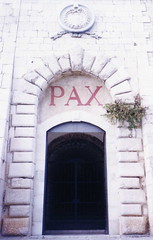 | 18 |
| 10125725252 | Peloponnesian War | Great war between Athens (and allies) and Sparta (and allies), lasting from 431 to 404 B.C.E. The conflict ended in the defeat of Athens and the closing of Athens's Golden Age. |  | 19 |
| 10125725253 | Persepolis | The capital and greatest palace-city of the Persian Empire, destroyed by Alexander the Great. |  | 20 |
| 10125725254 | Persian Empire | A major empire that expanded from the Iranian plateau to incorporate the Middle East from Egypt to India; flourished from around 550 to 330 B.C.E. | 21 | |
| 10125725255 | Plebians | Poorer, less privileged Romans who gradually won a role in Roman politics. | 22 | |
| 10125725256 | Punic Wars | Three major wars between Rome and Carthage in North Africa, fought between 264 and 146 B.C.E., that culminated in Roman victory and control of the western Mediterranean. | 23 | |
| 10125725257 | Qin Dynasty | A short-lived (221-206 B.C.E.) but highly influential Chinese dynasty that succeeded in reuniting China at the end of the Warring States period. |  | 24 |
| 10125725258 | Qin Shihuangdi | Literally "first emperor" (r. 221-210 B.C.E.) forcibly reunited China and established a strong and repressive state. | 25 | |
| 10125725259 | Solon | Athenian statesman and lawmaker (fl. 594-560 B.C.E.) whose reforms led the Athenians toward democracy. | 26 | |
| 10125725260 | Wudi | Han emperor (r. 141-86 B.C.E.) who began the Chinese civil service system by establishing an academy to train imperial bureaucrats. | 27 | |
| 10125725261 | Xiongnu | Nomadic peoples to the north of the Great Wall of China who were a frequent threat to the stability of the Chinese state. | 28 | |
| 10125725262 | Aristotle | A Greek polymath philosopher (384-322 B.C.E.); student of Plato and teacher of Alexander the Great. | 29 | |
| 10125725263 | Atman | The human soul, which in classic Hindu belief seeks union with Brahman. | 30 | |
| 10125725264 | Bhagavad Gita | A great Hindu epic text, part of the much larger Mahabharata, which affirms the performance of caste duties as a path to religious liberation. | 31 | |
| 10125725265 | Brahman | The "World Soul" or final reality in upanishadic Hindu belief. | 32 | |
| 10125725266 | Brahmins | The priestly caste of India. | 33 | |
| 10125725267 | Buddhism | The cultural/religious tradition first enunciated by Siddhartha Gautama | 34 | |
| 10125725268 | Confucianism | The Chinese philosophy first enunciated by Confucius, advocating the moral example of superiors as the key element of social order. | 35 | |
| 10125725269 | Confucius | The founder of Confucianism (551-479 B.C.E.); an aristocrat of northern China who proved to be the greatest influence on Chinese culture in its history. | 36 | |
| 10125725270 | Constantine | Roman emperor (r. 306-337 C.E.) whose conversion to Christianity paved the way for the triumph of Christianity in Europe. |  | 37 |
| 10125725271 | Daodejing | The central text of Daoism; translated as The Way and Its Power. | 38 | |
| 10125725272 | Daoism | A Chinese philosophy/popular religion that advocates simplicity and understanding of the world of nature, founded by the legendary figure Laozi. | 39 | |
| 10125725273 | Filial piety | The honoring of one's ancestors and parents, a key element of Confucianism. | 40 | |
| 10125725274 | Greek rationalism | A secularizing system of scientific and philosophic thought that developed in classical Greece in the period 600 to 300 B.C.E.; it emphasized the power of education and human reason to understand the world in nonreligious terms. | 41 | |
| 10125725275 | Hinduism | A word derived from outsiders to describe the vast diversity of indigenous Indian religious traditions. | 42 | |
| 10125725276 | Hippocrates | A very influential Greek medical theorist (ca. 460-ca. 370 B.C.E.); regarded as the father of medicine. | 43 | |
| 10125725277 | Jesus of Nazareth | The prophet/god of Christianity(ca. 4 B.C.E.-ca. 30 C.E.). | 44 | |
| 10125725278 | Yahweh | A form of the Hebrew name of God used in the Bible. The monotheistic religion developed by the Hebrews, emphasizing a sole personal god with concerns for social justice. | 45 | |
| 10125725279 | Karma | In Hinduism, the determining factor of the level at which the individual is reincarnated, based on purity of action and fulfillment of duty in the prior existence. |  | 46 |
| 10125725280 | Laozi | A legendary Chinese philosopher of the sixth century B.C.E.; regarded as the founder of Daoism. | 47 | |
| 10125725281 | Legalism | A Chinese philosophy distinguished by an adherence to clear laws with vigorous punishments. | 48 | |
| 10125725282 | Mahayana | "Great Vehicle," the popular development of Buddhism in the early centuries of the Common Era, which gives a much greater role to supernatural beings and proved to be more popular than original (Theravada) Buddhism. | 49 | |
| 10125725283 | Moksha | In Hindu belief, liberation from separate existence and union with Brahman. | 50 | |
| 10125725284 | Nirvana | The end goal of Buddhism, in which individual identity is "extinguished" into a state of serenity and great compassion. | 51 | |
| 10125725285 | Plato | A disciple of Socrates whose Dialogues convey the teachings of his master while going beyond them to express Plato's own philosophy; lived from 429 to 348 B.C.E. | 52 | |
| 10125725286 | Pythagoras | A major Greek philosopher (ca. 560-ca. 480 B.C.E.) who believed that an unchanging mathematical order underlies the apparent chaos of the world. | 53 | |
| 10125725287 | Siddhartha Gautama (the Buddha) | The Indian prince turned ascetic (ca. 566-ca. 486 B.C.E.) who founded Buddhism. | 54 | |
| 10125725288 | Socrates | The first great Greek philosopher to turn rationalism toward questions of human existence (469-399 B.C.E.). | 55 | |
| 10125725289 | Theravada | "The Teaching of the Elders," the early form of Buddhism according to which the Buddha as a wise teacher but not divine and which emphasizes practices rather than beliefs. | 56 | |
| 10125725290 | Upanishads | Indian mystical and philosophical works, written between 800 and 400 B.C.E. | 57 | |
| 10125725291 | Vedas | The earliest religious texts of India, a collection of ancient poems, hymns, and rituals that were transmitted orally before being written down ca. 600 B.C.E. | 58 | |
| 10125725292 | Warring States Period | Period in China from 403 to 221 B.C.E. that was typified by disorder and political chaos. | 59 | |
| 10125725293 | Yin and Yang | Expression of the Chinese belief in the unity of opposites. | 60 | |
| 10125725294 | Zarathustra | A Persian prophet, traditionally dated to the sixth or seventh century B.C.E. (but perhaps much older), who founded Zoroastrianism. | 61 | |
| 10125725295 | Zoroastrianism | Persian monotheistic religion founded by the prophet Zarathustra. | 62 | |
| 10125725296 | caste as varna and jati | The system of social organization in India that has evolved over millennia; it is based on an original division of the populace into four inherited classes, with the addition of thousands of social distinctions based on occupation, which became the main cell of social life in India. | 63 | |
| 10125725297 | dharma | In Indian belief, performance of the duties appropriate to an individual's caste; good performance will lead to rebirth in a higher caste. | 64 | |
| 10125725298 | helots | The dependent, semi-enslaved class of ancient Sparta whose social discontent prompted the militarization of Spartan society. | 65 | |
| 10125725299 | Kshatriya | The Indian social class of warriors and rulers. | 66 | |
| 10125725300 | latifundia | Huge estates operated by slave labor that flourished in parts of the Roman Empire | 67 | |
| 10125725301 | Pericles | A prominent and influential statesman of ancient Athens (ca. 495-429 B.C.E.); presided over Athens's Golden Age. | 68 | |
| 10125725302 | scholar-gentry class | A term used to describe members of China's landowning families, reflecting their wealth from the land and the privilege that they derived as government officials. | 69 | |
| 10125725303 | Sudra | The lowest Indian social class of varna; regarded as servants of their social betters; eventually included peasant farmers | 70 | |
| 10125725304 | the "three submissions" | In Chinese Confucian thought, the notion that a woman is permanently subordinate to male control: first that of her father, then of her husband, and finally of her son. | 71 | |
| 10125725305 | Untouchables | An Indian social class that emerged below the Sudras and whose members performed the most unclean and polluting work. | 72 | |
| 10125725306 | Vaisya | The Indian social class that was originally defined as farmers but eventually comprised merchants. | 73 | |
| 10125725307 | Axum | Classical-era kingdom of East Africa, in present-day Eritrea and northern Ethiopia; flourished from 100 to 600 C.E. and adopted Christianity. | 74 | |
| 10125725308 | Bantu expansion | Gradual migration of peoples from their homeland in what is now southern Nigeria and the Cameroons into most of eastern and southern Africa, a process that began around 3000 B.C.E. and continued for several millennia. The agricultural techniques and ironworking technology of these farmers gave them an advantage over the gathering and hunting peoples they encountered. | 75 | |
| 10125725309 | Coptic Christianity | The Egyptian variety of Christianity, distinctive in its belief that Christ has only a single, divine nature. | 76 | |
| 10125725310 | Silk Road | Trade route stretching from China into Europe. | 77 | |
| 10125725311 | syncretism | a blending of beliefs and practices from different religions into one faith | 78 | |
| 10125725312 | monasticism | The lifestyle of a monk or nun, characterized by prayer and solitude | 79 |
AP World History - Period 2 Flashcards
Terms : Hide Images
| 7652210130 | Ahura Mazda | In Zoroastrianism, the good god who rules the world. | | 0 |
| 7652210131 | Alexander the Great | Alexander III of Macedon (356-323 B.C.E.), conqueror of the Persian Empire and part of northwest India. | | 1 |
| 7652210132 | Aryans | Indo-European pastoralists who moved into India about the time of the collapse of the Indus Valley civilization; their role in causing this collapse is still debated by historians. | | 2 |
| 7652210133 | Ashoka | The most famous ruler of the Mauryan Empire (r. 268-232 B.C.E.), who converted to Buddhism and tried to rule peacefully and with tolerance. | | 3 |
| 7652210134 | Caesar Augustus | The great-nephew and adopted son of Julius Caesar who emerged as sole ruler of the Roman state at the end of an extended period of civil war (r. 31 B.C.E.-14 C.E.). | | 4 |
| 7652210135 | Cyrus (the Great) | Founder of the Persian Empire (r. 557-530 B.C.E.); a ruler noted for his conquests, religious tolerance, and political moderation. | | 5 |
| 7652210136 | Darius I | Great king of Persia (r. 522-486 B.C.E.) following the upheavals after Cyrus's death; completed the establishment of the Persian Empire. | | 6 |
| 7652210137 | Greco-Persian Wars | Two major Persian invasions of Greece, in 490 B.C.E. and 480 B.C.E., in which the Persians were defeated on both land and sea. | | 7 |
| 7652210138 | Gupta Empire | An empire of India (320-550 C.E.). | | 8 |
| 7652210139 | Han dynasty | Chinese dynasty that restored unity in China softened legalist policies. Begun in 202 B.C. by Liu Bang, the dynasty ruled China for more than 400 years. | | 9 |
| 7652210140 | Hellenistic era | The period from 323 to 30 B.C.E. in which Greek culture spread widely in Eurasia in the kingdoms ruled by Alexander's political successors. | | 10 |
| 7652210141 | Herodotus | Greek historian known as the "father of history" (ca. 484-ca. 425 B.C.E.). His Histories enunciated the Greek view of a fundamental divide between East and West, culminating in the Greco-Persian Wars of 490-480 B.C.E. | 11 | |
| 7652210142 | hoplite | A heavily armed Greek infantryman. Over time, the ability to afford a military wares and to fight for the city came to define Greek citizenship. | | 12 |
| 7652210143 | Ionia | The territory of Greek settlements on the coast of Anatolia; the main bone of contention between the Greeks and the Persian Empire. | | 13 |
| 7652210144 | Mandate of Heaven | The ideological underpinning of Chinese emperors, this was the belief that a ruler held authority by command of divine force as long as he ruled morally and benevolently. | 14 | |
| 7652210145 | Battle of Marathon | Athenian victory over a Persian invasion in 490 B.C.E. | 15 | |
| 7652210146 | Mauryan Empire | A major empire (322-185 B.C.E.) that encompassed most of India. | 16 | |
| 7652210147 | Patricians | Wealthy, privileged Romans who dominated early Roman society. | 17 | |
| 7652210148 | Pax Romana | The "Roman peace," a term typically used to denote the stability and prosperity of the early Roman Empire, especially in the first and second centuries C.E. | 18 | |
| 7652210149 | Peloponnesian War | Great war between Athens (and allies) and Sparta (and allies), lasting from 431 to 404 B.C.E. The conflict ended in the defeat of Athens and the closing of Athens's Golden Age. | | 19 |
| 7652210150 | Persepolis | The capital and greatest palace-city of the Persian Empire, destroyed by Alexander the Great. | | 20 |
| 7652210151 | Persian Empire | A major empire that expanded from the Iranian plateau to incorporate the Middle East from Egypt to India; flourished from around 550 to 330 B.C.E. | 21 | |
| 7652210152 | Plebians | Poorer, less privileged Romans who gradually won a role in Roman politics. | 22 | |
| 7652210153 | Punic Wars | Three major wars between Rome and Carthage in North Africa, fought between 264 and 146 B.C.E., that culminated in Roman victory and control of the western Mediterranean. | 23 | |
| 7652210154 | Qin Dynasty | A short-lived (221-206 B.C.E.) but highly influential Chinese dynasty that succeeded in reuniting China at the end of the Warring States period. | | 24 |
| 7652210155 | Qin Shihuangdi | Literally "first emperor" (r. 221-210 B.C.E.) forcibly reunited China and established a strong and repressive state. | 25 | |
| 7652210156 | Solon | Athenian statesman and lawmaker (fl. 594-560 B.C.E.) whose reforms led the Athenians toward democracy. | 26 | |
| 7652210157 | Wudi | Han emperor (r. 141-86 B.C.E.) who began the Chinese civil service system by establishing an academy to train imperial bureaucrats. | 27 | |
| 7652210158 | Xiongnu | Nomadic peoples to the north of the Great Wall of China who were a frequent threat to the stability of the Chinese state. | 28 | |
| 7652210159 | Aristotle | A Greek polymath philosopher (384-322 B.C.E.); student of Plato and teacher of Alexander the Great. | 29 | |
| 7652210160 | Bhagavad Gita | A great Hindu epic text, part of the much larger Mahabharata, which affirms the performance of caste duties as a path to religious liberation. | 30 | |
| 7652210161 | Brahman | The "World Soul" or final reality in upanishadic Hindu belief. | 31 | |
| 7652210162 | Brahmins | The priestly caste of India. | 32 | |
| 7652210163 | Buddhism | The cultural/religious tradition first enunciated by Siddhartha Gautama | 33 | |
| 7652210164 | Confucianism | The Chinese philosophy first enunciated by Confucius, advocating the moral example of superiors as the key element of social order. | 34 | |
| 7652210165 | Confucius | The founder of Confucianism (551-479 B.C.E.); an aristocrat of northern China who proved to be the greatest influence on Chinese culture in its history. | 35 | |
| 7652210166 | Constantine | Roman emperor (r. 306-337 C.E.) whose conversion to Christianity paved the way for the triumph of Christianity in Europe. | | 36 |
| 7652210167 | Daoism | A Chinese philosophy/popular religion that advocates simplicity and understanding of the world of nature, founded by the legendary figure Laozi. | 37 | |
| 7652210168 | Filial piety | The honoring of one's ancestors and parents, a key element of Confucianism. | 38 | |
| 7652210169 | Greek rationalism | A secularizing system of scientific and philosophic thought that developed in classical Greece in the period 600 to 300 B.C.E.; it emphasized the power of education and human reason to understand the world in nonreligious terms. | 39 | |
| 7652210170 | Hinduism | A word derived from outsiders to describe the vast diversity of indigenous Indian religious traditions. | 40 | |
| 7652210171 | Hippocrates | A very influential Greek medical theorist (ca. 460-ca. 370 B.C.E.); regarded as the father of medicine. | 41 | |
| 7652210172 | Jesus of Nazareth | The prophet/god of Christianity(ca. 4 B.C.E.-ca. 30 C.E.). | 42 | |
| 7652210173 | Yahweh | A form of the Hebrew name of God used in the Bible. The monotheistic religion developed by the Hebrews, emphasizing a sole personal god with concerns for social justice. | 43 | |
| 7652210174 | Karma | In Hinduism, the determining factor of the level at which the individual is reincarnated, based on purity of action and fulfillment of duty in the prior existence. | | 44 |
| 7652210175 | Laozi | A legendary Chinese philosopher of the sixth century B.C.E.; regarded as the founder of Daoism. | 45 | |
| 7652210176 | Legalism | A Chinese philosophy distinguished by an adherence to clear laws with vigorous punishments. | 46 | |
| 7652210177 | Moksha | In Hindu belief, liberation from separate existence and union with Brahman. | 47 | |
| 7652210178 | Nirvana | The end goal of Buddhism, in which individual identity is "extinguished" into a state of serenity and great compassion. | 48 | |
| 7652210179 | Plato | A disciple of Socrates whose Dialogues convey the teachings of his master while going beyond them to express Plato's own philosophy; lived from 429 to 348 B.C.E. | 49 | |
| 7652210180 | Pythagoras | A major Greek philosopher (ca. 560-ca. 480 B.C.E.) who believed that an unchanging mathematical order underlies the apparent chaos of the world. | 50 | |
| 7652210181 | Siddhartha Gautama (the Buddha) | The Indian prince (ca. 566-ca. 486 B.C.E.) who founded Buddhism. | 51 | |
| 7652210182 | Socrates | The first great Greek philosopher to turn rationalism toward questions of human existence (469-399 B.C.E.). | 52 | |
| 7652210183 | Upanishads | Indian mystical and philosophical works, written between 800 and 400 B.C.E. | 53 | |
| 7652210184 | Vedas | The earliest religious texts of India, a collection of ancient poems, hymns, and rituals that were transmitted orally before being written down ca. 600 B.C.E. | 54 | |
| 7652210185 | Warring States Period | Period in China from 403 to 221 B.C.E. that was typified by disorder and political chaos. | 55 | |
| 7652210186 | Yin and Yang | Expression of the Chinese belief in the unity of opposites. | 56 | |
| 7652210187 | Zoroastrianism | Persian monotheistic religion founded by the prophet Zarathustra. | 57 | |
| 7652210188 | caste as varna and jati | The system of social organization in India that has evolved over millennia; it is based on an original division of the populace into four inherited classes, with the addition of thousands of social distinctions based on occupation, which became the main cell of social life in India. | 58 | |
| 7652210189 | dharma | In Indian belief, performance of the duties appropriate to an individual's caste; good performance will lead to rebirth in a higher caste. | 59 | |
| 7652210190 | helots | The dependent, semi-enslaved class of ancient Sparta whose social discontent prompted the militarization of Spartan society. | 60 | |
| 7652210191 | Kshatriya | The Indian social class of warriors and rulers. | 61 | |
| 7652210192 | latifundia | Huge estates operated by slave labor that flourished in parts of the Roman Empire | 62 | |
| 7652210193 | Pericles | A prominent and influential statesman of ancient Athens (ca. 495-429 B.C.E.); presided over Athens's Golden Age. | 63 | |
| 7652210194 | Sudra | The lowest Indian social class of varna; regarded as servants of their social betters; eventually included peasant farmers | 64 | |
| 7652210195 | the "three submissions" | In Chinese Confucian thought, the notion that a woman is permanently subordinate to male control: first that of her father, then of her husband, and finally of her son. | 65 | |
| 7652210196 | Untouchables | An Indian social class that emerged below the Sudras and whose members performed the most unclean and polluting work. | 66 | |
| 7652210197 | Vaisya | The Indian social class that was originally defined as farmers but eventually comprised merchants. | 67 | |
| 7652210198 | Silk Road | Trade route stretching from China into Europe. | 68 |
Flashcards
AP World History: Chapter 3 Flashcards
Terms : Hide Images
| 7318325019 | Norte Chico/Caral | an area that had a self-contained civilization. _______ was the largests of this area. Overall, it relied on fishing and trading to maintain civilization. Unlike other places, they showed little signs of ways of communication, warfare, and development as a society. | 0 | |
| 7318325068 | Indus Valley Civilization | Unlike Norte Chico, this civilization showed signs of huge development. Things such as standardized weights, measures, style, and architectural design were present. Evidence shows that it was a "literate culture" and had no political hierarchy. | 1 | |
| 7318327350 | Olmec civilization | began around 1200 B.C.E. along present day Gulf of Mexico. Possibly created the first written language along with elaborate traditions and chiefdoms. Also known as "mother civilization". Contained new culture patterns such as ritual sacrifice, games, planning, and style. | 2 | |
| 7318327351 | Uruk | Mesopotamia largest city; had ziggurats, temples, places to worship; there were varieties of specialities such as masons and weavers. | 3 | |
| 7318331179 | Mohenjo Daro/Harappa | rich housing with complex architecture and sewer system with grand buildings such as a citadel surrounded by a wall. | 4 | |
| 7318331180 | Code of Hammurabi | complex laws, judgements, or decrees by a ruler; consequences were different per class. | 5 | |
| 7318340396 | patriarchy | men having more power than women; the "dominant" race is men. | 6 | |
| 7318343217 | rise of the state | kings and officials took power over large areas of land/critics creating states and introduced basic organization of societies. | 7 | |
| 7318343218 | Epic of Gilgamesh | pessimistic view of the gods and the idea of immortality. | 8 | |
| 7318346610 | Egypt: "the gift of the Nile" | the Nile river in Egypt gave the Egyptians easier ways to agriculture due to avoided salty soils which led to major wheat production, but with that they became dependable on the Nile, which led to problems when it overflowed. | 9 | |
| 7318346611 | Nubia | had a lot of power in Egypt, such as military force and politics. These peoples expressed worship of gods and goddesses and made burial special for woman. | 10 | |
| 7318348543 | Hyksos | a group that took power of Egypt due to the advancement of their chariot technology. | 11 |
AP WORLD HISTORY UNIT ONE Flashcards
everything on the unit one summary expect for the river valley civilizations
Terms : Hide Images
| 7946631934 | East Asia | countries include: Japan, South Korea, North Korea, China. | 0 | |
| 7946631935 | Southeast Asia | Vietnam, Thailand, Laos, Indonesia, Cambodia, Indonesia, Malaysia, Singapore, Myanmar, Brunei | 1 | |
| 7946631936 | South Asia | India, Pakistan, Nepal, Bhutan, Bangladesh, Sri Lanka | 2 | |
| 7946631937 | Southwest Asia and North Africa | Egypt, Saudi Arabia, Morocco, Israel, Turkey, Iran, Iraq, Afghanistan, Syria, Lebanon, Lydia, Tunisia, Algeria, Jordan, Kuwait, Qatar, UAE, Yemen, Cyprus | 3 | |
| 7946631938 | Central Asia | Russia, Mongolia, the "-stans", Georgia | 4 | |
| 7946631939 | Sub-Saharan Africa | Countries below the Sahara: Nigeria, Somalia, Congo, Kenya, South Africa, Zimbabwe, etc. | 5 | |
| 7946631940 | Eastern Europe | Poland, Slovakia, Lithuania, Croatia, Czech Republic, Romania, Bulgaria, Greece, Serbia, Kosovo, Hungary, Latvia, Estonia etc. | 6 | |
| 7946631941 | Western Europe | Germany, France, Italy, Spain, United Kingdom, Ireland, Portugal, Austria, Switzerland, Sweden, Netherlands, Denmark, Belgium | 7 | |
| 7946631942 | North America | Canada, United States, Mexico | 8 | |
| 7946631943 | Latin America | Brazil, Mexico, Cuba, Panama, Argentina, Chile, Peru, Columbia, Guatemala, Costa Rica, Paraguay, Venezuela | 9 | |
| 7946631944 | Oceanía | Australia, New Zealand, Papua New Guinea | 10 | |
| 7946631945 | Civilization Definition (5 parts) | •advanced cities •system of writing •advanced technology •complex institutions •skilled workers | 11 | |
| 7946631946 | Independent Invention | An idea or technology was invented/created independent of outside influence | 12 | |
| 7946631947 | Diffusion | an idea or technology was introduced to a region/society/civilization by members of another civilization | 13 | |
| 7946631948 | Agricultural Revolution | •the first major even studied in ap world •8000-3000 BC •implementation of farming techniques, usually followed by the domestication of animals •humans transitioned from foragers to farmers, starting the beginning of the Neolithic Age, impacted gender roles, led to the spread of agriculture and allowed civilizations to develop | 14 | |
| 7946767267 | Characteristics of Early Agricultural Civilizations | 1. Permanent Settlements 2. Specialized Workers 3. Technological Innovations 4. Governments 5. Social Classes 6. Religion | 15 | |
| 7946767268 | Permanent Settlements | impact of Neolithic/agricultural revolution, led to civilizations, people made villages, towns and cities | 16 | |
| 7946767269 | Specialized Workers | many people didn't have farms so they were specialized in other areas such as ceramics or textile production, people became political or religious leaders, people had other professions in commerce and civil engineering | 17 | |
| 7946767270 | Technological Innovations | farming developed the use of various metals for weapons and other goods, had advanced irrigation due to the large amount of specialized workers | 18 | |
| 7946767271 | Governments | formed to organize and oversee advancements and innovations made for the civilization and to regulate commerce and protect the citizens | 19 | |
| 7946767272 | Social Classes | people had more land than others, had elite classes for farm/large land owners, | 20 | |
| 7946767273 | Religion | people became more educated in seasons and nature which created religions and rituals | 21 |
AP World History - Period 4 Flashcards
Hello, welcome to the ultimate study guide for the AP World History exam. Have fun, and good luck. This is basically a compilation of every notecard term in the unit.
Terms : Hide Images
| 6146339550 | Early Modern Period | the time period of 1450 - 1750 (it is called this because events occurring in this time directly shape regional/political units of todays world) | 0 | |
| 6146339551 | Catholic Reformation | the church's actions to revive their reputation and membership roles in 1545 (regained control of most of southern Europe, Austria, Poland, and much of Hungary) | 1 | |
| 6146339552 | Jesuits | a religious order converting people to return to the church (went to Asia + Americas in 1500's) | 2 | |
| 6146339553 | Thirty Years War | War within the Holy Roman Empire between German Protestants and their allies (Sweden, Denmark, France) and the emperor and his ally, Spain; ended in 1648 after great destruction with Treaty of Westphalia | 3 | |
| 6146339554 | Treaty of Westphalia | Ended the 30 years war, allowing principalities and cities to choose their own religion, creating a patchwork of religious affiliations through England. | 4 | |
| 6146339555 | English Civil War | This was the revolution as a result of whether the sovereignty would remain with the king or with the Parliament. Eventually, the kingship was abolished. | 5 | |
| 6146339556 | Scientific Revolution | a new vision of science developed during the renaissance in the 17th + 18th century | 6 | |
| 6146339557 | Scholasticism | Scholars based their inquiry on the principles established by the church, which sometimes resulted in clases between science and religion | 7 | |
| 6146339558 | Brahe & Kepler | developed a more complex theory from Copernicus in 1610 | 8 | |
| 6146339559 | Galileo | used the first telescope during the Renaissance in 1609, where he made many large discoveries in the solar system, until he was put under house arrest for spreading conflicting ideas | 9 | |
| 6146339560 | Isaac Newton | discovered the basic principles of motion + gravity, where he captured the vision of a entire universe in simple laws | 10 | |
| 6146339561 | Humanism | interest in the capabilities and accomplishments of individuals | 11 | |
| 6146339562 | Patrons | supporters of the arts, with payment and such, they found talented artists, often when they were young | 12 | |
| 6146339563 | Medici | was a powerful family of Florence in the mid to late 1400s that sponsored artists as a rich merchant family | 13 | |
| 6146339564 | Erasmus | a humanist Dutch priest that published the first edition of the New Testament in Greek in 1516 | 14 | |
| 6146339565 | Johan Gutenberg | a German goldsmith and printer, who created the printing press, in 1454 | 15 | |
| 6146339566 | Nicolo Machiavelli | a Renaissance writer who wrote, "The Prince" which was a famous philosophical view of the ideal political leader in the 16th century, in Italian city states | 16 | |
| 6146339567 | Protestant Reformation | a religious movement of the 16th century that began as an attempt to reform the Roman Catholic Church and resulted in the creation of Protestant churches | 17 | |
| 6146339568 | Indulgences | The Catholic Church's grants of salvation for money in the 1500s, and was part of the growing corruption of the church. | 18 | |
| 6146339569 | John Calvin | A protestant who established a variation of his beliefs on a stern and vengeful God. | 19 | |
| 6146339570 | Anglican Church | A form of Christianity established by Henry VIII that was not decided on the grounds of religious belief, but because the pope would not allow him to divorce his wife. | 20 | |
| 6146339571 | Nicholas Copernicus | a Polish monk who based tables on those by Nasir Al-Din, an Islamic scholar, to correct inaccurate calendars. | 21 | |
| 6146339572 | Edict of Nantes | The granting of tolerance to Protestants through this, which was later revoked by King Louis XIV | 22 | |
| 6146339573 | Martin Luther | a German monk who wrote the 95 theses in 1517, which were 95 propositions that criticized the Catholic Church | 23 | |
| 6146339574 | Renaissance Man | Title of a person who was smart and genius in the Renaissance Era. | 24 | |
| 6146339575 | Deism | God built the universe and let it run. Clockmaker theory. | 25 | |
| 6146339576 | Land-based Powers | A shift in land based powers where governments controlled lands by building armies, bureaucracies, road, canals, and walls that unified and protected | 26 | |
| 6146339577 | Sea-based Powers | Sea people built their power by controlling water routes, developing technology to cross the seas, and gaining wealth from trade and land claims. | 27 | |
| 6146339578 | Renaissance | A heightened intellectual and artistic advance from about 1450s, that changed Europe forever | 28 | |
| 6146339579 | Adam Smith | He analyzed the natural law of supply and demand that governed economies in his classic book, "The Wealth of Nations" | 29 | |
| 6146339580 | New Monarchies | Monarchies that emerged that differed from their medieval predecessors in having greater centralization of power, more regional boundaries, and stronger representative institutions | 30 | |
| 6146339581 | Constitutional Monarchy | States where rulers shared power with a parliament, a body of representatives selected by the nobility and urban citizens | 31 | |
| 6146339582 | Gentry | the most powerful members of a society, and landowners that affected the style of the old aristocracy | 32 | |
| 6146339583 | Enlightenment | the emphasis on human abilities and accomplishments and the importance of independent and rational thought | 33 | |
| 6146339584 | John Locke | sought to understand the impact of the "laws of nature" on human liberties | 34 | |
| 6146339585 | Thomas Hobbes | English materialist and political philosopher who advocated absolute sovereignty as the only kind of government that could resolve problems caused by the selfishness of human beings (1588-1679) | 35 | |
| 6146339586 | Montesquieu | admired the British Parliament that had successfully gained power at the expense of the king, who also advocated a three-branch government with three branches that shared political power | 36 | |
| 6146339587 | Voltaire | wrote witty criticisms of the French monarchy and the Roman Catholic Church. He believed both institutions to be despotic and intolerant, limiting freedoms | 37 | |
| 6146339588 | Rosseau | the most radical of the common philosophers, he proclaimed in his social context that "Man is born free: and everywhere he is in chains". Since society had "Corrupted" human nature, he advocated a return to nature in a small, co-op community | 38 | |
| 6146339589 | Hapsburg | A powerful family with land claims all over Europe from Spain to Italy to the Netherlands to Hungary, as all the Holy Roman Emperor's had been Hapsburg since 1273 | 39 | |
| 6146339590 | Holy Roman Empire | a place/time where religion remained very important, and religious issues continued to fragment, and strong kings emerged in the 16th century | 40 | |
| 6146339591 | Reconquest | the retaking of land in Iberia by Spain and Portugal in a religious crusade to expand. This conquest advanced in waves over several centuries. | 41 | |
| 6146339592 | Phillip II | ruled Spain at the height of its power in the 15th century | 42 | |
| 6146339593 | Divine Right | with God's blessing of the king's authority, the legitimacy of royalty across Europe was enhanced, and occurred under the reign of Louis XIV during the 17th and 18th centuries | 43 | |
| 6146339594 | Louis XIV | Understood the importance of a "theatre state", by building a magnificent palace at Versailles, and the apex of absolutism occurred under him | 44 | |
| 6146339595 | Absolute Monarchies vs. limited monarchies | absolute monarchies held complete control over their kingdom vs. the limited power. | 45 | |
| 6146339596 | Capitalism | an economic system based on private ownership of property and business that provide goods to be bough and sold in a free manner | 46 | |
| 6146339597 | Mercantilism | the responsibility of government to promote the states economy to improve the revenues and limit imports to prevent profits from going to outsiders (allows industry to develop their own business) | 47 | |
| 6146339598 | Joint-stock Companies | these companies organized commercial ventures on a large scale by allowing investors to buy and sell shares. The new capitalist system largely replaced the old guild system of the middle ages. | 48 | |
| 6146339599 | Putting out system | the concept of producing goods in the countryside outside the guilds control by delivering raw materials to their homes, where they are transformed into finished products to be used up later | 49 | |
| 6146339600 | Bourgeoise | middle class; factory owners who put long hours and much of their profits into their businesses | 50 | |
| 6146339601 | Balance of Power | states forming a temporary alliance to prevent the state form being too powerful. (Russia emerged as a major power in Europe after its mediterranean armies got Sweden in the GNW) | 51 | |
| 6146339602 | Versailles | a place where Louis' palace was built symbolizing the French's triumph over the traditional rights of the nobility and clergy. This kept nobles away from plotting rebellions, and 'distracted europe'. | 52 | |
| 6146339603 | Zheng He | led expiditions in Chinese junks across the atlantic ocean, with one goal being to assert Chinas power after the demise of the Yuan dynasty. | 53 | |
| 6146339604 | Yongle | something of a renegade who supported a series of seven maritimes expeditions. Chinese vessels started to take tribute from those they encountered. | 54 | |
| 6146339605 | Henry the Navigator | the third son of the portuguese king; devoted his life to navigation, creating a navigation school, which became a magnet for the cartographers of the world | 55 | |
| 6146339606 | Caravel | a new ship developed by the portuguese, which was much smaller than the junk, but size allowed for exploration of shallower coastal areas | 56 | |
| 6146339607 | Vasco da Gama | set out to find the tip of Africa and connect it to the Indian Ocean, and discovered the fastest and safest ways to travel to Portugal | 57 | |
| 6146339608 | Christopher Columbus | A Genoese mariner who convinced Isabella and Ferdinand to sponsor a voyage across the Atlantic after he was turned down by the Genoese and Portugal. He believed he could reach east Asia by sailing West. | 58 | |
| 6146339609 | Treaty of Tordesillas "Tortillas" | a treaty making Spain and Portugal land claim boundary. Portugal pushes its explorations to India and beyond. | 59 | |
| 6146339610 | Magellan | had a ship that was first to circumnavigate the glove, even though Magellan himself died in the phillipines | 60 | |
| 6146339611 | Conquistadors | went to search for gold and convert the natives to Christianity in the interior of Mexico | 61 | |
| 6146339612 | Cortes | sought to find the Aztec capital, and took over the Aztec land - with help of Amerindians, disease, and technology | 62 | |
| 6146339613 | Moctezuma | the Aztec emperor, who welcome the Spaniards at Tenochtitlan, seeing them as god-like. This was a mistake, as this allowed everyone to conquer him. | 63 | |
| 6146339614 | Francisco Pizzaro | led a group of soldiers to the Andes to find the Inca. The Incas were weak; Pizzaro conquered and got gold. | 64 | |
| 6146339615 | Atahualpa | the leader of the Incas, who was seized by Pizzaro and gave gold to him, first baptized as a Christian, than strangled | 65 | |
| 6146339616 | Ethnocentrism | the term that describes the tendency of human beings to view their own culture as superior | 66 | |
| 6146339617 | De La Casas | a conquistador priest who dedicated himself to protecting Amerindian rights | 67 | |
| 6146339618 | Franciscans | peoples who converted new world people to christianity, and took care of the poor. | 68 | |
| 6146339619 | Encomenderos | Spanish settlers who were in charge of the natives working on the encomiendas | 69 | |
| 6146339620 | Peninsularies | a fading social class in the new world, composed of the people born in the old world | 70 | |
| 6146339621 | Mestizos | composed of European and Amerindian children, part of the castas | 71 | |
| 6146339622 | Mulattoes | composed of European and African children, also part of the castas | 72 | |
| 6146339623 | Council of Indies | supervised all government and commercial activity in the Spanish colonies | 73 | |
| 6146339624 | Bartholomew Dias | set out to find the tip of Africa and connect beyond it to the Indian Ocean, as well as discovering the fastest and safest ways back to Portugal | 74 | |
| 6146339625 | Encomienda | the system in which conquistadors had forced natives to do work for them | 75 | |
| 6146339626 | Creoles | composed of those born in the new world; a quickly growing class | 76 | |
| 6146339627 | Castas | a middle-level status between Europeans at the top; and Amerindians and blacks at the bottom | 77 | |
| 6146339628 | Protestant work ethic | a work ethic of the protestants that encouraged individual endeavors towards gaining wealth | 78 | |
| 6146339629 | Dutch East India Company | a joint stock company that specialized in the spice and luxury trade of the East Indies and quickly gained control of Dutch Trading in the Pacific | 79 | |
| 6146339630 | Lost Colony | The colony of Walter Raleigh, as well as the first venture to North America by the British on the Carolina Coast. | 80 | |
| 6146339631 | Mercantilism | a system in which the government is constantly intervened in the market, with the understanding the goal of economic gain and to benefit the mother country | 81 | |
| 6146339632 | Indentured Servitude | a system which was usually ethnically the same as a free settler, but he or she was bound by an "indenture" (contract) to work for a person for four to seven years, in exchange for payment of the new world voyage | 82 | |
| 6146339633 | Columbian exchange | the global diffusion of crops, other plants, human beings, animals, and distance that took place after the European exploring voyages of the New World | 83 | |
| 6146339634 | Atlantic Circuit | a clockwise network of sea routs in the Atlantic Ocean | 84 | |
| 6146339635 | Middle Passage | the first leg of the atlantic circuit, where ships took slaves to the new world | 85 | |
| 6146339636 | Manila Galleons | ships that traveled across the pacific ocean picking up and trading goods, like Asian luxury goods, and silver | 86 | |
| 6146339637 | House of Burgesses | the elected assembly in the colonies that initiated a form of democratic representation | 87 | |
| 6146339638 | Pilgrims | settled first in New England, and wanted to break away completely from the Church of England, sought to pursue spiritual ends in new lands | 88 | |
| 6146339639 | Puritans | wanted to purify Church of England, not break with it | 89 | |
| 6146339640 | Iroquois Confederacy | Dutch merchants established trading relationships with these guys | 90 | |
| 6146339641 | Plantocracy | a small number of rich men owns most of the slaves and land, as well as had all the power | 91 | |
| 6146339642 | Seasoning | a period of adjustment to a new environment, like with the slaves | 92 | |
| 6146339643 | Manumission | legal grant of freedom to an individual slave | 93 | |
| 6146339644 | Maroons | runaway slaves in the Carribean | 94 | |
| 6146339645 | Kongo | Christian missionaries went to this kingdom just south of the Congo River, where Christian Missionaries converted its inhabitants to Christianity | 95 | |
| 6146339646 | African Diaspora | The spreading of Africans to many other parts of the world, especially the Americas. This is one of the most important demographic changes during 1450 - 1750 | 96 | |
| 6146339647 | Asante | Produced insignificant amounts of gold and Kola nuts, they rose in West Africa on the Gold Coast. | 97 | |
| 6146339648 | Benin | Not really a significant player in the slave trade - relied on traditional products, such as ivory, textiles, and their unique bronze castings | 98 | |
| 6146339649 | Dahomey | a kingdom that used firearms to create its powerbase, in Contrast to the Asante, the Dahomey leaders were authoritarian, and often brutal in forcing compliance to the royal court | 99 | |
| 6146339650 | Cape Colony | one of the two beachland colonies established by the Europeans in the 16th century, functioned as a major coastal for travelers. | 100 | |
| 6146339651 | Hidden Imam | the 12th descendant of Muhammad, who in the end disappeared as a child | 101 | |
| 6146339652 | Shah Abbas I | brought the Safavids to the peak of the power, slave infantrymen | 102 | |
| 6146339653 | Devshirme | a system that required Christian's of the area to contribute young boys to be the sultans slaves | 103 | |
| 6146339654 | Qizilbash | fought against Janissaries in a great religious conflict. (Chaldiran) | 104 | |
| 6146339655 | Battle of Chaldrian | The Shi'ite versus Sunni conflict at Chaldrian over religious differences, that set the limits for Shi'ite expansion | 105 | |
| 6146339656 | Isfahan vs. Istanbul | These two places differed in the sense the first was far from cosmopolitan, Shi'ite, and have international trade, while the latter had more numerous, and guilds organized merchants | 106 | |
| 6146339657 | Gunpowder Empires | an age of time where almost all powerful states used guns to build control/attack (included Russia, Ming and Qing, Japan, the Ottoman Empire, the Safavid and the Mughal empire) | 107 | |
| 6146339658 | Suleiman the Magnificent | ruled the Ottomans as the empire reached the height of its power. The Ottomans controlled much of the water traffic between the Black Sea and the Mediterranean sea | 108 | |
| 6146339659 | Janissaries | Checked the military power of the sultan, being an elite military group | 109 | |
| 6146339660 | Vizier | head of the imperial administration in the Ottoman empire who took care of the day to day work of the empire, aiding the Sultan | 110 | |
| 6146339661 | Ottoman Lake | the Mediterranean Sea controlled by the empire with this name | 111 | |
| 6146339662 | Battle at Lepanto | a famous sea battle with the Ottomans vs Philip II. Ottomans and their Muslim allies lost control of many ports in this war. | 112 | |
| 6146339663 | Safavid Empire | an empire that grew from a turkish nomadic group, that were Shi'ite muslims | 113 | |
| 6146339664 | Imams | heirs of Muhammad according to Shi'ite muslims | 114 | |
| 6146339665 | Ismail | a person who united a large area south of the caspian sea and of the Ottoman empire. An army emerged under him, as well as declared Twelver shi'ism for his new Safavid realm | 115 | |
| 6146339666 | Twelver shi'ism | a religion based on Muslim beliefs, as well as the 'hidden Imam' | 116 | |
| 6146339667 | Mansabs | certain ranks in government by Akbar, which entitled their holder to revenue assignments | 117 | |
| 6146339668 | Babur | founded the Mughal empire, claimed to be a descendant of Timur and Genghis Khan (1526) | 118 | |
| 6146339669 | Purdah | a woman's seclusion from society in India, which was more enforced for upper class women, who did not leave home unescorted | 119 | |
| 6146339670 | Akbar | the grandson of Babur, who brought the height of the Mughal empire. Also expanded his empire to control much of the subcontinent. | 120 | |
| 6146339671 | Taj Mahal | a building of beauty built as a tomb for Mumtaz Mahal's wife. | 121 | |
| 6146339672 | Sati | the ritual suicide of widows by jumping into their husbands pyres, representing the low status of women | 122 | |
| 6146339673 | Divine Faith | a combination religion consisting of Muslim, Zorastriam, Christian, Sikh beliefs, with the catch being cementing loyalty to the empreror | 123 | |
| 6146339674 | Mughal Empire | an empire that that was a mixture of Mongol and Turkish peoples from Central Asia, which dominated India until the early 1700s | 124 | |
| 6146339675 | Sikhism | started by Nanuk, who became the first Guru of Sikhism. Sikhism was a following of people who formed a community free of caste divisions | 125 | |
| 6146339676 | Army of the Pure | an army led to challenge the Mughal army and to assert Sikh beliefs aggressively; combined with other upheavel of the 18th century to seriously weaken the Mughal empire | 126 | |
| 6146339677 | Fetehpur Silkri | Akbar's entirely new capital city, showing the Mughal love for magnificent architecture. | 127 | |
| 6146339678 | Rajputs | Hindu warriors from the north, who made up 15 percent of Mansabars | 128 | |
| 6146339679 | Ivan IV | Ivan the Terrible (his nickname) reflected problems that tsars faced as power increased | 129 | |
| 6146339680 | Great Northern War | War that was long and costly which came from Peter's modernized armies breaking Swedish control of the Baltic Sea, forcing Europe to see Russia as a major power | 130 | |
| 6146339681 | Kabuki | a form of drama that consisted of several acts and separate skits with singing, dancing, and elaborate staging. (Actors became well known starts) | 131 | |
| 6146339682 | Ivan III | declared himself as "tsar" (means Caesar) with the claim he was establishing the "Third Rome" | 132 | |
| 6146339683 | Cossacks | Peasants, who Ivan III consolidated land hold by recruiting them | 133 | |
| 6146339684 | Boyars | The nobility of the Russia feudal based economic system. They also had military responsibilities to overlords, including the tsar | 134 | |
| 6146339685 | Time of Trouble | The time of following Ivan's rule. Ivan executed his oldest son, touching off competition among Boyars for the throne. | 135 | |
| 6146339686 | Peter the Great | The tsar of Russia in 1682 to 1724, who was most responsible for transforming Russia into a great world power. He understood how things worked globally, and expanded water ports | 136 | |
| 6146339687 | St. Petersburg | The "Window to the West" established by Peter the Great, which was a capital built on the shoes of the newly accessed Baltic Sea (a port for the new navy + allowed closer access to western countries) | 137 | |
| 6146339688 | Table of Ranks | A system by Peter the Great that allowed officials to attain gov't posistions based on merit, not on aristocracy status (reorganization of Bureaucracy) | 138 | |
| 6146339689 | Tsar | a derivative of "Caesar", establishing a "3rd rome". This was a major propaganda for Russia | 139 | |
| 6146339690 | Daimyo | power territorial lords, who held local control of areas. Some Daimyos had more influence than others, but each maintained his own governments and had his own samurai | 140 | |
| 6146339691 | Toyotomi Hideyoshi | a competent, Daimyo general who broke the power of warring daimyos and eventually unified Japan under his own authority. His ambitions stretched far, and he sparked the Unification of Japan | 141 | |
| 6146339692 | Tokigawa legasu | led the meetings of Daimyos after Hideyoshi's death, by the Togugawa shogunate | 142 | |
| 6146339693 | Tokugawa Shogunate | a centralized government established in 1603 in present day Tokyo. Also called "Ba***u", was a tent government, which was temporary | 143 | |
| 6146339694 | Alternate attendance | Required Daimyos to spend every other year at the Tokugawa court, keeping their power in check. Weakened in two ways: their wealth was affected by having two households, and their ability to establish separate power bases was impaired | 144 | |
| 6146339695 | Floating Worlds | Settings for the Kabuki plays, which consisted of an urban jumble of buildings, allowing people to escape from the rigid public decorum in outside society | 145 | |
| 6146339696 | Banraku | a pupper theater with a team of 3 that told a story through puppets in Japan | 146 | |
| 6146339697 | Queue | a Manchu style patch of hair gathered long and uncut in the back, showing submission to the Qing dynasty | 147 | |
| 6146339698 | Kangxi | one of the rulers of the Manchu dynasty, helped to create a prosperous, powerful, and culturally rich empire. A sophisticated confucian scholar as well. His reign brought an empire that grew dramatically. | 148 | |
| 6146339699 | Macartney Mission | the dispatch of Lord Macartney with other people to China, showing Britain's great interest in the Qing empire, as well the d Macartney esire to reuse the trade system | 149 | |
| 6146339700 | Matteo Ricci | A Jesuit missionary who helped to try and convert emperor Wudi. Though failed at primary goal, they did open the country to European influence, primarily through their gadgets and technology | 150 | |
| 6146339701 | Qing Dynasty | The name of the empire after the Ming; seized China from the emperors who could no longer defend their borders from the Manchu | 151 | |
| 6146339702 | Forbidden City | was the home of the emperor and his family, which expanded service people to 20,000; as the government returned to Beijing from Manjing | 152 | |
| 6146339703 | Kowtow | a special, often deep bow to the Chinese emperor. In the Qing dynasty, those who came to see the emperor had to do a special bow consisting of 3 separate kneeling | 153 | |
| 6146339704 | Qianlong | a ruler of the Manchu dynasty who helped to create a prosperous, powerful, and culturally rich empire. He brought much prosperity that he cancelled taxes 4 times | 154 |
Chapter 13-AP World History Flashcards
The Earth and It's Peoples
Terms : Hide Images
| 5180658221 | Ibn Battuta | 1304-1369; Moroccan Muslim scholar, most widely traveled individual of his time. Wrote a detailed account of his visits to Islamic lands from China to Spain and the western Sudan. | 0 | |
| 5180658222 | Mali | Empire created by the indigenous Muslims in western Sudan of West Africa from the thirteenth to fifteenth century. Was famous for its role in the trans-Saharan gold trade. | 1 | |
| 5180658223 | Mansa Kankan Musa | Ruler of Mail (r. 1312-1337) His pilgrimage through Rgypt to Mecca in 1324-1325 established the empire's reputation for wealtg in the Mediterranean world. | 2 | |
| 5180658224 | Dhows | Characteristic cargo and passenger ships of the Arabian Sea. | 3 | |
| 5180658225 | Great Zimbabwe | City, now in ruins, whose many stone structures were built between about 1250 and 1450, when it was the trading center and capital of a larger state. | 4 | |
| 5180658226 | Timbuktu | City on the Niger River in the modern country of Mali. Founded by the Tuareg as a seasonal camp sometime after 1000. As a part of the Mali Empire, it became a major terminus of the trans-Saharan trade and center of Islamic learning. | 5 |
Flashcards
AP World History Chapter 26 Flashcards
Terms : Hide Images
| 6309043875 | By 1915, the U.S. railroad network was | the largest in the world | 0 | |
| 6309043876 | How was the ocean shipping transformed by the mid-nineteenth century? | all of these | 1 | |
| 6309043877 | The "annihilation of time and space," extolled by the public and the press, referred especially to | submarine telegraph cables |  | 2 |
| 6309043878 | Englishman Henry Bessemer is | best known for his advances in producing steel |  | 3 |
| 6309043879 | What qualities make steel different from iron? | it is both hard and elastic | 4 | |
| 6309043880 | The chemical dye industry hurt tropical nations such as India because | those nations grew the most indigo | 5 | |
| 6309043881 | The development of nitroglycerin was important for | explosives | 6 | |
| 6309043882 | Industrial chemistry was a great advantage to Germany because Germany | had the most advanced scientific institutions | 7 | |
| 6309043883 | Despite the prosperity in the West due to the growth of world trade, economies periodically experienced | booms followed by depressions in the business cycle | 8 | |
| 6309043884 | By 1900, the nation that controlled the majority of the world's trade and finances was | Great Britain | 9 | |
| 6309043885 | The increase in the number of Europeans overseas was largely due to | a drop in the death rate | 10 | |
| 6309043886 | The most important urban technological innovation was | pipes for water and sewage | 11 | |
| 6309043887 | The middle class exhibited its wealth in | fine houses, servants, and elegant entertainment | 12 | |
| 6309043888 | The Victorian Age refers to rules of behavior and family wherein | the home was idealized as a peaceful and loving refuge | 13 | |
| 6309043889 | Late-nineteenth-century Victorian morality dictated that men and women belong in | "separate spheres" | 14 | |
| 6309043890 | Families were considered middle-class only if they | employed a full-time servant | 15 | |
| 6309043891 | When the typewriter and telephone were first used in business in the 1880's, | businessmen found that they were ideal tools for women workers | 16 | |
| 6309043892 | Why were women considered well-suited for teaching jobs? | it was an extension of the duties of Victorian mothers | 17 | |
| 6309043893 | Some women sought satisfaction outside of the home and became involved | all of these | 18 | |
| 6309043894 | Urban industrial working-class women had the difficult task of | earning a living as well as keeping house and children | 19 | |
| 6309043895 | What ideology question the sanctity of private property? | Socialism | 20 | |
| 6309043896 | The nineteenth-century movement that defended workers against their employers was | the labor union movement | 21 | |
| 6309043897 | Karl Marx defined "surplus value" as the | difference between wages and the value of goods | 22 | |
| 6309043898 | The goal of International Working Man's Association was to | overthrow the bourgeoisie | 23 | |
| 6309043899 | Workers around the world primarily sought change | by participating in the political system through voting | 24 | |
| 6309043900 | The most influential idea of the nineteenth century was | Nationalism | 25 | |
| 6309043901 | A revolutionary nineteenth-century idea was to realign national boundaries to fit | religious and linguistic divisions | 26 | |
| 6309043902 | Which of the following was NOT an idea that Liberalism asserted? | equality for all peoples | 27 | |
| 6309043903 | Who was the most famous early nineteenth-century nationalist? | Giuseppe Mazzini | 28 | |
| 6309043904 | Bismarck's plan to unite most German-speaking people into a single state was centered on using | industry and nationalism | 29 | |
| 6309043905 | Bismarck gave the vote all adult males in order to | weaken the influence of middle-class liberals | 30 | |
| 6309043906 | The British nineteenth-century attitude toward Europe has been called a policy of | "splendid isolation" | 31 | |
| 6309043907 | Why did nationalism fail to unify Russia and Austria-Hungary? | their empires included many ethnic and language groups | 32 | |
| 6309043908 | Although Tsar Alexander II emancipated the serfs, | he failed to create a modern state based on the Western model | 33 | |
| 6309043909 | One direct result of Russo-Japanese War in 1904-1905 was the | popular revolt that forced the creation of Duma and a new consititution | 34 | |
| 6309043910 | In Tokugawa Japan, the political power rested in the hands of the | military leader of shogun | 35 | |
| 6309043911 | The biggest weakness of the Tokugawa Shogunate was an inability to resist invasion; therefore | Japan closed its borders to foreigners | 36 | |
| 6309043912 | Who demanded that Japan open its ports for refueling and trade? | Matthew Perry | 37 | |
| 6309043913 | In 1858, the Treaty of Kanagawa | was modeled on the unequal treaties that the West had with China | 38 | |
| 6309043914 | Leaders of Meiji Japan planned to remain free from Western imperialism by | becoming a world-class industrial power | 39 | |
| 6309043915 | The Meiji transformed the government and incorporated | European practices in government, education, industry, and popular culture | 40 | |
| 6309043916 | The Meiji oligarchs transformed Japan by | introducing a new army, education system, and industry | 41 | |
| 6309043917 | Once government-owned industries in Japan became profitable, | they were sold to private investors | 42 | |
| 6309043918 | The Boxer Uprising was a series of riots | encouraged by Chinese officials against foreign presence | 43 |
Pages

Need Help?
We hope your visit has been a productive one. If you're having any problems, or would like to give some feedback, we'd love to hear from you.
For general help, questions, and suggestions, try our dedicated support forums.
If you need to contact the Course-Notes.Org web experience team, please use our contact form.
Need Notes?
While we strive to provide the most comprehensive notes for as many high school textbooks as possible, there are certainly going to be some that we miss. Drop us a note and let us know which textbooks you need. Be sure to include which edition of the textbook you are using! If we see enough demand, we'll do whatever we can to get those notes up on the site for you!
