AP Notes, Outlines, Study Guides, Vocabulary, Practice Exams and more!

AP Literature Literary Devices Flashcards

Terms : Hide Images
7468533016AllusionAn indirect or passing reference to an event, person, place, or artistic work that the author assumes the reader will understand. (historic, literary, religious, mythical) Examples: -Captain Beatty in Fahrenheit 451 references the biblical story about The Tower of Babel. -To call someone Romeo, references to Shakespeare's "Romeo and Juliet"0
7468554009AnadiplosisRepetition of a key word, especially the last one, at the beginning of the next sentence or clause. Examples: - "He gave his life; life was all he could give." - "....you must make every effort to support your faith with goodness, and goodness with knowledge, and knowledge with self-control, and self-control with endurance, and endurance with godliness, and godliness with mutual affection, and mutual affection with love" ( The Bible, II Peter 1:5 - 7)1
7468577912AnalogyComparing of similar things, often to explain something unfamiliar with something familiar. Examples: -The branching of a river system is often explained using a tree and its branches -An atom looks like the solar system; the nucleus is the sun and the electrons are planets2
7468592152ApostropheA rhetorical device in which the speaker addresses a dead or absent person, or an inanimate object or abstraction. Examples: -Hamlet has a conversation with a skull -"Then come sweet death, and rid me of this grief" from Edward II, Marlowe3
7468603312ClicheAn overused, worn out, hackneyed expression that used to be fresh but is no more. Examples: -"Blushing bride" or "clinging vines" are used to describe people. -Others could be "dead as a door nail" and "like a kid in a candy store"4

Terms- AP English Language and Composition Flashcards

Allegory The device of using character and/or story elements symbolically to represent an abstraction in addition to the literal meaning. In some allegories, for example, an author may intend the characters to personify an abstraction like hope or freedom. The allegorical meaning usually deals with moral truth or a generalization about human existence.
Alliteration The repetition of sounds, especially initial consonant sounds in two or more neighboring words (as in "she sells sea shells"). Although the term is not frequently in the multiple choice section, you can look for alliteration in any essay passage. The repetition can reinforce meaning, unify ideas, supply a musical sound, and/or echo the sense of the passage.
Allusion A direct or indirect reference to something which is presumably commonly known, such as an event, book, myth, place, or work of art. Allusions can be historical, literary, religious, topical, or mythical. There are many more possibilities, and a work may simultaneously use multiple layers of allusion.
Ambiguity The multiple meanings, either intentional or unintentional, of a word, phrase, sentence, or passage.
Analogy A similarity or comparison between two different things or the relationship between them. An analogy can explain something unfamiliar by associating it with or pointing out its similarity to something more familiar. Analogies can also make writing more vivid, imaginative, or intellectually engaging.
Antecedent The word, phrase, or clause referred to by a pronoun. The AP language exam occasionally asks for the antecedent of a given pronoun in a long, complex sentence or in a group of sentences.

Terms : Hide Images
3126542098AlliterationThe repetition of sounds, especially initial consonant sounds in two or more neighboring words (as in "she sells sea shells"). Although the term is not frequently in the multiple choice section, you can look for _____ in any essay passage. The repetition can reinforce meaning, unify ideas, supply a musical sound, and/or echo the sense of the passage.0
3126542099AllusionA direct or indirect reference to something which is presumably commonly known, such as an event, book, myth, place, or work of art. _____s can be historical, literary, religious, topical, or mythical. There are many more possibilities, and a work may simultaneously use multiple layers of _____.1
3126542100AnalogyA similarity or comparison between two different things or the relationship between them. An _____ can explain something unfamiliar by associating it with or pointing out its similarity to something more familiar. _____s can also make writing more vivid, imaginative, or intellectually engaging.2
3126542101AntecedentThe word, phrase, or clause referred to by a pronoun. The AP language exam occasionally asks for the _____ of a given pronoun in a long, complex sentence or in a group of sentences. A question from the 2001 AP test as an example follows: "But it is the grandeur of all truth which can occupy a very high place in human interests that it is never absolutely novel to the meanest of minds; IT exists eternally, by way of germ of latent principle, in the lowest as in the highest, needing to be developed but never to be planted." The _____ of "IT" is...? (answer: all truth)3
3126542102AphorismA terse statement of known authorship which expresses a general truth or a moral principle. (If the authorship is unknown, the statement is generally considered to be a folk proverb.) An _____ can be a memorable summation of the author's point.4
3126542103AtmosphereThe emotional nod created by the entirety of a literary work, established partly by the setting and partly by the author's choice of objects that are described. Even such elements as a description of the weather can contribute to the _____. Frequently _____ foreshadows events. Perhaps it can create a mood.5
3126542104ConnotationThe non-literal, associative meaning of a word; the implied, suggested meaning. _____s may involve ideas, emotions or attitudes6
3126542105DenotationThe strict, literal, dictionary definition of a word, devoid of any emotion, attitude, or color. (Example: the _____ of knife- a utensil for cutting - Connotation - knife - such as knife in the back - anger fear violence betrayal)7
3126542106DictionRelated to style, _____ refers to the writer's word choices, especially with regard to their correctness, clearness, or effectiveness. For the AP Exam you should be able to describe an author's _____ (for example, formal or informal) and understand how it compliments the author's purpose. _____, combined with syntax, figurative language, literary devices, etc., creates an author's style.8
3126542107DidacticFrom the Greek, _____ literally means "teaching." They have the primary aim of teaching or instructing,especially the teaching of moral or ethical principles.9
3126542108Extended MetaphorA metaphor developed at great length, occurring frequently in or throughout a work.10
3126542109Figurative LanguageWriting or speech that is not intended to carry literal meaning and is usually meant to be imaginative and vivid11
3126542110Figure of speechA device used to produce figurative language. Many compare dissimilar things. Could include apostrophe, hyperbole, irony, metaphor, oxymoron, paradox, personification, simile, synecdoche, understatement.12
3126542111ImageryThe sensory details or figurative language used to describe, arouse emotion, or represent abstractions. On a physical level, _____ uses terms related to the five senses: visual, auditory, tactile, gustatory, and olfactory. On a broader, deeper level, however, one image can represent more than one thing. For example, a rose may present visual imagery while also representing the color in a woman's cheeks and/or symbolizing some degree of perfection. An author may use complex _____ while simultaneously employing other figures of speech, especially metaphor and simile. In addition, this term can apply to the total of all the images in a work. On the AP language exam, pay attention to how an author creates imagery and to the effect of this _____.13
3126542112Invectivean emotionally violent, verbal denunciation or attack using strong, abusive language. (For example, in Henry IV, Part hill of flesh.")14
3126542113Irony/IronicThe contrast between what is stated explicitly and what is really meant, or the difference between what appears to be and what is actually true. _____ is often used to create poignancy or humor. In general, there are three major types of _____ used in language: (1) verbal _____ - when the words literally state the opposite of the writer's (or speaker's) meaning (2) situational _____ - when events turn out the opposite of what was expected; when what the characters and readers think ought to happen is not what does happen (3) dramatic _____ - when facts or events are unknown to a character in a play or piece of fiction but known to the reader, audience, or other characters in the work.15
3126542114LitotesA form of understatement that involves making an affirmative point by denying its opposite. _____ is the opposite of hyperbole. Examples: "Not a bad idea," "Not many," "It isn't very serious. I have this tiny little tumor on the brain" (Salinger, Catcher in the Rye).16
3126542115MetaphorA figure of speech using implied comparison of seemingly unlike things or the substitution of one for the other, suggesting some similarity. _____ical language makes writing more vivid, imaginative, thought provoking, and meaningful.17
3126542116MetonymyA term from the Greek meaning "changed label" or "substitute name," _____ is a figure of speech in which the name of one object is substituted for that of another closely associated with it. For example, a news release that claims "the White House declared" rather than "the President declared" is using metonymy; Shakespeare uses it to signify the male and female sexes in As You Like It: "doublet and hose ought to show itself courageous to petticoat." The substituted term generally carries a more potent emotional impact.18
3126542117MoodThe prevailing atmosphere or emotional aura of a work. Setting, tone, and events can affect the _____. _____ is similar to tone and atmosphere.19
3126542118NarrativeThe telling of a story or an account of an event or series of events.20
3126542119OnomatopoeiaA figure of speech in which natural sounds are imitated in the sounds of words. Simple examples include such words as buzz, hiss, hum, crack, whinny, and murmur. If you note examples of onomatopoeia in an essay passage, note the effect.21
3126542120OxymoronFrom the Greek for "pointedly foolish," an _____ is a figure of speech wherein the author groups apparently contradictory terms to suggest a paradox. Simple examples include "jumbo shrimp" and "cruel kindness." This term does not usually appear in the multiple-choice questions, but there is a chance that you might find it in an essay. Take note of the effect that the author achieves with the use of _____.22
3126542121ParadoxA statement that appears to be self-contradictory or opposed to common sense but upon closer inspection contains some degree of truth or validity. (Think of the beginning of Dickens' Tale of Two Cities: "It was the best of times, it was the worst of times....")23
3126542122PersonificationA _____ __ ______ in which the author presents or describes concepts, animals, or inanimate objects by endowing them with human attributes or emotions. Personification is used to make these abstractions, animals, or objects appear more vivid to the reader.24
3126542123Point of viewIn literature, the perspective from which a story is told. There are two general divisions of _____ __ _____, and many subdivisions within those. (1) first person narrator tells the story with the first person pronoun, "I," and is a character in the story. This narrator can be the protagonist, a secondary character, or an observing character. (2) third person narrator relates the events with the third person pronouns, "he," "she," and "it." There are two main subdivisions to be aware of: a. third person omniscient, in which the narrator, with godlike knowledge, presents the thoughts and actions of any or all characters b. third person limited omniscient, in which the narrator presents the feelings and thoughts of only one character, presenting only the actions of all the remaining characters. In addition, be aware that the term _____ __ _____ carries an additional meaning. When you are asked to analyze the author's _____ __ ____, the appropriate point for you to address is the author's attitude.25
3126542124SarcasmFrom the Greek meaning "to tear flesh," _____ involves bitter, caustic language that is meant to hurt or ridicule someone or something. It may use irony as a device, but not all ironic statements are _____stic (that is, intended to ridicule). When well done,_____can be witty and insightful; when poorly done, it is simply cruel.26
3126542125SatireA work that targets human vices and follies or social institutions and conventions for reform or ridicule. Regardless of whether or not the work aims to reform human behavior, _____ is best seen as a style of writing rather than a purpose for writing. It can be recognized by the many devices used effectively by the _____ist: irony, wit, parody, caricature, often humorous, is thought provoking and insightful about the human condition. Some modern satirists include Joseph Heller (Catch 22) and Kurt Vonnegut (Cat's Cradle, Player Piano).27
3126542126SyllogismFrom the Greek for "reckoning together," a _____ (or _____istic reasoning or _____istic logic) is a deductive system of formal logic that presents two premises (the first one called "major" and the second called "minor") that inevitably lead to a sound conclusion. A frequently cited example proceeds as follows: major premise: All men are mortal. minor premise: Socrates is a man. conclusion: Therefore, Socrates is a mortal. A _____'s conclusion is valid only if each of the two premises is valid. _____s may also present the specific idea first ("Socrates") and the general second ("all men").28
3126542127Symbol/SymbolismGenerally, anything that represents itself and stands for something else. Usually a _____is something concrete -- such as an object, action, character, or scene - that represents something more abstract. However, _____s (1) natural _____s are objects and occurrences from nature to _____lize ideas commonly associated with them (dawn _____lizing hope or a new beginning, a rose _____izing love, a tree _____lizing knowledge). (2) conventional _____s are those that have been invested with meaning by a group (religious _____s such as a cross or Star of David; national _____s, such as a flag or an eagle; or group _____s, such as a skull and crossbones for pirates or the scale of justice for lawyers). (3) literary _____s are sometimes also conventional in the sense that they are found in a variety of works and are more generally recognized. However, a work's _____s may be more complicated, as is the jungle in Heart of Darkness. On the AP exam, try to determine what abstraction an object is a _____ for and to what extent it is successful in representing that abstraction.29
3126542128SyntaxThe way an author chooses to join words into phrases, clauses, and sentences. _____ is similar to diction, but you can differentiate them by thinking of _____ as groups of words, while diction refers to the individual words. In the multiplechoice section of the AP exam, expect to be asked some questions about how an author manipulates _____. In the essay section, you will need to analyze how _____ produces effects.30
3126542129ThemeThe central idea or message of a work, the insight it offers into life. Usually _____ is unstated in fictional works, but in nonfiction, the _____ may be directly state, especially in expository or argumentative writing.31
3126542130ThesisIn expository writing, the _____ statement is the sentence or group of sentences that directly expresses the author's opinion, purpose, meaning, or position. Expository writing is usually judged by analyzing how accurately, effectively,and thoroughly a writer has proven the thesis.32
3126542131ToneSimilar to mood, _____ describes the author's attitude toward his material, the audience, or both. ____ is easier to determine in spoken language than in written language. Considering how a work would sound if it were read aloud can help in identifying an author's ____. Some words describing ____are playful, serious, businesslike, sarcastic, humorous, formal, ornate, sardonic, somber, etc.33
3126542132Understatementthe ironic minimalizing of fact, ___________ presents something as less significant than it is. The effect can frequently be humorous and emphatic. _____________ is the opposite of hyperbole. Example: Jonathan Swift's A Tale of a Tub: "Last week I saw a woman flayed, and you will hardly believe how much it altered her person for the worse."34
3126542133AntiheroA protagonist (main character) who is markedly unheroic: morally weak, cowardly, dishonest, or any number of other unsavory qualities.35
3126542134ArchetypeA detail, image, or character type that occurs frequently in literature and myth and is thought to appeal in a universal way to the unconscious and to evoke a response36
3126542135SimileA comparison using like or as37
3126542136AllegoryThe device of using character and/or story elements symbolically to represent an abstraction in addition to the literal meanin. In some allegories, for example, an author may intend the characters to personify an abstraction like hope or freedom. The ________ meaning usually deals with the moral truth or a generalization about human existence.38
3126542137AntithesisThe opposition or contrast of ideas; the direct opposite39
3126542138ApostropheA figure of speech that directly addresses an absent or imaginary person or a personified abstraction, such as liberty or love. It is an address to someone or something that cannot answer. The effect may add familiarity or emotional intensity. William Wordsworth addresses John Milton as he writes, "Milton, thou shouldst be living at this hour:/ England hath need of thee." Another example is Keats' "Ode to Grecian Urn," in which Keats addresses the urn itself: "Thou still unravished bride of quietness". Many apostrophes imply a personification of the object addressed.40
3126542139CaricatureA verbal description, the purpose of which is to exaggerate or distort, for comic effect, a person's distinctive physical features and other characteristics.41
3126542140ClauseA grammatical unit that contains both a subject and a verb. An independent, or main ______ expresses complete thought and can stand alone as a sentence. A dependent, or subordinate ______, cannot stand alone as a sentence and must be accompanied by an independent _____. The point that you want to consider is the question or what or why the author subordinates one element should also become aware of making effective use of subordination in your own writing.42
3126542141Colloquial/ColloquialismThe use of slang or informalities in speech or writing. Not generally acceptable for formal writing, ____________ give a work a conversational, familiar tones. __________ expressions in writing include local or regional dialects.43
3126542142ConceitA fanicful expression, usually in the form of an extended metaphor or surprising analogy between seemingly dissimilar objects. A _______ displays intellectual cleverness as a result of an unusual comparison being made.44
3126542143EuphemismFrom the Greek for "good speech", ________s are a mor agreeable or less offensive substitute for a generally unpleasant word or concept. The _________ may be used to adhere to standards of social or political correctness or to add humor or iroinic understatement. Saying "earthly remains" rather than "corpse" is an example of __________.45
3126542144Generic ConventionsThis term describes traditions for each genre. These conventions help to define each genre; for example, they differentiate an essay and journalistic writing or an autobiography and a political writing. On the AP Language Exam, try to distinguish the unique features of a writer's work from those dictated by convention.46
3126542145GenreThe major category into which a literary work fits. The basic divisions of literature are prose, poetry, and drama. However, _____ is a flexible term; within these broad boundaries exist many subdivisions that are often called _____s themselves. For example, prose can be divided into fiction (novels and short stories) or nonfiction (essays, biographies, autobiographies, etc.). Poetry can be divided into lyric, dramatic, narrative, epic, etc. Drama can be divided into tragedy, comedy melodrama, farce, etc. On the AP Language exam, expect the majority of the passages to be from the following _____s: autobiography, biography, diaries, criticism, essays, and journalistic, political, scientific, and nature writing. There may be fiction or poetry.47
3126542146HomilyThis term literally means "sermon", but more informally, it can include any serious talk, speech, or lecture involving moral or spiritual advice.48
3126542147HyperboleA figure of speech using deliberate exaggeration or overstatement. (The literal Greek meaning is "overshoot.") _________s often have a comic effect; however, a serious effect is also possible. Often, _________ produces irony. The opposite of _________ is understatement.49
3126542148Inference/InferTo draw a reasonable conclusion from the information presented. When a multiple choice asks for an _________ to be drawn from a passage, the most direct, most reasonable _________ is the safest answer choice. If an __________ is implausible, it is unlikely to be the correct answeer. Note that if the answer choice is directly stated, it is not ______ed and it is wrong. You must be careful to note the connotation-negative or positive- of the choices.50
3126542149Loose Sentence/Non-Periodic SentenceA type of sentence in which the main idea (independent clause) comes first, followed by dependent grammatical units such as phrases and clauses. If a period were placed at the end of the independent clause, the clause would be a complete sentence. A work containing many _____ ________s often seems informal, relaxed, or conversational. Generally, _____ ________s create loose style. The opposite of a _____ ________ is the periodic sentence. Example: I arrived at the San Diego airport after a long, bumpy ride and multiple delays. Could stop at: I arrived at the San Diego airport.51
3126542150ParallelismAlso referred to as parallel construction or parallel structure, this terms comes from Greek roots meaning "beside one another". It refers to the grammatical or rhetorical framing of words, phrases, sentences, or paragraphs to give structural similarity. This can involve, but is not limited to, repetition of a grammatical element such as preposition or verbal phrase. (Again, the opening of Dickens' Tale of Two Cities is an example: "It was the best of times, it was the worst of times, it was the age of wisdom, it was the age of foolishness, it was the epoch of believe, it was the epoch of incredulity...") The effects of ___________ are numerous, but frequently they act as an organizing force to attract the reader's attention, add emphasis and organization, or simply provide a musical rhythym.52
3126542151AnaphoraA sub-type of parallelism, when the exact repetition of words or phrases at the beginning of successive lines or sentences. MLK used anaphora in his famous "I Have a Dream" speech (1963).53
3126542152ParodyA work that closely imitates the style or content of another with the specific aim of comic effect and/or ridicule. It exploits peculiarities of an author's expression (propensity to use too many parentheses, certain favorite words, etc.) Well-written ______ offers enlightenment about the original, but poorly written parody offers only ineffectual imitation. Usually an audience must grasp literary allusion and understand the work being ______ed in order to fully appreciate the nuances of the newer work. Occassionally, however, ______es take on a life of their own and don't require knowledge of the original.54
3126542153PedanticAn adjective that describes words, phrases, or general tone that is overly scholarly, academic, bookish (language that might be described as "show-offy"; using big words for the sake of big words).55
3126542154Periodic SentenceThe opposite of loose sentence, a sentence that presents its central meaning in a main clause at the end. This independent clause is preceded by a phrase of clause that cannot stand alone. The effect of the ________ ________ is to add emphasis and structural variety. It is also a much stronger sentence than the loose sentence. (Example: After a long, bumpy flight and multiple delays, I arrived at the San Diego airport.)56
3126542155ProseOne of the major divisions of genre, _____ refers to fiction and nonfiction, including all its forms. In _____ the printer determines the length of the line; in poetry, the poet determines the length of the line.57
3126542156RepetitionThe duplication, either exact or approximate, of any element of language, such as a sound, word, phrase, clause, sentence, or grammatical pattern.58
3126542157RhetoricFrom the Greek for "orator", this term describes the principles governing the art of writing effectively, eloquently, and persuasively.59
3126542158Rhetorical ModesThis flexible term describes the variety, the conventions, and the purposes of major kinds of writing. The four most common _________ _____ (often referred to as the modes of discourse) are as follows: 1) The purpose of 'exposition' (or expository writing) is to explain and analyze information by presenting an idea, relevant evidence, and appropriate discussion. The AP Language exam essay questions are frequently expository topics. 2) The purpose of 'argumentation' is to prove the validity of an idea, or point of view, by presenting sound reasoning, discussion, and argument that thoroughly convince the reader. Persuasive writing is a type of argumentation having an additional aim of urging some form of action. 3) The purpose of 'description' is to recreate, invent, or visually present a person, place, event, or action so that the reader can picture that being described. Sometimes an author engages all five senses in a description; good descriptive writing can be sensuous and picturesque. Descriptive imaging may be straightforward and objective, or highly emotional and subjective. 4) The purpose of 'narration' is to tell a story or narrate an event or series of events. This writing mod frequently uses the tools of descriptive writing.60
3126542159SemanticsThe branch of linguistics that studies the meanings of words, their historical and psychological development, their connotations, and their relation to one another.61
3126542160StyleThe consideration of _____ has two purposes: 1) An evaluation of the sum of the choices an author makes in blending diction, syntax, figurative language, and other literary devices. Some authors' _____s are so idiosyncratic that we can quickly recognize works by the same author. we can analyze and describe an author's personal _____ and make judgments on how appropriate it is to the author's purpose. _____s can be called flowery, explicit, succinct, rambling, bombastic, commonplace, incisive, laconic, etc. 2) Classification of authors to a group and comparison of an author to similar authors. By means of such classification and comparison, we can see how an author's _____ reflects and helps to define a historical period, such as the Renaissance or the Victorian period, or a literary movement, such as the romantic, transcendental, or realist movement.62
3126542161Subject ComplementThe word (with any accompanying phrases) or clause that follows a linking verb and complements, or completes the subject of the sentence by either (1) renaming it(the predicative nominative) or (2) describing it (the predicate adjective). These are defined below: 1) The predicate nominative- a noun, group of nouns, or noun clause that renames the subject. It, like the predicate adjective, follows a linking verb and is located in the predicate of the sentence. Example: Julia Roberts is a movie star. movie star= predicate nominative, as it renames the subject, Julia Roberts 2) The predicate adjective- an adjective, a group of adjectives, or adjective clause that follows a linking verb. It is in the predicate of the sentence, and modifies, or describes, the subject. Example: Warren remained optimistic. optimistic= predicate adjective, as it modifies the subject, Warren63
3126542162Subordinate ClauseLike all clauses, this word group contains both a subjec and a verb (plus any accompanying phrases or modifiers), but unlike independent clauses, the ___________ ______ cannot stand alone; it does not express a complete thought. The ___________ ______ depends on a main clause (or independent clause) to complete its meaning. Easily recognized key words and phrases usually begin these clauses. For example: although, because, unless, if, even though, since, as soon as, while, who, when, where, how, and that. Example: Yellowstone is a national park in the West 'that is known for its geysers'. Parenthesed phrase= ___________ ______64
3126542163SynechdocheA figure of speech in which a part of something us used to represent the whorle, or occassionally, the whole is used to represent a part. Examples: To refer to a boat as a "sail"; to refer to a car as "wheels"; to referr to the violins, violas, etc. in an orchestra as "the strings". **Different tan metynomy, in whcih one thing is represented by another thing that is commonly physically associated withi it (but is not necessarily part of it), i.e., regerring to a monarch as "the crown" or the President as "The White House".65
3126542164SynesthesiaWhen one kind of sensory stimulus the subjective experience of another. Ex: The sight of the red ants makes you itchy. In literature, __________ refers to the practice of associating two or more different senses in te same image. Red Hot Chili Pepper's song title,"Taste the Pain" is an example.66
3126542165TransitionA word or phrase that links different ideas. Used especially, although not exclusively, in expository and argumentative writing, __________s effectively signal a shift from one idea to another. a few commonly used __________al words or phrases are furthermore, consequently, nevertheless, for example, in addition, likewise, similarly, on the contrary,etc. More sophisitcated writers use more subtle means of __________.67
3126542166WitIn modern usage, intllectually amusing language that surprises and delights. A ___ty statement is humorous, while suggesting the speakers verbal power in creating ingenious and perceptive remarks. ___ usually uses terse language that makes a pointed statement. Historically, ___ originally meant basic understanding. Its meaning evolved to include speed of understanding, and finally, it grew to mean quick perception including creating fancy and a quick tongue to articulate an answer that demanded the same quick perception.68
3126542167RHETORICAL STRATEGIESAny tools used by the author to make his/her point more convincing. Rhetorical strategies help the author to make his claim (Logos) more convincing by appealing to Pathos and Ethos.69
3126542168Assertion/claim (noun)/ assert (verb)Assertions are opinions stated as facts—the basis of all arguments. Assertions are always arguable. Another word for an assertion that controls an argument is claim."America has long had a love affair with violence and guns"(x). Canada begins his book by claiming, or asserting that an important part of America's experience has been their love of violence and guns.70
3126542169Qualification (noun)to modify, restrict or limit. A qualification of an assertion or claim means that you agree in part, or you wish to redefine or reshape the assertion. If you were asked your opinion of Canada's assertion, or claim, you might agree that guns have held an important place in the defense of America, but that "love affair" is too strong a term to describe Americans' feelings for guns. So you would express your opinion as a qualification of Canada's argument: while it is true that guns have played an important part in American history, the reason is not Americans' love for guns but rather their desire for safety and security.71
3126542170Speaker's Stancea "stance" is a position, where you stand on an issue. You might, for example, disagree with Bush's stance on Iraq and believe instead that we should withdraw our troops. That belief, then, would be your stance.72
3126542171Rebuttal/Refutation(nouns) rebut/refute (verbs)an opposing argument; a contradiction. To prove an argument wrong.73
3126542172Recapitulateto repeat briefly; to summarize. Often when you write an argument essay or give a speech, you recapitulate, or sum up your points, in your conclusion. After describing his experience as a teacher with some difficult students (Ch. 4), Canada recapitulates by comparing these students to those he had grown up with in the Bronx and restating his claim that "Violence is a learned response"(28).74
3126542173Appeals to authorityusing the endorsement , approval or voice of an authority to make an argument seem more convincing. When students voice their opinions in a synthesis essay, they often quote from authority figures to support their opinions.75
3126542174Anecdotethe retelling of a brief incident that may illustrate or prove a point made in an argument.76
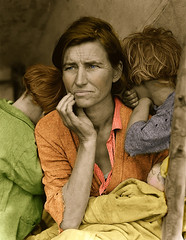
3126542175Juxtapositiona device by which a writer or speaker juxtaposes, or places two items side by side. This is done to create an ironic contrast or effect. A famous photograph from the Depression shows a long line of men waiting for bread who are standing in front of a billboard that says, "America, Land of Opportunity." The picture of men who are out of work and must rely on food hand-outs is juxtaposed with the message that America provides opportunities for all.77
3126542176Litotes (understatement)deliberately representing something as less than it is in order to create a particular effect. Canada relates an incident which begins with the claiming of a basketball and escalates into the confrontation of a man with a gun. He watches as the older boys reach for their knives and face down an opponent who has a much more powerful weapon. Later, when Geoffrey wants to talk about this incident, Mike and Junior deliberately understate the severity of what happened: '"He was an *******. Forget it."'(42). Their use of litotes or understatement is meant to teach an important lesson: you must keep your emotions under control in order to survive on the streets78
3126542177Doublespeaklanguage used to distort and manipulate rather than to communicate. "Not doing so well" instead of very sick or injured79
3126542178EllipsisThe omission of a word or words necessary for complete construction but understood in the context. "The eyes of others our prisons; their thoughts our cages."80
3126542179EthnocentricThe belief in the inherent superiority of one's own group and culture.81
3126542180Euphemismthe substitution of an inoffensive, indirect, or agreeable expression for a word or phrase perceived as socially unacceptable or unnecessarily harsh. "overweight" rather than "fat," "disadvantaged" rather than "poor"82
3126542181Jargonrefers to a specialized language providing a shorthand method of quick communication between people in the same field. The basis of assessment for Schedule D Case I and II, other than commencement and cessation, is what is termed a previous year basis. (legal jargon)83
3126542182Lending CredenceIn arguing her point, a writer or speaker should always give the opponent some credit for his / her ideas.84
3126542183Logical Fallaciesmethods of pseudo-reasoning that may occur accidentally or may be intentionally contrived to lend plausibility to an unsound argument.85
3126542184Shift or Turna change or movement in a piece resulting from an epiphany, realization, or insight gained by the speaker, a character, or the reader86
3126542185Spintwist and turn so as to give an intended interpretation"The President's spokesmen had to spin the story to make it less embarrassing"87
3126542186Parallel syntactic structuresusing the same part of speech or syntactic structure in (1) each element of a series, (2) before and after coordinating conjunctions (and, but, yet, or, for, nor), and (3) after each of a pair of correlative conjunctions (not only...but also, neither...nor, both...and, etc.). Below are examples for definitions (1) and (3):Over the hill, through the woods, and to grandmother's house we go. (3) That vegetable is both rich in vitamins and low in calories.88
3126542187Antithesisthe contrast of opposites within parallel clauses or phrases. Canada uses antithesis to point out the contrast between his innocent belief that the police would help him and his growing awareness that they didn't care about people in his neighborhood: "It was nothing they did, it was what they didn't do"(14).89

AP Literature Vocabulary Flashcards

Terms : Hide Images
4067274728BrazenBold and without shame0
4067274729CompunctionA feeling of guilt that follows doing something good1
4067274730DinA loud, unpleasant and prolonged noise2
4067274731EdictAn announcement of law3
4067274732IndiscretionA behavior or speech that lacks good judgement4
4067274733PerquisitesA perk at a job5
4067274734SepulcherA tome or room where a body is kept6
4067274735SuppliantA person making a humble plea to someone in power7
4067274736TumultLoud or confusing noise caused by a large mass of people8
4067274737MaraudingGoing about in search of things to steal or people to attack9

AP Literature Flashcards

Terms : Hide Images
7630134666CaesuraA pause in a line of verse, indicated by natural speech patterns.0
7630138004CaricatureA depiction in which a character's characteristics or features are exaggerated as to render them absurd.1
7630164763ColloquialOrdinary Language, the vernacular.2
7630164764ConceitA comparison of two unlikely things that is drawn out within a piece of literature, an extended metaphor within a poem.3
7630164765CoupletTwo rhyming lines of iambic pentameter that together present a single idea or connection.4
7630164766DactylicA metrical foot in poetry that consists of two stressed syllables followed by one unstressed.5
7630164768DenotationA direct and specific meaning, often referred to as dictionary meaning.6
7630167636Dramatic MonologueA monologue set in a specific situation and spoken to an imaginary audience.7
7630170679EnjambmentThe continuation of a sentence from one line or couplet of a poem to the next.8
7630176788PolysyndetonWhen several coordinating conjunctions are used in succession in order to achieve an artistic effect.9
7630202529AsyndetonA style in which conjunctions are omitted.10
7630206660ElegyA poetic lament upon the death of a particular person usually ending in a consolation.11
7630212913VillanelleA verse form consisting of 19 lines divided into six stanzas..... Check Packet Def.12
7630220862Blank VerseThe verse form that resembles speech, and unrhymed lines.13
7630224621Ballad StanzaA common stanza form consisting of a quatrain that alternates four-beat and three-beat lines.14
7630228989AttitudeThe sense expressed by the tone of voice or mood of the writing.15
7630231852ArchtypeRecurrent designs, patters of action, character something.16
7630237593AnapesticA metric foot in poetry that consists of two unstressed syllables followed by one stressed.17
7630242475AnecdoteA brief story or tale told by a character.18
7630245283AllegoryA poetic narrative in which the characters behavior and setting have significance.19
7630311853Rhetorical QuestionA question asked for style not for an answer.20
7630322407AnaphoraThe regular repetition of a word at the beginning of successive phrases or clauses.21
7630326926ApostropheAn address or invocation to something inanimate.22
7630329986ConsonanceThe repetition of a sequence of two or more consonants but with a change of vowels.23
7630333747ChiasmusA figure of speech by which the order of the terms in the first two parallel clauses is reversed in the second.24
7630337731OxymoronA figure of speech that combines two contradictory elements.25
7630340616SynecdocheWhen a part is used to signify a whole.26
7630345172SonnetNot doing this definition Right now sorry. (Sonnet)27
7630349240PastoralA work that describes the simple life of country folk.28
7630352470AntithesisSharply contrasting ideas in balanced or parallel words, phrases, or grammatical structure.29
7630357239IambicStressed and unstressed syllables in poetry.30
7630359619HyperboleAn overstatement by exaggerated language.31
7630361719FlashbackWhen a previous event is inserted into normal chronological events in a narrative.32

AP World History- Period 6 Flashcards

Original from MrsBHatchTEACHER

Terms : Hide Images
7434553453African National CongressSouth African political party formed in 1912; strongly opposed to apartheid0
7434553454apartheid"separateness"; a series of laws initiated by the Afrikaner National Party in South Africa which was designed to divide South African society by skin color and ethnicity; this system also reserved South Africa's resources for whites1
7434553455Ayatollah Ruholla Khomeinilived from 1900 to 1989; Religious leader of the Islamic Republic of Iran2
7434553456Vladimir Leninborn Vladimir Ilyich Ulyanov; lived from 1870 to 1924; the leader of the Russian Soviet Federative Socialist Republic and premier of the Soviet Union3
7434553457Central Powersone of the two warring factions in World War I; composed of Germany, Austria-Hungary, the Ottoman Empire and Bulgaria; also known as the Quadruple Alliance4
7434553458Charles de Gaullelived from 1890 to 1970; French general and statesman who led French forces in World War II; served as the president of France from 1959 to 19695
7434553459Che Guevaralived from 1928 to 1967; Argentine marxist revolutionary who was a major figure in the Cuban Revolution6
7434553460Chiang Kai-sheklived from 1887 to 1975; Chinese military officer who was leader of the Guomindang; fled to Taiwan after the Chinese Communist Party came to power in China7
7434553461Chinese Revolutionprolonged communist movement in China and lasted from 1946 to 1950; resulted in the communist takeover of mainland China8
7434553462Cold Wara sustained state of political and military tension between members of NATO and members of the Warsaw Pact; dissolution of the Soviet Union was the end of this "conflict"9
7434553463collectivizationSystem in which the holdings of several farmers are run as a unit; imposed by the government in the Soviet Union and later in China.10
7434553464command economyThe economic system in which decisions regarding production and investment are embodied in a plan formulated by a central authority, usually by a public body such as a government agency11
7434553465containmentthe United States policy to prevent the spread of communism abroad during the Cold War; a response to a series of moves by the Soviet Union to enlarge communist influence in Eastern Europe, China, Korea, Africa, and Vietnam12
7434553466Cuban missile crisisa 13-day confrontation in October 1962 between the Soviet Union and the United States; Soviet missiles moved to Cuban soil in an agreement by Fidel Castro and Nikita Khrushchev; U.S. responds by blockading Cuba; Khrushchev and U.S. President John F. Kennedy reach an agreement in which the Soviets would remove their missiles from Cuba in return for an American promise not to invade Cuba13
7434553467cultural imperialismthe practice of promoting or imposing one's culture on another, usually between powerful societies and less-powerful ones14
7434553468Cultural Revolutionalso known as the Great Proletarian Cultural Revolution; launched by Mao in the late 1960's; aimed to combat the capitalist tendencies he believed had penetrated even the highest ranks of the communist party itself; involved new policies to bring health care and education to the countryside and reinvigorate earlier efforts at rural industrialization under local control15
7434553469decolonizationthe process of the dissolution of colonial territories and the establishment of independent nations16
7434553470Deng Xiaopinglived from 1904 to 1997; successor to Mao Zedong; reformist who sought to incorporate The People's Republic of China into the world economy; dismantled collectivized farming, state enterprises given greater authority, welcomed foreign investment; crushed democracy movement in Beijing's Tiananmen Square17
7434553471environmentalismideology which regards the environmental concerns18
7434553472European Economic CommunityAlso known as the Common Market; founded in 1957; originally consisted of Italy, France, West Germany, Belgium, the Netherlands, and Luxembourg; expanded membership to almost all of Europe, including former communist states; renamed the European Union in 199419
7434553473Fascismpolitical ideology which was intensely nationalistic; celebrated action and placed faith in charismatic leaders; and condemned individualism, liberalism, feminism, parliamentary democracy, and communism; adopted by Italy, Germany, and Japan in the years following World War I20
7434553474Five Year Plana planned economy focused on rapid industrialization, in which a committee came together to determine rations21
7434553475Gamel Abdel Nasserlived from 1918 to 1970; second President of Egypt from 1956 to 1970; planned the overthrow of the monarchy and sought to nationalize the Suez Canal22
7434553476UN General Assemblyone of the six principal organs of the United Nations and the only one in which all member nations have equal representation; oversee the budget of the United Nations, appoint the non-permanent members to the Security Council, receive reports from other parts of the United Nations and make recommendations in the form of General Assembly Resolutions23
7434553477genocidethe systematic destruction of all or part of a racial, ethnic, religious or national group24
7434553478Great Depressioneconomic depression as a result of the crash of the American stock market; lasted from 1929 until World War II; causes drop in world trade, loss of investment, and businesses unable to make profit; countries or colonies tied to exporting one or two products hardhit as the West consumed less; conditions resulting in the Great Depression led to widespread unemployment and social tensions25
7434553479Great Leap Forwardlasted from 1958 to 1960; marked Mao's response to distortions of Chinese socialism; promoted smallscale industrialization in rural areas; tried to foster widespread and practical technological education for all rather than relying on a small elite of highly trained technical experts; envisioned an immediate transition to full communism in the "people's communes" rather than waiting for industrial development to provide the material basis for that transition; massive famine which followed temporarily discredited Mao's radicalism26
7434553480Great Purgesalso known as the Terror; period of immense paranoia in the Soviet Union of the late 1930's in which communist members accused each other being corrupted by capitalist ideals; enveloped tens of thousands of prominent communists, including all of Lenin's top associates, and millions more of ordinary peoples; based on suspicious associations in the past, denunciations by colleagues, connections to foreign countries, or bad luck; such people were arrested in the middle of the night, then tried and sentenced to either death or long harsh years in remote labor camps known as gulags; close to 1 million peoples executed between 1936 and 1941; additional 4 to 5 million people sent to the gulag, where they were forced to work in horrendous conditions and died in appalling numbers27
7434553481Green Revolutiona series of research, and development, and technology transfer initiatives, occurring between the 1940s and the late 1960s, that increased agriculture production worldwide, particularly in the developing world28
7434553482Adolf Hitlerlived from 1889 to 1945; leader of the Nazi party in Germany; chancellor of Germany from 1933 to 1945; dictator of Nazi Germany from 1934 to 194529
7434553483Ho Chi Minhlived from 1890 to 1969; Vietnamese communist revolutionary leader; was prime minister (from 1945 to 1955) and president (from 1945 to 1969) of the Democratic Republic of Vietnam30
7434553484Holocaustthe mass murder of approximately six million Jews during World War II; a program of systematic state-sponsored murder by Nazi Germany; led by Adolf Hitler and the Nazi Party31
7434553485International Monetary FundIMF; established in 1944 by the Bretton Woods Conference in New Hampshire; sought to promote market economies, free trade, and high growth rates32
7434553486Indian National CongressINC; organization established in 1885; gave expression to the idea of India as a single nation; played a major role in India's independence movement from British colonial rule33
7434553487Iranian Cultural Revolutionlasted from 1980 to 198; a period following the Iranian Revolution where intellectuals of Iran were purged of Western and non-Islamic influences to bring it in line with Shia Islam; closed universities between 1980 and 1983, banned many books, and purged thousands of students and lecturers from schools34
7434553488iron curtainthe heavily fortified border between Eastern and Western Europe35
7434553489Islamic renewalalso referred to as Islamic revival; refers to a renewing of the Islamic religion throughout the Islamic world, that began roughly sometime in 1970s; sought greater religious piety and a growing adoption of Islamic culture36
7434553490Jawaharlal Nehrulived from 1889 to 1964; first Prime Minister of India and was a leading figure in the independence movement against British rule over India37
7434553491League of Arab Statesa regional organization of Arab countries in and around North Africa, the Horn of Africa, and Southwest Asia; formed in Cairo in 1945 with six members: Egypt, Iraq, Transjordan (Jordan), Lebanon, Saudi Arabia and Syria; currently has 22 members38
7434553492League of Nationsinternational peacekeeping organization founded as a result of the First World World; proposed by US president Woodrow Wilson; committed to the principle of "collective security" and intended to avoid the repetition of war39
7434553493Mahatma Gandhilived from 1869 to 1948; leader of the Indian nationalist movement during British control over India; used nonviolent civil disobedience, such as hunger strikes40
7434553494Mao Zedonglived from 1893 to 1976; Chinese communist revolutionary and leader of the People's Republic of China from its establishment 1949 to his death in 197641
7434553495Marshall Planplan which sought to rebuild and reshape devastated European economies; funneled Europe some $12 billion with numerous advisers and technicians; motivated by combination of humanitarian concern, a desire to prevent a new depression by creating overseas customers for American goods, and interest in undermining the growing appeal of European communist parties; required European nations to cooperate with one another42
7434553496Mikhail Gorbachevborn in 1931; last general secretary of the Soviet Union (1985 to 1991); passed reforms such as perestroika and policies such as glasnost which led to the dissolution of the Soviet Union43
7434553497military-industrial complexthe policy and monetary relationships which exist between legislators, national armed forces, and the military industrial base that supports them; include political contributions, political approval for military spending, lobbying to support bureaucracies, and oversight of the industry; most often used in reference to the system behind the military of the United States44
7434553498Muhammad Ali Jinnahlived from 1876 to 1948; founder of Pakistan and the leader of the All-India Muslim League until Pakistan's independence45
7434553499Munich Conferencea conference in Munich which permitted Nazi Germany's annexation of portions of Czechoslovakia along German borders mainly inhabited by German speakers; territory now known as "Sudetenland"; widely regarded as a failed act of appeasement toward Germany; agreement was signed in the early hours of 30 September 1938; agreement was signed by Germany, France, the United Kingdom, and Italy; Czechoslovakia not invited to the conference46
7434553500Benito Mussolinilived from 1883 to 1945; leader of the Italian National Fascist Party; prime minister of Italy from 1922 to 194347
7434553501Mustafa Kemal Ataturklived from 1881 to 1938; founder and the first President of the Republic of Turkey; passed a series of reforms to transform the former Ottoman Empire into a modern, secular, and democratic nation48
7434553502North American Free Trade AgreementNAFTA; regional alliance founded in 1993 and consists of Canada, Mexico, and the United States; the world's second largest free-trade zone49
7434553503North Atlantic Treaty OrganizationNATO; a military alliance based on the North Atlantic Treaty which was signed in 1949; alliance in which its member states agree to mutual defense in response to an attack by any external party; consists of 28 member states across North America and Europe50
7434553504Nazi Germanya.k.a the Third Reich; lasted from 1933 to 1945; Germany under the leadership of Adolf Hitler and the Nazi Party51
7434553505Nelson Mandelalived from 1918 to 2013; South African anti-apartheid revolutionary and politician; President of South Africa from 1994 to 1999; served as President of the African National Congress from 1991 to 199752
7434553506New Deala series of reforms proposed by United States President Woodrow Wilson; lasted from 1933 to 1942; experimental combination of reforms seeking to restart economic growth and prevent similar failures in the future; reflected the thinking of British economist John Maynard Keynes; argued that government actions and spending programs could moderate recessions and depressions; consisted of immediate programs of public spending (for dams, highways, bridges, and parks) and long-term reforms, such as the Social Security system, minimum wage, and various relief and welfare programs53
7434553507non-governmental organizationNGO; an organization that is neither a part of a government nor a conventional for-profit business54
7434553508Nikita Khrushchevlived from 1894 to 1971; leader of the Soviet Union from 1953 to 1964; responsible for the de-Stalinization of the Soviet Union and backing of the Soviet space program55
7434553509Osama bin Ladenlived from 1957 to 2011; Islamic militant who was the leader of the terrorist group al-Qaeda; mastermind behind the 9/11 attacks; played a key role in the US-backed effort to aid mujahideen who fought Soviet forces in Afghanistan56
7434553510al-Qaeda"the base"; terrorist organization formerly headed by Osama bin Laden; behind the 9/11 attacks57
7434553511Palestinian Liberation OrganizationPLO; an organization founded in 1964 with the purpose of creating an independent State of Palestine58
7434553512Pan-Arabisman ideology proposing the unification of the countries of North Africa and West Asia from the Atlantic Ocean to the Arabian Sea, referred to as the Arab World59
7434553513Pan-Africanisman ideology which encourages the unity of Africans worldwide60
7434553514HIV/AIDS epidemicepidemic which was first discovered in 1981 among homosexual men and intravenous drug users in New York and San Francisco; eventually became widespread around the world, particularly sub-Saharan Africa; virus attacks and destroys the immune system, which causes a fatal disorder in the immune system; spread through sexual contact with an infected person, contact with contaminated blood, and transmission from mother to child during pregnancy and breastfeeding61
7434553515ebola epidemican epidemic caused by the Ebola virus; symptoms include fever, throat and muscle pains, headaches, nausea, vomiting and diarrhea, and decreased functioning of the liver and kidneys; an 2014 outbreak in West Africa has led to a reported 142 deaths62
7434553516influenza epidemican epidemic caused by the H1N1 influenza virus; lasted from 1918 to 1920; resulted in 50 to 100 million deaths, ranking it one of the most deadliest natural disasters in human history63
7434553517perestroikaan economic program launched by Soviet leader Mikhail Gorbachev which freed state enterprises from government regulation, permitted small-scale private businesses, offered opportunities for private farming, and welcomed foreign investment in joint enterprises64
7434553518glasnosta Soviet policy established by Mikhail Gorbachev which permitted cultural and intellectual freedoms65
7434553519post-modernisma late 20th Century movement in the arts, architecture, and criticism; includes skeptical interpretations of culture, literature, art, philosophy, history, economics, architecture, fiction, and literary criticism66
7434553520Potsdam Conferencea conference which was held from July 17 to August 2, 1945; participants include the Soviet Union, the United Kingdom, and the United States; gathered to decide how to punish Nazi Germany, sought to establish a post-war order, address peace treaty issues, and counter the effects of World War II67
74345535211917 Russian Revolutiona collective term for the series of revolutions in 1917 which ousted Tsar Nicholas II and the tsarist autocracy and replaced it with the communist Bolshiveks68
7434553522second-wave feminisma period of feminist activity that first began in the United States in the early 1960s and eventually spread throughout the Western world; later became a worldwide movement that was strong in Europe and parts of Asia, such as Turkey and Israel; focused on sexuality, family, the workplace, reproductive rights, and various legal and de facto inequalities69
7434553523UN Security Councilone of the six principal organs of the United Nations; in charge of the maintenance of international peace and security; this body is able to establish peacekeeping operations, establish international sanctions, and authorize military action through resolutions; the only UN body with the authority to issue binding resolutions to member states70
7434553524space racelasted from 1955 to 1972; a competition between the Soviet Union and the United States for supremacy in spaceflight capability; pioneered advancements such as artificial satellites, as well as manned and unmanned missions into outer space71
7434553525sphere of influencea concept in which a state or organization has a level of cultural, economic, military, or political exclusivity, accommodating to the interests of powers outside the sphere; examples include European "semi-colony" of China72
7434553526Joseph Stalinlived from 1878 to 1953; the leader of the Soviet Union from 1922 to 1952; implemented a highly centralized command economy, which resulted in the transformation of Russian society from agrarian to industrialized; imprisoned millions in labor camps and deported many to remote areas; issued the Great Purges, in which hundreds of thousands, including many prominent communists, were executed73
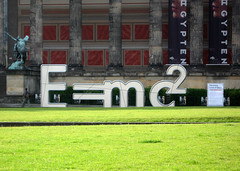
7434553527theory of relativitytheory which is composed of special relativity and general relativity; proposed by Albert Einstein; proposes that measurements of various quantities are relative to the velocities of observers, space and time should be considered together and in relation to each other (Spacetime), and the speed of light is constant74
7434553528Third Worldterm which describes the countries that did not align with the Soviet Union or the United States75
7434553529total warwar which requires the mobilization of each country's entire populations76
7434553530transnational corporationsa.k.a multi-national corporation; an organization that owns or controls production or services facilities in one or more countries other than its home country77
7434553531Treaty of Versaillestreaty which formally concluded the World War I in 1919; established the conditions for a World War II; Germany losses colonial empire and 15% of its European territory, required to pay heavy reparations to the winners, had its military forces severely restricted, and had to accept sole responsibility for the war; immense German resentment created from the treaty78
7434553532trench warfaretype of warfare using occupied fighting lines consisting largely of trenches, in which troops are significantly protected from the enemy's small arms fire and are substantially sheltered from artillery; resulted in enormous casualties while gaining or losing a few yards of ground during World War I79
7434553533Truman Doctrinean international relations policy set by the U.S. President Harry Truman in a speech on March 12, 1947; stated that the U.S. would support Greece and Turkey with economic and military aid to prevent them from falling into the Soviet sphere; often referred to as the beginning of the US policy of containment80
7434553534United Nationsorganization established in 1945 as a successor to the League of Nations; attempts to find solutions to global problems and deal with virtually any matter of concern to humanity81
7434553535Vietnam Warwar which occurred in Vietnam, Laos, and Cambodia from 1956 to 1975; U.S. entered the war to prevent South Vietnam from becoming communist, as a result of its containment policy; Soviet Union backed Northern Vietnamese forces in an attempt to spread communism to Southeast Asia; resulted in the unification of Vietnam under a communist government and the spread of communism to Cambodia and Laos82
7434553536Weimar Republicthe federal republic and semi-presidential representative democracy established in 1919 in Germany to replace the imperial form of government after World War I; lasted until the Nazi Party rose to power in 1933; faced numerous problems, including hyperinflation, political extremists and continuing contentious relationships with the victors of World War I83
7434553537Winston Churchilllived from 1874 to 1965; British politician; Prime Minister of the United Kingdom from 1940 to 1945 and from 1951 to 195584
7434553538weapon of mass destructionWMD; a weapon which has the capability to kill large numbers of people and decimate large swaths of land85
7434553539Woodrow Wilsonlived from 1856 to 1924; 28th President of the United States (1913-1921); leader of the Progressive Movement; famous for his Fourteen Points, which sought to avoid another worldwide conflict86
7434553540Fourteen Pointsa statement given on January 8, 1918 by United States President Woodrow Wilson declaring that World War I was being fought for a moral cause and called for postwar peace in Europe87
7434553541World Banka United Nations international financial institution that provides loans to developing countries for capital programs; its primary goal is to reduce poverty88
7434553542World War Iwar which lasted from 1914 to 1918; also known as the Great War; pitted the Allies (United Kingdom, France, Russia, Italy, Japan, and the United States) and the Central Powers (Germany, Austria-Hungary, the Ottoman Empire, and Bulgaria); resulted in an Allied victory and Treaty of Versailles, which set the stage for another world war89
7434553543World War IIwar which lasted from 1939 to 1945; pitted the Allied Powers (Soviet Union, United Kingdom, United States, China and France) against the Axis Powers (Germany, Japan, and Italy); resulted in an Allied victory, the creation of the United Nations, and set the stage for the Cold War90
7434553544World Trade OrganizationWTO; established in 1994 by the 123 members of GATT; took over GATT activities in 1995; developed into a forum for settling international trade disputes91
7434553545Yalta Conferenceconference which lasted from February 4 to February 11, 1945; meeting attended by President Franklin D. Roosevelt, Prime Minister Winston Churchill and Premier Joseph Stalin for the purpose of discussing Europe's post-war reorganization; convened in the Livadia Palace near Yalta in Crimea92
7434553546Zionist Movementthe national movement of Jews and Jewish culture that supports the creation of a Jewish homeland in the territory defined as the Land of Israel93
7434553547Brazilian SolutionCombination of dictatorship, violent repression, and gov't promotion of industrialization in South American countries94
7434553548Universal Declaration of Human RightsA 1946 United Nations covenant binding signatory nations to the observance of specified rights.95
7434553549nongovernmental organizationsOrganizations that are not established or associated with any specific organizations. They may be recognized, however, they run on their own. Examples are Green Peace and Amnesty International.96
7434553550Tiananmen SquareSite in Beijing where Chinese students and workers gathered to demand greater political openness in 1989. The demonstration was crushed by Chinese military with great loss of life.97
7434553551keiretsuJapanese business groups after the post-WWII dismantling of the zaibatsu. They are Alliances of corporations each often centered around a bank. They dominate the post-WWII Japanese economy.98
7434553552Salvador AllendeThe first Marxist politician elected president in the Americas. He was elected president of Chile in 1970 and overthrown by a US-backed military coup in 1973.99
7434553553NATOAn international organization created in 1949 by the North Atlantic Treaty for purposes of collective security.100
7434553554Warsaw PactAn alliance between the Soviet Union and other Eastern European nations. This was in response to the NATO101

AP World History chapter 23 Flashcards

Terms for ch 23 from World Civilizations: The Global Experience.
SHS AP World History
Taught by Mrs Cowan

Terms : Hide Images
6409721108age of revolutionPeriod of politcal upheaval beginning roughly with the American Revolution in 1775 and continuing through the French Revolution of 1789 and other movements for change up to 18480
6409721109population revolutionHuge growth in population in Western Europe beginning about 1730; prelude to Industrial Revolution; population of France increased 50 percent, England and Prussia 100 percent.1
6409721110proto-industrializationPreliminary shift away from agricultural economy in Europe; workers become full- or part-time producers of textile and metal products, working at home but in a capitalist system in which materials, work orders, and ultimate sales depended on urban merchants; prelude to Industrial Revolution.2
6409721111American RevolutionRebellion of English American colonies along Atlantic seaboard between 1775 and 1783; resulted in independence for former British colonies and eventual formation of United States of America3
6409721112French RevolutionRevolution in France between 1789 and 1800; resulted in overthrow of Bourbon monarchy and old regimes; ended with establishment of French Empire under Napoleon Bonaparte; source of many liberal movements and constitutions in Europe4
6409721113Louis XVIBourbon ruler of France who was executed during the radical phase of the French Revolution.5
6409721114Declaration of the Rights of Man and the CitizenAdopted during the liberal phase of the French Revolution (1789); stated the fundamental equality of all French citizens; later became a political source for other liberal movements.6
6409721115guillotineIntroduced as a method of humane execution; utilized to execute thousands during the most radical phase of the French Revolution known as the Reign of Terror.7
6409721116nationalismPolitical viewpoint with origins in Western Europe; often allied with other "isms"; urged importance of national unity; valued a collective identity based on culture, race, or ethnic origin.8
6409721117Napoleon BonaparteRose within the French army during the wars of the French Revolution; eventually became general; led a coup that ended the French Revolution; established French Empire under his rule; defeated and deposed in 1815 at Waterloo.9
6409721118Congress of ViennaMeeting in the aftermath of Napoleonic Wars (1815) to restore political stability in Europe and settle diplomatic disputes.10
6409721119conservativePolitical viewpoint with origins in western Europe during the 19th century; opposed revolutionary goals; advocated restoration of monarchy and defense of church.11
6409721120liberalPolitical viewpoint with origins in western Europe during the 19th century; stressed limited state interference in individual life, representation of propertied people in government; urged importance of constitutional rule and parliaments.12
6409721121radicalPolitical viewpoint with origins in western Europe during the 19th century; advocated broader voting rights than liberals; in some cases advocated outright democracy; urged reforms in favor of lower classes.13
6409721122Greek RevolutionRebellion in Greece against the Ottoman Empire in 1820; key step in gradually dismantling the Ottoman Empire in the Balkans.14
6409721123Reform Bill of 1832Legislation passed in Great Britain that extended the vote to most members of the middle class; failed to produce democracy in Britain.15
6409721124Chartist movementAttempt by artisans and workers in Britain to gain the vote during the 1840s; demands for reform beyond the Reform Act of 1832 were incorporated into a series of petitions; movement failed.16
6409721125Louis PasteurFrench scientist who discovered the relationship between germs and disease in 19th century, leading to better sanitation.17
6409721126American Civil WarFought from 1861 to 1865; first application of Industrial Revolution to warfare; resulted in abolition of slavery in the United States and reunification of North and South.18
6409721127trasformismoPolitical system in late 19th-century Italy that promoted alliance of conservatives and liberals; parliamentary deputies of all parties supported the status quo.19
6409721128socialismPolitical movement with origins in Western Europe during the 19th century; urged an attack on private property in the name of equality; wanted state control of means of production, end to capitalist exploitation of the working man.20
6409721129Karl MarxGerman socialist of the mid-19th century; blasted earlier socialist movements as utopian; saw history as defined by class struggle between groups out of power and those controlling the means of production; preached necessity of social revolution to create proletarian dictatorship.21
6409721130revisionismSocialist movements that at least tacitly disavowed Marxist revolutionary doctrine; believed social success could be achieved gradually through political institutions.22
6409721131feminist movementsSought various legal and economic gains for women, including equal access to professions and higher education; came to concentrate on right to vote; won support particularly from middle-class women; active in Western Europe at the end of the 19th century; revived in light of other issues in the 1960s.23
6409721132leisure cultureAn aspect of the later Industrial Revolution; based on newspapers, music halls, popular theater, vacation trips, and team sports.24
6409721133Charles DarwinBiologist who developed theory of evolution of species (1859); argued that all living species evolved into their present form through the ability to adapt in a struggle for survival.25
6409721134Albert EinsteinDeveloped mathematical theories to explain the behavior of planetary motion and the movement of electrical particles; after 1900 issued theory of relativity.26
6409721135Sigmund Freud(1856-1939) Viennese physician; developed theories of the workings of the human subconscious; argued that behavior is determined by impulses.27
6409721136romanticismArtistic and literary movement of the 19th century in Europe; held that emotion and impression, not reason, were the keys to the mysteries of human experience and nature; sought to portray passions, not calm reflection.28
6409721137Triple AllianceAlliance among Germany, Austria-Hungary, and Italy at the end of the 19th century; part of European alliance system and balance of power prior to World War I.29
6409721138Triple EntenteAn alliance between Great Britain, France and Russia at the outset of the 20th century; part of European alliance system and balance of power prior to World War I.30
6409721139Balkan nationalismMovements to create independent nations within the Balkan possessions of the Ottoman Empire; provoked a series of crises within the European alliance system; eventually led to World War I.31
6409721140French Revolution of 1830Second rebellion against Bourbon monarchy; essentially a liberal movement resulting in the creation of a bourgeois government under a moderate monarchy.32
6409721141Belgian Revolution of 1830Produced Belgian independence from the Dutch; established a liberal constitutional monarchy.33
6409721142Steam EngineA machine that turns the energy released by burning fuel into motion. Thomas Newcomen built the first crude but workable steam engine in 1712. James Watt vastly improved his device in the 1760s and 1770s. Steam power was then applied to machinery.34
6409721143Factory systemA system of manufacturing in which all the materials, machinery, and workers required to manufacture a product are assembled in one place.35
6409721144LudditesAny of a group of British workers who between 1811 and 1816 rioted and destroyed laborsaving textile machinery in the belief that such machinery would diminish employment.36
6409721145French Revolution of 1848Overthrew the monarchy established in 1830; briefly established a democratic republic; failure of the republic led to the reestablishment of the French Empire under Napoleon III in 1850.37
6409721146Revolutions of 1848Democratic and nationalist revolutions that swept across Europe. The monarchy in France was overthrown. In Germany, Austria, Italy, and Hungary the revolutions failed.38
6409721147Benjamin DisraeliA British politician who extended the vote to the rich middle class in order to broaden the political base of the conservative party.39
6409721148Count Camilo di Cavour(August 10, 1810 - June 6, 1861) was a leading figure in the movement toward Italian unification.40
6409721149Otto von BismarckChancellor of Prussia from 1862 until 1871, when he became chancellor of Germany. A conservative nationalist, he led Prussia to victory against Austria (1866) and France (1870) and was responsible for the creation of the German Empire.41
6409721150Industrial RevolutionBegan about 1760 in England and later in other countries, characterized chiefly by the replacement of hand tools with power-driven machines, as the power loom and the steam engine, and by the concentration of industry in large establishments.42
6409721151Imperialismthe policy of extending the rule or authority of an empire or nation over foreign countries, or of acquiring and holding colonies and dependencies.43

AP Language Terms Flashcards

Terms : Hide Images
7259805110Paradoxa phrase or assertion that contradicts itself (ex: fresh rot, blissful hell, etc.)0
7259805111ParallelismRepeated structural elements in a sentence. (ex: She sang; she swam; she ran.)1
7259805507PersonificationGiving human characteristics to nonhuman object or idea. (ex:The sun was shining happily today.)2
7259805508SarcasmMockingly stating the opposite of what you mean. (ex:Thanks Captain obvious!) not actually thanking someone.3
7259806096SatireGenre of humorous and mocking criticism to expose the ignorance and/or ills of society. (ex: Stephen Colbert is a popular;ar modern satirist)4
7259806584SynecdocheReferring to one part of something as a way to refer to a whole. (ex: Ask of hand, the hand stands for the whole woman)5
7259806585UnderstatementPurposely minimizing something, usually for humorous effect.(ex:My Mom's a boy irritated I crashed the car--I'm grounded for the next 24 months)6
7259807144ToneUse of stylistic devices to reveal their attitude on a subject.7
7259807145VoiceAn author's unique sound. Similar to style.(ex:Think of the way you can recognize a pop singer on the radio without hearing who it is first.)8
7259966909AlliterationUsing words with the same first letter repeatedly close together in a phrase or sentence.(ex;She purchased the pretty purple parka)9
7259966910AllusionMaking a brief reference to the cultural canon--the Bible, Shakespeare, mythology, etc. (ex:Like Eve in the garden of Eden, George was not good at resisting temptation.)10
7259966911AnecdoteOffering a brief narrative episode.Introducing an issue, serving as evidence, to illustrate a point, and so on.(ex:When I went to my morning coffee, I ran into an old friend. He told me he had won the lottery and he was about to buy a yacht. Two months later I heard he had decreed bankruptcy.)11
7259967328ConcessionAgreeing with the opposing viewpoint on a certain smaller point.But not a larger argument(ex:While I understand that hybrid cars have higher carbon production costs than conventional automobiles, this is dramatically offset by the much smaller lifetime carbon footprint the vehicles.)12
7259967329DidacticA text with instructive purpose, often moral.(ex:Aesop's fables for example)13
7259967868Euphemismreferring to something with a veiled phrase instead of saying it directly.(ex:She let Bob go, is a euphemism for She fired Bob.)14
7259967872ExemplificationProviding examples in service of a point.(ex:The town beautification funds are being sorely misused. The streets are full of litter and the parks are full of broken equipment.)15
7259968343HyperboleOverstating a situation for humorous or dramatic effect. (ex:My backpack weighs tons!)16
7259968344IdiomA commonly used phrase that signifies something very different that it's literal meaning.(ex:This costs an arm and a leg! Is an idiom for this is expensive)17
7259970340OnomatopoeiaUsing sound-effect words.(ex:We heard an ominous hiss from the kitchen=hiss)18
7262262070AnalogyExplaining something complex by comparing it to something more simple. (ex:An amateur playing in a professional game is like an ibex stepping into a lion's den.)19
7262262071ArgumentThe combination of reasons, evidence, etc that an author uses to convince an audience of their position.(ex: every phrase serves to build the argument.)20
7262262072Aristotelian AppealsThree different methods of appealing to an audience to convince them--pathos, logos, ethos)21
7262264417AttitudeThe writer's personal views or feelings about the subject at hand.(ex: "the deplorable state of this school" implies the author has a negative attitude toward the school.)22
7262264418AudienceWho the author is directing his or her message towards. (ex:When you create a resume, your audience is potential employers)23
7262264419ConnotationThe implied meaning of a word; words can broadly have positive, negative, or neutral connotations.(Conscientious= positive, Fussy= negative)24
7262269614ContextThe extra-textual environment in which the text is being delivered. (ex:If I'm delivering a congratulatory speech to awards recipients, the immediate context might be the awards presentation ceremony; the broader context might be the purpose of significance of the awards themselves.)25
7262282443CounterargumentThe argument(s) against against the authors position. (ex:Counterargument for the dress code is that students now have to buy new clothes)26
7262284712Deductive ReasoningA form of logical reasoning wherein a general principle is applied to a specific case.(ex:If all the planets orbit a star, and Theta II is a planet, then it must orbit a star.)27
7262284713DenotationThe literal dictionary-definition meaning if a word.(ex:the denotation of a chair is a placed so sit028
7262284714DictionThe style of language used; generally tailored to be appropriate to the audience and situation. (ex: What's up loser might be the appropriate How are you doing today? to your brother)29
7262285589EthosSetting up a source as credible and trustworthy.(ex:Given my PhD and experience in the field- might appeal with ethos)30
7262286239EvidenceThe information presented meant to persuade the audience of the author's position. (ex: Saying that someone is a good student you would use their straight A report card as evidence.)31
7262287108Figurative LanguageThe use of language in a non-literal way, metaphor/simile/etc.(ex:Her eyes are like diamonds)32
7262287109Genrethe specific type of work being presented.(ex: Haiku, fiction, biography, etc)33
7262288739ImageryAny descriptive language used to evoke a vivid sense of image of something: includes figurative language)34
7262288740ImplicationWhen something a suggested without being concretely stated.(ex:Watch your wallet around Paul-implies Paul is a thief without saying it)35
7262289550Inductive ReasoningMaking a generalization based on specific reasoning at hand.(ex: All the planets in the solar system orbit a star, so all planets probably orbit stars)36
7262292014IronySaying the opposite of what you mean or something dramatically than intended. (ex: I do so hope there are more papers to sign- might be something ironically said)37
7262292748JuxtapositionPlaces two different things together for effect.(ex:There they stood together, the beggars and the lords, the princess and the washwoman, all crowding into the square.)38
7262292749LogosAppealing to someones concrete facts and logic.(ex:Citing peer-reviewed scientific studies is an appeal to logos.)39
7262293799OccassionThe reason or moment for writing or speaking.(When giving a graduation speech, the occasion is graduation.)40
7262293800OrganizationHow the different parts of an argument are arranged in a piece of writing or speech. (ex: think the about the outline for an essay)41
7262294702PathosAn Aristotelian appeal. Involves appealing to someone's emotions.(ex:Animal shelter ads appeal to pathos)42
7262294703PurposeThe authors persuasive intention.(ex:the purpose of a persuasive essay might be to let your parents get you a car)43
7262295680RepetitionRe-usinga word or phrase repeatedly for effect or emphasis.(ex:We run, and run, and we run, like rats on a wheel.)44
7262295681RhetoricThe use of spoken or written word(or a visual medium) to convey your ideas and convince an audience. (ex: Almost everything is an example of rhetoric!)45
7262296667Rhetorical TriangleThe relationship between the author, the audience, the text/message, and the context. (ex:The author author communicates to the reader via the text; and the reader and text are surrounded by context.)46
7262299432SpeakerThe persona adopted by the author to deliver his or her message; may or may not actually be the same person as the author.(ex: similar to the difference between author and the narrator in a work of fiction)47
7262299433StyleThe author's own personal approach to rhetoric in the piece; similar to voice.(ex:something like a songwriters style)48
7262299434SymbolismUsing a symbol to refer to an idea or concept.(ex:fire being used as anger or passion)49
7262300315SyntaxThe way sentences are grammatically constructed.(There's simple and complicated)50
7262300316SynthesisCombining sources or ideas in a coherent way in the purpose of a larger point.(ex:A research paper synthesizes sources to make a broader point about the topic)51
7262301136ThemesOverarching ideas or driving premises of a work.(ex:Themes you might hear in a high school graduation speech might include legacy, moving forward, becoming an adult, and changing the world.)52

Pages

Subscribe to CourseNotes RSS

Need Help?

We hope your visit has been a productive one. If you're having any problems, or would like to give some feedback, we'd love to hear from you.

For general help, questions, and suggestions, try our dedicated support forums.

If you need to contact the Course-Notes.Org web experience team, please use our contact form.

Need Notes?

While we strive to provide the most comprehensive notes for as many high school textbooks as possible, there are certainly going to be some that we miss. Drop us a note and let us know which textbooks you need. Be sure to include which edition of the textbook you are using! If we see enough demand, we'll do whatever we can to get those notes up on the site for you!