AP Notes, Outlines, Study Guides, Vocabulary, Practice Exams and more!

AP Language and Composition Terms Flashcards

Adapted from V. Stevenson, Patrick Henry High School, and Abrams' Glossary of Literary Terms

Terms : Hide Images
5323333104allegoryThe device of using character and/or story elements symbolically to represent an abstraction in addition to the literal meaning. In some allegories, for example, an author may intend the characters to personify an abstraction like hope or freedom. The allegorical meaning usually deals with moral truth or a generalization about human existence.0
5323333107alliteration.The repetition of sounds, especially initial consonant sounds in two or more neighboring words (as in "she sells seashells"). Although the term is not frequently in the multiple choice section, you can look for alliteration in any essay passage. The repetition can reinforce meaning, unify ideas, supply a musical sound, and/or echo the sense of the passage.1
5323333110allusionA direct or indirect reference to something which is presumably commonly known, such as an event, book, myth, place, or work of art. Allusions can be historical, literary, religious, topical, or mythical. There are many more possibilities, and/or work of art. Allusions can be historical, literary, religious, topical, or mythical. There are many more possibilities, and a work may simultaneously use multiple layers of allusion.2
5323333113ambiguityThe multiple meanings, either intentional or unintentional, of a word, phrase, sentence, or passage.3
5323333114analogyA similarity or comparison between two different things or the relationship between them. An analogy can explain something unfamiliar by associating it with or pointing out its similarity to something more familiar. Analogies can also make writing more vivid, imaginative, or intellectually engaging.4
5323333117antecedentThe word, phrase, or clause referred to by a pronoun. The AP language exam occasionally asks for the antecedent of a given pronoun in a long, complex sentence or in a group of sentences. A question from the 2001 AP test as an example follows: "But it is the grandeur of all truth which can occupy a very high place in human interests that it is never absolutely novel to the meanest of minds; it exists eternally, by way of germ of latent principle, in the lowest as in the highest, needing to be developed but never to be planted." The antecedent of "it" (bolded) is...? [answer: "all truth"]5
5323333122antithesisThe opposition or contrast of ideas; the direct opposite.6
5323333123aphorismA terse statement of known authorship which expresses a general truth or a moral principle. (If the authorship is unknown, the statement is generally considered to be a folk proverb.) An aphorism can be a memorable summation of the author's point.7
5323333126apostropheA figure of speech that directly addresses an absent or imaginary person or a personified abstraction, such as liberty or love. It is an address to someone or something that cannot answer. The effect may add familiarity or emotional intensity. William Wordsworth addresses John Milton as he writes, "Milton, thou shouldst be living at this hour: /England hath need of thee." Another example is Keats' "Ode to a Grecian Urn," in which Keats addresses the urn itself: "Thou still unravished bride of quietness." Many apostrophes imply a personification of the object addressed.8
5323333129atmosphereThe emotional nod created by the entirety of a literary work, established partly by the setting and partly by the author's choice of objects that are described. Even such elements as a description of the weather can contribute to the atmosphere. Frequently atmosphere foreshadows events. Perhaps it can create a mood.9
5323333132caricatureA verbal description, the purpose of which is to exaggerate or distort, for comic effect, a person's distinctive physical features or other characteristics10
5323333134clauseA grammatical unit that contains both a subject and a verb. An independent, or main, clause expresses a complete thought and can stand alone as a sentence. A dependent, or subordinate clause, cannot stand alone as a sentence and must be accompanied by an independent clause. The point that you want to consider is the question of what or why the author subordinates one element should also become aware of making effective use of subordination in your own writing.11
5323333138colloquial/colloquialismThe use of slang or informalities in speech or writing. Not generally acceptable for formal writing, colloquialisms give a work a conversational, familiar tone. Colloquial expressions in writing include local or regional dialects.12
5323333141conceitA fanciful expression, usually in the form of an extended metaphor or surprising analogy between seemingly dissimilar objects. A conceit displays intellectual cleverness as a result of the unusual comparison being made.13
5323333144connotationThe non-literal, associative meaning of a word; the implied, suggested meaning. Connotations may involve ideas, emotions, or attitudes.14
5323333146denotationThe strict, literal, dictionary definition of a word, devoid of any emotion, attitude, or color. (Example: the denotation of a knife would be a utensil used to cut; the connotation of a knife might be fear, violence, anger, foreboding, etc.)15
5323333148dictionRelated to style, diction refers to the writer's word choices, especially with regard to their correctness, clearness, or effectiveness. For the AP exam, you should be able to describe an author's diction (for example, formal or informal, ornate or plain) and understand the ways in which diction can complement the author's purpose. Diction, combined with syntax, figurative language, literary devices, etc., creates an author's style.16
5323333152didacticFrom the Greek, didactic literally means "teaching." Didactic words have the primary aim of teaching or instructing, especially the teaching of moral or ethical principles.17
5323333154euphemismFrom the Greek for "good speech," euphemisms are a more agreeable or less offensive substitute for a generally unpleasant word or concept. The euphemism may be used to adhere to standards of social or political correctness or to add humor or ironic understatement. Saying "earthly remains" rather than "corpse" is an example of euphemism. (Similar to a malapropism.)18
5323333157extended metaphorA metaphor developed at great length, occurring frequently in or throughout a work.19
5323333158figurative languageWriting or speech that is not intended to carry literal meaning and is usually meant to be imaginative and vivid.20
5323333160figure of speechA device used to produce figurative language. Many compare dissimilar things. Figures of speech include apostrophe, hyperbole, irony, metaphor, oxymoron, paradox, personification, simile, synecdoche, and understatement.21
5323333162generic conventionsThis term describes traditions for each genre. These conventions help to define each genre; for example, they differentiate an essay and journalistic writing or an autobiography and political writing. On the AP language exam, try to distinguish the unique features of a writer's work from those dictated by convention.22
5323333165genreThe major category into which a literary work fits. The basic divisions of literature are prose, poetry, and drama. However, genre is a flexible term; within these broad boundaries exist many subdivisions that are often called genres themselves. For example, prose can be divided into fiction (novels and short stories) or nonfiction (essays, biographies, autobiographies, etc.). Poetry can be divided into lyric, dramatic, narrative, epic, etc. Drama can be divided into tragedy, comedy, melodrama, farce, etc. On the AP language exam, expect the majority of the passages to be from the following genres: autobiography, biography, diaries, criticism, essays, and journalistic, political, scientific, and nature writing. There may be fiction or poetry.23
5323333172homilyThis term literally means "sermon," but more informally, it can include any serious talk, speech, or lecture involving moral or spiritual advice.24
5323333174hyperboleA figure of speech using deliberate exaggeration or overstatement. (The literal Greek meaning is "overshoot.") Hyperboles often have a comic effect; however, a serious effect is also possible. Often, hyperbole produces irony. The opposite of hyperbole is understatement.25
5323333177imageryThe sensory details or figurative language used to describe, arouse emotion, or represent abstractions. On a physical level, imagery uses terms related to the five senses: visual, auditory, tactile, gustatory, and olfactory. On a broader and deeper level, however, one image can represent more than one thing. For example, a rose may present visual imagery while also representing the color in a woman's cheeks and/or symbolizing some degree of perfection. An author may use complex imagery while simultaneously employing other figures of speech, especially metaphor and simile. In addition, this term can apply to the total of all the images in a work. On the AP language exam, pay attention to how an author creates imagery and to the effect of this imagery.26
5323333184inference/inferTo draw a reasonable conclusion from the information presented. When a multiple choice question asks for an inference to be drawn from a passage, the most direct, most reasonable inference is the safest answer choice. If an inference is implausible, it's unlikely to be the correct answer. Note that if the answer choice is directly stated, it is not inferred and it is wrong. You must be careful to note the connotation - negative or positive - of the choices.27
5323333189invectiveAn emotionally violent, verbal denunciation or attack using strong, abusive language. (For example, in Henry IV, Part I, Prince Hal calls the large character of Falstaff "this sanguine coward, this bedpresser, this horseback breaker, this huge hill of flesh.") Similar to a diatribe.28
5323333192irony/ironicThe contrast between what is stated explicitly and what is really meant, or the difference between what appears to be and what is actually true. Irony is often used to create poignancy or humor. In general, there are three major types of irony used in language: (1) verbal irony - when the words literally state the opposite of the writer's (or speaker's) meaning (2) situational irony - when events turn out the opposite of what was expected; when what the characters and readers think ought to happen is not what does happen (3) dramatic irony - when facts or events are unknown to a character in a play or piece of fiction but known to the reader, audience, or other characters in the work.29
5323333200litotes(pronounced almost like "little tee") A form of understatement that involves making an affirmative point by denying its opposite. Litote is the opposite of hyperbole. Examples: "Not a bad idea," "Not many," "It isn't very serious. I have this tiny little tumor on the brain" (Salinger,"Catcher in the Rye").30
5323333203loose sentence/non-periodic sentenceA type of sentence in which the main idea (independent clause) comes first, followed by dependent grammatical units such as phrases and clauses. If a period were placed at the end of the independent clause, the clause would be a complete sentence. A work containing many loose sentences often seems informal, relaxed, or conversational. Generally, loose sentences create loose style. The opposite of a loose sentence is the periodic sentence. Example: I arrived at the San Diego airport after a long, bumpy ride and multiple delays. Could stop at: I arrived at the San Diego airport.31
5323333209metaphor .A figure of speech using implied comparison of seemingly unlike things or the substitution of one for the other, suggesting some similarity. Metaphorical language makes writing more vivid, imaginative, thought provoking, an meaningful.32
5323333212metonymy(mĕtŏn′ ĭmē) A term from the Greek meaning "changed label" or "substitute name," metonymy is a figure of speech in which the name of one object is substituted for that of another closely associated with it. For example, a news release that claims "the White House declared" rather than "the President declared" is using metonymy; Shakespeare uses it to signify the male and female sexes in As You Like It: "doublet and hose ought to show itself courageous to petticoat." The substituted term generally carries a more potent emotional impact.33
5323333217moodThe way the reader interprets the prevailing atmosphere or emotional aura of a work. Setting, tone, and events can affect the mood. Mood is similar to tone and atmosphere.34
5323333219narrativeThe telling of a story or an account of an event or series of events.35
5323333220onomatopoeiaA figure of speech in which natural sounds are imitated in the sounds of words. Simple examples include such words as buzz, hiss, hum, crack, whinny, and murmur. If you note examples of onomatopoeia in an essay passage, note the effect.36
5323333223oxymoronFrom the Greek for "pointedly foolish," an oxymoron is a figure of speech wherein the author groups apparently contradictory terms to suggest a paradox. Simple examples include "jumbo shrimp" and "cruel kindness." This term does not usually appear in the multiple-choice questions, but there is a chance that you might find it in an essay. Take note of the effect that the author achieves with the use of oxymoron.37
5323333227paradoxA statement that appears to be self-contradictory or opposed to common sense but upon closer inspection contains some degree of truth or validity. (Think of the beginning of Dickens' "Tale of Two Cities": "It was the best of times, it was the worst of times....")38
5323333230parallelismAlso referred to as parallel construction or parallel structure, this term comes from Greek roots meaning "beside one another." It refers to the grammatical or rhetorical framing of words, phrases, sentences, or paragraphs to give structural similarity. This can involve, but is not limited to, repetition of a grammatical element such as a preposition or verbal phrase. (Again, the opening of Dickens' "Tale of Two Cities" is an example: "It was the best of times, it was the worst of times, it was the age of wisdom, it was the age of foolishness, it was the epoch of believe, it was the epoch of incredulity....") The effects of parallelism are numerous, but frequently they act as an organizing force to attract the reader's attention, add emphasis and organization, or simply provide a musical rhythm.39
5323333238anaphoraA sub-type of parallelism, when the exact repetition of words or phrases at the beginning of successive lines or sentences. MLK used anaphora in his famous "I Have a Dream" speech (1963).40
5323333240parodyA work that closely imitates the style or content of another with the specific aim of comic effect and/or ridicule. It exploits peculiarities of an author's expression (propensity to use too many parentheses, certain favorite words, etc.) Well-written parody offers enlightenment about the original, but poorly written parody offers only ineffectual imitation. Usually an audience must grasp literary allusion and understand the work being parodied in order to fully appreciate the nuances of the newer work. Occasionally, however, parodies take on a life of their own and don't require knowledge of the original.41
5323333246pedanticAn adjective that describes words, phrases, or general tone that is overly scholarly, academic, or bookish (language that might be described as "show-offy"; using big words for the sake of using big words).42
5323333248periodic sentenceThe opposite of loose sentence, a sentence that presents its central meaning in a main clause at the end. This independent clause is preceded by a phrase or clause that cannot stand alone. The effect of a periodic sentence is to add emphasis and structural variety. It is also a much stronger sentence than the loose sentence. (Example: After a long, bumpy flight and multiple delays, I arrived at the San Diego airport.)43
5323333252personificationA figure of speech in which the author presents or describes concepts, animals, or inanimate objects by endowing them with human attributes or emotions. Personification is used to make these abstractions, animals, or objects appear more vivid to the reader.44
5323333255point of viewIn literature, the perspective from which a story is told. There are two general divisions of point of view, and many subdivisions within those. (1) first person narrator tells the story with the first person pronoun, "I," and is a character in the story. This narrator can be the protagonist, a secondary character, or an observing character. (2) third person narrator relates the events with the third person pronouns, "he," "she," and "it." There are two main subdivisions to be aware of: a. third person omniscient, in which the narrator, with godlike knowledge, presents the thoughts and actions of any or all characters b. third person limited omniscient, in which the narrator presents the feelings and thoughts of only one character, presenting only the actions of all the remaining characters. In addition, be aware that the term point of view carries an additional meaning. When you are asked to analyze the author's point of view, the appropriate point for you to address is the author's attitude.45
5323333267proseOne of the major divisions of genre, prose refers to fiction and nonfiction, including all its forms. In prose the printer determines the length of the line; in poetry, the poet determines the length of the line.46
5323333269repetitionThe duplication, either exact or approximate, of any element of language, such as a sound, word, phrase, clause, sentence, or grammatical pattern.47
5323333271rhetoricFrom the Greek for "orator," this term describes the principles governing the art of writing effectively, eloquently, and persuasively. Aristotle defines it as "using all available means" to win an argument.48
5323333273rhetorical modesThis flexible term describes the variety, the conventions, and the purposes of the major kinds of writing. The four most common rhetorical modes (often referred to as "modes of discourse") are as follows: (1) The purpose of exposition (or expository writing) is to explain and analyze information by presenting an idea, relevant evidence, and appropriate discussion. The AP language exam essay questions are frequently expository topics. (2) The purpose of argumentation is to prove the validity of an idea, or point of view, by presenting sound reasoning, discussion, and argument that thoroughly convince the reader. Persuasive writing is a type of argumentation having an additional aim of urging some form of action. (3) The purpose of description is to recreate, invent, or visually present a person, place, event or action so that the reader can picture that being described. Sometimes an author engages all five senses in description; good descriptive writing can be sensuous and picturesque. Descriptive writing may be straightforward and objective or highly emotional an subjective. (4) The purpose of narration is to tell a story or narrate an event or series of events. This writing mode frequently uses the tools of descriptive writing.49
5323333288sarcasmFrom the Greek meaning "to tear flesh," sarcasm involves bitter, caustic language that is meant to hurt or ridicule someone or something. It may use irony as a device, but not all ironic statements are sarcastic (that is, intended to ridicule). When well done, sarcasm can be witty and insightful; when poorly done, it is simply cruel.50
5323333291satireA work that targets human vices and follies or social institutions and conventions for reform or ridicule. Regardless of whether or not the work aims to reform human behavior, satire is best seen as a style of writing rather than a purpose for writing. It can be recognized by the many devices used effectively by the satirist: irony, wit, parody, caricature, hyperbole, understatement, and sarcasm. The effects of satire are varied, depending on the writer's goal, but good satire, often humorous, is thought provoking and insightful about the human condition. Some modern satirists include Joseph Heller ("Catch 22") and Kurt Vonnegut ("Cat's Cradle" and "Player Piano").51
5323333297semanticsThe branch of linguistics that studies the meaning of words, their historical and psychological development, their connotations, and their relation to one another.52
5323333299styleThe consideration of style has two purposes: (1) An evaluation of the sum of the choices an author makes in blending diction, syntax, figurative language, and other literary devices. Some authors' styles are so idiosyncratic that we can quickly recognize works by the same author. We can analyze and describe an author's personal style and make judgments on how appropriate it is to the author's purpose. Styles can be called flowery, explicit, succinct, rambling, bombastic, commonplace, incisive, laconic, etc. (2) Classification of authors to a group and comparison of an author to similar authors. By means of such classification and comparison, we can see how an author's style reflects and helps to define a historical period, such as the Renaissance or the Victorian period, or a literary movement, such as the romantic, transcendental, or realist movement.53
5323333316subject complementThe word (with any accompanying phrases) or clause that follows a linking verb and complements, or completes, the subject of the sentence by either (1) renaming it (the predicate nominative) or (2) describing it (the predicate adjective). These are defined below: (1) the predicate nominative - a noun, group of nouns, or noun clause that renames the subject. It, like the predicate adjective, follows a linking verb and is located in the predicate of the sentence. Example: Julia Roberts is a movie star. movie star = predicate nominative, as it renames the subject, Julia Roberts (2) the predicate adjective -- an adjective, a group of adjectives, or adjective clause that follows a linking verb. It is in the predicate of the sentence, and modifies, or describes, the subject. Example: Warren remained optimistic. optimistic = predicate adjective, as it modifies the subject, Warren54
5323333327subordinate clauseLike all clauses, this word group contains both a subject and a verb (plus any accompanying phrases or modifiers), but unlike the independent clause, the subordinate clause cannot stand alone; it does not express a complete thought. Also called a dependent clause, the subordinate clause depends on a main clause (or independent clause) to complete its meaning. Easily recognized key words and phrases usually begin these clauses. For example: although, because, unless, if, even though, since, as soon as, while, who, when, where, how and that. Example: Yellowstone is a national park in the West that is known for its geysers. "...that is known for its geysers" = subordinate clause55
5323333334syllogismFrom the Greek for "reckoning together," a syllogism (or syllogistic reasoning or syllogistic logic) is a deductive system of formal logic that presents two premises (the first one called "major" and the second called "minor") that inevitably lead to a sound conclusion. A frequently cited example proceeds as follows: major premise: All men are mortal. minor premise: Socrates is a man. conclusion: Therefore, Socrates is a mortal. A syllogism's conclusion is valid only if each of the two premises is valid. Syllogisms may also present the specific idea first ("Socrates") and the general second ("all men").56
5323333343symbol/symbolismGenerally, anything that represents itself and stands for something else. Usually a symbol is something concrete -- such as an object, action, character, or scene - that represents something more abstract. However, symbols and symbolism can be much more complex. One system classifies symbols into three categories: (1) natural symbols are objects and occurrences from nature to symbolize ideas commonly associated with them (dawn symbolizing hope or a new beginning, a rose symbolizing love, a tree symbolizing knowledge). (2) conventional symbols are those that have been invested with meaning by a group (religious symbols such as a cross or Star of David; national symbols, such as a flag or an eagle; or group symbols, such as a skull and crossbones for pirates or the scale of justice for lawyers). (3) literary symbols are sometimes also conventional in the sense that they are found in a variety of works and are more generally recognized. However, a work's symbols may be more complicated, as is the jungle in "Heart of Darkness." On the AP exam, try to determine what abstraction an object is a symbol for and to what extent it is successful in representing that abstraction.57
5323333355synecdocheA figure of speech in which a part of something is used to represent the whole or, occasionally, the whole is used to represent a part. Examples: To refer to a boat as a "sail"; to refer to a car as "wheels"; to refer to the violins, violas, etc. in an orchestra as "the strings." A synecdoche is different than metonymy, in which one thing is represented by another thing that is commonly physically associated with it (but is not necessarily a part of it), i.e., referring to a monarch as "the crown" or the President as "The White House."58
5323333360synesthesiaWhen one kind of sensory stimulus evokes the subjective experience of another. Ex: The sight of red ants makes you itchy. In literature, synesthesia refers to the practice of associating two or more different senses in the same image. Red Hot Chili Peppers' song title,"Taste the Pain," is an example.59
5323333363syntaxThe way an author chooses to join words into phrases, clauses, and sentences. Syntax is similar to diction, but you can differentiate them by thinking of syntax as groups of words, while diction refers to the individual words. In the multiple choice section of the AP exam, expect to be asked some questions about how an author manipulates syntax. In the essay section, you will need to analyze how syntax produces effects.60
5323333367themeThe central idea or message of a work, the insight it offers into life. Usually theme is unstated in fictional works, but in nonfiction, the theme may be directly state, especially in expository or argumentative writing.61
5323333369thesisIn writing, the thesis statement is the sentence or group of sentences that directly expresses the author's opinion, purpose, meaning, or position. Expository writing is usually judged by analyzing how accurately, effectively, and thoroughly a writer has proven the thesis.62
5323333372toneSimilar to mood, tone describes the author's attitude toward his material, the audience, or both. Tone is easier to determine in spoken language than in written language. Considering how a work would sound if it were read aloud can help in identifying an author's tone. Some words describing tone are playful, serious, businesslike, sarcastic, humorous, formal, ornate, sardonic, somber, etc.63
5323333376transitionA word or phrase that links different ideas. Used especially, although not exclusively, in expository and argumentative writing, transitions effectively signal a shift from one idea to another. A few commonly used transitional words or phrases are furthermore, consequently, nevertheless, for example, in addition, likewise, similarly, on the contrary, etc. More sophisticated writers use more subtle means of transition.64
5323333380understatementThe ironic marginalizing of fact, understatement presents something as less significant than it is. The effect can frequently be humorous and emphatic. Understatement is the opposite of hyperbole. Example: Jonathan Swift's "A Tale of a Tub": "Last week I saw a woman flayed, and you will hardly believe how much it altered her person for the worse."65
5323333383witIn modern usage, intellectually amusing language that surprises and delights. A witty statement is humorous, while suggesting the speaker's verbal power in creating ingenious and perceptive remarks. Wit usually uses terse language that makes a pointed statement. Historically, wit originally meant basic understanding. Its meaning evolved to include speed of understanding, and finally, it grew to mean quick perception including creative fancy and a quick tongue to articulate an answer that demanded the same quick perception.66

AP LITERATURE TERMINOLOGY FINAL Flashcards

Terms : Hide Images
6667978024allegorya prose or poetic narrative in which the characters, behavior, or setting demonstrate multiple levels of meaning or significance0
6667978025alliterationthe sequential repetition of a similar initial sound1
6667978026allusiona reference to a literary or historical event, person, or place2
6667978027anaphorathe regular repetition of the same word or phrase at the beginning of successive phrases or clauses3
6667978028anecdotea brief story or tale told by a character in a piece of literature4
6667978029antagonistany character or force that is in opposition to the main character, or protagonist5
6667978030antithesisthe juxtaposition of sharply contrasting ideas in balanced or parallel words6
6667978031apostrophean address or invocation to something that is inanimate7
6667978032archetypesrecurrent designs, patterns of action, character types, themes, or images which are identifiable in a wide range of literature8
6667978033assonancea repetition of identical or similar vowel sounds9
6667978034asyndetona style in which conjunctions are omitted10
6667978035attitudethe sense expressed by the tone of voice and/or mood of a piece of writing11
6667978036ballada narrative poem that is, or originally was, meant to be sung12
6667978037ballad stanzaa common stanza form, consisting of a quatrain (stanza of four lines) that alternates four-beat (iambic tetrameter) and three-beat (iambic trimeter) lines13
6667978038blank versethe verse form that most resembles common speech, consisting of unrhymed lines in iambic pentameter14
6667978039caesuraa pause in a line of verse, indicated by natural speech patterns rather than specific metrical patterns15
6667978040caricaturea depiction in which a character's characteristics or features are so deliberately exaggerated as to render them absurd16
6667978041chiasmusa figure of speech by which the order of the terms in the first of two parallel clauses is reversed in the second17
6667978042colloquialordinary language, the vernacular18
6667978043conceita comparison of two unlikely things that is drawn out within a piece of literature, particularly a piece of extended metaphor within a poem19
6667978044connotationwhat is suggested by a word, apart from what it implicitly describes20
6667978045consonancethe repetition of a sequence of two or more consonants, but with a change in the intervening vowels21
6667978046couplettwo rhyming lines of iambic pentameter that together present a single idea or connections22
6667978047dactylica metrical foot in poetry consisting of two unstressed syllables followed by a stressed syllable23
6667978048denotationa direct or specific meaning, often referred to as the dictionary meaning of a word24
6667978049dialectthe language and speech idiosyncrasies of a specific area, region, or group of people25
6667978050dictionthe specific word choice an author uses to persuade or convey tone26
6667978051dramatic monologuea monologue set in a specific situation and spoken to an imaginary audience; soliloquy27
6667978052elegya poetic lament upon the death of a particular person, usually ending in consolation28
6667978053enjambmentthe continuation of a sentence from one line or couplet of a poem to the next29
6667978054epica poem that celebrates, in a continuous narrative, the achievements of mighty heroes and heroines, often concerned with the founding of a nation or developing of a culture30
6667978055expositionthat part of the structure that sets the scene, introduces or identifies characters, and establishes the situation at the beginning of a story or play31
6667978056extended metaphora detailed or complex metaphor that extends over a long section of a work, also known as a conceit32
6667978057falling actionthat part of plot structure in which the complications of the rising action are untangled; also known as the denouement33
6667978058farcea play or scene in a play or book that is characterized by broad humor, wild antics, and often slapstick or physical jokes34
6667978059flashbackretrospection, where an earlier event is inserted into the normal chronology of the narrative35
6667978060foreshadowingto hint at or to present an indication of the future beforehand36
6667978061formal dictionlanguage that is lofty, dignified, and impersonal37
6667978062free versepoetry that is characterized by varying line lengths, lack of traditional meter, and non-rhyming lines38
6667978063genrea type or class of literature such as epic or narrative poetry or belles lettres39
6667978064hyperboleoverstatement characterized by exaggerated language40
6667978065iambica metrical foot in poetry that consists of an unstressed syllable followed by a stressed syllable41
6667978066imageryany sensory detail or invocation in a work; also, the use of figurative language to evoke a feeling, call to mind an idea, or describe and object42
6667978067informal dictionlanguage that is not as lofty or impersonal as formal diction; similar to everyday speech43
6667978068in medias res"in the midst of things"; refers to opening a story in the middle of the action, necessitating filling in past details by exposition or flashback44
6667978069ironya situation or statement characterized by significant difference between what is expected or understood and what actually happens or is meant45
6667978070jargonspecialized or technical language of a trade, profession, or similar group46
6667978071juxtapositionthe location of one thing as being adjacent or juxtaposed with another, to create a certain effect47
6667978072limited point of viewa perspective confined to a single character, whether a first person or a third person48
6667978073litotea figure of speech that emphasizes its subject by conscious understatement49
6667978074loose sentencea sentence grammatically complete and usually stating its main idea before the end50
6667978075lyricoriginally designated poems meant to be sung to the accompaniment of a lyre; now any short poem in which the speaker expresses intense personal emotion rather than describing a narrative or dramatic situation51
6667978076messagea misleading term for theme; the central statement or idea of a story, misleading because it suggests a simple, packaged statement that pre-exists and for the simple communication of which the story was written52
6667978077metaphorone thing pictured as if it were something else, suggesting a likeness or analogy between them53
6667978078meterthe more or less regular pattern of stressed and unstressed syllables in a line of poetry54
6667978079metonymya figure of speech in which an attribute or commonly associated feature is used to name or designate something55
6667978080mooda feeling or ambiance resulting from the tone of the piece as well as the writer/narrator's attitude and point of view56
6667978081motifa recurrent device, formula, or situation that often serves as a signal for the appearance of a character or event57
6667978082narrative structurea textual organization based on sequences of connected events, usually presented in a straightforward, chronological framework58
6667978083narratorthe character who "tells" the story, or in poetry, the persona59
6667978084occasional poema poem written about or for a specific occasion, public or private60
6667978085odea lyric poem that is somewhat serious in subject and treatment, is elevated in style, and sometimes uses elaborate stanza structure, which is often patterned in sets of three; often written to praise or exalt a person, quality, characteristic, or object61
6667978086omniscient point of viewalso called unlimited focus; a perspective that can be seen from one character's view, then another's, then another's and can be moved at any time62
6667978087onomatopoeiaa word capturing or approximating the sound of what it describes: "buzz," "clank"63
6667978088overstatementexaggerated language; also called hyperbole64
6667978089oxymorona figure of speech that combines two apparently contradictory elements65
6667978090parablea short fictional story that illustrates an explicit moral lesson through the use of analogy66
6667978091paradoxa statement that seems contradictory but may actually be true67
6667978092parallel structurethe use of similar forms in writing for nouns, verbs, phrases, or thoughts68
6667978093parodya work that imitates another work for comic effect by exaggerating the style and changing the content of the original69
6667978094pastorala work that describes the simple life of country folk, usually shepherds who live a timeless, painless life in a world full of beauty, music, and love; also called an eclogue, a bucolic, or and idyll70
6667978095periodic sentencea sentence that is not grammatically complete until the end71
6667978096personificationtreating an abstraction or nonhuman object as if it were a person by endowing it with human qualities72
6667978097personathe voice or figure of the author who tells and structures the story and who may or may not share the values of the actual author73
6667978098Petrarchan sonneta sonnet form that divides the poem into one section of eight lines (octave) and a second section of six lines (sestet) usually following the abba abba cde cde rhyme scheme; also called an Italian sonnet74
6667978099plotthe arrangement of the narration based on the cause-effect relationship of the events75
6667978100protagonistthe main character in a work, who may or may not be heroic76
6667978101quatraina poetic stanza of four lines77
6667978102realismthe practice in literature of attempting to describe nature and life without idealism and with attention to detail78
6667978103refraina repeated stanza or line(s) in a poem or song79
6667978104rhetorical questiona question that is simply asked for stylistic effect and is not expected to be answered80
6667978105rhymethe repetition of the same or similar sounds, most often at the ends of lines81
6667978106rhythmthe modulation of weak and strong elements in the flow of speech82
6667978107rising actionthe development of action in a work, usually at the beginning83
6667978108sarcasma form of verbal irony in which apparent praise is actually harshly or bitterly critical84
6667978109satirea literary work that holds up human failings to ridicule and censure85
6667978110scansionthe analysis of verse to show its meter86
6667978111settingthe time and place of the action in a story, poem, or play87
6667978112Shakespearean sonneta sonnet form that divides the poem into three units of four lines each and a final unit of two lines, usually abab cdcd efef gg; also called an English sonnet88
6667978113shaped verseanother name for concrete poetry, poetry that is shaped to look like an object89
6667978114similea direct, explicit comparison of one thing to another, using the words 'like' or 'as'90
6667978115soliloquya monologue in which the character in a play is alone and speaking only to himself or herself91
6667978116speakerthe person, not necessarily the author, who is the voice of a poem92
6667978117stanzaa section of a poem demarcated by extra line spacing93
6667978118stereotypea characterization based on conscious or unconscious assumptions that some aspect, such as gender, age, ethnic or national identity, religion, occupation, marital status, and so on, are predictable accompanied by certain character traits, action, and even values94
6667978119stock charactercharacter who appears in a number of stories or plays such as the cruel stepmother, the femme fatale, etc.95
6667978120structurethe organization or arrangement of the various elements in a work96
6667978121stylea distinctive manner of expression97
6667978122symbola person, place, thing, event, or pattern in a literary work that designates itself and at the same time figuratively represents or "stands for" something else98
6667978123synecdochewhen a part is used to signify a whole99
6667978124syntaxthe way words are put together to form phrases, clauses, and sentences100
6667978125terza rimaa verse form consisting of three-line stanzas in which the second line of each rhymes with the first and third of the next, in the form ababcb101
6667978126themea generalized, abstract paraphrase of the inferred central or dominant idea or concern of a work102
6667978127tonethe attitude a literary work takes toward its subject and theme103
6667978128tragedya drama in which a character (usually good and noble and of high rank) is brought to a disastrous end in his or her confrontation with a superior force due to a fatal flaw in his or her character104
6667978129trochaica metrical foot in poetry that is the opposite of iambic, with the first syllable stressed and the second not105
6667978130turning pointthe third part of plot structure, the point at which the action stops rising and begins falling or reversing; also called the climax106
6667978131villanellea verse form consisting of 19 lines divided into six stanzas - five tercets and one quatrain; the first and third lines of the first tercet rhyme, and this rhyme is repeated through each of the next four tercets and in the last two lines of the concluding quatrain107
6667978132voicethe acknowledged or unacknowledged source of the words of the story; the "person" telling the story or poem108

AP Literature Literary Terms Flashcards

Terms : Hide Images
2916281173Allegoryliterary work in which charaters, settings, and events stand for other people/events/ideas on a one-for-one basis (i.e. Animal Farm, Dante's Inferno)0
2916281174AlliterationRepeated consonant sounds at the beginning of words placed near each other1
2916281175AllusionA brief and indirect reference to a person, place, thing or idea of historical, cultural, literary or political significance.2
2916281176AnalogyA comparison that points out similarities between two dissimilar things.3
2916281177AnaphoraThe repetition of a word or phrase at the beginning of successive clauses4
2916283159AnecdoteA story or brief episode told by the writer or a character to illustrate a point.5
2916283160AphorismA brief, cleverly worded statement that makes a wise observation about life.6
2916284759ApostropheA figure of speech that directly addresses an absent or imaginary person or a personified abstraction (i.e. liberty, love)7
2916352444Ellipsisin a sentence, the omission of a word or words replaced by three periods8
2916354559Epigrapha quotation or aphorism at the beginning of a literary work suggestive of the theme.9
2916356459EuphemismA polite or vague word or phrase used to replace another word or phrase that is thought of as too direct or rude.10
2916356460ForeshadowingA narrative device that hints at coming events; often builds suspense or anxiety in the reader.11
2916358219HyperboleA figure of speech that uses exaggeration to express strong emotion, make a point, or evoke humor12
2916358220IronyA contrast between expectation and reality (verbal, situational, and dramatic)13
2916361092Malapropisman act or habit of misusing words ridiculously, especially by the confusion of words that are similar in sound.14
2916377031MetaphorA comparison of two unlike things without using the word like or as.15
2916377032MetonymyA figure of speech in which one word or phrase is substituted for another with which it is closely associated (such as "crown" for "royalty").16
2916379613Neologisma new word, expression, or usage; the creation or use of new words or senses17
2916379614Non-SequiturLatin for "it does not follow." When one statement isn't logically connected to another18
2916387845OnomatopoeiaA word that imitates the sound it represents.19
2916387846OxymoronA figure of speech that combines opposite or contradictory terms in a brief phrase.20
2916387847Palindromeany word, phrase, or sentence that reads the same backward or forward21
2916387848ParadoxA statement or proposition that seems self-contradictory or absurd but in reality expresses a possible truth.22
2916387849ParallelismPhrases or sentences of a similar construction/meaning placed side by side, balancing each other23
2916390744PersonificationA figure of speech in which the author presents or describes concepts, animals, or inanimate objects by endowing them with human attributes or emotions.24
2916390745Rhetorical QuestionA question asked merely for rhetorical effect and not requiring an answer25
2916392660SimilieA comparison between two unlike things using "like" or "as"26
2916392661SymbolA thing that represents or stands for something else, especially a material object representing something abstract.27
2916395126Synecdocheusing one part of an object to represent the entire object (for example, referring to a car simply as "wheels")28
2916398248UnderstatementA figure of speech in which a writer or speaker says less than what he or she means; the opposite of exaggeration.29

AP World History: Ancient World Flashcards

First set of words in the AP World History book by the Princeton Review.

Terms : Hide Images
5873603105AgricultureThe deliberate effort to modify a portion of Earth's surface through the cultivation of crops and the raising of livestock for sustenance or economic gain.0
5873603106Agrarianpertaining to land or its cultivation; Ex. agrarian reform, agrarian society1
5873603107Bands/ Clansextended family groups that generally lived together2
5873603108Barbarianwithout civilizing influences3
5873603109Bureaucracysystem of managing government through departments run by appointed officials (not elected)4
5873603110Civilizationa society in an advanced state of social development (e.g., with complex legal and political and religious organizations)5
5873603111City-Statesdifferent sections of land owned by the same country but ruled by different rulers (e.g. Greece)6
5873603112Classicalof or characteristic of a form or system felt to be of first significance before modern times7
5873603113Domesticationprocess of changing plants or animals to make them more useful to humans8
5873603114Economysystem by which goods and services are produced and distributed to meet people's needs9
5873603115Egalitariana person who believes in the equality of all people10
5873603116Emperorsupreme ruler of an empire11
5873603117Empiremany territories, countries, or peoples controlled by one government (also just any territory ruled by an emperor)12
5873603118Feudalisma political system and a social system where by a powerful lord would offer "protection" in return for "service"13
5873603119Foragingthe process of scavenging for food14
5873603120Hierarchya series of ordered groupings of people or things within a system15
5873603121HierarchicalOf, relating to, or arranged in a hierarchy16
5873603122Hunter-GathererA hunter-gatherer society is one whose primary subsistence method involves the direct procurement of edible plants and animals from the wild, foraging and hunting without significant recourse to the domestication of either plants nor animals17
5873603123Irrigationsupplying dry land with water by means of ditches, sprinklers, etc.18
5873603124Monarchya government in which power is in the hands of a single person who usually inherits their power19
5873603125Monotheismbelief in a single God20
5873603126NeolithicThe New Stone Age from circa 8500 to 4500 BCE: The period of the Stone Age associated with the ancient Agricultural Revolution(s)21
5873603127Nomadic(of groups of people) tending to travel and change settlements frequently22
5873603128Pastoralrelating to shepherds or herdsmen or devoted to raising sheep or cattle (e.g. pastoral peoples)23
5873603129PaleolithicThe Old Stone Age from circa 750,00 to 500,000 years BCE to 8,500 years BCE: The period of the Stone Age associated with the evolution of humans and the development of minor tools24
5873603130Philosophythe rational investigation of questions about existence, knowledge, and ethics25
5873603131Polytheismbelief in multiple Gods26
5873603132River Valleythe fertile land surrounding a river- the first civilizations arose near them27
5873603133Sedentaryremaining in one place28
5873603134Settlementthe act of colonizing or a small group of people in a sedentary position29
5873603135Subsistencethe necessities of life, the resources of survival30
5873603136Surplusa quantity much larger than is needed31
5873603137Sustenancethe act of sustaining life by food or providing a means of subsistence32
5873603138Theocracygovernment run by religious leaders33
5873603139Traditionalconsisting of or derived from tradition; customary practices34
5873603140Urbanizationthe social process whereby cities grow and societies become more urban35
5873603141Vassalslesser lords who pledged their service and loyalty to a greater lord -- in a military capacity36
5873603142Alexander the Greatking of Macedon, conqueror of Greece, Egypt, and Persia; founder of Alexandria (356-323 BC)37
5873603143Analects of Confucius"something that is repeated" - a collection of Confucius' famous sayings38
5873603144Bronze Agea period between the Stone and Iron ages, characterized by the manufacture and use of bronze tools and weapons39
5873603145Calendara system of timekeeping that defines the beginning and length and divisions of the year40
5873603146Code of Hammurabithe set of laws drawn up by Babylonian king Hammurabi dating to the 18th century BC, the earliest legal code known in its entirety41
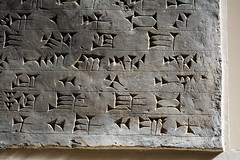
5873603147CuneiformOne of the first written languages known: A system of writing in which wedge-shaped symbols represented words or syllables. It originated in Mesopotamia and was used initially for Sumerian and Akkadian but later was adapted to represent other languages of western Asia.42
5873603148Democracya political system in which the supreme power lies in a body of citizens who can elect people to represent them43
5873603149Eight Fold PathEight steps to end suffering and attain enlightenment according to Buddhist tradition.44
5873603150Four Noble Truthsas taught by the Buddha, the four basic beliefs that form the foundation of Buddhism45
5873603151Gothic MigrationsThe Migration period, also called the Barbarian Invasions or German: Völkerwanderung (wandering of the peoples), was a period of human migration that occurred roughly between the years 300 to 700 CE in Europe, marking the transition from Late Antiquity to the Early Middle Ages. These movements were catalyzed by profound changes within both the Roman Empire and the so-called 'barbarian frontier'. Migrating peoples during this period included the Goths, Vandals, Bulgars, Alans, Suebi, Frisians, and Franks, among other Germanic and Slavic tribes.46
5873603152Great Walla fortification 1,500 miles long built across northern China in the 3rd century BC47
5873603153Han Dynastyimperial dynasty that ruled China (most of the time from 206 BC to AD 220) and expanded its boundaries and developed its bureaucracy48
5873603154HellenismThe ideals and principles that spread from Greece through much of the ancient world. Much of its influence such as philosophy, athletics, and architecture penetrated the Middle East.49
5873603155The HunsFierce warriors from Central Asia- First invaded southeastern Europe and then launched raids on nearby kingdoms50
5873603156Indian Ocean Tradeconnected to Europe, Africa, and China.; worlds richest maritime trading network and an area of rapid Muslim expansion.51
5873603157Iron Agethe period following the Bronze Age; characterized by rapid spread of iron tools and weapons52
5873603158Jewish DiasporaA "scattering" of the Jewish people53
5873603159LegalismIn Chinese history, Legalism was one of the main philosophic currents during the Warring States Period- A philosophy of focusing on the text of written law to the exclusion of the intent of law, elevating strict adherence to law over justice, mercy and common sense54
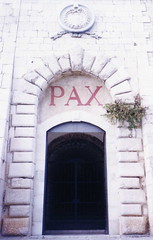
5873603160Pax RomanaA period of peace and prosperity throughout the Roman Empire, lasting from 27 B.C. to A.D. 180.55
5873603161PyramidsHuge stone tombs with four triangle-shaped walls that met in a point on top56
5873603162Roman RepublicThe period from 507 to 31 B.C.E., during which Rome was largely governed by the aristocratic Roman Senate.57
5873603163Roman Senatea council of wealthy and powerful Romans that advised the city's leaders58
5873603164Shang CivilizationChina's first dynasty almost 2000 BCE59
5873603165Shi Huang Diharsh ruler who united China for the first time and used legalism in ruling (Qin China)60
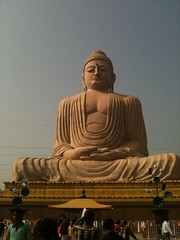
5873603166Siddhartha Gautamafounder of Buddhism; born a prince; left his father's wealth to find the cause of human suffering; also know as Buddha61
5873603167Silk Road TradeThe most famous of the trading routes established by pastoral nomads connecting the Chinese, Indian, Persian, and Mediterranean civilizations; transmitted goods and ideas among civilization.62
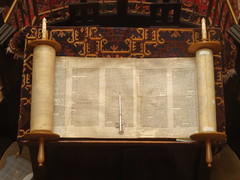
5873603168The Torahthe most sacred text of Judaism63
5873603169The Vedas of HinduismAryan hymns originally transmitted orally but written down in sacred books from the 6th century B.C.E.64
5873603170Zigguratsa temple or tomb of the ancient Assyrians, Sumerians, or Babylonians, having the form of a terraced pyramid of successively receding stories65
5873603171ChristianityMonotheistic religion born out of Judaism, preached by Jesus of Nazareth and later codified by his disciples. Persecuted by Romans early on; however, gained support under Constantine in the Rome.66
5873603172Buddhismoriginally preached by Siddhartha and codified by his disciples into the sutras. Rejected Vedic rituals and the caste system. Spread throughout SE Asia and China and split into Mahayana(Buddha as a God, local gods tacked on as Bodhisativas) and Theravada(original, strict non-theistic version).67
5873603173AsokaThird ruler of the Mauryan Empire in India (r. 270-232 B.C.E.). He converted to Buddhism and broadcast his precepts on inscribed stones and pillars, the earliest surviving Indian writing.68
5873603174HinduismTerm for a wide variety of beliefs and ritual practices that have developed in the Indian subcontinent since antiquity. It has roots in ancient Vedic, Buddhist, and south Indian religious concepts and practices.69
5873603175Trans Saharanroute across the sahara desert. Major trade route that traded for gold and salt, created caravan routes, economic benefit for controlling dessert, camels played a huge role in the trading70
5873603176MonsoonsMajor winds in the Indian Ocean that blew into India for half the year, and blew away from India for the other half. Helped facilitate trade in the Indian Ocean.71
5873603177Sumerianspeople who dominated Southern Mesopotamia through the end of the 3rd Millennium BCE. Responsible for the creation of irrigation technology, cuneiform, and religious conceptions.72
5873603178Indo-EuropeansGroups of people who came from the area north of the Caucasus mountains, which are between the Black and Caspian seas. Herded multiple animals. Rode into battle on chariots. The Indo-European language of Sanskrit, by the Aryans, are the basis of many languages today. Often accepted and adapted aspects of technology, religions, and social order of those with whom they came in contact.73
5873603179Before agriculture, men and women are believed to have a greater degree of equality. But after the rise of agriculture, most human societies became ________ as a result of greater male strength.Patriarchal74
5873603180caste systema set of rigid social categories that determined not only a person's occupation and economic potential, but also his or her position in society, there was virtually no social mobility75
5873603181Paleolithic(Old Stone Age) a long period of human development before the development of agriculture76
5873603182CarthageThis city has existed for nearly 3,000 years, developing from a Phoenician colony of the 1st millennium BC into the capital of the Carthaginian Empire. Controlled commerce in the Mediterranean prior to the rise of Roman Power. The expanding Roman Republic took control of many of its outposts after the two Punic Wars.77
5873603183HellenizationThe spread of Greek language and culture (Hellenism) throughout the Mediterranean, starting with t he conquests of Alexander the Great. Upon Alexander's death at the age of thirty-three (323 B.C.E.), his realm was divided among his leading generals. During their reigns and those of their successors, Hellenism (i.e., Greek culture) continued to flourish in major urban centers around the eastern Mediterranean (less so in rural areas). People traveling to different areas could communicate with people of other kingdoms through Greek. More than at any time in previous history, the eastern Mediterranean that emerged in Alexander's wake experienced a form of cultural unity and cosmopolitanism (a "cosmopolite" is a "citizen of the world," as opposed to a person who belongs to only one locality). The Roman Empire arose in the context of the Hellenistic world and took full advantage of its unity, promoting the use of Greek language, accepting aspects of Greek culture, and even taking over features of the Greek religion, to the point that the Greek and Roman gods came to be thought of as the same, only with different names. This complex unity achieved culturally through Hellenization and politically through the conquests of Rome is summed up by the term Greco-Roman world.78
5873603184DaoismChinese religion that believes the world is always changing and is devoid of absolute morality or meaning. They accept the world as they find it, avoid futile struggles, and deviate as little as possible from 'the way' or 'path' of nature.79
5873603185Bureaucratgovernment official80

AP World History Period 5 Flashcards

Terms : Hide Images
6804937838abolitionist movementAn international movement that between approximately 1780 and 1890 succeeded in condemning slavery as morally repugnant and abolishing it in much of the world; the movement was especially prominent in Britain and the United States.0
6804937839Declaration of the Rights of Man and CitizenDocument drawn up by the French National Assembly in 1789 that proclaimed the equal rights of all men; the declaration ideologically launched the French Revolution.1
6804937840Declaration of the Rights of WomanShort work written by the French feminist Olympe de Gouges in 1791 that was modeled on the Declaration of the Rights of Man and Citizen and that made the argument that the equality proclaimed by the French revolutionaries must also include women.2
6804937841Estates-GeneralFrench representative assembly called into session by Louis XVI to address pressing problems and out of which the French Revolution emerged; the three estates were the clergy, the nobility, and the commoners.3
6804937842French RevolutionMassive dislocation of French society (1789-1815) that overthrew the monarchy, destroyed most of the French aristocracy, and launched radical reforms of society that were lost again, though only in part, under Napoleon's imperial rule and after the restoration of the monarchy.4
6804937843HaitiName that revolutionaries gave to the former French colony of Saint Domingue; the term means "mountainous" or "rugged" in the Taino language.5
6804937844Haitian RevolutionThe only fully successful slave rebellion in world history; the uprising in the French Caribbean colony of Saint Domingue (later renamed Haiti) was sparked by the French Revolution and led to the establishment of an independent state after a long and bloody war (1791-1804).6
6804937845Latin American RevolutionsSeries of risings in the Spanish colonies of Latin America (1810-1826) that established the independence of new states from Spanish rule but that for the most part retained the privileges of the elites despite efforts at more radical social rebellion by the lower classes.7
6804937846Toussaint L'OuvertureFirst leader of the Haitian Revolution, a former slave (1743-1803) who wrote the first constitution of Haiti and served as the first governor of the newly independent state.8
6804937847Napoleon BonaparteFrench head of state from 1799 until his abdication in 1814 (and again briefly in 1815); preserved much of the French Revolution under an autocratic system and was responsible for the spread of revolutionary ideals through his conquest of much of Europe.9
6804937848NationA group of people who have a sense of common identity and destiny, thanks to ties of blood, culture, language, or common experience.10
6804937849NationalismThe focusing of citizens' loyalty on the notion that they are part of a "nation" with a unique culture, territory, and destiny; first became a prominent element of political culture in the nineteenth century.11
6804937850American RevolutionSuccessful rebellion conducted by the colonists of parts of North America (not Canada) against British rule (1775-1787); a conservative revolution whose success assured property rights but established republican government in place of monarchy.12
6804937851Seneca Falls ConferenceThe first organized women's rights conference13
6804937852Elizabeth Cady StantonLeading figure of the early women's rights movement in the United States (1815-1902).14
6804937853the Reign of TerrorTerm used to describe the revolutionary violence in France in 1793-1794, when radicals under the leadership of Maximilien Robespierre executed tens of thousands of people deemed enemies of the revolution.15
6804937854Third EstateIn prerevolutionary France, the term used for the 98 percent of the population that was neither clerical nor noble, and for their representatives at the Estates General; in 1789, it declared itself a National Assembly and launched the French Revolution.16
6804937855BourgeoisieTerm that Karl Marx used to describe the owners of industrial capital; originally meant "townspeople."17
6804937856Sigmund FreudAustrian doctor and the father of modern psychoanalysis (1856-1939); his theories about the operation of the human mind and emotions remain influential today18
6804937857Karl MarxGerman expatriate in England who advocated working-class revolution as the key to creating an ideal communist future.19
6804937858Middle class valuesBelief system that developed in Britain in the nineteenth century; it emphasized thrift, hard work, rigid moral behavior, cleanliness, and "respectability."20
6804937859Peter the GreatTsar of Russia (r. 1689-1725) who attempted a massive reform of Russian society in an effort to catch up with the states of Western Europe.21
6804937860ProletariatTerm that Karl Marx used to describe the industrial working class; originally used in ancient Rome to describe the poorest part of the urban population.22
6804937861Steam engineMechanical device in which the steam from heated water builds up pressure to drive a piston, rather than relying on human or animal muscle power; the introduction of this item allowed a hitherto unimagined increase in productivity and made the Industrial Revolution possible.23
6804937862Boxer RebellionRising of Chinese militia organizations in 1900 in which large numbers of Europeans and Chinese Christians were killed24
6804937863Meiji RestorationThe overthrow of the Tokugawa shogunate of Japan in 1868, restoring power at long last to the emperor25
6804937864Matthew PerryU.S. navy commodore who in 1853 presented the ultimatum that led Japan to open itself to more normal relations with the outside world.26
6804937865Opium WarsTwo wars fought between Western powers and China (1839-1842 and 1856-1858) after China tried to restrict the importation of foreign goods; China lost both wars and was forced to make major concessions.27
6804937866Russo-Japanese WarEnding in a Japanese victory, this war established Japan as a formidable military competitor in East Asia and precipitated the Russian Revolution of 1905.28
6804937867SamuraiArmed retainers of the Japanese feudal lords, famed for their martial skills and loyalty; in the Tokugawa shogunate, they gradually became an administrative elite, but they did not lose their special privileges until the Meiji restoration.29
6804937868Self-strengthening MovementChina's program of internal reform in the 1860s and 1870s, based on vigorous application of Confucian principles and limited borrowing from the West.30
6804937869The Sick Man of EuropeWestern Europe's unkind nickname for the Ottoman Empire in the nineteenth and early twentieth centuries, a name based on the sultans' inability to prevent Western takeover of many regions and to deal with internal problems; it fails to recognize serious reform efforts in the Ottoman state during this period.31
6804937870Social DarwinismAn application of the concept of "survival of the fittest" to human history in the nineteenth century.32
6804937871Taiping UprisingMassive Chinese rebellion that devastated much of the country between 1850 and 1864; it was based on the millenarian teachings of Hong Xiuquan.33
6804937872Tanzimat ReformsImportant reform measures undertaken in the Ottoman Empire beginning in 1839; the term means "reorganization."34
6804937873Tokugawa ShogunateRulers of Japan from 1600 to 1868.35
6804937874Unequal treatiesSeries of nineteenth-century treaties in which China made major concessions to Western powers.36
6804937875Young OttomansGroup of would-be reformers in the mid-nineteenth-century Ottoman Empire that included lower-level officials, military officers, and writers; they urged the extension of Westernizing reforms to the political system.37
6804937876Young TurksMovement of Turkish military and civilian elites that developed ca. 1900, eventually bringing down the Ottoman Empire38
6804937877ApartheidAfrikaans term for the system that developed in South Africa of strictly limiting the social and political integration of whites and blacks.39
6804937878Cash crop agricultureAgricultural production, often on a large scale, of crops for sale in the market, rather than for consumption by the farmers themselves.40
6804937879Leopold IIhis rule as private owner of the Congo Free State during much of that time is typically held up as the worst abuse of Europe's second wave of colonization, resulting as it did in millions of deaths.41
6804937880Indian Rebellion of 1857-1858Massive uprising of much of India against British rule; also called the Indian Mutiny or the Sepoy Mutiny from the fact that the rebellion first broke out among Indian troops in British employ.42
6804937881Scramble for AfricaName used for the process of the European countries' partition of the continent of Africa between themselves in the period 1875-1900.43
6804937882Guillotinedefined the reign of terror, its fast-falling blade extinguished life immediately, introduced as a more humane way of beheading (vs. an ax)44
6804937883Mass ProductionThe manufacture of many identical products by the division of labor into many small simple tasks.45
6804937884Steam Shipstechnological innovation allowed Europeans to reach distant Asian and African ports quickly and predictably46
6804937885mercantilismA set of economic principles based on policies which stress government regulation of economic activities to benefit the home country47
6804937886Capitalism(1776) , an economic system in which investment in and ownership of the means of production, distribution, and exchange of wealth is made and maintained chiefly by private individuals or corporations.48
6804937887Simon BolivarThe most important military leader in the struggle for independence in South America; born in Venezuela, he led military forces there and in Colombia, Ecuador, Peru, and Bolivia.49
6804937888GaribaldiLeader of the Italian Nationalist Army. He was a bold and visionary leader. He united Southern Italy, also captured Sicily in the 1860's.50
6804937889William WilberforceHe was a highly religious man and a member of the English Parliament who worked tirelessly for the abolition of slavery51
6804937890Janissarya soldier in the elite guard of the Ottoman Turks52
6804937891Muhammad AliAlbanian soldier in the service of Turkey who was made viceroy of Egypt and took control away from the Ottoman Empire and established Egypt as a modern state (1769-1849).53
6804937892Tanzimat'Restructuring' reforms by the nineteenth-century Ottoman rulers, intended to move civil law away from the control of religious elites and make the military and the bureaucracy more efficient.54
6804937893ExtraterritorialityForeign residents in a country living under the laws of their native country, disregarding the laws of the host country. 19th/Early 20th Centuries: European and US nationals in certain areas of Chinese and Ottoman cities were granted this right.55
6804937894Canton SystemThe Canton System (1757-1842) served as a means for China to control trade with the west within its own country by focusing all trade on the southern port of Canton (now Guangzhou).56
6804937895Separate SpheresNineteenth-century idea in Western societies that men and women, especially of the middle class, should have different roles in society: women as wives, mothers, and homemakers; men as breadwinners and participants in business and politics57
6804937896Universal Male SuffrageThe extension of the right to vote to all males regardless of social standing or race, whose movement had begun in the early-mid 1800's58
6804937897free trade imperialismEconomic dominance of a weaker country by a more powerful one, while maintaining the legal independence of a weaker state. In the late 19th cent, this characterized the relationships between Latin American republics and GB/US59

American Pageant Chapter 9 Flashcards

Terms : Hide Images
5267224045AntifederalistsOpponents of the 1787 Constitution, they cast the document as antidemocratic, objected to the subordination of the states to the central government, and feared encroachment on individuals' liberties in the absence of a bill of rights.0
5267224046Articles of ConfederationFirst American constitution that established the United States as a loose confederation of states under a weak national Congress, which was not granted the power to regulate commerce or collect taxes. It was replaced by a more efficient Constitution in 1789.1
5267224047Civic VirtueWillingness on the part of citizens to sacrifice personal self-interest for the public good. Deemed a necessary component of a successful republic.2
5267224048Civil LawBody of written law enacted through legislative statutes or constitutional provisions. In countries where it prevails, judges must apply the statutes precisely as written.3
5267224049Common LawLaws that originate from court rulings and customs, as opposed to legislative statutes. The United States Constitution grew out of the Anglo-American tradition and thus provided only a general organizational framework for the new federal government.4
5267224050DisestablishedTo separate an official state church from its connection with the government. Following the Revolution, all states used this with the Anglican Church, though some New England states maintained established Congregational Churches well into the nineteenth century.5
5267224051FederalistsProponents of the 1787 Constitution, they favored a strong national government, arguing that the checks and balances in the new Constitution would safeguard the people's liberties.6
5267224052Great CompromisePopular term for the measure which reconciled the New Jersey and Virginia plans at the constitutional convention, giving states proportional representation in the House and equal representation in the Senate. This broke the stalemate at the convention and paved the way for subsequent compromises over slavery and the Electoral College.7
5267224053Land Ordinance of 1785Provided for the sale of land in the Old Northwest and earmarked the proceeds toward repaying the national debt.8
5267224054New Jersey Plan"Small-state plan" put forth at the Philadelphia convention, proposing equal representation by state, regardless of population, in a unicameral legislature. Small states feared that the more populous states would dominate the agenda under a proportional system.9
5267224055Northwest Ordinance of 1787Created a policy for administering the newly acquired land. It included a path to statehood and forbade the expansion of slavery into the territories.10
5267224056Old NorthwestTerritories acquired by the federal government from the states, encompassing land northwest of the Ohio River, east of the Mississippi River and south of the Great Lakes. The well-organized management and sale of the land in the territories under the land ordinances of 1785 and 1787 established a precedent for handling future land acquisitions.11
5267224057Shays's RebellionArmed uprising of western Massachusetts debtors seeking lower taxes and an end to property foreclosures. Though quickly put down, the insurrection inspired fears of "mob rule" among leading Revolutionaries.12
5267224058Society of the CincinnatiExclusive, hereditary organization of former officers in the Continental Army. Many resented the pretentiousness of the order, viewing it as a vestige of pre-Revolutionary traditions.13
5267224059The Federalist PapersCollection of essays written by John Jay, James Madison and Alexander Hamilton and published during the ratification debate in New York to lay out the arguments in favor of the new Constitution. Since their publication, these influential essays have served as an important source for constitutional interpretation.14
5267224060Three-Fifths CompromiseDetermined that each slave would be counted as a portion of a person for the purpose of apportioning taxes and representation. The compromise granted disproportionate political power to Southern slave states.15
5267224061Virginia Plan"Large state" proposal for the new constitution, calling for proportional representation in both houses of a bicameral Congress. The plan favored larger states and thus prompted smaller states to come back with their own plan for apportioning representation.16
5267224062Virginia Statute for Religious FreedomMeasure enacted by the Virginia legislature prohibiting state support for religious institutions and recognizing freedom of worship. Served as a model for the religion clause of the first amendment to the Constitution.17
5267224063Lord SheffieldWrote a popular pamphlet in England that said Britain would win back America's trade and that commerce would naturally follow old channels.18
5267224064Daniel ShaysHead of Rebellion; he and several other angry farmers violently protested against debtor's jail; eventually crushed; aided in the creation of constitution because land owners now wanted to preserve what was theirs from "mobocracy."19
5267224065Patrick HenryA leader of the American Revolution and a famous orator who spoke out against British rule of the American colonies.20
5267224066Roger ShermanAuthor of the Great Compromise (Connecticut Compromise)21

AP Literature Poetry Terms Flashcards

Terms : Hide Images
6753503370alliterationIt is a stylistic device in which a number of words, having the same first consonant sound, occur close together in a series.0
6753510655allusionA direct or indirect reference to something which is presumably commonly known, such as an event, book, myth, place, or work of art.1
6753527244apostropheA figure of speech that directly addresses an absent or imaginary person or a personified abstraction, such as liberty or love.2
6753543638assonanceRepetition of a vowel sound within two or more words in close proximity ex: deep green sea3
6753554044blank verseUnrhymed iambic pentameter ex: Shakespeare's speeches4
6753572462cacophanytremendous noise, disharmonious sound used for effect5
6753597753coupletTwo consecutive lines of poetry that rhyme. end the pattern of a Shakespearean6
6753616833dialogueConversation between two or more characters in a poem.7
6753627787dictionA writer's or speaker's choice of words-formal, informal, slang etc.8
6753642607enjambmentA run-on line of poetry in which logical and grammatical sense carries over from one line into the next.9
6753655283epicA long narrative poem, told in a formal, elevated style, that focuses on a serious subject and chronicles heroic deeds and events important to a culture or nation. ex from western culture inlude Homer's Iliad and Odyssey, Virgil's Aeneid and Milton's Paradise Lost.10
6753682774euphonypleasant, harmonious sound used to produce a melodious effect11
6753696613explicationThe complete and detailed interpretation or analysis of a text, often word-by-word and line-by-line.12
6753743952figurative languageA form of language use in which writers and speakers convey something other than the literal meaning of their words. Ex include hyperbole or exaggeration, liotes or understanding, simile and metaphor, which employ comparison, and synecdoche and metonymy, in which a part of a thing stands for a whole.13
6754307592free versePoetry that does not have a regular meter or rhyme scheme14
6754325003heroic coupletTwo consecutive lines of rhyming poetry that are written in iambic pentameter and that contain a complete thought15
6754368057hyperbole (overstatement) and litotes (understatement)_____ is exaggeration for effect; ____ is understatement for effect, often used for irony.16
6754397300iambic pentametera line of verse with five metrical feet, each consisting of one short (or unstressed) syllable followed by one long (or stressed) syllable. The most natural and common meter of English, it elevates speech to poetry.17
6754438729imageryDescription that appeals to the senses (sight, sound, smell, touch, taste)18
6754467812internal rhymea rhyme involving a word in the middle of a line and another at the end of the line or in the middle of the next.19
6754498065metaphorA comparison of two unlike things without using the word like or as.20
6754514086metaphysical conceitExtended metaphor that makes a surprising connection between two dissimilar things. The term is commonly applied to the metaphorical language of a number of early seventeenth-century poets, particularly John Donne. Ex: stiff twin compasses//the joining together of lovers like legs of a compass. See "To His Coy Mistress"21
6754591967meterThe number of feet within a line of traditional verse.22
6754623181metonymyA figure of speech in which one word or phrase is substituted for another with which it is closely associated (such as "crown" for "royalty").23
6754633104moodFeeling or atmosphere that a writer creates for the reader24
6754644590octave8 line stanza of an Italian or Petrachan sonnet, unified by rhythm, rhyme, and topic.25
6754675236onomatopiaA figure of speech in which words are use to imitate or suggest actual sounds or activities being described. Ex: buzz, slurp.26
6754711980paradoxA figure of speech or statement that seems contradictory but actually contains a hidden truth27
6754727658personificationA figure of speech in which the author presents or describes concepts, animals, or inanimate objects by endowing them with human attributes or emotions. Personification is used to make these abstractions, animals, or objects appear more vivid to the reader.28
6754743419petrarchan sonnet(aka Italian Sonnet) sonnet containing an octave and a sestet with the rhyme scheme (ABBAABBA, CDCDCD, or ABBAABBA, CDEDCDE). There is a "volta," or "turning" of the subject matter between the octave and sestet.29
6754781536quatrainA stanza or poem of four lines30
6754795624refrainA regularly repeated word, line or group of lines in a poem or song, as in a ballad31
6754815511rhymeCorrespondence of sound between words or the endings of words, especially when these are used at the ends of lines of poetry.32
6754837529double rhyme or trochaic rhymerhyming words of two syllables in which the first syllable is accented (flower, shower)33
6754850678eye rhymerhyme that appears correct from spelling but does not rhyme because of pronunciation.34
6754883236slant rhymerhyme in which either the vowels or the consonants of stressed syllables are identical35
6754922469rhyme schemeThe regular pattern of rhyming words in a poem; indicated by using different letters of the alphabet for each new rhyme.36
6754950517rhythmA pattern of stressed and unstressed syllables in a line of poetry37
6754982334scan (scansion)the process of marking beats in a poem to establish the prevailing metrical pattern. Prosody, the pronunciation of a song or poem, is necessary for scansion.38
6755022459shakespearean or english sonnetA poem of 14 lines, divided into three quatrains and a couplet, written in iambic pentameter, rhyming abab cdcd efef gg39
6755032900simileA comparison between two unlike things using like or as to state the terms of the comparison.40
6755053471sonnetA closed form consisting of 14 lines of iambic pentameter.41
6755079203speakerthe narrator of a poem; not to be confused with the poet who wrote the poem.42
6755091223stanzaA group of lines in a poem corresponding to paragraphs in prose; the meters and rhymes are usually repeating or systematic.43
6755118382symbolAn object or action in a literary work that means more than itself, that stands for something beyond itself. The glass unicorn in The Glass Menagerie.44
6755134129syntaxword order and sentence structure.45
6755154833toneAttitude a writer takes toward the audience, a subject, or a character of a the poem.46
6755174983triplet or tercetThree line stanza or is three lines of verse withing a larger unit that usually rhymes a-a-a47

AP human Language Flashcards

Terms : Hide Images
5554643763languagecommunication through sound and speech0
5554643764literary traditionwritten communication1
5554643765official languagethe language the government uses2
5554643766language familylanguages that are related through common ancestors3
5554643767language brancha grouping more distinct than a family4
5554643768language groupsmall variation between the languages5
5554643769logogramssymbols that represent words6
5554643770dialectregional variations of a language through vocab spelling and pronunciation7
5554643771isoglossa word that isn't used everywhere in a country but means the same thing8
5554643772standard languagedialect chosen most appropriate for the government9
5554643773creolized languagemixing a colonizer language with the language of the people being dominated10
5554643774isolated languageslanguages that are unattached to any branch and family11
5554643775extinct languagea language that isn't used or written daily12
5554643776lingua francathe language that is used for world trading13
5554643777pidgin languageA mixture of grammar and words of the lingua Franca and your own language14

AP English Language terms Flashcards

Terms : Hide Images
6350725207attitudea writer's intellectual position or emotion regarding the subject of the writing0
6350729329concrete detaildetails and evidence that relate to the topic in an essay (from text or from personal life)1
6350732942descriptive detailsensory details, such as visual imagery2
6350740038devicesthe figures of speech, syntax, diction, and other stylistic elements that collectively produce a particular artistic effect3
6350743592rhetorical featuresthe tools of rhetoric, such as tone, diction, and imagery4
6350745124rhetorical structureHow a passage is constructed. How an author organizes and combines images, details, or arguments to serve his/her purpose5
6350749458sentence structureHow an author forms sentences. Ex: simple, compound, complex, varied, short, repeated, choppy....etc.6
6350758845stylistic deviceselements in language that contribute to style, such as diction, syntax, tone, attitude, figures of speech, connotations, and repetition.7
6350772402languagehow the elements combine to form a whole. How diction, syntax, figurative language, and sentence structure create a cumulative effect.8
6350788569narrative devicesthe tools of the story teller. (nonfiction, biographical and autobiographical writing)9
6350792279narrative techniquethe style of telling the "story," even if the passage is nonfiction.10
6350795585persuasive deviceswords that have strong connotations, that intensify the emotional effect, and that build logical arguments to persuade an audience11
6350800016persuasive essaya coherent argument in which the evidence builds to a logical and relevant conclusion. Strong if it appeals to the audience's emotions or ethical standards.12
6350803864resources of languageAll the devices of composition available to a writer, such as diction, syntax, sentence structure, and figures of speech.13
6350807662allegoryThe device of using character and/or story elements symbolically to represent an abstraction in addition to the literal meaning.14
6350812524alliterationthe repetition of sounds, especially initial consonant sounds in two or more neighboring words. (Ex: She sells sea shells) This repetition can reinforce meaning, unify ideas, and/or supply a musical sound.15
6350817962allusiona direct or indirect reference to something which is presumably commonly known, such as an event, book, myth, place, or work of art.16
6350821958ambiguitythe multiple meanings, either intentional or unintentional, of a word, phrase, sentence, or passage17
6350826427analogya similarity or comparison between two different things or the relationship between them. Can make writing more vivid, imaginative, or intellectually engaging.18
6350830689antecedentThe word, phrase, or clause referred to by a pronoun. Ex: When children are happy, they clap to express their pleasure.19
6350837435aphorismA terse statement of known authorship which expresses a general truth or a moral principle. Can be a memorable summation of the author's point.20
6350842900apostropheA figure of speech that directly addresses an absent or imaginary person or a personified abstraction, such as liberty or love. Ex: "Milton, thou shouldst be living at this hour: England hath need of thee"21
6350855725atmospherethe emotional mood created by the entirety of a literary work, established partly by the setting and partly by the author's choice of objects that are described. Can often foreshadow events.22
6350865211clauseA grammatical unit that contains both a subject and a verb. Can be independent, or main, to express a complete thought. Those dependent or subordinate cannot stand alone and must be accompanied by an independent clause.23
6350876625didacticthe teaching or instructing of moral or ethical principles24
6350879237euphemisma more agreeable or less offensive substitute for a generally unpleasant word or concept. May be used to adhere to standards of social or political correctness or to add humor or ironic understatement.25
6350889785extended metaphora metaphor developed at great length, occurring frequently in or throughout a work26
6350893485figurative languagewriting or speech that is not intended to carry literal meaning and is usually meant to be imaginative and vivid27
6350900849figure of speecha device used to produce figurative language. Many compare dissimilar things. Examples include apostrophes, hyperbole, irony, metaphor, metonymy, oxymoron, paradox, personification, simile, synecdoche, and understatement28
6350931979generic conventionsTraditions for each genre. The unique features of a writer's work separate it from _________29
6350940434colloquial/colloquialismThe use of slang or informalities in speech or writing. A conversation, familiar tone. Can include writing in local or regional dialects.30
6350948010conceitA fanciful expression, usually in the form of an extended metaphor or surprising analogy between seemingly dissimilar objects. Displays intellectual cleverness due to the unusual comparison being made.31
6350955854connotationthe nonliteral, associative meaning of a word; the implied, suggested meaning. may involve ideas, emotions, or attitudes32
6350960458denotationthe strict, literal, dictionary definition of a word, devoid of any emotion, attitude, or color33
6350962406dictionrelated to style. The writer's word choices, with regard to correctness, clearness, or effectiveness.34
6350970813genrethe major category into which a literary work fits. The basic divisions of literature are prose, poetry, and drama. Major category examples are biography, autobiography, diaries, criticism, essays, and journalistic, political, scientific, and nature writing.35
6350982380homilyLiterally means "sermon." Any serious talk, speech, or lecture involving moral or spiritual advice.36
6350985199hyperbolea figure of speech using deliberate exaggeration or overstatement. Can produce irony, and a comic (or serious) effect.37
6350989262imagerythe sensory details or figurative language used to describe, arouse emotions, or represent abstractions38
6350993516inference/inferto draw a reasonable conclusion from the information presented.39
6350996319invectivean emotionally violent, verbal denunciation or attack using strong, abusive language40
6350997828irony/ironicthe contrast between what is stated explicitly and what is really meant. The difference between what appears to be and what actually is true. Three major types are used.41
6351002481loose sentencea type of sentence in which the main idea (independent clause) comes first, followed by dependent grammatical units such as phrases and clauses.42
6351006026metaphora figure of speech using implied comparison of seemingly unlike things or the substitution of one thing or another. Ex: The snow is a white blanket.43
6351011534paradoxa statement that appears to be self-contradictory or opposed to common sense but upon closer inspection contains some degree of truth or validity.44
6351015492parallelismthe grammatical or rhetorical framing of words, phrases, sentences, or paragraphs to give structural similarity. Can involve repetition of a grammatical element such as a preposition or verbal phrase. Frequently, act as an organizing force to attract the reader's attention, add emphasis and organization, or simply provide a musical rhythm.45
6351030916parodya work that closely imitates the style or content of another with the specific aim of comic effect and/or ridicule. Distorts or exaggerates distinctive features of the original. Well-written, it can offer enlightenment about the original.46
6351775635metonomya figure of speech in which the name of one object is substituted for that of another closely associated with it.47
6351776971moodtwo meanings: one grammatical and deals with verbal units and a speaker's attitude. The second meaning is literary, meaning the prevailing atmosphere or emotional aura of a work.48
6351799859narrativeThe telling of a story or an account of an event or series of events49
6351800405onomatopeiaA figure of speech in which natural sounds are imitated in the sound of words. Ex: buzz, murmur, snap.50
6351803790oxymorona figure of speech wherein the author groups apparently contradictory terms to suggest a paradox. Ex: "cruel kindness"51
6351805255pedantican adjective that describes words, phrases, or general tone that is overly scholarly, academic, or bookish.52
6351807303periodic sentencea sentence that presents its central meaning in a main clause at the end. The independent clause is preceded by a phrase or clause that cannot stand alone.53
6351810835personificationa figure of speech in which the author presents or describes concepts, animals, or inanimate objects by endowing them with human attributes or emotions.54
6351811820point of viewIn literature, the perspective from which a story is told. The subdivisions include: first person perspective, third person narrator, omniscient and limited omniscient.55
6354252117toneSimilar to mood, describes the author's attitude toward his or her material, the audience, or both.56
6354258758transitionA word or phrase that links different ideas. Effectively shifts from one idea to another. Ex: nevertheless, in addition, on the contrary57
6354271030understatementThe ironic minimalizing of fact, presents something as less significant than it is. The opposite of hyperbole.58
6354283607witA modern usage, intellectually amusing language that surprises and delights. Humorous, while suggesting the speaker's verbal power in creating ingenious and perceptive remarks.59
6354298285syntaxThe way an author chooses to join words into phrases, clauses, and sentences. Similar to diction, but ______ refers to the groups of words, while diction refers to the individual words.60
6354322663themeThe central idea or message of a work, the insight it offers into a story. Usually it is unstated in fictional works, but in nonfiction, it may be directly stated, especially in expository or argumentative writing.61
6354342873thesisIn expository writing, it is the statement in the sentence or group of sentences that directly expresses the author's opinion, purpose, meaning, or proposition.62
6354352376predicate adjectiveOne type of subject complement- an adjective, group of adjectives, or adjective clause that follows a linking verb. Ex: "My boyfriend is tall, dark, and handsome af"63
6354367095predicate nominativea second type of subject complement- a noun, group of nouns, or noun clause that renames the subject. Ex: "Abe Lincoln was a man of integrity" (renaming Abe as a man of integrity)64
6354381500proseone of the major divisions of genre, refers to fiction and nonfiction, including all its forms, because they are written in ordinary language and most closely resemble everyday speech. Anything in literature other than poetry and drama.65
6354395272repetitionthe duplication, either exact or approximate, of any element of language, such as sound, word, phrase, clause, sentence, or grammatical pattern. Can link and emphasize ideas while allowing the reader the comfort of recognizing something familiar.66
6354411760satirea work that targets human vices and follies or social institutions and conventions for reform or ridicule.67
6354420119semanticsthe branch of linguistics that studies the meaning of words, their historical and psychological development, their connotations, and their relationship to one another.68
6354434553stylethe sum of choices an author makes in blending diction, syntax, figurative language, and other literary devices. Can be flowery, explicit, succinct, rambling, bombastic, commonplace, incisive, laconic.... can reflect the historical context of an author's time period69
6354464486subject complementthe word (with any accompanying phrases) or clause that follows a linking verb and complements, or completes, the subject.70
6354475601rhetoricdescribes the principles governing the art of writing effectively, eloquently, and persuasively71
6354479210rhetorical modesthe variety, the conventions, and the purposes of the major kinds of writing. Four main purposes: exposition, argumentation, description, and narration. modes of discourse.72
6354494464sarcasmInvolves bitter, caustic language that is meant to hurt or ridicule someone or something. may use irony as a device. When done well, can be witty and insightful. When done poorly, can be simply cruel.73
6354505980subordinate clauselike all clauses, contains both a subject and a verb, but unlike the independent clause, this clause cannot stand alone; it does not express a complete thought.74
6354519764syllogisma deductive system of formal logic that presents two premises that inevitably lead to a sound conclusion. Ex: All men are mortal. Socrates is a man Therefore, Socrates is mortal75
6354530950symbol/symbolismAnything that represents, or stands for, something else. Usually something concrete- such as an object, action, character, or scene- that represents something more abstract. Conventional _____ have been invested with meaning by a group (ex: religious symbols.) Literary _____ are generally recognized, being found in a variety of works. Sometimes they are more complicated, however, such as the meaning behind the whale in Moby Dick.76

Pages

Subscribe to CourseNotes RSS

Need Help?

We hope your visit has been a productive one. If you're having any problems, or would like to give some feedback, we'd love to hear from you.

For general help, questions, and suggestions, try our dedicated support forums.

If you need to contact the Course-Notes.Org web experience team, please use our contact form.

Need Notes?

While we strive to provide the most comprehensive notes for as many high school textbooks as possible, there are certainly going to be some that we miss. Drop us a note and let us know which textbooks you need. Be sure to include which edition of the textbook you are using! If we see enough demand, we'll do whatever we can to get those notes up on the site for you!