AP Notes, Outlines, Study Guides, Vocabulary, Practice Exams and more!

AP Language and Composition Vocabulary Flashcards

Terms : Hide Images
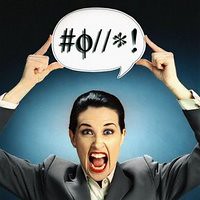
4785107155Expletivenoun, a profane or obscene expression usually of surprise or anger0
4785107156Asyndetonnoun, the omission of conjunctions like "and" or "but" where they would normally be used to make a speech more dramatic and effective by speeding up its rhythm and pace. This is a rhetorical device.1
4785107157Polysyndetonnoun, using several conjunctions in close succession, especially where some might be omitted (as in `he ran and jumped and laughed for joy'), a rhetorical device opposite to asyndeton.2
4785107158Understatementnoun, a statement that is restrained in ironic contrast to what might have been said. You make an understatement when you say a lot less than you could. If you say "We didn't do our best" when your team loses 56 to 0, that's quite an understatement.3
4785107159Litotesnoun, understatement for rhetorical effect (especially when expressing an affirmative by negating its contrary). "He's not the brightest bulb in the lamp," meaning "He's dumb" Or "She's no beauty queen" meaning "She's ugly"4
4785107160Parallelismnoun, similarity by virtue of corresponding. Parallelism is used in sentence construction to give matching structure. In the sentence, "I like to read, dancing, and fighting off Zombie attacks," the parts of the list are not parallel. You can revise the sentence for parallelism: "I like to read, to dance, and to fight off Zombie attacks."5
4785107161Chiasmusnoun, inversion in the second of two parallel phrases, a rhetorical technique that involves a reversal of terms, such as "It's good to be lucky, but it's lucky to be good."6
4785107162Zeugmanoun, rhetorical use of a word to govern two or more words though only one of the two thoughts should make literal or grammatical sense. For example, you could use the zeugma, "I lost my keys and my temper." In Greek, zeugma means "a yoking," as in yoking one word to two ideas.7
4785107163Antithesisnoun, exact opposite, An antithesis wouldn't exist without a thesis because it works as a comparison. Though the counterculture was strong in America in 1968, voters elected Richard Nixon, the antithesis of a hippie.8
4785107164Anaphoranoun, repetition of a word or phrase at the beginning of successive clauses. Used to show emphasis in speech or writing, anaphora is a popular tool for politicians, religious leaders, lyricists, and poets.In Martin Luther King Jr's most famous speech, he said "I have a dream" eight different times.9
4785107165Epistrophenoun, repetition of the ends of two or more successive sentences, verses, etc. Similar to Anaphora but at the end of sentences, you can use epistrophe as a rhetorical device when you give a speech, to emphasize your ideas. One example is President Barack Obama's repetition, at the end of sentence after sentence, of the phrase "Yes, we can."10
4785107166Anadiplosisnoun, repetition of the final words of a sentence or line at the beginning of the next. Part of another figure of speech Chiasmus, every anadiplosis does not necessarily reverse its structure like it is done in chiasmus. "Forget what you want to remember, and remember what you want to forget," is an example of chiasmus (as it involves a reversal of structure in the second clause) and anadiplosis as word "remember" marks the end of one clause and the start of the subsequent clause. "The land of my fathers and my fathers can have it." is an example of anadiplosis involving a typical repetition of the word "my father" but, unlike chiasmus, the structure of the final clause is not reversed.11
4785107167Conduplicationoun, Figure of repetition in which the key word or words in one phrase, clause, or sentence is/are repeated at or very near the beginning of successive sentences, clauses, or phrases; repetition of a key word over successive phrases or clauses. ex. "I answered their questions truthfully, including questions about my private life -- questions no American citizen would ever want to answer."12
4785107168Epanalepsisnoun, rhetoric, a repetition of a word or a phrase with intervening words setting off the repetition, sometimes occurring with a phrase used both at the beginning and end of a sentence, as in Only the poor really know what it is to suffer; only the poor.13
4785107169HypophoraHypophora is a figure of speech in which a writer raises a question and then immediately provides an answer to that question. Commonly, a question is asked in the first paragraph and then the paragraph is used to answer the question. In hypophora, the writer first poses a question and then answers that question immediately such as in this example, "What should young people do with their lives today? Many things, obviously. But the most daring thing is to create stable communities in which the terrible disease of loneliness can be cured." while in Rhetorical question, the answer is not provided by the writer since it does not require an answer. Such as, ".....For if we lose the ability to perceive our faults, what is the good of living on?"14
4785107170Rhetorical QuestionA rhetorical question is asked just for effect or to lay emphasis on some point discussed when no real answer is expected. A rhetorical question may have an obvious answer but the questioner asks rhetorical questions to lay emphasis to the point. In literature, a rhetorical question is self-evident and used for style as an impressive persuasive device. "O Wind, If Winter comes, can Spring be far behind?", "It's too hot today. Isn't it?", "The actors played the roles well. Didn't they?"15
4785107171ProcatalepsisProcatalepsis is a figure of speech which is also known as prebuttal or prolepsis in which the speaker or writer gives response to the objection of an opponent in his speech by repeating his objection. It could also be that he responds to his own objection in order to strengthen his argument by using counterarguments. Once the speakers bring attention to a possible rebuttal, they immediately refute or discredit it, for the fear that people may get confused. "I know what you're going to say...'That if they look at it properly they'll see that it wasn't our fault. But will they look at it properly? Of course they won't. You know what cats they are...", "I can think of no one objection that will possibly be raised against this proposal, unless it should be urged that the number of people will be thereby much lessened in the kingdom. This I freely own, and it was indeed the principal design in offering it to the world."16
4785107172MetabasisA transition or change from one subject to another. Consists of a brief statement of what has been said and what will follow. It might be called a linking, running, or transitional summary, whose function is to keep the discussion ordered and clear in its progress: ex. Now that I have made this catalogue of swindles and perversions, let me give another example of the kind of writing that they lead to. --George Orwell17
4785107173DistinctioFigure of explication in which an introductory reference to a word's meaning is made (e.g., "by x I mean", "which is to say that", "that is") followed by a further elaboration of that word's meaning; explicit definition of or elaboration upon the meaning or meanings of a particular word or set of words. "A team of Minot airmen was dispatched to the base Weapons Storage Area to pick up and transport two pylons to a Barksdale B-52 aircraft. For those of you unfamiliar with the term "pylon," for our purposes today, a pylon is a self-contained package of six cruise missiles that can be quickly mounted to the wing of a B-52."18
4785107174AmplificationA rhetorical device used to embellish a sentence or statement by adding further information. Increase readability and worth of the statement or sentence. It is usually used when a simple sentence is abrupt and cannot convey the desired implications. Writers then use amplification to make structural additions and give further meanings by describing and repeating a certain statement or idea. "Mr. and Mrs. Veneering were bran-new people in a bran-new house in a bran-new quarter of London. Everything about the Veneerings was spick and span new. All their furniture was new, all their friends were new, all their servants were new, their place was new, . . . their harness was new, their horses were new, their pictures were new, they themselves were new, they were as newly-married as was lawfully compatible with their having a bran-new baby..."19
4785107175Scesis OnomatonFigure of repetition in which a set of two or more different words having the same (or very nearly the same) meaning occurs within the same sentence; a successive series of words or phrases whose meanings are generally equivalent. "America is all about opportunity. That's why my parents came to America more than 40 years ago. And that's why most of your parents came here generations ago in search of an opportunity, a chance, a fair shake."20
4785107176ApophasisRhetoric. denial of one's intention to speak of a subject that is at the same time named or insinuated, as "I shall not mention Caesar's avarice, nor his cunning, nor his morality.", mentioning something by saying it will not be mentioned (as in "we won't discuss his past crimes")21
4785107177Metanoia (correctio)A self-correction. It's when a writer or speaker deliberately goes back and modifies a statement that they just made, usually either to strengthen it or soften it in some way. Metanoia involves correcting a statement just made - when an author corrects a much earlier statement, it isn't metanoia. "To help or, at least, to do no harm.", "I have my shortcomings, through my own fault and through my failure to observe the admonitions of the gods - and I may almost say, their direct instructions."22
4785107178AporiaAn expression of insincere doubt. When the writer or speaker pretends, briefly, not to know a key piece of information or not to understand a key connection. After raising this doubt, the author will either respond to the doubt, or leave it open in a suggestive or "hinting" manner. When an aporia is phrased in the form of a question, it's called a rhetorical question. "You see, we believe that 'We're all in this together' is a far better philosophy than 'You're on your own.' So who's right?" We all know that he believes the Democratic philosophy is better, and he goes on to make his argument for that position. The aporia is a way of setting up the argument.23
4785107179Similenoun, a figure of speech that expresses a resemblance between things of different kinds (usually formed with `like' or `as'). Use a simile when describing a comparison between two fundamentally different things, such as: "His voice was smooth, like butter in a warm pan."24
4785107180Analogynoun, drawing a comparison in order to show a similarity in some respect. When you draw an analogy between two things, you compare them for the purpose of explanation. The movie character Forest Gump made a silly analogy famous: "Life is like a box of chocolates." If a scientist explains that the earth's forests function as its lungs, we understand the analogy to mean that both trees and lungs take in important elements from the air.25
4785107181MetaphorA figure of speech in which a word or phrase is applied to an object or action to which it is not literally applicable, used to refer to something that it does not literally denote in order to suggest a similarity. You make an analogy between two things to show how one resembles the other in some way. When a character from Shakespeare calls the world his oyster, that's his boastful way of saying that all the riches of the world are his for the taking, like plucking a pearl from an oyster shell.26
4785107182CatachresisCatachresis is a figure of speech in which writers use mixed metaphors in an inappropriate way to create rhetorical effect. Often, it is used intentionally to create a unique expression. Catachresis is also known as an exaggerated comparison between two ideas or objects. "Tis deepest winter in Lord Timon's purse; that is, one may reach deep enough, and find little", "A man that studies revenge keeps his own wounds green...."27
4785107183SynecdocheSynecdoche is a figure of speech in which you use a part of something to stand for the whole thing (or vice versa). If your parents buy you a car and you say that you just got a new set of wheels, you're using synecdoche — you're using the wheels, which are part of a car, to refer to the whole car. The word "bread" refers to food or money as in "Writing is my bread and butter" or "sole breadwinner". The phrase "gray beard" refers to an old man, The word "sails" refers to a whole ship, The word "suits" refers to businessmen, The word "boots" usually refers to soldiers.28
4785107184MetonymyIt is a figure of speech that replaces the name of a thing with the name of something else with which it is closely associated. Synecdoche refers to a thing by the name of one of its parts. In a metonymy, on the other hand, the word we use to describe another thing is closely linked to that particular thing, but is not a part of it. For example, "Crown" which means power or authority is a metonymy. "Friends, Romans, countrymen, lend me your ears."29
4785107185PersonificationPersonification is a figure of speech in which a thing, an idea or an animal is given human attributes. The non-human objects are portrayed in such a way that we feel they have the ability to act like human beings. Look at my car. She is a beauty, isn't it so?, The wind whispered through dry grass, The flowers danced in the gentle breeze, Time and tide waits for none.30
4785107186HyperboleHyperbole is a figure of speech, which involves an exaggeration of ideas for the sake of emphasis. Praising your favorite sports team is one thing, but if you call the team the most incredible group of humans ever to walk the earth, then you're going overboard and indulging in hyperbole.31
4785107187AllusionAllusion is a brief and indirect reference to a person, place, thing or idea of historical, cultural, literary or political significance. It does not describe in detail the person or thing to which it refers. It is just a passing comment and the writer expects the reader to possess enough knowledge to spot the allusion and grasp its importance in a text. The main thing to remember is that an allusion is a brief hint or a quick mention. It's meant to bring to mind a particular subject, but it always avoids getting into it in great depth.32
4785107188EponymEponym is a name of a legend or real person that writers associate with some other person, object, institution or thing. Simply, we can define it as a famous person whose name is given to someone else, such as Homer has derived the name of ancient epic "The Odyssey" from a major character, Odysseus. Saxophone was given the name of Sax, a surname of family from Belgium, which was skilled at making musical instruments.33
4785107189OxymoronOxymoron is a figure of speech in which two opposite ideas are joined to create an effect. The common oxymoron phrase is a combination of an adjective proceeded by a noun with contrasting meanings, e.g. "cruel kindness" or "living death". However, the contrasting words/phrases are not always glued together. The contrasting ideas may be spaced out in a sentence, e.g. "In order to lead, you must walk behind." "the shackles of love straiten'd him His honour rooted in dishonored stood And faith unfaithful kept him falsely true"34
4785107190EpithetEpithet is a descriptive literary device that describes a place, a thing or a person in such a way that it helps in making the characteristics of a person, thing or place more prominent than they actually are. Also, it is known as a by-name or descriptive title. The noun epithet is a descriptive nickname, such as "Richard the Lionhearted," or "Tommy the Terrible."35
4785107191HyperbatonHyperbaton has been derived from a Greek word that means inversion in the arrangement of common words. It can be defined as a rhetorical device in which the writers play with the normal position of words, phrases and clauses in order to create differently arranged sentences, but which still suggest a similar meaning. "Some rise by sin, and some by virtue fall..."36
4785107192ParenthesisParenthesis is a qualifying or explanatory sentence, clause or word that writers insert into a paragraph or passage. However, if they leave it out, even then grammatically the it does not affect the text that is correct without it. Writers mark them off by round and square brackets or by commas, dashes, little lines and brackets. As far as its purpose is concerned, this verbal unit provides extra information, interrupts syntactic flow of words, and allows the readers to pay attention on explanation. you must sympathize with the reader's plight (most readers are in trouble about half the time) but never seek to know the reader's wants. "you must sympathize with the reader's plight (most readers are in trouble about half the time) but never seek to know the reader's wants."37
4785107193AlliterationA stylistic device in which a number of words, having the same first consonant sound, occur close together in a series. An important point to remember here is that alliteration does not depend on letters but on sounds. So the phrase not knotty is alliterative, but cigarette chase is not. But a better butter makes a batter better, A big bully beats a baby boy, Dunkin' Donuts, Best Buy, "The fair breeze blew, the white foam flew, The furrow followed free; We were the first that ever burst Into that silent sea."38
4785107194OnomatopoeiaA word, which imitates the natural sounds of a thing. It creates a sound effect that mimics the thing described, making the description more expressive and interesting. In addition to the sound they represent, many onomatopoeic words have developed meanings of their own. For example, "whisper" not only represents the sound of people talking quietly, but also describes the action of people talking quietly. "Hark, hark! Bow-wow. The watch-dogs bark! Bow-wow. Hark, hark! I hear The strain of strutting chanticleer Cry, 'cock-a-diddle-dow!'"39
4785107195ApostropheIn literature, apostrophe is a figure of speech sometimes represented by exclamation "O". A writer or a speaker, using an apostrophe, detaches himself from the reality and addresses an imaginary character in his speech. Apostrophe used in literature is an arrangement of words addressing a non-existent person or an abstract idea in such a way as if it were present and capable of understanding feelings. "Is this a dagger which I see before me, The handle toward my hand? Come, let me clutch thee! I have thee not, and yet I see thee still." Macbeth has a strange vision of a dagger and talks to it as if it were another person.40
4785107196EnthymemeAn argumentative statement in which the writer or the speaker omits one of the major or minor premises, does not clearly pronounce it, or keeps this premise implied. The omitted premise in enthymeme remains understandable even if is not clearly expressed. For instance, "Where there is smoke, there is fire." (The hidden premise: The smoke causes fire.) This is known as truncated or rhetoric syllogism. Its purpose is to influence the audience and allow them to make inferences. They can be easily recognized, as these statements comes after "because." "[M]y parents decide to buy my brothers guns. These are not 'real' guns. They shoot 'BBs,' copper pellets my brothers say will kill birds. Because I am a girl, I do not get a gun."41
4785107197ClimaxAs a stylistic device, the term climax refers to a literary device in which words, phrases and clauses are arranged in an order to increase their importance within the sentence. "This note was a promise that all men, yes, black men as well as white men, would be guaranteed the unalienable Rights of Life, Liberty and the pursuit of Happiness." OR Climax is that particular point in a narrative at which the conflict or tension hits the highest point. Climax is a structural part of a plot and is at times referred to as a crisis. It is a decisive moment or a turning point in a storyline at which the rising action turns around into a falling action. Thus, a climax is the point at which a conflict or crisis reaches its peak that calls for a resolution or conclusion.42
4785107198DiacopeThis literary device is a repetition of a phrase or word broken up by other intervening words. For instance, a very popular example of diacope is in William Shakespeare' Hamlet, "to be, or not to be!" In this line, you can notice that the speaker has repeated a phrase "to be" which is separated by another phrase "or not." "You held me down, but I got up,You hear my voice, you hear that sound... You held me down, but I got up Get ready 'cause I've had enough I see it all, I see it now."43
4785107199AntimetaboleAntimetabole is a literary term or device that involves repeating a phrase in reverse order. You like it; it likes you" and "Fair is foul and foul is fair." When a sentence is repeated after reversing it so as to convey an idea or stress on a point, it is called chiasmus. In an antimetabole the words and grammatical structure is also reversed because just reversing the meaning is not enough. All the antimetaboles are chiasmus, but not all instances of chiasmus are antimetaboles. "You stood up for America, now America must stand up for you."44
4785107200AntiphrasisAntiphrasis is a figurative speech in which a phrase or word is employed in a way that is opposite to its literal meaning in order to create an ironic or comic effect. It is the use of phrases or words in their opposite sense than the real meaning. "Yes, I killed him. I killed him for money-and a woman-and I didn't get the money and I didn't get the woman. Pretty, isn't it....." (Double Indemnity by Billy Wilder and Raymond). Here, the speaker is making ironic statement by using opposite sense of the word pretty. He has committed murder, yet he describes his act "pretty".45
4785107201EpizeuxisIt is defined as a rhetorical device in which the words or phrases are repeated in a quick succession after each other for emphasis. It is also called diacope. Epistrophe is the repetition of the words at the end of successive sentences such as "Where now? Who now? When now...,". Whereas, anaphora is the reverse of epistrophe; it is a repetition of the words and phrases at the beginning of successive sentences. Epizeuxis, is less refined but, it makes a very strong impact. Epizeuxis is the repetition of words in succession within a same sentence such as "The horror, the horror." "And my poor fool is hanged! No, no, no life! Why should a dog, a horse, a rat have life, And thou no breath at all? Thou'lt come no more, Never, never, never, never!"46
4785107202AposiopesisA rhetorical device that can be defined as a figure of speech in which the speaker or writer breaks off abruptly and leaves the statement incomplete, as if the speaker is not willing to state what is present in his mind due to being overcome by passion, excitement or fear. In a piece of literature, it means to leave a sentence unfinished so that the reader could determine his own meanings. "Well, I lay if I get hold of you I'll - She did not finish, for by this time she was bending down and punching under the bed with the broom, and so she needed breath to punctuate the punches with. She resurrected nothing but the cat...."47
4785107203AnacoluthonA stylistic device defined as a syntactic deviation and interruption within a sentence from one structure to another. In this interruption, the expected sequence of grammar is absent. The grammatical flow of sentences is interrupted in order to begin more sentences. "I will have such revenges on you both, That all the world shall-I will do such things, What they are, yet I know not....." This excerpt can be considered as one of the good anacoluthon examples as there is interruption from one sentence to another and such interruption is done to attract the readers' attention.48
4785107204EnumeratioEnumeration is a rhetorical device used for listing the details or a process of mentioning words or phrases step by step. In fact, it is a type of amplification or division in which a subject is further distributed into components or parts. The writers use enumeration to elucidate a topic to make it understandable for the readers. It also clarifies the ambiguity that may be created in the minds of the readers. "W]hen we allow freedom to ring, when we let it ring from every village and every hamlet, from every state and every city, we will be able to speed up that day when all of God's children, black men and white men, Jews and Gentiles, Protestants and Catholics, will be able to join hands and sing in the words of the old Negro spiritual, 'Free at last! Free at last! Thank God Almighty, we are free at last!"49
4785107205Antanagoge(Rhet.) A figure which consists in answering the charge of an adversary, by a counter charge. Not being able to answer the accusation of an adversary, a person instead makes a counter allegation or counteracting an opponent's proposal with an opposing proposition in one's own speech or writing.50
4785107206ParataxisA rhetorical term in which phrases and clauses are placed one after another independently, without coordinating or subordinating them through the use of conjunctions. It is also called additive style. Parataxis is sometimes used as asyndeton in which the phrases and clauses are coordinated without conjunctions. "Veni, vidi, vici" or, "I came, I saw, I conquered." There are no conjunctions or joining words used. The phrases are used equally. That means phrases are placed with equal status. Opposite of Hypotaxis51
4785107207HypotaxisHypotaxis is subordination of one clause to another, or when the clauses are coordinated or subordinated to one another within sentences. Hypotaxis is defined as a grammatical arrangement of constructs that work in the same way, but they play unequal role in a sentence. It helps in defining the exact meaning of a clause. "One December morning near the end of the year when snow was falling moist and heavy for miles all around, so that the earth and the sky were indivisible, Mrs. Bridge emerged from her home and spread her umbrella." The remaining clauses explain the first/main clause. These subordinated clauses help in recounting the individual thought expressed in the beginning.52
4785107208SententiaFigure of argument in which a wise, witty, or pithy maxim or aphorism is used to sum up the preceding material. "I think that if women aspired higher, took on the problems involved, that they might find surprising support from men. 'Time marches on.'"53
4785107209ExemplumExemplum is a rhetorical device that is defined as a short tale, narrative, or anecdote used in literary pieces and speeches to explain a doctrine or emphasize a moral point. They are generally in the forms of legends, folktales and fables. An exemplum clarifies and proves a point. "In Flaundres whylom was a company, Of yonge folk, that haunteden foley, As ryot, hasard, stewes, and tavernes, Wher-as, with harpes, lutes, and giternes,...." Talks about how greed can destroy everything and how it is the cause of all evil. In this story, nobody got to claim the most coveted treasure since the characters involved ended up killing each other. Can be real or fictional.54
4785107210PleonasmIt is a rhetorical device which can be defined as the use of a second or more words (phrase) to express an idea. These words are redundant such as in the following examples of pleonasm, "burning fire" and "black darkness." Sometimes, pleonasm is also called tautology, which is the repetition of words. "Let me tell you this, when social workers offer you, free, gratis and for nothing..."55
4785107211AssonanceTakes place when two or more words close to one another repeat the same vowel sound but start with different consonant sounds. "Men sell the wedding bells." The same vowel sound of the short vowel "-e-" repeats itself in almost all the words excluding the definite article. The words do share the same vowel sounds but start with different consonant sounds unlike alliteration that involves repetition of the same consonant sounds.56
4785107212Dirimens CopulatioA rhetorical term for a figure by which one balances one statement with a contrary, qualifying statement (sometimes conveyed by "not only ... but also" clauses). "But wait, there's more!"57
4785107213SymploceFigure of repetition that combines Anaphora and Epistrophe in which the first and last word or words in one phrase, clause, or sentence are repeated in one or more successive phrases, clauses, or sentences; repetition of the first and last words in a clause over successive clauses. "Let us let our own children know that we will stand against the forces of fear. When there is talk of hatred, let us stand up and talk against it. When there is talk of violence, let us stand up and talk against it."58
4785107214AppositiveWhen a noun or word is followed by another noun or phrase that renames or identifies it. This is a literary device that appears before or after a noun or noun phrase. It is always used with commas. We can define it as a noun phrase or a noun that defines or explains another noun, which it follows. Writers place elements like noun phrases side by side where one element serves to define the other, and one is in apposition to the other. "We were waiting outside the condemned cells, a row of sheds fronted with double bars, like small animal cages." In this line, "the condemned cells" is a noun phrase, while "a row of sheds" is an appositive that explains this noun phrase. Restrictive Appositive- Gives essential information to identify the phrase or noun in apposition and clarifies the meaning of a phrase but if the appositive is removed, the meaning of the entire sentence changes. Commas are not necessarily used. Non-Restrictive Appositive- Gives non-essential or extra information, which is not important to identify the phrase or noun in apposition and is often used with commas. "Christmas Eve afternoon we scrape together a nickel and go to the butcher's to buy Queenie's traditional gift, a good gnawable beef bone." A restrictive appositive is clarifying and describing a noun "traditional gift of Queenie." Here this literary device has appeared after noun.59

AP LANGUAGE VOCABULARY Flashcards

Terms : Hide Images
1660261958asyndetonthe omission of conjunctions in a list. e.g. "I came, I saw, I conquered."0
1660261960chiasmusrhetorical reversal of the order of words in the second of two parallel phrases. (e.g. he came in triumph and in defeat departs - OR - He went to the country, to the town went she.)1
1660261962anaphoraA rhetorical term for the repetition of a word or phrase at the beginning of successive clauses. Literary device of repetition, in which a word or phrase is repeated at the beginning of a series of lines. (e.g. Martin Luther King's repetition of the phrase "I have a dream that..." I need a break. I need a vacation. I need a very long vacation. - OR - "Of all the gin joints in all the towns in all the world, she walks into mine."2
1660261963anadiplosisa rhetorical term for the repetition of the last word from one line or clause to the beginning of the next one. (e.g. "Fear leads to anger. Anger leads to hate. Hate leads to suffering." ~ Yoda, The Phantom Menace. "When I give, I give to myself." ~ Walt Whitman "I am Sam; Sam I am." ~Dr. Suess, Green Eggs and Ham3
1679394716pensiveadj. Engaged in, involving, or reflecting deep or serious thought; Deeply thoughtful, meditative, reflective.4
1679394717oracularadj. prophetic; uttered as if with divine authority; mysterious or ambiguous; uttered or delivered as though divinely inspired and thus infallible; can be dictatorial5
1679394718invective(n.) a strong denunciation or condemnation; abusive language; adj. abusive, harsh, insulting6
1679394719droll(adj) curious or unusual in a way that provokes dry amusement. "his unique brand of droll self-mockery"; having a humorous, whimsical, or odd quality7
1679394720sardonicadj. Characterized by bitter or scornful derision; mocking; cynical; sneering8
1679394721apostrophen. A figure of speech that directly addresses an absent or imaginary person or a personified abstraction, such as liberty or love; in which someone absent or dead or something nonhuman is addressed as if it were alive and present and could reply9
1679394722juxtapositionn. Placement of two things closely together to emphasize comparisons or contrasts, create an intended effect, or reveal an attitude; poetic and rhetorical device in which normally not-associated ideas, words, or phrases are placed next to one another, often creating an effect of surprise and wit.10
1679394723oxymoronn. A figure of speech in which apparently contradictory terms appear in conjunction; form of paradox that combines a pair of opposite terms into a single unusual expression.11
1679394724archetypen. A detail, image, or character type that occurs frequently in literature and myth and is thought to appeal in a universal way to the unconscious and to evoke a response12
1679394725clichen. A word or phrase that is so overused that it is no longer effective in most writing situations13
1679399053connotationAll the meanings, associations, or emotions that a word suggests14
1679399056metaphorA figure of speech in which an expression is used to refer to something that it does not literally denote in order to suggest a similarity.15
1679399057cacophonyA harsh, discordant, unpleasant sounding choice and arrangement of sounds16
1679399058allusionA reference within a piece of literature to another work of literature, art, or music or to a well known historical event, person, or place. The purpose is to give us a fuller understanding of the piece of literature in which it appears by helping us to see it in comparison with something else we may know better.17
1679399059simileA comparison made between two dissimilar things through the use of a specific word such as like, as, than, or resembles.18
1679399060polysyndetonDeliberate use of many conjunctions in close succession, especially where some might be omitted. Hemingway and the Bible both use extensively. Ex. "he ran and jumped and laughed for joy"19
1679399061epigraphA quotation or aphorism at the beginning of a literary work suggestive of theme20
1679399062dictionA speaker or writer's choice of words (formal, informal, colloquial, full of slang, poetic, ornate, plain, abstract, concrete, etc.); has a powerful effect on tone21
1679399063torpidinactive, sluggish, dull22
1679399064truculentfierce and cruel; aggressive; deadly, destructive; scathingly harsh23
1679399065aberrantDeviating from the usual or proper course, especially in behavior24
1679399066hereticalcharacterized by departure from accepted beliefs or standards25
1679399067dogmaticauthoritatively and or arrogantly assertive of principles, which often cannot be proved; stubbornly opinionated26
1679399068didacticinstructive; used to describe fiction or nonfiction that teaches a specific lesson or moral or provides a model of correct behavior or thinking.27
1679399069ardentExpressing or characterized by warmth of feeling; passionate28
1679399070admonitoryTending or serving to caution, advise, or counsel; reproving or scolding, or urging to a duty29
1679399071blaseindifferent, bored as a result of having enjoyed many pleasures; apathetic30
1679399072learnedscholarly or educated; also a condition in which repeated attempts to control a situation fail, resulting in the belief that the situation is uncontrollable.31
1707460673antithesis(n.) the direct opposite, a sharp contrast; Balancing words, phrases, or ideas that are strongly contrasted, often by means of grammatical structure; the juxtaposition of contrasting words or ideas to give a feeling of balance32
1707460674coherenceClarity and logical consistency within a speech or an argument.33
1707460675epiphanyA moment of great insight; revelation34
1707460676maximA concise statement, often offering advice; an adage, A general truth or rule of conduct; a short saying; fundamental principle, esp. expressed as a proverb or saying35
1707460677inverted sentenceany sentence in which the normal word order is reversed, with the verb coming before the subject or the complete subject and predicate coming after another clause36
1707460678belligerent(adj.) given to fighting, warlike; combative, aggressive; (n.) one at war, one engaged in war37
1707460679audacious(adj.) bold, adventurous, recklessly daring38
1707460680obsequiousoverly submissive and eager to please, slavishly attentive; servile; sycophantic;39
1707460681poignant(adj.) deeply affecting, touching; keen or sharp in taste or smell, Deep in meaning. Associated with sorrow, sadness, deeply felt., (adj) important; powerful40
1707460682enigmatic(adj.) puzzling, perplexing, inexplicable, not easily understood; Mysterious41
1734721352litotesA figure of speech consisting of an understatement in which an affirmative is expressed by negating its opposite. - the opposite of hyperbole. Examples: "Not a bad idea," "Not many," "It isn't very serious. I have this tiny little tumor on the brain" (Salinger, Catcher in the Rye).42
1734721353metonymyA figure of speech in which one word or phrase is substituted for another with which it is closely associated (such as "crown" for "royalty").43
1734721354synedocheUsing one part of an object to represent the entire object (for example, referring to a car simply as "wheels")44
1734721355bucolic(adj.) characteristic of the countryside, rural; relating to shepherds and cowherds, pastoral45
1734721356obtuselacking sharpness of intellect, not clear or precise in thought or expression46
1734721357euphamisticUsing a more pleasant word or expression in place of one that may be found offensive or suggest something unpleasant.47
1734721358pompousFilled with excessive self-importance; pretentious; ostentatious; boastful; bombastic48
1734721359pedanticAn adjective that describes words, phrases, or general tone that is overly scholarly, academic, or bookish; Attempts to use words that will inflate their importance through the use of phrases which end up sounding pompous, affected, or stilted; Ostentatious display of learning, excessive attention to minutiae and formal rules, unimaginative; (language that might be described as "show-offy"; using big words for the sake of using big words).49
2835686169alliterationstylistic device in which words, repeatedly having the same first consonant sound, occur close together in a series.50
2835689756nostalgicwistful, longing for things from the past, reminiscent51

Top 100 AP Language terms Flashcards

Allegory The device of using character and/or story elements symbolically to represent an abstraction in addition to the literal meaning. In some allegories, for example, an author may intend the characters to personify an abstraction like hope or freedom. The allegorical meaning usually deals with moral truth or a generalization about human existence.
Alliteration The repetition of sounds, especially initial consonant sounds in two or more neighboring words (as in "she sells sea shells"). Although the term is not frequently in the multiple choice section, you can look for alliteration in any essay passage. The repetition can reinforce meaning, unify ideas, supply a musical sound, and/or echo the sense of the passage.
Allusion A direct or indirect reference to something which is presumably commonly known, such as an event, book, myth, place, or work of art. Allusions can be historical, literary, religious, topical, or mythical. There are many more possibilities, and a work may simultaneously use multiple layers of allusion.
Ambiguity The multiple meanings, either intentional or unintentional, of a word, phrase, sentence, or passage.
Analogy A similarity or comparison between two different things or the relationship between them. An analogy can explain something unfamiliar by associating it with or pointing out its similarity to something more familiar. Analogies can also make writing more vivid, imaginative, or intellectually engaging.
Antecedent The word, phrase, or clause referred to by a pronoun. The AP language exam occasionally asks for the antecedent of a given pronoun in a long, complex sentence or in a group of sentences.

Terms : Hide Images
2549947639AllegoryThe device of using character and/or story elements symbolically to represent an abstraction in addition to the literal meaning. In some allegories, for example, an author may intend the characters to personify an abstraction like hope or freedom. The allegorical meaning usually deals with moral truth or a generalization about human existence. A story in which each aspect of the story has a symbolic meaning outside the tale itself.0
2549947640AlliterationThe repetition of sounds, especially initial consonant sounds in two or more neighboring words (as in "she sells sea shells"). Although the term is not frequently in the multiple choice section, you can look for alliteration in any essay passage. The repetition can reinforce meaning, unify ideas, supply a musical sound, and/or echo the sense of the passage.1
2549947641AllusionA direct or indirect reference to something which is presumably commonly known, such as an event, book, myth, place, or work of art. Allusions can be historical, literary, religious, topical, or mythical. There are many more possibilities, and a work may simultaneously use multiple layers of allusion.2
2549947642AmbiguityThe multiple meanings, either intentional or unintentional, of a word, phrase, sentence, or passage.3
2549947643AnalogyA similarity or comparison between two different things or the relationship between them. An analogy can explain something unfamiliar by associating it with or pointing out its similarity to something more familiar. Analogies can also make writing more vivid, imaginative, or intellectually engaging.4
2549947644AntecedentThe word, phrase, or clause referred to by a pronoun. The AP language exam occasionally asks for the antecedent of a given pronoun in a long, complex sentence or in a group of sentences. A question from the 2001 AP test as an example follows: "But it is the grandeur of all truth which can occupy a very high place in human interests that it is never absolutely novel to the meanest of minds; it exists eternally, by way of germ of latent principle, in the lowest as in the highest, needing to be developed but never to be planted."5
2549947645Antithesisthe opposition or contrast of ideas; the direct opposite.6
2549947646AphorismA terse statement of known authorship which expresses a general truth or a moral principle. (If the authorship is unknown, the statement is generally considered to be a folk proverb.) An aphorism can be a memorable summation of the author's point7
2549947647ApostropheA prayer like figure of speech that directly addresses an absent or imaginary person or a personified abstraction, such as liberty or love. It is an address to someone or something that cannot answer. The effect may add familiarity or emotional intensity. William Wordsworth addresses John Milton as he writes, "Milton, thou shouldst be living at this hour: England hath need of thee." Another example is Keats' "Ode to a Grecian Urn," in which Keats addresses the urn itself: rarely on an AP exam, but important when there. ALWAYS Pathos8
2549947648AtmosphereThe emotional nod created by the entirety of a literary work, established partly by the setting and partly by the author's choice of objects that are described. Even such elements as a description of the weather can contribute to the atmosphere. Frequently atmosphere foreshadows events. Perhaps it can create a mood.9
2549947649Caricaturea verbal description, the purpose of which is to exaggerate or distort, for comic effect, a person's distinctive physical features or other characteristics. Example: The pupils of her eyes are small; like a pebble of sand floating atop a can of blue paint.10
2549947650ClauseA grammatical unit that contains both a subject and a verb. An independent, or main, clause expresses a complete thought and can stand alone as a sentence. A dependent, or subordinate clause, cannot stand alone as a sentence and must be accompanied by an independent clause. The point that you want to consider is the question of what or why the author subordinates one element should also become aware of making effective use of subordination in your own writing.11
2549947651Colloquial/ColloquialismThe use of slang or informalities in speech or writing. Not generally acceptable for formal writing, colloquialisms give a work a conversational, familiar tone. Colloquial expressions in writing include local or regional dialect12
2549947652Literary ConceitA fanciful expression, usually in the form of an extended metaphor or surprising analogy between seemingly dissimilar objects Displays intellectual cleverness through unusual comparisons that make good sense13
2549947653ConnotationThe non-literal, associative meaning of a word; the implied, suggested meaning. Connotations may involve ideas, emotions or attitudes14
2549947654DenotationThe strict, literal, dictionary definition of a word, devoid of any emotion, attitude, or color. (Example: the denotation of knife- a utensil for cutting - Connotation - knife - such as knife in the back - anger fear violence betrayal15
2549947655DictionRelated to style, diction refers to the writer's word choices, especially with regard to their correctness, clearness, or effectiveness. FOR AP EXAMSyou should be able to describe the uthors diction and understand how it compliments his purpose (along iwth imagery syntax, literary devices, etc)16
2549947656DidacticFrom the Greek, didactic literally means "teaching." Didactic words have the primary aim of teaching or instructing,especially the teaching of moral or ethical principles.17
2549947657EuphemismFrom the Greek for "good speech," euphemisms are a more agreeable or less offensive substitute for a generally unpleasant word or concept - POLITICALLY CORRECT18
2549947658Extended MetaphorA metaphor developed at great length, occurring frequently in or throughout a work.19
2549947659Figurative LanguageWriting or speech that is not intended to carry literal meaning and is usually meant to be imaginative and vivid20
2549947660Figure of speechA device used to produce figurative language. Many compare dissimilar things. Figures of speech include apotrophe hyperbole irony metaphor oxymoron paradox personification simile syneddoche understatement21
2549947661Generic conventionsThis term describes traditions for each genre. These conventions help to define each genre; for example, and differentiate an essay they differentiate they differentiate an essay and journalistic writing or an autobiography and political writing. On the AP language exam,try to distinguish the unique features of a writer's work from those dictated by convention.22
2549947662GenreThe major category into which a literary work fits. The basic divisions of literature are prose, poetry, and drama.However, genre is a flexible term; within these broad boundaries exist many subdivisions that are often called genresthemselves. For example, prose can be divided into fiction (novels and short stories) or nonfiction (essays, biographies,autobiographies, etc.). Poetry can be divided into lyric, dramatic, narrative, epic, etc. Drama can be divided into tragedy,comedy, melodrama, farce, etc. On the AP language exam, expect the majority of the passages to be from the following genres: autobiography, biography, diaries, criticism, essays, and journalistic, political, scientific, and nature writing. There may be fiction or poetry.23
2549947663HomilyThis term literally means "sermon," but more informally, it can include any serious talk, speech, or lecture involving moral or spiritual advice.24
2549947664HyperboleA figure of speech using deliberate exaggeration or overstatement. (The literal Greek meaning is "overshoot.") Hyperboles often have a comic effect; however, a serious effect is also possible. Often, hyperbole produces irony. The opposite of hyperbole is understatement.25
2549947665ImageryThe sensory details or figurative language used to describe, arouse emotion, or represent abstractions. On a physical level, imagery uses terms related to the five senses: visual, auditory, tactile, gustatory, and olfactory. On a broader and deeper level, however, one image can represent more than one thing. For example, a rose may present visual imagery while also representing the color in a woman's cheeks and/or symbolizing some degree of perfection. An author may use complex imagery while simultaneously employing other figures of speech, especially metaphor and simile. In addition, this term can apply to the total of all the images in a work. On the AP language exam, pay attention to how an author creates imagery and to the effect of this imagery.26
2549947666Inference/inferTo draw a reasonable conclusion from the information presented. When a multiple choice question asks for an inference to be drawn from a passage, the most direct, most reasonable inference is the safest answer choice. If an inference is implausible, it's unlikely to be the correct answer. Note that if the answer choice is directly stated, it is not inferred and it is wrong. You must be careful to note the connotation - negative or positive - of the choices. Adapted from V. Stevenson, Patrick Henry High School, and Abrams' Glossary of Literary Terms27
2549947667Invectivean emotionally violent, verbal denunciation or attack using strong, abusive language. (For example, in Henry IV, Part hill of flesh.")28
2549947668Irony/ironicThe contrast between what is stated explicitly and what is really meant, or the difference between what appears to be and what is actually true. Irony is often used to create poignancy or humor. In general, there are three major types of irony used in language: (1) verbal irony - when the words literally state the opposite of the writer's (or speaker's) meaning (2) situational irony - when events turn out the opposite of what was expected; when what the characters and readers think ought to happen is not what does happen (3) dramatic irony - when facts or events are unknown to a character in a play or piece of fiction but known to the reader, audience, or other characters in the work.29
2549947669Loose sentence/non-periodic sentenceA type of sentence in which the main idea (independent clause) comes first, followed by dependent grammatical units such as phrases and clauses. If a period were placed at the end of the independent clause, the clause would be a complete sentence. A work containing many loose sentences often seems informal, relaxed, or conversational. Generally, loose sentences create loose style. The opposite of a loose sentence is the periodic sentence. Example: I arrived at the San Diego airport after a long, bumpy ride and multiple delays. Could stop at: I arrived at the San Diego airport.30
2549947670MetaphorA figure of speech using implied comparison of seemingly unlike things or the substitution of one for the other, suggesting some similarity. Metaphorical language makes writing more vivid, imaginative, thought provoking, and meaningful.31
2549947671Metonymy(mĕtŏn′ ĭmē) A term from the Greek meaning "changed label" or "substitute name," metonymy is a figure of speech in which the name of one object is substituted for that of another closely associated with it. For example, a news release that claims "the White House declared" rather than "the President declared" is using metonymy; Shakespeare uses it to signify the male and female sexes in As You Like It: "doublet and hose ought to show itself courageous to petticoat." The substituted term generally carries a more potent emotional impact.32
2549947672MoodThe prevailing atmosphere or emotional aura of a work. Setting, tone, and events can affect the mood. Mood is similar to tone and atmosphere.33
2549947673NarrativeThe telling of a story or an account of an event or series of events.34
2549947674onomatopoeiaA figure of speech in which natural sounds are imitated in the sounds of words. Simple examples include such words as buzz, hiss, hum, crack, whinny, and murmur. If you note examples of onomatopoeia in an essay passage, note the effect.35
2549947675OxymoronFrom the Greek for "pointedly foolish," an oxymoron is a figure of speech wherein the author groups apparently contradictory terms to suggest a paradox. Simple examples include "jumbo shrimp" and "cruel kindness." This term does not usually appear in the multiple-choice questions, but there is a chance that you might find it in an essay. Take note of the effect that the author achieves with the use of oxymoron.36
2549947676ParadoxA statement that appears to be self-contradictory or opposed to common sense but upon closer inspection contains some degree of truth or validity. (Think of the beginning of Dickens' Tale of Two Cities: "It was the best of times, it was the worst of times....")37
2549947677ParallelismAlso referred to as parallel construction or parallel structure, this term comes from Greek roots meaning "beside one another." It refers to the grammatical or rhetorical framing of words, phrases, sentences, or paragraphs to give structural similarity. This can involve, but is not limited to, repetition of a grammatical element such as a preposition or verbal times, it was the age of wisdom, it was the age of foolishness, it was the epoch of believe, it was the epoch of incredulity....") The effects of parallelism are numerous, but frequently they act as an organizing force to attract the reader's attention, add emphasis and organization, or simply provide a musical rhythm. Adapted from V. Stevenson, Patrick Henry High School, and Abrams' Glossary of Literary Terms38
2549947678ParodyA work that closely imitates the style or content of another with the specific aim of comic effect and/or ridicule. It exploits peculiarities of an author's expression (propensity to use too many parentheses, certain favorite words, etc.) Well-written parody offers enlightenment about the original, but poorly written parody offers only ineffectual imitation. nuances of the newer work. Occasionally, however, parodies take on a life of their own and don't require knowledge of the original.39
2549947679PedanticAn adjective that describes words, phrases, or general tone that is overly scholarly, academic, or bookish (language that might be described as "show-offy"; using big words for the sake of using big words).40
2549947680Periodic sentenceThe opposite of loose sentence, a sentence that presents its central meaning in a main clause at the end. This independent clause is preceded by a phrase or clause that cannot stand alone. The effect of a periodic sentence is to add emphasis and structural variety. It is also a much stronger sentence than the loose sentence. (Example: After a long, bumpy flight and multiple delays, I arrived at the San Diego airport.)41
2549947681PersonificationA figure of speech in which the author presents or describes concepts, animals, or inanimate objects by endowing them with human attributes or emotions. Personification is used to make these abstractions, animals, or objects appear more vivid to the reader.42
2549947682Point of viewIn literature, the perspective from which a story is told. There are two general divisions of point of view, and many subdivisions within those. (1) first person narrator tells the story with the first person pronoun, "I," and is a character in the story. This narrator can be the protagonist, a secondary character, or an observing character. (2) third person narrator relates the events with the third person pronouns, "he," "she," and "it." There are two main subdivisions to be aware of: a. third person omniscient, in which the narrator, with godlike knowledge, presents the thoughts and actions of any or all characters b. third person limited omniscient, in which the narrator presents the feelings and thoughts of only one character, presenting only the actions of all the remaining characters. In addition, be aware that the term point of view carries an additional meaning. When you are asked to analyze the author's point of view, the appropriate point for you to address is the author's attitude.43
2549947683Proseone of the major divisions of genre, prose refers to fiction and nonfiction, including all its forms. In prose the printer determines the length of the line; in poetry, the poet determines the length of the line.44
2549947684RepetitionThe duplication, either exact or approximate, of any element of language, such as a sound, word, phrase, clause, sentence, or grammatical pattern.45
2549947685RhetoricFrom the Greek for "orator," this term describes the principles governing the art of writing effectively, eloquently, and persuasively.46
2549947686Rhetorical modesThis flexible term describes the variety, the conventions, and the purposes of the major kinds of writing. The four most common rhetorical modes (often referred to as "modes of discourse") are as follows: (1) The purpose of exposition (or expository writing) is to explain and analyze information by presenting an idea, relevant evidence, and appropriate discussion. The AP language exam essay questions are frequently expository topics. (2) The purpose of argumentation is to prove the validity of an idea, or point of view, by presenting sound reasoning, an additional aim of urging some form of action. (3) The purpose of description is to recreate, invent, or visually present a person, place, event or action so that the reader can picture that being described. Sometimes an author engages all five senses in description; good descriptive writing can be sensuous and picturesque. Descriptive writing may be straightforward and objective or highly emotional an subjective. (4) The purpose of narration is to tell a story or narrate an event or series of events. This writing mode frequently uses the tools of descriptive writing. Adapted from V. Stevenson, Patrick Henry High School, and Abrams' Glossary of Literary Terms47
2549947687SarcasmFrom the Greek meaning "to tear flesh," sarcasm involves bitter, caustic language that is meant to hurt or ridicule someone or something. It may use irony as a device, but not all ironic statements are sarcastic (that is, intended to ridicule). When well done, sarcasm can be witty and insightful; when poorly done, it is simply cruel.48
2549947688SatireA work that targets human vices and follies or social institutions and conventions for reform or ridicule. Regardless of whether or not the work aims to reform human behavior, satire is best seen as a style of writing rather than a purpose for writing. It can be recognized by the many devices used effectively by the satirist: irony, wit, parody, caricature, often humorous, is thought provoking and insightful about the human condition. Some modern satirists include Joseph Heller (Catch 22) and Kurt Vonnegut (Cat's Cradle, Player Piano).49
2549947689StyleThe consideration of style has two purposes: (1) An evaluation of the sum of the choices an author makes in blending diction, syntax, figurative language, and other We can analyze and describe an author's personal style and make judgments on how appropriate it is to the author's purpose. Styles can be called flowery, explicit, succinct, rambling, bombastic, commonplace, incisive, laconic, etc. (2) Classification of authors to a group and comparison of an author to similar authors. By means of such classification and comparison, we can see how an author's style reflects and helps to define a historical period, such as the Renaissance or the Victorian period, or a literary movement, such as the romantic, transcendental, or realist movement.50
2549947690Subject complementThe word (with any accompanying phrases) or clause that follows a linking verb and complements, or completes, the subject of the sentence by either (1) renaming it (the predicate nominative) or (2) describing it (the predicate adjective). These are defined below: (1) the predicate nominative - a noun, group of nouns, or noun clause that renames the subject. It, like the predicate adjective, follows a linking verb and is located in the predicate of the sentence. Example: Julia Roberts is a movie star. movie star = predicate nominative, as it renames the subject, Julia Roberts (2) the predicate adjective -- an adjective, a group of adjectives, or adjective clause that follows a linking verb. It is in the predicate of the sentence, and modifies, or describes, the subject. Example: Warren remained optimistic. optimistic = predicate adjective, as it modifies the subject, Warren51
2549947691Subordinate clauseLike all clauses, this word group contains both a subject and a verb (plus any accompanying phrases or modifiers), but unlike the independent clause, the subordinate clause cannot stand alone; it does not express a complete thought. Also called a dependent clause, the subordinate clause depends on a main clause (or independent clause) to complete its meaning. Easily recognized key words and phrases usually begin these clauses. For example: although, because, unless, if, even though, since, as soon as, while, who, when, where, how and that. Example: Yellowstone is a national park in the West that is known for its geysers. underlined phrase = subordinate clause52
2549947692SyllogismFrom the Greek for "reckoning together," a syllogism (or syllogistic reasoning or syllogistic logic) is a deductive system of formal logic that presents two premises (the first one called "major" and the second called "minor") that inevitably lead to a sound conclusion. A frequently cited example proceeds as follows: major premise: All men are mortal. minor premise: Socrates is a man. conclusion: Therefore, Socrates is a mortal. A syllogism's conclusion is valid only if each of the two premises is valid. Syllogisms may also present the specific idea first ("Socrates") and the general second ("all men"). Adapted from V. Stevenson, Patrick Henry High School, and Abrams' Glossary of Literary Terms53
2549947693Symbol/symbolismGenerally, anything that represents itself and stands for something else. Usually a symbol is something concrete -- such as an object, action, character, or scene - that represents something more abstract. However, symbols (1) natural symbols are objects and occurrences from nature to symbolize ideas commonly associated with them (dawn symbolizing hope or a new beginning, a rose symbolizing love, a tree symbolizing knowledge). (2) conventional symbols are those that have been invested with meaning by a group (religious symbols such as a cross or Star of David; national symbols, such as a flag or an eagle; or group symbols, such as a skull and crossbones for pirates or the scale of justice for lawyers). (3) literary symbols are sometimes also conventional in the sense that they are found in a variety of works and are more generally recognized. However, a work's symbols may be more complicated, as is the jungle in Heart of Darkness. On the AP exam, try to determine what abstraction an object is a symbol for and to what extent it is successful in representing that abstraction.54
2549947694SyntaxThe way an author chooses to join words into phrases, clauses, and sentences. Syntax is similar to diction, but you can differentiate them by thinking of syntax as groups of words, while diction refers to the individual words. In the multiplechoice section of the AP exam, expect to be asked some questions about how an author manipulates syntax. In the essay section, you will need to analyze how syntax produces effects.55
2549947695ThemeThe central idea or message of a work, the insight it offers into life. Usually theme is unstated in fictional works, but in nonfiction, the theme may be directly state, especially in expository or argumentative writing.56
2549947696ThesisIn expository writing, the thesis statement is the sentence or group of sentences that directly expresses the author's opinion, purpose, meaning, or position. Expository writing is usually judged by analyzing how accurately, effectively,and thoroughly a writer has proven the thesis.57
2549947697ToneSimilar to mood, tone describes the author's attitude toward his material, the audience, or both. Tone is easier to determine in spoken language than in written language. Considering how a work would sound if it were read aloud can help in identifying an author's tone. Some words describing tone are playful, serious, businesslike, sarcastic, humorous, formal, ornate, sardonic, somber, etc.58
2549947698TransitionA word or phrase that links different ideas. Used especially, although not exclusively, in expository and argumentative writing, transitions effectively signal a shift from one idea to another. A few commonly used transitional words or phrases are furthermore, consequently, nevertheless, for example, in addition, likewise, similarly, on the contrary, etc. More sophisticated writers use more subtle means of transition.59
2549947699Understatementthe ironic minimalizing of fact, understatement presents something as less significant than it is. The effect can frequently be humorous and emphatic. Understatement is the opposite of hyperbole. Example: Jonathan Swift's A Tale of a Tub: "Last week I saw a woman flayed, and you will hardly believe how much it altered her person for the worse."60
2549947700Witin modern usage, intellectually amusing language that surprises and delights. A witty statement is humorous, while suggesting the speaker's verbal power in creating ingenious and perceptive remarks. Wit usually uses terse language that makes a pointed statement. Historically, wit originally meant basic understanding. Its meaning evolved to include speedof understanding, and finally, it grew to mean quick perception including creative fancy and a quick tongue to articulate an answer that demanded the same quick perception.61
2549947701Ad HominemAn attack on the person rather than the issue at hand - a common fallacy - common in elections62
2549947702Chisamus'chi structure' unlike abab / language listed in an abba form: Ask not what your country Can do for you, But what you Can do for your country63
2549947703Malapropisma word humorously misused: Example, he is the AMPLE of her eye... instead of ' he is the APPLE of her eye,64
2549947704Parallelism (parallel syntax)a pattern of language that creates a rhythm of repetition often combined with some other language of repetition. Like a train gaining momentum. Ex: When you are right you cannot be too radical; when you are wrong, you cannot be too conservative.65
2549947705Poisoning the WellDiscrediting a person's claim by presenting unfavorable information (true or false) about the person. Person B attacking Person A before Person A can make his/her claim. Example: 'John, an abusive alcoholic, will now give his argument for the legalization of public drinking'.66
2549947706Slippery SlopeThis is the failure to provide evidence to support a claim that one event will lead to a catastrophic chain of events.67
2549947707straw manWhen a writer argues against a claim that nobody actually holds or is universally considered weak.68
2549947708EthosOne of the fundamental strategies of argumentation identified by Aristotle. Ethos is basically an appeal to credibility. The writer is seeking to convince you that he or she has the background, history, skills, and/or expertise to speak on the issue. Whenever you encounter an ethos argument, always ask yourself is the credibility is substantiated and valid. An essay advocating policy changes on drug rehabilitation programs is more powerful is the person is a former addict or customer in a current rehab program.69
2549947709JuxtapositionMaking on idea more dramatic by placing it next to its opposite. In art it is called chiaroscuro, where a bright white object is placed next to a black object and thus both are made more visible. My goodness is often chastened by my sense of sin, or The Gasoline savings from a hybrid car as compared to a standard car seem excellent until one compares the asking prices of the two vehicles. The juxtaposition of the asking prices shows that the savings are not as significant as they first appear.70
2549947710LogosAn appeal to reason. Logos is one of the fundamental strategies of argumentation identified by Aristotle. It occurs when a writer tries to convince you of the logic of his argument. writers may use inductive argumentation or deductive argumentation, but they clearly have examples and generally rational tome to their language. The problem with logos is that is can appear reasonable until you dissect the argument and then find fallacies that defeat the viability of the argument on the reader's eyes. Of course, that presupposes that the readers is able to identify the fallacies.71
2549947711PathosAn appeal to emotion. This is one of the fundamental strategies of argumentation identified by Aristotle. Typically, pathos arguments may use loaded words to make you feel guilty, lonely, worried, insecure, or confused. The easiest way to remember whats pathos arguments are is to see most advertising as a form of pathos argument.72
2549947712Predicate AdjectiveAm adjective that follows a linking web and modifies the subject of the sentence. The gigantic whirlpool was inky black, and there was no moon.73
2549947713Rhetorical QuestionA question whose answer is assumed, a rhetorical question is designed to force the reader to respond in a predetermined manner and is a significant tool in the study of rhetoric. One of the most basic purposes for rhetorical questions is cheerleading. Rhetorical questions, therefor, propel an argument emotionally. They often look like extensions of a logical argument, but more often than not, they are setting you up to agree with the writer. As with a parallel syntax, rhetorical questions are excellent devices to use in the development of your own essay writing. As graders, we notice when you use them- if you use them to effectively nurture your argument. There are some types of rhetorical questions, but they always follow the same basic pattern: the writer ask herself something and then answers the question in the next sentence or paragraph. Another form is when the question functions as an ironic assault on the writer's adversaries. This kind if rhetorical question can have many uses, and you should notice its function whenever you encounter one in nonfiction prose. Who's afraid of the big bad wolf? Who's afraid of the jolly green giant? Are we? No!!!74
2549947714SimileA critical figure of speech in an argument when what is unknown is compared to something that is known using the word "like," "as," or "than" in order to better perceive its importance. Remember the ripple effect and look for patterns in similes and metaphors in any piece of nonfiction prose. The troll's fishing technique was like a mercenary throwing bombs in the water to catch trout.75
2549947715rhetorical appealthe persuasive devices by which a writer tries to sway an audience's attention and response to any given work. See logos, ethos, and pathos.76
2549947716concrete detailStrictly defined, concrete refers to nouns that name physical objects, -a bridge. a book, or a coat. Concrete nouns are the opposite of abstract nouns (which refer to concepts like freedom and love). However, as used in the essay portion of the AP Language and Composition Exam. this term has a slightly different connotation. The direc tions may read sometbing like this: "Provide concrete details that will convince the reader." This means that your essay should include details in the passage; at times, you' ll be allowed I() provide details from your own life (readings, obser· vations, experiences, and so forth).77
2549947717descriptive detailWhen an essay uses this phrase, look for the writer's sensory description. Descriptive detail appealing to the visual sense is usually tbe most predominant, but don't overlook other sensory details. As usual, after you identify a passage's descriptive details, analyze their effect.78
2549947718devicesThe figures of speecb, syntax, diction, and other stylistic elements that collectively produce a particular artistic effect.79
2549947719narrative devicesThis term describes the tools of the storyteller (also used in nonfiction), such as ordering events so that they build to a climactic moment or withholding infomlation until a crucial or appropriate momcnt when revealing it creates a desired effect On the essay portion of the exam, this lerm may also apply to biographical and autobiographical writing.80
2549947720narrative techniquesThe style of telling the "story," even if the passage is nonfiction. Concentrate on the order of events and on their detail in evaluating a writer's technique.81
2549947721sentence structureWhen an essay question asks you to analyze sentence structure, look at the type of sentences the author uses. Remember that the basic sentence structures are simple, compound, and complex and variations created with sentence combining. Also consider variation or lack of it in sentence length, any unusual devices in sentence construction, such as repetition or inverted word order, and any unusual word or phrase placement with all devices, be prepared to discuss the effect of the sentence structure. For example, a series of short, simple sentences or phrases can produce a feeling of speed and choppiness. which may suit the author's purpose.82
2549947722stylistic devicesAn essay prompt that mentions stylistic devices is asking you to note and analyze all of the elements in language that contribute to style-such as diction, syntax, tone, attitude, figures of speech, connotations, and repetition.83
2549947723Ad hominem argumentAn argument attacking an individual's character rather than his or her position on an issue84
2549947724AnadiplosisFigure of repetition that occurs when the last word or terms in one sentence, clause, or phrase is/are repeated at or very near the beginning of the next sentence, clause, or phrase.85
2549947725AnaphoraFigure of repetition that occurs when the first word or set of words in one sentence, clause, or phrase is/are repeated at or very near the beginning of successive sentences, clauses, or phrases; repetition of the initial words over successive phrases or clauses86
2549947726Anathema(n.) an object of intense dislike; a curse or strong denunciation (often used adjectivally without the article)87
2549947727AnecdoteA brief story that illustrates or makes a point88
2549947728Antimeriathe substitution of one part of speech for another89
2549947729AntimetaboleFigure of emphasis in which the words in one phrase or clause are replicated, exactly or closely, in reverse grammatical order in the next phrase or clause; a chiasmus on the level of words (A-B, B-A). For example, "And so, my fellow Americans, ask not what your country can do for you; ask what you can do for your country" (JFK).90
2549947730Appeal to authorityA fallacy in which a speaker or writer seeks to persuade not by giving evidence but by appealing to the respect people have for a famous person or institution.91
2549947731Argumentationone of the four forms of discourse which uses logic, ethics, and emotional appeals (logos, ethos, pathos) to develop an effective means to convince the reader to think or act in a certain way.92
2549947732AssonanceRepetition of a vowel sound within two or more words in close proximity93
2549947733AsyndetonA series of words separated by commas (with no conjunction), e.g. "I came, I saw, I conquered." The parts of the sentence are emphasized equally; in addition, the use of commas with no intervening conjunction speeds up the flow of the sentence.94
2549947734attitudeA speaker's, author's, or character's disposition toward or opinion of a subject.95
2549947735audienceOne's listener or readership; those to whom a speech or piece of writing is addressed.96
2549947736Balanced sentenceA sentence in which words, phrases, or clauses are set off against each other to emphasize a contrast97
2549947737Begging the questionOften called circular reasoning, __ occurs when the believability of the evidence depends on the believability of the claim.98
2718307300The 11 , pBe 994950You should 435599
27183073019 0100

Autoimmune diseases 1 Flashcards

Terms : Hide Images
6033938349In healthy individualsImmune system is tolerant of self-antigens0
6033940127Mechanisms that contribute to immunological self- tolerance-negative selection in the bone- marrow and thymus -expression of tissue-specific protein in thymus - no lymphocyte access to some tissues -suppression of autoimmune responses by regulatory T cells - introduction of anergy in autoreactive B and T cells1
6033948074Capacity of individuals immune system to RESPOND ( or not ) to an IMMUNOGENIC stimulus is the result ofInteraction between inherited MHC complex, environmental stimuli and overall health2
6033950950Inherited MHC haploy heplotypes areA factor associated with individuals response to infectious agents, may provide initial sensitization for development of autoimmune diseases following re-exposure to crossreactive antigens3
6033972772MHC complex determines binding of a specific antigens motif but effect mayCreate a propensity for ability to respond or not4
6033975097HaployteIndicative of relative risk rather than absolute prediction of response5
6033976576Polygenic nature of MHCReflected in pleimorphic nature immune responses generated6
6033977715MHC presentation effectsBoth specific humoral and cell- mediated mechanisms By influencing cytokines secretion it involves non- specific effector mechanisims7
6033981798Supermotifs defined by additive method:1. A2 supermotif based on A*0201, A*0202, A*0203, and A*0206 alleles 2. A3 supermotif based on A*0301, A*1101, A*3101 and A*6801 allels8
6033988510Autoimmune disease caused byLoss of tolerance to self antigen9
6033989480Central mechanism of loss of toleranceBreaking T cell tolerance , is responsible for both cell mediated and B cell response. Antibodies detected by autoimmune conditions rarely 1gM so referring to thymus dependent antigens10
6033996146loss of tolerance - major factorIncomplete deletion of autoreactive T cells(NB the 10%) Eg. Absence of transcription factor AIRE which induces expression of tissue sepecific proteins in thymus. Result: incomplete negative selection of self- reactive T cells. Individuals homozygous for this mutation (autoimmune polyglandular disease/ APD)or autoimmune polyendocrinopathy-candidiasis-ectodermal dystrophy (AAPECED) develop autoimmune response in childhood.11
6034024130Loss of tolerance3. Insufficient control of T- cell co-stimulation factor ( failure of peripheral tolerance) Production of costimulatory factor by self- reactive tissue cells12
6034027221Loss of tolerance4. Failure of regulatory T cells in perifery13
6034201127Failure of regulatory T-cells in periferyTreg cells uniquely express CD25 (chain of IL-2R) on cell surface and transcriptional suppressor protei , Fox P3. Constitute 5-10% of peripheral CD4 and cells. Subset express RO isoform of CD45 and CTLA-4 molecules. Higher affinity of CLTA-4 molecules foes for B7 (CD 80/86) provides suppressive function by inhibiting stimulators pathway in autoreactive T cell via CD 28-B714
6034234592Infections associated with start of autoimmunityConcept of Mimicry15
6034235412MIMICRY- active response breakdown of self tolerance: Sequestered or auto-antigens - tolerance: Inability to present potentially protective epitopes16
6034245888All immune diseases involveBreaking T cell tolerance17
6034247882Mimicry1. Same MHC molecule presents a pathogen peptide and a self- peptide that mimics it 2. Naive T cell activated by pathogen peptide presented by particular MHC molecule 3. Effector T(subscript H)1 cell responds to the self peptide mimic and activates macrophage, causing inflammation18

Ch. 8 Progressivism: Section 1 The Rise of Progressivism Flashcards

Terms : Hide Images
5745542167ProgressivismSeries of responses to problems in American society that had emerged from the growth of industry. Reaction against laissez-faire economics and unregulated markets.0
5745542168Muckrakera journalist who uncovers abuses and corruption in society1
5745542169Robert LaFolletteprogressive who modeled his state of Wisconsin after Progressive ideals2
5745542170the laboratory of democracyReputation of Wisconsin as a model of progressive reform3
5745542172direct primarya vote held by all members of a political party to decide their candidate for public office4
5745542173initiativethe right of citizens to place a measure or issue before the voters or the legislature for approval5
5745542174referendumthe practice of letting voters accept or reject measures proposed by the legislature6
5745542175recallGiving voters the option to call for special election in order to remove an official from office7
574554217717th AmendmentIt led to the direct election of senators and was intended to counter senate corruption.8
5745542178Suffragethe right to vote9
5745542179Carrie Chapman Cattpresident of the National American Women's Suffrage Association10
574554218019th Amendmentgranted women the right to vote11
5745542182Child LaborMost emotional progressive issue, led states to set minimum age laws for employment.12
5745542183Tragedy at the Triangle Shirtwaist CompanyThis event raised major safety and health concerns after a fire broke out in a locked factory, resulting in nearly 150 deaths. Led to new laws reforming the labor code.13
5745542185temperance/prohibitionlaws banning the manufacture, transportation, and sale of alcoholic beverages14

Heme/Onc - Vitamin B12 deficiency, Folate deficiency Flashcards

Terms : Hide Images
5722688136Vitamin B12 deficiency what type of anemia?macrocytic0
5722688137vitamin B12 deficiency B12 plays important role in - incidence increases with-NEURO function age1
5722688138B12 in what foods? (only source)animal proteins dairy eggs shellfish fish2
5722688139cobalamin absorption depends onadequate diet intake acid-pepsin in stomach pancreatic proteases gastric secretion of intrinsic factor ileum w/ functional cobalamin-IF receptors3
5722688140causes of vitamin B12 deficiencyinadequate diet (usually not the issue) malabsorption - *pernicious anemia* & others *other* H. pylori chronic pancreatitis zollinger-ellison syndrome HIV hereditary factors drugs4
5722688141pernicious anemiaautoimmune destruction of parietal cells --> dec IF ===> malabsorption of B12 may be with other autoimmune d/o - thyroid, addison's vitiligo5
5722688142other causes of malabsorption of B12gastrectomy/gastritis (total/partial, roux-en-Y) ileal resection (abs in terminal ileum) crohn's dz (ileal) fish tapeworm6
5722688143hereditary B12 deficiencytranscobalamin deficiency usually presents within few weeks of birth7
5722688144drugs that cause B12 deficiencymetformin (put on Ca2+ to avoid) PPIs8
5722688145vit B12 def - clinical manifestationsgeneral - glossitis NEURO - peripheral neuropathy (symmetrical, LE) ataxia (vibration, position), weakness PSYCH - irritability, depression, personality changes, memory impairment, dementia skeletal - osteoporosis9
5722688146vit B12 def - diagnosisCBC peripheral blood smear *vitamin B12* *methylmalonic acid* *homocysteine lvl*10
5722688147vit B12 def CBC: mcv peripheral blood smear:CBC: low Hgb, MCV >100, RDW inc (sizes vary) smear: macroovalocytes, lg oval erythrocytes, hypersegmented neutrophils11
5722688148vitamin B12 normal =>30012
5722688149borderline result = if borderline results... what should you do?200-300 order homocysteine lvl methylmalonic acid lvl13
5722688150low = B12 value is consistent with deficiency<20014
5722688151falsely low B12folate deficiency multiple myeloma pregnancy15
5722688152falsely normal B12chronic liver dz myeloproliferative disorders chronic renal dz16
5722688153if you suspect B12 def, what should also be checked for?folate deficiency17
5722688154B12 def methylmalonic acid = homocysteine lvl =increased increased18
5722688155which his increased with BOTH folate and B12 deficiency?homocystiene lvl19
5722688156increased methylmalonic acid can also be found in patients withchronic renal insufficiency20
5722688157methylmalonic acid & homocysteine lvls both normal = both increased =vit B12 and folate deficiency ruled out B12 deficiency confirmed21
5722688158autoimmune destruction of gastric parietal cellspernicious anemia22
5722688159pernicious anemia = increased risk ofgastric carcinoma 3x higher EGD to look for signs of cancer23
5722688160pernicious anemia diagnosisshilling test anti-intrinsic factor antibodies anti-parietal cell antibodies24
5722688161HIGHLY confirmatory for diagnosisanti-IF antibodies***25
5722688162shilling testrarely used today distinguishes IF related malabsorption (location)26
5722688163vit B12 deficiency treatmenttx underlying cause if possible vitamin B12 - IM or oral27
5722688164B12 IM dose1 mg IM QD x 7 days, then 1 mg IM weekly x 4 weeks, then 1 mg monthly28
5722688165oral B121000-2000 mcg/day29
5722688166hemoglobin normalizes by2 months30
5722688167neuro sx improve over3 months max @ 6-12 mo31
5722688168B12 screeningno guidelines base on history, PE, risk factors (i.e. bypass)32
5722688169where is folate found?animal products leafy veggies fruits cereal & grains nuts33
5722688170folate deficiency most commonly due tomalnutrition poor diet +/or alcoholism (alcohol inhibits abs)34
5722688171where is folate stored?liver stores last 2-4 months35
5722688172drugs that can cause folate deficiencymethotrexate phenytoin trimethoprim36
5722688173intestinal malabsorptioncrohn's sprue37
5722688174increased folate requirementsinflammatory dz - psoriasis exfoliative dermatitis RA crohn's38
5722688175folate deficiency clinical manifestationsweakness glossitis fatigue weight loss NO neuro sx39
5722688176folate deficiency diagnosisfolate level red cell folate homocysteine level40
5722688177folate level: red cell folate: homocysteine level:folate level: inc or dec (short-term reflection) **red cell folate: decreased homocysteine level: increased (methylmelonic acid NOT)41
5722688178what is most reliable indicator of folate lvl?red cell folate42
5722688179folate deficiency treatmenttx underlying folic acid43
5722688180folic acid dose1 mg/day 1-4 mo. or until complete hematologic recovery44
5722688181IMPORTANT: rule out this BEFORE treating for folic acidB12 deficiency45

Chapter 13 The Rise of Mass Democracy, 1824-1840 Flashcards

Terms : Hide Images
3045749924Chapter 13 The Rise of Jacksonian Democracy, 1824-18400
3045760958Thematic Learning Objectives1
3045742855The over-arching theme of chapter 13 is that through Andrew Jackson, political power fell to the people more than any other time in history.2
3045742856Andrew Jackson felt he'd been robbed the presidency in 1824. This motivated the regular folks to political action. He vowed to win for the people's sake, and did so.3
3045745056A conflict started to brew between the north and the south. The issue was the tariff (import tax) and whether the south had the right to "nullify" or wipe it out. The trouble was worked out, but it foreshadowed bigger trouble to come, over slavery.4
3045746570Jackson distrusted banks—he thought they were tools for the rich to milk money off the poor. He killed the National Bank and threw the whole banking system into chaos.5
3045749293By the time William Henry Harrison ran for president in 1840, popular, mass politics had grown into the circus-like monster that it's known as today.6
3045779642I. Intro7
3045784464slaveryWhat was the one issue in the 1820s and 1830s that greatly raised the political stakes?8
3045801324checks and balancesThe new two party system that emerged in the 1830s and 1840s was an important aspect to what part of the political system?9
3045773843II. The "Corrupt Bargain" of 182410
3045822176"minority president"The presidential election of 1824 was the first election to see the election of what kind of president? Hint: lost the popular vote as well as the Electoral College.11
304583729080%By the 1840s, voter participation in the presidential election reached what %12
3045852037Andrew JacksonWho received more popular votes than any other candidate in the 1824 election?13
3045860333Henry ClayWho was eliminated as a candidate when the election of 1824 was thrown into the House of Representatives?14
3045870540John C. CalhounWho was the vice-president on the ticket of two presidential candidates in 1824?15
3045875931William CrawfordWho suffered a stroke in the 1824 election.16
3045885152No candidate received a majority of the vote in the Electoral CollegeWhy did the House of Representatives decide the election 1824?17
3045906219Henry Clay Secretary of StateJohn Quincy Adams, elected president in 1825, was charged by his political opponents with having struck a "corrupt bargain" when he appointed ___________ to become __________.18
3045914725III. A Yankee Misfit in the White House19
3045919590Not very successfulHow is John Quincy Adams viewed by many as a President of the United States?20
3045976035deep nationalistic view only 1/3 of the voters voted for him sarcastic personality tactlessList some of John Quincy Adams' weaknesses as President.21
3045998848IV. Going "Whole Hog" for Jackson in 182822
3046008045Clay was given Secretary of StateThe Jacksonian charge of a "corrupt bargain" to gain John Quincy Adams the presidency arose because23
3046016529Jackson had risen from the masses and reflected many of their prejudices in his personal attitude and outlook.Why did Andrew Jackson appeal to the common people?24
3046030566V. "Old Hickory" as President25
3046037789the federal governmentWhat did Andrew Jackson deeply mistrust, which is what his political philosophy was based on?26
3046055543newly won ascending of the massesWhat did Andrew Jackson's inauguration as president symbolize?27
3046063759VII. The Spoils System28
3046065597To reward political supporters with public office.What was the purpose of the spoils system?29
3046076487The appointment of many corrupt and incompetent officials to federal jobsWhat was the result of the spoils system under Jackson?30
3046101736VIII. The Tricky "Tariff of Abominations"31
3046114244Andrew JacksonThe people who proposed the exceptionally high tariff rates were also ardent supporters of ?32
3046169946the NorthWhat section of the United States demanded higher tariffs?33
3046121948the SouthWhat section of the United States was most hurt by the Tariff of 1828?34
3046135821The same power could be used against slavery.Why did Southerners fear the Tariff of 1828 so much?35
3046179390IX. "Nullies" in South Carolina36
3046194515It was an argument for states' rightsWhat was John C. Calhoun's "South Carolina Exposition"?37
3046207614the tariff policyWhy did the "nullification crisis" of 1832-1833 erupt over?38
3046219467the SouthWhere did the strongest regional support for the Tariff of 1833 come from?39
3046243319The President could use an army and navy to collect federal tariff duties.What did the Force Bill provide for?40
3046266452Henry ClayWho was the person responsible for defusing the tariff controversy that began in 1828?41
3046272556No, neither Jackson or the nullifiers won.Was there a clear winner in the nullification crisis?42
3046300527Dispatched forces to South CarolinaIn response to South Carolina's nullification of the Tariff of 1828, what did Andrew Jackson do?43
3046288475Congress passed the Compromise Tariff of 1832.What ended the nullification crisis started by South Carolina over the Tariff of 1828?44
3046334354X. The Trail of Tears45
3046373495Trail of TearsThe sorrowful path along which thousands of southeastern Indians were removed to Oklahoma.46
3046340864Whites wanted the Indians landsWhy did Andrew Jackson support the removal of Native Americans from the eastern states?47
3046359163Cherokees, Chickasaws, Choctaws, Creeks, SeminolesList the Southeastern Indian peoples who were removed to Oklahoma.48
3046384137developed effective agriculture, educational and political institutions, including a written constitution.What was unique about the Cherokees accomplishments?49
3046407442He defied the Supreme Court that favored the Cherokees.What did President Jackson ignore by promoting policy of the Indian Removal Act?50
3046418464XI. The bank War51
3046425685It minted gold and silver coins but not paper currency. It controlled much of the nation's gold and silver. It foreclosed on many western farms. It was a private institution. The bank was anti-western. Profit, not public service, was its first priority.Why did Andrew Jackson say that he despised the Bank of the United States?52
3046457536Its promotion of economic expansion by making credit available.What was one of the positive aspects of the BUS?53
3046471185It was the depository of funds of the national government.In what way did the federal government rely on the Second Bank of the United States?54
3046483048Presidential power had expanded!What did Jackson's veto of the BUS show about presidential power?55
3046491594He said it was harmful to the nation.Why did Jackson say he vetoed the recharter bill for the BUS?56
3046508156The Anti-Masonic PartyWhat third party of 1832 appealed to the suspicions of secret societies?57
3046525441MasonsRitualistic secret societies that became the target of a momentarily powerful third party in 1832.58
3046537088evangelicalsReligious believers, originally attracted to the Anti-Masonic party and then to the Whigs, who sough to use political power for moral and religious reform.59
3046545452third party campaigning written party platforms national conventions party platformsWhat were some important innovation of the 1832 election?60
3046558140XII. Burying Biddie's Bank61
3046564506He was afraid that Biddie might try to manipulate the bank to force its recharterWhy did Jackson decide to weaken the BUS after the election of 1832?62
3046583945XIII. The Birth of the WHIGS63
3046594908Log cabin and hard ciderThe popular symbols of the bogus but effective campaign the Whigs used to elect "poor boy" William Henry Harrison in 1840.64
3046611897backers of Southern States' rights Large northern industrialists many evangelical Protestants Backers of the American SystemWho made up the main supporters of the WHIGS?65
3046627273hatred for Andrew JacksonWhat was the "hatred" of that kept the Whigs together in its formative days?66
3046637772Force the election into the House of representatives.What did the Whigs hope that they could do to win the 1836 election?67
3046662088Martin Van BurinWHO won the 1836 Presidential election 170 to 124?68
3046670015XIII. Big Woes for the "Little Magician"69
3046679334Over speculation The Bank War Financial Problems abroad Failures of wheat cropsThe Panic of 1837 was caused by several reasons. Do you know any of them?70
3046690282XIV. Depression Doldrums and the Independent Treasury.71
3046698398Expansion of Bank credit Higher tariffs. Subsidies for internal improvements More active involvement on the part of governmentThe Whigs offered several proposals for the remedies of the economic ills facing America in 1837. Can you name any?72
3046711775XV. Gone to Texas!73
3046718292Stephen A. AustinWho was recruited to get American settlers to move into the Texas region?74
3046850991slavery immigration local rights Santa Ana raising an army to use against TexasThe government of Mexico and the Americans clashed over many issues. Can you name them?75
3046892877XVI. The Lone Star rebellion76
3046857879San JacintoTexans won their independence as a result of the victory over Mexican armies in what battle?77
3046861130AmericansWho helped Texans gain their independence?78
3046865067They believed that Austin and his settlers could civilize the area.Why did Mexican authorities allow Stephen Austin to settle in Texas.79
3046871915They felt that the Mexicans had become to authoritarian.Why did the Anglo-Texans want to rebel against Mexican rule?80
3046879016They were opposed by the anti-slavery groupsWhy did Presidents Jackson and Van Buren hesitate to annex or extend recognition to Texas?81
3046883082the South and SouthwestWhere did most of the early settlers to Texas come from?82
3046895311XVII. Log Cabins and Hard Cider of 184083
3046900080William Henry HarrissonThe "Tippecanoe" in the Whigs 1840 campaign slogan was to illustrate which candidate?84
3046909138As a poor western farmerHow did the Whig party try to portray Harrison on the 1840 election?85
3046914734XVIII. The Two Party System86
3046929749Henry Clay and Daniel WebsterWho were the prominent leaders of the Whig party?87
3046918642They were both mass-based political partiesWhat did both the Democratic party and the Whig party have in common?88
3046924239The End!!!!!!!!!!!!!!!!!!!!!!!The End!!!!!!!!!!!!!!!!!!!!!!!89

Dance 101 Final Exam Flashcards

Terms : Hide Images
3458797209Carlo BlasisItalian dancer, choreographer and dance theoretician. He is well known for his very rigorous dance classes, sometimes lasting four hours long. Blasis insisted that his students learn theories and definitions of dance steps.0
3458797210August Bournonvillework remains an important link with earlier traditions. He resisted many of the excesses of the romantic era ballets in his work. He is noted for his egalitarian choreography, which gave equal emphasis to both male and female roles, at a time when European ballet emphasized the ballerina. Many of his contemporaries explored the extremes of human emotion, while he was using enthusiastic footwork and fluid phrases in his work, portrayed a more balanced human nature.1
3458797211Carlotta GrisiHer greatest role however was that of Giselle. at the Théâtre de l'Académie Royale de Musique, Paris. its reviewers to proclaim Giselle to be the greatest ballet of its time and a triumphant successor to the Romantic masterwork La Sylphide. As such, it immediately established her as a star in her very first full-length ballet in Paris2
3458797212Jules Perrot,choreographed giselle, dancedin St. Petersburg for the Imperial Ballet and later was appointed Balletmaster there. He remained with the Imperial Russian Ballet until 18583
3458797213Filippo Taglionichoreographer of La Sylphide,4
3458797214Marie Taglionii was also known for shortening her skirt in the performance La Sylphide, which was considered highly scandalous at the time. She shortened all of her skirts to show off her excellent pointe work, which the long skirts hid.5
3458797215Pierre Beauchamps,ballet master at the Académie Royale de Musique,credited with the codification of the five positions of the feet,6
3458797216Catherine de'Medici,...7
3458797217Louis XIV of France,...8
3458797218Jean Baptiste LullyItalian-born French composer, instrumentalist, and dancer who spent most of his life working in the court of Louis XIV of France. He is considered the chief master of the French baroque style.9
3458797219Jean George NoverreFrench dancer and balletmaster, and is generally considered the creator of ballet d'action, a precursor of the narrative ballets of the 19th century10
3458797220John WeaverEnglish dancer and choreographer, and is often regarded as the father of English pantomime[who?].11
3458797221Lev Ivanovwas a Russian ballet dancer and choreographer and later, Second Balletmaster of the Imperial Ballet. He is the choreographer of Dance of the little swans from Swan Lake.12
3458797222Marius PetipaFrench ballet dancer, teacher and choreographer. is considered to be the most influential ballet master and choreographer of ballet.13
3458797223Serge DiaghilevBalletts russes14
3458797224Vaslav Nijinsky,a Russian ballet dancer and choreographer, cited as the greatest male dancer of the early 20th century.[3] He grew to be celebrated for his virtuosity and for the depth and intensity of his characterizations. He could perform en pointe, a rare skill among male dancers at the time[4] and his ability to perform seemingly gravity-defying leaps was legendary.15
3458797225Isadora DuncanAugustin Daly's company. This job took her to New York City where her unique vision of dance clashed with the popular pantomimes of theater companies.bare feet.16
3458797226Ted ShawnTogether, Shawn and Ruth St. Denis established the principle of Music Visualization in modern dance —- a concept that called for movement equivalents to the timbres, dynamics, and structural shapes of music in addition to its rhythmic base.17
3458797227Ruth St. Deniswas a modern dance pioneer, introducing eastern ideas into the art. She was the co-founder of the American Denishawn School of Dance and the teacher of several notable performers.18
3458797228George Balanchineone of the 20th century's most prolific and famous choreographers. Styled as the father of American ballet, he took the standards and technique from his education at the Imperial Ballet School and fused it with other schools of movement that he had adopted during his tenure as a guest choreographer on Broadway and in Hollywood, creating his signature "neoclassical style"19
3458797229Agnes de Millechoreographer of Rodeo by the American Ballet Theater,[5] Fall River Legend (filmed in 1989 by the Dance Theatre of Harlem) and Oklahoma!20
3458797230Antony TudorAlong with George Balanchine, he is seen as a principal transformer of ballet into a modern art, but of a genius that uses, rather than proceeds from, ballet forms. His work is usually considered as modern "psychological" expression, but — like their creator - of austerity, elegance and nobility.21
3458797231Martha Graham...22
3458797232Doris Humphreyuse of breath and developing techniques still taught today.23
3458797233Jerome Robbinswas an American theater producer, director, and dance choreographer known primarily for Broadway Theater and Ballet/Dance, but who also occasionally directed films and directed/produced for television24
3458797234Lester Hortondance technique, which is now commonly known as Horton Technique, has no style, per se. The technique emphasizes a whole body, anatomical approach to dance that includes flexibility, strength, coordination and body and spatial awareness to enable unrestricted, dramatic freedom of expression.25
3458797235José Limónwas a pioneer in the field of modern dance and choreography. In 1928, at age 20, he moved to New York City where he studied under Doris Humphrey and Charles Weidman. His most famous work is called The Moor's Pavane26
3458797236Gerald Arpino,was an American dancer and choreographer. He was co-founder of the The Joffrey Ballet and succeeded Robert Joffrey as its artistic director in 1988.[1]27
3458797237Mikhail BaryshnikovAfter freelancing with many companies, he joined the New York City Ballet as a principal dancer to learn George Balanchine's style of movement. He then danced with the American Ballet Theatre, where he later became artistic director.28
3458797238Suzanne Farrell...29
3458797239Robert JoffreyJoffrey studied ballet and modern dance in New York City and made his debut in 1949 with the French choreographer Roland Petit and his Ballet de l'Opéra National de Paris. From 1950 to 1955, he taught at the New York High School for the Performing Arts, where he staged his earliest ballets. He founded the Joffrey Ballet School in New York City in 1954.30
3458797240Arthur MitchellAfrican-American dancer and choreographer who created a training school and the first African-American classical ballet company, Dance Theatre of Harlem.31
3458797241Alvin Aileywas an African-American choreographer and activist who founded the Alvin Ailey American Dance Theater in New York City. Ailey is credited with popularizing modern dance and revolutionizing African-American participation in 20th century concert dance. His company gained the nickname "Cultural Ambassador to the World" because of its extensive international touring32
3458797242, John Cage,...33
3458797243Merce Cunningham...34
3458797244Robert and Judith DunnDunn appreciated John Cage's non-judgmental approach to teaching, and analyzed structure, form, method, and materials over praise or criticism of a work. Dunn pushed students to experiment with phrasing, technique, musicality, and logic in order to develop a new style of dance35
3458797245Meredith Monk,primarily known for her vocal innovations, including a wide range of extended techniques, which she first developed in her solo performances prior to forming her own ensemble36
3458797246Alwin Nikolaisemployed lights, slides, electronic music, and stage props to create environments through which dancers moved and, more important, into which they blended.chose to move away from the life of the individual and focus on group action. He preferred also to develop his own style of movement, and not to replicate the moves of previous time periods or other composers.37
3458797247Yvonne Rainernoted for an approach to dance that treats the body more as the source of an infinite variety of movements than as the purveyor of emotion or drama. Many of the elements she employed—such as repetition, patterning, tasks, and games—later became standard features of modern dance.38
3458797248Paul Taylorassembled a small company of dancers and began making his own works. A commanding performer despite his late start, he joined the Martha Graham Dance Company in 1955 for the first of seven seasons as soloist while continuing to choreograph on his own small troupe. In 1959 he was invited by Balanchine to be a guest artist with New York City Ballet.39
3458797249Twyla TharpDeuce Coupe is often referred to as the first cross-over ballet,[1] combining classical ballet vocabulary with pedestrian actions, modern dance, jazz and a variety of moments of her own invention.40
3458797250Karole ArmitageShe lists classical ballet, Merce Cunningham, and punk as her three presiding influences. She requires the members of her company to be experienced in both modern dance and ballet. Armitage described her ideal company dancers as "virtuosos in the sense that they have a wide range of ability to control their bodies but who don't look academic41
3458797251Eliot Feld,began a ballet company now known as Ballet Tech. Today, Ballet Tech's activities include MANDANCE PROJECT, the tuition-free New York City Public School for Dance, and Kids Dance, a pre-professional children's group42
3458797252Alonzo Kingamerican; joffrey ballet43
3458797253Peter MartinsBalanchine's choice to run the company, and he was made Balletmaster in 1981. He retired from dancing in 1983 and assumed the job of Balletmaster-in-Chief in 1990. He was Balanchine's own choice to carry on the legacy of the NYCB when Balanchine himself passed.44
3458797254Christopher Wheeldontalented choreographer, and several other eminent ballet companies, such as the San Francisco Ballet, the Bolshoi Ballet, and the Royal Ballet,45
3458797255Jiri Kylianpetit mort46
3458797256Trisha Browncreated her own works which attempted to defy gravity, using equipment such as ropes and harnesses, to allow dancers to walk on or down walls or to experiment with the dynamics of stability. These "equipment pieces" were the first dances to comprise a distinct series47
3458797257Garth Faganamaican modern dance choreographer. He is the founder and artistic director of Garth Fagan Dance, a modern dance company based in Rochester, New Yorkestablished his dance company originally named the "Bottom of the Bucket BUT ... Dance Theatre"48
3458797258David GordonLike most postmodernists in dance, employs pedestrian movement in his work,[4][5] but he is notable for his frequent use of spoken dialogue, even in "dance" pieces49
3458797259Bill T. JonesAmerican artistic director, choreographer and dancer. has received numerous awards for his work and is the co-founder of the Bill T. Jones/Arnie Zane Dance Company.50
3458797260Mark MorrisAmerican dancer, choreographer and director whose work is acclaimed for its craftsmanship, ingenuity, humor, and at times eclectic musical accompaniments.51

AP Language and Composition Flashcards

Terms : Hide Images
2425755899Ad hominemthis fallacy refers to the specific diversionary tactic of switching the argument from the issue at hand to the character of the other speaker.0
2425760946Ad populum (bandwagon appeal)this fallacy occurs when evidence boils down to "everybody's doing it, so it must be a good thing to do."1
2425767835Alliterationrepetition of the same sound beginning several words or syllables in sequence2
2425769989Allusionbrief reference to a person, event, or place or to a work of art3
2425773267Analogycomparison between two seemingly dissimilar things. often uses something simple or familiar to explain something unfamiliar or complex4
2425778105Anaphorarepetition of a word or phrase at the beginning of successive phrases, clauses or lines5
2425780577Anecdotea brief story used to illustrate a point or claim6
2425781519Annotationthe taking of notes directly on a text7
2425782170Antimetabolerepetition of words in reverse order8
2425784936Antithesisopposition, or contrast, of ideas or words in a parallel construction9
2425787256Appeal to false authoritythis fallacy occurs when someone who has no expertise to speak on an issue is cited as an authority10
2425791023Archaic dictionOld-fashion or outdated choice of words11
2425797553Argumenta process of reasoned inquiry. a persuasive discourse resulting in a coherent and considered movement from a claim to a conclusion12
2425810619Rhetorical (Aristotelian) trianglea diagram that illustrates the interrelationship among the speaker, audience, and subject in determining a text13
2425792254Assertiona statement that presents a claim or thesis14
2425863141Warrantin the Toulmin model, this expresses the assumption necessarily shared by the speaker and the audience15
2425869438Asyndetonomission of conjunctions between coordinate phrases, clauses or words16
2425870270AudienceThe listener, viewer or reader of a text.17
2425875537Backingin the Toulmin model, this consists of further assurances or data without which the assumption lacks authority18
2425887463Begging the questionthis fallacy's claim is based on evidence or support that is in doubt.19
2425896230Circular Reasoningthis fallacy's argument repeats the claim as a way to provide evidence20
2425900635Claimthe assertion or proposition, it states the arguments main idea or purpose.21
2425914525Claim of factthis type of claim asserts that something is true or not true22
2425922124Claim of policythis type of claim proposes a change23
2425924304Claim of valuethis type of claim argues that something is good or bad, right or wrong24
2425926320Classical orationfive part argument structure used by classical rhetoricians25
2425929360Closed thesis (signpost)a statement of the main idea of the argument that also previews the major points the writer intends to make26
2425933475Complex sentencea sentence that includes one independent clause and at least one dependent clause27
2425934261Compound sentencea sentence that includes at least two independent causes28
2425937105Concessionan acknowledgement that an opposing argument may be true or reasonable29
2425939533Confirmationin classical oration, this major part of an argument comes between the narration and refutation; it provides the development of proof through evidence that supports the claims made by the speaker30
2425940004Connotationmeanings that readers have with a word beyond its dictionary definition31
2436156280Contextthe circumstances, atmosphere, attitudes and events surrounding a text32
2436158980Counterargumentan opposing argument to the one a writer is putting forward33
2436160447Cumulative SentenceSentence that completes the main idea at the beginning of the sentence and then builds and adds on34
2436163431Deductiona logical process wherein you reach a conclusion by starting with a general principle or universal truth and apply it t specific cases35
2436166833Dictiona speakers choice of words36
2436169795False Dilemma (either/or)in this fallacy, the speaker presents two extreme options as the only possible choices37
2436171684Enthymemeessentially a syllogism with one of the premises implied and taken for granted as understood38
2436175795Equivocationa fallacy that uses a term with two or more meanings in an attempt to misrepresent or deceive39
2436182510Ethosthis demonstrates that they are credible and trustworthy to speak on a given topic40
2436186861Exordiumin classical oration, the introduction to an argument, in whcih the speaker announces the subject and purpose and appeals to ethos in order to establish credibility41
2436191148Faulty Analogya fallacy that occurs when an analogy compares two things that are not comparable42
2436193627Figurative languagethis kind of language often evokes strong imagery43
2436199598First-hand Evidenceevidence based on something the writer knows whether its from personal experience, observations, or general knowledge of events44
2436204886Hasty Generalizationa fallacy in which a faulty conclusion is reached because of inadequate evidence45
2436207018Hortative SentenceSentence that exhorts, urges, entreats, implores or calls to action46
2436208041Hyperboledeliberate exaggeration used for emphasis or to produce a comic or ironic effect; an overstatement to make a point47
2436210881Imagerya description of how something looks, feels, tastes, smells, or sounds48
2436213230Imperative Sentencesentence used to command or enjoin49
2436214688Inductiona logical process wherein you reason from particulars to universals, using specific cases in order to draw a conclusion50
2436217546Inversioninverted order of words in a sentence51
2436223504Ironyfigure of speech that occurs when a speaker or character says one thing but means something else, or when what is said is the opposite of what is expected52
2436226321Juxtapositionplacement of two things closely together to emphasize similarities between or differences53
2436230827Logical Fallaciesthere are potential vulnerabilities or weaknesses in an argument. they often arise from a failure to make a logical connection between the claim and the evidence used to support it54
2436234573Logosthis offers clear, rational ideas and using specific details examples, facts statistics or expert testimony to back them up55
2436237446Metaphorfigure of speech that compares two things without using like or as56
2436240493Modifieran adjective, adverb, phrase, or clause that modifies a noun, pronoun, or verb. The purpose is usually to describe, focus or qualify57
2436245007Moodthe feelings or atmosphere created by a text58
2436246871Narrationin classical oration, the factual and background information, establishing why a subject or problem needs addressing; it precedes the confirmation, or laying out of evidence to support claims made in the argument59
2436250978Nominalizationthe process of changing a verb into a noun60
2436252816Occasionthe time and place a speech is given or a piece is written61
2436254548Open Thesisan open thesis is one that does not list all of the points the writer intends to cover in an essay62
2436256040Oxymorona paradox made up of two seemingly contradictory words63
2436258626Paradoxa statement or situation that is seemingly contradictory on the surface, but delivers an ironic truth64

Pages

Subscribe to CourseNotes RSS

Need Help?

We hope your visit has been a productive one. If you're having any problems, or would like to give some feedback, we'd love to hear from you.

For general help, questions, and suggestions, try our dedicated support forums.

If you need to contact the Course-Notes.Org web experience team, please use our contact form.

Need Notes?

While we strive to provide the most comprehensive notes for as many high school textbooks as possible, there are certainly going to be some that we miss. Drop us a note and let us know which textbooks you need. Be sure to include which edition of the textbook you are using! If we see enough demand, we'll do whatever we can to get those notes up on the site for you!