

AP vocab Flashcards
Terms : Hide Images
| 14753923044 | Federalism | A system in which power is divided between the national and state governments | 0 | |
| 14753935101 | assymetric federalism | power is divided unevenly between regional bodies | 1 | |
| 14753936520 | Unitary State | A state in which most political power exists at the national level, with limited local authority. | 2 | |
| 14753940975 | Devolution | Transferring responsibility for policies from the federal government to state and local governments. | 3 | |
| 14753943754 | Legitimacy | a value whereby something or someone is recognized and accepted as right and proper | 4 | |
| 14754009184 | traditional legitimacy | Legitimacy that accepts aspects of politics because they have been institutionalized over a long period of time | 5 | |
| 14754030995 | charismatic legitimacy | Legitimacy built on the force of ideas embodied by an individual leader | 6 | |
| 14754033438 | rational-legal legitimacy | Legitimacy based on a system of laws and procedures that are highly institutionalized. | 7 | |
| 14754035195 | Empirical Statement | A fact-based statement. | 8 | |
| 14754036620 | normative statement | claims that attempt to prescribe how the world should be | 9 | |
| 14754036621 | State | the organization that maintains a monopoly of violence over a territory | 10 | |
| 14754044542 | regime | a government in power | 11 | |
| 14754228604 | Government | The leadership or elite in charge of running the state | 12 | |
| 14754230973 | inductive reasoning | reasoning from detailed facts to general principles | 13 | |
| 14754233177 | deductive reasoning | the process of applying a general statement to specific facts or situations | 14 | |
| 14754239043 | Causation | the action of causing something | 15 | |
| 14754241359 | Correlation | A measure of the relationship between two variables | 16 | |
| 14754242925 | Liberal Democracy | A political system that promotes participation, competition, and liberty and emphasizes individual freedom and civil rights. | 17 | |
| 14754246060 | Authoritarianism | A political system in which a small group of individuals exercises power over the state without being constitutionally responsible to the public. | 18 | |
| 14754248206 | Rule of Law | No one is above the law | 19 | |
| 14754249477 | Republicanism | the belief that government should be based on the consent of the people | 20 | |
| 14754252270 | Coup d'etat | a sudden overthrow of the government | 21 | |
| 14754253992 | Illiberal Democracy | a governing system in which, although elections take place, citizens are cut off from knowledge about the activities of those who exercise real power because of the lack of civil liberties | 22 | |
| 14754256436 | Theocracy | A government controlled by religious leaders | 23 | |
| 14754257275 | Revolution | a forcible overthrow of a government or social order in favor of a new system. | 24 |
Flashcards
ap hugh Flashcards
Terms : Hide Images
| 13631530368 | primary | extracts or takes raw material from earth | 0 | |
| 13671947219 | primary example | agriculture and mining | 1 | |
| 13671953341 | primary collar | red necks | 2 | |
| 13671953378 | secondary | processing raw material into finished products which add more value | 3 | |
| 13671969127 | secondary example | factories and manufacturing | 4 | |
| 13671971446 | secondary collar | blue collar | 5 | |
| 13671978800 | Tertiary | low skill services | 6 | |
| 13671991142 | tertiary example | cashier and hair dresser | 7 | |
| 13672006027 | quaternary | manipulate information or data to perform a task. Requires lot of training. | 8 | |
| 13672021606 | quaternary example | manager or retail store, computer programmer, and doctor | 9 | |
| 13672028426 | quinary | highest level services. manage global economy | 10 | |
| 13672054808 | quinary examples | CEO of Tesla or inventor of medicine | 11 | |
| 13672072771 | quinary collar | gold collor | 12 | |
| 13672077976 | Quaternary collar | white collar | 13 | |
| 13672087651 | agrarian | a society based on agriculture | 14 | |
| 13672091486 | irrigation | A way of supplying water to an area of land | 15 | |
| 13672096933 | B.C., A.D., B.C.E., C.E. | Time Periods (Before Christ Anno Domini Before Common Era Common Era) | 16 | |
| 13672101944 | Neolithic | New Stone Age, use agriculture (8000-30000 BCE) | 17 | |
| 13672111706 | Revolution | a huge change | 18 | |
| 13672115960 | Domestication | the taming of animals and plants through selective breeding. for human use, such as work or as food | 19 | |
| 13672127154 | civilization | A society with cities | 20 | |
| 13672132179 | Colombian Exchange | The exchange of agricultural products between Europe and America | 21 | |
| 13672157341 | Pleistocene Overkill | over hunting of plants and animals | 22 | |
| 13672174334 | Pleistocene Overkill time period | hunter gathers | 23 | |
| 13672178451 | Colombian Exchange time period | 1492 | 24 | |
| 13672207491 | Paleolithic time period | dawn of humanity -9000 BCE | 25 | |
| 13672214408 | Mesolithic time period | 9000-8000 BCE | 26 | |
| 13672222287 | Agricultural Revolution time period | domestication time | 27 | |
| 13672232686 | Neolithic time period | 8000-3200 BCE | 28 | |
| 13672248713 | Civilization, domestication, irrigation, and agrarian time period | before year 0 | 29 | |
| 13672259264 | Substance agriculture | a type of farming in which farmers grow just enough food to provide for themselves and their families | 30 | |
| 13672261532 | soil exhaustion | a condition in which soil has lost nutrients and becomes nearly useless for farming | 31 | |
| 13672264711 | types of soil exhaustion | extensive and intensive | 32 | |
| 13672273377 | extensive agriculture | An agricultural system characterized by low inputs of labor per unit land area. | 33 | |
| 13672276439 | intensive agriculture | any agricultural system involving the application of large amounts of capital and/or labor per unit of cultivated land; may be part of either subsistence or commercial economy | 34 | |
| 13672280589 | spectrum | extensive and intensive . label ranching, wheat and rice | 35 | |
| 13672311478 | Commerical Agriculture | Agriculture undertaken primarily to generate products for sale off the farm. | 36 | |
| 13672325421 | if a family needs 1,000,000 calories per year to survive, how much land do they need for extensive and intensive? | in. 20,000 ex. 200,000 | 37 | |
| 13672337696 | climates for extensive | tropical, deserts, grasslands, and artic | 38 | |
| 13672352622 | types of extensive agriculture | ranching/somatic herding or slash and burn | 39 | |
| 13672370690 | intensive agriculture climate | temperature climate (warm/wet) | 40 | |
| 13672385144 | example of intensive | temperate (R.I.C.E) | 41 | |
| 13672398912 | economic cost of contract farming | lots of money for pesticides | 42 | |
| 13672406659 | environmental cost of contract farming | the pesticides run off into water and fish are hurt by it | 43 | |
| 13672421604 | Von Thunen Model | An agricultural model that spatially describes agricultural activity in terms of rent. Activities that require intensive cultivation and cannot be transported over great distances pay higher rent to be close to the market. Conversely, activities that are more extensive , with goods that are easy to transport, are located farther from the market where rent is less. | 44 | |
| 13672433815 | variable that causes rent to increase or decrease in Von Thunen Model | transportation | 45 | |
| 13672439208 | 1st Agricultural Revolution | 8000-3200 BCE, nomadic revolution, domestication of plants and animals, labor became specialized, promoted settling and civilization | 46 | |
| 13672460851 | 2nd Agricultural Revolution | 1750-1930's, industrial revolution, machines for farming, less need for labor, rural to urban migration | 47 | |
| 13672478891 | 3rd agricultural revolution | 1945-now, fertilization and pesticides and GMO's, Quaternary labor, polluted water/earth, and more food | 48 | |
| 13672493885 | food desert | An area in a developed country where healthy food is difficult to obtain | 49 | |
| 13672499017 | pesticides and fertilizers bad why? | full of estrogens | 50 | |
| 13672506785 | Monoculture | farming strategy in which large fields are planted with a single crop, year after year | 51 | |
| 13672509287 | Mediterranean agriculture | - crops grapes, fruits, veggies, almonds, ect - good climate -high land value (intensive) - California, Chile, South Africa, Australia, Mediterranean | 52 | |
| 13672529263 | Plantation crops | -intensive - slavery - bad work conditions - developing and tropical - bad for developing because high prices | 53 | |
| 13672541787 | Ethanol production | intensive and start in developing and goes to developed | 54 | |
| 13672559504 | Enclosure Movement | The process of consolidating small landholdings into a smaller number of larger farms in England during the eighteenth century. | 55 | |
| 13672562548 | cottage industry | Manufacturing based in homes rather than in a factory, commonly found before the Industrial Revolution. | 56 | |
| 13672564412 | Wallenstein's World System model |  | 57 | |
| 13672576419 | Unions | An association of workers, formed to bargain for better working conditions and higher wages. | 58 | |
| 13672578567 | Deindustrialization | region loses factories jobs | 59 | |
| 13672582304 | Rust Belt to Sun Belt | Rust belt is states that work manufacturing jobs, Sun belt is more service industry jobs | 60 | |
| 13672587670 | Silicon Valley | originally referring to the concentration of silicon chip innovators and manufacturers, but eventually referring to the concentration of all types of high-tech businesses | 61 | |
| 13672598185 | la frontera and maquiladoras | a factory on the U.S. Mexican border | 62 | |
| 13672624668 | NAFTA (North American Free Trade Agreement) | Allows open trade between the US, Mexico, and Canada. | 63 | |
| 13672633359 | czarism and soviet 5 year plans | everything got better because of the government | 64 | |
| 13672647676 | Asian Tigers | Collective name for South Korea, Taiwan, Hong Kong, and Singapore-nations that became economic powers in the 1970s and 1980s. | 65 | |
| 13672651810 | authoritarian capitalism | government has control over economy | 66 | |
| 13672657494 | labor should be | cheep, plentiful, skilled, and flexible | 67 | |
| 13672668881 | Market Orientation | The tendency of an economic activity to locate close to its market; a reflection of large and variable distribution costs. BULKY | 68 | |
| 13672672504 | material orientation | The tendency of an economic activity to locate near or at its source of raw material; this is experienced when material costs are highly variable spatially and/or represent a significant share of total costs. LOSES WEIGHT | 69 | |
| 13672675033 | ubiquitous | present or existing everywhere | 70 | |
| 13672676707 | footloose | A business is able to locate anywhere it chooses | 71 | |
| 13672680881 | Agglomeration | Grouping together of many firms from the same industry in a single area for collective or cooperative use of infrastructure and sharing of labor resources. | 72 | |
| 13672686169 | comparative advantage | the ability to produce a good at a lower opportunity cost than another producer | 73 | |
| 13672686170 | Outsourcing | A decision by a corporation to turn over much of the responsibility for production to independent suppliers. | 74 | |
| 13672690993 | Imposed Considerations | considering laws and politics | 75 | |
| 13672697257 | Weberian analysis | transportation cost is most important |  | 76 |
| 13672704336 | Hotelling's Model | compact directly w/ each other by price and quality | 77 | |
| 13672710656 | Fordism | buy in bulk | 78 | |
| 13672720026 | just-in-time production | one little thing and factories are very close to everything | 79 | |
| 13672733146 | Tariff | A tax on imported goods | 80 | |
| 13672735085 | tariff benefits | -Protect domestic firms from competitors -Generate income for the government | 81 | |
| 13672735086 | tariff costs | -makes countries not wanna trade - goods are more expensive | 82 | |
| 13672748681 | GPD | Gross Domestic Product | 83 | |
| 13672748682 | GPD per capita | output per person | 84 | |
| 13672755230 | 1st world countries | developed | 85 | |
| 13672757577 | Enviornmental Determinism | The belief that physical environment determines potential for societal development. | 86 | |
| 13672760582 | Overpopulation | The number of people in an area exceeds the capacity of the environment to support life at a decent standard of living. | 87 | |
| 13672763956 | developed country | A country that has progressed relatively far along a continuum of development. | 88 | |
| 13672796184 | Millenium Development Goals (MDGs) | The UN's creation of eight goals for economic development and social progress in 2000. Members agreed to reach the goals by 2015. 1. Eliminate extreme poverty 2. Guarantee universal education 3. Promote equality for women 4. Reduce child mortality rates 5. Better maternal health services and reduction of maternal mortality rate 6. Reduce spread snd improve treatment for HIV/AIDS and other diseases 7. Environmentally sustainable development 8. Global development partnerships among member nations | 89 | |
| 13672808283 | internet penetration | the percentage of a given country that has Internet access | 90 | |
| 13672851042 | energy consumption per capita | amount of energy consumed per person | 91 | |
| 13672874327 | workforce composition | percent of people employed in farming (g) , industry (r), and services(b) | 92 | |
| 13672894302 | purchasing power | the ability to purchase goods and services | 93 | |
| 13672920505 | Literacy Rate | The percentage of a country's people who can read and write. | 94 | |
| 13672924691 | Public Services | Services offered by the government to provide security and protection for citizens and businesses. | 95 | |
| 13672928146 | problems in refugee camps | no sewage systems | 96 | |
| 13672931098 | infant mortality rate | The percentage of children who die before their first birthday within a particular area or country. | 97 | |
| 13672945501 | what is the most accurate measure of development? | infant mortality | 98 | |
| 13672950614 | HIE | healthcare, infrastructure, and education | 99 | |
| 13672961691 | how does improving health care improve economy | make people more productive because they can get better help (Help women more) | 100 | |
| 13673047184 | how does improving access to infrastructure improve economy? | people and goods can get around better and women have access to electricity for house work | 101 | |
| 13673061899 | how would improving women access to education improve economy? | women would get highly skilled jobs and help improve the economy, they would also have less kids and later in life | 102 | |
| 13673068983 | Microfinance | provision of small loans and other financial services to individuals and small businesses in developing countries | 103 | |
| 13673073432 | Gender Empowerment Measure | - percent of women that have access to HIE - aggregate measure of development | 104 | |
| 13673122395 | Rostow Modernization Model | 1960's Linear theory of development that developed countries go through a common pattern of structural changes. Stage 1: Traditional society, Stage 2: Transitional stage, Stage 3: Take off, Stage 4: Drive to maturity, Stage 5: High mass consumption. It explains the development of experience of Western countries and is a general model for others. | 105 | |
| 13673128073 | Wallerstein's World Systems Theory | 1960's wall off from global economy and no global trade core, periphery, and semi-periphery | 106 | |
| 13673145273 | Neoliberalism | 1980's-1990's A strategy for economic development that calls for free markets, balanced budgets, privatization, free trade, and minimal government intervention in the economy. | 107 | |
| 13673172502 | sustainable development | 1990's-today Development that meets the needs of the present without compromising the ability of future generations to meet their own needs. | 108 | |
| 13673175291 | slum | a district of a city marked by poverty and inferior living conditions | 109 |
Flashcards
AP Stats Flashcards
Terms : Hide Images
| 14798644740 | frequency table | A table for organizing a set of data that shows the number of times each item or number appears. | 0 | |
| 14798648462 | relative frequency | A ratio that compares the frequency of each category to the total. | 1 | |
| 14798669097 | Distribution | how variables spread throughout the data | 2 | |
| 14798680522 | bar chart | Data graphed as a series of bars that shows distribution | 3 | |
| 14798703908 | pie chart | a chart that shows the relationship of a part to a whole | 4 | |
| 14798710733 | contingency table | accurately shows a relationship of variables, contingent to one another | 5 | |
| 14798738675 | marginal distribution | Distribution of values of that variable among all individuals described by the table. | 6 | |
| 14798749213 | conditional distribution | the distribution of a variable restricting the who to consider only a smaller group of individuals | 7 | |
| 14798761393 | independent variable | The experimental factor that is manipulated; the variable whose effect is being studied. | 8 | |
| 14798777395 | segmented bar chart | displays the conditional distribution of a categorical variable within each category of another variable | 9 | |
| 14798783144 | Simpson's paradox | when averages are taken across different groups, they can appear to contradict the overall averages | 10 |
Flashcards
AP Environmental Science Review Flashcards
Terms : Hide Images
| 13460387417 | continental crust | Extends from surface of Earth down to 20-30 miles. Less dense then ocean crust (basalt). |  | 0 |
| 13460387419 | mantle | Contains most of Earth's mass. Composed of iron, magnesium, aluminum, and silicon-oxygen compounds |  | 1 |
| 13460387420 | core | Composed mostly of iron and is so hot that the outer core is molten. The inner core is under such extreme pressure that it remains solid. |  | 2 |
| 13460387422 | lithosphere | Lithosphere (crust and upper mantle) is divided into massive sections known as plates, which float and move on the asthenosphere. |  | 3 |
| 13460387423 | transform boundaries | Occur where plates slide PAST each other. |  | 4 |
| 13460387424 | San Andreas Fault | Found near the western coast of North America. Where the Pacific and North American plates move relative to each other. |  | 5 |
| 13460387425 | divergent boundaries | Occur where two plates slide APART from each other with the space that was created being filled with molten magma from below. |  | 6 |
| 13460387426 | Mid-Atlantic Ridge and Pacific Rise | Examples of oceanic divergent boundaries. |  | 7 |
| 13460387427 | East African Great Rift Valley | Examples of areas of continental divergent boundaries |  | 8 |
| 13460387428 | convergent boundaries | Occur where two plates slide TOWARD each other, commonly forming either a subduction zone or orogonic belt. |  | 9 |
| 13460387429 | subduction zone | Occurs when a denser oceanic plate moves underneath (subducts) a less-dense continental plate. e.g. Cascade Mountain range (includes Mount Saint Helens) |  | 10 |
| 13460387430 | island arc | A curved chain of volcanic islands created when two oceanic plates converge. e.g. Japan and the Aleutian Islands in Alaska |  | 11 |
| 13460387432 | earthquakes | Caused by friction and stress buildup from the sliding plates, a common feature along transform boundaries. e.g. Haiti Earthquake 2010 |  | 12 |
| 13460387433 | seismic waves | energy released in the form of vibrations when there is abrupt movement on an existing fault; they move in all directions through the surround rock |  | 13 |
| 13460387436 | What do volcano eruptions do to our atmosphere? | -Release CO2, SO2, HCl -debris and particulates can block sunlight, making a cooler climate | 14 | |
| 13460387437 | Factors that affect the amount of solar energy at the surface of the Earth: | -Earth's rotation (once every 24 hours) -tilt of Earth's axis (23.5 degrees) -revolution around the sun (once per year) -closest to sun in winter, furthest in summer |  | 15 |
| 13460387438 | O Horizon | Surface litter: leaves and partially decomposed organic debris. Thick in deciduous forests, thin in the tundra. |  | 16 |
| 13460387439 | A Horizon | Topsoil: organic matter (humus), living organisms, inorganic minerals. Topsoil is very thick in grasslands. | | 17 |
| 13460387440 | E Horizon | Zone of leaching: dissolved and suspended materials move downward. In-between A and B horizon. | | 18 |
| 13460387441 | B Horizon | Subsoil: tends to be yellowish in color due to the accumulation of Fe, Al, humic compounds, and clay leached down from A and E horizons. Can be rich in nutrients in areas with lots of rainwater. | | 19 |
| 13460387442 | C Horizon | Weathered parent material: partially broken-down inorganic minerals |  | 20 |
| 13460387444 | clay | -very fine particles that compact easily -low permeability to water, thus upper layers become waterlogged |  | 21 |
| 13460387445 | gravel | -coarse particles -consists of rock fragments | | 22 |
| 13460387446 | loam | -about equal mixtures of clay, sand, silt, and humus -rich in nutrients that holds water but does not become waterlogged |  | 23 |
| 13460387447 | sand | -coarser than silt and water flows through too quickly for most crops -good for crops and plants requiring low amounts of water | | 24 |
| 13460387448 | silt | -sedimentary material consisting of very fine particles between the size of sand and clay -easily transported by water | | 25 |
| 13460387449 | waterlogging | saturation of soil with water resulting in a rise of the water table |  | 26 |
| 13460387450 | problems of waterlogging | salty water envelops deep roots killing plants; lowers productivity; eventual destruction of plant life | 27 | |
| 13460387451 | salinization | a soil degradation process caused by repeated annual application of irrigation water in dry climates, which leads to the gradual accumulation of salts in the upper soil layers |  | 28 |
| 13460387452 | problems of salinization | stunted crop growth; lower yield; eventual destruction of plant life | 29 | |
| 13460387453 | solutions of salinization | take land out of production for a while; install drainage pipes; flush soil with freshwater; planted halophytes (salt-loving plants) like barley, cotton, sugar, or wheat | 30 | |
| 13460387454 | desertification | occurs when the productive potential of soil, especially on arid or semiarid land, falls by 10% or more because of a combination of prolonged drought and human activities that reduce or degrade topsoil |  | 31 |
| 13460387455 | problems of desertification | loss of native vegetation; increased wind erosion; salinization; drop in water table; reduced surface water supply | 32 | |
| 13460387456 | solutions of desertification | reduce overgrazing; reduce deforestation; reduce destructive forms of planting, irrigation, and mining; plant trees and grasses to hold soil | 33 | |
| 13460387457 | Soil erosion | is the movement of soil components, especially surface litter and topsoil, from one place to another by the actions of wind and water |  | 34 |
| 13460387458 | What is most harmful human activity? | Agriculture has a greater harmful environmental impact than any other human activity | 35 | |
| 13460387459 | igneous | formed by cooling and classified by their silica content. -majority of rocks in Earth's crust -Broken down by weathering and water transport. e.g. granite and basalt |  | 36 |
| 13460387460 | metamorphic | formed by intense heat and pressure e.g. diamond, marble asbestos, slate, anthracite coal | | 37 |
| 13460387461 | sedimentary | formed by piling and cementing of various materials over time in low-lying areas. Fossils form only in this e.g. conglomerate, breccia, sandstone | | 38 |
| 13460387462 | Nitrogen (N2) | Deposits on Earth through nitrogen fixation and reactions involving lightning and subsequent precipitation. Returns to the atmosphere through combustion of biomass and denitrification. | 39 | |
| 13460387463 | Oxygen (O2) | Molecules are produced through photosynthesis and are utilized in cellular respiration. | 40 | |
| 13460387464 | Water vapor (H2O) | Largest amounts occur near equator, over oceans, and in tropical regions. -most voluminous greenhouse gas, cannot be added or reduced | 41 | |
| 13460387465 | Carbon dioxide (CO2) | Volume has increased about 25% in the last 300 years due to the burning of fossil fuels and deforestation. Produced during cellular respiration and the decay of organic matter. It is a reactant in photosynthesis, also a major greenhouse gas. | 42 | |
| 13460387466 | Methane (CH4) | Contributes to the greenhouse effect. Since 1750, has increased about 150% due to use of fossil fuels, coal mining, landfills, rice paddies, melting permafrost, livestock, etc. -stays in atmosphere 12 years | 43 | |
| 13460387467 | Nitrogen dioxide (NO2/NOx) | Concentration increasing about 0.3% per year. Sources include burning of fossil fuels (vehicles), use of fertilizers, burning biomass, deforestation, etc. -stays in atmosphere 120 years | 44 | |
| 13460387468 | Ozone (O3) | 97% is found in the stratosphere (ozone layer). Absorbs UV radiation. Produced in the production of photochemical smog. CFC's have contributed to this layer depletion. A pollutant in the troposphere. | 45 | |
| 13460387469 | troposphere | -75% of atmosphere's mass is in the troposphere -temperature decreases with altitude -weather occurs in this zone |  | 46 |
| 13460387470 | stratosphere | -temperature increases with altitude due to absorption of heat by ozone -ozone is produced by UV radiation and lightning -contains the ozone layer | | 47 |
| 13460387471 | mesosphere | -temperature decreases with altitude -coldest layer -ice clouds occur here -meteors (shooting stars) burn up in this layer | | 48 |
| 13460387472 | thermosphere (ionosphere) | -temperature increase with height due to gamma rays, X rays, and UV radiation -molecules are converted into ions -causes Northern lights | | 49 |
| 13460387476 | albedo | is the diffuse reflectivity or reflecting power of a surface |  | 50 |
| 13460387477 | temperature inversion | stops atmospheric convection from happening in the affected area and can lead to the air becoming stiller and murky from the collection of dust and pollutants that are no longer able to be lifted from the surface. (COLD air) OVER (WARM air) |  | 51 |
| 13460387479 | Rain shadow (orographic) effect | the loss of moisture from the landscape and the resulting semiarid or arid conditions on the leeward side of high mountains -Windward= lush, green, clouds, precipitation, ocean...leedward= deserts, sinking air, dry |  | 52 |
| 13460387480 | Coriolis Effect | an effect whereby a mass moving in a rotating system experiences a force (the Coriolis force) acting perpendicular to the direction of motion and to the axis of rotation. |  | 53 |
| 13460387481 | monsoons | a seasonal prevailing wind in the region of South and Southeast Asia, blowing from the southwest between May and September and bringing rain (the wet monsoon), or from the northeast between October and April (the dry monsoon) | 54 | |
| 13460387482 | El Niño | occurs every few years when winds in the tropical Pacific Ocean weaken and change direction o Above-average warming of Pacific waters affects populations of marine species by changing the distribution of plant nutrients, hurting fishing industry o Severe flooding, storms, drought, mudslides, $ damage, human health hazards |  | 55 |
| 13460387483 | Grasshopper effect | occurs when volatile air pollutants are transported by evaporation and winds from tropical and temperate areas though the atmosphere to the earth's polar areas, where they are deposited. | 56 | |
| 13460387484 | natural sources of pollution | • dust blown by wind • pollutants from wildfires and volcanic eruptions • VOCs (volatile organic chemicals) released by some plants • Removed naturally by chemical cycles, precipitation, and gravity |  | 57 |
| 13460387485 | manmade sources of pollution | • Industry, cars, electrical plants, coal • Burning of fossil fuels | 58 | |
| 13460387486 | primary pollutants | are harmful chemicals emitted directly into the air from natural processes and human activities e.g. SOx, NOx, CO, VOCs, particulates, Lead |  | 59 |
| 13460387487 | secondary pollutants | formed by some primary pollutants reacting with one another and with the basic component of air to form new harmful chemicals e.g. O3, HNO3 (nitric acid), H2SO4 (sulfuric acid [acid rain]) |  | 60 |
| 13460387488 | Ways Air Pollution is Increased: | • Urban buildings can slow wind speed and reduce dilution and removal of pollutants • High temperatures promote the chemical reactions leading to photochemical smog formation (global warming increases smog!) • Emissions of VOCs from certain trees and plants (e.g. oak, sweet gums, poplars, and kudzu) can play a large role in photochemical smog formation • Temperature inversions | 61 | |
| 13460387489 | Industrial smog | (gray color) consists mostly of sulfur dioxide, suspended droplets of sulfuric acid, and a variety of suspended solid particles |  | 62 |
| 13460387490 | Photochemical smog | (brown color) is a mixture of primary and secondary pollutants formed under the influence of UV radiation from the sun; formation of this smog begins when exhaust from morning commuter vehicles releases large amounts of NO and VOCs into the air over a city • VOCs + NOx + heat + sunlight → ground level ozone (03) + aldehydes + other secondary pollutants |  | 63 |
| 13460387491 | Properties of Water: | • strong hydrogen bonds • high specific heat • high boiling point • needs a lot of energy to evaporate • expands when freezes | 64 | |
| 13460387496 | oligotrophic lakes | lakes that have a small supply of plant nutrients e.g. glaciers, mountains, lakes | 65 | |
| 13460387497 | eutrophic lakes | lakes that are well-nourished; have large supply of plants nutrients; are shallow with murky brown or green water |  | 66 |
| 13460387500 | turbidity | when the water is clouded by excessive algal growth or natural/human disturbances like waves, wind, currents, boats, tides, storms, etc. • can prevent sunlight from penetrating the water for photosynthetic plants |  | 67 |
| 13460387501 | intertidal zone | • area of shoreline between low and high tides • organisms must be able to avoid being swept away or crushed by waves; must deal with being immersed in high tides and left dry during low tides; must deal with changing levels of salinity |  | 68 |
| 13460387502 | wetlands (estuaries, swamps, marshes) | • soil is either permanently or seasonally saturated • most biologically diverse of all ecosystems • water can be saltwater, freshwater, or brackish • productive-high nutrient input from rivers and nearby land and rapid circulation of nutrients • ample sunlight in shallow waters • plant life includes: mangroves, cattails, cypress |  | 69 |
| 13460387503 | mangrove forests | • reduce the impacts of rising sea levels and more intense storm surges, which may become more powerful with global warming • help maintain water quality through filtration • produce food, habitats, and nursing sites • largest mangrove area is in Indonesia |  | 70 |
| 13460387504 | threats to aquatic biodiversity: | • dams and canals fragment natural biodiversity and destroy wildlife • cities and farms add pollutants and excess plant nutrients | 71 | |
| 13460387505 | trawler fishing | • drags funnel-shaped nets weighted down with heavy chains and steel plates over ocean bottoms to harvest a few species of bottom fish and shellfish • crushes organisms, buries them in sediment, exposes them to predators |  | 72 |
| 13460387506 | bycatch | the unwanted fish and other marine creatures caught during commercial fishing for a different species |  | 73 |
| 13460387507 | purse-seine fishing | • used to catch surface-dwelling species by having ships senclose on large schools of fish and throw nets. ex) tuna |  | 74 |
| 13460387508 | longlining | • putting out lines up to 80 miles long, hung with thousands of baited hooks, to catch open-ocean fish species • also bycatch (hook and kill accidentally) endangered sea turtles, dolphins, and seabirds |  | 75 |
| 13460387509 | drift-net fishing | huge fish are caught by huge drifting nets that can hang as deep as 50 feet below the surface and extend 40 miles long. This method can lead to overfishing of the desired and unwanted species. |  | 76 |
| 13460387511 | maximum sustained yield | model to project the maximum number of fish that can be harvested annually from a fish stock without causing a population drop | 77 | |
| 13460387513 | Hydrologic cycle | the movement of water in the seas, in the air, and on land, which is driven by solar energy and gravity | 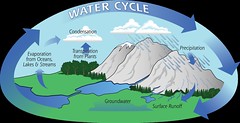 | 78 |
| 13460387514 | groundwater | water held underground in the soil or in pores and crevices in rock | 79 | |
| 13460387517 | water table | top of the groundwater zone; can fall or rise depending on weather |  | 80 |
| 13460387518 | aquifers | • underground caverns and porous layers of sand, gravel, or bedrock through which groundwater flows • most recharge extremely slowly because urban development prevents water from easily penetrating the ground | | 81 |
| 13460387519 | artesian well | is a confined aquifer containing groundwater under positive pressure | | 82 |
| 13460387522 | saltwater intrusion | movement of saltwater into an aquifer, which may cause contamination | 83 | |
| 13460387523 | cone of depression | occurs in an aquifer when groundwater is pumped from a well |  | 84 |
| 13460387524 | surface runoff | precipitation that does not infiltrate the ground or return to the atmosphere by evaporation |  | 85 |
| 13460387525 | watershed or drainage basin | the land from which surface water drains into a particular river, lake, wetland, or other body of water • 70% of water is used for agriculture, 20% of water is used for industry, 10% of water is used by humans and cities | 86 | |
| 13460387526 | drought | a prolonged period in which precipitation is at least 70% lower and evaporation is higher than normal in an area that is normally not dry • dries out soils, reduces stream flows, decreases tree growth and biomass, lowers net primary productivity, reduces crop yields, and causes a shift in some biomes towards relatively dry conditions • political/legal conflicts, depression for farmers |  | 87 |
| 13460387527 | main factors causing water scarcity: | • dry climate, drought, too many people using a normally reliable supply of water, and wasteful use of water • farmers, cities, and car owners are increasingly competing for access to the world's grain and water supplies, which in turn can degrade some of the natural capital that provides these resources | 88 | |
| 13460387528 | Water Privatization: Pros | • Private companies have the money and expertise to manage water resources better and more efficiently than governments • Some private water management companies have done a good job in the past | 89 | |
| 13460387529 | Water Privatization: Cons | • Because private companies make money by delivering water, they have an incentive to sell as much a possible rather than conserving it • Because they have too little money to pay water bills, the poor will continue to be left out • Water should be a public resource | 90 | |
| 13460387530 | Withdrawing Groundwater: Advantages | • Useful for drinking and irrigation • Available year-round • Exists almost everywhere • Renewable if not overpumped or contaminated • No evaporation losses • Cheaper to extract than most surface waters | 91 | |
| 13460387531 | Withdrawing Groundwater: Disadvantages | • Aquifer depletion from overpumping • Sinking of land (subsidence) from overpumping • Aquifers polluted for decades or centuries • Saltwater intrusion into drinking water supplies near coastal areas • Reduced water flows into surface waters • Increased cost & contamination from deeper wells | 92 | |
| 13460387532 | sinkholes | large craters that form when the roof of an underground cavern collapses after being drained of the groundwater that supports it |  | 93 |
| 13460387533 | Groundwater Depletion: Solutions | • Waste less water • Subsidize water conservation • Limit number of wells • Do not grow water-intensive crops in dry areas • Raise price of water to discourage waste • Tax water pumped from wells near surface waters • Set and enforce minimum stream flow levels • Divert surface water in wet years to recharge aquifers | 94 | |
| 13460387534 | dam | • a structure built across river to control the river's water flow • ¼ of the world's damn produce about 20% of the world's electricity |  | 95 |
| 13460387535 | reservoir | an artificial lake created by the river's flow after it is dammed; behind dam |  | 96 |
| 13460387536 | Damming the Waterways: Advantages | • Provides irrigation water above and below dam • Provides water for drinking • Reservoir useful for recreation and fishing • Can produce cheap electricity (hydropower) • Reduces downstream flooding • Capture and store runoff | 97 | |
| 13460387537 | Damming the Waterways: Disadvantages | • Flooded land destroys forests or cropland and displaces people • Large losses of water through evaporation • Deprives downstream cropland and estuaries of nutrient-rich silt • Risk of failure and devastating downstream flooding • Disrupts migration and spawning of some fish • Sediments build up behind dam in reservoirs | 98 | |
| 13460387538 | Water in Saudi Arabia | • Saudi Arabia is as water-poor as it is oil-rich, so it gets about 70% of its drinking water at a high cost from the world's largest system for removing salt from seawater, located on its eastern coast • Saudi Arabia has the world's largest number of desalination plants |  | 99 |
| 13460387539 | desalination | • removes dissolved salts from ocean water of from brackish water in aquifers of lakes for domestic use -High cost and energy footprint -Produces large quantities of briny wastewater that contain lots of salt and other minerals...dumping this water into the ocean is bad | 100 | |
| 13460387544 | drip or trickle irrigation (micro irrigation) | method that saves water and fertilizer by allowing water to drip slowly to the roots of plants, either onto the soil surface or directly onto the root zone, through a network of valves, pipes, tubing, and emitters; MOST efficient method because least evaporation; 90-95% of water reaches the crops |  | 101 |
| 13460387545 | Reducing Irrigation Water Waste: Solutions | • Line canals bringing water to irrigation ditches • Irrigate at night to reduce evaporation • Monitor soil moisture to add water only when necessary • Grow several crops on each plot of land (polyculture) • Avoid growing water-thirsty crops in dry areas • Irrigate with treated urban wastewater | 102 | |
| 13460387547 | rainwater harvesting | involves running pipes from rooftops and digging channels to catch rainwater | 103 | |
| 13460387548 | Reducing wastewater: | • Fix water leaks, use water meters, raise water prices • Use waterless composting toilers • Require water conservation in water-short cities • Purify and reuse water for houses, offices, buildings | 104 | |
| 13460387549 | Sustainable water use: | • Waste less water and subsidize water conservation • Do not deplete aquifers • Preserve water quality • Protect forests, wetlands, mountain glaciers, watersheds, and other natural systems • Get agreements among regions and countries sharing surface water resources • Raise water prices • Slow population growth | 105 | |
| 13460387552 | biodiversity | is the variety of the earth's species, the genes they contain, the ecosystems in which they live, and the ecosystem processes that sustain all life | 106 | |
| 13460387556 | natural selection | occurs when some individuals of a population have genetically based traits that enhance their ability to survive and reproduce |  | 107 |
| 13460387557 | genetic resistance | the ability of one or more organisms in a population to tolerate a chemical designed to kill it (e.g. bacteria with regard to hand sanitizer) | 108 | |
| 13460387563 | generalist species | broad niches (e.g. deer) |  | 109 |
| 13460387564 | specialist species | narrow niches; more vulnerable (e.g. panda bear) |  | 110 |
| 13460387565 | indicator species | species that provide early warnings of damage to a community or an ecosystem (e.g. amphibians [because their breath through skin]) |  | 111 |
| 13460387566 | keystone species | have a large effect on the types and abundance of other species in an ecosystem (e.g. shark, bumblebee, sea otters in kelp forests) |  | 112 |
| 13460387571 | primary succession | the gradual establishment of biocommunities in a lifeless area that has NO soil or sediment | 113 | |
| 13460387572 | secondary succession | a series of communities or ecosystems with different species that evolve where there's soil |  | 114 |
| 13460387578 | coevolution | evolution in which two or more species interact and exert selective pressures on each other that can lead each species to undergo adaptations e.g. bats and insects | 115 | |
| 13460387583 | carrying capacity (K) | maximum population of a given species that a particular habitat can sustain indefinitely without being degraded |  | 116 |
| 13460387584 | exponential growth (J curve) | • growth that increases at a constant rate per unit of time • starts slowly, but accelerates as population increases |  | 117 |
| 13460387585 | logistic growth (S curve) | rapid population growth, followed by a steady decrease in population growth until the population size levels off | | 118 |
| 13460387586 | genetic drift | random changes in gene frequencies in a population that can lead to unequal reproductive success, some individuals will breed more, thus their genes will dominate the gene pool | 119 | |
| 13460387588 | founder effect | occurs when only a few individuals in a population colonize a new habitat that is geographically isolated (e.g. finches on Galapagos Islands) | 120 | |
| 13460387589 | demographic bottleneck effect | occurs when only a few individuals in a population survive catastrophic events, and then the population lacks genetic diversity |  | 121 |
| 13460387590 | density-dependent factors: | infectious disease, parasitism, predation, competition |  | 122 |
| 13460387591 | density-independent factors: | habitat destruction, pollution, temperature change |  | 123 |
| 13460387595 | National Wildlife Refuges | areas that have been set aside for the protection of threatened or endangered species | 124 | |
| 13460387602 | CITES | (Convention on International Trade in Endangered Species) an international treaty banning the hunting and trade of endangered species; Created a list of animals in which countries who sign are forced to protect them | 125 | |
| 13460387605 | old-growth forest | an uncut or regenerated primary forest that has not been seriously disturbed by human activities or natural disasters for 200 years or more—36% of world's forests |  | 126 |
| 13460387606 | second-growth forest | a stand of trees resulting from secondary ecological succession; these forests develop after the trees in an area have been removed by human activities (e.g. clear-cutting or fire)—60% of world's forests | 127 | |
| 13460387608 | selective-cutting | intermediate-aged or mature trees in an uneven-aged forest are cut singly or in small groups |  | 128 |
| 13460387609 | clear-cutting | removal of all trees; the most efficient way for a logging operation to harvest trees, but the most harmful; increased runoff, increased soil erosion, loss of nutrients |  | 129 |
| 13460387610 | strip-cutting | clear-cutting a strip of trees along the contour of land within a corridor narrow enough to allow natural regeneration |  | 130 |
| 13460387613 | prescribed fires | • intentional small, contained surfaces fires created to remove flammable small trees and underbrush in the highest-risk forest areas |  | 131 |
| 13460387614 | deforestation | is the temporary or permanent removal of large expanses of forest for agriculture, settlements, or other uses |  | 132 |
| 13460387617 | range-lands | are unfenced grasslands in temperate and tropical climates that supply forage, or vegetation, for grazing and browsing animals |  | 133 |
| 13460387618 | overgrazing | occurs when too many animals graze for too long and exceed the carrying capacity of range-land area; it reduces grass cover, exposes the soil to erosion by water and wind, and compacts the soil |  | 134 |
| 13460387619 | rotational grazing | cattle are confined by portable fencing to one area for a short time and then moved to a new location |  | 135 |
| 13460387620 | riparian zones | lush vegetation along streams or rivers |  | 136 |
| 13460387623 | biomes | are a major regional or global biotic community characterized by the dominant forms of plants life and the climate |  | 137 |
| 13460387625 | Coral Reefs | -warm, clear, shallow ocean habitats near land and in the tropics -disappearing because of an increase in sea temperature, pollution, dredging, and sedimentation -very sensitive to environmental changes |  | 138 |
| 13460387628 | Coal | Cheap non-renewable energy. A hard fossil fuel that is burned for electricity and releases sulfur and other toxic pollutants |  | 139 |
| 13460387629 | Petroleum | Non-renewable liquid energy. Good for mobile combustion and easily transported. |  | 140 |
| 13460387630 | Natural Gas | Mostly methane gas energy source. Burns the cleanest of all fossil fuels. | 141 | |
| 13460387631 | Nuclear Energy | the energy released during nuclear fission or fusion, especially when used to generate electricity. Waste is a major problem |  | 142 |
| 13460387632 | Biofuel Energy | when biomass is converted directly into a liquid |  | 143 |
| 13460387633 | Biomass Energy | Energy produced by burning organic matter, such as wood, food scraps, and alcohol | 144 | |
| 13460387634 | Hydroelectric Energy | The use of flowing water from waterfalls and dams to produce electricity. Costly to build, negative impacts on ecosystems, but provides huge amounts of energy |  | 145 |
| 13460387635 | Wind Energy | The energy captured by transforming the motion of air into electrical energy using a turbine | 146 | |
| 13460387636 | Solar Energy | Uses photovoltaic cells to absorb energy from the sun and transfer it to electricity. Costly but efficiency is improving | 147 | |
| 13460387637 | Geothermal Energy | Heat energy that comes from the natural radioactive decay of elements deep within Earth. | 148 | |
| 13460387638 | Hydrogen Fuel Cell | A device that uses hydrogen and oxygen to produce electricity. The byproducts are heat and water. | 149 | |
| 13460387639 | Tidal Energy | A form of renewable energy that relies on the ebb and flow of the tides to generate electricity. | 150 | |
| 13460387640 | Hybrid Car | car powered by an electric motor and an internal combustion engine. Can be recharged through applying the break | 151 | |
| 13460387643 | Indoor Air Pollutants | Asbestos, Formaldehyde, Carbon monoxide, Radon | 152 | |
| 13460387644 | Outdoor Air Pollutants | NOx, SOx, Particulate Matter, VOCs, Ozone | 153 | |
| 13460387645 | Toxic Metals | Lead, Mercury, Cadmium, Arsenic | 154 |
SCOTUS Cases - AP GOV Flashcards
Terms : Hide Images
| 13329303827 | McCulloch v. Maryland | Maryland tries to tax Bank of US; Court finds that they CANNOT do this; Congress CAN make a National Bank (Elastic Clause); National Government is supreme (Supremacy Clause) | 0 | |
| 13329303828 | Barron v. Baltimore | Man sues State citing the 5th Amendment; Court refuses to hear the case.; Bill of Rights ONLY apply to the Federal Government, not states. | 1 | |
| 13329303829 | South Dakota v. Dole | States told to raise drinking age to 21 or lose funding for Highways; Court Ruled that this was OK; Increased Federal Government power over states | 2 | |
| 13329303830 | Fletcher v. Peck | Court rules that States cannot pass laws that impair contracts made in good faith; 1st time the Court overturns a STATE law. | 3 | |
| 13329303831 | D.C. v. Heller | Law bans handguns in homes; Court says NO; Right to Bear Arms for self-defense is a fundamental right and can't be denied. | 4 | |
| 13329303832 | McDonald v. Chicago | Heller case establishes that right to bear arms is fundamental right. Does it apply to states? Court says yes. Incorporates 2nd Amendment. | 5 | |
| 13329303833 | Gibbons v. Ogden | Dispute over ferry licenses; Federal Government wins; National Government is Supreme (Supremacy Clause); Court BROADLY defines INTERSTATE Commerce (Commerce Clause) so Federal Government can get involved in almost anything | 6 | |
| 13329303834 | US v. Lopez | US Law create "Gun-Free Zones" around schools; Court says NO.; Commerce Clause cannot be used for ANYTHING, limits Commerce Clause | 7 | |
| 13329303835 | Heart of Atlanta Motel v. US | Hotel refused to serve African-Americans; Court ruled that Federal Government could stop them; Commerce Clause used to end segregation | 8 | |
| 13329303836 | Printz v. US | "Brady Bill" required state cops to perform background checks before guns could be purchased, even though it was a federal law; Court says NO.; Federal Government cannot make states carry out the functions of the Fed Gov't | 9 | |
| 13329303837 | US v. Morrison | Woman is raped at Virginia Tech. Rapist is not punished. She sues under the Federal Violence Against Women Act.; Court says that the law is unconstitutional.; Since the VAWA didn't involve interstate commerce, Congress doesn't have that power. | 10 | |
| 13329303838 | Marbury v. Madison | Midnight Judges; Marbury sues based on a Congressional Law; Court finds that law violates Constitution so is VOID Establishes Judicial Review | 11 | |
| 13329303839 | US v. Nixon | Nixon had recordings from Oval Office and refused to give them up during Watergate investigation; claimed "Executive Privilege"; Court orders him to deliver tapes; Executive Privilege DOES exist, but is not GUARANTEED | 12 | |
| 13329303840 | INS v. Chadha | Federal law gives Congress a "legislative veto". Court says NO.; Legislative Vetoes give Congress too much power and are unconstitutional. | 13 | |
| 13329303841 | Engel v. Vitale | Public school required non-denominational prayer every morning. Court says NO; Outlawed prayer of any kind in Public School | 14 | |
| 13329303842 | Abington SD v. Schempp | Students forced to recite bible verses in public school; Court says NO.; Reading bible violates Establishment Clause. | 15 | |
| 13329303843 | Lemon v. Kurtzman | State passes law that allows government to pay for non-religion teacher at religious school; Court says NO; Lemon Test Created: Can't advance or inhibit religion, Must be for secular purpose, Must avoid entanglement b/w religion and gov't | 16 | |
| 13329303844 | Lee v. Weisman | Public school opens graduation ceremony with a prayer. Court says NO.; Since ceremony is a gov't event, prayer violates the Establishment Clause. | 17 | |
| 13329303845 | Wallace v. Jaffree | Kids in public school were forced to observe a moment of silence for "meditation or voluntary prayer"; Court says NO; Violated Establishment Clause | 18 | |
| 13329303846 | Everson v. Board of Education | State law reimburses parents for using school bus, even at Catholic Schools; Court says OK.; School Bus is a basic service (like fire dept), so it does not violate Establishment Clause. | 19 | |
| 13329303847 | Reynolds v. US | State law outlaws polygamy. Mormons sue. Court upholds law.; All religious beliefs are protected, but NOT all religious practices. States can ban polygamy. | 20 | |
| 13329303848 | Wisconsin v. Yoder | Amish parents sued to have their students removed from school after 8th grade because it is against their beliefs. Court said OK.; This is protected under the Free-Exercise Clause | 21 | |
| 13329303849 | Oregon v. Smith | Native Americans were fired for using Peyote as part of a religious ceremony. The Court upheld the firing.; States can limit the free-exercise of religion if it involves illegal activities. | 22 | |
| 13329303850 | Jacobson v. Massachusetts | State law required vaccinations of children. Jacobson refused on religious grounds. The Court upheld the law.; Free-Exercise can be limited if it serves a compelling government interest. | 23 | |
| 13329303851 | West Virginia v. Barnette | Jehovah's Witnesses refused to say the Pledge of Allegiance in school and were punished; Court says NO; Students cannot be forced to say Pledge if it's against their religious beliefs. | 24 | |
| 13329303852 | Gitlow v. New York | Gitlow arrested for advocating communism and overthrow of Government. Court upholds his conviction - BUT - Freedom of Speech is protected from States too; BEGINS INCORPORATION PROCESS | 25 | |
| 13329303853 | Schenck v. US | Schenck found guilty of violating Sedition Act by distributing anti-war pamphlets during WWI.; Court upholds conviction.; Free Speech CAN be limited; Creates "Clear-and-Present Danger" Test | 26 | |
| 13329303854 | Tinker v. Des Moines | Students suspended for wearing arm-band in protest of Vietnam War; Court says NO; Symbolic Speech protected too; Students don't lose rights "at schoolhouse gates". | 27 | |
| 13329303855 | Texas v. Johnson | Johnson arrested for burning US Flag in protest. Court says NO; Symbolic Speech Protected, even if we don't like it. | 28 | |
| 13329303856 | Chaplinsky v. New Hampshire | Man arrested for shouting insults and "fighting words" at police officer. Court upholds conviction.; Certain types of speech not protected by 1st Amendment. | 29 | |
| 13329303857 | Miller v. California | State law bans sending obscene material through the mail. The Court says OK. Creates Obscenity Test: Avg person finds it elicits lust, Avg person finds it offensive, Lacks political, artistic, scientific value. | 30 | |
| 13329303858 | Dennis v. US | Communist leaders convicted of trying to overthrow the government. Court says OK.; Speech that advocates the violent overthrow of the US is not protected by the 1st Amendment. | 31 | |
| 13329303859 | Near v. Minnesota | State law stops newspapers from publishing "lewd or lascivious" material. Court says NO.; Limiting Free Press is rarely ok. Prior Restraint is (almost) never OK. | 32 | |
| 13329303860 | Hazelwood v. Kuhlmeier | Principal at school removed 2 articles from student newspaper. Court says it is OK.; Prior Restraint is ok in schools to maintain good learning environment. | 33 | |
| 13329303861 | New York Times v. Sullivan | NY Times published ad in defense of MLK Jr, that was unfavorable of city officials in Alabama. The officials sued for Libel because some of the facts were incorrect. Court says NO.; In order for libel to be true against public officials, actual malice must be proven. | 34 | |
| 13329303862 | Roth v. US | A man is arrested for selling obscene books. The Court says OK., Obscenity is not protected by the 1st Amendment. | 35 | |
| 13329303863 | New York Times v.US | Pentagon Papers Case; NYT wants to publish leaked, classified documents. Government tries to stop them. Court says they can publish the documents.; The documents would not create a "clear-and-present danger", so prior restraint is not allowed. | 36 | |
| 13329303864 | Brandenburg v. Ohio | KKK leader gives a speech and was arrested for promoting unlawful acts. Court overturns the conviction.; The speech must be likely to incite lawless acts in order to be prohibited. | 37 | |
| 13329303865 | NAACP v. Alabama | Alabama wanted to stop NAACP, so they passed a law that required them to make their membership public; Court says NO.; Freedom of Association is protected if there is no "overriding valid state interest" to limit it. | 38 | |
| 13329303866 | Boy Scouts of America v. Dale | Boy Scouts exclude Homosexuals from organization; Court says its OK; Freedom of Association allows private groups to exclude people if they go against the groups fundamental principles. | 39 | |
| 13329303867 | Mapp v. Ohio | Woman arrested after an illegal search finds obscene material; Court throws out evidence. ; Creates Exclusionary Rule: Evidence obtained illegally cannot be used in court | 40 | |
| 13329303868 | Miranda v. Arizona | Miranda confesses to crime after interrogation because he didn't know his rights; Court says NO; Not knowing rights doesn't take them away. Creates Miranda Rights: Police must inform suspects of rights before arrest | 41 | |
| 13329303869 | Gideon v. Wainwright | Gideon found guilty because he couldn't afford a lawyer. Court overturns conviction.; Right to an attorney, even for those who cannot afford it. Creates Public Defenders Office. | 42 | |
| 13329303870 | Escobedo v. Illinois | Escobedo asks for lawyer, but cops say no and continue to question him; he eventually confesses; Court throws out conviction. Once a lawyer is requested, questioning must stop. "Absolute Right" to remain silent. | 43 | |
| 13329303871 | California v. Acevedo | Trunk of car is searched because cops have probable cause that there are drugs inside. Drugs are found and man is arrested. Court says OK. Containers can be searched (without a warrant) in cars if there is probable cause that evidence is inside. | 44 | |
| 13329303872 | US v. Leon | Cops search house with a search warrant that was incorrectly given. Drugs are found and man is arrested. Court says OK. Relaxes "exclusionary rule"; Creates Good-Faith Exception: If cops act in "good faith", evidence can still be used | 45 | |
| 13329303873 | New Jersey v. TLO | Student is caught smoking in bathroom. Her bag is searched and rolling papers are found. She is suspended. Court upholds her suspension. Students have 4th Amendment rights BUT, probable cause isn't needed, just reasonable suspicion | 46 | |
| 13329303874 | Katz v. US | Cops tap public phones without a warrant and catch Katz gambling. Court overturns conviction. 4th Amendment can't intrude on "reasonable expectation of privacy", which include private phone calls. | 47 | |
| 13329303875 | Furman v. Georgia | Furman is sentenced to death for Murder; Court says NO.; Death penalty is given out too randomly (usually along racial lines) 2-tier trial system put in place: 1st = guilt/innocence, 2nd = death penalty/life in prison | 48 | |
| 13329303876 | Gregg v. Georgia | Gregg is sentenced to death for Murder. Court says OK. Death Penalty is NOT cruel and unusual punishment if applied fairly. | 49 | |
| 13329303877 | Griswold v. Connecticut | State law bans the sale and use of contraception; Court says NO. Creates Right to Privacy | 50 | |
| 13329303878 | Roe v. Wade | Roe wants an Abortion but Texas law says they are illegal; Court allows abortion. Right to Privacy includes abortion. States cannot ban abortion in 1st or 2nd trimester. | 51 | |
| 13329303879 | Webster v. Reproductive Health Services | Limits placed on Abortions; Court says OK. Abortion STILL LEGAL, but states can limit it as long as limits are reasonable. | 52 | |
| 13329303880 | Planned Parenthood v. Casey | States further limit abortion; Court says OK; Abortion STILL LEGAL, but states can further limit it. Creates Undue Burden Standard: Limits cannot place undue burden on mothers. | 53 | |
| 13329303881 | Reed v. Reed | State law gives preference to men over women in executing a will; Court says NO; Laws differentiating men and women cannot be arbitrary. Must be more than "reasonable". | 54 | |
| 13329303882 | Rostker v. Goldberg | Draft laws exclude women; Court says OK; Congress can draft men, but exclude women | 55 | |
| 13329303883 | US v. Virginia | VMI, a military school in Virginia, does not allow women to enroll. Court says NO. Women are allowed to join military schools | 56 | |
| 13329303884 | Loving v. Virginia | State law outlaws inter-racial marriage.; Court says NO; Government had no compelling reason to ban inter-racial marriages. Marriage is a personal, not government, matter. | 57 | |
| 13329303885 | Lawrence v. Texas | Texas law bans homosexuality; Court says NO; States cannot ban homosexuality. | 58 | |
| 13329303886 | Windsor v. US | Defense of Marriage Act states that Federal Government only recognizes marriage between a man and a woman - even if individual states recognize gay marriage; Court says NO.; Marriage is a State issue and Federal Government cannot define it. | 59 | |
| 13329303887 | Obergefell v. Hodges | Some states ban same-sex marriage, and refuse to recognize legal same-sex marriages from other states; Court says NO; Same-sex marriage is legal in every state. | 60 | |
| 13329303888 | Scott v. Sanford | Dred Scott, a slave, sues for his freedom because his owner moved to a "free state"; Court says NO. Slaves are property and so can be moved anywhere and also cannot sue in court because property has no legal rights. | 61 | |
| 13329303889 | Plessy v. Ferguson | Jim Crow Laws segregate blacks and whites; Court says OK; Creates Separate-but-Equal Doctrine | 62 | |
| 13329303890 | Brown v. Board of Education | Black girl wants to go to white school; Court says OK; Separate-but-equal is inherently unequal; Outlaws school segregation. | 63 | |
| 13329303891 | Swann v. Charlotte Mecklenburg BOE | After Brown, schools desegregated slowly. Court orders "Busing" to achieve racial balance. Busing legal; the existence of all-black schools is considered an attempt to discriminate. | 64 | |
| 13329303892 | Korematsu v. US | Japanese Internment during WWII; Court says OK; National Security more important than individual liberties. | 65 | |
| 13329303893 | Regents of University of California v. Bakke | White man denied access to UC Davis because of Affirmative Action; Court says NO; Numerical Quotas illegal, but race can be a factor in deciding in college admissions. | 66 | |
| 13329303894 | Gratz v. Bollinger | White student denied access to University of Michigan because of automatic point system for minorities; Court says NO. Automatic points based on race is arbitrary and unreasonable. | 67 | |
| 13329303895 | Grutter v. Bollinger | White student denied access to University of Michigan because race was used as a "plus factor".; Court says OK; Race can be used as a "plus factor" because it is "narrowly tailored". | 68 | |
| 13329303896 | Adarand Constructors v. Pena | State law gives preference to minority-owned companies; Court says NO; ALL racial discrimination must live up to the "strict scrutiny" test and is considered inherently suspect. | 69 | |
| 13329303897 | Palko v. Connecticut | Palko argues that 5th Amendment applies to states too. Court says NO - but some rights DO apply to states.; "Fundamental" liberties are protected from states too; Begins SELECTIVE INCORPORATION | 70 | |
| 13329303898 | Baker v. Carr | People challenge how state apportionment took place. This had always been considered a "political question" left to Congress. Court rules on issue.; Created the precedent that the Court can rule on "political questions", especially apportionment. | 71 | |
| 13329303899 | Reynolds v. Sims | In Alabama, states were apportioned regardless of population. Some ratios were as bad a 40:1. Court says NO. As much as is possible, state districts must be of equal population | 72 | |
| 13329303900 | Wesberry v. Sanders | Georgia districts were very uneven in terms of population. Court says NO. By keeping districts uneven, one person's vote counted more than another's. As much as is possible, Congressional districts must be of equal population so that everyone's vote has the same power. | 73 | |
| 13329303901 | Buckley v. Valeo | FEC sets limits on campaign contributions. Court says limits on money to candidates are OK; but, limits on independent expenditures is NOT. Money = Speech, so it's protected. | 74 | |
| 13329303902 | Citizens United v. FEC | BCRA bans Corporations or Unions from funding campaigns; Court says NO.; Corporations = people, people have freedom of speech, money = speech, so...corporations have freedom of speech, which includes spending on political advertising, which cannot be limited. | 75 | |
| 13329303903 | Shaw v. Reno | NC draws district lines to create 2 majority-minority (black) districts. White people sue. Racial gerrymandering, even creating majority-minority districts, can be challenged in court. | 76 |
Flashcards
Pages

Need Help?
We hope your visit has been a productive one. If you're having any problems, or would like to give some feedback, we'd love to hear from you.
For general help, questions, and suggestions, try our dedicated support forums.
If you need to contact the Course-Notes.Org web experience team, please use our contact form.
Need Notes?
While we strive to provide the most comprehensive notes for as many high school textbooks as possible, there are certainly going to be some that we miss. Drop us a note and let us know which textbooks you need. Be sure to include which edition of the textbook you are using! If we see enough demand, we'll do whatever we can to get those notes up on the site for you!
