

Flashcards
AP GOPO Flashcards
Terms : Hide Images
| 13455431870 | Marbury v. Madison | (1803) establishes the Supreme Court's power of Judicial Review | 0 | |
| 13455431871 | McCulloch v. Maryland | 1819, Cheif justice john marshall limits of the US constition and of the authority of the federal and state govts. one side was opposed to establishment of a national bank and challenged the authority of federal govt to establish one. supreme court ruled that power of federal govt was supreme that of the states and the states couldnt interfere | 1 | |
| 13455431872 | Schenck v. United States | 1919--Case involving limits on free speech. Established the "clear and present danger" principle. 1ST AMENDMENT- SPEECH | 2 | |
| 13455431873 | Brown v. Board of Education | 1954 - The Supreme Court overruled Plessy v. Ferguson, declared that racially segregated facilities are inherently unequal and ordered all public schools desegregated. 14TH AMENDMENT- EQUAL PROTECTION | 3 | |
| 13455431874 | Baker v. Carr | 1962 One man, one vote | 4 | |
| 13455431875 | Engel v. Vitale | 1962: Prohibited state-sponsored recitation of prayer in public schools 1ST AMENDMENT- ESTABLISHMENT CLAUSE 14TH AMENDMENT- DUE PROCESS | 5 | |
| 13455431876 | Gideon v. Wainwright | 1963 ruling that a defendant in a felony trial must be provided a lawyer free of charge if the defendant cannot afford one. 6TH AMENDMENT- RIGHT TO AN ATTORNEY 14TH AMENDMENT- EQUAL PROTECTION | 6 | |
| 13455431877 | Tinker v. Des Moines | (1969) The Court ruled that wearing black arm-bands in protest of the Vietnam war was "pure speech" or symbolic speech 1ST AMENDMENT- SYMBOLIC SPEECH | 7 | |
| 13455431878 | New York Times v. US | 1971- Prior Restraint. Overruled Nixon's attempt to prevent publication of Vietnam documents 1ST AMENDMENT- PRESS | 8 | |
| 13455431879 | Wisconsin v. Yoder | (1972) The Court ruled that Wisconsin could not require Amish parents to send their children to public school beyond the eighth grade because it would violate their long-held religious beliefs 1ST AMENDMENT- EXERCISE CLAUSE | 9 | |
| 13455431880 | Roe v. Wade | (1973) legalized abortion 14TH AMENDMENT- RIGHT TO PRIVACY | 10 | |
| 13455431881 | Shaw v. Reno | 1993- No racial gerrymandering | 11 | |
| 13455431882 | United States v. Lopez | (1995) Gun Free School Zones Act exceeded Congress' authority to regulate interstate commerce. COMMERCE CLAUSE | 12 | |
| 13455431883 | McDonald v. Chicago | 2010- The right of an individual to "keep and bear arms" 2ND AMENDMENT- ARMS 14TH AMENDMENT- DUE PROCESS | 13 | |
| 13455431884 | Citizens United v. FEC | 2010- corporate funding of independent political broadcasts can't be limited MONEY=SPEECH 1ST AMENDMENT- SPEECH | 14 | |
| 13455431885 | Declaration of Independence | 1776 statement, issued by the Second Continental Congress, explaining why the colonies wanted independence from Britain (listed grievances) | 15 | |
| 13455431886 | Articles of Confederation | 1st Constitution of the U.S. 1781-1788 (weaknesses-no executive, no judicial, no power to tax, no power to regulate trade) | 16 | |
| 13455431887 | Constitution of the United States of America | 1789- Supreme law of the land; 1st 10 amendments Bill of Rights | 17 | |
| 13455431888 | Federalist 10 | James Madison 1787; large republics are stronger, factions are dangerous, cannot be prevented but can be controlled and are necessary; governments purpose to protect property rights; representatives are smarter than the people | 18 | |
| 13455431889 | Federalist 51 | James Madison 1788; How does the Constitution preserve the separation of powers? Each branch has own will and not influenced by others. Can't be chosen by each other and pay is unchangeable. Pure Separation of powers isn't possible because some members must be chosen by other branches and there is a need for checks so there will not be a dominating legislative branch. | 19 | |
| 13455431890 | Federalist 70 | Alexander Hamilton 1788; energetic,forceful, single president is best. Disagreement is for the legislative branch, not the executive | 20 | |
| 13455431891 | Federalist 78 | Alexander Hamilton 1788; Why do judges serve during good behavior? Explains why courts have judicial review. Judicial branch, removed from people, more motivated to do what is morally right, lifetime appointment so they'll only attract loyal people, least dangerous, no sword nor purse (enforcement or money) | 21 | |
| 13455431892 | Brutus No. 1 | This work by a prominent Anti-Federalist argued that that the new federal government would be too powerful. In particular, he pointed to the necessary-and-proper clause and the supremacy clause. In addition, he objected to Congress's power to tax and raise a standing army and to the vast size of the proposed republic. He felt this powerful new government would supplant the states. Preferred confederation of small republics | 22 | |
| 13455431893 | Letter from Birmingham Jail | MLK's response to clergymen; freedom must be demanded from the oppressed, importance of nonviolent protest, just and unjust laws, white moderates | 23 | |
| 13614148603 | McCain-Feingold Act (ch 9) | 2002; prohibited soft money (money to a party directly vs a candidate) contributions | 24 | |
| 13614309752 | rational choice voting (ch 9)1 | voting based on citizen's individual interest | 25 | |
| 13614318594 | retrospective voting (ch 9) | voting for reelection based on past actions | 26 | |
| 13614326579 | prospective voting (ch 9) | voting based on predictions | 27 | |
| 13614330549 | party-line voting (ch 9) | voting based on party alignment for all offices | 28 | |
| 13614342730 | electoral college (ch 9) | determines presidency, winner-takes-all allocation of votes | 29 | |
| 13614426098 | Federal Election Campaign Act (ch 9) | 1974; disclose publicly how money is used, and regulated contributions | 30 | |
| 13614830660 | iron triangles (ch 10) | bureaucratic agencies, interest groups, and congressional committees; rule policy-making | 31 | |
| 13614836676 | amicus curiae brief (ch 10) | "friend of the court" brief filed by an interest group to influence a Supreme Court decision in support of one side | 32 | |
| 13849535269 | Amendment Process | step 1: amendment proposed by 2/3 vote of both houses of congress OR a constitutional convention called by congress on petition of 2/3 out of 50 states. THEN amendment ratified by 3/4 of the 50 state legislatures OR 3/4 of special constitutional conventions called by 50 states THEN the new amendment | 33 | |
| 13849541600 | Requirements for President | Natural born citizen, at least 35 years of age and lived in the U.S for 14 years. | 34 | |
| 13849541601 | Requirements for Senate | 30 years old 9 year citizen not and inhabitant of the same state you come from | 35 | |
| 13849545213 | requirements for house of reps | (1) be at least twenty-five years old, (2) have been a citizen of the United States for the past seven years, and (3) be (at the time of the election) an inhabitant of the state they represent | 36 | |
| 13849552159 | 1st Amendment | Freedom of religion (Engle v Vital, Lemon v Kurtzman, Wisconsin v. Yoder), speech (Johnson v Texas, Black v Virginia, Tinker v Des Moines, Schenck v. United States), press (NY times co v. US), rights of assembly, and to petition |  | 37 |
| 13849554367 | 2nd Amendment | Right to bear arms (mcdonald v. chicago) |  | 38 |
| 13849603956 | 3rd Amendment | No quartering of soldiers |  | 39 |
| 13849605588 | 4th Amendment | Freedom from unreasonable searches and seizures (mapp v ohio) |  | 40 |
| 13849608232 | 5th Amendment | Criminal Proceedings; Due Process; Eminent Domain; Double Jeopardy; Protection from Self incrimination (miranda v arizona) |  | 41 |
| 13849616706 | 6th Amendment | The right to a Speedy Trial by jury, representation by an attorney for an accused person (Gideon v Wainwright) | 42 | |
| 13849619386 | 7th Amendment | Right to jury in civil trials. |  | 43 |
| 13849623916 | 8th Amendment | No cruel or unusual punishment |  | 44 |
| 13849623917 | 9th Amendment | Citizens entitled to rights not listed in the Constitution; RIGHT TO PRIVACY (roe v wade, lawrence v texas) |  | 45 |
| 13849635321 | 10th Amendment | Powers not given to federal government go to people and States | 46 | |
| 13849640170 | 11th Amendment | One State cannot be sued by another state | 47 | |
| 13849642444 | 12th Amendment | Election of President and Vice President; electoral college |  | 48 |
| 13849645423 | 13th Amendment (1865) | Abolition of slavery w/o compensation for slave-owners |  | 49 |
| 13849662627 | 14th Amendment | 1) Citizenship for African Americans, 2) Repeal of 3/5 Compromise, 3) Denial of former confederate officials from holding national or state office, 4) Repudiate (reject) confederate debts EQUAL PROTECTION (brown v board of education, regents of UC v Blakke) |  | 50 |
| 13849679783 | 15th Amendment (1870) | U.S. cannot prevent a person from voting because of race, color, or creed |  | 51 |
| 13849683118 | 16th Amendment | Amendment to the United States Constitution (1913) gave Congress the power to tax income. | 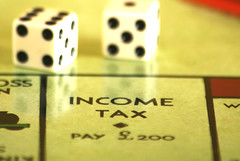 | 52 |
| 13849684114 | 17th Amendment | Direct election of senators |  | 53 |
| 13849686126 | 18th Amendment | Prohibition of alcohol |  | 54 |
| 13849688034 | 19th Amendment (1920) | Gave women the right to vote |  | 55 |
| 13849689608 | 20th Amendment | Congress begins on January 30th; President starts on January 20th "Lame-duck" Amendment | 56 | |
| 13849693462 | 21st Amendment | Repeal of Prohibition |  | 57 |
| 13849695229 | 22nd Amendment | Limits the president to two terms or 10 years. |  | 58 |
| 13849696449 | 23rd Amendment | gave residents of Washington DC the right to vote |  | 59 |
| 13849697462 | 24th Amendment | Abolishes poll taxes |  | 60 |
| 13849700347 | 25th Amendment | (1) Succession of VP if president dies or become incapable to do his job.(2) if there is no VP, president must appoint one, and congress must approve |  | 61 |
| 13849701945 | 26th Amendment | Lowered the voting age from 21 to 18 |  | 62 |
| 13849704893 | 27th Amendment | congressional pay raises are not begun until the next election |  | 63 |
| 13864748972 | Article 1 of the Constitution | Make up of the senate and congress REVENUE STARTS IN HOUSE | 64 | |
| 13864749086 | Article 2 of the Constitution | Executive Branch SECTION 2- ENUMERATED POWERS | 65 | |
| 13864752132 | Article 3 of the Constitution | Judicial Branch | 66 | |
| 13864755061 | Article 4 of the Constitution | Outlines the rights and expectations for all states and citizens including the adding of new states PRIVILEGES AND IMMUNITIES FULL FAITH AND CREDIT EXTRADITION | 67 | |
| 13864756934 | Article 5 of the Constitution | Amendment Process | 68 | |
| 13864756935 | Article 6 of the Constitution | clearly states that national law will be supreme over state law SUPREMACY CLAUSE | 69 | |
| 13864759237 | Article 7 of the Constitution | Ratifying the Constitution | 70 | |
| 13864761858 | 71 |
Flashcards
Flashcards
AP Gov Flashcards
Terms : Hide Images
| 14846498768 | Political Participation | All the activities used by citizens to influence the selection of political leaders or the policies they pursue | 0 | |
| 14846501937 | Single-issue groups | Groups that have a narrow interest, tend to dislike compromise, and often draw membership from people new to politics. | 1 | |
| 14846504038 | Policymaking Systems | The process by which policy comes into being and evolves over time. People's interests, problems, and concerns create political issues for government policymakers. These issues shape policy, which in turn impacts people, generating more interests, problems, and concerns. | 2 | |
| 14846504039 | Linkage institutions | The channels through which people's concerns become political issues on the government's policy agenda. Includes elections, political parties, interest groups, and the media. | 3 | |
| 14846507514 | policymaking institutions | the branches of government charged with taking action on political issues | 4 | |
| 14846509309 | public policy | A choice that government makes in response to a political issue. A policy is a course of action taken with regard to some problem. | 5 | |
| 14846512975 | majority rule | In a democracy, choosing among alternatives requires that the majority's desire be respected. | 6 | |
| 14846512976 | minority rights | A principle of traditional democratic theory that guarantees rights to those who do not belong to majorities. | 7 | |
| 14846515547 | pluralist theory | A theory of government and politics emphasizing that politics is mainly a competition among groups, each one pressing for its own preferred policies. | 8 | |
| 14846517142 | elite and class theory | A theory of government and politics contending that societies are divided along class lines and that an upper-class elite will rule, regardless of the formal niceties of governmental organization. | 9 | |
| 14846517143 | hyper pluralism | a theory of government and politics contending that groups are so strong that government is weakened | 10 | |
| 14846520916 | policy gridlock | A condition that occurs when interests conflict and no coalition is strong enough to form a majority and establish policy, so nothing gets done. | 11 |
Flashcards
Flashcards
AP Statistics Flashcards
Terms : Hide Images
| 13986411692 | How do you check if there is outliers? | calculate IQR; anything above Q3+1.5(IQR) or below Q1-1.5(IQR) is an outlier | 0 | |
| 13986411693 | If a graph is skewed, should we calculate the median or the mean? Why? | median; it is resistant to skews and outliers | 1 | |
| 13986411694 | If a graph is roughly symmetrical, should we calculate the median or the mean? Why? | mean; generally is more accurate if the data has no outliers | 2 | |
| 13986411695 | What is in the five number summary? | Minimum, Q1, Median, Q3, Maximum | 3 | |
| 13986411696 | Relationship between variance and standard deviation? | variance=(standard deviation)^2 | 4 | |
| 13986411697 | variance definition | the variance is roughly the average of the squared differences between each observation and the mean | 5 | |
| 13986411698 | standard deviation | the standard deviation is the square root of the variance | 6 | |
| 13986411699 | What should we use to measure spread if the median was calculated? | IQR | 7 | |
| 13986411700 | What should we use to measure spread if the mean was calculated? | standard deviation | 8 | |
| 13986411701 | What is the IQR? How much of the data does it represent? | Q3-Q1; 50% | 9 | |
| 13986411702 | How do you calculate standard deviation? | 1. Type data into L1 2. Find mean with 1 Variable Stats 3. Turn L2 into (L1-mean) 4. Turn L3 into (L2)^2 5. Go to 2nd STAT over to MATH, select sum( 6. Type in L3 7. multiply it by (1/n-1) 8. Square root it | 10 | |
| 13986411882 | What is the formula for standard deviation? |  | 11 | |
| 13986411703 | Categorical variables vs. Quantitative Variables | Categorical: individuals can be assigned to one of several groups or categories Quantitative: takes numberical values | 12 | |
| 13986411704 | If a possible outlier is on the fence, is it an outlier? | No | 13 | |
| 13986411705 | Things to include when describing a distribution | Center (Mean or Median), Unusual Gaps or Outliers, Spread (Standard Deviation or IQR), Shape (Roughly Symmetric, slightly/heavily skewed left or right, bimodal, range) | 14 | |
| 13986411706 | Explain how to standardize a variable. What is the purpose of standardizing a variable? | Subtract the distribution mean and then divide by standard deviation. Tells us how many standard deviations from the mean an observation falls, and in what direction. | 15 | |
| 13986411707 | What effect does standardizing the values have on the distribution? | shape would be the same as the original distribution, the mean would become 0, the standard deviation would become 1 | 16 | |
| 13986411708 | What is a density curve? | a curve that (a) is on or above the horizontal axis, and (b) has exactly an area of 1 | 17 | |
| 13986411709 | Inverse Norm | when you want to find the percentile: invNorm (area, mean, standard deviation) | 18 | |
| 13986411710 | z | (x-mean)/standard deviation | 19 | |
| 13986411711 | pth percentile | the value with p percent observations less than is | 20 | |
| 13986411712 | cumulative relative frequency graph | can be used to describe the position of an individual within a distribution or to locate a specified percentile of the distribution | 21 | |
| 13986411713 | How to find and interpret the correlation coefficient r for a scatterplot | STAT plot, scatter, L1 and L2 (Plot 1: ON); STAT --> CALC --> 8:LinReg(a+bx) No r? --> 2nd 0 (Catalog) down to Diagnostic ON | 22 | |
| 13986411714 | r | tells us the strength of a LINEAR association. -1 to 1. Not resistant to outliers | 23 | |
| 13986411715 | r^2 | the proportion (percent) of the variation in the values of y that can be accounted for by the least squares regression line | 24 | |
| 13986411716 | residual plot | a scatterplot of the residuals against the explanatory variable. Residual plots help us assess how well a regression line fits the data. It should have NO PATTERN | 25 | |
| 13986411717 | regression line | a line that describes how a response variable y changes as an explanatory variable x changes. We often use a regression line to predict the value of y for a given value of x. | 26 | |
| 13986411718 | residual formula | residual=y-y(hat) aka observed y - predicted y | 27 | |
| 13986411719 | What method do you use to check if a distribution or probability is binomial? | BINS: 1. Binary: There only two outcomes (success and failure) 2. Independent: The events independent of one another? 3. Number: There is a fixed number of trials 4. Success: The probability of success equal in each trial | 28 | |
| 13986411720 | What method do you use to check if a distribution or probability is geometric? | BITS: 1. Binary: There only two outcomes (success and failure) 2. Independent: The events independent of one another 3. Trials: There is not a fixed number of trials 4. Success: The probability of success equal in each trial | 29 | |
| 13986411721 | n | number of trials | 30 | |
| 13986411722 | p | probability of success | 31 | |
| 13986411723 | k | number of successes | 32 | |
| 13986411724 | Binomial Formula for P(X=k) | (n choose k) p^k (1-p)^(n-k) | 33 | |
| 13986411725 | Binomial Calculator Function to find P(X=k) | binompdf(n,p,k) | 34 | |
| 13986411726 | Binomial Calculator Function for P(X≤k) | binomcdf(n,p,k) | 35 | |
| 13986411727 | Binomial Calculator Function for P(X≥k) | 1-binomcdf(n,p,k-1) | 36 | |
| 13986411728 | mean of a binomial distribution | np | 37 | |
| 13986411729 | standard deviation of a binomial distribution | √(np(1-p)) | 38 | |
| 13986411730 | Geometric Formula for P(X=k) | (1-p)^(k-1) x p | 39 | |
| 13986411731 | Geometric Calculator Function to find P(X=k) | geometpdf(p,k) | 40 | |
| 13986411732 | Geometric Calculator Function for P(X≤k) | geometcdf(p,k) | 41 | |
| 13986411733 | Geometric Calculator Function for P(X≥k) | 1-geometcdf(p,k-1) | 42 | |
| 13986411734 | Mean of a geometric distribution | 1/p=expected number of trials until success | 43 | |
| 13986411735 | Standard deviation of a geometric distribution | √((1-p)/(p²)) | 44 | |
| 13986411736 | What do you do if the binomial probability is for a range, rather than a specific number? | Take binomcdf(n,p,maximum) - binomcdf(n,p,minimum-1) | 45 | |
| 13986411737 | how do you enter n choose k into the calculator? | type "n" on home screen, go to MATH --> PRB --> 3: ncr, type "k" | 46 | |
| 13986411738 | μ(x+y) | μx+μy | 47 | |
| 13986411739 | μ(x-y) | μx-μy | 48 | |
| 13986411740 | σ(x+y) | √(σ²x+σ²y) | 49 | |
| 13986411741 | What does adding or subtracting a constant effect? | Measures of center (median and mean). Does NOT affect measures of spread (IQR and Standard Deviation) or shape. | 50 | |
| 13986411742 | What does multiplying or dividing a constant effect? | Both measures of center (median and mean) and measures of spread (IQR and standard deviation). Shape is not effected. For variance, multiply by a² (if y=ax+b). | 51 | |
| 13986411743 | σ(x-y) | √(σ²x+σ²y) --> you add to get the difference because variance is distance from mean and you cannot have a negative distance | 52 | |
| 13986411744 | calculate μx by hand | X1P1+X2P2+.... XKPK (SigmaXKPK) | 53 | |
| 13986411745 | calculate var(x) by hand | (X1-μx)²p(1)+(X2-μx)²p(2)+.... (Sigma(Xk-μx)²p(k)) | 54 | |
| 13986411746 | Standard deviation | square root of variance | 55 | |
| 13986411747 | discrete random variables | a fixed set of possible x values (whole numbers) | 56 | |
| 13986411748 | continuous random variables | -x takes all values in an interval of numbers -can be represented by a density curve (area of 1, on or above the horizontal axis) | 57 | |
| 13986411749 | What is the variance of the sum of 2 random variables X and Y? | (σx)²+(σy)², but ONLY if x and y are independent. | 58 | |
| 13986411750 | mutually exclusive | no outcomes in common | 59 | |
| 13986411751 | addition rule for mutually exclusive events P (A U B) | P(A)+P(B) | 60 | |
| 13986411752 | complement rule P(A^C) | 1-P(A) | 61 | |
| 13986411753 | general addition rule (not mutually exclusive) P(A U B) | P(A)+P(B)-P(A n B) | 62 | |
| 13986411754 | intersection P(A n B) | both A and B will occur | 63 | |
| 13986411755 | conditional probability P (A | B) | P(A n B) / P(B) | 64 | |
| 13986411756 | independent events (how to check independence) | P(A) = P(A|B) P(B)= P(B|A) | 65 | |
| 13986411757 | multiplication rule for independent events P(A n B) | P(A) x P(B) | 66 | |
| 13986411758 | general multiplication rule (non-independent events) P(A n B) | P(A) x P(B|A) | 67 | |
| 13986411759 | sample space | a list of possible outcomes | 68 | |
| 13986411760 | probability model | a description of some chance process that consists of 2 parts: a sample space S and a probability for each outcome | 69 | |
| 13986411761 | event | any collection of outcomes from some chance process, designated by a capital letter (an event is a subset of the sample space) | 70 | |
| 13986411762 | What is the P(A) if all outcomes in the sample space are equally likely? | P(A) = (number of outcomes corresponding to event A)/(total number of outcomes in sample space) | 71 | |
| 13986411763 | Complement | probability that an event does not occur | 72 | |
| 13986411764 | What is the sum of the probabilities of all possible outcomes? | 1 | 73 | |
| 13986411765 | What is the probability of two mutually exclusive events? | P(A U B)= P(A)+P(B) | 74 | |
| 13986411766 | five basic probability rules | 1. for event A, 0≤P(A)≤1 2. P(S)=1 3. If all outcomes in the sample space are equally likely, P(A)=number of outcomes corresponding to event A / total number of outcomes in sample space 4. P(A^C) = 1-P(A) 5. If A and B are mutually exclusive, P(A n B)=P(A)+P(B) | 75 | |
| 13986411767 | When is a two-way table helpful | displays the sample space for probabilities involving two events more clearly | 76 | |
| 13986411768 | In statistics, what is meant by the word "or"? | could have either event or both | 77 | |
| 13986411769 | When can a Venn Diagram be helpful? | visually represents the probabilities of not mutually exclusive events | 78 | |
| 13986411770 | What is the general addition rule for two events? | If A and B are any two events resulting from some chance process, then the probability of A or B (or both) is P(A U B)= P(A)+P(B)-P(A n B) | 79 | |
| 13986411771 | What does the intersection of two or more events mean? | both event A and event B occur | 80 | |
| 13986411772 | What does the union of two or more events mean? | either event A or event B (or both) occurs | 81 | |
| 13986411773 | What is the law of large numbers? | If we observe more and more repetitions of any chance process, the proportion of times that a specific outcome occurs approaches a single value, which we can call the probability of that outcome | 82 | |
| 13986411774 | the probability of any outcome... | is a number between 0 and 1 that describes the proportion of times the outcome would occur in a very long series of repetitions | 83 | |
| 13986411775 | How do you interpret a probability? | We interpret probability to represent the most accurate results if we did an infinite amount of trials | 84 | |
| 13986411776 | What are the two myths about randomness? | 1. Short-run regularity --> the idea that probability is predictable in the short run 2. Law of Averages --> people except the alternative outcome to follow a different outcome | 85 | |
| 13986411777 | simulation | the imitation of chance behavior, based on a model that accurately reflects the situation | 86 | |
| 13986411778 | Name and describe the four steps in performing a simulation | 1. State: What is the question of interest about some chance process 2. Plan: Describe how to use a chance device to imitate one repetition of process; clearly identify outcomes and measured variables 3. Do: Perform many repetitions of the simulation 4. Conclude: results to answer question of interest | 87 | |
| 13986411779 | What are some common errors when using a table of random digits? | not providing a clear description of the simulation process for the reader to replicate the simulation | 88 | |
| 13986411780 | What does the intersection of two or more events mean? | both event A and event B occur | 89 | |
| 13986411781 | sample | The part of the population from which we actually collect information. We use information from a sample to draw conclusions about the entire population | 90 | |
| 13986411782 | population | In a statistical study, this is the entire group of individuals about which we want information | 91 | |
| 13986411783 | sample survey | A study that uses an organized plan to choose a sample that represents some specific population. We base conclusions about the population on data from the sample. | 92 | |
| 13986411784 | convenience sample | A sample selected by taking the members of the population that are easiest to reach; particularly prone to large bias. | 93 | |
| 13986411785 | bias | The design of a statistical study shows ______ if it systematically favors certain outcomes. | 94 | |
| 13986411786 | voluntary response sample | People decide whether to join a sample based on an open invitation; particularly prone to large bias. | 95 | |
| 13986411787 | random sampling | The use of chance to select a sample; is the central principle of statistical sampling. | 96 | |
| 13986411788 | simple random sample (SRS) | every set of n individuals has an equal chance to be the sample actually selected | 97 | |
| 13986411789 | strata | Groups of individuals in a population that are similar in some way that might affect their responses. | 98 | |
| 13986411790 | stratified random sample | To select this type of sample, first classify the population into groups of similar individuals, called strata. Then choose a separate SRS from each stratum to form the full sample. | 99 | |
| 13986411791 | cluster sample | To take this type of sample, first divide the population into smaller groups. Ideally, these groups should mirror the characteristics of the population. Then choose an SRS of the groups. All individuals in the chosen groups are included in the sample. | 100 | |
| 13986411792 | inference | Drawing conclusions that go beyond the data at hand. | 101 | |
| 13986411793 | margin of error | Tells how close the estimate tends to be to the unknown parameter in repeated random sampling. | 102 | |
| 13986411794 | sampling frame | The list from which a sample is actually chosen. | 103 | |
| 13986411795 | undercoverage | Occurs when some members of the population are left out of the sampling frame; a type of sampling error. | 104 | |
| 13986411796 | nonresponse | Occurs when a selected individual cannot be contacted or refuses to cooperate; an example of a nonsampling error. | 105 | |
| 13986411797 | wording of questions | The most important influence on the answers given to a survey. Confusing or leading questions can introduce strong bias, and changes in wording can greatly change a survey's outcome. Even the order in which questions are asked matters. | 106 | |
| 13986411798 | observational study | Observes individuals and measures variables of interest but does not attempt to influence the responses. | 107 | |
| 13986411799 | experiment | Deliberately imposes some treatment on individuals to measure their responses. | 108 | |
| 13986411800 | explanatory variable | A variable that helps explain or influences changes in a response variable. | 109 | |
| 13986411801 | response variable | A variable that measures an outcome of a study. | 110 | |
| 13986411802 | lurking variable | a variable that is not among the explanatory or response variables in a study but that may influence the response variable. | 111 | |
| 13986411803 | treatment | A specific condition applied to the individuals in an experiment. If an experiment has several explanatory variables, a treatment is a combination of specific values of these variables. | 112 | |
| 13986411804 | experimental unit | the smallest collection of individuals to which treatments are applied. | 113 | |
| 13986411805 | subjects | Experimental units that are human beings. | 114 | |
| 13986411806 | factors | the explanatory variables in an experiment are often called this | 115 | |
| 13986411807 | random assignment | An important experimental design principle. Use some chance process to assign experimental units to treatments. This helps create roughly equivalent groups of experimental units by balancing the effects of lurking variables that aren't controlled on the treatment groups. | 116 | |
| 13986411808 | replication | An important experimental design principle. Use enough experimental units in each group so that any differences in the effects of the treatments can be distinguished from chance differences between the groups. | 117 | |
| 13986411809 | double-blind | An experiment in which neither the subjects nor those who interact with them and measure the response variable know which treatment a subject received. | 118 | |
| 13986411810 | single-blind | An experiment in which either the subjects or those who interact with them and measure the response variable, but not both, know which treatment a subject received. | 119 | |
| 13986411811 | placebo | an inactive (fake) treatment | 120 | |
| 13986411812 | placebo effect | Describes the fact that some subjects respond favorably to any treatment, even an inactive one | 121 | |
| 13986411813 | block | A group of experimental units that are known before the experiment to be similar in some way that is expected to affect the response to the treatments. | 122 | |
| 13986411814 | inference about the population | Using information from a sample to draw conclusions about the larger population. Requires that the individuals taking part in a study be randomly selected from the population of interest. | 123 | |
| 13986411815 | inference about cause and effect | Using the results of an experiment to conclude that the treatments caused the difference in responses. Requires a well-designed experiment in which the treatments are randomly assigned to the experimental units. | 124 | |
| 13986411816 | lack of realism | When the treatments, the subjects, or the environment of an experiment are not realistic. Lack of realism can limit researchers' ability to apply the conclusions of an experiment to the settings of greatest interest. | 125 | |
| 13986411817 | institutional review board | A basic principle of data ethics. All planned studies must be approved in advance and monitored by _____________ charged with protecting the safety and well-being of the participants. | 126 | |
| 13986411818 | informed consent | A basic principle of data ethics. Individuals must be informed in advance about the nature of a study and any risk of harm it may bring. Participating individuals must then consent in writing. | 127 | |
| 13986411819 | simulation | a model of random events | 128 | |
| 13986411820 | census | a sample that includes the entire population | 129 | |
| 13986411821 | population parameter | a number that measures a characteristic of a population | 130 | |
| 13986411822 | systematic sample | every fifth individual, for example, is chosen | 131 | |
| 13986411823 | multistage sample | a sampling design where several sampling methods are combined | 132 | |
| 13986411824 | sampling variability | the naturally occurring variability found in samples | 133 | |
| 13986411825 | levels | the values that the experimenter used for a factor | 134 | |
| 13986411826 | the four principles of experimental design | control, randomization, replication, and blocking | 135 | |
| 13986411827 | completely randomized design | a design where all experimental units have an equal chance of receiving any treatment | 136 | |
| 13986411828 | interpreting p value | if the true mean/proportion of the population is (null), the probability of getting a sample mean/proportion of _____ is (p-value). | 137 | |
| 13986411829 | p̂1-p̂2 center, shape, and spread | center: p1-p2 shape: n1p1, n1(1-p1), n2p2, and n2(1-p2) ≥ 10 spread (if 10% condition checks): √((p1(1-p1)/n1)+(p2(1-p2)/n2) | 138 | |
| 13986411830 | probability of getting a certain p̂1-p̂2 (ex. less than .1) | plug in center and spread into bell curve, find probability | 139 | |
| 13986411831 | Confidence intervals for difference in proportions formula | (p̂1-p̂2) plus or minus z*(√((p1(1-p1)/n1)+(p2(1-p2)/n2)) | 140 | |
| 13986411832 | When do you use t and z test/intervals? | t for mean z for proportions | 141 | |
| 13986411883 | Significance test for difference in proportions | 142 | ||
| 13986411833 | What is a null hypothesis? | What is being claimed. Statistical test designed to assess strength of evidence against null hypothesis. Abbreviated by Ho. | 143 | |
| 13986411834 | What is an alternative hypothesis? | the claim about the population that we are trying to find evidence FOR, abbreviated by Ha | 144 | |
| 13986411835 | When is the alternative hypothesis one-sided? | Ha less than or greater than | 145 | |
| 13986411836 | When is the alternative hypothesis two-sided? | Ha is not equal to | 146 | |
| 13986411837 | What is a significance level? | fixed value that we compare with the P-value, matter of judgement to determine if something is "statistically significant". | 147 | |
| 13986411838 | What is the default significance level? | α=.05 | 148 | |
| 13986411839 | Interpreting the p-value | if the true mean/proportion of the population is (null), the probability of getting a sample mean/proportion of _____ is (p-value). | 149 | |
| 13986411840 | p value ≤ α | We reject our null hypothesis. There is sufficient evidence to say that (Ha) is true. | 150 | |
| 13986411841 | p value ≥ α | We fail to reject our null hypothesis. There is insufficient evidence to say that (Ho) is not true. | 151 | |
| 13986411842 | reject Ho when it is actually true | Type I Error | 152 | |
| 13986411843 | fail to reject Ho when it is actually false | Type II Error | 153 | |
| 13986411844 | Power definition | probability of rejecting Ho when it is false | 154 | |
| 13986411845 | probability of Type I Error | α | 155 | |
| 13986411846 | probability of Type II Error | 1-power | 156 | |
| 13986411847 | two ways to increase power | increase sample size/significance level α | 157 | |
| 13986411848 | 5 step process: z/t test | State --> Ho/Ha, define parameter Plan --> one sample, z test Check --> random/normal/independent Do --> find p hat, find test statistic (z), use test statistic to find p-value Conclude --> p value ≤ α reject Ho p value ≥ α fail to reject Ho | 158 | |
| 13986411884 | Formula for test statistic (μ) |  | 159 | |
| 13986411849 | Formula for test statistic (p̂) (where p represents the null) | (p̂-p)/(√((p)(1-p))/n) | 160 | |
| 13986411850 | probability of a Type II Error? | overlap normal distribution for null and true. Find rejection line. Use normalcdf | 161 | |
| 13986411851 | when do you use z tests? | for proportions | 162 | |
| 13986411852 | when do you use t tests? | for mean (population standard deviation unknown) | 163 | |
| 13986411853 | finding p value for t tests | tcdf(min, max, df) | 164 | |
| 13986411854 | Sample paired t test | state--> Ho: μ1-μ2=0 (if its difference) plan --> one sample, paired t test check --> random, normal, independent do --> find test statistic and p value conclude --> normal conclusion | 165 | |
| 13986411855 | What does statistically significant mean in context of a problem? | The sample mean/proportion is far enough away from the true mean/proportion that it couldn't have happened by chance | 166 | |
| 13986411856 | When doing a paired t-test, to check normality, what do you do? | check the differences histogram (μ1-μ2) | 167 | |
| 13986411857 | How to interpret a C% Confidence Level | In C% of all possible samples of size n, we will construct an interval that captures the true parameter (in context). | 168 | |
| 13986411858 | How to interpret a C% Confidence Interval | We are C% confident that the interval (_,_) will capture the true parameter (in context). | 169 | |
| 13986411859 | What conditions must be checked before constructing a confidence interval? | random, normal, independent | 170 | |
| 13986411860 | C% confidence intervals of sample proportions, 5 step process | State: Construct a C% confidence interval to estimate... Plan: one sample z-interval for proportions Check: Random, Normal, Independent Do: Find the standard error and z*, then p hat +/- z* Conclude: We are C% confident that the interval (_,_) will capture the true parameter (in context). | 171 | |
| 13986411885 | What's the z interval standard error formula? |  | 172 | |
| 13986411861 | How do you find z*? | InvNorm(#) | 173 | |
| 13986411862 | How do you find the point estimate of a sample? | subtract the max and min confidence interval, divide it by two (aka find the mean of the interval ends) | 174 | |
| 13986411863 | How do you find the margin of error, given the confidence interval? | Ask, "What am I adding or subtracting from the point estimate?" So find the point estimate, then find the difference between the point estimate and the interval ends | 175 | |
| 13986411864 | Finding sample size proportions: When p hat is unknown, or you want to guarantee a margin of error less than or equal to: | use p hat=.5 | 176 | |
| 13986411865 | Finding the confidence interval when the standard deviation of the population is *known* | x bar +/- z*(σ/√n) | 177 | |
| 13986411866 | Checking normal condition for z* (population standard deviation known) | starts normal or CLT | 178 | |
| 13986411867 | Finding the confidence interval when the standard deviation of the population is *unknown* (which is almost always true) | x bar +/- t*(Sx/√n) | 179 | |
| 13986411868 | degrees of freedom | n-1 | 180 | |
| 13986411869 | How do you find t*? | InvT(area to the left, df) | 181 | |
| 13986411870 | What is the standard error? | same as standard deviation, but we call it "standard error" because we plugged in p hat for p (we are estimating) | 182 | |
| 13986411871 | a point estimator is a statistic that... | provides an estimate of a population parameter. | 183 | |
| 13986411872 | Explain the two conditions when the margin of error gets smaller. | Confidence level C decreases, sample size n increases | 184 | |
| 13986411873 | Does the confidence level tell us the chance that a particular confidence interval captures the population parameter? | NO; the confidence interval gives us a set of plausible values for the parameter | 185 | |
| 13986411874 | Sx and σx: which is which? | Sx is for a sample, σx is for a population | 186 | |
| 13986411875 | How do we know when do use a t* interval instead of a z interval? | you are not given the population standard deviation | 187 | |
| 13986411876 | Checking normal condition for t* (population standard deviation unknown) | Normal for sample size... -n -n<15: if the data appears closely normal (roughly symmetric, single peak, no outliers) | 188 | |
| 13986411877 | How to check if a distribution is normal for t*, population n<15 | plug data into List 1, look at histogram. Conclude with "The histogram looks roughly symmetric, so we should be safe to use the t distribution) | 189 | |
| 13986411878 | t* confidence interval, 5 step process | State: Construct a __% confidence interval to estimate... Plan: one sample t interval for a population mean Check: Random, Normal, Independent (for Normal, look at sample size and go from there) Do: Find the standard error (Sx/√n) and t*, then do x bar +/- t*(standard error) Conclude: We are __% confident that the interval (_,_) will capture the true parameter (in context). | 190 | |
| 13986411879 | margin of error formula | z* or t* (standard error) | 191 | |
| 13986411880 | When calculating t interval, what is it and where do you find the data? | x bar plus or minus t* (Sx/√n) -get x bar and Sx using 1 Var Stats -t*=Invt(area to the left, df) -population (n) will be given | 192 | |
| 13986411881 | What is it looking for if it asks for the appropriate critical value? | z/t* interval | 193 |
Flashcards
Pages

Need Help?
We hope your visit has been a productive one. If you're having any problems, or would like to give some feedback, we'd love to hear from you.
For general help, questions, and suggestions, try our dedicated support forums.
If you need to contact the Course-Notes.Org web experience team, please use our contact form.
Need Notes?
While we strive to provide the most comprehensive notes for as many high school textbooks as possible, there are certainly going to be some that we miss. Drop us a note and let us know which textbooks you need. Be sure to include which edition of the textbook you are using! If we see enough demand, we'll do whatever we can to get those notes up on the site for you!
