

AP US History Chapter 6 Flashcards
AMSCO United States History 2015 Edition, Chapter 6 The Constitution and the New Republic, 1787-1800
Terms : Hide Images
| 15707228096 | James Madison | He is one of the people who wrote the Constitution, and he is known as the Father of the Constitution. He was later elected president in 1808, and served for two terms. (p. 104) |  | 0 |
| 15707228097 | Alexander Hamilton | One of the authors of the Federalist Papers. He favored a strong central government. He was George Washington's secretary of the treasury. (p. 106) |  | 1 |
| 15707228098 | Framers of the Constitution | In the summer of 1787, 55 delegates met in Philadelphia to create a federal constitution. As a group they were wealthy, white, male, educated and most were heavily involved in state governments. (p. 104) |  | 2 |
| 15707228099 | Gouverneur Morris | Leader who helped write the Constitution. (p. 105) |  | 3 |
| 15707228148 | John Dickinson | Leader who helped write the Constitution. (p. 105) |  | 4 |
| 15707228100 | Federalists | Favored a strong central government, and a Constitution to improve on the Articles of Confederation. They were most common along the Atlantic coast and in the large cities. (p. 106) |  | 5 |
| 15707228101 | Anti-Federalist | Argued that the proposed Constitution contained no protection of individual rights, and that it gave the federal government too much power. They tended to be small farmers and settlers on the western frontier. (p. 106) |  | 6 |
| 15707228102 | The Federalist Papers | Series of essays, later published as a book, written by James Madison, Alexander Hamilton, and John Jay. It argued effectively in favor of Constitution. (p. 106) |  | 7 |
| 15707228103 | Bill of Rights; amendments | The first ten amendments to the Constitution, added to protect the rights of individual citizens, and adopted in 1781. (p. 108) |  | 8 |
| 15707228104 | Washington's Farewell Address | In late 1796, George Washington wrote this address for publication in newspapers. It warned Americans: not to get involved in European affairs, not to make permanent alliances in foreign affairs, not to from political parties, and not to fall into sectionalism. (p. 115) |  | 9 |
| 15707228105 | permanent alliances | George Washington's farewell address warned against in having permanent alliances in foreign affairs. (p. 115) |  | 10 |
| 15707228106 | Alien and Sedition Acts | Acts by the Federalists, which authorized the president to deport dangerous aliens, and detain enemy aliens in wartime. Made it illegal for newspaper editors to criticize the president or Congress. (p. 117) |  | 11 |
| 15707228107 | Kentucky and Virginia Resolutions | In 1799, two states passed resolutions that argued states had the right to nullify laws passed at the federal level. (p. 117) |  | 12 |
| 15707228108 | slave trade | At the Constitutional Convention it was agreed that the slaves could be imported for twenty more years, until 1808. At that time, Congress could vote to abolish the practice. (p. 105) | 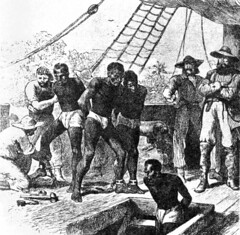 | 13 |
| 15707228109 | infant industries | This was part of Federalist Alexander Hamilton's economic plan. The term for new and developing industries, which were supported by placing high tariffs on imported goods. (p. 110) |  | 14 |
| 15707228110 | national bank | This was part of Federalist Alexander Hamilton's economic plan. He favored a bank for depositing government funds and printing banknotes that could provide the basis for a stable U.S. currency. (p. 110) |  | 15 |
| 15707228149 | tariffs; excise taxes | This was part of Federalist Alexander Hamilton's economic plan. High tariffs were placed on imported goods to help new and developing industries. (p. 110) |  | 16 |
| 15707228111 | Battle of Fallen Timbers | In 1794, the U.S. Army led by General Anthony Wayne defeated the American Indians at this battle in northwestern Ohio. (p. 113) |  | 17 |
| 15707228112 | Treaty of Greenville | In this treaty in 1795, the American Indians surrendered claims to the Ohio Valley and promised to open it to settlement. (p. 113) |  | 18 |
| 15707228150 | Public Land Act (1796) | In 1796, this act established orderly procedures for dividing and selling federal lands at reasonable prices. (p. 113) |  | 19 |
| 15707228113 | Mt. Vernon Conference | In 1785, George Washington hosted a conference at his home, in Mt. Vernon, Virginia. It led to the Annapolis Convention of 1786. (p. 104) |  | 20 |
| 15707228114 | Annapolis Convention | In 1786, only five states sent delegates to this convention. However, it led to Constitutional Convention of 1787. (p. 104) |  | 21 |
| 15707228115 | Constitutional Convention | In the summer of 1787, 55 delegates from the thirteen states, excluding Rhode Island, met in Philadelphia, Pennsylvania. The purpose was to create the Constitution, which would replace the Articles of Confederation. (p. 104) | | 22 |
| 15707228116 | checks and balances | So that one one branch of government could not dominate, the Constitution divided the government into three branches: 1) executive branch led by the president, 2) legislative branch consisting of the Senate and the House of Representatives 3) judicial branch lead by the Supreme Court (p. 109) |  | 23 |
| 15707228117 | Virginia Plan | James Madison's proposal at the Constitutional Convention, which favored the large states. (p. 105) |  | 24 |
| 15707228118 | New Jersey Plan | The counter proposal to the Virginia plan at the Constitutional Convention, it favored the small states. (p 105) |  | 25 |
| 15707228119 | Connecticut Plan; Great Compromise | The compromise solution that was adopted at the Constitutional Convention. It was created by Roger Sherman of Connecticut, it provided for a two house Congress. In the Senate, states would have two senators each, but in the House of Representatives, each state would be represented according to the size of its population. (p. 105) |  | 26 |
| 15707228120 | House of Representatives | Part of the legislative branch, representation would be based on population of each state. (p. 105) |  | 27 |
| 15707228121 | Senate | Part of the legislative branch, there would be two senators from each state. (p. 105) |  | 28 |
| 15707228122 | Three Fifths Compromise | At the Constitutional Convention it was agreed that each slave would be counted as three-fifths of a person for the purpose of determining a state's level of taxation and representation. (p. 105) |  | 29 |
| 15707228123 | Commercial Compromise | At the Constitutional Convention Congress was allowed to regulate interstate and foreign commerce, including placing tariffs on foreign imports but prohibited for placing taxes on exports. (p. 105) |  | 30 |
| 15707228124 | electoral college system | This system would determine the president of the United States. Each state was given a number of electors equal to the total of their number of representatives and senators. These electors would then vote to determine the president. (p. 106) |  | 31 |
| 15707228125 | Legislative branch | The branch of the federal government that makes the laws, consisting of the Senate and the House of Representatives. (p. 105) |  | 32 |
| 15707228126 | Congress | The legislative branch consisting of the Senate and the House of Representatives. (p. 105) |  | 33 |
| 15707228127 | executive departments; cabinet | George Washington organized new departments of the executive (law-enforcing) branch. These appointments had to be confirmed by the Senate. The term for the heads of the executive departments appointed by the president. (p. 110) |  | 34 |
| 15707228128 | Henry Knox | President George Washington's secretary of war. (p. 110) |  | 35 |
| 15707228129 | Edmund Randolph | President George Washington's attorney general. (p. 110) |  | 36 |
| 15707228130 | Judiciary Act (1789) | In 1789, this act established a Supreme Court with one chief justice and five associate justices. The Supreme Court was able to rule on the constitutionality of state courts. It provided for a system of thirteen district courts and three courts of appeals. (p. 110) |  | 37 |
| 15707228131 | federal courts | Thirteen district courts and three courts of appeals created by the Judiciary Act. (p. 110) |  | 38 |
| 15707228132 | Supreme Court | The only court mentioned in the Constitution. Although, other federal courts were created. (p. 110) |  | 39 |
| 15707228133 | national debt | This was part of Federalist Alexander Hamilton's economic plan. He insisted that the federal government assume the war debts of the states and pay off the national debt at face value. (p. 110) |  | 40 |
| 15707228134 | Whiskey Rebellion | In 1794, a group of farmers in western Pennsylvania, refused to pay a federal excise tax (tax on a specific product) on whiskey they were producing. President Washington responded by using 15,000 militiamen to stop the rebellion with almost no bloodshed. (p. 113) |  | 41 |
| 15707228135 | Federalists era | The period of U.S. history in the 1790s when Federalists, led by Alexander Hamilton, dominated the government. (p. 114) |  | 42 |
| 15707228136 | Democratic-Republican Party | Political party that were against the Federalists. They opposed strong central government and favored states rights. They were led by Thomas Jefferson. (p. 114) |  | 43 |
| 15707228137 | political parties | Not anticipated by founders of the United States. However, buy 1787, the Federalists and Democratic-Republicans parties were forming to push their agendas. (p. 113) |  | 44 |
| 15707228138 | two-term tradition | In 1796, George Washington decided to step down after two terms (four years per term) as president. This set the precedent, until Franklin Delano Roosevelt won four elections. In 1951, the 22nd amendment made two-term limit part of the Constitution. (p. 115) |  | 45 |
| 15707228139 | John Adams | In 1796, this Federalist, was elected as the second president of the United States. In 1800, he lost the presidential election to Thomas Jefferson, a Democratic-Republican. (p. 115, 117) |  | 46 |
| 15707228140 | Revolution of 1800 | In the 1800 election, Democratic-Republicans came into power in both the executive and legislative branches of government. They defeated the Federalists and peacefully took power, which was an uncommon event at that time in history. (p. 118) |  | 47 |
| 15707228141 | French Revolution | Americans generally supported the French people's aspiration to establish a republic, but many were horrified by the reports of mob hysteria and mass executions. Thomas Jefferson and his supporters argued that the U.S. should join France in its defensive war against Britain. However, George Washington believed that the U.S. was too young a nation and not strong enough to engage in a European war. (p. 111) |  | 48 |
| 15707228142 | Proclamation of Neutrality (1793) | In 1793, President George Washington issued a proclamation the U.S. would remain neutral in the war between Britain and France. (p. 111) |  | 49 |
| 15707228143 | "Citizen" Genet | Edmund Gent, the French minister to the United States, objected to Washington's neutrality in the war between Britain and France. He appealed directly to the American people to support the French cause. France removed him from his position at the United States's request. (p. 111) |  | 50 |
| 15707228144 | Jay Treaty (1794) | In 1794, this treaty with Britain, was negotiated by Chief Justice John Jay. The U.S. wanted Britain to stop seizing U.S. ships and impressing our sailors. However, the treaty said nothing about ship seizures, and Britain only agreed to evacuate posts on the U.S. frontier. (p. 111) |  | 51 |
| 15707228145 | Pinckney Treaty (1795) | In 1795, Thomas Pinckney, the U.S. minister to Spain, negotiated this treaty with Spain. Spain agreed to open the lower Mississippi and New Orleans to trade. The right of deposit was granted to Americans so they could transfer cargos in New Orleans without paying duties. It was agreed that Spain would only control area south of the 31st parallel. (p 112) |  | 52 |
| 15707228146 | Right of deposit | United States ships gained right to transfer cargoes in New Orleans without Spanish duties. (p. 112) |  | 53 |
| 15707228147 | XYZ Affair | President John Adams sent a delegation to Paris to negotiate over U.S. merchant ships being attacked by French ships. French ministers, known as X, Y, and Z, because there names were never revealed, requested bribes. President Adams resisted a call for war, by sending a new delegation to France. (p. 116) |  | 54 |
Flashcards
English AP Flashcards
Terms : Hide Images
| 10501999294 | Ethos | A writer/speaker's character that establishes to credibility and trust | 0 | |
| 10502062515 | Diction | A speaker's deliberate choice of words given the purpose, audience and occasion | 1 | |
| 10502064907 | Tone | Writer/speaker's attitude towards the subject. Diction helps us analyze tone, tone helps us analyze ethos and rhetorical situation | 2 | |
| 10502067996 | Automatic Ethos | Speakers doesnt have to establish ethos with the audience because the ethos is already established | 3 | |
| 10502073000 | Built Ethos | Speaker must establish ethos, because it isn't already established | 4 | |
| 10502076714 | Persona | Character a writer/speaker creates when speaking. Remember, this can be done for honorable purposes and not mere manipulation | 5 |
Flashcards
Flashcards
Flashcards
Flashcards
AP Language Rhetorical Devices Flashcards
Terms : Hide Images
| 15835640389 | Assumption | A belief or statement taken for granted without proof. | 0 | |
| 15835640390 | Ad Hominem | A fallacy that attacks the person rather than dealing with the real issue in dispute | 1 | |
| 15835640391 | Ad Populem | "To the people," something must be good because everyone is doing it | 2 | |
| 15835640392 | Allusion | A reference to commonly known idea or text, the most common are historical, biblical, or literary. | 3 | |
| 15835640393 | Ambiguity | An event or situation that may be interpreted in more than one way. | 4 | |
| 15835640394 | Anaphora | the repetition of a word or phrase at the beginning of successive clauses | 5 | |
| 15835640395 | Antimetabole | The repetition of words in an inverted order to sharpen a contrast. | 6 | |
| 15835640396 | Antithesis | Direct opposite | 7 | |
| 15835640397 | Appeal to False Authority | This fallacy occurs when someone who has no expertise to speak on an issue is cited as an authority. | 8 | |
| 15835640398 | Archaic Diction | The use of words common to an earlier time period; antiquated language. | 9 | |
| 15835640399 | Asyndeton | Omission of conjunctions | 10 | |
| 15835640400 | Backing | Further assurances or data without which the assumption lacks authority | 11 | |
| 15835640401 | Bandwagon Appeal | The argument that since something is popular or everybody is doing it, so should you. | 12 | |
| 15835640402 | Caricature | a representation of a person that is exaggerated for comic effect | 13 | |
| 15835640403 | Chiasmus | A statement consisting of two parallel parts in which the second part is structurally reversed | 14 | |
| 15835640404 | Circular Reasoning | Repeating the claim as a way to provide evidence, resulting in no evidence at all. | 15 | |
| 15835640405 | Claim | An assertion, usually supported by evidence | 16 | |
| 15835640406 | Claims of Fact | Assert that something is true or not true | 17 | |
| 15835640407 | Claims of Value | argues that something is good or bad, right or wrong, desirable or undesirable | 18 | |
| 15835640408 | Claims of Policy | recommend that a specific course of action be taken or approved | 19 | |
| 15835640409 | Closed Thesis | A limited thesis that previews the major points the speaker/author will make | 20 | |
| 15835640410 | Open Thesis | An open thesis is one that does not list all the points the writer intends to cover in an essay. | 21 | |
| 15835640411 | Colloquialism | informal words or expressions not usually acceptable in formal writing | 22 | |
| 15835640412 | Complex Sentence | A sentence with one independent clause and at least one dependent clause | 23 | |
| 15835640413 | Concede | To admit as true; to yield, submit | 24 | |
| 15835640414 | Confirmation | Proof Proof; evidence; verification | 25 | |
| 15835640415 | Connotation | All the meanings, associations, or emotions that a word suggests | 26 | |
| 15835640416 | Counter Argument Thesis | Summary of counterargument, preceding writer's opinion | 27 | |
| 15835640417 | Counterargument | A challenge to a position; an opposing argument. | 28 | |
| 15835640418 | Cumulative Sentence | Sentence that completes the main idea at the beginning of the sentence and then builds and adds on. | 29 | |
| 15835640419 | Declarative Sentence | A sentence that makes a statement. | 30 | |
| 15835640420 | Diatribe | A bitter verbal attack | 31 | |
| 15835640421 | Double Entendre | a word or phrase open to two interpretations, one of which is usually risqué or indecent. | 32 | |
| 15835640422 | Euphemism | an inoffensive expression that is substituted for one that is considered offensive | 33 | |
| 15835640423 | Faulty Analogy | A fallacy that occurs when an analogy compares two things that are not comparable. | 34 | |
| 15835640424 | First Hand Evidence | evidence based on something the writer knows | 35 | |
| 15835640425 | Hasty Generalization | A fallacy in which a faulty conclusion is reached because of inadequate evidence. | 36 | |
| 15835640426 | Imperative Sentence | A sentence that requests or commands. | 37 | |
| 15835640427 | Incongruity | To present things that are out of place or are absurd in relation to its surroundings | 38 | |
| 15835640428 | Induction/Inductive Reasoning | Reasoning from specific to general. | 39 | |
| 15835640429 | Innuendo | A hint, indirect suggestion, or reference | 40 | |
| 15835640430 | Invective | An emotionally violent, verbal denunciation or attack using strong, abusive language. | 41 | |
| 15835640431 | Inversion | Inverted order of words in a sentence (variation of the subject-verb-object order) | 42 | |
| 15835640432 | Irony | A contrast between expectation and reality; incongruity between what might be expected and what actually occurs | 43 | |
| 15835640433 | Jargon | the specialized language or vocabulary of a particular group or profession | 44 | |
| 15835640434 | Juxtaposition | Placement of two things closely together to emphasize comparisons or contrasts | 45 | |
| 15835640435 | Logical Fallacy | An error in reasoning that renders an argument invalid | 46 | |
| 15835640436 | Metonymy | substituting the name of one object for another object closely associated with it | 47 | |
| 15835640437 | Non Sequitur | a conclusion or statement that does not logically follow from the previous argument or statement. | 48 | |
| 15835640438 | Oxymoron | a figure of speech in which apparently contradictory terms appear in conjunction | 49 | |
| 15835640439 | Paradox | A figure of speech or statement that seems contradictory but actually contains a hidden truth | 50 | |
| 15835640440 | Parallelism | The repetition of similar grammatical or syntactical patterns. | 51 | |
| 15835640441 | Parody | a humorous imitation of a serious work | 52 | |
| 15835640442 | Paronomasia | an intentional form of pun that uses words similar in sound but different in meaning for a humorous effect | 53 | |
| 15835640443 | Periodic Sentence | A sentence that presents its central meaning in a main clause at the end. | 54 | |
| 15835640444 | Polemic | An argument against an idea, usually regarding philosophy, politics, or religion. | 55 | |
| 15835640445 | Polysyndeton | the use, for rhetorical effect, of more conjunctions than is necessary or natural | 56 | |
| 15835640446 | Propaganda | Ideas spread to influence public opinion for or against a cause. | 57 | |
| 15835640447 | Pun | A play on words | 58 | |
| 15835640448 | Qualifier | a restriction placed on the claim to state that it may not always be true as stated Words that avoid absolutes and admit potential exceptions | 59 | |
| 15835640449 | Quantitative Evidence | Includes things that can be measured, cited, counted, or otherwise represented in numbers | 60 | |
| 15835640450 | Rebuttal | An argument technique wherein opposing arguments are anticipated and countered | 61 | |
| 15835640451 | Red Herring | use of an irrelevant point to divert attention from the real issue | 62 | |
| 15835640452 | Refute | To discredit an argument, particularly a counterargument. | 63 | |
| 15835640453 | Reversal | To present the opposite of the normal order | 64 | |
| 15835640454 | Scheme | A pattern of words or sentence construction used for rhetorical effect. | 65 | |
| 15835640455 | Second Hand Evidence | Evidence that is accessed through research, reading, and investigation. | 66 | |
| 15835640456 | Slapstick | comedy based on deliberately clumsy actions and humorously embarrassing events | 67 | |
| 15835640457 | Straw Man Fallacy | Occurs when the arguer attacks a misrepresentation of the opponent's view. | 68 | |
| 15835640458 | Syllogism | A form of deductive reasoning consisting of a major premise, a minor premise, and a conclusion. A form of reasoning in which two statements are made and a conclusion is drawn from them. | 69 | |
| 15835640459 | Symbol | Something that represents something else | 70 | |
| 15835640460 | Synecdoche | using a part of something to represent the whole thing | 71 | |
| 15835640461 | Tone | Attitude a writer takes toward the audience, a subject, or a character | 72 | |
| 15835640462 | Transition | The connection between two parts of a piece of writing, contributing to coherence. | 73 | |
| 15835640463 | Shift | In writing, a movement from one thought or idea to another; a change. | 74 | |
| 15835640464 | Travesty | A crude, exaggerated, or ridiculous representation; mockery | 75 | |
| 15835640465 | Understatement | the presentation of something as being smaller, worse, or less important than it actually is. | 76 | |
| 15835640466 | Overstatement | the action of expressing or stating something too strongly; exaggeration. making to seem more important than it really is the action of expressing or stating something too strongly; exaggeration. | 77 | |
| 15835640467 | Assumption | a thing that is accepted as true or as certain to happen, without proof. | 78 | |
| 15835640468 | Zeugma | Artfully using one verb with two or more different objects | 79 |
Flashcards
Pages

Need Help?
We hope your visit has been a productive one. If you're having any problems, or would like to give some feedback, we'd love to hear from you.
For general help, questions, and suggestions, try our dedicated support forums.
If you need to contact the Course-Notes.Org web experience team, please use our contact form.
Need Notes?
While we strive to provide the most comprehensive notes for as many high school textbooks as possible, there are certainly going to be some that we miss. Drop us a note and let us know which textbooks you need. Be sure to include which edition of the textbook you are using! If we see enough demand, we'll do whatever we can to get those notes up on the site for you!
