

Flashcards
Flashcards
Flashcards
AP World Period 1 Flashcards
Terms : Hide Images
| 13445652335 | civilization | a complex society with cities, a central government, job specialization, and social classes | 0 | |
| 13445652336 | culture | the enduring behaviors, ideas, attitudes, values, and traditions shared by a group of people and transmitted from one generation to the next | 1 | |
| 13445652337 | paleolithic era | called the old stone age (from 10,000 to 2.5 million years ago); concerned with food supply; they used stone as well as bone tools; nomadic hunters and gatherers. | 2 | |
| 13445655179 | neolithic revolution | (10,000 - 8,000 BCE) The development of agriculture and the domestication of animals as a food source; led to the development of permanent settlements and the start of civilization. | 3 | |
| 13445655180 | sumer | world's first civilization, founded in Mesopotamia, which existed for over 3,000 years. | 4 | |
| 13445655181 | city-state | a city with political and economic control over the surrounding countryside | 5 | |
| 13445657931 | Hammurabi | Babylonian king who codified the laws of Sumer and Mesopotamia (died 1750 BC) | 6 | |
| 13445657932 | Babylon | the chief city of ancient Mesopotamia and capitol of the ancient kingdom of Babylonia | 7 | |
| 13445657933 | ziggurat | a rectangular tiered temple or terraced mound erected by the ancient Assyrians and Babylonians |  | 8 |
| 13445659862 | cuneiform | a form of writing developed by the Sumerians using a wedge-shaped stylus and clay tablets. | 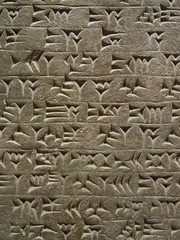 | 9 |
| 13445659863 | pharaoh | a king of ancient Egypt, considered a god as well as a political and military leader. | 10 | |
| 13445659864 | papyrus | a long-lasting, paper-like material made from reeds | 11 | |
| 13445663078 | Harappa/Mohenjo-Daro | one of the earliest advanced civilizations in history, located in present day Pakistan (Indus River Valley) | 12 | |
| 13445663079 | ideology | a system of social or political ideas | 13 | |
| 13445663080 | Cyrus the Great | king of Persia and founder of the Persian empire (circa 600-529 BC) | 14 | |
| 13446807590 | Royal Road | a road for the government use built by the ancient Persian ruler Darius which helped unite the empire | 15 | |
| 13456445122 | mandate of heaven | a political theory of ancient China in which those in power were given the right to rule from a divine source | 16 | |
| 13456445123 | nomads | people who move from place to place | 17 | |
| 13456445124 | Hittites | people from central Anatolia who established an empire in Anatolia and Syria in the Late Bronze Age; wealthy from the trade in metals and military power based on chariot forces | 18 | |
| 13456447563 | Hatshepsut | first female pharaoh who expanded Egypt through trade | 19 | |
| 13456449756 | Akhenaten | early ruler of Egypt who rejected the old gods and replaced them with Aten, the sun god. | 20 | |
| 13456449757 | Ramses II | king of Egypt between 1304 and 1237 BC who built many monuments | 21 | |
| 13456453188 | Ashurbanipal | Assyrian king who gathered writing tablets from many lands | 22 | |
| 13456453189 | Israel | an ancient kingdom of the Hebrew tribes at the southeastern end of the Mediterranean Sea | 23 | |
| 13456453190 | Hebrew Bible | a collection of sacred books containing diverse materials concerning the origins, experiences, beliefs, and practices of the early Hebrew people. Most of the text was compiled by members of the priestly class in the fifth century B.C.E. | 24 | |
| 13456455599 | Phoenicians | located on eastern Mediterranean coast; invented the alphabet which used sounds rather than symbols | 25 | |
| 13456455600 | Polynesian | inhabitants of the Pacific Islands that lie within a triangle formed by Hawaii, New Zealand and Easter Island | 26 | |
| 13456456898 | micro societies | small-scale communities that had little interaction with others. These communities were the norm for peoples living in the Americas and islanders in the Pacific and Aegean from 2000 to 1200 BCE. | 27 |
Flashcards
AP CSP Algorithms 1 Flashcards
Terms : Hide Images
| 15804527069 | Algorithm | a step-by-step set of instructions implemented by a program to develop and express solutions to a computational problem | 0 | |
| 15804527070 | Sequencing | ordering the steps of an algorithm; one of three different types of algorithms | 1 | |
| 15804527071 | Boolean condition | a decision in an algorithm based on either true or false | 2 | |
| 15804527072 | Selection | using a condition to to control the logical path taken by an algorithm; one of three different types of algorithms | 3 | |
| 15804527073 | Iteration | a loop or repeated behavior in an algorithm; one of the three different types of algorithms | 4 | |
| 15804527074 | Pseudo code | words used to organize thoughts to help plan writing code; helps programmers translate specifications into code | 5 | |
| 15804527075 | Natural language | a human language such as English, Spanish, German, etc.; as opposed to artificial terms used in programming languages | 6 | |
| 15804527076 | Run Time | the period during which a computer program is executing | 7 | |
| 15804527077 | Reasonable time | a way to analyze an algorithm in terms of the number of steps required to solve a problem; an algorithm is given this designation if the number of steps the algorithm takes is less than or equal to a polynomial function of the size of the set. | 8 | |
| 15804527078 | Solvable problem | a problem that can be solved exactly using an algorithm | 9 | |
| 15804527079 | Unsolvable problem | a problem that cannot be solved exactly using an algorithm | 10 | |
| 15804527080 | Heuristic solution | algorithmic approach applied to improve an algorithm that is based on finding solutions among all available options using a general set of rules; may result in approximate solutions instead of exact solutions; may be helpful to find solutions in reasonable time; may be helpful to find approximate solutions to unsolvable problems | 11 | |
| 15804527081 | Undecidable problem | problem in which no algorithms can be constructed to answer "yes" or "no" for all inputs | 12 | |
| 15804527082 | Decidable problem | problem in which an algorithm can be constructed to answer "yes" or "no" for all inputs | 13 | |
| 15804527083 | Empirical analysis | an evidence-based approach to the study and interpretation of information | 14 | |
| 15804527084 | Linear search | a search algorithm that finds a target by looking at each item, one at a time, until the end of the set is reached or the target is found | 15 | |
| 15804527085 | Binary search | a search algorithm that finds a target in a sorted list by starting in the middle. If the target is less than than the middle term, the algorithm then looks at the middle of the lower half. The process of narrowing the search by halves continues until the target is found or until it is determined that the target does not exist in the list. | 16 |
Flashcards
AP COGO: The Comparative Method Flashcards
Terms : Hide Images
| 14804836993 | Government | the leadership and institutions that make policy decisions for a country | 0 | |
| 14804840145 | Politics | method of maintaining, managing, and gaining control of the government | 1 | |
| 14804844244 | Empirical statement | a statement that is factual and verifiable | 2 | |
| 14804846926 | Normative statement | a statement based on opinion not fact | 3 | |
| 14804849962 | Causation | is when a change in one variable causes or creates a change in another variable | 4 | |
| 14804849963 | Correlation | is a potential connection between variables | 5 | |
| 14804853907 | Civil Society | voluntary organizations outside of government control, the freedom to form spontaneous organizations | 6 | |
| 14804859327 | Informal Politics | takes into consideration not only the ways that politicians operate outside their formal powers, but also the impact that beliefs, values, and actions of ordinary citizens have on policy-making | 7 | |
| 14804862044 | Advanced Democracy | a government run by the people with free, fair, and competitive elections, independent judiciary, rule of law, civil rights, civil liberties, and civilian control of the military. Also known as a substantive, consolidated, and liberal democracy | 8 | |
| 14804867297 | Communist & Post-Communist Countries | these countries have sought to create a system that limits individual freedoms in order to divide wealth more equally. Communism flourished during the 20th century, but lost ground to democratic regimes by the beginning of the 21st century. Russia and China represent this group | 9 | |
| 14804871376 | Less-Developed Country | countries that have lower GDP, more workers in agriculture and higher HDIs | 10 | |
| 14804876808 | Newly Industrializing Countries | that are experiencing rapid economic and industrial growth; and have show a tendency toward democratization and political and social stability. Mexico & Iran are examples | 11 |
Flashcards
Pages

Need Help?
We hope your visit has been a productive one. If you're having any problems, or would like to give some feedback, we'd love to hear from you.
For general help, questions, and suggestions, try our dedicated support forums.
If you need to contact the Course-Notes.Org web experience team, please use our contact form.
Need Notes?
While we strive to provide the most comprehensive notes for as many high school textbooks as possible, there are certainly going to be some that we miss. Drop us a note and let us know which textbooks you need. Be sure to include which edition of the textbook you are using! If we see enough demand, we'll do whatever we can to get those notes up on the site for you!
