| 13862448405 | Dates of Period 4 | the time period of 1450 - 1750 | | 0 |
| 13862448406 | Catholic Reformation | the church's actions to revive their reputation and membership roles in 1545 (regained control of most of southern Europe, Austria, Poland, and much of Hungary) | | 1 |
| 13862448407 | Jesuits | a religious order converting people to return to the church (went to Asia + Americas in 1500's) | | 2 |
| 13862448408 | Thirty Years War | War within the Holy Roman Empire between German Protestants and their allies (Sweden, Denmark, France) and the emperor and his ally, Spain; ended in 1648 after great destruction with Treaty of Westphalia | | 3 |
| 13862448409 | English Civil War | This was the revolution as a result of whether the sovereignty would remain with the king or with the Parliament. Eventually, the kingship was abolished. | | 4 |
| 13862448410 | Scientific Revolution | a new vision of science developed during the renaissance in the 17th + 18th century | | 5 |
| 13862448411 | Scholasticism | Scholars based their inquiry on the principles established by the church, which sometimes resulted in clases between science and religion | | 6 |
| 13862448412 | Humanism | interest in the capabilities and accomplishments of individuals | | 7 |
| 13862448413 | Patrons | supporters of the arts, with payment and such, they found talented artists, often when they were young | | 8 |
| 13862448414 | Medici | was a powerful family of Florence in the mid to late 1400s that sponsored artists as a rich merchant family |  | 9 |
| 13862448415 | Johan Gutenberg | a German goldsmith and printer, who created the printing press, in 1454 |  | 10 |
| 13862448416 | Nicolo Machiavelli | a Renaissance writer who wrote, "The Prince" which was a famous philosophical view of the ideal political leader in the 16th century, in Italian city states | | 11 |
| 13862448417 | Protestant Reformation | a religious movement of the 16th century that began as an attempt to reform the Roman Catholic Church and resulted in the creation of Protestant churches |  | 12 |
| 13862448418 | Indulgences | The Catholic Church's grants of salvation for money in the 1500s, and was part of the growing corruption of the church. |  | 13 |
| 13862448419 | John Calvin | A protestant who established a variation of his beliefs on a stern and vengeful God. |  | 14 |
| 13862448420 | Anglican Church | A form of Christianity established by Henry VIII that was not decided on the grounds of religious belief, but because the pope would not allow him to divorce his wife. |  | 15 |
| 13862448421 | Martin Luther | a German monk who wrote the 95 theses in 1517, which were 95 propositions that criticized the Catholic Church |  | 16 |
| 13862448422 | Renaissance Man | Title of a person who was smart and genius in the Renaissance Era. |  | 17 |
| 13862448423 | Deism | God built the universe and let it run. Clockmaker theory. |  | 18 |
| 13862448424 | Land-based Powers | A shift in land based powers where governments controlled lands by building armies, bureaucracies, road, canals, and walls that unified and protected | | 19 |
| 13862448425 | Sea-based Powers | Sea people built their power by controlling water routes, developing technology to cross the seas, and gaining wealth from trade and land claims. | | 20 |
| 13862448426 | Renaissance | A heightened intellectual and artistic advance from about 1450s, that changed Europe forever |  | 21 |
| 13862448427 | Adam Smith | He analyzed the natural law of supply and demand that governed economies in his classic book, "The Wealth of Nations" | | 22 |
| 13862448428 | New Monarchies | Monarchies that emerged that differed from their medieval predecessors in having greater centralization of power, more regional boundaries, and stronger representative institutions | | 23 |
| 13862448429 | Constitutional Monarchy | States where rulers shared power with a parliament, a body of representatives selected by the nobility and urban citizens | | 24 |
| 13862448430 | Gentry | the most powerful members of a society, and landowners that affected the style of the old aristocracy |  | 25 |
| 13862448431 | Enlightenment | the emphasis on human abilities and accomplishments and the importance of independent and rational thought | | 26 |
| 13862448432 | John Locke | sought to understand the impact of the "laws of nature" on human liberties | | 27 |
| 13862448433 | Thomas Hobbes | English materialist and political philosopher who advocated absolute sovereignty as the only kind of government that could resolve problems caused by the selfishness of human beings (1588-1679) | | 28 |
| 13862448434 | Voltaire | wrote witty criticisms of the French monarchy and the Roman Catholic Church. He believed both institutions to be despotic and intolerant, limiting freedoms | | 29 |
| 13862448435 | Hapsburg | A powerful family with land claims all over Europe from Spain to Italy to the Netherlands to Hungary, as all the Holy Roman Emperor's had been Hapsburg since 1273 |  | 30 |
| 13862448436 | Holy Roman Empire | a place/time where religion remained very important, and religious issues continued to fragment, and strong kings emerged in the 16th century |  | 31 |
| 13862448437 | Reconquest | the retaking of land in Iberia by Spain and Portugal in a religious crusade to expand. This conquest advanced in waves over several centuries. |  | 32 |
| 13862448438 | Phillip II | ruled Spain at the height of its power in the 15th century | | 33 |
| 13862448439 | Divine Right | with God's blessing of the king's authority, the legitimacy of royalty across Europe was enhanced, and occurred under the reign of Louis XIV during the 17th and 18th centuries |  | 34 |
| 13862448440 | Louis XIV | Understood the importance of a "theatre state", by building a magnificent palace at Versailles, and the apex of absolutism occurred under him |  | 35 |
| 13862448441 | Absolute Monarchies vs. limited monarchies | absolute monarchies held complete control over their kingdom vs. the limited power. | | 36 |
| 13862448442 | Capitalism | an economic system based on private ownership of property and business that provide goods to be bough and sold in a free manner | | 37 |
| 13862448443 | Mercantilism | the responsibility of government to promote the states economy to improve the revenues and limit imports to prevent profits from going to outsiders (allows industry to develop their own business) |  | 38 |
| 13862448444 | Joint-stock Companies | these companies organized commercial ventures on a large scale by allowing investors to buy and sell shares. The new capitalist system largely replaced the old guild system of the middle ages. | | 39 |
| 13862448445 | Bourgeoise | middle class; factory owners who put long hours and much of their profits into their businesses | | 40 |
| 13862448446 | Balance of Power | states forming a temporary alliance to prevent the state form being too powerful. (Russia emerged as a major power in Europe after its mediterranean armies got Sweden in the GNW) | | 41 |
| 13862448447 | Versailles | a place where Louis' palace was built symbolizing the French's triumph over the traditional rights of the nobility and clergy. This kept nobles away from plotting rebellions, and 'distracted europe'. |  | 42 |
| 13862448448 | Zheng He | led expiditions in Chinese junks across the atlantic ocean, with one goal being to assert Chinas power after the demise of the Yuan dynasty. |  | 43 |
| 13862448449 | Henry the Navigator | the third son of the portuguese king; devoted his life to navigation, creating a navigation school, which became a magnet for the cartographers of the world | | 44 |
| 13862448450 | Caravel | a new ship developed by the portuguese, which was much smaller than the junk, but size allowed for exploration of shallower coastal areas |  | 45 |
| 13862448451 | Vasco da Gama | set out to find the tip of Africa and connect it to the Indian Ocean, and discovered the fastest and safest ways to travel to Portugal |  | 46 |
| 13862448452 | Christopher Columbus | A Genoese mariner who convinced Isabella and Ferdinand to sponsor a voyage across the Atlantic after he was turned down by the Genoese and Portugal. He believed he could reach east Asia by sailing West. | | 47 |
| 13862448453 | Treaty of Tordesillas | a treaty making Spain and Portugal land claim boundary. Portugal pushes its explorations to India and beyond. |  | 48 |
| 13862448454 | Magellan | had a ship that was first to circumnavigate the glove, even though Magellan himself died in the phillipines |  | 49 |
| 13862448455 | Conquistadors | went to search for gold and convert the natives to Christianity in the interior of Mexico |  | 50 |
| 13862448456 | Cortes | sought to find the Aztec capital, and took over the Aztec land - with help of Amerindians, disease, and technology | | 51 |
| 13862448457 | Moctezuma | the Aztec emperor, who welcome the Spaniards at Tenochtitlan, seeing them as god-like. This was a mistake, as this allowed everyone to conquer him. | | 52 |
| 13862448458 | Francisco Pizzaro | led a group of soldiers to the Andes to find the Inca. The Incas were weak; Pizzaro conquered and got gold. |  | 53 |
| 13862448459 | Ethnocentrism | the term that describes the tendency of human beings to view their own culture as superior |  | 54 |
| 13862448460 | De La Casas | a conquistador priest who dedicated himself to protecting Amerindian rights |  | 55 |
| 13862448461 | Franciscans | peoples who converted new world people to christianity, and took care of the poor. | | 56 |
| 13862448462 | Encomenderos | Spanish settlers who were in charge of the natives working on the encomiendas | | 57 |
| 13862448463 | Peninsularies | a fading social class in the new world, composed of the people born in the old world | | 58 |
| 13862448464 | Mestizos | composed of European and Amerindian children, part of the castas |  | 59 |
| 13862448465 | Mulattoes | composed of European and African children, also part of the castas |  | 60 |
| 13862448466 | Council of Indies | supervised all government and commercial activity in the Spanish colonies | | 61 |
| 13862448467 | Bartholomew Dias | set out to find the tip of Africa and connect beyond it to the Indian Ocean, as well as discovering the fastest and safest ways back to Portugal |  | 62 |
| 13862448468 | Encomienda | the system in which conquistadors had forced natives to do work for them |  | 63 |
| 13862448469 | Creoles | composed of those born in the new world; a quickly growing class |  | 64 |
| 13862448470 | Protestant work ethic | a work ethic of the protestants that encouraged individual endeavors towards gaining wealth | | 65 |
| 13862448471 | Dutch East India Company | a joint stock company that specialized in the spice and luxury trade of the East Indies and quickly gained control of Dutch Trading in the Pacific |  | 66 |
| 13862448472 | Lost Colony | The colony of Walter Raleigh, as well as the first venture to North America by the British on the Carolina Coast. | | 67 |
| 13862448473 | Indentured Servitude | a system which was usually ethnically the same as a free settler, but he or she was bound by an "indenture" (contract) to work for a person for four to seven years, in exchange for payment of the new world voyage | | 68 |
| 13862448474 | Columbian exchange | the global diffusion of crops, other plants, human beings, animals, and distance that took place after the European exploring voyages of the New World |  | 69 |
| 13862448475 | Middle Passage | the first leg of the atlantic circuit, where ships took slaves to the new world |  | 70 |
| 13862448476 | Manila Galleons | ships that traveled across the pacific ocean picking up and trading goods, like Asian luxury goods, and silver |  | 71 |
| 13862448477 | Pilgrims | settled first in New England, and wanted to break away completely from the Church of England, sought to pursue spiritual ends in new lands | | 72 |
| 13862448478 | Puritans | wanted to purify Church of England, not break with it | | 73 |
| 13862448479 | Manumission | legal grant of freedom to an individual slave | | 74 |
| 13862448480 | African Diaspora | The spreading of Africans to many other parts of the world, especially the Americas. This is one of the most important demographic changes during 1450 - 1750 |  | 75 |
| 13862448481 | Shah Abbas I | brought the Safavids to the peak of the power, slave infantrymen |  | 76 |
| 13862448482 | Devshirme | a system that required Christian's of the area to contribute young boys to be the sultans slaves |  | 77 |
| 13862448483 | Battle of Chaldrian | The Shi'ite versus Sunni conflict at Chaldrian over religious differences, that set the limits for Shi'ite expansion | | 78 |
| 13862448484 | Gunpowder Empires | an age of time where almost all powerful states used guns to build control/attack (included Russia, Ming and Qing, Japan, the Ottoman Empire, the Safavid and the Mughal empire) |  | 79 |
| 13862448485 | Suleiman the Magnificent | ruled the Ottomans as the empire reached the height of its power. The Ottomans controlled much of the water traffic between the Black Sea and the Mediterranean sea |  | 80 |
| 13862448486 | Janissaries | Checked the military power of the sultan, being an elite military group |  | 81 |
| 13862448487 | Vizier | head of the imperial administration in the Ottoman empire who took care of the day to day work of the empire, aiding the Sultan | | 82 |
| 13862448488 | Safavid Empire | an empire that grew from a turkish nomadic group, that were Shi'ite muslims |  | 83 |
| 13862448489 | Imams | heirs of Muhammad according to Shi'ite muslims | | 84 |
| 13862448490 | Babur | founded the Mughal empire, claimed to be a descendant of Timur and Genghis Khan (1526) |  | 85 |
| 13862448491 | Akbar | the grandson of Babur, who brought the height of the Mughal empire. Also expanded his empire to control much of the subcontinent. | | 86 |
| 13862448492 | Taj Mahal | a building of beauty built as a tomb for Mumtaz Mahal's wife. |  | 87 |
| 13862448493 | Sati | the ritual suicide of widows by jumping into their husbands pyres, representing the low status of women | | 88 |
| 13862448494 | Mughal Empire | an empire that that was a mixture of Mongol and Turkish peoples from Central Asia, which dominated India until the early 1700s |  | 89 |
| 13862448495 | Sikhism | started by Nanuk, who became the first Guru of Sikhism. Sikhism was a following of people who formed a community free of caste divisions |  | 90 |
| 13862448496 | Ivan IV | Ivan the Terrible (his nickname) reflected problems that tsars faced as power increased |  | 91 |
| 13862448497 | Great Northern War | War that was long and costly which came from Peter's modernized armies breaking Swedish control of the Baltic Sea, forcing Europe to see Russia as a major power |  | 92 |
| 13862448498 | Kabuki | a form of drama that consisted of several acts and separate skits with singing, dancing, and elaborate staging. (Actors became well known starts) |  | 93 |
| 13862448499 | Ivan III | declared himself as "tsar" (means Caesar) with the claim he was establishing the "Third Rome" |  | 94 |
| 13862448500 | Boyars | The nobility of the Russia feudal based economic system. They also had military responsibilities to overlords, including the tsar |  | 95 |
| 13862448501 | Time of Trouble | The time of following Ivan's rule. Ivan executed his oldest son, touching off competition among Boyars for the throne. | | 96 |
| 13862448502 | Peter the Great | The tsar of Russia in 1682 to 1724, who was most responsible for transforming Russia into a great world power. He understood how things worked globally, and expanded water ports | | 97 |
| 13862448503 | St. Petersburg | The "Window to the West" established by Peter the Great, which was a capital built on the shoes of the newly accessed Baltic Sea (a port for the new navy + allowed closer access to western countries) | 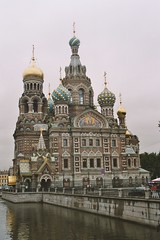 | 98 |
| 13862448504 | Table of Ranks | A system by Peter the Great that allowed officials to attain gov't posistions based on merit, not on aristocracy status (reorganization of Bureaucracy) | | 99 |
| 13862448505 | Tsar | a derivative of "Caesar", establishing a "3rd rome". This was a major propaganda for Russia | | 100 |
| 13862448506 | Daimyo | Japanese territorial lords, who held local control of areas. Some Daimyos had more influence than others, but each maintained his own governments and had his own samurai | | 101 |
| 13862448507 | Tokugawa leyasu | Founder of the Tokugawa shogunate |  | 102 |
| 13862448508 | Tokugawa Shogunate | a centralized government established in 1603 in present day Tokyo. Also called a tent government, which was temporary | | 103 |
| 13862448509 | Macartney Mission | the dispatch of Lord Macartney with other people to China, showing Britain's great interest in the Qing empire, as well the d Macartney esire to reuse the trade system | | 104 |
| 13862448510 | Qing Dynasty | The name of the empire after the Ming; seized China from the emperors who could no longer defend their borders from the Manchu | | 105 |
| 13862448511 | Forbidden City | was the home of the emperor and his family, which expanded service people to 20,000; as the government returned to Beijing from Manjing |  | 106 |
| 13862448512 | Kowtow | a special, often deep bow to the Chinese emperor. In the Qing dynasty, those who came to see the emperor had to do a special bow consisting of 3 separate kneeling |  | 107 |
| 13862448514 | Chinapas | Floating gardens used by the Aztecs | | 108 |



