AP Notes, Outlines, Study Guides, Vocabulary, Practice Exams and more!

AP World History Chapter 34 Flashcards

Terms : Hide Images
13506846775BangladeshFounded as an independent nation in 1972; formerly East Pakistan.0
13506846776Daughter of Jawaharlal Nehru; installed as a figurehead prime minister by the Congress party bosses in 1966; a strong-willed and astute politician, she soon became the central figure in India politics, a position she maintained through the 1970s and passed on to her sons.Indira Gandhi1
13506846777Corazon AquinoFirst president of the Philippines in the post-Marcos era of late 1980s; she served from 1986 to 1992; Aquino, who husband was assassinated by thugs in the pay of the Marcos regime, was one of the key leaders in the popular movement that toppled the dictator.2
13506846778Jawaharlal NehruOne of the Gandhi's disciples; governed India after independence; committed to program of social reform and economic development; preserved civil rights and democracy.3
13506846779Benazir BhuttoTwice prime minister of Pakistan in the 1980s and 1990s; first ran for office to avenge her father's execution by the military clique then in power.4
13506846780religious revivalismAn approach to religious belief and practice that stresses the literal interpretation of texts sacred to the religion in question and the application of their precepts to all aspects of social life; increasingly associated with revivalist movements in a number of world religions, including Christianity, Islam, Judaism, and Hinduism.5
13506846781primary productsfood or industrial crops for which there is a high demand in industrialized economies; prices of such products tend to fluctuate widely; typically the primary exports of Third World economies.6
13506846782neocolonial economyIndustrialization nations' continued dominance of the world economy; ability of the industrialized nations to maintain economic colonialism without political colonialism.7
13506846783Gamal AbdulTook power in Egypt following a military coup in 1952; enacted land reforms and used state resources to reduce unemployment; ousted Britain from the Suez Canal.8
13506846784Free Officers movementMilitary nationalist movement in Egypt founded in the 1930s; often allied with the Muslim Borhterhood; led coup to seize Egyptian government from khedive in July 1952.9
13506846785Muslim BrotherhoodEgyptian nationalist movement founded by Hasan al-Banna in 1928; committed to fundamentalists movement in Islam; fostered strikes and urban riots agaisnt the khedival government.10
13506846786Anwar SadatSuccessor to Gamal Abdul Nasser as ruler of Egypt; acted to dismantle costly state programs; accepted peace treaty with Israel in 1973; opened Egypt to investment by Western nations.11
13506846787Hosni MubarakPresident of Egypt since 1981, succeeding Anwar Sadat and continuing his policies of cooperation with the West.12
13506846788Green RevolutionIntroduction of improved seed strains, fertilizers, and irrigation as a means of producing higher yields in crops such as rice, wheat, and corn; particular important in the densely populated countries of Asia.13
13506846789Ayatollah Ruhollah KhomeiniReligious ruler of Iran following revolution of 1979 to expel the Pahlavi shah of Iran; emphasized religious purification; tried to eliminate Western influences and establish purely Islamic government.14
13506846790homelandsUnder apartheid, areas in South Africa designated for ethno-linguistic groups with the black African population, such areas tend to be overpopulated and poverty-stricken.15
13506846791African National CongressBlack political organization within South Africa; pressed for end to policies of apartheid; sought open democracy leading to black majority rule, until the 1990s declared illegal in South Africa.16
13506846792Walter SisuluBlack African leader who, along with Nelson Mandela, opposed apartheid system in South Africa.17
13506846793Nelson MandelaLong-imprisoned leader of the African National Congress party; worked with the ANC leadership and F.W. de Klerk's supporters to dismantle the apartheid system from the mid 1990s onward; in 1994, became the first black prime minister of South Africa after the ANC won the first genuinely democratic elections in the country's history.18
13506846794Steve BikoAn organizer of Black Consciousness movement in South Africa, in opposition to apartheid, murdered while in police custody.19
13506846795F.W. de KlerkWhite South African prime minister in the late 1990s and early 1990s. Working with Nelson Mandela and the African National Congress, helped to dismantle the apartheid system and opened the way for a democratically elected government that represented all South Africans for the first time.20

AP Literature- Literary Terms Flashcards

Terms : Hide Images
11802366194AllegoryA work that functions on a symbolic level.0
11802376258AlliterationThe repetition of initial constant sounds, such as "Peter Piper picked a peck of pickled peppers."1
11802417119AllusionA reference contained in a work.2
11807198044AnapestA metrical pattern of two unaccented syllables followed by an accented syllable.3
11802574747AntagonistThe force or character that opposes the main character, the antgonist.4
11802617500ApostropheDirect address in poetry. Year's line "Be with me Beauty, For the fire is dying" is a good example.5
11802894364AsideWords spoken by an actor intended to be heard by the audience but not by other characters on stage.6
11802926918AubadeA love poem set at dawn which bids farewell to the beloved.7
11802944046BalladA simple narrative poem, often incorporating dialogue that is written in quatrains, generally with a rhyme scheme of a b c d.8
11802979110Blank VerseUnrhymed iambic pentameter. Most of shakespeare's plays are in this form.9
11803072946CacophonyHarsh and discordant sounds in a line or passage of literary work.10
11803093098CaesuraA break or pause within a line of poetry indicated by punctuation and used to emphasize meaning.11
11803131738Catharsisaccording to Aristotle, the release of emotion that the audience of a tragedy experiences.12
11803136155CharacterOne who carries out the action of the plot in literature. Major, minor, static, and dynamic are types of characters.13
11803160956ClimaxThe turning point of action or character in literary work, usually the highest moment of tension.14
11803214663Comic Reliefthe inclusion of a humorous character or scene to contrast with the tragic elements of a work, thereby intensifying the next tragic event.15
11803231357Conflicta clash between opposing forces in a literary work, such as man vs. man; man vs. nature; man vs. God; man vs. self.16
11803239470Connotationthe interpretive level of a word based on its associated images rather than its literal meaning.17
11803249649ConventionA traditional aspect of a literary work, such as a soliloquy in a Shakespearean play or a tragic hero in a Greek tragedy.18
11803257174CoupletTwo lines of rhyming poetry; often used by Shakespeare to conclude a scene or an important passage.19
11803277929DactyleA foot of poetry consisting of a stressed syllable followed by two unstressed syllables.20
11803307314DenotationThe literal or dictionary meaning of a word.21
11803321055Denouementthe conclusion or tying up of loose ends in a literary work; the resolution of the conflict and plot.22
11803332533Deus Ex MachinaA Greek invention, literally "the god from the machine" who appears at the last moment and resolves the loose ends of a play. Today, the term refers to anyone, usually of some stature, who untangles, resolves, or reveals the key to the plot of a work. See the conclusion of Euripides's Medea for an example or the sheriff at the end of Desire Under the Elms by O'Neill.23
11803390932DictionThe author's choice of words.24
11803399723Dramatic MonologueA type of poem that presents a conversion between a speaker and an implied listener. Browning's "My Last Duchess" is a perfect example.25
11803430193ElegyA poem that laments the dead or loss. "Elegy for Jane" by Roethke is a specific example. Gray's "Elegy in a Country Church Yard" is a general example.26
11803468628EnjambmentA Technique in poetry that involves the running on of a line or stanza. It enables the poem to move and to develop coherence as well as directing the reader with regard to form and meaning. Walt Whitman uses this continually.27
11803510283Epica lengthy, elevated poem that celebrates the exploits of a hero. Beowulfis a prime example .28
11803523253EpigramA brief witty poem. Pope often utilizes this form for satiric commentary.29
11803546259EuphonyThe pleasant, mellifluous presentation of sounds in literary work.30
11803608169ExpositionBackground information presented in a literary work.31
11803611325FableA simple, symbolic story, usually employing animals as characters. Aesop and La Fontaine are authors who excel at this form.32
11803676532Figurative LanguageThe body of devices that enables the writer to operate on level other than the literal one. It includes metaphor, simile, symbol, hyperbole, and others.33
11803750023Flashbacka device that enables a writer to refer to past thoughts, events, or episodes.34
11803766419FootA metrical unit in poetry; a syllabic measure of a line: iamb, trochee, anapest, dactyl, and spondee.35
11803782382Foreshadowinghints of future events in a literary work.36
11803790291FormThe shape or structure of a literary work.37
11803806594Free VersePoetry without a defined form, meter, or rhyme scheme.38
11803816083HyperboleExtreme exaggeration. In "My Love is Like a Red, Red Rose" Burns speaks of loving "until all the seas run dry.39
11803864813Iamba metrical foot consisting of an unaccented syllable followed by an accented one; The most common poetic foot in English language.40
11803897000IdyllA type of lyric poem which extols the virtues of an ideal place or time.41
11803923720ImageA verbal approximation of a sensory impression, concept, or emotion.42
11803955767ImageryThe total effect of related sensory images in a work of literature.43
11803968013Impressionismwriting that reflects a personal image of a character, event, or concept. The Secret Sharer is a fine example.44
11803984302IronyAn unexpected twist or contrast between what happens and what was intended or expected to happen. It involves dialogue and situation, and it can be intentional or unplanned. Dramatic irony centers around the ignorance of those involved while the audience is aware of the circumstance.45
11804057718Lyric Poetrya type of poetry characterized by emotion, personal feelings, and brevity; a large and inclusive category of poetry that exhibits rhyme, meter, and reflective thought.46
11804071144Magical Realisma type of literature that explores narratives by and about characters who inhabit and experience their reality differently from what we term the objective world. Writers who are frequently placed in this category include Gabriel Garcia Marquez, Gunter Grass, and Isabel Allende.47
11804103013MetaphorA direct comparison between dissimilar things. "Yours eyes are stars" is an example.48
11804121438Metaphorical PoetryRefers to the work of poets like John Donne who explore highly complex, philosophical ideas through extended metaphors and paradox.49
11804152697MeterA pattern of beats in Poetry.50
11804161936Metonymya figure of speech in which a representative term is used for a larger idea. (The pen is , mightierthan the sword.")51
11804194903MonologueA speech given by one character. (Hamlet's "To be or not to be.")52
11804233911Motifthe repetition or variations of an image or idea in a work used to develop theme or characters.53
11804242918Narrative Poema poem that tells a story.54
11805090621NarratorThe speaker of a literary work.55
11804246111Octavean eight-line stanza, usually combined with a sestet in a Petrarchan sonnet.56
11804635220OdeA formal, lengthy poem that that celebrates a particular subject.57
11804647699OnomatopoeiaWords that sound like the sound they represent (hiss, gurgle, bang.)58
11804681291Oxymoronan image of contradictory terms (bittersweet, pretty ugly, giant economy size.)59
11804693994Parablea story that operates on more than one level and usually teaches a moral lesson. (The Pearl by John Steinbeck is a fine example.see Allegory.)60
11804704106ParadoxA set seemingly contradictory elements which nevertheless reflects an underlying truth. For example, in Shakespeare's Much Ado about about Nothing, the Friar says to Hero, "Come lady, die to live."61
11805078066Parallel Plota secondary story line that mimics and reinforces the main plot. (Hamlet loses his father, as does Ophelia.)62
11805098433ParodyA comic imitation of work that ridicules the original.63
11805102086Pathosthe aspects of a literary work that elicit pity from the audience.64
11805104157Personificationthe assigning of human qualities to inanimate objects or concepts. (Wordsworth personifies "the sea that bares her bosom to the moon" in the poem "London 1812.")65
11805115001PlotA sequence of events in a literary work.66
11805119091Point of viewThe method of narration in a work.67
11805121620ProtagonistThe hero or main character of a literary work, the character the audience sympathizes with.68
11805130052QuatrainA four-line stanza.69
11805133032Resolutionthe denouement of a literary work.70
11805136955Rhetorical QuestionA question that does not expect an explicit answer. It is used to pose an idea to be considered by the speaker or audience.71
11805142819Rhyme/Rimethe duplication of final syllable sounds in two or more lines.72
11805144431Rhyme SchemeThe annotation of the pattern of the rhyme.73
11805147290RhythmThe repetitive pattern of beats in poetry.74
11805152939Romanticisma style or movement of literature that has as its foundation an interest in freedom, adventure, idealism, and escape.75
11805158606Satirea mode of writing based on ridicule, which criticizes the foibles and follies of society without necessarily offering a solution. (Jonathan Swift's Gulliver's Travels is a great satire that exposes mankind's condition.)76
11805173856Scansionanalysis of a poem's rhyme and meter.77
11805182224Sesteta six-line stanza, usually paired with an octave to form a Petrarchan sonnet.78
11805189189SestinaA highly structured poetic form of 39 lines, written in iambic pentameter. It depends upon the repetition of six words from the first stanza in each of six stanzas.79
11805191054SettingThe time and place of a literary work.80
11805194235SimileAn indirect comparison that uses the word, "like" or "as" to link the differing items in the comparison. ("Your eyes are like stars.")81
11805235539SoliloquyA speech in a play that is used to reveal the character's inner thoughts to the audience. (Hamlet's To be or not to be. . ." is one of the most famous soliloquies in literature.)82
11805204432Sonneta 14-line poem with a prescribed rhyme scheme in iambic pentameter.83
11805209465SpondeeA poetic foot consisting of two accented syllables (' ')84
11805217432Stage DirectionsThe Specific instructions a playwright includes concerning sets, characterization, delivery etc.85
11805223148Stanzaa unit of a poem, similar in rhyme, meter, and length to other units in the poem.86
11805224895Structurethe organization and form of a work.87
11805247976Stylethe unique way an author presents his ideas. Diction, syntax, imagery, structure, and content all contribute to a particular style.88
11805251699SubplotA secondary plot that explores ideas different from the main storyline. (In Hamlet, the main storyline has a hamlet avenging the death of his father. The subplot has Hamlet dealing with his love for Ophelia.)89
11805269500SubtextImplied meaning of a work or section of a work.90
11805271321SymbolSomething in a literary work that stands for something else. (Plato has the light of the sun symbolize truth in "The Allegory of the Cave.")91
11805281507SynecdocheA figure of speech that utilizes a part as represenative of a whole.92
11805293363SyntaxThe grammatical structure of prose and poestry.93
11805296143TercetA three-line stanza.94
11805299936ThemeThe underlying ideas that the author illustrates through characterization, motifs, language, plot, etc.95
11805306024ToneThe authors attitude toward the subject.96
11805307905Tragic HeroAccording to Aristotle, a basically good person of noble birth or exalted position who has a fatal flaw or commits an error in judgement which leads to his downfall. the tragic hero must have a moment of realization and live and suffer.97
11805324897TrocheeA single metrical foot consisting of one accented (stressed/long) syllable followed by one unaccented (unstressful/short) syllable.98
11805332656Understatementthe opposite of exaggeration. It is a technique for developing irony and/or humor where one writes or says less than intended.99
11805335241VillanelleA highly structured poetic form that comprises six stanzas: five tercets and a quatrain. The poem repeats the first and third lines throughout.100

The Classical Era - AP World History Flashcards

Terms : Hide Images
13758389187BuddhismBelief system that started in India in the 500s BCE. Happiness can be achieved through removal of one's desires. Believers seek enlightenment and the overcoming of suffering. A path of practice and spiritual development leading to Insight into the true nature of reality.0
13758389188600 BCE - 600 CEClassical Era Time Period1
13758389189JudaismA religion that originated in the Middle East, founded by Moses. They believe that there is one God whom they covenant. A common symbol for this religion is David's Star.2
13758389190ChristianityA religion based on the life and teachings of Jesus3
13758389191HinduismMost prevalent religion in India, that integrates spiritual beliefs with daily practices and official institutions such as the caste system.4
13758389192ConfucianismEmphasized education, family, peace, and justice5
13758389193Daoism (Taoism)Philosophy based on the ideas of the Chinese thinker Laozi, Who taught that people should be guided by a universal force called the Dao.6
13758389194ZoroastrianismA religion originating in ancient Iran. It centered on a single benevolent deity-Ahura Mazda, Emphasizing truth-telling, purity, and reverence for nature, the religion demanded that humans choose sides between good and evil7
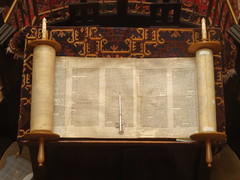
13758389195TorahSacred Book for the Jewish & Judaism8
13758389196Synagoguesthe building where a Jewish assembly or congregation meets for religious worship and instruction9
13758389197Siddhartha GautamaThe founder of Buddhism10
13758389198VedasReligious texts that were passed down from generation to generation of Aryans in the form of hymns, songs, prayers and rituals honoring the Aryan gods11
13758389199ReincarnationThe rebirth of a soul after the body dies12
13758389200NirvanaUnion with the universal spirit; can be reached through the four noble truths and eightfold paths13
13758389201Pax Romanathe period of peace that existed between nationalities within the Roman Empire14
13758389202Law of Twelve Tablesthe earliest code of Roman civil, criminal, and religious law15
13758389203Punic warsa series of three wars fought between Rome and Carthage from 264 BC to 146 BC. At the time, they were probably the largest wars that had ever taken place.16
13758389204Constantinewas Roman Emperor from 377 - 306BC, he was the first emperor to profess Christianity and turned Rome in a Christian State17
13758389205DiasporaScattering of Hebrews because of conquerers that spread them to other parts of the earth18
13758389206KarmaA destiny that has been shaped by years of cause and effect, that is outwardly revealed by and individuals caste or station life19
13758389207Eightfold pathComposed of eight steps that must be mastered one at a time20
13758389208MahabharataWorlds longest poem that contains Hindu beliefs21
13758389209DharmaSet of duties that the individual must fulfill22
13758389210ShivaA supreme deity, the preserver23
13758389211RamayanaA poem that demonstrates the fulfillment of Dharma24
13758389212VishnuA supreme deity, the destroyer25
13758389213PaulOne of the twelve men to follow Jesus and the most responsible for the rapid growth of Christianity. Was a key Christian leader who was initially a Jewish rabbi and hostile towards Christians, but became an ardent follower.26
13758389214Great Wall of ChinaWall began in the Qin Dynasty27
13758389215BrahminPriests who compiled the Vedas28
13758389216Kshatriyawarriors and officials (caste system)29
13758389217Vaishyamerchants, artisans, and landowners (caste system)30
13758389218Shudrapeasants and laborers (caste system)31
13758389219Vedic AgeLasted from 1500 to 500 BCE, time period after the collapse of the Indus River Valley Civilization, contained the Vedas, which are religious texts32
13758389220Mauryan Empire(321-184BC) The first united Indian state, founded by Chandragupta Maurya in 324 BCE, after Alexander's defeat of weakened India; it lasted for more than 100 years, before it declined, and fell in 183 BCE.33
13758389221Gupta Empire320BC-550CE, located in northern India34
13758389222Persian EmpireIndo-Europeans who settled in present-day Iran. Defeated the Babylonians and created the largest empire in the world up to 500 BC. It stretched across Africa, the Mediterranean, Turkey, Greece, and Afghanistan. Persia was later conquered by Alexander the Great.35
13758389223Qin DynastyIron weapons helped army defeat other states until it controlled China, King declared himself "First Emperor" or Shi Huangdi (ruled 221 - 210 BCE. The dynasty didn't last long but is significant in regard to the development of the Chinese state, and developed bureaucracy (it also made the Great Wall of China)36
13758389224Han DynastyDynasty that lasted from 206-220BC and began the official establishment of the Silk Road.37
13758389225Byzantine EmpireThe eastern half of the Roman Empire, which survived after the fall of the Western Empire at the end of the 5th century C.E. Its capital was Constantinople, named after the Emperor Constantine.38
13758389226Mayan CivilizationCivilization of the Americas located in Central America that saw its height from 200-900 CE.39
13758389227Hellenistic SynthesisHellenistic culture mixed with other cultures, creating cosmopolitan societies connected by trade and Greek culture40
13758389228Athens and Spartatwo main city-states of Greek Empire41
13758389229LegalismChinese philosophy developed by Han Feizi; taught that humans are naturally evil and therefore need to be ruled by harsh laws.42
13758389230Mandate of HeavenAncient Chinese belief/theory and philosophical idea that tiān (heaven) granted emperors the right to rule based on their ability to govern well, appropriately and fairly.43
13758389231AristotleA Greek philosopher and scientist who was interested in practically every field of human endeavor.44
13758389232SocratesFirst philosopher to focus on ethical questions and truth-seeking regarding human nature, understandings and relationships45
13758389233MarathonBattle in 490 BCE Greeks defeat Persia46
13758389234Peloponnesian war431-404 BCE) between Athens and Sparta. With Sparta winning, both were still majorly weakened, they were conquered by Macedonia47
13758389235TriumvirateRule of three men holding power (in ancient Rome) Ex: the unofficial coalition of Julius Caesar, Pompey, and Crassus in 60 BC48
13758389236Four noble truths・all of life is suffering ・all suffering is caused by desire for things that ultimately won't fulfill us ・desire can only be overcome by ending all desire ・desire can only be ended by following the eighthfold path49
13758389237BoddhisatvaA person who had taken the the eightfold path and reached perfection but had delayed entering nirvana in order to help others along the way50
13758389238Alexander The GreatBetween 334 and 323 B.C.E. he conquered the Persian Empire, reached the Indus Valley, founded many Greek-style cities, and spread Greek culture across the Middle East.51
13758389239BureaucracyA system of government in which most of the important decisions are made by state officials rather than by elected representatives52
13758389240AshokaLeader of the Mauryan dynasty of India who conquered most of India but eventually gave up violence and converted to Buddhism53
13758389241Chandragupta MauryaFounder of the Mauryan Empire, first emperor to unify most of India54
13758389242Chandra GuptaFounder of the Gupta Empire55
13758389243Caste SystemA Hindu social class system that controlled every aspect of daily life56
13758389244AthensA democratic Greek polis who accomplished many cultural achievements, and who were constantly at war with Sparta.57
13758389245SpartaA powerful Greek military polis that was often at war with Athens. Used slaves known as helots to provide agricultural labor.58
13758389246Shi HuangdiFounder of the short-lived Qin dynasty and creator of the Chinese Empire (r. 221-210 B.C.E.). He is remembered for his ruthless conquests of rival states and standardization.59
13758389247AnalectsCollection of moral and social teachings of Confucius, including the concept of the Five Relationships.60
13758389248Confucius(551-479 BCE?) Chinese philosopher and writer of The Analects, a collection of moral and social teachings, including the concept of the Five Relationships. Also known as Kong Fu Zi.61
13758389249Teotihuacan(200 BCE - 750 CE) Highland Mexico, largest city, obsidian, more than 5000 structures, pop 125-200k people, large pyramids, no ball courts, no writing, city of the gods, evidence for large fires.62
13758389250ZoroasterFounder of Zoroastrianism, a religion unique to Persia.63
13758389251Royal RoadCreated by King Darius, a system of roads in the Persian empire stretching over 1,600 miles. It connected the vast empire and helped with communication and transportation64
13758389252Mayan2000 BCE - 1500 CE, located in Southern Mexico, and was divided into city-states each with their own kind, rural area for farming, and city area temples. They also had a fair legal system with laws and courts.65
13758389253QuranSacred religious texts for Islam66
13758389254Cyrus the GreatExtended territory from India to the Mediterranean Sea, Reached its height under Darius I (into Egypt and Macedonia) and established law code based on earlier Mesopotamian codes.67

AP World History Chapter 7 Key Terms Flashcards

traditions and encounters chapter 7

Terms : Hide Images
7687034141Medesclosely related to persians with a strong military, pastoralists0
7687034142Cyruslaunched persian imperial venture and rebeled against medians, ruled from pasagardae1
7687034143Persepolisnew capital city, near pasagardae, nerve center, royal structures2
7687034144Satrapsgoverned satrapies, mostly persian but held posts distant from capital city3
7687034145Croesuslydian king, created standardized coin, defeated by cyrus4
7687034146Achaemenidsqanats promoted agriculture and population boost, different ethnic identities, tolerant as long as taxes are payed5
7687034147Seleucidsseleucus won persia after battle between alexanders generals, retained achaemenid administration, taxation, roads, and poastal service6
7687034148Sasanidstook down parthians, established ctesiphon, taken down by arabs7
7687034149Zarathrustahistorical person from aristocratic family, left family in search and discovered "ahura mazda"8
7687034150Gathaszarathustras works were hymns honoring dieties, traditions only written down after seleucid dynasty9
7687034151Zoroastrianismbelieved ahura mazda was supreme diety, six lesser dieties, ahura mazda is in a constant struggle with evil spirit and once he wins, humans will be judged10
7687034152Parsiszoroastrian immigrants in india11

chapter 10 ap world history Flashcards

Terms : Hide Images
14690411691Nubian ChristianityChristianity was introduced by traders and missionaries. Preserved Christianity for 600 years.0
14690428116Jesus SutrasThe product of Nestorian Christians living in China, these sutras articulate the Christian message using Buddhist and Daoist concepts.1
14690447110Ethiopian Christianityretained basic Christian theology and rituals, reflected the interests of its African devotees. Believed a large host of evil spirits populate the world2
14690469479Byzantine Empire(330-1453) The eastern half of the Roman Empire, which survived after the fall of the Western Empire at the end of the 5th century C.E. Its capital was Constantinople, named after the Emperor Constantine.3
14690497715ConstantinopleA large and wealthy city that was the imperial capital of the Byzantine empire and later the Ottoman empire, now known as Istanbul4
14690515578JustinianByzantine emperor in the 6th century A.D. who reconquered much of the territory previously ruler by Rome, initiated an ambitious building program , including Hagia Sofia, as well as a new legal code5
14690534756CaesaropapismA political-religious system in which the secular ruler is also head of the religious establishment, as in the Byzantine Empire.6
14690559246Eastern Orthodox ChurchChristian followers in the Eastern Roman Empire (Byzantine Empire); split from Roman Catholic Church and shaped life in eastern Europe and western Asia7
14690564111Iconsreligious images used by eastern christians to aid their devotions8
14690572205prince vladimir of kievGrand prince of Kiev (r. 978-1015 C.E.) whose conversion to Orthodox Christianity led to the incorporation of Russia into the sphere of Eastern Orthodoxy.9
14690574957Kievan RusState that emerged around the city of Kiev in the ninth century C.E.; a culturally diverse region that included Vikings as well as Finnic and Baltic peoples. The conversion of Vladimir, the grand prince of Kiev, to Orthodox Christianity in 988 had long-term implications for Russia.10
14690582836CharlemagneKing of the Franks (r. 768-814); emperor (r. 800-814). Through a series of military conquests he established the Carolingian Empire, which encompassed all of Gaul and parts of Germany and Italy. Illiterate, though started an intellectual revival.11
14690589349Holy Roman EmpireLoose federation of mostly German states and principalities, headed by an emperor elected by the princes. It lasted from 962 to 1806.12
14690603486Roman Catholic ChurchChurch established in western Europe during the Roman Empire and the Middle Ages with its head being the bishop of Rome or pope.13
14690612963Western ChristendomSplit in 1054 C.E. on account of differences in church leadership, languages, religious images and the filioque.14
14690617668Cecilia PenifaderAn illiterate peasant woman (1297-1344) from the English village of Brigstock, whose life provides a window into the conditions of ordinary rural people even if her life was more independent and prosperous than most.15
14690619925CrusadesA series of holy wars from 1096-1270 AD undertaken by European Christians to free the Holy Land from Muslim rule.16

Pages

Subscribe to CourseNotes RSS

Need Help?

We hope your visit has been a productive one. If you're having any problems, or would like to give some feedback, we'd love to hear from you.

For general help, questions, and suggestions, try our dedicated support forums.

If you need to contact the Course-Notes.Org web experience team, please use our contact form.

Need Notes?

While we strive to provide the most comprehensive notes for as many high school textbooks as possible, there are certainly going to be some that we miss. Drop us a note and let us know which textbooks you need. Be sure to include which edition of the textbook you are using! If we see enough demand, we'll do whatever we can to get those notes up on the site for you!