

Flashcards
APES Laws and Treaties Flashcards
Terms : Hide Images
| 12305733875 | Surface Mining Control and Reclamation Act (SMCRA) | 1977 requires coal strip mines to reclaim the land | 0 | |
| 12305733876 | Taylor Act | 1934 provides for the regulation of grazing on the public lands (excluding Alaska) to improve rangeland conditions and regulate their use. | 1 | |
| 12305733878 | Safe Drinking Water Act | (SDWA, 1974) set maximum contaminant levels for pollutants in drinking water that may have adverse effects on human health | 2 | |
| 12305733877 | Clean Water Act (CWA) | 1972 the federal law aimed at ensuring that all rivers are swimmable and fishable and that limits the discharge of pollutants in US waters to zero | 3 | |
| 12305733880 | Endangered Species Act of 1973 | (1973) identifies threatened and endangered species in the U.S., and puts their protection ahead of economic considerations | 4 | |
| 12305733879 | Clean Air Act | 1970- defines EPA's responsibilities for protecting and improving the nation's air quality and the stratospheric ozone layer. Sets emission standards for cars, and limits for release of air pollutants. sets air pollution standards for private industry | 5 | |
| 12305733881 | Marine Mammal Protection Act | A 1972 U.S. act to protect declining populations of marine mammals | 6 | |
| 12305733882 | Lacey Act (1900) | prohibits trade in wildlife, fish, and plants that have been illegally taken, possessed, transported, or sold. | 7 | |
| 12305733883 | Stockholm Convention | Produced list of 12 chemicals to be banned, phased out, or reduced. Including DDT and PCBs. | 8 | |
| 12305733884 | Convention on Biological Diversity (1992) | 1992 International treaty to conserve biodiversity and ensure its responsible use and distribution | 9 | |
| 12305733885 | Kyoto Protocol | 1997 controlling global warming by setting greenhouse gas emissions targets for developed countries | 10 | |
| 12305733886 | Convention on the International Trade in Endangered Species of Wild Flora and Fauna (CITES), Washington DC | 1973 - multilateral treaty to protect endangered plants and animals. | 11 | |
| 12305733887 | United Nations Convention on the Law of the Sea (UNCLOS), | defines the rights and responsibilities of nations with respect to their use of the world's oceans, establishing guidelines for businesses, the environment, and the management of marine natural resources | 12 | |
| 12305733888 | Vienna Convention for the Protection of the Ozone Layer | 1988 - provided frameworks for international reductions in the production of chlorofluorocarbons due to their contribution to the destruction of the ozone layer | 13 | |
| 12457984338 | National Park Service Organic Act | 1916 Established the National Park Service | 14 | |
| 13434938605 | Federal Insecticide, Fungicide, and Rodenticide Act (FIFRA) | provides for federal regulation of pesticide distribution, sale, and use. All pesticides distributed or sold in the United States must be registered (licensed) by EPA. | 15 | |
| 13435427968 | Toxic Substances Control Act (1976) | gives the EPA authority to regulate chemicals (excluding food, cosmetics, and pesticides) | 16 | |
| 13435870338 | Kyoto Accords (1997) | An international agreement that limited the emission of harmful gasses | 17 | |
| 13435943921 | reach convention 2007 | EU - aims to improve the protection of human health and the environment through the better and earlier identification of the intrinsic properties of chemical substances. | 18 | |
| 13437656219 | Occupational Safety and Health Act | (OSHA) created to protect worker and health. Its main aim was to ensure that employers provide their workers with an environment free from dangers to their safety and health, such as exposure to toxic chemicals, excessive noise levels, mechanical dangers, heat or cold stress, or unsanitary conditions. | 19 |
Russia AP Comparative Politics Flashcards
Some flash cards for studying :)
Terms : Hide Images
| 6206282417 | Asymmetric Federalism | Some regions are much stronger than others, so power is devolved unequally across the country | 0 | |
| 6206282418 | Bolsheviks | Lenin's followers. Took control of government in late 1917. Peace, work, and bread | 1 | |
| 6206282419 | Boyars | One of the aristocratic classes in early Russia, had considerable powers, advisors to reigning autocrats, precursors to Duma | 2 | |
| 6206282420 | Central Committee | Most top government officials belonged to this during Stalin times. A group of 300 party leaders that met twice a year. Below Politburo. | 3 | |
| 6206282421 | Chechnya | Primarily Muslim region that has fought for years for freedom. Terrorist acts against Russian government | 4 | |
| 6206282422 | Civil society | Private organizations and associations outside of politics. Russia has a relatively undeveloped civil society | 5 | |
| 6206282423 | "Collective farms" | state run and supposedly more efficient agricultural farms. Part of collectivization and industrailzation. Stalin era reform | 6 | |
| 6206282424 | Collectivization and industrialization | Two-part plan. Replaced NEP with "collective farms." (Stalin) Got rid of private ownership. Farms used to feed city workers. Allowed for agricultural surplus, so could implement Five Year Plans. | 7 | |
| 6206282425 | Confederation of Independent States | Unites fifteen former republics of USSR. Russia is clear leader | 8 | |
| 6206282426 | Conflict in Chechnya | A region in Russia, primarily Muslim, fought for years for independence, still strong, Russia is having trouble holding onto the region, been involved in terrorist acts, murders, kidnapping, explosions, bombings, ect., | 9 | |
| 6206282427 | Constitution of 1993 | Provided for strong president, checked by popular election and lower house of legislature | 10 | |
| 6206282428 | CPRF | Communist Party of the Russian Federation, second strongest party in Duma, closest to old communist party | 11 | |
| 6206282429 | Crimean War | Russia defeated. Convinced some that Russian traditions needed reform to keep up with the world. | 12 | |
| 6206282430 | Cultural heterogeneity | Wide cultural diversity | 13 | |
| 6206282431 | Decembrist Revolt of 1825 | Intellectuals influenced by western ideals' revolution. Crushed "ruthlessly" by Nicholas I. | 14 | |
| 6206282432 | Decrees | Can be created by the president and his cabinet, have force of law | 15 | |
| 6206282433 | Democratic centralism | Rule by a few for the benefit of the many. "Vanguard" leadership group that would lead the revolution in the name of the people | 16 | |
| 6206282434 | De-Stalinization | Loosening gov't censorship of press, decentralization of economic decision-making, restructuring of collective farms. Loosen gov't rules under Khrushchev. | 17 | |
| 6206282435 | Duma | Lower house of legislature. Existed under tsars of late 1800s. Continues into today | 18 | |
| 6206282436 | Equality of result in Russia | Communist regime instilled in Russian people the appreciation of equality, enjoy similar living conditions, resent differences in wealth or income | 19 | |
| 6206282437 | Federal government structure | USSR centralized, but maintained this. Russian Federation does this as well. 89 districts (states, if you will), with varying amounts of power (in reality, not on paper) (asymmetric federalism) | 20 | |
| 6206282438 | Five Year Plan | Ambitious goals set by Stalin for production of heavy industry, like oil, steel, and electricity. many followed, Carried out by Gosplan | 21 | |
| 6206282439 | Federal Council | Upper house of legislature, two members from each 89 federal districts, one selected by the governor of that district, one selected by the regional legislature, used to represent regions, can delay legislation, but Duma can override with a two-thirds vote. | 22 | |
| 6206282440 | General secretary | Head of Politburo. Assumed full power as dictator of country. | 23 | |
| 6206282441 | Glasnost | new emphasis on freedom of speech and press in the 1980s initiated by Mikhail Gorbachev. Complaints from citizens that contributed to breakup of USSR. Translates to mean "openness" | 24 | |
| 6206282442 | Gosplan | Central State Planning Commission. Carried out Stalin's Five Year Plans. | 25 | |
| 6206282443 | Head of government, head of state | The head of government is the prime minister, leader of majority party, becomes president if he dies of resigns, the head of state is the president, much more than ceremonial, set up for strong presidency, elected | 26 | |
| 6206282444 | Insider privatization | Russia's state corporatism, where independent companies are penalized by the gov't so they're forced to sell, and the beneficiaries are those loyal to Putin | 27 | |
| 6206282445 | KGB | State Security Committee. Carried out domestic security during USSR | 28 | |
| 6206282446 | Kulaks | Peasants resisted to the collectivization and industrialization plan under Stalin | 29 | |
| 6206282447 | Lenin's Bolsheviks | Seized power in 1917 and ended rule of tsars. Renamed Russia the Union of Soviet Socialist Republics (USSR | 30 | |
| 6206282448 | Liberal democrat party | extremely nationalist against reformers, | 31 | |
| 6206282449 | Mafia | Gained power after Revolution of 1991, control more than underworld crime like local businesses, natural resources, and banks, make money from businesses, money laundering, and Russian government officials, have caused many murders, pose threat to democracy. | 32 | |
| 6206282450 | Marxism | Said that first socialist revolutions would happen in capitalist countries like Germany, France and England | 33 | |
| 6206282451 | Marxism-Leninism | Provided the legitimacy base for the party under communist rule. Not actually the views or Marx or Lenin, just Stalinism. | 34 | |
| 6206282452 | Mensheviks | Inspired by Marx's ideas but took a more moderate view, had broad base of support for the revolution. | 35 | |
| 6206282453 | Nashi | Largest youth movement created by Putin as president. | 36 | |
| 6206282454 | Nationality | Most important single cleavage in Russia. Cleavages determine the organization of Russia into "federation" with 'autonomous regions," republics and provinces | 37 | |
| 6206282455 | Near abroad | Russia has strained relationships with its neighboring countries, Putin encourages a Ukraine president who was not popular but won, believed fraudulent, Estonia took down a Soviet style statue, Russian in Estonia protested | 38 | |
| 6206282456 | New economic policy | 1920 Lenin policy. Allowed "great deal of private ownership to exist under a centralized leadership | 39 | |
| 6206282457 | Nomenklatura | An ordered path from local party soviets to the commanding heights of leadership. (Party members select promising recruits from lower levels.) | 40 | |
| 6206282458 | Oligarchy | Small group of family members and advisers who took control from Boris Yeltsin and ran the country, granting themselves favors and political corruption. | 41 | |
| 6206282459 | Parties of power | parties strongly sponsored by economic and political power-holders | 42 | |
| 6206282460 | Perestroika | economic reform that was most radical and least successful | 43 | |
| 6206282461 | Politburo | Above Central Committee. "heart and soul of Communist Party." 12 men rant he country, decision carried out by gov't agencies and departments. | 44 | |
| 6206282462 | Pravda | Official news paper of the ussr | 45 | |
| 6206282463 | Proportional Representation in Russia | All the seat in Duma are now elected by proportional representation as of 2007, eliminates regionally strong candidates | 46 | |
| 6206282464 | Purges | Execution of millions of citizens, including up to one million party members. Stalin became obsessed with disloyalty in party ranks, ordered execution of own generals and other members of Politburo and Central Committee. | 47 | |
| 6206282465 | Red Army/ White Army | Fought against each other 1918-1919, the White Army was made up of Russian military leaders and funded by the Allied Powers, the Red Army was lead by Lenin, the Red Army won and the Bolsheviks took control of the country. | 48 | |
| 6206282466 | Russian Orthodox Church | Tsars headed this, less influence than it used to be. | 49 | |
| 6206282467 | Secret speech | Revealed existence of letter written by Lenin before he died. Critical for Stalin. Used to denounce Stalin's rules and practices, plus purges. | 50 | |
| 6206282468 | "shock therapy" | Advocated under Boris Yeltsin, pointing Russia to democracy and free-market economy. Led to small group of entrepreneurs running | 51 | |
| 6206282469 | Slavophile vs. Westernizer | Conflict between the two sets of political traditions, the Slavophile tradition has lead in pride Slavic customs and history that cause Russia to resist outer influence, Westernization is modernization and trading to become a major economic power. | 52 | |
| 6206282470 | Stalinism | "Two-pronged program of collectivization and industrialization, carried out by central planning, and executed with force and brutality." totalitarianism communism. "A more complete, invasive form of strong-man rule than the tsars ever were able to implement." | 53 | |
| 6206282471 | State corporatism | Where the state determines which groups have input into policymaking. Heavy under Putin's leadership. | 54 | |
| 6206282472 | Statism | Russian idea. Value strong state that could protect them from their geographic vulnerabilities. Strong government or die. | 55 | |
| 6206282473 | Totalitarianism | State that is centralized and dictatorial and requires complete obedience to the state. Tsars, Stalin | 56 | |
| 6206282474 | Tsars | leaders of Russia - like czars | 57 | |
| 6206282475 | U-2 | Shooting down US spy plane during Khrushchev. Khrushchev confronted Americans about it and they assumed responsibility. He got nothing out of it | 58 | |
| 6206282476 | White Army vs. Red Army | White Army - lead by Russian military leaders, funded by Allied Powers . Red Army = Lenin. Civil war in 1918 between these two armies. Reds won. | 59 | |
| 6206282477 | "window on the west" | St. Petersburg, city built by Peter the Great. First to Westernize - open self to trade. | 60 |
Flashcards
AP Psychology Important People Flashcards
Important people in AP PSychology
Terms : Hide Images
| 13772492994 | Sigmund Freud | 1856-1939; Field: psychoanalytic, personality; Contributions: id/ego/superego, reality and pleasure principles, ego ideal, defense mechanisms (expanded by Anna Freud), psychoanalysis, transference |  | 0 |
| 13772492996 | Carl Jung | 1875-1961; Field: neo-Freudian, analytic psychology; Contributions: people had conscious and unconscious awareness; archetypes; collective unconscious; libido is all types of energy, not just sexual; Studies: dream studies/interpretation |  | 1 |
| 13772492997 | Erik Erikson | 1902-1994; Field: neo-Freudian, humanistic; Contributions: created an 8-stage theory to show how people evolve through the life span. Each stage is marked by a psychological crisis that involves confronting "Who am I?" |  | 2 |
| 13772492998 | Lawrence Köhlberg | 1927-1987; Field: cognition, moral development; Contributions: created a theory of moral development that has 3 levels; focuses on moral reasoning rather than overt behavior |  | 3 |
| 13772492999 | Carol Gilligan | 1936-pres; Field: cognition; Contributions: maintained that Köhlberg's work was developed by only observing boys and overlooked potential differences between the habitual moral judgments of boys and girls; girls focus more on relationships than laws and principles |  | 4 |
| 13772493000 | William James | 1842-1910; Field: functionalism; Contributions: studied how humans use perception to function in our environment; Studies: Pragmatism, The Meaning of Truth |  | 5 |
| 13772493001 | William Wundt | 1832-1920; Field: structuralism, voluntarism; Contributions: introspection, basic units of experience; Studies: 1st psychological laboratory in world at University of Leipzig |  | 6 |
| 13772493002 | BF Skinner | 1904-1990; Field: behavioral; Contributions: created techniques to manipulate the consequences of an organism's behavior in order to observe the effects of subsequent behavior; Studies: Skinner box |  | 7 |
| 13772493003 | John B Watson | 1878-1958; Field: behaviorism; Contributions: generalization-inductive reasoning, emphasis on external behaviors of people and their reactions on a given situation; Studies: Little Albert | 8 | |
| 13772493004 | Jean Piaget | 1896-1980; Field: cognition; Contributions: created a 4-stage theory of cognitive development, said that two basic processes work in tandem to achieve cognitive growth (assimilation and accommodation) |  | 9 |
| 13772493005 | Harry Harlow | 1905-1981; Field: development; Contributions: realized that touch is preferred in development; Studies: Rhesus monkeys, studied attachment of infant monkeys (wire mothers v. cloth mothers) |  | 10 |
| 13772493006 | Carl Rogers | 1902-1987; Field: humanistic; Contributions: founded person-centered therapy, theory that emphasizes the unique quality of humans especially their freedom and potential for personal growth, unconditional positive regard, fully functioning person |  | 11 |
| 13772493007 | Abraham Maslow | 1908-1970; Field: humanism; Contributions: hierarchy of needs-needs at a lower level dominate an individual's motivation as long as they are unsatisfied, self-actualization, transcendence |  | 12 |
| 13772493008 | Karen Horney | 1885-1952; Field: neo-Freudian, psychodynamic; Contributions: criticized Freud, stated that personality is molded by current fears and impulses, rather than being determined solely by childhood experiences and instincts, neurotic trends |  | 13 |
| 13772493009 | Alfred Adler | 1870-1937; Field: neo-Freudian, psychodynamic; Contributions: basic mistakes, style of life, inferiority/superiority complexes, childhood influences personality formation; Studies: Birth Order |  | 14 |
| 13772493010 | Gordon Allport | 1897-1967; Field: trait theory of personality; Contributions: list of 11,000 traits, 3 levels of traits-cardinal, central, and secondary |  | 15 |
| 13772493011 | Hermann Rorschach | 1884-1922; Field: personality, psychoanalysis; Contributions: developed one of the first projective tests, the Inkblot test which consists of 10 standardized inkblots where the subject tells a story, the observer then derives aspects of the personality from the subject's commentary |  | 16 |
| 13772493012 | Solomon Asch | 1907-1996; Field: social psychology; Contributions: studied conformity, found that individuals would conform even if they knew it was wrong; Studies: conformity, opinions and social pressures |  | 17 |
| 13772493013 | Stanley Schachter | 1922-present; Field: emotion; Contributions: stated that in order to experience emotions a person must be physically aroused and know the emotion before you experience it |  | 18 |
| 13772493014 | Stanley Milgram | 1933-1984; Field: social psychology; Contributions: wanted to see how the German soldiers in WWII fell to obedience, wanted to see how far individuals would go to be obedient; Studies: Shock Study |  | 19 |
| 13772493015 | Philip Zimbardo | 1933-present; Field: social psychology; Contributions: proved that peoples behavior depends to a large extent on the roles they are asked to play; Studies: Stanford Prison Study-studied power of social roles to influence people's behavior |  | 20 |
| 13772493016 | Elizabeth Kübler-Ross | 1926-2004; Field: development; Contributions: 5 stages the terminally ill go through when facing death (1. death, 2. anger/resentment, 3. bargaining with God, 4. depression, 5. acceptance) | 21 | |
| 13772493017 | Elizabeth Loftus | 1944-present; Field: memory; Contributions: expert in eyewitness testimony (false memories or misinformation effect); Studies: Reconstruction of Auto. Destruction, Jane Doe Case (repressed memories of Nicole Taus' sex abuse) |  | 22 |
| 13772493018 | Robert Sternberg | 1949-present; Field: intelligence; Contributions: devised the Triarchic Theory of Intelligence (academic problem-solving, practical, and creative) |  | 23 |
| 13772493019 | Albert Bandura | 1925-present; Field: sociocultural; Contributions: pioneer in observational learning, stated that people profit from the mistakes/successes of others; Studies: Bobo Dolls-adults demonstrated 'appropriate' play with dolls, children mimicked play |  | 24 |
| 13772493020 | Raymond Cattell | 1905-1998; Field: intelligence; Contributions: fluid & crystal intelligence; 3 domains of personality sphere (personality, ability, & motivation), 16 Personality Factors (personality test) |  | 25 |
| 13772493021 | Aaron Beck | 1921-present; Field: cognitive; Contributions: father of Cognitive Therapy, created Beck Scales-depression inventory, hopelessness scale, suicidal ideation, anxiety inventory, and youth inventories |  | 26 |
| 13772493022 | Noam Chomsky | 1928-present; Field: language; Contributions: disagreed with Skinner about language acquisition, stated there is an infinite # of sentences in a language, humans have an inborn native ability to develop language |  | 27 |
| 13772493023 | Edward Thorndike | 1874-1949; Field: behaviorism; Contributions: Law of Effect-relationship between behavior and consequence; Studies: Law of Effect with cats |  | 28 |
| 13772493024 | HJ Eysenck | 1916-1997; Field: personality; Contributions: asserted that personality is largely determined by genes, used introversion/extroversion | 29 | |
| 13772493025 | Mary Ainsworth | 1913-1999; Field: development; Contributions: compared effects of maternal separation, devised patterns of attachment; Studies: The Strange Situation-observation of parent/child attachment |  | 30 |
| 13772493027 | Lev Vygotsky | 1896-1934; Field: child development; Contributions: investigated how culture & interpersonal communication guide development, zone of proximal development; play research |  | 31 |
| 13772493028 | Martin Seligman | 1942-present; Field: learning; Contributions: Positive Psychology, learned helplessness; Studies: Dogs demonstrating learned helplessness |  | 32 |
| 13772493029 | Howard Gardner | 1943-present; Field: intelligence; Contributions: devised the theory of multiple intelligences (logical-mathematic, spatial, bodily-kinesthetic, intrapersonal, linguistic, musical, interpersonal, naturalistic) |  | 33 |
| 13772493031 | Ivan Pavlov | 1891-1951; Field: Gastroenterology; Contributions: developed foundation for classical conditioning, discovered that a UCS naturally elicits a reflexive behavior; Studies: dog salivation |  | 34 |
| 13772493032 | Hermann Ebbinghaus | 1850-1909; Field: memory; Contributions: 1st to conduct studies on forgetting: first, a rapid loss followed by a gradual declining rate of loss; Studies: memory-series of meaningless syllables/words |  | 35 |
| 13772493033 | Benjamin Whorf | 1897-1941; Field: language; Contributions: his hypothesis is that language determines the way we think |  | 36 |
| 13772493034 | Robert Rosenthal | 1933-present; Field: social psychology; Contributions: focus on nonverbal communication, self-fulfilling prophecies; Studies: Pygmalion Effect-effect of teacher's expectations on students | 37 | |
| 13772493036 | David Rosenhan | dates?; Field: social psychology; Contributions: proved that once you are diagnosed with a disorder, your care would not be very good in a mental health setting; Studies: Hospital experiment-checked into hospital to check diagnosis |  | 38 |
| 13772493037 | Daniel Goleman | 1946-present; Field: intelligence; Contributions: emotional intelligence |  | 39 |
| 13772493038 | Charles Spearman | 1863-1945; Field: intelligence; Contributions: found that specific mental talents were highly correlated, concluded that all cognitive abilities showed a common core which he labeled 'g' (general ability) |  | 40 |
| 13772493039 | Albert Ellis | 1913-2007; Field: cognitive-behavioral; Contributions: Rational-Emotive Therapy (RET), focuses on altering client's patterns of irrational thinking to reduce maladaptive behavior and emotions |  | 41 |
| 13772493041 | Robert Yerkes | 187601956; Field: intelligence, comparative; Contributions: social behavior of gorillas/chimps, Yerkes-Dodson law-level of arousal as related to performance | 42 | |
| 13772493042 | Alfred Binet | 1857-1911; Field: testing; Contributions: general IQ tests, designed test to identify slow learners in need of remediation-not applicable in the U.S. because too culture-bound (French) |  | 43 |
| 13772493043 | Little Albert | ca. 1920; Field: behaviorism; Contributions: subject in John Watson's experiment, proved classical conditioning principles: Studies: Little Albert-generalization of fear | 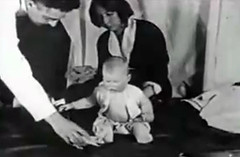 | 44 |
| 13772493044 | Karl Wernicke | 1848-1905; Field: perception; Contributions: area of left temporal lobe involved language understanding; Studies: person damaged in this area uses correct words but they do not make sense |  | 45 |
| 13772493045 | Ernst Weber | 1795-1878; Field: perception; Contributions: just-noticeable-difference (JND) that eventually becomes Weber's law; Studies: 1st study on JND |  | 46 |
| 13772493047 | Mary Cover-Jones | 1896-1987; Field: learning; Contributions: systematic desensitization, maintained that fear could be unlearned |  | 47 |
| 13772493050 | Paul Ekman | 1934-present; Field: emotion; Contributions: found that facial expressions are universal |  | 48 |
| 13772493051 | Clark Hull | 1884-1952; Field: motivation; Contributions: maintains that the goal of all motivated behavior is the reduction or alleviation of a drive state, mechanism through which reinforcement operates |  | 49 |
| 13772493052 | David McClelland | 1917-1998; Field: intelligence, testing; Contributions: devised a way to measure Murray's theory (TAT), developed scoring system for TAT's use in assessing achievement motivation, not the TAT |  | 50 |
| 13772493053 | Francis Galton | 1822-1911; Field: differential psychology AKA "London School" of Experimental Psychology; Contributions: behavioral genetics, maintains that personality & ability depend almost entirely on genetic inheritance; Studies: Twin Studies-compare identical & fraternal twins, Hereditary Genius-used bell curve for normal distribution, & "Law of Errors"-differences in intellectual ability |  | 51 |
| 13772493054 | Charles Darwin | 1809-1882; Field: geology, biology; Contributions: transmutation of species, natural selection, evolution by common descent; Studies: "The Origin of Species" catalogs his voyage on the Beagle |  | 52 |
| 13772493055 | Lewis Terman | 1877-1956; Field: testing; Contributions: revised Binet's IQ test and established norms for American children |  | 53 |
| 13772493056 | Phineas Gage | 1823-1860; Field: neurobiology; Contributions: 1st person to have a frontal lobotomy (by accident), his accident gave information on the brain and which parts are involved with emotional reasoning |  | 54 |
| 13772493058 | David Weschler | 1896-1981; Field: testing; Contributions: established an intelligence test especially for adults (WAIS) |  | 55 |
| 13772493059 | Walter B. Cannon | 1871-1945; Field: motivation; Contributions: believed that gastric activity as in empty stomach, was the sole basis for hunger; Studies: inserted balloons in stomachs | 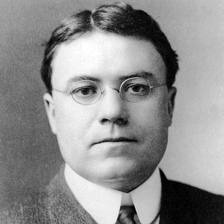 | 56 |
AP - Ecology Flashcards
Terms : Hide Images
| 9681963660 | free energy | energy that is available to do work | 0 | |
| 9681976763 | endothermy | use of thermal energy generated by metabolism to maintain homeostatic body temperatures | 1 | |
| 9681994860 | ectothermy | use of external thermal energy to help regulate and maintain body temperature | 2 | |
| 9682031497 | Organisms must dedicate free energy for ______ before reproduction and rearing offspring. | homeostasis maintenance growth | 3 | |
| 9682056180 | population | A group of individuals that belong to the same species and live in the same area at the same time | 4 | |
| 9682067101 | symbiosis | A close relationship between two species that benefits at least one of the species. | 5 | |
| 9682074536 | mutualism | A relationship between two species in which both species benefit | 6 | |
| 9682077401 | commensalism | A relationship between two organisms in which one organism benefits and the other is unaffected | 7 | |
| 9682095616 | parasitism | A relationship between two organisms of different species where one benefits and the other is harmed | 8 | |
| 9682103629 | predator-prey relationship | when an animal hunts and eats another animal (ex. lion and antelope) | 9 | |
| 9682109789 | abiotic | A term that describes a nonliving factor in an ecosystem. | 10 | |
| 9682112608 | biotic | Describes living factors in the environment. | 11 | |
| 9682351482 | community | A group of interdependent organisms inhabiting the same region and interacting with each other | 12 | |
| 9682354081 | ecosystem | a community of organisms and their abiotic environment | 13 | |
| 9682357833 | food chain | A series of steps in which organisms transfer matter and energy by eating and being eaten | 14 | |
| 9682361301 | food web | a community of organisms where there are several interrelated food chains | 15 | |
| 9682370692 | invasive species | organisms that become established outside their native range | 16 | |
| 9683901493 | exponential growth | reproduction without constraints J shaped | 17 | |
| 9683925179 | logistic growth | Population growth that is controlled by limited resources S shaped | 18 | |
| 9683934452 | What "flows" and what "recycles" in an ecosystem? | Matter Cycles; Energy Flows | 19 | |
| 9683958774 | primary productivity | rate at which organic matter is created by producers in an ecosystem | 20 | |
| 9683971083 | density-dependent | limiting factor that depends on population size | 21 | |
| 13555099869 | Entropy | a measure of the disorder of a system | 22 | |
| 13555104668 | reproductive strategies | How quickly a population can potentially increase, reflecting the biology of the species (life span, fecundity, maturity rate, etc.). | 23 | |
| 13555112279 | fecundity | fertility; fruitfulness | 24 | |
| 13555118127 | life history strategy | An organism's allocation of energy throughout its lifetime among three competing goals: growing, surviving, and reproducing. | 25 | |
| 13555136733 | Producer | an organism that makes its own food (typically through photosynthesis); an organism that does not consume other plants or animals; "produces" energy for for the rest of the ecosystem | 26 | |
| 13555164141 | trophic level | each of several hierarchical levels in an ecosystem, comprising organisms that share the same function in the food chain and the same nutritional relationship to the primary sources of energy. Ex: producer --> herbivore --> carnivore | 27 | |
| 13555178114 | consumer | An organism that obtains energy by feeding on other organisms | 28 | |
| 13555180785 | Herbivore | A consumer that eats only plants. | 29 | |
| 13555183300 | Carnivore | A consumer that eats only animals. | 30 | |
| 13555183301 | Omnivore | A consumer that eats both plants and animals | 31 | |
| 13555230231 | Symbiosis | A relationship in which two different organisms live in close association with each other | 32 | |
| 13555233683 | Mutualism | symbiotic relationship in which both species benefit from the relationship | 33 | |
| 13555236170 | Commensalism | A relationship between two organisms in which one organism benefits and the other is unaffected | 34 | |
| 13555240820 | Parasitism | A relationship between two organisms of different species where one benefits and the other is harmed | 35 | |
| 13555251925 | population density | Number of individuals per unit area | 36 | |
| 13555299338 | Predator Warning | A system in which prey can send a warning signal to the predator. | 37 | |
| 13555311815 | exponential growth curve | j-shaped curve showing the rapid increase in an exponentially growing population | 38 | |
| 13555318234 | logistic growth curve | a plot that shows how the initial exponential growth of a population is slowed and finally brought to a standstill by limiting factors | 39 | |
| 13555325502 | primary productivity | 40 | ||
| 13555331705 | keystone species | a species on which other species in an ecosystem largely depend, such that if it were removed the ecosystem would change drastically. | 41 |
Flashcards
AP Biology Chapter 40 Flashcards
Terms : Hide Images
| 7277260159 | what is ecology | ecology is the scientific study of the interactions between organisms and the environment | 0 | |
| 7277260160 | organismal ecology | is concerned with how an organisms structure, physiology, and behavior meet the challenges posed by its environment. it is specific to an individual organism | 1 | |
| 7277260161 | population | a group of individuals of the sam species living in an area | 2 | |
| 7277260162 | population ecology | analyzes factors, such as reproductive rates, that affect population size and how and why it changes through time | 3 | |
| 7277260163 | community | a group of populations of different species in an area | 4 | |
| 7277260164 | community ecology | examines how interactions between different species affect community structure and organization ex. predation or competition | 5 | |
| 7277260165 | ecosystem | the community of organisms in an area and the physical factors with which those organisms interacty | 6 | |
| 7277260166 | ecosystem ecology | emphasizes energy flow and chemical cycling between organisms and their environment; takes living and non-living components into consideration | 7 | |
| 7277260167 | landscape ecology | focused on the factors controlling exchanges of energy, materials, and organisms across multiple ecosystems | 8 | |
| 7277260168 | biosphere | the global ecosystem- the us of all the planets ecosystems and landscapes | 9 | |
| 7277260169 | global ecology | examines how the regional exchange of energy and what materials influence the functioning and distribution of organisms across the biosphere | 10 | |
| 7277260170 | what is climate? what four factors are its components? | climate is the long term, prevailing weather conditions in a given area. temperature, precipitation, sunlight, and wind are the four factors the comprise climate. | 11 | |
| 7277260171 | what is the difference between macro climate and microclimate? | macroclimate is climate at the global, regional, and landscape levels. microclimate is the climate of a small or restricted area especially when it differs from the climate of the surrounding area. macroclimate is on a much larger scale than microclimate | 12 | |
| 7277260172 | explain how the curvature and axis of rotation influence the amount of sunlight reaching a given area, and how these factors influence the temperature and precipitation in that area | because the Earth is a sphere, sunlight reaches different area at different angles. the north and south poles both have a very low angle of incoming sunlight at times which delivers less heat and light energy to these areas. the Earths axis of rotation stays constant so at times, one hemisphere is tilted more towards the sun and at other times neither hemisphere is tilted toward the sun. when one hemisphere is tilted to the sun, more heat energy is delivered. at the times that more heat energy is delivered, the temperature increases as does precipitation. this is because the temperature and so evaporation and precipitation do as well. intense solar radiation near the equator initiates a global pattern of circulation and precipitation. | 13 | |
| 7278107974 | why is the pacific northwest so rainy? what causes the mediterranean climate? | the pacific northwest is rainy because the California current produces a misty climate. also, coastal areas tend to be wetter. the mediterranean climate is caused by the gulf stream current carrying warm water from the equator up the north atlantic. | 14 | |
| 7278122560 | explain the "rain shadow" effect | first, air from the water flows in to land and cools temperatures. air then flows upward when it encounters a mountain, cools because it is at a higher altitude and then comes down to release water in the form of rain or snow. when the air moves down the leeward side of a mountain it has little to no moisture left producing little precipitation. this is known as the "rain shadow" effect and creates deserts. | 15 | |
| 7278179517 | what effect does elevatin have on climate? why do we say that hiking from gatlinburg, tennessee, at 393 meters of elevation in the smoky mountains region, to the top of mount leconte, at 2,010 meters, is like traveling to canada? | elevation has an effect on climate because north facing slopes in the northern hemisphere will receive more sunlight and will be warmer, the opposite will happen for south-facing slopes. this hike would be equal to traveling to canada because for every 1,000m increase in elevation the temeprature will drop about 6°C, o in this case it would drop aout 12°C. | 16 | |
| 7278212669 | every environment on earth is characterized by ________ or nonliving factors and _______ or living factors. | 1. abiotic 2. biotic | 17 | |
| 7278216954 | give two examples of how global climate change can alter the current range of species | global climate change can alter the current range of species because increasing hurricanes and other storms can create openings for many new species in tropical and temperate forests. increasing temperatures and decreasing precipitation could also cause more forest fires which in turn could kill plants and destroy homes of animals. | 18 | |
| 7278246397 | what is a biome? | a biome is a major life zone characterized by vegetation type or by physical environment. | 19 | |
| 7278276826 | figure 40.8 in your text shows a climograph for some major biomes in north america. what two abiotic factors shown her are most important in determining the distribution of the biome? | the annual mean precipitation and temperature are the two most important abiotic factors in determining the distribution of the biome. | 20 | |
| 7278293252 | tropical forest | in rain forests, the rain fall is 200-400cm annually and is constant. in dry forests the rainfall is 150-200cm annually with a 6-7 month dry season. temperature averages 25-29°C and does not vary much. they are located in equatorial and subequatorial regions. broadleaf evergreen trees are dominant. vertically layered and plants compete for light. home to an estimated 30 millions still undescribed species of insects, spiders, and anthropods. animal diversity is the highest. | 21 | |
| 7278333727 | desert | precipitation is low and varies greatly, less than 30cm per year. temperature varies greatly, can exceed 50°C in hot deserts and fall below -30°C in cold deserts. deserts occur in bands near 30°N and S latitudes or at other latitudes in the interior of continents. dominated by low widely scattered vegetation or succulents, deeply rooted shrubs, and herbs are common. scorpions, ants, beetles, beetles, snakes, lizards, migratory and resident birds, and seed-eating rodents are common. | 22 | |
| 7278373845 | savanna | rainfall is 30-50com per year and is seasonal , with a dry season lasting up to 9 months. thetemperature averages between 24-29°C but varies seasonally. generally located in equatorial and subequatorial regions. these often have thorny small leaves, dominant plants are fire-adapted and drought resistant. grasses and small plants are common. wildebeests, zebras, lions, and hyenas are common. common herbivores are insects. | 23 | |
| 7278411796 | chaparral | annual precipitation is generally 30-50com and is highly seasonal with rainy winters and dry summers. the average temperature is 10-12°C but has an average of 30°C in the summer. chaparral biomes are located in mid-latitude coastal regions on several continents. dominated by shrubs and small trees adapted to frequent fires. browsers, such as deer and goats, that feed on twigs and buds are common. there are also many species of insects, amphibians, small mammals and birds. | 24 | |
| 7278492404 | temperate grassland | the annual precipitation averages 30-100cm and can be highly seasonal. average temperatures are frequently below -10°C and reach 30°C in the summer. they are typically located at midlatitudes, often in the interior of continents. grasses and forbs are dominant plants and many have adaptations that allow them to survive periodic droughts and fires. bison, wild horses, prairie dogs, and burrowing mammals are common. | 25 | |
| 7278543904 | northern coniferous forest/taiga | annual precipitation generally ranges from 30-70cm. temperature range from -50°C in the winter to over 30°C in the summer. they are located in a broad band across northern north america and eurasia, to the edge of the artic tundra. cone bearing trees are common. many migratory birds nest in northern coniferous forests. moose, brown bear, and siberian tigers are common mammals in a northern coniferous forest. | 26 | |
| 7278571986 | temperate broadleaf forest | precipitation averages 70-200cm annually. winter temperatures average arouns 0°C. summers are humid, with maximum temperatures near 35°C. they are located at midlatitudes in the northern hemisphere, with smaller areas in chile, south africa, australia, and new zealand. deciduous trees are the dominant plants. many mammals hibernate in the winter while many bird species migrate to areas with warmer climates. | 27 | |
| 7278600209 | tundra | precipitation averages 20-60cm annually in and artic tundra but many exceed 100cm in an alpine tundra. winters are cold, with some temperatures falling below -30°C. summer temperatures average less than 10°C. tundras cover expansive areas of the artic amounting to 20% of earths surface. alpine tundra is produced at very high mountaintops at all latitudes. the vegetation is mosty herbaceous. predators include bears, wolves, foxes, and snowy owls. | 28 | |
| 7278628550 | what is the largest marine biome, and how much of earth does it cover? | the ocean make-up the largest marine biome, covering 75% of earths surface. | 29 | |
| 7278635711 | difference between photic and aphotic | the upper photic zone is where there is insufficient light for photosynthesis. the lower aphotic zone is where little light penetrates. | 30 | |
| 7278644484 | difference between benthic and pelagic | the pelagic zone consists of both the photic and aphotic zones. the benthic zone is lower and consists of organic and inorganic sediments and is occupied by a community of organisms called the benthos. | 31 | |
| 7278658384 | difference between oligotrophic and eutrophic | oligotrophic lakes are nutrient poor and generally oxygen rich. eutrophic lakes are nutrient rich and are often depleted of oxygen in the deepest zone in summer and covered with ice in winter. | 32 | |
| 7278685290 | difference between littoral and limnetic zone | the littoral zone is the shallow, well-lit waters close to shore. the limnetic zone is where the water is too deep to support rooted aquatic plants. | 33 | |
| 7278702346 | difference between zooplankton and phytoplankton | zooplankton are heterotrophs that eat other organisms for energy. phytoplankton is eaten by the zooplankton and performs photosynthesis to create food for itself. | 34 | |
| 7278713630 | difference between neritic and abyssal | abyssal= the deep benthic zone neritic= the relatively shallow part of the ocean above the drop-off of the continental shelf. | 35 | |
| 7278721846 | lakes | -standing bodies of water that can cover 1,000's of kilometers. TA: phytoplankton, cyanobacteria TH: zooplankton, fish HI: run off from fertilized land and dumping of wastes lead to nutrient enrichment which can produce algal blooms, oxygen depletion, and fish kills. | 36 | |
| 7278741462 | wetlands | - a habitat that is inundated with water at least some of the time and that supports plants adapted to water saturated soil TA: cattails, sedges TH: crustaceans, aquatic insect larvae, muskrats, dragonflies, frogs, alligators, herons HI: draining and filling have destroyed up to 90% of wetlands. | 37 | |
| 7278763347 | streams and rivers | - bodies of flowing water moving in one direction; salt and nutrient content increases from headwater to mouth but oxygen decreases TA: phytoplankton, aquatic plants TH: aquatic consumers, fish, invertebrates HI: municipal, agricultural, and industrial pollution degrade water quality and kill organisms. dams impair the natural flow and threaten migratory species. | 38 | |
| 7278795812 | estuaries | - the area where a fresh water stream or river merges with the ocean TA: salt marsh grasses TH: oysters, crabs, fish species HI: filling, dredging, and upstream pollution have destroyed estuaries worldwide | 39 | |
| 7278810584 | intertidal zones | - the shallow zone of the ocean adjacent to land and between the high and low tides periodically exposed and submerged by by tides TA: marine algae, seagrass TH: worms, clams, predatory crustaceans, sponges, sea anemone, small fish HI: oil pollution has disrupted many areas; rock walls and barriers built to reduce erosion from waves and storm surges disrupt some areas. | 40 | |
| 7278857692 | oceanic pelagic | - most of the oceans water far from shore, contantly mixed by ocean currents TA: bacteria, phytoplankton TH: zooplankton, protists, worms, krill, jellies, larvae of invertebrates, fish, squid, seas turtles, marine mammals HI: overfishing has depleted fish stocks; ocean have been polluted by waste dumping | 41 | |
| 7278930931 | coral reefs | - typically a warm water tropical ecosystem dominated by the hard skeletal structure secreted primarily by corals; some also exist in cold, deep waters TA: unicellular algae TH: corals, fish, invertebrates HI: collecting of coral skeletons and overfishing have reduced populations of coral and reef fishes; global warming and pollution may be contributing to large scale coral decline | 42 | |
| 7278965510 | benthic zone | - the bottom surface of an aquatic environment TA: seaweed, filaments, algae TH: invertebrates, fish, giant tube worms, arthropods, echinoderms HI: overfishing has decimated fish populations; dumping of organic wastes haas cheated oxygen deprived areas | 43 | |
| 7278980441 | what role does dispersal lay in the study of the distribution of species | dispersal is a factor that contributes greatly to the global distribution of organisms. dispersal is the movement of individuals or gametes away from their area of origin. it can disrupt the distribution of species if a barrier obstructed a species from moving to a certain area. | 44 | |
| 7279007770 | list five examples of biotic factors that may influence species distribution | - negative interactions with predators or herbivores - presence or absence of pollinators - presence or absence of parasites - presence or absence of food - presence or absence of pathogens | 45 | |
| 7279000512 | temperature | environmental temperature affects biological processes greatly. cells rupture if the water they contain freezes; the proteins of most organisms denture at temps above 45°C; species cannot thrive in these conditions and will not be found in them | 46 | |
| 7279036931 | water and oxygen | water availability is important because many animals can dry out from a lack of water. the harlequin toad is vulnerable because it needs its moist delicate skin for gas exchange, oxygen diffuses slowly in water so its concentration can be low in aquatic systems and so is limiting cellular respiration and other processes | 47 | |
| 7279053487 | salinity | the salt concentration of water affects the balance of organisms through osmosis therefore most aquatic organisms are restricted to freshwater of saltwater ecosystems by their limited ability to osmoregulate | 48 | |
| 7279067973 | sunlight | the absorption of sunlight by photosynthetic organisms creates the energy needed by most ecosystems, so too little sunlight can limit the distribution of photosynthetic species. in forests, competitions for light is intense because of the shade | 49 | |
| 7279080437 | rocks and soil | the PH mineral composition, and physical structure of rocks and soil limit the distribution of plants and the animals that feed on them on land. in water, rock composition can affect water chemistry while the structure of the riverbed determines the organisms that can live or burrow in it. | 50 | |
| 7279103562 | what two pieces of data are needed to mathematically determine density? | mass and volume are needed to determine density. to find the density of a population you need the number of individuals and how large the unit area these individuals are living in. | 51 | |
| 7279113889 | what is the difference between density and dispersion? | the density of a population is the number of individuals per unit area. dispersion is the pattern of spacing among these individuals within the boundaries of the population. | 52 | |
| 7279126994 | explain the impact of immigration and emigration on population density. | immigration can add to a population and therefore increase the density because it is the influx of new individuals from another area. emigration can take away from a population and therefore decrease the density because it is the movement of individuals out of a population and into other location. | 53 | |
| 7279139737 | clumped dispersion pattern | - individuals are spread in patches - plants and fungi are often clumped where the area favors germination and growth - insects and salamanders may clump under a rotting log because of the increased humidity - clumping of animals can be associated with mating - sea stars group where food is available and where they can breed successfully - forming groups also increases the effectiveness of predation or attack |  | 54 |
| 7279163554 | uniform dispersion pattern | - an evenly spaced pattern of dispersion - may result from direct interactions between indivduals of a population - plants can secrete chemicals that inhibit the germination and growth of nearby individuals that could compete for resources - animals exhibit uniform dispersion as a result of antagonistic social interactions - uniform patterns are rarer than clumped patterns |  | 55 |
| 7279183230 | random dispersion pattern | - unpredictable spacing - the position of each individual is dependent of other individuals - occurs in the absence of strong attractions or repulsions among individuals or where key physical or chemical factors are relatively constant across the study area - plants distributed by wind blown seeds may be randomly distributed in a fairly uniform habitat |  | 56 |
| 7279206083 | in what population statistics do demographers have a particular interest? how is this data often presented | demographers have a particular interest in birth rates and death rates. this data is often represented in a life-table. | 57 | |
| 7279213256 | is your biology class a cohort? explain. | yes, my biology class is s cohort. we are a cohort because we are a group of individuals of about the same age, which is what a cohort is. | 58 | |
| 7279219998 | type I suvivorship curve | the curve is flat to start reflecting low death rates during early and middle life, but then drops steeply as death rates increase among older age groups - seen in large mammals and humans | 59 | |
| 7279227662 | type II survivorship curve | the curve is intermediate with constant death rates over the organisms lifespan. - occurs in some rodents, invertebrates, lizards, and annual plants. | 60 | |
| 7279235670 | type III survivorship curve | the curve drops sharply at the start but then flattens out as death rates decline for those few individuals who survive the early period of die-off - this curve is usually associated with organisms that produce large numbers of offspring but provide little to no care | 61 | |
| 7279309355 | how would an open nesting songbirds's survivorship curve appear if i was type III for the first year the type II for the rest of it life span. | the curve would drop sharply for the first year then continue intermediately for the rest of it's life span. | 62 | |
| 7279316706 | what does a reproductive table show? | a reproductive table tallies the number of female offspring produced by each age group. it shows an age specific summary of the reproductive rates in a population. | 63 | |
| 7279326357 | what is the advantage to using per capita birth and death rates rather than just the raw numbers of births and deaths? | the advantage to using per capita birth and death rates is that you can calculate the expected number of births or deaths per year in a population of any size. | 64 | |
| 7279334961 | what will the per capita birth and death rates be if a population is demonstrating zero population growth? | the birth and death rates would be equal if a population was demonstrating zero population growth; they would balance each other out. | 65 | |
| 7279344225 | what does it mean for a population to be in exponential population growth? | the population exists in ideal conditions for increase. all members would have access to abundant food and free to reproduce at eh physiological capacity. | 66 | |
| 7279355306 | in the graph below, explain why the line with the value of 1.0 shows a steeper slope that reaches exponential growth more quickly than does the line with the value of 0.5. | populations with a higher maximum rate of increase will grow faster than one with a lower rate of increase. this is seen by the difference between 1.0 and 0.5. larger populations also increase faster than smaller ones. | 67 | |
| 7279364544 | what are two examples of conditions that might lead to exponential growth in natural populations? | ideal conditions such as access to abundant food and freedom to reproduce at physiological capacity might lead to exponential population growth in natural population. | 68 | |
| 7279375359 | what is carrying capacity? | carrying capacity is the maximum population size that a particular environment can sustain. | 69 | |
| 7279381031 | what are six examples of limiting resources that can influence carrying capacity? | - energy - shelter - refuge from predators - nutrient availability - water - suitable resting sites | 70 | |
| 7279389807 | in the logistic population growth model, th eper capita rate of increase approaches zero as the ___________ is reached | carrying capacity | 71 | |
| 7279441723 | if the carrying capacity (or K) is 1,000 and N is 10, th etern (K-N)/K is large. explain why a large value for (K-N)/K predicts growth close to the maximum rate of increase for this population. | a large value for (K-N)/K predicts growth close to the max rate of increase because it is close to 1. In this situation N is the small compared to K which makes the per capita rate of increase large because (K-N)/K is the fraction os the population still available for growth. | 72 | |
| 7279458192 | in the graph below, explain why the logistic model predicts the sigmoid growth curve when the population density is plotted over time. | the logistic model predicts an s-shaped growth curve when the population size is plotted over time. the rate of population growth decreases a the population size approaches the carrying capacity of the environment. the population growth rate decreases a N approaches K because the birth rate, death rate, or both must decrease. this can happen because of disease, predation, and limited amounts of food and other resources. | 73 | |
| 7279475836 | explain the ideas behind the creation of the two terms: k-selection and r-selection | ecologists have attempted to connect difference in favored traits and different population densities with the logistic growth model. selections for traits that are sensitive to population density and are favored at high densities is known as k-selection or density dependent selection. selection for traits that maximize reproductive success in uncrowded environments (low-density) is called r-selections or density independent selection. k-selections operates in populations living near or at the limit imposed by their resources. (the carrying capacity, K) r-selection maximizes r or the the per capita rate of increase and occurs in environments in which population density is well below K or individual face little competition. | 74 | |
| 7279505864 | on what is the life history of an organism based? | the life history of an organism is based on the traits that affects an organisms schedule or reproductions and survival. | 75 | |
| 7279510034 | what three variables form the life history of a species? | the three variables that form the life history of a species are when reproductions begins (the age at first reproductions or age at maturity), how often the organism reproduces, and how many offspring are produced per reproductive episode. | 76 | |
| 7279518581 | density independent regulation | birth rate and death rate does not change | 77 | |
| 7279520075 | density dependent regulation | a death rate that rises as population density rises; a birth rate that falls with rising density. | 78 | |
| 7279524986 | comparisons between density dependent and independent regulation. | a combination can stop population growth leading to an equilibrium in population density | 79 | |
| 7279537004 | give both biotic and abiotic reasons for population fluctuations over the last 50 years in the moose population on isle royale, based on population dynamics. | weather is an abiotic factor which affected the moose population. cold winters weakened them and reduced food availability, decreasing the size of the population. predation, a biotic factor, has also played a role. both the moose and other predators, wolves, have walked across the frozen lake. this lake has not frozen in recent years. so both populations have been isolated from immigration and emigration. despite this, both populations have experienced major increases and collapses. the first collapse, from 1975-1980, was because of an increase in wolves. the second collapse, in 1995, was because of harsh winter weather that increased the energy needs of animals and made it hard for the moose to find food under the deep snow. | 80 | |
| 7279566192 | competition for resources | - increasing population density intensifies competition for nutrients and other resources, reducing reproductive rates - farmers combat this effect on the growth of grains such as wheat and other crops by applying fertilizers to reduce nutrient limitations on crop yield. | 81 | |
| 7279573836 | predation | - predation can be important is a predator captures more food as the population density of the prey increases. as a prey population builds up, predators may prefer to feed on that species. - population increases the in the collared lemming lead to density dependent predation by several predators including the snowy owl. | 82 | |
| 7279585142 | toxic wastes | - toxic wastes can contribute to density dependent regulation of a species population size - yeast is used to convert carbs to ethanol in winemaking. the ethanol that accumulates is toxic to yeast and contributes to the density dependent regulation or yeast population size. | 83 | |
| 7279593369 | intrinsic factors | - intrinsic physiological factors can sometimes regulate population size - reproductive rates of white footed mice in a field enclosure can drop. this dropping high population density is associated by aggressive interactions and hormonal changes that delay sexual maturation and depress the immune system. | 84 | |
| 7279607330 | territoriality | - territoriality can limit population density when space becomes a resource for individuals to compete for. the presence of surplus individuals is a good marker that is restricting population growth. - cheetahs use a chemical marker in urine to warn other cheetahs of their territorial boundaries. | 85 | |
| 7279623262 | disease | - if the transmission rate of a disease increases as a population becomes more crowded, then the disease impact is density dependent. - in humans, influenza and tuberculosis are spread through the air when someone sneezes or coughs both diseases strike a greater percentage of people in densely populated areas than in rural areas. | 86 | |
| 7279636543 | explain the importance of immigration and emigration in metapopulations | metapopulations are when a number of local population are linked. they occupy discrete patches of suitable habitation in a sea of otherwise unsuitable habitat. they exist in a constant cycle of extinction and recolonization with constant movement of individuals throughout the patches of suitable habitat. one example is the glanville fritillary. this butterfly occupies 500 meadows on the Åland islands when 4,000 meadows are suitable for them. the butterflies constantly emigrate and immigrate to and from different meadows. when one meadow becomes extinct more butterflies come along to recolonize it. | 87 |
APES AP Exam Master Set Flashcards
A master set of all of my APES flashcards complete with all terms, extra knowledge, and equations. Good Luck!
Terms : Hide Images
| 13846685083 | Trade Winds | A wind blowing steadily toward the equator from the northeast in the northern hemisphere or the southeast in the southern hemisphere, especially at sea. Two belts encircle the earth blowing from the tropical high-pressure belts to the low-pressure zone at the equator. | 0 | |
| 13846895693 | Jet Streams | A narrow, variable band of very strong predominantly westerly air currents encircling the globe several miles around the earth. There are typically two or three in each of the northern and southern hemispheres. | 1 | |
| 13846969113 | Westerlies | Winds blowing from the west to the east; the belt of prevailing winds in the mid-latitudes of the northern and southern hemispheres. | 2 | |
| 13846980744 | Hadley Cell | A large-scale atmospheric convection cell in which air rises at the equator and sinks at medium latitudes, typically about 30° north or south. The largest cell. | 3 | |
| 13847009716 | Polar Cell | The smallest and weakest convection cell; extend from between 60 and 70 degrees north and south to the poles. Air intense cells sinks over the highest latitudes and flows out towards the lower latitudes of the surface. | 4 | |
| 13847382154 | Ferrel Cell | Middle cells; air converges at low altitudes to ascend along the boundaries between cool polar air and the warm subtropical air that generally occurs between 60 and 70 degrees north and south; moves in the opposite direction of the other two cells because it acts like a gear. | 5 | |
| 13849129410 | Biome | a large naturally occurring community of flora and fauna occupying a major habitat, e.g., forest or tundra. | 6 | |
| 13849142809 | Hurricanes Cyclones Typhoons Tropical Storms | The strongest tropical storms that are formed by warm and moist air rising, condensing to form clouds, heavy rainfall and a low pressure zone; huge tropical storm! It can be up to 600 miles across and have strong winds spiraling inward and upward at speeds of 75 to 200 mph. H: A storm with a violent wind C: A system of winds rotating inward to an area of low atmospheric pressure, with a counter-clockwise (northern hemisphere) or clockwise (southern hemisphere) circulation. T/TS: A tropical storm in the region of the Indian or Western Pacific Oceans | 7 | |
| 13849184922 | Troposhere | the lowest region of the atmosphere, extending from the earth's surface to a height of about 3.7-6.2 miles (6-10 km), which is the lower boundary of the stratosphere. Ozone is bad here! | 8 | |
| 13849187907 | Stratosphere | The layer of the earth's atmosphere above the troposphere, extending to about 32 miles (50 km) above the earth's surface (the lower boundary of the mesosphere). Ozone good here! | 9 | |
| 13849193346 | Mesosphere | The strong, lower part of the mantle between the asthenosphere and the outer core; the region of the earth's atmosphere above the stratosphere and below the thermosphere, between about 30 and 50 miles (50-80 km) in altitude. | 10 | |
| 13849201674 | Thermosphere | The region of the atmosphere above the mesosphere and below the height at which the atmosphere ceases to have the properties of a continuous medium. Characterized throughout by an increase in temperature with height, very hot layer. | 11 | |
| 13849218856 | Exosphere | The outermost layer of the thermosphere/region of a planet's atmosphere, extending outward into space. | 12 | |
| 13849225195 | Earth's Atmosphere | Composed of nitrogen (78%), oxygen (21%), and very small amounts of water vapor, carbon dioxide and other "trace gases": ozone (O3), methane (CH4), nitrous oxide (N2O), etc. EXO - THERMO - MESO - STRATO - TROPO | 13 | |
| 13849231544 | Greenhouse gas | A gas that contributes to the greenhouse effect by absorbing infrared radiation, e.g., carbon dioxide and chloroflourocarbons (CFCs). | 14 | |
| 13849248908 | Global Warming Potential (GWP) | A relative measure of how much heat a greenhouse gas traps in the atmosphere. | 15 | |
| 13849265107 | Weather v Climate | W: The conditions of the atmosphere over a short period of time. C: The way that the atmosphere "behaves" over relatively long periods of time. | 16 | |
| 13849283337 | Infrared Radiation (IR) | A region of the electromagnetic radiation spectrum where wavelengths range from about 700 nanometers (nm) to 1 millimeter (mm). | 17 | |
| 13849298692 | Downwelling | The downward movement of fluid, especially in the sea, the atmosphere, or deep in the earth. | 18 | |
| 13849302824 | Upwelling | A rising of seawater, magma, or other liquid. | 19 | |
| 13849307344 | Earth's Rotation | When an object turns around on an internal axis like the Earth turns around its axis; causes night and day; 24 hours | 20 | |
| 13849314214 | Earth's Revolution | When an object circles an external axis like the Earth circling; 365(.25) days; Movement around the Sun | 21 | |
| 13849326903 | Why we have seasons? | The earth is tilted (wonky) as it makes its yearly journey around the Sun. ---> Earth's axis is tilted at 23.5 degrees and this means that the earth is always "pointing" to one side as it goes around the Sun. | 22 | |
| 13849341913 | High Pressure v Low Pressure Systems | HP: sinking air = nice weather LP: rising air = bad weather like rain, clouds, precipitation, etc. ** Looking from the North top-down wind is traveling east HP system - arrows go outward LP system - arrows go inward In hurricanes, HP ALWAYS wants to go to LP because of the concentration |  | 23 |
| 13849380755 | Ecological Succession | The gradual process by which ecosystems change and develop over time. | 24 | |
| 13849389578 | Primary Succession | Occurs in an environment in which new substrate devoid of vegetation and other organisms usually lacking soil, such as after a lava flow or left from retreated glacier, is deposited. | 25 | |
| 13849402696 | Secondary Succession | A process started by an event that reduces an already established ecosystem to a smaller population of species and occurs on pre-existing soil. | 26 | |
| 13849412314 | Pioneer Species | Hardy species which are the first colonize previously biodiverse steady-state ecosystems. * Lichen! | 27 | |
| 13849422926 | Early Colonizers | Early stage of primary succession Dominate ---> species with small seeds and spores which can be dispersed long distances. | 28 | |
| 13849448450 | Opportunistic Species | A species with a low level of specialization that is either capable of adapting to varied living conditions, or that gives priority to reproduction over survival. | 29 | |
| 13849461616 | Climax Community | (Final stage of succession) An ecological community in which populations of plants or animals remain stable and exist in balance with each other and their environment. ---> Unreachable/does not stay for long | 30 | |
| 13849468086 | Friable | easily crumbled, pulverized, broken, or reduced to powder; something that can be easily be reduced to a powder form; crumbly, brittle ---> used in context to soil | 31 | |
| 13849480809 | Commensalism | (Symbiotic Relationship) A relationship between two organisms in which one organism benefits and the other is unaffected ---> Species A = Benefits ---> Species B = Unaffected EX. Whale and Barnacle | 32 | |
| 13849486435 | Mutualism | (Symbiotic Relationship) A relationship between two species in which both species benefit. ---> Species A = Benefits ---> Species B = Benefits EX. Sea Anemone and Clownfish | 33 | |
| 13849492776 | Parasitism | (Symbiotic Relationship) A relationship between two organisms of different species where one benefits and the other is harmed. ---> Species A = Benefits ---> Species B = Harmed EX. Dog and Tick | 34 | |
| 13849501486 | Albedo | The proportion of the incident light or radiation that is reflected by a surface, typically that of a planet or moon. **** REFLECTIVITY OF SNOW!!!!!!!!!!! | 35 | |
| 13849509239 | Positive Feedback Loop | Occurs in nature when the product of a reaction leads to an INCREASE in that REACTION. It moves a system FURTHER away FROM EQUILIBRIUM by amplifying the effects of a product or event and occurs when something needs to happen quickly. EX. CHILDBIRTH [Pressure of child on cervix] \/ [Contractions begin] \/ [More pressure, Oxytocin released] \/ /\ [More contractions] \/ BABY BORN | 36 | |
| 13849543282 | Negative Feedback Loop | Occurs when the product of a reaction leads to a DECREASE in that reaction. It brings a system CLOSER to a target of STABILITY OF HOMEOSTASIS/EQUILIBRIUM of a system. The response of the regulating mechanism is opposite to the output of the event. EX. THERMOSTAT When a thermostat reaches the designated temperature, the thermostat then turns off, ending the loop and moving the temperature back to equilibrium. | 37 | |
| 13849580079 | Monoculture | The cultivation of a single crop in a given area. *GOOD because of Intensive Traditional Agriculture as it produces maximum profit. *BAD because with no variation, natural selection doesn't really happen so if a disease comes through that the crop isn't resistant to, it's GAME OVER! :P * BAD because it doesn't allow the soil to replenish | 38 | |
| 13849597773 | Intensive Traditional Agriculture | An agricultural intensification and mechanization system that aims to maximize yields from available land through various means, such as the heavy use of pesticides and chemical fertilizers (which is really horrible - another reason why monocultures are bad). ** FARM FOR THE PROFIT!! | 39 | |
| 13849612078 | Subsistence Agriculture | When farmers grow food crops to feed themselves and their families. Farm output is targeted to survival and is mostly for local requirements with little or no surplus trade. ** FARM FOR THE FAM(ILY) | 40 | |
| 13849624508 | Superfund | A program designed to fund the cleanup fo sites contaminated with hazardous substances and pollutants. Superfund is named as such because it is like a trust fund for CLEANING UP HAZARDOUS WASTE SITES - Established by Congress in 1980. ** As of April 2017, there are 115 in New Jersey! | 41 | |
| 13849647603 | Coral Bleaching | A coral becomes stressed from warmer water temperatures which cause the coral to expel the algae living in their tissues, causing the coral to turn completely white. | 42 | |
| 13849666001 | Ocean Acidification | Refers to a reduction in the pH of the ocean over an extended period of time, caused primarily by uptake of carbon dioxide (CO2) from the atmosphere. A term used to describe significant changes to the chemistry of the ocean. It occurs when CO2 is absorbed by the ocean and reacts with seawater to produce acid. CO2 + H2O = H2CO3 (CARBONIC ACID) | 43 | |
| 13849678699 | Niche | The specific area where an organism inhabits. The role or function of an organism or species in an ecosystem. The interrelationship of a species with all the biotic and abiotic factors affecting it. "WAY OF LIFE" | 44 | |
| 13849689539 | Interspecific Competition | A form of competition in which individuals of different species compete for the same resources in an ecosystem (e.g. food or living space). | 45 | |
| 13849696715 | Resource Partitioning | Competitive exclusion may be avoided if one or both of the competing species evolves to use a different resource, occupy a different area of the habitat, or feed during a different time of the day. | 46 | |
| 13849711072 | Competitive Exclusion Principle | Two species can't have exactly the same niche in a habitat and stably coexist. | 47 | |
| 13849726261 | Ecological Organization (smallest to largest) | Organism - Population/Species - Community - Ecosystem - Biosphere | 48 | |
| 13849714975 | Organism | An individual animal, plant, or single-celled life form; any individual entity that exhibits the property of life. | 49 | |
| 13849735284 | Population/Species | A group of organisms that interbreed and live in the same place at the same time. A group of living organisms consisting of similar individuals capable of exchanging genes or interbreeding. | 50 | |
| 13849748952 | Community | An interacting group of various species in a common location. | 51 | |
| 13849758149 | Ecosystem | A biological community of interacting organisms and their physical environment. | 52 | |
| 13849765947 | Biosphere | The regions of the surface, atmosphere, and hydrosphere of the earth occupied by living organisms. | 53 | |
| 13849782894 | Keystone Species | A species on which other species in an ecosystem largely depend, such that if it were removed the ecosystem would change drastically. EX. Wolves controlling the population of deer | 54 | |
| 13849803051 | Foundation Species | Usually a primary producer that dominates an ecosystem in abundance and influence; used to refer to a species that has a strong role in structuring a community. EX. Beavers building a dam AND Elephants clearing land as they walk. | 55 | |
| 13849814758 | Functional Redundancy | A characteristic of species within an ecosystem where certain species contribute in equivalent ways to an ecosystem function such that one species may substitute for another. | 56 | |
| 13849833350 | Soil Horizons | Horizontal layers that reveal a soil's history, characteristics, and usefulness O - Organic A - Topsoil E- Eluviation B - Subsoil C- Parent Material R- Bedrock | 57 | |
| 13849831800 | Parent Material | The underlying geological material (generally bedrock or a superficial or drift deposit) in which soil horizons form. | 58 | |
| 13849877724 | Weathering (3 Types) | Weathering is the breakdown of rocks at the Earth's surface. ---> Physical (Mechanical) - breaking down of larger rock into smaller rocks like with a hammer! ---> Chemical - a chemical reaction occurs in the rock causing it to dissolve and form new substances. ---> Biological - disintegration of rocks due to the actions of plants/animals like lichen! | 59 | |
| 13849905679 | Soil Characterization | TEXTURE STRUCTURE pH | 60 | |
| 13849907154 | Soil Particles (smallest to largest) | Clay, silt, sand, gravel | 61 | |
| 13849911713 | Eluviation | The transport of soil material from upper layers of soil to lower levels of soil by downward precipitation of water across soil horizons, and accumulation of this material (illuvial deposit) in lower levels is called illuviation. | 62 | |
| 13849921700 | Erosion | Removal of material from one place and its transport elsewhere i.e. by wind or water. | 63 | |
| 13849926397 | 4 Types of Erosion | Splash - Abrasion Sheet - Attrition Rill - Hydraulic Action Gull - Solution | 64 | |
| 13849931182 | Deposition | Arrival of eroded material at a new location | 65 | |
| 13849935996 | Desertification | The process by which fertile land becomes desert, typically as a result of drought, deforestation, or inappropriate agriculture. | 66 | |
| 13849939612 | The Dust Bowl | 1930 - 1936 The name given to the drought-stricken Southern Plains region of the US which suffered severe dust storms during a dry period in the 1930s. Texas to Nebraska, people and livestock were killed and crops failed across the entire region. It intensified the crushing impacts of the Great Depression. | 67 | |
| 13849954123 | US Conservation Act of 1935 | Enacted on February 29, 1936 - US Federal Law that allowed the government to pay farmers to reduce production so as to conserve soil and prevent erosion. | 68 | |
| 13849962020 | Tillage | The preparation of land for growing crops. | 69 | |
| 13849964577 | Soil Compaction | The process in which a stress applied to soil causes densification as a air is displaced from the pores between the soil grains. | 70 | |
| 13849971076 | National Grasslands | A classification of protected and managed federal lands in the US authorized by Title III of the Bankhead-Jones Farm Tenant Act of 1937. | 71 | |
| 13849987624 | Crop Rotation | Alternating different kinds of crops in order to preserve soil fertility; alternating the crop planted can restore nutrients to soil and fight pests and disease. | 72 | |
| 13849993794 | Contour Farming | Planting along contour lines of slopes helps reduce erosion of hillsides. | 73 | |
| 13849996366 | Intercropping (aka Stripcropping) | Mixing crops such as in stripcropping can provide nutrients and reduce erosion. ** Going back and forth between corn and grass | 74 | |
| 13850013133 | Stripcropping | Cultivation in which different crops are sown in different strips to prevent soil erosion. | 75 | |
| 13850019598 | Terracing | Cutting stair-steps, or terraces, is the only way to farm extremely steep hillsides without causing massive erosion. | 76 | |
| 13850026062 | Shelterbelts | Rows of fast-growing trees around crop plantings provide windbreaks, reducing erosion by wind. | 77 | |
| 13850035228 | Conservation Tillage | No till or reduced till leaves old crop material on the ground instead of plowing it into the soil. This covers the soil, keeping it in place. * BAD because ! Requires more herbicides because weeks are not plowed under. ! Requires more fertilizer. | 78 | |
| 13850050240 | Shifting Cultivation | (Swidden Agriculture)(Slash and Burn) A technique of rotational farming in which land is cleared for cultivation (normally by fire) and left to regenerate for the next few years. | 79 | |
| 13850088129 | Kyoto Protocol | Signed December 11, 1997 but really put into effect February 2005 - controlling global warming by setting greenhouse gas emissions targets for developed countries | 80 | |
| 13850092916 | Montreal Protocol | (1987) phase-out of ozone depleting substances; meeting in 1987 where a group of nations met in Canada and agreed to take steps to fight against Ozone Depletion-CFC's banned | 81 | |
| 13850113379 | Renewable Resources | Any natural resource that can replenish itself in a relatively short period of time, usually no longer than the length of a human life. EX. Sun, water, wind, etc. | 82 | |
| 13860259839 | Renewable Energy Resources | EROEI = Energy Returned Over Energy Invested - Determines if we economically should use that source. (Coal has an 80:1 as in we invest a small bit of energy and money but get a lot back). **Wind Power! Has the greatest potential, especially when looking at offshore wind turbines - 18:1 **Hydroelectric Power! - 100:1 on LARGE scale - Waves and Tides 15:1 **Hydrogen Power! - Separate water into hydrogen and oxygen and then put them on either side of an electrolyte, as they flow together, it creates electricity BUT it's less than 1:1 -Fuel cells **Geothermal Energy! - Using heat from the earth - 9:1 Could use a heat pump **Solar Energy! - Passive - Just letting it in and holding it like to heat house - Active - using it to warm up something like water in thermal heating system (1.9:1) ---Photovoltaic - 6.8:1 - huge growth in technology ---Concentrated like creating steam large scale 9:1 **Biomass and Biofuels! - 25:1 (Solid) Wood and Charcoal - NOT SUSTAINABLE - they lead to deforestation and carbon monoxide - 1.3:1 (Liquid) Biodiesel and ethanol | 83 | |
| 13860617895 | Old Growth Forest | A complex forest that has developed over a long period of time and is relatively untouched by human activity; one that has never been cut; these forests have not been seriously disturbed for several hundred years. ** Currently just 5 countries (Russia, Canada, Brazil, Indonesia, and Papau New Guinea) have 75% of the world's old growth forests. | 84 | |
| 13860644463 | Second Growth Forest | A forest that has been cut and has regrown; a stand of trees resulting from secondary ecological succession | 85 | |
| 13860651082 | Even Aged Management | Trees in a given stand are maintained at about the same age and size; Method of forest management in which trees, sometimes of a single species in a given stand, are maintained at about the same age and size and are harvested all at once. BRINGS IN MORE MONEY | 86 | |
| 13860658369 | Uneven Aged Management | Method of forest management in which trees of different species in a given stand are maintained at many ages and sizes to permit continuous natural regeneration; the broad category under which selective cutting and shelter-wood cutting fall; selective deforestation. Results in MORE biodiversity and GENETIC diversity | 87 | |
| 13860720350 | Lumber/Timber Harvesting Techniques | There are three major groups of timber harvest practices; clearcutting, shelterwood and selection systems. While each are different and are applied to specific forest types, they have three things in common: 1. They provide wood fiber for thousands of every-day products. 2. They establish environmental conditions that encourage the natural regeneration of the forest. 3. They enhance the ecological, economic and social values of the future forest. | 88 | |
| 13860772443 | Lumber Harvest Techniques (Definitions) | * Selective cutting - removing the middle-aged and mature trees from the forest, which allows for its natural regeneration and protects against erosion. - Sometimes criticized due to damage falling trees have on remaining trees. * Shelterwood cutting - removal of all the mature trees in a period of 2 or 3 cuttings. * Seed tree cutting - removes about half the trees but leaves the other half to reseed the area. * Clear-cutting - remove all the trees from an area in one cutting. This leaves the land bare and prone to erosion! * Strip cutting - A variation on clear-cutting that can allow sustainable yield. The strip is narrow enough to allow surrounding trees to reseed it. *Whole-tree harvesting - entire tree, roots and all, is removed. Deprives soils of nutrients. | 89 | |
| 13861035044 | Ecosystem Services | The process by which natural environments provide life-supporting resources. "Nature's Benefit" * Supporting - materials necessary for the production of other ecosystem services * Provisioning - products gained from ecosystem * Regulating - benefits obtained from processes such as air or climate regulation * Cultural - nonmaterial benefits derived by humans | 90 | |
| 13861123313 | Direct Ecosystem Services | Things we get directly from biodiversity: - shelter - food/energy - clothing, medicine - genetic resources - fiber and wood - transportation - atmospheric oxygen - medicine sources | 91 | |
| 13861168577 | Indirect Ecosystem Services | delivered to us by healthy ecosystems: - flood control from mangroves - climate modulation - pollination - primary production - clean air - soil formation - nutrient cycling - hydrological cycle - pollination - gas regulation - disturbance regulation - disease regulation - water purification | 92 | |
| 13861215103 | r-selected species | TURTLES maximizing growth rate - not much parental care - high offspring mortality - most offspring die - usually smaller - increased offspring dispersal - fast development rate | 93 | |
| 13861228681 | K-selected species | HUMANS gradually increase to carrying capacity - slow development - low reproductive rate -late reproductive age - large body size long lifespan low offspring mortality relatively steady population size near the carrying capacity - presence in mature, undisturbed habitats - good parental care | 94 |
Pages

Need Help?
We hope your visit has been a productive one. If you're having any problems, or would like to give some feedback, we'd love to hear from you.
For general help, questions, and suggestions, try our dedicated support forums.
If you need to contact the Course-Notes.Org web experience team, please use our contact form.
Need Notes?
While we strive to provide the most comprehensive notes for as many high school textbooks as possible, there are certainly going to be some that we miss. Drop us a note and let us know which textbooks you need. Be sure to include which edition of the textbook you are using! If we see enough demand, we'll do whatever we can to get those notes up on the site for you!
