

Flashcards
Flashcards
Flashcards
AP Psychology (Abnormal Psychology) Flashcards
Terms : Hide Images
| 13063965426 | Narcissistic personality disorder | a personality disorder characterized by exaggerated ideas of self-importance and achievements; preoccupation with fantasies of success; arrogance | 0 | |
| 13063965427 | Dissociative Disorders | disorders in which conscious awareness becomes separated (dissociated) from previous memories, thoughts, and feelings | 1 | |
| 13063965428 | Anxiety | a vague unpleasant emotion that is experienced in anticipation of some (usually ill-defined) misfortune |  | 2 |
| 13063965429 | Abnormal Psychology | The field of psychology concerned with the assessment, treatment, and prevention of maladaptive behavior. | 3 | |
| 13063965432 | Neurotic disorders | mental disorders in which a person does not have signs of brain abnormalities and does not display grossly irrational thinking or violate basic norms but does eperience subjective distress; a category dropped from DSM-III | 4 | |
| 13063965434 | Psychotic Disorders | psychological disorders of thought and perception, characterized by inability to distinguish between real and imagined perceptions. | 5 | |
| 13063965438 | phobia | an anxiety disorder characterized by extreme and irrational fear of simple things or social situations | 6 | |
| 13063965439 | generalized anxiety disorder | an anxiety disorder characterized by chronic free-floating anxiety and such symptoms as tension or sweating or trembling of light-headedness or irritability etc that has lasted for more than six months | 7 | |
| 13063965440 | panic disorder | an anxiety disorder marked by unpredictable minutes-long episodes of intense dread in which a person experiences terror and accompanying chest pain, choking, or other frightening sensations | 8 | |
| 13063965441 | obsessive-compulsive disorder | An anxiety disorder characterized by unwanted repetitive thoughts (obsession) and/ or actions (compulsions). | 9 | |
| 13063965442 | posttraumatic stress disorder | an anxiety disorder associated with serious traumatic events and characterized by such symptoms as survivor guilt, reliving the trauma in dreams, numbness and lack of involvement with reality, or recurrent thoughts and images | 10 | |
| 13063965443 | agoraphobia | a morbid fear of open spaces (as fear of being caught alone in some public place) | 11 | |
| 13063965444 | compulsions | repetitive behaviors or mental acts performed to reduce or prevent stress | 12 | |
| 13063965445 | obsessions | repeated, intrusive, and uncontrollable irrational thoughts or mental images that cause extreme anxiety and distress |  | 13 |
| 13063965446 | Somatoform Disorders | class of psychological disorders involving physical ailments or complaints that cannot be explained by organic causes | 14 | |
| 13063965447 | hypochondriasis | A somatoform disorder characterized by excessive preoccupation with health concerns and incessant worry about developing physical illnesses. | 15 | |
| 13063965448 | conversion disorders | Somatoform disorders in which a dramatic specific disability has no physical cause but instead seems related to psychological problems | 16 | |
| 13063965450 | fugue | dissociative disorder in which a person forgets who who they are and leaves home to creates a new life | 17 | |
| 13063965451 | dissociative identity disorder | a rare dissociative disorder in which a person exhibits two or more distinct and alternating personalities. Also called multiple personality disorder.(DID) |  | 18 |
| 13063965454 | Major depression | disorder causing periodic disturbances in mood that affect concentration, sleep, activity, appetite, and social behavior; characterized by feelings of worthlessness, fatigue, and loss of interest | 19 | |
| 13063965455 | dysthymic disorder | a mood disorder involving a pattern of comparatively mild depression that lasts for at least two years | 20 | |
| 13063965456 | seasonal affective disorder | Controversial disorder in which a person experiences depression during winter months and improved mood during spring. Can be treated using phototherapy, using bright light and high levels of negative ions. | 21 | |
| 13063965457 | Affective Disorders | Conditions is which feelings of sadness or elation are excessive, and not realistic, given the person's life conditions. | 22 | |
| 13063965458 | mania | An intense or extreme enthusiasm or excitement. | 23 | |
| 13063965459 | Personality Disorders | psychological disorders characterized by inflexible and enduring behavior patterns that impair social functioning |  | 24 |
| 13063965460 | Antisocial personality | personality who lacks a conscience, is emotionally shallow, impulsive, and selfish, and tends to manipulate others | 25 | |
| 13063965461 | Histrionic personality disorder | a personality disorder characterized by excessive emotionality and preoccupation with being the center of attention; emotional shallowness; overly dramatic behavior | 26 | |
| 13063965462 | Dependent personality disorder | personality disorder in which the person is unable to make choices and decisions independently and cannot tolerate being alone | 27 | |
| 13063965463 | Paranoid personality disorder | A personality disorder characterized by a pervasive distrust and suspiciousness of the motives of others without sufficient basis | 28 | |
| 13063965464 | Obsessive-compulsive personality disorder | personality disorder defined by a pervasive pattern of orderliness, perfectionism, and mental and interpersonal control. workaholics, intolerant of emotional behavior of other people. | 29 | |
| 13063965465 | Schizophrenia | group of disorders characterized by disorganized and delusional thinking, disturbed perceptions, and inappropriate emotions and actions | 30 | |
| 13063965466 | Positive Symptom | A symptom of schizophrenia, including thought disorder, delusions, and hallucinations. ADD | 31 | |
| 13063965467 | Delusions | false beliefs, often of persecution or grandeur, that may accompany psychotic disorders | 32 | |
| 13063965468 | delusions of grandeur | A false belief that one is a famous person or a powerful or important person who has some great knowledge, ability, or authority. Schizophrenia. | 33 | |
| 13063965469 | delusions of prosecution | belief that somebody is out to get you | 34 | |
| 13063965470 | Hallucinations | false sensory experiences, such as seeing something in the absence of an external visual stimulus | 35 | |
| 13063965471 | Inappropriate effect | Display of emotions that are unsuited to the situation; a symptom of schizophrenia. | 36 | |
| 13063965472 | Negative Symptom | symptom that reflects insufficient functioning, functions that have been lost (ex: social withdrawal, slowness of thought/speech) | 37 | |
| 13063965473 | Flat effect | Abnormality of mood and affect., lack of emotional response; no expression of feeling; voice monotonous and face immobile | 38 | |
| 13063965476 | Paranoid Schizophrenia | type of schizophrenia characterized by hallucinations and delusions of persecution or grandeur (or both), and sometimes irrational jealousy. | 39 | |
| 13063965477 | Disorganized Schizophrenia | type of schizophrenia characterized by severely disturbed thought processes, frequent incoherence, disorganized behavior, and inappropriate affect. Usually found in Homeless people. |  | 40 |
| 13063965479 | Catatonic Schizophrenia: | a condition marked by striking motor disturbances, ranging from muscular rigidity(stupor) to random motor activity, also parrot behavior |  | 41 |
| 13063965480 | Undifferentiated Schizophrenia | diagnosis made when a person experiences schizophrenic symptoms, such as delusions and hallucinations, but does not meet criteria for paranoid, disorganized, or catatonic schizophrenia | 42 | |
| 13063965487 | Anorexia Nervosa | an eating disorder in which a normal-weight person (usually an adolescent female) diets and becomes significantly (15 percent or more) underweight, yet, still feeling fat, continues to starve. | 43 | |
| 13063965488 | Bulimia Nervosa | an eating disorder characterized by episodes of overeating, usually of high-calorie foods, followed by vomiting, laxative use, fasting, or excessive exercise |  | 44 |
| 13063965489 | Substance Abuses | misuse of drugs that damages an individual's health and ability to function | 45 | |
| 13063965490 | Purging | The use of vomiting, laxatives, excessive exercise, restrictive dieting, enemas, diuretics, or diet pills to compensate for food that has been eaten and that the person fears will produce weight gain | 46 | |
| 13063965491 | Binging | a period or bout, usually brief, of excessive indulgence, as in eating, drinking alcoholic beverages;bender, blast, jag, tear, bust, toot; orgy |  | 47 |
| 13063965492 | ADHD | Attention Deficit/Hyperactivity Disorder, a psychological disorder marked by the appearance by age 7 of one or more of three key symptoms: extreme inattention, hyperactivity, and impulsivity |  | 48 |
| 13063965493 | autism | a disorder that appears in childhood and is marked by deficient communication, social interaction, and understanding of others' states of mind |  | 49 |
| 13063965494 | Impulsiveness | difficulty waiting turn, organizing, following throught, not due to clear cognitive impairment | 50 | |
| 13063965495 | Hyperactivity | a condition characterized by excessive restlessness and movement | 51 | |
| 13063965496 | Inattention | non-responsiveness to task demands | 52 |
Flashcards
Flashcards
AP Exam Review Words Flashcards
Terms : Hide Images
| 13814099356 | political socialization | the process by which people gain their political attitudes and opinions (lifelong) |  | 0 |
| 13814106017 | Slander | the action or crime of making a false spoken statement damaging to a person's reputation. |  | 1 |
| 13814107040 | Libel | A written defamation of a person's character, reputation, business, or property rights. |  | 2 |
| 13814109209 | Amendment 21 (1933) | Repealed prohibition and the 18th Amendment Only amendment to be proposed by 2/3 of the states. |  | 3 |
| 13814115465 | precedent | an earlier event or action that is regarded as an example or guide to be considered in subsequent similar circumstances. |  | 4 |
| 13814120335 | Keynesian economics | Economic theory based on the principles of John Maynard Keynes stating that government spending should increase during business slumps and be curbed during booms. |  | 5 |
| 13814122033 | enumerated powers | The powers explicitly given to Congress in the Constitution. |  | 6 |
| 13814123686 | concurrent powers | Powers held jointly by the national and state governments. |  | 7 |
| 13814125483 | pork barrel | the use of government funds for projects designed to please voters or legislators and win votes. |  | 8 |
| 13814127383 | Casework | Activities of members of Congress that help constituents as individuals; cutting through bureaucratic red tape to get people what they think they have a right to get |  | 9 |
| 13814130095 | Retrospective Model | a decision-making model that focuses on how decision makers attempt to rationalize their choices after they are made |  | 10 |
| 13814131691 | Formal Powers of the President | Veto power, command armed forces, pardoning power, appointment powers, make treaties, convene Congress |  | 11 |
| 13814133070 | Informal Powers of the President | The power to go public, power of persuasion, make executive agreements, issue executive orders, issue signing statements, create & use bureaucracy, personality and leadership, and make legislative proposals. |  | 12 |
| 13814134352 | trustee model | a model of representation in which a member of the House or Senate follows his or her own conscience when deciding issue positions |  | 13 |
| 13814137876 | Elastic Clause | Article I, Section 8, of the Constitution, which allows Congress to make all laws that are "necessary and proper" to carry out the powers of the Constitution. |  | 14 |
| 13814139803 | Necessary and Proper Clause | Clause of the Constitution (Article I, Section 8, Clause 3) setting forth the implied powers of Congress. It states that Congress, in addition to its express powers, has the right to make all laws necessary and proper to carry out all powers the Constitution vests in the national government |  | 15 |
| 13814141007 | Supremacy Clause | Article VI of the Constitution, which makes the Constitution, national laws, and treaties supreme over state laws when the national government is acting within its constitutional limits. |  | 16 |
| 13814142473 | Free Exercise Clause | A First Amendment provision that prohibits government from interfering with the practice of religion. |  | 17 |
| 13814144129 | Establishment Clause | Clause in the First Amendment that says the government may not establish an official religion. |  | 18 |
| 13814147064 | mandatory spending | Federal spending required by law that continues without the need for annual approvals by Congress. |  | 19 |
| 13814149203 | discretionary spending | Federal spending on programs that are controlled through the regular budget process |  | 20 |
| 13814151847 | 14th Amendment | Declares that all persons born in the U.S. are citizens and are guaranteed equal protection of the laws |  | 21 |
| 13814153860 | Amending the Constitution | Needs approval of two-thirds of Congress and three-fourths of the states |  | 22 |
| 13814155126 | Americans with Disabilities Act | Passed by Congress in 1991, this act banned discrimination against the disabled in employment and mandated easy access to all public and commercial buildings. |  | 23 |
| 13814156941 | amicus curiae brief | Literally, a "friend of the court" brief, filed by an individual or organization to present arguments in addition to those presented by the immediate parties to a case. |  | 24 |
| 13814157651 | Articles of Confederation | A weak constitution that governed America during/after the Revolutionary War. |  | 25 |
| 13814159854 | Constitution | A document which spells out the principles by which a government runs and the fundamental laws that govern a society |  | 26 |
| 13814160999 | Best budget predictor | the budget for last year plus or minus a small increment representing the rate of growth or shrinkage of revenues |  | 27 |
| 13814162518 | block grants | Federal grants given more or less automatically to states or communities to support broad programs in areas such as community development and social services |  | 28 |
| 13814163615 | Brown v. Board of Education | 1954 - The Supreme Court overruled Plessy v. Ferguson, declared that racially segregated facilities are inherently unequal and ordered all public schools desegregated. |  | 29 |
| 13814165547 | Bureaucratic advantage over president | bureaucrats usually have continuity of service in the executive branch that the president lacks |  | 30 |
| 13814166654 | Candidate Centered Campaigns | Election campaigns and other political processes in which candidates, not political parties, have most of the initiative and influence. |  | 31 |
| 13814168003 | categorical grants-in-aid | Funds given by Congress to states and localities and that are earmarked by law for specific categories, such as education or crime prevention |  | 32 |
| 13814169797 | categorical grants | Federal grants for specific purposes, such as building an airport |  | 33 |
| 13814171812 | Changes in presidential election processes (since 1960) | Popular vote does not equal electoral vote |  | 34 |
| 13814182797 | Checks and Balances | A system that allows each branch of government to limit the powers of the other branches in order to prevent abuse of power |  | 35 |
| 13814184461 | Civil Rights Act of 1964 | outlawed discrimination based on race, color, religion, sex, or national origin |  | 36 |
| 13814186632 | Civil Rights Act of 1950 | first civil rights legislation- equal rights in public places |  | 37 |
| 13814188552 | Clear and Present Danger | Interpretation of the First Amendment that holds that the government cannot interfere with speech unless the speech presents a clear and present danger that it will lead to evil or illegal acts. |  | 38 |
| 13814189914 | closed rule | A procedural rule in the House of Representatives that prohibits any amendments to bills or provides that only members of the committee reporting the bill may offer amendments. |  | 39 |
| 13814191208 | Cloture Motion | Can end a filibuster - bring a bill to a vote |  | 40 |
| 13814194706 | Commerce Clause | The clause in the Constitution (Article I, Section 8, Clause 1) that gives Congress the power to regulate all business activities that cross state lines or affect more than one state or other nations. |  | 41 |
| 13814198008 | committee chairs | The most important influencers of the congressional agenda. They play dominant roles in scheduling hearings, hiring staff, appointing subcommittees, and managing committee bills when they are brought before the full house. |  | 42 |
| 13814199692 | conference committee | Committee appointed by the presiding officers of each chamber to adjust differences on a particular bill passed by each in different form. |  | 43 |
| 13819636149 | Conneticut Compromise | Bicameral Congress; House is based on state population, Senate with equal representation |  | 44 |
| 13819640550 | Virginia Plan | "Large state" proposal for the new constitution, calling for proportional representation in both houses of a bicameral Congress. The plan favored larger states and thus prompted smaller states to come back with their own plan for apportioning representation. |  | 45 |
| 13819642961 | New Jersey Plan | A constitutional proposal that would have given each state one vote in a new congress |  | 46 |
| 13819647674 | 3/5 Compromise | the decision at the Constitutional convention to count slaves as 3/5 of a person for the purpose of deciding the population and determining how many seats each state would have in Congress |  | 47 |
| 13819655174 | enumerated powers | Powers given to the national government alone (listed in Constitutions) |  | 48 |
| 13819675098 | delegated powers | Powers specifically given to the federal government by the US Constitution, for example, the authority to print money. |  | 49 |
| 13819677873 | concurrent powers | Powers held jointly by the national and state governments. | | 50 |
| 13819683682 | reserved powers | Powers given to the state government alone |  | 51 |
| 13819695222 | executive privilege | The power to keep executive communications confidential, especially if they relate to national security. |  | 52 |
| 13819700329 | Affirmative Action | A policy designed to redress past discrimination against women and minority groups through measures to improve their economic and educational opportunities |  | 53 |
| 13819707406 | selective incorporation | The process by which provisions of the Bill of Rights are brought within the scope of the Fourteenth Amendment and so applied to state and local governments. |  | 54 |
| 13819717235 | Recession | A slowdown in a nation's economy | 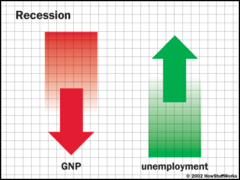 | 55 |
| 13819725343 | discount rate | The interest rate on the loans that the Fed makes to banks | 56 | |
| 13819733110 | reserve requirement | the percentage of deposits that banking institutions must hold in reserve | 57 | |
| 13819733111 | free enterprise | Economic system in which individuals and businesses are allowed to compete for profit with a minimum of government interference |  | 58 |
| 13819736825 | equality of opportunity | giving people an equal chance to succeed |  | 59 |
| 13819741209 | Congressional Incumbency Advantage | Congressmen have an advantage as incumbents because the people are already familiar with them and so are more likely to vote for them |  | 60 |
| 13819784776 | Congressional Oversight | Power used by Congress to gather information useful for the formation of legislation, review the operations and budgets of executive departments and independent regulatory agencies, conduct investigations through committee hearings, and bring to the public's attention the need for public policy |  | 61 |
| 13819789656 | Congressional Powers | Article 2 Section 8 of constitution gives the legislature or congress 27 expressed powers. A few are: Declare War Raise and fund army Regulate trade and commerce Levy taxes Borrow Money Investigate activities Impeach President Make laws for execution of expressed powers Many implied powers as well |  | 62 |
| 13819800483 | standing committee | A permanent committee established in a legislature, usually focusing on a policy area |  | 63 |
| 13819813227 | Constituent Services | Services a congressperson provides for his/her constituents (ex., helping with government claims like social security & veterans benefits) |  | 64 |
| 13819816993 | Cooperative Federalism | A system of government in which powers and policy assignments are shared between states and the national government. They may also share costs, administration, and even blame for programs that work poorly. |  | 65 |
| 13819825422 | Core Values | the primary or dominant values that are accepted throughout the organization | 66 | |
| 13819832794 | political culture | an overall set of values widely shared within a society |  | 67 |
| 13819836711 | corporate lobbyists | Corporations often hire consulting firms to do their lobbying. Since a business' first priority is running its business, it often doesn't have the internal expertise or connections needed to find the right government official and fully examine all the issues and concerns that need to be addressed. |  | 68 |
| 13819841413 | critical election | An election when significant groups of voters change their traditional patterns of party loyalty. |  | 69 |
| 13819846826 | Delegates | representatives |  | 70 |
| 13819854629 | Devolution | the transfer of powers and responsibilities from the federal government to the states | 71 | |
| 13819863901 | convention system | open meeting of political parties to select candidate, takes over caucus system | 72 | |
| 13819869568 | district courts | the lowest federal courts; federal trials can be held only here | 73 | |
| 13819874025 | appellate court | A court having jurisdiction to review cases and issues that were originally tried in lower courts. | 74 | |
| 13819878577 | divided government | one party controls the White House and another party controls one or both houses of Congress | 75 | |
| 13819886062 | Gerrymandering | Process of redrawing legislative boundaries for the purpose of benefiting the party in power. | 76 | |
| 13819886063 | Griswold v. Connecticut | Established that there is an implied right to privacy in the U.S. Constitution | 77 | |
| 13819892203 | Gitlow v. New York | established selective incorporation of the Bill of rights; states cannot deny freedom of speech; protected through the 14th amendment | 78 | |
| 13819892246 | Roe v. Wade | (1973) legalized abortion on the basis of a woman's right to privacy | 79 | |
| 13819895497 | NYT v. Sullivan | Libel and slander are not protected, and you need to prove malicious intent. | 80 | |
| 13819899179 | Freedom of Information Act (FOIA) | 1966 law that allows citizens to obtain copies of most public records | 81 | |
| 13819902782 | Group voting tendencies | Certain racial, economical, and gender groups are more likely to vote for a certain political party. In general, Jewish, Women, and Non-white people are more likely to vote Democrat while Wealthy men are more likely to vote Republican. | 82 | |
| 13819908917 | horse race journalism | news coverage that focuses on who is ahead rather than on the issues | 83 | |
| 13819916589 | Impeachment Process | Constitutional process for removing executive officers & judges for "treason, high crimes & misdemeanors" (whatever Congress thinks is impeachable). Two stages: (1) House decides to impeach (accuse) target (simple majority); (2) Senate holds trial to convict (2/3 majority). Andy Johnson and Bill Clinton were impeached but not convicted. Nixon resigned as Articles of Impeachment were being drafted! | 84 | |
| 13819922747 | imprisonment without trial | Against Civil rights, being held without being charges (Due Process) | 85 | |
| 13819926869 | incorportation doctrine | The legal concept under which the Supreme Court has nationalized the Bill of Rights by making most of its provisions applicable to the states through the Fourteenth Amendment. | 86 | |
| 13819930384 | Incumbency reelection rate | Incumbency reelection rate is generally much higher than rookie politicians. Allows politicians to say they have made progress. | 87 | |
| 13819936651 | independent regulatory commission | A government agency or commission with regulatory power whose independence is protected by Congress. | 88 | |
| 13819943823 | Independent Regulatory Agencies | Federal regulatory agencies that are independent, thus not fully under the power of the president. Ex. Federal Trade Commission, Securities and Exchange Commission. | 89 | |
| 13819953838 | independent regulatory commission | A government agency or commission with regulatory power whose independence is protected by Congress. | 90 | |
| 13819956958 | Bias | A particular preference or point of view that is personal, rather than scientific. | 91 | |
| 13819956959 | interest group | An organization of people sharing a common interest or goal that seeks to influence the making of public policy | 92 | |
| 13819968394 | political party | A group of individuals with broad common interests who organize to nominate candidates for office, win elections, conduct government, and determine public policy | 93 | |
| 13819968395 | Iron Triangle | A close relationship between an agency, a congressional committee, and an interest group | 94 | |
| 13819972742 | judicial activism | An interpretation of the U.S. constitution holding that the spirit of the times and the needs of the nation can legitimately influence judicial decisions (particularly decisions of the Supreme Court) | 95 | |
| 13819977165 | judicial activism | An interpretation of the U.S. constitution holding that the spirit of the times and the needs of the nation can legitimately influence judicial decisions (particularly decisions of the Supreme Court) | 96 | |
| 13819977167 | judicial restraint | A judicial philosophy in which judges play minimal policymaking roles, leaving that duty strictly to the legislatures | 97 | |
| 13819979912 | Judicial Review | Allows the court to determine the constitutionality of laws | 98 | |
| 13819983914 | Marbury v. Madison | This case establishes the Supreme Court's power of Judicial Review | 99 |
Government in America Chapter 12 Flashcards
Terms : Hide Images
| 9324481718 | 22nd Amendment | Limited presidents to two terms of office. | 0 | |
| 9324481719 | 25th Amendment | Permits the vice president to become acting president if the vice president ad the president's cabinet determine that the president is disabled, and it outlines how a recuperated president can reclaim the job. | 1 | |
| 9324481720 | Impeachment | The political equivalent of an indictment in criminal law, prescribed by the Constitution. | 2 | |
| 9324481721 | Watergate | The events and scandal surrounding a break-in at the Democratic National Committee headquarters in 1972 and the subsequent cover-up of White House involvement, leading to the resignation of President Nixon under threat of impeachment. | 3 | |
| 9324481722 | National Security Powers | Serve as Commander in Chief, make treaties to be approved by 2/3 of Senate, nominate ambassadors to be approved by majority of Senate, diplomatic head. | 4 | |
| 9324481723 | Legislative Powers | Must give State of the Union, recommend legislation, convene Congress on extraordinary occasions, adjourn Congress if they cannot agree to adjourn, veto legislation. | 5 | |
| 9324481724 | Administrative Powers | Ensure laws to be faithfully executed, nominate officials, request written opinions of administration, fill administration vacancies. | 6 | |
| 9324481725 | Judicial Powers | Grange reprises and pardons for federal offenses and nominate judges to be approved by majority of Senate. | 7 | |
| 9324481726 | Budgeting and Accounting Act of 1921 | Established a national budget system and an independent audit of government accounts | 8 | |
| 9324481727 | Executive Orders | Regulations originating with the executive branch, presidents can use them to control the bureaucracy. Carry the force of law. | 9 | |
| 9324481728 | Vice President | President of Senate, sometimes selected to "Balance the Ticket" | 10 | |
| 9324481729 | Cabinet | A group of presidential advisers not mentioned in the Constitution. | 11 | |
| 9324481730 | National Security Council | The committee that links that president's foreign and military policy advisers. | 12 | |
| 9324481731 | Council of Economic Advisers | A three member body appointed by the president to advise the president on economic policy. | 13 | |
| 9324481732 | Office of Management and Budget | An office that prepares the president's budget and also advises the president on proposals from departments and agencies and helps review their proposed regulations. | 14 | |
| 9324481733 | Chief of Staff | The senior staff officer of a service or command. | 15 | |
| 9324481734 | Hierarchical | Key person at the top, makes sure underlings are doing their jobs. | 16 | |
| 9324481735 | Wheel and Spokes | Surround president with many aids and talk through issues as a group. | 17 | |
| 9324481736 | First Lady | Wife of the President, often becomes spokesperson on National Scene. | 18 | |
| 9324481737 | Chief Legislator | The president has power to influence Congress in its lawmaking. | 19 | |
| 9324481738 | Veto | The Constitutional power of the president to send a bill back to Congress with reasons for rejecting it. | 20 | |
| 9324481739 | Pocket Veto | A type of veto occurring when Congress adjourns within 10 days of submitting a bill to the president and the president lets the bill die by neither signing nor vetoing it. | 21 | |
| 9324481740 | Line-item Veto | Bill is taken all or nothing. | 22 | |
| 9324481741 | Presidential Coattails | Voters cast votes for congressional candidates based on support of the president. | 23 | |
| 9324481742 | Approval Rating | Presidential influence tied to public support. | 24 | |
| 9324481743 | Electoral Mandate | An election win pushes Congress to follow the lead of the president. | 25 | |
| 9324481744 | Honeymoon | Time following an election win where a president can hopefully push for legislation quickly. | 26 | |
| 9324481745 | Chief Diplomat | President acts as the face of the country in foreign affairs. | 27 | |
| 9324481746 | Executive Agreement | Normally noncontroversial agreements between countries. | 28 | |
| 9324481747 | Commander in Chief | President is in charge of 1.4 million people in the armed forces. | 29 | |
| 9324481748 | War Powers Resolution | A law passed in 1973, in reaction to American fighting in Vietnam and Cambodia, that requires presidents to consult with Congress whenever possible prior to using military force and no withdraw forces after 60 days unless Congress declares war or grants an extension. | 30 | |
| 9324481749 | Legislative Veto | A vote in Congress to override a presidential decision. It is believed that the Supreme Court would find this unconstitutional. | 31 | |
| 9324481750 | Crisis | A sudden, unpredictable, and potentially dangerous event requiring the president to play the role of crisis manager. | 32 | |
| 9324481751 | Bully Pulpit | Presidents can push public to support a bill which then influence policymakers. | 33 | |
| 9324481752 | Bias | Favoring of or against one thing. | 34 |
AP Psychology: THINKING & LANGUAGE Flashcards
Thinking Problem Solving Creativity and Language
Terms : Hide Images
| 13031993536 | cognition | all the mental activities associated with thinking, knowing, remembering, and communicating. |  | 0 |
| 13031993537 | Concept | a mental grouping of similar objects, events, ideas, or people |  | 1 |
| 13031993538 | Prototype | a standard or typical example (Is that a computer screen that BENDS?!) |  | 2 |
| 13031993539 | algorithm | a precise rule (or set of rules) specifying how to solve some problem |  | 3 |
| 13031993540 | Heuristic | a commonsense rule (or set of rules) intended to increase the probability of solving some problem |  | 4 |
| 13031993541 | Insight | a sudden and often novel realization of the solution to a problem; it contrasts with strategy-based solutions |  | 5 |
| 13031993542 | Creativity | the ability to produce novel and valuable ideas |  | 6 |
| 13031993543 | Confirmation bias | a tendency to search for information that confirms one's preconceptions |  | 7 |
| 13031993544 | fixation | the inability to see a problem from a new perspective, by employing a different mental set |  | 8 |
| 13031993545 | Mental Set | a tendency to approach a problem in a particular way, often a way that has been successful in the past |  | 9 |
| 13031993546 | Functional fixedness | the tendency to think of things only in terms of their usual functions; an impediment to problem solving (Is a shoe just a shoe?) |  | 10 |
| 13031993547 | Representative heuristic | judging the likelihood of things in terms of how well they seem to represent, or match, particular prototypes; may lead one to ignore other relevent information |  | 11 |
| 13031993548 | Availability heuristic | estimating the likelihood of events based on their availability in memory; if instances come readily to mind, we presume such events are common |  | 12 |
| 13031993549 | Overconfidence | total certainty or greater certainty than circumstances warrant |  | 13 |
| 13031993550 | Belief Perseverance | clinging to one's initial conceptions after the basis on which they were formed has been discredited |  | 14 |
| 13031993551 | Intuition | instinctive knowing (without the use of rational processes) |  | 15 |
| 13031993552 | Framing | the way an issue is posed; how an issue is framed can significantly affect decisions and judgments. |  | 16 |
| 13031993553 | Language | our spoken, written, or signed words and the ways we combine them to communicate meaning |  | 17 |
| 13031993554 | Phoneme | in language, the smallest distinctive sound unit |  | 18 |
| 13031993555 | Morpheme | in a language, the smallest unit that carries meaning; may be a word or a part of a word (such as a prefix) |  | 19 |
| 13031993556 | Grammar | studies of the formation of basic linguistic units |  | 20 |
| 13031993557 | Semantics | the study of language meaning |  | 21 |
| 13031993558 | Syntax | the grammatical arrangement of words in sentences |  | 22 |
| 13031993559 | Babbling Stage | beginning at about 4 months, the stage of speech development in which the infant spontaneously utters various sounds at first unrelated to the household lanuage. |  | 23 |
| 13031993560 | One-word Stage | the stage in speech development, from about age 1 to 2, during which a child speaks mostly in single words |  | 24 |
| 13031993561 | Two-word stage | beginning about age 2, the stage in speech development during which a child speaks mostly two-word statements | | 25 |
| 13031993562 | Telegraphic speech | early speech stage in which a child speaks like a telegram--'go car'--using mostly nouns and verbs and omitting 'auxiliary' words |  | 26 |
| 13031993563 | Linguistic determinism | Whorf's hypothesis that language determines the way we think |  | 27 |
| 13031993564 | Noam Chomsky | United States linguist whose theory of generative grammar redefined the field of linguistics (born 1928) |  | 28 |
| 13031993565 | B.F Skinner | pioneer of operant conditioning who believed that language development is determined by our past history of rewards and punishments |  | 29 |
| 13031993566 | Benjamin Whorf | Concept of "liguistic determinism" or how language impacts thought |  | 30 |
Pages

Need Help?
We hope your visit has been a productive one. If you're having any problems, or would like to give some feedback, we'd love to hear from you.
For general help, questions, and suggestions, try our dedicated support forums.
If you need to contact the Course-Notes.Org web experience team, please use our contact form.
Need Notes?
While we strive to provide the most comprehensive notes for as many high school textbooks as possible, there are certainly going to be some that we miss. Drop us a note and let us know which textbooks you need. Be sure to include which edition of the textbook you are using! If we see enough demand, we'll do whatever we can to get those notes up on the site for you!
