AP Notes, Outlines, Study Guides, Vocabulary, Practice Exams and more!

AP Human Geography Models Flashcards

Terms : Hide Images
4702529531Population Pyramid0
4702529532Demographic Transition Model1
4702541037Epidemiological Transition Model2
4702541779Malthus' Theory3
4702529964Ravenstein's Laws of Migration4
4702529965Gravity Model5
4702537779Weber's Least Cost Theory6
4702537780Hotelling's Model7
4702542324Rostow's Model8
4702542325Core-Periphery Model9
4702543280New International Division of Labor10
4702544945Heartland Theory11
4702544946Rimland Theory12
4702544947Organic Theory13
4702545311Von Thunen's Agricultural Land Use Theory14
4702552697Central Place Theory15
4702548775Concentric Zone Model16
4702548776Sector Model17
4702548777Multiple Nuclei Model18
4702548991Urban Realms Model19
4702548992Peripheral Model20
4702549495African City Model21
4702549496Latin American City Model22
4702549995Southeast Asian City Model23

AP Flashcards

Terms : Hide Images
10533249858TrophyNourishment0
10533249859SquamScale1
10533254912Reticulnetwork2
10533254913PlasGrowth3
10533254914Phageeater4
10533254915PeriAround5
10533254916OsteoBone6
10533265208NeoNew7
10533265209Myomuscle8
10533265210LeukoWhite9
10533265211Laminalayer10
10533265212LacunaCavity11
10533265213Erythrored12
10533265214DermSkin13
10533265215Dendrtree14
10533265216CyteMature/ cell15
10533265217Crinto secrete16
10533265218Calatedinserted17
10533265219Blastimmature18
10533265220Areolalittle space19
10533265221Alveolcavity20
10533265222AWithout21

AP World History Flashcards

Terms : Hide Images
12203858630Trans -Saharan TradeTrade of goods through the Sahara dessert Goods: Salt, gold, animal hides, slaves Important points: Timbuktu, Goa,Djenne0
12203858631IslamMonotheistic religion created in the 7th century by Arabic merchant, Muhammed1
12203858632CaliphateA regional state unified by Islam2
12203858633CrusadesA series of Christian vs Muslim military campaigns for the "holy land"3
12203858634Dar-al-Islamterritory of Islam4
12203858635Byzantine EmpireEastern Roman empire extending to the Eastern Mediterranean and Southwest Asia5
12203858636SinificationChinese-ification of Japan, Korea, and Southeast Asia6
12203858637Mongolsnomadic invaders that conquered Eurasia with force and diplomacy7
12203858638Black DeathPlague that killed 1/3 of European population8
12203858639MayaMesoAmerican civilization that had pyramids, large cities, a written system, and complex society9
12203858640Coerced laborslavery, serfdom, corvee (government-recquired labor on public works projects), and indentured servitude10
12203858641FeudalismAgricultural workers serving landowners or lords (knights and samurai)11
12203858642Zheng HeMing explorer that crossed the Indian Ocean12
12203858643Silkhighly-priced luxury commodity mainly exported from China13
12203858644Chinese Inventionsgunpowder, compass, paper, astrolabe14
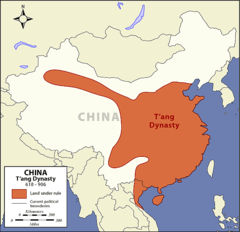
12203858645Tang Dynasty(618-907 CE) The Chinese dynasty that was much like the Han, who used Confucianism. This dynasty had the equal-field system, a bureaucracy based on merit, and a Confucian education system.15
12203858646Song Dynasty(960 - 1279 AD); started by Tai Zu; by 1000, a million people were living there; started feet binding; had a magnetic compass, navy, traded with india and persia (brought pepper and cotton), first to have paper money, explosive gun powder16
12203858647Central AsiaA region that includes the republics of Kazakhstan, Kyrgyzstan, Tajikistan, Turkmenistan, and Uzbekistan17
12203858648Indian Ocean tradetrade between Arab, Persian, Turkish, Indian, African, Chinese, and Europe merchants18
12203858649Ming DynastySucceeded Mongol Yuan dynasty in China in 1368; lasted until 1644; initially mounted huge trade expeditions to southern Asia and elsewhere, but later concentrated efforts on internal development within China.19
12203858650Grand Canalan inland waterway 1000 miles long in eastern China20
12203858651Pax MongolicaMongol peace from mid-1200's through mid-1300's imposed stability and law and order across Eurasia. Guaranteed safe passage for trade caravans, travelers, and missionaries from one end of empire to other.21
12203858652VikingsA nomadic group that conquered ex: Normans22
12203858653SyncretismA blending of two or more religious traditions23
12203858654Marco PoloItalian explorer and author who made numerous trips to China and returned to Europe to write of his journeys, responsible for much of the knowledge exchanged between Europe and China during this time period.24
12203858655Ibn Battuta(1304-1369) Morrocan Muslim scholar, the most widely traveled individual of his time. He wrote a detailed account of his visits to Islamic lands from China to Spain and the western Sudan. His writings gave a glimpse into the world of that time period.25
12203858656Mansa MusaEmperor of the kingdom of Mali in Africa. He made a famous pilgrimage to Mecca and established trade routes to the Middle East.26
12203858657The Renaissance(1350-1600) bagan in Italy. Rebirth of learning, science, art, music, literature, and culture. Rediscovery of Ancient Greece and Rome27
12203858658SecularNon-religious28
12203858659MissionaryA person who spreads his or her religious beliefs to others29
12203858660Charlemagne768-843; reunited western Europe for the first time since the Roman Empire.30
12203858661Justinian6th century Byzantine emperor; failed to reconquer the western portions of the empire; rebuilt Constatinople; codified Roman law31
12203858662hajjA pilgrimage to Mecca, performed as a duty by Muslims32
12203858663Zakatpart of 4th Pillar, charitable giving of 2.5% of your net worth to community treasury33
12203858664jihadA holy struggle or striving by a Muslim for a moral or spiritual or political goal34
12203858665Umayyad CaliphateFirst hereditary dynasty of Muslim caliphs (661 to 750). From their capital at Damascus, the Umayyads ruled one of the largest empires in history that extended from Spain to India. Overthrown by the Abbasid Caliphate.35
12203858666Abbasid Caliphate(750-1258 CE) The caliphate, after the Umayyads, who focused more on administration than conquering. Had a bureaucracy that any Mulim could be a part of36
12203858667BaghdadAbbasid capital37
12203858668Sudanic StatesSonghay Ghana and Mali. often led by patriarch or council of elders from a family or lineage38
12203858669ChinampasAztec floating gardens39
12203858670Alexander the GreatAlexander III of Macedon (356-323 B.C.E.), conqueror of the Persian Empire and part of northwest India.40
12203858671AshokaThe most famous ruler of the Mauryan Empire (r. 268-232 B.C.E.), who converted to Buddhism and tried to rule peacefully and with tolerance.41
12203858672Caesar AugustusThe great-nephew and adopted son of Julius Caesar who emerged as sole ruler of the Roman state at the end of an extended period of civil war (r. 31 B.C.E.-14 C.E.).42
12203858673Cyrus (the Great)Founder of the Persian Empire (r. 557-530 B.C.E.); a ruler noted for his conquests, religious tolerance, and political moderation.43
12203858674Darius IGreat king of Persia (r. 522-486 B.C.E.) following the upheavals after Cyrus's death; completed the establishment of the Persian Empire.44
12203858675Gupta EmpireAn empire of India (320-550 C.E.).45
12203858676Han dynastyChinese dynasty that restored unity in China softened legalist policies. Begun in 202 B.C. by Liu Bang, the Han ruled China for more than 400 years.46
12203858677Hellenistic eraThe period from 323 to 30 B.C.E. in which Greek culture spread widely in Eurasia in the kingdoms ruled by Alexander's political successors.47
12203858678hopliteA heavily armed Greek infantryman. Over time, the ability to afford a military wares and to fight for the city came to define Greek citizenship.48
12203858679Mandate of HeavenThe ideological underpinning of Chinese emperors, this was the belief that a ruler held authority by command of divine force as long as he ruled morally and benevolently.49
12203858680Mauryan EmpireA major empire (322-185 B.C.E.) that encompassed most of India.50
12203858681PatriciansWealthy, privileged Romans who dominated early Roman society.51
12203858682Pax RomanaThe "Roman peace," a term typically used to denote the stability and prosperity of the early Roman Empire, especially in the first and second centuries C.E.52
12203858683Peloponnesian WarGreat war between Athens (and allies) and Sparta (and allies), lasting from 431 to 404 B.C.E. The conflict ended in the defeat of Athens and the closing of Athens's Golden Age.53
12203858684PersepolisThe capital and greatest palace-city of the Persian Empire, destroyed by Alexander the Great.54
12203858685Persian EmpireA major empire that expanded from the Iranian plateau to incorporate the Middle East from Egypt to India; flourished from around 550 to 330 B.C.E.55
12203858686PlebiansPoorer, less privileged Romans who gradually won a role in Roman politics.56
12203858687Qin DynastyA short-lived (221-206 B.C.E.) but highly influential Chinese dynasty that succeeded in reuniting China at the end of the Warring States period.57
12203858688Qin ShihuangdiLiterally "first emperor" (r. 221-210 B.C.E.) forcibly reunited China and established a strong and repressive state.58
12203858689WudiHan emperor (r. 141-86 B.C.E.) who began the Chinese civil service system by establishing an academy to train imperial bureaucrats.59
12203858690AristotleA Greek polymath philosopher (384-322 B.C.E.); student of Plato and teacher of Alexander the Great.60
12203858691Bhagavad GitaA great Hindu epic text, part of the much larger Mahabharata, which affirms the performance of caste duties as a path to religious liberation.61
12203858692BrahmanThe "World Soul" or final reality in upanishadic Hindu belief.62
12203858693BrahminsThe priestly caste of India.63
12203858694BuddhismThe cultural/religious tradition first enunciated by Siddhartha Gautama64
12203858695ConfucianismThe Chinese philosophy first enunciated by Confucius, advocating the moral example of superiors as the key element of social order.65
12203858696ConfuciusThe founder of Confucianism (551-479 B.C.E.); an aristocrat of northern China who proved to be the greatest influence on Chinese culture in its history.66
12203858697ConstantineRoman emperor (r. 306-337 C.E.) whose conversion to Christianity paved the way for the triumph of Christianity in Europe.67
12203858698DaoismA Chinese philosophy/popular religion that advocates simplicity and understanding of the world of nature, founded by the legendary figure Laozi.68
12203858699Filial pietyThe honoring of one's ancestors and parents, a key element of Confucianism.69
12203858700HinduismA word derived from outsiders to describe the vast diversity of indigenous Indian religious traditions.70
12203858701HippocratesA very influential Greek medical theorist (ca. 460-ca. 370 B.C.E.); regarded as the father of medicine.71
12203858702Jesus of NazarethThe prophet/god of Christianity(ca. 4 B.C.E.-ca. 30 C.E.).72
12203858703KarmaIn Hinduism, the determining factor of the level at which the individual is reincarnated, based on purity of action and fulfillment of duty in the prior existence.73
12203858704LaoziA legendary Chinese philosopher of the sixth century B.C.E.; regarded as the founder of Daoism.74
12203858705LegalismA Chinese philosophy distinguished by an adherence to clear laws with vigorous punishments.75
12203858706MokshaIn Hindu belief, liberation from separate existence and union with Brahman.76
12203858707NirvanaThe end goal of Buddhism, in which individual identity is "extinguished" into a state of serenity and great compassion.77
12203858708Siddhartha Gautama (the Buddha)The Indian prince turned ascetic (ca. 566-ca. 486 B.C.E.) who founded Buddhism.78
12203858709SocratesThe first great Greek philosopher to turn rationalism toward questions of human existence (469-399 B.C.E.).79
12203858710Theravada"The Teaching of the Elders," the early form of Buddhism according to which the Buddha as a wise teacher but not divine and which emphasizes practices rather than beliefs.80
12203858711UpanishadsIndian mystical and philosophical works, written between 800 and 400 B.C.E.81
12203858712VedasThe earliest religious texts of India, a collection of ancient poems, hymns, and rituals that were transmitted orally before being written down ca. 600 B.C.E.82
12203858713Yin and YangExpression of the Chinese belief in the unity of opposites.83
12203858714ZarathustraA Persian prophet, traditionally dated to the sixth or seventh century B.C.E. (but perhaps much older), who founded Zoroastrianism.84
12203858715ZoroastrianismPersian monotheistic religion founded by the prophet Zarathustra.85
12203858716caste systemThe system of social organization in India that has evolved over millennia; it is based on an original division of the populace into four inherited classes, with the addition of thousands of social distinctions based on occupation, which became the main cell of social life in India.86
12203858717dharmaIn Indian belief, performance of the duties appropriate to an individual's caste; good performance will lead to rebirth in a higher caste.87
12203858718helotsThe dependent, semi-enslaved class of ancient Sparta whose social discontent prompted the militarization of Spartan society.88
12203858719KshatriyaThe Indian social class of warriors and rulers.89
12203858720latifundiaHuge estates operated by slave labor that flourished in parts of the Roman Empire90
12203858721PericlesA prominent and influential statesman of ancient Athens (ca. 495-429 B.C.E.); presided over Athens's Golden Age.91
12203858722scholar-gentry classA term used to describe members of China's landowning families, reflecting their wealth from the land and the privilege that they derived as government officials.92
12203858723SudraThe lowest Indian social class of varna; regarded as servants of their social betters; eventually included peasant farmers93
12203858724the "three submissions"In Chinese Confucian thought, the notion that a woman is permanently subordinate to male control: first that of her father, then of her husband, and finally of her son.94
12203858725UntouchablesAn Indian social class that emerged below the Sudras and whose members performed the most unclean and polluting work.95
12203858726VaisyaThe Indian social class that was originally defined as farmers but eventually comprised merchants.96
12203858727AxumClassical-era kingdom of East Africa, in present-day Eritrea and northern Ethiopia; flourished from 100 to 600 C.E. and adopted Christianity.97
12203858728Bantu expansionGradual migration of peoples from their homeland in what is now southern Nigeria and the Cameroons into most of eastern and southern Africa, a process that began around 3000 B.C.E. and continued for several millennia. The agricultural techniques and ironworking technology of these farmers gave them an advantage over the gathering and hunting peoples they encountered.98
12203858729Silk RoadTrade route stretching from China into Europe.99
12203858740hunting and gatheringMeans of obtaining subsistence by humans before the mastery of sedentary agriculture; normally typical of tribal social organization100
12203858741civilizationSocieties with reliance on sedentary agriculture, ability to produce food surpluses, and existence of nonfarming elites, along with merchant and manufacturing groups101
12203858742neolithicThe New Stone Age between 8000 and 5000 B.C.E.; period in which adaptation of sedentary agriculture occurred; domestication of plants and animals accomplished102
12203858743nomadic societieslivestock hearding societies that do not have a permanent settlement. normally found on the fringes of civilized (urban) societies; commonly referred to as "barbarian" by civilized societies103
12203858744cultureCombination of ideas, objects, and patterns of behavior that result from human social interaction104
12203858745agrarian revolutionOccurred between 8000 and 5000 B.C.E.; transition from hunting and gathering to sedentary agriculture105
12203858746pastoralismA nomadic agricultural lifestyle based on herding domesticated animals; tended to produce independent people capable of challenging sedentary agricultural societies106
12203858747MesopotamiaLiterally "between the rivers"; the civilization that arose in the alluvial plain of the Tigris-Euphrates river valleys107
12203858748potter's wheelA technological advance in pottery making; invented circa 6000 B.C.E.; encouraged faster and higher-quality ceramic pottery products108
12203858749SumeriansPeople who migrated into Mesopotamia circa 4000 B.C.E.; created the first civilization within the region; organized area into city-states109
12203858750cuneiformA form of writing developed by the Sumerians using a wedge-shaped stylus and clay tablets110
12203858751city-stateA form of political organization typical of Mesopotamian civilization; consisted of agricultural hinterlands ruled by an urban-based king111
12203858752Babylonian EmpireUnified all of Mesopotamia circa 1800 B.C.E.; collapsed due to foreign invasion circa 1600 B.C.E.112
12203858753HammurabiThe most important Babylonian ruler; responsible for codification of the law113
12203858754PharaohThe term used to denote the kings of ancient Egypt; the term, "great house" refers to the palace of the pharaohs114
12203858755pyramidsMonumental architecture typical of Old Kingdom Egypt; used as burial sites for pharaohs115
12203858756hieroglyphsForm of writing developed in ancient Egypt; more pictorial than Mesopotamian cuneiform116
12203858757monotheismThe exclusive worship of one god; introduced by Jews into Middle Eastern civilization117
12203858758AryansIndo-European nomadic, warlike, pastorialists who replaced Harappan civilization118
12203858759Huanghe (Yellow) River BasinSite of the development of sedentary agriculture in China119
12203858760Shang1st Chinese dynasty (after the legendary Xia)120
12203858761OraclesShamans or priests in Chinese society who foretold the future through interpreting animal bones cracked by heat; inscriptions on bones led to Chinese writing121
12203858762Big GeographyA term that draws attention to the global nature of world history.122
12203858763PaleolithicThe period that ended about 3,000 years after the end of the last Ice Age, it lasted until about 10,000 years ago. (Old Stone Age) The period of the Stone Age associated with the evolution of humans. It predates the Neolithic period.123
12203858764Human migration during Paleolithic eramovement of humans from Africa to Eurasia, Australia, and the Americas124
12203858765eglitarianequality among people (no social levels)125
12203858766toolsHumans developed a wider range of ____ specially adapted to different environments from tropics to tundra126
12203858767Neolithic Revolutionperiod of change from hunter-gatherer lifesyle to agricultural lifestyles associated with domestication, farming, and settlement127
12203858768patriarchyfather based/male dominated society128
12203858769climatic changePermanent agricultural villages emerged first in the lands of the eastern Mediterranean, possibly as a response to what?129
12203858770weaponsPastoralists were often the developers and disseminators of of ____ and forms of transportation that transformed warfare in agrarian civilizations130
12203858771horsesname one mode of new transportation by the pastoralists131
12203858772artElites, both political and religious, promoted ____.132
12203858773record-keeping systems___ arose independently in all early civilization sand subsequently were diffused133
12203858730Nile RiverThis river flooded regularly.134
12203858731Tigris RiverThis river's floods were unpredictable.135
12203858732MesopotamianUnpredictable weather patterns affected the development of the _____ civilization.136
12203858733Egyptian_______art demonstrated little change for nearly 1000 years.137
12203858734Euro diseasesSmallpox, measles, diphtheria, influenza, malaria, yellow fever and typhoid nearly wiped put entire indian villages138
12203858735Spanish Silvercommercial and new global economic139
12203858736cod hot spotnorthern european in america140
12203858737ConfucianismThe system of ethics, education, and statesmanship taught by Confucius and his disciples, stressing love for humanity, ancestor worship, reverence for parents, and harmony in thought and conduct.141
12203858738DoaismReligion that teaches people to give up earthly desires in favor of nature142
12203858739LegalismA Chinese philosophy that was devoted to strengthen and expand the state through increased agricultural work and military service.143

AP World History Era 1-4 Vocab Flashcards

Terms : Hide Images
12060173776Paleolithic Agethe Old Stone Age ending in 12,000 BCE; typified by use of crude stone tools and hunting and gathering for substance0
12060203115Neolithic RevolutionThe succession of technological innovations and changes in human organization that led to the development of agriculture, 8500-3500 B.C.E.1
12060224791hunting and gatheringThe original human economy, ultimately eclipsed by agriculture; groups hunt for meat and forage for grains, nuts, and berries.2
12060237329Catal HuyukEarly urban culture based on sedentary agriculture; located in modern southern Turkey; was larger in population than Jericho, had greater degree of social stratification.3
12060247874civilizationSocieties distinguished by reliance on sedentary agriculture, ability to produce food surpluses, and existence of non-farming elites, as well as merchant and manufacturing groups.4
12060255580nomadsCattle- and sheep-herding societies normally found on the fringes of civilized societies; commonly referred to as "barbarian" by civilized societies5
12060262795MesopotamiaLiterally "between the rivers"; the civilizations that arose in the alluvial plain of the Tigris and Euphrates river valleys6
12060276816SumeriansPeople who migrated into Mesopotamia c. 4000 B.C.E.; created first civilization within region; organized area into city-states.7
12060292426PhoeniciansSeafaring civilization located on the shores of the eastern Mediterranean; established colonies throughout the Mediterranean8
12060331383MonotheismThe exclusive worship of a single god; introduced by the Jews into Western civilization.9
12060343945Pharaohtitle of kings in Egypt10
12060373327Indus RiverRiver sources in Himalayas to mouth in Arabian Sea; location of Harappan civilization.11
12060392003Yellow River Valleyalso known as the Huang He Valley, a very fertile valley created by the Huang He River where many farmers settled for good agriculture12
12060398516ShangFirst Chinese dynasty for which archeological evidence exists; capital located in Ordos bulge of the Huanghe; flourished 1600 to 1046 B.C.E.13
12060420693MauryanDynasty established in Indian subcontinent in 4th century BCE following invasion by Alexander the Great14
12060485447AshokaGrandson of Chandragupta Maurya; completed conquests of Indian subcontinent; converted to Buddhism and sponsored spread of new religion throughout his empire.15
12060497501Chandragupta Mauryafounder of Maurya dynasty; established first empire in Indian subcontinent; first centralized government since Harappan civilization16
12060505984Qin Dynsatyestablished in 221 BCE at the end of the Warring States period following the decline of the Zhou Dynasty; fell in 207 BCE17
12060539879HanChinese dynasty that succeeded the Qin in 202 BCE; ruled for next 400 years18
12060560759ZhouOriginally a vassal family of Shang China; possibly Turkic in origin; overthrew the Shang and established second historical Chinese dynasty that flourished 1122 to 256 B.C.E.19
12060570408ConfuciusAlso known as Kung Fuzi; major Chinese philosopher born in 6th century BCE; author of Analects; philosophy based on need for restoration of order through advice of superior men to be found among the shi20
12060608876Peloponnesian WarWars from 431 to 404 BCE between Athens and Sparta for dominance in southern Greece; resulted in Spartan victory but failure to achieve political unification of Greece21
12060613899PolisA city-state in ancient Greece.22
12060628155Direct DemocracyWhere people participate directly in assemblies that make laws and select leaders, rather than electing representatives23
12060636282Hellenistic Periodthat culture associated with the spread of Greek influence as a result of Macedonian conquests; often seen as the combination of Greek culture with eastern political forms24
12060659224HannibalGreat Carthaginian general during Second Punic War; successfully invaded Italy but failed to conquer Rome; finally defeated at Battle of Zama25
12060668617Punic WarsFought between Rome and Carthage to establish dominance in the western Mediterranean; won by Rome after three separate conflicts26
12060678792CarthageOriginally a Phoenician colony in northern Africa; became a major port and commercial power in the western Mediterranean; fought the Punic Wars with Rome for dominance of the western Mediterranean.27
12060824847ShintoReligion of early Japanese culture; devotees worshipped numerous gods and spirits associated with the natural world; offers of food and prayers made to gods and nature spirits28
12060859355BedouinNomadic pastoralists of the Arabian peninsula; culture based on camel and goat nomadism; early converts to Islam.29
12060882754MeccaCity located in mountainous region along Red Sea in Arabian peninsula; founded by Umayyad clan of Quraysh; site of Ka'ba; original home of Muhammad; location of chief religious pilgrimage point in Islam.30
12060890536MedinaAlso known as Yathrib; town located northeast of Mecca; grew date palms whose fruit was sold to bedouins; became refuge for Muhammad following flight from Mecca (hijra)31
12060897141MuhammadProphet of Islam; born c. 570 to Banu Hashim clan of Quraysh tribe in Mecca; raised by father's family; received revelations from Allah in 610 C.E. and thereafter; died in 632.32
12060912907KhadijahFirst wife of the prophet Muhammad, who had worked for her as a trader.33
12060930337Qur'anRecitations of revelations received by Muhammad; holy book of Islam34
12060933984AliCousin and son-in-law of Muhammad; one of orthodox caliphs; focus for Shi'a35
12060940470CaliphThe political and religious successor to Muhammad36
12060953203Abu BakrOne of Muhammad's earliest converts; succeeded Muhammad as first caliph of Islamic community37
12060962421Ridda WarsWars that followed Muhammad's death in 632; resulted in defeat of rival prophets and some of larger clans; restored unity of Islam38
12060967478SunnisPolitical and theological division within Islam; supported the Umayyads39
12060974075Shi'aAlso known as Shi'ites; political and theological division within Islam; followers of Ali40
12060985222BaghadCapital of Abbasid dynasty located in Iraq near ancient Persian capital of Ctesiphon41
12060998219dhowsArab sailing vessels with triangular or lateen sails; strongly influenced European ship design42
12061021113Seljuk Turksnomadic Turks from central Asia via Persia' staunch Sunnis; ruled in the name of Abbasid caliphs from mid-11th century43
12061082763SaladinMuslim leader in the last decades of the 12th century; reconquered most of the crusader outposts for Islam44
12061086681Hagia SophiaNew church constructed in Constantinople during reign of Justinian45
12061125658BelisariusOne of Justinian's most important military commanders during period of reconquest of western Europe; commanded in north Africa and Italy46
12061143776BulgariaSlavic kingdom established in northern portions of Balkan peninsula; constant source of pressure on Byzantine Empire; defeated by Emperor Basil II in 101447
12061152039KievTrade city in southern Russia established by Scandinavian traders in 9th century; became focal point for kingdom of Russia that flourished to 12th century.48
12061160813ValdimirRuler of Russian kingdom of Kiev from 980 to 1015; converted kingdom to Christianity49
12061183496BoyarsRussian aristocrats; possessed less political power than their western European counterparts50
12061198202middle agesThe period in western European history from the decline and fall of the Roman Empire until the 15th century51
12061203665ManorialismSystem that described economic and political relations between landlords and their peasant laborers during the Middle Ages; involved a hierarchy of reciprocal obligations that exchanged labor or rents for access to land52
12061211190serfsPeasant agricultural laborers within the manorial system of the Middle Ages53
12061220600three-feild systemsystem of agriculture cultivation by 9th century in western Europe; included one-third in spring grains; one-third fallow54
12061245664vassalsmembers of the military elite who received land or a benefice from a lord in return for military service and loyalty55
12061254080black deathPlague that struck Europe in 14th century; significantly reduced Europe's population; affected social structure56
12061283655ChinampasBeds of aquatic weeds, mud, and earth placed in frames made of cane and rooted in lakes to create "floating islands"; system of irrigated agriculture utilized by Aztecs57
12061297651calpulliClans in Aztec society, later expanded to include residential groups that distributed land and provided labor and warriors.58
12061303589split inheritanceInca practice of descent; all titles and political power went to successor, but wealth and land remained in hands of male descendants for support of cult of dead Inca's mummy.59
12061307808YangdiSecond member of Sui dynasty; murdered his father to gain throne; restored Confucian examination system; responsible for construction of Chinese canal system; assassinated in 61860
12061320466Li YuanAlso known as Duke of Tang; minister for Yangdi; took over empire following assassination of Yangdi; first emperor of Tang dynasty; took imperial title of Gaozu.61
12061335529Takia Reformsattempt to remake Japanese monarch into an absolute Chinese- style emperor also tried to make a professional bureaucracy and peasant conscript army62
12061359951FujiwaraJapanese aristocratic family in mid-9th century; exercised exceptional influence over imperial affairs; aided in decline of imperial power.63
12061365280SamuriMounted troops of Japanese warrior leaders (bushi); loyal to local lords, not the emperor64
12061376736SinificationExtensive adoption of Chinese culture in other regions; typical of Korea, Japan, and Vietnam.65
12061400646KhaganTitle of the supreme ruler of the Mongol tribes.66
12061409620Baturuler of the golden horde; one of Chinggis Khan's grandsons; responsible for the invasion of Russia beginning in 1236.67
12061415397Golden HordeOne of the four subdivisions of the Mongol Empire after Chinggis Khan's death, originally ruled by his grandson Batu; territory covered much of what is today south central Russia.68
12061455103KhanatesFour regional Mongol kingdoms that arose following the death of Chinggis Khan.69
12061464235Dutch East India CompanyJoint stock company that obtained government monopoly over trade in Asia; acted as virtually independent government in regions it claimed.70
12061480833British East India CompanyJoint stock company that obtained government monopoly over trade in India; acted as virtually independent government in regions it claimed.71
120614889027 years warFought in both continental Europe and also in overseas colonies between 1756 and 1763; resulted in Prussian seizures of land from Austria, English seizures of colonies in Indian and North America72
12061508885Martian LutherGerman monk; initiated Protestant reformation in 1517 by nailing 95 theses to door of Wittenberg church; emphasized primacy of faith over works stressed in Catholic church; accepted state control of church73
12061560653ProtestantismGeneral wave of religious dissent against Catholic church; generally held to have begun with Martin Luther's attack on Catholic beliefs in 1517; included many varieties of religious belief.74
12061569321Catholic ReformationRestatement of traditional Catholic beliefs in response to Protestant Reformation (16th century); established councils that revived Catholic doctrine and refuted Protestant beliefs.75
1206158864530 years warWar within the Holy Roman Empire between German Protestants and their allies (Sweden, Denmark, France) and the emperor and his ally, Spain; ended in 1648 after great destruction with Treaty of Westphalia76
12061602267Scientific RevolutionCulminated in 17th century; period of empirical advances associated with the development of wider theoretical generalizations; resulted in change in traditional beliefs of Middle Ages77
12061613626absolute monarchyConcept of government developed during rise of nation-states in Western Europe during the 17th century; featured monarchs who passed laws without parliaments, appointed professionalized armies and bureaucracies, established state churches, and imposed state economic policies.78
12061619068enlightenmentIntellectual movement centered in France during the 18th century; featured scientific advance, application of scientific methods to study of human society; belief that rational laws could describe social behavior79
12061625245Ivan IIIAlso known as Ivan the Great; prince of Duchy of Moscow; claimed descent from Rurik; responsible for freeing Russia from Mongols after 1462; took title of tsar or Caesar - equivalent of emperor.80
12061638273Ivan IVAlso known as Ivan the Terrible; confirmed power of tsarist autocracy by attacking authority of boyars (aristocrats); continued policy of Russian expansion; established contacts with western European commerce and culture.81
12061648021Romanov DynastyDynasty elected in 1613 at end of Time of Troubles; ruled Russia until 191782
12061656574Peter IAlso known as Peter the Great; son of Alexis Romanov; ruled from 1689 to 1725; continued growth of absolutism and conquest; included more definite interest in changing selected aspects of economy and culture through imitation of western European models.83
12061661414Catherine the GreatGerman-born Russian tsarina in the 18th century; ruled after assassination of her husband; gave appearance of enlightened rule; accepted Western cultural influence; maintained nobility as service aristocracy by granting them new power over peasantry.84
12061683615HispaniolaFirst island in Caribbean settled by Spaniards; settlement founded by Columbus on second voyage to New World; Spanish base of operations for further discoveries in New World.85
12061692337Cortezled expedition of 600 to coast of Mexico in 1519 conquistador responsible for defeat of Aztec empire; captured Tenochtitlan86
12061732236Moctezuma( 1480-1520); last independent Aztec emperor; killed during Hernan Cortes's conquest of Tenochtitlan87
12061765499New SpainSpanish colonial possessions in Mesoamerica; included most of central Mexico; based on imperial system of Aztecs88
12061773424MitaLabor extracted for lands assigned to the state and the religion; all communities were expected to contribute; an essential aspect of Inca imperial control.89
12061783354haciendasRural estates in Spanish colonies in New World; produced agricultural products for consumers in America; basis of wealth and power for local aristocracy.90
12061790481viceroysSenior government officials in Spanish America. They ruled as direct representative of the king over the principal administrative units or vicroyalties. They were usually high ranking Spanish nobles with previous military or governmental experience. The Portuguese also used viceroys who resided in Goa for their possessions in the Indian Ocean, and then after the mid Seventeenth century for their colony in Brazil.91
12061803646OttomansTurkic people who advanced from strongholds in Asia Minor during 1350s; conquered large part of Balkans; unified under Mehmed I; captured Constantinople in 1453; established empire from Balkans that included most of Arab world.92
12061844807JanissariesOttoman infantry divisions that dominated Ottoman armies; forcibly conscripted as boys in conquered areas of Balkans, legally slaves; translated military service into political influence, particularly after 15th century.93
12061852327SafavidsOriginally a Turkic nomadic group; family originated in Sufi mystic group; espoused Shi'ism; conquered territory and established kingdom in region equivalent to modern Iran; lasted until 1722.94
12061878376Abbas the GreatSafavid ruler from 1587 to 1629; extended Safavid domain to greatest extent; created slave regiments based on captured Russians, who monopolized firearms within Safavid armies; incorporated Western military technology.95
12061892955Imansaccording to Shi'ism, rulers who could trace descent from the successors of Ali96
12061909089MughalEstablished by Babur in India in 1526; the name is taken from the supposed Mongol descent of Babur, but there is little indication of any Mongol influence in the dynasty; became weak after rule of Aurangzeb in first decades of 18th century.97

AP World History Ways of the World Chapter 1 Flashcards

Terms from Ways of the World Chapter 1

Terms : Hide Images
12123637376Venus FigurinesPaleolithic carvings of female form, often with exaggerated breasts, buttocks, hips and stomachs, which may have had religious significance.0
12123637377Paleolithic "settling down"The process by which some Paleolithic peoples moved toward permanent settlement in the wake of the last Ice Age. Settlement was marked by increasing storage of food and accumulation of goods as well as growing inequalities in society.1
12123637378"The original affluent society"Term coined by scholar Marshall Sahlins in 1972 to describe Paleolithic societies which he regarded as affluent not because of having too much, but because they wanted and needed so little.2
12123637379Megafaunal ExtinctionDying out a number of large animal species, including the mammoth and several species of horses and camels, that occurred around 11,000-10,000 years ago, at the end of the last Ice Age. The extinction may have been caused by excessive hunting or by the changing climate of the area.3
12123637380DreamtimeA native Australian Aborigines' belief; Dreamtime is a place beyond time and space in which the past, present, and future exist wholly as one. Tribes-people could enter this alternate universe through dreams or various states of altered consciousness, as well as death, Dreamtime being considered the final destination before reincarnation.4
12123637381Clovis CultureThe earliest widespread and distinctive culture of N. America; distinctive because they hunted large animals; Mammoth, Bison. named from a particular kind of projectile point (See image)5
12123637382Austronesian MigrationsThe last phase of the great human migration that established a human presence in every habitable region on Earth. These people settled in the Pacific Islands and Madagascar in a series of seaborne migrations that began around 3500 years ago.6
12123637383BanpoA Chinese archeological site where the remains of a significant Neolithic village have been found7
12123637384Bantu MigrationThe spread of Bantu-speaking peoples from their homeland in what is now southern Nigeria or Cameroon to most of Africa in a process that started ca. 3000 BCE and continued for several millennia.8
12123637385CatalhuyukA settlement in present day southern Turkey, which existed from approximately 7500 BC to 5700 BC, and flourished around 7000BC. It is the largest and best-preserved Neolithic site found to date.9
12123637386ChiefdomA societal grouping governed by a chief who typically relies on generosity, ritual status, or charisma rather than force to win obedience from the people.10
12123637387DiffusionThe gradual spread of agricultural techniques without extensive population movement.11
12123637388Fertile CrescentRegion sometimes known as Southwest Asia that includes the modern states of Iraq, Syria, Israel/Palestine, and southern Turkey; the earliest home of agriculture.12
12123637389Pastoral SocietyA human society that relies on domesticated animals rather than plants as the main source of food; lead their animals to seasonal grazing grounds rather than settling permanently in a single location.13
12123637390"Secondary Products Revolution"A term used to describe the series of technological changes that began ca. 4000 BCE, as people began to develop new uses for their domesticated animals, exploiting a new source of power.14
12123637391TeosinteThe wild ancestor of maize.15
12123637392Ishiwas the last member of the Yahi, a group of the Yana people of the U.S. state of California. Widely acclaimed in his time as the "last wild Indian" in America, Ishi lived most of his life completely outside modern culture. At about 49 years of age, in 1911, he emerged from "the wild" near Oroville, California, leaving his ancestral homeland.16
12123637393Göbekli TepeA ceremonial site (in modern day Turkey) of a hunting and gathering society. This type of structure is normally only associated with agricultural societies17
12123637394Brotherhood of the TomolA prestigious craft guild that monopolized the building and ownership of large ocean-going canoes, or tomols, among the Chumash people.18
12123637395Chumash CultureThe Paleolithic culture of southern California that survived until the modern era.19
12123637396Flores ManA recently discovered hominid species of Indonesia.20
12123637397"Gathering and Hunting Peoples"People who live by collecting food rather than producing it.21
12123637398Great GoddessA dominant deity of the Paleolithic Era, according to one theory. often based off of nature22
12123637399HadzaA people of northern Tanzania, almost the last surviving Paleolithic society.23
12123637400Paleolithic"Old Stone Age"; used to describe early Homo Sapiens societies in the period before the development of agriculture24
12123637401Paleolithic Rock ArtUsed to describe the hundreds of Paleolithic paintings discovered in Spain and France and dating to about 20,000 years ago; these paintings usually depict a range of animals, although human figures and abstract designs are also found.25
12123637402San, or Ju/'hoansiA Paleolithic people still living on the northern fringe of the Kalahari Desert in southern Africa26
12123637403"Human Revolution"The term used to describe the transition of humans from acting out of biological imperative to dependence on learned or invented ways of living(culture).27
12123637404Ice AgeAny number of cold periods in the earth's history; the last Ice Age was at its peak around 20,000 years ago.28
12123637405"Insulting the Meat"A San cultural practice meant to deflate pride that involved negative comments about the meat brought in by the hunter and the expectation that a successful hunter would disparage his own kill.29
12123637406Jomon CultureA settled Paleolithic culture of prehistoric Japan, characterized by seaside villages and the creation of some of the world's earliest pottery.30
12123637407NeanderthalsA European variant of Homo Sapiens that died out about 25,000 years ago.31
12123637408N/UmA spiritual potency among the San, that becomes activated during "curing dances" and protects humans from the malevolent forces of gods or ancestral spirits.32
12123637409"The Original Affluent Society"The term coined by the scholar Marshall Sahlins in 1972 to describe Paleolithic societies, which he regarded as affluent because they had so much but because they wanted or needed so little33
12123637410ShamanA person that is believed to have the ability to act as a bridge between living humans and supernatural forces, often by means of trances including psychoactive drugs.34
12123637411Trance DanceA night long ritual in San culture, that was held to activate a human being's inner spiritual potency (n/um) to counteract the evil influences of gods and ancestors. The practice was apparently common to the Khoisan people, of whom the Ju/'hoansi are a surviving remnant.35
12123637412Cultural Diffusionthe spread of cultural and social activities from, one group to the other36

AP World History- Unit 3 Flashcards

Terms : Hide Images
12168125530Equal field systemChinese system during the Tang dynasty in which the goal was to ensure an equitable distribution of land0
12168125531Grand canalLocated in China, it was one of the world's largest waterworks projects before modern times1
12168125532Neo-ConfucianismPhilosophy that attempted to merge certain basic elements of Confucian and Buddhist thought2
12168125533PorcelainLighter, thinner and adaptable ceramic3
12168125534Song dynastyReigned during the late 10th-13th centuries and had a far-reaching impact on Chinese economy, culture, and society. It was marked by an increasingly urbanized and cosmopolitan society4
12168125535Tang dynastyAn imperial dynasty of China preceded by the Sui dynasty. Considered to be the Golden Age of China because of its advancements in technology, medicine, and trade. The foundation of their greatness was from the emphasis put into study which led to stronger leadership and ideas.5
12168125536Abbasid dynastyCosmopolitan Arabic dynasty that replaced the Umayyads; founded by Abu al-Abbas and reached its peak under Harun al-Rashid6
12168125537AllahGod of the monotheistic religion of Islam7
12168125538Caliph"Deputy," Islamic leader after the death of Muhammad8
12168125539dar al-IslamThe "house of Islam", a term for the Islamic world. It refers to lands under the Islamic rule as a whole; it continued to grow during the Abbasid era.9
12168125540Five Pillars of IslamThe foundations of Islam: 1. Profession of faith 2. prayer 3. fasting during Ramadan 4. almsgiving 5. pilgrimage or hajj10
12168125541hajjPilgrimage to Mecca11
12168125542IslamMonotheistic religion announced by the prophet Muhammad; influenced by Judaism and Christianity, Muhammad was considered the final prophet because the earlier religions had not seen the entire picture12
12168125543jizyaTax in Islamic empires that was imposed on non-Muslims13
12168125544Ka'abamain shrine in Mecca, goal of Muslims embarking on the hajj14
12168125545MuhammadProphet of Islam15
12168125546QuranIslamic holy book that is believed to contain the divine revelations of Allah as presented to Muhammad16
12168125547Sunni"Traditionalists," the most popular branch of Islam; Sunnis believe in the legitimacy of the early caliphs, compared with the Shiite belief that only a descendant of Ali can lead17
12168125548ummaIslamic term for the "community of the faithful"18
12168125549Ummayad dynastyArabic dynasty, with its capital at Damascus, that was marked by a tremendous period of expansion to Spain in the west and India in the east19
12168125550Melaka (Malacca)Southeast Asian kingdom that was predominantly Islamic20
12168125551AxumAfrican kingdom centered in Ethiopia that became an early and lasting center of Coptic Christianity21
12168125552caste systemclass structure that is determined by birth.22
12168125553Byzantine EmpireLong-lasting empire centered at Constantinople; it grew out of the end of the Roman empire, carried the legacy of Roman greatness, and was the only classical society to survive into the early modern age; it reached its early peak during the reign of Justinian23
12168125554caesaropapismConcept relating to the mixing of political and religious authority, as with the Roman emperors, that was central to the church-versus-state controversy in medieval Europe24
12168125555VikingsA group that raided the British Isles from their home at Vik in southern Norway25
12168125556shamansReligious specialists who possessed supernatural powers and who communicated with the gods and the spirits of nature26
12168125557Yuan dynastyChinese dynasty that was founded by Genghis Khan's grandson27
12168125558BantuCollective name of a large group of sub-Saharan African languages and of the peoples speaking these languages.28
12168125559Great ZimbabweLarge sub-Saharan African kingdom in the 15th century29
12168125560Mali empireWest African kingdom founded in the 13th century by Sundiata; it reached its peak during the reign of Mansa Masu30
12168125561SundiataFounder of the Mali empire, also the inspiration for the Sundiata, an African literary and mythological work31
12168125562SwahiliEast African city-state society that dominated the coast from Mogadishu to Kilwa and was active in trade. Also a Bantu language of East Africa, or a member of a group who speaks this language32
12168125563Marco PoloItalian merchant whose account of his travels to China and other lands became legendary33
12168125564reconquistaCrusade, ending in 1492, to drive the Islamic forces out of Spain34
12168125565three estatesThe three classes of European society, composed of the clergy #1, the aristocrats #2 and the common people #335
12168125566HangzhouCapital of later Song dynasty; located near East China Sea; permitted overseas trading; population exceeded 1 million36
12168125567MeccaOriginal city of Islam, birthplace of Muhammad, location of the hajj37
12168125568MongolsNomadic horse-people from the eastern steppe of Asia that created the largest empire in the history of the world.38
12168125569Pax Mongolica (13th-14th centuries)Mongols guaranteed safe passage for traders, missionaries, and travelers such as Marco Polo, trade flourished, silk, Asian artistic designs moved westward, Mongols gain incredible wealth taxing the trade, peaceful travel across Asia, cultural exchanges, exchange of ideas, medical, mathematics, finance, engineering knowledge flows between China and Middle East, printing, gunpowder transmitted from China to Europe, spread of bubonic plague.39
12168125570Spice RoadsThe trade of spices from Asia and India to Italian and Muslim merchants who would then trade it to Europeans.40
12168125571BaghdadLocated on the Silk Roads, it was the capital city of the Abbasid Caliphate.41
12168125572Horse collarHarnessing method that increased the efficiency of horses by shifting the point of traction from the animal's neck to the shoulders; its adoption favors the spread of horse-drawn plows and vehicles42
12168125573Mansa MusaGreatest Mali king; brought Mali to its peak of power and wealth from 1312 the 1337; expanded borders, maintained peace and order, religious freedom and tolerance; hajj to Mecca; built Timbuktu43
12168125574TimbuktuPort city of Mali; located just off the flood plain on the great bend in the Niger River; population of 50,000; contained a library and university.44
12168125575Ibn BattutaMoroccan Muslim scholar, the most widely traveled individual of his time. He wrote a detailed account of his visits to Islamic lands from China to Spain and the western Sudan45
12168125576Caravanseraia roadside inn where travelers (caravaners) could rest and recover from the day's journey; supported the flow of commerce, information and people across the network of trade routes covering Asia, North Africa and Southeast Europe, especially along the Silk Road.46
12168125577Astrolabeastronomical tool for solving problems relating to time and the position of the Sun and stars in the sky, in relation to the equator47
12168125578Hanseatic Leaguea commercial and defensive confederation of merchant guilds and their market towns in Europe before 1450s48
12168125579BananasArrived to Africa via Southeast Asia, cultivation increased the supply of food, enriched diets, and allowed the population to expand more rapidly than before.49
12168125580bubonic plaguepathogen spread via the increased interactions amongst peoples on/around trade routes in Eurasia50
12168125581Peasant LaborSystem in Europe that kept individuals tied to land and land-owning elites51
12168125582Foot BindingPractice in Song Dynasty, increased patriarchal attitudes of society52

AP World History Chapter 1-3 Flashcards

Terms : Hide Images
10680439918One of the hallmarks of the administrative class in Egypt was that...bureaucrats were literate0
10680439919Refers to physical objects, such as dwellings, clothing, tools, and craftsmaterial culture1
10680439920Which of the following was not true of nomadic groups?Nomadic societies had little positive influence on settled peoples2
10680439921In the second millennium B.C.E., Egypt invaded Nubia because..Nubia had gold fields3
10680439922Amorite ruler of Babylon (r. 1792-1750 B.C.E.). He conquered many city-states in southern and northern Mesopotamia and is best known for a code of laws, inscribed on a black stone pillar, illustrating the principles to be used in legal casesHammurabi4
10680439923One of the major difficulties in understanding the Indus Valley civilization is thatits written language cannot be read5
10680439924Egyptian term for the concept of divinely created and maintained order in the universe. Reflecting the ancient Egyptians' belief in an essentially beneficent world, the divine ruler was the earthly guarantor of this orderMa'at6
10680439925Site of one of the great cities of the Indus Valley civilization of the third millennium B.C. It was located on the northwest frontier of the zone of cultivation (in modern Pakistan) and may have been a center for the acquisition of raw materials, such as metals and precious stones, from Afghanistan and IranHarappa7
10680439926The capital of Old Kingdom Egypt, near the head of the Nile Delta. Early rulers were interred in the nearby pyramidsMemphis8
10680439927A reed that grows along the banks of the Nile River in EgyptPapyrus9
10680439928A small independent state consisting of an urban center and the surrounding agricultural territoryCity-state10
10680439929An ambiguous term often used to denote more complex societies but sometimes used by anthropologists to describe any group of people sharing a set of cultural traitsCivilization11
10680439930People who support themselves by hunting wild animals and gathering wild edible plants and insectsForagers12
10680439931A body preserved by chemical processes or special natural circumstances, often in the belief that the deceased will need it again in the afterlifemummy13
10680439932A massive pyramidal stepped tower made of mud bricks. It is associated with religious complexes in ancient Mesopotamian cities, but its function is unknownziggurat14
10680439933Small charm meant to protect the bearer from evilamulet15
10680439934Structures and complexes of very large stones constructed for ceremonial and religious purposes in Neolithic timesmegaliths16
10680439935The period of the Stone Age associated with the evolution of humans. It predates the Neolithic periodPaleolithic17
10680439936In the governments of many ancient societies, a professional position reserved for men who had undergone the lengthy training required to be able to read and write using cuneiforms, hieroglyphics, or other early, cumbersome writing systemsscribe18
10680439937A system of writing in which wedge-shaped symbols represented words of syllablesCuneiform19
10680439938The historical period characterized by the production of tools from stone and other nonmetallic substancesStone Age20
10680439939The period of the Stone Age associated with the ancient Agricultural RevolutionNeolithic21
10680439940The largest and most important city in Mesopotamia. It achieved particular eminence as the capital of the Amorite king Hammurabi in the eighteenth century B.C. associated with king Nebuchadnezzar in the sixth century B.C.Babylon22
10680439941A system of writing in which pictorial symbols represented sounds, syllables, or concepts. It was used for official and monumental inscriptions in ancient EgyptHieroglyphics23
10680439942Capital city of Egypt and home of the ruling dynasties during the Middle and New Kingdom. Amon patron deity of Thebes, became one of the chief gods of EgyptThebes24
10680439943An alloy of copper with a small amount of tin, it is harder and more durable than copper aloneBronze25
10680439944The change from food gathering to food production that occurred between 8000 and 2000 B.C. Also known as the Neolithic RevolutionAgricultural Revolutions26
10680439945Largest of the cities of the Indus Valley civilization, it was centrally located in the extensive floodplain of the Indus River in contemporary PakistanMohenjo-Daro27
10680439946The central figure in the ancient Egyptian statePharaoh28
10680439947By the late Neolithic period, the people of Catal Huyuk had developed the usecopper metallurgy29
10680439948The people who dominated southern Mesopotamia through the end of the third millennium B.C.Sumerians30
10680439949A large, triangular stone monument, used in Egypt and Nubia as a burial place for the kingPyramid31
10680439950The change from food gathering to food production that occurred between ca. 8000 and 2000 B.C.E. Also known as the Neolithic Revolutionagricultural revolutions32
10680439951The study of past events and changes in the development, transmission, and transformation of cultural practicesHistory33
10680439952Family of related languages long spoken across parts of western Asia and northern AfricaSemitic34
10680439953Socially transmitted patterns of acton and expressionCulture35
10680439954Cities differed from Neolithic villages in two principal ways. Firstly, cities were larger and more complex than Neolithic villages. Secondly...cities decisively influenced the economic, political, and cultural life of large regions36
10680439955The earliest known civilization in IndiaHarappan37
10680439956A first major urban civilization in South America (900-250 B.C.)Chavin38
10680439957People sharing common linguistic and cultural features that originated in Central Europe in the first half of the first millennium B.C.Celts39
10680439958A fine, light silt deposited by wind and waterLoess40
10680439959An Egyptian name for Nubia, the region alongside the Nile River south of Egypt, where an indigenous kingdom with its own distinctive institutions and cultural traditions arose beginning in the early second millenniumKush41
10680439960Chinese school of thought, originating in the Warring States Period with LaoziDaoism42
10680439961A hoofed animal indigenous to the Andes Mountains in South AmericaLlama43
10680439962Western name for the Chinese philosopher KongziConfucius44
10680439963In Chinese belief, complementary factors that help maintain the equilibrium of the worldYin/Yang45
10680439964The dominant people in the earliest Chinese dynasty for which we have written recordsShang46
10680439965The first Mesoamerican civilization between 1200 and 400 B.C.Olmec47
10680439966Chinese religious and political ideology developed by the Zhou, according to which it was the prerogative of HeavenMandate of Heaven48
10680439967The class of religious experts who conducted rituals and preserved sacred lore among some ancient Celtic peoplesDruids49
10680439968Capital of a flourishing kingdom in southern Nubia from the fourth century B.C. to the fourth century A.D.Meroe50
10680439969The people and dynasty that took over the dominant position in north China from the Shang and created the concept of the Mandate of Heaven to justify their ruleZhou51
10680439970What would the Mandate of Heaven do?The heavens would grant the leader authority to rule52
10680439971What were the Olmec and the Chavin?The earliest civilization in the Western Hemisphere53
10680439972How did the newer civilizations develop?In more ecologically varied conditions, sometimes independent or under the influence of an older civilization54
10680439973What is the Zhou Period remembered for?The Mandate of Heaven55
10680439974Why did the adverse climate and conditions make north China important historically?It stimulated important technologies, political traditions, philosophical and religious traditions that are hallmarks of Chinese civilizations56
10680439975How did the population in Mongolia (a steppe), Xinjiang (a desert) and Tibet (a highland plateau) survive with the lack of fertile river valleys?The sparse population lived by herding57
10680439976What was special about rice, despite the large amount of work needed to grow it?Rice supported many people, allowing the south to have a larger population58
10680439977What was the staple crop of southern China and what river valley was perfect for growing it?Rice and the Yangzi59
10680439978What were some technologies of the Spring and Autumn Period?Fighters began to use horses, iron replaced bronze (600 B.C.E.)60
10680439979Where did the new technologies of the Spring and Autumn Period come from?From northeastern nomads61
10680439980The great benefit that agriculture provided early farmers wasa dependable food supply62
10680439981How were the Zhou Period cities set up?In accordance to feng shui in a grid pattern63
10680439982An ancient kingdom of the Hebrew tribes at the southeastern end of the Mediterranean SeaIsrael64
10680439983A collection of sacred books containing diverse materials concerning the origins, experiences, beliefs, and practices of the IsraelitesHebrew Bible65
10680439984A Greek word meaning "dispersal," used to describe the communities of a given ethnic group living outside their homelandDiaspora66
10680439985Egyptian pharaoh (r. 1353-1335 B.C.E.)Akhenaten67
10680439986The forcible removal and relocation of large numbers of people or entire populationsMass deportation68
10680439987A large collection of writings drawn from the ancient literary, religious, and scientific traditions of MesopotamiaLibrary of Ashurbanipal69
10680439988A people from central Anatolia who established an empire in Anatolia and Syria in the Late Bronze AgeHittites70
10680439989Under the Chaldeans, Babylon again became a major political and cultural center in the seventh and sixth centuries B.C.E.Neo-Babylonian Kingdom71
10680439990Queen of Egypt (1473-1458 B.C.E.)Hatshepsut72
10680439991A set of syllabic symbols, derived from the writing system of Minoan Crete, used in the Mycenaean palaces of the Late Bronze Age to write an early form of GreekLinear B73
10680439992A long-lived ruler of New Kingdom Egypt (r. 1290-1224 B.C.E.)Ramesses 274
10680439993Semetic-speaking Canaanites living on the coast of modern Lebanon and Syria in the first millennium B.C.E.Phoenicians75
10680439994A monumental sanctuary built in Jerusalem by King Solomon in the tenth century B.C.E. to be the religious center for the Israelite god YahwehFirst Temple76
10680439995Prosperous civilization on the Aegean island of Crete in the second millennium B.C.E.Minoan77
10680439996A term used for the burial sites of elite members of Mycenaean Greek society in the mid-second millennium B.C.E.Shaft Graves78
10680439997Site of a fortified palace complex in southern Greece that controlled a Late Bronze Age kingdomMycenae79
10680439998An empire extending from western Iran to Syria-Palestine, conquered by the Assyrians of Northern Mesopotamia between the tenth and seventh centuries B.C.E.Neo-Assyrian Empire80
10680439999Belief in the existence of a single divine entityMonotheism81
10680440000City located in present-day Tunisia, founded by the Phoenicians ca. 800 B.C.E.Carthage82
10680440001Historians' term for the period during which iron was the primary metal for tools and weaponsIron Age83
10680440002Many historians believe that the Hittites were the first civilization to develop the use ofIron84
10680440003While ancient Israel was a crossroads of trade, it had an inherent weakness becauseit had few natural resources85
10680440004Akhenaten's attempts to reform Egypt and reform the power of the king over the priests have led many Historians to believe that he supportedmaking the king a divine being86
10680440005The Israelite Monarchy reached its peak with the reign ofSolomon87
10680440006In Mycenaean society, the government bureaucracymaintained a high degree of control over the economy88
10680440007The Assyrian Empire is considered the first true empire becauseit was the first to rule over far-flung lands and diverse peoples89
10680440008The capture of Jerusalem, the destruction of Solomon's temple, and the beginning of the diaspora took place at the hands of theBabylonians90
10680440009The movement of the Phoenicians into the coastal region of the western Mediterranean Sea was likely caused byAssyrian aggression and the growth of the Assyrian Empire91
10680440010As a way to break up rebellious communities, the Assyriansemployed mass deportations from one portion of the empire to another92
10680440011Trade was such all important aspect of Carthaginian life thatthe Carthaginians did not require military service93
10680446059Known as the Old Stone AgePaleolithic Age94
10680461999Time period name for Agricultural RevolutionNeolithic (new revolution with domestication)95
10680466544irrigationThe control of the flow of water to support agriculture.( not important in egypt due to nile flooding) (important in mesopotamia)96
10680485833What two rivers is Mesopotamia between?Tigris and Euphrates Rivers97
10680496115what are some negative aspects of agricultural revolutiondisease, social classes, gender roles98
10680498964Pastoralismthe domestication of animals99
10680506628how did the assyrians ruleterror tactics, deportation, and everyone had equality100
10680518621who conquered mesopotamiansBabylonians101
10680525031most important thing about sumerianscity-states102
10680529007how did the assyrians control rule over rebellious peopleterror tactics, deportation( spreading them out)103
10680538999hammurabiHe designed a legal code in early Babylon that gave punishment based on crime and social status.104
10680545827what are the three periods of egyptOld Kingdom, Middle Kingdom, New Kingdom105
10680547955what kingdoms in egypt were isolatedold and middle kingdom106
10680552002what kingdom in egypt focused on expanisonnew kingdom107
10680553824akhenatenearly ruler of Egypt who rejected the old gods and replaced them with Aten, the sun god. introduced monotheism (belief in one god) to egypt108
10680562021Ma'atEgyptian term for the concept of divinely created and maintained order in the universe. Re109
10680564247Meroelate capital of nubia110
10680569940who established the mandate of heavenZhou Dynasty111
10680577094first dynastyXia112
10680583033philosophies in chinadaoism confucianism (same time as socrates and buddha) legalism113
10680622099who decentralized feudalismzhou dynasty114
10680626028FeudalismA political system in which nobles are granted the use of lands that legally belong to their king, in exchange for their loyalty, military service, and protection of the people who live on the land115
10681024881zhou dynasty owes allegiance to whokings116
10681029203Who brought knowledge of chariots to chinanomads117
10681042660what emperor put an end to the warring states periodqin si huangdi118
10681054477After King Solomon dies, what happens to Israel's kingdom?israel splits into judah and israel119
10681057190what is the southern kingdom of israeljudah120
10681059624minoianslived in the island of Crete; farmers and traders;built fast ships with 3 masts and a beam in front of the ship. writing not deciphered yet (linear a)121
10681066085carthagetrade based122
10681074478what city in carthage founded the phoenicanstyre123
10681076208Fall of the Bronze Ageunknown, possibly decline in trade and invaders by the sea peoples124

Pages

Subscribe to CourseNotes RSS

Need Help?

We hope your visit has been a productive one. If you're having any problems, or would like to give some feedback, we'd love to hear from you.

For general help, questions, and suggestions, try our dedicated support forums.

If you need to contact the Course-Notes.Org web experience team, please use our contact form.

Need Notes?

While we strive to provide the most comprehensive notes for as many high school textbooks as possible, there are certainly going to be some that we miss. Drop us a note and let us know which textbooks you need. Be sure to include which edition of the textbook you are using! If we see enough demand, we'll do whatever we can to get those notes up on the site for you!