

AP Psychology AP Review Flashcards
Terms : Hide Images
| 9774426354 | psychology | the study of behavior and mental processes | 0 | |
| 9774426355 | psychology's biggest question | Which is more important in determining behavior, nature or nurture? | 1 | |
| 9774426356 | psychology's three levels of analysis | biopsychosocial approach (looks at the biological, psychological, and social-cultural approaches together) | 2 | |
| 9774426357 | biological approach | genetics, close-relatives, body functions | 3 | |
| 9774426358 | evolutionary approach | species - helped with survival (ancestors) | 4 | |
| 9774426359 | psychodynamic approach | (Freud) subconscious, repressed feelings, unfulfilled wishes | 5 | |
| 9774426360 | behavioral approach | learning (classical and operant) observed | 6 | |
| 9774426361 | cognitive approach | thinking affects behavior | 7 | |
| 9774426362 | humanistic approach | becoming a better human (behavior, acceptance) | 8 | |
| 9774426363 | social-cultural approach | cultural, family, environment | 9 | |
| 9774426364 | two reasons of why experiments are important | hindsight bias + overconfidence | 10 | |
| 9774426365 | types of research methods | descriptive, correlational, and experimental | 11 | |
| 9774426366 | descriptive methods | case study survey naturalistic observation (DON'T SHOW CAUSE/EFFECT) | 12 | |
| 9774426367 | case study | studies one person in depth may not be typical of population | 13 | |
| 9774426368 | survey | studies lots of people not in depth | 14 | |
| 9774426369 | naturalistic observation | observe + write facts without interference | 15 | |
| 9774426370 | correlational method | shows relation, but not cause/effect scatterplots show research | 16 | |
| 9774426371 | correlation coefficient | + 1.0 (both increase) 0 (no correlation - 1.0 (one increases, other decreases) | 17 | |
| 9774426372 | experimental method | does show cause and effect | 18 | |
| 9774426373 | population | type of people who are going to be used in experiment | 19 | |
| 9774426374 | sample | actual people who will be used (randomness reduces bias) | 20 | |
| 9774426375 | random assignment | chance selection between experimental and control groups | 21 | |
| 9774426376 | control group | not receiving experimental treatment receives placebo | 22 | |
| 9774426377 | experimental group | receiving treatment/drug | 23 | |
| 9774426378 | independent variable | drug/procedure/treatment | 24 | |
| 9774426379 | dependent variable | outcome of using the drug/treatment | 25 | |
| 9774426380 | confounding variable | can affect dependent variable beyond experiment's control | 26 | |
| 9774426381 | scientific method | theory hypothesis operational definition revision | 27 | |
| 9774426382 | theory | general idea being tested | 28 | |
| 9774426383 | hypothesis | measurable/specific | 29 | |
| 9774426384 | operational definition | procedures that explain components | 30 | |
| 9774426385 | mode | appears the most | 31 | |
| 9774426386 | mean | average | 32 | |
| 9774426387 | median | middle | 33 | |
| 9774426388 | range | highest - lowest | 34 | |
| 9774426389 | standard deviation | how scores vary around the mean | 35 | |
| 9774426390 | central tendency | single score that represents the whole | 36 | |
| 9774426391 | bell curve | (natural curve) |  | 37 |
| 9774426392 | ethics of testing on animals | need to be treated humanly basically similar to humans | 38 | |
| 9774426393 | ethics of testing on humans | consent debriefing no unnecessary discomfort/pain confidentiality | 39 | |
| 9774426394 | sensory neurons | travel from sensory receptors to brain | 40 | |
| 9774426395 | motor neurons | travel from brain to "motor" workings | 41 | |
| 9774426396 | interneurons | (in brain and spinal cord) connecting motor and sensory neurons | 42 | |
| 9774426590 | neuron |  | 43 | |
| 9774426397 | dendrites | receive messages from other neurons | 44 | |
| 9774426398 | myelin sheath | protects the axon | 45 | |
| 9774426399 | axon | where charges travel from cell body to axon terminal | 46 | |
| 9774426400 | neurotransmitters | chemical messengers | 47 | |
| 9774426401 | reuptake | extra neurotransmitters are taken back | 48 | |
| 9774426402 | excitatory charge | "Let's do it!" | 49 | |
| 9774426403 | inhibitory charge | "Let's not do it!" | 50 | |
| 9774426404 | central nervous system | brain and spinal cord | 51 | |
| 9774426405 | peripheral nervous system | somatic nervous system autonomic nervous system | 52 | |
| 9774426406 | somatic nervous system | voluntary movements | 53 | |
| 9774426407 | autonomic nervous system | involuntary movements (sympathetic and parasympathetic nervous systems) | 54 | |
| 9774426408 | sympathetic nervous system | arousing | 55 | |
| 9774426409 | parasympathetic nervous system | calming | 56 | |
| 9774426410 | neural networks | more connections form with greater use others fall away if not used | 57 | |
| 9774426411 | spinal cord | expressway of information bypasses brain when reflexes involved | 58 | |
| 9774426412 | endocrine system | slow uses hormones in the blood system | 59 | |
| 9774426413 | master gland | pituitary gland | 60 | |
| 9774426414 | brainstem | extension of the spinal cord responsible for automatic survival | 61 | |
| 9774426415 | reticular formation (if stimulated) | sleeping subject wakes up | 62 | |
| 9774426416 | reticular formation (if damaged) | coma | 63 | |
| 9774426417 | brainstem (if severed) | still move (without purpose) | 64 | |
| 9774426418 | thalamus | sensory switchboard (does not process smell) | 65 | |
| 9774426419 | hypothalamus | basic behaviors (hunger, thirst, sex, blood chemistry) | 66 | |
| 9774426420 | cerebellum | nonverbal memory, judge time, balance emotions, coordinate movements | 67 | |
| 9774426421 | cerebellum (if damaged) | difficulty walking and coordinating | 68 | |
| 9774426422 | amygdala | aggression, fear, and memory associated with these emotions | 69 | |
| 9774426423 | amygdala (if lesioned) | subject is mellow | 70 | |
| 9774426424 | amygdala (if stimulated) | aggressive | 71 | |
| 9774426425 | hippocampus | process new memory | 72 | |
| 9774426426 | cerebrum | two large hemispheres perceiving, thinking, and processing | 73 | |
| 9774426427 | cerebral cortex | only in higher life forms | 74 | |
| 9774426428 | association areas | integrate and interpret information | 75 | |
| 9774426429 | glial cells | provide nutrients to myelin sheath marks intelligence higher proportion of glial cells to neurons | 76 | |
| 9774426430 | frontal lobe | judgement, personality, processing (Phineas Gage accident) | 77 | |
| 9774426431 | parietal lobe | math and spatial reasoning | 78 | |
| 9774426432 | temporal lobe | audition and recognizing faces | 79 | |
| 9774426433 | occipital lobe | vision | 80 | |
| 9774426434 | corpus callosum | split in the brain to stop hyper-communication (eliminate epileptic seizures) | 81 | |
| 9774426435 | Wernicke's area | interprets auditory and hearing | 82 | |
| 9774426436 | Broca's area | speaking words | 83 | |
| 9774426437 | plasticity | ability to adapt if damaged | 84 | |
| 9774426438 | sensation | what our senses tell us | 85 | |
| 9774426439 | bottom-up processing | senses to brain | 86 | |
| 9774426440 | perception | what our brain tells us to do with that information | 87 | |
| 9774426441 | top-down processing | brain to senses | 88 | |
| 9774426442 | inattentional blindness | fail to "gorilla" because attention is elsewhere | 89 | |
| 9774426443 | cocktail party effect | even with tons of stimuli, we are able to pick out our name, etc. | 90 | |
| 9774426444 | change blindness | giving directions and person is changed and we don't notice | 91 | |
| 9774426445 | choice blindness | when defending the choice we make, we fail to notice choice was changed | 92 | |
| 9774426446 | absolute threshold | minimum stimulation needed in order to notice 50% of the time | 93 | |
| 9774426447 | signal detection theory | we notice what is more important to us (rather hear a baby crying) | 94 | |
| 9774426448 | JND (just noticeable difference) | (Weber's law) difference between different stimuli noticed in proportion | 95 | |
| 9774426449 | sensory adaptation | tired of noticing (Brain says, "Been there, done that. Next?" | 96 | |
| 9774426450 | rods | night time | 97 | |
| 9774426451 | cones | color | 98 | |
| 9774426452 | parallel processing | notice color, form, depth, movement, etc. | 99 | |
| 9774426453 | Young-Helmholtz trichromatic theory | 3 corresponding color receptors (RGB) | 100 | |
| 9774426454 | Hering's opponent-process theory | after image in opposite colors (RG, YB, WB) | 101 | |
| 9774426455 | trichromatic + opponent-process | Young-Helmholtz -> color stimuli Hering -> en route to cortex | 102 | |
| 9774426456 | frequency we hear most | human voice | 103 | |
| 9774426457 | Helmoltz (hearing) | we hear different pitches in different places in basilar membrane (high pitches) | 104 | |
| 9774426458 | frequency theory | impulse frequency (low pitches) | 105 | |
| 9774426459 | Helmholtz + frequency theory | middle pitches | 106 | |
| 9774426460 | Skin feels what? | warmth, cold, pressure, pain | 107 | |
| 9774426461 | gate-control theory | small fibers - pain large fibers - other senses | 108 | |
| 9774426462 | memory of pain | peaks and ends | 109 | |
| 9774426463 | smell | close to memory section (not in thalamus) | 110 | |
| 9774426464 | grouping | Gestalt make sense of pieces create a whole | 111 | |
| 9774426465 | grouping groups | proximity similarity continuity connectedness closure | 112 | |
| 9774426466 | make assumptions of placement | higher - farther smaller - farther blocking - closer, in front | 113 | |
| 9774426467 | perception = | mood + motivation | 114 | |
| 9774426468 | consciousness | awareness of ourselves and the environment | 115 | |
| 9774426469 | circadian rhythm | daily biological clock and regular cycle (sleep and awake) | 116 | |
| 9774426470 | circadian rhythm pattern | - activated by light - light sensitive retinal proteins signal brains SCN (suprachiasmatic nucleus) - pineal gland decreases melatonin | 117 | |
| 9774426471 | What messes with circadian rhythm? | artificial light | 118 | |
| 9774426472 | The whole sleep cycle lasts how long? | 90 minutes | 119 | |
| 9774426473 | sleep stages | relaxed stage (alpha waves) stage 1 (early sleep) (hallucinations) stage 2 (sleep spindles - bursts of activity) (sleep talk) stage 3 (transition phase) (delta waves) stage 4 (delta waves) (sleepwalk/talk + wet the bed) stage 5 (REM) (sensory-rich dreams) (paradoxical sleep) | 120 | |
| 9774426474 | purpose of sleep | 1. recuperation - repair neurons and allow unused neural connections to wither 2. making memories 3. body growth (children sleep more) | 121 | |
| 9774426475 | insomnia | can't sleep | 122 | |
| 9774426476 | narcolepsy | fall asleep anywhere at anytime | 123 | |
| 9774426477 | sleep apnea | stop breathing in sleep | 124 | |
| 9774426478 | night terrors | prevalent in children | 125 | |
| 9774426479 | sleepwalking/sleeptalking | hereditary - prevalent in children | 126 | |
| 9774426480 | dreaming (3) | 1. vivid bizarre intense sensory experiences 2. carry fear/survival issues - vestiges of ancestors' survival ideas 2. replay previous day's experiences/worries | 127 | |
| 9774426481 | purpose of dreaming (5 THEORIES) | 1. physiological function - develop/preserve neural pathways 2. Freud's wish-fulfillment (manifest/latent content) 3. activation synthesis - make sense of stimulation originating in brain 4. information processing 5. cognitive development - reflective of intelligence | 128 | |
| 9774426482 | 1. Can hypnosis bring you back in time? 2. Can hypnosis make you do things you wouldn't normally do? 3. Can it alleviate pain? 4. What state are you in during hypnosis? 5. Who is more susceptible? | 1. cannot take you back in time 2. cannot make you do things you won't do 3. can alleviate pain 4. fully conscious ((IMAGINATIVE PEOPLE MORE SUSCEPTIBLE)) | 129 | |
| 9774426483 | depressants | slows neural pathways | 130 | |
| 9774426484 | alcohol | ((depressant)) disrupts memory formation (REM) lowers inhibition expectancy effect | 131 | |
| 9774426485 | barbituates (tranquilizers) | ((depressant)) reduce anxiety | 132 | |
| 9774426486 | opiates | ((depressant)) pleasure reduce anxiety/pain | 133 | |
| 9774426487 | stimulants | hypes neural processing | 134 | |
| 9774426488 | methamphetamine | ((stimulant)) heightens energy euphoria affects dopamine | 135 | |
| 9774426489 | caffeine | ((stimulant)) | 136 | |
| 9774426490 | nicotine | ((stimulant)) CNS releases neurotransmitters calm anxiety reduce pain affects (nor)epinephrine and dopamine | 137 | |
| 9774426491 | cocaine | ((stimulant)) euphoria affects dopamine, serotonin, and norepinephrine | 138 | |
| 9774426492 | hallucinogen | excites neural activity | 139 | |
| 9774426493 | ecstasy | ((hallucinogen)) reuptake is blocked affects dopamine and serotonin | 140 | |
| 9774426494 | LSD | ((hallucinogen)) affects sensory/emotional "trip" (+/-) affects serotonin | 141 | |
| 9774426495 | marijuana | ((hallucinogen)) amplify sensory experience disrupts memory formation | 142 | |
| 9774426496 | learning | organism changing behavior due to experience (association of events) | 143 | |
| 9774426497 | types of learning | classical operant observational | 144 | |
| 9774426498 | famous classical psychologists | Pavlov and Watson | 145 | |
| 9774426499 | famous operant psychologist | Skinner | 146 | |
| 9774426500 | famous observational psychologists | Bandura | 147 | |
| 9774426501 | classical conditioning | outside stimulus | 148 | |
| 9774426502 | Pavlov's experiment | Step 1: US (food) -> UR (salivation) Step 2: NS (bell) -> US (food) -> UR (salivation) Later... CS (bell) -> CR (salivation) | 149 | |
| 9774426503 | Watson's experiment | white rat was given to Little Albert Step 1: US (noise) -> UR (cry) Step 2: NS (rat) -> US (noise) -> UR (cry) Later... CS (rat) -> CR (cry) | 150 | |
| 9774426504 | generalization | any small, white fluffy creature will make Albert cry now | 151 | |
| 9774426505 | discriminate | any large, white fluffy creature won't make Albert cry | 152 | |
| 9774426506 | extinction | stop "treating" with conditioned response | 153 | |
| 9774426507 | spontaneous recovery | bring stimulus back after a while | 154 | |
| 9774426508 | operant conditioning | control by organism | 155 | |
| 9774426509 | Skinner's experiment | operant chamber / Skinner box (lead to shaping) | 156 | |
| 9774426510 | shaping | get animal closer to doing what you want them to do | 157 | |
| 9774426511 | reinforcers | want to continue behavior (positive reinforcement: give money to do laundry) (negative reinforcement: do to avoid nagging) | 158 | |
| 9774426512 | punishments | want to stop behavior (positive reinforcement: smack) (negative reinforcement: take away phone) | 159 | |
| 9774426513 | fixed ratio | happens a certain number of times (Starbucks punch card) | 160 | |
| 9774426514 | variable ratio | happens an unpredictable number of times (winning the lottery) | 161 | |
| 9774426515 | organism must do these (2 times) | fixed ratio and variable ratio | 162 | |
| 9774426516 | fixed interval | happens at a certain time (mailman comes to the house at 10:00 AM) | 163 | |
| 9774426517 | variable interval | happens at any time (receive texts from friends) | 164 | |
| 9774426518 | these things happen regardless (2 times) | fixed interval and variable interval | 165 | |
| 9774426519 | Which (fixed/variable) conditions better? | variable | 166 | |
| 9774426520 | criticisms of Skinner | doesn't take into account intrinsic motivation | 167 | |
| 9774426521 | intrinsic motivation | doing something for yourself, not the reward | 168 | |
| 9774426522 | extrinsic motivation | doing something for reward | 169 | |
| 9774426523 | Skinner's legacy | use it personally, at school, and at work | 170 | |
| 9774426524 | famous observational experiment | Bandura's Bobo doll | 171 | |
| 9774426525 | famous observational psychologist | Bandura | 172 | |
| 9774426526 | mirror neurons | "feel" what is observed happens in higher order animals | 173 | |
| 9774426527 | Bobo doll experiment legacy | violent video games/movies desensitize us see good: do good see evil: do evil | 174 | |
| 9774426528 | observational learning | biological behaviors work best | 175 | |
| 9774426529 | habituation | get used to it -> stop reacting | 176 | |
| 9774426530 | examples for observational learning | lectures and reading | 177 | |
| 9774426531 | serotonin involved with memory | speeds the connection between neurons | 178 | |
| 9774426532 | LTP | ((long-term potentiation)) strengthens potential neural forming (associated with speed) | 179 | |
| 9774426533 | CREB | protein that can switch genes on/off with memory and connection of memories | 180 | |
| 9774426534 | glutamate involved with memory | neurotransmitter that enhances LTP | 181 | |
| 9774426535 | glucose involved with memory | released during strong emotions ((signaling important event to be remembered)) | 182 | |
| 9774426536 | flashbulb memory | type of memory remembered because it was an important/quick moment | 183 | |
| 9774426537 | amygdala (memory) | boosts activity of proteins in memory-forming areas to fight/flight | 184 | |
| 9774426538 | cerebellum (memory) | forms and stores implicit memories ((classical conditioning)) | 185 | |
| 9774426539 | hippocampus (memory) | active during sleep (forming memories) ((information "moves" after 48 hours)) | 186 | |
| 9774426540 | memory | learning over time contains information that can be retrieved | 187 | |
| 9774426541 | processing stages | encoding -> storage -> retrieval | 188 | |
| 9774426542 | encoding | information going in | 189 | |
| 9774426543 | storage | keeping information in | 190 | |
| 9774426544 | retrieval | taking information out | 191 | |
| 9774426545 | How long is sensory memory stored? | seconds | 192 | |
| 9774426546 | How long is short-term memory stored? | less than a minute | 193 | |
| 9774426547 | How many bits of information is stored in short-term memory? | 7 | 194 | |
| 9774426548 | How many chunks of information is stored in short-term memory? | 4 | 195 | |
| 9774426549 | How many seconds of words is stored in short-term memory? | 2 | 196 | |
| 9774426550 | short term memory goes to ______________ | working memory | 197 | |
| 9774426551 | working memory | make a connection and process information to mean something | 198 | |
| 9774426552 | working memory goes to _________________ | long-term memory | 199 | |
| 9774426553 | How much is stored in long-term memory? | LIMITLESS | 200 | |
| 9774426554 | implicit memory | naturally do | 201 | |
| 9774426555 | explicit memory | need to explain | 202 | |
| 9774426556 | automatic processing | space, time, frequency, well-learned information | 203 | |
| 9774426557 | effortful processing | processing that requires effort | 204 | |
| 9774426558 | spacing effect | spread out learning over time | 205 | |
| 9774426559 | serial position effect | primary/recency effect | 206 | |
| 9774426560 | primary effect | remember the first things in a list | 207 | |
| 9774426561 | recency effect | remember the last things in a list | 208 | |
| 9774426562 | effortful processing (4 things) | 1. recency effect 2. spacing effect 3. testing effect 4. serial position effect | 209 | |
| 9774426563 | semantic encoding (1) meaning (2) how to | make meaning out of something --- chunk, hierarchy, or connect to you | 210 | |
| 9774426564 | if we can't remember a memory... | 1. change memory to suit us 2. fill in the blanks with logical story | 211 | |
| 9774426565 | misinformation effect | not correct information | 212 | |
| 9774426566 | imagination inflation | imagine or visualize something that isn't real | 213 | |
| 9774426567 | source amnesia | what is the truth? (is it a dream, story, memory, etc.?) | 214 | |
| 9774426568 | priming | association (setting you up) | 215 | |
| 9774426569 | context | environment helps with memory | 216 | |
| 9774426570 | state-dependency | you may remember something if you go back to the state you were in (go back to high) | 217 | |
| 9774426571 | mood-congruency | emotion will bring back similar emotional memories | 218 | |
| 9774426572 | forgetting curve | forget after 5 days forget after 5 years | 219 | |
| 9774426573 | the forgetting curve was created by | Ebbinghaus | 220 | |
| 9774426574 | proactive interference | old information interferes with the new | 221 | |
| 9774426575 | retroactive interference | new information interferes with the old | 222 | |
| 9774426576 | children can't remember before age __ | 3 | 223 | |
| 9774426577 | Loftus | connected to abuse cases/childhood | 224 | |
| 9774426578 | prototypes | generalize | 225 | |
| 9774426579 | problem-solving (4) | trial + error algorithms heuristic (representative + availability) insight - "AHA!" | 226 | |
| 9774426580 | against problem-solving | fixation | 227 | |
| 9774426581 | mental set | what has worked in the past | 228 | |
| 9774426582 | functional fixedness | only way to do this is with this | 229 | |
| 9774426583 | Chomsky (nature or nurture?) | "born with language" (nature) | 230 | |
| 9774426584 | Skinner (nature or nurture?) | language is learned (nurture) | 231 | |
| 9774426585 | grammar is _________ | universal | 232 | |
| 9774426586 | phonemes | smallest sound unit | 233 | |
| 9774426587 | morphemes | smallest meaning unit | 234 |
Amsco Chapter 7 AP World History Terms Flashcards
Terms : Hide Images
| 10668329583 | Hagia Sophia | Most famous example of Byzantine architecture, it was built under Justinian I and is considered one of the most perfect buildings in the world. | 0 | |
| 10668329584 | theocracy | A government ruled by or subject to religious authority. | 1 | |
| 10668329585 | patriarch | the male head of a family or tribe | 2 | |
| 10668329586 | monasteries | Religious community where Christians called monks gave up their possessions and devoted their lives to serving God. | 3 | |
| 10668329587 | Cyrillic | relating to the Slavic alphabet derived from the Greek and traditionally attributed to St. Cyril; in modified form still used in modern Slavic languages | 4 | |
| 10668329588 | schism | (n.) a formal split within a religious organization; any division or separation of a group or organization into hostile factions | 5 | |
| 10668329589 | Eastern Orthodox Church | Christian followers in the Eastern Roman Empire (Byzantine Empire); split from Roman Catholic Church and shaped life in eastern Europe and western Asia | 6 | |
| 10668329590 | theme system | System of administration and defense perfected by Byzantine king Leo III that organized the empire into provinces, each under the command of a military governor | 7 | |
| 10668329591 | illuminated manuscripts | a handwritten book decorated with bright colors and precious metals | 8 | |
| 10668329592 | Bulgars | Asiatic people who migrated to the Balkans and conquered large parts of Eastern empire along the Danube | 9 | |
| 10668329593 | University of Constantinople | Established in AD 85, this was one of the earliest institutions of higher learning in the Western World | 10 | |
| 10668329594 | Hippodrome | Built by Justinian; A huge stadium; Held athletic events and games, especially chariot races. Seated 60,000 people located in Constantinople. Site of Nika Revolt. | 11 | |
| 10668329595 | Oleg | First Viking to settle in Kiev and the founder of the Russian state Kievan Rus | 12 | |
| 10668329596 | Dnieper River | river between the Black and Baltic Seas that was part of a Byzantine trade route | 13 | |
| 10668329597 | Kievan Rus | A monarchy established in present day Russia in the 6th and 7th centuries. It was ruled through loosely organized alliances with regional aristocrats from. The Scandinavians coined the term "Russia". It was greatly influenced by Byzantine | 14 | |
| 10668329598 | boyars | Russian landholding aristocrats; possessed less political power than their western European counterparts | 15 | |
| 10668329599 | Prince Vladimir | the prince of Kiev who made the entire city convert to Christianity in 988 AD | 16 | |
| 10668329600 | Yaroslav the Wise | He ruled Kiev (1019-1054), forged trading alliances with western Europe, and created a legal code | 17 | |
| 10668329601 | Russkaya Pravda | It was the "Russian Truth (justice or law)". It was their own law code. It showed signs of an advanced society, more so than Europe. There were crimes against property as well as interest rates implemented which was very sophisticated. It, like everything, was based off of Byzantium law. But was much more mild. | 18 | |
| 10668329602 | Byzantium | the civilization that developed from the eastern Roman Empire following the death of the emperor Justinian (C.E. 565) until the fall of Constantinople in 1453. | 19 | |
| 10668329603 | Corpus Juris Civilis | New code of the Roman Law decided by Justinian I in 529 CE that made Orthodox Christianity the law of the land. It means the "body of civil law". | 20 | |
| 10668329604 | Heraclius | Emperor who defeated the Persians and the Slavs and created the position of "theme" | 21 | |
| 10668329605 | Basil II | Macedonian emperor who campaigned against the Bulgars and annexed Bulgaria, Crete, Cyprus, and Syria, expanding the empire to the Euphrates | 22 | |
| 10668329606 | Battle of Kleidion | Bulgars vs. Byzantium. Byzantium wins. | 23 | |
| 10668329607 | Byzantine Empire | Historians' name for the eastern portion of the Roman Empire from the fourth century until its downfall to the Ottomans in 1453. Famous for being a center of Orthodox Christianity and Greek-based culture. | 24 | |
| 10668329608 | Justinian | Byzantine emperor in the 6th century A.D. who reconquered much of the territory previously ruler by Rome, initiated an ambitious building program , including Hagia Sofia, as well as a new legal code | 25 | |
| 10668329609 | Battle of Manzikert | Battle between the Byzantines and Seljuk Turks; Byzantines destroyed and way paved for the Seljuk Turk invasion into present day Turkey | 26 | |
| 10668329610 | Crusades | A series of holy wars from 1096-1270 AD undertaken by European Christians to free the Holy Land from Muslim rule. | 27 | |
| 10668329611 | Fourth Crusade | Crusade called for by Pope Innocent III in 1204 in which crusaders went rogue and sacked Constantinople. The Byzantine Empire was eventually restored in 1261 | 28 | |
| 10668329612 | Normans | A member of a Viking people who raided and then settled in the French province later known as Normandy, and who invaded England in 1066 | 29 | |
| 10668329613 | Slavs | The ancestors of the Czechs, Slovaks, Croatians, Serbians, Bulgarians, Poles, and Russians | 30 | |
| 10668329614 | Vikings | Invaders of Europe that came from Scandinavia | 31 | |
| 10668329615 | Rus | This kingdom expanded its territory thousands of miles Eastward during the 19th century and also sought to take advantage of a weakened Ottoman Empire. | 32 |
AP World History Strayer Chapter 5 Flashcards
Terms : Hide Images
| 10731609059 | China's Scholar-Gentry Class | lived luxuriously, benefited from wealth and from power and prestige, located in both rural and urban areas, had multi-storied houses, fine silk clothes etc |  | 0 |
| 10731609062 | Yellow Turban Rebellion | A peasant revolt starting in 184 c.e. named for the yellow scarves the peasants wore on their head, unifying ideology of Daoism, goal of "Great Peace" a golden age of equality and harmony |  | 1 |
| 10731609063 | Varna | four social classes in India, relating to Caste system |  | 2 |
| 10731609064 | Jati | divisions within the varna, groups of similar people, sub-caste |  | 3 |
| 10731609065 | Ritual Purity | In Indian social practice, the idea that members of higher castes must adhere to strict regulations limiting or forbidding their contact with objects and members of lower castes to preserve their own caste standing and their relationship with the gods. |  | 4 |
| 10731609067 | Spartacus | A Roman gladiator who led the most serious slave revolt in Roman history from 73 to 71 B.C.E.) |  | 5 |
| 10731609069 | Patriarchy | a form of social organization in which a male is the family head and title is traced through the male line, |  | 6 |
| 10731609068 | The Three obediences | In Chinese Confucian thought, the notion that a woman is permanently subordinate to male control: first to her father, then to her husband, and finally to her son |  | 7 |
| 10731609070 | Empress Wu | The only female "emperor" in Chinese history (r. 690-705 C.E.), Empress Wu patronized scholarship, worked to elevate the position of women, and provoked a backlash of Confucian misogynist invective. |  | 8 |
| 10731609073 | Helots | The dependent, semi-enslaved class of ancient Sparta whose social discontent prompted the militarization of Spartan society |  | 9 |
AP World History Unit 2 Flashcards
Terms : Hide Images
| 10714431960 | Persian Empire | Empire represented in this map |  | 0 |
| 10714431961 | Athens | First recorded democracy ever established. Direct democracy with juries of up to 2,500 people. Had to be an 18 year old male with Athenian parents to rule. | 1 | |
| 10714431962 | Greco-Persian Wars | Two major Persian invasions of Greece, 490 and 480 B.C.E., in which the Persians were defeated on both land and sea each time. | 2 | |
| 10714431963 | Hellenism | Civilizations represented on this map |  | 3 |
| 10714431964 | Alexander the Great | Between 334 and 323 B.C.E. he conquered the Persian Empire, reached the Indus Valley, founded many Greek-style cities, and spread Greek culture across the Middle East. | 4 | |
| 10714431965 | Augustus | The first emperor of Rome whose leadership brought about a long period of Pax Romana (Roman Peace). | 5 | |
| 10714431966 | Qin Shihuangdi | (r.221-210 BCE) The emperor who unified China and established the first dynasty of a unified empire. |  | 6 |
| 10714431967 | Han Dynasty | (202 BC - 220 AD) dynasty started by Lui Bang; a great and long-lasting rule, it discarded the harsh policies of the previous dynasty and adopted Confucian principles; Its rulers chose officials who passed the civil service exams rather than birth; it was a time of prosperity | 7 | |
| 10714431968 | Mauryan Dynasty | 322-185 BCE. The first state to unify most of the Indian subcontinent. |  | 8 |
| 10714431969 | Ashoka | Third ruler of the Mauryan Empire in India (r. 270-232 B.C.E.). He converted to Buddhism and broadcast his precepts on inscribed stones and pillars, the earliest surviving Indian writing. | 9 | |
| 10714431970 | legalism | Chinese philosophy developed by Hanfeizi; taught that humans are naturally evil and therefore need to be ruled by harsh laws | 10 | |
| 10714431971 | Confucianism | Chinese ethical and philosophical system. It sought to minimize conflicts by stressing obedience to superiors, reverence for elder family members, and honoring of ancestors | 11 | |
| 10714431972 | Vedas | Ancient Sanskrit writings that are the earliest sacred texts of Hinduism. | 12 | |
| 10714431973 | Upanishads | A collection of over two hundred texts composed between 900 and 200 BC that provide philosophical commentary on the Vedas | 13 | |
| 10714431974 | Siddhartha Gautama | Founder of Buddhism |  | 14 |
| 10714431975 | Zoroastrianism | One of the first monotheistic religions, particularly one with a wide following. It was central to the political and religious culture of ancient Persia. A religion that developed in early Persia and stressed the fight between the forces of good and the forces of evil and how eventually the forces of good would prevail. |  | 15 |
| 10714431976 | Judaism | A religion with a belief in one god. It originated with a covenant between God and Abraham and his descendants the Hebrew people. Yahweh was responsible for the world and everything within it. Holy Book is the Torah | 16 | |
| 10714431977 | Greek Rationalism | A secularizing system of scientific and philosophic thought that developed in the period 600 B.C.E. to 300 B.C.E.; it emphasized the power of education and human reason to understand the world in nonreligious terms. | 17 | |
| 10714431978 | Socrates | (470-399 BCE) An Athenian philosopher who thought that human beings could lead honest lives and that honor was far more important than wealth, fame, or other superficial attributes. He taught students to question everything until a reasonable conclusion could be arrived at, later became Socratic method. condemed to death for corrupting young minds. |  | 18 |
| 10714431979 | Aristotle | Greek philosopher. A pupil of Plato, the tutor of Alexander the Great, and the author of works on logic, metaphysics, ethics, natural sciences, politics, and poetics, he profoundly influenced Western thought. In his philosophical system, which led him to criticize what he saw as Plato's metaphysical excesses, theory follows empirical observation and logic, based on the syllogism, is the essential method of rational inquiry. | 19 | |
| 10714431980 | Jesus of Nazareth | Founder of Christianity. His teachings were based on Judaism but eventually became a separate faith and spread throughout the Roman Empire and the world. | 20 | |
| 10714431981 | Yellow Turban Rebellion | A massive Chinese peasant uprising inspired by Daoist teachings that began in 184 C.E. with the goal of establishing a new golden age of equality and harmony. | 21 | |
| 10714431982 | caste | distinct social class grouping; in China, Varna consisted of four classes that people were born into for life, and in India, |  | 22 |
| 10714432005 | Cyrus | Founder of the Achaemenid Persian Empire. Between 550 and 530 B.C.E. he conquered Media, Lydia, and Babylon. He allowed the Jews to return to their homeland | 23 | |
| 10714432006 | Darius | Persian ruler who brought order to the Persian Empire. He also built roads; established a postal system; and standardized weights, measures, and coinage. | 24 | |
| 10714432007 | Alexander the Great | Successor of Philip of Macedon; 1st global empire, but no lasting bureaucracy; spread of Hellenism is greatest achievement | 25 | |
| 10714432008 | Persian | Of or relating to Iran or its people or language or culture | 26 | |
| 10714432009 | Satraps | under Darius's rule these were known as governors who ruled the provinces. They collected taxes, served as judges, and put down rebellions | 27 | |
| 10714432010 | Persian Wars | Conflicts between Greek city-states and the Persian Empire, ranging from the Ionian Revolt (499-494 B.C.E.) through Darius's punitive expedition that failed at Marathon. Chronicled by Herodotus. (131) | 28 | |
| 10714432011 | Ahura Mazda | Main god of Zoroastrianism who represented truth and goodness and was perceived to be in an eternal struggle with the malign spirit angra mainyu. | 29 | |
| 10714432012 | Angra Mainyu | evil spirit in zoroastrianism, the explanation for the presence of evil in the world | 30 | |
| 10714432013 | Laozi | Chinese Daoist philosopher; taught that governments were of secondary importance and recommended retreat from society into nature. | 31 | |
| 10714432014 | Qin Shihuangdi | Ruler of China who united China for the first time. He built road and canals and began the Great Wall of China. He also imposed a standard system of laws, money, weights, and writing. | 32 | |
| 10714432015 | Han Wudi | The most important Han Emperor: expanded the Empire in all directions; created the Civil Service System based upon Confucian learning; established Imperial University; promoted the Silk Roads | 33 | |
| 10714432016 | Daoism | Chinese School of Thought: Daoists believe that the world is always changing and is devoid of absolute morality or meaning. They accept the world as they find it, avoid futile struggles, and deviate as little as possible from the Dao, or 'path' of nature. | 34 | |
| 10714432017 | Legalism | In China, a political philosophy that emphasized the unruliness of human nature and justified state coercion and control. The Qin ruling class invoked it to validate the authoritarian nature of their regime. (p.52) | 35 | |
| 10714432018 | Qin Dynasty | The dynasty that replaced the Zhou dynasty and employed Legalist ideas in order to control warring states and unify the country. | 36 | |
| 10714432019 | Han dynasty | A great and long-lasting rule, it discarded the harsh policies of the Qin dynasty and adopted Confucian principles. Han rulers chose officials on merit rather than birth. It was a time of prosperity | 37 | |
| 10714432020 | Yellow Turban Uprising | Large revolt throughout China during the Han dynasty led by desperate peasants wearing yellow turbans. This uprising tested the resilience of the Han state during the late second century CE. It weakened the Han state during the second and third centuries CE. Leads to fall of Han Dynasty | 38 | |
| 10714432021 | Chandragupta Maurya | He founded India's first empire (Mauryan). He was an Indian prince who conquered a large area in the Ganges River valley soon after Alexander invaded western India. | 39 | |
| 10714432022 | Ashoka | The grandson of Chandragupta Maurya; extended conquests of the dynasty; converted to Buddhism and sponsored its spread throughout his empire. | 40 | |
| 10714432023 | Chandra Gupta | Laid the foundations for the Gupta empire, he forged alliances with powerful families in the Ganges Region and established a dynamic kingdom about the year 320 C.E. Golden Age | 41 | |
| 10714432024 | Siddhartha Gautama | founder of Buddism; born a prince; left his father's wealth to find the cause of human suffering; also know as Buddha | 42 | |
| 10714432025 | Mauryan Empire | The first state to unify most of the Indian subcontinent. It was founded by Chandragupta Maurya in 324 B.C.E. and survived until 184 B.C.E. From its capital at Pataliputra in the Ganges Valley it grew wealthy from taxes. (184) | 43 | |
| 10714432026 | Gupta Empire | Powerful Indian state based, like its Mauryan predecessor, in the Ganges Valley. It controlled most of the Indian subcontinent through a combination of military force and its prestige as a center of sophisticated culture. Golden Age | 44 | |
| 10714432027 | Huns | Nomadic invaders from central Asia; invaded India; disrupted Gupta administration (Overthrew Gupta) | 45 | |
| 10714432028 | Buddhism | a world religion or philosophy based on the teaching of the Buddha and holding that a state of enlightenment can be attained by suppressing worldly desire | 46 | |
| 10714432029 | Homer | ancient Greek epic poet who is believed to have written the Iliad and the Odyssey (circa 850 BC) | 47 | |
| 10714432030 | Socrates | Greek philosopher; socratic method--questioning; sentenced to death for corrupting Athens youth | 48 | |
| 10714432031 | Plato | Philosopher (429 BC-347 BC) who studied under Socrates and questioned reality. He believed that ideal forms existed on a separate plane than our conception of reality. In his work the Republic, he described an ideal society, in which philosopher-kings would rule and everyone would be given jobs based on their talents. He also creates the Academy, an ancient school of philosophy. | 49 | |
| 10714432032 | Aristotle | Greek philosopher. A pupil of Plato, the tutor of Alexander the Great, and the author of works on logic, metaphysics, ethics, natural sciences, politics, and poetics, he profoundly influenced Western thought. In his philosophical system. | 50 | |
| 10714432033 | polis | Greek word for city-state | 51 | |
| 10714432034 | Sparta | Greek city-state that was ruled by an oligarchy, focused on military, used slaves for agriculture, discouraged the arts | 52 | |
| 10714432035 | Persian War | King Darius of Persia wanted to conquer all of the Greek city-states but Athens and Sparta resisted. Greek city-states vs. Persia - Greek city-states won. Athens emerged as most powerful city state in Greece. | 53 | |
| 10714432036 | Delian League | An alliance headed by Athens that says that all Greek city-states will come together and help fight the Persians | 54 | |
| 10714432037 | Peloponnesian War | a war in which Athens and its allies were defeated by the league centered on Sparta | 55 | |
| 10714432038 | Hellenistic Age | Greek culture spread across western Asia and northeastern Africa after the conquests of Alexander the Great. The period ended with the fall of the last major Hellenistic kingdom to Rome, but Greek cultural influence persisted until the spread of Islam. | 56 | |
| 10714432039 | Ptolemaic Empire | The Hellenistic empire in Egypt area after Alexander's death; created by Ptolemy, one of Alexander's generals. | 57 | |
| 10714432040 | Seleucid Empire | The empire in Syria, Persia, and Bactria after the breakup of Alexander's empire. | 58 | |
| 10714432041 | Julius Caesar | Made dictator for life in 45 BCE, after conquering Gaul, assassinated in 44 BCE by the Senate because they were afraid of his power | 59 | |
| 10714432042 | Augustus Caesar | The first empreror of Rome, the adopted son of Julius Caesar, help Rome come into Pax Romana, or the Age of Roman Peace | 60 | |
| 10714432043 | Punic War | one of the three wars between Carthage and Rome that resulted in the destruction of Carthage and its annexation by Rome | 61 | |
| 10714432044 | Twelve tables | the earliest written collection of Roman laws, drawn up by patricians about 450B.C., that became the foundation of Roman law | 62 | |
| 10714432045 | Patricians | A member of one of the noble families of the ancient Roman Republic, which before the third century B.C. had exclusive rights to the Senate and the magistracies. | 63 | |
| 10714432046 | Plebeians | Members of the lower class of Ancient Rome including farmers, merchants, artisans and traders | 64 | |
| 10714432047 | Constantine | Emperor of Rome who adopted the Christian faith and stopped the persecution of Christians (280-337) | 65 | |
| 10714432048 | Silk roads | Trade routes stretching from China to the Mediterranean, which allowed for the exchange of goods and ideas from China to the Roman Empire | 66 | |
| 10714431983 | Qanats | Underground irrigation systems developed by Persians | 67 | |
| 10714431984 | Aquaducts | Above ground structures that piped in fresh drinking water to public fountains in Roman Empire | 68 | |
| 10714431985 | concrete | Roman innovation that aided construction of large-scale projects. | 69 | |
| 10714431986 | Paul of Tarsus | One of the most important apostles who is largely responsible for the spread of Christianity around the Mediterranean World in the 1st century. | 70 | |
| 10714431987 | Stepwells | an innovation of the gupta empire that allowed for the storage of fresh drinking water in a fashion that minimized evaporation. | 71 | |
| 10714431988 | Jati | a Hindu caste or distinctive social group of which there are thousands throughout India; a special characteristic is often the exclusive occupation of its male members (such as barber or potter) | 72 | |
| 10714431989 | filial piety | The Confucian belief that one should obey older family members and pay respect to ancesters. | 73 | |
| 10714431990 | Shudra | The serving class, the lowest caste in Hinduism before the creation of the untouchables | 74 | |
| 10714431991 | Four Noble Truths | The Buddhist beliefs that all life is a cycle of suffering, the cause of suffering is desires for worldly pleasures, and that the cycle of suffering will not be broken until a person escapes re-birth through a process of Enlightenment. | 75 | |
| 10714431992 | Brahma | In Hinduism, a universal spirit believed to be the origin of everything. | 76 | |
| 10714431993 | Salon | A reformer who preserved Athenian democracy by initiating a series of compromises between aristocrats and commoners. | 77 | |
| 10714431994 | stupa | Buddhist shrines, usually believed to hold holy relics. | 78 | |
| 10714431995 | synchretism | when elements of two or more cultures blend together | 79 | |
| 10714431996 | boddisattva | In Buddhism, a person who is able to reach nirvana but delays doing so to remain on earth as a spiritual guide to others. | 80 | |
| 10714431997 | ganges | A holy river in Hinduism | 81 | |
| 10714431998 | Persepolis | The city created by Darius the Great as the grand capital of the Achaemenid Empire. | 82 | |
| 10714431999 | Pataliputra | Large city along the Ganges River which was the capital of the Mauyaran Empire | 83 | |
| 10714432000 | Paarsargad | A capital city created by Cyrus the Great | 84 | |
| 10714432001 | Constantinople | Large Roman trading city located on the straits between the Black and Mediterranean Seas. | 85 | |
| 10714432002 | Peter | Established an early Christian Church in Rome. Viewed by Christians as the first Pope. | 86 | |
| 10714432003 | ascetic | someone who forgoes traditional desires such as food, sex, and shelter-usually for religious reasons. | 87 | |
| 10714432004 | cynicism | a Hellenistic philosophical movement that rejected material wealth and traditional authority. | 88 |
AP World History Summer Terms Flashcards
Terms : Hide Images
| 10137969509 | Macro | a single instruction that expands automatically into a set of instructions to perform a particular task; Large scale;overall | 0 | |
| 10137969510 | Analyze | examine methodically and in detail the constitution or structure of (something, especially information), typically for purposes of explanation and interpretation. | 1 | |
| 10137969511 | Continuity | the unbroken and consistent existence or operation of something over a period of time. "pension rights accruing through continuity of employment" | 2 | |
| 10137969512 | Contextualization | place or study in context. | 3 | |
| 10137969513 | Chronological | (of a record of events) starting with the earliest and following the order in which they occurred. "the entries are in chronological order" | 4 | |
| 10137969514 | Interpretation | the action of explaining the meaning of something. | 5 | |
| 10137969515 | Synthesis. | combination or composition, in particular. | 6 | |
| 10137969516 | Ideology | a system of ideas and ideals, especially one that forms the basis of economic or political theory and policy. | 7 | |
| 10137969517 | Migration | movement from one part of something to another. | 8 | |
| 10137969518 | Argumentation | the action or process of reasoning systematically in support of an idea, action, or theory. | 9 | |
| 10137969519 | Evidence | the available body of facts or information indicating whether a belief or proposition is true or valid. | 10 | |
| 10137969520 | Causation | the action of causing something. | 11 | |
| 10137969521 | Demography | the study of statistics such as births, deaths, income, or the incidence of disease, which illustrate the changing structure of human populations. | 12 | |
| 10137969522 | Comparison | the act or instance of comparing. | 13 | |
| 10137969523 | Regions: | Areas that share common characteristics |  | 14 |
Flashcards
AP Economics Chapter 30 Flashcards
Terms : Hide Images
| 9338431735 | quantity theory of money | a theory asserting that the quantity of money available determines the price level and that the growth rate in the quantity of money available determines the inflation rate. | 0 | |
| 9338431736 | nominal variables | variables measured in monetary units. | 1 | |
| 9338431737 | real variables | variables measured in physical units. | 2 | |
| 9338431738 | classical dichotomy | the theoretical separation of nominal and real variables. | 3 | |
| 9338431739 | monetary neutrality | the proposition that changes in the money supply do not affect real variables. | 4 | |
| 9338431740 | velocity of money | the rate at which money changes hands. | 5 | |
| 9338431741 | quantity equation | the equation M × V = P × Y, which relates the quantity of money, the velocity of money, and the dollar value of the economy's output of goods and services. | 6 | |
| 9338431742 | inflation tax | the revenue the government raises by creating money. | 7 | |
| 9338431743 | Fisher effect | the one-for-one adjustment of the nominal interest rate to the inflation rate. | 8 | |
| 9338431744 | shoeleather costs | the resources wasted when inflation encourages people to reduce their money holdings. | 9 | |
| 9338431745 | menu costs | the costs of changing prices. | 10 |
AP World History Period 2 Flashcards
Terms : Hide Images
| 10827877128 | Ahura Mazda | In Zoroastrianism, the good god who rules the world. |  | 0 |
| 10827877129 | Alexander the Great | Alexander III of Macedon (356-323 B.C.E.), conqueror of the Persian Empire and part of northwest India. |  | 1 |
| 10827877130 | Aryans | Indo-European pastoralists who moved into India about the time of the collapse of the Indus Valley civilization; their role in causing this collapse is still debated by historians. |  | 2 |
| 10827877131 | Ashoka | The most famous ruler of the Mauryan Empire (r. 268-232 B.C.E.), who converted to Buddhism and tried to rule peacefully and with tolerance. |  | 3 |
| 10827877132 | Caesar Augustus | The great-nephew and adopted son of Julius Caesar who emerged as sole ruler of the Roman state at the end of an extended period of civil war (r. 31 B.C.E.-14 C.E.). |  | 4 |
| 10827877133 | Cyrus (the Great) | Founder of the Persian Empire (r. 557-530 B.C.E.); a ruler noted for his conquests, religious tolerance, and political moderation. |  | 5 |
| 10827877134 | Darius I | Great king of Persia (r. 522-486 B.C.E.) following the upheavals after Cyrus's death; completed the establishment of the Persian Empire. |  | 6 |
| 10827877135 | Greco-Persian Wars | Two major Persian invasions of Greece, in 490 B.C.E. and 480 B.C.E., in which the Persians were defeated on both land and sea. |  | 7 |
| 10827877136 | Gupta Empire | An empire of India (320-550 C.E.). |  | 8 |
| 10827877137 | Han dynasty | Chinese dynasty that restored unity in China softened legalist policies. Begun in 202 B.C. by Liu Bang, the Han ruled China for more than 400 years. |  | 9 |
| 10827877138 | Hellenistic era | The period from 323 to 30 B.C.E. in which Greek culture spread widely in Eurasia in the kingdoms ruled by Alexander's political successors. | | 10 |
| 10827877139 | Herodotus | Greek historian known as the "father of history" (ca. 484-ca. 425 B.C.E.). His Histories enunciated the Greek view of a fundamental divide between East and West, culminating in the Greco-Persian Wars of 490-480 B.C.E. | 11 | |
| 10827877140 | hoplite | A heavily armed Greek infantryman. Over time, the ability to afford a military wares and to fight for the city came to define Greek citizenship. |  | 12 |
| 10827877141 | Ionia | The territory of Greek settlements on the coast of Anatolia; the main bone of contention between the Greeks and the Persian Empire. |  | 13 |
| 10827877142 | Mandate of Heaven | The ideological underpinning of Chinese emperors, this was the belief that a ruler held authority by command of divine force as long as he ruled morally and benevolently. |  | 14 |
| 10827877143 | Battle of Marathon | Athenian victory over a Persian invasion in 490 B.C.E. | 15 | |
| 10827877144 | Mauryan Empire | A major empire (322-185 B.C.E.) that encompassed most of India. | 16 | |
| 10827877145 | Patricians | Wealthy, privileged Romans who dominated early Roman society. | 17 | |
| 10827877146 | Pax Romana | The "Roman peace," a term typically used to denote the stability and prosperity of the early Roman Empire, especially in the first and second centuries C.E. | 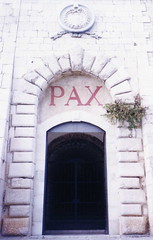 | 18 |
| 10827877147 | Peloponnesian War | Great war between Athens (and allies) and Sparta (and allies), lasting from 431 to 404 B.C.E. The conflict ended in the defeat of Athens and the closing of Athens's Golden Age. |  | 19 |
| 10827877148 | Persepolis | The capital and greatest palace-city of the Persian Empire, destroyed by Alexander the Great. |  | 20 |
| 10827877149 | Persian Empire | A major empire that expanded from the Iranian plateau to incorporate the Middle East from Egypt to India; flourished from around 550 to 330 B.C.E. | 21 | |
| 10827877150 | Plebians | Poorer, less privileged Romans who gradually won a role in Roman politics. | 22 | |
| 10827877151 | Punic Wars | Three major wars between Rome and Carthage in North Africa, fought between 264 and 146 B.C.E., that culminated in Roman victory and control of the western Mediterranean. | 23 | |
| 10827877152 | Qin Dynasty | A short-lived (221-206 B.C.E.) but highly influential Chinese dynasty that succeeded in reuniting China at the end of the Warring States period. |  | 24 |
| 10827877153 | Qin Shihuangdi | Literally "first emperor" (r. 221-210 B.C.E.) forcibly reunited China and established a strong and repressive state. | 25 | |
| 10827877154 | Solon | Athenian statesman and lawmaker (fl. 594-560 B.C.E.) whose reforms led the Athenians toward democracy. | 26 | |
| 10827877155 | Wudi | Han emperor (r. 141-86 B.C.E.) who began the Chinese civil service system by establishing an academy to train imperial bureaucrats. | 27 | |
| 10827877156 | Xiongnu | Nomadic peoples to the north of the Great Wall of China who were a frequent threat to the stability of the Chinese state. | 28 | |
| 10827877157 | Aristotle | A Greek polymath philosopher (384-322 B.C.E.); student of Plato and teacher of Alexander the Great. | 29 | |
| 10827877158 | Atman | The human soul, which in classic Hindu belief seeks union with Brahman. | 30 | |
| 10827877159 | Bhagavad Gita | A great Hindu epic text, part of the much larger Mahabharata, which affirms the performance of caste duties as a path to religious liberation. | 31 | |
| 10827877160 | Brahman | The "World Soul" or final reality in upanishadic Hindu belief. | 32 | |
| 10827877161 | Brahmins | The priestly caste of India. | 33 | |
| 10827877162 | Buddhism | The cultural/religious tradition first enunciated by Siddhartha Gautama | 34 | |
| 10827877163 | Confucianism | The Chinese philosophy first enunciated by Confucius, advocating the moral example of superiors as the key element of social order. | 35 | |
| 10827877164 | Confucius | The founder of Confucianism (551-479 B.C.E.); an aristocrat of northern China who proved to be the greatest influence on Chinese culture in its history. | 36 | |
| 10827877165 | Constantine | Roman emperor (r. 306-337 C.E.) whose conversion to Christianity paved the way for the triumph of Christianity in Europe. |  | 37 |
| 10827877166 | Daodejing | The central text of Daoism; translated as The Way and Its Power. | 38 | |
| 10827877167 | Daoism | A Chinese philosophy/popular religion that advocates simplicity and understanding of the world of nature, founded by the legendary figure Laozi. | 39 | |
| 10827877168 | Filial piety | The honoring of one's ancestors and parents, a key element of Confucianism. | 40 | |
| 10827877169 | Greek rationalism | A secularizing system of scientific and philosophic thought that developed in classical Greece in the period 600 to 300 B.C.E.; it emphasized the power of education and human reason to understand the world in nonreligious terms. | 41 | |
| 10827877170 | Hinduism | A word derived from outsiders to describe the vast diversity of indigenous Indian religious traditions. | 42 | |
| 10827877171 | Hippocrates | A very influential Greek medical theorist (ca. 460-ca. 370 B.C.E.); regarded as the father of medicine. | 43 | |
| 10827877172 | Jesus of Nazareth | The prophet/god of Christianity(ca. 4 B.C.E.-ca. 30 C.E.). | 44 | |
| 10827877173 | Yahweh | A form of the Hebrew name of God used in the Bible. The monotheistic religion developed by the Hebrews, emphasizing a sole personal god with concerns for social justice. | 45 | |
| 10827877174 | Karma | In Hinduism, the determining factor of the level at which the individual is reincarnated, based on purity of action and fulfillment of duty in the prior existence. |  | 46 |
| 10827877175 | Laozi | A legendary Chinese philosopher of the sixth century B.C.E.; regarded as the founder of Daoism. | 47 | |
| 10827877176 | Legalism | A Chinese philosophy distinguished by an adherence to clear laws with vigorous punishments. | 48 | |
| 10827877177 | Mahayana | "Great Vehicle," the popular development of Buddhism in the early centuries of the Common Era, which gives a much greater role to supernatural beings and proved to be more popular than original (Theravada) Buddhism. | 49 | |
| 10827877178 | Moksha | In Hindu belief, liberation from separate existence and union with Brahman. | 50 | |
| 10827877179 | Nirvana | The end goal of Buddhism, in which individual identity is "extinguished" into a state of serenity and great compassion. | 51 | |
| 10827877180 | Plato | A disciple of Socrates whose Dialogues convey the teachings of his master while going beyond them to express Plato's own philosophy; lived from 429 to 348 B.C.E. | 52 | |
| 10827877181 | Pythagoras | A major Greek philosopher (ca. 560-ca. 480 B.C.E.) who believed that an unchanging mathematical order underlies the apparent chaos of the world. | 53 | |
| 10827877182 | Siddhartha Gautama (the Buddha) | The Indian prince turned ascetic (ca. 566-ca. 486 B.C.E.) who founded Buddhism. | 54 | |
| 10827877183 | Socrates | The first great Greek philosopher to turn rationalism toward questions of human existence (469-399 B.C.E.). | 55 | |
| 10827877184 | Theravada | "The Teaching of the Elders," the early form of Buddhism according to which the Buddha as a wise teacher but not divine and which emphasizes practices rather than beliefs. | 56 | |
| 10827877185 | Upanishads | Indian mystical and philosophical works, written between 800 and 400 B.C.E. | 57 | |
| 10827877186 | Vedas | The earliest religious texts of India, a collection of ancient poems, hymns, and rituals that were transmitted orally before being written down ca. 600 B.C.E. | 58 | |
| 10827877187 | Warring States Period | Period in China from 403 to 221 B.C.E. that was typified by disorder and political chaos. | 59 | |
| 10827877188 | Yin and Yang | Expression of the Chinese belief in the unity of opposites. | 60 | |
| 10827877189 | Zarathustra | A Persian prophet, traditionally dated to the sixth or seventh century B.C.E. (but perhaps much older), who founded Zoroastrianism. | 61 | |
| 10827877190 | Zoroastrianism | Persian monotheistic religion founded by the prophet Zarathustra. | 62 | |
| 10827877191 | caste as varna and jati | The system of social organization in India that has evolved over millennia; it is based on an original division of the populace into four inherited classes, with the addition of thousands of social distinctions based on occupation, which became the main cell of social life in India. | 63 | |
| 10827877192 | dharma | In Indian belief, performance of the duties appropriate to an individual's caste; good performance will lead to rebirth in a higher caste. | 64 | |
| 10827877193 | helots | The dependent, semi-enslaved class of ancient Sparta whose social discontent prompted the militarization of Spartan society. | 65 | |
| 10827877194 | Kshatriya | The Indian social class of warriors and rulers. | 66 | |
| 10827877195 | latifundia | Huge estates operated by slave labor that flourished in parts of the Roman Empire | 67 | |
| 10827877196 | Pericles | A prominent and influential statesman of ancient Athens (ca. 495-429 B.C.E.); presided over Athens's Golden Age. | 68 | |
| 10827877197 | scholar-gentry class | A term used to describe members of China's landowning families, reflecting their wealth from the land and the privilege that they derived as government officials. | 69 | |
| 10827877198 | Sudra | The lowest Indian social class of varna; regarded as servants of their social betters; eventually included peasant farmers | 70 | |
| 10827877199 | the "three submissions" | In Chinese Confucian thought, the notion that a woman is permanently subordinate to male control: first that of her father, then of her husband, and finally of her son. | 71 | |
| 10827877200 | Untouchables | An Indian social class that emerged below the Sudras and whose members performed the most unclean and polluting work. | 72 | |
| 10827877201 | Vaisya | The Indian social class that was originally defined as farmers but eventually comprised merchants. | 73 | |
| 10827877202 | Axum | Classical-era kingdom of East Africa, in present-day Eritrea and northern Ethiopia; flourished from 100 to 600 C.E. and adopted Christianity. | 74 | |
| 10827877203 | Bantu expansion | Gradual migration of peoples from their homeland in what is now southern Nigeria and the Cameroons into most of eastern and southern Africa, a process that began around 3000 B.C.E. and continued for several millennia. The agricultural techniques and ironworking technology of these farmers gave them an advantage over the gathering and hunting peoples they encountered. | 75 | |
| 10827877204 | Coptic Christianity | The Egyptian variety of Christianity, distinctive in its belief that Christ has only a single, divine nature. | 76 | |
| 10827877205 | Silk Road | Trade route stretching from China into Europe. | 77 |
Myers for AP ~ Unit 13 Flashcards
Terms : Hide Images
| 6444143552 | Psychotherapy | treatment involving psychological techniques; consists of interactions between a trained therapist and someone seeking to overcome psychological difficulties or achieve personal growth | 0 | |
| 6444143553 | Biomedical Therapy | prescribed medications or medical procedures that act directly on the patient's physiology | 1 | |
| 6444143554 | Eclectic Approach | an approach to psychotherapy that, depending on the client's problems, uses techniques from various forms of therapy | 2 | |
| 6444143555 | Psychoanalysis | Sigmund Freud's therapeutic technique; Freud believed the patient's free associations, resistances, dreams, and transferences - and the therapist's interpretations of them - released previously repressed feelings, allowing the patient to gain self-insight | 3 | |
| 6444143556 | Resistance | in psychoanalysis, the blocking from consciousness of anxiety-laden material | 4 | |
| 6444143557 | Interpretation | in psychoanalysis, the analyst's noting supposed dream meanings, resistances, and other significant behaviors and events in order to promote insight | 5 | |
| 6444143558 | Transference | in psychoanalysis, the patient's transfer to the analyst of emotions linked with other relationships (such as love or hatred for a parent) | 6 | |
| 6444143559 | Psychodynamic Therapy | therapy deriving from the psychoanalytic tradition that views individuals as responding to unconscious forces and childhood experiences, and that seeks to enhance self-insight | 7 | |
| 6444143560 | Insight Therapies | a variety of therapies that aim to improve psychological functioning by increasing a client's awareness of underlying motives and defenses | 8 | |
| 6444143561 | Client-Centered Therapy | a humanistic therapy, developed by Carl Rogers, in which the therapist uses techniques such as active listening within a genuine, accepting, empathic environment to facilitate client's growth (also called person-centered therapy) | 9 | |
| 6444143562 | Active Listening | empathic listening in which the listener echoes, restates, and clarifies; feature of Roger's client-centered therapy | 10 | |
| 6444143563 | Unconditional Positive Regard | a caring, accepting, nonjudgmental attitude, which Carl Rogers believed would help clients to develop self-awareness and self-acceptance | 11 | |
| 6444143564 | Behavior Therapy | therapy that applies learning principles to the elimination of unwanted behaviors | 12 | |
| 6444143565 | Counterconditioning | a behavior therapy procedure that used classical conditioning to evoke new responses to stimuli that are triggering unwanted behaviors; includes exposure therapies and aversive conditioning | 13 | |
| 6444143566 | Exposure Therapies | behavioral techniques, such as systematic desensitization and virtual reality exposure therapy, that treat anxieties by exposing people (in imagination or actual situations) to the things they fear and avoid | 14 | |
| 6444143567 | Systematic Desensitization | a type of exposure therapy that associates a pleasant relaxed sate with gradually increasing anxiety-triggering stimuli; commonly used to treat phobias | 15 | |
| 6444143568 | Virtual Reality Exposure Therapy | an anxiety treatment that progressively exposes people to electronic simulations of their greatest fears, such as airplane flying, spiders, or public speaking | 16 | |
| 6444143569 | Aversive Conditioning | a type of counterconditioning that associates an unpleasant state (such as nausea) with an unwanted behavior (such as drinking alcohol) | 17 | |
| 6444143570 | Token Economy | an operant conditioning procedure in which people earn a token of some sort for exhibiting a desired behavior and can later exchange the tokens for various privileges or treats | 18 | |
| 6444143571 | Cognitive Therapy | therapy that teaches people new, more adaptive ways of thinking and acting; based on the assumption that thoughts intervene between events and our emotional reactions | 19 | |
| 6444143572 | Rational-Emotive Behavior Therapy (REBT) | a confrontational cognitive therapy, developed by Albert Ellis, that vigorously challenges people's illogical, self-defeating attitudes and assumptions | 20 | |
| 6444143573 | Cognitive-Behavioral Therapy (CBT) | a popular integrative therapy that combines cognitive therapy (changing self-defeating thinking) with behavior therapy (changing behavior) | 21 | |
| 6444143574 | Group Therapy | therapy conducted with several people rather than individuals, permitting therapeutic benefits from group interaction | 22 | |
| 6444143575 | Family Therapy | therapy that treats the family as a system; views an individual's unwanted behaviors as influenced by, or directed at, other family members | 23 | |
| 6444143576 | Regression Toward the Mean | the tendency for extreme or unusual scores to fall back (regress) toward their average | 24 | |
| 6444143577 | Meta-Analysis | a procedure for statistically combining the results of many different research studies | 25 | |
| 6444143578 | Evidence-Based Practice | clinical decision-making that integrates the best available research with clinical expertise and patient characteristics and preferences. | 26 | |
| 6444143579 | Therapeutic Alliance | a bond of trust and mutual understanding between a therapist and client, who work together constructively to overcome the client's problem | 27 | |
| 6444143580 | Resilience | the personal strength that helps most people cope with stress and recover from adversity and even trauma | 28 | |
| 6444143581 | Psychopharmacology | the study of the effects of drugs on mind and behavior | 29 | |
| 6444143582 | Antipsychotic Drugs | drugs used to treat schizophrenia and other forms of severe thought disorder | 30 | |
| 6444143583 | tardive dyskinesia | involuntary movement of facial muscles, tongue, and limbs. possible neurotoxic side effect of antipsychotic drugs that target D2 dopamine receptor | 31 | |
| 6444143584 | Antianxiety Drugs | drugs used to control anxiety and agitation | 32 | |
| 6444143585 | Antidepressant Drugs | drugs used to treat depression, anxiety disorders, obsessive-compulsive disorders, and posttraumatic stress disorder (includes selective serotonin reuptake inhibitors - SSRIs) | 33 | |
| 6444143586 | Electroconvulsive Therapy (ECT) | a biomedical therapy for severely depressed patients in which a brief electric current is sent through the brain of an anesthetized patient | 34 | |
| 6444143587 | Repetitive Transcranial Magnetic Stimulation (rTMS) | the application of repeated pulses of magnetic energy to the brain; used to stimulate or suppress brain activity | 35 | |
| 6444143588 | Psychosurgery | surgery that removes or destroys brain tissue in an effort to change behavior | 36 | |
| 6444143589 | Lobotomy | a now-rare psychosurgical procedure once used to calm uncontrollably emotional or violent patients; the procedure cut the nerves connecting the frontal lobes to the emotion-controlling centers of the inner brain | 37 |
Pages

Need Help?
We hope your visit has been a productive one. If you're having any problems, or would like to give some feedback, we'd love to hear from you.
For general help, questions, and suggestions, try our dedicated support forums.
If you need to contact the Course-Notes.Org web experience team, please use our contact form.
Need Notes?
While we strive to provide the most comprehensive notes for as many high school textbooks as possible, there are certainly going to be some that we miss. Drop us a note and let us know which textbooks you need. Be sure to include which edition of the textbook you are using! If we see enough demand, we'll do whatever we can to get those notes up on the site for you!
