AP Notes, Outlines, Study Guides, Vocabulary, Practice Exams and more!

AP World History Ways of the World Chapter 1 Flashcards

Terms from Ways of the World Chapter 1

Terms : Hide Images
10524930475Venus FigurinesPaleolithic carvings of female form, often with exaggerated breasts, buttocks, hips and stomachs, which may have had religious significance.0
10524930476Trance DanceIn San culture, a nightlong ritual held to activate a human being's inner spiritual potency (n/um) to counteract evil influences of gods and ancestors. Common to the Khoisan people.1
10524930477ShamanIn early societies, a person believed to have the ability to act as a bridge between living humans and supernatural forces, often by means of trances induced by pyschoactive drugs.2
10524930478Paleolithic "settling down"The process by which some Paleolithic peoples moved toward permanent settlement in the wake of the last Ice Age. Settlement was marked by increasing storage of food and accumulation of goods as well as growing inequalities in society.3
10524930479"The original affluent society"Term coined by scholar Marshall Sahlins in 1972 to describe Paleolithic societies which he regarded as affluent not because of having too much, but because they wanted and needed so little.4
10524930480Megafaunal ExtinctionDying out of a large number of animal species, including the mammoth and several species of horses and camels, that occured around 11,000-10,000 years ago, at the end of the Ice Age.5
10524930481DreamtimeA native Australian Aborigines' belief; Dreamtime is a place beyond time and space in which the past, present, and future exist wholly as one. Tribes-people could enter this alternate universe through dreams or various states of altered consciousness, as well as death, Dreamtime being considered the final destination before reincarnation.6
10524930482Clovis CultureThe earliest widespread and distinctive culture of N. America; distinctive because they hunted large animals; Mammoth, Bison. named from a particular kind of projectile point (See image)7
10524930483Austronesian MigrationsThe last phase of the great human migration that established a human presence in every habitable region on Earth. These people settled in the Pacific Islands and Madagascar in a series of seaborne migrations that began around 3500 years ago.8
10524930484BanpoA Chinese archeological site where the remains of a significant Neolithic village have been found9
10524930485Bantu MigrationThe spread of Bantu-speaking peoples from their homeland in what is now southern Nigeria or Cameroon to most of Africa in a process that started ca. 3000 BCE and continued for several millennia.10
10524930486CatalhuyukA settlement in present day southern Turkey, which existed from approximately 7500 BC to 5700 BC, and flourished around 7000BC. It is the largest and best-preserved Neolithic site found to date.11
10524930487ChiefdomA societal grouping governed by a chief who typically relies on generosity, ritual status, or charisma rather than force to win obedience from the people.12
10524930488DiffusionThe gradual spread of agricultural techniques without extensive population movement.13
10524930489Fertile CrescentRegion sometimes known as Southwest Asia that includes the modern states of Iraq, Syria, Israel/Palestine, and southern Turkey; the earliest home of agriculture.14
10524930490Pastoral SocietyA human society that relies on domesticated animals rather than plants as the main source of food; lead their animals to seasonal grazing grounds rather than settling permanently in a single location.15
10524930491"Secondary Products Revolution"A term used to describe the series of technological changes that began ca. 4000 BCE, as people began to develop new uses for their domesticated animals, exploiting a new source of power.16
10524930492TeosinteThe wild ancestor of maize.17
10524930493Ishiwas the last member of the Yahi, a group of the Yana people of the U.S. state of California. Widely acclaimed in his time as the "last wild Indian" in America, Ishi lived most of his life completely outside modern culture. At about 49 years of age, in 1911, he emerged from "the wild" near Oroville, California, leaving his ancestral homeland.18
10524930494Göbekli TepeA ceremonial site (in modern day Turkey) of a hunting and gathering society. This type of structure is normally only associated with agricultural societies19
10524930495In what ways did Paleolithic societies differ from each other? How did they change over time?...20
10524930496The Agricultural Revolution marked a decisive turning point in human history. What evidence might you offer to support this claim? How might you argue against it?...21
10524930497How did early agricultural societies differ from those of the Paleolithic era?...22
10524930498Was the Agricultural Revolution inevitable? Why did it occur so late in the story of human kind?...23
10524930499The Agricultural Revolution provide evidence for "progress in human affairs" How would you evaluate this statement?...24

AP World History Strayer Chapter 8 Vocabulary Flashcards

Unit Three Part Three

Terms : Hide Images
11316494104Sui Dynasty*Definition:* Short dynasty between Han and Tang. *Significance:* Built Grand Canal, strengthened government, and introduced Buddhism to China.0
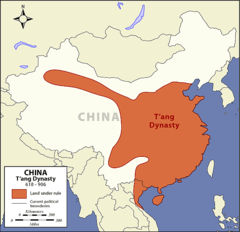
11316494105Tang Dynasty*Definition:* Dynasty often referred to as "China's Golden Age". (618 CE - 907 CE) *Significance:* China expands to Vietnam, Imperial examination perfected. New technologies (paper money, gunpowder, junks, etc...) through silk road.1
11316494106Song Dynasty*Definition:* (960 CE - 1279 CE) Started by Tai Zu. *Significance:* Million people there. Foot binding, magnetic compass, navy, and traded with India and Persia.2
11316494107Hangzhou*Definition:* Capital of later Song Dynasty. *Significance:* Permitted overseas trading with population exceeding 1 million.3
11316494108Economic Revolution*Definition:* Rapid population growth, economic speculation, increase in industrial production and innovations (Song dynasty). *Significance:* Made China "by far the richest, most skilled, and most populous country on Earth."4
11316494109Foot Binding*Definition:* Practice in Chinese society to mutilate women's feet to make them smaller. *Significance:* It was associated with images of female beauty and eroticism.5
11316494110Tribute System*Definition:* Chinese method of dealing with foreign lands and people that assumed subordination of all non-chinese authorities. They required all foreigners wanting access to China to pay tribute. *Significance:* System the attempted to regulate their relationships with Northern Nomads.6
11316494111Khitan/Jurchen People*Definition:* Nomadic people who established a state that included parts of Northern China. *Significance:* Was a nomadic group who "picked up the pieces" after collapse of Tang Dynasty.7
11316494112Silla Dynasty (Korea)*Definition:* First ruling dynasty to bring a measure of political unity to Korean Peninsula. *Significance:* Allied with China to bring political unity to the peninsula for the first time.8
11316494113Hangul*Definition:* Phonetic alphabet in Korea (14th century). *Significance:* Helped Korea move toward greater cultural independence.9
11316494114Shotoku Taishi*Definition:* Japanese statesman who launched the drive to make Japan into centralized bureaucratic state modeled on China. *Significance:* Launched a series of large-scale missions to China.10
11316494115Bushido*Definition:* "Way of the Warrior". *Significance:* A distinct set of values for Samurais.11
11316494116Chinese Buddhism*Definition:* Entered China through cultural accommodations. *Significance:* Useful to helping nomadic rulers govern northern China because it was foreign.12
11316494117Emperor Wendi*Definition:* Sui Emperor who patronized Buddhism. *Significance:* He was responsible for the monasteries constructed at the base of China's 5 sacred mountains.13
11316494119Chu nom*Definition:* The writing system of Vietnam *Significance:* United Vietnam even during times of civil war14
11316525121gun powderExplosive substance that gave Chinese an advantage over Mongals15
11316525122XiognuA largely nomadic confederacy that raided Northern China. Chinese emperor was forced to regard this group as equals and supply them with grain, wine, and silk in return for the termination of their invasions.16
11316525123Izumi Shikibu- Heian period poet known for her love poems and romance17

AP World History 2 Flashcards

Terms : Hide Images
8483695638Brahmins(Priests)Top of Varna system0
8483715877Khsatriyas(Warriors)Second top level in Varna system1
8483721941Vaishyas(Merchants, Landowners)Third level in Varna system2
8483725109Shudras(Servants, Subordinate to Brahmins, Khsatriyas, and Vaishyas)Fourth level in Varna system3
8483732023Untouchables(Subordinate to all, cobblers, street sweepers)Last level in Varna system4
8483793547GreeceCivilization that local autonomy would be most prized5
8483797584ChinaCivilization that practiced separation of church and state6
8483803674Greeks unable to sustain a unified frontGreeks unsuccessful in defense of their homeland because7
8483828478There is evidence of detailed and accurate descriptions of Roman dress and customs in Chinese records, but no corresponding descriptions of the Chinese in Roman records.Best supports argument that Chinese of Han Dynasty knew more about Rome than Rome knew about Han dynasty?8
8483846551Slaves in the Americas worked primarily on large sugar plantationsHow did slave labor change from classical Rome to 16th and 17th centuries labor systems in the Americas?9
8483868188The Hellenistic CivilizationAlexander's invasion of Persia and points east introduced what civilization to the part of the world?10
8483878555Greek officers remaining in the region and marrying Persian aristocratsBest example of syncretism resulting from Alexander's campaigns11
8483885795merchants often ranked below peasants and had little social influenceDespite material success and increased wealth, in China and Rome...12
8483895955By 600 CE, India's golden age under the Gupta had ended, China's golden age under the Han had ended centuries before but a new "golden age" was about to begin, and the roman empire had fallen about a century before.Change that best justifies the claim that c.600 CE marks the end of an era in world history?13

AP World History Period 1 Flashcards

From Hunting and Gathering to Civilizations, 2.5 million-1000 B.C.E.: Origins

Terms : Hide Images
8429977450Hunting and GatheringMeans of obtaining subsistence by humans before the mastery of sedentary agriculture; normally typical of tribal social organization0
8429977451CivilizationSocieties with reliance on sedentary agriculture, ability to produce food surpluses, and existence of nonfarming elites, along with merchant and manufacturing groups1
8429977452NeolithicThe New Stone Age between 8000 and 5000 B.C.E.; period in which adaptation of sedentary agriculture occurred; domestication of plants and animals accomplished2
8429977453NomadsCattle- and sheep-herding societies normally found on the fringes of civilized societies; commonly referred to as "barbarian" by civilized societies3
8429977454CultureCombination of ideas, objects, and patterns of behavior that result from human social interaction4
8429977455Agrarian revolutionOccurred between 8000 and 5000 B.C.E.; transition from hunting and gathering to sedentary agriculture5
8429977456PastoralismA nomadic agricultural lifestyle based on herding domesticated animals; tended to produce independent people capable of challenging sedentary agricultural societies6
8429977458Bronze AgeFrom 4000 to 3000 B.C.E.; increased use of plow, metalworking; development of wheeled vehicles, writing7
8429977459MesopotamiaLiterally "between the rivers"; the civilization that arose in the alluvial plain of the Tigris-Euphrates river valleys8
8429977460SumeriansPeople who migrated into Mesopotamia circa 4000 B.C.E.; created the first civilization within the region; organized area into city-states9
8429977462City-stateA form of political organization typical of Mesopotamian civilization; consisted of agricultural hinterlands ruled by an urban-based king10
8429977464Babylonian EmpireUnified all of Mesopotamia circa 1800 B.C.E.; collapsed due to foreign invasion circa 1600 B.C.E.11
8429977465HammurabiThe most important Babylonian ruler; responsible for codification of the law12
8429977467PyramidsMonumental architecture typical of Old Kingdom Egypt; used as burial sites for pharaohs13
8429977468HieroglyphsForm of writing developed in ancient Egypt; more pictorial than Mesopotamian cuneiform14
8429977469KushAfrican state that developed along the upper reaches of the Nile circa 1000 B.C.E.; conquered Egypt and ruled it for several centuries15
8429977470MonotheismThe exclusive worship of one god; introduced by Jews into Middle Eastern civilization16
8429977471PhoeniciansSeafaring civilization located on the shores of the eastern Mediterranean; established colonies throughout the Mediterranean17
8429977472Harappa and Mohenjo DaroMajor urban complexes of Harappan civilization; laid out on planned grid pattern18
8429977473AryansIndo-European nomadic, warlike, pastorialists who replaced Harappan civilization19
8429977474Huanghe (Yellow) River BasinSite of the development of sedentary agriculture in China20
8429977475Shang1st Chinese dynasty21
8429977476OraclesShamans or priests in Chinese society who foretold the future through interpreting animal bones cracked by heat; inscriptions on bones led to Chinese writing22
8429977478PaleolithicThe period that ended about 3,000 years after the end of the last Ice Age, it lasted until about 10,000 years ago. (Old Stone Age) The period of the Stone Age associated with the evolution of humans. It predates the Neolithic period.23
8429977479EglitarianBelieving in the equality of all peoples24
8429977480Neolithic RevolutionGlobal conversion to agriculture over hunter-gatherer lifestyles25
8429977481PatriarchyA system of inequality organized around gender categories that privileges males26
8430103692sedentary agriculture- farming system in which the farmer remains settled in one place - domestication of plants and animals27

AP World History: Genghis Khan Flashcards

Terms : Hide Images
10479501440Why has it been difficult to get information about Genghis Khan and the Mongol Empire until recently? Why has new information now become available? What does this tell us about the nature of history and its dependence on source material?It has been difficult to get information about Genghis Khan and the Mongol Empire because he forbid any paintings and manuscripts about him. Becasue there were no resources from that time, people now have little to rely on. New information has now become available through the Secret History which was recently decoded and the forbidden zone of Genghis's childhood and burial that has opened. The Secret History tells about the life, family lineage, conquerings, etc., of Genghis Khan. This tells us that in order to know and learn history, there must be source material or there won't be any valid information on that subject.0
10479501441Describe Genghis Khan's early life. What motivated him to become a leader of the Mongol Empire and, later, a huge empire?Genghis Khan's early life was not the easiest. His father, Yesugei was harsh and did not show affection towards Temujin, and later was poisoned by a tribe because he had killed a fellow warrior. He also kidnapped Temujin's mother, Hoelun. It is said that when Temujin was born, he was clutching a blood clot in his hands, perhaps foretelling his future. Temujin killed his eldest step brother because he did not like being told what to do, simply because of seniority. His harsh child life and the want to unite Mongolian tribes is what motivated Genghis to become a leader of the huge empire.1
10479501442Identify the nature of nomadic life in 12th century Mongolia.The nature of nomadic life was based on necessity and survival. Life was not luxurious and easy, so whatever the nomads could find, they used the most of it. The Mongolians lived in tribes led by men and would battle with many other tribes. It was not unusual for a tribe to join another. If one wasn't kin to another, they were deemed enemies.2
10479501443Describe the nature of tribal warfare among the Central Asian pastoral groups.The nature of tribal warfare was long and brutal. "In the history of steppe warfare, a defeated tribe was looted, some were taken prisoners, and the rest left again to their devices. Defeated groups regularly reorganized and counterattacked, or broke away and joined rival tribes." Genghis Khan introduced new ideas to tribal warfare like looting until defeating the tribe completely, organized new warrior groups, made up of tens of hundreds, thousands, and so forth. For example, Genghis Khan and Jamuka's battle of superiority lasted for about two decades involving many gory deaths of each other's men.3
10479501444How did Genghis Khan create his nation-state?Genghis Khan created his nation state by defeating Ong Khan's tribe (Kereyid), Jamuka's tribe, and one by one, captured/defeated every tribe in the steppe. He conquered the Merkid for kidnapping Borte, the Tatars for poisoning Yesugei, the Naiman and many more. Genghis controlled every thing from the Gobi in the north to the Arctic tundra in the south, from the Manchurian forests in the east to the Altai Mountains of the west. His cleverness and shrewd tactics made him become the word's greatest leader possible. He induced fear to the minds of people across the continent and they knew if they did not succumb, Genghis would mercilessly kill them.4
10479501445What was the "Great Law of Genghis Khan"? How was it different from other law codes that had preceded it? What necessitated its creation?The Great Law of Genghis Khan were a series of rules for his empire ensuring place and prosperity. They were: forbidden to kidnap women, forbidden to abduct and enslave a Mongol, all children were legitimate, forbidden to sell women into marriage, outlawed adultery, no animal rustling, the requirement of a lost and found system, no hunting animals during breeding time, religious freedom, tax payments, and many more. The Great Law was different from other law codes before because it did not delve into all aspects of daily life and was for the regulation of most troubling aspects. Genghis also made it clear that the Law applied as strictly to the rulers as anyone else. The past of Genghis necessitated these rules. From the kidnapping of Hoelun and Borte, being enslaved in the tribe, his first son with Borte, the stealing of his and his family's horses, etc. All the laws are based on Genghis's own experiences with those wrongdoings.5
10479501446What was unique about the Mongol military? How did this give them a significant advantage over their enemies?The Mongol military rode horses and carried what was only necessary. This made traveling and battling easier from the lightness of each one's load and the swiftness from the horses. They also traveled without a commissary or cumbersome supply train. The soldiers ate healthy foods instead of a carb diet resulting in them lasting without food for one or two days. The army spread out over a vast area to provide sufficient pasture for the animals and to maximize hunting opportunities for soldiers. They also had a rhyme and memorization communication system. Genghis Khan's army was many times outnumbered by the others but it was the quality over quantity that lead to success.6
10479501447How did Genghis Khan attempt to shape the flow of trade across Eurasia?After conquering most of Central Asia and the Middle East, Khan realized that common merchandise in one place could be rare in another, and opened trade routes to facilitate the spread of these items.7
10479501448How did Genghis Khan die?While hunting horses, Genghis Khan was thrown off of his horse, suffering deep internal injuries. Along with a large fever that Khan had already acquired, he died six months later just before the Mongol's defeat of the Tangut.8
10479501449How did the Mongol Army adapt to the environment of the territories they attempted to conquer?The Mongol Army adapted to the environment of the territories they attempted to conquer by sending in small squads to probe enemy defenses and to locate appropriate pasturelands and water sources for the Mongol animals. They identified geography to use for their animals or to farm pastures. They also seized numbers of civilizations for the jobs ahead, such as digging fortifications, cutting trees and hauling supplies. So, they prepared for battle in foreign lands by scouting out and sending back information about the lands to the army to their best advantage, then furthering it to using their enemies' own ground as their weakness.9
10479501450How did the Mongol Army improvise as well as use diplomacy to accomplish their military missions?The Mongols created their own strategies and tactics against their enemy. They used weapons that they crafted themselves and was effective and destructive against the others. The Mongol Empire used diplomacy to accomplish their missions by treating people they captured during battle with respect and from that, in return, they used their skills in future conquests. Because of this good treatment, the Mongols were unified and loyal to one another, doing the best they could against enemy lines for their nation they would die for.10
10479501451How did Khubilai Khan struggle with organizing millions of different people into a single entity.Khubilai struggled with organizing millions of different people into a single entity because they were from different places, had different cultures, beliefs and languages. They also didn't believe Khubilai was Chinese enough to rule China. The people didn't want a foreign leader to rule them, plus the Mongolian lifestyle was not their way of living. There were rebellions and transgressions amongst the people.11
10479501452In what ways did Khan try to "Sinicize" his image?Khubilai changed his name into a Chinese name, he built temples for his family lineage and changed their names into Chinese ones, too. He ordered portraits to be Chinese styled so they looked more Mandarin than Mongolian. He even built a city dedicated for China, now known as Beijing.12
10479501453How did Khan reform Chinese law? Chinese culture?Khubilai reformed Chinese law by making it more compatible with Genghis Khan's law, in such a way as to simultaneously win support from both his Mongol and Chinese followers. He lessened the harsh penal code of the Sung. The Mongols reduced by nearly half the number of capital offenses in China by about 100. "Overall, he installed a more consistent system of laws and punishment as well as one that was substantially milder and more humanitarian than the Sung's (201)". He reformed Chinese culture by refining the monetary system. He built schools and revived the Chinese Hanlin Academy, which composed of great scholars in order to promote traditional Chinese learning and culture. He also supported dramas and plays, a much neglected art in traditional Chinese culture. He also reformed the criminal system, introducing fingerprints.13
10479501454How did the "Pax Mongolica" (the Mongol Peace) contribute to the development of a new, global culture?Pax Mongolica was a period of time where peace, stability, economic growth, cultural fusion and cultural development were happening around the Mongol's occupied territories. It was a time of spreading different ideas and a great cultural expansion around Eurasia. Trade was booming and bustling all across the empire, creating new technological inventions and assimilating new cultures to a place.14
10479501455Explain what is meant by the "persistent universalism" of the Mongol Empire."Persistent universalism" —> The Mongols had no system of their own to impose upon their subjects, they were willing to adopt and combine systems from everywhere. They searched for what worked best; and when they found it, they spread it to other countries. The Mongols adopted printing technology very early, whether in their policy of religious tolerance, devising a universal alphabet, maintaining relay stations, playing games, or astronomy charts (display of persistent universalism)15
10479501456How did the bubonic plague epidemic of the 1300 lead to the destruction of the Mongol Empire?Spread by fleas on rats, the plague spread very easily through the trade routes of the Mongol Empire, thus destroying it and wiping out millions of people. Because of the Black Death, everything shut down, there were no businesses or trade and the Mongol Empire could not flourish without these things.16
10479501457How have different cultures treated the memory of Genghis Khan differently?-Renaissance writers and explorers admired Genghis Khan -Enlightenment encouraged many Europeans to blame the Mongols for any flaw in their continent. -Asians held Khan in high regard.17
10479501458How did Genghis Khan help make the modern world?"Although he arose out of the ancient tribal past, Genghis Khan shaped the modern world of commerce, communication, and large secular states more than any other individual. He was the thoroughly modern man in his mobilized and professional warfare and in his commitment to global commerce and the rule of international secular law. What began as a war of extinction between the nomad and the farmer ended as a Mongol amalgamation of cultures (267)."18
10479501459How did existing trade routes flourish and promote growth of powerful trade cities?The trade routes developed powerful trade cities because along the way, as people stopped at those cities, they brought their commerce and it eventually developed with more and more people and goods.19
10479501460How did the expansion of empires facilitate Afro-Eurasian trade and communication?The improved transportation technologies and commercial practices led to an increased volume of trade, and expanded the geographical range of existing and newly active trade networks. New people were drawn into their conquerors' economies and trade networks.20
10479501461How did the expansion and intensification of long-distance trade routes evolve according to environmental knowledge and technological adaptations?With new knowledge and more technological adaptions, long-distance trade was easier and more efficient. With more trade, new knowledge came along with it, expanding the trade routes, and the cycle recurs again.21

AP World History Chapter 2 Vocabulary Flashcards

Terms : Hide Images
7506898212Central Asian/Oxus civilizationA major First Civilization that emerged around 2200 B.C.E. in Central Asia along the Oxus or Amu Darya river in what is now northern Afghanistan. An important focal point for a Eurasian-wide system of intellectual and cultural exchange, it faded away about 1700 B.C.E.0
7506909947Code of HammurabiA series of laws publicized at the order of King Hammurabi of Babylon (d.1750 B.C.E.). Not actually a code, but a number of laws that proclaim the king's commitment to social order. (See the excerpt of the code in Document 2.2, pp. 95-97.)1
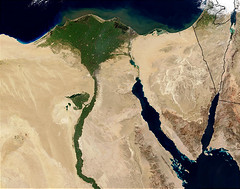
7521012974Egypt: "the gift of the Nile"Egypt is often known as "the gift of the Nile" because the region would not have been able to support a significant human population without the Nile's annual inundation, which provided rich silt deposits and made agriculture possible.2
7521015850Epic of GilgameshThe most famous extant literary work from ancient Mesopotamia, it tells the story of one man's quest for immortality.3
7521022265HatshepsutAncient Egypt's most famous queen; reigned 1472-1457 B.C.E. (pron. hat-shep-soot)4
7521027627Mohenjo Daro/HarappaMajor cities of the Indus Valley civilization; both of which flourished around 2000 B.C.E. (pron. moehen-joe DAHR-oh) (pron. hah-RAHP-uh)5
7521033078Norte Chico/CaralNorte Chico is a region along the central coast of Peru, home of a civilization that developed in the period 3000-1800 B.C.E. Caral was the largest of some twenty-five urban centers that emerged in the area at that time.6
7521040641NubiaA civilization to the south of Egypt in the Nile Valley, noted for development of an alphabetic writing system and a major ironworking industry by 500 B.C.E.7
7521040642Olmec CivilizationAn early civilization that developed along the coast of the Gulf of Mexico around 1200 B.C.E8
7521048443PatriarchyLiterally "rule of the father"; a social system of male dominance.9
7521140299PharaohA king of Egypt. The term literally means "the palace" and only came into use in the New Kingdom, but it is generally employed in reference to all ancient Egyptian rulers.10
7521173171Rise of the StateA process of centralization that took place in the First Civilizations, growing out of the greater complexity of urban life in recognition of the need for coordination, regulation, adjudication, and military leadership.11
7521177204UrukThe largest city of ancient Mesopotamia. (pron. OOH-rook)12
7521181007Bronze AgeThe Bronze Age is a period characterized by the use of bronze, proto-writing, and other early features of urban civilization. 3500 BCE - 1300BCE. Bronze is made through mixing copper with an alloy such as tin. It is stronger and more durable than copper.13
7521191147Iron AgeThe start of the Iron Age proper is considered by many to fall between around 1200 BCE to 600 BCE, depending on the region. In most parts of the world, its end is defined by the widespread adoption of writing, and therefore marks the transition from prehistory to history.14
7521198156Assyriansa major Mesopotamian East Semitic-speaking kingdom and empire of the ancient Middle East, existed as an independent state from perhaps as early as the 2600 BCE, until its collapse between 612 BCE and 599 BCE.15
7521200365AkkadiansWas the first ancient Semitic-speaking empire of Mesopotamia, centered in the city of Akkad and its surrounding region, also called Akkad in ancient Mesopotamia. The Akkadian Empire reached its political peak between the 24th and 22nd centuries BC, following the conquests by its founder Sargon of Akkad (2334-2279 BCE). Under Sargon and his successors, the Akkadian language was briefly imposed on neighboring conquered states.16
7521219099HittitesThe Hittites were an Ancient Anatolian people who established an empire centered on Hattusa in north-central Anatolia around 1600 BC. This empire reached its height during the mid-14th century BC under Suppiluliuma I, when it encompassed an area that included most of Anatolia as well as parts of the northern Levant and Upper Mesopotamia.17
7521219100PhoeniciansPhoenicia (UK: /fɪˈnɪʃə/ or US: /fəˈniːʃə/;[2] from the Ancient Greek: Φοινίκη, Phoiníkē meaning either "land of palm trees" or "purple country") was a thalassocratic ancient Semitic civilization, that originated in the Eastern Mediterranean and in the west of the Fertile Crescent.18
7521222740Shang DynastyThe Shang dynasty (Chinese: 商朝; pinyin: Shāng cháo) or Yin dynasty (殷代; Yīn dài), according to traditional historiography, ruled in the Yellow River valley in the second millennium BC, succeeding the Xia dynasty and followed by the Zhou dynasty.19
7521222741Zhou DynastyThe Zhou Dynasty (1046-256 BCE) was the longest-lasting of China's dynasties. It followed the Shang Dynasty (c. 1600-1046 BCE) and it finished when the army of the state of Qin captured the city of Changzhou in 256 BCE.20
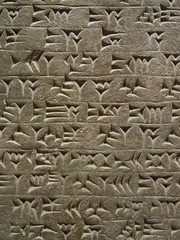
7521225045CuneiformDenoting or relating to the wedge-shaped characters used in the ancient writing systems of Mesopotamia, Persia, and Ugarit, surviving mainly impressed on clay tablets.21
7521225046AlphabetAn alphabet is a standard set of letters (basic written symbols or graphemes) that is used to write one or more languages based upon the general principle that the letters represent phonemes (basic significant sounds) of the spoken language. This is in contrast to other types of writing systems, such as syllabaries (in which each character represents a syllable) and logographies (in which each character represents a word, morpheme, or semantic unit).22

AP Flashcards

Terms : Hide Images
11540234997less than 5mL -intramuscular shots in.....deltoid bc big and easy access0
11540234998more than 5mL -intramuscular shots in.....gluteus medius bc avoids sciatic nerve and is a large muscle1
11540234999in infants .....gluteus medius not developed, so the vastus lateralis and rectus femoris in the quadriceps bc big muscle and easy access2
115402350003 spots intramuscular shotdeltoid-big muscle small shot gluteus medius- big shot and afraid of hitting nerve rectus femoris- fat baby legs3
11540235001muslce w/ the major responsibility for a certain movementprime mover4
11540235002muslce that opposes or reverses a prime moverantagonist5
11540235003muslce that aids a prime mover in a movement and helps prevent rotationsynergist6
11540235004stabilizes the origin of a prime moverfixator7
11540235005making an angle smallerflexion- flexing arm8
11540235006make angle biggerextension- extend arm9
11540235007move around it longitudinal axisrotation- move neck/head10
11540235008takes away from midlineabduction- jump jacks out11
11540235009brings back to the midlineadduction-jump jacks closed12
11540235010all directionscircumduction-ball and socket13
11540235011toe updorsiflexion14
11540235012toe downplantar flexion15
11540235013toes moved mediallyinversion16
11540235014toes moved laterallyeversion17
11540235015palms upsupination18
11540235016palms downpronation19
11540235017move thumb to touch finger tipsopposition20
11546784262skeletal muscle striationsyes21
11546784263smooth muscle striationsno22
11546784264cardiac muscle striationsyes23
11546784265skeletal muscle voluntaryyes24
11546784266smooth muscle voluntaryno25
11546784267cardiac muscle voluntaryno26
11546784268location in body of skeletal muscleon your bones27
11546784269smooth muscle location in bodyhollow organs blood vessels28
11546784270cardiac muscle location in bodyheart29
11546784271function and body skeletal musclemoves bones / body30
11546784272smooth muscle function in bodymovement in interior substances31
11546784273cardiac muscle function in bodypumps blood32
11546784274histology of skeletal musclestriations when parallel multinucleated33
11546784275histology of smooth muscleslippery / smooth tapered ends34
11546784276histology of cardiac musclespaces between cells striated intercalated discs35
11546784277pipe cleanersblood vessel36
11546784278first plastic wrapperimysium37
115467842792nd plastic wrapepimysium - outside38
11546784280cell wrapped by endomysiummuscle fibers39
11546784281bunch of noodles and wrapped by perimysiumFascicle40
11546784282spaghetti noodle coatingendomysium41
11546784283bands that hold muscle to bonetendon42
11546784284sheet like structureaponeuroses43
11546784285lever for movement muscles pull bonebone44
11546784286muscles are made offibres45
11546784287rule 1muscles always pull and get shorter46
11546784288rule 2muscles must have at least two attachments and must cross at least one47
11546784289rule 3the attachment that moves is known as the insertion and the attachment that remain stationary is known as the origin48
11546784290rules 4muscle striations to the attachment and show the directional pull49
11546784291Rule 5muscles work in opposing pairs50
11546784292rule 6muscles that decrease the angle between ventral surfaces of the body are known as flexors. Muscles that increase the angle between ventral surfaces of the body are known as extensors51
11546784293ability to receive and respond to a stimulusirritability52
11546784294ability to shorten when an adequate stimulus is receivedcontractility53
11546784295one neuron and all the muscle cells stimulated by that neuronmotor unit54
11546784296skeletal muscles must be....stimulated by a nerve to contract55
11546784297connective tissue ensheathing the entire muscleepimysium56
11546784298cordlike extension of connective tissue beyond the muscle, serving to attach it to the Bonetendon57
11546784299connection site of nerve and muscleneuromuscular Junctions58
11546784300AChneurotransmitter59
11546784301Sarcolemmaplasma membrane of a muscle60
11547387217muscle fibermyofibril61
11547387218does the action/moves, thinactin62
11547387219middle, thickmyosin63

AP World History Chapter 2 Flashcards

Terms : Hide Images
10784669765civilizationSocieties distinguished by reliance on sedentary agriculture, ability to produce food surpluses, and existence of nonfarming elites, as well as merchant and manufacturing groups.0
10784669766MesopotamiaLiterally "between the rivers"; the civilizations that arose in the alluvial plain of the Tigris and Euphrates river valley.1
10784669767SumeriansPeople who migrated into Mesopotamia c. 4000 B.C.E.; created first civilization within region; organized area into city-states.2
10784669768cuneiformA form of writing developed by the Sumerians using a wedge-shaped stylus and clay tablets.3
10784669769zigguratsMassive towers usually associated with Mesopotamian temple complexes.4
10784669770city-stateA form of political organization typical of Mesopotamian civilizations; consisted of agricultural hinterlands ruled by an urban-based king.5
10784669771BabyloniansUnified all of Mesopotamia c. 1800 B.C.E.; empire collapsed due to foreign invasion c. 1600 B.C.E.6
10784669772HammurabiThe most important ruler of the Babylonian empire; responsible for codification of law.7
10784669773pharaohTitle of kings of ancient Egypt.8
10784669774pyramidsMonumental architecture typical of Old Kingdom Egypt; used as burial sites for pharaohs.9
10784669775KushAn African state that developed along the upper reaches of the Nile c. 1000 B.C.E.; conquered Egypt and ruled it for several centuries.10
10784669776Indus RiverRiver sources in Himalayas to mouth in Arabian Sea; location of Harappan civilization.11
10784669777HarappaAlong with Mohenjodaro, major urban complex of the Harappan civilization; laid out on planned grid pattern.12
10784669778AryansIndo-European nomadic pastoralists who replaced Harappan civilization; militarized society.13
10784669779VedasAryan hymns originally transmitted orally but written down in sacred books from the 6th century B.C.E.14
10784669780MahabharataIndian epic of war, princely honor, love, and social duty; written down in the last centuries B.C.E.; previously handed down in oral form.15
10784669781RamayanaOne of the great epic tales from classical India; traces adventures of King Rama and his wife, Sita; written 4th to 2nd centuries B.C.E.16
10784669782UpanishadsLater books of the Vedas; contained sophisticated and sublime philosophical ideas; utilized by Brahmans to restore religious authority.17
10784669783Yellow RiverAlso known as the Huanghe; site of development of sedentary agriculture in China.18
10784669784ideographsPictographic characters grouped together to create new concepts; typical of Chinese writing.19
10784669785ShangFirst Chinese dynasty for which archeological evidence exists; capital located in Ordos bulge of the Huanghe; flourished 1600 to 1046 B.C.E.20
10784669786OlmecsPeople of a cultural tradition that arose at San Lorenzo and La Venta in Mexico c. 1200 B.C.E.; featured irrigated agriculture, urbanism, elaborate religion, beginnings of calendrical and writing systems.21
10784669787Chavin de HuantarChavin culture appeared in highlands of Andes between 1800 and 1200 B.C.E.; typified by ceremonial centers with large stone buildings; greatest ceremonial center was Chavin de Huantar; characterized by artistic motifs.22
10784669788PhoeniciansSeafaring civilization located on the shores of the eastern Mediterranean; established colonies throughout the Mediterranean.23
10784669789monotheismThe exclusive worship of a single god; introduced by the Jews into Western civilization.24

Pages

Subscribe to CourseNotes RSS

Need Help?

We hope your visit has been a productive one. If you're having any problems, or would like to give some feedback, we'd love to hear from you.

For general help, questions, and suggestions, try our dedicated support forums.

If you need to contact the Course-Notes.Org web experience team, please use our contact form.

Need Notes?

While we strive to provide the most comprehensive notes for as many high school textbooks as possible, there are certainly going to be some that we miss. Drop us a note and let us know which textbooks you need. Be sure to include which edition of the textbook you are using! If we see enough demand, we'll do whatever we can to get those notes up on the site for you!