AP Notes, Outlines, Study Guides, Vocabulary, Practice Exams and more!

Kaplan AP World History - Periods 1 and 2: Up to 600 C.E. Flashcards

Terms : Hide Images
9830680042PaleolithicLiterally, "old stone." The period from the appearance of the first hominids (human-like creatures) to approximately 8000 B.C.E.0
9830680043AnimismOften found in primitive tribes, the belief that spirits can possess and control natural things and forces.1
9830680044Neolithic RevolutionStarting around 7000 B.C.E., this period marked the beginnings of permanent settlements and sedentary farming, leading to longer lives and higher populations.2
9830680045PastoralismThe agricultural practice of domesticating animals for food or other uses, beginning around 4000 B.C.E.3
9830680046Job SpecializationAs civilizations progressed and not everyone needed to farm to live, skilled laborers like artisans were allowed to craft things that had value. The trade that followed led to the growth of cities.4
9830680047PatriarchyA society in which men hold power within the family, in governance, and/or in economics.5
9830680048MetallurgyThe crafting of metallic ores into functional and/or valuable items, beginning around 4500 B.C.E.6
9830680049MesopotamiaLiterally, "The Land Between the Rivers." Geographic region centered on the Tigris and Euphrates Rivers, located in modern-day Iraq. Considered one of the four major "cradles of civilization."7
9830680050AssyriaRegion in Southwest Asia spanning from modern-day Egypt to Iraq, this region was founded by a Semitic people around 2000 B.C.E. and lasted into the 600s B.C.E. Known for their fierce warrior spirit, the Assyrians were also great builders, creating cities like Nineveh and Ashur.8
9830680051ShangA people speaking a Sino-Tibetan language, they developed an ancient civilization along the Huang He (Yellow) River in modern-day China. Along with Mesopotamia, South Asia, and Egypt, it is a "cradle of civilization."9
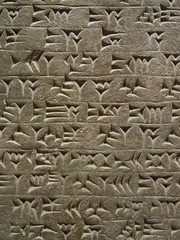
9830680052CuneiformThe Sumerian system of writing and one of the oldest forms of writing. Completed by pressing a wedge-shaped stylus into clay.10
9830680053ZigguratsThe hallmark of Sumerian architecture, these multitiered pyramids served as temples to the gods.11
9830680054Hammurabi'S CodeOldest known code of law. Issued by Hammurabi around 1800-1700 B.C.E. to unify his empire in Babylon, this code emphasized retaliation as punishment—"an eye for an eye, and a tooth for a tooth."12
9830680055PhoeniciansPhoenicia was founded around 2000 B.C.E. in modern-day Lebanon, and this civilization based its livelihood on the sea. Skilled mariners, the Phoenicians traded their famed murex shells (used for "royal purple" dye) and red cedar trees. Their alphabet inspired the Greek alphabet. Collapsed around 600 B.C.E. with an Assyrian invasion.13
9830680056EgyptLocated in Northeast Africa on the fringe of the Sahara Desert and centered on the Nile River, this nation is considered another one of the "cradles of civilization."14
9830680057PictographsMany forms of ancient writing were based on symbols that represented a sound or a concept. Pictographic languages from this period include Egyptian hieroglyphics, Sumerian cuneiform, the text of the Harappan seals, and the text of the Chinese oracle bones.15
9830680058Roman EmpireThe largest of the ancient world's empires, it spanned across the European continent and around the Mediterranean basin. Previously a republic, the empire was noted for its strong military, achievements in academics, and the spread of Christianity. Its peak was a 200-year period (about 20 B.C.E.-180 C.E.) known as the Pax Romana, or Roman Peace.16
9830680059HebrewsDescendants of Abraham, considered the founder of Judaism, the first monotheistic religion. They settled in modern-day Israel c. 1500 B.C.E., then moved to Egypt.17
9830680060Harappa and Mohenjo-DaroThe two key cities of the Indus River Valley Civilization. Located in modern-day Pakistan, they represent another one of the "cradles of civilization."18
9830680061VedasA collection of hymns and chants, which would form the basis of Hinduism. The Vedas were some of the few artifacts left behind by the Aryans, nomads who took over the Indus Valley civilization c. 1500 B.C.E.19
9830680062HinduismThe majority religion of India today and the spiritual successor of Vedic thought. It emphasizes a cycle of reincarnation (rebirth), which can be improved or even broken by acquiring good karma for following the dharma, or rules, of one's caste.20
9830680063Caste SystemThe system of social class division in Hinduism. From highest to lowest were the priests, warriors, skilled workers and free men, bonded serfs, and pariahs (untouchables).21
9830680064Mandate Of HeavenAncient Chinese concept stating that the right to rule was granted by the heavens. Used to explain the rise of every Chinese dynasty from the Zhou in 1122 B.C.E. to the Qing in 1644 C.E.22
9830680065Qin DynastyOne of the earliest empires in Chinese history. From 221 to 206 B.C.E., the Qin dynasty was known for its use of iron and bronze, along with the beginning of the Great Wall.23
9830680066OlmecsOldest known civilization in the Americas (circa 1000 B.C.E.). Centered in modern-day Mexico, they were known for their active trade, scientific developments, and giant stone heads.24
9830680067ChavinEarliest known civilization in modern-day South America (c. 800 B.C.E). Their mountain-based trade system helped the Andes Mountains become a cradle of Mesoamerican Civilization.25
9830680068Maya EmpirePeaking from about 250-900 CE, the Maya empire, centered on the Yucatan Peninsula of modern-day Mexico, was known for its massive cities of Tikal and Chichen Itza. Trade in stone, shells, and cacao helped them thrive. Collapsed c. 900 CE under mysterious circumstances.26
9830680069PersiaCentered in modern-day Iran, they thrived around 500 B.C.E-500 C.E. Their greatest kings, Cyrus, Darius, and Xerxes, helped expand the empire into Greece. In addition to being a great military power, Persia was remarkably well-managed, with its Royal Road.27
9830680070Alexander the GreatMacedonian king of the fourth C.Entury B.C.E. whose legendary conquests created an empire that included Greece, Persia, Southwest Asia, and parts of India. Responsible for the creation of Hellenistic culture.28
9830680071HellenisticCulture that fused the ideas of Greece and Persia, particularly after the conquests of Alexander the Great.29
9830680072Mauryan EmpireOne of the first two empires of a unified India. The Mauryan Dynasty (321-185 B.C.E.) saw the rise of Chandragupta and Ashoka, the spread of Buddhism, and a well-organized economy.30
9830680073AshokaGreat leader of the Mauryan Empire in India, he ruled around 250 B.C.E. Known for spreading Buddhism throughout India by sponsoring missionaries and encouraging vegetarianism.31
9830680074Gupta EmpireOne of the first two empires of a unified India. The Gupta Dynasty (320-550 C.E.) revived Hinduism in India, delineated clear roles for men and women, and made great contributions in both the arts and sciences.32
9830680075DaoismBeliefs of Chinese philosopher Laozi (Lao Tsu), based on the Dao, or "the Way," in which people live in harmony with nature and believe in "less government."33
9830680076Han DynastyOne of the earliest empires in Chinese history. From 206 B.C.E. to 220 C.E., the Han dynasty was known for its strong C.Entral government, thriving Silk Road trade, state-sponsored education, and general peace and prosperity.34
9830680077Silk RoadNetwork of land and sea routes facilitating trade between the Roman Empire, the Persian Empires, and the Chinese Empires. In addition to valuables, cultural ideas and new technologies traveled and spread along the routes.35
9830680078Filial PietyConfucian virtue emphasizing respect toward one's elders.36
9830680079RepublicFirst formed in Rome in 509 B.C.E., a government system in which the people elect their leaders and help create the laws. About 50 years later, the Twelve Tables helped to formalize Roman law.37
9830680080DiasporaThe mass spreading of the Ten Northern Tribes of Israel in 722 B.C.E., following an Assyrian invasion. This caused the loss of Hebrews' cultural identity. In the present, it can refer to the mass scattering of any group of people38
9830680081ChristianityEmerging in the first C.Entury C.E., this system of religion taught simplicity, love, compassion, and equality under one God. Based on the teachings of Jesus Christ, which are recorded in the New Testament. Quickly spread throughout the Mediterranean basin thanks to missionary activity, it is now the world's dominant religion.39
9830680082Monsoon WindsSeasonal winds that affect weather patterns (and therefore, agriculture) in South Asia. Ancient mariners used these winds to carry them to India, allowing for a thriving trade throughout the Indian Ocean.40
9830680083Indian Ocean TradeArchaeological evidence confirms that Egyptians, Mesopotamians, Malays, Gupta Indians, and others utilized advanced marine innovations to trade valuable goods across the Indian Ocean.41
9830680084ShamanismOften associated with indigenous tribes around the world, this system of belief involves a shaman, or spiritual medium, treating the ill by communicating with an unknown, unseen spirit world.42
9830680085Ancestor VenerationOften associated with the Chinese, this is the worship of the spirits of one's ancestors.43
9830680086BrahmaOne of the three primary gods of Hinduism, he is regarded as the creator.44
9830680087BuddhaBorn Siddhartha Gautama, this Indian prince founded Buddhism as an attempt to explain why there was suffering in the world. Buddhists today believe in the Four Noble Truths: that life contains suffering, that suffering is caused by desire, that desire can be rejected and nirvana (perfect peace) achieved, and that nirvana can be achieved through the Eightfold Path (a system of right forms of living).45
9830680088ConfuciusGreatest of the Chinese philosophers (551-479 B.C.E.), his philosophy of reverence of ancestors, good education, and wise governance shaped the culture of China well into the twentieth Century.46
9830680089IslamThe second most practiced religion in the world today. Founded in 622 C.E. by the Prophet Muhammad, it teaches the belief in Allah as the only god and Muhammad as the only prophet. A core tenet is the Five Pillars of Islam: declaration of faith, daily prayer, fasting during Ramadan, alms to the poor, and pilgrimage to Mecca (hajj).47

AP World History Chapter 9 Vocab Flashcards

Terms : Hide Images
11546260302Quranthe sacred writings of Islam revealed by God to the prophet Muhammad during his life at Mecca and Medina0
11546260303UmmaThe community of all Muslims. A major innovation against the background of seventh-century Arabia, where traditionally kinship rather than faith had determined membership in a community.1
11546262688Pillars of IslamThe five core practices required of Muslims: a profession of faith, regular prayer, charitable giving, fasting during Ramadan, and a pilgrimage to Mecca (if financially and physically possible).2
11546265676HijraThe Migration of Muhammad from Mecca to Medina in A.D. 622, marking the founding of Islam3
11546268722ShariaBody of Islamic law that includes interpretation of the Quran and applies Islamic principles to everyday life4
11546272285JizyaThe tax on people in the Umayyad Caliphate who did not convert to Islam.5
11546274684Umayyad Caliphate(661-750 CE) The Islamic caliphate that established a capital at Damascus, conquered North Africa, the Iberian Pennisula, Southwest Asia, and Persia, and had a bureaucracy with only Arab Muslims able to be a part of it.6
11546277107Abbasid Caliphate(750-1258 CE) The caliphate, after the Umayyads, who focused more on administration than conquering. Had a bureaucracy that any Mulim could be a part of.7
11546279906UlamaMuslim religious scholars. From the ninth century onward, the primary interpreters of Islamic law and the social core of Muslim urban societies. (p. 238)8
11546285854SufismAn Islamic mystical tradition that desired a personal union with God--divine love through intuition rather than through rational deduction and study of the shari'a. Followed an ascetic routine (denial of physical desire to gain a spiritual goal), dedicating themselves to fasting, prayer, meditation on the Qur'an, and the avoidance of sin.9
11546288903Mullah NasruddinAn imaginary folk character within the world of Islam known for a skeptical attitude toward the rational mind.10
11546295065Al-GhazaliGreat Muslim theologian, legal scholar, and Sufi mystic (1058-1111) who was credited with incorporating Sufism into mainstream Islamic thought.11
11546299476Sikhismthe doctrines of a monotheistic religion founded in northern India in the 16th century by Guru Nanak and combining elements of Hinduism and Islam12
11546302920Ibn Battuta(1304-1369) Morrocan Muslim scholar, the most widely traveled individual of his time. He wrote a detailed account of his visits to Islamic lands from China to Spain and the western Sudan. His writings gave a glimpse into the world of that time period.13
11546306666TimbuktuCity on the Niger River in the modern country of Mali. It was founded by the Tuareg as a seasonal camp sometime after 1000. As part of the Mali empire, Timbuktu became a major major terminus of the trans-Saharan trade and a center of Islamic learning.14
11546309579Al-AndalusA Muslim-ruled region in what is now Spain, established by the Berbers in the eighth century A.D.15
11546312274Mansa MusaEmperor of the kingdom of Mali in Africa. He made a famous pilgrimage to Mecca and established trade routes to the Middle East.16
11546316659MadrassasFormal colleges for higher institutions in the teaching of Islam as well as in secular subjects founded throughout the Islamic world in beginning in the 11th century17
11546320525House of WisdomAn academic center for research and translation of foreign texts that was established in Baghdad in 830 C.E. by the Abbasid caliph al-Mamun.18
11546323350Ibn SinaThe famous Islamic scientist and philosopher who organized the medical knowledge of the Greeks and Arabs into the Canon of Medicine19

AP World History Chapter 4 AP Review The Earth and its Peoples Flashcards

Terms : Hide Images
10668495568c (Of his conquests and his organization of the empire)Darius may be considered the most important of the Persain Kings because a. He reigned for the longest time b. He began the empire c. Of his conquests and his organization of the empire d. He controlled the Silk Road0
10668495569b (Satraps)In the later Persian empire, provinces overseen by governors, were divided into a. Maji b. Satraps c. Mujahedeen d. Elamites1
10668495570c (Mesopotamia)In construction project, Darius and Xerxes were inspired by the traditions of a. Egypt b. The Indus Valley c. Mesopotamia d. The Shang Dynasty2
10668495571b (Zoroastrian)King Darius said, "By the grace of Ahuramazda am I King." This statement indicates that Darius likely worshiped as a(an) a. Elamite b. Zoroastrian c. Nestorian d. Hebrew3
10668495572d (It is thought to have had a large impact on Judaism)Which of the following is a true statement concerning Zoroastrianism? a. It was a monotheistic polytheism b. It originated in Egypt or North Africa c. It had no creation story d. It is thought to have had a large impact on Judaism4
10668495573d (All of the above)The Greeks were drawn to the sea because a. Overland travel was difficult b. They needed to import materials c. Greece had good anchorages d. All of the above5
10668495574a (Acropolis)Most Greek urban centers had a place of refuge in case of emergency known as a(an) a. Acropolis b. Agora c. Hoplite d. Polis6
10668495575b (Relieve population pressures on the Greek world)Greek colonization began as a way to a. Convert the barbaroi to Greek customs and culture b. Relieve population pressures on the Greek world c. Prevent the Persians from gaining control of the Mediterranean Sea d. Control the growth of Rome7
10668495576a (Produce male children)In Athenian marriages, the duty of the women was to a. Produce male children b. Serve as the equal partner to the male c. Farm the land d. Operate the family business8
10668495577d (Delian League)The Greek city-states formed the *blank* as a way to prosecute the war against the Persians a. Ionian Conference b. Athenian League c. Spartan Confederation d. Delian League9

AP Art IdigenousAmerica Flashcards

Terms : Hide Images
6145521035chavin de huantar plan; northern highlands, peru; chavin; 900-200 bce0
6145521036lanzon stela; northern highlands, peru; chavin; 900-200 bce1
6145521037relief sculpture; northern highlands, peru; chavin; 900-200 bce2
6145521038nose ornament; northern highlands, peru; chavin; 900-200 bce3
6145521039mesa verde cliff dwellings; montezuma county, colorado; anasazi; 450-13004
6145521040yaxchilan, structure 40; chiapas, mexico; maya; 7255
6145521041yaxchilan, lintel 25 structure 23; chiapas, mexico; maya; 7256
6145521042yaxchilan, structure 33; chiapas, mexico; maya; 7257
6145521043great serpent mound; adams county, southern ohio; mississippian (eastern woodlands); c. 10708
6145521044templo mayor (main temple); tenochtitlan (modern mexico city, mexico); mexica (aztec); 1375-15209
6145521045the coyolxauhqui stone; tenochtitlan (modern mexico city, mexico); mexica (aztec); 1375-152010
6145521046calendar stone; tenochtitlan (modern mexico city, mexico); mexica (aztec); 1375-152011
6145521047olmec-style mask; tenochtitlan (modern mexico city, mexico); mexica (aztec); 1375-152012
6145521048silver and gold maize cobs; inka; c. 1400-153313
6145521049ruler's feather headdress (probably of montecuhzoma ii); mexica (aztec); 1428-152014
6145521050city of cusco plan; central highlands, peru; inka; c. 144015
6145521051curved inka wall of qorikancha and church of santo domingo; central highlands, peru; inka; c. 144016
6145521052walls at saqsa waman (sacsayhuaman); central highlands, peru; inka; c. 144017
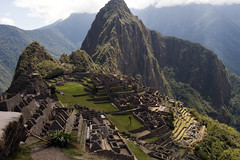
6145521053city of machu picchu; central highlands, peru; inka; c. 1450-154018
6145521054observatory; central highlands, peru; inka; c. 1450-154019
6145521055intihuantana stone; central highlands, peru; inka; c. 1450-154020
6145521056all-t'oqapu tunic; inka; 1450-154021
6145521057bandolier bag; lenape (eastern delaware) tribe; c. 185022
6145521058transformation mask (closed and open views); kwakiutl, northwest coast of canada; late 19th century23
6145521059hide painting of sun dance; attributed to cotsiogo (cadzi cody); eastern shoshone; wind river reservation, wyoming; c. 1890-190024
6145521060black on black ceramic vessel; maria martinez and julian martinez; tewa, puebloan; san ildefonso pueblo, new mexico; c. mid 20th century25

Ap World History Flashcards

Terms : Hide Images
8167656152Caravelsmall, easily steerable ship used by the Portuguese and Spanish in their explorations0
8167656153ConquistadorGeneric term for a Spanish conqueror of the Americas.1
8167656154Viceroya ruler exercising authority in a colony on behalf of a sovereign.2
8167656155Encomedia SystemSpanish slavery system3
8167656156Middle Passagethe sea journey undertaken by slave ships from West Africa to the West Indies.4
8167656157maritimeconnected with the sea, especially in relation to seafaring commercial or military activity.5
8167656158Bartholomew De Las CasasFirst resident of the Chiapas was a Spanish historian and Dominican friar6
8167656159Prince Henry the NavigatorSent others to explore for him, made very first explorer school, first person to value exploring7
8167656160God, Gold, Glorythe three main reasons for the European age of exploration8
8167656161Cape of Good Hopethe southern tip of Africa9
8167656162Bartholomeu DiasPortuguese sailor who was first to sail around Africa's southern tip at the Cape of Good Hope10
8167656163Vasco da Gamathe first European to reach India by sea sailing around the tip of Africa.11
8167656164MalaccasA Malaysian state and the location where spices were grown, for which Europe had a high demand.12
8167656165Ferdinand MagellanPortuguese navigator in the service of Spain13
8167656166Joint Stock CompanyA business in which investors pool their wealth for a common purpose, then share the profits14
8167656167Mercantilismbelief in the benefits of profitable trading; commercialism.15
8167656168Commercial Revolution• European economic change marked by guilds, banking, and capitalism16
8167656169Treaty of Tordesillasset the boundary established in 1493 to define Spanish and Portuguese possessions in the Americas.17

AP World History: Period 6 Flashcards

Original from MrsBHatchTEACHER

Terms : Hide Images
9868426956African National CongressANC; South African political party formed in 1912; strongly opposed to apartheid0
9868426957apartheid"separateness"; a series of laws initiated by the Afrikaner National Party in South Africa which was designed to divide South African society by skin color and ethnicity; this system also reserved South Africa's resources for whites1
9868426958Ayatollah Ruholla Khomeinilived from 1900 to 1989; religious leader of the Islamic Republic of Iran2
9868426959Vladimir Leninthe leader of the Russian Soviet Federation Socialist Republic and premier of the Soviet Union3
9868426960Central Powersone of the two warring factions in World War I; composed of Germany, Austria-Hungary, the Ottoman Empire and Bulgaria4
9868426961Charles de Gaullelived from 1890 to 1970; French general and statesman who led French forces in World War II; served as the president of France from 1959 to 19695
9868426962Chiang Kai-sheklived from 1887 to 1975; Chinese military officer who was leader of the Guomindang; fled to Taiwan after the Chinese Communist Party came to power in China6
9868426963Chinese Revolutionprolonged communist movement in China and lasted from 1946 to 1950; resulted in the communist takeover of mainland China7
9868426964Cold Wara sustained state of political and military tension between members of NATO and members of the Warsaw Pact; dissolution of the Soviet Union was the end of this "conflict"8
9868426965collectivizationalso known as collective farming and communal farming; system in which the holdings of several farmers are run collectively as a unit; imposed by the government in the Soviet Union9
9868426966command economyplanned economy; the economic system in which decisions regarding production and investment are embodied in a plan formulated by a central authority, usually by a public body such as a government agency10
9868426967containmentthe United States policy to prevent the spread of communism abroad during the Cold War; a response to a series of moves by the Soviet Union to enlarge communist influence in Eastern Europe, China, Korea, Africa, and Vietnam11
9868426968Cuban missile crisisa 13-day confrontation in October 1962 between the Soviet Union and the United States; Soviet missiles moved to Cuban soil in an agreement by Fidel Castro and Nikita Khrushchev; U.S. responds by blockading Cuba; Khrushchev and U.S. President John F. Kennedy reach an agreement in which the Soviets would remove their missiles from Cuba in return for an American promise not to invade Cuba12
9868426969Cultural Revolutionalso known as the Great Proletarian Cultural Revolution; launched by Mao in the late 1960's; aimed to combat the capitalist tendencies he believed had penetrated even the highest ranks of the communist party itself; involved new policies to bring health care and education to the countryside and reinvigorate earlier efforts at rural industrialization under local control13
9868426970decolonizationthe process of the dissolution of colonial territories and the establishment of independent nations14
9868426971Deng Xiaopinglived from 1904 to 1997; successor to Mao Zedong; reformist who sought to incorporate The People's Republic of China into the world economy; dismantled collectivized farming, state enterprises given greater authority, welcomed foreign investment; crushed democracy movement in Beijing's Tiananmen Square15
9868426972environmentalismideology which regards the environmental concerns16
9868426973European Economic CommunityEEC; also known as the Common Market; founded in 1957; originally consisted of Italy, France, West Germany, Belgium, the Netherlands, and Luxembourg; expanded membership to almost all of Europe, including former communist states; renamed the European Union in 199417
9868426974Fascismpolitical ideology which was intensely nationalistic; celebrated action and placed faith in charismatic leaders; and condemned individualism, liberalism, feminism, parliamentary democracy, and communism; adopted by Italy, Germany, and Japan in the years following World War I18
9868426975Five Year PlanJoseph Stalin's planned economy to rapidly industrialize the Soviet Union19
9868426976fundamentalismideology which demands strict adherence to orthodox theological doctrines20
9868426977Gamel Abdel Nasserlived from 1918 to 1970; second President of Egypt from 1956 to 1970; planned the overthrow of the monarchy and sought to nationalize the Suez Canal21
9868426978UN General Assemblyone of the six principal organs of the United Nations and the only one in which all member nations have equal representation; oversee the budget of the United Nations, appoint the non-permanent members to the Security Council, receive reports from other parts of the United Nations and make recommendations in the form of General Assembly Resolutions22
9868426979genocidethe systematic destruction of all or part of a racial, ethnic, religious or national group23
9868426980global warmingterm which refers to the continuing rise in the average temperature of Earth's climate system; viewed as a result of human emissions of greenhouse gases24
9868426981globalization of democracythe spread of democracy throughout the world25
9868426982Great Depressioneconomic depression as a result of the crash of the American stock market; lasted from 1929 until World War II; causes drop in world trade, loss of investment, and businesses unable to make profit; countries or colonies tied to exporting one or two products hard hit as the West consumed less; conditions resulting in the Great Depression led to widespread unemployment and social tensions26
9868426983Great Leap Forwardlasted from 1958 to 1960; marked Mao's response to distortions of Chinese socialism; promoted smallscale industrialization in rural areas; tried to foster widespread and practical technological education for all rather than relying on a small elite of highly trained technical experts; envisioned an immediate transition to full communism in the "people's communes" rather than waiting for industrial development to provide the material basis for that transition; massive famine which followed temporarily discredited Mao's radicalism27
9868426984Great Purgesalso known as the Terror; period of immense paranoia in the Soviet Union of the late 1930's in which communist members accused each other being corrupted by capitalist ideals; enveloped tens of thousands of prominent communists, including all of Lenin's top associates, and millions more of ordinary peoples; based on suspicious associations in the past, denunciations by colleagues, connections to foreign countries, or bad luck; such people were arrested in the middle of the night, then tried and sentenced to either death or long harsh years in remote labor camps known as gulags; close to 1 million peoples executed between 1936 and 1941; additional 4 to 5 million people sent to the gulag, where they were forced to work in horrendous conditions and died in appalling numbers28
9868426985Green Revolutiona series of research, and development, and technology transfer initiatives, occurring between the 1940s and the late 1960s, that increased agriculture production worldwide, particularly in the developing world29
9868426986Adolf Hitlerlived from 1889 to 1945; leader of the Nazi party in Germany; chancellor of Germany from 1933 to 1945; dictator of Nazi Germany from 1934 to 194530
9868426987Ho Chi Minhlived from 1890 to 1969; Vietnamese communist revolutionary leader; was prime minister (from 1945 to 1955) and president (from 1945 to 1969) of the Democratic Republic of Vietnam31
9868426988Holocaustthe mass murder of approximately six million Jews during World War II; a program of systematic state-sponsored murder by Nazi Germany; led by Adolf Hitler and the Nazi Party32
9868426989International Monetary FundIMF; established in 1944 by the Bretton Woods Conference in New Hampshire; sought to promote market economies, free trade, and high growth rates33
9868426990Indian National CongressINC; organization established in 1885; gave expression to the idea of India as a single nation; played a major role in India's independence movement from British colonial rule34
9868426991Islamic renewalalso referred to as Islamic revival; refers to a renewing of the Islamic religion throughout the Islamic world, that began roughly sometime in 1970s; sought greater religious piety and a growing adoption of Islamic culture35
9868426992Jawaharlal Nehrulived from 1889 to 1964; first Prime Minister of India and was a leading figure in the independence movement against British rule over India36
9868426993League of Arab Statesa regional organization of Arab countries in and around North Africa, the Horn of Africa, and Southwest Asia; formed in Cairo in 1945 with six members: Egypt, Iraq, Transjordan (Jordan), Lebanon, Saudi Arabia and Syria; currently has 22 members37
9868426994League of Nationsinternational peacekeeping organization founded as a result of the First World World; proposed by US president Woodrow Wilson; committed to the principle of "collective security" and intended to avoid the repetition of war38
9868426995Mahatma Gandhilived from 1869 to 1948; leader of the Indian nationalist movement during British control over India; used nonviolent civil disobedience, such as hunger strikes39
9868426996Mao Zedonglived from 1893 to 1976; Chinese communist revolutionary and leader of the People's Republic of China from its establishment 1949 to his death in 197640
9868426997Marshall Planplan which sought to rebuild and reshape devastated European economies; funneled Europe some $12 billion with numerous advisers and technicians; motivated by combination of humanitarian concern, a desire to prevent a new depression by creating overseas customers for American goods, and interest in undermining the growing appeal of European communist parties; required European nations to cooperate with one another41
9868426998Mikhail Gorbachevborn in 1931; last general secretary of the Soviet Union (1985 to 1991); passed reforms such as perestroika and policies such as glasnost which led to the dissolution of the Soviet Union42
9868426999Muhammad Ali Jinnahlived from 1876 to 1948; founder of Pakistan and the leader of the All-India Muslim League until Pakistan's independence43
9868427000Benito Mussolinilived from 1883 to 1945; leader of the Italian National Fascist Party; prime minister of Italy from 1922 to 194344
9868427001Mustafa Kemal Ataturklived from 1881 to 1938; founder and the first President of the Republic of Turkey; passed a series of reforms to transform the former Ottoman Empire into a modern, secular, and democratic nation45
9868427002North American Free Trade AgreementNAFTA; regional alliance founded in 1993 and consists of Canada, Mexico, and the United States; the world's second largest free-trade zone46
9868427003North Atlantic Treaty OrganizationNATO; a military alliance based on the North Atlantic Treaty which was signed in 1949; alliance in which its member states agree to mutual defense in response to an attack by any external party; consists of 28 member states across North America and Europe47
9868427004Nazi Germanythe Third Reich; lasted from 1933 to 1945; Germany under the leadership of Adolf Hitler and the Nazi Party48
9868427005Nelson Mandelalived from 1918 to 2013; South African anti-apartheid revolutionary and politician; President of South Africa from 1994 to 1999; served as President of the African National Congress from 1991 to 199749
9868427006New Deala series of reforms proposed by United States President Woodrow Wilson; lasted from 1933 to 1942; experimental combination of reforms seeking to restart economic growth and prevent similar failures in the future; reflected the thinking of British economist John Maynard Keynes; argued that government actions and spending programs could moderate recessions and depressions; consisted of immediate programs of public spending (for dams, highways, bridges, and parks) and long-term reforms, such as the Social Security system, minimum wage, and various relief and welfare programs50
9868427007non-governmental organizationNGO; an organization that is neither a part of a government nor a conventional for-profit business51
9868427008Nikita Khrushchevlived from 1894 to 1971; leader of the Soviet Union from 1953 to 1964; responsible for the de-Stalinization of the Soviet Union and backing of the Soviet space program52
9868427009Osama bin Ladenlived from 1957 to 2011; Islamic militant who was the leader of the terrorist group al-Qaeda; mastermind behind the 9/11 attacks; played a key role in the US-backed effort to aid mujaheddin who fought Soviet forces in Afghanistan53
9868427010al-Qaeda"the base"; terrorist organization formerly headed by Osama bin Laden; behind the 9/11 attacks54
9868427011Palestinian Liberation OrganizationPLO; an organization founded in 1964 with the purpose of creating an independent State of Palestine55
9868427012Pan-Arabisman ideology proposing the unification of the countries of North Africa and West Asia from the Atlantic Ocean to the Arabian Sea, referred to as the Arab World56
9868427013Pan-Africanisman ideology which encourages the unity of Africans worldwide57
9868427014ebola epidemican epidemic caused by the Ebola virus; symptoms include fever, throat and muscle pains, headaches, nausea, vomiting and diarrhea, and decreased functioning of the liver and kidneys; an 2014 outbreak in West Africa has led to a reported 142 deaths58
9868427015influenza epidemican epidemic caused by the H1N1 influenza virus; lasted from 1918 to 1920; resulted in 50 to 100 million deaths, ranking it one of the most deadliest natural disasters in human history59
9868427016perestroikaan economic program launched by Soviet leader Mikhail Gorbachev which freed state enterprises from government regulation, permitted small-scale private businesses, offered opportunities for private farming, and welcomed foreign investment in joint enterprises60
9868427017glasnosta Soviet policy established by Mikhail Gorbachev which permitted cultural and intellectual freedoms61
98684270181917 Russian Revolutiona collective term for the series of revolutions in 1917 which ousted Tsar Nicholas II and the tsarist autocracy and replaced it with the communist Bolshiveks62
9868427019UN Security Councilone of the six principal organs of the United Nations; in charge of the maintenance of international peace and security; this body is able to establish peacekeeping operations, establish international sanctions, and authorize military action through resolutions; the only UN body with the authority to issue binding resolutions to member states63
9868427020space racelasted from 1955 to 1972; a competition between the Soviet Union and the United States for supremacy in spaceflight capability; pioneered advancements such as artificial satellites, as well as manned and unmanned missions into outer space64
9868427021sphere of influencea concept in which a state or organization has a level of cultural, economic, military, or political exclusivity, accommodating to the interests of powers outside the sphere; examples include European "semi-colony" of China65
9868427022Joseph Stalinlived from 1878 to 1953; the leader of the Soviet Union from 1922 to 1952; implemented a highly centralized command economy, which resulted in the transformation of Russian society from agrarian to industrialized; imprisoned millions in labor camps and deported many to remote areas; issued the Great Purges, in which hundreds of thousands, including many prominent communists, were executed66
9868427023Third Worldterm which describes the countries that did not align with the Soviet Union or the United States67
9868427024total warwar which requires the mobilization of each country's entire populations68
9868427025transnational corporationsmulti-national corporation; an organization that owns or controls production or services facilities in one or more countries other than its home country69
9868427026Treaty of Versaillestreaty which formally concluded the World War I in 1919; established the conditions for a World War II; Germany losses colonial empire and 15% of its European territory, required to pay heavy reparations to the winners, had its military forces severely restricted, and had to accept sole responsibility for the war; immense German resentment created from the treaty70
9868427027trench warfaretype of warfare using occupied fighting lines consisting largely of trenches, in which troops are significantly protected from the enemy's small arms fire and are substantially sheltered from artillery; resulted in enormous casualties while gaining or losing a few yards of ground during World War I71
9868427028Truman Doctrinean international relations policy set by the U.S. President Harry Truman in a speech on March 12, 1947; stated that the U.S. would support Greece and Turkey with economic and military aid to prevent them from falling into the Soviet sphere; often referred to as the beginning of the US policy of containment72
9868427029United Nationsorganization established in 1945 as a successor to the League of Nations; attempts to find solutions to global problems and deal with virtually any matter of concern to humanity73
9868427030Vietnam Warwar which occurred in Vietnam, Laos, and Cambodia from 1956 to 1975; U.S. entered the war to prevent South Vietnam from becoming communist, as a result of its containment policy; Soviet Union backed Northern Vietnamese forces in an attempt to spread communism to Southeast Asia; resulted in the unification of Vietnam under a communist government and the spread of communism to Cambodia and Laos74
9868427031Weimar Republicthe federal republic and semi-presidential representative democracy established in 1919 in Germany to replace the imperial form of government after World War I; lasted until the Nazi Party rose to power in 1933; faced numerous problems, including hyperinflation, political extremists and continuing contentious relationships with the victors of World War I75
9868427032Winston Churchilllived from 1874 to 1965; British politician; Prime Minister of the United Kingdom from 1940 to 1945 and from 1951 to 195576
9868427033weapon of mass destructionWMD; a weapon which has the capability to kill large numbers of people and decimate large swaths of land77
9868427034Woodrow Wilsonlived from 1856 to 1924; 28th President of the United States (1913-1921); leader of the Progressive Movement; famous for his Fourteen Points, which sought to avoid another worldwide conflict78
9868427035World Banka United Nations international financial institution that provides loans to developing countries for capital programs; its primary goal is to reduce poverty79
9868427036World War Iwar which lasted from 1914 to 1918; also known as the Great War; pitted the Allies (United Kingdom, France, Russia, Italy, Japan, and the United States) and the Central Powers (Germany, Austria-Hungary, the Ottoman Empire, and Bulgaria); resulted in an Allied victory and Treaty of Versailles, which set the stage for another world war80
9868427037World War IIwar which lasted from 1939 to 1945; pitted the Allied Powers (Soviet Union, United Kingdom, United States, China and France) against the Axis Powers (Germany, Japan, and Italy); resulted in an Allied victory, the creation of the United Nations, and set the stage for the Cold War81
9868427038World Trade OrganizationWTO; established in 1994 by the 123 members of GATT; took over GATT activities in 1995; developed into a forum for settling international trade disputes82
9868427039Zionist Movementthe national movement of Jews and Jewish culture that supports the creation of a Jewish homeland in the territory defined as the Land of Israel83
9868427040Universal Declaration of Human RightsA 1946 United Nations covenant binding signatory nations to the observance of specified rights.84
9868427041nongovernmental organizationsOrganizations that are not established or associated with any specific organizations. They may be recognized, however, they run on their own. Examples are Green Peace and Amnesty International.85
9868427042Tiananmen SquareSite in Beijing where Chinese students and workers gathered to demand greater political openness in 1989. The demonstration was crushed by Chinese military with great loss of life.86
9868427043Salvador AllendeThe first Marxist politician elected president in the Americas. He was elected president of Chile in 1970 and overthrown by a US-backed military coup in 1973.87
9868427044NATOAn international organization created in 1949 by the North Atlantic Treaty for purposes of collective security.88
9868427045Warsaw PactAn alliance between the Soviet Union and other Eastern European nations. This was in response to the NATO89

ap world history themes Flashcards

Terms : Hide Images
7220681543interaction between humans and the environmentdemography and disease, migration, patterns of settlement, technology0
7220681544development and interaction of culturesreligions, belief systems philosophies and ideologies, science and technology, the arts and architecture1
7220681545state building, expansion, and conflictpolitical sstructures and forms of governance, empires, nations and nationalism, revolts and revolutions, regional transregional and global structures and organizations2
7220681546creation, expansion, and interaction of economic systemsagricultural and pastoral production, trade and commerce, labor systems, industrialization, capitalism and socialism3
7220681547development and transformation of social structuresgender roles and relations, family and kinship, racial and ethnic constructions, social and economic classes4

AP World History Midternm Flashcards

Terms : Hide Images
7703380503A society is almost certainly a civilization ifIt practices sedentary agriculture0
7703380504The development of writingHelps explain why governments could become more formal and bureaucratic1
7703380505The earliest known writing in a civilization first developed inThe middle east2
7703380506Sumerian civilization produced the firstWritten law code3
7703380507The characteristic political organization of the Tigris-Euphrates civilization wasRegional city states4
7703380508Egypt differed from Mesopotamia civilization by stressingWell organized, durable empires5
7703380509Which river valley civilization was most completely destroyed by natural disasters such as climate change?Indus6
7703380510Among the early river civilizationsThe Huanghe culture in China was the most isolated7
7703380511Which of the following areas was NOT one of the earliest civilizations to develop?West Africa8
7703380512Cuneiform an other types of writing are important in part because theyHelp organize elaborate political structures9
7703380513Unlike Sumer and Indus valley or Harappan civilizations, Egyptis particularly difficult to study because it's writing has not been deciphered10
7703380514In early china, unity and cultural identity were provided byA common system of writing11
7703380515In Egypt, the pharaoh's power was exercised through the extensive use of ________ headed by regional governorsBureaucracy12
7703380516While all four RCV's were ________ societies, the Chinese are RCV particularly emphasized the male gender as the leaders in societyPatriarchal13
7703380517Extensive use of _______ for unskilled labor purposes was a common feature of the RCV'sSlaves14
7703380518The introduction and use of ________ for military and labor ( tools ) purposes, revolutionized society in the RCV'sBronze/metal15
7703380519A major cause of decline for the RCV was the continuous attacks from outside ____________Invaders16
7703380520As trade developed, name another feature of society that would have been transferred?Currency/technology/language17
7703380521As RCVs began to emerge, they attracted invaders and______ to the region.Migrants18
7703380522The importance of a writing system allowed for______The ability to communicate between RCV's and record keeping19
7703380523Monumental buildings/temples found in MesopotamiaZiggurats20
7703380524System of writing in MesopotamiaCuneiform21
7703380525Valley civilization found in IndiaIndus22
7703380526Yellow river or River Valley civilization in ChinaHuanghe23
7703380527System of controlling water on agricultural landIrrigation24
7703380528The law code of the Babylonians in SumeriaHammurabi's code25
7703380529The worship of multiple godsPolytheism26
7703380530One difference between classical civilizations and River Valley civilizations that was in classical civilizationsPolitical organizations were more elaborate27
7703380531Put the dynasties in the correct order - starting with the oldest (first)ZHOU, QUIN, HAN28
7703380532A "dynasty" in Chinese history wasA family that passed the imperial title from generation to generation29
7703380533The "son of heaven" concept was designed to promote all of the following EXCEPTPriests control of the state30
7703380534The QIN dynasty differed from the ZHOU in thatIt was more centralized31
7703380535All of the following constituted a function of government in the HAN China EXCEPTSchools for peasant boys32
7703380536Chinese views of nature emphasizedHarmony and balance33
7703380537Which of the following was a confucian beliefA good society has a hierarchy both in family and state34
7703380538Ceremony became an important part of upper - class Chinese life becauseThe Chinese believed that it would help unify society and prevent greed35
7703380539Daoists would agree with Confucianist on all of the following EXCEPTThe importance of political activity36
7703380540The Chinese government accepted Daoism for all of the following reasons EXCEPTDaoists believed that and nobles were holier than peasants37
7703380541Chinese art featuredCareful craftsmanship and detail work38
7703380542Which of the following groups was considered "low standing" in official Chinese social hierarchyMerchants39
7703380543One of China's key economic strength wasHigh levels of technological innovations40
7703380544Women in HAN Chinese societySometimes become quite powerful in a household41
7703380545Wu Ti And other HAN rulers generated peace throughout Asia by halting Chinese expansionFalse42
7703380546During the ZHOU dynasty, china extended its territory into the middle KingdomTrue43
7703380547Despite China as long as centralized government in the classical era, strong local units never totally disappearedTrue44
7703380548The decline of the HAN was due solely to internal domestic unrestFalse45
7703380549The Chinese social structure was composed of two classes; the land owning aristocracy and the laboring massesFalse46
7703380550The famous trade route that started in China and connected India, the Mediterranean and Persia is calledSilk road47
7703380551In the last century of the ZHOU, some of China's greatest thinkers including______tried different ways to restore order and social harmonyConfucius48
7703380552______The brutal founder of the QIN dynasty, consolidated power in China and adopted a different style of political control then the ZHOUShi Huangdi49
7703380553______The most famous of the HAN rulers, supported Confucianism and promoted peaceWu Ti50
7703380554To run the government efficiently, a trained____, at its height numbering 130K governmental officials, was extensively developed by the HAN rulersBureaucracy51
7703380555The political philosophy adopted by the QIN called____countered Confucianism by favoring and authoritarian state and harsh ruleLegalism52
7703380556Daoism taught harmony with nature and humble living.________Was Daoism's most popular figure and credited with its introductionLaozi53
7703380557Art in classical China was most decorative and appeared in many forms including ornate writing called____, as well as carved jade and ivory, and silk screensCalligraphy54
7703380558The period of when ZHOU dynasty disintegrated and before the rise of the QIN, is called the_____The period of warring states55
7703380559____Became the official language of the ZHOU dynastyMandarin56
7703380560A famous example of "cultural diffusion" in classical ChinaThe adoption of Buddhism57
7703380561Confucian doctrine (teachings) was recorded in a book called____Five Classics58
7703380562The Aryan conquers brought to IndiaDistinctive religious ideas59
7703380563The Mauryan dynasty differed from the Gupta dynasty in thatIt ruled a larger territory60
7703380564India's political traditionStressed the importance of regional and local units61
7703380565The Indian caste system served to an extent as a political institution byEnforcing rules about social behavior62
7703380566Confucian and Hindu values bothHelp justify and preserve social inequality63
7703380567Hindu ethics involvedEmphasis on an individual carrying out the obligations of life64
7703380568Hinduism urged thatAll living creatures participated in the divine essence65
7703380569Buddhism differed from Hinduism by not believingIn the caste system66
7703380570" nirvana " meantFull union with the divine essence67
7703380571India's trading network involves direct contact with all of the following EXCEPTRussia68
7703380572Compared to China, Indian social and economic structureGave a stronger role to merchants69
7703380573Compared to China, IndiaHad greater contact with other societies and civilizations70
7703380574In the classical period, both China and IndiaShowed considerable tolerance for different religions71
7703380575The first ruler of the Maurya empire wasChandragupta72
7703380576Unlike other world religions, Hinduism had no single founder or central holy figureTrue73
7703380577In 322 B.C.E., Ashoka seized power and became the first leader of the gupta dynastyFalse74
7703380578The gupta dynasty controlled less territory than the MauryaTrue75
7703380579Towards the end of the epic age, Guatama built on the foundation of Hinduism to create another world religionFalse76
7703380580Classical India was similar to classical China in that it remained relatively isolated and its developmentTrue77
7703380581Indian social structure was characterized by its rigidity and lack of interaction across several classesFalse78
7703380582The priestly class or______stood at the top of India's caste systemBrahmins79
7703380583Unlike China from a social hierarchy perspective, the_____class was given a higher rankingMerchant80
7703380584A Hindu and concept that more or less placed you in a lower or higher caste system following rebirth is called____Reincarnation81
7703380585Subgroups of castes, each with a distinctive occupations and tied to their social stations by birth are called____Jati82
7703380586India's economic productivity was defined by agriculture,____production and ironmakingSteel, cotton83
7703380587The religion founded by the Indian prince, Gautama, is____Buddhism84
7703380588The arrival of____, sometimes twice yearly contributed greatly to agricultural developmentMonsoon weather85
7703380589If the Greek genius was politics, the Roman genius wasEngineering86
7703380590The two Mediterranean powers fighting in the Punic wars wereCarthage and Rome87
7703380591Compared to modern American ideas about democracy, Athenian democracy was distinctive inUrging that all citizens participate directly in lawmaking and policymaking88
7703380592Greek politics resembled Indian politics inThe tendency of regional fragmentation89
7703380593From the Confucian view point, the Roman empire might have been criticized for placing too much confidence inLaws rather than trained officials90
7703380594Republican Romans and democratic Athenians would have agreed that all of the following were politically important EXCEPTDivision of powers within the state91
7703380595The Senate of republican Rome particularly representedThe landed aristocracy92
7703380596Roman emperors tried to prevent popular disorder byOrganizing food supplies and distribution93
7703380597The Roman empireTolerated local political and religious diversity94
7703380598This Socratic method emphasized the importance ofQuestioning95
7703380599Compared to Chinese architecture, Greek and Roman architectureFeatured monumental styles96
7703380600Greek and Roman agricultureTended to develop large, commercial estates97
7703380601Roman slaves were used for all of the following EXCEPTMilitary service98
7703380602Both Rome and the ancient Greeks depended on slavery. One result of this wasBoth groups flagged in technological advances when compared to the Chinese or the Indians99
7703380967One important early symptom of Romes decline wasThe drop in population due to a series of plagues100
7703380968Roman classical culture borrowed heavily from the Greek and Hellenistic statesTrue101
7703380969While subordinate to men, Roman women were considerably freer and less oppressed than where their Chinese counterpartsTrue102
7703380970With regard to merchants, Rome, Greece, China were ambivalent towards merchants despite their vital roles in commerceTrue103
7703380971Tyrrhenian agriculture under the Greeks and Romans favored small farmers instead of large landed estatesFalse104
7703380972The Mediterranean civilization lagged behind both India and China in the production of agricultural technologyTrue105
7703380973The quintessential form of the Greek political institution was the " polis " or theCity states106
7703380974Doric, _______, and the Corinthian were three forms of Greek columns in classical architectureIonic107
7703380975_______________ Was a religion developed by the Persian around 600 B.C.E.Zoroastrianism108
7703380976The___wars were the wars between Sparta and AthensPeloponnesian109
7703380977________is a form of government where decisions are based on the rule of the vote of the people themselvesDirect democracy110
7703380978Two____Were the two senators who shared executive power in the Roman RepublicConsuls111
7703380979The Roman Law Code developed in response to the democratization of the Roman Republic was called____The 12 tables112
7703380980The north African city destroyed by the Romans during the punic wars was called____Carthage113
7703380981The____Was the name of the social class that populated the Roman SenatePatricians114
7703380982____Was the Latin term for "peace and prosperity"Pax Romana115
7703380983political____, especially among administrators and even emperors, was a major cause of the empires declineCorruption116
7703380984The Arabic camel nomads were referred to asBedouin117
7703380985What was the ka' baThe religious shrine that was the focus of an annual truce118
7703380986Which of the following statements most accurately describes the status of women in the Bedouin society prior to IslamThey enjoyed greater freedom and higher status than byzantine and Persian women119
7703380987What was the Umayyad response to Muhammad's Migration to Madinah and subsequent success thereWar broke out between Mecca and Medina resulting in the eventual victory of Muhammad and the Medina clans120
7703380988What was the principal advantage of the Islamic concept of the ummahIt transcended old tribal boundaries and made possible political unity among Arab clans121
7703380989Which of the following statements concerning the ethical system of early Islam is an NOT correctThe teachings of the Prophet and the Quran were not formally incorporated into a body122
7703380990Which of the following is NOT among the "five pillars "of IslamPilgrimage to Medina123
7703380991What was Muhammad's teachings with respect to the revelations of other monotheistic religions?Muhammad excepted the validity of earlier Christian and Judaic revelations and taught that his own revelations were a final refinement and reformulation of earlier ones124
7703380992The office of political and religious successor of Muhammad was calledCaliph125
7703380993Why did the Arab warriors not want to convert large numbers of people to IslamThey would have had to share their booty and would have lost tax revenues126
7703380994What was the results of the first Civil War between Ali and Umayyads?Despite early successes, Ali's faction disintegrated leading to an Umayyad victory and Ali's assassination127
7703380995The political and theological faction within Islam that recognized only Ali and the descendants of the family of Muhammad as rightful ruler is what is calledShi' is128
7703380996Under the Umayyads, the political center of Islam shifted toDamascus129
7703380997What was the nature of citizenship within the Umayyad empireOnly Muslim Arabs were first - class citizens of this great empire130
7703380998The term for non - Arab Muslim converts isMawali131
7703380999The Abbasids move the political center of their empire toBaghdad132
7703381000What was the Umayyad attitude to other religionsThe Umayyads displayed tolerance towards the religions of the dhimmi peoples133
7703381001What was the most significant of the transformations brought about by the Abbasids rise to power?The mawali were admitted as full members of the Islamic community134
7703381002What was the nature of the Abbasid government?The Abbasids out did the Umayyads in establishing an absolutist government symbolized by the growing powers of the wazirs and the sinister presence of the executioner135
7703381003What was the nature of the economy of the Abbasid period?It was a period of general prosperity typified by urban growth and the restoration of the Afro - Eurasian trade axis136
7703381004What was the status of artisans in Abbasid cities?Artisans were free men who owned their own tools and who formed guild like organizations to negotiate wages137
7703381005What was the nature of slavery within the Abbasid social system?Because most unskilled labor was left to the unfree, slaves could be found in both the towns and country side of the Abbasid Empire138
7703381006Many of the soldiers within the mercenary private armies common to the later Abbasid Empire were slavesTrue139
7703381007Most of the converts to Islam in India were formally Buddhist or members of the Brahmin castFalse140
7703381008The conversion of south eastern Asia to Islam was accomplished by conversion of port cities followed by extension into the backcountryTrue141
7703381009Sati Was the Indian ritual that required the Emily shin of the living widows of deceased menTrue142
7703381010The Seljuk Turks where is central Asian nomads who captured Baghdad in 1258 and killed the last Abbasid caliphFalse143
7703381011Most powerful trading city in the mainland of Melia was GoaFalse144
7703381012In response to the Islamic challenge, Hindus placed a greater emphasis on Bhaktic cults that stress the importance of strong emotional bonds to the godsTrue145
7703381013A brilliant Islamic theologian, al-Ghazali attempted to fuse mongol and Quranic traditionsFalse146
7703381014While spreading Islam into Asia, the Sufi mystics and traders commanded elements of animistic, Hindu, and Buddhist rituals into a carnation of IslamTrue147
7703381015The ulama were Orthodox religious scholars within Islam who pressed for a more conservative and restrictive theologyTrue148

Pages

Subscribe to CourseNotes RSS

Need Help?

We hope your visit has been a productive one. If you're having any problems, or would like to give some feedback, we'd love to hear from you.

For general help, questions, and suggestions, try our dedicated support forums.

If you need to contact the Course-Notes.Org web experience team, please use our contact form.

Need Notes?

While we strive to provide the most comprehensive notes for as many high school textbooks as possible, there are certainly going to be some that we miss. Drop us a note and let us know which textbooks you need. Be sure to include which edition of the textbook you are using! If we see enough demand, we'll do whatever we can to get those notes up on the site for you!