

AP World History Chapter 26 Flashcards
Terms : Hide Images
| 9148369729 | By 1915, the U.S. railroad network was | the largest in the world | 0 | |
| 9148369730 | How was the ocean shipping transformed by the mid-nineteenth century? | all of these | 1 | |
| 9148369731 | The "annihilation of time and space," extolled by the public and the press, referred especially to | submarine telegraph cables |  | 2 |
| 9148369732 | Englishman Henry Bessemer is | best known for his advances in producing steel |  | 3 |
| 9148369733 | What qualities make steel different from iron? | it is both hard and elastic | 4 | |
| 9148369734 | The chemical dye industry hurt tropical nations such as India because | those nations grew the most indigo | 5 | |
| 9148369735 | The development of nitroglycerin was important for | explosives | 6 | |
| 9148369736 | Industrial chemistry was a great advantage to Germany because Germany | had the most advanced scientific institutions | 7 | |
| 9148369737 | Despite the prosperity in the West due to the growth of world trade, economies periodically experienced | booms followed by depressions in the business cycle | 8 | |
| 9148369738 | By 1900, the nation that controlled the majority of the world's trade and finances was | Great Britain | 9 | |
| 9148369739 | The increase in the number of Europeans overseas was largely due to | a drop in the death rate | 10 | |
| 9148369740 | The most important urban technological innovation was | pipes for water and sewage | 11 | |
| 9148369741 | The middle class exhibited its wealth in | fine houses, servants, and elegant entertainment | 12 | |
| 9148369742 | The Victorian Age refers to rules of behavior and family wherein | the home was idealized as a peaceful and loving refuge | 13 | |
| 9148369743 | Late-nineteenth-century Victorian morality dictated that men and women belong in | "separate spheres" | 14 | |
| 9148369744 | Families were considered middle-class only if they | employed a full-time servant | 15 | |
| 9148369745 | When the typewriter and telephone were first used in business in the 1880's, | businessmen found that they were ideal tools for women workers | 16 | |
| 9148369746 | Why were women considered well-suited for teaching jobs? | it was an extension of the duties of Victorian mothers | 17 | |
| 9148369747 | Some women sought satisfaction outside of the home and became involved | all of these | 18 | |
| 9148369748 | Urban industrial working-class women had the difficult task of | earning a living as well as keeping house and children | 19 | |
| 9148369749 | What ideology question the sanctity of private property? | Socialism | 20 | |
| 9148369750 | The nineteenth-century movement that defended workers against their employers was | the labor union movement | 21 | |
| 9148369751 | Karl Marx defined "surplus value" as the | difference between wages and the value of goods | 22 | |
| 9148369752 | The goal of International Working Man's Association was to | overthrow the bourgeoisie | 23 | |
| 9148369753 | Workers around the world primarily sought change | by participating in the political system through voting | 24 | |
| 9148369754 | The most influential idea of the nineteenth century was | Nationalism | 25 | |
| 9148369755 | A revolutionary nineteenth-century idea was to realign national boundaries to fit | religious and linguistic divisions | 26 | |
| 9148369756 | Which of the following was NOT an idea that Liberalism asserted? | equality for all peoples | 27 | |
| 9148369757 | Who was the most famous early nineteenth-century nationalist? | Giuseppe Mazzini | 28 | |
| 9148369758 | Bismarck's plan to unite most German-speaking people into a single state was centered on using | industry and nationalism | 29 | |
| 9148369759 | Bismarck gave the vote all adult males in order to | weaken the influence of middle-class liberals | 30 | |
| 9148369760 | The British nineteenth-century attitude toward Europe has been called a policy of | "splendid isolation" | 31 | |
| 9148369761 | Why did nationalism fail to unify Russia and Austria-Hungary? | their empires included many ethnic and language groups | 32 | |
| 9148369762 | Although Tsar Alexander II emancipated the serfs, | he failed to create a modern state based on the Western model | 33 | |
| 9148369763 | One direct result of Russo-Japanese War in 1904-1905 was the | popular revolt that forced the creation of Duma and a new consititution | 34 | |
| 9148369764 | In Tokugawa Japan, the political power rested in the hands of the | military leader of shogun | 35 | |
| 9148369765 | The biggest weakness of the Tokugawa Shogunate was an inability to resist invasion; therefore | Japan closed its borders to foreigners | 36 | |
| 9148369766 | Who demanded that Japan open its ports for refueling and trade? | Matthew Perry | 37 | |
| 9148369767 | In 1858, the Treaty of Kanagawa | was modeled on the unequal treaties that the West had with China | 38 | |
| 9148369768 | Leaders of Meiji Japan planned to remain free from Western imperialism by | becoming a world-class industrial power | 39 | |
| 9148369769 | The Meiji transformed the government and incorporated | European practices in government, education, industry, and popular culture | 40 | |
| 9148369770 | The Meiji oligarchs transformed Japan by | introducing a new army, education system, and industry | 41 | |
| 9148369771 | Once government-owned industries in Japan became profitable, | they were sold to private investors | 42 | |
| 9148369772 | The Boxer Uprising was a series of riots | encouraged by Chinese officials against foreign presence | 43 |
Mr. B's AP World History Unit 2 Flashcards
Terms : Hide Images
| 10488242336 | Caste System | a class structure that is determined by birth. Loosely, it means that in some societies, if your parents are poor, you're going to be poor, too. | 0 | |
| 10488242339 | Mandate of Heaven | an ancient Chinese belief and philosophical idea that tiān (heaven) granted emperors the right to rule based on their ability to govern well and fairly. |  | 1 |
| 10488242340 | Silk Road | an ancient network of trade and cultural transmission routes that were central to cultural interaction through regions of the Asian continent connecting the West and East by merchants, pilgrims, monks, soldiers, nomads, and urban dwellers from China and India to the Mediterranean Sea | 2 | |
| 10488242342 | Reincarnation | the rebirth of a soul in a new body. | 3 | |
| 10488242343 | Assimilation | The process by which a person or persons acquire the social and psychological characteristics of a group |  | 4 |
| 10488242344 | Monotheistic | The belief in only one god | 5 | |
| 10488242345 | Eightfold Path | the path to nirvana, comprising eight aspects in which an aspirant must become practiced: right views, intention, speech, action, livelihood, effort, mindfulness, and concentration. | 6 | |
| 10488242346 | Zoroanstrianism | one of the world's oldest monotheistic religions. It was founded by the Prophet Zoroaster in ancient Iran approximately 3500 years ago. | 7 | |
| 10488242347 | Greek Philosophy | the rational investigation of questions about existence and knowledge and ethics |  | 8 |
| 10488242348 | Polytheistic | The belief in many gods | 9 | |
| 10488242350 | Confucianism | a system of philosophical and ethical teachings founded by Confucius | 10 | |
| 10488242351 | Buddhism | religion or philosophy based on teachings attributed to Buddha. | 11 | |
| 10488242352 | Islam | the religion of the Muslims, a monotheistic faith regarded as revealed through Muhammad as the Prophet of Allah. | 12 | |
| 10488242353 | Judaism | an ancient monotheistic religion, with the Torah as its foundational text (part of the larger text known as the Tanakh or Hebrew Bible), and supplemental oral tradition represented by later texts such as the Midrash and the Talmud. | 13 | |
| 10488242354 | Christianity | the religion based on the person and teachings of Jesus of Nazareth, or its beliefs and practices. | 14 | |
| 10488242355 | Daoism | a philosophical, ethical or religious tradition of Chinese origin, or faith of Chinese exemplification, that emphasizes living in harmony with the Tao. | 15 | |
| 10488242356 | Han Dynasty | an empire in ancient China, that lasted from 206 b.c.e- 24 c.e. | 16 | |
| 10488242357 | Persia | an empire led by Cyrus and Darius, located in modern day Iran. | 17 | |
| 10488242358 | Gupta | an empire located in northern India that lasted from 320-550 c.e. | 18 | |
| 10488242359 | Ancient Egypt | an empire, ruled by Pharisees, that lasted for 3000 years | 19 | |
| 10488242360 | Roman empire | located in modern day Italy but expanded to outlying countries throughout its reign, it lasted from 201 b.c.e- 476 c.e. | 20 | |
| 10488242361 | Maya | located in modern day central america, it lasted from 1800 b.c.e- 250 c.e. | 21 | |
| 10488242362 | City-State | A sovereign state comprising a city and its immediate hinterland. | 22 | |
| 10488242363 | Empire | an extensive group of states or countries under a single supreme authority. | 23 | |
| 10488242364 | Hebrew Scriptures | Torah, Old Testament, Jewish Holy Scriptures | 24 | |
| 10488242365 | Babylonian Empire | Empire in Mesopotamia which was formed by Hammurabi, the sixth ruler of the invading Amorites. | 25 | |
| 10488242366 | Roman Empire | Existed from 27 BCE to about 400 CE. Conquiered entire Mediterranean coast and most of Europe. Ruled by an emperor. Eventually oversaw the rise and spread of Christianity. | 26 | |
| 10488242367 | Sanskrit Scriptures | An ancient Indic language of India, in which the Hindu scriptures and classical Indian epic poems are written and from which many northern Indian languages are derived. | 27 | |
| 10488242368 | Vedic Religions | Core beliefs in sanskrit scriptures; Hinduism; influence of Indo-European traditions in the development of the social and political roles of a caste system; importance of multiple manifestations of Brahma to promote teachings about reincarnation. | 28 | |
| 10488242369 | Hinduism | A religion and philosophy developed in ancient India, characterized by a belief in reincarnation and a supreme being who takes many forms | 29 | |
| 10488242370 | Mauryan Empire | (321-185 BCE) This was the first centralized empire of India whose founder was Chandragupta Maurya. | 30 | |
| 10488242371 | Ashoka | Leader of the Mauryan dynasty of India who conquered most of India but eventually gave up violence and converted to Buddhism. | 31 | |
| 10488242372 | Siddhartha Gautama (The Buddha) | Means "Enlightened One." He is said to have renounced his worldly possessions and taught of a way to overcome suffering. | 32 | |
| 10488242373 | Emperor Constantine | Founded Constantinople; best known for being the first Christian Roman Emperor; issued the Edit of Milan in 313, granting religious toleration throughout the empire. | 33 | |
| 10488242400 | Vishnu | Vishnu is the second god in the Hindu triumvirate (orTrimurti). Responsible for upkeep. | 34 | |
| 10488242401 | Alexander the Great | an ancient Macedonian ruler and one of history's greatest military minds who—as King of Macedonia and Persia—established the largest empire the ancient world had ever seen. He inspired the Hellenistic Period. | 35 | |
| 10488242402 | Parthenon | is a former temple, on the Athenian Acropolis, Greece, dedicated to the goddess Athena. | 36 | |
| 10488242374 | Gupta Empire | (320-550 CE) The decentralized empire that emerged after the Mauryan Empire, and whose founder is Chandra Gupta. | 37 | |
| 10488242405 | Aqueduct | an artificial channel for conveying water | 38 | |
| 10488242406 | Colosseum | A large stadium in ancient Rome where athletic events took place |  | 39 |
| 10488242408 | Silk Road | An ancient trade route between China and the Mediterranean Sea extending some 6,440 km (4,000 mi) and linking China with the Roman Empire. Marco Polo followed the route on his journey to Cathay. |  | 40 |
| 10488242375 | filial piety | In Confucian thought, one of the virtues to be cultivated, a love and respect for one's parents and ancestors. | 41 | |
| 10488242376 | monasticism (monks) | A way of life in which men and women withdraw from the rest of the world in order to devote themselves to their faith | 42 | |
| 10488242377 | shamanism | The practice of identifying special individuals (shamans) who will interact with spirits for the benefit of the community. Characteristic of the Korean kingdoms of the early medieval period and of early societies of Central Asia. | 43 | |
| 10488242378 | ancestor veneration | Veneration of the dead or ancestor reverence is based on the beliefs that the dead have a continued existence, and may possess the ability to influence the fortune of the living, the worship of deceased ancestors | 44 | |
| 10488242379 | syncretic religion | Combines two religious traditions into something distinctly new, while containing traits of both | 45 | |
| 10488242380 | Persian Empire | Greatest empire in the world up to 500 BCE. Spoke an Indo-European language. A multi-ethnic and multi-religious empire. Fell to Alexander the Great. | 46 | |
| 10488242381 | Qin Dynasty | the Chinese dynasty (from 246 BC to 206 BC) that established the first centralized imperial government and built much of the Great Wall | 47 | |
| 10488242382 | Han Dynasty | (202 BC - 220 AD) dynasty started by Lui Bang; a great and long-lasting rule, it discarded the harsh policies of the Qin dynasty and adopted Confucian principles; rulers chose officials who passed the civil service exams rather than birth; it was a time of prosperity | 48 | |
| 10488242383 | Hellenistic | Of or influenced by the Greek Empire. A type of culture typically referred to after the conquests of Alexander the Great. | 49 | |
| 10488242384 | Teotihuacan | A large central city in the Mesoamerican region. Located about 25 miles Northeast of present day Mexico City. Exhibited city planning and unprecedented size for its time. Reached its peak around the year 450. | 50 | |
| 10488242385 | Moche | civilization of north coast of Peru (200-700 C.E.). An important Andean civilization that built extensive irrigation networks as well as impressive urban centers dominated by brick temples. | 51 | |
| 10488242386 | Persepolis | A complex of palaces, reception halls, and treasury buildings erected by the Persian kings Darius I and Xerxes in the Persian homeland. It is believed that the New Year's festival was celebrated here, as well as the coronations, weddings, and funerals of the Persian kings, who were buried in cliff-tombs nearby. | 52 | |
| 10488242387 | Athens | A democratic Greek polis who accomplished many cultural achievements, and who were constantly at war with Sparta. | 53 | |
| 10488242388 | Alexandria | City on the Mediterranean coast of Egypt founded by Alexander. It became the capital of the Hellenistic kingdom of Ptolemy. It contained the famous Library and the Museum and was a center for leading scientific and literary figures in the classical and postclassical eras. | 54 | |
| 10488242389 | Constantinople | A large and wealthy city that was the imperial capital of the Byzantine empire and later the Ottoman empire, now known as Istanbul | 55 | |
| 10488242390 | Silk Roads | trade routes stretching from China to the Mediterranean, which allowed for the exchange of goods and ideas from China to the Roman Empire | 56 | |
| 10488242391 | Caravansary | Ancient hotel like structures along ancient trade routes. | 57 | |
| 10488242392 | Indian Ocean Sea Lanes | lanes throughout the Indian Ocean connecting East Africa, southern Arabia, the Persian Gulf, India, Southeast Asia, and southern China | 58 | |
| 10488242393 | Mediterranean Sea Lanes | Trade routes that connected the Mediterranean civilizations together. The need for a sea rout for trade in the region. Trade increased and diffusion of cultures occurred | 59 | |
| 10488242394 | Jesus of Nazareth | a teacher and prophet born in Bethlehem and active in Nazareth; his life and sermons form the basis for Christianity. | 60 | |
| 10488242395 | Paul of Tarsus | A Pharisaic Jew who persecuted the Early Christian community; later, he had an experience of the Risen Christ and became the "Apostle to the Gentiles" writing numerous letters to the Christian communities. | 61 | |
| 10488242396 | Greco-Roman Philosophy | Ideas that emphasized human logic, empirical observation, and nature of political power and hierarchy. | 62 | |
| 10580227144 | Cyrus the Great | king of Persia and founder of the Persian empire (circa 600-529 BC) | 63 | |
| 10580227193 | Darius the Great | king of Persia after Cyrus who expanded the empire and invaded Greece but was defeated at the Battle of Marathon (550-486 BC) | 64 | |
| 10580231266 | Hellenes | name the ancient Greeks called themselves as the people of Hellas | 65 | |
| 10580238287 | Qin Shihuangdi | the first emperor to rule a united China, from 221 to 210 B.C.E. | 66 | |
| 10580240781 | Aryans | nomads from Europe and Asia who migrated to India and finally settled; vedas from this time suggest beginning of caste system. Later become Germans (Master Race) | 67 |
AP World History Period 1 Flashcards
From Hunting and Gathering to Civilizations, 2.5 million-1000 B.C.E.: Origins
Original from MrsBHatchTEACHER
Terms : Hide Images
| 11640016072 | hunting and gathering | Means of obtaining subsistence (staying alive) by humans before the mastery of sedentary (staying in one spot) agriculture; normally a tribal social organization |  | 0 |
| 11640016073 | civilization | Societies with reliance on sedentary (in one place) agriculture, ability to produce food surpluses (extra food!), and existence of non-farming elites, along with merchant (sales) and groups that manufacturing (make stuff) |  | 1 |
| 11640016074 | neolithic | The New Stone Age between 8000 and 5000 B.C.E.; period in which agriculture was invented; domestication (control by humans) of plants and animals accomplished |  | 2 |
| 11640016075 | nomadic societies | Groups of people who continually move from one location to another in order for their animals to graze and to find additional sources of food |  | 3 |
| 11640016076 | culture | Combination of ideas, art, "norms", and patterns of behavior that result from human social interaction |  | 4 |
| 11640016077 | agrarian revolution | Occurred between 8000 and 5000 B.C.E.; transition from hunting and gathering to sedentary (settled) farming |  | 5 |
| 11640016078 | pastoralism | A nomadic agricultural lifestyle based on herding domesticated animals; often created independent tribes capable of challenging sedentary agricultural societies |  | 6 |
| 11640016079 | Catal Huyuk | Early urban culture/civiization based on sedentary agriculture; located in modern southern Turkey; larger in population than Jericho, had greater degree of social stratification (hierarchy) |  | 7 |
| 11640016080 | Bronze Age | From 4000 to 3000 B.C.E.; increased use of plow, metalworking; development of wheeled vehicles, writing develops |  | 8 |
| 11640016081 | Mesopotamia | Literally "between the rivers"; the civilization that arose in the alluvial plain of the Tigris-Euphrates river valleys |  | 9 |
| 11640016082 | potter's wheel | A technological advance in pottery making; invented circa 6000 B.C.E.; improves food/material storage and transport |  | 10 |
| 11640016083 | Sumerians | People who migrated into Mesopotamia circa 4000 B.C.E.; created the first civilization within the region; organized area into city-states |  | 11 |
| 11640016084 | cuneiform | A form of writing developed by the Sumerians using a wedge-shaped stylus and clay tablets | 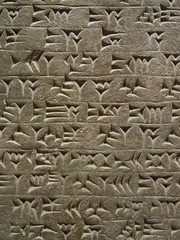 | 12 |
| 11640016085 | city-state | A form of political organization typical of Mesopotamian civilization; consisted of a city that controlled surrounding farmland |  | 13 |
| 11640016086 | ziggurat | a massive building usually associated with Mesopotamian temples |  | 14 |
| 11640016087 | Babylonian Empire | Unified all of Mesopotamia circa 1800 B.C.E.; collapsed due to foreign invasion circa 1600 B.C.E. |  | 15 |
| 11640016088 | Hammurabi | The most important Babylonian ruler; responsible for codification (making it official) of the law |  | 16 |
| 11640016089 | Pharaoh | The term used to denote the kings of ancient Egypt; |  | 17 |
| 11640016090 | pyramids | Monumental architecture typical of Old Kingdom Egypt; used as burial sites for pharaohs |  | 18 |
| 11640016091 | hieroglyphs | Form of writing developed in ancient Egypt; more pictorial than Mesopotamian cuneiform |  | 19 |
| 11640016092 | Kush | African state that developed along the upper reaches of the Nile circa 1000 B.C.E.; conquered Egypt and ruled it for several centuries |  | 20 |
| 11640016093 | monotheism | The exclusive worship of one god; introduced by Jews into Middle Eastern civilization |  | 21 |
| 11640016094 | Phoenicians | Seafaring civilization located on the shores of the eastern Mediterranean; established colonies throughout the Mediterranean |  | 22 |
| 11640016095 | Harappa and Mohenjo Daro | Major urban complexes of Harappan civilization; laid out on planned grid pattern |  | 23 |
| 11640016096 | Aryans | Indo-European nomadic, warlike, pastorialists who replaced Harappan civilization |  | 24 |
| 11640016097 | Huanghe (Yellow) River Basin | Site of the development of sedentary (settled) agriculture in China |  | 25 |
| 11640016098 | Shang | 1st Chinese dynasty (after the legendary Xia) |  | 26 |
| 11640016099 | Oracles | Shamans or priests in Chinese society who foretold the future through interpreting animal bones cracked by heat; inscriptions on bones led to Chinese writing |  | 27 |
| 11640016100 | ideographic writing | Pictograph characters grouped together to create new concepts; typical of Chinese writing | 28 | |
| 11640016101 | Big Geography | A term that draws attention to the global nature of world history. |  | 29 |
| 11640016102 | Paleolithic | The period that ended about 3,000 years after the end of the last Ice Age, it lasted until about 10,000 years ago. (Old Stone Age) The period of the Stone Age associated with the evolution of humans. It predates (before) the Neolithic period. |  | 30 |
| 11640016103 | Human migration during Paleolithic era | movement of humans from Africa to Eurasia, Australia, and the Americas | 31 | |
| 11640016104 | egalitarian | equality among people (no social levels) | 32 | |
| 11640016105 | Neolithic Revolution | period of change from hunter-gatherer lifestyle to agricultural lifestyles associated with domestication of animals, farming, and settlement |  | 33 |
| 11640016106 | patriarchy | father based/male dominated society (controlled by men) |  | 34 |
| 11640016107 | climatic change | Permanent agricultural villages emerged first in the lands of the eastern Mediterranean, possibly as a response to what? | 35 | |
| 11640016108 | weapons | Pastoralists were often the developers and disseminators of of ____ and forms of transportation that transformed warfare in agrarian civilizations | 36 | |
| 11640016109 | horses | major mode of transportation used and developed by pastoralists | 37 | |
| 11640016110 | art | This cultural phenomenon was usually promoted (encouraged) by the wealthiest and most powerful members of society (kings, priests, etc.) | 38 | |
| 11640016111 | record-keeping systems | these political and economic strategies arose independently in all early civilization and subsequently diffused through trade and migration | 39 | |
| 11640016112 | Nile River | This river flooded regularly which became extremely important for agriculture in the early Egyptian civilizations. |  | 40 |
| 11640016113 | Tigris River | This river's floods were unpredictable and impacted the development of the Mesopotamian civilization. | 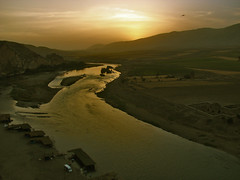 | 41 |
| 11640016114 | Mesopotamian | Unpredictable weather patterns affected the development of the _____ civilization. | 42 | |
| 11640016115 | Nubia and Kush | Kingdoms upriver from Egypt. | 43 | |
| 11640016118 | Standard of Ur |  | 44 | |
| 11640016119 | Harappan King or Priest Figure |  | 45 | |
| 11640016116 | Jericho | One of the earliest cities: located in modern Israel. |  | 46 |
| 11640016117 | Catal-Hyouk | One of the earliest cities: located in modern Turkey. | 47 |
AP World History- Unit 5 Review- Vocab Flashcards
Terms : Hide Images
| 6371196301 | Berlin West Africa Conference | A meeting of European imperialist powers in 1884-85 to peacefully partition (divide) Africa | 0 | |
| 6371203575 | Cecil Rhodes | British entrepreneur in South Africa who manipulated (used) the political situation to gain entry to the diamonds and gold discovered in the Boer republics | 1 | |
| 6371211057 | Russo-Japanese War | Conflict in 1904-05 that showed the world that Japan was on the rise as an industrial power | 2 | |
| 6371214731 | Panama Canal | It altered the speed of global trade and America's naval power after the completion of this project by the U.S. in Central America | 3 | |
| 6371220243 | Leopold II | King of Belgium who set up a colony in the Congo to exploit workers and natural resources, specifically rubber | 4 | |
| 6371223011 | Meiji Restoration | Movement that ended the power of the Shogunate in Japan with the return of power to the emperor and the beginning of a reform period | 5 | |
| 6371228028 | Duma | Russian national assembly that was created as one of the reforms after the Revolution of 1905 | 6 | |
| 6371230339 | Matthew Perry | American naval officer who opened up Japan to trade in 1853 with his "black ships" | 7 | |
| 6371232763 | Luddites | Early nineteenth-century artisans who were opposed to new machinery and industrialization | 8 | |
| 6371235598 | Manifest Destiny | he belief that the United States was divinely ordained to expand across the North American continent, used to justify U.S. annexations | 9 | |
| 6371241605 | Toussaint L'Ouverture | he leader of a slave rebellion on the French island of St. Domingue in 1791 that led to the creation of the independent republic of Haiti in 1804 | 10 | |
| 6371249461 | Mexican-American War | U.S. instigated war that ended in the treaty of Guadalupe-Hidalgo, which gave the United States possession of one-half of Mexico's territory | 11 | |
| 6371255656 | Reign of Terror | An attempt to eliminate all suspected enemies of the French Revolution, best known for the use of the guillotine | 12 | |
| 6371260263 | Zionism | A political movement that holds that the Jewish people constitute a nation and have the right to their own national homeland | 13 | |
| 6371266027 | Henry Ford | Improved manufacturing techniques when he introduced the assembly line to automobile production | 14 |
AP World History #56 Flashcards
Terms : Hide Images
| 9256291941 | cultural nationalism | an expression of national identity | 0 | |
| 9256295200 | "volk" | people | 1 | |
| 9256302523 | Johann Gottfried von Herder | sang praises of German volk focused attention on individual communities and relished their uniqueness, emphasized historical scholarship which would illuminate the distinctive characteristic of societies | 2 | |
| 9256320085 | volksgeist | popular soul or spirit or the essence of the volk community | 3 | |
| 9256338243 | Giuseppe Mazzini | founder of Young Italy, likened the nation to family | 4 | |
| 9256343643 | Young Italy | inspired development of many nationalist movements | 5 | |
| 9256355460 | political nationalism | encouraged political leaders to work towards the establishment of national states for their communities | 6 | |
| 9256367177 | Zionism | Jewish nationalism as a response to widespread European anti-Semitism | 7 | |
| 9256376288 | Alfred Dreyfus | Jewish army officer put on trial for spying for Germany | 8 | |
| 9256389354 | Theodor Herzl | founder of the Zionist movement, writer of the Judenstaat | 9 | |
| 9256402147 | Judenstaat | argued that the only defense against anti-Semitism lay in the mass migration of Jews from all over the world to a land they would call their own | 10 | |
| 9256421399 | Congress of Vienna | Conservative leaders determined to restore old order after defeat of Napoleon, succeeded in maintaining balance of power in Europe for a century, failed in repressing | 11 | |
| 9256430248 | Klemens von Metternich | COV was under his guidance | 12 | |
| 9256451091 | Lord Byron | joined rebel army and died of fever while serving in Greece | 13 | |
| 9256457968 | Charles X | driven from the throne by revolution in Paris | 14 | |
| 9256473406 | Camillo di Cavour | prime minister to King Vittorio Emanuele II, combined forces with nationalist advocates of independence | 15 | |
| 9256493443 | Giuseppe Garibaldi | soldier of fortune, passionate nationalist, led unification movement | 16 | |
| 9256505559 | Realpolitik | the politics of reality | 17 | |
| 9256511418 | Otto von Bismarck | master of Realpolitik, expressed realistic approach in his first speech as prime minister | 18 |
AP World History Flashcards
Terms : Hide Images
| 9894951920 | Paleolithic age | Old stone age, began nearly 2.5 million years ago ~created art~developed an oral language | 0 | |
| 9895283335 | Neolithic age | Began around 10,000 new stone age | 1 | |
| 9895295592 | Stone age | prehistoric period during which stone was widely used | 2 | |
| 9895320054 | Neolithic Revolution | first agricultural revolution,change from nomadic hunting and gathering | 3 | |
| 9895330510 | Homosapien | the species to which all modern human beings belong. | 4 | |
| 9895341242 | Civilization | the process by which a society or place reaches an advanced stage of social development and organization. | 5 | |
| 9895346473 | Buddhism | a religion, originated in India by Buddha,holding that life is full of suffering caused by desire and that the way to end this suffering | 6 | |
| 9895353764 | Judaism | the monotheistic religion of the Jews. | 7 | |
| 9895461280 | Chritianity | the religion based on the person and teachings of Jesus of Nazareth, or its beliefs and practices. | 8 | |
| 9895465429 | Hinduism | Began in India around 1500 BCE. Major beliefs~wisdom~leadership~justice~military | 9 | |
| 9895537362 | Imperialism | a policy of extending a country's power and influence through diplomacy or military force. | 10 | |
| 9895543456 | Daoism | a Chinese philosophy based on the writings of Lao-tzu ( fl. 6th century BC), advocating humility and religious piety. | 11 | |
| 9895549355 | Confusionism | a system of philosophical and ethical teachings founded by Confucius and developed by Mencius. | 12 | |
| 9895553457 | Democracy | a system of government by the whole population or all the eligible members of a state, typically through elected representatives. | 13 | |
| 9895558849 | Autocraacy | a system of government by one person with absolute power. | 14 | |
| 9895562851 | Oligarcy | a small group of people having control of a country, organization, or institution. | 15 | |
| 9895568401 | Monarchy | a form of government with a monarch at the head,royal family | 16 | |
| 9895579444 | Empire | an extensive group of states or countries under a single supreme authority, formerly especially an emperor or empress. | 17 | |
| 9895584296 | Emperor | a sovereign ruler of great power and rank, especially one ruling an empire. | 18 | |
| 9895588849 | Silk road | ancient network of trade routes, formally established during the Han Dynasty of China, 130 BCE-1453 CE. | 19 | |
| 9895593689 | Trans Saharan Trade | trade route that traveled across the Sahara desert, first real example of people using camels to cross the desert. | 20 | |
| 9895603696 | Shogun | a hereditary commander-in-chief in feudal Japan. | 21 | |
| 9895607746 | Indian Ocean Trade | -the indian ocean trade network were trade routes on the indian ocean. -People would use these routes for bulk trading -people got there by being guided my monsoons. | 22 | |
| 9895615368 | Islam | the religion of the Muslims, a monotheistic faith regarded as revealed through Muhammad as the Prophet of Allah. | 23 | |
| 9895618402 | Feudalism | the dominant social system in medieval Europe, ,King~nobles~knights~freemen~serfs | 24 | |
| 9895622226 | Lords | someone or something having power, authority, or influence; a master or ruler. | 25 | |
| 9895628879 | Knights | (in the Middle Ages) a man who served his sovereign or lord as a mounted soldier in armor. | 26 | |
| 9895628880 | Crusades | a medieval military expedition, one of a series made by Europeans to recover the Holy Land from the Muslims in the 11th, 12th, and 13th centuries. | 27 | |
| 9895639967 | 12th Century Renaissance | social, political and economic transformations, and an intellectual revitalization of Western Europe with strong philosophical and scientific roots. | 28 | |
| 9895742299 | 15th Century Renaissance | a period of great cultural change and achievement | 29 | |
| 9895747934 | Black Plague | killed a third of Europes population.caused by a bacterium (Yersinia pestis) transmitted to humans from infected rats by the oriental rat flea. | 30 | |
| 9895754518 | Triangular Trade | a multilateral system of trading in which a country pays for its imports from one country by its exports to another. | 31 | |
| 9895759898 | Tallies | a tax levied on the common people by the king or an overlord. | 32 | |
| 9895764869 | Revolution | a forcible overthrow of a government or social order in favor of a new system. | 33 | |
| 9895774322 | Reign of Terror | a period of remorseless repression or bloodshed, in particular Reign of Terror, the period of the Terror during the French Revolution. | 34 | |
| 9895778342 | Missionaries | a person sent on a religious mission, especially one sent to promote Christianity in a foreign country. | 35 | |
| 9895785273 | Industrializations | the development of industries in a country or region on a wide scale. | 36 | |
| 9895787779 | Resources | a stock or supply of money, materials, staff, and other assets that can be drawn on by a person or organization in order to function effectively. | 37 | |
| 9895792588 | Steam Engine | an engine that uses the expansion or rapid condensation of steam to generate power. a steam locomotive. | 38 | |
| 9895800440 | Colonialism | the policy or practice of acquiring full or partial political control over another country, occupying it with settlers, and exploiting it economically. | 39 | |
| 9895805019 | Stamp Act | an act of the British Parliament in 1765 that exacted revenue from the American colonies by imposing a stamp duty on newspapers and legal and commercial documents. Colonial opposition led to the act's repeal in 1766 and helped encourage the revolutionary movement against the Crown. | 40 | |
| 9895811330 | American Revolution | war fought from 1775-1783 and won by the 13 American colonies to achieve independence from Great Britain. | 41 | |
| 9895819633 | French Revolution | uprising in France against the monarchy from 1789 to 1799 which resulted in the establishment of France as a republic. | 42 | |
| 9895825757 | Haitian Revolution | took place between 1791-1804, is significant because Haiti is the only country where slave freedom was taken by force, and marks the only successful slave revolt in modern times. | 43 | |
| 9895837809 | Industrial Revolution | a period of major industrialization that took place during the late 1700s and early 1800s,aw the mechanization of agriculture and textile manufacturing and a revolution in power, including steam ships and railroads, that effected social, cultural and economic conditions. | 44 | |
| 9895842001 | Latin America Revolution | wars of independence were the revolutions that took place during the late 18th and early 19th centuries and resulted in the creation of a number of independent countries in Latin America. | 45 | |
| 9895851226 | Taiping Rebellion | a massive rebellion or total civil war in China waged from 1850 to 1864 between the established Manchu-led Qing dynasty and the Taiping Heavenly Kingdom under Hong Xiuquan. | 46 | |
| 9895856434 | Meiji Revolution | an event that restored practical imperial rule to the Empire of Japan in 1868 under Emperor Meiji. | 47 | |
| 9895866431 | Scramble for africa | the invasion, occupation, colonization and annexation of African territory by European powers during the period of New Imperialism, between 1881 and 1914. | 48 |
AP World History Mountains and Deserts Flashcards
Terms : Hide Images
| 7980207716 | Himalayas | mountain between India and China |  | 0 |
| 7980207717 | Hindu Kush | mountain |  | 1 |
| 7980207718 | Pamirs Mountains | mountain in Russia, towards the bottom, near China/India |  | 2 |
| 7980207719 | Andes Mountains | mountain in South America towards the left side |  | 3 |
| 7980210820 | Alps Mountains | mountain |  | 4 |
| 7980210821 | Appalachian Mountains | mountain in the USA, east coast |  | 5 |
| 7980210822 | Rocky Mountains | mountain going in the USA & Canada, west coast |  | 6 |
| 7980210823 | Atlas Mountains | mountain in northern Africa |  | 7 |
| 7980214168 | Pyrenees Mountains | mountain |  | 8 |
| 7980214169 | Ural Mountains | mountain |  | 9 |
| 7980217596 | Gobi Desert | desert towards northern China |  | 10 |
| 7980217597 | Kalahari Desert | the circle desert in southern Africa |  | 11 |
| 7980370664 | Sahara Desert | desert that covers up most of Northern Africa |  | 12 |
| 7980370665 | Thar Desert | desert towards the west coast of India |  | 13 |
| 7980370666 | Mojave Desert | desert in California |  | 14 |
| 7980373182 | Sierra Madre Desert | desert in northern Mexico |  | 15 |
| 7980373183 | Namib Desert | edge desert in southern Africa |  | 16 |
| 7980378964 | Syrian Desert | desert |  | 17 |
AP World History Flashcards
Terms : Hide Images
| 10542933772 | Absolutism | A form of government in which the ruler is an absolute dictator (not restricted by a constitution or laws or opposition etc.) Government that has all power Nazi Germany, Soviet Union |  | 0 |
| 10542942655 | Agriculture | The deliberate effort to modify a portion of Earth's surface through the cultivation of crops and the raising of livestock for sustenance or economic gain. Farming with a land plot | | 1 |
| 10542943029 | Aristocracy | A government in which power is in the hands of a hereditary ruling class or nobility Ruled by the upper class |  | 2 |
| 10542943030 | BCE | Dates that countdown backwards to the year zero. Before common era |  | 3 |
| 10542943631 | CE | Represents dates after the year zero. Common era |  | 4 |
| 10542943632 | Bias | Prejudice in favor of or against one thing, person, or group compared with another, usually in a way considered to be unfair. Choosing a side before hearing any evidence |  | 5 |
| 10542945562 | Beureaucracy | A system of government in which most of the important decisions are made by state officials rather than by elected representatives. State has the power Large Corporations |  | 6 |
| 10542945563 | Capitalism | An economic and political system in which a country's trade and industry are controlled by private owners for profit, rather than by the state. System of the USA |  | 7 |
| 10542947097 | Chiefdom | Form of political organization with rule by a hereditary leader who held power over a collection of villages and towns. Less powerful than kingdoms and empires, they were based on gift giving and commercial links. Ruled by a chief (usually villages) |  | 8 |
| 10542947544 | City-State | A city with political and economic control over the surrounding countryside A city that also controls the area around it (not state) |  | 9 |
| 10542948076 | Civilization | A society with cities, a central government, job specialization, and social classes A place with people who arent cavemen, they have jobs etc... Cornelius, NC |  | 10 |
| 10542948077 | Classical Era | 1750-1820 several periods of history noted for a particular style of art, architecture, literature or music termed classical |  | 11 |
| 10542949799 | Codify | Arrange and set down in writing Actually writing laws and documents down and not just having them orally |  | 12 |
| 10542949800 | Colonization | The expansion of countries into other countries where they establish settlements and control the people When countries go somewhere else to start a mini city for their benefit New York |  | 13 |
| 10542955258 | Commercial | Having to do with business or trade When something is more official, not just neighbor talk |  | 14 |
| 10542957496 | Contemporary Era | 1960-present a subset of modern history which describes the historical period from approximately 1945 to the present |  | 15 |
| 10542958236 | Contextualization | Historical Thinking Skill: Situates historical events, developments, or processes within the broader context in which they occurred to draw conclusions for their significance The ability to think about and comprehend historical events |  | 16 |
| 10542958237 | Corroboration | evidence that confirms or supports a statement, theory, or finding; confirmation supporting evidence Lucy - Evolution |  | 17 |
| 10542959340 | Demography | The scientific study of population characteristics. The study of people |  | 18 |
| 10542959341 | Dynasty | a powerful family or group of rulers that maintains its position or power for some time A family that keeps power in the blood line Shang Dynasty |  | 19 |
| 10542960889 | Early Modern Era | 1500-1800 Follows the late Middle Ages of the post-classical era, most important feature of the early modern period was its globalizing character |  | 20 |
| 10542960890 | Empire | An extensive group of states or countries under a single supreme authority, formerly especially an emperor or empress. A very large group of cities that is all under one control Byzantine Empire |  | 21 |
| 10542961725 | Ethnocentrism | Belief in the superiority of one's nation or ethnic group. Extreme patriotism or pride in something Holocaust |  | 22 |
| 10542962143 | Epidemic | a widespread occurrence of an infectious disease in a community at a particular time. A sickness that affects many people in many places Ebola |  | 23 |
| 10542962144 | Forager | People who support themselves by hunting wild animals and gathering wild edible plants and insects. Nut and berry pickers, usually women or kids |  | 24 |
| 10542962805 | Globalization | Actions or processes that involve the entire world and result in making something worldwide in scope. When something reaches across the whole globe (idea etc) |  | 25 |
| 10542962806 | Hierarchy | a system or organization in which people or groups are ranked one above the other according to status or authority. Rankings where some people are higher than others Military |  | 26 |
| 10542964117 | Imperialism | A policy of extending a country's power and influence through diplomacy or military force. Getting more power by using the military |  | 27 |
| 10542964596 | Indentured Servant | Laborer who agreed to work without pay for a certain period of time in exchange for passage to America A person who traded trip to america for work |  | 28 |
| 10542964597 | Interregional | Of, involving, or connecting two or more regions within a certain region/place |  | 29 |
| 10542965210 | Kingdom | A politically organized community or major territorial unit having a monarchical form of government headed by a king or queen A king - dom, ruled by a queen or king UK |  | 30 |
| 10542965211 | Merchant | a person or company involved in wholesale trade, especially one dealing with foreign countries or supplying merchandise to a particular trade. A person who gets income from selling goods |  | 31 |
| 10542967285 | Modern Era | 1900-present The period of present time |  | 32 |
| 10542967286 | Monotheism | Belief in a single God One god as almighty power Christianity |  | 33 |
| 10542968456 | Nation | A politically organized body of people under a single government Group of people under a single rule USA |  | 34 |
| 10542968457 | Neolithic | The period of the Stone Age associated with the ancient Agricultural Revolution. It follows the Paleolithic period. After hunting and gathering, when farming started |  | 35 |
| 10542971218 | Nobility | A high-ranking social class Powerful people |  | 36 |
| 10542971219 | Nomad | A member of a group that has no permanent home, wandering from place to place in search of food and water A wandering person that hunts and gathers | | 37 |
| 10542971562 | Pandemic | Disease that occurs over a wide geographic area and affects a very high proportion of the population. Bigger than epidemic, affects many people AIDS | 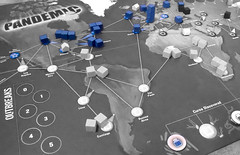 | 38 |
| 10542971563 | Papacy | The central administration of the Roman Catholic Church, of which the pope is the head. Popes office |  | 39 |
| 10542980134 | Pastoral | Relating to shepherds or herdsmen or devoted to raising sheep or cattle Shepards Pastoral peoples | | 40 |
| 10542980135 | Patriarchal | Relating to a society in which men hold the greatest legal and moral authority Men are in charge |  | 41 |
| 10542981228 | Periodization | Historical Thinking Skill: Explain ways historical events and processes can be organized into discrete, different, and definable historical periods. Evaluate whether a particular event or date could or could not be a turning point between different, definable historical periods, used in particular historical evidence. The ability to separate time into different historical periods |  | 42 |
| 10542981229 | Polytheism | The belief in or worship of more than one god.' Multiple gods Hinduism |  | 43 |
| 10542982998 | Post-Classical Era | 600-1450 Middle ages, characterized by the expansion of civilizations geographically, the development of three of the great world religions (Christianity, Islam, and Buddhism), and development of networks of trade between civilizations |  | 44 |
| 10542982999 | Post-Modern Era | Developed in the late 20th century, an attitude of skepticism, irony, or rejection toward the meta-narratives and ideologies of modernism, often calling into question various assumptions of Enlightenment rationality. |  | 45 |
| 10542983966 | Prehistoric | The time or period before recorded or written history Before written documents of history |  | 46 |
| 10542983967 | Revolution | A forcible overthrow of a government or social order in favor of a new system. When someone overthrows or overpowers a government for new system American Revolution |  | 47 |
| 10542984457 | Rural | Relating to farm areas and life in the country Countryside |  | 48 |
| 10542984458 | Scribe | A professional writer A person trained to write things down |  | 49 |
| 10542985870 | Sedentary Agriculture | Agriculture that takes place in the immediate surroundings of a permanent settlement The farmer stays in one area, doesn't move around | | 50 |
| 10542985871 | Serf | A person who is bound to the land and owned by the feudal lord A sort of slave, owned by lord |  | 51 |
| 10542985872 | Slave | A system of enforced servitude in which some people are owned by other people. Must to hard work for owners, owned like property from other people |  | 52 |
| 10542987302 | Socialism | A political and economic theory of social organization that advocates that the means of production, distribution, and exchange should be owned or regulated by the community as a whole. Diet communism, government has more control China |  | 53 |
| 10542987303 | State | An area organized into a political unit and ruled by an established government with control over its internal and foreign affairs. A place that is ruled by a government but has its own laws inside North Carolina |  | 54 |
| 10542988342 | Stateless society | A group of independent villages organized into clans and led by a local ruler or clan head without any central government No central government |  | 55 |
| 10542988778 | Syncretism | A blending of beliefs and practices from different religions into one faith Mixing together religious traditions |  | 56 |
| 10542988779 | Synthesis | A synthesis of different ideas or styles is a mixture or combination of these ideas or styles. A mixture |  | 57 |
| 10542989131 | Steppes | Treeless plains, especially the high, flat expanses of northern Eurasia, which usually have little rain and are covered with coarse grass. They are good lands for nomads and their herds. Good for breeding horses: essential to Mongol military. Grassy field areas Central Asian Steppes |  | 58 |
| 10542989132 | Urban | In, relating to, or characteristic of a city or town. City area |  | 59 |
Ap World History Vocab Chapter 33 Flashcards
Terms : Hide Images
| 9452601205 | Party of Institutionalized Revolution (PRI) | inclusive Mexican political party developing from the 1920s; ruled for the rest go the 20th century. |  | 0 |
| 9452601206 | Zapatistas | Mexican guerrilla movement; named after revolutionary Emiliano Zapata. |  | 1 |
| 9452601207 | Juan Jose Arevalo | reformist president of Guatemala elected in 1944; his programs led to conflict with foreign interests. | 2 | |
| 9452601208 | United Fruit Company | most important foreign company in Guatemala; 1993 nationalization effort of some of its land holding caused a U.S. reaction. |  | 3 |
| 9452601209 | Fulgencio Batista | authoritarian ruler of Cuba (1934-1944). | 4 | |
| 9452601210 | Fidel Castro | revolutionary leader who replaced Batista in 1958; reformed Cuban society with socialist measures; supported economically and politically by the Soviet Union until its collapse. |  | 5 |
| 9452601211 | Ernesto "Che" Guevara | Argentinian revolutionary; worked with Fidel Castro in Cuba. |  | 6 |
| 9452601212 | liberation theology | combination of Roman Catholic and socialist principles aiming to improve the lives of the poor. |  | 7 |
| 9452601213 | Salvador Allende | Chilean socialist president; overthrown by a military coup in 1973. | 8 | |
| 9452601214 | Sandinista party | Nicaraguan party; removed by power in 1990 elections, under U.S. influence. Named for Augusto Sandino. | 9 | |
| 9452601215 | banana republics | conservative, often dictatorial, Latin American governments friendly to the U.S.; exported tropical products. | 10 | |
| 9452601216 | Augusto Sandino | led guerrilla resistance movement against U.S. occupation forces in Nicaragua; assassinated by Nicaraguan National Guard in 1934; became national hero and symbol of resistance to U.S. influence in Central America. | 11 | |
| 9452601217 | Good Neighbor Policy | introduced by U.S. president Franklin D. Roosevelt in 1933 to deal fairly, without intervention, with Latin American states. | 12 | |
| 9452601218 | Alliance for Progress | 1961 U.S. program for economic development of Latin America. | 13 |
Pages

Need Help?
We hope your visit has been a productive one. If you're having any problems, or would like to give some feedback, we'd love to hear from you.
For general help, questions, and suggestions, try our dedicated support forums.
If you need to contact the Course-Notes.Org web experience team, please use our contact form.
Need Notes?
While we strive to provide the most comprehensive notes for as many high school textbooks as possible, there are certainly going to be some that we miss. Drop us a note and let us know which textbooks you need. Be sure to include which edition of the textbook you are using! If we see enough demand, we'll do whatever we can to get those notes up on the site for you!
