AP Notes, Outlines, Study Guides, Vocabulary, Practice Exams and more!

AP US History 1 Chapter 1 Vocabulary Terms Flashcards

Terms : Hide Images
6978102544conquistadorA Spanish conqueror or adventurer in the Americas.0
6978102543Columbian ExchangeThe transfer of goods, crops, and diseases between New and Old World societies after 1492.1
6978102545encomiendaThe Spanish labor system in which persons were held to unpaid service under the permanent control of their masters, though not legally owned by them.2
6978102547mestizosPeople of mixed Indian and European heritage, notably in Mexico.3
6978102548middlemenIn trading systems, those dealers who operate between the original producers of goods and the retail merchants who sell to consumers.4
6978102549nation-statesThe form of political society that combines centralized government with a high degree of ethnic and cultural unity.5
6978102551plantationLarge-scale agricultural enterprise growing commercial crops and usually employing coerced or slave labor.6
6978231715matrilinearThe form of society in which family line, power, and wealth are passed primarily through the female side.7
6978240709confederacyAn alliance or league of nations or peoples looser than a federation.8
6978249332primevalConcerning the earliest origins of things.9
6978260868caravelA small vessel with a high deck and three triangular sails.10
6978338232capitalismAn economic system characterized by private property, generally free trade, and open and accessible markets.11
6978349225provinceA medium-sized subunit of territory and governmental administration within a larger nation or empire.12
7056901131black legendThe idea developed during North American colonial times that the Spanish utterly destroyed the Indians through slavery and disease and left nothing of value.13
7056907137Canadian ShieldThe geological shape of North America estimated at 10 million years ago. It held the northeast corner of North America in place and was the first part of North America theorized to come above sea level14
7056910212Treaty of TordesillasIn 1494, Spain and Portugal were disputing the lands of the New World, so the Spanish went to the Pope, and he divided the land of South America for them. Spain got the vast majority, the west, and Portugal got the east.15

AP US History - US Presidents Flashcards

Terms : Hide Images
7386914591George Washington1789-1797 Federalist Whiskey Rebellion; Judiciary Act; Farewell Address0
7386914592John Adams1797-1801 Federalist XYZ Affair; Alien and Sedition Acts1
7386914593Thomas Jefferson1801-1809 Democratic-Republican Marbury v. Madison; Louisiana Purchase; Embargo of 18072
7386914594James Madison1809-1817 Democratic-Republican War of 1812; First Protective Tariff3
7386914595James Monroe1817-1825 Democratic-Republican Missouri Compromise of 1820; Monroe Doctrine4
7386914596John Quincy Adams1825-1829 Democratic-Republican "Corrupt Bargain"; "Tariff of Abominations"5
7386914597Andrew Jackson1829-1837 Democrat Nullification Crisis; Bank War; Indian Removal Act6
7386914598Martin Van Buren1837-1841 Democrat Trail of Tears; Specie Circular; Panic of 18377
7386914599William Henry Harrison1841 Whig "Tippecanoe and Tyler too!"; First Whig President8
7386914600John Tyler1841-1845 Whig "His Accidency"; Webster-Ashburton Treaty9
7386914601James Polk1845-1849 Democrat Texas annexation; Mexican War10
7386914602Zachary Taylor1849-1850 Whig Mexican War hero and staunch Unionist11
7386914603Millard Fillmore1850-1853 Whig Compromise of 185012
7386914604Franklin Pierce1853-1857 Democrat Kansas-Nebraska Act; Gadsden Purchase13
7386914605James Buchanan1857-1861 Democrat Dred Scott decision; Harpers Ferry raid14
7386914606Abraham Lincoln1861-1865 Republican Secession and Civil War; Emancipation Proclamation15
7386914607Andrew Johnson1865-1869 Democrat 13th and 14th amendments; Radical Reconstruction; Impeachment16
7386914608Ulysses Grant1869-1877 Republican 15th amendment; Panic of 187317
7386914609Rutherford Hayes1877-1881 Republican Compromise of 1877; labor unions and strikes18
7386914610James Garfield1881, Republican Brief resurgence of presidential authority; Increase in American naval power; Purge corruption in the Post Office19
7386914611Chester Arthur1881-1885 Republican Standard Oil trust created Edison lights up New York City20
7386914612Grover Cleveland1885-1889 (1st term), 1893-1897 (2nd term) Democrat Interstate Commerce Act; Dawes Act; Panic of 1893; Pullman Strike21
7386914613Benjamin Harrison1889-1893 Republican Sherman Anti-Trust Act; Closure of the frontier22
7386914614William McKinley1897-1901 Republican Spanish-American War; Open Door policy23
7386914615Theodore Roosevelt1901-1909 Republican Progressivism; Square Deal; Big Stick Diplomacy24
7386914616William Howard Taft1909-1913 Republican Dollar diplomacy NAACP founded25
7386914617Woodrow Wilson1913-1921 Democrat WWI; League of Nations; 18th and 19th amendments; Segregation of federal offices; First Red Scare26
7386914618Warren Harding1921-1923 Republican "Return to normalcy", return to isolationism; Tea Pot Dome scandal; Prohibition27
7386914619Calvin Coolidge1923-1929 Republican Small-government (laissez-faire) conservative28
7386914620Herbert Hoover1929-1933 Republican "American individualism"; Stock Market Crash; Dust Bowl; Hawley-Smoot Tariff29
7386914621Franklin Delano Roosevelt1933-1945 Democrat New Deal; WWII; Japanese Internment; "Fireside Chats"30
7386914622Harry Truman1945-1953 Democrat A-bomb; Marshall Plan; Korean War; United Nations31
7386914623Dwight Eisenhower1953-1961 Republican Brown v. Board of Education; Second Red Scare; Highway Act and suburbanization ("white flight"); Farewell Address warning of the military industrial complex32
7386914624John Kennedy1961-1963 Democrat Camelot; Bay of Pigs; Cuban Missile Crisis; Space program; Peace Corps33
7386914625Lyndon Johnson1963-1969 Democrat Civil and Voting Rights acts; Gulf of Tonkin Resolution; Great Society34
7386914626Richard Nixon1969-1974 Republican Environmental Protection Act; China visit; Moon Landing; Watergate35
7386914627Gerald Ford1974-1977 Republican Pardoning of Nixon; OPEC crisis36
7386914628Jimmy Carter1977-1981 Democrat stagflation / energy crisis; Iran hostage crisis; Camp David Accords37
7386914629Ronald Reagan1981-1989 Republican Conservative revolution; Iran-Contra scandal38
7386914630George H. W. Bush1989-1993 Republican Persian Gulf War39
7386914631Bill Clinton1993-2001 Democrat NAFTA; Lewinsky scandal and impreachment40
7386914632George W. Bush2001-2008 Republican War on terrorism; Patriot Act; Tax cuts; "No Child Left Behind"41
7386914633Barack Obama2008-2017 Democrat Affordable Care Act42
7386914634Donald Trump2017-? Republican "Make America Great Again"43

AMSCO AP US History Chapter 11 Flashcards

AMSCO United States History 2015 Edition, Chapter 11 Society, Culture, and Reform, 1820-1860

Terms : Hide Images
6704941173utopian communitiesOver one hundred of these experimental communities were started in the 1820s to 1860s period. (p. 210)0
6704941174ShakersThis early religious communal movement held property in common and separated men and women. (p. 210)1
6704941175Amana ColoniesA German religious communal movement in Ohio which emphasized simple living. (p. 210)2
6704941176Robert OwenA Welsh industrialist and reformer who founded the New Harmony community. (p. 210)3
6704941177New HarmonyNonreligious experimental socialist community founded to solve problems of inequity and alienation caused by the Industrial Revolution. (p. 210)4
6704941178Joseph Humphrey NoyesHe started a cooperative community in Oneida, New York. (p. 210)5
6704941179Oneida communityThis community, started in 1848, was dedicated to social and economic equality. They shared property and spouses, and prospered by manufacturing silverware. (p. 210)6
6704941180Charles Fourier phalanxesIn the 1840s, this French socialist, advocated that people share working and living arrangements in communities. He wanted to solve problems of competitive society, but Americans were too individualistic. (p. 210)7
6704941181Horace MannHe was the leading advocate of the public school movement. (p. 213)8
6704941182temperanceReformers targeted alcohol as the cause of social ills. The movement started by using moral exhortation, then shifted to political action. Business leaders and politicians supported it because it improved productivity of industrial workers. (p. 212)9
6704941183American Temperance SocietyFounded in 1826, by Protestant ministers and others, they encouraged total alcohol abstinence. (p. 212)10
6704941184WashingtoniansA temperance movement which argued that alcoholism was a disease that need practical helpful treatment. (p. 212)11
6704941185Women's Christian Temperance UnionIn the late 1870s, this women's organization was part of the temperance movement. (p. 212)12
6704941186asylum movementIn the 1820s and 1830s, this movement sought to improve the conditions for criminals, emotionally disturbed people, and paupers. They proposed setting up state-supported prisons, mental hospitals, and poorhouses. (p. 212)13
6704941187Dorothea DixA reformer who was responsible for improving conditions in jails, poorhouses and insane asylums throughout the U.S. and Canada. She succeeded in persuading many states to assume responsibility for the care of the mentally ill. (p. 212)14
6704941188Thomas GallaudetHe started a school for the deaf. (p. 213)15
6704941189Samuel Gridley HoweHe started a school for the blind. (p. 213)16
6704941190penitentiariesThese institutions took the place of crude jails. They believed that structure and discipline would bring about moral reform. (p. 213)17
6704941191Auburn systemA prison system in New York which enforced rigid rules of discipline, while also providing moral instruction and work programs. (p. 213)18
6704941192public school movementIn the 1840s, this movement to provide free education for all children spread rapidly throughout the nation. (p. 213)19
6704941193McGuffey readersElementary school textbooks that encouraged hard work, punctuality, and sobriety. (p. 213)20
6704941194American Peace SocietyFounded in 1828, this society want to abolish war. (p. 216)21
6704941195American Colonization SocietyFounded in 1817, this organization transported free black people to an African colony. This appealed to moderates, racists, and politicians. However, only 12,000 people were actually settled in Africa. (p. 215)22
6704941196American Antislavery SocietyThe organization was founded in 1833 by William Lloyd Garrison and others. They advocated the immediate abolition of all slavery in every state. (p. 215)23
6704941197abolitionism William Lloyd Garrison; The LiberatorIn 1831, he started the radical abolitionist movement with the "The Liberator" newspaper. He advocated the immediate abolition of all slavery in every state. (p. 215)24
6704941198Liberty partyIn 1840, this political party was formed in reaction to the radical abolitionists. They pledged to bring an end to slavery by political and legal means. (p. 215)25
6704941199Frederick Douglass; The North StarIn 1847, this former slave started the antislavery journal, "The North Star". (p. 215)26
6704941200Harriet TubmanFamous abolitionist, born a slave, she assisted fugitive slaves to escape to free territory. (p. 215)27
6704941201David RugglesAn African American leader who assisted fugitive slaves to escape to free territory. (p. 215)28
6704941202Sojourner TruthA United States abolitionist and feminist who was freed from slavery and became a leading advocate for the abolition of slavery and the rights of women. (p. 215)29
6704941203William StillAn African American leader, who assisted fugitive slaves to escape to free territory. (p. 215)30
6704941204David WalkerAn African American who advocated the most radical solution to the slavery question. He argued, that slaves should take action themselves by rising up in revolt against their owners. (p. 215)31
6704941205Henry Highland GarnetAn African American, who advocated the most radical solution to the slavery question. He argued that slaves should take action themselves by rising up in revolt against their owners. (p. 215)32
6704941206Nat TurnerIn 1831, he led the largest slave rebellion in which 55 whites were killed. (p. 215)33
6704941207antebellum periodThe period before the Civil War started in 1861. (p. 207)34
6704941208romantic movementIn early 19th century Europe, art and literature emphasized intuition and feelings, individual acts of heroism, and the study of nature. In America, similar themes were expressed by the transcendentalists. (p. 209)35
6704941209transcendentalistsThey questioned the doctrines of established churches and business practices of the merchant class. They encouraged a mystical and intuitive way of thinking to discover the inner self and look for essence of God in nature. Artistic expression was more important than pursuit of wealth. They valued individualism and supported the antislavery movement. (p. 209)36
6704941210Ralph Waldo Emerson, "The American Scholar"The best known transcendentalist, his essays and lectures expressed the individualistic and nationalistic spirit of Americans. He urged self-reliance, and independent thinking. (p. 209)37
6704941211Henry David Thoreau, "Walden", "On Civil Disobedience"A pioneer ecologist and conservationist. He was an advocate of nonviolent protest against unjust laws. (p. 209)38
6704941212Brook FarmAn attempted communal experiment in Massachusetts to achieve a more natural union between intellectual and manual labor. (p. 207)39
6704941213George RipleyThis Protestant minister started a communal experiment at Brook Farm in Massachusetts to live out the transcendentalist ideals. (p. 207)40
6704941214feministsThe term for advocates of women's rights. (p. 214)41
6704941215Margaret FullerA feminist, writer, and editor in the women's movement. (p. 210)42
6704941216Theodore ParkerA theologian and radical reformer. (p. 210)43
6704941217George Caleb BinghamAn American realist artist, whose paintings depicted life on the frontier. (p. 211)44
6704941218William S. MountContemporary of the Hudson River school. He began as a painter of history but moved to depicting scenes from everyday life. (p. 211)45
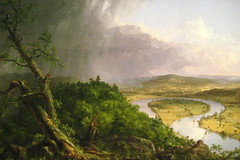
6704941219Thomas ColeFounder of the Hudson River school, famous for his landscape paintings. (p. 211)46
6704941220Frederick ChurchCentral figure in the Hudson River School and pupil of Thomas Cole. He is known for his landscapes and for painting colossal views of exotic places. (p. 211)47
6704941221Hudson River schoolIn the 1830s, this genre of painting founded in the Hudson River area, portrayed everyday life of ordinary people in the natural world. (p. 211)48
6704941222Washington IrvingThis author wrote fiction using American settings. (p. 211)49
6704941223James Fenimore CooperThis author wrote novels that glorified the frontiersman as nature's nobleman. (p. 211)50
6704941224Nathaniel HawthorneAuthor of "The Scarlet Letter", which questioned the intolerance and conformity in American life. (p. 211)51
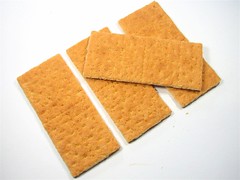
6704941225Sylvester GrahamAn American dietary reformer who advocated whole wheat bread and graham crackers to promote good digestion. (p. 216)52
6704941226Amelia BloomerShe urged women to wear pantalettes instead of long skirts. (p. 216)53
6704941227Second Great AwakeningA religious movement that occurred during the antebellum period. It was a reaction against rationalism (belief in human reason). It offered the opportunity of salvation to all. (p. 207)54
6704941228Timothy DwightPresident of Yale College, he helped initiate the Second Great Awakening. His campus revivals inspired many young men to become evangelical preachers. (p. 207)55
6704941229revivalism; revival camp meetingsIn the early 1800s, this movement was a reaction against the rationalism of the Enlightenment. Successful preachers were audience-centered and easily understood by the uneducated. (p. 207)56
6704941230millennialismIn the early 1800s, this popular belief, that the world was about to end with the second coming of Jesus Christ. (p. 208)57
6704941231Church of Jesus Christ of Latter-Day Saints; MormonsFounded by Joseph Smith in 1830. It was based on the Book of Mormon which traced a connection between the American Indians and the lost tribes of Israel. After Joseph Smith was murdered, Brigham Young led the religious group to establish the New Zion on the Great Salt Lake in Utah. (p. 208)58
6704941232Joseph SmithFounded the Church of Jesus Christ of the Latter-Day Saints in New York in 1830. The church moved to Ohio, Missouri, Illinois, then finally to Utah. (p. 208)59
6704941233Brigham YoungAfter Joseph Smith was killed, he led the Mormon followers to Utah. (p. 208)60
6704941234New ZionThis was the religious community established by the Mormons on the banks of the Great Salt Lake in Utah. (p. 208)61
6704941235women's rights movementWomen started this movement because they resented the way men relegated them to secondary roles in the reform movements. (p. 214)62
6704941236cult of domesticityAfter industrialization occurred women became the moral leaders in the home and educators of children. Men were responsible for economic and political affairs. (p. 214)63
6704941237Sarah Grimke, Angelina GrimkeTwo sisters, born in South Carolina, they objected to male opposition to their antislavery activities. (p. 214)64
6704941238Letter of the Condition of Women and the Equality of the SexesWritten by Angelina and Sarah Grimke, it protested males opposition to their abolitionist work. (p. 214)65
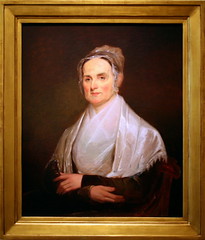
6704941239Lucretia MottA women's rights reformer who was not allowed to speak at an antislavery convention. (p. 214)66
6704941240Elizabeth Cady StantonA women's rights reformer who was not allowed to speak at an antislavery convention. (p. 214)67
6704941241Seneca Falls ConventionIn 1848, this was the first women's rights convention in U.S. history. They wrote a "Declaration of Sentiments", modeled after the Declaration of Independence, which declared all men and women equal and listed grievances. (p. 214)68
6704941242Susan B. AnthonySocial reformer who campaigned for womens rights, the temperance, and was an abolitionist. She helped form the National Woman Suffrage Association. (p. 214)69

Unit 5 AP US history Flashcards

Terms : Hide Images
7966766305New democracy in Jackson yearsTake away property owning laws to vote0
7966781440Universal white man sufferageAny man that is white can vote1
7966783978Election of 1824Henry clay was the speaker of the house and presidents have to talk to him for the influence the house that chooses the president2
7966801363Corrupt bargainGo and talk to Henry to He could get chosen to be president sense no one won the popular vote3
7966826752Tariff of 182462% tariff rate4
7966841131Election of 18242 party's emerged again5
7966848229Common man eraUniversal white man man hood sufferage6
7966855990Patronage systemPresident whose picks all the people that work for him, yes men, also called the spoils system7
7966872936Tail of tearsSent the Indians to Oklahoma kicked them out of there lands8
7966877106Homestead act 1862Divided Oklahoma between the Indians and Americans9
7969244583South response to tariff of 1828Essay that was written by the boss president that was in office10
7969248535South Carolina expositionEssay written by the vise president that was in office John Caljun11
7969254827Webster- Hayne debateStates vs federal rights12
7969286693Maysville road vetoVetos because it's from kentuky13
7969288406Nickolas biddleLead the bank and thought he could control everyone very powerful in 1828 almost like a 4th branch of gov.14
7969292202What did Andrew Jackson do to the bank and effectsHe takes away the back because he thinks it has to much power so then he gives the money to 23 pet banks15
7969293379WhigsAnti-Andrew Jackson16
7969295565Martin van buren17
7969296246Election of 1840 and voter turn outWilliam Henry Harrison, 80% voter turnout18
7969299039John Tyler's problemHe had no party and would veto everything from the whigs he betrayed them19
79693001771836Independence, it's own republic20
7969301630March 6 1836Alamo21
7969302596March 27 1836Golliad22
7969304282April 21 1836San Battle of San Jacinto23
7969305977May 14 1836Treaty of Velasco24
79693072771835Anex Texas into the USA25
7969312911Marbury v MadisonJudishal review26
7969316298Mc Culloch v Maryland2nd bank of the USA27
7969317555Worse cester v GeorgiaIndians can keep land28
7969318297Era of good feelingsEnded after the tariff of 182829
7969321011How does Andrew Jackson increase the power of the presidencyThe spoils/patronage system30
7969322835Nulification crisisVoted to nulifiy the tariff of 182831

AMSCO AP US History Chapter 29 Flashcards

AMSCO United States History 2015 Edition, Chapter 29 Limits of a Superpower, 1969-1980

Terms : Hide Images
6486509261Henry KissingerNixon's national security adviser, he later become secretary of state during Nixon's second term. He helped Nixon to fashion a realistic foreign policy that generally succeeded in reducing the tensions of the Cold War. (p. 625)0
6486509262VietnamizationPresident Nixon announced that he would gradually withdraw U.S. troops from Vietnam and give the South Vietnamese the money, the weapons, and the training that they needed to take over the full conduct of the war. Under this policy, U.S. troops in South Vietnam went from over 540,000 in 1969 to under 30,000 in 1972. (p. 626)1
6486509263Nixon DoctrineThis doctrine declared that Asian allies would receive U.S. support but without the extensive use of U.S. ground forces. (p. 626)2
6486509264Kent StateIn April 1970, President Nixon expanded the war by using U.S. forces to invade Cambodia. A nationwide protest against this action on U.S. college campuses resulted in the killing of four youths by National Guard troops at Kent State in Ohio. (p. 626)3
6486509265My LaiThe American public was shocked to learn about a 1968 massacre of women and children by U.S. troops in the Vietnamese village of My Lai. (p. 626)4
6486509266Pentagon PapersThe New York Times published the Pentagon Papers, a secret government history documenting the mistakes and deceptions of government policy-makers in dealing with Vietnam. (p. 626)5
6486509267Paris Accords of 1973In January 1973, the North Vietnamese agreed to an armistice, in which the United States would withdraw the last of its troops and get back over 500 prisoners of war (POWs). The agreement also promised a cease-fire and free elections. However, the armistice did not end the war, but it allowed the United States to extricate itself. (p. 627)6
6486509268detentePresident Nixon and Kissinger strengthened the U.S. position in the world by taking advantage of the rivalry between the two Communist giants, China and the Soviet Union. Their diplomacy was praised for bringing about detente, a reduction of Cold War tensions. (p. 627)7
6486509269China visitAfter a series of secret negotiations with Chinese leaders, in February of 1972 Nixon astonished the world by traveling to Beijing to meet with Mao Zedong, the leader of Communist China. His visit initiated diplomatic exchanges that ultimately led to U.S. recognition of the Communist government. (p. 627)8
6486509270antiballistic missilesPresident Nixon used his new relationship with China to put pressure on the Soviets to agree to a treaty limiting antiballistic missiles (ABMs). (p. 627)9
6486509271Strategic Arms Limitation TalksPresident Nixon used his new relationship with China to put pressure on the Soviets to agree to a treaty limiting antiballistic missiles (ABMs), a new technology that would have expanded the arms race. After the first round of Strategic Arms Limitations Talks (SALT I), U.S. diplomats secured Soviet consent to a freeze on the number of ballistic missiles carrying nuclear warheads. While this agreement did not end the arms race, it was a significant step toward reducing Cold War tensions and bringing about detente. (p. 627)10
6486509272Middle East War (1973)On October 6, 1973, the Syrians and Egyptians launched a surprise attack on Israel in an attempt to recover the lands lost in the Six-Day War of 1967. President Nixon ordered the U.S. nuclear forces on alert and airlifted almost $2 billion in arms to Israel to stem their retreat. The tide of battle quickly shifted in favor of the Israelis. (p. 631)11
6486509273OPEC; oil embargoAfter October 1973 Arab Israel War, the Arab members of the Organization of Petroleum Exporting Countries (OPEC) placed an embargo on oil sold to Israel's supporters. The embargo caused a worldwide oil shortage and long lines at gas stations in the United States. (p. 631)12
6486509274New FederalismIn a program known as revenue sharing, or the New Federalism, Congress approved giving local governments $30 billion in block grants over five years to address local needs as they saw fit. Republicans hoped revenue sharing would check the growth of the federal government and return responsibility to the states, where it had rested before the New Deal. (p. 628)13
6486509275stagflationThe U.S. economy in the 1970s faced an unusual combination of economic slowdown and high inflation. To slow inflation, President Nixon at first tried to cut federal spending. When this policy contributed to a recession and unemployment, he adopted Keynesian economics and deficit spending. He surprised the nation by imposing a 90-day wage and price freeze. Next, he took the dollar off the gold standard, which helped to devalue it relative to foreign currencies. (p. 628)14
6486509276southern strategyHaving received just 43 percent of the popular vote in 1968, President Nixon was well aware of being a minority president. To win over the South, he asked the federal courts in that region to delay integration plans and busing orders. He also nominated two southern conservatives to the Supreme Court. The Senate refused to confirm them, and the courts rejected his requests for delayed integration. Nevertheless, his strategy played well with southern white voters. (p. 629)15
6486509277wage and price controlsIn 1971, President Nixon imposed a 90-day wage and price freeze to slow inflation. (p. 628)16
6486509278off the gold standardIn 1971, President Nixon took the U.S. off the gold standard, which helped to devalue the U.S. dollar relative to foreign currencies. (p. 628)17
6486509279cost of living indexedIn 1972, Congress approved automatic increases for Social Security benefits based on the rise in the cost of living. (p. 628)18
6486509280Title IXIn 1972, Congress passed this statue to end sex discrimination in schools that received federal funding. (p. 628)19
6486509281Burger CourtIn 1969, President Nixon appointed Warren E. Burger of Minnesota as chief justice to succeed the retiring Earl Warren. The Burger Court was more conservative than the Warren Court, but some of its decisions angered conservatives. (p. 629)20
6486509282Roe v. WadeIn 1973, the Supreme Court struck down many state laws prohibiting abortions as a violation of a women's right to privacy. (p. 629)21
6486509283election of 1972In the 1972 presidential election Richard Nixon easily won a second term by defeating Democratic Senator George McGovern of South Dakota. Nixon won every state except Massachusetts. (p. 629)22
6486509284George McGovernIn 1972, this Democratic Senator from South Dakota was a very liberal, antiwar, antiestablishment candidate for president. He was defeated easily by Richard Nixon. (p. 629)23
6486509285Watergate cover-upIn June 1972, a group of men hired by Nixon's reelection committee were caught breaking into the offices of the Democratic national headquarters in the Watergate complex. This break-in and attempted bugging were only part of a series of illegal activities. No proof demonstrated that Nixon had ordered the illegal activities. However, it was shown that Nixon participated in the illegal cover up of the scandal. (p. 630)24
6486509286plumbersThe president's aides created this group to stop leaks to the press as well as to discredit opponents. (p. 630)25
6486509287enemies listThe White House created this list of prominent Americans who opposed Nixon or the Vietnam War. (p. 630)26
6486509288United States v. NixonIn the last days of the Watergate scandal, the court denied Nixon's claims to executive privilege and ordering him to turn over the Watergate tapes. (p. 629)27
6486509289War Powers ActIt was found that President Nixon had authorized 3,500 secret bombing raids in Cambodia, a neutral county. In November 1973, after a long struggle, Congress finally passed this act over Nixon's veto. This law required Nixon and any future president to report to Congress within 48 hours after taking military action and to obtain Congressional approval for any military action lasting more than 60 days. (p. 631)28
6486509290impeachment and resignationThe start of impeachment hearings in the House forced Nixon to eventually turn over the Watergate tapes, tape recordings of Nixon in his office. The tapes clearly implicated Nixon in the cover-up. The House Judiciary Committee voted three articles of impeachment: (1) obstruction of justice, (2) abuse of power, and (3) contempt of Congress. On August 9, 1974 Nixon resigned. (p. 632)29
6486509291imperial presidencyCold War presidents had used national security, secrecy, executive privileged, and the mystique of the office to concentrate power into the White House. (p. 640)30
6486509292Gerald FordAs vice president, he became president when Richard Nixon resigned on August 1, 1974. He was a likeable and unpretentious man, but his ability to be president was questioned by many in the media. (p. 632)31
6486509293pardon of NixonIn his first month in office President Gerald Ford granted Richard Nixon a full and unconditional pardon for any crime he might have committed in office. (p. 632)32
6486509294reform of CIAFormer Congressman George H. W. Bush was appointed by President Ford to reform this agency after it had been accused of assassinating foreign leaders. (p. 633)33
6486509295fall of SaigonIn April 1975, the U.S supported government in Saigon fell and Vietnam became one country under Communist rule. (p. 633)34
6486509296Cambodia genocideIn 1975, the U.S. supported government in Cambodia fell to the Khmer Rouge, a radical Communist faction that killed over one million of its people in an effort to rid the country of western influence. (p 633)35
6486509297battle over inflationIn 1979-1980, inflation seemed completely out of control and reached the unheard of rate of 13 percent. (p. 636)36
6486509298BicentennialIn 1976 the United States celebrated its 200th birthday. (p. 633)37
6486509299election of 1976In 1976 presidential election Democrat James Earl (Jimmy) Carter won a close election by defeating Gerald Ford. He was helped by running as an outsider and the voters memory of Watergate. (p. 634)38
6486509300James Earl (Jimmy) CarterHe was elected president in 1976. He was a former Democratic governor of Georgia. (p. 634)39
6486509301human rightsPresident Carter championed the cause of human rights around the world. He opposed the all-white oppressive governments of South Africa and Rhodesia. He cut aid to Argentina and Chile for their human rights violations. (p. 634)40
6486509302Panama Canal TreatyIn 1978, the Senate ratified a treaty that would gradually transfer control of the Panama Canal from the U.S. to Panama. (p. 634)41
6486509303Camp David AccordsIn September 1978, President Carter arranged for leader of Egypt and Israel to met at the Camp David presidential retreat to provide a framework for a peace settlement between the two countries. (p. 635)42
6486509304Iranian hostage crisisIn November 1979, Iranian militants seized the U.S. embassy in Tehran, Iran and held more than 50 of the U.S. staff as hostages. The hostage crisis dragged on for the rest of Carter's presidency. (p. 635)43
6486509305recognition of ChinaIn 1979, the U.S. ended its official recognition of the Chinese government in Taiwan and completed an exchange of ambassadors with the People's Republic of China. (p. 635)44
6486509306Soviet Afghanistan invasionIn December 1979, Soviet troops invaded Afghanistan, an action that ended a decade of improving U.S.-Soviet relations. (p. 635)45
6486509307Paul Volcker, high interest ratesIn 1980, the chairman of the Federal Reserve Board pushed interest rates to 20 percent in order to combat inflation. (p. 636)46
6486509308malaise speechIn 1979, President Jimmy Carter gave a speech in which he blamed the U.S. problems on a "moral and spiritual crisis". (p. 636)47
6486509309cultural pluralismThe U.S. population became more racial diverse and diverse ethnic and cultural groups strove to celebrate their unique traditions. (p. 637)48
6486509310impact of 1965 immigration lawThe end of ethnic quotas favoring Europeans opened the United States to immigrants from all parts of the world. (p. 637)49
6486509311Immigration Reform and Control Act of 1986This act penalize employers for hiring immigrants who had entered the country illegally or had overstayed their visas, while granting amnesty to undocumented immigrants arriving by 1982. (p. 637)50
6486509312Hispanic AmericansIn 2000, they became the country's largest minority group. (p. 637)51
6486509313Cesar ChavezIn 1975, as leader of the United Farm Workers Organization he organized boycotts and eventually gained collective bargaining rights for farm workers. (p. 637)52
6486509314American Indian MovementTo achieve American Indian self-determination and revival of tribal traditions this organization was founded in 1968. (p. 638)53
6486509315Indian Self-Determination ActIn 1975, this act gave American Indian reservations and tribal lands greater control over internal programs, education, and law enforcement. (p. 638)54
6486509316gaming casinosThe American Indians attacked widespread unemployment and poverty on reservations by building these facilities. (p. 638)55
6486509317Asian AmericansIn the 1980s, this group became the fastest growing minority population. (p. 639)56
6486509318gay liberation movementBy the mid 1970s, homosexuality was no longer classified as a mental illness and the federal Civil Service ended its ban on unemployment of homosexuals. (p. 639)57
6486509319Earth DayIn 1970, this annual celebration day, was created to show concerns about pollution and the destruction of the natural environment. (p. 639)58
6486509320Exxon Valdez accidentIn 1989, this oil tanker ran aground and created a massive oil spill off the coast of Alaska. (p. 639)59
6486509321Three Mile IslandIn 1979, this nuclear power plant accident in Pennsylvania turned public opinion against nuclear power. (p. 639)60
6486509322Chernobyl meltdownIn 1986, this nuclear plant in the Soviet Union exploded killing many people. (p. 639)61
6486509323Clean Air ActIn 1970, Congress passed this act to protect the air. (p. 639)62
6486509324Environmental Protection Agency (EPA)In 1970, Congress created this agency to protect the environment. (p. 639)63
6486509325Clean Water ActIn 1972, Congress passed this act to protect the water. (p. 639)64
6486509326Environmental SuperfundIn 1980, Congress created this fun to clean up toxic dumps, such as Love Canal in New York state. (p. 639)65
6486509327Endangered Species ActIn 1973, Congress passed this act to protect endangered species. (p. 639)66

US AP History Period 1 Flashcards

Terms : Hide Images
7223533166How did early Americans reach North and South America?They crossed a land bridge from Asia0
7223533167When was the land bridge formed? What was it made of?During the ice age, ice/land1
7223533168What were the Indians doing when they crossed the land bridge?Following food or herds2
7223533170What did the cultivation of maize do?Transform nomadic hunter-gather societies into settled farming communities3
7223533172What were the Spanish 3 motives for exploration?1. God 2. Gold 3. Glory4
7223533174Where did Columbus land?Hispaniola in the West Indies5
7223533175Who came to the New World once it was discovered?Spanish conquistadors6
7223533176What are the 2 things the Spanish give the Indians in exchange for their work (in the Encomienda System)1. Provide food, shelter, and good treatment to the Indians 2. Convert them to Christians 3. diseases too -__-7
7223533178Who worked for Indian's rights to be viewed as civilized?Bartolome de las Casas8
7223533179What happened when the Spanish ran out of Indians to do work?They went and got Africans9
7223533181What is the Biological (Columbian) Exchange?Exchange of plants, animals, and diseases between Old World and New World after the time of Columbus.10
7223533182What 3 crops from the Americas ended up being staple crops in Europe?1. Corn 2. Beans 3. Potatoes11
7223533183What was the "big" animal brought to the Americas that changed Indian life?Horses12
7223533184What disease(s) were from the Old World and went to the New World?Smallpox, malaria, yellow fever, influenza13
7223533185What disease(s) did the Indians give Europeans?Syphillis14
7223533186Columbian ExchangeAn exchange of goods, ideas and skills from the Old World (Europe, Asia and Africa) to the New World (North and South America) and vice versa.15
7223533187EncomiendaA grant of land made by Spain to a settler in the Americas, including the right to use Native Americans as laborers (slaves) on it16
7223533188Atlantic slave tradeLasted from 16th century until the 19th century. Trade of African peoples from Western Africa to the Americas. 98% of Africans were sent to the Caribbean, South and Central America.17
7223533191Anasazi of the SouthwestA Native American who lived in what is now southern Colorado and Utah and northern Arizona and New Mexico and who built cliff dwellings18
7223533192Iroquois of the NortheastA later native group to the eastern woodlands. They blended agriculture and hunting living in common villages constructed from the trees and bark of the forests19
7223533193Cherokee of the SoutheastAre a Native American people historically settled in principally Georgia, the Carolinas and Eastern Tennessee. Linguistically, they are part of the Iroquoian-language family. In the 19th century, historians and ethnographers recorded their oral tradition that told of the tribe having migrated south in ancient times from the Great Lakes region, where other Iroquoian-speaking peoples were located.20
7223533194Inuit of the NorthA member of a people inhabiting the Arctic (northern Canada or Greenland or Alaska or eastern Siberia)21
7223533198TenochtitlanCapital of the Aztec Empire, located on an island in Lake Texcoco. Its population was about 150,000 on the eve of Spanish conquest. Mexico City was constructed on its ruins.22
7223533199Aztec calendar365 days, divided into 18 months each with 20 days.23
7223533200Terrace farmingThe cutting out of flat areas (terraces) into near vertical slopes to allow farming. Terrace farms appears as steps cut into a mountainside. This adaptation allowed both the early Chinese, and the Inca of Mesoamerica to grow enough food for their large populations.24
7223533201NomadEarly, simplistic man that migrated across the land bridge. (hunter-gatherers)25
7223533202Causes for European interest in exploration?The Holy Crusades, Renaissance, and The Protestant Reformation. Plus they heard about the Spanish and their conquering in the name of God, Glory, Gold.26
7223533203Martin LutherBroke away from the Catholic Church because of his 95 problems with the Catholic Church.27
7223533204King Henry VIIIBroke away from the Catholic Church because of his disagreement with his inability to get divorced; which eventually led to civil unrest in his country.28
7223533205New FranceEstablished in Canada and along the Mississippi River, focused on fur trade.29

AP US History 1 Chapter 12 Vocabulary Terms Flashcards

apush

Terms : Hide Images
7342825766nationalismThe policy or doctrine of asserting the interests of one's own nation, viewed as separate from the interests of other nations or the common interests of all nations.0
7342825768peculiar institutionA euphemism for slavery and the economic ramifications of it in the American south. the term aimed to explain away the seeming contradiction of legalized slavery in a country whose declaration of independence states that "all men are created equal".1
7342825769protective tariffA tariff levied on imports to protect the domestic economy rather than to raise revenue2
7342825770sectionalismExcessive or narrow-minded concern for local or regional interests as opposed to the interests of the whole.3
7342825771noncolonizationWas a principle of the Monroe Doctrine stating the Americas should undergo no further colonization by European powers.4
7342825772internal improvementsThe program for building roads, canals, bridges, and railroads in and between the states.5
7342825773noninterventionAbstention by a nation from interference in the affairs of other nations or in those of its own political subdivisions.6
7342825774isolationismThe policy or doctrine of isolating one's country from the affairs of other nations by declining to enter into alliances, foreign economic commitments, international agreements, etc.,7
7342825775Ohio feverThe desire on the part of an inhabitant of New England to move West to Ohio8
7342825776Second Bank of the United StatesThis institution was chartered in 1816 under President Madison and became a depository for federal funds and a creditor for (loaning money to) state banks. It became unpopular after being blamed for the panic of 1819, and suspicion of corruption and mismanagement haunted it until its charter expired in 1836.9
7342825777McCulloch vs MarylandIt involved the state of Maryland and its right to tax the federal bank. It set precedent for the "loose interpretation" by championing the "elastic clause" and thus increased power of federal government10
7342825778Tariff of 1816A law made to protect the US economy from the build up of British goods that had accumulated during the War of 1812.11
7342825779Cohens vs VirginiaThe Virginia Supreme Court found a family guilty of selling lottery ticket illegal , so the family appealed to the Supreme Court. Virginia won in having the conviction upheld. Virginia lost in that Judge Marshal made it so that the federal Supreme Court had the right to review any decision involving powers of the federal government. This was a major blow on states' rights.12
7342825781Gibbons vs OgdenThis case involved New York trying to grant a monopoly on waterborne trade between New York and New Jersey. Justice Marshal, of the Supreme Court, sternly reminded the state of New York that the Constitution gives Congress alone the control of interstate commerce. Marshal's decision was a major blow on states' rights13
7342825782Bonus Bill of 1817This bill secured funding for roads and canals. This bill was passed by Congress to give states $1.5 million for internal improvements, but it was immediately vetoed by President Madison. In his opinion, like most Southerners, states should pay for their own improvements.14
7342825784Fletcher vs PeckA Supreme Court case in 1810. The Georgia legislature, swayed by a bribe, gave 35 million acres of Mississippi land to private speculators. The next legislature cancelled the original ruling. Then the Supreme Court decided the grant was a contract and state law cannot impair contracts. This was one of the first court cases to illustrate the power of the Supreme Court to invalidate state laws conflicting with the federal Constitution. Their decision protected the peoples' rights against popular pressures15
7342825785Virginia DynastyContains: George Washington, Thomas Jefferson, James Madison, and James Monroe.16
7342825787Era of Good FeelingsThis time period occurred during the years of Monroe's presidency, 1817-1825. Supposedly, people had good feelings caused by the nationalistic pride after the Battle of New Orleans and second war for independence with Britain and due to the fact that only one political party was present. On the surface everything looked fine, but underneath everything was troubled. Conflict over slavery was appearing and sectionalism was inevitable, the Missouri Compromise also had a very dampening effect on those good feelings.17
7342825788Treaty of 1818This came after the War of 1812 to settle disputes between Britain and U.S. It permitted Americans to share Newfoundland fisheries with the Canadians, and fixed the vague northern limits of Louisiana from the Lake of the Woods to the Rocky Mountains at the 49th parallel. It also provided for a 10-year joint occupation of the untamed Oregon country.18
7342825789Panic of 1819The first major financial crisis in the United States, which occurred during the end of the Era of Good Feelings.19
7342825790Florida Purchase TreatyUnder the Adams-Onis Treaty, Spain sold Florida to the U.S., and the U.S. gave up its claims to Texas.20
7342825791Battle of TippecanoeWas fought on November 7, 1811, in what is now Battle Ground, Indiana, between American forces led by Governor William Henry Harrison of the Indiana Territory and Native American warriors associated with the Shawnee leader Tecumseh. Harrison claimed a decisive victory when the Natives abandoned the battle and fled.21
7342825792Battle of ThamesA decisive American victory in the War of 1812. It took place on October 5, 1813, near present-day Chatham, Ontario in Upper Canada. It resulted in the death of the Shawnee chief Tecumseh, and the destruction of the Native American coalition which he led.22
7342825794Land Act of 1820A federal law that ended the ability to purchase the United States' public domain lands on a credit or installment system over four years, as previously established. Congress also reduced both the minimum price (from $2.00 to $1.25 per acre) and the minimum size of a standard tract (from 160 to 80 acres).23
7342825795Monroe DoctrineThe policy, as stated by President Monroe in 1823, that the U.S. opposed further European colonization of and interference with independent nations in the Western Hemisphere.24
7342825796Tallmadge AmendmentThis was an attempt to have no more slaves to be brought to Missouri and provided the gradual emancipation of the children of slaves. In the mind of the South, this was a threat to the sectional balance between North and South. User-contributed25
7342825798Missouri CompromiseAn act of Congress (1820) by which Missouri was admitted as a slave state, Maine as a free state, and slavery was prohibited in the Louisiana Purchase north of latitude 36°30′N, except for Missouri.26
7342825799Treaty of GhentSigned on December 24, 1814, it was the peace treaty that ended the War of 1812 between the United States and Great Britain.27
7342825801Hartford's ConventionThe New England Federalist Party met to discuss their grievances concerning the ongoing War of 1812 and the political problems arising from the federal government's increasing power.28
7343374117American SystemCreated a protective tariff to American markets, encouraged a bank system, and also used the tariff to build roads and canals for better transportation29

AP US HISTORY CHAPTER 18 Flashcards

Chapter 18

Terms : Hide Images
82069754541. In order to maintain the two great political parties as vital bonds of national unity, early 19th century politicians avoided public discussion of slaveryavoided public discussion of slavery0
82069754552. The U.S.' victory in the Mexican American War resulted in a) renewed controversy over the issue of extending slavery into the territories b) a possible split in the Whig and Democrat parties over slavery c) the cession by Mexico of an enormous amount of land to the U.S. d) a rush of settlers to new American territory in California e) all of the abovea) renewed controversy over the issue of extending slavery into the territories b) a possible split in the Whig and Democrat parties over slavery c) the cession by Mexico of an enormous amount of land to the U.S. d) a rush of settlers to new American territory in California e) all of the above1
82069754563.The Wilmot Proviso, if adopted, would haveprohibited slavery in any territory acquired in the Mexican War2
82069754574. The debate over slavery in the Mexican Cession a) threatened to split national politics along North-South linesthreatened to split national politics along North-South lines3
82069754585. In 1848, the Free Soil party platform advocated all of the following exceptinternal improvements4
82069754596. According to the principle of 'popular sovereignty.' The question of slavery in the territories would be determined bythe vote of the people in any given territory5
82069754607. The public liked popular sovereignty because itfit in with the democratic tradition of self-determination6
82069754618. In the 1848 presidential election, the Democratic and Whig partiesremained silent on the issue of slavery7
82069754629. The key issue for the major parties in the 1848 presidential election waspersonalities8
820697546310. The event that brought turmoil to the administration of Zachary Taylor was thediscovery of gold in California9
820697546411. The Free Soilers argued that slaverywould cause more costly wage labor to wither away10
820697546512. Of those people going to California during the gold rush,a distressingly high proportion were lawless men11
820697546613. The Free Soliers condemned slavery becauseit destroyed the chances of free white workers to rise to self-employment12
820697546815. Harriet Tubman gained fame a) by helping slaves escape to Canada b) in the gold fields of California c) as an African-American antislavery novelist d) as an advocate of the Fugitive Slave Law e) by urging white women to oppose slaveryA13
820697546714. By 1850, the South a) was experiencing economic difficulties b) feared that slavery might be abolished in states where it already existed c) rem ained concerned about its weak voice in national government d) was relatively well off, p[politically and economicallywas relatively well off, p[politically and economically14
820697546916. During the 1850s, slaves gained their freedom most frequently by a) running away b) persuading masters to free them c) rebellion d) use of federal laws e) self-purchaseE15
820697547017. John C. Calhoun's plan to protect the South and slavery involved a) a constitutional amendment permanently guaranteeing equal numbers of slave and free states b) southern secession from the Union c) support of Henry Clay's proposed concessions by both the North and the South d) repealing the president's veto power e) the election of two presidents, one from the North and one from the SouthE16
820697547118. Daniel Webster's famed Seventh of March speech in 1850 resulted in a) Senate rejection of a fugitive-slave law b) A shift toward compromise in the North c) Condemnation by northern commercial interests d) Charges of accepting bribes e) A movement to draft him for the presidencyB17
820697547219. In his Seventh of March speech, Daniel Webster a) attacked Henry Clay's compromise proposals b) called for a new, more stringent fugitive-slave law c) advocated a congressional ban on slavery in the territories d) proposed a scheme for electing two presidents, one from the North and one from the South, each having veto power e) became a hated figure in the SouthB18
820697547320. For his position in his Seventh of March speech, Daniel Webster was viciously condemned by a) northern Unionists b) northern banking and commercial interests c) abolitionists d) Henry Clay e) John C. CalhounC19
820697547421. The Young Guard from the North a) regarded preserving the Union as their top priority b) agreed fully with the Old Guard on the issue of slavery c) saw expansionism as a solution to the slavery question d) gave support to John C. Calhoun's plan for rescuing the Union e) were most interested in purging and purifying the UnionE20
820697547522. In the debates of 1850, Senator William H. Seward, as a representative of the northern Young Guard, argued that a) the Constitution must be obeyed b) John C. Calhoun's compromise plan must be adopted to preserve the Union c) Christian legislators must obey God's moral law d) Compromise must be achieved to preserve the Union e) African Americans should be granted their own territoryC21
820697547623. During the debate of 1850, ___________________ argued that there was a "higher law" than the Constitution that compelled him to demand the exclusion of slavery form the territories. a) William H. Seward b) Henry Clay c) Daniel Webster d) Stephen A. Douglas e) Zachary TaylorA22
820697547724.President Zachary Taylor unknowingly helped the cause of compromise in 1850 when he a) lead an invasion of Texas to halt its attempts to take part of New Mexico b) supported fellow southerner John C. Calhoun's plan for union c) died suddenly and Millard Fillmore became president d) ushered in a second Era of Good Feelings e) decided not to run for re-electionE23
820697547825. Southern delegates met at a convention in Nashville in the summer of 1850 to a) plan southern secession b) plan ways to acquire more slave territory c) propose a series of constitutional amendments d) denounce Daniel Webster as a traitor to the South e) condemn the compromises being worked out in CongressC24
820697547926. In the Compromise of 1850, Congress determined that slavery in the New Mexico and Utah territories was a) to be banned b) protected by federal law c) to be decided by popular sovereignty d) to be ignored until either territory applied for admission to statehood e) to be decided by the Mormon ChurchC25
820697548027. The most alarming aspect of the Compromise of 1850 to northerners was the decision concerning a) slavery in the District of Columbia b) slavery in the New Mexico and Utah territories c) the new Fugitive Slave Law d) settlement of the Texas-New Mexico boundary dispute e) continuation of the interstate slave tradeA26
820697548128. The Fugitive Slave Law included all of the flowing provisions except a) the requirement that fugitive slaves be returned from Canada b) denial of a jury trial to runaway slaves c) denial of fleeing slaves' right to testify on their own behalf d) the penalty of imprisonment for northerners who helped slaves to escape e) a higher payment if officials determined blacks to be runawaysE27
820697548229. Many northern states passed 'personal liberty' laws in response to the Compromise of 1850's provision regarding a) slavery in the District of Columbia b) slavery in the territories c) restriction son free blacks d) the interstate slave trade e) runaway slavesB28
820697548330. In light of future evidence, it seems apparent that in the Compromise of 1850 the South made a tactical blunder by a) allowing a ban on the slave trade in Washington, D.C. b) demanding a strong fugitive-slave law c) not insisting on federal protection of slavery in the territories d) allowing the admission of California as a free state e) allowing popular sovereignty in Nebraska territoryB29
820697548431. The fatal split in the Whig party in 1852 occurred over a) the nomination of General Winfield Scott or Daniel Webster b) slavery c) the Gadsden Purchase d) homestead laws e) the transcontinental railroad routeB30
820697548532. The election of 1852 was significant because it a) saw the victory of a pro-South northerner b) marked the return of issues-oriented campaigning c) saw the rise of purely national parties d) marked the end of the Whig party e) saw the emergence of an antislavery third partyA31
820697548633. For a short time in the 1850s, an American seized control of a) Nicaragua b) Cuba c) Japan d) El Salvador e) Puerto RicoA32
820697548734. The man who opened Japan to the U.S. was a) William Walker b) Franklin Pierce c) Lafcadio Hearn d) Clayton Bulwer e) Matthew ParryE33
820697548835. The prime objective of Manifest Destiny in the 1850s was a) Panama b) Nicaragua c) Cuba d) Hawaii e) The Dominican RepublicB34
820697548936. The U.S.' scheme to gain control of Cuba was stopped when a) Spain thereatened war b) northern free-soilers fiercely protested the effort c) U.S. leaders signed the Clayton-Bulwer Treaty d) Cuba refused to go along with the plan e) U.S. adventurers bungled their invasionE35
820697549037. The most brazen scheme for territorial expansion in the 1850s was expressed in the a) Clayton-Bulwer Treaty b) Wilmot Proviso c) Kansas-Nebraska Act d) Gadsden Purchase e) Ostend ManifestoD36
820697549138. Most American leaders believed that the only way to keep the new Pacific Coast territories from breaking away form U.S. control was a) to allow slavery in these areas b) to build a canal across Central America c) to grant the territories quick statehood d) to construct a transcontinental railroad e) to establish large naval bases in San DiegoC37
820697549239. A southern route for the transcontinental railroad seemed the best because a) northern areas were organized territories b) slave labor could be used to construct it c) the railroad would be easier to build in this area d) Mexican leader Santa Anna agreed to contribute money for the project e) It would firmly tie southern California to the UnionA38
820697549340. Stephen A. Douglas proposed that the question of slavery in the Kansas-Nebraska Territory be decided by a) popular sovereignty b) making Kansas a free territory and Nebraska a slave territory c) the Supreme Court d) admitting California, Kansas, and Nebraska to the Union as free states e) the winner of the next presidential electionE39
820697549441. Stephen A. Douglas's plans for deciding the slaveyr question in the Kansas-Nebraska scheme required repeal of the a) Compromise of 1850 b) Fugitive Slave Act c) Wilmot Proviso d) Northwest Ordinance e) Missouri CompromiseD40

AP US History, Chapter 41 Flashcards

Terms : Hide Images
9851809476weapons of mass destruction (WMD)Refers to weapons - nuclear, biological, and chemical - that can kill large numbers of people and do great damage to the built and natural environment. The term was used to refer to nuclear weapons during the Cold War. The Bush administration's claims that Saddam Hussein had developed WMD provided the rationale for the United States' invasion of Iraq in 2003. These weapons were never found after the invasion.0
9851809477Kyoto TreatyInternational treaty to limit greenhouse gas emissions. It was negotiated and opened for signatories in 1997 and took effect in 2005. Although it was signed by 169 out of 192 countries, the Bush administration rejected the plan as too costly in 2001.1
98518094789/112001; Common shorthand for the terrorist attacks that occurred on September 11, 2001, in which nineteen militant Islamist men hijacked and crashed four commercial aircraft. Two planes hit the twin towers of the World trade Center in New York City, causing them to collapse. One plane crashed into the Pentagon in Washington DC, and the fourth, overtaken by passengers, crashed into a field in rural Pennsylvania. Nearly three thousand people were killed in the worst case of domestic terrorism in American history.2
9851809479Al QaedaArabic for "The Base," an international alliance of anti-Western Islamic Fundamentalist terrorist organizations founded in the late 1980s by veterans of the Afghan struggle against the Soviet Union. The group was headed by Osama bin Laden and has taken responsibility for numerous terrorist attacks, especially after the late 1990s. Al Qaeda organized the attacks of September 11, 2001, in the United States from its headquarters in Taliban-controlled Afghanistan. Since the US-led invasion of Afghanistan in 2001 and the launch of the "global war on terror," the group has been weakened but still poses significant threats around the world.3
9851809480USA Patriot Act2001; Legislation passed shortly after the terrorist attacks of September 11, 2001, that granted broad surveillance and detention authority to the government.4
9851809481Department of Homeland SecurityCabinet-level agency created in 2003 to unify and coordinate public safety and antiterrorism operations within the federal government.5
9851809482Guantánamo Detention CampControversial prison facility constructed after the US-led invasion of Afghanistan in 2001. Located on territory occupied by the US military, but not technically part of the United States, the facility serves as an extra-legal holding area for suspected terrorists.6
9851809483Abu Ghraib prisonA detention facility near Baghdad, Iraq. Under Saddam Hussein, the prison was the site of infamous torturing and execution of political dissidents. In 2004, during the US occupation of Iraq, the prison became the focal point of a prisoner-abuse and torture scandal after photographs surfaced of American soldiers mistreating, torturing, and degrading Iraqi war prisoners and suspected terrorists. The scandal was one of the several dark spots on the image of the Iraq War and led to increased criticism of Secretary of Defense Donald Rumsfeld.7
9851809484No Child Left Behind Act2001; An education bill created and signed by the George W. Bush administration. Designed to increase accountability standards for primary and secondary schools, the law authorized several federal programs to monitor those standards and increased choices for parents in selecting schools for their children. The program was highly controversial, in large part because it linked results on standardized tests to federal funding for schools and school districts.8
9851809485Hurricane Katrina2005; The costliest and one of the deadliest hurricanes in the history of the United States, which killed nearly two thousand Americans. The storm ravaged the Gulf Coast, especially the city of New Orleans, in late August 2005. In new Orleans, high winds and rain caused the city's levees to break, leading to catastrophic flooding, particularly in the city's most impoverished wards. A tardy and feeble response by local and federal authorities exacerbated the damage and led to widespread criticism of the Federal Emergency Management Agency (FEMA).9
9851809486deleveragingThe inverse of "leveraging," whereby businesses increase their financial power by borrowing money (debt) in addition to their own assets (equity). In times of uncertainty or credit tightening, the same businesses seek to improve their debt-to-equity ratios by shedding debt through the sale of assets purchased with borrowed money.10
9851809487American Recovery and Reinvestment Act2009; Among the earliest initiatives of the Obama administration to combat the Great Recession. It was based on the economic theories of John Maynard Keynes that called for increased government spending to offset decreased private spending in times of economic downturn. The act was controversial from the outset, passing with no Republican votes in the House and only three in the Senate, and helping to foster the "Tea Party" movement to curb government deficits, even while critics on the left argued that the act's $787 billion appropriation was not enough to turn the economy around.11
9851809488Patient Protection and Affordable Care Act (ACA)2010; Also known as "Obamacare," the act extended healthcare insurance to some 30 million Americans, marking a major step toward achieving the century-old goal of providing universal healthcare coverage.12
9851809489Wall Street Reform and Consumer Protection Act2010; Also known as the Dodd-Frank Act, after its Democratic sponsors, Connecticut senator Christopher Dodd and Massachusetts representative Barney Frank. In an effort to avoid another financial crisis like the Great Recession, the act updated many federal regulations affecting the financial and banking systems and created some new agencies, such as the Bureau of Consumer Financial Protection.13
9851809490Tea PartyA grassroots conservative political movement mobilized in opposition to Barack Obama's fiscal, economic, and healthcare policies. Named after the Boston Tea Party of the Revolutionary Era, Tea Party protestors first demonstrated in early 2009, and they grew steadily in visibility and power as a pressuring force within the Republican Party through the 2010 midterm election and beyond.14
9851809491Occupy Wall StreetName of the original protest that launched the populist, anti-Wall Street "Occupy" movement in late 2010 and early 2011. Youthful radicals pitched tents and occupied Zuccotti Park in New York's financial district beginning in September 2010 to protest inequality and corporate political power. This demonstration inspired similar occupations in many other cities.15
9851809492John McCainArizona senator and war hero who was runner up to George W. Bush for the GOP presidential nomination in 2000 and was the nominee in 200816
9851809493Sarah PalinAn American politician, commentator, and author who served as the ninth Governor of Alaska, from 2006 to 2009.17
9851809494George W. BushAn American politician and businessman who served as the 43rd President of the United States from 2001 to 2009, and the 46th Governor of Texas from 1995 to 2000.18
9851809495Richard CheneyAn American politician and businessman who was the 46th Vice President of the United States from 2001 to 2009, under President George W. Bush.19
9851809496Nancy PelosiMinority Leader of the United States House of Representatives and served as the 60th Speaker of the United States House of Representatives from 2007 to 2011.20
9851809497Barack ObamaThe 44th and most recent President of the United States before the literal antichrist was elected, and the first African American to hold the office.21
9851809498Joseph R. Joe Biden47th and most recent Vice President of the United States before the P.O.S. gay-hating white man was elected, jointly elected with President Barack Obama, the love of my life.22

Pages

Subscribe to CourseNotes RSS

Need Help?

We hope your visit has been a productive one. If you're having any problems, or would like to give some feedback, we'd love to hear from you.

For general help, questions, and suggestions, try our dedicated support forums.

If you need to contact the Course-Notes.Org web experience team, please use our contact form.

Need Notes?

While we strive to provide the most comprehensive notes for as many high school textbooks as possible, there are certainly going to be some that we miss. Drop us a note and let us know which textbooks you need. Be sure to include which edition of the textbook you are using! If we see enough demand, we'll do whatever we can to get those notes up on the site for you!