AP Notes, Outlines, Study Guides, Vocabulary, Practice Exams and more!

AP US History Chapter 12 Vocab Flashcards

Terms : Hide Images
5132714916patriarchya system of society or government in which the father or eldest male is head of the family and descent is traced through the male line.0
5132719213transportation RevolutionRailroads were faster, cheaper, and had greater range than canals, but still grew only gradually at first. The transportation revolution produced the rapid growth of towns and cities.1
5132719214National Road 1808the first major improved highway in the United States built by the federal government. Built between 1811 and 1837, the 620-mile (1,000 km) Road connected the Potomac and Ohio Rivers and was a main transport path to the West for thousands of settlers.2
5132721834Erie Canala canal in New York that is part of the east-west, cross-state route of the New York State Canal System (After a later conversion, became known as the New York State Barge Canal). Originally, it ran about 363 miles (584 km) from Albany, on the Hudson River, to Buffalo, at Lake Erie. It was built to create a navigable water route from New York City and the Atlantic Ocean to the Great Lakes.3
5132721835DeWitt ClintonDeWitt Clinton was an American politician and naturalist who served as a United States Senator and was the sixth Governor of New York. In this last capacity, he was largely responsible for the construction of the Erie Canal.4
5132725591Robert Fulton- SteamboatRobert Fulton was an American engineer and inventor who is widely credited with developing a commercially successful steamboat called Clermont.5
5132727459Baltimore and Ohio RailroadsThe Baltimore and Ohio Railroad is one of the oldest railroads in the United States and the first common carrier railroad6
5132732491The Express Train- Currier and Ivesits a painting made by Currier and Ives of an express train7
5132732492Market RevolutionThe "market revolution" is a term used by historians to describe the expansion of the marketplace that occurred in early nineteenth-century America, prompted mainly by the construction of new roads and canals to connect distant communities together for the first time8
5132734746CommercializationCommercialization or commercialisation is the process of introducing a new product or production method into commerce—making it available on the market9
5132736499IndustrailizationIndustrialisation or industrialization is the period of social and economic change that transforms a human group from an agrarian society into an industrial one, involving the extensive re-organisation of an economy for the purpose of manufacturing10
5132736500Putting-out systemDomestic system, also called Putting-out System, production system widespread in 17th-century western Europe in which merchant-employers "put out" materials to rural producers who usually worked in their homes but sometimes laboured in workshops or in turn put out work to others.11
5132739267"ten footers"a historic wooden building at 36 William Street in Stoneham, Massachusetts, in the United States. On April, 1984, it was listed in the National Register of Historic Places. The building sits at the back of the Stoneham Historical Society premises.12
5132743973John Deere's steel plowthey had to interrupt their work to clean the sticky prairie soil off of their cast-iron plows. He also knew that the soil would slide easily off of a highly polished steel moldboard. Steel was scarce in the area, so Deere fashioned a moldboard out of the second-hand blade.13
5132743974seed drillsA seed drill is a sowing device that positions seeds in the soil and then covers them. The seed drill sows the seeds at equal distances and proper depth, ensuring that the seeds get covered with soil and are saved from being eaten by birds.14
5132747722Cyrus McCormick's reapers a farming tool or person that reaps (cuts and gathers) crops at harvest, when they are ripe.15
5132747723Slater's MillThe Slater Mill is a historic textile mill complex on the banks of the Blackstone River in Pawtucket, Rhode Island, modeled after cotton spinning mills first established in England16
5132750249Lowell MillsThe "Mill Girls" were female workers who came to work for the textile corporations in Lowell, Massachusetts, during the Industrial Revolution in the United States17
5132752670Family Millsfamily owned mills. children, women, and men work of these mills. Men got paid a lot more than women and children18
5132755988"The American System of Manufacturers"The American system of manufacturing was a set of manufacturing methods that evolved in the 19th century. The two notable features were the extensive use of interchangeable parts and mechanization for production, which resulted in more efficient use of labor compared to hand methods.19
5132758683Interchangeable PartsInterchangeable parts are parts (components) that are, for practical purposes, identical. They are made to specifications that ensure that they are so nearly identical that they will fit into any assembly of the same type.20
5132758684Eli WhitneyEli Whitney was an American inventor best known for inventing the cotton gin. This was one of the key inventions of the Industrial Revolution and shaped the economy of the Antebellum South.21
5132762331Samuel ColtSamuel Colt was an American inventor and industrialist from Hartford, Connecticut. He founded Colt's Patent Fire-Arms Manufacturing Company, and made the mass production of the revolver commercially viable22
5132766152Isaac Singer's sewing machinean American inventor, actor, and entrepreneur. He made important improvements in the design of the sewing machine and was the founder of the Singer Sewing Machine Company.23
5132766153Cash EconomyDefinition. noun. a black economy, where goods and services are paid for in cash, and therefore not declared for tax.24
5132768983"free labor"The definition of free labor ideology is the belief that labor should result in independence and wealth distribution. Free labor ideology is a term used to refer to the differences between the Northern and Southern economies during the nineteenth century.25
5132771509"middling sort"To be one of "the middling sort" in urban England in the late seventeenth or eighteenth century was to live a life tied, one way or another, to the world of commerce.26
5132773949Second Great AwakeningThe Second Great Awakening was a Protestant religious revival movement during the early 19th century in the United States. The movement began around 1790, gained momentum by 1800 and, after 1820, membership rose rapidly among Baptist and Methodist congregations whose preachers led the movement27
5132773950Charles G FinneyCharles Grandison Finney was an American Presbyterian minister and leader in the Second Great Awakening in the United States. He has been called The Father of Modern Revivalism28
5132779815Catherine Beecher's Treatise on Domestic EconomyBeecher's philosophy was that men should dominate the broad political and economic spheres, and women should have complete control of the household, rearing of children, and education.29
5132783432Family LimitationMargaret Sanger Slee was an American birth control activist, sex educator, writer, and nurse. Sanger popularized the term "birth control", opened the first birth control clinic in the United States, and established organizations that evolved into the Planned Parenthood Federation of America. She wrote this book.30
5132783433Mother's MagazineMagazine issued by the Presbyterian Church; informed women of how to raise a child31
5132786975Sentimentalismthe excessive expression of feelings of tenderness, sadness, or nostalgia in behavior, writing, or speech.32
5132788792Ralph Waldo EmersonRalph Waldo Emerson, known professionally as Waldo Emerson, was an American essayist, lecturer, and poet who led the Transcendentalist movement of the mid-19th century.33
5132790982Self-Reliance"Self-Reliance" is an 1841 essay written by American transcendentalist philosopher and essayist Ralph Waldo Emerson.34
5132794198"transparent eyeball"The transparent eyeball is a philosophical metaphor originated by Ralph Waldo Emerson. The transparent eyeball is a representation of an eye that is absorbent rather than reflective, and therefore takes in all that nature has to offer.35
5132796909Henry David ThoreauHenry David Thoreau was an American essayist, poet, philosopher, abolitionist, naturalist, tax resister, development critic, surveyor, and historian36
5132796910Walden 1854a book by noted transcendentalist Henry David Thoreau. The text is a reflection upon simple living in natural surroundings. The work is part personal declaration of independence, social experiment, voyage of spiritual discovery, satire, and (to some degree) manual for self-reliance.37
5132801653woman in the nineteenth century 1845book by American journalist, editor, and women's rights advocate Margaret Fuller. Originally published in July 1843 in The Dial magazine as "The Great Lawsuit. Man versus Men. Woman versus Women", it was later expanded and republished in book form in 1845.38

AMSCO AP US History Chapter 6 Flashcards

AMSCO United States History 2015 Edition, Chapter 6 The Constitution and the New Republic, 1787-1800

Terms : Hide Images
9803030379James MadisonHe is one of the people who wrote the Constitution, and he is known as the Father of the Constitution. He was later elected president in 1808, and served for two terms. (p. 104)0
9803030380Alexander HamiltonOne of the authors of the Federalist Papers. He favored a strong central government. He was George Washington's secretary of the treasury. (p. 106)1
9803030381Framers of the ConstitutionIn the summer of 1787, 55 delegates met in Philadelphia to create a federal constitution. As a group they were wealthy, white, male, educated and most were heavily involved in state governments. (p. 104)2
9803030382Gouverneur MorrisLeader who helped write the Constitution. (p. 105)3
9803030433John DickinsonLeader who helped write the Constitution. (p. 105)4
9803030383FederalistsFavored a strong central government, and a Constitution to improve on the Articles of Confederation. They were most common along the Atlantic coast and in the large cities. (p. 106)5
9803030384Anti-FederalistArgued that the proposed Constitution contained no protection of individual rights, and that it gave the federal government too much power. They tended to be small farmers and settlers on the western frontier. (p. 106)6
9803030385The Federalist PapersSeries of essays, later published as a book, written by James Madison, Alexander Hamilton, and John Jay. It argued effectively in favor of Constitution. (p. 106)7
9803030386Bill of Rights; amendmentsThe first ten amendments to the Constitution, added to protect the rights of individual citizens, and adopted in 1781. (p. 108)8
9803030387Washington's Farewell AddressIn late 1796, George Washington wrote this address for publication in newspapers. It warned Americans: not to get involved in European affairs, not to make permanent alliances in foreign affairs, not to from political parties, and not to fall into sectionalism. (p. 115)9
9803030388permanent alliancesGeorge Washington's farewell address warned against in having permanent alliances in foreign affairs. (p. 115)10
9803030389Alien and Sedition ActsActs by the Federalists, which authorized the president to deport dangerous aliens, and detain enemy aliens in wartime. Made it illegal for newspaper editors to criticize the president or Congress. (p. 117)11
9803030390Kentucky and Virginia ResolutionsIn 1799, two states passed resolutions that argued states had the right to nullify laws passed at the federal level. (p. 117)12
9803030391slave tradeAt the Constitutional Convention it was agreed that the slaves could be imported for twenty more years, until 1808. At that time, Congress could vote to abolish the practice. (p. 105)13
9803030392infant industriesThis was part of Federalist Alexander Hamilton's economic plan. The term for new and developing industries, which were supported by placing high tariffs on imported goods. (p. 110)14
9803030393national bankThis was part of Federalist Alexander Hamilton's economic plan. He favored a bank for depositing government funds and printing banknotes that could provide the basis for a stable U.S. currency. (p. 110)15
9803030434tariffs; excise taxesThis was part of Federalist Alexander Hamilton's economic plan. High tariffs were placed on imported goods to help new and developing industries. (p. 110)16
9803030394Battle of Fallen TimbersIn 1794, the U.S. Army led by General Anthony Wayne defeated the American Indians at this battle in northwestern Ohio. (p. 113)17
9803030395Treaty of GreenvilleIn this treaty in 1795, the American Indians surrendered claims to the Ohio Valley and promised to open it to settlement. (p. 113)18
9803030435Public Land Act (1796)In 1796, this act established orderly procedures for dividing and selling federal lands at reasonable prices. (p. 113)19
9803030396Mt. Vernon ConferenceIn 1785, George Washington hosted a conference at his home, in Mt. Vernon, Virginia. It led to the Annapolis Convention of 1786. (p. 104)20
9803030397Annapolis ConventionIn 1786, only five states sent delegates to this convention. However, it led to Constitutional Convention of 1787. (p. 104)21
9803030398Constitutional ConventionIn the summer of 1787, 55 delegates from the thirteen states, excluding Rhode Island, met in Philadelphia, Pennsylvania. The purpose was to create the Constitution, which would replace the Articles of Confederation. (p. 104)22
9803030399checks and balancesSo that one one branch of government could not dominate, the Constitution divided the government into three branches: 1) executive branch led by the president, 2) legislative branch consisting of the Senate and the House of Representatives 3) judicial branch lead by the Supreme Court (p. 109)23
9803030400Virginia PlanJames Madison's proposal at the Constitutional Convention, which favored the large states. (p. 105)24
9803030401New Jersey PlanThe counter proposal to the Virginia plan at the Constitutional Convention, it favored the small states. (p 105)25
9803030402Connecticut Plan; Great CompromiseThe compromise solution that was adopted at the Constitutional Convention. It was created by Roger Sherman of Connecticut, it provided for a two house Congress. In the Senate, states would have two senators each, but in the House of Representatives, each state would be represented according to the size of its population. (p. 105)26
9803030403House of RepresentativesPart of the legislative branch, representation would be based on population of each state. (p. 105)27
9803030404SenatePart of the legislative branch, there would be two senators from each state. (p. 105)28
9803030405Three Fifths CompromiseAt the Constitutional Convention it was agreed that each slave would be counted as three-fifths of a person for the purpose of determining a state's level of taxation and representation. (p. 105)29
9803030406Commercial CompromiseAt the Constitutional Convention Congress was allowed to regulate interstate and foreign commerce, including placing tariffs on foreign imports but prohibited for placing taxes on exports. (p. 105)30
9803030407electoral college systemThis system would determine the president of the United States. Each state was given a number of electors equal to the total of their number of representatives and senators. These electors would then vote to determine the president. (p. 106)31
9803030408Legislative branchThe branch of the federal government that makes the laws, consisting of the Senate and the House of Representatives. (p. 105)32
9803030409CongressThe legislative branch consisting of the Senate and the House of Representatives. (p. 105)33
9803030410executive departments; cabinetGeorge Washington organized new departments of the executive (law-enforcing) branch. These appointments had to be confirmed by the Senate. The term for the heads of the executive departments appointed by the president. (p. 110)34
9803030411Henry KnoxPresident George Washington's secretary of war. (p. 110)35
9803030412Edmund RandolphPresident George Washington's attorney general. (p. 110)36
9803030413Judiciary Act (1789)In 1789, this act established a Supreme Court with one chief justice and five associate justices. The Supreme Court was able to rule on the constitutionality of state courts. It provided for a system of thirteen district courts and three courts of appeals. (p. 110)37
9803030414federal courtsThirteen district courts and three courts of appeals created by the Judiciary Act. (p. 110)38
9803030415Supreme CourtThe only court mentioned in the Constitution. Although, other federal courts were created. (p. 110)39
9803030416national debtThis was part of Federalist Alexander Hamilton's economic plan. He insisted that the federal government assume the war debts of the states and pay off the national debt at face value. (p. 110)40
9803030417Whiskey RebellionIn 1794, a group of farmers in western Pennsylvania, refused to pay a federal excise tax (tax on a specific product) on whiskey they were producing. President Washington responded by using 15,000 militiamen to stop the rebellion with almost no bloodshed. (p. 113)41
9803030418Federalists eraThe period of U.S. history in the 1790s when Federalists, led by Alexander Hamilton, dominated the government. (p. 114)42
9803030419Democratic-Republican PartyPolitical party that were against the Federalists. They opposed strong central government and favored states rights. They were led by Thomas Jefferson. (p. 114)43
9803030420political partiesNot anticipated by founders of the United States. However, buy 1787, the Federalists and Democratic-Republicans parties were forming to push their agendas. (p. 113)44
9803030421two-term traditionIn 1796, George Washington decided to step down after two terms (four years per term) as president. This set the precedent, until Franklin Delano Roosevelt won four elections. In 1951, the 22nd amendment made two-term limit part of the Constitution. (p. 115)45
9803030422John AdamsIn 1796, this Federalist, was elected as the second president of the United States. In 1800, he lost the presidential election to Thomas Jefferson, a Democratic-Republican. (p. 115, 117)46
9803030423Revolution of 1800In the 1800 election, Democratic-Republicans came into power in both the executive and legislative branches of government. They defeated the Federalists and peacefully took power, which was an uncommon event at that time in history. (p. 118)47
9803030424French RevolutionAmericans generally supported the French people's aspiration to establish a republic, but many were horrified by the reports of mob hysteria and mass executions. Thomas Jefferson and his supporters argued that the U.S. should join France in its defensive war against Britain. However, George Washington believed that the U.S. was too young a nation and not strong enough to engage in a European war. (p. 111)48
9803030425Proclamation of Neutrality (1793)In 1793, President George Washington issued a proclamation the U.S. would remain neutral in the war between Britain and France. (p. 111)49
9803030426"Citizen" GenetEdmund Gent, the French minister to the United States, objected to Washington's neutrality in the war between Britain and France. He appealed directly to the American people to support the French cause. France removed him from his position at the United States's request. (p. 111)50
9803030427Jay Treaty (1794)In 1794, this treaty with Britain, was negotiated by Chief Justice John Jay. The U.S. wanted Britain to stop seizing U.S. ships and impressing our sailors. However, the treaty said nothing about ship seizures, and Britain only agreed to evacuate posts on the U.S. frontier. (p. 111)51
9803030428Pinckney Treaty (1795)In 1795, Thomas Pinckney, the U.S. minister to Spain, negotiated this treaty with Spain. Spain agreed to open the lower Mississippi and New Orleans to trade. The right of deposit was granted to Americans so they could transfer cargos in New Orleans without paying duties. It was agreed that Spain would only control area south of the 31st parallel. (p 112)52
9803030429Right of depositUnited States ships gained right to transfer cargoes in New Orleans without Spanish duties. (p. 112)53
9803030430XYZ AffairPresident John Adams sent a delegation to Paris to negotiate over U.S. merchant ships being attacked by French ships. French ministers, known as X, Y, and Z, because there names were never revealed, requested bribes. President Adams resisted a call for war, by sending a new delegation to France. (p. 116)54

AMSCO AP US History Chapter 16 Flashcards

AMSCO United States History 2015 Edition, Chapter 16 The Rise of Industrial America, 1865-1900

Terms : Hide Images
9803093236nation's first big businessRailroads created a nationwide market for goods. This encouraged mass production, mass consumption, and economic specialization. (p. 320)0
9803093237Cornelius VanderbiltHe merged local railroads into the New York Central Railroad, which ran from New York City to Chicago. (p. 320)1
9803093238Eastern Trunk LinesIn the early days of the railroads, from the 1830s to the 1860s, railroad lines in the east were different incompatible sizes which created inefficiencies. (p. 320)2
9803093239transcontinental railroadsDuring the Civil War, Congress authorized land grants and loans for the building of the first transcontinenal railroad. Two new companies were formed to share the task of building the railroad. The Union Pacific started in Omaha, Nebraska, and the Central Pacific started in Sacramento, California. On May 10, 1869, at Promontory Point, Utah, a golden spike was driven into the rail ties to mark the completion of the railroad. (p. 321)3
9803093240Union Pacific and Central PacificTwo railroad companies, one starting in Sacramento, California and the other in Omaha, Nebraska were completed in Utah in 1869 to create the first first transcontinental railroad. (p. 321)4
9803093241American Railroad AssociationIn 1883, this organization divided the country into four different time zones, which would become the standard time for all Americans. (p. 320)5
9803093242railroads and time zonesThe United States was divided into four time zones by the railroad industry. (p. 320)6
9803093243speculation and overbuildingIn the 1870s and 1880s railroad owners overbuilt. This often happens during speculative bubbles, created by exciting new technology. (p. 321)7
9803093244Jay Gould, watering stockEntered railroad business for quick profits. He would sell off assets inflate the value of a corporation's assets and profits before selling its stock to the public. (p. 321)8
9803093245rebates and poolsIn a scramble to survive, railroads offered rebates (discounts) to favored shippers, while charging exorbitant freight rates to smaller customers. They also created secret agreements with competing railroads to fix rates and share traffic. (p. 321)9
9803093246bankruptcy of railroadsA financial panic in 1893 forced a quarter of all railroads into bankruptcy. J.P. Morgan and other bankers moved in to take control of bankrupt railroads and consolidate them. (p.321)10
9803093247Panic of 1893In 1893, this financial panic led to the consolidation of the railroad industry. (p. 321)11
9803093248causes of industrial growthAfter the Civil War, a "second Industrial Revolution" because of an increase in steel production, petroleum, electrical power, and industrial machinery. (p. 323)12
9803093249Andrew CarnegieA Scottish emigrant, in the 1870s he started manufacturing steel in Pittsburgh. His strategy was to control every stage of the manufacturing process from mining the raw materials to transporting the finished product. His company Carnegie Steel became the world's largest steel company. (p. 323)13
9803093250vertical integrationA business strategy by which a company would control all aspects of a product from raw material mining to transporting the finished product. Pioneered by Andrew Carnegie. (p. 323)14
9803093251U.S. SteelIn 1900, Andrew Carnegie sold Carnegie Steel to a group headed by J. P. Morgan. They formed this company, which was the largest enterprise in the world, employing 168,000 people, and controlling more than three-fifths of the nation's steel business. (p. 323)15
9803093252John D. RockefellerHe started Standard Oil in 1863. By 1881, Standard Oil Trust controlled 90 percent of the oil refinery business. His companies produced kerosene, which was used primarily for lighting at the time. The trust that he created consisted of various acquired companies, all managed by a board of trustees he controlled. (p. 323)16
9803093253horizontal integrationBuying companies out and combining the former competitors under one organization. This strategy was used by John D. Rockefeller to build Standard Oil Trust. (p. 323)17
9803093254Standard Oil TrustIn 1881, the name of John D. Rockefeller's company, which controlled 90 percent of the oil refinery business in the United States. (p. 323)18
9803093255interlocking directoratesThe term for the same directors running competing companies. (p. 322)19
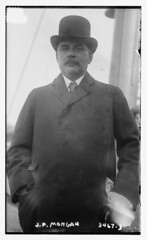
9803093256J. P. MorganA banker who took control and consolidated bankrupt railroads in the Panic of 1893. In 1900, he led a group in the purchase of Carnegie Steel, which became U.S. Steel. (p. 321, 323)20
9803093257leading industrial powerBy 1900, the United States was the leading industrial power in the world, manufacturing more than an of its rivals, Great Britain, France, or Germany. (p. 319)21
9803093258Second Industrial RevolutionThe term for the industrial revolution after the Civil War. In the early part of the 19th century producing textiles, clothing, and leather goods was the first part of this revolution. After the Civil War, this second revolution featured increased production of steel, petroleum, electric power, and industrial machinery. (p. 323)22
9803093259Bessemer processIn the 1850s, Henry Bessemer discovered this process. By blasting air through molten iron you could produce high-quality steel. (p. 323)23
9803093260transatlantic cableIn 1866, Cyrus W. Field's invention allowed messages to be sent across the oceans. (p. 325)24
9803093261Alexander Graham BellIn 1876, he invented the telephone. (p. 325)25
9803093262Thomas EdisonPossibly the greatest inventor of the 19th century. He established the first modern research labratory, which produced more than a thousand patented inventions. These include the phonograph, first practical electric light bulb, dynamo for electric power generation, mimeograph machine, and a motion picture camera. (p. 326)26
9803093263Menlo Park Research LabThe first modern research laboratory, created in 1876, by Thomas Edison in Menlo Park, New Jersey. (p. 326)27
9803093264electric power, lightingIn 1885, George Westinghouse produced a transformer for producing high-voltage alternating current, which made possible the lighting of cities, electric streetcars, subways, electrically powered machinery, and appliances. (p. 326)28
9803093265George WestinghouseHe held more than 400 patents. He invented the high-voltage alternating current transformer, which made possible the nationwide electrial power system. (p. 326)29
9803093266Eastman's Kodak cameraIn 1888, George Eastman invented the camera. (p. 325)30
9803093267large department storesR.H. Macy and Marshall Field made these stores the place to shop in urban centers. (p. 326)31
9803093268R.H. MacyHe created a New York department store. (p. 326)32
9803093269mail-order companiesTwo companies, Sears Roebuck, and Montgomery Ward, used the improved rail system to ship to rural customers to sell many different products. The products were ordered by mail from a thick paper catalog. (p. 326)33
9803093270Sears-RoebuckMail order company that used the improved rail system to ship to rural customers. (p. 326)34
9803093271packaged foodsBrand name foods created by Kellogg and Post became common items in American homes. (p. 326)35
9803093272refrigeration; canningThese developments in the food industry changed American eating habits. (p. 326)36
9803093273Gustavus SwiftHe changed American eating habits by making mass-produced meat and vegetable products. (p. 326)37
9803093274advertisingThis new technique was important to creating the new consumer economy. (p. 326)38
9803093275consumer economyAdvertizing and new marketing techniques created a new economy. (p. 326)39
9803093276federal land grants and loansThe federal government provided land and loans to the railroad companies in order to encourage expansion of the railroads. (p. 320)40
9803093277fraud and corruption, Credit MobilierInsiders used construction companies to bribe government officials and make huge profits. (p. 321)41
9803093278Interstate Commerce Act of 1886This act, created in 1886, did little to regulate the railroads. (p. 322)42
9803093279anti-trust movementMiddle class people feared a growth of new wealth due to the trusts. In the 1880s trust came under widespread scrutiny and attack. In 1890, the Sherman Antitrust Act was passed, but it was too vaguely worded to stop the development of trusts. Not until the Progressive era, would the trusts be controlled. (p. 324)43
9803093280Sherman Antitrust Act of 1890In 1890, Congress passed this act, which prohibited any "contract, combination, in the form of trust or otherwise, or conspiracy in restraint of trade or commerce." The U.S. Department of Justice secured few convictions until the law was strenghted during the Progressive era. (p. 324)44
9803093281federal courts, U.S. v. E.C. KnightIn 1895, the Supreme Court ruled that the Sherman Antitrust Act could be applied only to commerce, not manufacturing. (p. 324)45
9803093282causes of labor discontentWorker's discontent was caused by performing monotonous task required completion within a certain time, dangerous working conditions, and exposure to chemicals and pollutants. (p. 328)46
9803093283iron law of wagesDavid Ricardo developed this theory which stated that low wages were justified. He argued that raising wages would only increase the working population, the availability of more workers would cause wages to fall, thus creating a cycle of misery. (p. 327)47
9803093284anti-union tacticsEmployers used the following tactics to defeat unions: the lockouts (closing the factory), blacklists (lists circulated among employers), yellow dog contracts (contracts that forbade unions), private guards to quell strikes, and court injunctions against strikes. (p. 329)48
9803093285railroad strike of 1877In 1887, this strike spread across much of the nation and shut down two-thirds of the country's railroads. An additional 500,000 workers from other industries joined the strike. The president used federal troops to end the violence, but more than 100 people had died in the violence. (p. 329)49
9803093286Knights of LaborStarted in 1869 as a secret national labor union. It reached a peak of 730,000 members. (p. 330)50
9803093287Haymarket bombingOn May 4, 1886 workers held a protest in which seven police officers were killed by a protester's bomb. (p. 330)51
9803093288American Federation of LaborThe labor union focused on just higher wages and improved working conditions. By 1901 they had one million members. (p. 330)52
9803093289Samuel GompersHe led the American Federation of Labor until 1924. (p. 330)53
9803093290Pullman StikeIn 1894, workers at Pullman went on strike. The American Railroad Union supported them when they refused to transport Pullman rail cars. The federal government broke the strike. (p. 331)54
9803093291Eugene DebsThe American Railroad Union leader, who supported the Pullman workers. The government broke the strike and he was sent to jail for six months. (p. 331)55
9803093292railroad workers: Chinese, Irish, veteransIn the construction of the first transcontinental railroad, the Union Pacific, starting in Omaha, employed thousands of war veterans and Irish immigrants. The Central Pacific, starting from Sacramento, included 6,000 Chinese immigrants among their workers. (p. 321)56
9803093293old rich vs. new richThe trusts came under widespread scrutiny and attack in the 1880s, urban elites (old rich) resented the increasing influence of the new rich. (p. 324)57
9803093294white-collar workersThe growth of large corporation required thousands of white-collar workers (jobs not involving manual labor) to fill the highly organized administrative structures. (p. 327)58
9803093295expanding middle classIndustrialization helped expand the middle class by creating jobs for accountants, clerical workers, and salespeople. The increase in the number of good-paying jobs after the Civil War significantly increased the size of the middle class. (p. 327)59
9803093296factory wage earnersBy 1900, two-thirds of all working Americans worked for wages, usually at jobs that required them to work ten hours a day, six days a week.(p. 327)60
9803093297women and children factory workersBy 1900, 20 percent of adult woman working for wages in the labor force. Most were young and single women, only 5 percent of married women worked outside the home. (p. 327)61
9803093298women clerical workersAs the demand for clerical workers increased, women moved into formerly male occupations as secretaries, bookkeepers, typists, and telephone operators. (p. 328)62
9803093299Protestant work ethicThe believe that hard work and material success are signs of God's favor. (p. 325)63
9803093300Adam SmithIn 1776, this economist wrote "The Wealth of Nations" which argued that business should not be regulated by government, but by the "invisible hand" (impersonal econmic forces). (p. 324)64
9803093301laissez-faire CapitalismIn the late 19th century, american industrialists supported the theory of no government intervention in the economy, even as they accepted high tariffs and federal subsidies. (p. 324)65
9803093302concentration of wealthBy the 1890s, the richest 10 percent of the U.S. population controlled 90 percent of the nation's wealth. (p. 326)66
9803093303Social DarwinismThe belief that government's helping poor people weakened the evolution of the species by preserving the unfit. (p. 324)67
9803093304William Graham SumnerAn English social philosopher, he argued for Social Darwism, the belief that Darwin's ideas of natural slection and survival of the fittest should be applied to the marketpalce and society. (p. 324)68
9803093305survival of the fittestThe belief that Charles Darwin's ideas of natural selection in nature applied to the economic marketplace. (p. 324)69
9803093306Gospel of WealthSome Americans thought religion ideas justified the great wealth of successful industrialists. (p. 325)70
9803093307Horatio Alger Stories self-made manHis novels portrayed young men who became wealth through honesty, hard work and a little luck. In reality these rags to riches stories were somewhat rare. (p. 327)71

AMSCO AP US History Chapter 28 Flashcards

AMSCO United States History 2015 Edition, Chapter 28 Promise and Turmoil, The 1960s

Terms : Hide Images
9803144015Election of 1960In this election, Democrat John F. Kennedy ran against Republican Richard M. Nixon. Television was perhaps the most decisive factor in this very close race which Kennedy won. (p. 601)0
9803144044John F. KennedyIn 1960, this 43 year old senator from Massachusetts appeared more vigorous and comfortable on the first televised debates than Richard Nixon. He won the presidency in a very close election, that many Republicans including Nixon, said had been stolen by illegal voting in some Democrat controlled polls. (p. 601)1
9803144045New FrontierPresident Kennedy proposed new domestic programs such as aid to education, federal support of health care, urban renewal, and civil rights. These programs did not become law until many of them passed in the Lyndon Johnson administration. (p. 601)2
9803144046Jacqueline KennedyAs first lady in the early 1960s, she brought style, glamor, and appreciation of the arts to the White House. (p. 601)3
9803144047Robert KennedyHe was attorney general during his brother John Kennedy's administration. In 1964, he was elected as a senator in New York. In 1968, he decided to enter the presidential race after Eugene McCarthy's strong showing in New Hampshire. On June 5, 1968, he won a major victory in the California Democratic primary but was shot and killed just after his victory speech. (p. 616)4
9803144016race to the moonPresident Kennedy committed the U.S. to land on the moon by the end of the 1960s decade. (p. 602)5
9803144017assassination in DallasOn November 22, 1963, in Dallas, Texas, after just two and a half years in office, President John Kennedy was shot and killed. (p. 603)6
9803144048Warren CommissionChief Justice Earl Warren headed this commission which concluded that Lee Harvey Oswald was the lone assassin in President Kennedy's murder. Many unanswered questions lead to various theories about the assassination. For many Americans, this marked the beginning of the loss of credibility in government. (p. 604)7
9803144049Peace CorpsIn 1961, President Kennedy set up this organization, which recruited young American volunteers to give technical aid to developing countries. (p. 602)8
9803144050Alliance for ProgressIn 1961, President Kennedy created this organization to promote land reform and economic development in Latin America. (p. 602)9
9803144051Trade Expansion ActIn 1962, this act authorized tariff reduction with the recently formed European Economic Community (Common Market) of Western European nations. (p. 602)10
9803144052Bay of PigsIn April 1961, the Central Intelligence Agency (CIA) trained Cuban exiles to attempt the invasion of Cuba and the overthrow of Fidel Castro. The invasion failed and Castro tightened his grip on Cuba. (p. 602)11
9803144053Berlin WallIn 1961, the East Germans, with Soviet backing built this wall around West Berlin to stop East Germans from escaping to West Germany. (p. 602)12
9803144054Cuban missile crisisIn October 1962 the United States discovered that the Soviets were building underground offensive missile sites in Cuba. President Kennedy responded by announcing a naval blockade of Cuba until the missiles were removed. Nuclear war seemed possible until Soviet premier Nikita Khrushchev agreed to remove the missiles in exchange for a pledge that the U.S. would not invade Cuba and the U.S. would remove some missiles from Turkey. (p. 602)13
9803144055flexible responsePresident Kennedy increased spending on conventional arms and mobile military forces. This type of military force could be used in response to smaller wars in Africa and Southeast Asia and avoid the possibility of having to use nuclear weapons in these conflicts. (p. 603)14
9803144056Nuclear Test Ban TreatyIn 1963, the United States and 100 other nations signed this agreement to end the testing of nuclear weapons in the atmosphere. (p. 603)15
9803144057Lyndon JohnsonOn November 22, 1963, just two hours after John Kennedy's assassination he took presidential oath of office aboard an airplane at the Dallas airport. In the 1964 presidential election he easily defeated Senator Barry Goldwater. In 1968, he decided to not run for president again. (p. 604)16
9803144058Great SocietyPresident Lyndon Johnson was determined to expand the social reforms of the New Deal and passed a long list of new programs that would have a lasting effect on American society. (p. 604)17
9803144059War on PovertyIn 1964, President Johnson declared "an unconditional war on poverty". (p. 604)18
9803144018Michael Harrington, "The Other America"In 1962 this best-selling book that focused on the 40 million Americans living in poverty. (p. 604)19
9803144019Election of 1964In this presidential election, Democrats Lyndon Johnson and Hubert Humphrey ran against the very conservative Senator Barry Goldwater of Arizona. Johnson and Humphrey easily won, capturing 61 percent of the popular vote. (p. 605)20
9803144060Barry GoldwaterThe Republican presidential candidate in 1964. He was an Arizona Senator who advocated ending the welfare state, including TVA and Social Security. (p. 605)21
9803144061Medicare; MedicaidThis first program provides health insurance program for all people 65 years of age and older. This second program provides funds to states to pay for medical care for the poor and disabled. (p. 605)22
9803144062Elementary and Secondary Education ActThis 1965 act provided federal funds to poor school districts, funds for special education, and funds to expand Head Start. (p. 605)23
9803144020Immigrant ActThis 1965 act abolished discriminatory quotas based on national origins. (p. 605)24
9803144021National Foundation on the Arts and HumanitiesThis agency formed in 1965 provided federal funding for the arts and for creative and scholarly projects. (p. 605)25
9803144022DOT and HUDPresident Lyndon Johnson established the Department of Transportation (DOT) and the Department of Housing and Urban Development (HUD). (p. 606)26
9803144063Ralph Nader, "Unsafe at Any Speed"His 1965 book lead Congress to pass automobile industry regulations that would save thousands of lives. (p. 606)27
9803144064Rachel Carson, "Silent Spring"Her 1962 book exposed the use of pesticides and would lead Congress to pass clean air and water laws. (p. 606)28
9803144065Lady Bird JohnsonThis first lady contributed to improving the environment with her Beautify America campaign which lead to the Highway Beautification Act. (p. 606)29
9803144066Civil Rights Act of 1964This act made segregation illegal in all public facilities and gave the federal government additional powers to enforce school desegregation. (p. 606)30
9803144067Equal Employment Opportunity CommissionThis agency was created to end discrimination in employment on the basis of race, religion, sex, or national origin. (p. 606)31
980314406824th AmendmentIn 1964, this amendment abolished the practice of collecting a poll tax, one of the measures that discouraged poor people from voting. (p. 606)32
9803144069Voting Rights Act of 1965In 1965, this act ended literacy tests and provided federal registrars in areas in which blacks were kept from voting. (p. 606)33
9803144070James MeredithIn 1962, a young African American air force veteran who attempted to enroll in the University of Mississippi. President Kennedy sent 400 federal marshals and 3,000 troops to protect his rights to attend the university. (p. 607)34
9803144071George WallaceIn 1968, he was the American Independent party presidential candidate. The growing hostility of many whites to federal desegregation, antiwar protests, and race riots was tapped by his campaign. (p. 616)35
9803144072Martin Luther King Jr.In August 1963, he led 200,000 people in a peaceful March on Washington. (p. 607)36
9803144073March on WashingtonIn August 1963, Dr. Martin Luther King led one of the largest and most the successful demonstrations in U.S. history when about 200,000 blacks and whites took part in this peaceful march. The highlight was Dr. King's famous "I Have a Dream Speech" at the Lincoln Memorial. (p. 607)37
9803144074"I Have a Dream" SpeechThe greatest speech in American history (according to americanrhetoric.com). It was the highlight of the August 1963 March on Washington in which Dr. Martin Luther King in front of the Lincoln Memorial made an emotional appeal for the end of racial prejudice. (p. 607)38
9803144023March to MontgomeryIn 1965, this was a voting rights march from Selma Alabama to the capitol in Montgomery. Television showed protesters being beaten and tear gassed and the march was a turning point in the civil rights movement. President Johnson sent federal troops to protect the marchers. (p. 607)39
9803144075Black MuslimsTheir leader Elijah Muhammad preached black nationalism, separatism, and self-improvement. (p. 608)40
9803144076Malcom XHe acquired a reputation as the Black Muslim movement's most controversial voice. He criticized Martin Luther King as "an Uncle Tom" and advocated self-defense against white violence. (p. 608)41
9803144077Student Nonviolent Coordinating CommitteeThis civil rights organization of young blacks, influenced by Malcolm X, repudiated non-violence and advocated "black power" and racial separatism. (p. 608)42
9803144078Congress of Racial EqualityThis civil rights organization of young blacks was influenced by Malcolm X. (p. 608)43
9803144079Stokely CarmichaelThe leader of the Student Nonviolent Coordinating Committee (SNCC) repudiated non-violence and advocated "black power" and racial separatism. (p. 608)44
9803144080Black PanthersIn 1966, this organization was founded by Huey Newton, Bobby Seale and other militants as a revolutionary socialist movement advocating self-rule for American blacks. (p. 608)45
9803144081Watts riots, race riotsIn the summer of 1965 the arrest of a black motorist in the Watts neighborhood of Los Angeles led to a six-day riot that resulted in the deaths of 34 people and the destruction of 700 buildings. (p. 608)46
9803144024de facto segregationSegregation and discrimination caused by racists attitudes in the North and the West. (p. 608)47
9803144082Kerner CommissionIn 1968, this federal investigation of many riots concluded that racism and segregation were chiefly responsible and that the U.S. was becoming "two societies, one black, one white-separate and unequal". (p. 608)48
9803144025King assassinationIn April 1968, while standing on a motel balcony in Memphis, Tennessee Martin Luther King was shot and killed by a white man. Riots erupted in hundreds of cities across the U.S. and resulted in 46 deaths. (p. 609)49
9803144083Warren CourtThe Supreme Court under Earl Warren. It had an impact on the nation comparable to that of the John Marshall Court. (p. 609)50
9803144026Mapp v. OhioIn 1961, this Supreme Court case ruled that illegally seized evidence cannot be used in court against the accused. (p. 609)51
9803144084Gideon v. WainwrightIn 1966, this Supreme Court case ruled that that state courts must provide counsel for poor defendants. (p. 609)52
9803144085Escobedo v. IllinoisIn 1964, the Supreme Court ruling that required the police to inform an arrested person of his or her right to remain silent. (p. 609)53
9803144086Miranda v. ArizonaIn 1966, the Supreme Court extended the ruling in Escobedo to include the right to a lawyer being present during questioning by the police. (p. 609)54
9803144087reapportionmentThe process of reallocating seats in the House of Representatives. (p. 609)55
9803144088Baker v. CarrIn 1962, the Supreme Court declared it was unconstitutional for one house of a state legislature to draw district lines that strongly favored rural areas, to the disadvantage of large cities. (p. 609)56
9803144089one man, one voteThis principle meant that election districts would have to be redrawn to provide equal representation for all of a state's citizens. (p. 609)57
9803144090Yates v. Unted StatesIn 1957, the Supreme Court ruled that the first amendment protected radical and revolutionary speech, even by Communists, unless it was a "clear and present danger" to the safety of the country. (p. 610)58
9803144091separation of church and stateEngel vs. Vitale ruled that state laws requiring prayers and Bible readings in the public schools violated the first amendments provision for this. (p. 610)59
9803144092Engel v. VitaleIn 1962, the Supreme Court ruled that state laws requiring prayers and Bible readings in the public schools violated the first amendment's provision for separation of church and state. (p. 610)60
9803144027Griswold v. ConnecticutIn 1965, the Supreme Court ruled that in recognition of a citizen's right to privacy, a state could not prohibit the use of contraceptives by adults. (p. 610)61
9803144028privacy and contraceptivesIn 1965, the Supreme Court ruled in Griswold v. Connecticut case that a citizen's had the right to privacy, and a state could not prohibit the use of contraceptives by adults. (p. 610)62
9803144093Students for a Democratic SocietyIn 1962, this group of radical students led by Tom Hayden issued a declaration of purposes known as the Port Huron Statement. It called for university decisions to be made through a participatory democracy. (p. 610)63
9803144094New LeftActivists and intellectuals who supported Tom Hayden's ideas. (p. 610)64
9803144029WeathermenThey were the most radical fringe of the SDS, they embraced violence and vandalism in their attacks on American institutions. (p. 611)65
9803144095countercultureExpressed by young people in their rebellious styles of dress, music, drug use, and for some, communal living. (p. 611)66
9803144030WoodstockIn the summer of 1969, about 500,000 million young people descended on upper New York State farm for what turned into a free music festival. In the early morning hours of the last day Jimi Hendrix played his jaw dropping version of the "Stars Spangled Banner" featuring amplifier feedback to convey bombs falling, jets overhead, and cries of human anguish. (p. 611)67
9803144031Alfred KinseyIn the late 1940s he did pioneering surveys of sexual practice. (p. 611)68
9803144096sexual revolutionOne aspect of counterculture that continued beyond the 1960s was a change in many Americans' attitudes toward sexual expression. (p. 611)69
9803144097women's movementThe increased education and employment of women in the 1950s, the civil rights movement, and the sexual revolution all contributed to a renewal of this movement in the 1960s. (p. 612)70
9803144098Betty Friedan, "The Feminine Mystique"She gave the women's movement a new direction by encouraging middle-class women to seek fulfillment in professional careers rather than confining themselves to the roles of wife, mother, and homemaker. (p. 612)71
9803144099National Organization for WomenIn 1966, this organization was formed. They adopted activist tactics of other civil rights movements to secure equal treatment of women, especially for job opportunities. (p. 612)72
9803144100Equal Pay ActIn 1963, this act prohibited discrimination in employment and compensation on the basis of gender. (p. 612)73
9803144101Equal Rights Amendment (ERA)This proposed constitutional amendment stated that "equality of rights under the law shall not be denied or abridged by the United States or by any state on account of sex". It just missed being passed. (p. 612)74
9803144032military advisorsBy 1963, the United States was becoming more involved in helping South Vietnam. President Kennedy provided military advisors and 16,000 support troops, but not combat troops. (p. 613)75
9803144033fall of DiemIn 1963, South Vietnam's leader was overthrown and killed by South Vietnamese generals. (p. 613)76
9803144102Tonkin Gulf ResolutionIn 1964, North Vietnamese gunboats allegedly fired on U.S. warships off the coast of Vietnam. Congress gave approval for President Johnson to wage war in Vietnam. (p. 613)77
9803144034escalation of troopsIn April 1965, President Johnson used U.S. combat troops in Vietnam for the first time. Johnson continued a step-by-step escalation and by March 1969 there were 540,000 troops deployed to Vietnam. (p. 613)78
9803144035General WestmorelandCommander of U.S. armed forces in Vietnam. (p. 614)79
9803144036credibility gapThe media's term for President Johnson's reluctance to speak frankly with the American people about the scope and costs of the Vietnam war. (p. 614)80
9803144103Tet OffensiveIn January 1968, the Vietcong (North Vietnam troops) launched an all-out surprise attack on almost every provincial capital and American base in South Vietnam. The U.S. military counterattacked and recovered the lost territory. However, the destruction viewed on television in the United States, appeared as a setback for the U.S. efforts. (p. 615)81
9803144104hawks and dovesHawks believed that the Vietnam War was part of a Soviet-backed Communist master plan to conquer all of Southeast Asia. Doves believed it was a civil war, fought by Vietnamese nationalists and some Communists who wanted to unite their country by overthrowing a corrupt Saigon government. (p. 615)82
9803144037LBJ withdrawsOn March 23, 1968, President Johnson made a television address in which he said that the U.S. would limit bombing of North Vietnam and negotiate peace. He also announced that he would not run for president in 1968. (p. 615)83
9803144105Eugene McCarthyThe first antiwar candidate to challenge for the 1968 Democratic presidential nomination. (p. 615)84
9803144038RFK assassinationOn June 5, 1968, after he had won the California Democratic primary Robert F. Kennedy (RFK) was shot and killed by an Arab nationalist. (p. 616)85
9803144106Hubert HumphreyThe liberal Democratic candidate in the presidential election of 1968. He had been Lyndon Johnson's vice president. (p. 616)86
9803144039Chicago conventionThe 1968 Democratic Convention was held in Chicago. Television showed what looked like a "police riot" as antiwar protesters were brutally beaten. (p. 616)87
9803144040white backlashIn the 1968 presidential election, the growing hostility of many whites to federal desegregation, antiwar protests, and race riots was tapped by Governor George Wallace of Alabama. He became the American Independent party's presidential candidate. (p. 616)88
9803144041Richard NixonHe served as vice president under Eisenhower from 1953 to 1960. He was nominated as the Republican candidate for president in 1960, but lost the close election to John Kennedy. In 1968 he was elected president, and again in 1972. However, he was forced to resign the presidency in 1974. (p. 600)89

AMSCO AP US History Chapter 31 Flashcards

AMSCO United States History 2015 Edition, Chapter 31 Challenges of the 21st Century, 2000-Present

Terms : Hide Images
9803156238political polarizationIn the 2000s the political parties became regionally divided. Traditional, religious, and anti-government voters were often in rural and suburban areas and voted Republican. Liberals were commonly found in urban areas and voted Democrat. (p. 679)0
9803156239Southern white conservativesSoutherners Newt Gingrich, Tom DeLay, and Trent Lott took over the leadership of the Republican party, making it more conservative and partisan. (p. 679)1
9803156240gerrymandered "safe seats"Democrats and Republicans manipulated congressional districts to create "safe seats", which rewarded partisanship and discouraged compromise in Congress. (p. 679)2
9803156241election of 2000In this presidential race Al Gore won the popular vote, George W. Bush won the electoral vote. It was the closest election since 1876. The Supreme Court settled the election in Bush's favor. (p. 680)3
9803156242George W. BushHe won the 2000 and 2004 presidential elections. He was the son of former president George H. W. Bush. (p. 680)4
9803156243Al GoreHe was Bill Clinton's vice president. In 2000 he lost a very close presidential election to George W. Bush. (p. 680)5
9803156244Bush v. GoreIn the 2000 election, Florida was the deciding state. George Bush led by 537 popular vote after a partial recount in that state. The Democrats asked for a manual recount. The Supreme Court majority ruled that the varying standards used in Florida's recount violated the Equal-Protection Clause of the 14th Amendment. Al Gore ended the election crisis by accepting the ruling. (p. 680)6
9803156245Bush tax cutsPresident George W. Bush cut taxes on the top tax bracket, gradually eliminated estate taxes, increased child tax credits, gave all taxpayers an immediate rebate. Bush pushed for tax cuts for stock dividends, capital gains, and married couples. (p. 680)7
9803156246No Child Left Behind ActThis act aimed to improve student performance and close the gap between rich students and poor students, gave students the right to transfer to better schools, stronger reading programs, and trained high-quality teachers. (p. 681)8
9803156247Enron, corporate corruptionThis large corporation falsified stated earnings and profits with the help of accounting companies. (p. 681)9
9803156248housing bubbleWhen the stock market gains turned down, many investors put their money into real estate, creating a speculative bubble that would burst in George W. Bush's second term. (p. 681)10
9803156249election of 2004In this presidential election George W. Bush was reelected, defeating Senator John Kerry. The Republicans energized their base of voters by focusing on the war against terrorism, more tax cuts, and opposition to gay marriage and abortion. (p. 684)11
9803156250John KerryIn 2004, this senator from Massachusetts was the Democratic presidential nominee. (p. 684)12
9803156251privatization of Social SecurityPresident Bush pushed Congress to privatize Social Security by encouraging Americans to invest part of their Social Security payroll deductions into various market investments. (p. 685)13
9803156252Hurricane KatrinaWhen the hurricane hit, FEMA failed to anticipate and respond to the crisis, resulting in more than 1,000 deaths, and tens of thousands of mostly poor people left in desperate conditions. (p. 685)14
9803156253corruption in CongressIn George W. Bush's second term, Republican's reputations were tarnished by scandals including, taking bribes from lobbyists, committing perjury and obstruction of justice, and having improper relations with congressional pages. (p. 685)15
9803156254John RobertsPresident George W. Bush appointed this conservative judge to the Supreme Court as chief justice. (p. 685)16
9803156255Samuel AlitoPresident George W. Bush appointed this conservative judge to the Supreme Court. (p. 685)17
9803156256Colin PowellThis general became George W. Bush's secretary of state, the first African American to hold the job. (p. 681)18
9803156257Islamic roots of anti-AmericanismAfter World War I, the Ottoman Empire, the last of Islamic empires, was replaced with Western-style secular nation states. The U.S. stationed troops in the Middle East after the Gulf War. Islamic religious fundamentalists objected to these actions. (p. 682)19
9803156258Al-Qaeda"The Base" preached jihad, which they defined as a holy war against "Jews and Crusaders", to restore an Islamic realm in the Middle East. (p. 682)20
9803156259Osama bin LadenThe founder of Al-Qaeda, the terrorist network responsible for the attacks of September 11, 2001, and other attacks. (p. 682)21
9803156260asymmetric warfareWarfare conducted by terrorists when combatants have highly unequal military capabilities, such as when terrorists or rebel groups fight strong states. (p. 682)22
9803156261bombing of U.S. embassiesIn 1998, terrorists bombed two U.S. embassies in Kenya and Tanzania. The U.S. responded by bombing Al-Qaeda camps in Afghanistan and the Sudan. (p. 682)23
9803156262U.S.S. ColeIn 2000, two suicide bombers in a small rubber boat nearly sank a billion dollar warship docked in Yemen, the USS Cole. (p. 682)24
9803156263World Trade CenterA group of buildings in New York City. Two of the largest tower buildings were attacked and destroyed on September 11, 2001. (p. 682)25
9803156264September 11, 2001On this date, know as 9/11, Al-Qaeda terrorists flew planes into World Trade Center twin towers, the Pentagon, and crashed a jetliner into a field in Pennsylvanian. Nearly 3,000 people were killed in the attacks. The attacks galvanized public opinion as nothing since the Pearl Harbor attack in 1941. (p. 682)26
9803156265Afghanistan, TalibanPresident Bush declared he wanted Osama bin Laden and other Al-Qaeda leaders "dead or alive". The Taliban refused to turn them over, so in response the U.S. quickly overthrew the Taliban government in Afghanistan. U.S. led troops pursued bin Laden to the mountains bordering Pakistan, but were unable to catch him. (p. 682)27
9803156266Hamid KarzaiHe became the head of the Afghanistan government in Kabul with the U.S. backing. However, Afghanistan remained unstable and divided by the Taliban insurgency and tribal conflicts. (p. 682)28
9803156267Homeland Security DepartmentPresident George W. Bush created this new department by combining more than 20 federal agencies with 170,000 employees. The agencies including the Secret Service, Coast Guard, and customs and immigration agencies. Many questioned why the FBI and CIA were left out of the new department. (p. 683)29
9803156268connect the dotsIn 2004, a bipartisan commission on terrorism criticized the FBI, CIA, and the Defense Department for failing to work together to "connect the dots" that may have uncovered the 9/11 plot. Congress followed up on their recommendations, creating a Director of National Intelligence position. (p. 683)30
9803156269Director of National IntelligenceThis newly created position was responsible for coordinating the intelligence activities of all agencies. (p. 683)31
9803156270Kyoto AccordThe Bush administration refused to join this climate agreement to prevent global warming. (p. 683)32
9803156271Bush DoctrineThis doctrine argued that the old policies of containment and deterrence were no longer effective in a world of stateless terrorism. It stated that to protect itself, the United States should take preemptive action against terrorist threats to its national security. (p. 683)33
9803156272unilateralist approachThe United States would pursue its own defense policy with little or no cooperation with other nations. (p. 683)34
9803156273axis of evilIn his 2002 State of the Union Address, President George W. Bush used this term for the countries of North Korea, Iraq, and Iran. (p. 683)35
9803156274WMDsWeapons of Mass destruction (p. 683)36
9803156275Saddam HusseinHe was the Iraq dictator in Iraq who invaded Kuwait. He refused to let the U.N. into Iraq for WMD inspections. (p. 683)37
9803156276U.N. inspectionsU.N. inspections failed to find WMD's in Iraq. However, the Bush administration continued to present claims of their existence based on intelligence information that proved to be false. (p. 683)38
9803156277Operation Iraq FreedomIn early 2003, President Bush declared that Iraq had not complied with numerous U.N. resolutions, and that "the game was over". In March 2003 the United States launched air attacks on Iraq, and within 4 weeks U.S., British, and other allies captured the capital city, Baghdad. (p. 684)39
9803156278regime changeWhen U.S. forces could not find WMDs in Iraq, criticism of the "regime change" mounted. (p. 684)40
9803156279war of choiceA term used for the Iraq War because it was not clear that is was a war that was required. (p. 684)41
9803156280Sunni vs. ShiiteAfter Saddam Hussein's death, the Sunni and Shiites attacked each other, and millions of Iraqis fled the country or were displaced. The Bush administration was widely criticized for going into Iraq without sufficient troops to control the country and to disband the Iraqi army. (p. 684)42
9803156281Abu Ghraib prisonPictures of the barbaric treatment of prisoners by U.S. troops in this prison further diminished America's reputation in Iraq and around the world. (p. 684)43
98031562822007 troop surgeIn early 2007, President George W. Bush sent an additional 30,000 troops in a "surge" to establish order in Iraq. (p. 684)44
9803156283securitizationWall Street packaged the high risk housing loans into a variety of complex investments , then sold them to unsuspecting investors around the world. (p. 685)45
9803156284liquidity crisisWhen the housing market bubble burst, banks and financial institutions faced failure resulting in this crisis. Banks either lacked funds or were unable to make the loans to businesses and consumers necessary for the day-to-day functioning of the economy. (p. 685)46
9803156285Fannie May, Freddie MacIn early 2008 the federal government took over these two quasi-governmental mortgage institutions. (p. 685)47
9803156286Lehman BrothersIn September 2008, this large Wall Street investment bank declared bankruptcy, which led to a panic in the financial industry. (p. 685)48
9803156287Troubled Assets Relief Program (TARP)The Economic Stabilization Act of 2008 created this controversial program. The federal government used $700 million to purchase failing assets, that included mortgages and mortgage-related securities, from financial institutions. Conservatives called it socialism, and liberals called it a bailout of the people who had caused the problems in the first place. (p. 685)49
9803156288poor regulation of financial institutionsThe causes of the Great Recession will be debated for years, causes include: Excessive deregulation of the financial industry Real estate bank fraud Federal Reserve kept interest rates too low Government efforts to promote home ownership (p. 685)50
9803156289election of 2008In this presidential election Democrats Barack Obama and Joseph Biden ran against Republicans John McCain and Sarah Palin. The Republican Bush administration was unpopular and the country faced was facing an economic crisis. Obama's message for change and his well-funded grassroots campaign led him to victory. (p. 686)51
9803156290Hillary ClintonIn 2008, this Democratic senator from New York was the early favorite in the Democrat primary race. (p. 686)52
9803156291Barack ObamaIn 2008, this young, charismatic, Democratic senator from Illinois became the first African American president of the United States. (p. 686)53
9803156292John McCainIn 2008, this Republican senator from Arizona was the Republican nominee for president. He was a Vietnam war hero who hoped to appeal to undecided voters. (p 686)54
9803156293Sarah PalinIn 2008, this Republican governor of Alaska was the vice presidential candidate, running with John McCain. (p. 686)55
9803156294effects of Great RecessionThe Great Recession started in late 2007. The stock market dropped dramatically but recovered by 2013, unemployment peaked at 10 percent in 2009 and stayed at 7 percent until 2013. Obama enacted a number of Keynesian programs to promote recovery. (p. 687)56
98031562952009 stimulus billThe American Recovery and Reinvestment Act of 2009 provided $787 billion economic stimulus package designed to create or save 3.5 billion jobs. It featured tax cuts, aid to state and local governments, and funding for construction projects, health care, education, and renewable energy. (p. 687)57
9803156296Dodd-Frank ActThis act was designed to improve regulations of banking and investment firms, and to protect taxpayers from future bailouts of "too big to fail" businesses. It also set up a Bureau of Consumer Protection to regulate mortgages and credit cards. (p. 687)58
9803156297aid to auto industryWith General Motors and and Chrysler near collapse, the Obama administration stepped in to help. The government temporarily took over General Motors while in bankruptcy, and guided the sale of Chrysler to Italian automaker Fiat. (p. 687)59
9803156298Affordable Care Act!in 2008, the U.S. "fee for service" medical system was the most expensive in the world, but produced mixed results. This healthcare act aimed to extend affordable health care insurance to more Americans through combinations of subsidies, mandates, and insurance exchanges while introducing medical and insurance reforms to control health care costs. Many Americans were confused by its complexity. (p. 687)60
9803156299budget deficitsThe Great Recession lowered federal income tax collected and increased spending on recovery programs. The annual federal deficit tripled to $1.75 trillion in 2009. The national debt rose to $16 trillion by 2012. (p. 688)61
9803156300Bowles-Simpson planThis plan would have eliminated the deficit by 2035 through $2 of spending cuts for every $1 increase in revenues. It was rejected by both parties. (p. 688)62
9803156301Tea PartyIn 2010, this group of loosely united conservatives and libertarians formed this movement. Many members focused on economic issues and limited government, but others focused on gun rights, prayer in schools, outlawing abortions, and preventing undocumented immigration. (p. 688)63
9803156302debt ceilingIn August 2011, as the debt ceiling closed in an agreement was reached to cut $900 billion in spending and cut an additional $1.4 trillion to be determined by a bipartisan committee. (p. 688)64
9803156303super-committeeThe bipartisan committee that was to determine what the $900 billion spending cuts were to be. (p. 688)65
9803156304U.S. credit ratingIn 2011, the uncertainty and gridlock in Washington led Standard & Poor's to downgrade the US AAA credit rating. (p. 688)66
9803156305election of 2012In this presidential election the Great Recession and Obamacare (new healthcare act) were the top issues. Barack Obama defeated Mitt Romney in this election. (p. 690)67
9803156306Mitt RomneyIn 2012, this conservative, Mormon, former governor of Massachusetts, was the Republican presidential candidate. (p. 690)68
9803156307Latino votersIn 2012, 1 in every 6 American voter was a Latino voter, and President Obama won 71 percent of the Latino votes in this election. (p. 690)69
9803156308sequester cutsIn 2013, Congress was unable to compromise on the budget so these cuts went into effect. (p. 690)70
98031563092013 shutdown of governmentIn October 2013, the Republican effort to defund the Affordable Care Act resulted in a shutdown of the government for 16 days, and threatened default on the national debt. The approval rating of Congress dropped to 10 percent. (p. 690)71
9803156310gun violenceMass shootings at a Colorado movie theater and a Connecticut school sparked another debate over guns. President Obama's proposals to tighten gun laws went nowhere because of gun rights advocates. (p. 690)72
9803156311Boston Marathon bombingFear of home-grown terrorism became real when two brothers set off two bombs at the finish line of the Boston Marathon killing three and injuring more than 250 people. The young men who did the bombing seemed motivated by extremist Islamic beliefs. (p. 690)73
9803156312ban on tortureIn 2009, President Obama placed a formal ban on torture by requiring that Army field manuals be used as the guide for interrogating terrorist suspects. (p. 687)74
9803156313withdrawal from IraqIn early 2009, President Obama developed a plan to wind down US ground combat operations in Iraq. In 2011, the last of U.S. forces were withdrawn. However, Sunni and Al-Qaeda insurgents continued to terrorize the majority Shiite government. (p. 688)75
9803156314Afghanistan surgePresident Obama made fighting Al-Qaeda and the Taliban in Afghanistan a priority. He sent an additional 47,000 troops to Afghanistan. The counter-terrorism surge proved effective in Afghanistan, but the increase in drone attacks on terrorists in Pakistan intensified anger against the U.S. (p. 689)76
9803156315death of bin LadenIn May 2011, he was killed by the U.S. in clandestine operation in Pakistan. (p. 689)77
9803156316drawdown in AfghanistanIn 2012, the U.S. and Afghanistan signed a long-term agreement which called for the U.S. to train and support the Afghanistan military, and for the U.S. to end combat missions by 2014. (p. 689)78
9803156317Arab SpringIn 2010, civil unrest and armed rebellion toppled governments in Tunisia, Libya, Egypt, and Yemen. (p. 689)79
9803156318fall of dictatorshipsArab spring, civil unrest and armed rebellions toppled dictatorships in North Africa and the Middle East. (p. 689)80
9803156319civil war in SyriaThe Syrian leader, Bashar al-Assad used poisonous gas on the people in the country who were rising up against him. Military action was avoided when the Syrians agreed to give up all their chemical weapons. (p. 691)81
9803156320"pivot" to AsiaEvents in the Middle East limited the president's planned "pivot" to Asia. The Obama administration realized that America's future would be closely tied to the Pacific Rim because within two decades the economies of Asia would soon be larger than the U.S. and Europe combined. (p. 689)82
9803156321euro crisisIn the early 2010s, the European Union was struggling with a debt crisis in Greece, Spain, and Ireland. It took German leadership to save the euro as a common currency. (p. 689)83
9803156322Sonia SotomayorPresident Obama appointed her to the Supreme Court in 2009. (p. 691)84
9803156323Elena KaganPresident Obama appointed her to the Supreme Court in 2010. (p. 691)85
9803156324Shelby County v. Holder (2013)In 2013, the Supreme Court struck down a key provision of the Voting Rights Act of 1965, that required that certain states with a history of voter discrimination obtain federal approval of any changes in voting laws. (p. 691)86
9803156325repeal of "Don't Ask, Don't Tell"In 2010, Congress repealed the Clinton era "Don't Ask, Don't Tell" to end discrimination of gays in the military. (p. 692)87
9803156326same-sex marriageIn 2013, the Supreme Court ruled that the 1996 Defense of Marriage Act, a California law, was unconstitutional. However the states remained divided, with fourteen allowing same sex marriage and thirty-five banning it (p. 692)88
98031563272nd Amendment and Heller caseIn 2008, the Supreme Court ruled that the 2nd amendment protects an individual's right to posses a firearm unconnected with service in a militia. (p. 692)89
9803156328campaign financingIn 2013, the Supreme Court heard arguments to overturn the federal limits on campaign contributions, which some worried would open the door to wider corruption of elected officials. (p. 691)90
9803156329Citizens UnitedIn 2010, the Supreme Court ruled that corporations were "legal persons" and had the same rights as individuals to buys ads to influence political elections. (p. 691)91
9803156330NFIB v. SebeliusIn 2012, the Supreme Court ruled that the federal government had the authority to require that individuals purchase health insurance because Congress had the authority to levy taxes. (p. 692)92

AP US History Chapter 16 Terms Flashcards

Terms : Hide Images
8704322727transcontinental railroadCompleted in 1869 at Promontory, Utah, it linked the eastern railroad system with California's railroad system, revolutionizing transportation in the west, A railroad that stretches across a continent from coast to coast. It made it so that it was easier to for mail and goods to travel faster and cheaper.0
8704322728protective tariffA tax on imported goods that raises the price of imports so people will buy domestic goods.1
8704322729Treaty of Kanagawaa treaty signed between the U.S. and Japan allowing Japan to open two ports to the U.S.2
8704322730Burlingame TreatyAn 1868 treaty that guaranteed the rights of U.S. missionaries in China and set official terms for the emigration of Chinese laborers to work in the United States.3
8704322731Munn v. IllinoisAllowed states to regulate certain businesses within their borders, including railroads and grain elevators, serving the public good.4
8704322732gold standardThe practice of backing a country's currency with gold.5
8704322733Crime of 1783A term used by those critical of an 1873 law directing the US treasury to cease minting silver dollars, retire greenbacks and replace with notes backed by the gold standard from an expanded system of national banks.6
8704322734Homestead ActPassed in 1862, it gave 160 acres of public land to any applicant who occupied and improved the property. This policy led to the rapid development of the American West after the Civil War.7
8704322735Morrill ActThe 1862 act that gave 160 million acres of land that states could sell to raise money for public universities.8
8704322736land-grant collegesPublic universities founded to broaden educational opportunities and foster technical and scientific expertise.9
8704322737Comstock LodeWas a major silver deposit in Nevada. All of the silver mining in this area created the town of Virginia City, which gained much culture and brought it to the area. This area eventually became a ghost town, like others in the area. After a mining boom was over, people would leave the area and move to another one, leaving everything behind.10
8704322738Long DriveFacilitated by the completion of the Missouri Pacific Railroad in 1865, a system by which cowboys herded cattle hundreds of miles north from Texas to Dodge City and the other cow towns of Kansas.11
8704322739"rain follows the plow"An unfounded theory that settlement of the Great Plains caused an increase in rainfall.12
8704322740ExodustersThe African Americans migrating to the Great Plains state (ie: Kansas & Oklahoma) in 1879 to escape conditions in the South.13
8704322741Yellowstone National ParkEstablished in 1872 by Congress, Yellowstone was the United States's first national park.14
8704322742U.S. Fisheries CommissionA federal bureau established in 1871 that made recommendations to stem the decline in wild fish. Its creation was an important step toward wildlife conservation and management.15
8704322743Sand Creek MassacreThe November 29, 1864, massacre of more than a hundred Cheyennes, largely women and children, by John M. Chivington's Colorado militia.16
8704322744Fetterman MassacreA massacre in December 1866 in which 1,500 Sioux warriors lured Captain William Fetterman and 80 soldiers from a Wyoming fort and attacked them. With the Fetterman massacre the Sioux succeeded in closing the Bozeman Trail, the main route into Montana.17
8704322745Lone Wolfe v. HitchcockA 1903 Supreme Court ruling that Congress could make whatever Indian policies it chose, ignoring all existing treaties.18
8704322746Dawes Severalty ActThe 1887 law that gave Native Americans individual ownership of land by dividing reservations into homesteads. The law was a disaster ;and reservation lands ended up being sold to non-Indian.19
8704322747Battle of Little Big HornThe 1876 battle begun when American cavalry under George Armstrong Custer attacked an encampment of Sioux, Arapaho, and Cheyenne Indians who resisted removal to a reservation. Custer's force was annihilated, but with whites calling for U.S. soldiers to retaliate, the Native American military victory was short-lived.20
8704322748Ghost Dance movementReligion of the late 1880s and early 1890s that combined elements of Christianity and traditional Native American religion. It fostered PLains Indians' hope that they could, through sacred dances, resurrect the great bison herds and call up a storm to drive whites back across the Atlantic21
8704322749Wounded KneeThe 1890 massacre of Sioux Indians by American cavalry Wounded Knee Creek, South Dakota. Sent to suppress the Ghost Dance, soldiers caught up with fleeing Lakotas and killed as many as 300.22
8704322750bimetallic standardcurrency that is based off of both gold and silver.23

AMSCO AP US History Chapter 24 Flashcards

AMSCO United States History 2015 Edition, Chapter 24 The Great Depression and the New Deal, 1929-1939

Terms : Hide Images
9894412716stock market crashA boom stock market of 1928 led to a sell off starting in October 1929. Within three years the stock market would decline to one-ninth of its peak. (p. 497)0
9894412748Black TuesdayOn October 29, 1929, millions of panicky investors sold, as the bottom fell out of the stock market. (p. 497)1
9894412717Dow Jones indexThe Wall Street stock market index. In September 1929 the index was at a high of 381, in three months it fell to 198. Three years later, the index would finally hit bottom at 41, less than one-ninth of the peak. (p. 497)2
9894412749buying on marginThis purchase method allowed people to borrow most of the cost of the stock, making down payments as low as 10 percent. Investors depended on the price of the stock increasing so they could repay their loans. (p. 497)3
9894412750uneven income distributionWages had risen relatively little compared to the large increases in productivity and corporate profits. Economic success was not shared by all, as the top 5 percent of the richest Americans received over 33 percent of all income. (p. 497)4
9894412718excessive debtConsumers and businesses believed the economic boom was permanent so they increased borrowing, which later led to loan defaults and bank failures. (p. 498)5
9894412751overproductionBusiness growth, aided by increased productivity and use of credit, had produced a volume of goods that workers with stagnant wages could not continue to purchase. (p. 498)6
9894412719Federal ReserveDuring the Great Depression, the Federal Reserve followed a tight money policy. Instead of trying to stabilize banks, the money supply and prices, they tried to preserve the gold standard. (p. 498)7
9894412720postwar EuropeEurope had not recovered from World War I and the U.S. insistence on loan repayment and tariffs weaken Europe and contributed to the Worldwide depression. (p. 498)8
9894412721debts and high tariffsLeading up to the Great Depression, the United States insisted on full World War I loan repayments and high tariffs on imports. This weakened Europe and contributed to the worldwide depression. (p. 498)9
9894412722Gross National ProductThe value of all the goods and services produced by a nation in one year. In 1929, the United States Gross National Product was $104 billion, but it dropped to $56 billion in 1932. (p. 498)10
9894412723unemploymentBy 1933 25% of the workforce, not including farmers, did not have employment. (p. 498)11
9894412724bank failuresDuring the Great Depression 20 percent of all banks failed. (p. 498)12
9894412725poverty and homelessDuring the Great Depression poverty and homelessness increased. (p. 499)13
9894412752Herbert HooverHe was President of the United States at the time of the stock market crash. He thought that prosperity would soon return. He was slow to call for legislative action and he thought public relief should come from the state and local governments, not the federal government. (p. 500)14
9894412726self-reliancePresident Herbert Hoover did not ask Congress for legislative action on the economy until the summer of 1930. He was concerned that government assistance to individuals would destroy their self-reliance. (p. 500)15
9894412753Hawley-Smoot TariffIn June 1930, President Hoover signed into law the highest tariff rates in history, ranging from 31 to 49 percent. In retaliation, European countries enacted their own tariffs. This reduced trade for all nations and worsened the worldwide depression. (p. 500)16
9894412727debt moratoriumSuspension on the payment of international debts. In 1931, President Hoover proposed a suspension of international debt payments. (p. 500)17
9894412754Farm BoardIt was authorized to help farmers stabilize prices by temporarily holding surplus grain and cotton in storage. (p. 500)18
9894412755Reconstruction Finance CorporationIn 1932, Congress funded this government-owned corporation as a measure for propping up faltering railroads, banks, life insurance companies, and other financial institutions. President Hoover thought that emergency loans would stabilize key business and the benefits would "trickle down" to smaller businesses and ultimately bring recovery. (p. 501)19
9894412728Twentieth AmendmentAlso known as the lame-duck amendment, this amendment shortened the period between the presidential election and inauguration. The new president's term would start on January 20. (p. 502)20
9894412756bonus marchThousands of unemployed World War I veterans marched to Washington, D.C. and set up encampments to demand immediately payment of the bonuses promised to them at a later date. The Army, led by General Douglas MacArthur broke up the encampment. (p. 501)21
9894412757Franklin D. RooseveltThis Democratic candidate won the 1932 presidential election. As a candidate, he promised a "new deal" for the American people, the repeal of Prohibition, aid for the unemployed, and cuts in government spending. (p. 502)22
9894412758Eleanor RooseveltShe was the most active first lady in history, writing a newspaper column, giving speeches, and traveling the country. She served as the president's social conscience and influenced him to support minorities. (p. 502)23
9894412729New DealFranklin D. Roosevelt's plan to help people at the bottom of the economic pyramid. (p. 503)24
9894412730relief, recovery, reformThe New Deal included the three R's: relief for people out of work, recovery for business and the economy, and reform of American economic institutions. (p. 503)25
9894412759Brain TrustFor advice on economic matters, Roosevelt turned to a group of university professors. (p. 503)26
9894412760Frances PerkinsRoosevelt's secretary of labor, she was the first woman to serve in a president's cabinet. (p. 503)27
9894412731Hundred DaysOn March 4, 1933, Franklin Roosevelt started his term and called Congress into a one hundred day session. They passed into law all of Roosevelt's legislation. (p. 503)28
9894412732repeal of ProhibitionIn 1933, the 21st Amendment was passed. It repealed the 18th Amendment. This ended Prohibition. (p. 503)29
9894412733bank holidayPresident Franklin Roosevelt ordered the banks to be closed on March 6, 1933. He made a radio address explaining that the banks would be reopened after allowing enough time for the government to reorganize them on a sound basis. (p. 503)30
9894412761fireside chatsPresident Franklin Roosevelt spoke on the radio to the American people. (p. 504)31
9894412762Federal Deposit Insurance CorporationThis agency guaranteed individual bank deposits. (p. 504)32
9894412763Public Works AdministrationDirected by Secretary of the Interior Harold Ickes, it allotted money to state and local governments for building roads, bridges, dams, and other public works. (p. 504)33
9894412734Harold IckesPresident Franklin D. Roosevelt's secretary of the interior. (p. 504)34
9894412764Civilian Conservation CorpThis organization employed young men for projects on federal lands and paid their families small monthly sums. (p. 504)35
9894412765Tennessee Valley AuthorityA government corporation that hired thousands of people in the Tennessee Valley, to build dams, operate electric power plants, control flooding, and erosion, and manufacture fertilizer. (p. 505)36
9894412766National Recovery AdministrationDirected by Hugh Johnson, this agency attempted to guarantee reasonable profits for business and fair wages and hours for labor. The complex program operated with limited success for two years before the Supreme Court declared it unconstitutional. (p. 505)37
9894412767Schechter v. U.S.In 1935, the Supreme Court declared the National Recovery Administration (NRA) unconstitutional. (p. 505)38
9894412768Securities and Exchange CommissionThis agency was created to regulate the stock market and to place strict limits on the kind of speculative practices that led to the 1929 stock crash. (p. 505)39
9894412769Federal Housing AdministrationIt insured bank loans for building new houses and repairing old ones. (p. 505)40
9894412770Works Progress AdministrationThis agency created in 1935, part of the Second New Deal, it was much more ambitious than earlier efforts. Between 1935 and 1940 up to 3.4 million people were hired to construct bridges, roads, airports, and public buildings. Artists, writers, actors, and photographers were also employed. (p. 506)41
9894412735Harry HopkinsHe headed the Works Progress Administration (WPA) in the 1930s. (p. 506)42
9894412736National Labor Relations (Wagner) ActA 1935 act that guaranteed a worker's right to join a union and a union's right to bargain collectively. It outlawed business practices that were unfair to labor. (p. 507)43
9894412771Social Security ActIn 1935, this act created a federal insurance program based on the automatic collection of taxes from employees and employers throughout people's working careers. Monthly payments would be made to retired people over the age of 65. (p. 507)44
9894412737election of 1936Franklin D. Roosevelt easily defeated the Republican nominee, Alf Landon. (p. 507)45
9894412738New Deal coalitionFrom the 1930s to 1960s, this political coalition consisted of the Solid South, white ethnic groups in cities, midwestern farmers, labor unions, and liberals. (p. 508)46
9894412772John Maynard KeynesBritish economist, whose theory said that in difficult times government needed to spend well above its tax revenues in order to stimulate economic growth. After the 1937 recession, Roosevelt adopted this strategy, which was successful. (p. 511)47
9894412739recession of 1937In the winter of 1937 the economy went into recession again. The new Social Security tax had reduced consumer spending and at the same time Roosevelt had cut back government spending in hopes of balancing the budget. (p. 511)48
9894412773Father Charles CoughlinA Catholic priest who founded the National Union for Social Justice, which called for issuing inflated currency and nationalizing all banks. His radio program attacks on the New Deal were anti-Semitic and Fascist. (p. 508)49
9894412774Francis TownsendHe proposed a simple plan for guaranteeing a secure income for the elderly. He proposed that a 2 percent federal sales tax be used to create a special fund from which every retired person over the age of 60 would receive $200 a month thus stimulating the economy. (p. 509)50
9894412775Huey LongHe proposed a "Share Our Wealth" program that promised a minimum annual income of $5000 for every American family to be paid for by taxing the wealthy. In 1935 he challenged Roosevelt's leadership of the Democratic party by becoming a candidate for president but was soon assassinated. (p. 509)51
9894412740Supreme CourtIn 1935, they declared two of President Roosevelt's recovery programs unconstitutional. (p. 509)52
9894412741reorganization planPresident Franklin Roosevelt proposed a plan that allowed the president to appoint a new Supreme Court justice for each current justice over the age of 70. Congress refused to pass this legislation. (p. 509)53
9894412742conservative coalitionRepublicans and many Democrats were outraged by President Franklin Roosevelt's plan to reorganize the Supreme Court. (p. 509)54
9894412776Congress of Industrial OrganizationsThis labor union concentrated on organizing unskilled workers in the automobile, steel, and southern textile industries. (p. 510)55
9894412777John L. LewisHe was President of the United Mine Workers Union and Leader of the Congress of Industrial Organizations. (p. 510)56
9894412743sit-down strikeIn 1937 workers at the General Motors plant in Flint, Michigan insisted on the right to join a union by sitting down at the assembly line. (p. 510)57
9894412778Fair Labor Standards ActIn 1938 this act established a minimum wage, a maximum standard workweek with extra pay for overtime, and child labor restrictions. (p. 511)58
9894412744minimum wageEstablish minimum pay for workers, initially set at 40 cents per hour. (p. 511)59
9894412779depression mentalityMillions of people who lived through the Great Depression developed an attitude of insecurity and economic concern that remained throughout their lives. (p. 512)60
9894412745drought, dust bowl, OkiesA severe drought in the early 1930s and poor farming practices led to the Oklahoma dust bowl. High winds away large amounts of topsoil. (p. 512)61
9894412780John Steinbeck, "The Grapes of Wrath"A novelist that wrote about hardships in his classic study of economic heartbreak in 1939, "The Grapes of Wrath". (p. 512)62
9894412781Marian AndersonAn African American singer who had been refused the use of Constitution Hall, she performed a special concert at the Lincoln Memorial. (p. 513)63
9894412782Mary McLeod BethuneOne of the African Americans that was appointed to middle-level positions in federal government. She was a leader of efforts for improving education and economic opportunities for women. (p. 513)64
9894412783Fair Employment Practices CommitteeIt was set up to assist minorities in gaining jobs in defense industries. (p. 513)65
9894412784A. Phillip RandolphHead of Railroad Porters Union who threatened a march on Washington D.C. to demand equal job opportunities for African Americans. (p. 513)66
9894412746Indian Reorganization (Wheeler-Howard) ActIn 1934 Congress repealed the Dawes Act of 1887 and replaced it with this act which returned lands to the control of tribes and supported preservation of Indian cultures. (p. 513)67
9894412747Mexican deportationDiscrimination in the New Deal programs and competition for jobs forced thousands of Mexican Americans to return to Mexico. (p. 513)68

AMSCO AP US History Chapter 28 Flashcards

AMSCO United States History 2015 Edition, Chapter 28 Promise and Turmoil, The 1960s

Terms : Hide Images
9894438480Election of 1960In this election, Democrat John F. Kennedy ran against Republican Richard M. Nixon. Television was perhaps the most decisive factor in this very close race which Kennedy won. (p. 601)0
9894438508John F. KennedyIn 1960, this 43 year old senator from Massachusetts appeared more vigorous and comfortable on the first televised debates than Richard Nixon. He won the presidency in a very close election, that many Republicans including Nixon, said had been stolen by illegal voting in some Democrat controlled polls. (p. 601)1
9894438509New FrontierPresident Kennedy proposed new domestic programs such as aid to education, federal support of health care, urban renewal, and civil rights. These programs did not become law until many of them passed in the Lyndon Johnson administration. (p. 601)2
9894438510Jacqueline KennedyAs first lady in the early 1960s, she brought style, glamor, and appreciation of the arts to the White House. (p. 601)3
9894438511Robert KennedyHe was attorney general during his brother John Kennedy's administration. In 1964, he was elected as a senator in New York. In 1968, he decided to enter the presidential race after Eugene McCarthy's strong showing in New Hampshire. On June 5, 1968, he won a major victory in the California Democratic primary but was shot and killed just after his victory speech. (p. 616)4
9894438481race to the moonPresident Kennedy committed the U.S. to land on the moon by the end of the 1960s decade. (p. 602)5
9894438482assassination in DallasOn November 22, 1963, in Dallas, Texas, after just two and a half years in office, President John Kennedy was shot and killed. (p. 603)6
9894438512Warren CommissionChief Justice Earl Warren headed this commission which concluded that Lee Harvey Oswald was the lone assassin in President Kennedy's murder. Many unanswered questions lead to various theories about the assassination. For many Americans, this marked the beginning of the loss of credibility in government. (p. 604)7
9894438513Peace CorpsIn 1961, President Kennedy set up this organization, which recruited young American volunteers to give technical aid to developing countries. (p. 602)8
9894438514Alliance for ProgressIn 1961, President Kennedy created this organization to promote land reform and economic development in Latin America. (p. 602)9
9894438515Trade Expansion ActIn 1962, this act authorized tariff reduction with the recently formed European Economic Community (Common Market) of Western European nations. (p. 602)10
9894438516Bay of PigsIn April 1961, the Central Intelligence Agency (CIA) trained Cuban exiles to attempt the invasion of Cuba and the overthrow of Fidel Castro. The invasion failed and Castro tightened his grip on Cuba. (p. 602)11
9894438517Berlin WallIn 1961, the East Germans, with Soviet backing built this wall around West Berlin to stop East Germans from escaping to West Germany. (p. 602)12
9894438518Cuban missile crisisIn October 1962 the United States discovered that the Soviets were building underground offensive missile sites in Cuba. President Kennedy responded by announcing a naval blockade of Cuba until the missiles were removed. Nuclear war seemed possible until Soviet premier Nikita Khrushchev agreed to remove the missiles in exchange for a pledge that the U.S. would not invade Cuba and the U.S. would remove some missiles from Turkey. (p. 602)13
9894438519flexible responsePresident Kennedy increased spending on conventional arms and mobile military forces. This type of military force could be used in response to smaller wars in Africa and Southeast Asia and avoid the possibility of having to use nuclear weapons in these conflicts. (p. 603)14
9894438520Nuclear Test Ban TreatyIn 1963, the United States and 100 other nations signed this agreement to end the testing of nuclear weapons in the atmosphere. (p. 603)15
9894438521Lyndon JohnsonOn November 22, 1963, just two hours after John Kennedy's assassination he took presidential oath of office aboard an airplane at the Dallas airport. In the 1964 presidential election he easily defeated Senator Barry Goldwater. In 1968, he decided to not run for president again. (p. 604)16
9894438522Great SocietyPresident Lyndon Johnson was determined to expand the social reforms of the New Deal and passed a long list of new programs that would have a lasting effect on American society. (p. 604)17
9894438523War on PovertyIn 1964, President Johnson declared "an unconditional war on poverty". (p. 604)18
9894438483Michael Harrington, "The Other America"In 1962 this best-selling book that focused on the 40 million Americans living in poverty. (p. 604)19
9894438484Election of 1964In this presidential election, Democrats Lyndon Johnson and Hubert Humphrey ran against the very conservative Senator Barry Goldwater of Arizona. Johnson and Humphrey easily won, capturing 61 percent of the popular vote. (p. 605)20
9894438524Barry GoldwaterThe Republican presidential candidate in 1964. He was an Arizona Senator who advocated ending the welfare state, including TVA and Social Security. (p. 605)21
9894438525Medicare; MedicaidThis first program provides health insurance program for all people 65 years of age and older. This second program provides funds to states to pay for medical care for the poor and disabled. (p. 605)22
9894438526Elementary and Secondary Education ActThis 1965 act provided federal funds to poor school districts, funds for special education, and funds to expand Head Start. (p. 605)23
9894438485Immigrant ActThis 1965 act abolished discriminatory quotas based on national origins. (p. 605)24
9894438486National Foundation on the Arts and HumanitiesThis agency formed in 1965 provided federal funding for the arts and for creative and scholarly projects. (p. 605)25
9894438487DOT and HUDPresident Lyndon Johnson established the Department of Transportation (DOT) and the Department of Housing and Urban Development (HUD). (p. 606)26
9894438527Ralph Nader, "Unsafe at Any Speed"His 1965 book lead Congress to pass automobile industry regulations that would save thousands of lives. (p. 606)27
9894438528Rachel Carson, "Silent Spring"Her 1962 book exposed the use of pesticides and would lead Congress to pass clean air and water laws. (p. 606)28
9894438529Lady Bird JohnsonThis first lady contributed to improving the environment with her Beautify America campaign which lead to the Highway Beautification Act. (p. 606)29
9894438530Civil Rights Act of 1964This act made segregation illegal in all public facilities and gave the federal government additional powers to enforce school desegregation. (p. 606)30
9894438531Equal Employment Opportunity CommissionThis agency was created to end discrimination in employment on the basis of race, religion, sex, or national origin. (p. 606)31
989443853224th AmendmentIn 1964, this amendment abolished the practice of collecting a poll tax, one of the measures that discouraged poor people from voting. (p. 606)32
9894438533Voting Rights Act of 1965In 1965, this act ended literacy tests and provided federal registrars in areas in which blacks were kept from voting. (p. 606)33
9894438534James MeredithIn 1962, a young African American air force veteran who attempted to enroll in the University of Mississippi. President Kennedy sent 400 federal marshals and 3,000 troops to protect his rights to attend the university. (p. 607)34
9894438535George WallaceIn 1968, he was the American Independent party presidential candidate. The growing hostility of many whites to federal desegregation, antiwar protests, and race riots was tapped by his campaign. (p. 616)35
9894438536Martin Luther King Jr.In August 1963, he led 200,000 people in a peaceful March on Washington. (p. 607)36
9894438537March on WashingtonIn August 1963, Dr. Martin Luther King led one of the largest and most the successful demonstrations in U.S. history when about 200,000 blacks and whites took part in this peaceful march. The highlight was Dr. King's famous "I Have a Dream Speech" at the Lincoln Memorial. (p. 607)37
9894438538"I Have a Dream" SpeechThe greatest speech in American history (according to americanrhetoric.com). It was the highlight of the August 1963 March on Washington in which Dr. Martin Luther King in front of the Lincoln Memorial made an emotional appeal for the end of racial prejudice. (p. 607)38
9894438488March to MontgomeryIn 1965, this was a voting rights march from Selma Alabama to the capitol in Montgomery. Television showed protesters being beaten and tear gassed and the march was a turning point in the civil rights movement. President Johnson sent federal troops to protect the marchers. (p. 607)39
9894438539Black MuslimsTheir leader Elijah Muhammad preached black nationalism, separatism, and self-improvement. (p. 608)40
9894438540Malcom XHe acquired a reputation as the Black Muslim movement's most controversial voice. He criticized Martin Luther King as "an Uncle Tom" and advocated self-defense against white violence. (p. 608)41
9894438541Student Nonviolent Coordinating CommitteeThis civil rights organization of young blacks, influenced by Malcolm X, repudiated non-violence and advocated "black power" and racial separatism. (p. 608)42
9894438542Congress of Racial EqualityThis civil rights organization of young blacks was influenced by Malcolm X. (p. 608)43
9894438543Stokely CarmichaelThe leader of the Student Nonviolent Coordinating Committee (SNCC) repudiated non-violence and advocated "black power" and racial separatism. (p. 608)44
9894438544Black PanthersIn 1966, this organization was founded by Huey Newton, Bobby Seale and other militants as a revolutionary socialist movement advocating self-rule for American blacks. (p. 608)45
9894438545Watts riots, race riotsIn the summer of 1965 the arrest of a black motorist in the Watts neighborhood of Los Angeles led to a six-day riot that resulted in the deaths of 34 people and the destruction of 700 buildings. (p. 608)46
9894438489de facto segregationSegregation and discrimination caused by racists attitudes in the North and the West. (p. 608)47
9894438546Kerner CommissionIn 1968, this federal investigation of many riots concluded that racism and segregation were chiefly responsible and that the U.S. was becoming "two societies, one black, one white-separate and unequal". (p. 608)48
9894438490King assassinationIn April 1968, while standing on a motel balcony in Memphis, Tennessee Martin Luther King was shot and killed by a white man. Riots erupted in hundreds of cities across the U.S. and resulted in 46 deaths. (p. 609)49
9894438547Warren CourtThe Supreme Court under Earl Warren. It had an impact on the nation comparable to that of the John Marshall Court. (p. 609)50
9894438491Mapp v. OhioIn 1961, this Supreme Court case ruled that illegally seized evidence cannot be used in court against the accused. (p. 609)51
9894438548Gideon v. WainwrightIn 1966, this Supreme Court case ruled that that state courts must provide counsel for poor defendants. (p. 609)52
9894438549Escobedo v. IllinoisIn 1964, the Supreme Court ruling that required the police to inform an arrested person of his or her right to remain silent. (p. 609)53
9894438550Miranda v. ArizonaIn 1966, the Supreme Court extended the ruling in Escobedo to include the right to a lawyer being present during questioning by the police. (p. 609)54
9894438551reapportionmentThe process of reallocating seats in the House of Representatives. (p. 609)55
9894438552Baker v. CarrIn 1962, the Supreme Court declared it was unconstitutional for one house of a state legislature to draw district lines that strongly favored rural areas, to the disadvantage of large cities. (p. 609)56
9894438553one man, one voteThis principle meant that election districts would have to be redrawn to provide equal representation for all of a state's citizens. (p. 609)57
9894438554Yates v. Unted StatesIn 1957, the Supreme Court ruled that the first amendment protected radical and revolutionary speech, even by Communists, unless it was a "clear and present danger" to the safety of the country. (p. 610)58
9894438555separation of church and stateEngel vs. Vitale ruled that state laws requiring prayers and Bible readings in the public schools violated the first amendments provision for this. (p. 610)59
9894438556Engel v. VitaleIn 1962, the Supreme Court ruled that state laws requiring prayers and Bible readings in the public schools violated the first amendment's provision for separation of church and state. (p. 610)60
9894438492Griswold v. ConnecticutIn 1965, the Supreme Court ruled that in recognition of a citizen's right to privacy, a state could not prohibit the use of contraceptives by adults. (p. 610)61
9894438493privacy and contraceptivesIn 1965, the Supreme Court ruled in Griswold v. Connecticut case that a citizen's had the right to privacy, and a state could not prohibit the use of contraceptives by adults. (p. 610)62
9894438557Students for a Democratic SocietyIn 1962, this group of radical students led by Tom Hayden issued a declaration of purposes known as the Port Huron Statement. It called for university decisions to be made through a participatory democracy. (p. 610)63
9894438558New LeftActivists and intellectuals who supported Tom Hayden's ideas. (p. 610)64
9894438494WeathermenThey were the most radical fringe of the SDS, they embraced violence and vandalism in their attacks on American institutions. (p. 611)65
9894438559countercultureExpressed by young people in their rebellious styles of dress, music, drug use, and for some, communal living. (p. 611)66
9894438495WoodstockIn the summer of 1969, about 500,000 million young people descended on upper New York State farm for what turned into a free music festival. In the early morning hours of the last day Jimi Hendrix played his jaw dropping version of the "Stars Spangled Banner" featuring amplifier feedback to convey bombs falling, jets overhead, and cries of human anguish. (p. 611)67
9894438496Alfred KinseyIn the late 1940s he did pioneering surveys of sexual practice. (p. 611)68
9894438560sexual revolutionOne aspect of counterculture that continued beyond the 1960s was a change in many Americans' attitudes toward sexual expression. (p. 611)69
9894438561women's movementThe increased education and employment of women in the 1950s, the civil rights movement, and the sexual revolution all contributed to a renewal of this movement in the 1960s. (p. 612)70
9894438562Betty Friedan, "The Feminine Mystique"She gave the women's movement a new direction by encouraging middle-class women to seek fulfillment in professional careers rather than confining themselves to the roles of wife, mother, and homemaker. (p. 612)71
9894438563National Organization for WomenIn 1966, this organization was formed. They adopted activist tactics of other civil rights movements to secure equal treatment of women, especially for job opportunities. (p. 612)72
9894438564Equal Pay ActIn 1963, this act prohibited discrimination in employment and compensation on the basis of gender. (p. 612)73
9894438565Equal Rights Amendment (ERA)This proposed constitutional amendment stated that "equality of rights under the law shall not be denied or abridged by the United States or by any state on account of sex". It just missed being passed. (p. 612)74
9894438497military advisorsBy 1963, the United States was becoming more involved in helping South Vietnam. President Kennedy provided military advisors and 16,000 support troops, but not combat troops. (p. 613)75
9894438498fall of DiemIn 1963, South Vietnam's leader was overthrown and killed by South Vietnamese generals. (p. 613)76
9894438566Tonkin Gulf ResolutionIn 1964, North Vietnamese gunboats allegedly fired on U.S. warships off the coast of Vietnam. Congress gave approval for President Johnson to wage war in Vietnam. (p. 613)77
9894438499escalation of troopsIn April 1965, President Johnson used U.S. combat troops in Vietnam for the first time. Johnson continued a step-by-step escalation and by March 1969 there were 540,000 troops deployed to Vietnam. (p. 613)78
9894438500General WestmorelandCommander of U.S. armed forces in Vietnam. (p. 614)79
9894438501credibility gapThe media's term for President Johnson's reluctance to speak frankly with the American people about the scope and costs of the Vietnam war. (p. 614)80
9894438567Tet OffensiveIn January 1968, the Vietcong (North Vietnam troops) launched an all-out surprise attack on almost every provincial capital and American base in South Vietnam. The U.S. military counterattacked and recovered the lost territory. However, the destruction viewed on television in the United States, appeared as a setback for the U.S. efforts. (p. 615)81
9894438568hawks and dovesHawks believed that the Vietnam War was part of a Soviet-backed Communist master plan to conquer all of Southeast Asia. Doves believed it was a civil war, fought by Vietnamese nationalists and some Communists who wanted to unite their country by overthrowing a corrupt Saigon government. (p. 615)82
9894438502LBJ withdrawsOn March 23, 1968, President Johnson made a television address in which he said that the U.S. would limit bombing of North Vietnam and negotiate peace. He also announced that he would not run for president in 1968. (p. 615)83
9894438569Eugene McCarthyThe first antiwar candidate to challenge for the 1968 Democratic presidential nomination. (p. 615)84
9894438503RFK assassinationOn June 5, 1968, after he had won the California Democratic primary Robert F. Kennedy (RFK) was shot and killed by an Arab nationalist. (p. 616)85
9894438570Hubert HumphreyThe liberal Democratic candidate in the presidential election of 1968. He had been Lyndon Johnson's vice president. (p. 616)86
9894438504Chicago conventionThe 1968 Democratic Convention was held in Chicago. Television showed what looked like a "police riot" as antiwar protesters were brutally beaten. (p. 616)87
9894438505white backlashIn the 1968 presidential election, the growing hostility of many whites to federal desegregation, antiwar protests, and race riots was tapped by Governor George Wallace of Alabama. He became the American Independent party's presidential candidate. (p. 616)88
9894438506Richard NixonHe served as vice president under Eisenhower from 1953 to 1960. He was nominated as the Republican candidate for president in 1960, but lost the close election to John Kennedy. In 1968 he was elected president, and again in 1972. However, he was forced to resign the presidency in 1974. (p. 600)89

AMSCO AP US History Chapter 27 Flashcards

AMSCO United States History 2015 Edition, Chapter 27 The Eisenhower Years, 1952-1960

Terms : Hide Images
9894433604elections of 1952, 1956In these two presidential elections Dwight Eisenhower and Richard Nixon defeated Adlai Stevenson quite easily. (p. 580-581)0
9894433641Dwight EisenhowerThe United States general who supervised the invasion of Normandy and the defeat of Nazi Germany. In the election of 1952 he became the the 34th President of the United States. (p. 579)1
9894433605Adlai StevensonAn Illinois governor and the Democratic presidential nominee in 1952 and 1956. He lost both elections to Dwight Eisenhower and Richard Nixon. (p. 580)2
9894433642Richard NixonHe was vice president under Dwight Eisenhower. In 19868, he would become the 37th President of the United States, but in 1974 he resigned in disgrace after the Watergate scandal. (p. 580)3
9894433643modern RepublicanismPresident Eisenhower's term for his balanced and moderate approach to governing. Claiming he was liberal toward people but conservative about spending money. He helped balance the federal budget and lowered taxes without destroying existing social programs. (p. 580)4
9894433606Dept. of Health, Education and Welfare (HEW)In 1953, President Eisenhower consolidated welfare programs under this new department, run by Oveta Culp Hobby, the first woman in a Republican cabinet. (p. 580)5
9894433644soil-bank programPresident Eisenhower created this program as a way to reduce farm production, thereby increasing farm income. (p. 580)6
9894433645Highway Act; interstate highway systemThe most permanent legacy of the Eisenhower administration was this act passed in 1956. It created 42,000 miles of highway linking every major city in the nation. (p. 580)7
9894433646John Foster DullesIn the Eisenhower administration, he was the Secretary of State that pursued a policy of pushing the USSR and China to the brink of war. However, Eisenhower prevented him from carrying his ideas the extreme. (p. 581)8
9894433647brinksmanshipThe principle of pushing Communist nations to the brink of war, thinking they would back down because of American nuclear superiority. (p. 581)9
9894433648massive retaliationThis was Eisenhower's policy, it advocated the full use of American nuclear weapons to counteract even a Soviet ground attack in Europe. (p. 582)10
9894433607decolonizationAfter World War II, dozens of European colonies in Asia and Africa became independent countries. (p. 582)11
9894433608India, Pakistan, IndonesiaFrom 1947 to 1949, these three countries gained their independence. (p. 582)12
9894433649Third WorldTerm applied to a group of developing countries that often lacked stable political and economic institutions. Their need for foreign aid often made them pawns of the United States and the Soviet Union during the Cold War. (p. 582)13
9894433650CIA, covert actionUndercover intervention in foreign government by the CIA during Eisenhower's presidency. (p. 582)14
9894433651Iranian overthrowIn 1953, the CIA helped overthrow this government and established a monarch ruler with close ties to the U.S. He provided favorable oil prices and purchased American military arms. (p. 582)15
9894433609Korean armisticeIn July 1953, China and North Korea agreed to an armistice that would divide Korea into North Korea and South Korea near the 38th parallel. (p. 583)16
9894433652IndochinaIn the early 1950s, France was fighting to retake control of their colony in southeastern Asia. The French were defeated in 1954 and they agreed to give up Indochina, which was divided into the nations of Cambodia, Laos, and Vietnam. (p. 583)17
9894433653Ho Chi MinhThe North Vietnam Communist dictator who fought the French until 1954, and South Vietnam until 1975. (p. 583)18
9894433654Geneva ConferenceA 1954 conference between many countries that agreed to end hostilities and restore peace in French Indochina and Vietnam. (p. 583)19
9894433655division of VietnamBy the terms of the Geneva Convention, Vietnam would be temporarily divided at the 17 parallel until a general election could be held. A prolonged war (1954-1975) occurred between the Communist armies of North Vietnam who were supported by the Chinese and the non-communist armies of South Vietnam who were supported by the United States. (p. 583)20
9894433656domino theoryThe political theory that if one nation comes under Communist control then neighboring nations will also fall to Communist control. (p. 583)21
9894433657Southeast Asia Treaty OrganizationIn 1954, an international organization for collective defend and block further Communist gains is Southeast Asia. (p. 583)22
9894433610State of IsraelIn 1948, after a civil war in the British mandate territory of Palestine left the land divided between the Israelis and the Palestinians, this nation was founded. The United Nations oversaw the process and many neighboring countries fought against the creating of this Jewish state. (p. 584)23
9894433611Arab nationalismArab nationalist General Gamal Nasser of Egypt, asked the United States for funds to build the Aswan Dam on the Nile River. (p. 584)24
9894433658Suez Canal CrisisIn July 1956, Egypt sized the British and French owned Suez Canal. Britain and France carried out a surprise attack and retook the canal. The United States sponsored a U.N. resolution condemning the invasion of Egypt. Eventually Britain and France withdrew their troops. (p. 584)25
9894433659Eisenhower DoctrineThis 1957 doctrine, pledged United States economic and military aid to any Middle Eastern country threatened by Communism. (p. 584)26
9894433660Organization of Petroleum Exporting Countries (OPEC)In 1960, Saudi Arabia, Kuwait, Iraq, Iran, and Venezuela formed this organization of oil-producing nations. (p. 584)27
9894433612atoms for peaceIn 1953, President Eisenhower's proposal to the U.N. to slow down the arms race. (p. 585)28
9894433661spirit of GenevaThe 1955 meeting in Geneva, which produced the first thaw in the Cold War. (p. 585)29
9894433662open-skiesThe Soviets rejected this proposal for open aerial photography of eachothers territory in order to eliminate surprise nuclear attacks. (p. 585)30
9894433663Nikita KhrushchevThe ruler of the USSR from 1958-1964. He reduced government control of Soviet citizens and sought peaceful coexistence with the West. (p. 585)31
9894433664peaceful coexistenceIn early 1956, Soviet leader Nikita Khrushchev, gave a speech in which he denounced the crimes of Joseph Stalin and supported "peaceful coexistence" with the West. (p. 585)32
9894433665Hungarian revoltIn October 1956, Hungary actually succeeded in overthrowing a government backed by Moscow. The Soviets sent in tanks to crush the freedom fighters and restore control over Hungary. The United States took no action in the crisis and gave de facto recognition of the Soviet sphere of influence in Eastern Europe. (p. 586)33
9894433666Warsaw PactThis 1945 agreement formed formed an alliance of the Eastern European countries including the USSR, Albania, Bulgaria, Czechoslovakia, East Germany, Hungary, Poland, and Romania. (p. 586)34
9894433667SputnikIn 1957, the Soviet Union shocked the United States by launching the first space satellites into orbit around the earth. Fears of nuclear war were intensified since the missiles that launched the satellites could also deliver nuclear warheads anywhere in the world within minutes. (p. 586)35
9894433668NDEA, NASAIn 1958, Congress created the National Defense and Education Act (NDEA) and the National Aeronautics and Space Administration (NASA). (p. 586)36
9894433669U-2 incidentIn 1960, the Soviet military used a guided missile to shoot down an American U-2 spy plane over Soviet territory, revealing a formerly secret American tactic of the Cold War. (p. 586)37
9894433670Cuba, Fidel CastroA bearded socialist leader who overthrew a dictator in 1959 and established a Marxist socialist state in Cuba, only 90 miles from the United States. He nationalized American-owned businesses and the U.S. cut off trade with the country. (p. 587)38
9894433671military-industrial complexIn his farewell address, President Eisenhower warned the nation to "guard against the acquisition of unwarranted influence... by the military-industrial complex". (p. 587)39
9894433672Jackie RobinsonThe first African American player in major league baseball. His actions helped to bring about other opportunities for African Americans. (p. 588)40
9894433613causes of movementThe origins of the 1950s civil rights movement was the migration of African Americans to the North where they gained more political power. As the United States battled the Soviets for the hearts and minds of people around the world, it was clear that racial discrimination in the U.S. was a wrong that needed to be corrected. (p. 588)41
9894433673NAACPThe National Association for the Advancement of Colored People tried to protect the constitutional right of African Americans. (p. 588)42
9894433674desegregationThe action of incorporating a racial or religious group into a community. (p. 588)43
9894433675Brown v. Board of Education of TopekaIn May 1954, the Supreme Court agreed with Thurgood Marshal and ruled that "separate facilities are inherently unequal" and unconstitutional, and that school segregation should end immediately. (p. 588)44
9894433676Earl WarrenChief Justice of the Supreme Court, who presided over the Brown v. Board of Education of Topeka case, which overturned Plessy v. Ferguson. (p. 588)45
9894433614Southern ManifestoAfter the Brown v. Board of Education of Topeka Supreme Court decision, 101 members of Congress signed this manifesto condemning the Supreme Court for a "clear abuse of judicial power". (p. 588)46
9894433677Little Rock CrisisIn 1957, Governor Faubus used the Arkansas National Guard to prevent nine black students from entering Little Rock Central High School. President Eisenhower sent federal troops to ensure the black students could attend class. (p. 589)47
9894433615Rosa ParksIn 1955, in Montgomery, Alabama, a middle aged black woman refused to give up her seat on a bus, which led to her arrest for violating segregation laws. This triggered an African American protest of boycotting the city buses. (p. 589)48
9894433616Montgomery bus boycottRosa Park sparked a massive Afican American protest of the Montgomery, Alabama buses. (p. 589)49
9894433617Martin Luther King Jr.The minister of a Baptist church in Montgomery, Alabama, and a civil rights leader. (p. 589)50
9894433618Civil Rights acts of 1957, 1960The first civil rights laws since Reconstruction, they formed the Civil Rights Commission and provided some protection for the voting rights of blacks. (p. 590)51
9894433619Civil Rights CommissionCreated by civil rights laws of 1957 and 1960. (p. 590)52
9894433620Southern Christian Leadership ConferenceIn 1957, Martin Luther King Jr. organized ministers and churches to create this civil rights organization. (p. 590)53
9894433621nonviolent protestTo call attention to the injustice of segregated facilities students would deliberately invite arrest by sitting in restricted areas. (p. 590)54
9894433622sit-in movementIn February 1960, African American college students in Greensboro, North Carolina created this protest after they were refused service at a segregated Woolworth's lunch counter. (p. 590)55
9894433623Student Nonviolent Coordinating CommitteeIn 1960, an organization that called attention to the sit-in movement. (p. 590)56
9894433624immigration issuesIn the 1950s, Congress dropped the bans on Chinese and other Asian immigrants and eliminated race as barrier to naturalization. (p. 590)57
9894433625Operation WetbackIn the early 1950s, this program forced an estimated 3.8 million people to return to Mexico. (p. 590)58
9894433626homogeneityA description of American 1950s culture. (p. 590)59
9894433627popular cultureIn the 1950s, white suburbanites conformed to societal norms. (p. 590)60
9894433628paperbacksThis innovation in books, started in the 1950s, and led to the sales of a million copies per day by 1960. (p. 591)61
9894433629televisionA curiosity in the late 1940s, by 1961 there were 55 million of these devices in America. (p. 591)62
9894433630rock and rollTeenagers loved this popular music which was available as inexpensive records during the 1950s. (p. 591)63
9894433631consumer cultureIn the 1950s, consensus and conformity were hallmarks of the American culture. Television, advertising, and the middle-class move to the suburbs, contributed to this culture. (p. 590)64
9894433632fast foodThere was a proliferation of these restaurants in the 1950s. (p. 591)65
9894433633credit cardsA new method of payment in the 1950s. (p. 591)66
9894433634conglomeratesIn the 1950s, large businesses with diversified holdings began to dominate industries such as food processing, hotels, transportation, insurance, and banking. (p. 591)67
9894433635social criticsIn the 1950s, conformity was valued. William Whyte documented the loss of individuality in his book, "The Organization Man" (p. 591)68
9894433636The Lonely CrowdIn 1958, this book by Harvard sociologist David Riesman criticised the replacement of inner direct individuals with other directed conformists. (p. 592)69
9894433637The Affluent SocietyIn 1958, economist by John Kenneth Galbraith wrote this book about the failure of wealthy American to address the need for increased social spending for the common good. (p. 592)70
9894433638The Catcher in the RyeA 1950s book by J. D. Salinger, it provided a classic commentary on phoniness as viewed by a troubled teenager. (p. 592)71
9894433639Catch-22A 1950s book by Joseph Heller that satirized the stupidity of the military and war. (p. 592)72
9894433640beatniksA group of rebellious writer and intellectuals led by Jack Kerouac and Allen Ginsberg. They advocated spontaneity, use of drugs, and rebellion against societal standards. (p. 592)73

AMSCO AP US History Chapter 31 Flashcards

AMSCO United States History 2015 Edition, Chapter 31 Challenges of the 21st Century, 2000-Present

Terms : Hide Images
9894455420political polarizationIn the 2000s the political parties became regionally divided. Traditional, religious, and anti-government voters were often in rural and suburban areas and voted Republican. Liberals were commonly found in urban areas and voted Democrat. (p. 679)0
9894455422gerrymandered "safe seats"Democrats and Republicans manipulated congressional districts to create "safe seats", which rewarded partisanship and discouraged compromise in Congress. (p. 679)1
9894455423election of 2000In this presidential race Al Gore won the popular vote, George W. Bush won the electoral vote. It was the closest election since 1876. The Supreme Court settled the election in Bush's favor. (p. 680)2
9894455426Bush v. GoreIn the 2000 election, Florida was the deciding state. George Bush led by 537 popular vote after a partial recount in that state. The Democrats asked for a manual recount. The Supreme Court majority ruled that the varying standards used in Florida's recount violated the Equal-Protection Clause of the 14th Amendment. Al Gore ended the election crisis by accepting the ruling. (p. 680)3
9894455427Bush tax cutsPresident George W. Bush cut taxes on the top tax bracket, gradually eliminated estate taxes, increased child tax credits, gave all taxpayers an immediate rebate. Bush pushed for tax cuts for stock dividends, capital gains, and married couples. (p. 680)4
9894455428No Child Left Behind ActThis act aimed to improve student performance and close the gap between rich students and poor students, gave students the right to transfer to better schools, stronger reading programs, and trained high-quality teachers. (p. 681)5
9894455429Enron, corporate corruptionThis large corporation falsified stated earnings and profits with the help of accounting companies. (p. 681)6
9894455430housing bubbleWhen the stock market gains turned down, many investors put their money into real estate, creating a speculative bubble that would burst in George W. Bush's second term. (p. 681)7
9894455431election of 2004In this presidential election George W. Bush was reelected, defeating Senator John Kerry. The Republicans energized their base of voters by focusing on the war against terrorism, more tax cuts, and opposition to gay marriage and abortion. (p. 684)8
9894455433privatization of Social SecurityPresident Bush pushed Congress to privatize Social Security by encouraging Americans to invest part of their Social Security payroll deductions into various market investments. (p. 685)9
9894455434Hurricane KatrinaWhen the hurricane hit, FEMA failed to anticipate and respond to the crisis, resulting in more than 1,000 deaths, and tens of thousands of mostly poor people left in desperate conditions. (p. 685)10
9894455435corruption in CongressIn George W. Bush's second term, Republican's reputations were tarnished by scandals including, taking bribes from lobbyists, committing perjury and obstruction of justice, and having improper relations with congressional pages. (p. 685)11
9894455436John RobertsPresident George W. Bush appointed this conservative judge to the Supreme Court as chief justice. (p. 685)12
9894455437Samuel AlitoPresident George W. Bush appointed this conservative judge to the Supreme Court. (p. 685)13
9894455438Colin PowellThis general became George W. Bush's secretary of state, the first African American to hold the job. (p. 681)14
9894455439Islamic roots of anti-AmericanismAfter World War I, the Ottoman Empire, the last of Islamic empires, was replaced with Western-style secular nation states. The U.S. stationed troops in the Middle East after the Gulf War. Islamic religious fundamentalists objected to these actions. (p. 682)15
9894455440Al-Qaeda"The Base" preached jihad, which they defined as a holy war against "Jews and Crusaders", to restore an Islamic realm in the Middle East. (p. 682)16
9894455441Osama bin LadenThe founder of Al-Qaeda, the terrorist network responsible for the attacks of September 11, 2001, and other attacks. (p. 682)17
9894455442asymmetric warfareWarfare conducted by terrorists when combatants have highly unequal military capabilities, such as when terrorists or rebel groups fight strong states. (p. 682)18
9894455443bombing of U.S. embassiesIn 1998, terrorists bombed two U.S. embassies in Kenya and Tanzania. The U.S. responded by bombing Al-Qaeda camps in Afghanistan and the Sudan. (p. 682)19
9894455444U.S.S. ColeIn 2000, two suicide bombers in a small rubber boat nearly sank a billion dollar warship docked in Yemen, the USS Cole. (p. 682)20
9894455445World Trade CenterA group of buildings in New York City. Two of the largest tower buildings were attacked and destroyed on September 11, 2001. (p. 682)21
9894455446September 11, 2001On this date, know as 9/11, Al-Qaeda terrorists flew planes into World Trade Center twin towers, the Pentagon, and crashed a jetliner into a field in Pennsylvanian. Nearly 3,000 people were killed in the attacks. The attacks galvanized public opinion as nothing since the Pearl Harbor attack in 1941. (p. 682)22
9894455447Afghanistan, TalibanPresident Bush declared he wanted Osama bin Laden and other Al-Qaeda leaders "dead or alive". The Taliban refused to turn them over, so in response the U.S. quickly overthrew the Taliban government in Afghanistan. U.S. led troops pursued bin Laden to the mountains bordering Pakistan, but were unable to catch him. (p. 682)23
9894455448Hamid KarzaiHe became the head of the Afghanistan government in Kabul with the U.S. backing. However, Afghanistan remained unstable and divided by the Taliban insurgency and tribal conflicts. (p. 682)24
9894455449Homeland Security DepartmentPresident George W. Bush created this new department by combining more than 20 federal agencies with 170,000 employees. The agencies including the Secret Service, Coast Guard, and customs and immigration agencies. Many questioned why the FBI and CIA were left out of the new department. (p. 683)25
9894455450connect the dotsIn 2004, a bipartisan commission on terrorism criticized the FBI, CIA, and the Defense Department for failing to work together to "connect the dots" that may have uncovered the 9/11 plot. Congress followed up on their recommendations, creating a Director of National Intelligence position. (p. 683)26
9894455451Director of National IntelligenceThis newly created position was responsible for coordinating the intelligence activities of all agencies. (p. 683)27
9894455452Kyoto AccordThe Bush administration refused to join this climate agreement to prevent global warming. (p. 683)28
9894455453Bush DoctrineThis doctrine argued that the old policies of containment and deterrence were no longer effective in a world of stateless terrorism. It stated that to protect itself, the United States should take preemptive action against terrorist threats to its national security. (p. 683)29
9894455454unilateralist approachThe United States would pursue its own defense policy with little or no cooperation with other nations. (p. 683)30
9894455455axis of evilIn his 2002 State of the Union Address, President George W. Bush used this term for the countries of North Korea, Iraq, and Iran. (p. 683)31
9894455456WMDsWeapons of Mass destruction (p. 683)32
9894455457Saddam HusseinHe was the Iraq dictator in Iraq who invaded Kuwait. He refused to let the U.N. into Iraq for WMD inspections. (p. 683)33
9894455458U.N. inspectionsU.N. inspections failed to find WMD's in Iraq. However, the Bush administration continued to present claims of their existence based on intelligence information that proved to be false. (p. 683)34
9894455459Operation Iraq FreedomIn early 2003, President Bush declared that Iraq had not complied with numerous U.N. resolutions, and that "the game was over". In March 2003 the United States launched air attacks on Iraq, and within 4 weeks U.S., British, and other allies captured the capital city, Baghdad. (p. 684)35
9894455460regime changeWhen U.S. forces could not find WMDs in Iraq, criticism of the "regime change" mounted. (p. 684)36
9894455461war of choiceA term used for the Iraq War because it was not clear that is was a war that was required. (p. 684)37
9894455462Sunni vs. ShiiteAfter Saddam Hussein's death, the Sunni and Shiites attacked each other, and millions of Iraqis fled the country or were displaced. The Bush administration was widely criticized for going into Iraq without sufficient troops to control the country and to disband the Iraqi army. (p. 684)38
9894455463Abu Ghraib prisonPictures of the barbaric treatment of prisoners by U.S. troops in this prison further diminished America's reputation in Iraq and around the world. (p. 684)39
98944554642007 troop surgeIn early 2007, President George W. Bush sent an additional 30,000 troops in a "surge" to establish order in Iraq. (p. 684)40
9894455465securitizationWall Street packaged the high risk housing loans into a variety of complex investments , then sold them to unsuspecting investors around the world. (p. 685)41
9894455466liquidity crisisWhen the housing market bubble burst, banks and financial institutions faced failure resulting in this crisis. Banks either lacked funds or were unable to make the loans to businesses and consumers necessary for the day-to-day functioning of the economy. (p. 685)42
9894455467Fannie May, Freddie MacIn early 2008 the federal government took over these two quasi-governmental mortgage institutions. (p. 685)43
9894455468Lehman BrothersIn September 2008, this large Wall Street investment bank declared bankruptcy, which led to a panic in the financial industry. (p. 685)44
9894455469Troubled Assets Relief Program (TARP)The Economic Stabilization Act of 2008 created this controversial program. The federal government used $700 million to purchase failing assets, that included mortgages and mortgage-related securities, from financial institutions. Conservatives called it socialism, and liberals called it a bailout of the people who had caused the problems in the first place. (p. 685)45
9894455470poor regulation of financial institutionsThe causes of the Great Recession will be debated for years, causes include: Excessive deregulation of the financial industry Real estate bank fraud Federal Reserve kept interest rates too low Government efforts to promote home ownership (p. 685)46
9894455471election of 2008In this presidential election Democrats Barack Obama and Joseph Biden ran against Republicans John McCain and Sarah Palin. The Republican Bush administration was unpopular and the country faced was facing an economic crisis. Obama's message for change and his well-funded grassroots campaign led him to victory. (p. 686)47
9894455472Hillary ClintonIn 2008, this Democratic senator from New York was the early favorite in the Democrat primary race. (p. 686)48
9894455473Barack ObamaIn 2008, this young, charismatic, Democratic senator from Illinois became the first African American president of the United States. (p. 686)49
9894455474John McCainIn 2008, this Republican senator from Arizona was the Republican nominee for president. He was a Vietnam war hero who hoped to appeal to undecided voters. (p 686)50
9894455475Sarah PalinIn 2008, this Republican governor of Alaska was the vice presidential candidate, running with John McCain. (p. 686)51
9894455476effects of Great RecessionThe Great Recession started in late 2007. The stock market dropped dramatically but recovered by 2013, unemployment peaked at 10 percent in 2009 and stayed at 7 percent until 2013. Obama enacted a number of Keynesian programs to promote recovery. (p. 687)52
98944554772009 stimulus billThe American Recovery and Reinvestment Act of 2009 provided $787 billion economic stimulus package designed to create or save 3.5 billion jobs. It featured tax cuts, aid to state and local governments, and funding for construction projects, health care, education, and renewable energy. (p. 687)53
9894455478Dodd-Frank ActThis act was designed to improve regulations of banking and investment firms, and to protect taxpayers from future bailouts of "too big to fail" businesses. It also set up a Bureau of Consumer Protection to regulate mortgages and credit cards. (p. 687)54
9894455479aid to auto industryWith General Motors and and Chrysler near collapse, the Obama administration stepped in to help. The government temporarily took over General Motors while in bankruptcy, and guided the sale of Chrysler to Italian automaker Fiat. (p. 687)55
9894455480Affordable Care Act!in 2008, the U.S. "fee for service" medical system was the most expensive in the world, but produced mixed results. This healthcare act aimed to extend affordable health care insurance to more Americans through combinations of subsidies, mandates, and insurance exchanges while introducing medical and insurance reforms to control health care costs. Many Americans were confused by its complexity. (p. 687)56
9894455481budget deficitsThe Great Recession lowered federal income tax collected and increased spending on recovery programs. The annual federal deficit tripled to $1.75 trillion in 2009. The national debt rose to $16 trillion by 2012. (p. 688)57
9894455482Bowles-Simpson planThis plan would have eliminated the deficit by 2035 through $2 of spending cuts for every $1 increase in revenues. It was rejected by both parties. (p. 688)58
9894455483Tea PartyIn 2010, this group of loosely united conservatives and libertarians formed this movement. Many members focused on economic issues and limited government, but others focused on gun rights, prayer in schools, outlawing abortions, and preventing undocumented immigration. (p. 688)59
9894455484debt ceilingIn August 2011, as the debt ceiling closed in an agreement was reached to cut $900 billion in spending and cut an additional $1.4 trillion to be determined by a bipartisan committee. (p. 688)60
9894455485super-committeeThe bipartisan committee that was to determine what the $900 billion spending cuts were to be. (p. 688)61
9894455486U.S. credit ratingIn 2011, the uncertainty and gridlock in Washington led Standard & Poor's to downgrade the US AAA credit rating. (p. 688)62
9894455487election of 2012In this presidential election the Great Recession and Obamacare (new healthcare act) were the top issues. Barack Obama defeated Mitt Romney in this election. (p. 690)63
9894455488Mitt RomneyIn 2012, this conservative, Mormon, former governor of Massachusetts, was the Republican presidential candidate. (p. 690)64
9894455489Latino votersIn 2012, 1 in every 6 American voter was a Latino voter, and President Obama won 71 percent of the Latino votes in this election. (p. 690)65
9894455490sequester cutsIn 2013, Congress was unable to compromise on the budget so these cuts went into effect. (p. 690)66
98944554912013 shutdown of governmentIn October 2013, the Republican effort to defund the Affordable Care Act resulted in a shutdown of the government for 16 days, and threatened default on the national debt. The approval rating of Congress dropped to 10 percent. (p. 690)67
9894455492gun violenceMass shootings at a Colorado movie theater and a Connecticut school sparked another debate over guns. President Obama's proposals to tighten gun laws went nowhere because of gun rights advocates. (p. 690)68
9894455493Boston Marathon bombingFear of home-grown terrorism became real when two brothers set off two bombs at the finish line of the Boston Marathon killing three and injuring more than 250 people. The young men who did the bombing seemed motivated by extremist Islamic beliefs. (p. 690)69
9894455494ban on tortureIn 2009, President Obama placed a formal ban on torture by requiring that Army field manuals be used as the guide for interrogating terrorist suspects. (p. 687)70
9894455495withdrawal from IraqIn early 2009, President Obama developed a plan to wind down US ground combat operations in Iraq. In 2011, the last of U.S. forces were withdrawn. However, Sunni and Al-Qaeda insurgents continued to terrorize the majority Shiite government. (p. 688)71
9894455496Afghanistan surgePresident Obama made fighting Al-Qaeda and the Taliban in Afghanistan a priority. He sent an additional 47,000 troops to Afghanistan. The counter-terrorism surge proved effective in Afghanistan, but the increase in drone attacks on terrorists in Pakistan intensified anger against the U.S. (p. 689)72
9894455497death of bin LadenIn May 2011, he was killed by the U.S. in clandestine operation in Pakistan. (p. 689)73
9894455498drawdown in AfghanistanIn 2012, the U.S. and Afghanistan signed a long-term agreement which called for the U.S. to train and support the Afghanistan military, and for the U.S. to end combat missions by 2014. (p. 689)74
9894455499Arab SpringIn 2010, civil unrest and armed rebellion toppled governments in Tunisia, Libya, Egypt, and Yemen. (p. 689)75
9894455500fall of dictatorshipsArab spring, civil unrest and armed rebellions toppled dictatorships in North Africa and the Middle East. (p. 689)76
9894455501civil war in SyriaThe Syrian leader, Bashar al-Assad used poisonous gas on the people in the country who were rising up against him. Military action was avoided when the Syrians agreed to give up all their chemical weapons. (p. 691)77
9894455502"pivot" to AsiaEvents in the Middle East limited the president's planned "pivot" to Asia. The Obama administration realized that America's future would be closely tied to the Pacific Rim because within two decades the economies of Asia would soon be larger than the U.S. and Europe combined. (p. 689)78
9894455503euro crisisIn the early 2010s, the European Union was struggling with a debt crisis in Greece, Spain, and Ireland. It took German leadership to save the euro as a common currency. (p. 689)79
9894455504Sonia SotomayorPresident Obama appointed her to the Supreme Court in 2009. (p. 691)80
9894455505Elena KaganPresident Obama appointed her to the Supreme Court in 2010. (p. 691)81
9894455506Shelby County v. Holder (2013)In 2013, the Supreme Court struck down a key provision of the Voting Rights Act of 1965, that required that certain states with a history of voter discrimination obtain federal approval of any changes in voting laws. (p. 691)82
9894455507repeal of "Don't Ask, Don't Tell"In 2010, Congress repealed the Clinton era "Don't Ask, Don't Tell" to end discrimination of gays in the military. (p. 692)83
9894455508same-sex marriageIn 2013, the Supreme Court ruled that the 1996 Defense of Marriage Act, a California law, was unconstitutional. However the states remained divided, with fourteen allowing same sex marriage and thirty-five banning it (p. 692)84
98944555092nd Amendment and Heller caseIn 2008, the Supreme Court ruled that the 2nd amendment protects an individual's right to posses a firearm unconnected with service in a militia. (p. 692)85
9894455510campaign financingIn 2013, the Supreme Court heard arguments to overturn the federal limits on campaign contributions, which some worried would open the door to wider corruption of elected officials. (p. 691)86
9894455511Citizens UnitedIn 2010, the Supreme Court ruled that corporations were "legal persons" and had the same rights as individuals to buys ads to influence political elections. (p. 691)87
9894455512NFIB v. SebeliusIn 2012, the Supreme Court ruled that the federal government had the authority to require that individuals purchase health insurance because Congress had the authority to levy taxes. (p. 692)88

Pages

Subscribe to CourseNotes RSS

Need Help?

We hope your visit has been a productive one. If you're having any problems, or would like to give some feedback, we'd love to hear from you.

For general help, questions, and suggestions, try our dedicated support forums.

If you need to contact the Course-Notes.Org web experience team, please use our contact form.

Need Notes?

While we strive to provide the most comprehensive notes for as many high school textbooks as possible, there are certainly going to be some that we miss. Drop us a note and let us know which textbooks you need. Be sure to include which edition of the textbook you are using! If we see enough demand, we'll do whatever we can to get those notes up on the site for you!