AP Notes, Outlines, Study Guides, Vocabulary, Practice Exams and more!

AMSCO AP US History Chapter 7 Flashcards

AMSCO United States History 2015 Edition, Chapter 7 The Age of Jefferson, 1800-1816

Terms : Hide Images
5182405603Thomas JeffersonA prominent statesman, Thomas Jefferson became George Washington's first secretary of state. Along with James Madison, Jefferson took up the cause of strict constructionists and the Republican Party, advocating limited federal government. As the nation's third president from 1801 to 1809, Jefferson organized the national government by Thomas Jefferson Republican ideals, doubled the size of the nation, and struggled to maintain American neutrality0
5182405604Louisiana PurchaseThe U.S., under Jefferson, bought the Louisiana territory from France, under the rule of Napoleon, in 1803. The U.S. paid $15 million for the Louisiana Purchase, and Napoleon gave up his empire in North America. The U.S. gained control of Mississippi trade route and doubled its size.1
5182405605John C. CalhounThe 7th Vice President of the United States and a leading Southern politician from South Carolina during the first half of the 19th century. He was an advocate of slavery, states' rights, limited government, and nullification.2
5182405606John MarshallFederalist Supreme Court justice whose brilliant legal efforts established the principle of judicial review3
5182405607Judicial Reviewthe power of the Supreme Court to declare laws and actions of local, state, or national governments unconstitutional4
5182405608Marbury v. MadisonA Supreme Court case in 1803 where Chief Justice John Marshall ruled that a law passed by Congress was unconstitutional. This established the doctrine of judicial review, where the Supreme Court could overrule actions taken by the legislative and executive branches of the government.5
5182405609strict interpretation of ConstitutionStrict and doctrinal interpretation of the Constitution and its justification. Thomas Jefferson favored a strict interpretation of the Constitution, which he interpreted as forbidding everything it did not expressly permit. In contrast, Hamilton favored a loose interpretation.6
5182405610Napoleon BonaparteOverthrew French Directory in 1799 and became emperor of the French in 1804. Failed to defeat Great Britain and abdicated in 1814. Returned to power briefly in 1815 but was defeated and died in exile. Approved Jefferson's purchase of French territory.7
5182405611Aaron BurrAn American politician and adventurer. He was a formative member of the Democratic-Republican Party in New York and a strong supporter of Governor George Clinton. He is remembered not so much for his tenure as the third Vice President, under Thomas Jefferson, as for his duel with Alexander Hamilton, resulting in Hamilton's death. He is also known for his trial and acquittal on charges of treason. Jefferson's vice-president for his first term; not voted into a second term because of radical ideas and ventures that threatened to break up the Union and resulted in the death of Alexander Hamilton.8
5182405612QuidsRepublicans who criticized the War of 1812 (even though it was started by a Republican president) because it did not follow the traditional Republican idea of limited federal government.9
5182405613Toussaint I'OuvertureHe led a rebellion against French rule on the island of Santo Domingo which resulted in heavy French losses.10
5182405614Barbary PiratesThe name given to several renegade countries on the Mediterranean coast of North Africa who demanded tribute in exchange for refraining from attacking ships in the Mediterranean. From 1795-1801, the U.S. paid the Barbary states for protection against the pirates. Jefferson stopped paying the tribute, and the U.S. fought the Barbary Wars (1801-1805) against the countries of Tripoli and Algeria. The war was inconclusive and the U.S. went back to paying the tribute.11
5182405615Neutralitya position of not taking sides in a conflict12
5182405616ImpressmentBritish practice of taking American sailors from American ships and forcing them into the British navy; a factor in the War of 1812.13
5182405617Chesapeake-Leopard Affairincident in 1807 that brought on a war crisis when the British warship Leopard attacked the American warship Chesapeake; the British demanded to board the American ship to search for deserters from the Royal Navy. When the U.S. commander refused, the British attacked, killing or wounding 20 American sailors. Four alleged deserters were then removed from the Chesapeake and impressed. Many angry and humiliated Americans called for war.14
5182405618Embargo Act (1807)This act issued by Jefferson forbade American trading ships from leaving the U.S. It was meant to force Britain and France to change their policies towards neutral vessels by depriving them of American trade. It was difficult to enforce because it was opposed by merchants and everyone else whose livelihood depended upon international trade. It also hurt the national economy, so it was replaced by the Non-Intercourse Act.15
5182405619James MadisonThe fourth President of the United States (1809-1817). A member of the Continental Congress (1780-1783) and the Constitutional Convention (1787), he strongly supported ratification of the Constitution and was a contributor to The Federalist Papers (1787-1788), which argued the effectiveness of the proposed constitution. His presidency was marked by the War of 1812.16
5182405620Nonintercourse Act (1809)Replaced the Embargo Act. Lifted the stop of trade to foreign countries EXCEPT France and England. Led to the war of 1812.17
5182405621Macon's Bill No. 2 (1810)When economic hardships continued into 1810, Nathaniel Macon, a member of Congress, introduced a bill that restored U.S. trade with both Britain & France. It also provided, however, that if either France or Britain formally agreed to respect neutral rights at sea, then the U.S. would prohibit trade with the foe of that nation.18
5182405622Tecumseh and ProphetThese Shawnee brothers organized a large native confederacy to prevent the American advance westward. (p. 138)19
5182405623William Henry HarrisonGovenor of the Indiana territory, he fought against Tecumseh and Prophet at the Battle of Tippecanoe.20
5182405624Battle of TippecanoeBattle between Americans and Native Americans. Tecumseh and the Prophet attempted to oppress white settlement in the West, but defeated by William Henry Harrison. Led to talk of Canadian invasion and served as a cause to the War of 1812.21
5182405625Lewis and Clark Expedition1804-1806 - Meriwether Lewis and William Clark were commissioned by Jefferson to map and explore the Louisiana Purchase region. Beginning at St. Louis, Missouri, the expedition travelled up the Missouri River to the Great Divide, and then down the Columbia River to the Pacific Ocean. It produced extensive maps of the area and recorded many scientific discoveries, greatly facilitating later settlement of the region and travel to the Pacific coast.22
5182405626War HawksThese were mostly young Republicans who had been imbued with the ideals of the American Revolution as youths, who wanted to take Canada and Florida and deal with the Indian problem. They held a majority in Congress, and were responsible for declaring war in 181223
5182405627Henry ClaySenator who persuaded Congress to accept the Missouri Compromise, which admitted Maine into the Union as a free state, and Missouri as a slave state24
5182405628War of 1812A war between the U.S. and Great Britain caused by American outrage over the impressment of American sailors by the British, the British seizure of American ships, and British aid to the Indians attacking the Americans on the western frontier. Also, a war against Britain gave the U.S. an excuse to seize the British northwest posts and to annex Florida from Britain's ally Spain, and possibly even to seize Canada from Britain. The War Hawks (young westerners led by Henry Clay and John C. Calhoun) argued for war in Congress. The war involved several sea battles and frontier skirmishes. U.S. troops led by Andrew Jackson seized Florida and at one point the British managed to invade and burn Washington, D.C. The Treaty of Ghent (December 1814) restored the status quo and required the U.S. to give back Florida. Two weeks later, Andrew Jackson's troops defeated the British at the Battle of New Orleans, not knowing that a peace treaty had already been signed. The war strengthened American nationalism and encouraged the growth of industry.25
5182405629"Old Ironsides"The nickname for the U.S. warship, Constitution who raised American morale by defeating and sinking a British ship off the coast of Nova Scotia.26
5182405630Battle of Lake ErieU.S. victory in the War of 1812, led by Oliver Hazard Perry; broke Britain's control of Lake Erie.27
5182405631Oliver Hazard Perry"We have me the enemy, and they are ours." Naval hero during the War of 1812. Won battle on Lake Erie against the British. After the battle, he sent William Henry Harrison a note that said this famous quote.28
5182405632Battle of the Thames RiverBattle led by Harrison; broke the British alliance with the Native Americans when Tecumseh was killed29
5182405633Thomas MacdonoughA commander of an American fleet on Lake Champlain that fought near Plattsburgh on floating slaughterhouses; the Americans were nearly defeated, but his nifty techniques forced the British to retreat; this heroic naval battle saved New York from conquest, New England from disaffection, and the Union from dissolution.30
5182405634Battle of Lake ChamplainA battle where the British fleet was defeated and was forced to retreat and to abandon their plans to invade New York and New England after being stoped by Thomas Macdonough. The British began to decide that the war was to costly.31
5182405635Andrew JacksonThe seventh President of the United States (1829-1837), who as a general in the War of 1812 defeated the British at New Orleans (1815). As president he opposed the Bank of America, objected to the right of individual states to nullify disagreeable federal laws, and increased the presidential powers.32
5182405636Battle of Horseshoe BendFought during the War of 1812 in central Alabama. On March 27, 1814, United States forces and Indian allies under General Andrew Jackson defeated the Red Sticks, a part of the Creek Indian tribe inspired by the Shawnee leader Tecumseh, effectively ending the Creek War.33
5182405637Creek NationAmerican Indians originally from the southeastern United States. They were one of the Five Civilized Tribes. They were an important British ally in the war of 1812 until being defeated by Andrew Jackson.34
5182405638Battle of New OrleansAndrew Jackson led a battle that occurred when British troops attacked U.S. soldiers in New Orleans on January 8, 1815; the War of 1812 had officially ended with the signing of the Treaty of Ghent in December, 1814, but word had not yet reached the U.S.35
5182405639Treaty of Ghent (1814)was the peace treaty that ended the War of 1812 between the United States of America and the United Kingdom of Great Britain and Ireland. The treaty largely restored relations between the two nations to status quo ante bellum. Due to the era's slow speed of communication, it took weeks for news of the peace treaty to reach the United States, well after the Battle of New Orleans had begun.36
5182405640Hartford Convention (1814)Massachusetts, Connecticut, and Rhode Island met in 1814 in Hartford, Connecticut for a secret meeting to discuss their disgust of the war and to redress their grievances. The Hartford Convention's final report demanded:-Financial assistance from Washington to compensate for lost trade from embargos; -Constitutional amendments requiring a 2/3 vote in Congress before an embargo could be imposed, new states admitted, or war declared; -The abolition of slavery; -a President could only serve 1 term; -the abolition of the 3/5 clause; -the prohibition of the election of 2 successive Presidents from the same state.The Hartford resolutions marked the death of the Federalist party. The party nominated their last presidential candidate in 1816.37
5182405641Francis Scott Key , "The Star Spangled Banner"Francis Scott Key, who observed the Birtish attack on Fort McHenry, celebrated the American victory by writing a poem that is the national anthem "The Star-Spangled Banner" today.38

AMSCO AP US History Chapter 30 Flashcards

AMSCO United States History 2015 Edition, Chapter 30 Conservative Resurgence, 1980-2000

Terms : Hide Images
9806941240Proposition 13In 1978, California voters passed this measure that sharply cut property taxes. (p. 654)0
9806941241Arthur LafferConservative economist who believed that tax cuts would increase government revenues. (p. 655)1
9806941242religious fundamentalismPeople who attacked secular humanism as a godless creed taking over public education. They campaigned for the return of prayers and the teaching of the Biblical account of creation in public schools. (p. 655)2
9806941243televangelistsPat Robertson, Oral Roberts, and Jim Baker brought in 100 million viewers in which religion became an instrument of electoral politics. (p. 655)3
9806941244Moral MajorityReligion became an instrument for electoral politics when an evangelist from Virginia, Jerry Falwell founded this organization, which helped financed campaigns to unseat liberal members of Congress. (p. 655)4
9806941245Regents of University of California v. BakkeThe admissions policies of one medical school were challenged. The Supreme Court ruled that while race could be considered, the school had created racial quotas, which were unconstitutional. Conservatives used this decision to intensified their campaign to end all preferences based on race and ethnicity. (p. 655)5
9806941246election of 1980Ronald Reagan won this presidential election, defeating Jimmy Carter because of the Iranian hostage crisis and America's stagflation. It was significant because the Senate had Republican majority and more seats in the house allowing them to pass many key Republican programs. The 1980 election ended a half-century of Democratic dominance of Congress. (p. 655)6
9806941247Ronald ReaganHe was president from 1981 to 1988, he led a conservative movement against détente with the Soviet Union and the growth of the federal government. Some people credit him with America's victory in the Cold War while others fault his insensitive social agenda and irresponsible fiscal policies. (p. 656)7
9806941248supply-side economicsThis economic theory argued that tax cuts and reduced government spending would increase investment by the private sector, which would lead to increased production, jobs, and prosperity. This was also referred to as "Reaganomics" and "trickle-down" economics. (p. 656)8
9806941249Economic Recovery Tax ActA measure signed by Reagan in 1981 which cut personal income taxes by 25 percent over three years, cut the corporate income tax, capital gains tax, and the gift and inheritance taxes. It offered the wealthy a broad array of other tax concessions. (p. 656)9
9806941250business deregulationReagan followed up on the promise of "getting governmnet off the backs of people" by reducing federal regulations on business and industry. Restrictions were eased on savings and loans, mergers and takeovers by large corporations, and environmental protection. (p. 657)10
9806941252Sandra Day O'ConnorPresident Reagan appointed this conservative judge to the Supreme Court, she was the first woman to serve on the Court. (p. 658)11
9806941254budget and trade deficitsPresident Reagan's tax cuts combined with large increases in military spending lead to federal deficits of more than $200 million a year. During his two terms the national debt tripled from $900 million to $2.7 trillion. The U.S. trade deficit reached $150 billion a year. (p. 658)12
9806941257Strategic Defense InitiativeAn ambitious plan for building a high-tech system of laser and particle beams to destroy enemy missiles before they could reach the United States. Critics called it "Star Wars" and argued that the costly program would only escalate the arms races, while scientists pointed out this system was impossible to create. (p. 659)13
9806941258Boland AmendmentIn 1985, the Democrats passed this amendment which prohibited further aid to the contras in Nicaragua. (p. 660)14
9806941259Iran-contra affairIran and Iraq were at war, the United States sold antitank and antiaircraft missiles to Iran's government for their help in freeing Americans held hostage by radical Arab group. The U.S. then used the profits from the sale to fund the anti-Communist contras in Nicaragua. This violated the Boland Amendment and congressional budget authority. (p. 660)15
9806941260Beirut bombingsIn April 1983, an Arab suicide bomber killed 63 people at the U.S. embassy in Beirut. A few months later, an Arab terrorist drove a bomb-filled truck into a U.S. Marines barracks, killing 241 servicemen. (p. 660)16
9806941261Palestine Liberation Organization (PLO)The terrorist group that Israel fought with U.S. support. (p. 660)17
9806941263evil empireReagan's term for the Soviet Communists and also "focus of evil in the modern world". (p. 659)18
9806941264Mikhail GorbachevNew Soviet leader who impletmented changes in their domestic politics with these reforms: 1) glasnost: an openness to end political repression and move toward greater political freedom for Soviet citizens. 2) perestroika: reconstruction of the Soviet economy by introducing some free-market practices. (p. 661)19
9806941267Tiananmen SquareIn 1989, Chinese pro democracy students demonstrated for freedom in Beijing's Tiananmen Square. The Chinese government crushed the protest with tanks, killing hundreds. (p 662)20
9806941268Berlin Wall fallsIn 1989, the Communists in East Germany were forced out of power after protesters tore down the Berlin Wall. In October 1990, the two Germanys reunited into one country. (p. 663)21
9806941269Boris YeltsinPresident of the Russian Republic, he formed the Commonwealth of Independent States (CIS). He disbanded the Communist party in Russia and attempted to establish a democracy and a free-market economy. (p. 663)22
9806941270START I and IIIn 1991, U.S. President George H. W. Bush and Gorbachev signed the START I agreement which reduced the number of nuclear warheads to under 10,000 for each side. In 1992, President Bush and Yeltsin signed the START II agreement which reduced the number of nuclear weapons to just over 3,000 each. The U.S offered economic assistance to the troubled Russian economy. (p. 663)23
9806941271Yugoslavia civil warYugoslavia started to disintegrate in 1991, a civil war broke out in Bosnia and Herzegovina in 1992. (p. 664)24
9806941272election of 1988In this presidential election George H. W. Bush defeated Michael Dukakis. Bush had been Reagan's vice president. (p. 662)25
9806941273George H. W. BushHe won the 1988 presidential election. He was president during the Persian Gulf War. His ability to quickly bring the war to a conclusion while suffering relatively few casualties resulted in a very high approval rating of nearly 90 percent after the war. (p. 662)26
9806941274Panama invasionIn December 1989, President George H. W. Bush ordered the invasion of Panama to remove the autocratic General Manuel Noriega. The alleged purpose of the invasion was to stop Noriega from using his country as a drug pipeline to the United States. U.S. troops remained in Panama until elections established a more credible government. (p. 664)27
9806941275Saddam HusseinIn August 1990, this Iraqi dictator invaded oil-rich Kuwait. This invasion threatened Western oil sources. (p. 664)28
9806941276Persian Gulf WarAfter Saddam Hussein invaded oil rich Kuwait, President George H. W. Bush built a coalition of United Nations members to pressure Hussein to withdraw from Kuwait. The U.N. embargo had little effect. In January 1991, the massive Operation Desert Storm brought air strikes down on Iraq. After only 100 hours of fighting on the ground, Iraq conceded defeat. (p. 664)29
9806941277Operation Desert StormMassive operation in which more than 500,000 Americans were joined by military units from 28 nations. For 5 weeks they carried out relentless airstrikes and followed up with an invasion led by U.S. General Norman Schwarzkopf. After 100 hours of ground fighting, Iraq conceded defeat. (p. 664)30
9806941279no new taxesPresident George H. W. Bush had promised this during the presidential campaign, but he agreed to accept the Democratic Congress' proposed $133 billion in new taxes. (p. 665)31
9806941280Americans With Disabilities ActIn 1990, this act prohibited the discrimination against citizens with physical and mental disabilities in hiring, transportation, and public accommodation. (p. 665)32
9806941281election of 1992In the 1992 presidential election, Democrat Bill Clinton defeated George H. W. Bush. Clinton presented himself as a moderate "New Democrat" who focused on economic issues. (p. 666)33
9806941282William (Bill) ClintonHe served as president from 1993 to 2000. He was a moderate "New Democrat" who focused on economic issues such as jobs, education, and health care. (p. 666)34
9806941284don't ask, don't tellPresident Clinton failed to end discrimination against gays in the military and settled for the rule, "Don't ask, don't tell". Under this policy a member of the military could still be dismissed for being gay or lesbian but was not required to provide sexual orientation information. (p. 666)35
9806941285NAFTANorth American Free Trade Agreement, which created a free-trade zone with Canada and Mexico. (p. 667)36
9806941287National Rifle Association (NRA)In 1974, this organization, which led the gun lobby, was angered when the Anti-Crime Bill banned the sale of most assault rifles. (p. 666)37
9806941288deficit reduction budgetIn 1994, Congress passed this budget which included $225 billion in spending cuts and $241 billion in tax increases. Part of the budget would go towards increased spending on education and job training. (p. 666)38
9806941292Contract with AmericaRepublican plan headed by Newt Gingrich that focused on scaling back the government, balancing the budget, and cutting taxes. (p. 667)39
9806941294Oklahoma City bombingIn 1995, a federal building in Oklahoma City was bombed by militia-movement extremists. The bombing took 169 lives, the worse act of domestic terrorism in the nation's history until the attack on 9/11. (p. 667)40
9806941297election of 1996In this presidential election, Democrats Bill Clinton and Al Gore defeated Republicans Bob Dole and Jack Kemp. (p. 668)41
9806941298Clinton impeachmentIn December 1998, the House voted to impeach President Bill Clinton on two counts, perjury and obstruction of justice. Neither impeachment charge was upheld by the Senate. (p. 669)42
9806941302ethnic cleansingHundred of thousands of ethnic and religious minorities were killed in Bosnia and Kosovo by the Serbian dictator Milosevic. (p. 670)43
9806941303nuclear proliferationIn the 1990s there were growing nuclear programs in North Korea, India, and Pakistan. (p. 670)44
9806941304European UnionIn 2002, this European organization became a unified market of 15 nations, 12 of which adopted the euro as their currency. The EU grew to include 27 European nations by 2007, including ten former satellites of the USSR. (p. 669)45
9806941305World Trade OrganizationIn 1994, this organization was established to oversee trade agreements, enforce trade rules, and settle disputes. (p. 670)46
9806941313concentration of wealthAmong industrialized nations, the United States had the largest gap between the lowest and the highest paid workers and the greatest concentration of wealth at the top. (p. 672)47

1920s (AP US History Flashcards

Terms : Hide Images
5882134469Treaty of VersaillesTreaty created during the Paris Peace Conference that demanded Germany pay for the war and create the League of Nations, US Senate rejected treaty & US involvment in the League0
5882134470BolschevismCommunist sentiment, related to the Bolshevik Revolution in Russia that overthrew the government1
5882134471First Red ScareFear that communism would spread to the United States in the 1920s.2
5882134472Many Americans feared that labor strikes were being instigated by communist sympathizers.What was the link between labor unions and the Red Scare?3
5882134473Wilson had angered many by spending six months at the Paris Peace Conference, many felt that democrats' policies had pulled us into a war that was not our fight, desired a return to isolationism.What factors led to the political shift from Democrat to Republican during the election of 1920?4
5882134474A. Mitchell PalmerUS Attorney General who appointed J. Edgar Hoover to lead an investigation into radicalism in the United States.5
5882134475Palmer RaidsInvestigation led by J. Edgar Hoover of more than 150,000 people for ties to communism, anarchism, and radicalism. More than 10,000 detained and/or deported6
5882134476Sacco & VanzettiNicola Sacco & Bartolomeo Vanzetti charged with killing two in suburb of Boston, accused of being radicals, draft dodgers, and anarchists during the trial. Found guilty, but many felt trial was unjust. Resulted in wide-spread public and international outcry, but they were ultimately electrocuted despite demands for new trial7
5882134477Emergency Quota Act (1921)Ended open immigration by placing a strict quota on the number of people allowed into the United States (only 3% of the population)8
5882134478Immigration Act of 1924Extended the Emergency Quota Act and further cut allowable immigration from 3% to 2% of US population based on the 1890 Census, Asians banned completely, aimed primarily at Eastern Europeans, Latin Americans and Canadians not banned at all.9
5882134479Scopes Money Trial (1925) (Scopes v. Tennessee)Tennessee bans the teaching of evolution, TN high school biology teachers, John Scopes, indicted for teaching evolution. Noted lawyer, Clarence Darrow, defends Scopes and William Jennings Bryan was the lawyer for the prosecution. Seen as putting religion versus science on trial. Huge public interest in the trial. Scopes found guilty.10
5882134480Butler ActTennessee law that outlawed the teaching of any scientific theory that contradicted the divine creation of man as is taught in the Bible. Led to the Scopes Monkey Trial (11
588213448118th AmendmentOutlawed the sells, distribution , and consumption of alcoholic drink12
5882134482Felt it led to violence against women and children, encouraged laziness, and led to the moral decay of society. Prohibition was supported by religious conservatives and womenWhy was alcohol prohibited?13
5882134483Did not have wide-spread public support, Led to increase in crime, alcohol was easily manufactured at home, huge profits could be made from bootlegging, many local governments and police refused to enforce it, led to organized crimeWhat were the key problems of the 18th Amendment?14
5882134484What was the main idea behind Harding's campaign?A return to normalcy15
5882134485NativismAnti-immigration sentiment16
5882134486Feelings that immigration help pull US into WWI, post-war economic recession, fear that immigrants were taking American jobs, dissatisfaction of returning war vets, fear of the rise of communism and anarchyWhat fueled nativism in the 1920s?17
5882134487Sedition Act of 1918Act that outlawed speech that opposed the US involvement in WWI and the US war effort18
5882134488"Reds"Communist sympathizers19
5882134489The Klan of the 1920's focused on "Americanism" and opposed Catholics, Jews, immigrants, labor unions, socialist, as well as African Americans.What was "new" about the Ku Klux Klan of the 1920s?20
5882134490Increased nativist sentiment, fear of the spread of communism and anarchy, the political and economic unrest of 1919, their support for prohibition, and leadership could profit by selling Klan regalia to new members resulting in wide-spread active recruitment campaignsWhat helped the Ku Klux Klan gain in membership during the 1920s?21
5882134491Washington Naval Conference (1921)Meeting of nine nations in Washington DC to discuss disarming large naval powers. Resulted in the Five Power (5-5-3) Treaty22
5882134492Five Power TreatyTreaty agreed to in the Washington Naval Conference to limit naval forces to 500,000 tons for US & Great Britain and 300,000 tons for Japan23
5882134493Fordeny-McCumber TariffProposed to increase tariff on imported goods to 60% to protect American industry. Ultimately hurt the global economy because it hurt European trade24
5882134494Dawes PlanPlan to allow Germany to take out low-cost loans from several nations, including the US, in order to pay back war reparations. Angered Great Britain and France25
5882134495Kellogg-Briand PactA Republican push to get nations to agree to not use war as an instrument of national policy. Signed by 61 nations, had no enforcement plan26
5882134496Teapot Dome ScandalHarding's Sec of the Interior, Albert Fall, illegally leased two naval oil reserves (Teapot Dome, WY and Elk Grove, CA), then sold the reserves to oilman Harry Sinclair pocketing the money for himself. Senate investigated, found Fall and Sinclair guilty of wrongdoing. Fall and Sinclair sentenced to prison.27
5882134497What happens to Warren G. Harding?Harding suffers bout of influenza in 1923 after a trip to Alaska leaving him weakened. Dies of a heart attack August 1923 in San Francisco28
5882134498How was Coolidge as a President?Supported pro-business and industry policies, continued high tariffs to protect American industry, wanted to give businesses tax credits to spur growth (similar to Reagan's "Trickle-Down" Theory, tended to be quiet and introspective29
5882134499Henry FordIntroduced mass-production technique for automobiles, making them affordable30
5882134500Why was the Model T importantIt was able to be mass produced and affordable car. By 1925, producing more than 9000 cars per day, cost for a Model T was $300. Marketed that every man could own a car31
5882134501"Welfare Capitalism"Industrialists belief that by providing benefits and higher wages, they could stop the spread of labor unions32
5882134502What was the impact of "Welfare Capitalism"People were earning higher wages, had a reduced work day, and better working conditions, decreased absenteeism and employee turnover, decreased the influence of labor unions.33
5882134503What were the positive effects of the automobile?Created jobs, fostered tourism industry, gave people a sense of freedom, allowed people in rural areas to connect, helped create suburbs, encouraged pavement of roads34
5882134504What were the negative effects of the automobile?Decreased construction of public transportation, increased accidents, traffic congestion, air pollution35
5882134505ConsumerismRising demands for consumer goods, especially luxury items and appliances36
5882134506What were the causes of consumerism?Increase wages, mass production of goods, relatively low cost of living, increasing access to electricity, people could buy on credit (installment payments)37
5882134507How does advertising change in the 1920s?Technology enables wide-spread color print ads. Advertising became a BIG business. Companies sponsored radio programs and advertisements (Soap Operas Serials)38
5882134508Harlem RenaissanceThe name given to the cultural, social, and artistic explosion that took place in Harlem between the end of World War I and the middle of the 1930s. During this period Harlem was a cultural center, drawing black writers, artists, musicians, photographers, poets, and scholars.39
5882134509The Great MigrationThe movement of 6 million African-Americans out of the rural Southern United States to the urban Northeast, Midwest, and West that occurred between 1910 and 1970.40
588213451019th AmendmentAmendment that gave women the right to vote41

AP US History Period 1 and 2 Flashcards

Terms : Hide Images
7368354714Columbian ExchangeTrade of goods/viruses/people from New to Old World0
7368354715Economienda SystemLets Spanish settlers control the natives and establish a social hierarchy with them at the top1
7368354718Joint Stock CompanyPeople in Britain pool money for colonization Ex: VA company settling Jamestown in 16072
7368354719Spanish Mission SystemConverts Indians to Catholicism3
7368354721JamestownSettled in 1607 by VA company Led by Capt. John Smith who declared "he who shall not work shall not eat"4
7368354722PowhatansIndians that live near Jamestown and supply them with food Once they stop the Virginians die of starvation5
7368354723John RolfeStarts tobacco as a cash crop (the first one) and marries Pocahontas6
7368354724Indentured ServitudeLucrative way to get Brits over to US by paying for journey but making them indentured servants for 7 years Had high death rate and only 50% made it to end of terms7
7368354725headright systemGave away free land to rich people who paid for the passage of indentured servant8
7368354727PuritanismThe belief of purifying the Anglican church from catholic practices9
7368354728SeparatistsWanted to separate from Church of England and landed in Plymouth in 1620. More radical form of Puritanism.10
7368354729Mayflower CompactSigned by the Pilgrims on the ship that gave consent for self-government and a legal code (1620)11
7368354730Massachusetts Bay ColonyFounded by Puritans (non-separatists) in 1629 Saw themselves as the "city upon a hill" and believed they have a contract with God Had a protestant work ethic12
7368354732Roger WilliamsBelieved that church and state should be separate and was exiled to RI13
7368354733Anne HutchinsonBelieved that the ticket to salvation was faith and a merciful god, not obeying moral authority and good deeds Was exiled from Mass. Bay14
7368354735Dominion of New England(1686) Brits combined NH, RI, MA, CT under the command of Gov. Andros. The colonists revolted in 1692 and drove out the governor15
7368354736Halfway Covenant(1662) Allows more people to become members of the Puritan church without as much commitment16
7368354737Salem Witch Trials(1692) A hysterical reaction of the Dominion of New England or Halfway Covenant17
7368354738Fundamental OrdersThe first sort of constitution of the colonies in Connecticut (1639)18
7368354739MarylandFounded by Lord Baltimore as a gift from the King and a haven for catholics19
7368354740Act of TolerationTo appeal Maryland to more people they allow all christian faiths (1649)20
7368354741Native ConflictsPequot War and Metacom/King Philip's War21
7368354742Pequot WarWar over who controls CT, Mass Bay kills 400 Pequot people in vengeance for Pequot killing a few Mass Bay22
7368354743Metacom/King Philip's WarEnded the native presence in the colonies (1676)23
7368354744Slaves in ColoniesCome over in 1619 on Middle Passage of Triangular Trade Generally worked on plantations in the South growing cash crops such as indigo, cotton, tobacco, and rice Some worked in north in houses Only worked for the rich24
7368354745Salutary Neglectan English policy of relaxing the enforcement of regulations in its colonies in return for the colonies' continued economic loyalty Mid 1600s to mid 1700s25
7368354746MercantilismEconomic system in which the mother country tries to get a favorable balance of trade26
7368354747Navigation ActsProtectionist tariff for England that requires colonists to buy from them (1651-1673) Upholds mercantilism27
7368354748Molasses Act(1733) Import taxes on molasses coming from the West Indies to get colonists to buy English molasses Upholds mercantilism28
7368354749Power of the purseEarly form of checking on the colonial governors in which the house/legislature would cut the salary of the governor to get their legislation through29
7368354750New England ConfederationThe first major attempt at consolidation among colonists30
7368354751Bacon's Rebellion(1676) Nathaniel Bacon wants William Berkley (governor) to let him start a militia to fight the Indians to get more land for new settlers in the west Berkley says no and Bacon starts a rebellion against him Bacon dies and his rebellion doesn't end up all that successful but it is the first populist uprising in America31
7368354753Stono Rebelion(1739) Rebel slaves escape and free a large number of slaves to contribute to their rebellion They loot and raid things from whites and kill a few on their way to Florida for freedom They get caught and killed and harsher slave codes are enforced32
7368354754Slave CodesCodes that limited the rights of slaves to prevent uprisings. Slaves were not allowed to learn to read or write.33
7368354755First Great AwakeningReligious revival movement in the 1730s and 1740s. Preached more emotionally and emphatically, getting more of an audience. A reaction to the enlightenment in Europe away from emotion and to reason.34
7368354756Jonathan EdwardsGave "sinners at the hands of an angry God" speech and captivated his audience35
7368354757George WhitfieldMethodist preacher who was emotional and spiritual36
7368354758New England vs. Middle vs. SouthNew England: focuses on trade ports (Boston) and has only subsistence farming. Has a puritan work ethic. Middle: the Bread Basket colonies, they have lots of grain and are more diverse than NE. Also have port cities (NY) Chesapeake: A mixture of the lower south and the middle colonies. Major crop is tobacco Lower South: Has a stronger hierarchy and cash crops of cotton, rice, and indigo.37

Swiech AP US History Period 5 (1844-1877) Flashcards

Terms : Hide Images
8638304227Popular SovereigntyNotion that the sovereign people of a given territory should decide whether to allow slavery. Seemingly a compromise, it was largely opposed by Northern abolitionists who feared it would promote the spread of slavery to the territories. Connected to Kansas-Nebraska Act, 18540
8638304228Fugitive Slave LawPassed as part of the Compromise of 1850, it set high penalties for anyone who aided escaped slaves and compelled all law enforcement officers to participate in retrieving runaways. Strengthened the antislavery cause in the North.1
8638304229Uncle Tom's CabinHarriet Beecher Stowe's widely read novel that dramatized the horrors of slavery. It heightened Northern support for abolitions and escalated the sectional conflict.2
8638304230New York Draft RiotsUprisings during the Civil War (1863), mostly of working-class Irish-Americans, in protest of the draft. Rioters were particularly incensed by the ability of the rich to hire substitutes or purchase exemptions.3
8638304231Emancipation Proclamation1863. Declared all slaves in rebelling states to be free but did not affect slavery in non-rebelling Border States. The Proclamation closed the door on possible compromise with the South and encouraged thousands of Southern slaves to flee to Union lines.4
8638304232Sherman's March to the Sea1864-1865. Union General William Tecumseh Sherman's destructive march through Georgia. An early instance of "total war", purposely targeting infrastructure and civilian property to diminish morale and undercut the Confederate War effort.5
8638304233Freedmans' Bureau1865-1872. Created to aid newly emancipated slaves by providing food, clothing, medical care, education, and legal support. Its achievements were never and depended largely on the quality of local administrators.6
8638304234Black Codes1865-1866. Laws passed throughout the South to restrict the rights of emancipated blacks, particularly with respect to negotiating labor contracts. Increased Norhterners' criticisms of President Andrew Johnson's lenient Reconstruction policies.7
8638304235KKK (Ku Klux Klan)An extremist, paramilitary, right-wing secret society founded in the mid-nineteenth century and revived during the 1920s. It was anti-foreign, anti-black, anti-Jewish, anti-pacifist, anti-Communist, anti-internationalist, anti-evolutionist, and anti-bootlegger, but pro-Anglo-Saxon and pro-Protestant. Its members, cloaked in sheets to conceal their identities, terrorized freedmen and sympathetic whites throughout the South after the Civil War. By the 1890s, Klan-style violence and Democratic legislation succeeded in virtually disenfranchising all Southern blacks.8
8638304236SharecroppingAn agricultural system that emerged after the Civil War in which black and white farmers rented land and residences from a plantation owner in exchange for giving him a certain "share" of each year's crop. Sharecropping was the dominant form of southern agriculture after the Civil War, and landowners manipulated this system to keep tenants in perpetual debt and unable to leave their plantation.9
8638304237Hayes-Tilden ElectionThe South conceded to let Hayes win the presidency because he agreed to pull out the troops. A.K.A. Compromise of 187710
8638304238Compromise of 1850Admitted California as a free state, opened New Mexico and Utah to popular sovereignty, ended the slave trade (but not slavery itself) in Washington D.C., and introduced a more stringent fugitive slave law. Widely opposed in both the North and South, it did little to settle the escalating dispute over slavery.11
8638304239Kansas-Nebraska Act1854. Proposed that the issue of slavery be decided by popular sovereignty in the Kansas and Nebraska territories, thus revoking the 1820 Missouri Compromise. Introduced by Stephen Douglass in an effort to bring Nebraska into the Union and pave the way for a northern transcontinental railroad.12
8638304240Homestead Act1862. A federal law that gave settlers 160 acres of land for about $30 if they lived on it for five years and improved it by, for instance, building a house on it. The act helped make land accessible to hundreds of thousands of westward-moving settlers, but many people also found disappointment when their land was infertile or they saw speculators grabbing up the best land.13
8638304241Gettysburg Address1863. Abraham Lincoln's oft-quoted speech, delivered at the dedication of the cemetery at Gettysburg battlefield. In the address, Lincoln framed the war as a means to uphold the values of liberty.14
8638304242Appomattox Court HouseSite (city) where Robert E. Lee surrendered to Ulysses S. Grant in April 1865 after almost a year of brutal fighting throughout Virginia in the "Wilderness Campaign".15
863830424310% Reconstruction Plan1863. Introduced by President Lincoln, it proposed that a state be readmitted to the Union once 10 percent of its voters had pledged loyalty to the United States and promised to honor emancipation of slaves.16
863830424413th, 14th, 15th Amendments (Reconstruction Amendments)13th: Abolished slavery except for criminal punishment. 14th: Gave equal rights and government protection to all men. 15th: Secured suffrage for men.17
8638304245Radical RepublicansMost liberal part of the Republican Party. Desired political, economic, and social equality for African Americans. Wanted harsh punishment for the South after the Civil War. Became much more powerful after Andrew Johnson's impeachment.18
8638304246Election of LincolnAngered many people in the south who owned slaves because he wanted to end slavery. Won the election of 1860 but did not win the popular vote. South Carolina was happy at the outcome of the election because now it had a reason to secede.11 states in the south seceded and made themselves the Confederacy after the election.19
8638304247Abolitionist MovementThe movement to end the practice of slavery within the entirety of the United States.20
8638304248Anaconda PlanUnion war plan by Winfield Scott, called for blockade of southern coast, capture of Richmond, capture of the Mississippi River, and to take an army through heart of south.21
8638304249The American Party (The Know-Nothing Party)(1840s-1850s) This political party carried anti-immigrant sentiments against the Catholic and the Irish and saw some electoral success.22
8638304250Wilmot Proviso(1846) Proposal to prohibit slavery in any land acquired in the Mexican War. Never passed by both houses of Congress but helped fan the flame of sectional tension.23
8638304251Free-Soil Party(1848) Political party dedicated to stopping the expansion of slavery into new territories.24
8638304252Treaty of Guadalupe Hidalgo(1848) The Mexican government gave up the area of Texas and offered to sell the provinces of California and New Mexico as a result of its defeat in the Mexican-American War.25
8638304253Treaty of Fort Laramie(1851) The US government and the Plains Indians came to an agreement stating that the Indians would become confined to the Black Hills reservation in exchange for no more land being taken. In the future, this treaty was violated once gold was discovered in the Black Hills.26
8638304254Gadsden Purchase(1853) Agreement w/ Mexico that gave the US parts of present-day New Mexico & Arizona in exchange for $10 million; all but completed the continental expansion envisioned by those who believed in Manifest Destiny.27
8638304255Ostend Manifesto(1854) A declaration issued from Ostend, Belgium, by the U.S. ministers to England, France, and Spain, stating that the U.S. would be justified in seizing Cuba if Spain did not sell it to the U.S.28
8638304256Bleeding Kansas(1856-1861) A sequence of violent events involving abolitionists and pro-Slavery elements that took place in Kansas-Nebraska Territory. The dispute further strained the relations of the North and South, making civil war imminent.29
8638304257Dred Scott v. Sanford(1857) Supreme Court case that decided US Congress did not have the power to prohibit slavery in federal territories and slaves, as private property, could not be taken away without due process. Invalidated the Missouri Compromise.30
8638304258John Brown's Raid on Harper's Ferry(1859) John Brown led a raid on Harper's Ferry. He hoped to start a rebellion against slaveholders by arming enslaved African Americans. Brown was quickly defeated by citizens and federal troops. Brown became a villain to southerners who now thought northerners would use violence to end slavery as well as a martyr to some northerners who saw Brown as someone who sacrificed himself for the ideal of freedom for all.31
8638304259Election of 1860(1860) The United States presidential election of 1860 set the stage for the American Civil War. Hardly more than a month following Lincoln's victory came declarations of secession by South Carolina and other states, which were rejected as illegal by outgoing President James Buchanan and President-elect Lincoln.32
8638304260The Sand Creek Massacre(1864) US officials force the Cheyenne warriors to give up claims that had been promised to them. In retaliation, Chief Black Kettle led Cheyenne warriors in several raids on mining camps and local settlements. US forces responded by surprising 500 Cheyenne at Sand Creek -massacre left 270 Natives, mostly women and children, dead.33
8638304261Civil Rights Act of 1867(1867) Banned discrimination in public accommodations, prohibited discrimination in any federally assisted program, outlawed discrimination in most employment; enlarged federal powers to protect voting rights and to speed school desegregation.34
8638304262Thirteenth Amendment(1865) The constitutional amendment ratified after the Civil War that forbade slavery and involuntary servitude.35
8638304263Fourteenth Amendment(1868) Provided equal protection of the law to freed slaves. Representation for any state that withheld voting from African Americans would be reduced.36
8638304264Fifteenth Amendment(1870) Prohibited any state from denying citizens the right to vote on the grounds of race, color, or previous condition of servitude.37
8638304265Compromise of 1877(1877) It withdrew federal soldiers from their remaining position in the South, enacted federal legislation that would spur industrialization in the South, appointed Democrats to patronage positions in the south, appointed a Democrat to the president's cabinet, and allowed Rutherford B. Hayes to win the election. Marked the end of reconstruction.38
8638304266Manifest DestinyA notion held by a nineteenth-century Americans that the United States was destined to rule the continent, from the Atlantic the Pacific.39
8638304267Louis O'SullivanCoined the term Manifest Destiny in a newspaper article.40
8638304268Texas Annexation1845. Originally refused in 1837, as the U.S. Government believed that the annexation would lead to war with Mexico. Texas remained a sovereign nation. Annexed via a joint resolution through Congress, supported by President-elect Polk, and approved in 1845. Land from the Republic of Texas later became parts of NM, CO, OK, KS, and WY.41
8638304269"Fifty-Four Forty or Fight"The phrase used in James K Polk's 1844 presidential election dealing with the Oregon Territory. Polk's campaign used the phrase as a rallying cry for the United States to obtain all of Oregon Territory, including land claimed by the English, up through Northern Canada.42
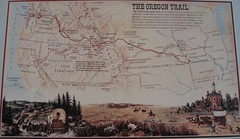
8638304270Oregon Trail2000 mile long path along which thousands of Americans journeyed to the Willamette Valley in the 1840's.43
8638304271Mountain MenFur trappers of the northwest who paved the way for continuous settlement of the great west44
8638304272California Gold Rush1849. Gold discovered in California attracted a rush of people all over the country and world to San Francisco; arrival of the Chinese; increased pressure on federal government to establish a stable government45
8638304273Mexican American War1846 - 1848. President Polk declared war on Mexico over the dispute of land in Texas. At the end, American ended up with 55% of Mexico's land, called the Mexican Cession.46
8638304274Republican Party1854. Established by anti-slavery Whigs and Democrats, "free-soilers" and reformers from the Northwest met and formed party in order to keep slavery out of the territories.47
8638304275Stephen A. DouglasSenator from Illinois who ran for president against Abraham Lincoln and was a leading voice in the debates over slavery and its expansion before the Civil War. Wrote the Kansas-Nebraska Act and the Freeport Doctrine.48
8638304276Freeport DoctrineStated that exclusion of slavery in a territory (where it was legal) could be accomplished by the refusal of the voters to enact any laws that would protect slave property. Stated by Stephen Douglass during the Lincoln-Douglass debates, eventually contributed to his loss in the 1860 presidential election as Democrats believed he had walked back the gains made with the Dred Scott v. Sanford decision.49
8638304277Abraham Lincoln16th President of the United States saved the Union during the Civil War and emancipated the slaves; was assassinated by Booth (1809-1865)50
8638304278secessionFormal withdrawal of states or regions from a nation51
8638304279habeas corpusPetition requiring law enforcement officers to present detained individuals before the court to examine the legality of the arrest. Protects individuals from arbitrary state action. Suspended by Lincoln during the Civil War.52
8638304280sectionalismTerm used to describe the growing differences between the regions of the United States, especially the North and South, leading up to the Civil War.53
8638304281Robert E. LeeConfederate general who had opposed secession but did not believe the Union should be held together by force. Military genius whose aggressiveness made him a fearsome opponent throughout the Civil War.54
8638304282Fort SumterFederal fort in the harbor of Charleston, South Carolina; the confederate attack on the fort marked the start of the Civil War.55
8638304283Battle of AntietamA battle near a sluggish little creek, it proved to be the bloodiest single day battle in American History with over 26,000 lives lost in that single day. Prevented an Confederate invasion of Maryland.56
8638304284Battle of VicksburgGrant besieged the city from May 18 to July 4, 1863, until it surrendered, yielding command of the Mississippi River to the Union effectively splitting the South in two.57
8638304285Battle of GettysburgA large battle in the American Civil War, took place in southern Pennsylvania from July 1 to July 3, 1863. Union General George G. Meade led an army of about 90,000 men to victory against General Robert E. Lee's Confederate army of about 75,000. Proved to be a significant turning point in the war because of the loss of about 1/3 of Lee's army.58
8638304286Ulysses S. GrantAn American general and the eighteenth President of the United States (1869-1877). He achieved international fame as the leading Union general in the American Civil War.59
8638304287William Tecumseh ShermanUnion General who destroyed South during "march to the sea" from Atlanta to Savannah; example of total war and "scorched-earth" military tactics.60
8638304288Thomas "Stonewall" JacksonHe was a confederate general who was known for his fearlessness in leading rapid marches, bold flanking movements, and furious assaults. He earned his nickname at the battle of first bull run for standing courageously against union fire. During the battle of Chancellorsville his own men accidently mortally wounded him.61
8638304289martial lawRule by the army instead of the elected government (such as in the South as a result of the Military Reconstruction Act)62
8638304290emergency powersWide-ranging powers a president may exercise during times of crisis or those powers permitted the president by Congress for a limited time.63
8638304291Radical ReconstructionName given to the period when Congress, which was controlled by Republicans, took over Reconstruction efforts. When southerners balked at some of the more moderate reforms proposed, more radical republicans started to gain more power and pass more legislation.64
8638304292Military Reconstruction Act1867. Divided the South into five districts and placed them under military rule; required Southern States to ratify the 14th amendment; guaranteed freedmen the right to vote in convention to write new state constitutions65
8638304293Freedmen's Bureau1865. Organization (turned government agency) run by the army to care for and protect southern Blacks after the Civil War, sometimes including settling them on confiscated confederate lands.66
8638304294Election of 1876Ended reconstruction because neither candidate had an electoral majority. The Democrat Sam Tilden loses the election to Rutherford B Hayes, Republican, was elected, and then ended reconstruction as he secretly promised.67
8638304295carpetbaggerA northerner who went to the South immediately after the Civil War; especially one who tried to gain political advantage or other advantages from the disorganized situation in southern states (as viewed from the southern perspective).68
8638304296scalawagA derogatory term for southerners who were working with the North to buy up land from desperate southerners; sometimes used in a general way by southerners criticizing other southerners who had northern sympathies.69
8638304297Nat TurnerA black preacher who in 1831 led a slave revolt Virginia that killed 60 whites. 100+ blacks were executed as a result. The rebellion was significant as it worried southern whites that larger slave rebellions were possible and therefore stricter rules were needed.70
8638304298Sojourner TruthA freed black woman who became a leader in the fight for black emancipation and women's rights.71
8638304299Frederick DouglassAn escaped slave who spoke publicly for the abolitionist cause. He wrote his autobiography, depicting the harsh realities of Southern slavery. He also looked to politics to help abolish slavery.72
8638304300Cotton KingdomAreas in the south where cotton farming developed because of the high demand for cotton and soon dominated the economy.73
8638304301Gag ResolutionStrict rule passed by pro-southern Congressmen in 1836 to prohibit all discussion of slavery in the House of Representatives74
8638304302American Colonization SocietyCreated in 1817 and supported by some blacks and whites, its purpose was to transport African Americans back to Africa once they had been freed from slavery. Idea was based on the idea that whites and blacks could not live as equals in America, even if slavery were abolished.75
8638304303James K. PolkDemocratic president after John Tyler who was best known for policies that promoted Manifest Destiny and expansionism.76
8638304304John C. FremontAn American military officer, explorer, the first candidate of the Republican Party for the office of President of the United States (1856), and the first presidential candidate of a major party to run on a platform in opposition to slavery.77
8638304305Bear Flag Revolt(1846) a revolt that took place during the Mexican-American War when 500 Americans (Anglos) in Mexican California took the city of Sonoma, CA in the spirit of Manifest Destiny and declared California to be an independent nation.78
8638304306Liberty PartyA former political party in the United States; formed in 1839 to oppose the practice of slavery; merged with the Free Soil Party in 1848.79
8638304307John C. CalhounSenator who argued for states' rights for the South. He asked for slavery to be left alone, slaves to be returned to the South, and state balance to be kept intact.80
8638304308William H. SewardCongressman of the "Young Guard" who fiercely opposed slavery and argued that Americans should follow a "higher law" (God's law) over the Constitution when it came to the issue of slavery.81
8638304309Henry ClayKnown as the "Great Compromiser"; senator who pushed for compromise between the North and South and worked with Stephen Douglas; major figure in the passing of both the Missouri Compromise (1820) and Compromise of 1850.82
8638304310Underground RailroadSecret system of safe houses along a route that led many slaves to freedom in the North and eventually Canada.83
8638304311"Fire Eaters"Refers to a group of extremist pro-slavery politicians from the South who urged the cessation of southern states.84
8638304312Charles SumnerSenator who spoke out for black freedom and racial equality post-Civil War. Publicly beaten by Preston Brooks for speaking out against the violence in Kansas, an event that marked increasing tensions between the North and South prior to the Civil War.85
8638304313Roger TaneyChief Justice of the Supreme Court who wrote an opinion in the 1857 Dred Scott case that declared the Missouri compromise unconstitutional, thereby legally preventing Congress from prohibiting slavery in new territories (and made Popular Sovereignty illegal).86
8638304314Jefferson DavisPresident of the Confederate States of America prior to and during the Civil War.87
8638304315self-determinationThe ability of a people/government to determine their own course or future using their own free will.88
8638304316Pottawatomie Creek MassacreIn reaction to the sacking of Lawrence (Kansas) by pro-slavery forces, John Brown and a band of abolitionist settlers killed five pro-slavery settlers north of Pottawatomie Creek in Franklin County, Kansas.89
8638304317Lecompton ConstitutionSupported the existence of slavery in the proposed state and protected rights of slaveholders. It was rejected by Kansas, making Kansas an eventual free state (and was a factor in spurring violence there).90
8638304318Lincoln-Douglas DebatesLincoln challenged Stephen Douglas to debates during the senatorial race of 1858 which became a public referendum on the issue of slavery.91
8638304319Clara BartonLaunched the American Red Cross in 1881. An "angel" in the Civil War, she was a hospital nurse that treated the wounded in the field.92
8638304320Border StatesSouthern states that never chose secession and joined the Confederacy during the Civil War (Missouri, Kentucky, Maryland, and Deleware).93
8638304321Andrew Johnson17th President of the United States, A Southerner form Tennessee, as V.P. when Lincoln was killed, he became president. He opposed radical Republicans who passed Reconstruction Acts over his veto. The first U.S. president to be impeached, he survived the Senate removal by only one vote.94
8638304322John Wilkes BoothSoutherner who assasinated Abraham Lincoln on April 14, 186595
8638304323George B. McClellanFirst commander of the Army of the Potomac; well-known for being a master at training an army; was replaced several times by President Lincoln during the Civil War because of his timidness and sometimes outright refusal to send his army into battle.96
8638304324Merrimack (the Virginia) v. MonitorA battle between for first "ironclad" naval vessels, marking a new age in naval warfare.97
8638304325CopperheadsNickname for Northerners who were pro-Confederacy.98
8638304326First Battle of Bull Run (Battle of Manassas)(July 1861) first major conflict of the Civil War. Southern victory led to overconfidence.99
8638304327Thaddeus StevensRadical Republican congressman from Pennsylvania who defended runaway slaves in court for free and insisted on being buried in a black cemetery; hated white Southerners. Leading figure on the Joint Committee on Reconstruction and for the social equality of African Americans.100
8638304328Wade-Davis BillBill pushed by Congress in 1864 that required 50 percent of a state's voters take the oath of allegiance and demanded stronger safe-guards for emancipation than proposed in Lincoln's 10 percent plan. Pocket-vetoed by Lincoln.101
863830432910 Percent PlanLincoln's plan for re-admitting the Southern states into the Union: a state could be reintegrated into the Union when 10 percent of its voters in the presidential election of 1860 had taken an oath of allegiance to the United States and pledged to abide by emancipation.102
8638304330Civil Rights Act (1866)A Reconstruction bill which gave which granted citizenship to African Americans and weakened the poliferation of Black Codes in the South.103
8638304331RedeemersLargely former slave owners who were the bitterest opponents of the Republican program in the South. Staged a major counterrevolution to "redeem" the south by taking back southern state governments. Their foundation rested on the idea of racism and white supremacy.104
8638304332Ku Klux KlanThe "Invisible Empire of the South", founded in Tennessee in 1866, made up of embittered white Southerners who resented the success and ability of Black legislators. They would terrorize, mutilate, and even murder "upstart" blacks or their supporters to "keep them in their place".105
8638304333"Seward's Folly"Refers to the United States' Secretary of State William Seward's decision to purchase the Alaskan territory from Russia in 1867. At the time, Seward's decision to buy the land was regarded as a terrible one by many critics in the United States.106

AMSCO AP US History Chapter 17 Flashcards

AMSCO United States History 2015 Edition Chapter 17 The Last West and the New South, 1865-1900

Terms : Hide Images
9894370013The Great American DesertName given to lands between the Mississippi and the Pacific Coast before 1860. There was very little rainfall in this area and the conditions were poor for settlement. (p. 339)0
9894370035100th meridianThe plains west of this meridian had few trees and usually received less than 15 inches of rain per year. This meridian crosses near the middle of Nebraska. (p. 339)1
9894370014buffalo herdsThese animals were essential to the nomadic Native American tribes. In early 19th century there were 15 million of these animals on the Great Plains, but by 1900 they were nearly wiped out. (p. 339)2
9894370036Great PlainsThe region west of the Mississippi River and east of the Rocky Mountains. (p. 339)3
9894370037mineral resourcesFrom 1848 to the 1890s, gold and silver strikes occurred in what became the states of California, Colorado, Nevada, Montana, Arizona, and South Dakota. (p. 340)4
9894370038mining frontier, boomtownsIn 1848, the discovery of gold in California caused the first flood of newcomers to the territory. Gold and silver were later discovered in many other areas of the west. These discoveries caused towns to grow up very quickly, then often lose population and collapse after the mining was no longer profitable. (p. 340)5
9894370015Chinese Exclusion Act of 1882In the 1860s, about one-third of the western miners were Chinese immigrants. Native-born Americans resented the competition of these immigrants. In 1862, this act was passed to prohibit further immigration by Chinese laborers to the United States. (p. 341)6
9894370039commercial citiesA few towns that served the mines, such as San Francisco, Sacramento, and Denver, grew into prosperous cities. (p. 341)7
9894370016longhorns, vaquerosThe name for the cattle which were brought to Texas from Mexico. The name for the Mexican cowboys who raised and rounded up the cattle in Texas. (p. 341)8
9894370040cattle drivesMoving the cattle from Texas to railroad towns in Kansas. (p. 342)9
9894370041barbed wireThese fences became common, they cut off the cattle's access to the open range. (p. 342)10
9894370017Joseph GliddenHe invented barbed wire to help farmers fence in their lands on the plains. (p. 342)11
9894370042Homestead ActIn 1862, this act offered 160 acres of public land free to any family that settled on it for 5 years. (p. 342)12
9894370043dry farmingThis technique along with deep-plowing enabled settlers to survive on the Great Plains. (p. 342)13
9894370044Great Plains tribesThese nomadic tribes, such as the Sioux, Blackfoot, Cheyenne, Crow, and Comanche, had given up farming in colonial times after the introduction of the horse by the Spanish. By the 1700s, they had become skillful horse riders and their lives centered on hunting buffalo. (p. 343)14
9894370045Southwest tribesThese tribes in the Southwest, such as Navajo and Apache adopted a settled life, raising crops and livestock, and producing arts and crafts. (p. 343)15
9894370046federal treaty policiesThe Indian Appropriation Act of 1871 ended recognition of tribes as independent nations by the federal government and nullified previous treaties made with the tribes. (p. 345)16
9894370047causes of Indian warsIn the late 19th century, the settlement of the thousands of miners, ranchers, and homesteaders on American Indian lands led to violence. (p. 344)17
9894370018Little Big HornIn 1876, the Sioux Indians, led by Crazy Horse and Sitting Bull, massacred the U.S. 7th Cavalry led by General Custer. This was the last major battle between the U.S. Army and the American Indians. (p. 345)18
9894370019assimilationistsThe idea that Native Americans should be integrated into American society by becoming educated, adopting American culture, customs, and Christianity. (p. 345)19
9894370020Helen Hunt JacksonThe author of "A Century of Dishonor", which created sympathy for Native Americans, but also generated support for ending American Indian culture through assimilation. (p. 345)20
9894370021Dawes Act of 1887This act supported the idea of assimilation of the American Indians. It divided tribal lands into plots of up to 160 acres. U.S. citizenship was granted to those who stayed on the land for 25 years and adopted the habits of American life. (p. 345)21
9894370022Ghost Dance movementThis religious movement was a last effort of Native Americans to resist U.S. government domination and drive whites from their ancestral lands. In an effort to suppress the movement, at the Battle of Wounded Knee more that 200 American Indians were killed. This battle marked the end of the Indian Wars. (p. 345)22
9894370048Indian Reorganization Act of 1934In 1934, this act promoted the re-establishment of tribal organization and culture. Today, more than 3 million American Indians, belonging to 500 tribes, live within the United States. (p. 346)23
9894370049Mexican War aftermathAfter the Mexican War ended in 1848, the Spanish-speaking landowners in California and the Southwest were guaranteed their property rights and granted citizenship. However, drawn-out legal proceeding after resulted in the sale or la of lands to new Anglo arrivals. (p. 346)24
9894370050Spanish-speaking areasIn 1848, the New Mexico territories, border towns, and the barrios of California were dominant spanish-speaking regions. (p. 346)25
9894370051Migration for jobsMexican Americans moved to find work, such as the sugar beet fields and mines of Colorado, and the building of western railroads. (p. 346)26
9894370052deforestationThe conservation movement was sparked by removal of large number of trees. (p. 346)27
9894370053Yellowstone, YosemiteIn 1872, this area of Wyoming was declared the first national park. In 1864 this area in California was declared a state park, later it became a national park. (p. 346)28
9894370054Department of the InteriorCarl Schurz, as Secretary of the Interior in the 1880s, advocated the creation of a forest reserves and a federal forest service to protect federal lands from exploitation. (p. 347)29
9894370055conservationists and preservationistsConservationist believed in scientific management and regulated use of natural resources, preservationists went a step further, and aimed to preserve natural areas from human interference. (p. 347)30
9894370056Forest Reserve Act of 1891This act withdrew federal timberland from development and regulated their use. (p. 347)31
9894370057Forest Management Act of 1897This act withdrew federal timberland from development and regulated their use. (p. 347)32
9894370058John Muir, Sierra ClubIn 1892, he founded this organization, with the goal of preserving some natural areas from human intervention. (p. 347)33
9894370023New SouthAfter the Civil War, the South was in a period of recovery. There was a new vision for a self-sufficient southern economy built on economic diversity and laissez-faire capitalism. (p. 347)34
9894370024Henry GradyJournalist from Georgia who coined the phrase "New South". Promoted his ideas through the Atlanta Constitution, as editor. (p. 347)35
9894370059Birmingham steelThis Southern city developed into one the nation's leading steel producers. (p. 347)36
9894370060Memphis lumberThis Southern city prospered as the center of the South's growing lumber industry. (p. 347)37
9894370061Richmond tobaccoThis Southern city became the capital of the nation's tobacco industry. (p. 347)38
9894370062integrated rail networkAfter the Civil War, the Southern railroad companies rapidly converted to standard-guage rails, which integrated them into the national rail system. (p. 347)39
9894370063agriculture's dominanceDespite progress and growth after the Civil War, the South remained a mostly agricultural based economy. (p. 347)40
9894370064sharecropping; tenant farmersAfter the Civil War, most Southerners of both races remained in traditional roles and barely got by from year to year as sharecroppers and farmers. (p. 348)41
9894370025George Washington CarverAn African-American scientist, who promoted planting of diverse crops such as peanuts, sweet potatoes, and soybeans. (p. 348)42
9894370065Tuskegee InstituteAn industrial and agricultural school established by Booker T. Washington to train blacks. (p. 348)43
9894370066white supremacistsThis group favored separating (segregating) public facilities, as a means of treating African American as social inferiors. (p. 349)44
9894370067Civil Rights Cases of 1883In 1883, the Supreme Court ruled that Congress could not legislate against the racial discrimination practiced by private citizens, which included public businesses. (p. 349)45
9894370026Plessy v. FergusonAn 1896, Supreme Court landmark case, which ruled that separate but equal accommodations in public places were constitutional and did not violate the 14th amendment. (p. 349)46
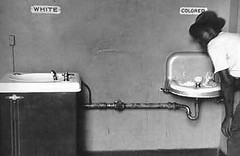
9894370027Jim Crow lawsIn the 1870s, the South passed segregation laws which required separate washrooms, drinking fountains, park benches, and most other public facilities, for blacks and whites. (p. 349)47
9894370068literacy tests, poll taxes, grandfather clausesAfter Reconstruction, various political and legal devices were created to prevent southern blacks from voting.48
9894370069white primaries, white juriesAfter Reconstruction, discrimination took many forms. Political party primaries were created for whites only, and African Americans were barred from serving on juries. (p. 349)49
9894370070lynch mobsIn the 1890s, more than 1,400 African American men were lynched (hung by a mob without trial) by Southerns.50
9894370071economic discriminationAfter Reconstruction, economic discrimination was widespread in the South. Most African Americans were kept out of skilled trades and factory jobs. African Americans remained in farming and low-paying domestic work. (p. 349)51
9894370072African American migrationIn 1894, the International Migration Society was formed to help blacks emigrate to Africa. Other blacks moved to Kansas and Oklahoma. (p. 350)52
9894370028Ida B. WellsShe was the editor of a black newspaper, she campaigned against lynching and Jim Crow laws. (p. 349)53
9894370029Booker T. WashingtonFamous African-American, who established an industrial and agricultural school for African Americans in 1881. He taught the virtues of hard work, moderation, and economic self-help. In 1900, he organized the National Negro Business League to support businesses owned by African Americans. (p. 350)54
9894370073economic cooperationBooker T. Washington's National Negro Business League emphasized racial harmony and economic cooperation. (p. 350)55
9894370074markets and farmersIn the late 1800s, farming became increasingly commercialized and specialized. They became dependent on large and expensive machinery and small, marginal farms were often driven out of business. (p. 350)56
9894370075crop price deflationAfter the Civil War, increased American and foreign food production caused a downward pressure on prices. For instance, corn per bushel prices, went from $.78 in 1867 to .$.28 in 1889. (p. 351)57
9894370076railroads and middlemenRailroads and middlemen were able to charge high or discriminatory rates in the food supply chain because they had little competition. (p. 351)58
9894370077National Grange MovementIn 1868, this organization was created primarily as a social and educational help for farmers. (p. 351)59
9894370078cooperativesGrangers established these business, owned and run by the farmers, to save the costs charged by middlemen. (p. 351)60
9894370079Granger lawsIn some states, the Grangers, with help from local businesses, successfully lobbied their state legislatures to pass laws regulating the rates charged by railroads and elevators. (p. 351)61
9894370030Munn v. IllinoisSupreme Court case in 1877, which upheld the right of a state to regulate businesses of a public nature, such as railroads. (p. 352)62
9894370031Wabash v. IllinoisSupreme Court case in 1886, which ruled that individual states could not regulate interstate commerce. (p. 352)63
9894370032Interstate Commerce CommissionThe first federal regulatory agency created to regulate interstate commerce which had the power to investigate and prosecute pools, rebates, and other discriminatory practices. (p. 352)64
9894370033Ocala Platform of 1890In 1890, a national organization of farmers, called the National Alliance, met in Florida to address the problems of rural America. It fell short of becoming a political party, but many of the reform ideas would become part of the Populist movement. (p. 352)65
9894370080census of 1890The census of 1890 declared that except for a few pockets, the entire frontier had been settled. (p. 343)66
9894370081Frederick Jackson Turner, "The Significance of the Frontier in American History"He argued that 300 years of frontier experience had shaped American culture by promoting independence and individualism. (p. 343)67
9894370082role of cities, "Nature's Metropolis"Book written by William Cronon, it argued that the frontier and cities grew up together, they were dependent on each other. (p. 353)68

AMSCO AP US History Chapter 18 Flashcards

AMSCO United States History 2015 Edition, Chapter 18 The Growth of Cities and American Culture, 1865-1900

Terms : Hide Images
6000556606causes of immigrationForces in the United States driving this process were (1) political and religious freedom, (2) economic opportunities in the western U.S. and cities, (3) large steamships offered relatively inexpensive transportation. (p. 361)0
6000556607old immigrantsThrough the 1880s, they came to the United States from northern and western Europe. They were mostly Protestant and had a high-level of literacy. (p. 361)1
6000556608new immigrantsFrom the 1890s to 1914, they came to the United States from southern and eastern Europe. Mostly non-Protestant, poor and illiterate. (p. 361)2
6000556609Statue of LibertyBegan in the 1870's, by the French sculptor Frederic-Auguste Bartholdi. It opened in New York Harbor, in 1886. (p. 362)3
6000556610Chinese Exclusion Act of 1882It was the first bill regarding immigration. It placed a ban on all new immigrants from China. (p. 362)4
6000556611Immigration Act of 1882In 1882, this act placed restrictions on the immigration of undesirable persons, such as paupers, criminals, convicts, and mentally incompetent. (p. 362)5
6000556612Contract Labor Act of 1885Restricted the immigration of temporary workers, to protect American workers. (p. 362)6
6000556613American Protective AssociationA nativist society that was prejudiced against Roman Catholics. (p. 362)7
6000556614Ellis Island 1892An immigration center opened in 1892 in New York Harbor. (p. 362)8
6000556615melting pot vs. cultural diversityThe historian's term, melting pot, refers to immigrants leaving their old-world characteristics and adopting the United States characteristics. Other historians argue that first-generation immigrants maintained their cultural identity and only the second and third generations were assimilated in the U.S. society. (p. 373)9
6000556616cause of migrationIn the late 1800s, forces driving Europeans to migrate to the United States were (1) Displaced farmworkers by political turmoil and mechanization, (2) Overcrowding due to population boom, (3) Religious persecution. (p. 361)10
6000556617streetcar citiesIn these cities, people lived in residences many miles from their jobs and commuted to work by horse-drawn streetcars. (p. 363)11
6000556618steel-framed buildingsSkyscrapers were made possible by this type of building. The first, was the Home Insurance Company Building in Chicago. It was made possible by a steel skeleton, Otis elevator, and central steam heating system. (p. 363)12
6000556619tenements, povertyAs rich people left residences near the business district, the buildings were often divided into small crowded windowless apartments for the poor. (p. 363)13
6000556620ethnic neighborhoodsDifferent immigrant groups created distinct neighborhoods where they could maintain their distinct identity. (p. 363)14
6000556621residential suburbsBy 1900, suburbs had grown up around every major U.S. city. the United States became the world's first suburban nation. (p. 364)15
6000556622political machines, bossPolitical parties in major cities came under the control of tightly organized groups of politicians, known as political machines. Each machine had its boss, the top politician who gave orders and doled out government jobs. (p. 364)16
6000556623Tammany HallA political machine in New York City, which developed into a power center. (p. 364)17
6000556624urban reformersUrban reformers stated more than 400 settlement houses in the cities. They provided services to help poor immigrants. (p. 365)18
6000556625City Beautiful movementIn the 1890s, this movement included plans to remake America's cities with tree-lined boulevards, public parks, and public cultural attractions. (p. 364)19
6000556626Henry GeorgeA San Francisco journalist who authored "Progress and Poverty" in 1879 that called to attention the failings of laissez-faire capitalism along with the wealth polarization caused by industrialization. (p. 365)20
6000556627Edward BellamyIn 1888, he wrote "Looking Backward", a popular book of social criticism that that envisioned a future that had eliminated poverty, greed, and crime. (p. 365)21
6000556628Jane AddamsIn 1889, she started Hull House in Chicago, which was a settlement house which provide help to immigrants. (p. 365)22
6000556629settlement housesThey provide social services to new immigrants. (p. 365)23
6000556630Social GospelIn the 1880s and 1890s this movement espoused social justice for the poor based on Christian principles. (p. 365)24
6000556631Walter RauschenbuschThe leading figure of the Social Gospel movement, and a New York City minister. (p. 365)25
6000556632Cardinal GibbonsA Roman Catholic leader who supported organized labor. (p. 366)26
6000556633Dwight MoodyHe founded Moody Bible Institute, in 1889. It helped generations of urban evangelists to adapt traditional Christianity to city life. (p. 366)27
6000556634Salvation ArmyImported from England in 1879, this charity provided the basic necessities of life for the homeless and the poor while also preaching Christian Gospel. (p. 366)28
6000556635family size; divorceFamily size continued to drop as more people moved from the farms to the cities. Children were needed to do work on farms, but in the city they did not provide that advantage. Divorce rates increased as the legal grounds for divorce became more lenient. (p. 366)29
6000556636Susan B. Anthony, NAWSAIn 1890, one of the founders of the National American Womens Suffrage Association (NAWSA), which worked to secure voting rights for women. (p. 366)30
6000556637Francis Willard, WCTULeader of the Women's Christian Temperance Union (WCTU) which advocated total abstinence from alcohol. (p. 367)31
6000556638Antisaloon LeagueIn 1893, this organization became a powerful political force and by 1916 had persuaded twenty one states to close down all saloons and bars. (p. 367)32
6000556639Carrie NationShe raided saloons and smashed barrels of beer with a hatchet. (p. 367)33
6000556640kindergartenIn the late 1800s, the practice of sending children to kindergarten became popular. (p. 367)34
6000556641public high schoolIn the late 1800s, there was growing support for tax-supported public high schools. (p. 367)35
6000556642college elective systemIn the late 1800s, colleges started reducing the number of required courses and offered more elective courses. These were courses students could choose, and this increased the number of foreign language and science courses. (p. 368)36
6000556643Johns Hopkins UniversityThis university was founded in Baltimore in 1876, the first to specialize in advanced graduate studies. (p. 368)37
6000556644new social sciencesNew fields such as psychology, sociology, anthropology, and political science emerged. (p 368)38
6000556645Richard T. ElyHe attacked laissez-faire economic thought as dogmatic and outdated and used economics to study labor unions and trusts. (p. 368)39
6000556646Oliver Wendell HolmesHe taught that law should evolve with the times and not be bound by previous precedents or decisions. (p. 368)40
6000556647Clarence DarrowA famous lawyer, he argued that criminal behavior could be caused by an environment of poverty, neglect, and abuse. (p. 368)41
6000556648W.E.B. Du BoisA leading black intellectual, he advocated for equality for blacks, integrated schools, and equal access to higher education. (p. 368)42
6000556649realism, naturalismMark Twain became the first realist author and his books often showed the greed, violence, and racism in American society. Authors known for their naturalism focused in how emotions and experience shaped human experience. (p. 369)43
6000556650Mark TwainThe first great realist author, he is famous for his classic "The Adventures of Huckleberry Finn". (p. 369)44
6000556651Stephen CraneHe wrote in the 1890s about the human condition. His books included "Maggie: A Girl in the Streets" and the "Red Badge of Courage". (p. 369)45
6000556652Jack LondonHe wrote about the conflict between man and nature in books such as "The Call of the Wild". (p. 369)46
6000556653Theodore DreiserThe author of "Sister Carrie". Notable for its naturalism and controversy, as it ran contrary to the moral undercurrents of 1900. (p. 369)47
6000556654Winslow HomerThe foremost American painter of seascapes and watercolors. (p. 369)48
6000556655Thomas EakinsSpecialized in the painting of the working class and used serial-action photographs to study human anatomy. (p. 369)49
6000556656ImpressionismA painting technique that originating in France. (p. 370)50
6000556657James WhistlerAn American expat, he painted Arrangement in Grey and Black, popularly known as Whistler's Mother. It was a quintessential example of his study of color rather than subject. (p. 370)51
6000556658Mary CassattAn American impressionist painter known as a portrait painter. She spent much of her life in France. (p. 370)52
6000556659Ashcan SchoolAround 1900, they painted scenes of everyday life in poor urban neighborhoods. (p. 370)53
6000556660Armory ShowA New York painting exhibit in 1913 that featured abstract paintings. (p. 370)54
6000556661abstract artNon-representational art, not accepted by Americans until the 1950s. (p. 370)55
6000556662Henry Hobson RichardsonHis architectural designs of the 1870s, based on the Romanesque style, gave a gravity and stateliness to functional commercial buildings. (p. 370)56
6000556663Romanesque styleThis architecture style featured massive stone walls and rounded arches. (p. 370)57
6000556664Louis SullivanHe rejected historical architecture and focused on tall, steel-framed office buildings. He focused on building a form that followed function. A member of the Chicago School. (p. 370)58
6000556665form follows functionThe form of the building flowed from its function. (p. 370)59
6000556666Frank Lloyd WrightThe most famous architect of the 20th century, he developed an organic style that made his buildings fit in with their natural surroundings. (p. 370)60
6000556667organic architectureAn architectural style in which the building was in harmony with its natural surroundings. (p. 370)61
6000556668Frederick Law OlmstedThe originator of landscape architecture, he designed Central Park and grounds of the U.S. Capitol. (p. 371)62
6000556669growth of leisure timeThe growth of leisure time activities was a result of the reduction of work hours, improved transportation, advertizing, and the decline of restrictive values. (p. 371)63
6000556670John Philip SousaHe wrote a series of popular marches played in small town bandstands across the country. (p. 371)64
6000556671jazz, blues, ragtimeA form of music that combined African rhythms and western-style instruments and mixed improvisation with a structured band format. (p. 371)65
6000556672Jelly Roll MortonA famous African American jazz musician from New Orleans. (p. 371)66
6000556673Scott JoplinA black composer notable for his contribution to ragtime. He sold over one million copies of his song "Maple Leaf Rag". (p 371)67
6000556674mass circulation newspapersLarge circulation newspapers had been around since 1830, but the first to exceed one million subscribers was Joseph Pulitzer's New York World. (p. 371)68
6000556675Joseph PulitzerHe established the first newspaper to exceed over one million in circulation by filling it with sensational stories of crime and disaster. (p. 317)69
6000556676William Randolph HearstA newspaper publisher whose introduction of large headlines and sensational reporting changed American journalism. (p. 371)70
6000556677Ladies Home JournalBy the 1880s, advertising and new printing technology lead to this magazine which sold for only 10 cents. (p. 371)71
6000556678circus trainsThe national rail network made possible traveling circuses. (p. 371)72
6000556679Barnum & Bailey, Greatest Show on EarthA traveling circus that was very popular. (p. 371)73
6000556680Buffalo Bill Wild West ShowWilliam F. Cody brought this show to urban populations. (p. 372)74
6000556681spectator sports, boxing, baseballIn the late 19th century professional sports started. (p.372)75
6000556682amateur sports, bicycling, tennisThese were late 19th century sports of the middle and upper classes. (p. 372)76
6000556683social class and discriminationIn the late 19th century, sports such as golf and tennis became popular with wealth members of athletic clubs. The very rich pursued polo and yachting. (p. 372)77
6000556684country clubs, golf, polo, yachtsThese were late 19th century sports of the wealthy. (p. 372)78
6000556685corner saloon, pool hallsIn the late 19th century, young single men often centered their lives around these establishments. (p. 372)79

US AP History Period 1 Flashcards

Terms : Hide Images
5836448325How did early Americans reach North and South America?They crossed a land bridge from Asia0
5836448326When was the land bridge formed? What was it made of?During the ice age, ice/land1
5836448327What were the Indians doing when they crossed the land bridge?Following food or herds2
5836448328What were the most complex Indian communities?Mayan, Inca and Aztecs3
5836448329What did the cultivation of maize do?Transform nomadic hunter-gather societies into settled farming communities4
5836448330What kinds of items did Europeans desire from Persia and China?Silk, Spices, Oils/Perfumes5
5836448331What were the Spanish 3 motives for exploration?1. God 2. Gold 3. Glory6
5836448332Which direction did Portugal head to reach Asia and India?South along the West coast of Africa.7
5836448333Who married to make Spain whole?Ferdinand of Aragon and Isabella of Castille8
5836448334Where did Columbus land?Hispainola9
5836448335Columbus died thinking what?That he had found a trade route to Asia and that he had landed on the outskirts of India10
5836448336When Spain and Portugal went to the pope to see how to divide the world, the pope made what?The Treaty of Tordesillas11
5836448337What did the Treaty of Tordesillas say?Divided the trade routes to Asia: Spain gets the route across the Atlantic and Portugal gets the route around Africa. Also, Spain got a lot of land in the New World and Portugal got present-day Brazil.12
5836448338Who came to the New World once it was discovered?Spanish conquistadors13
5836448339Who conquered the Aztecs? Who conquered the Incas?Cortes-Aztecs Pizzaro- Incas14
5836448340What are the 2 things the Spanish give the Indians in exchange for their work (in the Encomienda System)1. Provide food, shelter, and good treatment to the Indians 2. Convert them to Christians15
5836448341What was the Encomienda System basically?Slavery16
5836448342Who worked for Indian's rights?Bartolome de las Casas17
5836448343What happened when the Spanish ran out of Indians to do work?They went and got Africans18
5836448344Who was the explorer sent by England to the New World? Where did he explore?John Cabot- coastline of North America19
5836448345Who was an explorer sent by Spain to the New World? (not Columbus) Where did he explore?Vasco Nunez de Balboa- Pacific Ocean20
5836448346What is Ferdinand Magellan credited with?The 1st circumnavigation of the earth21
5836448347When the Spanish moved north, what did they establish? Where?A fort (outpost) in St. Augustine, Fl22
5836448348What is the Biological (Columbian) Exchange?Exchange of plants, animals, and diseases between Old World and New World after the time of Columbus.23
5836448349What 3 crops from the Americas ended up being staple crops in Europe?1. Corn 2. Beans 3. Potatoes24
5836448350What was the "big" animal brought to the Americas that changed Indian life?Horses25
5836448351What diseases were from the Old World and went to the New World?Smallpox, malaria, yellow fever, influenza26
5836448352What disease did the Indians give Europeans?Syphillis27
5836448353Columbian ExchangeAn exchange of goods, ideas and skills from the Old World (Europe, Asia and Africa) to the New World (North and South America) and vice versa.28
5836448354EncomiendaA grant of land made by Spain to a settler in the Americas, including the right to use Native Americans as laborers on it29
5836448355Atlantic slave tradeLasted from 16th century until the 19th century. Trade of African peoples from Western Africa to the Americas. 98% of Africans were sent to the Caribbean, South and Central America.30
5836448356Bartolome de las CasasFirst bishop of Chiapas, in southern Mexico. He devoted most of his life to protecting Amerindian peoples from exploitation. His major achievement was the New Laws of 1542, which limited the ability of Spanish settlers to compel Amerindians to labor; however his suggestion to replace Natives with Africans was won he would regret.31
5836448357MaizeAn early form of corn grown by Native Americans32
5836448358AnasaziA Native American who lived in what is now southern Colorado and Utah and northern Arizona and New Mexico and who built cliff dwellings33
5836448359IroquoisA later native group to the eastern woodlands. They blended agriculture and hunting living in common villages constructed from the trees and bark of the forests34
5836448360CherokeeAre a Native American people historically settled in the Southeastern United States (principally Georgia, the Carolinas and Eastern Tennessee). Linguistically, they are part of the Iroquoian-language family. In the 19th century, historians and ethnographers recorded their oral tradition that told of the tribe having migrated south in ancient times from the Great Lakes region, where other Iroquoian-speaking peoples were located.35
5836448361InuitA member of a people inhabiting the Arctic (northern Canada or Greenland or Alaska or eastern Siberia)36
5836448362MayaMesoamerican civilization concentrated in Mexico's Yucatan Peninsula and in Guatemala and Honduras but never unified into a single empire. Major contributions were in mathematics, astronomy, and development of the calendar.37
5836448363Aztec(1200-1521) 1300, they settled in the valley of Mexico. Grew corn. Engaged in frequent warfare to conquer others of the region. Worshipped many gods (polytheistic). Believed the sun god needed human blood to continue his journeys across the sky. Practiced human sacrifices and those sacrificed were captured warriors from other tribes and those who volunteered for the honor.38
5836448364IncaTheir empire stretched from what is today Ecuador to central Chili in the Andes Mountain region of South America. Called the Children of the Sun.39
5836448365TenochtitlanCapital of the Aztec Empire, located on an island in Lake Texcoco. Its population was about 150,000 on the eve of Spanish conquest. Mexico City was constructed on its ruins.40
5836448366Aztec calendar365 days, divided into 18 months each with 20 days.41
5836448367Terrace farmingThe cutting out of flat areas (terraces) into near vertical slopes to allow farming. Terrace farms appears as steps cut into a mountainside. This adaptation allowed both the early Chinese, and the Inca of Mesoamerica to grow enough food for their large populations.42
5836448368NomadEarly, simplistic man that migrated across the land bridge.43
5836448369Causes for European interest in exploration?The Holy Crusades, Renaissance and The Protestant Reformation.44
5836448370Martin LutherBroke away from the Catholic Church because of his 95 problems with the Catholic Church.45
5836448371King Henry VIIIBroke away from the Catholic Church because of his disagreement with his inability to get divorced; which eventually led to civil unrest in his country.46
5836448372New FranceEstablished in Canada and along the Mississippi River, focused on fur trade.47

AP US History Flashcards

Terms : Hide Images
5955770396hunter-gatherer economyA nomadic way of life with no agriculture focused on following food sources including animals and wild plants0
5955770397agricultural economyeconomy based on the production of crops1
5955770398spanish explorationColonization of the Americas by the conquistadors in search for gold, glory and god2
5955770399encomienda systemA government system where natives were given to colonists to work in return for converting them to Christianity.3
5955770400Portuguese explorationDue to advancements in sailing technology the Portuguese were able to sail down the coast of Africa and open trade of gold and slaves, settle and make plantations and eventually find the way around Africa to the indies4
5955770401feudalismA political, economic, and social system based on the relationship between lord and vassal in order to provide protection5
5955770402Colombian exchangethe exchange between the new world and the old world consisting of the old world bringing wheat, cows, horses, sheep, pigs, sugar, rice, coffee, smallpox, malaria and yellow fever. while the new world sent gold, silver, corn, potatoes, tobacco, and syphills6
5955770403Christopher ColumbusAn Italian navigator who was funded by the Spanish Government to find a passage to the Far East. He is given credit for discovering the "New World," even though at his death he believed he had made it to India. He made four voyages to the "New World." The first sighting of land was on October 12, 1492, and three other journeys until the time of his death in 15037
5955770404MercantilismEuropean government policies of the 16th-18th centuries designed to promote overseas trade between a country & its colonies and accumulate precious metals by requiring colonies to trade only with their motherland country.8
5955770405New Amsterdamsettlement established by the Dutch near the mouth of Hudson River and the southern end of Manhattan Island. Annexed by the English in 1664.9
5955770406Jamestown (1607)First permanent English settlement in the New World located in Virginia on the Chesapeake Bay/James River; settled by the Virginia Company of London. History: Original settlers suffered from disease (especially malaria), internal strife, & starvation. Leaders: John Smith - Demanded that "He who does not work, will not eat." John Rolfe - Introduced tobacco to the colony.10
5955770407Bacon's Rebellion (1676)Rebellion of discontent former landless servants led by Nathaniel Bacon. Historical Significance: Led to a move from indentured servants to African slaves for labor purposes11
5955770408Plymouth (1620)The first permanent English settlement in New England; established by religious separatists seeking autonomy from the church of England.12
5955770409PilgrimsGroup of Puritan separatists who established Plymouth Colony in Massachusetts to seek religious freedom after having lived briefly in the Netherlands13
5955770410PuritansEnglish religious sect who hoped to "purify" the Anglican church of Roman Catholic traces in practice & organization.14
5955770411Maryland Toleration Act (1649)The first law on religious tolerance in the British North America; allowed freedom of worship for all Christians - including Catholics - in Maryland, but sentenced to death anyone who denied the divinity of Jesus.15
5955770412First Great AwakeningReligious revival movement during the 1730s and 1740s; stressed the need for individuals to repent and urged a personal understanding of truth. Leaders: George Whitefield Jonathan Edwards - "Sinners in the Hands of an Angry God Historical Significance: Reduced the number of church leaders and led to a schism within the Protestant Church.16
5955770413Stono Rebellion (1739)The most serious slave rebellion in the the colonial period; inspired in part by Spanish officials' promise of freedom for American slaves who escaped to Florida. Historical Significance: Led to the Negro Act of 1740 prohibiting slaves from growing their own food, assembling in groups, earning money, or learning to read and making it more difficult to free slaves.17
5955770414French & Indian War (1754-1763The name for the North American theater of the Seven Years War & was a successful attempt to move the French out of the Ohio Valley & to stop Indian raids on frontier settlements. Historical Significance: Colonists gained pride in their own military strength, felt more disconnected from Britain, & were left without fear of French a invasion.18
5955770415Albany Plan of Union (1754)Plan proposed by Benjamin Franklin that sought to unite the 13 colonies for trade, military, and other purposes; the plan was turned down by the colonies & the Crown.19
5955770416Peace of Paris (1763)Ended French and Indian War Terms: Britain gained all of French Canada & all territory south of Canada & east of the Mississippi River. France & Spain lost their West Indian colonies. Britain gained Spanish Florida. Spain gained French territory west of the Mississippi, including control of the port city of New Orleans.20
5955770417Chief PontiacOttawa Indian who led a rebellion against the British occupying the western parts of the American colonies after the French & Indian War21
5955770418Salutary NeglectPrime Minister Robert Walpole's policy in dealing with the American colonies. He was primarily concerned with British affairs & believed that unrestricted trade in the colonies would be more profitable for England than would taxation of the colonies22
5955770419Navigation LawsA series of strict British trade policies designed to promote English shipping & control colonial trade in regard to important crops (such as tobacco) & resources, which had to be shipped exclusively on British ships23
5955770420Molasses Act (1733British legislation which taxed all molasses, rum, & sugar imported from countries other than Britain & her colonies; British had difficulty enforcing the tax; most colonial merchants did not pay it.24
5955770421Proclamation of 1763Forbade British colonists from settling west of the Appalacian Mountains & required any settlers already living west of the mountains to move back east.25
5955770422Sugar Act (1764)Replaced the Molasses Act (1733). Reduced the duties on imported sugar, while the British made a concerted effort to enforce the act & punish smugglers26
5955770423Stamp Act (1765Taxed all printed material in the colonies, including - but not limited to - stamps, legal documents, newspapers, playing cards, etc. Historical Significance: Led to the formation of colonial organizations such as the Stamp Act Congress, Sam Adams's Loyal Nine, & the Sons of Liberty & the suggestion that a complete break with Britain was essential to the colonies' future27
5955770424Townshend Acts (1767Provisions: Imposed a tax - to be paid at American ports - on items produced in Britain & sold in the colonies, including paper, glass, lead, paint, & tea. Suspended the New York Assembly for refusing to provide British troops with supplies. Established an American Board of Customs & admiralty courts to hear cases of smuggling. Issued Writs of Assistance. Historical Significance: Led to a boycott of British goods, the Circular Letters, John Dickinson's "Letters from a Pennsylvania Farmer," and unrest in Boston.28
5955770425Boston Massacre (1770)An incident in which British soldiers fired into a crowd of colonists who were teasing and taunting them; five colonists were killed. Historical Significance: Boston's radicals used to incident to wage an Anti-British propaganda war.29
5955770426Tea Act (1773)Allowed the British East India Company to sell its low-cost tea directly to the colonies Historical Significance: Undermined colonial tea merchants; led to the Boston Tea Party.30
5955770427Boston Tea Party (1773)Colonial response to the Tea Act; 30-130 colonists - dressed as Mohawk Indians - boarded British ships and dumped the tea into Boston Harbor Historical Significance: Led to the Intolerable Acts.31
5955770428Intolerable Acts (Coercive Acts) (1774)British response to the Boston Tea Party Provisions: Boston Port Act - Closed the port of Boston and relocated the customs house so that some important supplies could enter Massachusetts. Massachusetts Government Act - Limited town meetings and replaced the Massachusetts judiciary and council members with Crown appointees. Administration of Justice Act - Required that trials of royal officials accused of serious crimes in the colonies be held in Britain. Quartering Act - Required all colonists to house British troops when ordered32
5955770429Quebec Act (1774Extended Quebec's boundary to the Ohio River, recognized Catholicism as its official religion, and established a non-representative government for its citizens. Historical Significance: Colonists feared a precedent had been established in regards to the type of government that had been established in Quebec and resented the expansion of its borders into territory to which they had been denied access by the Proclamation of 1763.33
5955770430First Continental Congress (1774)Met to discuss a response to the Intolerable Acts; adopted the Declaration and Resolves in which they: Declared the Intolerable Acts null and void. Recommended that colonists arm themselves and that militias be formed. Recommended a boycott of British imports.34
5955770431Second Continental Congress (1775)Managed the colonial war effort, and moved incrementally towards independence - finally adopting the Declaration of Independence in 177635
5955770432Battle of Bunker Hill (1775First major battle of the American Revolution; ended in colonial defeat. Historical Significance: The British suffered heavy casualties, including a notably large number of officers36
5955770433Olive Branch Petition (1775)Adopted by the Continental Congress in an attempt to avoid a full-blown war with Great Britain. Provisions: Affirmed American loyalty to Great Britain and entreated the king to prevent further conflict. Historical Significance: Rejected and the colonies were formally declared in rebellion37
5955770434Thomas PainePatriot and writer whose pamphlet Common Sense convinced many Americans that it was time to declare independence from Britain38
5955770435Declaration of Independence (1776)Written by Thomas Jefferson; influenced by the Enlightenment philosophers of his day. Provisions: Part 1 - Explains the necessity of independence for the preservation of basic laws and rights. Part 2 - Lists a series of "abuses and usurpations" by the king and his government; Jefferson claimed that this treatment violated the social contract the British monarch had with the his colonies, thereby justifying the actions his American subjects felt compelled to take. Part 3 - Ends with what is tantamount to a formal declaration of war.39
5955770436Treaty of Paris (1783)Ended the American Revolution Terms: Britain recognized U.S. independence, The boundaries of the U.S. were established. American fishing ships were given unlimited access to the waters off Newfoundland. The U.S. government agreed it would not interfere with British creditors and merchants seeking to collect debts owed to them by Americans. The U.S. government agreed to compensate Loyalists whose property had been confiscated during the war.40
5955770437Articles of ConfederationMajor Features: A unicameral legislature No authority for Congress to impose taxes One vote in Congress for each state No national court system No provision for a uniform national currency No chief executive A requirement that 9 of the 13 states approve passage of certain legislation Unanimity for amendments to the Articles of Confederation No authority for Congress to regulate either interstate or foreign commerce41
5955770438Shays' Rebellion (1786-87)An armed uprising that took place in central and western Massachusetts protesting mortgage foreclosures. Historical Significance: Highlighted the need for a strong national government.42
5955770439Virginia PlanLeaders: James Madison and Edmund Randolph Provisions: Called for a strong national government with three branches and a two-chamber legislature with each state's representation based on its population.43
5955770440New Jersey PlanLeaders: William Patterson Provisions: Called for a unicameral legislature in which each State would be equally represented44
5955770441Great (Connecticut) CompromiseProvisions: 1) A state's representation in the House of Representatives was to be based on population. 2) The states' representation in the Senate would be equal. 3) All money bills would originate in the House. 4) Direct taxes on states were to be assessed by population.45
5955770442Three-Fifths CompromiseProvisions: Three-fifths of a state's slave population would be counted for purposes of taxation and representation. A fugitive slave law required that runaway slaves who escaped to a free state must be returned to their owners46
5955770443Powers of the Legislative BranchCongress has the power of the purse - power to set and collect taxes, borrow money, regulate trade, coin money. Congress was to set up a postal service and issue patents and copyrights. War must be authorized by Congress. Congress is responsible for raising and maintaining an army and a navy47
5955770444Powers of the Executive BranchThe president carries out out and enforces laws passed by Congress. The president can veto congressional bills. The president makes treaties. The president is the commander in chief of the U.S. military. The president appoints federal officials.48
5955770445Powers of the Judicial BranchCongress was to establish a Supreme Court and lower courts. The kinds of cases that could be heard in federal courts was specified. The Supreme Court's jurisdiction was outlined. Treason was defined; requirements for conviction were set; and punishment was to be in the hands of Congress49
5955770446FederalistsLeaders: Washington, Hamilton, Madison, Franklin Characteristics: Support came mainly from coastal and urban areas and the upper class. Ideas: Favored a strong central government to maintain peace and stability.50
5955770447Anti-FederalistsLeaders: Patrick Henry, John Hancock, George Mason Characteristics: Support came mainly from the backcountry and agricultural areas and debtors. Ideas: Opposed a central government that did not guarantee protection of individual rights51
5955770448Hamilton's Economic ProgramMajor Features: 1) Tariff of 1789 2) Report on Public Credit 3) Report on Manufactures 4) Bank of the United States52
5955770449Bank of the United StatesInstitution proposed by Alexander Hamilton in order to stabilize and improve the nation's credit, and to improve handling of the financial business of the U.S. government under the newly enacted Constitution. Historical Significance: Highlighted the growing political rivalry between Hamilton (Federalist) and Jefferson (Democratic-Republican) and the debate concerning the scope of the federal government.53
5955770450Tariff of 1789Designed to protect domestic manufacturing; discouraged competition from abroad and compelled foreign competitors to raise prices on their commodities. Historical Significance: Provided the U.S. government with much-needed revenue54
5955770451Whiskey Rebellion (1791American uprising over the establishment of a federal tax on liquor; was quickly ended by George Washington and 13,000 troops. Historical Significance: Demonstrated that the new national government had the willingness and ability to suppress violent resistance to its laws.55
5955770452Neutrality Proclamation (1793)Declared that the U.S. would remain neutral in the conflict between France and Great Britain and threatened legal proceedings against any American providing assistance to any country at war56
5955770453Jay Treaty (1794)US & Great Britain Terms: Stopped the search and seizure of American ships by the British, made America pay pre-revolutionary debts, and opened British ports57
5955770454Election of 1796The first contested American presidential election. Candidates: John Adams (Federalist) vs. Thomas Jefferson (Democratic-Republican) Results: Adams was elected president while his opponent, Jefferson, was elected vice-president. Historical Significance: Led to the passage of the Twelfth Amendment in 1804.58
5955770455Federalist PartyLeaders: Alexander Hamilton Major Ideas: Represented the interests of the capitalist class. Favored expansion of the federal government's power and a loose interpretation of the Constitution. Held that the future of the nation was dependent on developing manufacturing and industry. Favored Great Britain.59
5955770456Democratic-Republican PartyLeaders: Thomas Jefferson, James Madison Major Ideas: Represented the interests of the common man, the farmer. Was anti-capitalistic. Favored limitations on the power of the federal government and a strict interpretation of the Constitution. Held that the future of the nation was dependent on maintaining an agrarian society. Favored support of France60
5955770457XYZ Affair (1797)Incident that precipitated an undeclared war with France when three French officials demanded that American emissaries pay a bribe before negotiating disputes between the two countries. Historical Significance: Led to the Quasi-War with France; convinced John Adams to strengthen the U.S. navy.61
5955770458Alien Acts (1798)Terms: Allowed the president to expel any foreigner determined to be a threat to the nation; offenders could be jailed or deported during wartime, and the residency requirement for citizenship was extended from 5 years to 14 years. Historical Significance: Led to the Kentucky and Virginia Resolutions; contributed to the debate concerning constitutional rights in times of war.62
5955770459Sedition Act (1798)Terms: Made it illegal to defame or criticize the president or the government; aimed at war newspapers critical of the Federalist policies; Jeffersonians viewed it as proof that individual liberties were threatened if the central government was too strong. Historical Significance: Led to the Kentucky and Virginia Resolutions; contributed to the debate concerning constitutional rights in times of war63
5955770460Kentucky and Virginia Resolutions (1799)Jefferson and Madison's response to the Alien and Sedition Acts; promoted the states' right to nullify federal laws they considered to be unconstitutional. Historical Significance: Established the Nullification Doctrine.64
5955770461Election of 1800Sometimes referred to as the "Revolution of 1800." Candidates: John Adams (Federalist) vs. Thomas Jefferson (Democratic-Republican) Results: Jefferson and Burr tied; the election was thrown into the House of Representatives which elected Jefferson on the 36th ballot. Historical Significance: Led to the passage of the Twelfth Amendment in 1804.65
5955770462Louisiana Purchase (1803A territory in the west central U.S. purchased from France for $15 million; extended from the Mississippi River to the Rocky Mountains and from the Gulf of Mexico to Canada. Historical Significance: Protected trade access to the port of New Orleans and free passage on the Mississippi River; contributed to the growing slavery debate in the U.S.66
5955770463Embargo Act (1807)Prohibited all foreign trade. Historical Significance: Devastated the New England economy and led many to support Charles Pinckney, the Federalist candidate in the 1808 election. was replaced by non-intercourse act (making trade open to anyone67
5955770464Macon's Bill No. 2 (1810)Replaced the Non-Intercourse Act of 1809; reopened trade with both Britain and France but held that if either agreed to respect America's neutrality in their conflict, the United States would end trade with the other68
5955770465Battle of Tippecanoe (1811)U.S. forces - led by William Henry Harrison - defeated Tecumseh's confederacy then burned its headquarters at Prophetstown. Historical Significance: Tecumseh's confederacy allied with the British during the War of 1812; Harrison emerged as a war hero.69
5955770466Hartford Convention (1814-1815)Event at which New England Federalists met to discuss their grievances concerning the ongoing War of 1812 and the political problems arising from the domination of the Federal Government by Presidents from Virginia. Historical Significance: Led to the collapse of the Federalist Party.70
5955770467Effects of the War of 1812The U.S. economy was devastated. Large areas of the nation's capitol were destroyed. American nationalism intensified. The nation won foreign respect for its military capabilities. The Federalists and New England were discredited for their antipathy to the war and the actions they took to impede its efforts. Military careers were launched and enhanced by the war.71
5955770468American SystemHenry Clay's plan for a profitable domestic market to be used to knit the country together economically and politically. Provisions: Support for a high tariff to protect American industries and generate revenue for the federal government. Maintenance of high public land prices to generate federal revenue. Preservation of the Bank of the United States to stabilize the currency and rein in risky state and local banks. Development of a system of internal improvements (such as roads and canals) which would knit the nation together and be financed by the tariff and land sales revenues72
5955770469Treaty of 1818U.S. and Great Britain Terms: Allowed the Americans to share the Newfoundland fisheries with Canada and gave both countries a joint occupation of the Oregon Territory for the next 10 years73
5955770470Panic of 1819Economic panic caused by extensive speculation and a decline of European demand for American goods along with mismanagement within the Second Bank of the United States; often cited as the end of the Era of Good Feelings. Historical Significance: Marked the end of the economic expansion that had followed the War of 1812 and ushered in new financial policies that would shape economic development.74
5955770471Panic of 1819Economic panic caused by extensive speculation and a decline of European demand for American goods along with mismanagement within the Second Bank of the United States; often cited as the end of the Era of Good Feelings. Historical Significance: Marked the end of the economic expansion that had followed the War of 1812 and ushered in new financial policies that would shape economic development.75
5955770472Election of 1824Candidates: John Q. Adams vs. Andrew Jackson vs. William H. Crawford vs. Henry Clay Results: No candidate won the required number of electoral votes, throwing the election into the House of Representatives where Clay offered his support to Adams who was elected on the first ballot. Historical Significance: Led to accusations of a "corrupt bargain."76
5955770473Corrupt BargainRefers to the claim from the supporters of Andrew Jackson that John Quincy Adams and Henry Clay had worked out a deal to ensure that Adams was elected president by the House of Representatives in 1824.77
5955770474Election of 1828Candidates: John Q. Adams (National Republican) vs. Andrew Jackson (Democrat) Results: Jackson won a landslid victory. Historical Significance: Marked the beginning of modern American politics, with the decisive establishment of democracy and the formation of the two-party system78
5955770475Tariff of 1828Protective tariff on imports that benefited the industrial North while forcing Southerners to pay higher prices on manufactured goods; called the "Tariff of Abominations" by Southerners.79
5955770476Nullification Crisis (1828-33)*Leaders" John C. Calhoun Events Tariff of 1828 - The "Tariff of Abominations." Tariff of 1832 - Reduced tariffs to remedy the conflict created by the Tariff of 1828. Ordinance of Nullification - Declared the Tariffs of 1828 and 1832 null and void within the state borders of South Carolina. Force Bill - Authorized the president to use whatever force necessary to enforce federal tariffs. Tariff of 1833 - Proposed gradually reducing tariffs back to their 1816 rates.80
5955770477Second Bank of the United StatesInstitution chartered in 1816 under President Madison and became a depository for federal funds and a creditor for state banks. Historical Significance: Blamed for the Panic of 1819; especially unpopular among the western land speculators and farmers who supported Andrew Jackson.81
5955770478The Bank War (1832-1836)Major Events: Erupted when Henry Clay sought to renew the Bank's charter before the Election of 1832. Jackson vetoed the bill then ordered all federal deposits in the bank to be withdrawn. Two Secretaries of the Treasury refused and were removed from office. Jackson was censured by the U.S. Senate. Bank president Nicholas Biddle called in loans from across the country resulting in a financial crisis. The Bank lost its charter in 1836 and went out of business five years later.82
5955770479Transcendentalist MovementU.S. literary movement that stressed the relationship between human beings and nature, spiritual things over material things, and the importance of the individual conscience. Leaders: Ralph Waldo Emerson - "Self-Reliance" Henry David Thoreau - "Walden," "Civil Disobedience" Historical Significance: Influenced the antebellum reform movements83
5955770480King Williams and Queen Anne's WarsQueen Anne's War (1702-1713), as the North American theater of the War of the Spanish Succession was known in the British colonies, was the second in a series of French and Indian Wars fought between France and England, later Great Britain, in North America for control of the continent.84
5955770481The War of Jenkins Earconflict between Britain and Spain that lasted from 1739 to 1748, with major operations largely ended by 1742,The seeds of conflict began with the separation of an ear from Jenkins following the boarding of his vessel by Spanish coast guards in 1731, eight years before the war began. Popular response to the incident was tepid until several years later when opposition politicians and the British South Sea Company hoped to spur outrage against Spain, believing that a victorious war would improve Britain's trading opportunities in the Caribbean. Also ostensibly providing the impetus to war against the Spanish Empire was a desire to pressure the Spanish not to renege on the lucrative asiento contract, which gave British slavers permission to sell slaves in Spanish America.85
5955770482Zenger Triala German American printer and journalist in New York City. Zenger printed The New York Weekly Journal.[1] The first generation of American editors discovered readers loved it when they criticized the local governor; the governors discovered they could shut down the newspapers. The most dramatic confrontation came in New York in 1734, where the governor brought Zenger to trial for Criminal Libel after the publication of satirical attacks. The jury acquitted Zenger, who became the iconic American hero for freedom of the press86
5955770483the Intolerable actsAmerican Patriots' term for a series of laws passed by the British Parliament in 1774 after the Boston Tea Party. They punish the Massachusetts colonists for their defiance of throwing a large tea shipment into Boston Harbor in reaction to being taxed by the British. In Great Britain, these laws were referred to as the Coercive Acts.The acts took away Massachusetts' self-government and historic rights, triggering outrage and resistance in the Thirteen Colonies. They were key developments in the outbreak of the American Revolution in 1775.87
5955770484Cession of Florida (Adams-Onis Treaty)treaty between the United States and Spain in 1819 that ceded Florida to the U.S. and defined the boundary between the U.S. and New Spain. It settled a standing border dispute between the two countries and was considered a triumph of American diplomacy. It came in the midst of increasing tensions related to Spain's territorial boundaries in North America vs. the United States and Great Britain in the aftermath of the American Revolution; and also during the Latin American Wars of Independence. Florida had become a burden to Spain, which could not afford to send settlers or garrisons. Madrid decided to cede the territory to the United States through the Adams-Onís Treaty in exchange for settling the boundary dispute along the Sabine River in Spanish Texas88
5955770485Wilmot ProvisoCongressman David Wilmot first introduced the proviso in the United States House of Representatives on August 8, 1846, as a rider on a $2,000,000 appropriations bill intended for the final negotiations to resolve the Mexican-American War (this was only three months into the two-year war). It passed the House but failed in the Senate, where the South had greater representation. It was reintroduced in February 1847 and again passed the House and failed in the Senate. In 1848, an attempt to make it part of the Treaty of Guadalupe Hidalgo also failed. Sectional political disputes over slavery in the Southwest continued until the Compromise of 1850.89
595577048615th AmendmentAny American cannot be denied the right to vote, based on race, color or being a former slave. The 15th amendment was important in that it not only finally gave African Americans the right to vote, but also allowed the most African Americans in history to be elected into public office90
5955770487Compromise of 1877Compromise of 1877 was a purported informal, unwritten deal that settled the intensely disputed 1876 U.S. presidential election. It resulted in the national government pulling the last federal troops out of the South, and formally ended the Reconstruction Era91
5955770488the liberatorWilliam Lloyd Garrison was born December 10, 1805 in Newburyport, Massachusetts. In 1830 he started an abolitionist paper, The Liberator. In 1832 he helped form the New England Antislavery Society. When the Civil War broke out, he continued to blast the Constitution as a pro-slavery document92
5955770489Cult of Domesticityopinion about women in the 1800s. They believed that women should stay at home and should not do any work outside of the home.[1] There were four things they believed that women should be: 1.More religious than men 2.Pure in heart, mind, and body 3.Submissive to their husbands 4.Staying at home93
5955770490Marbury v. Madisonthe Court formed the basis for the exercise of judicial review in the United States under Article III of the Constitution. The landmark decision helped define the boundary between the constitutionally separate executive and judicial branches of the American form of government. The case resulted from a petition to the Supreme Court by William Marbury, who had been appointed Justice of the Peace in the District of Columbia by President John Adams but whose commission was not subsequently delivered. Marbury petitioned the Supreme Court to force the new Secretary of State, James Madison, to deliver the documents. The Court, with John Marshall as Chief Justice, found firstly that Madison's refusal to deliver the commission was both illegal and correctible. Nonetheless, the Court stopped short of ordering Madison (by writ of mandamus) to hand over Marbury's commission, instead holding that the provision of the Judiciary Act of 1789 that enabled Marbury to bring his claim to the Supreme Court was itself unconstitutional, since it purported to extend the Court's original jurisdiction beyond that which Article III established. The petition was therefore denied.94
5955770491Monroe Doctrineimpact of the Monroe Doctrine persisted with only minor variations for almost two centuries. Its primary objective was to free the newly independent colonies of Latin America from European intervention, ensuring that the New World would not become a battleground for the Old World.95
5955770492McCulloch v. Marylandstate of Maryland had attempted to impede operation of a branch of the Second Bank of the United States by imposing a tax on all notes of banks not chartered in Maryland. Though the law, by its language, was generally applicable to all banks not chartered in Maryland, the Second Bank of the United States was the only out-of-state bank then existing in Maryland, and the law was recognized in the court's opinion as having specifically targeted the Bank of the United States. The Court invoked the Necessary and Proper Clause of the Constitution, which allowed the Federal government to pass laws not expressly provided for in the Constitution's list of express powers, provided those laws are in useful furtherance of the express powers of Congress under the Constitution. This case established two important principles in constitutional law. First, the Constitution grants to Congress implied powers for implementing the Constitution's express powers, in order to create a functional national government. Second, state action may not impede valid constitutional exercises of power by the Federal government.96
5955770493Cohens v. Virginiaa United States Supreme Court decision most noted for the Court's assertion of its power to review state supreme court decisions in criminal law matters when the defendant claims that their Constitutional rights have been violated. The Court had previously asserted a similar jurisdiction over civil cases involving American parties.The case involved a prominent Baltimore banking family, a U.S. Senator and two U.S. Representatives as attorneys for the opposing sides, and was centered on two defendants, Mendes J. Cohen and Philip J. Cohen, who would later rise to the positions of U.S. Postmaster (Philip), and U.S. Army Colonel and Maryland Delegate (Mendes).97
5955770494mayflower compactMayflower Compact was drafted and signed aboard the Mayflower on November 21, 1620. The "plantation covenant" modeled after a Separatist church covenant, was a document that established a "Civil Body Politic" (a temporary government) until one could be more permanently established98

Pages

Subscribe to CourseNotes RSS

Need Help?

We hope your visit has been a productive one. If you're having any problems, or would like to give some feedback, we'd love to hear from you.

For general help, questions, and suggestions, try our dedicated support forums.

If you need to contact the Course-Notes.Org web experience team, please use our contact form.

Need Notes?

While we strive to provide the most comprehensive notes for as many high school textbooks as possible, there are certainly going to be some that we miss. Drop us a note and let us know which textbooks you need. Be sure to include which edition of the textbook you are using! If we see enough demand, we'll do whatever we can to get those notes up on the site for you!