AP Notes, Outlines, Study Guides, Vocabulary, Practice Exams and more!

AMSCO AP US History Chapter 19 Flashcards

AMSCO United States History 2015 Edition, Chapter 19 The Politics of the Gilded Age, 1877-1900

Terms : Hide Images
6209627936laissez-faire economics and politicsThe idea that government should do little to interfer with the free market. (p. 380)0
6209627937divided electorateIn the late 1800s, Republicans kept memories of the Civil War alive to remind war veterans of the pain caused by the Southern Democrats. Democrats could count on winning every former Confederate state. (p. 381)1
6209627938identity politicsPolitical activity and ideas based on the shared experiences of an ethnic, religious, or social group emphasizing gaining power and benefits for the group rather than pursuing ideological goals. (p. 381)2
6209627939patronage politicsThe use of government resources to reward individuals for their electoral support. (p. 381)3
6209627940"Solid South"From 1877 until the 1950s, the Democrats could count on winning every election here. (p. 381)4
6209627941immigrant voteIn the North, one source of Democratic strength came from the immigrant vote. (p. 381)5
6209627942Stalwarts, Halfbreeds, and MugwumpsGroups which competed for lucrative jobs in the patronage system. (p. 381)6
6209627943Pendleton Act of 1881Set up by the Civil Service Commission, it created a system where federal jobs were awarded based on competitive exams. (p. 384)7
6209627944Grover ClevelandIn 1884, he was elected president of the United States. He was the first Democratic president since 1856. (p. 383)8
6209627945high tariffIn the 1890s, tariffs provided more than half of the federal revenue. Some Democrats objected to the tariffs because the raised the price on consumer goods and made it for difficult for farmers to sell to export because foreign countries enacted their own tariffs. (p. 385)9
6209627946"hard" money vs. "soft" moneyMoney backed by gold vs. paper money not backed by specie (gold or silver). (p. 384)10
6209627947creditors vs. debtorsDebtors wanted more "easy, soft" money in circulation. On the opposite side creditors stood for "hard, sound" money - meaning currency backed by gold. (p. 384)11
6209627948Panic of 1873, "Crime of 73"Congress stopped making silver coins. (p. 385)12
6209627949Specie Resumption Act of 1875Congress sided with creditors and investors when it passed this act which withdrew all greenbacks (paper money not backed by gold or silver) from circulation. (p. 385)13
6209627950Greenback partyThis political party was formed by supporters of paper money not backed by gold or silver. (p. 384)14
6209627951James B. WeaverIn 1892, he was the Populist candidate for president. He is one of the few third party candidates in history to have ever won any electoral votes. (p. 387)15
6209627952Bland-Allison Act of 1878In 1878, this act allowed a limited coinage of silver each month at the standard silver-to-gold ratio of 16 to 1. (p. 385)16
6209627953run on gold reserves, J.P. Morgan bail outA decline in silver prices encouraged investors to trade their silver dollars for gold dollars. The gold reserve fell dangerously low and President Grover Cleveland was forced to repeal the Sherman Silver Purchase Act of 1890. The president then turned to J.P. Morgan to borrow $65 million in gold to support the dollar and the gold standard. (p. 387)17
6209627954rise of the Populist PartyIn 1892, delegates met in Omaha, Nebraska to draft a political platform that would reduce the power of trusts and bankers. They nominated James Weaver as their candidate for president. (p. 386)18
6209627955Omaha PlatformIn 1892, the Populist party met in Omaha, Nebraska to draft this political platform and nominate a presidential candidate. (p 386)19
6209627956Panic of 1893In 1893, the stock market crashed as a result of speculation in railroad companies. One of the worst and longest depressions in U.S. history. (p. 387)20
6209627957Coxey's Army, March on WashingtonIn 1894, Populist Jacob A. Coxey led a march to Washington to demand that the federal government spend $500 million on public works programs. (p. 388)21
6209627958William Jennings BryanThe 1896 Democratic nominee for president. (p. 388)22
6209627959"Cross of Gold" SpeechWilliam Jennings Bryan gave this speech at the 1896 Democratic convention. The prosilver and anti-gold speech assured him of the nomination. (p. 389)23
6209627960start of the modern presidencyWilliam McKinley emerged as the first modern president, he would make America an important country in international affairs. (p. 390)24
6209627961era of Republican dominanceThe election of McKinley in 1896 started an era of Republican dominance of the presidency (seven of next nine elections) and Congress. (p. 390)25

AMSCO AP US History Chapter 22 Flashcards

AMSCO United States History 2015 Edition, Chapter 22 World War I and its Aftermath, 1914-1920

Terms : Hide Images
9803117269Allied PowersIn World War I, Great Britain, France, and Russia were known by this name. (p. 455)0
9803117270Central PowersIn World War I, Germany, Austria-Hungary, and Ottoman Empire were known by this name. (p. 455)1
9803117271neutralityA declaration of a country that it will not choose sides in a war. The Unites States was a neutral country at the beginning of World War I. (p. 455)2
9803117272submarine warfareGermany's greatest hope against British sea power was this new type of warfare. (p. 455)3
9803117273LusitaniaOn May 7, 1915 a British passenger ship was sunk by German torpedoes and 128 American passengers died. The sinking greatly turned American opinion against the Germans, and moved the country towards war. (p. 455).4
9803117319Sussex PledgeIn March 1916 an unarmed merchant ship, the Sussex, was sunk by the Germans. Germany made a pledge that they would not sink anymore merchant ships without warning. This kept the U.S. out of the war for a little while longer. (p. 456)5
9803117274propagandaBritain controlled the daily war news that was cabled to the United States. They supplied the American press with many stories of German soldier committing atrocities. (p. 457)6
9803117275ethnic supportIn the early part of World War I Americans supported neutrality. However, 30 per-cent were first or second generation immigrants and their support was usually based on their ancestry. (p. 456)7
9803117276preparednessThe United States was not prepared to fight a war and initial President Wilson resisted action. However, in late 1915 he pushed for an expansion of the armed forces. (p. 458)8
9803117277election of 1916Election between Woodrow Wilson (Democrat) and Charles Evans Hughes (Republican). Wilson won the election, his slogan was: "He kept us out of war". (p. 458)9
9803117278Robert LaFolletteThis Congressman was one of the few who voted against the World War I declaration of war. (p. 460)10
9803117279Jeanette RankinThe first woman to serve in Congress. She one of the few in Congress who voted against the World War I declaration of war. (p. 460)11
9803117280Edward HouseIn 1915, he was President Wilson chief foreign policy adviser. He traveled to London, Paris, and Berlin to negotiate a peace settlement, but was unsuccessful. (p. 459)12
9803117281Zimmermann telegramIn March 1917, the U.S. newspapers carried the story that Britain had intercepted a telegram from the German government to the Mexican government offering German support if Mexico declared war against the U.S. (p. 459)13
9803117320Russian RevolutionThe revolution against the autocratic tsarist government which led to the abdication of Nicholas II and the creation of a republic in March 1917. (p. 459)14
9803117282declaration of warIn April 1917, President Wilson asked Congress for a declaration of war against Germany. (p. 460)15
9803117283war industry boardsDuring World War I, they set production priorities and established centralized control over raw materials and prices. (P. 460)16
9803117284Food AdministrationDuring World War I, this government agency was headed by Herbert Hoover and was established to increase the production of food for overseas shipment to the troops. (p. 460)17
9803117285Railroad AdministrationDuring World War I, this agency took public control of the railroads to coordinate traffic and promote standard equipment. (p. 460)18
9803117286National War Labor BoardDuring World War I, former president William Howard Taft led this organization, which arbitrated disputes between workers and employers. (p. 461)19
9803117287taxes and bondsPresident Wilson raised $33 million in two years by increasing taxes and selling Liberty Bonds. (p. 461)20
9803117321Selective Service ActIn 1917, this law provided for the registration of all American men between the ages of 21 and 30 for a military draft. Men were chosen by lottery. Eventually, 2.8 million were called by lottery, in addition to the nearly 2 million who volunteered. (p. 462)21
9803117288service of African AmericansIn World War I, nearly 400,000 African Americans served in segregated military units. (p 462)22
9803117289Committee on Public InformationA propaganda organization that created numerous posters, short films, and pamphlets explaining the war to Americans and encouraging them to purchase war bonds to gain support for World War I. (p. 461)23
9803117290George CreelHead of the Committee on Public Information. He persuaded the nation's artists and advertising agencies to create thousands of paintings, posters, cartoons, and sculptures promoting the war. (p. 461)24
9803117291anti-German hysteriaDuring World War I, Germans were labeled as the cause of the war and targeted with negative ads and comments. (p. 461)25
9803117322Espionage ActIn 1917, this law imposed sentences of up to twenty years on anyone found guilty of aiding the enemy, obstructing recruitment of soldiers, or encouraging disloyalty. (p. 461)26
9803117323Sedition ActIn 1918, this law made it a crime to criticize the government or government officials. Opponents claimed that it violated citizens' rights to freedom of speech and freedom of the press, guaranteed by the First Amendment. About 1000 people were jailed because of the law, one of them was Eugene Debs. (p. 461)27
9803117292Eugene DebsHe was one of the founders of the Socialist party that was dedicated to the welfare of the working class. Starting in 1900, he was the Socialist party's presidential nominee in five elections. Around 1920, he was sentenced to ten years in federal prison for speaking out against World War I. (p. 440, 461)28
9803117324Schenck v. United StatesA 1919 Supreme Court case, in which the constitutionality of the Espionage Act was upheld in the case of a man who was imprisoned for distributing pamphlets against the draft. Justice Oliver Wendell Holmes said the right to free speech could be limited when it represented a "clear and present danger" to public safety. (p. 461)29
9803117293wartime jobs for womenAs men joined the military many of their former jobs were taken by women. (p. 462)30
9803117294attitudes toward suffrageWomen's contribution to the war effort prompted President Wilson and Congress to support the 19th amendment. (p. 462)31
9803117295migration of blacks and HispanicsDuring World War I, many Mexicans crossed the border to take jobs in agriculture and mining. African Americans moved to the North for new job opportunities. (p. 462)32
9803117296Bolsheviks withdrawA second revolution in Russia by Bolsheviks (Communists) took it out of World War I. (p. 463)33
9803117297American Expeditionary ForceIn the summer of 1918, hundreds of thousands of American troops went to France as members of this force under General John J. Pershing. (p. 463)34
9803117298John J. PershingU.S. general who led the American Expeditionary Force into France in World War I. (p. 463)35
9803117299Western frontIn World War I, the region of Northern France where the forces of the Allied Powers and the Central Powers battled each other. (p. 463)36
9803117300November 11, 1918On this date, Germany signed a World War I armistice in which they agreed to surrender their arms, give up much of their navy, and evacuate occupied territory. (p. 463)37
9803117301peace without victoryIn January 1917, before the U.S. had entered the war, Woodrow Wilson said the the United States would insist on this. (p. 464)38
9803117302Fourteen PointsAfter the end of World War I, President Woodrow Wilson outlined a plan for achieving a lasting peace. It called for self-determination, freedom of the seas, free trade, end to secret agreements, reduction of arms, and a general association of nations. (p. 464)39
9803117303Wilson in ParisIn January 1919, President Wilson traveled to the World War I peace conference held at the Palace of Versailles outside Paris. (p. 464)40
9803117325Big FourThe term for the the four most important leaders (on the Allied side) during Word War I and at the Paris Peace Conference. They were Woodrow Wilson - United States, David Lloyd George - Great Britain, George Clemenceau - France, and Vittorio Orlando - Italy. (p. 465)41
9803117326Treaty of VersaillesThe World War I peace conference which included the victorious Allied Powers (United States, Great Britain, and France). The defeated Germany agreed to the following terms: 1) Germany had to disarm. 2) Germany had to pay war reparations. 3) Germany had to acknowledge guilt for causing the war. 4) Germany could not manufacture any weapons. 5) Germany had to accept French occupation of the Rhineland for 15 years. 6) Territories taken from Germany: Austria-Hungary, and Russia were given their independence (Estonia, Latvia, Lithuania, Finland, Poland, Czechoslovakia, and Yugoslavia) 7) Signers joined the League of Nations which includes Article X; that each member nation would stand ready to protect the independence and territorial integrity of the other nations. (p. 465)42
9803117304self determinationIn World War I, territories one controlled by Germany, Austria-Hungary, and Russia were taken by the Allies. Applying the principle of self-determination, independence was granted to Estonia, Latvia, Lithuania, Finland, and Poland; and the new nations of Czechoslovakia and Yugoslavia were established. (p. 465)43
9803117327League of NationsInternational organization founded in 1919 to promote world peace and cooperation. However, it was greatly weakened by the refusal of the United States to join. (p. 466)44
9803117305Article XThe Treaty of Versailles required signers join the League of Nations. The League of Nations charter, Article X, called on each member nation to be ready to protect the independence and territorial integrity of the other nations. (p. 465)45
9803117306election of 1918In this mid-term congressional election Republicans gained control of both houses of Congress. This was a problem for Democrat President Woodrow Wilson because he need Republican votes to ratify the Treaty of Versailles. (p. 466)46
9803117328Henry Cabot LodgeIn 1919, after World War I, he led a group of senators known as the "reservationists", who would accept the U.S. joining the League of Nations if certain reservations were added to the agreement. The United States never ratified the Treaty of Versailles nor joined the League of Nations. (p. 466)47
9803117307IrreconcilablesIn 1919, senators who voted against the Treaty of Versailles because it required the United States to join the League of Nations. (p. 466)48
9803117308ReservationistsIn 1919, senators who pledged to vote in favor of the Treaty of Versailles if certain changes were made. They were led by Henry Cabot Lodge. (p. 466)49
9803117309Wilson's strokePresident Woodrow Wilson went on a speaking tour to rally public support for the Treaty of Versailles which required joining the League of Nations. In September 1919, he collapsed after delivering a speech in Colorado. He returned to Washington and a few days later suffered a massive stroke from which he never recovered. (p. 466)50
9803117310rejection of treatyThe Treaty of Versailles required the U.S. to join the League of Nations. It was never ratified by Congress. (p. 466)51
9803117311recession, loss of jobsIn 1921, the U.S. plunged into recession and 10 percent of the workforce was unemployed. (p. 467)52
9803117312falling farm pricesAfter World War I, European farm product came back on the market, farm prices fell, which hurt farmers in the United States. (p. 466)53
9803117329Red ScareAfter World War I, anti-communist hysteria caused this phenomenon. (p. 467)54
9803117313anti-radical hysteriaAfter World War I, xenophobia, (intense or irrational dislike of foreign people) increased. This lead to restrictions of immigration in the 1920s. (p. 467)55
9803117314Palmer raidsPrompted by a series of unexplained bombings, in 1920, this operation was coordinated by Attorney General Mitchell Palmer. Federal marshals raided the homes of suspected radicals and the headquarters of radical organizations in many cities. (p. 467)56
9803117315xenophobiaIntense or irrational dislike of foreign peoples. (p. 467)57
9803117316strikes of 1919Major strike in Seattle where 60,000 unionists held a peaceful strike for higher pay. Boston police went on strike to protest firing of police officers who tried to unionize and Governor Calvin Coolidge sent in National Guard. U.S. Steel Corporation had a strike, after considerable violence, the strike was broken by state and federal troops. (p. 467)58
9803117317Boston police strikeOfficers went on strike to protest the firing of a few officers because they tried to unionize. (p. 467)59
9803117318race riotsThe migration of African Americans to the north led to rioting in East St. Louis and Chicago, where 40 people were killed. (p. 467)60

AMSCO AP US History Chapter 26 Flashcards

AMSCO United States History 2015 Edition, Chapter 26 Truman and the Cold War 1945-1952

Terms : Hide Images
9803136649Servicemen's Readjustment Act of 1944 (GI Bill)Signed into law by President Franklin D. Roosevelt on June 22, 1944, it was also known as the GI Bill. It provided veterans of the Second World War with funds for college education, unemployment insurance, and housing. (p. 557)0
9803136650early marriagesOne sign of confidence in post World War II era was an explosion of marriages at a younger age and new births. (p. 558)1
9803136651baby boomBetween 1945 and 1960, 50 million babies were born. This generation would profoundly affect the nation's social institutions and economic life. (p. 558)2
9803136652suburban growthLow interest rates on mortgages that were government-insured and tax deductible made the move from the city to the suburb affordable for almost any family. In a single generation the majority of middle-class Americans became suburbanites. (p. 558)3
9803136653LevittownWilliam Levitt used mass production techniques to build 17,000 inexpensive homes on Long Island, New York. It became a symbol of the movement to the suburbs in the years after World War II. (p. 558)4
9803136654SunbeltAfter World War II, many Americans moved to southern states. They were attracted by a warmer climate, lower taxes, and defense-related industry jobs. (p. 558)5
9803136655Harry TrumanA moderate Democrat, he became president when Franklin Roosevelt died. He was a decisive, honest and unpretentious leader. (p. 558)6
9803136656Employment Act of 1946President Truman's act included progressive measures such as increased minimum wage and efforts to maintain full employment. (p. 559)7
9803136657Council of Economic AdvisersEstablished by Truman's Employment Act of 1946, they counseled the president and Congress on promoting national economic welfare. (p. 559)8
9803136658inflation and labor unionsRelaxed controls on the Office of Price Administration resulted in an inflation rate of about 25 percent during the first year and a half after World War II. Workers and unions wanted wages to increase after years of wage controls during World War II. (p. 559)9
9803136659Committee on Civil RightsIn 1946, President Truman used his executive powers to create this committee to challenge racial discrimination. (p. 559)10
9803136660racial integration of militaryIn 1948, President Truman ordered the end of racial discrimination throughout the federal government including the armed forces. The end of segregation changed life on military bases, many of which were in the South. (p. 559)11
980313666122nd AmendmentIn response to Franklin Roosevelt's four elections, Congress passed this constitutional amendment, which limited a president to a maximum of two full terms in office. (p. 560)12
9803136662Taft-Hartley ActIn 1947, President Truman called it a "slave labor" bill and vetoed it, but Congress overrode his veto. It established limits on unions by outlawing the closed shop, permitting states to pass "right to work" laws, outlawing secondary boycotts, and giving the president the power to invoke an 80-day cooling off period for some strikes. (p. 560)13
9803136663Progressive PartyIn 1948, liberal Democrats who thought President Truman's aggressive foreign policy threatened world peace, formed this new party. (p. 560)14
9803136664Henry WallaceIn 1948, this former vice president was nominated as the Progressive party's presidential candidate. (p. 560)15
9803136665States-Rights party (Dixiecrats)In 1948, Southern Democrats formed this new party in reaction the President Truman's support of civil rights. (p. 560)16
9803136666J. Strom ThurmondThe South Carolina Governor, who the States-Rights party (Dixiecrats) chose as their 1948 presidential nominee. (p. 560)17
9803136667Thomas DeweyThis Republican New York governor started the 1948 presidential election as the expected winner. He lost to Harry Truman after running a cautious and unexciting campaign. (p. 560)18
9803136668Fair DealPresident Truman's attempt at extending the New Deal with national health insurance, federal aid to education, civil rights legislation, public housing, and a new farm program. Most of the Fair Deal was defeated because of Truman's political conflicts with Congress and the pressing foreign policy concerns of the Cold War. (p. 561)19
9803136669Cold WarFrom the late 1940's to 1991, it dominated international relations. The Communist empire of the Soviet Union against the Western democracy of the United States. It was fought mainly through diplomacy rather than armed conflict, but brought the world dangerously close to a nuclear war. (p. 561)20
9803136670Soviet UnionA Communist nation, consisting of Russia and 14 other states, that existed from 1922 to 1991. (p. 561)21
9803136671Joseph StalinThe leader of the Soviet Union during World War II. In the Nonaggression Pact of 1939, he and Hitler agreed to divide up Eastern Europe. The Soviets later fought Hitler in World War II. They were unhappy when the British and Americans waited until 1944 to open a second battle front in France. (p. 562)22
9803136672United NationsIn the fall of 1945, this worldwide organization was founded and allowed membership of all countries. It had a 15-member Security Council that was to maintain international security and authorize peacekeeping missions. It is often referred to as the U.N. (p. 562)23
9803136673Security CouncilWithin the United Nations, this council consisted of 15 members. There were five permanent members that had veto power: United States, Great Britain, France, China, and the Soviet Union. (p. 562)24
9803136674World BankCreated at the Bretton Woods Conference in 1944. The bank's initial purpose was to fund rebuilding after World War II. Also know as International Bank for Reconstruction and Development. The Soviets declined to join because they saw the bank as an instrument of capitalism. (p. 562)25
9803136675Communist satellitesCentral and Eastern European nations ruled by Communist dictators, most of them loyal to the Soviet Union. They included: Poland, Romania, Bulgaria, Albania, Hungary, and Czechoslovakia, and others. (p. 562)26
9803136676Occupation zonesAt the end of World War II, Germany was divided into four regions controlled by the Soviets, United States, Britain, and France. These areas were supposed to be temporary but the Soviets maintained control of the eastern area. (p. 563)27
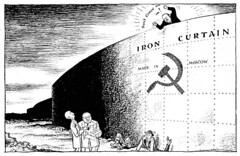
9803136677Iron CurtainThe term popularized by British Prime Minister Winston Churchill to describe the Soviet Union's policy of isolating and controlling the Soviet satellite states of Eastern Europe. (p. 563)28
9803136678Winston ChurchillAfter World War II he declared, "An iron curtain has been descended across the continent". He called for a partnership between Western democracies to halt the expansion of communism. (p. 563)29
9803136679historians: traditionalists vs. revisionistsTraditional historians believe the Cold War was started by the Soviet government subjugating the countries of Eastern Europe in the late 1940s. In the 1960s, revisionist historians began to argue that the United States contributed to starting the Cold War. (p. 572)30
9803136680George KennanHelped formulate Truman's containment policy. Expert on Soviet Affairs, in an influential article he wrote that only "a long-term, patient but firm and vigilant containment of Russian expansive tendencies" would eventually cause the Soviets to back off their Communist ideology of world domination and live in peace with other nations. (p. 563)31
9803136681Dean Achesonundersecretary of state who helped formulate Truman's containment policy (p.32
9803136682containment policyIn 1947, President Truman adopted the advice of three top advisers on how to contain Soviet aggression. This policy called for a long-term, firm, and vigilant containment of the Soviet's expansion tendencies. They believed this would eventually cause them to back off their Communist ideology of world domination. (p. 563)33
9803136683Truman DoctrineThis doctrine was in response to a Communist-led uprising against the government in Greece and Soviet demand for some control of a water route in Turkey. In 1947, President Truman asked Congress for $400 million in economic and military aid to assist Greece and Turkey against totalitarian regimes. (p. 564)34
9803136684Marshall PlanA 1947 plan of U.S. economic aid to help European nations revive their economies and strengthen democratic governments, after the devastation of World War II. This plan offered $12 billion in aid to western and southern Europe. The Soviet Union refused to take any of the aid and the result was a deepening rift between non-Communist West and the Communist East. (p. 564)35
9803136685Berlin airliftThe Soviets cut off all access by land to West Berlin. The United States flew planes in with supplies to help the people. At the same time, the U.S. sent 60 bombers capable of carrying atomic bombs to bases in England. Stalin chose not to challenge the airlift and war was averted. (p. 564)36
9803136686East GermanyAfter World War II, this country was the German Democratic Republic, a satellite of the Soviet Union. (p. 564)37
9803136687West GermanyAfter World War II, this country was the Federal Republic of Germany, a U.S. ally. (p. 564)38
9803136688North Atlantic Treaty OrganizationA military alliance, commonly known as NATO. It consists of the United States, Canada, and ten European nations. Its purpose was to defend Western Europe against outside attack. (p. 565)39
9803136689National Security ActIn 1947, this act provided for 1) a centralized Department of Defense to coordinate the operations of the military, 2) creation of the National Security Council (NSC) to coordinate the making of foreign policy in the Cold War, 3) creation of the Central Intelligence Agency (CIA) to employ spies to gather information on foreign governments. (p. 566)40
9803136690Nuclear arms raceSoviet and American scientists were in an arms race to develop superior weapons systems. From 1945 to 1949 the U.S. was only country to have atomic bombs. In 1949 the Soviets tested their first atomic bomb. President Truman responded by approving the development of a hydrogen bomb which would be 1000 times more powerful than the atomic bomb. (p. 566)41
9803136691NSC-68A 1950 secret report in which the National Security Council that U.S must fight the Cold War by: 1) quadruple U.S. defense spending to 20% of GNP 2) form alliances with non-Communist countries 3) convince Americans that a costly arms build up was necessary for defense (p. 566)42
9803136692U.S. - Japanese Security TreatyA 1951 treaty, in which Japan surrendered its claims to Korea and islands in the Pacific and the U.S. ended formal occupation of Japan. U.S troops remained on military bases in Japan to protect it from external enemies. (p. 567)43
9803136693Douglas MacArthurPopular general who aggressively directed American forces during the Korean War. He clashed with President Truman, who removed him from command in 1951. (p. 566)44
9803136694Chinese civil warThe war between Communist Mao Zedong and Nationalist Chiang-Kai Shek. The United States gave $400 million in aid to the Nationalists, but 80 percent of it landed in Communist hands. The Communists took over China and forced the Nationalists to retreat to Taiwan. The U.S. did not recognize the People's Republic of China until 1979. (p. 567)45
9803136695Chiang Kai-shekNationalist leader of China, forced out of China by the Communists. He retreated to Taiwan, where the U.S. continued to support him. (p. 567)46
9803136696TaiwanWhen the Communists took control of the China mainland, the Nationalists led by Chiang Kai-shek were forced to retreat to this island. (p. 567)47
9803136697Mao ZedongThe Communist leader of the People's Republic of China. He overthrew Chiang Kai-shek and the Nationalists. (p. 567)48
9803136698People's Republic of ChinaCommonly known as China, it is the largest country in East Asia. A socialist republic ruled by the Communist Party of China under a single-party system. (p. 567)49
9803136699Korean WarOn June 25, 1950 the North Korean army invaded South Korea. General Douglas MacArthur led a United Nations force consisting of mostly U.S. troops to help the South Korean army. By the time a peace agreement was signed in 1953 the north and south border was nearly in the same location, but 2.5 million people, including 54,000 Americans had died. (p. 568)50
9803136700Kim Il SungThe Communist leader of North Korea during the Korean War. (p. 568)51
9803136701Syngman RheeThe nationalist leader of South Korea during the Korean War. (p. 568)52
9803136702U.N. police actionThe term to describe the Korean War because Congress supported the use of U.S. troops under the U.N. but had never declared war. (p. 568)53
980313670338th parallelAfter World War II Japan gave up its former colony Korea and the country was divided along this parallel. The northern area was occupied by the Soviet forces and the south by the U.S. forces. (p. 568)54
9803136704soft on communismThe Republican's term to describe the Democrats after China adopted Communism and the Korean War stalemate. (p. 569)55
9803136705Loyalty Review BoardIn 1947 under pressure from the Republicans this board was established to investigate the background of more than 3 million employees. (p. 570)56
9803136706Smith ActIn 1940, this act made it illegal to advocate or teach the overthrow of the government by force or belong to an organization with this objective. (p. 570)57
9803136707Dennis et al. v. United StatesIn 1951, the Supreme Court upheld the constitutionality of the Smith Act. (p. 570)58
9803136708McCarran Internal Security ActIn 1950, Congress passed this act over Truman's veto which did the following: 1) Made it unlawful to advocate or support the establishment of a totalitarian government. 2) Restrict the employment and travel of those joining Communist -front organizations. 3) Authorized the creation of detention camps for subversives. (p. 570)59
9803136709House Un-American Activities CommitteeAfter World War II, this House of Representative committee investigated Communist influence in the government and within organizations such as the Boy Scouts and Hollywood film industry. Many were called to testify before the committee and some were blacklisted. (p. 570)60
9803136710Hollywood blacklistsThe House Un-American Activities Committee created a list of people who would be denied work in the film industry. (p. 570)61
9803136711freedom of expression in artsThe Second Red Scare, the search for Communists, had a chilling effect on freedom of expression. (p. 570)62
9803136712Alger HissHe was a state department official who assisted Roosevelt at the Yalta conference. He denied that he was a Communist and had given secret documents to Whittaker Chambers. In 1950, he was convicted of perjury and sent to prison. (p. 571)63
9803136713Whittaker ChambersA confessed Communist and witness for the House Un-American Activities Committee. (p. 571)64
9803136714Rosenberg caseThis couple, Julius and Ethel, were charged with running a spy ring for the Soviets in New York. In 1953, they were convicted of treason and executed. (p 571)65
9803136715Joseph McCarthyA Republican senator from Wisconsin, who recklessly accused many government officials of being Communists. In December 1954 censured by the Senate which brought an end to his era. (p. 571)66
9803136716McCarthyismDuring the early 1950s, this term was applied to the process of recklessly accusing people in the government and the arts of being Communists. (p. 571)67

US AP History Period 1 Flashcards

Terms : Hide Images
5763597658How did early Americans reach North and South America?They crossed a land bridge from Asia0
5763597659When was the land bridge formed? What was it made of?During the ice age, ice/land1
5763597660What were the Indians doing when they crossed the land bridge?Following food or herds2
5763597661What were the most complex Indian communities?Mayan, Inca and Aztecs3
5763597662What did the cultivation of maize do?Transform nomadic hunter-gather societies into settled farming communities4
5763597663What kinds of items did Europeans desire from Persia and China?Silk, Spices, Oils/Perfumes5
5763597664What were the Spanish 3 motives for exploration?1. God 2. Gold 3. Glory6
5763597665Which direction did Portugal head to reach Asia and India?South along the West coast of Africa.7
5763597666Who married to make Spain whole?Ferdinand of Aragon and Isabella of Castille8
5763597667Where did Columbus land?Hispainola9
5763597668Columbus died thinking what?That he had found a trade route to Asia and that he had landed on the outskirts of India10
5763597669When Spain and Portugal went to the pope to see how to divide the world, the pope made what?The Treaty of Tordesillas11
5763597670What did the Treaty of Tordesillas say?Divided the trade routes to Asia: Spain gets the route across the Atlantic and Portugal gets the route around Africa. Also, Spain got a lot of land in the New World and Portugal got present-day Brazil.12
5763597671Who came to the New World once it was discovered?Spanish conquistadors13
5763597672Who conquered the Aztecs? Who conquered the Incas?Cortes-Aztecs Pizzaro- Incas14
5763597673What are the 2 things the Spanish give the Indians in exchange for their work (in the Encomienda System)1. Provide food, shelter, and good treatment to the Indians 2. Convert them to Christians15
5763597674What was the Encomienda System basically?Slavery16
5763597675Who worked for Indian's rights?Bartolome de las Casas17
5763597676What happened when the Spanish ran out of Indians to do work?They went and got Africans18
5763597677Who was the explorer sent by England to the New World? Where did he explore?John Cabot- coastline of North America19
5763597678Who was an explorer sent by Spain to the New World? (not Columbus) Where did he explore?Vasco Nunez de Balboa- Pacific Ocean20
5763597679What is Ferdinand Magellan credited with?The 1st circumnavigation of the earth21
5763597680When the Spanish moved north, what did they establish? Where?A fort (outpost) in St. Augustine, Fl22
5763597681What is the Biological (Columbian) Exchange?Exchange of plants, animals, and diseases between Old World and New World after the time of Columbus.23
5763597682What 3 crops from the Americas ended up being staple crops in Europe?1. Corn 2. Beans 3. Potatoes24
5763597683What was the "big" animal brought to the Americas that changed Indian life?Horses25
5763597684What diseases were from the Old World and went to the New World?Smallpox, malaria, yellow fever, influenza26
5763597685What disease did the Indians give Europeans?Syphillis27
5763597686Columbian ExchangeAn exchange of goods, ideas and skills from the Old World (Europe, Asia and Africa) to the New World (North and South America) and vice versa.28
5763597687EncomiendaA grant of land made by Spain to a settler in the Americas, including the right to use Native Americans as laborers on it29
5763597688Atlantic slave tradeLasted from 16th century until the 19th century. Trade of African peoples from Western Africa to the Americas. 98% of Africans were sent to the Caribbean, South and Central America.30
5763597689Bartolome de las CasasFirst bishop of Chiapas, in southern Mexico. He devoted most of his life to protecting Amerindian peoples from exploitation. His major achievement was the New Laws of 1542, which limited the ability of Spanish settlers to compel Amerindians to labor; however his suggestion to replace Natives with Africans was won he would regret.31
5763597690MaizeAn early form of corn grown by Native Americans32
5763597691AnasaziA Native American who lived in what is now southern Colorado and Utah and northern Arizona and New Mexico and who built cliff dwellings33
5763597692IroquoisA later native group to the eastern woodlands. They blended agriculture and hunting living in common villages constructed from the trees and bark of the forests34
5763597693CherokeeAre a Native American people historically settled in the Southeastern United States (principally Georgia, the Carolinas and Eastern Tennessee). Linguistically, they are part of the Iroquoian-language family. In the 19th century, historians and ethnographers recorded their oral tradition that told of the tribe having migrated south in ancient times from the Great Lakes region, where other Iroquoian-speaking peoples were located.35
5763597694InuitA member of a people inhabiting the Arctic (northern Canada or Greenland or Alaska or eastern Siberia)36
5763597695MayaMesoamerican civilization concentrated in Mexico's Yucatan Peninsula and in Guatemala and Honduras but never unified into a single empire. Major contributions were in mathematics, astronomy, and development of the calendar.37
5763597696Aztec(1200-1521) 1300, they settled in the valley of Mexico. Grew corn. Engaged in frequent warfare to conquer others of the region. Worshipped many gods (polytheistic). Believed the sun god needed human blood to continue his journeys across the sky. Practiced human sacrifices and those sacrificed were captured warriors from other tribes and those who volunteered for the honor.38
5763597697IncaTheir empire stretched from what is today Ecuador to central Chili in the Andes Mountain region of South America. Called the Children of the Sun.39
5763597698TenochtitlanCapital of the Aztec Empire, located on an island in Lake Texcoco. Its population was about 150,000 on the eve of Spanish conquest. Mexico City was constructed on its ruins.40
5763597699Aztec calendar365 days, divided into 18 months each with 20 days.41
5763597700Terrace farmingThe cutting out of flat areas (terraces) into near vertical slopes to allow farming. Terrace farms appears as steps cut into a mountainside. This adaptation allowed both the early Chinese, and the Inca of Mesoamerica to grow enough food for their large populations.42
5763597701NomadEarly, simplistic man that migrated across the land bridge.43
5763597702Causes for European interest in exploration?The Holy Crusades, Renaissance and The Protestant Reformation.44
5763597703Martin LutherBroke away from the Catholic Church because of his 95 problems with the Catholic Church.45
5763597704King Henry VIIIBroke away from the Catholic Church because of his disagreement with his inability to get divorced; which eventually led to civil unrest in his country.46
5763597705New FranceEstablished in Canada and along the Mississippi River, focused on fur trade.47

AMSCO AP US History Chapter 1-3 Flashcards

AMSCO United States History 2015 Edition, Chapter 1 A New World of Many Cultures, 1491-1607

Terms : Hide Images
7291777326cornThe Mayas and the Incas cultivated corn as an important stable food supply. (p. 2)0
7291777327horsesIt was not until the 17th century that the American Indians acquired these animals from the Spanish. (p. 4)1
7291777328diseaseWhen Europeans came to America they brought smallpox and measles to which the natives had no resistance. Millions of American Indians died from these diseases. (p. 8)2
7291777329encomienda systemKing of Spain gave grants of land and natives (as slaves) to individual Spaniards. (p. 8)3
7291777330asiento systemThis system required that a tax be paid to the King of Spain, for slaves that were imported to the Americas. (p. 8)4
7291777331slaveryAs far back as the 1500s the Spanish brought captured Africans to America to provide free labor. (p. 11)5
7291777332land bridgeSome time between 10,000 and 40,000 years ago, people migrated from Asia to the Americas, across this area that connected Siberia and Alaska. (p. 2)6
7291777333Adena-HopewellThis American Indian culture centered in Ohio created large earthen mounds as tall as 300 feet. (p. 4)7
7291777334Hokokam, Anasazi, and PueblosThese American Indians were located in the New Mexico and Arizona region. They developed farming using irrigation systems. (p. 4)8
7291777335Woodland mound buildersAmerican Indian tribe east of the Mississippi that prospered because of a rich food supply. (p. 4)9
7291777336Lakota SiouxAmerican Indian tribe that started using horses in the 17th century. This allowed them to change from farming to nomadic buffalo hunting. (p. 4)10
7291777337MayasFrom A.D. 300 to 800, this highly developed civilization built large cities in what is today's southern Mexico and Guatemala. (p. 2)11
7291777338IncasThis highly developed civilization developed a vast South American empire based in Peru. (p. 2)12
7291777339AztecsStarting about 1300, this civilization flourished in central Mexico. (p. 2)13
7291777340conquistadoresThese Spanish explorers and conquerors of the Americas sent ships loaded with gold and silver back to Spain making it the richest and most powerful nation in Europe. (p. 8)14
7291777341Hernan CortesHe conquered the Aztecs in Mexico. (p. 8)15
7291777342Native AmericansThe first people to settle North America arrived as many as 40,000 years ago. They came from Asia and may have crossed by a land bridge connecting Siberia and Alaska. (p. 1)16
7291777343Francisco PizarroHe conquered the Incas in Peru. (p. 8)17
7291777344New Laws of 1542Bartolome de Las Casas convinced the King of Spain to institute these laws, which ended American Indian slavery, ended forced Indian labor, and began the process of ending the encomienda systems. (p. 11)18
7291777345Roanoke IslandIn 1587, Sir Walter Raleigh attempted to establish a settlement here, but it failed. (p. 9)19
7291777346compassOne aspect of the Renaissance was a gradual increase in scientific knowledge and technological change. Europeans made improvements in the inventions of others. this invention was used in sailing. (p. 5)20
7291777347printing pressThis invention in the 1450s spread knowledge across Europe. (p 5)21
7291777348Ferdinand and IsabellaThey united Spain, defeated and drove out the Moors. In 1492, they funded Christopher Columbus's voyage to America. (p. 5)22
7291777349Protestant ReformationIn the early 1500s, certain Christians in Germany, England, France, Holland, and other northern European countries revolted against the authority of the pope in Rome. (p. 6)23
7291777350Henry the NavigatorThe monarch of Portugal. (p. 7)24
7291777351Christopher ColumbusHe spent 8 years seeking financial support for his plan to sail west from Europe to the "Indies". In 1492, he sailed from the Canary Islands to an island in the Bahamas. His success in discovering lands on the other side of the ocean brought him a burst of glory in Spain. (p. 7)25
7291777352Treaty of Tordesillas (1494)In 1494, this treaty between Spain and Portugal, moved the line of demarcation that the pope had established a few degrees to the west. (p. 8)26
7291777353slave tradeSince ancient times people in Europe, Africa, and Asia had enslaved pepoe captured in wars. In the 15 century the Portuguese began trading for slaves from West Africa. They used slaves to work in sugar plantation off the coast of Africa. Using slaves was so profitable that when the Europeans settled in the Americas, they instituted the slave system there. (p, 6)27
7291777354nation-stateIn the 15th century, small kingdoms and multiethnic empires were being replaced by nation-states. Nation-states were countries in which the majority of people shared a common culture and common loyalty toward a central government. (p. 6)28
7291777355AlgonquianThe American Indians had 20 language families and 400 distinct languages. This tribe in the Northeast was one of the largest. (p. 4)29
7291777356SiouanThe American Indians had 20 language families and 400 distinct languages. This tribe from the Great Plains was one of the largest. (p. 4)30
7291777357Iroquois ConfederationA political union of five independent American Indian tribes in the Mohawk Valley of New York. (p. 5)31
7291777358longhousesAmerican Indians along the Pacific Coast lived in the these plank houses. (p. 4)32
7291777359John CabotAn Italian sea captain who sailed under contract to England's King Henry VII. He explored the coast of Newfoundland in 1497. (p. 9)33
7291777360Jacques CartierIn the period for 1534 to 1542, he explored the St. Lawrence River. (p. 10)34
7291777361Samuel de ChamplainHe established the first permanent French settlement at Quebec, a fortified village on the St. Lawrence River. (p., 10)35
7291777362Henry HudsonThis English sailer was hired by the Dutch government to seek a westward passage to Asia through North America. In 1609, while searching for the passage, he sailed up a broad river that would later be named the Hudson River. (p 10)36
7291777363Bartolome de Las CasaA Spanish priest who was an advocate for better treatment of Indians. (p. 11)37
7291777364Valladolid DebateIn 1550-1551, in Valladolid, Spain, a formal debate concerning the role of American Indians in the Spanish colonies. (p. 11)38
7291777365Juan Gines de SepulvedaIn the Valladolid Debate, this Spaniard argued that the American Indians were less than human. (p. 11)39
7291777366English cultural dominationIn the 18th century, cultural life in the colonies was dominated by English culture. Architecture, painting, and literature were strongly influenced by the English. (p. 50)40
7291777367Benjamin WestPainter who went to England to acquire the necessary training and financial support to establish himself as a prominent artist. (p. 51)41
7291777368John CopleyPainter who went to England to acquire the necessary training and financial support to establish himself as a prominent artist. (p. 51)42
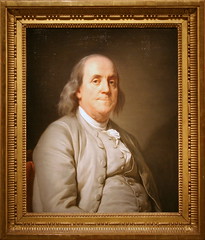
7291777369Benjamin FranklinHe was the most popular and successful American writer of the 18th century. (p. 51)43
7291777370Poor Richard's AlmanackWritten by Benjamin Franklin, this book written in 1732 and annually revised, contained aphorisms and advice. (p. 51)44
7291777371Phillis WheatleyHer poetry is noteworthy for her triumph over slavery and the quality of her verse. (p. 51)45
7291777372John BartramSelf-taught botanist from Philadelphia. (p. 51)46
7291777373professions; religion, medicine, lawMinisters, physicians, and lawyers were all respected careers in the 18th century colonies. (p. 52)47
7291777374religious tolerationThe overwhelming majority of colonists were Protestants. Jews, Catholics, and Quakers suffered from the most serious discrimination and even persecution. (p. 49)48
7291777375established churchChurches that were financed by the government. (p. 49)49
7291777376Great AwakeningThis religious movement was at its peak in the 1730s and 1740s. It was characterized by fervent expressions of religious feeling among masses of people. (p. 49)50
7291777377Jonathan EdwardsThis reverend from Massachusetts argued that God was rightfully angry with human sinfulness. Those who repented could be saved by God's grace, but those who did not would suffer eternal damnation. (p. 49)51
7291777378George WhitefieldHe came to the colonies from England in 1739. He spread the Great Awakening throughout the colonies, sometime attracting crowds of 10,000 people. His sermons stressed that God was all powerful and would save only those who openly professed belief in Jesus Christ. He taught that ordinary people could understand scripture without depending on ministers to lead them. (p. 50)52
7291777379Cotton MatherThis minister from Massachusetts, was the author of several widely read religious tracts. (p. 51)53
7291777380sectarianThe first colonial colleges were sectarian, meaning they promoted the doctrines of a particular religion. The Puritans founded Harvard in Cambridge, Massachusetts, in 1636. (p. 51)54
7291777381nonsectarianIn the mid 18th century, one nonsectarian colleges was founded. The College of Philadelphia (later University of Pennsylvania) was founded, with no religious sponsors. (p. 52)55
7291777382subsistence farmingIn the mid 18th century the colonies had little manufacturing and were devoted almost entirely to agriculture. In New England colonies, most farms were under 100 acres and farming was limited to subsistence levels that provided just enough for a farm family to survive. In the southern colonies, most people lived on small subsistence family farms with no slaves. (p. 48)56
7291777383J. Hector St. John CrevecoeurIn 1782, this Frenchman wrote , "America is a new man, who acts upon new principles; he must therefore entertain new ideas, and form new opinions. From involuntary idleness, servile dependence, and useless labor, he has passed to toils of a very different nature, rewarded by ample subsistence. This is an American." (p. 45)57
7291777384colonial familiesIn the mid 18th century, there was an abundance of fertile land and a dependable food supply in the colonies. This attracted thousands of European settlers each year and supported the raising of large families. (p. 45)58
7291777385GermansThis group of immigrants settled chiefly on the rich farmlands west of Philadelphia. By 1775, they comprised 6 percent of the colonial population. (p. 46)59
7291777386Scotch-IrishThese English-speaking people emigrated from northern Ireland. They were known as Scotch-Irish because their ancestors had moved to Ireland from Scotland. By 1775, they comprised 7 percent of the colonial population. (p.46)60
7291777387Huguenots; Dutch; SwedesThe Huguenots (French Protestants), the Dutch, and the Swedes came to the colonies. By 1775, these groups comprised 5 percent of the colonial population. (p. 46)61
7291777388AfricansThe largest single group of non-English immigrants did not come to America by choice. By 1775, the African American population (slave and free) comprised 20 percent of the colonial population. About 90 percent were in the southern colonies. (p. 46)62
7291777389immigrantsNewcomers to the colonies, were mostly Protestant, and came from England, Scotland, Wales, and Ireland, and Western and Central Europe. Some left Europe to escape religious persecution and wars. Others sought economic opportunities in farming, or setting up shop as an artisan or merchant. Africans were also brought in large numbers to the colonies, albeit unwillingly. (p. 45)63
7291777390social mobilityEveryone in colonial society, except African Americans, could improve their standard of living and social status with hard work. (p. 47)64
7291777391hereditary aristocracyThere was no hereditary aristocracy in the colonies. Their class system was based on economics with wealthy landowners at the top. Craft workers and small farmers made up the majority of the population. (p. 47)65
7291777392John Peter ZengerIn 1735, he published a true, but unflattering article about New York's royal governor. According to English common law at the time this was a criminal act, but he was acquitted by a jury. This encouraged newspapers in the colonies to take greater risks in criticising the government. (p. 52)66
7291777393Andrew HamiltonIn 1735, he was the lawyer for John Peter Zenger in the Zenger case. (p. 52)67
7291777394EnlightenmentIn the 18th century, some colonists were attracted to this European movement in literature and philosophy. They believed that human reason could be used to solve most of humanity's problems. They reasoned that while the state is supreme, it is bound to follow natural law based on the rights of individual. (p. 53)68
7291777395colonial governorsIn 1750, there were 13 colonies. In the eight royal colonies the governors were appointed by the King, in the three proprietary colonies the governors were appointed by the proprietors, and in Rhode Island and Connecticut the governors were elected by popular vote. (p. 54)69
7291777396colonial legislaturesIn every colony, the legislature consisted of two houses. In every colony, the members of the lower house were elected by eligible voters. In the royal and proprietary colonies, the members of the upper house were appointed by the king or the proprietor. Only in Rhode Island and Connecticut, the members of both houses were elected by eligible voters. (p. 54)70
7291777397town meetingsThe dominant form of local government in the New England colonies, in which the people of the town would regularly come together to vote directly on public issues. (p. 54)71
7291777398county governmentIn the southern colonies, the local government was carried on by a sheriff and other officials who served a large territory called a county. (p. 54)72
7291777399limited democracyIn the mid 18th century, colonial democracy was limited to mostly white men that owned land. Those barred from voting included white women, poor white men, all slaves, and most free blacks. (p. 54)73
7291777400Cecil Calvert, Second Lord BaltimoreIn 1634, Cecil Calvert (Second Lord Baltimore) was the son of George Calvert (First Lord Baltimore). Cecil Calvert set about making his father's dream of a Maryland colony that would be a haven for Catholics in America. (p. 27)74
7291777401Act of TolerationThe first colonial statue granting religious freedom to all Christians, but it called for death of all non-Christians. It was created to provide a safe haven for Catholics. (p.27)75
7291777402Roger WilliamsA respected Puritan minister who believed that the individual's conscience was beyond the control of any civil or church authority. He was banished from the Bay colony for his beliefs. In 1636, he founded the settlement of Providence. (p. 29)76
7291777403ProvidenceThis settlement has founded in 1636 by Roger Williams. (p. 29)77
7291777404Anne HutchinsonThis Puritan believed in antinomianism and was banished from the Bay colony because of her beliefs. In 1638, she founded the colony of Portsmouth. (p. 29)78
7291777405antinomianismThe idea that faith alone, not deeds, is necessary for salvation. (p. 29)79
7291777406Rhode IslandIn 1644, Parliament granted Roger Williams a charter, joining Providence and Portsmouth into a single colony, Rhode Island. (p. 30)80
7291777407Halfway covenantIn the 1660s, people could now take part in church services and activities without making a formal commitment to Christ. It was created because the next generation of colonists were less committed to religious faith, but churches still needed members. (p. 31)81
7291777408QuakersMembers of the Religious Society of Friends who believed in the equality of men and women, nonviolence, and resistance to military service. (p. 34)82
7291777409William PennIn 1861, the royal family paid a large debt by granting his family a large parcel of American land. This Quaker, formed a colony that he named Pennsylvania. (p. 34)83
7291777410Holy ExperimentWilliam Penn put his Quaker beliefs to the test in his colony, Pennsylvania. He wanted the colony to provide a religious refuge for Quakers and other persecuted people, enact liberal ideas in government, and generate income and profits for himself. (p. 34)84
7291777411Charter of LibertiesIn 1701, the Pennsylvania colony created this written constitution which guaranteed freedom of worship for all and unrestricted immigration. (p. 34)85
7291777412rice plantationsThese plantations required a loarge land area and many slaves. (p. 37)86
7291777413tobacco farmsAs Tobacco prices fell, rice and indigo became the most profitable crops. (p. 37)87
7291777414John CabotFirst Englishman to explore lands in North America which England would later settle in the early 1600's. (p. 25)88
7291777415JamestownIn 1607, the first permanent English colony in America was founded at this location. The Virginia Company, was a a joint-stock company chartered by England's King James I. (p. 25)89
7291777416Captain John SmithBecause of his forceful leadership, Jamestown barely survived its first five years. (p. 25)90
7291777417John RolfeHe helped Jamestown develop a new variety of tobacco which became popular in Europe and became a profitable crop. (p. 25)91
7291777418PocahontasShe was the American Indian wife of John Rolfe in early settlement days in Jamestown. (p. 25)92
7291777419PuritansGroup of dissenters that wanted to purify the Church of England. In 1630 they founded the Massachusetts Bay Colony at Boston. (p. 26)93
7291777420SeparatistsRadical dissenters to the Church of England, they were known by this name because they wanted to organized a completely separate church that was independent of royal control. They became known as Pilgrims, because of the travels. (p. 26)94
7291777421PilgrimsThey were radical dissenters to the Church of England. They moved to Holland, then in 1620, they sailed to America on the Mayflower in search of religious freedom. They established a new colony at Plymouth on the Massachusetts coast. (p. 26)95
7291777422MayflowerIn 1620, the boat that the Pilgrims sailed to Plymouth. (p. 26)96
7291777423Plymouth ColonyThis colony was started by the Pilgrims at Plymouth (Massechusetts). In the first winter nearly half of them perished. They were helped by friendly American Indians and celebrated the first Thanksgiving in 1621. (p. 26)97
7291777424John WinthropIn 1630, he led about a thousand Puritans to America and and founded Boston and several other towns. (p. 26)98
7291777425Great MigrationThis movement started because of a civil war in England. Nearly 15,000 settlers came to the Massachusetts Bay Colony. (p. 26)99
7291777426VirginiaSir William Berkeley, the royal governor of Virginia use dictatorial powers to govern on behalf of the large planters. (p. 29)100
7291777427Thomas HookerIn 1636, he led a large group of Boston Puritans dissatisfied with the Massachusetts Bay colony to found Hartford, which is now Connecticut. In 1639 they drew up the first written constitution in American history. (p. 30)101
7291777428John DavenportIn 1637, he founded a settlement south of Hartford, by the name of New Haven. (p. 30)102
7291777429ConnecticutIn 1665, New Haven and Hartford joined to form the colony of Connecticut under a royal charter. (p. 30)103
7291777430New HampshireHoping to increase royal control in the colonies, King Charles II separated New Hampshire from Massachusetts in 1679 and made it a royal colony. (p. 31)104
7291777431The CarolinasIn 1663, King Charles II granted eight nobles the Carolinas. In 1729, the Carolinas were split into two royal colonies. In South Carolina, the economy was based on the fur trade and growing food for the West Indies, which led to many plantations. In North Carolina, there were many small tobacco farms and fewer plantations. (p. 32)105
7291777432New YorkIn 1664, King Charles II granted his brother, the Duke of York (future King James II) the land now known as New York. James took control of the Dutch colony that was located there, but the Dutch were treated fairly. James was unpopular because of his taxes and refusal to institute a representative government. Finally in 1683, he agreed to grant broad civil and political rights to the colony. (p. 33)106
7291777433New JerseyThe territory of New York was split. In 1674, land was granted to Lord John Berkeley and Sir George Carteret. Eventually they sold to the Quakers. In 1702, the two Jerseys were combined into a single royal colony, New Jersey. (p. 33)107
7291777434PennsylvaniaIn 1861, the royal family paid a large debt by granting William Penn's father a large parcel of American land. He then formed a colony from the land. (p. 34)108
7291777435DelawareIn 1702, William Penn granted the lower three colonies of Pennsylvania their own assembly. In effect, Delaware became a separate colony, even though its governor was the same as Pennsylvaniaá until the American revolution. (p. 34)109
7291777436GeorgiaIn 1732, Georgia was formed to provide a buffer between wealthy Georgia and Spanish controlled Florida, and to provide a place for the many debtors of England to begin again. (p. 34)110
7291777437James OglethorpeFounder of Georgia's first settlement, Savannah, in 1733. He acted as governor of Georgia and had strict laws which included a ban on rum and slavery. (p. 35)111
7291777438WampanoagsAn American Indian tribe led by Metacom. (p. 31)112
7291777439MetacomThis American Indian chief was known to the colonists as King Philip. He joined together the Native American tribes to fight the colonists in King Philip's War, a war that lasted from 1675 to 1676. (p. 31)113
7291777440King Philip's WarFrom 1675 to 1676, the American Indian chief Metacom (King Philip), waged a vicious war against the English settlers in southern New England. (p. 31)114
7291777441Mayflower CompactIn 1620, while they were sailing to America on the Mayflower, the Pilgrims created this document that pledged them to make decisions by the will of the majority. It was a rudimentary written constitution. (p. 27)115
7291777442Virginia House of BurgessesIn 1619, just 12 years after the founding of Jamestown, Virginia's colonists organized the first representative assembly in America, the Virginia House of Burgesses. (p. 27)116
7291777443Sir William BerkeleyRoyal Governor of Virginia who favored large plantation owners and did not support or protect smaller farms from Indian raids. He put down Bacon's rebellion in 1676. (p. 29)117
7291777444Bacon's RebellionIn 1676, Nathaniel Bacon led a group of army volunteers that raided Native American villages, fought the governor's forces, and set fire to Jamestown. The rebellion lost momentum when Bacon died of dysentery. The rebellion was caused by the Governor's unfair favoritism of large plantation owners and refusal to protect small farms from Native American raids. (p. 29)118
7291777445Fundamental Orders of ConnecticutIn 1639, the Hartford settlers drew up the first written constitution in America. It established a representative government made up of a legislature elected by the people and a governor chosen by the legislature. (p. 30)119
7291777446New England ConfederationIn 1643, Plymouth, Massachusetts Bay, Connecticut, and New Haven colonies formed a military alliance to deal with the threat from the Native Americans. It lasted until 1684. (p. 31)120
7291777447Frame of Government (1682)In 1682-1683, William Penn provided the Pennsylvania colony with a Frame of Government which guaranteed a representative assembly elected by landowners and a written constitution. (p. 34)121
7291777448corporate coloniesColonies operated by joint-stock companies during the early years of the colonies, such as Jamestown. (p. 24)122
7291777449royal coloniesColonies under the direct authority and rule of the king's government, such as Virginia after 1624. (p. 24)123
7291777450proprietary coloniesColonies under the authority of individuals granted charters of ownership by the king, such as Maryland and Massachusetts. (p. 24)124
7291777451Chesapeake ColoniesIn 1632, the area once known as the Virginia colony, has divided into the Virginia and Maryland colony. Maryland became the first proprietary colony. (p. 27)125
7291777452joint-stock companyCorporate colonies, such as Jamestown, were operated by joint-stock companies, at least during the colony's early years. (p. 24)126
7291777453Virginia CompanyEngland's King James I chartered the Virginia Company, a joint-stock company that founded the first permanent English colony in America at Jamestown in 1607. (p. 25)127
7291777454mercantilismAn economic policy in which the colonies were to provide raw materials to the parent country of growth and profit of the parent country. (p. 35)128
7291777455Navigation ActsBetween 1650 and 1673 England passed a series of acts which establish rules for colonial trade. * Trade to and from the colonies could be carried only by English or colonial-built ships, which could be operated only by English or colonial crews. * All goods imported in the colonies, except some perishables, had to pass through the ports in England. * Specified goods from the colonies could be exported only to England. (p. 35)129
7291777456Dominion of New EnglandJames II wanted to increase royal control in the colonies, so he combined them into larger units and abolished their representative assemblies. The Dominion of New England was combined New York, New Jersey, and the other New England colonies into a single unit. (p. 36)130
7291777457Sir Edmund AndrosIn 1686, King James II combined New York, New Jersey, and additional New England colonies into a single unit called the Dominion of New England. He was sent England to govern the dominion. he was very unpopular by levying new taxes, limiting town meetings, and revoking land titles. (p. 36)131
7291777458Glorious RevolutionIn 1688, King James II was deposed and replaced with William and Mary. This brought the end to the Dominion of New England, and the colonies operated under their previous structure. (p. 37)132
7291777459indentured servantsYoung people from England under contract with a master who paid for their passage. Worked for a specified period for room and board, then they were free. (p. 28)133
7291777460headright systemA method for attracting immigrants, Virginia offered 50 acres of land to each immigrant who paid for passage to America and to any plantation owner who paid for an immigrants passage. (p. 28)134
7291777461slaveryThe first slaves arrived in the colonies in 1619, they were not slaves for life, but worked for a period of time, like an indentured servant. Then discriminatory laws were passed, slaves and their offspring were kept in permanent bondage. (p. 28)135
7291777462triangular tradeMerchants traded colonist rum for African slaves, African slaves for West Indies sugar cane, and sugar cane was brought back to the colonies to make rum. (p. 37)136
7291777463Middle PassageVoyage from West Africa to the West Indies. It was miserable for the slaves transported and many died. (p. 38)137

AP US History Period 4 (1800-1848) Flashcards

Key events and terms for mastery of the time period 1800-1848

Terms : Hide Images
8623258274Era of Good FeelingsPresident Monroe's two terms, a period of strong nationalism, economic growth, and territorial expansion. Since the Federalist party dissolved after the War of 1812, there was only one political party and no partisan conflicts.0
8623258275SectionalismDifferent parts of the country developing unique and separate cultures (as the North, South and West). This can lead to conflict.1
8623258276James MonroeThe fifth president of the United States. His administration was marked by the acquisition of Florida (1819); the Missouri Compromise (1820), in which Missouri was declared a slave state; and the profession of the Monroe Doctrine (1823), declaring U.S. opposition to European interference in the Americas.2
8623258277NationalismA devotion to the interests and culture of one's nation.3
8623258279Tariff of 18161st protective tariff; helped protect American industry from competition by raising the prices of British manufactured goods, which were often cheaper and of higher quality than those produced in the U.S.4
8623258280Henry ClaySenator who persuaded Congress to accept the Missouri Compromise, which admitted Maine into the Union as a free state, and Missouri as a slave state.5
8623258281American SystemAn economic regime pioneered by Henry Clay which created a high tariff to support internal improvements such as road-building. This approach was intended to allow the United States to grow and prosper by themselves This would eventually help America industrialize and become an economic power.6
8623258282Second Bank of the USStates resent the main role of banks (present a state's bank notes for redemption that can easily ruin a bank). Thought banks didn't agree with local needs. Nicholas Biddle was president.7
8623258283Panic of 18191st major financial panic since the Constitution was ratified; marked the end of economic expansion and featured deflation (value of US money going down), depression, bank failures, foreclosures on western farms, unemployment, a slump in agriculture and manufacturing, and overcrowded debtor's prisons. Also risky lending practices of the state and local banks led to over speculation on lands in west- the national bank tightened its credit lending policies and eventually forced these state and local banks to foreclose mortgages on farms, which resulted in bankruptcies and prisons full of debtors.8
8623258284John Marshall1755-1835. U.S. Chief Supreme Court Justice. Oversaw over 1000 decisions, including Marbury v Madison and McCulloch v. Maryland.9
8623258285Marbury v Madison(1803) Marbury was a midnight appointee of the Adams administration and sued Madison for commission. Chief Justice Marshall said the law that gave the courts the power to rule over this issue was unconstitutional. established judicial review10
8623258289Implied powersPowers derived from the "Necessary and Proper" or "Elastic" clause.11
8623258290Tallmadge AmendmentProposed slave ban in Missouri Territory, called for emancipation of children born to slave parents; bill was defeated but led to the Missouri Compromise of 1820.12
8623258291Missouri Compromise of 1820Allowed Missouri to enter the union as a slave state, Maine to enter the union as a free state, prohibited slavery north of latitude 36˚ 30' within the Louisiana Territory13
8623258292Rush-Bagot Treaty1817 - This treaty between the U.S. and Great Britain (which controlled Canada) provided for the mutual disarmament of the Great Lakes. This was later expanded into an unarmed Canada/U.S. border.14
8623258293Convention of 1818Britain and the United States agreed to the 49th parallel as the northern boundary of the Louisiana Territory between Lake of the Woods and the Rocky Mountains. The two nations also agreed to joint occupation of the Oregon country for ten years.15
8623258294Adams Onis Treaty1819. Settled land dispute between Spain and United States as a result of tensions brought on by weakening Spanish power in the New World. U.S. gained Florida in exchange for $5 million and renounced any claims on Texas and settled boundary between two countries to the Pacific Ocean.16
8623258295Monroe Doctrine1823, 1823 - Declared that Europe should not interfere in the affairs of the Western Hemisphere and that any attempt at interference by a European power would be seen as a threat to the U.S. It also declared that a New World colony which has gained independence may not be recolonized by Europe. (It was written at a time when many South American nations were gaining independence). Only England, in particular George Canning, supported the Monroe Doctrine. Mostly just a show of nationalism, the doctrine had no major impact until later in the 1800s.17
8623258296National RoadFirst national road building project funded by Congress. It made travel and transportation of goods much easier because it was one continuous road that was in good condition.18
8623258300Eli WhitneyAn American inventor who developed the cotton gin. Also contributed to the concept of interchangeable parts that were exactly alike and easily assembled or exchanged19
8623258301Interchangeable parts1799-1800 - Eli Whitney developed a manufacturing system which uses standardized parts which are all identical and thus, interchangeable. Before this, each part of a given device had been designed only for that one device; if a single piece of the device broke, it was difficult or impossible to replace. With standardized parts, it was easy to get a replacement part from the manufacturer. Whitney first put used standardized parts to make muskets for the U.S. government.20
8623258302Lowell SystemDeveloped in the textile mills of Lowell, Massachusetts, in the 1820s, in these factories as much machinery as possible was used, so that few skilled workers were needed in the process, and the workers were almost all single young farm women, who worked for a few years and then returned home to be housewives. Managers found these young women were the perfect workers for this type of factory life.21
8623258303IndustrializationDevelopment of a system which supports machine production of goods22
8623258304SpecializationDevelopment of skills in a specific kind of work23
8623258305Market RevolutionDramatic increase between 1820 and 1850 in the exchange of goods and services in market transactions. Resulted from thee combo impact of the increased output of farms and factories, the entrepreneurial activities of traders and merchants, and the development of a transportation network of roads, canals and railroads.24
8623258306Thomas JeffersonVirginian, architect, author, governor, and president. Lived at Monticello. Wrote the Declaration of Independence. Second governor of Virginia. Third president of the United States. Designed the buildings of the University of Virginia. Purchased Louisiana for the US even though the purchase was outside of his belief in strict construction of the Constitution.25
8623258307Embargo Act of 1807This act issued by Jefferson forbade American trading ships from leaving the U.S. It was meant to force Britain and France to change their policies towards neutral vessels by depriving them of American trade. It was difficult to enforce because it was opposed by merchants and everyone else whose livelihood depended upon international trade. It also hurt the national economy, so it was replaced by the Non-Intercourse Act.26
8623258308War of 1812A war (1812-1814) between the United States and England which was trying to interfere with American trade with France. Caused by impressment of American sailors, British aid to Indians in the west with firearms, War Hawk Congressman wanted to invade Canada, and continued British interference with trade.27
8623258309Battle of New OrleansA battle during the War of 1812 where the British army attempted to take New Orleans. Due to the foolish frontal attack, Jackson defeated them, which gave him an enormous popularity boost.28
8623258310Treaty of GhentDecember 24, 1814 - Ended the War of 1812 and restored the status quo. For the most part, territory captured in the war was returned to the original owner. It also set up a commission to determine the disputed Canada/U.S. border. The important result of the War of 1812 was that the US maintained its independence from Great Britain.29
8623258311Lewis and ClarkSent on an expedition by Jefferson to gather information on the United States' new land and map a route to the Pacific. They kept very careful maps and records of this new land acquired from the Louisiana Purchase.30
8623258312SacajaweaThe Native American woman who was the personal guide and translator for Lewis and Clark and their expedition in northern Louisiana Territory31
8623258313Louisiana PurchaseIn 1803, the purchase of the Louisiana territory from France. Made by Jefferson, this doubled the size of the US.32
8623258314James Madison(1809-1813) and (1813-1817) The War of 1812, the US declares war on Great Britain. In 1814, the British (technically the Canadians) set fire to the Capitol. The Treaty of Ghent ends the war in 1814., The fourth President of the United States (1809-1817). A member of the Continental Congress (1780-1783) and the Constitutional Convention (1787), he strongly supported ratification of the Constitution and was a contributor to The Federalist Papers (1787-1788), which argued the effectiveness of the proposed constitution. Favored strict interpretation of the Constitution.33
8623258315Non-Intercourse Act1809 - Replaced the Embargo of 1807. Unlike the Embargo, which forbade American trade with all foreign nations, this act only forbade trade with France and Britain. It did not succeed in changing British or French policy towards neutral ships, so it was replaced by Macon's Bill No. 2.34
8623258316Macon's Bill No 2Reopened trade with Britain and France , America would lend its support to the first nation to drop trade restrictions; France acted first and America halted all British imports. The United States declared war on Britain.35
8623258318Haitian RevolutionA major influence of the Latin American revolutions because of its success; the only successful slave revolt in history; it is led by Toussaint L'Overture.36
8623258319Revolution of 1800Jefferson's view of his election to presidency. Jefferson claimed that the election of 1800 represented a return to what he considered the original spirit of the Revolution. Jefferson's goals for his revolution were to restore the republican experiment, check the growth of government power, and to halt the decay of virtue that had set in under Federalist rule.37
8623258320Barbary Pirate WarsThe Barbary Wars (or Tripolitan Wars) were two wars between the United States of America and Barbary States in North Africa in the early 19th century. At issue was the pirates' demand of tribute from American merchant vessels in the Mediterranean Sea. American naval power attacked the pirate cities and extracted concessions of fair passage from their rulers.38

US History (Unit 1) Flashcards

Terms : Hide Images
8088618422MercantilismAn economic theory based on reducing a country's imports while expanding its exports in order to maximize wealth.0
8088650837Triangle TradeThree-way pattern of trade that involved England, English colonies in America, and West Africa.1
8088688132Indentured ServantsIndividuals who agreed to work without wages for a period of time in exchange for transportation to the colonies.2
8088704256Southern ColoniesGeorgia, Virginia, Maryland, Carolina (North and South).3
8088718641JamestownThe first permanent American colony, which was founded in 1607.4
8088732901Virginia CompanyA joint-stock company, which raised capital for the expedition to America by selling shares of company stock to investors.5
8088796867Captain John SmithThis leader took control of Jamestown and helped turn it into a successful colony. His famous line was: "He that will not work, will not eat".6
8088809903John RolfeThis colonist introduced tobacco to Jamestown, which saved the colony. He also married Pocahontas.7
8088826541Chief PowhatanThis guy was the principal leader of all the Powhatan tribes in the Chesapeake Bay region when the English settlers arrived in 1607.8
8088915542Mayflower CompactBefore disembarking the Mayflower, the Pilgrims created and signed this document. It was a pledge by the colonists to govern themselves through majority rule.9
8088929855John WinthropThis guy was the founder of Massachusetts Bay and came up with the "city upon a hill" speech.10
8255854254TobaccoThis crop was introduced into Jamestown by John Rolfe. It financially saved the colony from ruin.11
8255883428PuritansEnglish Protestants who believed in strict religious-discipline, and settled in Mass. Bay Colony. They wanted to purify the Church of England.12
8255901889PilgrimsEnglish Puritans who sought religious freedom and settled in Plymouth Massachusetts. They were wanted to separate from the Church of England.13
8255918853House of BurgessesThis was the first representative body in America. It was formed in Virginia (Jamestown) in 1619.14
8255944201Middle ColoniesThese colonies made up Pennsylvania, New York, Delaware, and New Jersey15
8255950929New England ColoniesThese colonies made up Massachusetts Bay, Rhode Island, Connecticut, & New Hampshire.16
8255963949Middle PassageThe forced transport of enslaved Africans from West Africa to the Americas.17
8255999637Bacon's RebellionThis event was led by Nathaniel Bacon, in which colonists revolted against colonial leaders. The event led to slavery.18
8256027687Roger WilliamsThis guy was banished from Massachusetts Bay because of his beliefs. He founded the colony of Rhode Island.19
8256039737Anne HutchinsonThis woman was banished from Massachusetts Bay because she questioned the colony's religious leaders.20
8256061157William PennThis guy founded the colony of Pennsylvania. He established good relations with Native Americans and was a Quaker.21
8256078082New AmsterdamThis colony was founded by the Dutch for trading purposes. This colony was renamed New York.22
8256107682King Phillip's WarConflict between English colonists and Native Americans in New England. This was the end of Indian resistance to white settlement in the Northeast.23
8256145141Great AwakeningReligious movement in the English colonies during the 1730s and 1740s, which was heavily inspired by evangelical preachers.24
8256168890Benjamin FranklinThis guy symbolized the opportunities in colonial America. He went from poor to rich with hard work and dedication.25
8256195950Salutary NeglectBritish policy in the early 1700s which allowed the colonies virtual self-rule as long as Great Britain was gaining economically.26
8256217694Salem Witch TrialsPeriod of hysteria in Massachusetts Bay where colonists accused each other of being witches. Nineteen of the accused where executed.27
8256248646Half-Way CovenantReligious-political solution adopted by 17th-century Puritans, that allowed the children of baptized but unconverted church members to be baptized and thus become church members and have political rights.28
8256351809French and Indian WarWar between the French and British over territory in North America. The British won the war, but it led to massive debt in England.29
8256375524Treaty of ParisThis treaty ended the French and Indian War. France lost all territory in North America.30

AMSCO AP US History Chapter 20 Flashcards

AMSCO United States History 2015 Edition, Chapter 20 Becoming a World Power, 1898-1917

Terms : Hide Images
5821160354Boxer RebellionA 1900 rebellion in Beijing, China that was started by a secret society of Chinese who opposed the "foreign devils". An international force marched into Beijing and crushed the rebellion. (p. 417)0
5821160355U.S. joined international forceTo protect American lives and property, U.S. troops participated in an international force that marched into Peking (Beijing) and quickly crushed the rebellion of the Boxers. (p. 417)1
5821160356Second Hay NoteIn 1900, the U.S. was fearful that the international force sent to Beijing might try to occupy China. A second note was written to all the major imperialist countries, stating that China's territory must be preserved and that equal and impartial trade with all parts of China must be maintained. (p. 417)2
5821160357big-stick policyTheodore Roosevelt's foreign policy motto was to "speak softly and carry a big stick". By acting boldly and decisively in a number of situation, Roosevelt attempt to build the reputation of the United States as a world power. (p. 417)3
5821160358TR supports Panama revoltIn 1903, President Theodore Roosevelt orchestrated a revolt for Panama's independence from Columbia. The revolt succeeded quickly and with little bloodshed. (p. 418)4
5821160359Hay-Bunau-Varilla Treaty (1903)In 1903, the Panama government signed this treaty with the United States. It granted the U.S. all rights to the 51 mile long and 10 mile wide Canal Zone, in exchange for U.S. protection. (p. 418)5
5821160360building the Panama CanalThis canal was started in 1904 and completed 10 years later. The building of this large canal was important because it would benefit American commerce and military capability. (p. 418)6
5821160361George GoethalsUnited States army officer and engineer who supervised the construction of the Panama Canal. (p. 418)7
5821160362William GorgasArmy physician who helped eradicate yellow fever and malaria from Panama, so work on the Panama Canal could proceed. (p. 418)8
5821160363Roosevelt CorollaryTheodore Roosevelt's 1904 extension of the Monroe Doctrine. It stated that the United States would intervene in the Americas, on the behalf of European interests. (p. 418)9
5821160364Santo DomingoThe capital of the Dominican Republic. In 1904, European powers were ready to use military power here in order to force debt payments. (p. 418)10
5821160365Russo-Japanese WarIn 1904, Russia and Japan went to war over imperial possessions in the region. In 1905, President Theodore Roosevelt arranged a successful treaty conference for the two foes at Portsmouth, New Hampshire. (p. 419)11
5821160366Treaty of Portsmouth (1905)In 1905, the United States mediated the end of the Russo-Japanese War. Negotiating the treaty in the U.S. increased U.S. prestige. Roosevelt received a Nobel Peace Prize for the mediation. (p. 419)12
5821160367Nobel Peace PrizeFor his work in settling the Russo-Japanese War, President Theodore Roosevelt was awarded the Nobel Peace Prize in 1906. (p. 420)13
5821160368segregation in San Francisco schoolsIn the early 20th century San Francisco schools required that Japanese American students attend segregated schools. In 1908, President Roosevelt worked out a "gentleman's agreement" with Japan, Japanese American students would be allowed to attend normal schools and Japan would restrict the emigration of Japanese workers to the United States. (p. 420)14
5821160369gentlemen's agreementIn 1908, an informal agreement between the United States and Japan. President Roosevelt agreed that Japanese American students would be allowed to attend normal schools in San Francisco and Japan agreed to curb the number of workers coming to the U.S. (p. 420)15
5821160370Great White FleetSixteen United States battleships, painted white, were sent around the world to display American naval power. (p. 419 )16
5821160371Algeciras ConferenceIn 1906, this conference held after the First Moroccan Crisis in which the dispute between Germany and France over control of Morocco was settled. (p. 420)17
5821160372Hague ConferenceIn 1907, the Second International Peace Conference at the Hague discussed rules for limiting warfare. (p. 420)18
5821160373Root-Takahira AgreementIn 1908, this executive agreement between the United States and Japan pledged mutual respect for each nation's possessions in the Pacific region and support for the Open Door policy in China. (p. 419)19
5821160374William Howard TaftThe 27th President of the United States, from 1909 to 1913. He adopted a foreign policy that was mildly expansionist but depended more on investors' dollars than on the military. His policy of promoting U.S. trade by supporting American business abroad was known as dollar diplomacy. (p. 420)20
5821160375role of American moneyPresident Taft believed that private U.S. investment in China and Central America would lead to greater stability there. His policy, was thwarted by growing anti-imperliasm both in the U.S. and overseas. (p. 420)21
5821160376railroads in ChinaIn 1911, President Taft succeeded in securing American participation in agreement to invest in railroads in China along with Germany and France. (p. 420)22
5821160377Manchurian problemIn 1911, the U.S. was excluded from investing in railroads in Manchuria because of a joint agreement between Russia and Japan, which was in direct defiance of the Open Door Policy. (p. 420)23
5821160378intervention in NicaraguaIn 1912, President Taft sent military troops here when a civil war broke out. (p. 420)24
5821160379Henry Cabot LodgeA Republican senator, he was in favor building U.S. power through global expansion. He introduced the Lodge Corollary to the Monroe Doctrine. (p. 411)25
5821160380Lodge CorollaryIn 1912, the Senate passed this resolution as an addition to the Monroe Doctrine. It stated that non-European powers (such as Japan) would be excluded from owning territory in Western Hemisphere. (p. 420)26
5821160381Woodrow WilsonThe 28th president of the United States from 1913 to 1921. This Democrats is known for his leadership during World War I, creating the Federal Reserve, Federal Trade Commission, Clayton Antitrust Act, progressive income tax, lower tariffs, women's suffrage (reluctantly), Treaty of Versailles, sought 14 points post-war plan, League of Nations (but failed to win U.S. ratification). He won the Nobel Peace Prize. (p. 421)27
5821160382anti-imperialismPresident Woodrow Wilson differed from his Republican presidential predecessors. He believed that the U.S. should not expand its territory overseas. (p. 421)28
5821160383William Jennings BryanIn 1913, he was Woodrow Wilson's secretary of state. He tried to demonstrate that the U.S. respected other nations' rights and would support the spread of democracy. (p. 421)29
5821160384Jones ActIn 1916, this act granted the Philippines full territorial status, guaranteed a bill of rights and universal male suffrage to Filipinos, and promised independence for the Philippines as soon as a stable government was established. (p. 422)30
5821160385Puerto Rico citizenshipIn 1917, an act of Congress granted U.S. citizenship and limited self government for this island. (p. 422)31
5821160386Conciliation treatiesWilson's commitment to democracy was shared by Secretary of State William Jennings Bryan. Bryan negotiated treaties in which nations pledged to submit disputes to international commissions and observe a one-year cooling-off period before taking military action. Thirty of these treaties were negotiated. (p. 422)32
5821160387military interventionPresident Woodrow Wilson used military action to influence Mexico, Central America, and the Caribbean. (p. 423)33
5821160388Mexican civil warPresident Wilson's moral approach to foreign affairs was severely tested by a revolution and civil war in Mexico. He refused to recognize the military dictatorship of General Victoriano Huerta, who had seized power in Mexico in 1913 by arranging to assassinate the democratically elected president. (p. 423)34
5821160389General HuertaIn 1913, this Mexican revolutionary seized power in Mexico by killing the democratically elected president. (p. 423)35
5821160390Tampico incidentIn April 1914, some U.S. sailors were arrested in Tampico, Mexico. President Wilson used the incident to send U.S. troops into northern Mexico. His real intent was to unseat the Huerta government there. After the Niagara Falls Conference, Huerta abdicated and the confrontation ended. (p. 423)36
5821160391ABC powersThe South American countries of Argentina, Brazil, and Chile, which attempted to mediate a dispute between Mexico and the United States in 1914. (p. 423)37
5821160392Pancho VillaThis Mexican leader led raids across the U.S.-Mexican border and murdered several people in Texas and New Mexico. (p. 423)38
5821160393expeditionary forceThe name given to the group sent to capture Pancho Villa in Mexico. (p. 423)39
5821160394John J. PershingThe U.S. general who chased Pancho Villa over 300 miles into Mexico but didn't capture him. (p. 423)40

AMSCO AP US History Chapter 11 Flashcards

AMSCO United States History 2015 Edition, Chapter 11 Society, Culture, and Reform, 1820-1860

Terms : Hide Images
5729190703utopian communitiesOver one hundred of these experimental communities were started in the 1820s to 1860s period. (p. 210)0
5729190704ShakersThis early religious communal movement held property in common and separated men and women. (p. 210)1
5729190705Amana ColoniesA German religious communal movement in Ohio which emphasized simple living. (p. 210)2
5729190706Robert OwenA Welsh industrialist and reformer who founded the New Harmony community. (p. 210)3
5729190707New HarmonyNonreligious experimental socialist community founded to solve problems of inequity and alienation caused by the Industrial Revolution. (p. 210)4
5729190708Joseph Humphrey NoyesHe started a cooperative community in Oneida, New York. (p. 210)5
5729190709Oneida communityThis community, started in 1848, was dedicated to social and economic equality. They shared property and spouses, and prospered by manufacturing silverware. (p. 210)6
5729190710Charles Fourier phalanxesIn the 1840s, this French socialist, advocated that people share working and living arrangements in communities. He wanted to solve problems of competitive society, but Americans were too individualistic. (p. 210)7
5729190711Horace MannHe was the leading advocate of the public school movement. (p. 213)8
5729190712temperanceReformers targeted alcohol as the cause of social ills. The movement started by using moral exhortation, then shifted to political action. Business leaders and politicians supported it because it improved productivity of industrial workers. (p. 212)9
5729190713American Temperance SocietyFounded in 1826, by Protestant ministers and others, they encouraged total alcohol abstinence. (p. 212)10
5729190714WashingtoniansA temperance movement which argued that alcoholism was a disease that need practical helpful treatment. (p. 212)11
5729190715Women's Christian Temperance UnionIn the late 1870s, this women's organization was part of the temperance movement. (p. 212)12
5729190716asylum movementIn the 1820s and 1830s, this movement sought to improve the conditions for criminals, emotionally disturbed people, and paupers. They proposed setting up state-supported prisons, mental hospitals, and poorhouses. (p. 212)13
5729190717Dorothea DixA reformer who was responsible for improving conditions in jails, poorhouses and insane asylums throughout the U.S. and Canada. She succeeded in persuading many states to assume responsibility for the care of the mentally ill. (p. 212)14
5729190718Thomas GallaudetHe started a school for the deaf. (p. 213)15
5729190719Samuel Gridley HoweHe started a school for the blind. (p. 213)16
5729190720penitentiariesThese institutions took the place of crude jails. They believed that structure and discipline would bring about moral reform. (p. 213)17
5729190721Auburn systemA prison system in New York which enforced rigid rules of discipline, while also providing moral instruction and work programs. (p. 213)18
5729190722public school movementIn the 1840s, this movement to provide free education for all children spread rapidly throughout the nation. (p. 213)19
5729190723McGuffey readersElementary school textbooks that encouraged hard work, punctuality, and sobriety. (p. 213)20
5729190724American Peace SocietyFounded in 1828, this society want to abolish war. (p. 216)21
5729190725American Colonization SocietyFounded in 1817, this organization transported free black people to an African colony. This appealed to moderates, racists, and politicians. However, only 12,000 people were actually settled in Africa. (p. 215)22
5729190726American Antislavery SocietyThe organization was founded in 1833 by William Lloyd Garrison and others. They advocated the immediate abolition of all slavery in every state. (p. 215)23
5729190727abolitionism William Lloyd Garrison; The LiberatorIn 1831, he started the radical abolitionist movement with the "The Liberator" newspaper. He advocated the immediate abolition of all slavery in every state. (p. 215)24
5729190728Liberty partyIn 1840, this political party was formed in reaction to the radical abolitionists. They pledged to bring an end to slavery by political and legal means. (p. 215)25
5729190729Frederick Douglass; The North StarIn 1847, this former slave started the antislavery journal, "The North Star". (p. 215)26
5729190730Harriet TubmanFamous abolitionist, born a slave, she assisted fugitive slaves to escape to free territory. (p. 215)27
5729190731David RugglesAn African American leader who assisted fugitive slaves to escape to free territory. (p. 215)28
5729190732Sojourner TruthA United States abolitionist and feminist who was freed from slavery and became a leading advocate for the abolition of slavery and the rights of women. (p. 215)29
5729190733William StillAn African American leader, who assisted fugitive slaves to escape to free territory. (p. 215)30
5729190734David WalkerAn African American who advocated the most radical solution to the slavery question. He argued, that slaves should take action themselves by rising up in revolt against their owners. (p. 215)31
5729190735Henry Highland GarnetAn African American, who advocated the most radical solution to the slavery question. He argued that slaves should take action themselves by rising up in revolt against their owners. (p. 215)32
5729190736Nat TurnerIn 1831, he led the largest slave rebellion in which 55 whites were killed. (p. 215)33
5729190737antebellum periodThe period before the Civil War started in 1861. (p. 207)34
5729190738romantic movementIn early 19th century Europe, art and literature emphasized intuition and feelings, individual acts of heroism, and the study of nature. In America, similar themes were expressed by the transcendentalists. (p. 209)35
5729190739transcendentalistsThey questioned the doctrines of established churches and business practices of the merchant class. They encouraged a mystical and intuitive way of thinking to discover the inner self and look for essence of God in nature. Artistic expression was more important than pursuit of wealth. They valued individualism and supported the antislavery movement. (p. 209)36
5729190740Ralph Waldo Emerson, "The American Scholar"The best known transcendentalist, his essays and lectures expressed the individualistic and nationalistic spirit of Americans. He urged self-reliance, and independent thinking. (p. 209)37
5729190741Henry David Thoreau, "Walden", "On Civil Disobedience"A pioneer ecologist and conservationist. He was an advocate of nonviolent protest against unjust laws. (p. 209)38
5729190742Brook FarmAn attempted communal experiment in Massachusetts to achieve a more natural union between intellectual and manual labor. (p. 207)39
5729190743George RipleyThis Protestant minister started a communal experiment at Brook Farm in Massachusetts to live out the transcendentalist ideals. (p. 207)40
5729190744feministsThe term for advocates of women's rights. (p. 214)41
5729190745Margaret FullerA feminist, writer, and editor in the women's movement. (p. 210)42
5729190746Theodore ParkerA theologian and radical reformer. (p. 210)43
5729190747George Caleb BinghamAn American realist artist, whose paintings depicted life on the frontier. (p. 211)44
5729190748William S. MountContemporary of the Hudson River school. He began as a painter of history but moved to depicting scenes from everyday life. (p. 211)45
5729190749Thomas ColeFounder of the Hudson River school, famous for his landscape paintings. (p. 211)46
5729190750Frederick ChurchCentral figure in the Hudson River School and pupil of Thomas Cole. He is known for his landscapes and for painting colossal views of exotic places. (p. 211)47
5729190751Hudson River schoolIn the 1830s, this genre of painting founded in the Hudson River area, portrayed everyday life of ordinary people in the natural world. (p. 211)48
5729190752Washington IrvingThis author wrote fiction using American settings. (p. 211)49
5729190753James Fenimore CooperThis author wrote novels that glorified the frontiersman as nature's nobleman. (p. 211)50
5729190754Nathaniel HawthorneAuthor of "The Scarlet Letter", which questioned the intolerance and conformity in American life. (p. 211)51
5729190755Sylvester GrahamAn American dietary reformer who advocated whole wheat bread and graham crackers to promote good digestion. (p. 216)52
5729190756Amelia BloomerShe urged women to wear pantalettes instead of long skirts. (p. 216)53
5729190757Second Great AwakeningA religious movement that occurred during the antebellum period. It was a reaction against rationalism (belief in human reason). It offered the opportunity of salvation to all. (p. 207)54
5729190758Timothy DwightPresident of Yale College, he helped initiate the Second Great Awakening. His campus revivals inspired many young men to become evangelical preachers. (p. 207)55
5729190759revivalism; revival camp meetingsIn the early 1800s, this movement was a reaction against the rationalism of the Enlightenment. Successful preachers were audience-centered and easily understood by the uneducated. (p. 207)56
5729190760millennialismIn the early 1800s, this popular belief, that the world was about to end with the second coming of Jesus Christ. (p. 208)57
5729190761Church of Jesus Christ of Latter-Day Saints; MormonsFounded by Joseph Smith in 1830. It was based on the Book of Mormon which traced a connection between the American Indians and the lost tribes of Israel. After Joseph Smith was murdered, Brigham Young led the religious group to establish the New Zion on the Great Salt Lake in Utah. (p. 208)58
5729190762Joseph SmithFounded the Church of Jesus Christ of the Latter-Day Saints in New York in 1830. The church moved to Ohio, Missouri, Illinois, then finally to Utah. (p. 208)59
5729190763Brigham YoungAfter Joseph Smith was killed, he led the Mormon followers to Utah. (p. 208)60
5729190764New ZionThis was the religious community established by the Mormons on the banks of the Great Salt Lake in Utah. (p. 208)61
5729190765women's rights movementWomen started this movement because they resented the way men relegated them to secondary roles in the reform movements. (p. 214)62
5729190766cult of domesticityAfter industrialization occurred women became the moral leaders in the home and educators of children. Men were responsible for economic and political affairs. (p. 214)63
5729190767Sarah Grimke, Angelina GrimkeTwo sisters, born in South Carolina, they objected to male opposition to their antislavery activities. (p. 214)64
5729190768Letter of the Condition of Women and the Equality of the SexesWritten by Angelina and Sarah Grimke, it protested males opposition to their abolitionist work. (p. 214)65
5729190769Lucretia MottA women's rights reformer who was not allowed to speak at an antislavery convention. (p. 214)66
5729190770Elizabeth Cady StantonA women's rights reformer who was not allowed to speak at an antislavery convention. (p. 214)67
5729190771Seneca Falls ConventionIn 1848, this was the first women's rights convention in U.S. history. They wrote a "Declaration of Sentiments", modeled after the Declaration of Independence, which declared all men and women equal and listed grievances. (p. 214)68
5729190772Susan B. AnthonySocial reformer who campaigned for womens rights, the temperance, and was an abolitionist. She helped form the National Woman Suffrage Association. (p. 214)69

AMSCO AP US History Chapter 7 Flashcards

AMSCO United States History 2015 Edition, Chapter 7 The Age of Jefferson, 1800-1816

Terms : Hide Images
5262401994Thomas JeffersonA prominent statesman, Thomas Jefferson became George Washington's first secretary of state. Along with James Madison, Jefferson took up the cause of strict constructionists and the Republican Party, advocating limited federal government. As the nation's third president from 1801 to 1809, Jefferson organized the national government by Thomas Jefferson Republican ideals, doubled the size of the nation, and struggled to maintain American neutrality0
5262401995Louisiana PurchaseThe U.S., under Jefferson, bought the Louisiana territory from France, under the rule of Napoleon, in 1803. The U.S. paid $15 million for the Louisiana Purchase, and Napoleon gave up his empire in North America. The U.S. gained control of Mississippi trade route and doubled its size.1
5262401996John C. CalhounThe 7th Vice President of the United States and a leading Southern politician from South Carolina during the first half of the 19th century. He was an advocate of slavery, states' rights, limited government, and nullification.2
5262401997John MarshallFederalist Supreme Court justice whose brilliant legal efforts established the principle of judicial review3
5262401998Judicial Reviewthe power of the Supreme Court to declare laws and actions of local, state, or national governments unconstitutional4
5262401999Marbury v. MadisonA Supreme Court case in 1803 where Chief Justice John Marshall ruled that a law passed by Congress was unconstitutional. This established the doctrine of judicial review, where the Supreme Court could overrule actions taken by the legislative and executive branches of the government.5
5262402000strict interpretation of ConstitutionStrict and doctrinal interpretation of the Constitution and its justification. Thomas Jefferson favored a strict interpretation of the Constitution, which he interpreted as forbidding everything it did not expressly permit. In contrast, Hamilton favored a loose interpretation.6
5262402001Napoleon BonaparteOverthrew French Directory in 1799 and became emperor of the French in 1804. Failed to defeat Great Britain and abdicated in 1814. Returned to power briefly in 1815 but was defeated and died in exile. Approved Jefferson's purchase of French territory.7
5262402002Aaron BurrAn American politician and adventurer. He was a formative member of the Democratic-Republican Party in New York and a strong supporter of Governor George Clinton. He is remembered not so much for his tenure as the third Vice President, under Thomas Jefferson, as for his duel with Alexander Hamilton, resulting in Hamilton's death. He is also known for his trial and acquittal on charges of treason. Jefferson's vice-president for his first term; not voted into a second term because of radical ideas and ventures that threatened to break up the Union and resulted in the death of Alexander Hamilton.8
5262402003QuidsRepublicans who criticized the War of 1812 (even though it was started by a Republican president) because it did not follow the traditional Republican idea of limited federal government.9
5262402004Toussaint I'OuvertureHe led a rebellion against French rule on the island of Santo Domingo which resulted in heavy French losses.10
5262402005Barbary PiratesThe name given to several renegade countries on the Mediterranean coast of North Africa who demanded tribute in exchange for refraining from attacking ships in the Mediterranean. From 1795-1801, the U.S. paid the Barbary states for protection against the pirates. Jefferson stopped paying the tribute, and the U.S. fought the Barbary Wars (1801-1805) against the countries of Tripoli and Algeria. The war was inconclusive and the U.S. went back to paying the tribute.11
5262402006Neutralitya position of not taking sides in a conflict12
5262402007ImpressmentBritish practice of taking American sailors from American ships and forcing them into the British navy; a factor in the War of 1812.13
5262402008Chesapeake-Leopard Affairincident in 1807 that brought on a war crisis when the British warship Leopard attacked the American warship Chesapeake; the British demanded to board the American ship to search for deserters from the Royal Navy. When the U.S. commander refused, the British attacked, killing or wounding 20 American sailors. Four alleged deserters were then removed from the Chesapeake and impressed. Many angry and humiliated Americans called for war.14
5262402009Embargo Act (1807)This act issued by Jefferson forbade American trading ships from leaving the U.S. It was meant to force Britain and France to change their policies towards neutral vessels by depriving them of American trade. It was difficult to enforce because it was opposed by merchants and everyone else whose livelihood depended upon international trade. It also hurt the national economy, so it was replaced by the Non-Intercourse Act.15
5262402010James MadisonThe fourth President of the United States (1809-1817). A member of the Continental Congress (1780-1783) and the Constitutional Convention (1787), he strongly supported ratification of the Constitution and was a contributor to The Federalist Papers (1787-1788), which argued the effectiveness of the proposed constitution. His presidency was marked by the War of 1812.16
5262402011Nonintercourse Act (1809)Replaced the Embargo Act. Lifted the stop of trade to foreign countries EXCEPT France and England. Led to the war of 1812.17
5262402012Macon's Bill No. 2 (1810)When economic hardships continued into 1810, Nathaniel Macon, a member of Congress, introduced a bill that restored U.S. trade with both Britain & France. It also provided, however, that if either France or Britain formally agreed to respect neutral rights at sea, then the U.S. would prohibit trade with the foe of that nation.18
5262402013Tecumseh and ProphetThese Shawnee brothers organized a large native confederacy to prevent the American advance westward. (p. 138)19
5262402014William Henry HarrisonGovenor of the Indiana territory, he fought against Tecumseh and Prophet at the Battle of Tippecanoe.20
5262402015Battle of TippecanoeBattle between Americans and Native Americans. Tecumseh and the Prophet attempted to oppress white settlement in the West, but defeated by William Henry Harrison. Led to talk of Canadian invasion and served as a cause to the War of 1812.21
5262402016Lewis and Clark Expedition1804-1806 - Meriwether Lewis and William Clark were commissioned by Jefferson to map and explore the Louisiana Purchase region. Beginning at St. Louis, Missouri, the expedition travelled up the Missouri River to the Great Divide, and then down the Columbia River to the Pacific Ocean. It produced extensive maps of the area and recorded many scientific discoveries, greatly facilitating later settlement of the region and travel to the Pacific coast.22
5262402017War HawksThese were mostly young Republicans who had been imbued with the ideals of the American Revolution as youths, who wanted to take Canada and Florida and deal with the Indian problem. They held a majority in Congress, and were responsible for declaring war in 181223
5262402018Henry ClaySenator who persuaded Congress to accept the Missouri Compromise, which admitted Maine into the Union as a free state, and Missouri as a slave state24
5262402019War of 1812A war between the U.S. and Great Britain caused by American outrage over the impressment of American sailors by the British, the British seizure of American ships, and British aid to the Indians attacking the Americans on the western frontier. Also, a war against Britain gave the U.S. an excuse to seize the British northwest posts and to annex Florida from Britain's ally Spain, and possibly even to seize Canada from Britain. The War Hawks (young westerners led by Henry Clay and John C. Calhoun) argued for war in Congress. The war involved several sea battles and frontier skirmishes. U.S. troops led by Andrew Jackson seized Florida and at one point the British managed to invade and burn Washington, D.C. The Treaty of Ghent (December 1814) restored the status quo and required the U.S. to give back Florida. Two weeks later, Andrew Jackson's troops defeated the British at the Battle of New Orleans, not knowing that a peace treaty had already been signed. The war strengthened American nationalism and encouraged the growth of industry.25
5262402020"Old Ironsides"The nickname for the U.S. warship, Constitution who raised American morale by defeating and sinking a British ship off the coast of Nova Scotia.26
5262402021Battle of Lake ErieU.S. victory in the War of 1812, led by Oliver Hazard Perry; broke Britain's control of Lake Erie.27
5262402022Oliver Hazard Perry"We have me the enemy, and they are ours." Naval hero during the War of 1812. Won battle on Lake Erie against the British. After the battle, he sent William Henry Harrison a note that said this famous quote.28
5262402023Battle of the Thames RiverBattle led by Harrison; broke the British alliance with the Native Americans when Tecumseh was killed29
5262402024Thomas MacdonoughA commander of an American fleet on Lake Champlain that fought near Plattsburgh on floating slaughterhouses; the Americans were nearly defeated, but his nifty techniques forced the British to retreat; this heroic naval battle saved New York from conquest, New England from disaffection, and the Union from dissolution.30
5262402025Battle of Lake ChamplainA battle where the British fleet was defeated and was forced to retreat and to abandon their plans to invade New York and New England after being stoped by Thomas Macdonough. The British began to decide that the war was to costly.31
5262402026Andrew JacksonThe seventh President of the United States (1829-1837), who as a general in the War of 1812 defeated the British at New Orleans (1815). As president he opposed the Bank of America, objected to the right of individual states to nullify disagreeable federal laws, and increased the presidential powers.32
5262402027Battle of Horseshoe BendFought during the War of 1812 in central Alabama. On March 27, 1814, United States forces and Indian allies under General Andrew Jackson defeated the Red Sticks, a part of the Creek Indian tribe inspired by the Shawnee leader Tecumseh, effectively ending the Creek War.33
5262402028Creek NationAmerican Indians originally from the southeastern United States. They were one of the Five Civilized Tribes. They were an important British ally in the war of 1812 until being defeated by Andrew Jackson.34
5262402029Battle of New OrleansAndrew Jackson led a battle that occurred when British troops attacked U.S. soldiers in New Orleans on January 8, 1815; the War of 1812 had officially ended with the signing of the Treaty of Ghent in December, 1814, but word had not yet reached the U.S.35
5262402030Treaty of Ghent (1814)was the peace treaty that ended the War of 1812 between the United States of America and the United Kingdom of Great Britain and Ireland. The treaty largely restored relations between the two nations to status quo ante bellum. Due to the era's slow speed of communication, it took weeks for news of the peace treaty to reach the United States, well after the Battle of New Orleans had begun.36
5262402031Hartford Convention (1814)Massachusetts, Connecticut, and Rhode Island met in 1814 in Hartford, Connecticut for a secret meeting to discuss their disgust of the war and to redress their grievances. The Hartford Convention's final report demanded:-Financial assistance from Washington to compensate for lost trade from embargos; -Constitutional amendments requiring a 2/3 vote in Congress before an embargo could be imposed, new states admitted, or war declared; -The abolition of slavery; -a President could only serve 1 term; -the abolition of the 3/5 clause; -the prohibition of the election of 2 successive Presidents from the same state.The Hartford resolutions marked the death of the Federalist party. The party nominated their last presidential candidate in 1816.37
5262402032Francis Scott Key , "The Star Spangled Banner"Francis Scott Key, who observed the Birtish attack on Fort McHenry, celebrated the American victory by writing a poem that is the national anthem "The Star-Spangled Banner" today.38

Pages

Subscribe to CourseNotes RSS

Need Help?

We hope your visit has been a productive one. If you're having any problems, or would like to give some feedback, we'd love to hear from you.

For general help, questions, and suggestions, try our dedicated support forums.

If you need to contact the Course-Notes.Org web experience team, please use our contact form.

Need Notes?

While we strive to provide the most comprehensive notes for as many high school textbooks as possible, there are certainly going to be some that we miss. Drop us a note and let us know which textbooks you need. Be sure to include which edition of the textbook you are using! If we see enough demand, we'll do whatever we can to get those notes up on the site for you!