AP Notes, Outlines, Study Guides, Vocabulary, Practice Exams and more!

AMSCO AP US History Chapter 17 Flashcards

AMSCO United States History 2015 Edition Chapter 17 The Last West and the New South, 1865-1900

Terms : Hide Images
5850498075The Great American DesertName given to lands between the Mississippi and the Pacific Coast before 1860. There was very little rainfall in this area and the conditions were poor for settlement.0
5850498077Great PlainsThe region west of the Mississippi River and east of the Rocky Mountains.1
5850498078mining frontier, boomtownsIn 1848, the discovery of gold in California caused the first flood of newcomers to the territory. Gold and silver were later discovered in many other areas of the west. These discoveries caused towns to grow up very quickly, then often lose population and collapse after the mining was no longer profitable.2
5850498079Chinese Exclusion Act of 1882In the 1860s, about one-third of the western miners were Chinese immigrants. Native-born Americans resented the competition of these immigrants. In 1862, this act was passed to prohibit further immigration by Chinese laborers to the United States. (p. 341)3
5850498081long drivesMoving the cattle from Texas to railroad towns in Kansas.4
5850498082Joseph GliddenHe invented barbed wire to help farmers fence in their lands on the plains.5
5850498083Homestead ActIn 1862, this act offered 160 acres of public land free to any family that settled on it for 5 years.6
5850498084dry farmingThis technique along with deep-plowing enabled settlers to survive on the Great Plains. (p. 342)7
5850498085Great Plains tribesThese nomadic tribes, such as the Sioux, Blackfoot, Cheyenne, Crow, and Comanche, had given up farming in colonial times after the introduction of the horse by the Spanish. By the 1700s, they had become skillful horse riders and their lives centered on hunting buffalo.8
5850498086Southwest tribesThese tribes in the Southwest, such as Navajo and Apache adopted a settled life, raising crops and livestock, and producing arts and crafts.9
5850498087Little Big HornIn 1876, the Sioux Indians, led by Crazy Horse and Sitting Bull, massacred the U.S. 7th Cavalry led by General Custer. This was the last major battle between the U.S. Army and the American Indians. (p. 345)10
5850498088AssimilationistsThe idea that Native Americans should be integrated into American society by becoming educated, adopting American culture, customs, and Christianity.11
5850498089Helen Hunt JacksonThe author of "A Century of Dishonor", which created sympathy for Native Americans, but also generated support for ending American Indian culture through assimilation.12
5850498090Dawes Act of 1887This act supported the idea of assimilation of the American Indians. It divided tribal lands into plots of up to 160 acres. U.S. citizenship was granted to those who stayed on the land for 25 years and adopted the habits of American life.13
5850498091Ghost Dance movementThis religious movement was a last effort of Native Americans to resist U.S. government domination and drive whites from their ancestral lands. In an effort to suppress the movement, at the Battle of Wounded Knee more that 200 American Indians were killed. This battle marked the end of the Indian Wars.14
5850498092Indian Reorganization Act of 1934In 1934, this act promoted the re-establishment of tribal organization and culture. Today, more than 3 million American Indians, belonging to 500 tribes, live within the United States.15
5850498093Yellowstone, YosemiteIn 1872, this area of Wyoming was declared the first national park. In 1864 this area in California was declared a state park, later it became a national park.16
5850498094Department of the InteriorCarl Schurz, as Secretary of the Interior in the 1880s, advocated the creation of a forest reserves and a federal forest service to protect federal lands from exploitation.17
5850498095Forest Reserve Act of 1891This act withdrew federal timberland from development and regulated their use.18
5850498096John Muir, Sierra ClubIn 1892, he founded this organization, with the goal of preserving some natural areas from human intervention.19
5850498097New SouthAfter the Civil War, the South was in a period of recovery. There was a new vision for a self-sufficient southern economy built on economic diversity and laissez-faire capitalism.20
5850498098Henry GradyJournalist from Georgia who coined the phrase "New South". Promoted his ideas through the Atlanta Constitution, as editor.21
5850498099Birmingham steelThis Southern city developed into one the nation's leading steel producers.22
5850498100sharecropping; tenant farmersAfter the Civil War, most Southerners of both races remained in traditional roles and barely got by from year to year as sharecroppers and farmers.23
5850498101George Washington CarverAn African-American scientist, who promoted planting of diverse crops such as peanuts, sweet potatoes, and soybeans.24
5850498102Tuskegee InstituteAn industrial and agricultural school established by Booker T. Washington to train blacks.25
5850498103Civil Rights Cases of 1883In 1883, the Supreme Court ruled that Congress could not legislate against the racial discrimination practiced by private citizens, which included public businesses.26
5850498104Plessy v. FergusonAn 1896, Supreme Court landmark case, which ruled that separate but equal accommodations in public places were constitutional and did not violate the 14th amendment.27
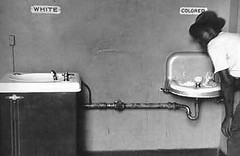
5850498105Jim Crow lawsIn the 1870s, the South passed segregation laws which required separate washrooms, drinking fountains, park benches, and most other public facilities, for blacks and whites.28
5850498106literacy tests, poll taxes, grandfather clausesAfter Reconstruction, various political and legal devices were created to prevent southern blacks from voting.29
5850498107white primaries, white juriesAfter Reconstruction, discrimination took many forms. Political party primaries were created for whites only, and African Americans were barred from serving on juries.30
5850498108lynch mobsIn the 1890s, more than 1,400 African American men were hung by a mob without trial by Southerners.31
5850498109African American migrationIn 1894, the International Migration Society was formed to help blacks emigrate to Africa. Other blacks moved to Kansas and Oklahoma.32
5850498110Ida B. WellsShe was the editor of a black newspaper, she campaigned against lynching and Jim Crow laws.33
5850498111Booker T. WashingtonFamous African-American, who established an industrial and agricultural school for African Americans in 1881. He taught the virtues of hard work, moderation, and economic self-help. In 1900, he organized the National Negro Business League to support businesses owned by African Americans.34
5850498112crop price deflationAfter the Civil War, increased American and foreign food production caused a downward pressure on prices. For instance, corn per bushel prices, went from $.78 in 1867 to .$.28 in 1889.35
5850498113National Grange MovementIn 1868, this organization was created primarily as a social and educational help for farmers.36
5850498114cooperativesGrangers established these business, owned and run by the farmers, to save the costs charged by middlemen.37
5850498115Granger lawsIn some states, the Grangers, with help from local businesses, successfully lobbied their state legislatures to pass laws regulating the rates charged by railroads and elevators.38
5850498116Munn v. IllinoisSupreme Court case in 1877, which upheld the right of a state to regulate businesses of a public nature, such as railroads.39
5850498117Wabash v. IllinoisSupreme Court case in 1886, which ruled that individual states could not regulate interstate commerce.40
5850498118Interstate Commerce CommissionThe first federal regulatory agency created to regulate interstate commerce which had the power to investigate and prosecute pools, rebates, and other discriminatory practices.41
5850498119census of 1890The census of 1890 declared that except for a few pockets, the entire frontier had been settled.42
5850498120Frederick Jackson Turner, "The Significance of the Frontier in American History"He argued that 300 years of frontier experience had shaped American culture by promoting independence and individualism.43
5850504835Federal Treaty Policies1830's,President Andrew Jackson's Indian policy did not work to the belief the western land would be Indian country, but soon people started settling there. IN 1851, there were negotiations at Fort Laramie and Fort Atkinson, the government began to assign the plains tribes large areas of land called reservations with definite boundaries, but some tribes did not stay in their reservations they followed the buffalo where it roamed.44
5850547301Indian WarsSioux Wars, Battle of Little Big Horn, Nez Perce War45
5850566830Forest Management Act of 18971897 act which along with the national recreation act, set the federal government on the path of large scale regulatory activities46
5850580550Ocala Platform of 1890A platform that would have significant impact in later years: They supported 1) direct election of US senators, 2) lower tariff rates, 3) a graduated income tax, and 4) a new banking system regulated by the federal govt.47

AMSCO AP US History Chapter 11 Flashcards

AMSCO United States History 2015 Edition, Chapter 11 Society, Culture, and Reform, 1820-1860

Terms : Hide Images
5851395477utopian communitiesOver one hundred of these experimental communities were started in the 1820s to 1860s period. (p. 210)0
5851395478ShakersThis early religious communal movement held property in common and separated men and women. (p. 210)1
5851395480Robert OwenA Welsh industrialist and reformer who founded the New Harmony community. (p. 210)2
5851395481New HarmonyNonreligious experimental socialist community founded to solve problems of inequity and alienation caused by the Industrial Revolution. (p. 210)3
5851395482Joseph Humphrey NoyesHe started a cooperative community in Oneida, New York. (p. 210)4
5851395484Charles Fourier phalanxesIn the 1840s, this French socialist, advocated that people share working and living arrangements in communities. He wanted to solve problems of competitive society, but Americans were too individualistic. (p. 210)5
5851395485Horace MannHe was the leading advocate of the public school movement. (p. 213)6
5851395487American Temperance SocietyFounded in 1826, by Protestant ministers and others, they encouraged total alcohol abstinence. (p. 212)7
5851395491Dorothea DixA reformer who was responsible for improving conditions in jails, poorhouses and insane asylums throughout the U.S. and Canada. She succeeded in persuading many states to assume responsibility for the care of the mentally ill. (p. 212)8
5851395494penitentiariesThese institutions took the place of crude jails. They believed that structure and discipline would bring about moral reform. (p. 213)9
5851395497McGuffey readersElementary school textbooks that encouraged hard work, punctuality, and sobriety. (p. 213)10
5851395498American Peace SocietyFounded in 1828, this society want to abolish war. (p. 216)11
5851395499American Colonization SocietyFounded in 1817, this organization transported free black people to an African colony. This appealed to moderates, racists, and politicians. However, only 12,000 people were actually settled in Africa. (p. 215)12
5851395500American Antislavery SocietyThe organization was founded in 1833 by William Lloyd Garrison and others. They advocated the immediate abolition of all slavery in every state. (p. 215)13
5851395501abolitionism William Lloyd Garrison; The LiberatorIn 1831, he started the radical abolitionist movement with the "The Liberator" newspaper. He advocated the immediate abolition of all slavery in every state. (p. 215)14
5851395503Frederick Douglass; The North StarIn 1847, this former slave started the antislavery journal, "The North Star". (p. 215)15
5851395504Harriet TubmanFamous abolitionist, born a slave, she assisted fugitive slaves to escape to free territory. (p. 215)16
5851395506Sojourner TruthA United States abolitionist and feminist who was freed from slavery and became a leading advocate for the abolition of slavery and the rights of women. (p. 215)17
5851395508David WalkerAn African American who advocated the most radical solution to the slavery question. He argued, that slaves should take action themselves by rising up in revolt against their owners. (p. 215)18
5851395513transcendentalistsThey questioned the doctrines of established churches and business practices of the merchant class. They encouraged a mystical and intuitive way of thinking to discover the inner self and look for essence of God in nature. Artistic expression was more important than pursuit of wealth. They valued individualism and supported the antislavery movement. (p. 209)19
5851395514Ralph Waldo Emerson, "The American Scholar"The best known transcendentalist, his essays and lectures expressed the individualistic and nationalistic spirit of Americans. He urged self-reliance, and independent thinking. (p. 209)20
5851395515Henry David Thoreau, "Walden", "On Civil Disobedience"A pioneer ecologist and conservationist. He was an advocate of nonviolent protest against unjust laws. (p. 209)21
5851395516Brook FarmAn attempted communal experiment in Massachusetts to achieve a more natural union between intellectual and manual labor. (p. 207)22
5851395517George RipleyThis Protestant minister started a communal experiment at Brook Farm in Massachusetts to live out the transcendentalist ideals. (p. 207)23
5851395519Margaret FullerA feminist, writer, and editor in the women's movement. (p. 210)24
5851395524Frederick ChurchCentral figure in the Hudson River School and pupil of Thomas Cole. He is known for his landscapes and for painting colossal views of exotic places. (p. 211)25
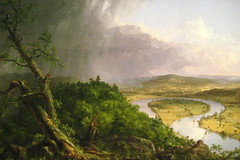
5851395525Hudson River schoolIn the 1830s, this genre of painting founded in the Hudson River area, portrayed everyday life of ordinary people in the natural world. (p. 211)26
5851395526Washington IrvingThis author wrote fiction using American settings. (p. 211)27
5851395528Nathaniel HawthorneAuthor of "The Scarlet Letter", which questioned the intolerance and conformity in American life. (p. 211)28
5851395531Second Great AwakeningA religious movement that occurred during the antebellum period. It was a reaction against rationalism (belief in human reason). It offered the opportunity of salvation to all. (p. 207)29
5851395532Timothy DwightPresident of Yale College, he helped initiate the Second Great Awakening. His campus revivals inspired many young men to become evangelical preachers. (p. 207)30
5851395533revivalism; revival camp meetingsIn the early 1800s, this movement was a reaction against the rationalism of the Enlightenment. Successful preachers were audience-centered and easily understood by the uneducated. (p. 207)31
5851395535Church of Jesus Christ of Latter-Day Saints; MormonsFounded by Joseph Smith in 1830. It was based on the Book of Mormon which traced a connection between the American Indians and the lost tribes of Israel. After Joseph Smith was murdered, Brigham Young led the religious group to establish the New Zion on the Great Salt Lake in Utah. (p. 208)32
5851395537Brigham YoungAfter Joseph Smith was killed, he led the Mormon followers to Utah. (p. 208)33
5851395540cult of domesticityAfter industrialization occurred women became the moral leaders in the home and educators of children. Men were responsible for economic and political affairs. (p. 214)34
5851395541Sarah Grimke, Angelina GrimkeTwo sisters, born in South Carolina, they objected to male opposition to their antislavery activities. (p. 214)35
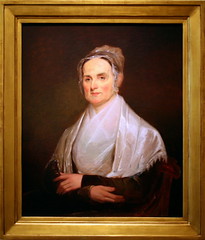
5851395543Lucretia MottA women's rights reformer who was not allowed to speak at an antislavery convention. (p. 214)36
5851395544Elizabeth Cady StantonA women's rights reformer who was not allowed to speak at an antislavery convention. (p. 214)37
5851395545Seneca Falls ConventionIn 1848, this was the first women's rights convention in U.S. history. They wrote a "Declaration of Sentiments", modeled after the Declaration of Independence, which declared all men and women equal and listed grievances. (p. 214)38
5851395546Susan B. AnthonySocial reformer who campaigned for womens rights, the temperance, and was an abolitionist. She helped form the National Woman Suffrage Association. (p. 214)39

US History Chapter 5 Flashcards

Terms : Hide Images
8398359556Articles of ConfederationAmerica's first form of government following the revolution with a very weak central government and without independent executive or judicial branches0
8398359557Great CompromiseConstitutional Convention agreement that stated that states would have bicameral (2 house legislature) - House of Representatives based on population and the Senate would have equal representation1
8398359558Shays' RebellionWas a protest by farmers who faced problems from debts they owed to creditors. It contributed to the belief among political leaders that the nation needed a stronger central government2
8398359559Legislative BranchCongress whose job it is to make laws3
8398359560Executive BranchPresident, VP and Cabinet; job to enforce laws of nation4
8398359561Judicial BranchSupreme Court and other lower federal courts - job to interpret the laws5
8398359562Checks and BalancesA system that allows each branch of government to limit the powers of the other branches in order to prevent abuse of power6
8398359563Antifederalistspeople who opposed ratification of the Constitution7
8398359564The Federalists Papersa series of letters to the editors written in 1787-88 by Alexander Hamilton, James Madison, and John Jay encouraging support for ratification of the Constitution8
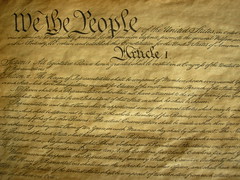
8398359565The U.S. Constitution"the supreme law of the land"9
8398359566Land Ordinance of 1785Broke up pieces of federally owned land for the government to sell. Used as a way to generate revenue for the new nation.10
8398359567Northwest Ordinance of 1787Established a procedure for new land to be made in to US territories and eventually states.11
8398359568Roger ShermanProposed the Great Compromise12
8398359569Virginia PlanPlan for government proposed by James Madison which favored larger states. Suggested a bicameral legislature and using checks and balances.13
8398359570New Jersey PlanPlan for government proposed by William Patterson. Favored smaller states by suggesting a unicameral government with one vote per state and supreme federal power.14
8398359571The 3/5 CompromiseDebate over whether or not slaves should be counted toward representation in the House of Representatives.15
8398359572RatificationThe process of accepting the newly created Constitution.16

AMSCO AP US History Chapter 25 Flashcards

AMSCO United States History 2015 Edition, Chapter 25 Diplomacy and World War II, 1929-1945

Terms : Hide Images
9318247154Good Neighbor PolicyPresident Franklin Roosevelt's foreign policy of promoting better relations with Latin America by using economic influence rather than military force in the region. (p. 523)0
9318247155Pan-American conferencesIn 1933, the United States attended a conference in Montevideo, Uruguay, in which we pledged to never again intervene in the internal affairs of any Latin American country. At a second conference in 1936, the U.S. agreed to the cooperation between the U.S. and Latin American countries to defend the Western Hemisphere against foreign invasion. (p. 523)1
9318247156MussoliniHe founded the Italian Fascist Party, and sided with Hitler and Germany in World War II. In 1945, he was overthrown and assassinated by the Italian Resistance. (p. 524)2
9318247157NazisThis party arose in 1920's Germany in reaction to deplorable economic conditions after war and national resentments over the Treaty of Versailles. By 1933, the party under leader Adolph Hitler, had gained control of the German legislature. (p. 524)3
9318247158HitlerAustrian-born founder of the German Nazi Party and chancellor of the Third Reich (1933-1945). His fascist philosophy, embodied in the book Mein Kampf attracted widespread support, and after 1934 he ruled as an absolute dictator. Hitler's pursuit of aggressive nationalist policies resulted in the invasion of Poland (1939) and the subsequent outbreak of World War II. His regime was infamous for the extermination of millions of people, especially European Jews. He committed suicide in 1945, when the collapse of the Third Reich was imminent. (p. 524)4
9318247159Axis PowersAlliance of Germany, Italy, and Japan during World War II.5
9318247161FrancoIn 1936, he plunged Spain into a Civil War. By 1939, Franco's Fascist had established a military dictatorship. (p. 525)6
9318247162RhinelandIn 1936, Adolf Hitler invaded this region. This was in violation of the Treaty of Versailles which had declared the area a demilitarized zone. (p. 526)7
9318247163SudetenlandIn 1938, Hitler insisted Germany had the right to take over an area in western Czechoslovakia. (p. 526)8
9318247164appeasementA policy of making concessions to an aggressor in the hopes of avoiding war. In the years 1935 to 1938, a series of military actions by Fascist dictatorships made Britain, France, and the United States nervous, but they did nothing to stop the actions. * 1935 - Italy invades Ethiopia * 1936 - German troops invade the Rhineland * 1937 - Japan invades China * 1938 - Germany takes the Sudetenland (p. 526)9
9318247165Nye CommitteeIn 1934, a Senate committee led by South Dakota Senator Gerald Nye to investigate why America became involved in World War I. They concluded that bankers and arm manufacturers pushed the U.S. into the war so they could profit from selling military arms. This committee's work pushed America toward isolationism for the following years. (p. 525)10
9318247166Neutrality ActsLaws passed by isolationists in the late 1930s, that were designed to keep the United States out of international wars. (p. 525)11
9318247167America First CommitteeIn 1940, after World War II had begun in Asia and Europe, isolationists became alarmed by President Roosevelt's support for Britain. To mobilize American public opinion against the war, they formed this committee. Charles A. Lindbergh was one of it spokesmen. (p. 525)12
9318247168LindberghIn 1927, this U.S. aviator thrilled the world, by making the first nonstop flight from Long Island to Paris. In 1940, he was a speaker for the isolationist America First Committee. (p. 480, 525)13
9318247169Quarantine speechIn 1937, President Franklin D. Roosevelt made this speech after Japan invaded China. He proposed that democracies act together to "quarantine" Japan. Public reaction to the speech by the American public was negative, and the idea was abandoned. (p. 526)14
9318247170cash and carryPolicy adopted by the United States in 1939 to preserve neutrality, while aiding Great Britain. Great Britain could buy U.S. military arms if it paid in full and used its own ships to transport them. (p. 528)15
9318247171Lend-Lease ActIn March 1941, this act permitted Britain to obtain all U.S. arms they needed on credit during World War II. (p. 529)16
9318247172Atlantic CharterIn August 1941, U.S. president Franklin D. Roosevelt and British prime minister Winston Churchill met aboard a ship off the coast of Newfoundland. They created this agreement which outlined the principles for peace after the war. (p. 530)17
9318247173Pearl HarborOn December 7, 1941, a date that will live in infamy, this U.S. naval base in Honolulu, Hawaii was bombed by Japanese planes. 2,400 Americans were killed and 20 warships were sunk or severely damaged. The next day, the United States declared war on Japan. (p. 531)18
9318247174War Production BoardDuring World War II, President Roosevelt established this agency to allocated scarce materials, limit or stop the production of civilian goods, and distribute contracts among competing manufacturers. (p. 531)19
9318247175Office of Price AdministrationThis World War II federal agency regulated most aspects of civilian lives by freezing prices, wages, and rents and rationing commodities in order to control inflation. (p. 532)20
9318247176Manhattan ProjectCode name for the secret United States project set up in 1942 to develop atomic bombs for use in World War II. (p. 532)21
9318247178Smith v. AllwrightThis Supreme Court case in 1944 ruled that it was unconstitutional to deny membership in political parties to African Americans as a way of excluding them from voting in primaries. (p. 533)22
9318247179Braceros programA program the American and Mexican governments agreed to, in which contract laborers would be admitted to the United States for a limited time as migrant farm workers (p. 533)23
9318247180Japanese internmentIn 1942, over 100,000 Japanese Americans living on the United States West coast were rounded up and put in internment camps. (p. 534)24
9318247181Korematsu v. U.S.A 1944 Supreme Court case which upheld the order providing for the relocation of Japanese Americans. It was not until 1988 that Congress formally apologized and agreed to pay financial compensation to each survivor. (p. 534)25
9318247182Rosie the RiveterA propaganda character designed to increase production of female workers in industrial jobs in the shipyards and defense plants during World War II. (p. 534)26
9318247183TrumanHe became president on April 12, 1945, when President Franklin Roosevelt died suddenly. In August 1945, he order an atomic bomb be dropped on Hiroshima then on Nagasaki, to end the war with Japan. Japan surrendered on September 2, 1945. (p. 537, 538)27
9318247184EisenhowerThe United States general who commanded the invasion of Normandy (D-Day), Casablanca and the defeat of Nazi Germany. (p. 536)28
9318247185D-DayOn June 6, 1944 the Allies landed in northern France with the largest invasion by sea in history. By the end of August Paris was liberated from the Nazis, and by September Allied troops had crossed the German border. (p. 536)29
9318247186HolocaustA methodical plan, orchestrated by Germany's Adolph Hitler to eliminate Jews, non-conformists, homosexuals, non-Aryans, and mentally and physically disabled. Six million Jews and several million non-Jews would be murdered by the Nazis. (p. 536)30
9318247187island-hoppingThe United States strategy in the Pacific, which called for capturing Japanese-held islands in the Pacific and moving on to others to bring the American military closer and closer to Japan itself. (p. 536)31
9318247188Battle of MidwayOn June 4-7, 1942, the U.S. naval victory over the Japanese fleet at Midway Island. The Japanese lost four of their best aircraft carriers. The battle marked a turning point in the war in the Pacific. (p. 536)32
9318247189OppenheimerAmerican theoretical physicist and professor of physics. He led the top-secret Manhattan Project, which built the world's first atomic bomb. (p. 537)33
9318247190Hiroshima and NagasakiOn August 6, 1945, the United States dropped the first atomic bomb on Hiroshima, Japan. Then on August 9, a second atomic bomb was dropped on Nagasaki. About 250,000 Japanese died as a result. Within a week after the second bomb was dropped, Japan agreed to surrender. (p. 537)34
9318247191Big ThreeThe leaders of the Allies during World War II included: Soviet Union - Joseph Stalin, Great Britain - Winston Churchill, United States - Franklin Roosevelt. (p. 537)35
9318247192Tehran, Yalta, PotsdamThe three cities that held conferences for the leaders of the Allied powers, United States, Great Britain, and Soviet Union during World War II. (p. 538)36
9318247193United NationsOn October 24, 1945, this international organization formed after World War II to promote international peace, security, and cooperation. (p. 539)37
9318303075Italian Fascist PartyAn Italian political party, created by Benito Mussolini as the political expression of an ideal race38
9318309229FDR, Third termThis president faced some criticism for running again because there was an unwritten rule in American politics that no U.S. president should serve more than two terms.39
9318315069WillkieAn American lawyer and corporate executive, and the 1940 Republican nominee for President. He appealed to many convention delegates as the Republican field's only interventionist40
9318321000Election of 1944When Democrat Franklin D. Roosevelt defeated Republican Thomas E. Dewey and thus secured his fourth term as president.41

AP US history Chapter 2 cause and effect Flashcards

Terms : Hide Images
5020848934The English victory over the Spanish ArmadaEnabled England to gain control of the North Atlantic sea-lanes0
5020848935The English law of primogenitureLed many younger sons of the gentry to seek their fortunes in exploration and colonization1
5020848936The enclosing of English pastures and croplandForced numerous laborers off the land and sent them looking for opportunities elsewhere2
5020848937De La Warr's brutal Irish tactics in VirginiaLed to the two Anglo-Powhatan wars that virtually exterminated Virginia's Indian population3
5020848938The English government's persecution of Roman CatholicsLed Lord Baltimore to establish the Maryland colony4
5020848939The slave codes of England's Barbados colonyBecame the legal basis for slavery in North America5
5020848940John Smith's stern leadership in VirginiaForced gold-hungry colonists to work and saved them from total starvation6
5020848941The English settler's near-destruction of small Indian tribesContributed to the formation of powerful Indian coalitions like the Iroquois and the Algonquians7
5020848942The flight of poor farmers and religious dissenters from planter-run VirginiaLed to the founding of the independent-minded North Carolina colony8
5020848943Georgia's unhealthy climate, restrictions on slavery, and vulnerability to Spanish attacksKept that buffer colony poor and largely unpopulated for a long time.9

AP US History Unit 6 (1865-1898) Flashcards

Terms : Hide Images
6663168223Jane AddamsA pioneer American settlement activist/reformer, social worker, public philosopher, sociologist, author, and leader in women's suffrage and world peace. She created the first Hull House. Co-winner of 1931 Nobel Peace Prize.0
6663168224Emilio AguinaldoLeader of the Filipino independence movement against Spain (1895-1898). He proclaimed the independence of the Philippines in 1899, but his movement was crushed and he was captured by the United States Army in 1901. (p. 743)1
6663168225American Federation of Labor (AFL)An organization of various trade unions that fought for specific reforms Wanted better wages, fewer hours, better working conditions Founded by Samuel Gompers2
6663168226Boxer rebellionRebellion in China against foreigners that occurred soon after the "Open Door" notes. Caused by foreign (American and European) "spheres of influence" within the Chinese empire. Led to no formal division of China and the world powers accepted compensation from the Chinese for damages instead.3
6663168227Andrew CarnegieA Scottish-born American industrialist and philanthropist who founded the Carnegie Steel Company in 1892. By 1901, his company dominated the American steel industry. Great philanthropist4
6663168228Chinese Exclusion ActFirst law limiting immigration based on race; effectively stopped immigration from China through the end of WWII.5
6663168229Kate ChopinBorn in St. Louis, husband died, and mothered 8 kids. Became a writer and one of the early Women's Rights activists. Church did not like her, especially because of her story "The Awakening", which told of a women who felt so oppressed marriage she would rather commit suicide6
6663168230Jacob Coxeybusinessman who wanted to put jobless to work building roads and wanted a Coxey Good Roads Bill to authorize $500 million paper printed money to finance road construction; led march to Washington from Massillon, Ohio; drew nation's attention on Easter 1894; made it to capitol steps when beat, arrested, jailed by police; reaction to Panic of 18937
6663168231Stephen CraneWrote Red Badge of Courage; American novelist, short story writer, poet, journalist, raised in NY and NJ; style and technique: naturalism, realism, impressionism; themes: ideals v. realities, spiritual crisis, fears8
6663168232Dawes Act1887 act. land given to individual Indians to. discourage tribal mindset. encouraged Indians to farm for a living instead of communally owning land9
6663168233Eugene V. Debsfounder and president of American Railway Union. served several months in prison for initiating the Pullman Strike (boycott that disrupted railroad traffic in the Midwest) became one of the leading socialists of America, running as the presidential candidate of the Socialist Party of US for five elections 1900-192010
6663168234Theodore DreiserAuthor from Indiana of the book Sister Carrie in 1900. The main character was Carrie Meeber who escapes from rural boredom to Chicago. The sight of the city's dazzling lights and department stores awaken her yearning for a richer, more elegant way of life. She was opened to a new way of life that she couldn't have imagined in the countryside. She completely disregards the moral standards of the day. His book was even put out of circulation for a while but came back a classic.11
6663168235Samuel GompersIs responsible for the formation of one of the first labor unions. The American Federation of Labor worked on getting people better hours and better wages. The formation of this triggered the formation of various others that would come later.12
6663168236Gospel of WealthAn essay written by Andrew Carnegie in June of 1889 that describes the responsibility of philanthropy by the new upper class of self-made rich. Promoted the idea of philanthropy13
6663168237half-breedsDuring the presidency of Rutherford B. Hayes, 1877-81, a moderate Republican party faction led by Senator James G. Blaine that favored some reforms of the civil service system and a restrained policy toward the defeated South.14
6663168238Alice HamiltonA physician who exposed many dangerous substances such as lead, ceramic dust, and chemical waste which were making many people unhealthy15
6663168239Haymarket Riot1886 Labor dispute in Chicago that ended with a bomb being thrown at police resulting in many deaths. Led to an unfavorable public opinion of organized labor especially the Knights of Labor16
6663168240Homestead ActAct that allowed a settler to acquire as much as 160 acres of land by living on it for 5 years, improving it, and paying a nominal fee of about $30 - instead of public land being sold primarily for revenue, it was now being given away to encourage a rapid filling of empty spaces and to provide a stimulus to the family farm, turned out to be a cruel hoax because the land given to the settlers usually had terrible soil and the weather included no precipitation, many farms were repo'd or failed until "dry farming" took root on the plains , then wheat, then massive irrigation projects17
6663168241Homestead StrikeIt was one of the most violent strikes in U.S. history. It was against the Homestead Steel Works, which was part of the Carnegie Steel Company, in Pennsylvania in retaliation against wage cuts. The riot was ultimately put down by Pinkerton Police and the state militia, and the violence further damaged the image of unions.18
6663168242Interstate Commerce ActAn act that created an organization aimed to make sure that the railroads were charging farmers reasonable prices and not favoring certain shippers. It prohibited rebates and pools and outlawed discrimination in rates. It wasn't widely enforced19
6663168243Chief JosephTribal chief of the Nez Pearce tribe. he fought to preserve his homeland and did much to awaken the conscience of America to the plight of Native Americans. persuaded followers to flee from expected retribution after several young Indians killed four white settlers. Joseph moved with 200 warriors and 340 women, children, and elderly people in an attempt to reach the Canadian border. They were pursued by 4 columns of American soldiers, and covered 1,321 miles in 75 days before being caught.20
6663168244Knights of LaborOne of the most important American labor organizations of the 19th century. Founded by seven Philadelphia tailors in 1869 and led by Uriah S. Stephens, its ideology may be described as producerist, demanding an end to child and convict labor, equal pay for women, a progressive income tax, and the cooperative employer-employee ownership of mines and factories. Leaderships under Powderly, successful with Southwest Railroad System, failed after Haymarket Riot21
6663168245Laissez-faireEconomic concept of the Scottish philosopher Adam Smith (1723-1790). In opposition to mercantilism, Smith urged governments to keep hands off the operation of the economy. He believed the role of government was analogous to the night watchman, guarding and protecting, but not intervening in the operation of the economy, which must be left to run in accord with the natural laws of supply and demand.22
6663168246Mary E. LeaseThe fiery populist orator was a fixture in the Alliance circuit in 1890s. she made 160 speeches in 1890 alone."raise less corn and more hell"23
6663168247Little Big Horn1876, an armed engagement between combined forces of the Lakota, Northern Cheyenne, and Arapaho tribes, against the 7th Cavalry Regiment of the United States Army; an overwhelming victory for the Lakota, Northern Cheyenne, and Arapaho, led by several major war leaders, including Crazy Horse and Chief Gall, inspired by the visions of Sitting Bull24
6663168248Alfred T. MahanArgued that the federal government should build a stronger and more modern navy to protect American businesses as trade in far off places rapidly increased. He wanted modern steam powered steel ships (later called the GREAT WHITE FLEET).25
6663168249The MaineThe USS Maine blows up and we blame Spain in Feb. 1898. We make demands and begin more reforms and set Cuba free, we go to war. American battleship sent on a friendly visit to Cuba that ended in disaster and war.26
6663168250Molly MaguiresA secret Irish organization of coal miners in regions of western Pennsylvania and West Virgina in the mid to late 1800's. The miners worked together to achieve better working conditions, and when demands weren't met, they protested by destroying mining equipment and other activities. They were eventually brought down by a Pinkerton detective, and some alleged members had trials and were hanged.27
6663168251New SouthTerm to describe the South in the late 1800s when efforts were made to expand the economy by building up industry, The rise of a South after the Civil War which would no longer be dependent on now-outlawed slave labor or predominantly upon the raising of cotton, but rather a South which was also industrialized and part of a modern national economy28
6663168252Pendleton Act1883 - The first federal regulatory commission. Office holders would be assessed on a merit basis to be sure they were fit for duty. Brought about by the assassination of Garfield by an immigrant who was angry about being unable to get a government job. The assassination raised questions about how people should be chosen for civil service jobs.29
6663168253People's partyOffered a unique perspective on economic democracy by challenging the private big business that dominated the American economy of the time. For example, they wanted government ownership of the railroads and telegraph systems. This would allow a much more even distribution of prices across America and would eliminate the various and inflated rates that railroad companies charged. Another idea the People's party advocated were free silver and greenbacks in an attempt to further the farmers abilities to obtain credit.30
6663168254Platt AmendmentA rider to the Army Appropriations Bill of 1901, it specified the conditions under which the U.S. could intervene in Cuba's internal affairs, and provided that Cuba could not make a treaty with another nation that might impair its independence. Its provisions where later incorporated into the Cuban Constitution.31
6663168255Pullman StrikeThis was a nonviolent strike which brought about a shut down of western railroads, which took place against the Pullman Palace Car Company in Chicago in 1894, because of the poor wages of the Pullman workers. It was ended by the president due to the interference with the mail system, and brought a bad image upon unions.32
6663168256Jacob RiisA Danish immigrant, he became a reporter who pointed out the terrible conditions of the tenement houses of the big cities where immigrants lived during the late 1800s. He wrote How The Other Half Lives in 1890.33
6663168257Sand Creek MassacreIn Colorado territory in 1864, U.S army colonel John M. Chivington led a surprise attack on a peaceful Cheyenne settlement along Sand Creek River. The Cheyenne under Chief Black kettle tried to surrender. First he waved the America Flag and the White flag of surrender. Chivington ignored the gestures. The U.S army killed about 200 Cheyenne during the conflict34
6663168258Scientific ManagementAs described by Taylor, scientific management involves (a) scientifically analyzing jobs into their component parts and then standardizing those parts; (b) scientifically selecting, training, and placing workers in jobs for which they are mentally and physically suited; (c) fostering cooperation between supervisors and workers to minimize deviation from scientific methods of work; and (d) having managers and workers assume responsibility for their own share of their work.35
6663168259SharecroppingA system of farming that developed in the South after the Civil War, when landowners, many of whom had formerly held slaves, lacked the cash to pay wages to farm laborers, many of whom were former slaves. The system called for dividing the crop into three shares — one for the landowner, one for the worker, and one for whoever provided seeds, fertilizer, and farm equipment.36
6663168260Sherman Anti-Trust ActFirst federal action against monopolies, it was signed into law by Harrison and was extensively used by Theodore Roosevelt for trust-busting. Intended to prevent the creation of monopolies by making it illegal to establish trusts that interfered with free trade, However, it was initially misused against labor unions37
6663168261Upton Sinclairvegetarian activist who exposed the horrific conditions in the meat packing plants of Chicago. His book, The Jungle, aimed to hit America in the heart, but hit in the stomach instead. This book led to the passage of the Meat Inspection Act of 1906 and brought awareness to unsafe practices.38
6663168262Social DarwinismA social application of Charles Darwin's biological theory of evolution by natural selection, this late-nineteenth century theory encouraged the notion of human competition and opposed intervention in the natural human order. Social Darwinists justified the increasing inequality of late-nineteeth-century industrial American society as natural.39
6663168263Social GospelLate 19th century movement Protestant movement preaching that all true Christians should be concerned with the plight of immigrants and other poor residents of American cities and should financially support efforts to improve lives of these poor urban dwellers. Settlement houses were often financed by funds raised by ministers of this movement.40
6663168264Tammany HallWas founded in 1786 and incorporated on May 12, 1789 as the Tammany Society. It was the Democratic Party political machine that played a major role in controlling New York City politics and helping immigrants, most notably the Irish, rise up in American politics from the 1790s to the 1960s41
6663168265Transcontinental RailroadA train route across the United States, finished in 1869. It was the project of two railroad companies: the Union Pacific built from the east, and the Central Pacific built from the west. The two lines met in Utah. The Central Pacific laborers were predominantly Chinese, and the Union Pacific laborers predominantly Irish. Both groups often worked under harsh conditions.42
6663168266Frederick Jackson Turner(1861 - 1932) He was an American historian in the early 20th century. He is best known for The Significance of the Frontier in American History, where he stated that the spirit and success of the United States is directly tied to the country's westward expansion. According to Turner, the forging of the unique and rugged American identity occurred at the juncture between the civilization of settlement and the savagery of wilderness.43
6663168267Wounded KneeLast notable armed conflict. US troops and Native Americans 1890 Occurred after a Sioux holy man named Wewoka developed a religious ritual caused the Ghost Dance -believed this dance would bring back the buffalo and return Native Americans to their land - alarmed white settlers and caused great concern so govt sent in US army -army believed that the Sioux leader Sitting Bull was using the Ghost Dance to start an uprising -when soldiers tried to arrest Sitting Bull, a gunfight resulted in the deaths of 14 people, including Sitting Bull -soldiers then pursued the Sioux to Wounded Knee Creek -when a shot rang out, the soldiers started firing -before it was over more than 150 Native American men, women, and children, most of whom were unarmed, were dead44
6663168268Yellow JournalismSensational newspaper writing, A term for sensationalist, irresponsible journalism. Reputedly, the term is an allusion to the cartoon "The Yellow Kid" in the old New York World, a newspaper especially noted for its sensationalism., Downplaying legitimate news in favor of eye-catching headlines that sell more newspapers --- can be deceptive to readers ---- originated with conflict between Pulitzer and Hearst45
6663168269assimilationthe process by which a person or a group's language and/or culture come to resemble those of another group46
6663168270The Gilded AgeMeans something is gold covered The late 19th century, from the 1870s to about 1900. Term derived from writer Mark Twain's 1873 The Gilded Age: A Tale of Today, which satirized an era of serious social problems masked by a thin gold gilding of economic progress.47
6663168271People's (Populist) PartyAn agrarian-populist political party in the United States For a few years, 1892-96, it played a major role as a left-wing force in American politic Drew support from angry farmers in the West and South and operated on the left-wing of American politic Highly critical of capitalism, especially banks and railroads Allied itself with the labor movement.48
6663168272Social DarwinismTerm coined in the late 19th century to describe the idea that humans, like animals and plants, compete in a struggle for existence in which natural selection results in "survival of the fittest." Provided a justification for the enormous wealth and power wielded by industrialists in the latter half of the 19th century.49
6663168273Plessy v. Ferguson1896 - Legalized segregation in publicly owned facilities on the basis of "separate but equal."50
6663168274racial segregationthe separation of humans into ethnic or racial groups in daily life. Generally applies to activities such as eating in a restaurant, drinking from a water fountain, using a public toilet, attending school, going to the movies, riding on a bus, or in the rental or purchase of a home.51
6663168275free enterprisean economic system that permits unrestricted entrepreneurial business activity associated with laissez-faire capitalism52
6663168276trustA set of companies managed by a small group known as trustees, who can prevent companies in the trust from competing with each other.53
6663168277socialistone who believes in the ownership and control of the major means of production by the whole community rather than by individuals or corporations54
6663168278radicalone who believes in fundamental change in a political, economic, or social system55
6663168279lockoutthe refusal by an employer to allow employees to work unless they agree to his or her terms56
6663168280cooperativean organization for producing, marketing, or consuming goods in which the members share the benefits57
6663168281anarchistone who believes that formal, coercive government is wrong in principle58
6663168282tenementa multi-dwelling building, often poor or overcrowded59
6663168283sweatshopa factory where employees are forced to work long hours under difficult conditions for meager wages60
6663168284paupera poor person, often one who lives on tax-supported charity61
6663168285tycoona wealthy businessperson, especially one who openly displays power and position62
6663168286filibusterto utilize the technique of obstructing legislation by tactics such as making long speeches and introducing irrelevant amendments63
6663168287landslidean overwhelming majority of votes for one side in an election64
6663168288reservein finance, the portion of money held back from circulation by a bank or treasury, which provides backing for its notes or loans65
6663168289bimetallismthe legalized concurrent use of two precious metals as currency at a fixed ratio of value in US History associated with the Free Silver movement66
6663168290Wabash v. Illinois (1886)Declared state-passed Granger laws that regulated interstate commerce unconstitutional.67
6663168291Frontier Thesisstereotypical thesis that west represented individualism, democracy, economic freedom, and starting over Turner's idea68
6663168292Land Grantsland given by government to universities and railroad companies69
6663168293Bureau of Indian Affairsdesigned to assimilate Native Americans (children particularly) into American culture70
6663168294Open Rangethe idea that cattle can be grazed on large tracts of public and/or private property invention of barbed wire ended this idea and drove many small cattle ranches out of business and off their small plots of land71
6663168295Vertical IntegrationStrategy to maximize profits by attempting to own every step of the manufacturing process (ex. Carnegie Steel)72
6663168296Horizontal IntegrationStrategy to maximize profits by attempting to purchase competing companies in the same industry; monopoly-building (ex. Rockefeller's Standard Oil)73
6663168297Urbanizationmovement of people from rural communities and settlements to big cities74
6663168298"New Immigrants"immigrants from southern and eastern Europe such as Poland, Italy, Russia, Greece. that arrived in the US during & after the 1880s -unskilled75
6663168299Political MachineUnofficial political organization that works to win elections in order to exercise power Sometimes referred to as a shadow government Rose to power in the late 1800s because of ill-equipped local governments that failed to meet the needs of growing urban populations76
6663168300Tammany HallPolitical machine of New York City that was well-known for its corruption Lead by William Boss Tweed77
6663168301Pendelton Civil Service Act, 1883Standardized an exam for federal employees so that people were awarded jobs on merit rather than political affiliations Made it illegal to remove federal employees without just cause.78
6663168302Sherman Antitrust ActOutlawed monopolistic business practices not effective initially without a strong progressive federal government that would enforce it.79
6663168303Grange Movement and Farmers AllianceGrassroots movements that attempted to address the plight of farmers in the late 1800s; attempted to regulate railroads and enlarge opportunity for credit evolved into Populist movement.80
6663168304William Jennings BryanDemocratic presidential hopeful that was a member of the Populist Party free silver advocate "Do not crucify mankind on a cross of gold".81
6663168305Seward's Folly or Seward's Ice BoxSecretary of State William Seward's negotiation of the purchase of Alaska from Russia in 1867. At the time everyone thought this was a mistake to buy Alaska the "ice box" but it turned out to be the biggest bargain since the Louisiana purchase.82
6663168306Susan B. AnthonySocial reformer who campaigned for women's rights, the temperance, and was an abolitionist, helped form the National Woman Suffrage Association.83
6663168307Laissez-Faire EconomicsThis was an economic philosophy begun by Adam Smith in his book, Wealth of Nations, that stated that business and the economy would run best with no interference from the government. This economic thought dominated most of the time period of the Industrial Revolution.84
6663168308New SouthAfter the Civil War, southerners promoted a new vision for a self-sufficient southern economy built on modern capitalist values, industrial growth, and improved transportation. In reality, this growth was fairly slow.85
6663168309AmericanizationProcess of assimilating immigrants into American culture by teaching English, American history, and citizenship.86
6663168310middle classa social class made up of skilled workers, professionals, business people, and wealthy farmers87
6663168311Interstate Commerce Act1887 Created the Interstate Commerce Commission (ICC) to regulate railroads to be fairer to farmers First legislation to regulate corporations Ineffective because government failed to enforce it.88
6663168312Transcontinental RailroadRailroad that would cross the continent and connect the East to the West Opened new markets and helped spur the Industrial Revolution Completed in 1869 at Promontory, UT89
6663168313Social GospelLate 19th-century movement Protestant movement preaching that all true Christians should be concerned with the plight of immigrants and other poor residents of American cities and should financially support efforts to improve lives of these poor urban dwellers. Settlement houses were often financed by funds raised by ministers of this movement.90
6663168314Standard OilJohn D. Rockefeller's company that gained a monopoly over the world petroleum market with the practice of trusts and swift elimination of competition. By 1890, owned 90% of the US oil market91
6663168315Carnegie SteelA steel producing company created by Andrew Carnegie to manage business at his steel mills in the Pittsburgh, Pennsylvania area in the late 19th century Significance: had a monopoly in the steel industry. vertical integrations.92
6663168316John D. RockefellerWealthy owner of Standard Oil Company. Considered to be a robber baron who used ruthless tactics to eliminate other businesses. Built trusts and used money to influence government.93
6663168317Industrial RevolutionPeriod characterized by the rapid social and economic changes in manufacturing and agriculture that occurred in England during the late 18th century and rapidly diffused to other parts of the developed world. In the US, this occurred during the period roughly 1825-1925.94
6663168318AlaskaThe last frontier of the North American continent. It was purchased from Russia in 1867 and was considered to be worthless land; however, in time, this was proven false95
6663168319Central Pacific RailroadStarted in CA & pushed eastward Eventually connected with the Union Pacific RR in Promontory Point, UT Hired Chinese laborers to complete the work96
6663168320Union Pacific RailroadRR that started in Omaha, NE Connected with Central Pacific RR in Promontory Point, UT Hired inexpensive Irish laborers97
6663168321Wyoming & women's suffrageWY was the 1st state to provide women the right to vote in 1870 Sometimes referred to as the "Land of Freedom"98
6663168322"old immigrants"Immigrants who had come to the US before the 1880s North/ West Europe Irish German English skilled99
6663168323Yellowstone National ParkEstablished in 1872 by US Congress 1st national park100
6663168324Panic of 1873Financial panic in which banks closed and the stock market crashed101
6663168325US SteelLargest steel company of the US Created by JP Morgan by merging with Carnegie Steel Largest corporation in existence at the time102
6663168326Bessemer ProcessWay to manufacture steel quickly & cheaply103
6663168327Battle of Little Bighorn1876- Indian leaders Sitting Bull & Crazy Horse defeated Gen. Custer & his troops104
6663168328Nez Perce WarConflict between the Nez Perce & the US gov't Chief Joseph finally agrees to surrender & relocate to reservation105
6663168329Great Railway Strike of 1877RR workers initiated a strike in 1877 when they were told there would be a pay cut106
6663168330A Century of DishonorWritten by Helen Hunt Jackson Exposed mistreatment of Native Americans by US gov't & settlers107
6663168331James GarfieldBecame president in 1880 Republican Assassinated after only 4 months Promoted civil service reform, but died before it could be enacted108
6663168332JP MorganBanker that controlled 2/3 of RRs and eventually bought Carnegie steel company Formed US Steel Considered a robber baron109
6663168333Captains of IndustryOwners & mangers of large industrial enterprises who wielded great political & economic power More positive term in contrast to "robber barons"110
6663168334Robber BaronsRefers to industrialists or big business owners who gained huge profits by paying employees low wages Drove competition out of business by selling goods much cheaper111
6663168335Hull HouseSettlement home designed as a welfare agency for needy family Provided social & education opportunities for working class Worked to improve conditions caused by poverty Est. by Jane Addams in Chicago112
6663168336Wounded Knee1890 Last Native American battle 300 Native killed by US military113
6663168337Ellis IslandImmigration processing center in NY Harbor114
6663168338Pullman StrikePullman RR car announced pay cut American Railway Union boycotts the use of the Pullman cars US mail failed to be delivered US gov't sent injunction to end boycott SCOTUS ruled injunction was constitutional115
6663168339Credit MobilerRailroad scandal under Grant116
6663168340Whiskey RIngDuring the Grant administration, a group of officials were importing whiskey and using their offices to avoid paying the taxes on it, cheating the treasury out of millions of dollars.117
6663168341Thomas Nastexposes Boss Tweed's corruption through political cartoons118
6663168342Tight money policymonetary policy that reduces the money supply119
6663168343Causes of Panic of 1873-overproduction in industry -over speculation by banks (giving too many loans)120
6663168344Compromise of 1877Hayes is President (Republican) pulls out militia in south ENDS RECONSTRUCTION land grants and patronage121
666316834515th amendmentAfrican American males can vote122
6663168346RedeemersWhite Democrats who reassumed political power in South123
6663168347Mark TwainHuckleberry Finn, named period the Gilded Age124
6663168348Civil ServiceMade people take an exam to make sure they were qualified125
6663168349Munn vs. IllinoisVictory for farmers126
6663168350Wbash caseoverturns the victory in the Munn case127
6663168351Interstate Commerce ActEstablished the ICC (Interstate Commerce Commission) - monitors the business operation of carriers transporting goods and people between states - created to regulate railroad prices128
6663168352Yellow dog contractscant join unions129
6663168353Great Railroad StrikeJuly, 1877 - A large number of railroad workers went on strike because of wage cuts. After a month of strikes, President Hayes sent troops to stop the rioting. The worst railroad violence was in Pittsburgh, with over 40 people killed by militia men.130
6663168354Homestead Strike1892 steelworker strike near Pittsburgh against the Carnegie Steel Company. Ten workers were killed in a riot when "scab" labor was brought in to force an end to the strike.131
6663168355Reasons for immigrationJob opportunities - in factories, businesses steamships, railroads,that many other countries didnt have. political and religious freedom -lack of land in europe -religious persectution in europe132
6663168356Salvation ArmyThis welfare organization came to the US from England in 1880 and sought to provide food, shelter, and employment to the urban poor while preaching Christian values.133
6663168357horatio Algerrags to riches134
6663168358Edward Bellanyfuture utopian society135
6663168359Booker T washingtonmust get jobs for respect of african americans -gradual equality136
6663168360WEB deboisimmediate equality for african americans137
6663168361Helen Hunt"a century of dishonor" reveals mistreatment of natives by federal gov138
6663168362Fredrick Jackson TurnerClosing of the Fronteir139
6663168363Coxey's armyunemployed march to dc to demand for public work jobs140
6663168364Sherman Silver Purchase ActIncreased the amount of silver the gov. bought for coinage, but the money supply did not increase enough to satisfy silver supporter141
6663168365Cross of Gold SpeechAn impassioned address by William Jennings Bryan at the 1896 Deomcratic Convention, in which he attacked the "gold bugs" who insisted that U.S. currency be backed only with gold.142

AP US History Period 4 (1800-1848) Flashcards

Key events and terms for mastery of the time period 1800-1848

Terms : Hide Images
9722045622Era of Good FeelingsA name for President Monroe's two terms, a period of strong nationalism, economic growth, and territorial expansion. Since the Federalist party dissolved after the War of 1812, there was only one political party and no partisan conflicts.0
9722045623SectionalismDifferent parts of the country developing unique and separate cultures (as the North, South and West). This can lead to conflict.1
9722045624James MonroeElected in 1816, 1820 Acquisition of Florida (1819); Missouri Compromise (1820), Monroe Doctrine (1823)2
9722045625tariffA tax on imported goods3
9722045626Henry ClayRepresentative who persuaded Congress to accept the Missouri Compromise, which admitted Maine into the Union as a free state, and Missouri as a slave state.4
9722045627American SystemAn economic regime pioneered by Henry Clay which created a high tariff to support internal improvements such as road-building. This approach was intended to allow the United States to grow and prosper by themselves This would eventually help America industrialize and become an economic power.5
9722045628Bank WarNicolas Biddle was president of Second Bank of U.S., introduced re-charter, vetoed by Andrew Jackson. Jackson withdraws deposits from national bank.6
9722045629John Marshall1755-1835. U.S. Chief Supreme Court Justice. Oversaw over 1000 decisions, including Marbury v Madison and McCulloch v. Maryland.7
9722045630Marbury v Madison(1803) Marbury was a midnight appointee of the Adams administration and sued Madison for commission. Chief Justice Marshall said the law that gave the courts the power to rule over this issue was unconstitutional. established judicial review8
9722045631McCulloch v MarylandMaryland was trying to tax the national bank and Supreme Court ruled that federal law was stronger than the state law9
9722045632Gibbons v OgdenThis case involved New York trying to grant a monopoly on waterborne trade between New York and New Jersey. Judge Marshal, of the Supreme Court, sternly reminded the state of New York that the Constitution gives Congress alone the control of interstate commerce. Marshal's decision, in 1824, was a major blow on states' rights.10
9722045633Worcester v GeorgiaA case in which the United States Supreme Court vacated the conviction of Samuel Worcester and held that the Georgia criminal statute that prohibited non-Indians from being present on Indian lands without a license from the state was unconstitutional.11
9722045634Missouri Compromise of 1820Allowed Missouri to enter the union as a slave state, Maine to enter the union as a free state, prohibited slavery north of latitude 36˚ 30' within the Louisiana Territory12
9722045635Adams Onis Treaty1819. Settled land dispute between Spain and United States as a result of tensions brought on by weakening Spanish power in the New World. U.S. gained Florida in exchange for $5 million and renounced any claims on Texas and settled boundary between two countries to the Pacific Ocean.13
9722045636Monroe Doctrine1823, Declared that Europe should not interfere in the affairs of the Western Hemisphere and that any attempt at interference by a European power would be seen as a threat to the U.S.14
9722045637Erie CanalBuilt between the Albany and Buffalo, NY Allowed western farmers to ship surplus crops to sell in the North and allowed northern manufacturers to ship finished goods to sell in the West. Connected Great Lakes farms and western markets with New York City leading to its rise as a center of trade and commerce.15
9722045638SteamboatA boat powered by a steam engine that turns a large paddle wheel.16
9722045639Eli WhitneyAn American inventor who developed the cotton gin. Also contributed to the concept of interchangeable parts that were exactly alike and easily assembled or exchanged17
9722045640Lowell SystemDeveloped in the textile mills in the 1820s, Machinery used, so that few skilled workers were needed in the process, and the workers were almost all single young farm women, who worked for a few years and then returned home to be housewives. Managers found these young women were the perfect workers for this type of factory life.18
9722045641Market RevolutionDramatic increase between 1820 and 1850 in the exchange of goods and services in transaction. Resulted from the combo impact of the increased output of farms and factories, the entrepreneurial activities of traders and merchants, and the development of a transportation network of roads, canals and railroads.19
9722045642Thomas JeffersonElection of 1800 Louisiana Purchase Lewis and Clark Embargo of 180720
9722045643Embargo Act of 1807Forbade American trading ships from leaving the U.S. It was meant to force Britain and France to change their policies towards neutral vessels by depriving them of American trade. It was difficult to enforce because it was opposed by merchants and everyone else whose livelihood depended upon international trade. It also hurt the national economy.21
9722045644War of 1812Between the United States and England which was trying to interfere with American trade with France. Caused by impressment of American sailors, British aid to Indians in the west with firearms, War Hawk Congressman wanted to invade Canada, and continued British interference with trade.22
9722045645Battle of New OrleansA battle during the War of 1812 where the British army attempted to take New Orleans. Due to the foolish frontal attack, Jackson defeated them, which gave him an enormous popularity boost.23
9722045646Treaty of GhentDecember 24, 1814 - Ended the War of 1812 and restored the status quo. For the most part, territory captured in the war was returned to the original owner. It also set up a commission to determine the disputed Canada/U.S. border. The important result of the War of 1812 was that the US maintained its independence from Great Britain.24
9722045647Lewis and ClarkSent on an expedition by Jefferson to gather information on the United States' new land and map a route to the Pacific. They kept very careful maps and records of this new land acquired from the Louisiana Purchase.25
9722045648SacajaweaThe Native American woman who was the personal guide and translator for Lewis and Clark and their expedition in northern Louisiana Territory26
9722045649Louisiana PurchaseIn 1803, land purchase from France. Made by Jefferson, this doubled the size of the US.27
9722045650James MadisonWar of 1812 "Father of the Constitution" One of the three anonymous authors of the Federalist Papers28
9722045651Revolution of 1800Jefferson's view of his election to presidency. Jefferson claimed that the election of 1800 represented a return to what he considered the original spirit of the Revolution. Jefferson's goals for his revolution were to restore the republican experiment, check the growth of government power, and to halt the decay of virtue that had set in under Federalist rule.29
9722045652RomanticismSpirit of culture in the U.S. in the early 19th century impacting art, religion, literature, and even politics. An appeal to emotion over reason30
9722045653Transcendentalism19th century movement which held that every individual can reach ultimate truths through spiritual intuition, rather than conformity or reason, Henry David Thoreau, Ralph Waldo Emerson31
9722045654Horace MannProminent proponent of public school reform, set the standard for public schools throughout the nation.32
9722045655Seneca Falls ConventionHeld to demand political rights for women, led by Elizabeth Cady Stanton and Lucretia Mott, Document of demands was the Declaration of Sentiments33
9722045656MormonismFounded by Joseph Smith, belief that man should seek to obtain perfection34
9722045657Federalistspolitical party, proponents of a strong national government, economic interests of commerce, banking and trade are the backbone of the economy- Hamilton, Washington, Adams35
9722045658Democratic-Republicanspolitical party, proponents of stronger state governments, agricultural economic interests are the backbone of the economy - Jefferson, Madison36
9722045659DemocratsParty of the "Common People" Intended to represent states, the farmers, and those who are not aristocrats Politicians: Jackson, Van Buren37
9722045660Second Great AwakeningEarly 1800s, religious revival - camp meetings, led to movements in social reform in prisons, women's rights, abolition, education, etc.38
9722045661WhigsPolitical Party representing nationalism, money for internal improvements, Politicians: Henry Clay, Daniel Webster39

AMSCO AP US History Chapter 23 Flashcards

AMSCO United States History 2015 Edition, Chapter 23 The Modern Era of the 1920s

Terms : Hide Images
6009920640Warren HardingIn November 1920, he was elected the 29th president of the United States. He was a Republican whose slogan was: "Return to Normalcy". His term was marked by scandals and corruption, although he was never implicated in any of the scandals. In August 1923, he died while traveling in the West. (p. 475-476)0
6009920641Charles Evans HughesA former presidential candidate and Supreme Court justice who was appointed secretary of state by President Warren G. Harding. (p. 476)1
6009920642Andrew MellonA Pittsburgh industrialist and millionaire who was appointed secretary of the treasury by President Harding in 1921 and served under Coolidge and Hoover. (p. 476)2
6009920643Harry DaughertyAttorney General under President Harding who accepted bribes for agreeing not to prosecute certain criminal suspects. (p. 476)3
6009920644Albert FallSecretary of the Interior during Harding's administration. He was convicted of accepting bribes for granting oil leases near Teapot Dome, Wyoming. (p. 476)4
6009920645Teapot DomeA government scandal involving a former United States Navy oil reserve in Wyoming that was secretly leased to a private oil company in 1921. (p. 476)5
6009920646Fordney-McCumber Tariff ActThis tariff passed in 1922, raised tariffs on foreign manufactured goods by 25 percent. It helped domestic manufacturers, but limited foreign trade, and was one cause of the Great Depression of 1929. (p. 476, 488)6
6009920647Bureau of the BudgetFormed in 1921, this bureau created procedures for all government expenditures to be placed in a single budget for Congress to annually review and vote on. (p. 476)7
6009920648Calvin CoolidgeAs vice president, he became president when Warren Harding died in August 1923. He won the presidential election of 1924, but declined to run in 1928. He was a Republican who believed in limited government. He summarized his presidency and his era with the phrase: "The business of America is business". (p. 477)8
6009920649Herbert HooverWhen Calvin Coolidge decide not to run for president in 1928, he was the Republican presidential nominee. He promised to extend "Coolidge Prosperity", and won the election. (p. 477)9
6009920650Alfred E. SmithHe was the Democratic presidential candidate in the 1928 presidential election. He was the former governor of New York and his opponent in the presidential race was Republican Herbert Hoover. As a Roman Catholic and opponent of Prohibition, he appealed to immigrant urban voters. (p. 477)10
6009920651business prosperityFrom 1919 to 1929, manufacturing output rose a spectacular 64 percent due to increased productivity, energy technologies, and governmental policy which favored the growth of big business. (p. 478)11
6009920652standard of livingDuring the 1920s, the standard of living (physical things that make life more enjoyable) improved significantly for most Americans. Indoor plumbing and central heating became commonplace. By 1930, two-thirds of all homes had electricity. (p. 477)12
6009920653scientific managementA system of industrial management created and promoted in the early twentieth century by Frederick W. Taylor. It emphasized time-and-motion studies to improve factory performance. (p. 478)13
6009920654Henry FordBy 1914, he had perfected a system for manufacturing automobiles using an assembly line. (p. 478)14
6009920655assembly lineIn a factory, an arrangement where a product is moved from worker to worker, with each person performing a single task in the making of the product. (p. 478)15
6009920656open shopA company with a labor agreement under which union membership cannot be required as a condition of employment. (p. 479)16
6009920657welfare capitalismAn approach to labor relations in which companies voluntarily offer their employees improved benefits and higher wages in order to reduce their interest in joining unions. (p. 479)17
6009920658consumerismIn the 1920s, consumerism was fueled by: homes with electricity, electrical appliances, affordable automobiles, increased advertising, and purchasing on credit. (p. 478)18
6009920659electric appliancesIn the 1920s, refrigerators, stoves, vacuum cleaners, and washing machines became very popular as prices dropped due to reduced production costs and as electrical power to run them became more available. (p. 478)19
6009920660impact of the automobileIn the 1920s, this product had the largest impact on society. It caused a growth of cities and suburbs, and workers no longer needed to live near their factories. It provided job opportunities and was a much more efficient way of transportation. (p. 479)20
6009920661jazz ageName for the 1920s, because of the popularity of jazz, a new type of American music that combined African rhythms, blues, and ragtime. (p. 480)21
6009920662radio, phonographsAllowed mostly young people to listen to recorded music. The first radio station went on the air in 1920. Previously, newspapers had been the only form of mass communications. (p. 480)22
6009920663national networksNationwide radio networks enabled people all over the country to listen to the same news, sports, soap operas, quiz shows and comedies. (p. 480)23
6009920664HollywoodThe movie industry was centered here. The industry grew rapidly in the 1920s. Sound was introduced to movies in 1927. By 1929 over 80 million movie tickets were sold each week. (p. 480)24
6009920665movie starsIn the 1920s, sexy and glamorous movie stars such as Greta Garbo and Rudolf Valentino we idolized by millions. (p. 480)25
6009920666popular heroesAmericans shifted role models from politicians to sports heroes and movie stars. Sports heros included Jack Dempsey, Jim Thorpe, Babe Ruth, and Bobby Jones. However, the most celebrated was Charles Lindbergh who flew from Long Island to Paris in 1927. (p. 480)26
6009920667movie palacesOrnate, lavish single-screen movie theaters that emerged in the 1910s in the United States. (p. 480)27
6009920668role of womenIn the 1920s, the traditional separation of labor between men and women continued. Most middle-class women expected to spend their lives as homemakers and mothers. (p. 480)28
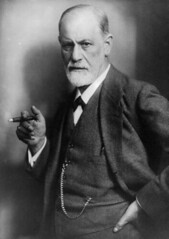
6009920669Sigmund FreudAustrian psychiatrist who originated psychoanalysis. (p. 481)29
6009920670morals and fashionsIn the 1920s, movies, novels, automobiles, and new dances encouraged greater promiscuity. Young women shocked their elders by wearing dresses hemmed at the knee (flapper look), cutting their hair short, smoking cigarettes, and driving cars. (p. 481)30
6009920671Margaret SangerShe founded American Birth Control League; which became Planned Parenthood in the 1940s. She advocated birth control awareness. (p. 481)31
6009920672high school educationIn the 1920s, universal high school education became a new American goal. By 1930, the number of high school graduates had doubled to over 25 percent of school-age adults. (p. 481)32
6009920673consumer cultureIn the 1920s, many writers were disillusioned with the materialism of the business oriented culture. (p. 481)33
6009920674Frederick Lewis AllenIn 1931, he wrote "Only Yesterday", a popular history book that portrayed the 1920s as a period of narrow-minded materialism. (p. 489)34
6009920675Only YesterdayA 1931 history book that portrayed the 1920s as a period of narrow-minded materialism in which the middle class abandoned Progressive reforms, embraced conservative Republican policies, and either supported or condoned nativism, racism, and fundamentalism. (p. 489)35
6009920676Gertrude SteinAmerican writer of experimental novels, poetry, essays, operas, and plays. She called the disillusioned writers of the 1920s, a "lost generation". (p. 481)36
6009920677Lost GenerationGroup of writers in 1920s, who shared the belief that they were lost in a greedy and materialistic world that lacked moral values. Many of them moved to Europe. (p. 481)37
6009920678F. Scott FitzgeraldA novelist and chronicler of the jazz age. His wife, Zelda and he were the "couple" of the decade. His novel, "The Great Gatsby" is considered a masterpiece about a gangster's pursuit of an unattainable rich girl. (p. 481)38
6009920679Ernest HemingwayOne of the most popular writers of the 1920s, he wrote "A Farewell to Arms". (p. 481)39
6009920680Sinclair LewisAmerican writer of the 1920s. He became the first American to receive a Nobel Prize in Literature. (p. 481)40
6009920681Ezra PoundExpatriate American poet and critic of the 1920s. (p. 481)41
6009920682T. S. EliotThomas Stearns Eliot was an essayist, publisher, playwright, literary and social critic, and one of the twentieth century's major poets. (p. 481)42
6009920683Eugene O'NeillAn American playwright of the 1920s. (p. 481)43
6009920684industrial designThe fusion of art and technology during the 1920s and 1930s created the new profession of industrial design. (p. 482)44
6009920685Art DecoThe 1920's modernistic art style that captured modernistic simplification of forms, while using machine age materials. (p. 482)45
6009920686Edward HopperA twentieth-century American painter, whose stark realistic paintings often convey a mood of solitude and isolation in common urban settings. (p. 482)46
6009920687regional artistsThomas Benton and Grant Wood celebrated the rural people and scenes of the American heartland. (p. 482)47
6009920688Grant WoodAn American Regional artist who focused on rural scenes in Iowa. He is best known for his painting "American Gothic". (p. 482)48
6009920689George GershwinHe was the son of Russian-Jewish immigrants. He blended jazz and classical music to produce "Rhapsody in Blue" and folk opera "Porgy and Bess". (p. 482)49
6009920690northern migrationBy 1930, almost 20 percent of African Americans out of the Southern United States to the North. (p. 482)50
6009920691Harlem RenaissanceThe largest African American community of almost 200,000 developed in the Harlem section of New York City. It became famous in the 1920s for its talented actors, artists, musicians, and writers. This term describes this period. (p. 483)51
6009920692Countee CullenA leading 1920s African American poet from Harlem. (p. 483)52
6009920693Langston HughesA leading 1920s African American poet from Harlem. (p. 483)53
6009920694James Weldon JohnsonA leading 1920s African American author from Harlem. (p. 483)54
6009920695Claude McKayA leading 1920s African American poet from Harlem. (p. 483)55
6009920696Duke EllingtonA leading 1920s African American jazz great from Harlem. (p. 483)56
6009920697Louis ArmstrongA leading 1920s African American jazz trumpeter from Harlem. (p. 483)57
6009920698Bessie SmithA leading 1920s African American blues singer from Harlem. (p. 483)58
6009920699Paul RobesonA leading 1920s African American singer from Harlem. (p. 483)59
6009920700Back to Africa movementEncouraged those of African descent to return to Africa. (p. 483)60
6009920701Marcus GarveyAfrican American leader during the 1920s who founded the Universal Negro Improvement Association and advocated mass migration of African Americans back to Africa. He was deported to Jamaica and his movement collapsed. (p. 483)61
6009920702black prideMany African American leaders agreed with Marcus Garvey's ideas on racial pride and self-respect. This influenced another generation in the 1960s. (p. 483)62
6009920703modernismThey took a historical and critical view of certain Bible passages and believed that they could accept Darwin's theory of evolution without abandoning their religion. (p. 483)63
6009920704fundamentalismA Protestant Christian movement emphasizing the literal truth of the Bible and opposing religious modernism (p. 483)64
6009920705revivalists: Billy Sunday, Aimee Semple McPhersonLeading radio evangelists such as Billy Sunday and Aimee Semple McPherson preached a fundamentalist message. (p 484)65
6009920706Scopes trialA 1925 Tennessee court case in which Clarence Darrow and William Jennings Bryan argued the issue of teaching evolution in public schools. (p. 484)66
6009920707Clarence DarrowA famed criminal defense lawyer, he defended John Scopes, a teacher who taught evolution in his Tennessee classroom. (p. 484)67
6009920708Volstead ActThe federal law of 1919 that established criminal penalties for manufacturing, transporting, or possessing alcohol. (p. 484)68
6009920709rural vs. urbanIn the 1920s, in the urban areas it was common to ignore the law and drink liquor in clubs or bars known as speakeasies. (p 484)69
6009920710organized crimeIn the 1920s, organized crime became big business, as bootleggers transported and sold liquor to many customers. (p. 484)70
6009920711Al CaponeA famous Chicago gangster who fought for control of the lucrative bootlegging (liquor) trade. (p. 484)71
600992071221st AmendmentThe amendment which ended the prohibition of alcohol in the United States, it repealed the 18th amendment. (p. 485)72
6009920713quota laws of 1921 and 1924Laws passed to limit immigration. (p. 485)73
6009920714Sacco and Vanzetti CaseA criminal case of two Italian men who were convicted of murder in 1921. They were prosecuted because they were Italians, atheists, and anarchists. After 6 years of appeals they were executed in 1927. (p. 485)74
6009920715Ku Klux KlanA secret society created by white southerners in 1866. They used terror and violence to keep African Americans from exercising their civil rights. (p. 486)75
6009920716Birth of a NationA popular silent film, which portrayed the KKK during Reconstruction as heros. (p. 486)76
6009920717blacks, Catholics and JewsThe KKK directed hostility toward these groups in the North. (p. 486)77
6009920718foreigners and CommunistsDuring the 1920s, widespread disillusionment with World War I, communism in the Soviet Union, and Europe's post war problems made Americans fearful of being pulled into another foreign war. (p. 486)78
6009920719disarmamentRepublican presidents of the 1920s tried to promote peace and also to scale back defense expenditures by arranging disarmament treaties (reduction in military equipment). (p. 486)79
6009920720Washington ConferenceA 1921 conference that placed limits on naval powers, respect of territory in the Pacific, and continued the Open Door policy in China. (p. 487)80
6009920721Five-Power Naval TreatyA 1922 treaty resulting from the Washington Armaments Conference that limited to a specific ratio the carrier and battleship tonnage of each nation. The five countries involved were: United States, Great Britain, Japan, France, and Italy. (p. 487)81
6009920722Nine-Power China TreatyA 1922 treaty affirming the sovereignty and territorial integrity of China as previously stated in the Open Door Policy. (p. 487)82
6009920723Kellogg-Briand TreatyThis treaty of 1928 renounced the use of force to achieve national ends. It was signed by Frank Kellogg of the United States and Aristide Briand of France, and most other nations. The international agreement proved ineffective. (p. 487)83
6009920724Latin America policyIn 1927, the United States signed an agreement with Mexico protecting U.S. interests in Mexico. (p. 487)84
6009920725war debtsDuring World War I the United States had loaned more than $10 billion to the Allies. After the war, the United States insisted that they pay back all the debt. Great Britain and France objected because they suffered much greater losses during the war than the United States. (p. 488)85
6009920726reparationsAs part of the Treaty of Versailles, Germany was ordered to pay $30 billion in reparations to the Allies. (p. 488)86
6009920727Dawes PlanA 1924 plan, created by Charles Dawes in which the United States banks would lend large sums to Germany. Germany would use the money to rebuild its economy and pay reparations to Great Britain and France. Then Great Britain and France would pay their war debts to the United States. After the 1929 stock market crash, the loans to Germany stopped. (p. 488)87

AP US History Period 4 (1800-1848) Flashcards

Terms : Hide Images
9680058231FederalistPolitical party created in the 1790s led by Alexander Hamilton; favored a stronger national government; supported primarily by the bankers and moneyed interests0
9680058232Democratic-RepublicansPolitical party created in the 1790's; led by Thomas Jefferson; favored limited government and state rights; supported primarily by the "common man"1
9680058233Election of 1800(AKA Revolution of 1800) election that led to a peaceful transfer of power from the Federalist party to the Democratic Republican Party2
9680058234Hartford Convention, 1814Meeting of Federalists during the War of 1812 discuss strategy to gain more power in government; viewed as unpatriotic by many; as a result, the Federalist Party was no longer a significant force in American politics3
9680058235Era of Good FeelingsTerm used to describe the time period after the 2nd Party System in the United States after the Federalist Party fell from the national stage, leaving only the Democratic Party; associated with the presidency of James Monroe4
9680058236DemocratsPolitical party that brought Andrew Jackson into office in 1829; part of the 2nd Party System of the United States; supported Jeffersonian ideas of limited government and individualism; drew its support from the "common Man"5
9680058237Whig PartyPolitical Party created in 1834 as a coalition of anti-Jackson political leaders and dedicated to internal improvements funded by the national government6
9680058238Andrew JacksonLeader of the Democrats who became the seventh president of the US (1829-1837); known for his opposition to the 2nd Bank of the US, the Indian Removal Act, and opposition to nullification7
9680058239Henry ClayLeader of the Whig Party who proposed an "American System" to make the United States economically self-sufficient, mostly through protective tariffs; worked to keep the Union together through political compromise8
9680058240Nullification Crisis (1832-1833)After South Carolina declared the federal tariff null and void, President Jackson obtained a Force Bill to use military actions against South Carolina; ended with a compromise to lower tariffs over an extended time; overall significance was the challenge of states to ignore federal law (later on with laws regarding slavery).9
9680058241John C. CalhounSouth Carolina political leader who defended slavery as a positive good and advocated the doctrine of nullification, a policy in which state could nullify federal law.10
9680058242John MarshallAppointed to the Supreme Court by John Adams in 1801; served as a chief justice until 1835; legal decisions gave the Supreme Court more power, strengthened the federal government, and supported protection of private property.11
9680058243Cotton BeltSouthern region in the US where most of the cotton is grown/deep; stretched from South Carolina to Georgia to the new states in the southwest frontier; had the highest concentration of slaves12
9680058244Judicial ReviewThe power of the Supreme Court to review the constitutionality of laws passed by Congress13
9680058245Market EconomyEconomic system based on the unregulated buying and selling of goods and services; prices are determined by the forces of supply and demand14
9680058246Embargo Act (1807)Passed by President Jefferson in order to pressure Britain and France to stop impressment and support the American rights to free trade with the other; a government-order ban on international trade; went into effect in 1808 and closed down virtually all U.S. trade with foreign nations; led to steep depression in the economy15
9680058247Panic of 1819Financial panic that began when the Second Bank of the US tightened credit and recalled government loans after the price of cotton dropped16
9680058248Second Bank of the United States (1816)Privately owned bank that operated as both a commercial and fiscal agent for the US government; established in 1816 under a charter that was supposed to last 20 years; Andrew Jackson was critical of the bank and its potential for corruption; ended when Jackson vetoed the extension of its charter and won reelection in the process17
9680058249Tariff of 1816First protective tariff in US history; designed primarily to help America's textile industry18
9680058250Tariff of Abominations 1828Tariff with such high rates that it set off tension between northerners and southerners over tariff issues (called the Nullification Crisis)19
9680058251Panic of 1837Economic collapse caused primarily by President Jackson's destruction of the Second Bank of the United States20
9680058252Slave CodesLaws that established the status of slaves denying them basic rights and classifying them as the property of slaveholders21
9680058253Second Great AwakeningAn upsurge in religious activity that began around 1800 and was characterized by emotional revival meetings; led to several reform movements (temperance, abolition) designed to perfect society with religious morals22
9680058254Charles FinneyPresbyterian minister who is credited and is known as the "Father of modern Revivalism"; advocated the abolition of slavery and equal education for women and African Americans23
9680058255Elizabeth Cady StantonAdvocate of women right's, including the right to vote; organized (with Lucretia Mott) the first women's rights convention at Seneca Falls, NY24
9680058256Dorothea DixPioneer in the moment for special treatment for the mentally ill25
9680058257Horace MannMassachusetts educator who called for publicly funded education for all children; called the "Father of Public Education in America"26
9680058258Utopian CommunitiesIdealistic reform movement based on the belief that a perfect society could be created on Earth; significant Utopian experiments were established at New Harmony, Indiana, Book Farm, Massachusetts and the Oneida Community in New York; usually such attempts were short-lived27
9680058259American Colonization Society (established 1817)Organization established to end slavery gradually by helping individual slave owners liberate their slaves and then transport the freed slaves to Africa (Liberia)28
9680058260William Lloyd GarrisonRadical abolitionist in Massachusetts who published the liberator, an antislavery newspaper29
9680058261Sojourner TruthFormer slave (freed in 1827) who became a leading abolitionist and feminist30
9680058262Hudson River School 1825-1875The first native school of painting in the US; painted primarily landscapes; themes included deep nationalism, grandeur of nature, and transcendentalism31
9680058263TranscendentalismPhilosophical and literary movement that believed God existed within human being and nature; believed intuition was the highest source of knowledge; advocated for introspection by surrounding oneself with nature32
9680058264Ralph Waldo EmersonPhilosopher, writer, and poet who became a central figure in the Transcendalist movement in American33
9680058265Henry David ThoreauWriter and naturalist; with Ralph Waldo Emerson, he was one of America's best known transcendentalists34
9680058266Richard AllenAfrican American minister who established the first independent African American denomination in the US, the African Methodist Episcopalian Church35
9680058267Samuel SlaterKnown as the "Father of the American Industrial Revolution"; brought British textile technology to the United States to create the first factory36
9680058268John DeereInvented the steel plow in 1837, which revolutionized farming; the steel plow broke up soil without the soil getting stuck to the plow37
9680058269Lowell SystemMethod of factory management that evolved in the textile mills of Lowell, MA38
9680058270Erie Canal (1817-1825)350 mile canal built by the state of NY that stretched from Buffalo to Albany; the canal revolutionized shipping in NY and opened up new markets (evidence of the Market Revolution)39
9680058271National Road (1811)AKA Cumberland Road; first significant road built in the US at the expense of the federal government; stretched from the Potomac River to the Ohio River40
9680058272Mason-Dixon LineBoundary between PA and MD that marked the division between free and slave states before the Civil War41
9680058273Cult of DomesticityThe belief that a woman's proper role in life was found in domestic pursuits (raising children, taking care of the house); strongly believed by many throughout the 19th century42
9680058274Louisiana Purchase (1803)U.S. purchased the Louisiana Territory from France for $15 million, doubling the size of the U.S. and giving the U.S. full control of the Mississippi River43
9680058275Lewis and Clark expedition (1804-1806)Expedition to explore the Louisiana Territory led by Meriwether Lewis and William Clark44
9680058276War HawksMembers of Congress from the West and South elected in 1810 who wanted war with Britain in the hopes of annexing new territory and ending British trade with the Indians of the Northwest45
9680058277War of 18121812-1815, War between the U.S. and Great Britain caused primarily by the perceived British violation of American neutral rights on the high seas (impressment); ended with an agreement of "status quo ante" (a return to how things were before the war)46
9680058278Adams-Onis Treaty (1819)Treaty between the U.S. and Spain that ceded Florida to the U.S47
9680058279Monroe Doctrine (1823)President Monroe's unilateral declaration that the Americas would be closed to further European colonization and that the U.S. would not allow European interference in the affairs of the Western Hemisphere; in return the U.S. pledged to stay out of European conflicts and affairs; significant foreign policy state that lasted through most of the 19th century48
9680058280Oregon Treaty of 1846After years of conflict over ownership of the Pacific Northwest, the U.S. and England established the boundary at 49° latitude, essentially splitting the Oregon Country down the middle49
9680058281Manifest DestinyPopular belief amongst early-19th century Americans that the U.S. was destined to expand across the North American continent, that this belief was obvious, and that God willed it to take place50
9680058282TecumsehShawnee leader who attempted to establish an Indian confederacy among tribes from around the continent that he hoped would be a barrier to white expansion; defeated at the Battle of Tippecanoe in 1811 by U.S. forces led by General William Henry Harrison, slowing the momentum of Pan-Indian unity51
9680058283Indian Removal Act (1830)Law that provided for the removal of all Indian tribes east of the Mississippi and the purchase of Indian lands for white resettlement52
9680058284Worcester v. Georgia (1832)A Supreme Court ruling that declared a state did not have the power to enforce laws on lands that were not under state jurisdiction; John Marshall wrote that the state of Georgia did not have the power to remove Indians; this ruling was largely ignored by President Andrew Jackson53
9680058285Trail of Tears (1838)Forced march of the Cherokee people from Georgia to Indian Territory in the winter; a large percentage of Cherokee died on the journey54
9680058286American Anti-Slavery SocietyAbolitionist society founded by William Lloyd Garrison - included Frederick Douglass as a significant leader of the society55
9680058287RomanticismAn artistic and intellectual movement characterized by its emphasis on emotion and individualism as well as glorification of all the past and nature, preferring the medieval rather than the classical56
9680058288The American SystemConsisted of three mutually reinforcing parts: (1) a tariff to protect and promote American industry; (2) a national bank to foster commerce; (3) federal subsidies for roads, canals, and other "internal improvements" to develop profitable markets for agriculture; supported heavily by Henry Clay57
9680058289Missouri Compromise (1820)Admitted Missouri as a slave state and Maine as a free state, maintaining the balance between slave and free states in representation in the federal government; established a geographic line that would determine whether new states (made from the western territories) would be added to the union as slave or free states58
9680058290Spoils SystemPublic offices given as a reward for political support. Most iconically used by Andrew Jackson after his first election, which then became a precedent for future federal leaders.59
9680058291Marbury v. Madison (1803, Marshall)The Court established its role as the arbiter of the constitutionality of federal laws, the principle is known as judicial review.60
9680058292McCulloch v. Maryland (1819, Marshall)The Court ruled that states cannot tax the federal government, i.e. the Bank of the United States; the phrase "the power to tax is the power to destroy"; confirmed the constitutionality of the Bank of the United States.61
9680058293Johnson v. McIntosh (1823, Marshall)Established that Indian tribes had rights to tribal lands that preceded all other American law; only the federal government could take land from the tribes.62
9680058294Cherokee Nation v. Georgia (1831, Marshall)"The conditions of the Indians in relation to the United States is perhaps unlike that of any two people in existence," Chief Justice John Marshall wrote, "their relation to the United States resembles that of a ward to his guardian. . .(they were a) domestic dependent nation." Established a "trust relationship" with the tribes directly under federal authority.63
9680058295interchangeable partsParts that were identical and which could be substituted for one another; developed by Eli Whitney for the manufacturing of muskets; became a hallmark of the American factory system64
9680058296turnpikeA road in which tolls were collected at gates set up along the road65
9680058297tariffA tax imposed on imported goods and services. Tariffs are used to restrict trade, as they increase the price of imported goods and services, making them more expensive to consumers.66
9680058298sectionalistPerson devoted to the cause of a particular section of the country (usually North or South), as opposed to the nation as a whole67
9680058299embargoA government order prohibiting commerce in or out of a port68
9680058300nationalismA strong devotion to the nation as the central political entity, often in a narrow or aggressive fashion; usually involves feelings of superiority over other nations or ideaologies69
9680058301internal improvementsThe basic public works, such as roads and canals, that create the structure for economic development.70
9680058302depressionIn economics, a severe and often prolonged period of declining economic activity, rising unemployment, and falling wages and prices.71
9680058303boomIn economics, a period of sudden, spectacular expansion of business activity or prices.72
9680058304constituentsThe body of voters or supporters in a district, regarded as a group.73
9680058305hard moneyGold and Silver coins, as distinguished from paper money.74
9680058306deferenceThe yielding of opinion to the judgment of someone else.75
9680058307subversiveTending to corrupt, overthrow, or destroy something established.76
9680058308puritanicalExtremely or excessively strict in matters of morals or religion.77
9680058309usurpationThe act of seizing, occupying, or enjoying the place, power, or functions of someone without right.78
9680058310mudslingingMalicious, unscrupulous attacks against an opponent.79
9680058311machineA political organization, often controlled through patronage or spoils.80
9680058312incumbentThe person currently holding an office.81
9680058313impostA tax, particularly a tariff or duty on imported goods.82
9680058314appeasementThe policy of giving in to demands of a hostile of dangerous power in hope of avoiding conflict.83
9680058315prejudiceUnreasonable suspicion, bias, or hatred directed at members of a group.84
9680058316ritualA set form or system of ceremonies, often but not necessarily religious.85
9680058317evangelicalConcerning religious belief, commonly Protestant, that emphasizes personal salvation, individual and voluntary religious commitment, and the authority of Scripture.86
9680058318platformA statement of the principles or positions of a political party.87
9680058319denominationsIn American religion, the major branches of Christianity, organized into separate national churches structures; e.g., Presbyterians, Baptists, Disciples of Christ.88
9680058320prolificProducing a large number of something.89
9680058321temperanceModeration, or sometimes total abstinence, as regards drinking alcohol.90
9680058322nativistOne who advocates favoring native-born citizens over aliens or immigrants.91
9680058323factoryAn establishment for the manufacturing of goods, including buildings and substantial machinery.92
9680058324liabilityLegal responsibility for loss or damage.93
9680058325incorporationThe formation of individuals into a legally organized group, usually a business.94
9680058326labor unionAn organization of workers—usually wage-earning workers—to promote the interests and welfare of its members, often by collective bargaining with employers.95
9680058327strikeAn organized work stoppage by employees in order to obtain better wages, working conditions, and so on.96
9680058328capitalistAn individual or group who uses private property to produce goods for profit in an open market.97
9680058329posterityLater descendants or subsequent generations.98
9680058330productivityIn economics, the relative capacity to produce goods and services, measured in terms of the number of workers and machines needed to create goods in a certain length of time.99
9680058331transientReferring to a person without a fixed or long-term home or job; a migrant.100
9680058332polygamyThe practice or condition of having two or more spouses at one time.101
9680058333theocracyLiterally, rule by God, the term is often applied to a state where religious leaders exercise direct or indirect political authority.102
9680058334zealotOne who is carried away by a cause to an extreme or excessive degree.103
9680058335communisticReferring to the theory or practice in which the means of production are owned by the community as a whole.104
9680058336nonconformistOne who refuses to follow established or conventional ideas or habits; often referred to as part of a "counter-culture".105
9680058337providence (providencial)Under the care and direction of God or other benevolent natural or supernatural forces.106

US History: Cold War Flashcards

Terms : Hide Images
6582464274Cold WarAfter WWII, the US and Soviet Union became rivals. The two Superpowers never confronted each other directly in open warfare, but their global competition led to frequent conflicts around the world.0
6582464275Joseph StalinBrutal dictator over the Socvet Union.1
6582464276GulagsForced labor camps in Siberia where Stalin's critics anad opponents were often sent.2
6582464277Yalta1945 meeting place of Roosevelt, Churchill and Stalin to plan the reorganization of Europe and end to the war.3
6582464278United NationsAn international organization formed after WWII to promote international peace, security, and cooperation.4
6582464279Potsdam ConferenceTruman and Stalin met six months after Yalta and serious differences emerged. Began the start of the Cold War.5
6582464280Iron CurtainStalin created a wall of satellite countries in Eastern Europe as a buffer against any future invasions. Placed local communists in power in all the governments of Eastern Europe and cutoff trade and contact between Easter and Western Europe.6
6582464281ContainmentAmerican leaders did not attempt to overturn Communism where it already existed, but resolved to prevent it form spreading further.7
6582464282Truman DoctrineTruman promised to support any country fighting Communism.8
6582464283Marshall PlanUS proposal that massive aid be given to the countries of war torn Western Europe and help rebuild their economies in order to keep them from turning Communist. It Included aid to Germany and Italy.9
6582464284Berlin AirliftBerlin, the old capita of Germany, was in the Soviet zone of East Germany. Berlin was divided 4 ways. When the Western Zones merged, the Soviets blockaded West Berlin by closing off all highway and railroad links. The Western Allies began a massive airlift to feed and supply the city.10
6582464285North Atlantic treaty Organization (NATO)The US, Canada and 10 Western European countries formed a pact based on collective security.11
6582464286Collective SecurityEach NATO member pledged to defend every other member if attacked.12
6582464287Warsaw PactThe Soviets responded to the creation of NATO by creating an alliance with its Eastern European satellites.13
6582464288Mao ZedongCommunist leader that overthrew the Nationalist government in China in 1949.14
6582464289Red ChinaMainland China controlled by Communists.15
6582464290TaiwanAfter defeat by Mao, the Nationalist leaders fred to the tiny island off the coast of China.16
6582464291Korean WarIn 1950, North Korean forces invaded South Korea in an attempt to unify the country under Communist rule.17
6582464292DeterrentThe Soviet Union was supposed to be deterred from attacking because if it did, the US would destroy it with nuclear weapons.18
6582464293SputnikIn 1957, the Soviets launched the first man-made satellite into space. Ushered in the "Space Race" on fear that the Societs might use missiles to send nuclear weapons to the US.19
6582464294Loyalty Review BoardUsed to investigate individual "un-American" activities, such as participation in the American Communist Party.20
6582464295House Un-American Activities CommitteeCongressional committee that performed its own loyalty checks by questioning those with possible Communist sympathies. those identified as present or former members of the Communist Party were often "blacklisted" and lost their jobs.21
6582464296Rosenberg TrialIn 1950, Julius and Ethel Rosenberg were charged with selling national secrets to the Soviet Union about making the atomic bomb. They were found guilty and executed as spies.22
6582464297Venona PapersIn 1977, the National Security Agency released documents revealed the identities of several Americans who had spied for the Soviet Union, including Julius Rosenberg. It proved that the Soviets had in fact penetrated American government, science and industry during the Cold War.23
6582464298McCarthyismIn 1950, Senator Joseph McCarthy conducted a Communist witchhunt making many allegations without evidence.24
6582464299Dwight EisenhowerIn 1952, the former commander of Allied western forces in Europe was elected President.25
6582464300John Foster DullesSecretary of State under President Eisenhower who sought to contain Communism by preventing the Soviets from gaining any additional influence.26
6582464301Eisenhower DoctrineExtended the containment policy to any Middle Eastern nation defending against Communism.27
6582464302Interstate Highway Act (1956)Eisenhower created a system of federal highways.28
6582464303SuburbsAfter WWII, city dwellers moved just outside the cities into planned communities with grassy yards and fresh air, while still able to commute into the cities for work.29
6582464304Jonas SalkIn 1953, he created the first vaccine for polio.30

Pages

Subscribe to CourseNotes RSS

Need Help?

We hope your visit has been a productive one. If you're having any problems, or would like to give some feedback, we'd love to hear from you.

For general help, questions, and suggestions, try our dedicated support forums.

If you need to contact the Course-Notes.Org web experience team, please use our contact form.

Need Notes?

While we strive to provide the most comprehensive notes for as many high school textbooks as possible, there are certainly going to be some that we miss. Drop us a note and let us know which textbooks you need. Be sure to include which edition of the textbook you are using! If we see enough demand, we'll do whatever we can to get those notes up on the site for you!