AP Notes, Outlines, Study Guides, Vocabulary, Practice Exams and more!

AP US History Unit 1 Review Flashcards

Terms : Hide Images
4889684702RoanokeA colony organized by Sir Walter Raleigh in 1585 off the coast of Virginia0
4889684703Ferdinand MagellanPortuguese explorer who became the first person to sail across the Pacific Ocean and to circumnavigate the globe.1
4889684704Christopher ColumbusSpanish explorer that exposed the Spanish to the North American continent in 1492.2
4889684705The Conquistadors(Conquerors) individuals that collected and exported as much of the area`s wealth as they could. Ex: Hernando Cortez3
4889684706Hernando CortezTraveled to America in search of treasure, and became known as the most brutal, for his treatment of the Native Americans.4
4889684707Francisco PizarroConquered Peru in 1532-1538, revealed to Europeans the wealth of the Inacs, opened the way for other advances into South America5
4889684708Columbian ExchangeExchange of plants, animals, food and communicable diseases6
4889684709EncomiendaSpanish system, the crown granted colonists authority over a specified number of natives. Colonists had to protect the natives and convert them to Catholicism, in turn the colonist would be entitled to those natives' labor7
4889684710JamestownFunded by a joint-stock company ( a group of investors who bought the right to establish New World plantations from the king ) known as the Virginia Company. The first full male settlement, as they did not bring women on the voyage to the New World.8
4889684711Starving TimeJamestown settlers suffered from starvation due to their lack of food, and being trapped within their settlement, due to angering the natives.9
4889684712Captain John SmithImposed order onto the community and organized raids on neighboring natives for food. Decreed "he who will not work shall not eat"10
4889684713John RolfePioneered the practice of growing tobacco as a cash crop to be exported to England. Since tobacco growth depleted the soil, the Virginia economy`s resulted in rapid expansion. The growth of tobacco also leads to the development of plantation slavery.11
4889684714Chesapeake Bay(Virginia and Maryland) Experienced no Indian assaults, plagues or staving times. Encouraged the immigration of Protestants and Catholics.12
4889684715Indentured ServitudeIn exchange for free passage into the New World, individuals would promise to work seven years to the person that gave them free passage. They received a small piece of property when they were free.13
4889684716Head right SystemIntroduced by the Virginia Company in 1618, to attract more settlers to the region , as well as bring more labor to the tobacco farms. Each colonist and potential settler was granted 50 acres of land. Men that were already settled in Virginia were granted 100 acres of land.14
4889684717House of BurgessesEstablished in Virginia in 1619, and said that each property owning white male could vote. The decisions made by the House of Burgesses had to be approved by the Virginia Company. Bonus Fact: 1619 was the year that slavery was introduced into the English colonies.15
4889684718Spain in AmericaConquered and enslaved the Natives. Made great efforts to convert the Native Americans to Catholicism. There were many mixed Spanish and Native American people and children.16
4889684719France in AmericaHad friendlier relations with indigenous tribes. Adopted native practices.17
4889684720England in AmericaDepended on Native Americans in different ways. 1. Slave Labor 2. as Allies 3. as Trading partners English colonies attempted to exclude Native Americans. When Native tribes became a problem to them, they launched wars of extermination. Ex: Powhatan Confederacy was destroyed by English "Indian fighters" in the 1640`s.18
4889684721CalvinistBelieved that the way people led their lives might reveal to them their chances of salvation. Led a Protestant movement called Puritanism in England.19
4889684722SeparatistBelieved the Church of England was incapable of being reformed, so they decided they had to leave England. In 1620 in the Mayflower ship, they went into modern day Massachusetts. This settlement was known as Plymouth.20
4889684723Mayflower CompactWhile on the ship, the Separatist or " Pilgrims" signed an agreement establishing a "body politic" and a basic legal system for the colony. This created legal authority and an assembly, and also asserted that the government`s power derives from the consent of the governed and not from God, as some monarchists or Absolutists believed.21
4889684724PlymouthPilgrim civilization ( Separatist). Squanto - A native helped the civilization by teaching them how to plant22
4889684725Massachusetts BayEstablished by Congregationalists . Led by Governor John Winthrop and developed the civilization along Puritan ideals.23
4889684726CongregationalistsPuritans who wanted to reform the Anglican church from within24
4889684727"City Upon a Hill"John Winthrop delivers this, and means that the colonists settlement should be a model for other to look up to.25
4889684728PuritansBelieved they had a covenant with God, and the concept of covenants was central to their entire philosophy, in both political and religious terms. Theocratic society - the clergy and government worked together26
4889684729Roger WilliamsMinister in Salem Bay settlement, taught that church and state should be separate27
4889684730Rhode Island CharterAllowed for the free exercise of religion, and it did not require voters to be church members.28
4889684731Anne HutchinsonA prominent proponent of antinomianism, the belief that faith and God`s grace - as opposed to the observance of moral law and performance of good deeds - suffice to earn one a place among the "elect"29
4889684732ConnecticutA proprietorship that was owned by one person, and received a charter in 1635. It produced the Fundamental Orders, usually considered the first written constitution in Britain and North America.30
4889684733Act of TolerationPassed by Maryland government in 1649 to protect the religious freedom of most Christians.31
4889684734PennsylvaniaWilliam Penn, a Quaker, est32
4889684735William Pennestablished liberal policies towards religious freedom and civil liberties in his colony. Attempted to treat Natives more fairly than did other colonies. Made a treaty with Delawares to take only as much land as could be walked by a man in three days.33
4889684736CarolinaProprietary colony. Split into North Carolina in 1729 and was run by Virginians , and South Carolina which was run by descendants of Englishmen who had colonized Barbados34
4889684737Middle PassageAmerican Shipping Route that Brought slaves to the Americas35
4889684738Slavery in the SouthFlourished as a result of the nature of the land and the short growing season. The crops there were tobacco, indigo and rice, which were labor intensive.36
4889684739Great AwakeningA series of religious revivial swept through the colonies in the 1730s.37
4889684740Old Lights, New LightsTwo groups that debated over the issues of God during the Great Awakening. Old - rejected the Great awakening New - accepted the Great awakening38
4889684741Cambridge AgreementUsed to colonize America in 1629, by allowing immigration of puritan settlers who would control the government and the charter of the Massachusetts Bay company.39
4889684742Bacon`s RebellionBack country settlers in Virginia were being attacked by Native Americans. This rebellion showed o how unwilling the English settlers were to abide by earlier agreements with the natives, and how unwilling the Indians were to tolerate further white movement into their territory. o the bitterness of the competition between eastern and western landowners o something the potential for instability in the colony`s largest population if free, landless men.40
4889684743Barbados CodeAdopted by Carolina in 1696 to control slaves at the will of their masters. Used to keep control in the society.41
4889684744Maryland Slave Code 1661Defined slavery as a "lifelong, inheritable, racial status". Used to set up a distant place for the slaves in the society.42
4889684745Stono RebellionSlave uprising in South Carolina in 1739. It significants let to white apprehension and led to a new slave code.43
4889684746New EnglandPuritan Society44
4889684747John Locke, Fundamental ConstitutionConstitution meant to stabilize the government of Carolina by basing the social rank on one`s "land wealth."45
4889684748Restoration ColoniesEnabled England to control the East Coast, Carolina, New York, New Jersey, and Pennsylvania. These colonies had governments that made a social hierarchy geared toward a dominant wealthy class.46
4889684749QuakersBelief that divine revelation is immediate and individual and that all persons may perceive the word of God in their soul. They rejected predestination and original sin. They granted women a position within the church generally equal to that of men.47

US History Midterm Review Flashcards

Terms : Hide Images
7068748484Southern ColoniesMaryland, Virginia, North and South Carolina, and Georgia. These colonies had few cities, plantations, long growing seasons, and were located in tidewater areas.0
7068748485Middle ColoniesPennsylvania, New York, New Jersey, and Delaware. These colonies had large farms, navigable rivers, large trading industries, and moderate growing seasons. These colonies were most tolerant of other religions and peoples1
7068748486New England ColoniesConnecticut, Rhode Island, Massachusetts, and New Hampshire. These colonies had short growing seasons, trade, shipbuilding industries, fishing, and rocky soil.2
7068748487EnglandThe following are reasons that which country formed settlements in the New World: A desire to gain wealth through joint-stock company ventures A desire to escape religious persecution A desire to seek a better life with more opportunities3
7068748488Indentured servantIn exchange for passage to North America, and food and shelter once they arrived, these people agreed to a limited term of servitude.4
7068748489British taxationIn the year 1765, many colonists were starting to protest because of this5
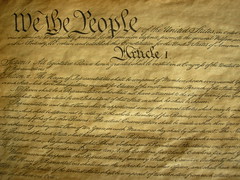
7068748490The ConstitutionIn this document, the framers are stating that sovereignty belongs to the people of the nation6
7068748491Federalists and Anti-FederalistsThese two groups debated the ratification of the new Constitution in 17877
7068748492African AmericansDespite the American Revolution's emphasis on equality, which group of people did not experience a positive social change?8
7068748493President George WashingtonThis president feared that permanent alliances could draw the United States into wars. He shared this belief with Presidents Thomas Jefferson and James Monroe9
7068748494Political PartiesDebates over Alexander Hamilton's Financial Program and the growing war between France and Britain led to the development of what?10
7068748495Balance of free and slave statesThe most pressing issue as Americans moved west and formed new states throughout the early 1800's11
7068748496The Era of the Common ManThe elimination of property requirements for voting during the antebellum period gave this period what nickname?12
7068748497Second Great AwakeningPreachers during this event advocated that salvation is available to anyone and individuals are responsible for their salvation13
7068748498President Andrew JacksonThis president felt that states do not have the legal, or constitutional, right to secede14
7068748499Manifest DestinyIt was America's God-given right to expand all the way to the West coast15
7068748500AntebellumThe time in the South before the Civil War16
7068748501WhigsThis political party disappeared by the Election of 185617
7068748502Debates over the extension of slaveryThe Whig party disappeared because of what?18
7068748503End secession and preserve the UnionThe principal war goal for Lincoln in 186119
7068748504The Emancipation ProclamationAbolished slavery in all states that were still in open rebellion against the Union20
7068748505President LincolnThis president justified the emancipation of southern slaves through his military powers as Commander-in-Chief21
7068748506Total WarThe belief that it is essential to fight not only the army of the enemy, but also the civilian population22
7068748507William Tecumseh ShermanThe Union commander that used the total war strategy to end the Civil War quickly23
7068748508ReconstructionThe achievements made to enfranchise African-Americans were reversed by the end of this time period24
7068748509Canals and TelegraphsThese inventions allowed businesses to expand across the nation, instead of being isolate to one place25
7068748510CanalsThese had the most influence on the development of a "market revolution"26
7068748511Cotton GinThis contributed to the growth of slavery in the Antebellum Period27
7068748512Steel PlowThis contributed to the agricultural boom of the Old Northwest28
7068748513Cotton Gin and Textile LoomThese two inventions led to a dependence between the North and the South for economic production29
7068748514Northeast/New EnglandFactories and textile industries were mainly located in this region of the country30
7068748515The American RevolutionThis picture, used as propaganda, is related to what historical event/time period31
7069147292Oregon TreatyWhere the US and Britain agreed on the line dividing Britain (modern Canada) and America in the Oregon Territory. Their motto was "54' 40 or fight."32
7069158218Mexican-American WarWar between Mexico and America over the territory of Texas. Ultimately gives modern day New Mexico, Utah, Nevada, Arizona, California, Texas, and western Colorado to the United States.33

AMSCO AP US History Chapter 9 Flashcards

AMSCO United States History 2015 Edition, Chapter 9 Sectionalism, 1820-1860

Terms : Hide Images
7965771028NortheastIn the early 19th century, the area which included New England and the Middle Atlantic states. (p. 173)0
7965771029Old NorthwestIn the early 19th century, the territory which stretched from Ohio to Minnesota. (p. 173)1
7965771030sectionalismLoyalty to a particular region of the country. (p. 173)2
7965771031NativistsNative-born Americans who reacted strongly against the immigrants, they feared the newcomers would take their jobs and weaken the culture of the Protestant and Anglo majority. (p. 176)3
7965771032American partyIn the early 1850s, this party which opposed immigrants, nominated candidates for office. They were also called the Know-Nothing party. (p. 176)4
7965771033Supreme Order of the Star-Spangled BannerA secret anti-foreign society in the 1840s. In the 1850s the society turned to politics by forming the American party. (p. 176)5
7965771034Know-Nothing PartyNativists, also known as the American party. (p. 176)6
7965771035Free African AmericansBy 1860 as many as 250,000 African Americans in the South were free citizens. Most of them lived in the cities where they could own property. However, they were not allowed to vote or work in most skilled professions. (p. 179)7
7965771036plantersThe South's small wealthy elite that owned more than 100 slaves and more than 1000 acres. (p. 180)8
7965771037Codes of ChivalryThe Southern aristocratic planter class ascribed to a code of chivalrous conduct, which included a strong sense of personal honor, defense of womanhood, paternalistic attitudes toward all who were deemed inferior. (p. 180)9
7965771038poor whitesThe term for the three-fourths of the South's white population who owned no slaves. (p. 180)10
7965771039hillbilliesDerisive term for poor white subsistence farmers, they often lived in the hills and farmed less productive land. (p. 180)11
7965771040mountain menIn the 1820s, these were the earliest white people in the Rocky Mountains. They trapped for furs and served as guides for settlers traveling to the West coast. (p. 181)12
7965771041the WestThe term that referred to the new area that was being settled, the location changed as the white settlements moved westward. (p. 181)13
7965771042the frontierThe area that was newly settled in the West, it moved further west over time. (p. 181)14
7965771043Deep SouthThe cotton rich area of the lower Mississippi Valley. (p. 178)15
7965771044American Indian removalBy 1850, most American Indians were living west of the Mississippi River. The Great Plains provide temporary relief from white settlers encroaching on their territory. (p. 181)16
7965771045Great PlainsNative Americans in this area used the horse to hunt buffalo. Tribes such as the Cheyenne and the Sioux, became nomadic hunters following the buffalo herds. (p. 181)17
7965771046white settlersIn the 1840s and 1850s, they settled the Western frontier. They worked hard, lived in log cabins or sod huts. Disease and malnutrition were even greater dangers than attacks by American Indians. (p. 182)18
7965771047urbanizationEarly 19th century urban working class neighborhoods featured crowded housing, poor sanitation, infectious diseases, and high rates of crime. (p. 174)19
7965771048urban lifeThe North's urban population grew from about 5 percent of the population in 1800 to 15 percent by 1850. (p. 174)20
7965771049new citiesAfter 1820, Buffalo, Cleveland, Detroit, Chicago, Cincinnati, and St. Louis developed as transportation points for shipping agricultural products to the East, and receiving manufactured goods from the East. (p. 175)21
7965771050Irish potato famineFrom 1820 to 1860, almost 2 million immigrants came from Ireland. Most of them were tenant farmers driven from their homeland by potato crop failures. (p. 176)22
7965771051Roman CatholicMost of the Irish were this religion and they faced strong discrimination because of it. (p. 176)23
7965771052Tammany HallNew York City's Democratic organization. (p. 176)24
7965771053GermansIn the 1840s and 1850s, because of economic hardship and the failure of democratic revolutions, one million of these people came to the United States. They often established homesteads in the Old Northwest and generally prospered. (p. 176)25
7965771054immigrationFrom the 1830s to the 1850s, four million people came from northern Europe to the United States. (p. 175)26
7965771055King CottonBy the 1850s, this agricultural product was by far the South's most important economic force. (p. 177)27
7965771056Eli WhitneyThe United States inventor of the mechanical cotton gin, which made cotton affordable throughout the world. (p. 178)28
7965771057peculiar institutionA term that referred to slavery because many southern whites were uneasy with the fact that slaves were human beings yet treated so unfairly. Some used historical and religious arguments to support their claim that it was good for both slave and master. (p. 178)29
7965771058Denmark VeseyIn 1822, he led a major slave uprising which was quickly and violently suppressed. However, it gave hope to enslaved African Americans, drove Southern states to tighten already strict slave codes, and demonstrated to many the evils of slavery. (p. 179)30
7965771059Nat TurnerIn 1831, he led a major slave uprising. (p. 179)31
7965771060slave codesIn parts of the Deep South, slaves made up nearly 75 percent of the population. Fearing slave revolts, laws were passed which restricted blacks movements and education. (p. 178)32
7965771061Industrial RevolutionOriginally this revolution was centered in the textile industry, but by the 1830's, northern factories were producing a wide range of goods - everything from farm implements to clocks and shoes. (p. 174)33
7965771062unionsFor a brief period in the 1830s an increasing number of urban workers joined unions and participated in strikes. (p. 174)34
7965771063Commonwealth v. HuntIn 1842, the Massachusetts Supreme Court ruled that peaceful unions had the right to negotiate labor contracts with employers. (p. 174)35
7965771064ten-hour workdayDuring the 1840s and 1850s, most northern state legislatures passed laws establishing a ten-hour workday for industrial workers. (p. 174)36
7965771065Cyrus McCormickUnited States inventor and manufacturer of a mechanical reaper, which made farms more efficient. (p. 175)37
7965771066John DeereUnited States inventor of the steel plow, which made farms more efficient. (p. 175)38
7965771067Daniel WebsterA senator, who warned that sectionalism was dangerous for the United States. (p. 173)39
7965771068environmental damageThis term, described what occurred when settlers cleared forests and exhausted the soil. (p. 182)40
7965771069extinctionThis term, described what trappers and hunters did to the beaver and buffalo populations. (p. 182)41

AMSCO AP US History Chapter 24 Flashcards

AMSCO United States History 2015 Edition, Chapter 24 The Great Depression and the New Deal, 1929-1939

Terms : Hide Images
9772835845Black TuesdayOn October 29, 1929, millions of panicky investors sold, as the bottom fell out of the stock market. (p. 497)0
9772835813Dow Jones indexThe Wall Street stock market index. In September 1929 the index was at a high of 381, in three months it fell to 198. Three years later, the index would finally hit bottom at 41, less than one-ninth of the peak. (p. 497)1
9772835846buying on marginThis purchase method allowed people to borrow most of the cost of the stock, making down payments as low as 10 percent. Investors depended on the price of the stock increasing so they could repay their loans. (p. 497)2
9772835815Federal ReserveDuring the Great Depression, the Federal Reserve followed a tight money policy. Instead of trying to stabilize banks, the money supply and prices, they tried to preserve the gold standard. (p. 498)3
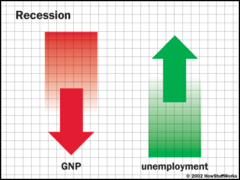
9772835818Gross National ProductThe value of all the goods and services produced by a nation in one year. In 1929, the United States Gross National Product was $104 billion, but it dropped to $56 billion in 1932. (p. 498)4
9772835849Herbert HooverHe was President of the United States at the time of the stock market crash. He thought that prosperity would soon return. He was slow to call for legislative action and he thought public relief should come from the state and local governments, not the federal government. (p. 500)5
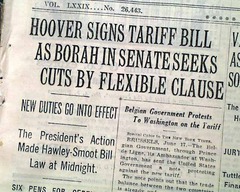
9772835850Hawley-Smoot TariffIn June 1930, President Hoover signed into law the highest tariff rates in history, ranging from 31 to 49 percent. In retaliation, European countries enacted their own tariffs. This reduced trade for all nations and worsened the worldwide depression. (p. 500)6
9772835851Farm BoardIt was authorized to help farmers stabilize prices by temporarily holding surplus grain and cotton in storage. (p. 500)7
9772835852Reconstruction Finance CorporationIn 1932, Congress funded this government-owned corporation as a measure for propping up faltering railroads, banks, life insurance companies, and other financial institutions. President Hoover thought that emergency loans would stabilize key business and the benefits would "trickle down" to smaller businesses and ultimately bring recovery. (p. 501)8
9772835824Twentieth AmendmentAlso known as the lame-duck amendment, this amendment shortened the period between the presidential election and inauguration. The new president's term would start on January 20. (p. 502)9
9772835853bonus marchThousands of unemployed World War I veterans marched to Washington, D.C. and set up encampments to demand immediately payment of the bonuses promised to them at a later date. The Army, led by General Douglas MacArthur broke up the encampment. (p. 501)10
9772835854Franklin D. RooseveltThis Democratic candidate won the 1932 presidential election. As a candidate, he promised a "new deal" for the American people, the repeal of Prohibition, aid for the unemployed, and cuts in government spending. (p. 502)11
9772835855Eleanor RooseveltShe was the most active first lady in history, writing a newspaper column, giving speeches, and traveling the country. She served as the president's social conscience and influenced him to support minorities. (p. 502)12
9772835825New DealFranklin D. Roosevelt's plan to help people at the bottom of the economic pyramid. (p. 503)13
9772835856Brain TrustFor advice on economic matters, Roosevelt turned to a group of university professors. (p. 503)14
9772835857Frances PerkinsRoosevelt's secretary of labor, she was the first woman to serve in a president's cabinet. (p. 503)15
9772835827Hundred DaysOn March 4, 1933, Franklin Roosevelt started his term and called Congress into a one hundred day session. They passed into law all of Roosevelt's legislation. (p. 503)16
9772835829bank holidayPresident Franklin Roosevelt ordered the banks to be closed on March 6, 1933. He made a radio address explaining that the banks would be reopened after allowing enough time for the government to reorganize them on a sound basis. (p. 503)17
9772835858fireside chatsPresident Franklin Roosevelt spoke on the radio to the American people. (p. 504)18
9772835859Federal Deposit Insurance CorporationThis agency guaranteed individual bank deposits. (p. 504)19
9772835860Public Works AdministrationDirected by Secretary of the Interior Harold Ickes, it allotted money to state and local governments for building roads, bridges, dams, and other public works. (p. 504)20
9772835830Harold IckesPresident Franklin D. Roosevelt's secretary of the interior. (p. 504)21
9772835861Civilian Conservation CorpThis organization employed young men for projects on federal lands and paid their families small monthly sums. (p. 504)22
9772835862Tennessee Valley AuthorityA government corporation that hired thousands of people in the Tennessee Valley, to build dams, operate electric power plants, control flooding, and erosion, and manufacture fertilizer. (p. 505)23
9772835863National Recovery AdministrationDirected by Hugh Johnson, this agency attempted to guarantee reasonable profits for business and fair wages and hours for labor. The complex program operated with limited success for two years before the Supreme Court declared it unconstitutional. (p. 505)24
9772835864Schechter v. U.S.In 1935, the Supreme Court declared the National Recovery Administration (NRA) unconstitutional. (p. 505)25
9772835865Securities and Exchange CommissionThis agency was created to regulate the stock market and to place strict limits on the kind of speculative practices that led to the 1929 stock crash. (p. 505)26
9772835866Federal Housing AdministrationIt insured bank loans for building new houses and repairing old ones. (p. 505)27
9772835867Works Progress AdministrationThis agency created in 1935, part of the Second New Deal, it was much more ambitious than earlier efforts. Between 1935 and 1940 up to 3.4 million people were hired to construct bridges, roads, airports, and public buildings. Artists, writers, actors, and photographers were also employed. (p. 506)28
9772835831Harry HopkinsHe headed the Works Progress Administration (WPA) in the 1930s. (p. 506)29
9772835832National Labor Relations (Wagner) ActA 1935 act that guaranteed a worker's right to join a union and a union's right to bargain collectively. It outlawed business practices that were unfair to labor. (p. 507)30
9772835868Social Security ActIn 1935, this act created a federal insurance program based on the automatic collection of taxes from employees and employers throughout people's working careers. Monthly payments would be made to retired people over the age of 65. (p. 507)31
9772835834New Deal coalitionFrom the 1930s to 1960s, this political coalition consisted of the Solid South, white ethnic groups in cities, midwestern farmers, labor unions, and liberals. (p. 508)32
9772835869John Maynard KeynesBritish economist, whose theory said that in difficult times government needed to spend well above its tax revenues in order to stimulate economic growth. After the 1937 recession, Roosevelt adopted this strategy, which was successful. (p. 511)33
9772835835recession of 1937In the winter of 1937 the economy went into recession again. The new Social Security tax had reduced consumer spending and at the same time Roosevelt had cut back government spending in hopes of balancing the budget. (p. 511)34
9772835870Father Charles CoughlinA Catholic priest who founded the National Union for Social Justice, which called for issuing inflated currency and nationalizing all banks. His radio program attacks on the New Deal were anti-Semitic and Fascist. (p. 508)35
9772835871Francis TownsendHe proposed a simple plan for guaranteeing a secure income for the elderly. He proposed that a 2 percent federal sales tax be used to create a special fund from which every retired person over the age of 60 would receive $200 a month thus stimulating the economy. (p. 509)36
9772835872Huey LongHe proposed a "Share Our Wealth" program that promised a minimum annual income of $5000 for every American family to be paid for by taxing the wealthy. In 1935 he challenged Roosevelt's leadership of the Democratic party by becoming a candidate for president but was soon assassinated. (p. 509)37
9772835836Supreme CourtIn 1935, they declared two of President Roosevelt's recovery programs unconstitutional. (p. 509)38
9772835837reorganization planPresident Franklin Roosevelt proposed a plan that allowed the president to appoint a new Supreme Court justice for each current justice over the age of 70. Congress refused to pass this legislation. (p. 509)39
9772835838conservative coalitionRepublicans and many Democrats were outraged by President Franklin Roosevelt's plan to reorganize the Supreme Court. (p. 509)40
9772835873Congress of Industrial OrganizationsThis labor union concentrated on organizing unskilled workers in the automobile, steel, and southern textile industries. (p. 510)41
9772835874John L. LewisHe was President of the United Mine Workers Union and Leader of the Congress of Industrial Organizations. (p. 510)42
9772835839sit-down strikeIn 1937 workers at the General Motors plant in Flint, Michigan insisted on the right to join a union by sitting down at the assembly line. (p. 510)43
9772835875Fair Labor Standards ActIn 1938 this act established a minimum wage, a maximum standard workweek with extra pay for overtime, and child labor restrictions. (p. 511)44
9772835840minimum wageEstablish minimum pay for workers, initially set at 40 cents per hour. (p. 511)45
9772835841drought, dust bowl, OkiesA severe drought in the early 1930s and poor farming practices led to the Oklahoma dust bowl. High winds away large amounts of topsoil. (p. 512)46
9772835877John Steinbeck, "The Grapes of Wrath"A novelist that wrote about hardships in his classic study of economic heartbreak in 1939, "The Grapes of Wrath". (p. 512)47
9772835878Marian AndersonAn African American singer who had been refused the use of Constitution Hall, she performed a special concert at the Lincoln Memorial. (p. 513)48
9772835879Mary McLeod BethuneOne of the African Americans that was appointed to middle-level positions in federal government. She was a leader of efforts for improving education and economic opportunities for women. (p. 513)49
9772835880Fair Employment Practices CommitteeIt was set up to assist minorities in gaining jobs in defense industries. (p. 513)50
9772835881A. Phillip RandolphHead of Railroad Porters Union who threatened a march on Washington D.C. to demand equal job opportunities for African Americans. (p. 513)51
9772835842Indian Reorganization (Wheeler-Howard) ActIn 1934 Congress repealed the Dawes Act of 1887 and replaced it with this act which returned lands to the control of tribes and supported preservation of Indian cultures. (p. 513)52
9772835843Mexican deportationDiscrimination in the New Deal programs and competition for jobs forced thousands of Mexican Americans to return to Mexico. (p. 513)53

AMSCO AP US History Chapter 10 Flashcards

AMSCO United States History 2015 Edition, Chapter 10 The Age of Jackson, 1824-1844

Terms : Hide Images
9803044170Indian Removal ActIn 1830, this act forced the resettlement of thousands of Native Americans west of the Mississippi. (p. 195)0
9803044171Cherokee Nation v. GeorgiaIn 1831, this Supreme Court case ruled that the Cherokees were not a foreign nation with the right to sue in a federal court. (p. 195)1
9803044172Worcester v. GeorgiaIn 1832, this Supreme Court case ruled that the laws of Georgia had no force within the Cherokee territory. However, President Jackson sided with Georgia and the decision could not be enforced without Jackson's support. (p 196)2
9803044173Cherokee trail of tearsIn 1838, the U.S. Army forced 15,000 Cherokees to leave Georgia and march to Oklahoma. 4,000 Cherokees died on the trip. (p. 196)3
9803044174Bank of the United StatesIn 1832, President Andrew Jackson vetoed this bank's recharter bill, denouncing the bank as a private monopoly that enriched the wealthy and foreigners. (p. 197)4
9803044175Nicholas BiddleDuring the 1830s, he was president of the Bank of the United States. (p. 197)5
9803044176Roger TaneyHe was Andrew Jackson's secretary of Treasury. In an attempt to destroy the Bank of the United States, he transferred funds from the national bank to various state banks. (p. 198)6
9803044177pet banksA term for the state banks. President Andrew Jackson was trying to destroy the Bank of the United States, so he transferred federal funds to these state banks. (p. 198)7
9803044178Specie CircularTo check inflationary, President Andrew Jackson issued a presidential order that required all future purchases of federal lands be made with gold or silver rather than paper bank notes. (p. 198)8
9803044179Panic of 1837Just as Martin Van Buren became the president, the country suffered a financial panic as many banks closed their doors. (p. 199)9
9803044180Martin Van BurenHe won the 1836 presidential election as a Democratic. He had been Andrew Jackson's vice president. (p. 198)10
9803044181common manBetween 1824 and 1840, the middle and lower classes became more involved in politics. Several factors contributed to this including new suffrage laws, changes in political parties and campaigns, improved education, and increased newspaper circulation. (p. 192)11
9803044182universal white male sufferageIn the 1810s, new Western states adopted state constitutions that allowed all white males to vote and hold office. Most Eastern states soon followed suit. Voting for president rose from about 350,000 in 1824 to 2.4 million in 1840. (p. 192)12
9803044183party nominating conventionIn the 1830s, caucuses were replaced by this public process of nominating candidates in a large hall. (p. 192)13
9803044184King CaucusA closed door meeting of a political party's leaders in Congress which nominated candidates. (p. 192)14
9803044185popular election of presidentIn the 1832 presidential election, all states except South Carolina, allowed voters to choose their state's slate of presidential electors. (p. 192)15
9803044186Anti-Masonic PartyA political party, that attacked the secret societies of Masons and accused them of belonging to a privileged, anti democratic elite. (p. 192)16
9803044187Workingmen's PartyA political third party that was not as large as the Democrat or Whig party. (p. 192)17
9803044188popular campaigningCampaigns of the 1830s and 1840s featured parades and large rallies with free food and drink. (p. 193)18
9803044189spoils systemPresident Andrew Jackson appointed people to federal jobs strictly according to whether they had campaigned for the Democratic party. Previous office holders were fired and replaced with a loyal Democrat. (p. 193)19
9803044190rotation in officePresident Andrew Jackson's policy of limiting a person to one term in office so he could then appoint a Democrat to replace them. (p. 193)20
9803044191Henry ClayHe was secretary of state under President John Quincy Adams. He was President Andrew Jackson's chief opponent. In 1832, he challenged Jackson by persuading Congress to pass a bank-recharter bill. (p. 197)21
9803044192corrupt bargainThe term that President Andrew Jackson and followers called the Adams and Clay deal of the 1824 election. The House of Representatives had to choose the president and Henry Clay used his influence have John Quincy Adams elected. (p. 194)22
9803044193John Quincy AdamsIn 1824, he was elected president. Henry Clay used his influence in the House of Representatives to provide him with enough votes to win the election. Clay was made secretary of state. (p. 194)23
9803044194Tariff of 1828; tariff of abominationsIn 1828, during President John Quincy Adams' term, Congress created a new tariff law which pleased northern manufacturers, but alienated southern planters. (p. 194)24
9803044195Revolution of 1828In the 1828 election, Andrew Jackson became president after a mudslinging campaign. Jackson was a champion of the working class and middle class (common man). p. 195)25
9803044196Andrew JacksonHe won the 1828 presidential election easily, winning every state west of the Appalachians. He was know as "Old Hickory" and presented himself as a comman man. (p. 195)26
9803044197role of the presidentPresident Andrew Jackson presented himself as the representative of all the people and the protector of the common man against abused of power by the rich and privileged. He thought this was the role he should play. (p. 195)27
9803044198Peggy Eaton affairWhen President Andrew Jackson's secretary of war's wife was the target of malicious gossip by other cabinet wives, Jackson supported her. The majority of cabinet resign because Jackson tried to force the wives to accept Peggy Eaton. (p. 195)28
9803044199states' rightsPresident Andrew Jackson favored this form of power for the state governments. (p. 196)29
9803044200nullification crisisIn 1832, South Carolina passed a resolution forbidding the collection of tariffs in the state, which was nullifying a federal law at the state level. President Jackson threatened South Carolina with the use of federal troops and a compromise was reached. (p. 197)30
9803044201Webster-Hayne debateIn 1830, Daniel Webster of Massachusetts, debated Robert Hayne of South Carolina on the nature of the federal union under the Constitution. Daniel Webster declared that a state could not defy or leave the union. (p. 196)31
9803044202John C. CalhounHe was Andrew Jackson's vice president, but he opposed Jackson on nullification theory. He advanced the theory that a state had the right to declare a federal law null and void. (p. 196)32
9803044203Proclamation to the People of South CarolinaPresident Andrew Jackson's edict stating nullification and disunion were treason. (p. 197)33
9803044204two-party systemThis system developed in the 1820s. Supporters of Andrew Jackson were Democrats, while supporters of Henry Clay were Whigs. (p. 197)34
9803044205DemocratsIn the 1820s, this party was led by President Andrew Jackson. It harked back to the old Republican party of Thomas Jefferson. (p. 197)35
9803044206WhigsIn the 1820s, this party was led by Henry Clay. It was similar to the old Federalist party of Alexander Hamilton. (p. 197)36
9803044207log cabin and hard cider campaignThe term for the 1840 presidential campaign. Popular war hero, William Henry Harrison was the Whig candidate. He used log cabins and hard cider to portray his down-home heritage. He attacked Martin Van Buren as an aristocrat. Harrison and John Tyler won the election. (p. 199)37

AMSCO AP US History Chapter 11 Flashcards

AMSCO United States History 2015 Edition, Chapter 11 Society, Culture, and Reform, 1820-1860

Terms : Hide Images
9803066717utopian communitiesOver one hundred of these experimental communities were started in the 1820s to 1860s period. (p. 210)0
9803066718ShakersThis early religious communal movement held property in common and separated men and women. (p. 210)1
9803066781Amana ColoniesA German religious communal movement in Ohio which emphasized simple living. (p. 210)2
9803066782Robert OwenA Welsh industrialist and reformer who founded the New Harmony community. (p. 210)3
9803066783New HarmonyNonreligious experimental socialist community founded to solve problems of inequity and alienation caused by the Industrial Revolution. (p. 210)4
9803066784Joseph Humphrey NoyesHe started a cooperative community in Oneida, New York. (p. 210)5
9803066719Oneida communityThis community, started in 1848, was dedicated to social and economic equality. They shared property and spouses, and prospered by manufacturing silverware. (p. 210)6
9803066720Charles Fourier phalanxesIn the 1840s, this French socialist, advocated that people share working and living arrangements in communities. He wanted to solve problems of competitive society, but Americans were too individualistic. (p. 210)7
9803066721Horace MannHe was the leading advocate of the public school movement. (p. 213)8
9803066722temperanceReformers targeted alcohol as the cause of social ills. The movement started by using moral exhortation, then shifted to political action. Business leaders and politicians supported it because it improved productivity of industrial workers. (p. 212)9
9803066723American Temperance SocietyFounded in 1826, by Protestant ministers and others, they encouraged total alcohol abstinence. (p. 212)10
9803066724WashingtoniansA temperance movement which argued that alcoholism was a disease that need practical helpful treatment. (p. 212)11
9803066725Women's Christian Temperance UnionIn the late 1870s, this women's organization was part of the temperance movement. (p. 212)12
9803066726asylum movementIn the 1820s and 1830s, this movement sought to improve the conditions for criminals, emotionally disturbed people, and paupers. They proposed setting up state-supported prisons, mental hospitals, and poorhouses. (p. 212)13
9803066727Dorothea DixA reformer who was responsible for improving conditions in jails, poorhouses and insane asylums throughout the U.S. and Canada. She succeeded in persuading many states to assume responsibility for the care of the mentally ill. (p. 212)14
9803066728Thomas GallaudetHe started a school for the deaf. (p. 213)15
9803066729Samuel Gridley HoweHe started a school for the blind. (p. 213)16
9803066730penitentiariesThese institutions took the place of crude jails. They believed that structure and discipline would bring about moral reform. (p. 213)17
9803066731Auburn systemA prison system in New York which enforced rigid rules of discipline, while also providing moral instruction and work programs. (p. 213)18
9803066732public school movementIn the 1840s, this movement to provide free education for all children spread rapidly throughout the nation. (p. 213)19
9803066733McGuffey readersElementary school textbooks that encouraged hard work, punctuality, and sobriety. (p. 213)20
9803066734American Peace SocietyFounded in 1828, this society want to abolish war. (p. 216)21
9803066735American Colonization SocietyFounded in 1817, this organization transported free black people to an African colony. This appealed to moderates, racists, and politicians. However, only 12,000 people were actually settled in Africa. (p. 215)22
9803066736American Antislavery SocietyThe organization was founded in 1833 by William Lloyd Garrison and others. They advocated the immediate abolition of all slavery in every state. (p. 215)23
9803066737abolitionism William Lloyd Garrison; The LiberatorIn 1831, he started the radical abolitionist movement with the "The Liberator" newspaper. He advocated the immediate abolition of all slavery in every state. (p. 215)24
9803066738Liberty partyIn 1840, this political party was formed in reaction to the radical abolitionists. They pledged to bring an end to slavery by political and legal means. (p. 215)25
9803066739Frederick Douglass; The North StarIn 1847, this former slave started the antislavery journal, "The North Star". (p. 215)26
9803066740Harriet TubmanFamous abolitionist, born a slave, she assisted fugitive slaves to escape to free territory. (p. 215)27
9803066741David RugglesAn African American leader who assisted fugitive slaves to escape to free territory. (p. 215)28
9803066742Sojourner TruthA United States abolitionist and feminist who was freed from slavery and became a leading advocate for the abolition of slavery and the rights of women. (p. 215)29
9803066743William StillAn African American leader, who assisted fugitive slaves to escape to free territory. (p. 215)30
9803066744David WalkerAn African American who advocated the most radical solution to the slavery question. He argued, that slaves should take action themselves by rising up in revolt against their owners. (p. 215)31
9803066745Henry Highland GarnetAn African American, who advocated the most radical solution to the slavery question. He argued that slaves should take action themselves by rising up in revolt against their owners. (p. 215)32
9803066746Nat TurnerIn 1831, he led the largest slave rebellion in which 55 whites were killed. (p. 215)33
9803066747antebellum periodThe period before the Civil War started in 1861. (p. 207)34
9803066748romantic movementIn early 19th century Europe, art and literature emphasized intuition and feelings, individual acts of heroism, and the study of nature. In America, similar themes were expressed by the transcendentalists. (p. 209)35
9803066749transcendentalistsThey questioned the doctrines of established churches and business practices of the merchant class. They encouraged a mystical and intuitive way of thinking to discover the inner self and look for essence of God in nature. Artistic expression was more important than pursuit of wealth. They valued individualism and supported the antislavery movement. (p. 209)36
9803066750Ralph Waldo Emerson, "The American Scholar"The best known transcendentalist, his essays and lectures expressed the individualistic and nationalistic spirit of Americans. He urged self-reliance, and independent thinking. (p. 209)37
9803066751Henry David Thoreau, "Walden", "On Civil Disobedience"A pioneer ecologist and conservationist. He was an advocate of nonviolent protest against unjust laws. (p. 209)38
9803066752Brook FarmAn attempted communal experiment in Massachusetts to achieve a more natural union between intellectual and manual labor. (p. 207)39
9803066785George RipleyThis Protestant minister started a communal experiment at Brook Farm in Massachusetts to live out the transcendentalist ideals. (p. 207)40
9803066753feministsThe term for advocates of women's rights. (p. 214)41
9803066754Margaret FullerA feminist, writer, and editor in the women's movement. (p. 210)42
9803066755Theodore ParkerA theologian and radical reformer. (p. 210)43
9803066756George Caleb BinghamAn American realist artist, whose paintings depicted life on the frontier. (p. 211)44
9803066757William S. MountContemporary of the Hudson River school. He began as a painter of history but moved to depicting scenes from everyday life. (p. 211)45
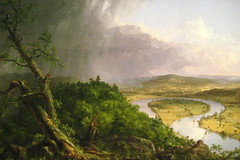
9803066758Thomas ColeFounder of the Hudson River school, famous for his landscape paintings. (p. 211)46
9803066759Frederick ChurchCentral figure in the Hudson River School and pupil of Thomas Cole. He is known for his landscapes and for painting colossal views of exotic places. (p. 211)47
9803066760Hudson River schoolIn the 1830s, this genre of painting founded in the Hudson River area, portrayed everyday life of ordinary people in the natural world. (p. 211)48
9803066761Washington IrvingThis author wrote fiction using American settings. (p. 211)49
9803066762James Fenimore CooperThis author wrote novels that glorified the frontiersman as nature's nobleman. (p. 211)50
9803066763Nathaniel HawthorneAuthor of "The Scarlet Letter", which questioned the intolerance and conformity in American life. (p. 211)51
9803066764Sylvester GrahamAn American dietary reformer who advocated whole wheat bread and graham crackers to promote good digestion. (p. 216)52
9803066765Amelia BloomerShe urged women to wear pantalettes instead of long skirts. (p. 216)53
9803066766Second Great AwakeningA religious movement that occurred during the antebellum period. It was a reaction against rationalism (belief in human reason). It offered the opportunity of salvation to all. (p. 207)54
9803066767Timothy DwightPresident of Yale College, he helped initiate the Second Great Awakening. His campus revivals inspired many young men to become evangelical preachers. (p. 207)55
9803066768revivalism; revival camp meetingsIn the early 1800s, this movement was a reaction against the rationalism of the Enlightenment. Successful preachers were audience-centered and easily understood by the uneducated. (p. 207)56
9803066769millennialismIn the early 1800s, this popular belief, that the world was about to end with the second coming of Jesus Christ. (p. 208)57
9803066770Church of Jesus Christ of Latter-Day Saints; MormonsFounded by Joseph Smith in 1830. It was based on the Book of Mormon which traced a connection between the American Indians and the lost tribes of Israel. After Joseph Smith was murdered, Brigham Young led the religious group to establish the New Zion on the Great Salt Lake in Utah. (p. 208)58
9803066786Joseph SmithFounded the Church of Jesus Christ of the Latter-Day Saints in New York in 1830. The church moved to Ohio, Missouri, Illinois, then finally to Utah. (p. 208)59
9803066771Brigham YoungAfter Joseph Smith was killed, he led the Mormon followers to Utah. (p. 208)60
9803066772New ZionThis was the religious community established by the Mormons on the banks of the Great Salt Lake in Utah. (p. 208)61
9803066773women's rights movementWomen started this movement because they resented the way men relegated them to secondary roles in the reform movements. (p. 214)62
9803066774cult of domesticityAfter industrialization occurred women became the moral leaders in the home and educators of children. Men were responsible for economic and political affairs. (p. 214)63
9803066775Sarah Grimke, Angelina GrimkeTwo sisters, born in South Carolina, they objected to male opposition to their antislavery activities. (p. 214)64
9803066776Letter of the Condition of Women and the Equality of the SexesWritten by Angelina and Sarah Grimke, it protested males opposition to their abolitionist work. (p. 214)65
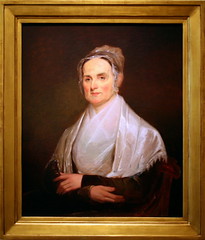
9803066777Lucretia MottA women's rights reformer who was not allowed to speak at an antislavery convention. (p. 214)66
9803066778Elizabeth Cady StantonA women's rights reformer who was not allowed to speak at an antislavery convention. (p. 214)67
9803066779Seneca Falls ConventionIn 1848, this was the first women's rights convention in U.S. history. They wrote a "Declaration of Sentiments", modeled after the Declaration of Independence, which declared all men and women equal and listed grievances. (p. 214)68
9803066780Susan B. AnthonySocial reformer who campaigned for womens rights, the temperance, and was an abolitionist. She helped form the National Woman Suffrage Association. (p. 214)69

AMSCO AP US History Chapter 25 Flashcards

AMSCO United States History 2015 Edition, Chapter 25 Diplomacy and World War II, 1929-1945

Terms : Hide Images
9803130401Good Neighbor PolicyPresident Franklin Roosevelt's foreign policy of promoting better relations with Latin America by using economic influence rather than military force in the region. (p. 523)0
9803130402Pan-American conferencesIn 1933, the United States attended a conference in Montevideo, Uruguay, in which we pledged to never again intervene in the internal affairs of any Latin American country. At a second conference in 1936, the U.S. agreed to the cooperation between the U.S. and Latin American countries to defend the Western Hemisphere against foreign invasion. (p. 523)1
9803130403Soviet Union recognizedThe Republican presidents of the 1920's had refused to grant diplomatic recognition to the Communist regime that ruled the Soviet Union. President Franklin Roosevelt promptly changed this policy by granting recognition in 1933. (p. 524)2
9803130404Independence for PhilippinesIn 1934, President Roosevelt persuaded Congress to pass the Tydings-McDuffie Act which provided independence for the Philippines by 1946. (p. 524)3
9803130405reciprocal trade agreementsIn 1934, Congress enacted a plan that would reduce tariffs for nations that reciprocated with comparable reductions for U.S. imports. (p. 524)4
9803130406Japan takes ManchuriaIn September 1931, Japanese troops invaded Manchuria, on China's eastern seaboard. The League of Nations passed a resolution condemning the action but did not take action. (p. 521)5
9803130407Stimson DoctrineIn 1932, Secretary of State Henry Stimson said the United States would not recognize territorial changes resulting from Japan's invasion of Manchuria. (p. 522)6
9803130408fascismA political system in which people glorify their nation and their race through an aggressive show of force. Economic hardships led to the rise of military dictatorships, first in Italy, then in Japan and Germany. (p. 524)7
9803130409Italian Fascist partyIn 1922, they seized power in Italy. They attracted dissatisfied war veterans, nationalists, and those afraid of rising communism. They marched on Rome and installed Mussolini in power. (p. 524)8
9803130410Benito MussoliniHe founded the Italian Fascist Party, and sided with Hitler and Germany in World War II. In 1945, he was overthrown and assassinated by the Italian Resistance. (p. 524)9
9803130411EthiopiaIn 1935, fascist Italy invaded this African nation. (p. 526)10
9803130412German Nazi partyThis party arose in 1920's Germany in reaction to deplorable economic conditions after war and national resentments over the Treaty of Versailles. By 1933, the party under leader Adolph Hitler, had gained control of the German legislature. (p. 524)11
9803130413Adolf HitlerAustrian-born founder of the German Nazi Party and chancellor of the Third Reich (1933-1945). His fascist philosophy, embodied in the book Mein Kampf attracted widespread support, and after 1934 he ruled as an absolute dictator. Hitler's pursuit of aggressive nationalist policies resulted in the invasion of Poland (1939) and the subsequent outbreak of World War II. His regime was infamous for the extermination of millions of people, especially European Jews. He committed suicide in 1945, when the collapse of the Third Reich was imminent. (p. 524)12
9803130414Axis PowersAlliance of Germany, Italy, and Japan during World War II.13
9803130415Spanish Civil WarIn 1936, a rebellion erupted in Spain after a coalition of Republicans, Socialists, and Communists was elected. General Francisco Franco led the rebellion. The revolt quickly became a civil war, by 1939 Franco had established a military dictatorship. (p. 525)14
9803130416Francisco FrancoIn 1936, he plunged Spain into a Civil War. By 1939, Franco's Fascist had established a military dictatorship. (p. 525)15
9803130417RhinelandIn 1936, Adolf Hitler invaded this region. This was in violation of the Treaty of Versailles which had declared the area a demilitarized zone. (p. 526)16
9803130418SudetenlandIn 1938, Hitler insisted Germany had the right to take over an area in western Czechoslovakia. (p. 526)17
9803130419MunichA 1938 conference, at which European leaders attempted to appease Hitler by turning over the Sudetenland to him in exchange for promise that he would not expand Germany's territory any further. (p. 526)18
9803130420appeasementA policy of making concessions to an aggressor in the hopes of avoiding war. In the years 1935 to 1938, a series of military actions by Fascist dictatorships made Britain, France, and the United States nervous, but they did nothing to stop the actions. * 1935 - Italy invades Ethiopia * 1936 - German troops invade the Rhineland * 1937 - Japan invades China * 1938 - Germany takes the Sudetenland (p. 526)19
9803130421Poland; blitzkriegOn September 1, 1939, Germany invaded this country using overwhelming air power and fast-moving tanks, a term of warfare called lightning war. Britain and France then declared war against Germany. (p. 528)20
9803130422isolationismA policy of non-participation in international economic and political relations. A 1934 committee led by Senator Gerald Nye concluded the main reason for participation in World War I was because of the bankers and arm manufacturers greed. This caused the U.S. public to be against any involvement in the early stages of World War II. (p.. 525)21
9803130423Nye CommitteeIn 1934, a Senate committee led by South Dakota Senator Gerald Nye to investigate why America became involved in World War I. They concluded that bankers and arm manufacturers pushed the U.S. into the war so they could profit from selling military arms. This committee's work pushed America toward isolationism for the following years. (p. 525)22
9803130424Neutrality ActsLaws passed by isolationists in the late 1930s, that were designed to keep the United States out of international wars. (p. 525)23
9803130425America First CommitteeIn 1940, after World War II had begun in Asia and Europe, isolationists became alarmed by President Roosevelt's support for Britain. To mobilize American public opinion against the war, they formed this committee. Charles A. Lindbergh was one of it spokesmen. (p. 525)24
9803130426Charles LindberghIn 1927, this U.S. aviator thrilled the world, by making the first nonstop flight from Long Island to Paris. In 1940, he was a speaker for the isolationist America First Committee. (p. 480, 525)25
9803130427Quarantine speechIn 1937, President Franklin D. Roosevelt made this speech after Japan invaded China. He proposed that democracies act together to "quarantine" Japan. Public reaction to the speech by the American public was negative, and the idea was abandoned. (p. 526)26
9803130428cash and carryPolicy adopted by the United States in 1939 to preserve neutrality, while aiding Great Britain. Great Britain could buy U.S. military arms if it paid in full and used its own ships to transport them. (p. 528)27
9803130429Selective Training and Service ActIn 1940, Roosevelt passed this law requiring all males aged 21 to 36 to register for military service. (p. 528)28
9803130430destroyers-for-bases dealIn September 1940, Roosevelt cleverly arranged a trade that would help Great Britain. The United States gave Britain fifty older but still serviceable US destroyers, in exchange the U.S. was given the right to build military bases on British Islands in the Caribbean. (p. 528)29
9803130471FDR, third termIn the 1940 presidential election, Franklin D. Roosevelt won a third term in office. (p. 529)30
9803130431Wendell WillkieFranklin Roosevelt's Republican opponent in the 1940 Presidential election. (p. 529)31
9803130432Four Freedoms speechA speech by President Franklin Roosevelt on January 6, 1941 that proposed lending money to Britain for the purchase of U.S. military weapons. He argued that the U.S. must help other nations defend "four freedoms" (freedom of speech, freedom of religion, freedom from want, and freedom from fear). (p. 529)32
9803130433Lend-Lease ActIn March 1941, this act permitted Britain to obtain all U.S. arms they needed on credit during World War II. (p. 529)33
9803130434Atlantic CharterIn August 1941, U.S. president Franklin D. Roosevelt and British prime minister Winston Churchill met aboard a ship off the coast of Newfoundland. They created this agreement which outlined the principles for peace after the war. (p. 530)34
9803130435escort convoysIn July 1941, the U.S. began to provide protection for British ship carrying U.S. arms being transported to Britain. (p. 530)35
9803130436oil and steel embargoIn September 1940, Japan joined the Axis powers. The United States responded by prohibiting export of steel and scrap iron to Japan and other countries. In July 1941, when Japan invaded French Indochina, the U.S. cut off Japanese access to many vital materials, including U.S. oil. (p. 530)36
9803130437Pearl HarborOn December 7, 1941, a date that will live in infamy, this U.S. naval base in Honolulu, Hawaii was bombed by Japanese planes. 2,400 Americans were killed and 20 warships were sunk or severely damaged. The next day, the United States declared war on Japan. (p. 531)37
9803130438War Production BoardDuring World War II, President Roosevelt established this agency to allocated scarce materials, limit or stop the production of civilian goods, and distribute contracts among competing manufacturers. (p. 531)38
9803130439Office of Price AdministrationThis World War II federal agency regulated most aspects of civilian lives by freezing prices, wages, and rents and rationing commodities in order to control inflation. (p. 532)39
9803130440government spending, debtDuring World War II federal spending increased 1000 percent between 1939 and 1945, and the gross national product grew by 15 percent or more each year. By the war's end, the national debt was $250 billion, five times what it had been in 1941. (p. 532)40
9803130472role of large corporationsDuring World War II, the 100 largest corporations accounted for 70 percent of wartime manufacturing. (p. 532)41
9803130441research and developmentThe United States government worked closely with industrial companies, universities, and research labs to create and improve technologies that could be used to defeat the enemy. (p. 532)42
9803130442Manhattan ProjectCode name for the secret United States project set up in 1942 to develop atomic bombs for use in World War II. (p. 532)43
9803130443Office of War InformationEstablished by the government to promote patriotism and help keep Americans united behind the World War II effort. (p. 533)44
9803130444the Good WarThe term for the unity of Americans supporting the democratic ideals in fighting World War II. (p. 533)45
9803130445wartime migrationDuring World War II, over 1.5 million African-Americans migrated from the South to job opportunities in the North and the West. (p. 533)46
9803130473civil rights, Double VDuring World War II civil rights leaders encouraged African Americans to adopt the Double V slogan - one for victory, one for equality. (p 533)47
9803130474executive order on jobsDuring World War II, President Roosevelt issued an executive order to prohibit discrimination in government and in businesses that received federal contracts. (p. 533)48
9803130446Smith v. AllwrightThis Supreme Court case in 1944 ruled that it was unconstitutional to deny membership in political parties to African Americans as a way of excluding them from voting in primaries. (p. 533)49
9803130447Braceros programA program the American and Mexican governments agreed to, in which contract laborers would be admitted to the United States for a limited time as migrant farm workers (p. 533)50
9803130448Japanese internmentIn 1942, over 100,000 Japanese Americans living on the United States West coast were rounded up and put in internment camps. (p. 534)51
9803130449Korematsu v. U.S.A 1944 Supreme Court case which upheld the order providing for the relocation of Japanese Americans. It was not until 1988 that Congress formally apologized and agreed to pay financial compensation to each survivor. (p. 534)52
9803130450Rosie the RiveterA propaganda character designed to increase production of female workers in industrial jobs in the shipyards and defense plants during World War II. (p. 534)53
9803130475wartime solidarityThe New Deal helped immigrant groups feel more included, and serving together in combat or working together in defense plants helped to reduce prejudices. (p. 534)54
9803130451election of 1944In this presidential election, Franklin D. Roosevelt replaced his vice president with Harry S. Truman, as they ran against Republican Thomas Dewey. Roosevelt won an unprecedented fourth term, but he died within three months. (p. 534)55
9803130452Harry S. TrumanHe became president on April 12, 1945, when President Franklin Roosevelt died suddenly. In August 1945, he order an atomic bomb be dropped on Hiroshima then on Nagasaki, to end the war with Japan. Japan surrendered on September 2, 1945. (p. 537, 538)56
9803130453Battle of the AtlanticThe protracted naval war to control the shipping lanes in the North Atlantic. (p. 535)57
9803130454strategic bombingUnited States bomber carried out daylight bombing raids on military targets in Europe, but the lines between military and civilian targets became blurred as war went on. (p. 535)58
9803130455Dwight EisenhowerThe United States general who commanded the invasion of Normandy (D-Day), Casablanca and the defeat of Nazi Germany. (p. 536)59
9803130456D-DayOn June 6, 1944 the Allies landed in northern France with the largest invasion by sea in history. By the end of August Paris was liberated from the Nazis, and by September Allied troops had crossed the German border. (p. 536)60
9803130457HolocaustA methodical plan, orchestrated by Germany's Adolph Hitler to eliminate Jews, non-conformists, homosexuals, non-Aryans, and mentally and physically disabled. Six million Jews and several million non-Jews would be murdered by the Nazis. (p. 536)61
9803130458island-hoppingThe United States strategy in the Pacific, which called for capturing Japanese-held islands in the Pacific and moving on to others to bring the American military closer and closer to Japan itself. (p. 536)62
9803130459Battle of MidwayOn June 4-7, 1942, the U.S. naval victory over the Japanese fleet at Midway Island. The Japanese lost four of their best aircraft carriers. The battle marked a turning point in the war in the Pacific. (p. 536)63
9803130460Douglas MacArthurUnited States general who served as chief of staff and commanded Allied forces in the South Pacific during World War II. (p. 537)64
9803130461kamikaze attacksJapanese pilots would deliberately crash their planes into American ships, killing themselves, but also inflicting severe damage to the ships. (p. 537)65
9803130462J. Robert OppenheimerAmerican theoretical physicist and professor of physics. He led the top-secret Manhattan Project, which built the world's first atomic bomb. (p. 537)66
9803130463atomic bombA nuclear weapon in which enormous energy is released by nuclear fission. (p. 537)67
9803130464Hiroshima; NagasakiOn August 6, 1945, the United States dropped the first atomic bomb on Hiroshima, Japan. Then on August 9, a second atomic bomb was dropped on Nagasaki. About 250,000 Japanese died as a result. Within a week after the second bomb was dropped, Japan agreed to surrender. (p. 537)68
9803130465Big ThreeThe leaders of the Allies during World War II included: Soviet Union - Joseph Stalin, Great Britain - Winston Churchill, United States - Franklin Roosevelt. (p. 537)69
9803130466Casablanca ConferenceThe conference attended by Roosevelt and Churchill in January 1943, to discuss the strategy to win World War II. The plan called for the invasion of Sicily and Italy by British and American troops. They resolved to accept nothing less than unconditional surrender of Axis powers. (p. 537)70
9803130467unconditional surrenderA surrender with any demands or requests. (p. 538)71
9803130468Tehran, Yalta, PotsdamThe three cities that held conferences for the leaders of the Allied powers, United States, Great Britain, and Soviet Union during World War II. (p. 538)72
9803130469United NationsOn October 24, 1945, this international organization formed after World War II to promote international peace, security, and cooperation. (p. 539)73

AP US Period 6 (1865-1898) Flashcards

Terms : Hide Images
5108257425Seward's Ice BoxThe name given to Alaska when it was purchased from Russia for 7.2 million0
5108257426AlaskaThe last frontier of the North American continent. It was purchased from Alaska in 1867 and was considered to be worthless lands; however, in time, this was proved to be not true.1
5108257427Transcontinental RailroadCompleted in 1869 at Promontory, Utah, it linked the eastern railroad system with California's railroad system, revolutionizing transportation in the west.2
5108257428Central Pacific RailroadStarted in California, and pushed eastward; eventually connected with the Union Pacific Railroad in Promontory Point, Utah. Hired Chinese laborers to complete the work.3
5108257429Union Pacific RailroadA railroad that started in Omaha, and it connected with the Central Pacific Railroad in Promontory Point, Utah. Hired inexpensive Irish laborers to work for the railroad.4
5108257430Wyoming and women's suffrageWyoming was the first state to provide women the right to vote in 1870. Elizabeth Cady Stanton visited the "land of freedom" in 1871, and when the territory became a state in 1890, women's suffrage remained in the constitution.5
5108257431Standard Oil CorporationA monopoly on oil, created by John D. Rockefeller in 1870. By 1890, the company owned 90% of the US oil market.6
5108257432John D RockefellerWas an American industrialist and philanthropist. Revolutionized the petroleum industry and defined the structure of modern philanthropy.7
5108257433"new immigrants"Immigrants who came to the United States during and after the 1880s; most were from southern and eastern Europe.8
5108257434"old immigrants"Immigrants who had come to the US before the 1880s from Britain, Germany, Ireland, and Scandinavia, or Northern Europe9
5108257435Yellowstone National ParkEstablished in 1872 by Congress, Yellowstone was the United States first national park and was supported by conservation president, Theodore Roosevelt.10
5108257436Credit Mobilier ScandalThis scandal occurred in the 1870s when a railroad construction company's stockholders used funds that were supposed to be used to build the Union Pacific Railroad for railroad construction for their own personal use. To avoid being convicted, stockholders even used stock to bribe congressional members and the vice president.11
5108257437Panic of 1873Financial panic in which banks closed and the stock market crashed12
5108257438Andrew CarnegieA Scottish-born American industrialist and philanthropist who founded the Carnegie Steel Company in 1892. By 1901, his company dominated the American steel industry.13
5108257439US SteelThe largest steel company of the US, created by J.P. Morgan by merging Andrew Carnegie's Carnegie Steel and several other steel companies together; at the time, the largest corporation in existence.14
5108257440Bessemer ProcessA way to manufacture steel quickly and cheaply by blasting hot air through melted iron to quickly remove impurities.15
5108257441Whiskey Ring ScandalIn 1875, before they were caught, a group of mostly Republican politicians were able to siphon off millions of dollars in federal taxes on liquor; the scheme involved an extensive network of bribes involving tax collectors, storekeepers, and others.16
5108257442Battle of Little BighornIn 1876, Indian leaders Sitting Bull and Crazy Horse defeated Custer's troops who tried to force them back on to the reservation, Custer and all his men died17
5108257443Nez Perce WarIn this armed conflict between the Nez Perce and the US Gov. fought in 1877, the Indians refused to give up their lands to the US government and move to an Indian reservation when gold was discovered and they were ordered to leave. The Indians launched a valiant effort to maintain their land, but were ultimately defeated by the US Army.18
5108257444Great Railway Strike of 1877Railway workers in Virginia initiated a railway strike in 1877 to protest working conditions and wage cuts, lead to the "great labor uprising"19
5108257445"A Century of Dishonor"Written by Helen Hunt Jackson in 1881 to expose the atrocities the United States committed against Native Americans in the 19th century20
5108257446Chinese Exclusion Act(1882) Denied any additional Chinese laborers to enter the country while allowing students and merchants to immigrate.21
5108257447Pendleton Act, 1883A federal law established in 1883 that stipulated that government jobs should be awarded on the basis od merit. Done to curb corruption.22
5108257448Grover Cleveland ElectedRepublicans nominated Blaine as president but suspicions about his honesty led the Mugwumps to campaign for Democratic nominee Grover Cleveland (honest, frugal, mayor of Buffalo, later governor of NY, fathered an illegitimate child which raised questions)23
5108257449James Garfield1880; Republican; president for only 4 months before being assassinated by Charles Guiteau; promoted civil service reform but did not live to see it enacted.24
5108257450Huckleberry FinnThe protagonist and narrator of the novel. Huck is the thirteen-year-old son of the local drunk of St. Petersburg, Missouri, a town on the Mississippi River. Frequently forced to survive on his own wits and always a bit of an outcast, Huck is thoughtful, intelligent (though formally uneducated), and willing to come to his own conclusions about important matters, even if these conclusions contradict society's norms. Nevertheless, Huck is still a boy, and is influenced by others, particularly by his imaginative friend, Tom.25
5108257451Mark TwainThe writer and humorist best known for his novels about Tom Sawyer and Huckleberry Finn (1835-1910); used "realistic fiction".26
5108257452Haymarket Square Riot(1886) A demonstration of striking laborers in Chicago in 1886 that turned violent, killing a dozen people and injuring over a hundred.27
5108257453American Federation of Labor1886; founded by Samuel Gompers; sought better wages, hrs, working conditions; skilled laborers, arose out of dissatisfaction with the Knights of Labor, rejected socialist and communist ideas, non-violent.28
5108257454Interstate Commerce Act1887 law passed to regulate railroad and other interstate businesses29
5108257455Dawes Act1887 law that distributed reservation land to individual Native American owners in 150 acre plot leaving millions of acres of native land to be sold and divided by US government.30
5108257456Gospel of WealthThis was a book written by Carnegie that described the responsibility of the rich to be philanthropists. This softened the harshness of Social Darwinism as well as promoted the idea of philanthropy.31
5108257457Andrew CarnegieA Scottish-born American industrialist and philanthropist who founded the Carnegie Steel Company in 1892. By 1901, his company dominated the American steel industry.32
5108257458J P MorganBanker that controlled 2/3 of the rail roads and eventually merged into the steel industry. Bought Carnegies steel company and formed U S Seel Company33
5108257459Captains of IndustryOwners and managers of large industrial enterprises who wielded extraordinary political and economic power34
5108257460Robber BaronsRefers to the industrialists or big business owners who gained huge profits by paying their employees extremely low wages. They also drove their competitors out of business by selling their products cheaper than it cost to produce it. Then when they controlled the market, they hiked prices high above original price.35
5108257461Hull HouseSettlement home designed as a welfare agency for needy families. It provided social and educational opportunities for working class people in the neighborhood as well as improving some of the conditions caused by poverty.36
5108257462Bison ExtinctBison had been hunted to near extinction by 1900.37
5108257463Jacob RiisA Danish immigrant, he became a reporter who pointed out the terrible conditions of the tenement houses of the big cities where immigrants lived during the late 1800s. He wrote How The Other Half Lives in 1890.38
5108257464Lincoln SteffansWrote muckraking articles in "Tweed Days in St. Louis" (1902). He wrote "The Shame of the Cities" (1904) which caused a sensation by describing in detail the corrupt that characterized big-city politics.39
5108257465Sherman Anti-Trust Act1890, First federal action against monopolies, it was signed into law by Harrison and was extensively used by Theodore Roosevelt for trust-busting. However, it was initially misused against labor unions40
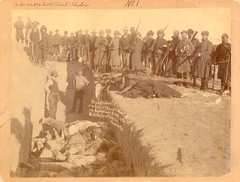
5108257466Wounded KneeIn 1890, after killing Sitting Bull, the 7th Cavalry rounded up Sioux at this place in South Dakota and 300 Natives were murdered and only a baby survived.41
5108257467Annexation of HawaiiU.S. wanted Hawaii for business and so Hawaiian sugar could be sold in the U.S. duty free, Queen Liliuokalani opposed so Sanford B. Dole overthrew her in 1893, William McKinley convinced Congress to annex Hawaii in 189842
5108257468Ellis IslandImmigration processing center that open in New York Harbor in 189243
5108257469Homestead Steel StrikeA violent labor conflict at the Homestead Steel Works near Pittsburgh, Pennsylvania, that occurred when its president, Henry Clay Frick, refused to renew the union contract with Amalgamated Association of Iron and Steel Workers. The strike, which began on June 29, 1892, culminated in an attempt on Frick's life and was swiftly put down by state militias. The strike marks one of the great setbacks in the emerging industrial-union movement.44

AMSCO AP US History Chapter 8 Flashcards

AMSCO United States History 2015 Edition Chapter 8 Nationalism and Economic Development, 1816-1848

Terms : Hide Images
5937800089Era of Good FeelingsTerm to describe James Monroe's period as president (1817-1825). The Democratic-Republicans party dominated politics. On the surface everything looked fine, however there were conflicts over tariffs, the national bank, internal improvements, and public land sales.0
5937800090sectionalismIdentifying more with a certain section of the country rather than the entire country1
5937800091cultural nationalismpride and love of one's country and the characteristics that define it; i.e. art, music, literature2
5937800092economic nationalismPolitical movement to subsidize internal improvements such as roads and canals. Also the protecting of US industries from European competition.3
5937800093Tariff of 1816The first protective tariff in the US, it helped protect American industry from competition by raising the prices of British manufactured goods.4
5937800094protective tariffA tax on imported goods that is intended to protect a nation's businesses from foreign competition.5
5937800095Henry Clay; American SystemHis proposed plan for advancing the nation's economic growth consisted of three parts: 1) protective tariffs; 2) a national bank; and 3) internal improvements. The internal improvements to be funded by the national government were not approved because James Monroe felt that the Constitution did not allow for such use of federal funds.6
5937800096Panic of 1819The first major financial panic since the Constitution was ratified; marked the end of economic expansion and featured deflation (value of US money going down), depression, bank failures, foreclosures on western farms, unemployment, a slump in agriculture and manufacturing, and overcrowded debtor's prisons. (p. 153)7
5937800097National (Cumberland) RoadA paved highway that extended more than a thousand miles from Maryland to Illinois. It was built using state and federal money over many years (1811-1852). One of the few roads crossing state boundaries. (p. 161)8
5937800098Erie CanalA canal built in 1825 in New York that linked economies of western and eastern cities. It lead to more canal building, lower food prices, and stronger economies. (p. 161)9
5937800099Robert Fulton; steamboatsIn 1807 he built a boat powered by a steam engine. It made shipping easier and cheaper. (p. 161)10
5937800100railroadsA major economic development of the 1820s. A method for carrying passengers and freight. They made the Midwest a major power. (p. 161)11
5937800101John MarshallChief Justice of the Supreme Court from 1801 to 1835. A Federalist who favored the central government and the rights of property against advocates of state's rights. Even when he was outnumbered in the Supreme Court, Republican justices sided with him. (p. 153)12
5937800102Tallmadge AmendmentProposed solution to Missouri becoming a state. It forbade slavery in Missouri and said that all black children would be free after the age of 25. It did not pass in the Senate and angered southerns. (p. 156)13
5937800103Missouri CompromiseAn 1820 compromise that Missouri joined the Union as a slave state, and Maine joined as a free state. Congress also established a line across the southern border of Missouri (36°,30') saying except for the state of Missouri, all states north of that line must be free states or states without slavery. (p. 157)14
5937800104Rush-Bagot AgreementAn 1817 disarmament pact between U.S. and Britain, it strictly limited Naval armament on the Great Lakes. The agreement was extended to place limits on U.S. and Canada border fortifications. (p. 157)15
5937800105Treaty of 1818Treaty between U.S. and Britain which 1) shared fishing rights off the coast of Newfoundland; 2) joint occupation of the Oregon Territory for ten years; 3) set the northern limits of the Louisiana Territory at the 49th parallel. (p. 157)16
5937800106Andrew JacksonIn 1817, this general lead a militia force to Florida where he destroyed Seminole villages and hung Seminole sympathizers. (p. 158)17
5937800107Florida Purchase TreatyAn 1819 treaty, in which Spain turned over Florida and the Oregon Territory to the U.S. The U.S. agree to assume $5 million debt and give up any claims in Texas. (p. 158)18
5937800108Monroe DoctrineAn 1823 doctrine by President James Monroe, warning European powers to refrain from seeking any new territories in the Americas. The United States largely lacked the power to back up the pronouncement, which was actually enforced by the British, who sought unfettered access to Latin American markets. (p. 158)19

AP US Period 6 Flashcards

Terms : Hide Images
8963482604Ghost DanceNative American cultural experience0
8963485313John D. RockefellerStandard Oil1
8963489256Wounded KneeUS Soldiers killed large numbers of Souix2
8963497590Interstate Commerce ActLaw designed to regulate railroad industry3
8963506025Plessy v. FergusonSeparate but Equal4
8963506051Gospel of WealthIdea of Carnegie; rich have a duty of philanthropy5
8963516543Laissez-FaireGovernment does not interfere with economy6
8963519147NAWSAGroup fighting for women's suffrage7
8963521839Bessemer Processturning iron into steel8
8963523831Andrew CarnegieCarnegie Steel9
8963526161Homestead StrikeStrike against steel mills10
8963530389SharecroppingSystem where one could rent land and pay owner portion of crops at the end of the season11
8963537079Custer's Last StandBattle of Little Bighorn; Sioux and Sitting Bull massacre US Army12
8963547445Social DarwinismThe strongest businessman will survive13
8963550081Sherman Antitrust ActLaw making monopolies illegal; ineffective14
8963555007JP MorganRobber Baron of banks and finance15
8963558801Pullman StrikeLarge railroad strike16
8963561805Transcontinental RailroadRailroad stretching from Atlantic to Pacific17
8963564266American Federation of Laborlarge labor union with specific reform goals18
8963572858Populist PartyParty devoted to the people19
8963576407Dawes ActSplitting of reservations; land given to Native Americans or sold to white settlers20
8963579662GrangeGroup of angry farmers fighting railroad21
8963581870Chinese Exclusion ActStrong quota against Chinese immigrants22
8963585277Hull HouseSettlement house settled by Jane Addams23
8963620618AssimilationProcess where the dominant group forces their culture on other groups24
8963623663Gilded AgeTerm used to describe serious social problems masked with a thin golden economic progress; coined by Mark Twain25
8963630433SocialistOne who believes in the ownership and control of the major means of production by the whole community rather than by individuals and corporations (or the government)26
8963639828AnarchistAgainst government of all forms27
8963644114TenementApartment building style building to live in; usually poor and overcrowded28
8963648041ProhibitionAlcohol is illegal29
8963652575Vertical IntegrationOwning all steps of the manufacturing process-Carnegie Steel30
8963655942Horizontal IntegrationBuying out competing companies in the same industry-Standard Oil31
8963670285Knights of LaborLabor union that organized a wide range of workers-skilled and unskilled; broad reform goals32
8963677012Haymarket RiotLabor dispute in Chicago that ended with a bomb thrown at police; many deaths; public opinion turns against organized labor33
8963697288UrbanizationGrowth of cities34
8963700958Political MachineUnofficial political organization; promised to solve urban problems in exchange for votes; usually corrupt35
8963708133Tammany HallPolitical machine in NYC led by Boss Tweed36
8963711995William Jennings BryanPopulist (later official Democratic) presidential hopeful that pushed for the silver standard37
8963723782Industrial RevolutionPeriod characterized by rapid social and economic changes in manufacturing and agriculture; started in England and later moved to US38
8963730845Jane AddamsReformer who helped poor immigrants; established Hull House39
8963739132Compromise of 1877Troops were removed from South-North wins Hayes as President; marks the end of Reconstruction40
8963743230Jim Crow LawsSegregation laws in the south41
8963746369Yellow JournalismSensational and exaggerated news stories42
8963748681ImperialsimWhen a stronger country takes over a weaker country43
8963762459Yellowstonefirst national park44
8963764664Panic of 1873Financial panic where banks closed and stock market crashed45
8963770269Robber BaronsIndustrialists who gained LOTS of wealth by exploiting employees; drove out competitors; owned monopolies46
8963777930Captains of IndustryOwners of large industrial enterprises who helped boost economy and push the US in a positive direction47
8963787926Ellis IslandImmigration processing center in NY48
8963815172Angel IslandImmigrant processing station on West Coast49
8963915566WEB DuBoisfought for racial equality50
8963915594Susan B. AnthonyBig figure in the fight for women's suffrage51
8963919525Teddy RooseveltPresident focused on conservation52
8963921449Ida B. WellsFought for the advancement of African American women53
8963925106Upton SinclairMuckraker; author of the Jungle54
8963928549Robert La FollettePolitical reformer from Wisconsin55
8963931722Frances WillardFought for prohibition56

Pages

Subscribe to CourseNotes RSS

Need Help?

We hope your visit has been a productive one. If you're having any problems, or would like to give some feedback, we'd love to hear from you.

For general help, questions, and suggestions, try our dedicated support forums.

If you need to contact the Course-Notes.Org web experience team, please use our contact form.

Need Notes?

While we strive to provide the most comprehensive notes for as many high school textbooks as possible, there are certainly going to be some that we miss. Drop us a note and let us know which textbooks you need. Be sure to include which edition of the textbook you are using! If we see enough demand, we'll do whatever we can to get those notes up on the site for you!