AP Notes, Outlines, Study Guides, Vocabulary, Practice Exams and more!

AP US History Period 4 (1800-1848) Flashcards

Terms : Hide Images
5466450218Federalistpolitical party created in the 1790s led by Alexander Hamilton, favored a stronger national government - Supported primarily by the bankers and moneyed interests0
5466450219Democratic-RepublicansPolitical party created in the 1790's - led by Thomas Jefferson - favored limited government and state rights - supported primarily by the "Common man"1
5466450220Election of 1800aka Revolution of 1800- election that led to a peaceful transfer of power from the Federalist party to the Democratic Republican Party2
5466450221Hartford Convention, 1814meeting of Federalists during the War of 1812 in which anti-war Federalist threatened to secede from the Union - generally viewed by some as treasonous and the Federalist Part began to die out3
5466450222Era of Good Feelingsthe decline of the Federalist Party and the end of the war of 1812 gave rise to a time of political cooperation - associated with the presidency of James Monroe4
5466450223Democratspolitical party that brought Andrew Jackson into office in 1829 - supported Jeffersonian ideas of limited government, drawing its support from the "common Man"5
5466450224Whig PartyPolitical Party created in 1834 as a coalition of anti-Jackson political leaders and dedicated to internal improvements funded by the national government6
5466450225Andrew JacksonLeader of the Democrats who became the seventh president of the US (1829-1837), known for his opposition to the 2nd Bank of the US, the Indian Removal Act, and opposition to nullification7
5466450226Henry ClayLeader of the Whig Party who proposed an "American System" to make the United States economically self-sufficient - worked to keep the Union together through political compromise8
5466450227South Carolina Nullification Crisis, 1832-1833After South Carolina declared the federal tariff null and void, President Jackson obtained a Force Bill to use military actions against South Carolina - ended with a compromise to lower tariffs over an extended time9
5466450228John C. CalhounSouth Carolina political leader who defended slavery as a positive good and advocated the doctrine of nullification, a policy in which state could nullify federal law10
5466450229Midnight JudgesFederalist judges appointed by John Adams between the time he lost the election of 1800 and the time he left office in March 180111
5466450230John MarshallAppointed to the Supreme Court by John Adams in 1801- served as a chief justice until 1835 - legal decisions gave the Supreme Court more power, strengthened the federal government, and protecting private property12
5466450231Cotton Beltsouthern region in US where most of the cotton is grown/deep - south area that stretched from South Carolina to Georgia to the new states in the southwest frontier - had the highest concentration of slaves13
5466450232Marbury v. Madison 1803Supreme Court that declared a section of Judiciary Act of 1789 unconstitutional and established the principle of judicial review14
5466450233Judicial ReviewThe power of the Supreme Court to review the constitutionality of laws passed by Congress15
5466450234McCulloch v. Maryland 1819Supreme Court decision that upheld the constitutionality of the BUS - Maryland did not have the right to tax the federal bank and John Marshall wrote, "The power to tax is the power to destroy."16
5466450235Gibbons v. Ogden 1824Supreme Court decision stating that the authority of Congress is absolute in matters of interstate commerce17
5466450236Market EconomyEconomic system based on the unregulated buying and selling of goods and services - Prices are determined by the forces of supply and demand18
5466450237Embargo Act 1807in order to pressure Britain and France to aspect neutral trading rights, Jefferson issued a government-order ban on international trade - went into effect in 1808 and closed down virtually all U.S. trade with Foreign nations19
5466450238American System 1815Henry Clay's proposal to make the U.S. Economically self-sufficient - called for protective tariffs, internal improvements at federal expense, the creation of a second Bank of the United States20
5466450239Panic of 1819Financial panic that began when the Second Bank of the US tightened credit and recalled government loans after the price of cotton dropped21
5466450240Debates over the tariff and internal improvementsNortherners generally favored higher tariffs and internal improvements at federal expense while Southerners generally opposed higher tariffs and internal improvements at federal expense22
5466450241Second Bank of the United States 1816Privately owned bank that operated as both a commercial and fiscal agent for the US government - established in 1816 under a charter that was supposed to last 20 years23
5466450242Tariff of 1816first protective tariff in US history - designed primarily to help America's textile industry24
5466450243Tariff of Abominations 1828tariff with such high rates that it set off tension between northerners and southerners over tariff issues25
5466450244Panic of 1837Economic collapse caused primarily by President Jackson's destruction of the Second Bank of the United States26
5466450245Southern Defense of Slaverysoutherners held a widespread belief that blacks were inferior to whites and that the slavery was good for black - also understood that the southern cotton economy was dependent on slave labor27
5466450246Slave CodesLaws that established the status of slaves denying them basic rights and classifying them as the property of slaveholders28
5466450247Second Great Awakeningan upsurge in religious activity that began around 1800 and was characterized by emotional revival meetings - led to several reform movements designed to make a life better in this world29
5466450248Charles FinneyPresbyterian minister who is credited and is known as the "Father of modern Revivalism" - advocated the abolition of slavery and equal education for women and African Americans30
5466450249Seneca Falls Convention 1848the first convention in America for women right's held in NY31
5466450250Elizabeth Cady StantonAdvocate of women right's, including the right to vote -organized (with Lucretia Mott) the first women's rights convention at Seneca Falls, NY32
5466450251Dorothea DixPioneer in the moment for special treatment for the mentally ill33
5466450252Horace MannMassachusetts educator who called for publicly funded education for all children34
5466450253Utopian CommunitiesIdealistic reform movement based on the belief that a perfect society could be created on Earth - Significant Utopian experiments were established at New Harmony, Indiana, Book Farm, Massachusetts and Oneida Community in New York35
5466450254American Colonization Society 1817Organization established to end slavery gradually by helping individual slave owners liberate their slaves and then transport the freed slaves to Africa36
5466450255William Lloyd GarrisonRadical abolitionist in Massachusetts who published the liberator, an antislavery newspaper37
5466450256Sojourner TruthFormer Slave (freed in 1827) who became a leading abolitionist and feminist38
5466450257NeoclassicismRevival in architecture and art in the late 1700s and early 1800s that was inspired by Greek and Roman Models39
5466450258Hudson River School 1825-1875The first native school of painting in the US - Attracting artists who were rebelling against neoclassicism - painted primarily landscapes40
5466450259TranscendentalismPhilosophical and literary movement that believed God existed within human being and nature - believed intuition was the highest source of knowledge41
5466450260Ralph Waldo EmersonPhilosopher, writer, and poet who became a central figure in American Transcendentalist42
5466450261Henry David ThoreauWriter and naturalist - With Ralph Waldo Emerson, he became America's best known transcendentalist43
5466450262John James AudubonNaturalist and painter who became well-known for his attempt to document all types of American birds44
5466450263Richard AllenAfrican American minister who established the first independent African American denomination in the US, the African Methodist Episcopalian Church45
5466450264Samuel Slaterknown as the "Father of the American Industrial Revolution," - brought British textile technology to the United States46
5466450265John DeereInvented the steel plow in 1837, which revolutionized farming - the steel plow broke up soil without the soil getting stuck to the plow47
5466450266Lowell systemmethod of factory management that evolved in the textile mills of Lowell, MA, - owned by the Boston Manufacturing Company and named in honor of the company's founder, Francis Lowell - first example of a planned automated factory48
5466450267Interchangeable partsParts that were identical and which could be substituted for one another - developed by Eli Whitney for the manufacturing of muskets49
5466450268Erie Canal 1817-1825350 mile canal built by the state of NY that stretched from Buffalo to Albany, the canal revolutionized shipping in NY50
5466450269TurnpikesA road in which tolls were collected at gates set up along the road51
5466450270National Road 1811aka Cumberland Road- First significant road built in the US at the expense of the federal government - stretched from the Potomac River to the Ohio River52
5466450271Mason-Dixon Lineboundary between PA and MD that marked the division between free and slave states before the Civil War53
5466450272Cult of Domesticitythe belief that a woman's proper role in life was found in Domestic pursuits (raising children, taking care of the house)54
5466450273Destruction of the Second Bank of the United States 1833President Jackson, who thought the Bank of the U.S. represented special interests at the expense of the common man, ordered federal deposits placed in state banks ("pet" banks) to deplete the funds of the national bank55
5466450274Louisiana Purchase 1803U.S. purchased the Louisiana Territory from France for $15 million, doubling the size of the U.S. and giving the U.S. full control of the Mississippi River56
5466450275Lewis and Clark expedition 1804-1806Expedition to explore the Louisiana Territory led by Meriwether Lewis and William Clark57
5466450276War HawksMembers of Congress from the West and South elected in 1810 who wanted war with Britain in the hopes of annexing new territory and ending British trade with the Indians of the Northwest58
5466450277War of 18121812-1815, War between the U.S. and Great Britain caused primarily by the British violation of American neutral rights on the high seas. - ended with an agreement of "status quo ante" (a return to how things were before the war)59
5466450278Adams-Onis Treaty, 1819Treaty between the U.S. and Spain that ceded Florida to the U.S60
5466450279Monroe Doctrine 1823President Monroe's unilateral declaration that the Americas would be closed to further European colonization stated the U.S. would not allow European interference in the affairs of the Western Hemisphere61
5466450280Oregon Treaty 1846after years of conflict over ownership of the Pacific Northwest, the U.S. and England established the boundary at 49° latitude62
5466450281Manifest DestinyBelief that the U.S. was destined to expand across the North American continent63
5466450282TecumsehShawnee leader who established an Indian confederacy that he hoped would be a barrier to white expansion - Defeated at the Battle of Tippecanoe in 1811 by U.S. forces led by General William Henry Harrison64
5466450283Indian Removal Act, 1830Law that provided for the removal of all Indian tribes east of the Mississippi and the purchase of Indian lands for resettlement65
5466450284Worcester v. Georgia 1832A Supreme Court ruling that declared a state did not have the power to enforce laws on lands that were not under state jurisdiction - John Marshall wrote that the state of Georgia did not have the power to remove Indians66
5466450285Trail of Tears 1838Forced march of the Cherokee people from Georgia to Indian Territory in the winter67
5466450286Seminole Wars 1814-1819, 1835-1842The Seminole of Florida opposed removal and resisted US troops68
5466450287Missouri Compromise 1820Law proposed by Henry Clay admitting Missouri to the U.S. as a slave state and Maine as a free state69
5466450288American Anti-Slavery SocietyAbolitionist society founded by William Lloyd Garrison - included Frederick Douglass as a significant leader of the society70

AP US History Unit 11 Progressivism Flashcards

Terms : Hide Images
6157117840progressivisma fight against corruption, corporate influence, and poverty0
6157117841Ida Tarbellwrote hit-pieces against Standard Oil in McClure1
6157117842Lincoln Steffenswrote against political machines2
6157119863muckrackera reform-minded journalist who attacks the establishment3
6157119864Ashcan Schoolthe American school of artistry, which focused on city streets and slums4
6157140345Industrial Workers of the World (IWW)an anticapitalist union, it failed at organizing workers and could only get spontaneous strikes5
6162662326isolationismthe belief that America should keep its foreign policy to itself6
6162662327Josiah Strongargued that it was the Anglo-Saxon race's god-given duty to conquer the world7
6162663993Alfred Mahandeveloped the hypothesis that a nation with a powerful navy and the overseas bases necessary to maintain it would be invulnerable in war and good in peace8
6162663994Henry Lodgesupported Mahan's ideas and pushed them through Congress9
6162663995McKinley Tariff Actremoved the duty on sugar outright10
6162666092Queen LiliuokalaniHawaiian nationalist11
6162666093Panama CanalAmerican infrastructure that would help improve trade in Central America12
6162668350Clayton-Bulwer Treatytreaty between the United States and Great Britain that prevented a power from holding exclusive control over a canal in the Americas13
6162668351Valeriano Weylergovernor of Cuba that was supposed to fight the nationalist movement14
6162669669reconcentration campspolicy of Governor Weyler to deprive rebels of food; a place where the Cuban rural population was herded into15
6162671775Joseph Pulitzer and William Hearstfamous newspaper editors that advocated for intervention in Cuba16
6177173714Teller Amendmentstated that the United States had no intention of taking Cuban territory through its forces17
6177173715Spanish-American Warfought to free Cuba18
6177173716Emilio AguinaldoFilipino nationalist leader19
6177175099roughridersregiments like these had difficulty getting supplies to invade Cuba due to poor management20
6177175100William Taftwas sent in 1900 to establish a government in the Philippines; first civilian governor of the Philippines; 27th U.S. President21
6177177005Platt Amendmentauthorized American intervention in Cuba "whenever necessary," prevented Cuba from making a treaty with a foreign power that compromised its independence, and forced it to grant naval bases to the United States22
6177177006Roosevelt Corollary55% of the Dominican Republic's customs income should go to paying back defaulted bonds23
6177234456Treaty of Paristreaty where Spain gave independence to the Philippines24
6187789531John HayMcKinley's secretary of state who developed the Open Door policy25
6187789532Open Door policythe powers agree to respect the trading rights of all countries and to impose no discriminatory duties within their spheres of influence26
6187789533Boxer Rebellionnationalists swarmed into Peking and drove foreigners behind the walls of their legations27
6187792089Russo-Japanese Wara conflict over Manchuria where the U.S. was able to practice its Open Door policy28
6187792090Gentleman's AgreementSan Francisco's Asian discrimination policy was repealed in favor of less immigration from Japan29
6187795639Hay-Pauncefote Treatyrepealed the Clayton-Bulwer Act and gave the United States the right to build a canal30
6187797385Hay-Bunau Varilla Treatyallowed the United States to build the Panama Canal under the same conditions offered to Colombia31
6187799126dollar diplomacyoutlying areas were influenced without actually being controlled; foreign investment32
6196640196Robin LaFollettea Republican governor of Wisconsin who took on corporate interests, obtained a direct primary system for nominating candidates, and signed a corrupt practices act; also created a special library of information for lawmakers to research policy33
6196642208Women's suffragewomen's right to vote34
6196642209National American Woman Suffrage Associationa combination of the American Woman Suffrage Association and the National Woman Suffrage Association35
6208504522Newlands Actfunneled the proceeds from land sales in the West into federal irrigation projects36
6208504523Northern Security Co. v. United StatesU.S. victory over the Northern Securities Company, a monopoly over three railroads37
6208506672Square Dealthe demands of each side were met halfway in the United Mine Workers strike38
6208506673Hepburn Actgave the ICC the right to set rates on railroads, inspect books, and to control sleeping car companies39
6208506674Upton Sinclairpublished The Jungle, which reported on the filthy conditions inside Chicago slaughterhouses40
6208509022Pure Food and Drug Actforbid the manufacture and sale of adulterated and fraudulently labeled products41
6208509023conservationprotection of natural resources42
6212362369Ballinger-Pinchot controversysecretary of the interior Ballinger wanted to give coal-rich Alaska land to mining interests, this alerted conservationist Pinchot43
6212370521New Nationalisma comprehensive program of social legislation44
6212373684Bull Moose (Progressive) Partya third party created by Roosevelt against Taft in the election of 191245
6212376379Woodrow WilsonDemocratic presidential candidate in 1912; U.S. President; moderate46
6212381653New Freedombelieved that the federal government could best advance the cause of social justice and that competition can take care of monopolies (Roosevelt wanted government control)47
6230001688Underwood Tarifffirst significant reduction of duties since before the Civil War48
6230001689Federal Reserve Actcreated a central banking system, all national banks in each district and any state banks that wished to participate had to invest 6% of their capital and surplus into the reserve bank, which could rediscount the money49
6230002324Federal Trade Comissioncould investigate corporations and publish reports and could issue cease-and-desist orders50
6230002325Clayton Antitrust Actbanned price discrimination, typing agreements, and the creation of interlocking directories51
6230003030Niagara movementdemanded the unrestricted right to vote, an end to segregation, equality of economic opportunity, higher education for the talented, equal justice in the courts, and an end to trade-union discimination52
6230003871National Association for the Advancement of Colored Peopleformed in 1909 to eradicate racial discrimination53
6248354639Allied PowersGreat Britain, France, and Russia54
6248354640Central PowersGermany, Austria-Hungary, and Ottoman Turkey55
6259668349Lusitaniaship that the Germans sank that had Americans on board56
6259674516Sussex pledge1916 German pledge to not sink merchant ships without warning57
6259616814"He Kept Us Out of War"Wilson's 1916 campaign slogan58
6259637979"peace without victory"in Wilson's speech to the citizens of the warring sides, he declared that all nations are equal and all nations have the right to their own self-government59
6259620914Zimmerman telegrama German offer to Mexico for a secret alliance where Mexico would win back territory lost to the U.S. by declaring war on it60
6259620915War Industries Boardgiven dictatorial power to allocate scarce materials, standardize production, fix prices, and coordinate American and Allied purchasing. Antitrust laws were suspended61
6259682322McAdoo's Railroad Administrationpooled all railroad equipment, centralized purchasing, standardized accounting practices, and raised wages and passenger rates62
6259682323Espionage Actimposed fines and jail sentences on people convicted of aiding the enemy or obstructing recruiting, and allowed the postmaster to ban mail63
6259687535Sedition Actmade it illegal to say anything that would discourage the purchase of war bonds; banned criticism of the government64
6283675593General John Pershingcommanded the American Expeditionary Force ("doughboys")65
6283675594Fourteen Pointssaying that a peace treaty should make the world a safe place to live in. It should be negotiated in full view of the world, not privately. It supported nationalism (the good kind) and democracy66
6309610605Treaty of Versaillesthe peace treaty for World War I. It failed at self-determination and senselessly beat up Germany67
6309610606League of Nationsa worldwide assembly of nations68
6309612972red scareAmerican fear that unions have communist leanings and that a Bolshevik revolution will happen in the United States69

AMSCO AP US History Chapter 17 Flashcards

AMSCO United States History 2015 Edition Chapter 17 The Last West and the New South, 1865-1900

Terms : Hide Images
6000406331The Great American DesertName given to lands between the Mississippi and the Pacific Coast before 1860. There was very little rainfall in this area and the conditions were poor for settlement. (p. 339)0
6000406332100th meridianThe plains west of this meridian had few trees and usually received less than 15 inches of rain per year. This meridian crosses near the middle of Nebraska. (p. 339)1
6000406333buffalo herdsThese animals were essential to the nomadic Native American tribes. In early 19th century there were 15 million of these animals on the Great Plains, but by 1900 they were nearly wiped out. (p. 339)2
6000406334Great PlainsThe region west of the Mississippi River and east of the Rocky Mountains. (p. 339)3
6000406335mineral resourcesFrom 1848 to the 1890s, gold and silver strikes occurred in what became the states of California, Colorado, Nevada, Montana, Arizona, and South Dakota. (p. 340)4
6000406336mining frontier, boomtownsIn 1848, the discovery of gold in California caused the first flood of newcomers to the territory. Gold and silver were later discovered in many other areas of the west. These discoveries caused towns to grow up very quickly, then often lose population and collapse after the mining was no longer profitable. (p. 340)5
6000406337Chinese Exclusion Act of 1882In the 1860s, about one-third of the western miners were Chinese immigrants. Native-born Americans resented the competition of these immigrants. In 1862, this act was passed to prohibit further immigration by Chinese laborers to the United States. (p. 341)6
6000406338commercial citiesA few towns that served the mines, such as San Francisco, Sacramento, and Denver, grew into prosperous cities. (p. 341)7
6000406339longhorns, vaquerosThe name for the cattle which were brought to Texas from Mexico. The name for the Mexican cowboys who raised and rounded up the cattle in Texas. (p. 341)8
6000406340cattle drivesMoving the cattle from Texas to railroad towns in Kansas. (p. 342)9
6000406341barbed wireThese fences became common, they cut off the cattle's access to the open range. (p. 342)10
6000406342Joseph GliddenHe invented barbed wire to help farmers fence in their lands on the plains. (p. 342)11
6000406343Homestead ActIn 1862, this act offered 160 acres of public land free to any family that settled on it for 5 years. (p. 342)12
6000406344dry farmingThis technique along with deep-plowing enabled settlers to survive on the Great Plains. (p. 342)13
6000406345Great Plains tribesThese nomadic tribes, such as the Sioux, Blackfoot, Cheyenne, Crow, and Comanche, had given up farming in colonial times after the introduction of the horse by the Spanish. By the 1700s, they had become skillful horse riders and their lives centered on hunting buffalo. (p. 343)14
6000406346Southwest tribesThese tribes in the Southwest, such as Navajo and Apache adopted a settled life, raising crops and livestock, and producing arts and crafts. (p. 343)15
6000406347federal treaty policiesThe Indian Appropriation Act of 1871 ended recognition of tribes as independent nations by the federal government and nullified previous treaties made with the tribes. (p. 345)16
6000406348causes of Indian warsIn the late 19th century, the settlement of the thousands of miners, ranchers, and homesteaders on American Indian lands led to violence. (p. 344)17
6000406349Little Big HornIn 1876, the Sioux Indians, led by Crazy Horse and Sitting Bull, massacred the U.S. 7th Cavalry led by General Custer. This was the last major battle between the U.S. Army and the American Indians. (p. 345)18
6000406350assimilationistsThe idea that Native Americans should be integrated into American society by becoming educated, adopting American culture, customs, and Christianity. (p. 345)19
6000406351Helen Hunt JacksonThe author of "A Century of Dishonor", which created sympathy for Native Americans, but also generated support for ending American Indian culture through assimilation. (p. 345)20
6000406352Dawes Act of 1887This act supported the idea of assimilation of the American Indians. It divided tribal lands into plots of up to 160 acres. U.S. citizenship was granted to those who stayed on the land for 25 years and adopted the habits of American life. (p. 345)21
6000406353Ghost Dance movementThis religious movement was a last effort of Native Americans to resist U.S. government domination and drive whites from their ancestral lands. In an effort to suppress the movement, at the Battle of Wounded Knee more that 200 American Indians were killed. This battle marked the end of the Indian Wars. (p. 345)22
6000406354Indian Reorganization Act of 1934In 1934, this act promoted the re-establishment of tribal organization and culture. Today, more than 3 million American Indians, belonging to 500 tribes, live within the United States. (p. 346)23
6000406355Mexican War aftermathAfter the Mexican War ended in 1848, the Spanish-speaking landowners in California and the Southwest were guaranteed their property rights and granted citizenship. However, drawn-out legal proceeding after resulted in the sale or la of lands to new Anglo arrivals. (p. 346)24
6000406356Spanish-speaking areasIn 1848, the New Mexico territories, border towns, and the barrios of California were dominant spanish-speaking regions. (p. 346)25
6000406357Migration for jobsMexican Americans moved to find work, such as the sugar beet fields and mines of Colorado, and the building of western railroads. (p. 346)26
6000406358deforestationThe conservation movement was sparked by removal of large number of trees. (p. 346)27
6000406359Yellowstone, YosemiteIn 1872, this area of Wyoming was declared the first national park. In 1864 this area in California was declared a state park, later it became a national park. (p. 346)28
6000406360Department of the InteriorCarl Schurz, as Secretary of the Interior in the 1880s, advocated the creation of a forest reserves and a federal forest service to protect federal lands from exploitation. (p. 347)29
6000406361conservationists and preservationistsConservationist believed in scientific management and regulated use of natural resources, preservationists went a step further, and aimed to preserve natural areas from human interference. (p. 347)30
6000406362Forest Reserve Act of 1891This act withdrew federal timberland from development and regulated their use. (p. 347)31
6000406363Forest Management Act of 1897This act withdrew federal timberland from development and regulated their use. (p. 347)32
6000406364John Muir, Sierra ClubIn 1892, he founded this organization, with the goal of preserving some natural areas from human intervention. (p. 347)33
6000406365New SouthAfter the Civil War, the South was in a period of recovery. There was a new vision for a self-sufficient southern economy built on economic diversity and laissez-faire capitalism. (p. 347)34
6000406366Henry GradyJournalist from Georgia who coined the phrase "New South". Promoted his ideas through the Atlanta Constitution, as editor. (p. 347)35
6000406367Birmingham steelThis Southern city developed into one the nation's leading steel producers. (p. 347)36
6000406368Memphis lumberThis Southern city prospered as the center of the South's growing lumber industry. (p. 347)37
6000406369Richmond tobaccoThis Southern city became the capital of the nation's tobacco industry. (p. 347)38
6000406370integrated rail networkAfter the Civil War, the Southern railroad companies rapidly converted to standard-guage rails, which integrated them into the national rail system. (p. 347)39
6000406371agriculture's dominanceDespite progress and growth after the Civil War, the South remained a mostly agricultural based economy. (p. 347)40
6000406372sharecropping; tenant farmersAfter the Civil War, most Southerners of both races remained in traditional roles and barely got by from year to year as sharecroppers and farmers. (p. 348)41
6000406373George Washington CarverAn African-American scientist, who promoted planting of diverse crops such as peanuts, sweet potatoes, and soybeans. (p. 348)42
6000406374Tuskegee InstituteAn industrial and agricultural school established by Booker T. Washington to train blacks. (p. 348)43
6000406375white supremacistsThis group favored separating (segregating) public facilities, as a means of treating African American as social inferiors. (p. 349)44
6000406376Civil Rights Cases of 1883In 1883, the Supreme Court ruled that Congress could not legislate against the racial discrimination practiced by private citizens, which included public businesses. (p. 349)45
6000406377Plessy v. FergusonAn 1896, Supreme Court landmark case, which ruled that separate but equal accommodations in public places were constitutional and did not violate the 14th amendment. (p. 349)46
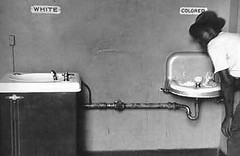
6000406378Jim Crow lawsIn the 1870s, the South passed segregation laws which required separate washrooms, drinking fountains, park benches, and most other public facilities, for blacks and whites. (p. 349)47
6000406379literacy tests, poll taxes, grandfather clausesAfter Reconstruction, various political and legal devices were created to prevent southern blacks from voting.48
6000406380white primaries, white juriesAfter Reconstruction, discrimination took many forms. Political party primaries were created for whites only, and African Americans were barred from serving on juries. (p. 349)49
6000406381lynch mobsIn the 1890s, more than 1,400 African American men were lynched (hung by a mob without trial) by Southerns.50
6000406382economic discriminationAfter Reconstruction, economic discrimination was widespread in the South. Most African Americans were kept out of skilled trades and factory jobs. African Americans remained in farming and low-paying domestic work. (p. 349)51
6000406383African American migrationIn 1894, the International Migration Society was formed to help blacks emigrate to Africa. Other blacks moved to Kansas and Oklahoma. (p. 350)52
6000406384Ida B. WellsShe was the editor of a black newspaper, she campaigned against lynching and Jim Crow laws. (p. 349)53
6000406385Booker T. WashingtonFamous African-American, who established an industrial and agricultural school for African Americans in 1881. He taught the virtues of hard work, moderation, and economic self-help. In 1900, he organized the National Negro Business League to support businesses owned by African Americans. (p. 350)54
6000406386economic cooperationBooker T. Washington's National Negro Business League emphasized racial harmony and economic cooperation. (p. 350)55
6000406387markets and farmersIn the late 1800s, farming became increasingly commercialized and specialized. They became dependent on large and expensive machinery and small, marginal farms were often driven out of business. (p. 350)56
6000406388crop price deflationAfter the Civil War, increased American and foreign food production caused a downward pressure on prices. For instance, corn per bushel prices, went from $.78 in 1867 to .$.28 in 1889. (p. 351)57
6000406389railroads and middlemenRailroads and middlemen were able to charge high or discriminatory rates in the food supply chain because they had little competition. (p. 351)58
6000406390National Grange MovementIn 1868, this organization was created primarily as a social and educational help for farmers. (p. 351)59
6000406391cooperativesGrangers established these business, owned and run by the farmers, to save the costs charged by middlemen. (p. 351)60
6000406392Granger lawsIn some states, the Grangers, with help from local businesses, successfully lobbied their state legislatures to pass laws regulating the rates charged by railroads and elevators. (p. 351)61
6000406393Munn v. IllinoisSupreme Court case in 1877, which upheld the right of a state to regulate businesses of a public nature, such as railroads. (p. 352)62
6000406394Wabash v. IllinoisSupreme Court case in 1886, which ruled that individual states could not regulate interstate commerce. (p. 352)63
6000406395Interstate Commerce CommissionThe first federal regulatory agency created to regulate interstate commerce which had the power to investigate and prosecute pools, rebates, and other discriminatory practices. (p. 352)64
6000406396Ocala Platform of 1890In 1890, a national organization of farmers, called the National Alliance, met in Florida to address the problems of rural America. It fell short of becoming a political party, but many of the reform ideas would become part of the Populist movement. (p. 352)65
6000406397census of 1890The census of 1890 declared that except for a few pockets, the entire frontier had been settled. (p. 343)66
6000406398Frederick Jackson Turner, "The Significance of the Frontier in American History"He argued that 300 years of frontier experience had shaped American culture by promoting independence and individualism. (p. 343)67
6000406399role of cities, "Nature's Metropolis"Book written by William Cronon, it argued that the frontier and cities grew up together, they were dependent on each other. (p. 353)68

AP us history #3 Flashcards

Terms : Hide Images
4850692394Plymouth colonyMassachusetts, Pilgrims, william bradford-"seperatists" disagreed with church, pilgrims relocate to holland in 16090
4850692395King Charles 1Granted pilgrims charter to relocate and establish American colony1
4850692396The mayflower compactMajority rule, voting, property rights. First plan of self government in colonial America. Landed in Plymouth 1620-struggled but survived2
4850692397Puritans(Presbyterians), John Winthrop, received a charter from Charles 1 to form colony, Massachusetts bay 16303
4850692398Jonathan Winthrop quoteCity on a hill, a light of progress for the rest of the world4
4850692399Rhode island1640, Anne Hutchison, Rodger Williams5
4850692400Anne HutchisonExpelled by Winthrop from Mass, claimed women had rights to communicate with God6
4850692401ConnecticutThomas hooker, fundamental orders of Connecticut7
4850692402New hampshire1679, John mason, broke from the puritans of mass bay8
4850692403Maryland1642, a haven for dissident Catholics, sir George Calvert- lord Baltimore received a charter from Charles 19
4850692404An act concerning religious tolerationAllowed other religions that accepted the trinity to practice their religion10
4850692405English civil war1642-1649, Charles 1 tried to abolish parliament-tax, puritans-Oliver chromwell (Roundheads) rebelled against Charles 1 and "cavaliers" chromwell and Puritan won-1649 executed Charles 1 beheaded him11
4850692406ChromwellLord protector of the realm, ruled 1649-166112
4850692407The Stuart restorationCharles 2 came to power, restored monarchy to family, paid people by giving them colonies13
4850692408New jerseyFortune seeking nobles, George cateret14
4850692409New York"New Amsterdam" Peter Stuyvesant, taken from the Dutch in 166415
4850692410CarolinaA colony for fortune seeking nobles16
4850692411Earl of ShaftesburyAnthony Ashleigh Cooper, transplanted English aristocratic model to Carolina as a plan for settlement17
4850692412PennsylvaniaQuakers, William Penn founded Philadelphia(city of brotherly love)18
4850692413George Fox"Doctoring of the inner light" Quaker- believed in gender equality, opposed slavery, pacifists, equalitarian19
4850692414Delaware"New Sweden" southern 3 counties of Pennsylvania that split off by mutual consent in 170320
4850692415Georgia1732 founded by James Oglethorpe. 1. Buffer zone between English Carolina and Spanish Florida 2. Haven for English convicts21

AMSCO AP US History Chapter 18 Flashcards

AMSCO United States History 2015 Edition, Chapter 18 The Growth of Cities and American Culture, 1865-1900

Terms : Hide Images
5884814121old immigrantsThrough the 1880s, they came to the United States from northern and western Europe. They were mostly Protestant and had a high-level of literacy. (p. 361)0
5884814122new immigrantsFrom the 1890s to 1914, they came to the United States from southern and eastern Europe. Mostly non-Protestant, poor and illiterate. (p. 361)1
5884814123Chinese Exclusion Act of 1882It was the first bill regarding immigration. It placed a ban on all new immigrants from China. (p. 362)2
5884814124Immigration Act of 1882In 1882, this act placed restrictions on the immigration of undesirable persons, such as paupers, criminals, convicts, and mentally incompetent. (p. 362)3
5884814125Contract Labor Act of 1885Restricted the immigration of temporary workers, to protect American workers. (p. 362)4
5884814126Ellis IslandAn immigration center opened in 1892 in New York Harbor. (p. 362)5
5884814127melting pot vs. cultural diversityThe historian's term, melting pot, refers to immigrants leaving their old-world characteristics and adopting the United States characteristics. Other historians argue that first-generation immigrants maintained their cultural identity and only the second and third generations were assimilated in the U.S. society. (p. 373)6
5884814128political machines, bossPolitical parties in major cities came under the control of tightly organized groups of politicians, known as political machines. Each machine had its boss, the top politician who gave orders and doled out government jobs. (p. 364)7
5884814129Tammany HallA political machine in New York City, which developed into a power center. (p. 364)8
5884814130Jane AddamsIn 1889, she started Hull House in Chicago, which was a settlement house which provide help to immigrants. (p. 365)9
5884814131settlement housesThey provide social services to new immigrants. (p. 365)10
5884814132Dwight MoodyHe founded Moody Bible Institute, in 1889. It helped generations of urban evangelists to adapt traditional Christianity to city life. (p. 366)11
5884814133Salvation ArmyImported from England in 1879, this charity provided the basic necessities of life for the homeless and the poor while also preaching Christian Gospel. (p. 366)12
5884814134Susan B. Anthony, NAWSAIn 1890, one of the founders of the National American Womens Suffrage Association (NAWSA), which worked to secure voting rights for women. (p. 366)13
5884814135Francis Willard, WCTULeader of the Women's Christian Temperance Union (WCTU) which advocated total abstinence from alcohol. (p. 367)14
5884814136Antisaloon LeagueIn 1893, this organization became a powerful political force and by 1916 had persuaded twenty one states to close down all saloons and bars. (p. 367)15
5884814137Clarence DarrowA famous lawyer, he argued that criminal behavior could be caused by an environment of poverty, neglect, and abuse. (p. 368)16
5884814138W.E.B. Du BoisA leading black intellectual, he advocated for equality for blacks, integrated schools, and equal access to higher education. (p. 368)17
5884814139Mark TwainThe first great realist author, he is famous for his classic "The Adventures of Huckleberry Finn". (p. 369)18
5884814140Frank Lloyd WrightThe most famous architect of the 20th century, he developed an organic style that made his buildings fit in with their natural surroundings. (p. 370)19
5884814141jazz, blues, ragtimeA form of music that combined African rhythms and western-style instruments and mixed improvisation with a structured band format. (p. 371)20
5884814142Joseph PulitzerHe established the first newspaper to exceed over one million in circulation by filling it with sensational stories of crime and disaster. (p. 317)21

AP us history #4 Flashcards

Terms : Hide Images
4861669621Indentured serventsBased on a contract, transport paid for, servent had to work specified period of time.0
4861669622Headright systemOffering free land to those who could afford passage to America-100 acres1
4861669623Southern coloniesGeorgia to Virginia, slave labor preferred over indentured servants, Anglican Church2
4861669624Large cities in southCharleston, S.C Savannah, Georgia3
4861669625Main crop in southTobacco, founded by John Rolfe-Virginia-brought prosperity. Rice and indigo as well4
4861669626Middle coloniesVirginia-New York, slavery exists but not as many large plantations. More large cities, influx of non English Europeans, diverse religions5
4861669627Large cities in middlePhiladelphia, New York, Annapolis, Baltimore, Trenton6
4861669628New EnglandMass, Conn, RI, NH, Puritan religion was top, agriculture is #1 but small farms, cooler climate-rocky soil. Stronger commercial class and trading-Boston, Hartford, stronger education (Harvard), town meetings had women's input7
4861669629Triangular tradeBoston, Europe, Caribbean8
4861669630Generation gapWhen children aren't identical to parents' beliefs9
4861669631Halfway covenantChildren of puritans would be saved but not in good standing10

Mr. Lev's AP Language Rhetorical Terms Flashcards

Terms : Hide Images
6668021453abstractRefers to language that describes concepts rather than concrete images0
6668021454allusionA direct or indirect reference to something which is presumably commonly known, such as an event, book, myth, place, or work of art; can be historical, literary, religious, topical, or mythical. There are many more possibilities, and a work may simultaneously use multiple layers of allusion.1
6668021455analogyA similarity or comparison between two different things or the relationship between them; can explain something unfamiliar by associating it with or pointing out its similarity to something more familiar; can also make writing more vivid, imaginative, or intellectually engaging.2
6668021456anecdoteis a brief, engaging account of some happening, often historical, biographical, or personal. As a technique in writing, it is especially, effective in creating interesting essay introductions, and also an illuminating abstract concepts in the body of the essay.3
6668021457antecedentThe word, phrase, or clause referred to by a pronoun. The AP language exam occasionally asks for it in a long, complex sentence or in a group of sentences.4
6668021458antithesisis the balancing of one idea or term against another for emphasis5
6668021459assumptionin argumentation is anything taken for granted or presumed to be accepted by the audience and therefore understated. This can be dangerous because the audience might not accept the idea implicit in them (circular reasoning, begging the question)6
6668021460colloquial languageSlang or common language that is informal7
6668021461connotationAn idea or feeling that a word invokes in addition to its literal or primary meaning, "shades of meaning"8
6668021462deductive reasoningreasoning in which a conclusion is reached by stating a general principle and then applying that principle to a specific case (The sun rises every morning; therefore, the sun will rise on Tuesday morning.)9
6668021463denotationThe dictionary definition of a word10
6668021464dictionthe manner of expression in words, choice of words, or wording. Writers must choose vocabulary carefully and precisely to communicate a message and also to address an intended audience effectively.11
6668021465editorializingTo include personal opinions in a supposedly objective stories12
6668021466episodicrelates to the variety of narrative writing that develops through a series of incidents or events.13
6668021467fallacyan error in logic or in the reasoning process; occur because of vague development of ideas, lack of awareness of the speaker, or faulty assumptions about the proposition14
6668021468generalizationis a broad idea or statement, requiring particulars and illustrations to support them.15
6668021469genrea type or form of literature - for example, short fiction, novel, poetry, essay, letter, editorial, speech, etc.16
6668021470hyperboleA figure of speech that uses exaggeration to express strong emotion, make a point, or evoke humor17
6668021471hypothesisA supposition or proposed explanation made on the basis of limited evidence as a starting point for further investigation.18
6668021472hypotheticbased on an assumption or guess; used as a provisional or tentative idea to guide or direct investigation19
6668021473imageryis clear, vivid description that appeals to the sense of sight, smell, touch, sound, or taste.20
6668021474inferenceA conclusion reached on the basis of (text) evidence and reasoning21
6668021475interrogative sentencesA sentence that asks a question22
6668021476ironythe use of language to suggest the opposite of what is stated. Writers use it to reveal unpleasant or troublesome realities that exist in life or to poke fun at human weaknesses and foolish attitude.23
6668021477jargonspecial words associated with a specific area or knowledge or a particular profession. Writers who employ it either assume that readers know the specialized terms or take care to define terms for the benefit of the audience.24
6668021478juxtapositionthe placement of two things being close together (side by side) with contrasting effect25
6668021479logosAn appeal to reason. It occurs when a writer tries to convince you of the logic of his argument using facts and examples, and a generally rational tone to their language. The problem with itis that is can appear reasonable until you dissect the argument and then find fallacies that defeat the viability of the argument on the reader's eyes. Of course, that presupposes that the readers is able to identify the fallacies.26
6668021480ethosan appeal to credibility. The writer is seeking to convince you that he or she has the background, history, skills, and/or expertise to speak on the issue.27
6668021481pathosAn appeal to emotion. Typically, pathos arguments may use loaded words to make you feel guilty, lonely, worried, insecure, or confused. The easiest way to remember whats pathos arguments are is to see most advertising as a form of pathos argument.28
6668021482loaded wordsWords that are emotionally charged--either positively or negatively.29
6668021483metaphorA figure of speech in which a word or phrase is applied to an object or action to which it is not literally applicable.30
6668021484moodthe creation of atmosphere in writing31
6668021485non sequiturA statement that does not follow logically from evidence32
6668021486subjective/objectivewriting refers to the attitude that writers take toward their subject. When writers are objective, they try not to report their personal feelings about the subject; they attempt to be detached, impersonal and unbiased. Conversely, subjective writing reveals an author's personal attitudes and emotions.33
6668021487paradoxA statement that seems self-contradictory or absurd but in reality expresses a possible truth.34
6668021488parallelismthe use of components in a sentence that are grammatically the same; or similar in their construction, sound, meaning or meter.35
6668021489subjectis what the writer wants to explore in a work.36
6668021490refutationin argumentation is a method by which writers recognize and deal effectively with the arguments of their opponents. Their own argument will be stronger if they refute - prove false or weak - all opposing arguments.37
6668021491rhetoricis the art of using words effectively in speaking or writing.38
6668021492rhetorical questionis a question asked only to emphasize a point, introduce a topic, or provoke thought, but not to elicit an answer.39
6668021493satireA humorous literary work that criticizes human misconduct and ridicules vices, stupidities, and follies.40
6668021494styleis the specific or characteristic manner of expression, execution, construction, or design of a writer. As a manner or mode of expression of language, it is the unique way each writer handles ideas.41
6668021495symbolis something - normally a concrete image - that exists in itself but also stands for something else or has a greater meaning.42
6668021496toneis the writer's attitude toward his or her subject or material; may be objective, subjective, comic, ironic, nostalgic, critical, reflective, etc.43
6668021497transitionis the linking of ideas in sentences, paragraphs, and larger segments of an essay in order to achieve coherence.44
6668021498understatementa method of making a weaker statement than is warranted by truth, accuracy, or importance.45
6668021499voiceis the way you express your ideas to the reader, the tone you take in addressing your audience. Voice reflects your personality and attitude both towards the subject and your audience.46
6668021500syntaxThe arrangement of words and phrases to create well-formed sentences in a language.47
6668021501warrantto give adequate reasons/justification for a claim48
6668021502qualifyto limit, modify, or restrict a claim in order to clarify its' validity49

AP US History Review Flashcards

Terms : Hide Images
6746349406Storm waters flooded the city after the levees broke.How did Hurricane Katrina affect New Orleans?0
6746349407Entrepreneur who designed personal computers and their operating software.What impact did Bill Gates have on business and technology?1
6746349408People grew their own fruits & vegetables at home to conserve food production during war.What were Victory Gardens?2
674634940919th AmendmentWomen, such as the Union for Women's Suffrage, fought for the ratification of what amendment?3
6746349410Desegregation (or integration) of public schools.What was the result of Brown v. Board of Education?4
67463494111920sWhat decade was characterized by installment plans, Prohibition, and flappers?5
6746349412Broke the stalemate created by trench warfare.How did tanks affect the course of World War 1?6
6746349413First female Supreme Court Justice.Why was the appointment of Sandra Day O'Connor to the Supreme Court important?7
67463494141941What year did the Japanese bomb Pearl Habor, causing the U.S. to enter World War 2?8
67463494151929What year did the stock market crash, signaling the beginning of the Great Depression?9
67463494161898What year did the U.S. fight the Spanish-American War, allowing it to move into the position of a world power?10
6746349417Cold WarWhich era was defined by conflicts in Korea and Vietnam, as well as dealt with the U.S. attempting to contain communism due to tense relations with the Soviet Union?11
6746349418Roaring 1920sWhich era was characterized by consumerism, jazz, speakeasies, and a fear of communists AND immigrants12
6746349419Gilded AgeWhich era was characterized by industrialization, urbanization, increases in wealth for businesses, and the formation of labor unions?13
6746349420Progressive EraWhich era was defined by reforms as people tried to return political power to the people, restore opportunities, and combat the injustices of the Gilded Age?14
6746349421Declaration of IndependenceWhich document begins with the words "We hold these truths to be self-evident that all men are created equal"?15
6746349422Poor farming techniques and droughtWhat human and physical factors caused the Dust Bowl in the 1930s?16
674634942315th AmendmentWhat post-Civil War amendment gave African-Americans the right to vote?17
674634942414th AmendmentWhat post-Civil War amendment defined citizenship and was later violated by the internment of the Japanese?18
674634942518th AmendmentWhat amendment banned the manufacture and sale of alcohol?19
6746349426Expanded voting rightsWhat is the connection between the 19th, 24th, and 26th amendments?20
674634942717th AmendmentWhich Progressive Era amendment allowed for the direct election of senators, leading to an increase in direct democracy?21
6746349428New technology, westward expansion, new labor & business practices.Which factors allow for the rapid industrialization of the U.S. after the Civil War?22
6746349429Poor working conditions, long hours, low wagesWhy did labor unions form in the late 1800s?23
6746349430Pure Food & Drug Act and Meat Inspection ActWhat laws did Upton Sinclair's muckraking novel, The Jungle, help to pass?24
6746349431Strong navyAccording to imperialist Alfred Thayer Mahan, what did the U.S. need to build in order to become a world power?25
6746349432Eliminated competitionWhy were monopolies and trusts declared illegal under the Sherman Anti-Trust Act?26
6746349433Factory jobs in NorthWhy did African Americans migrate north during and after World War 1 in the Great Migration?27
6746349434Maintain defense production levels.Why did women go to work in factories in World War 2?28
6746349435Civil disobedienceWhat method did Rosa Parks and the Greensboro 4 use when they refused to leave their seats on the bus or lunch counters?29
6746349436Mistrust in governmentWhat effect did the Teapot Dome, Watergate, and Clinton scandals have on citizens of the U.S.?30
6746349437Peace treaty between Israel and EgyptWhat were the Camp David Accords?31
6746349438Faster shipping routes between Atlantic & Pacific oceansWhy did imperialists believe it was important for the U.S. to build a canal through Panama?32
6746349439Germany's unrestricted submarine warfareWhy did the U.S. enter World War 1?33
6746349440FDR's Relief, Recovery, Reform programs to end Great DepressionWhat was the New Deal?34
6746349441Overseas territoriesWhat did the U.S. acquire as a result of the Spanish-American War that allowed the U.S. to move into a position of world power?35
6746349442Sent them to internment camps.Why did Executive Order 9066 violate the rights of Japanese-Americans during World War 2?36
6746349443Space Race & creation of NASAWhat was a direct result of the Soviets launch of Sputnik in 1957?37
6746349444Poverty, War, Economy Opportunity, FreedomWhat are push and pull factors for immigration in the late 1800s?38
6746349445Increased political participation of minoritiesWhat was the impact of the 24th Amendment and the passing of the Voting Rights Act of 1965?39
6746349446Intervention in countries is necessary to prevent others from falling to communism.What was the belief of Domino Theory, which was the basis for involvement in Korea & Vietnam Wars?40
6746357102Greed for gold, treasures, and natural resourcesWhat was a motive for the European exploration and colonization of the New World?41
6746364391PortugalWhich was the first European nation of sponsor a transatlantic voyage of exploration?42
6746369511Sophisticated weaponsWhy were the Europeans able to swiftly conquer the Native American tribes?43
6746373502Fur tradeWhat was the primary French activity in North America during the 16th century?44
6746380282Intertribal peacekeeping organizationWhat was the Iroquois Confederacy?45
6746385530VirginiaWhat was the first North American colony claimed by Great Britain?46
6746389172hostilityRelations between the Indians and the early Spanish were characterized by47
6746393652Theocracy in New England endedWhat was an important effect of the Salem Witch Trials of 1690s?48
6746400121Unofficial church leader who spoke out against establishment & advocated for education of womenAnne Hutchinson is a significant figure in early colonial history because49
6746406438Turned plantation elite away from indentured servantsWhat was the significance of Bacon's Rebellion50
6746416235a refuge for CatholicsThe colony of Maryland was originally founded as51
6746424367Ignored them & continued smugglingHow did the colonists react to the Navigation Acts of the mid-1600s?52
6746432303Worldviews were irreconcilable.Why did the Indian tribes & European settlers never assimilate into one society?53
6746439788Transport of African slaves to North America to be soldWhat is the middle passage?54
6746446653Restrict trade between British colonies & other nations.What was the purpose of the Navigation Acts of the mid-17th century?55
6746450984Revival of Protestant religious feverWhat was the Great Awakening of the mid-18th century?56
6746466296territorial expansionThe French and Indian War came about because of a dispute over57
6746469312Loose association for mutual security of coloniesWhat was the Albany Plan of Union?58
6746475878Fought for their benefit.Why did Britain decide that the colonies must assume a share of the British War debt?59
6746491059Proclamation Line of 1763Which law did colonists oppose after the French and Indian War that restricted their westward migration?60
6746497720Installation of troops in peacetime.What was the Boston Massacre a direct result of?61
6746509631Intolerable ActsWhen British colonists dumped chests of East India tea onto Boston Harbor, what did Parliament pass in response?62
6746518245Social ContractThe belief that government is derived by the consent of the governed is what theory?63
6746524709Quartering ActWhich 1774 Act started that colonists must allow redcoats to lodge in their houses, when requested to by the army?64
6746543210Northwest Ordinance of 1787Which policy, under the Articles of Confederation, settled, organized, and decided the future statehood of the Northwest Territory?65
6746696805Articles of ConfederationWhat was the early form of U.S. government that required unanimous consent to pass laws, lacked an executive branch, and failed to give the federal government the power to tax?66

Period 4: 1800-1848 AP US History Flashcards

Terms : Hide Images
8473019425FederalistPolitical party created in the 1790s led by Alexander Hamilton; favored a stronger national government; supported primarily by the bankers and moneyed interests0
8473019426Democratic-RepublicansPolitical party created in the 1790's; led by Thomas Jefferson; favored limited government and state rights; supported primarily by the "common man"1
8473019427Election of 1800(AKA Revolution of 1800) election that led to a peaceful transfer of power from the Federalist party to the Democratic Republican Party2
8473019428Hartford Convention, 1814Meeting of Federalists during the War of 1812 discuss strategy to gain more power in government; viewed as unpatriotic by many; as a result, the Federalist Party was no longer a significant force in American politics3
8473019429Era of Good FeelingsTerm used to describe the time period after the 2nd Party System in the United States after the Federalist Party fell from the national stage, leaving only the Democratic Party; associated with the presidency of James Monroe4
8473019430DemocratsPolitical party that brought Andrew Jackson into office in 1829; part of the 2nd Party System of the United States; supported Jeffersonian ideas of limited government and individualism; drew its support from the "common Man"5
8473019431Whig PartyPolitical Party created in 1834 as a coalition of anti-Jackson political leaders and dedicated to internal improvements funded by the national government6
8473019432Andrew JacksonLeader of the Democrats who became the seventh president of the US (1829-1837); known for his opposition to the 2nd Bank of the US, the Indian Removal Act, and opposition to nullification7
8473019433Henry ClayLeader of the Whig Party who proposed an "American System" to make the United States economically self-sufficient, mostly through protective tariffs; worked to keep the Union together through political compromise8
8473019434Nullification Crisis (1832-1833)After South Carolina declared the federal tariff null and void, President Jackson obtained a Force Bill to use military actions against South Carolina; ended with a compromise to lower tariffs over an extended time; overall significance was the challenge of states to ignore federal law (later on with laws regarding slavery).9
8473019435John C. CalhounSouth Carolina political leader who defended slavery as a positive good and advocated the doctrine of nullification, a policy in which state could nullify federal law.10
8473019436John MarshallAppointed to the Supreme Court by John Adams in 1801; served as a chief justice until 1835; legal decisions gave the Supreme Court more power, strengthened the federal government, and supported protection of private property.11
8473019437Cotton BeltSouthern region in the US where most of the cotton is grown/deep; stretched from South Carolina to Georgia to the new states in the southwest frontier; had the highest concentration of slaves12
8473019438Judicial ReviewThe power of the Supreme Court to review the constitutionality of laws passed by Congress, established during Marbury v. Madison13
8473019439Market EconomyEconomic system based on the unregulated buying and selling of goods and services; prices are determined by the forces of supply and demand14
8473019440Embargo Act (1807)Passed by President Jefferson in order to pressure Britain and France to stop impressment and support the American rights to free trade with the other; a government-order ban on international trade; went into effect in 1808 and closed down virtually all U.S. trade with foreign nations; led to steep depression in the economy15
8473019441Panic of 1819Financial panic that began when the Second Bank of the US tightened credit and recalled government loans after the price of cotton dropped16
8473019442Second Bank of the United States (1816)Privately owned bank that operated as both a commercial and fiscal agent for the US government; established in 1816 under a charter that was supposed to last 20 years; Andrew Jackson was critical of the bank and its potential for corruption; ended when Jackson vetoed the extension of its charter and won reelection in the process17
8473019443Tariff of 1816First protective tariff in US history; designed primarily to help America's textile industry18
8473019444Tariff of Abominations 1828Tariff with such high rates that it set off tension between northerners and southerners over tariff issues (called the Nullification Crisis)19
8473019445Panic of 1837Economic collapse caused primarily by President Jackson's destruction of the Second Bank of the United States20
8473019446Slave CodesLaws that established the status of slaves denying them basic rights and classifying them as the property of slaveholders21
8473019447Second Great AwakeningAn upsurge in religious activity that began around 1800 and was characterized by emotional revival meetings; led to several reform movements (temperance, abolition) designed to perfect society with religious morals22
8473019448Elizabeth Cady StantonAdvocate of women right's, including the right to vote; organized (with Lucretia Mott) the first women's rights convention at Seneca Falls, NY23
8473019449Dorothea DixPioneer in the moment for special treatment for the mentally ill24
8473019450Horace MannMassachusetts educator who called for publicly funded education for all children; called the "Father of Public Education in America"25
8473019451Utopian CommunitiesIdealistic reform movement based on the belief that a perfect society could be created on Earth; significant Utopian experiments were established at New Harmony, Indiana, Book Farm, Massachusetts and the Oneida Community in New York; usually such attempts were short-lived26
8473019452William Lloyd GarrisonRadical abolitionist in Massachusetts who published The Liberator, an antislavery newspaper27
8473019453TranscendentalismPhilosophical and literary movement that believed God existed within human being and nature; believed intuition was the highest source of knowledge; advocated for introspection by surrounding oneself with nature28
8473019454Ralph Waldo EmersonPhilosopher, writer, and poet who became a central figure in the Transcendalist movement in American29
8473019455Henry David ThoreauWriter and naturalist; with Ralph Waldo Emerson, he was one of America's best known transcendentalists30
8473019456Samuel SlaterKnown as the "Father of the American Industrial Revolution"; brought British textile technology to the United States to create the first factory31
8473019457John DeereInvented the steel plow in 1837, which revolutionized farming; the steel plow broke up soil without the soil getting stuck to the plow32
8473019458Lowell SystemMethod of factory management that evolved in the textile mills of Lowell, MA33
8473019459Erie Canal (1817-1825)350 mile canal built by the state of NY that stretched from Buffalo to Albany; the canal revolutionized shipping in NY and opened up new markets (evidence of the Market Revolution)34
8473019460National Road (1811)AKA Cumberland Road; first significant road built in the US at the expense of the federal government; stretched from the Potomac River to the Ohio River35
8473019461Mason-Dixon LineBoundary between PA and MD that marked the division between free and slave states before the Civil War36
8473019462Cult of DomesticityThe belief that a woman's proper role in life was found in domestic pursuits (raising children, taking care of the house); strongly believed by many throughout the 19th century37
8473019463Louisiana Purchase (1803)U.S. purchased the Louisiana Territory from France for $15 million, doubling the size of the U.S. and giving the U.S. full control of the Mississippi River38
8473019464Lewis and Clark expedition (1804-1806)Expedition to explore the Louisiana Territory led by Meriwether Lewis and William Clark39
8473019465War HawksMembers of Congress from the West and South elected in 1810 who wanted war with Britain in the hopes of annexing new territory and ending British trade with the Indians of the Northwest40
8473019466War of 18121812-1815, War between the U.S. and Great Britain caused primarily by the perceived British violation of American neutral rights on the high seas (impressment); ended with an agreement of "status quo ante" (a return to how things were before the war)41
8473019467Adams-Onis Treaty (1819)Treaty between the U.S. and Spain that ceded Florida to the U.S. Also known as the Florida Purchase Treaty.42
8473019468Monroe Doctrine (1823)President Monroe's unilateral declaration that the Americas would be closed to further European colonization and that the U.S. would not allow European interference in the affairs of the Western Hemisphere; in return the U.S. pledged to stay out of European conflicts and affairs; significant foreign policy state that lasted through most of the 19th century43
8473019469Oregon Treaty of 1846After years of conflict over ownership of the Pacific Northwest, the U.S. and England established the boundary at 49° latitude, essentially splitting the Oregon Country down the middle44
8473019470Indian Removal Act (1830)Law that provided for the removal of all Indian tribes east of the Mississippi and the purchase of Indian lands for white resettlement45
8473019471Worcester v. Georgia (1832)A Supreme Court ruling that declared a state did not have the power to enforce laws on lands that were not under state jurisdiction; John Marshall wrote that the state of Georgia did not have the power to remove Indians; this ruling was largely ignored by President Andrew Jackson46
8473019472Trail of Tears (1838)Forced march of the Cherokee people from Georgia to Indian Territory in the winter; a large percentage of Cherokee died on the journey47
8473019473The American SystemConsisted of three mutually reinforcing parts: (1) a tariff to protect and promote American industry; (2) a national bank to foster commerce; (3) federal subsidies for roads, canals, and other "internal improvements" to develop profitable markets for agriculture; supported heavily by Henry Clay48
8473019474Missouri Compromise (1820)Admitted Missouri as a slave state and Maine as a free state, maintaining the balance between slave and free states in representation in the federal government; established a geographic line that would determine whether new states (made from the western territories) would be added to the union as slave or free states49
8473019475Spoils SystemPublic offices given as a reward for political support. Most iconically used by Andrew Jackson after his first election, which then became a precedent for future federal leaders.50
8473019476Marbury v. Madison (1803, Marshall)The Court established its role as the arbiter of the constitutionality of federal laws, the principle is known as judicial review.51
8473019477McCulloch v. Maryland (1819, Marshall)The Court ruled that states cannot tax the federal government, i.e. the Bank of the United States; the phrase "the power to tax is the power to destroy"; confirmed the constitutionality of the Bank of the United States.52
8473019478Cherokee Nation v. Georgia (1831, Marshall)"The conditions of the Indians in relation to the United States is perhaps unlike that of any two people in existence," Chief Justice John Marshall wrote, "their relation to the United States resembles that of a ward to his guardian. . .(they were a) domestic dependent nation." Established a "trust relationship" with the tribes directly under federal authority.53
8473019479interchangeable partsParts that were identical and which could be substituted for one another; developed by Eli Whitney for the manufacturing of muskets; became a hallmark of the American factory system54

AMSCO AP US History Chapter 16 Flashcards

AMSCO United States History 2015 Edition, Chapter 16 The Rise of Industrial America, 1865-1900

Terms : Hide Images
8821795217nation's first big businessRailroads created a nationwide market for goods. This encouraged mass production, mass consumption, and economic specialization. (p. 320)0
8821795218Cornelius VanderbiltHe merged local railroads into the New York Central Railroad, which ran from New York City to Chicago. (p. 320)1
8821795219Eastern Trunk LinesIn the early days of the railroads, from the 1830s to the 1860s, railroad lines in the east were different incompatible sizes which created inefficiencies. (p. 320)2
8821795220transcontinental railroadsDuring the Civil War, Congress authorized land grants and loans for the building of the first transcontinenal railroad. Two new companies were formed to share the task of building the railroad. The Union Pacific started in Omaha, Nebraska, and the Central Pacific started in Sacramento, California. On May 10, 1869, at Promontory Point, Utah, a golden spike was driven into the rail ties to mark the completion of the railroad. (p. 321)3
8821795221Union Pacific and Central PacificTwo railroad companies, one starting in Sacramento, California and the other in Omaha, Nebraska were completed in Utah in 1869 to create the first first transcontinental railroad. (p. 321)4
8821795222American Railroad AssociationIn 1883, this organization divided the country into four different time zones, which would become the standard time for all Americans. (p. 320)5
8821795223railroads and time zonesThe United States was divided into four time zones by the railroad industry. (p. 320)6
8821795224speculation and overbuildingIn the 1870s and 1880s railroad owners overbuilt. This often happens during speculative bubbles, created by exciting new technology. (p. 321)7
8821795225Jay Gould, watering stockEntered railroad business for quick profits. He would sell off assets inflate the value of a corporation's assets and profits before selling its stock to the public. (p. 321)8
8821795226rebates and poolsIn a scramble to survive, railroads offered rebates (discounts) to favored shippers, while charging exorbitant freight rates to smaller customers. They also created secret agreements with competing railroads to fix rates and share traffic. (p. 321)9
8821795227bankruptcy of railroadsA financial panic in 1893 forced a quarter of all railroads into bankruptcy. J.P. Morgan and other bankers moved in to take control of bankrupt railroads and consolidate them. (p.321)10
8821795228Panic of 1893In 1893, this financial panic led to the consolidation of the railroad industry. (p. 321)11
8821795229causes of industrial growthAfter the Civil War, a "second Industrial Revolution" because of an increase in steel production, petroleum, electrical power, and industrial machinery. (p. 323)12
8821795230Andrew CarnegieA Scottish emigrant, in the 1870s he started manufacturing steel in Pittsburgh. His strategy was to control every stage of the manufacturing process from mining the raw materials to transporting the finished product. His company Carnegie Steel became the world's largest steel company. (p. 323)13
8821795231vertical integrationA business strategy by which a company would control all aspects of a product from raw material mining to transporting the finished product. Pioneered by Andrew Carnegie. (p. 323)14
8821795232U.S. SteelIn 1900, Andrew Carnegie sold Carnegie Steel to a group headed by J. P. Morgan. They formed this company, which was the largest enterprise in the world, employing 168,000 people, and controlling more than three-fifths of the nation's steel business. (p. 323)15
8821795233John D. RockefellerHe started Standard Oil in 1863. By 1881, Standard Oil Trust controlled 90 percent of the oil refinery business. His companies produced kerosene, which was used primarily for lighting at the time. The trust that he created consisted of various acquired companies, all managed by a board of trustees he controlled. (p. 323)16
8821795234horizontal integrationBuying companies out and combining the former competitors under one organization. This strategy was used by John D. Rockefeller to build Standard Oil Trust. (p. 323)17
8821795235Standard Oil TrustIn 1881, the name of John D. Rockefeller's company, which controlled 90 percent of the oil refinery business in the United States. (p. 323)18
8821795236interlocking directoratesThe term for the same directors running competing companies. (p. 322)19
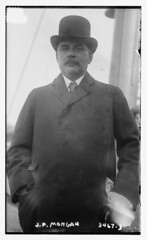
8821795237J. P. MorganA banker who took control and consolidated bankrupt railroads in the Panic of 1893. In 1900, he led a group in the purchase of Carnegie Steel, which became U.S. Steel. (p. 321, 323)20
8821795238leading industrial powerBy 1900, the United States was the leading industrial power in the world, manufacturing more than an of its rivals, Great Britain, France, or Germany. (p. 319)21
8821795239Second Industrial RevolutionThe term for the industrial revolution after the Civil War. In the early part of the 19th century producing textiles, clothing, and leather goods was the first part of this revolution. After the Civil War, this second revolution featured increased production of steel, petroleum, electric power, and industrial machinery. (p. 323)22
8821795240Bessemer processIn the 1850s, Henry Bessemer discovered this process. By blasting air through molten iron you could produce high-quality steel. (p. 323)23
8821795241transatlantic cableIn 1866, Cyrus W. Field's invention allowed messages to be sent across the oceans. (p. 325)24
8821795242Alexander Graham BellIn 1876, he invented the telephone. (p. 325)25
8821795243Thomas EdisonPossibly the greatest inventor of the 19th century. He established the first modern research labratory, which produced more than a thousand patented inventions. These include the phonograph, first practical electric light bulb, dynamo for electric power generation, mimeograph machine, and a motion picture camera. (p. 326)26
8821795244Menlo Park Research LabThe first modern research laboratory, created in 1876, by Thomas Edison in Menlo Park, New Jersey. (p. 326)27
8821795245electric power, lightingIn 1885, George Westinghouse produced a transformer for producing high-voltage alternating current, which made possible the lighting of cities, electric streetcars, subways, electrically powered machinery, and appliances. (p. 326)28
8821795246George WestinghouseHe held more than 400 patents. He invented the high-voltage alternating current transformer, which made possible the nationwide electrial power system. (p. 326)29
8821795247Eastman's Kodak cameraIn 1888, George Eastman invented the camera. (p. 325)30
8821795248large department storesR.H. Macy and Marshall Field made these stores the place to shop in urban centers. (p. 326)31
8821795249R.H. MacyHe created a New York department store. (p. 326)32
8821795250mail-order companiesTwo companies, Sears Roebuck, and Montgomery Ward, used the improved rail system to ship to rural customers to sell many different products. The products were ordered by mail from a thick paper catalog. (p. 326)33
8821795251Sears-RoebuckMail order company that used the improved rail system to ship to rural customers. (p. 326)34
8821795252packaged foodsBrand name foods created by Kellogg and Post became common items in American homes. (p. 326)35
8821795253refrigeration; canningThese developments in the food industry changed American eating habits. (p. 326)36
8821795254Gustavus SwiftHe changed American eating habits by making mass-produced meat and vegetable products. (p. 326)37
8821795255advertisingThis new technique was important to creating the new consumer economy. (p. 326)38
8821795256consumer economyAdvertizing and new marketing techniques created a new economy. (p. 326)39
8821795257federal land grants and loansThe federal government provided land and loans to the railroad companies in order to encourage expansion of the railroads. (p. 320)40
8821795258fraud and corruption, Credit MobilierInsiders used construction companies to bribe government officials and make huge profits. (p. 321)41
8821795259Interstate Commerce Act of 1886This act, created in 1886, did little to regulate the railroads. (p. 322)42
8821795260anti-trust movementMiddle class people feared a growth of new wealth due to the trusts. In the 1880s trust came under widespread scrutiny and attack. In 1890, the Sherman Antitrust Act was passed, but it was too vaguely worded to stop the development of trusts. Not until the Progressive era, would the trusts be controlled. (p. 324)43
8821795261Sherman Antitrust Act of 1890In 1890, Congress passed this act, which prohibited any "contract, combination, in the form of trust or otherwise, or conspiracy in restraint of trade or commerce." The U.S. Department of Justice secured few convictions until the law was strenghted during the Progressive era. (p. 324)44
8821795262federal courts, U.S. v. E.C. KnightIn 1895, the Supreme Court ruled that the Sherman Antitrust Act could be applied only to commerce, not manufacturing. (p. 324)45
8821795263causes of labor discontentWorker's discontent was caused by performing monotonous task required completion within a certain time, dangerous working conditions, and exposure to chemicals and pollutants. (p. 328)46
8821795264iron law of wagesDavid Ricardo developed this theory which stated that low wages were justified. He argued that raising wages would only increase the working population, the availability of more workers would cause wages to fall, thus creating a cycle of misery. (p. 327)47
8821795265anti-union tacticsEmployers used the following tactics to defeat unions: the lockouts (closing the factory), blacklists (lists circulated among employers), yellow dog contracts (contracts that forbade unions), private guards to quell strikes, and court injunctions against strikes. (p. 329)48
8821795266railroad strike of 1877In 1887, this strike spread across much of the nation and shut down two-thirds of the country's railroads. An additional 500,000 workers from other industries joined the strike. The president used federal troops to end the violence, but more than 100 people had died in the violence. (p. 329)49
8821795267Knights of LaborStarted in 1869 as a secret national labor union. It reached a peak of 730,000 members. (p. 330)50
8821795268Haymarket bombingOn May 4, 1886 workers held a protest in which seven police officers were killed by a protester's bomb. (p. 330)51
8821795269American Federation of LaborThe labor union focused on just higher wages and improved working conditions. By 1901 they had one million members. (p. 330)52
8821795270Samuel GompersHe led the American Federation of Labor until 1924. (p. 330)53
8821795271Pullman StikeIn 1894, workers at Pullman went on strike. The American Railroad Union supported them when they refused to transport Pullman rail cars. The federal government broke the strike. (p. 331)54
8821795272Eugene DebsThe American Railroad Union leader, who supported the Pullman workers. The government broke the strike and he was sent to jail for six months. (p. 331)55
8821795273railroad workers: Chinese, Irish, veteransIn the construction of the first transcontinental railroad, the Union Pacific, starting in Omaha, employed thousands of war veterans and Irish immigrants. The Central Pacific, starting from Sacramento, included 6,000 Chinese immigrants among their workers. (p. 321)56
8821795274old rich vs. new richThe trusts came under widespread scrutiny and attack in the 1880s, urban elites (old rich) resented the increasing influence of the new rich. (p. 324)57
8821795275white-collar workersThe growth of large corporation required thousands of white-collar workers (jobs not involving manual labor) to fill the highly organized administrative structures. (p. 327)58
8821795276expanding middle classIndustrialization helped expand the middle class by creating jobs for accountants, clerical workers, and salespeople. The increase in the number of good-paying jobs after the Civil War significantly increased the size of the middle class. (p. 327)59
8821795277factory wage earnersBy 1900, two-thirds of all working Americans worked for wages, usually at jobs that required them to work ten hours a day, six days a week.(p. 327)60
8821795278women and children factory workersBy 1900, 20 percent of adult woman working for wages in the labor force. Most were young and single women, only 5 percent of married women worked outside the home. (p. 327)61
8821795279women clerical workersAs the demand for clerical workers increased, women moved into formerly male occupations as secretaries, bookkeepers, typists, and telephone operators. (p. 328)62
8821795280Protestant work ethicThe believe that hard work and material success are signs of God's favor. (p. 325)63
8821795281Adam SmithIn 1776, this economist wrote "The Wealth of Nations" which argued that business should not be regulated by government, but by the "invisible hand" (impersonal econmic forces). (p. 324)64
8821795282laissez-faire CapitalismIn the late 19th century, american industrialists supported the theory of no government intervention in the economy, even as they accepted high tariffs and federal subsidies. (p. 324)65
8821795283concentration of wealthBy the 1890s, the richest 10 percent of the U.S. population controlled 90 percent of the nation's wealth. (p. 326)66
8821795284Social DarwinismThe belief that government's helping poor people weakened the evolution of the species by preserving the unfit. (p. 324)67
8821795285William Graham SumnerAn English social philosopher, he argued for Social Darwism, the belief that Darwin's ideas of natural slection and survival of the fittest should be applied to the marketpalce and society. (p. 324)68
8821795286survival of the fittestThe belief that Charles Darwin's ideas of natural selection in nature applied to the economic marketplace. (p. 324)69
8821795287Gospel of WealthSome Americans thought religion ideas justified the great wealth of successful industrialists. (p. 325)70
8821795288Horatio Alger Stories self-made manHis novels portrayed young men who became wealth through honesty, hard work and a little luck. In reality these rags to riches stories were somewhat rare. (p. 327)71

Pages

Subscribe to CourseNotes RSS

Need Help?

We hope your visit has been a productive one. If you're having any problems, or would like to give some feedback, we'd love to hear from you.

For general help, questions, and suggestions, try our dedicated support forums.

If you need to contact the Course-Notes.Org web experience team, please use our contact form.

Need Notes?

While we strive to provide the most comprehensive notes for as many high school textbooks as possible, there are certainly going to be some that we miss. Drop us a note and let us know which textbooks you need. Be sure to include which edition of the textbook you are using! If we see enough demand, we'll do whatever we can to get those notes up on the site for you!