AP Notes, Outlines, Study Guides, Vocabulary, Practice Exams and more!

Period 4: 1800-1848 AP US History Flashcards

Terms : Hide Images
9813276426FederalistPolitical party created in the 1790s led by Alexander Hamilton; favored a stronger national government; supported primarily by the bankers and moneyed interests0
9813276427Democratic-RepublicansPolitical party created in the 1790's; led by Thomas Jefferson; favored limited government and state rights; supported primarily by the "common man"1
9813276428Election of 1800(AKA Revolution of 1800) election that led to a peaceful transfer of power from the Federalist party to the Democratic Republican Party2
9813276429Hartford Convention, 1814Meeting of Federalists during the War of 1812 discuss strategy to gain more power in government; viewed as unpatriotic by many; as a result, the Federalist Party was no longer a significant force in American politics3
9813276430Era of Good FeelingsTerm used to describe the time period after the 2nd Party System in the United States after the Federalist Party fell from the national stage, leaving only the Democratic Party; associated with the presidency of James Monroe4
9813276431DemocratsPolitical party that brought Andrew Jackson into office in 1829; part of the 2nd Party System of the United States; supported Jeffersonian ideas of limited government and individualism; drew its support from the "common Man"5
9813276432Whig PartyPolitical Party created in 1834 as a coalition of anti-Jackson political leaders and dedicated to internal improvements funded by the national government6
9813276433Andrew JacksonLeader of the Democrats who became the seventh president of the US (1829-1837); known for his opposition to the 2nd Bank of the US, the Indian Removal Act, and opposition to nullification7
9813276434Henry ClayLeader of the Whig Party who proposed an "American System" to make the United States economically self-sufficient, mostly through protective tariffs; worked to keep the Union together through political compromise8
9813276435Nullification Crisis (1832-1833)After South Carolina declared the federal tariff null and void, President Jackson obtained a Force Bill to use military actions against South Carolina; ended with a compromise to lower tariffs over an extended time; overall significance was the challenge of states to ignore federal law (later on with laws regarding slavery).9
9813276436John C. CalhounSouth Carolina political leader who defended slavery as a positive good and advocated the doctrine of nullification, a policy in which state could nullify federal law.10
9813276437John MarshallAppointed to the Supreme Court by John Adams in 1801; served as a chief justice until 1835; legal decisions gave the Supreme Court more power, strengthened the federal government, and supported protection of private property.11
9813276438Cotton BeltSouthern region in the US where most of the cotton is grown/deep; stretched from South Carolina to Georgia to the new states in the southwest frontier; had the highest concentration of slaves12
9813276439Judicial ReviewThe power of the Supreme Court to review the constitutionality of laws passed by Congress, established during Marbury v. Madison13
9813276440Market EconomyEconomic system based on the unregulated buying and selling of goods and services; prices are determined by the forces of supply and demand14
9813276441Embargo Act (1807)Passed by President Jefferson in order to pressure Britain and France to stop impressment and support the American rights to free trade with the other; a government-order ban on international trade; went into effect in 1808 and closed down virtually all U.S. trade with foreign nations; led to steep depression in the economy15
9813276442Panic of 1819Financial panic that began when the Second Bank of the US tightened credit and recalled government loans after the price of cotton dropped16
9813276443Second Bank of the United States (1816)Privately owned bank that operated as both a commercial and fiscal agent for the US government; established in 1816 under a charter that was supposed to last 20 years; Andrew Jackson was critical of the bank and its potential for corruption; ended when Jackson vetoed the extension of its charter and won reelection in the process17
9813276444Tariff of 1816First protective tariff in US history; designed primarily to help America's textile industry18
9813276445Tariff of Abominations 1828Tariff with such high rates that it set off tension between northerners and southerners over tariff issues (called the Nullification Crisis)19
9813276446Panic of 1837Economic collapse caused primarily by President Jackson's destruction of the Second Bank of the United States20
9813276447Slave CodesLaws that established the status of slaves denying them basic rights and classifying them as the property of slaveholders21
9813276448Second Great AwakeningAn upsurge in religious activity that began around 1800 and was characterized by emotional revival meetings; led to several reform movements (temperance, abolition) designed to perfect society with religious morals22
9813276449Elizabeth Cady StantonAdvocate of women right's, including the right to vote; organized (with Lucretia Mott) the first women's rights convention at Seneca Falls, NY23
9813276450Dorothea DixPioneer in the moment for special treatment for the mentally ill24
9813276451Horace MannMassachusetts educator who called for publicly funded education for all children; called the "Father of Public Education in America"25
9813276452Utopian CommunitiesIdealistic reform movement based on the belief that a perfect society could be created on Earth; significant Utopian experiments were established at New Harmony, Indiana, Book Farm, Massachusetts and the Oneida Community in New York; usually such attempts were short-lived26
9813276453William Lloyd GarrisonRadical abolitionist in Massachusetts who published The Liberator, an antislavery newspaper27
9813276454TranscendentalismPhilosophical and literary movement that believed God existed within human being and nature; believed intuition was the highest source of knowledge; advocated for introspection by surrounding oneself with nature28
9813276455Ralph Waldo EmersonPhilosopher, writer, and poet who became a central figure in the Transcendalist movement in American29
9813276456Henry David ThoreauWriter and naturalist; with Ralph Waldo Emerson, he was one of America's best known transcendentalists30
9813276457Samuel SlaterKnown as the "Father of the American Industrial Revolution"; brought British textile technology to the United States to create the first factory31
9813276458John DeereInvented the steel plow in 1837, which revolutionized farming; the steel plow broke up soil without the soil getting stuck to the plow32
9813276459Lowell SystemMethod of factory management that evolved in the textile mills of Lowell, MA33
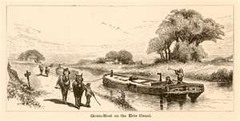
9813276460Erie Canal (1817-1825)350 mile canal built by the state of NY that stretched from Buffalo to Albany; the canal revolutionized shipping in NY and opened up new markets (evidence of the Market Revolution)34
9813276461National Road (1811)AKA Cumberland Road; first significant road built in the US at the expense of the federal government; stretched from the Potomac River to the Ohio River35
9813276462Mason-Dixon LineBoundary between PA and MD that marked the division between free and slave states before the Civil War36
9813276463Cult of DomesticityThe belief that a woman's proper role in life was found in domestic pursuits (raising children, taking care of the house); strongly believed by many throughout the 19th century37
9813276464Louisiana Purchase (1803)U.S. purchased the Louisiana Territory from France for $15 million, doubling the size of the U.S. and giving the U.S. full control of the Mississippi River38
9813276465Lewis and Clark expedition (1804-1806)Expedition to explore the Louisiana Territory led by Meriwether Lewis and William Clark39
9813276466War HawksMembers of Congress from the West and South elected in 1810 who wanted war with Britain in the hopes of annexing new territory and ending British trade with the Indians of the Northwest40
9813276467War of 18121812-1815, War between the U.S. and Great Britain caused primarily by the perceived British violation of American neutral rights on the high seas (impressment); ended with an agreement of "status quo ante" (a return to how things were before the war)41
9813276468Adams-Onis Treaty (1819)Treaty between the U.S. and Spain that ceded Florida to the U.S. Also known as the Florida Purchase Treaty.42
9813276469Monroe Doctrine (1823)President Monroe's unilateral declaration that the Americas would be closed to further European colonization and that the U.S. would not allow European interference in the affairs of the Western Hemisphere; in return the U.S. pledged to stay out of European conflicts and affairs; significant foreign policy state that lasted through most of the 19th century43
9813276470Oregon Treaty of 1846After years of conflict over ownership of the Pacific Northwest, the U.S. and England established the boundary at 49° latitude, essentially splitting the Oregon Country down the middle44
9813276471Indian Removal Act (1830)Law that provided for the removal of all Indian tribes east of the Mississippi and the purchase of Indian lands for white resettlement45
9813276472Worcester v. Georgia (1832)A Supreme Court ruling that declared a state did not have the power to enforce laws on lands that were not under state jurisdiction; John Marshall wrote that the state of Georgia did not have the power to remove Indians; this ruling was largely ignored by President Andrew Jackson46
9813276473Trail of Tears (1838)Forced march of the Cherokee people from Georgia to Indian Territory in the winter; a large percentage of Cherokee died on the journey47
9813276474The American SystemConsisted of three mutually reinforcing parts: (1) a tariff to protect and promote American industry; (2) a national bank to foster commerce; (3) federal subsidies for roads, canals, and other "internal improvements" to develop profitable markets for agriculture; supported heavily by Henry Clay48
9813276475Missouri Compromise (1820)Admitted Missouri as a slave state and Maine as a free state, maintaining the balance between slave and free states in representation in the federal government; established a geographic line that would determine whether new states (made from the western territories) would be added to the union as slave or free states49
9813276476Spoils SystemPublic offices given as a reward for political support. Most iconically used by Andrew Jackson after his first election, which then became a precedent for future federal leaders.50
9813276477Marbury v. Madison (1803, Marshall)The Court established its role as the arbiter of the constitutionality of federal laws, the principle is known as judicial review.51
9813276478McCulloch v. Maryland (1819, Marshall)The Court ruled that states cannot tax the federal government, i.e. the Bank of the United States; the phrase "the power to tax is the power to destroy"; confirmed the constitutionality of the Bank of the United States.52
9813276479Cherokee Nation v. Georgia (1831, Marshall)"The conditions of the Indians in relation to the United States is perhaps unlike that of any two people in existence," Chief Justice John Marshall wrote, "their relation to the United States resembles that of a ward to his guardian. . .(they were a) domestic dependent nation." Established a "trust relationship" with the tribes directly under federal authority.53
9813276480interchangeable partsParts that were identical and which could be substituted for one another; developed by Eli Whitney for the manufacturing of muskets; became a hallmark of the American factory system54

AMSCO AP US History Chapter 16 Flashcards

AMSCO United States History 2015 Edition, Chapter 16 The Rise of Industrial America, 1865-1900

Terms : Hide Images
5388126442nation's first big businessRailroads created a nationwide market for goods. This encouraged mass production, mass consumption, and economic specialization. (p. 320)0
5388126443Cornelius VanderbiltHe merged local railroads into the New York Entral Railroad, which ran from New York City to Chicago. (p. 320)1
5388126444Eastern Trunk LinesFrom 1830 to 1860 railroad lines in the east were different incompatible sizes which created inefficiencies. (P. 320)2
5388126445Transcontinental RailroadsLinked the eastern railroad system with California's railroad system, connecting the country in a new way. It was completed in Utah in 1869. (p. 321)3
5388126446Union Pacific and Central PacificTwo railroad companies, one starting in Sacramento, California and the other in Omaha, Nebraska were completed in Utah in 1869 to create the first first transcontinental railroad. (p. 321)4
5388126447American Pacific AssociationDivided the country into 4 different time zones5
5388126448railroads and timezones4 timezones divided up by railroads6
5388126449speculation and overbuildingLed to the panic of 1893 because people built too many railroads7
5388126450Jay Gould, watering stockEntered railroad business for quick profits. He would sell off assets inflate the value of a corporation's assets and profits before selling its stock to the public. (p. 321)8
5388126451rebates and poolsDeals were offered to big businesses by railroads but it was expensive for people to enter the ring of business.9
5388126452bankruptcy of railroadsToo many railroads were built and weren't needed. The stock market crashed because there was no business nor money for the railroads and no one was buying the high priced stocks.10
5388126453Panic of 1893Worst economic depression until the Great Depression in 1830.11
5388126454causes of industrial growthRaw resources, tech boom, investment in tech boom, railroads enabled business growth, social darwinism made rich people look good and be admired.12
5388126455Andrew CarnegieA Scottish emigrant, in the 1870s he started manufacturing steel in Pittsburgh. His company Carnegie Steel became the world's largest steel company. (p. 322)13
5388126456vertical integrationA business strategy by which a company would control all aspects of a product from raw material mining to transporting the finished product. Pioneered by Andrew Carnegie. (p. 323)14
5388126457U.S. SteelJ. P. Morgan purchased Carnegie Steel and formed the world's largest enterprise. (p. 323)15
5388126458John D. RockefellerHe started Standard Oil in 1863. It became the largest oil company in the world. (p. 323)16
5388126459horizontal integrationCombining former competitors under one organization. (p. 323)17
5388126460Standard Oil TrustIn 1881, the name of John D. Rockefeller's company that controlled 90 percent of the oil refinery business. (p. 323)18
5388126461interlocking directorates19
5388126462J. P. MorganBanker who bought out Carnegie Steel and turned it into U.S. Steel. Was a "Robber Baron" who helped fund the U.S. in World War I.20
5388126463leading industrial power21
5388126464Second Industrial Revolution22
5388126465Bessemer process23
5388126466transatlantic cable24
5388126467Alexander Graham Bell25
5388126468Thomas EdisonPossibly the greatest inventor of the 19th century. (p. 326)26
5388126469Menlo Park Research LabThe first modern research laboratory created in 1876 by Thomas Edison in Menlo Park, New Jersey. (p. 326)27
5388126470electric power, lighting28
5388126471George WestinghouseHe invented the high-voltage alternating current transformer, which made possible the powered machinery and appliances and electrical lighting. (p. 326)29
5388126472Eastman's Kodak's camera30
5388126473large department storesR.H. Macy and Marshall Field made these stores the place to shop in urban centers. (p. 326)31
5388126474R.H. MacyCreated a New York department store. (p. 326)32
5388126475mail-order companies33
5388126476Sears-RoebuckMail order company that used the improved rail system to ship to rural customers.34
5388126477packaged foods35
5388126478Gustavus SwiftChanged American eating habits by making mass-produced meat products.36
5388126479advertising37
5388126480consumer economy38
5388126481federal land grants and loans39
5388126482fraud and corruption40
5388126483Interstate commerce Act of 188641
5388126484anti-trust movementMiddle class people feared a growth of new wealth due to the trusts. Thus arose the Anti trust movement in which urban elites were checked on their power and wealth. Started in the 1880s.42
5388126485Sherman Antitrust Act of 189043
5388126486U.S. v. E.C. Knight44
5388126487causes of labor discontent45
5388126488Railroad strike of 187746
5388126489Knights of LaborStarted in 1869 as a secret national labor union. It reached a peak of 730,000 members. (p. 330)47
5388126490Haymarket bombingOn May 4, 1886 workers held a protest in which seven police officers were killed by a protester's bomb. (p. 330)48
5388126491American Federation of LaborThe labor union focused on just higher wages and improved working conditions. By 1901 they had one million members. (p. 330)49
5388126492Samuel GompersHe led the American Federation of Labor until 1924. (p. 330)50
5388126493Pullman StikeIn 1894 workers at Pullman went on strike. The Amercian Railroad Union supported them when they refused to transport Pullman rail cars. The federal government brode the strike. (p. 331)51
5388126494Eugene DebsThe American Railroad Union leader who supported the Pullman workers. The government broke the strike and he was sent to jail for six months. (p. 331)52
5388126495railroad workers: Chinese, Irish, veterans53
5388126496old rich vs. new rich54
5388126497white-collar workers55
5388126498expanding middle class56
5388126499factory wage earners57
5388126500women and children factory workers58
5388126501women clerical workers59
5388126502Protestant work ethic60
5388126503Adam Smith61
5388126504laissez-faire CapitalismAmerican industrialists supported the theory of no government intervention, even as they accepted high tariffs and federal subsidies. (p. 324)62
5388126505Social DarwinismThe belief that government's helping poor people weakened the evolution of the species. Hypocritically, they saw nothing wrong with the government passing laws which helped rich industrialists. (p. 325)63
5388126506concentration of wealth64
5388126507William Graham SumnerAn American Social Darwinist, he believed that helping the poor was wrong because it interfered with the laws of nature. (p. 325)65
5388126508survival of the fittestThe belief that Charles Darwins ideas of natural selection in nature applied to the economic marketplace. (p. 324)66
5388126509Gospel of WealthSome Americans thought religion ideas justified the great wealth of successful industrialists. (p. 325)67
5388126510Horatio Alger Stories self-made manHis novels portrayed young men who became wealth through honesty, hard work and a little luck. In reality these rags to riches stories were somewhat rare. (p. 327)68

AP US History: Chapter 16 Conquering a Continent Flashcards

Terms : Hide Images
7038386860transcontinental railroadCompleted in 1869 at Promontory, Utah, it linked the eastern railroad system with California's railroad system, revolutionizing transportation in the west0
7038386861protective tarifftax on imports used to raise the cost of imported goods and thereby protect domestic producers1
7038386862Treaty of Kanagawa1854 agreement between Japan and the US. Japan agreed to open two ports to American ships2
7038386863Burlingame Treatyguaranteed the rights of US missionaries in China and set official terms for the emigration of Chinese laborers to work in United States3
7038386864Munn v. Illinoisan 1877 case in which the supreme court upheld states' regulation of railroads for the benefit of farmers and consumers4
7038386865gold standardA monetary system in which paper money and coins are equal to the value of a certain amount of gold5
7038386866Crime of 1873A term used by those critical of an 1873 lot directing the US treasury to cease minting silver dollars, retire Civil War- era greenbacks, and replace them with the notes backed by the gold standard from an expanded system of national banks6
7038386867Homestead ActProvided free land in the West to anyone willing to settle there and develop it. Encouraged westward migration.7
7038386868Morrill Actpassed by Congress in 1862, this law distributed millions of acres of western lands to state governments in order to fund state agricultural colleges.8
7038386869land-grant collegesstate educational institutions built with the benefit of federally donated lands9
7038386870Comstock LodeRich deposits of silver found in Nevada in 1859.10
7038386871Long Drivecowboys herded cattle hundreds of miles north from Texas to Dodge City and the other cow towns of Kansas.11
7038386872"rain follows the plow"The false western theory that once people started to plow the fields, the rain would come and follow to irrigate them12
7038386873ExodustersName given to the former slaves who migrated from the South to the West following the Civil War.13
7038386874Yellowstone National Parkthe first national park in the United States14
7038386875U.S. Fisheries CommissionA federal bureau established in 1871 that made recommendations to stem the decline in wild fish. Its creation was an important step toward wildlife conservation and management.15
7038386876Sand Creek massacrean attack on a village of sleeping Cheyenne Indians by a regiment of Colorado militiamen on 29 November 1864 that resulted in the death of more than 200 tribal members16
7038386877Fetterman massacreIn 1866, a tribe of Oglala Sioux under Chief Red Cloud, provoked by the building of the Bozeman Trail through their hunting ground in southern Montana, massacred a U.S. army unit17
7038386878Lone Wolf v. HitchcockSupreme Court ruled that Native Americans were "an ignorant and dependent race" and "wards of the state" so therefore had no rights and the government was able to revoke all treaties18
7038386879Dawes Severalty ActBill that promised Indians tracts of land to farm in order to assimilate them into white culture. The bill was resisted, uneffective, and disastrous to Indian tribes19
7038386880Battle of Little Big HornAmerican cavalry under George Armstrong Custer attacked an encampment of Sioux, Arapaho, and Cheyenne Indians. Custer's force was annihilated, but the Native American military victory was short-lived.20
7038386881Ghost Dance movementThe last effort of Native Americans to resist US domination and drive whites from their ancestral lands, came through as a religious movement.21
7038386882Wounded Knee1890 U.S. cavalry slaughter of Native Americans marketing the end of the Indian Wars on the Great Plain22
7038386883William SewardSecretary of State who was responsible for purchasing Alaskan Territory from Russia.23
7038386884Emmeline WellsWomen's right advocate. Served as president of Mormon church24
7038386885John Wesley PowellExplorer and geologist who warned that traditional agriculture could not succeed west of the 100th meridian25
7038386886Chief JosephLead the Nez Perce during the hostilities between the tribe and the U.S. Army in 1877. His speech "I Will Fight No More Forever" mourned the young Indian men killed in the fighting.26
7038386887Sitting BullThe leader of the Sioux, who, with Crazy Horse, killed General George A. Custer and his entire 250 man army. He was defending land in the Dakota Territory, which had been reserved for his people but was still being settled by whites27
7038386888George Armstrong CusterUnited States general who was killed along with all his command by the Sioux at the battle of Little Bighorn (1839-1876)28
7038386889GeronimoApache chieftain who raided the white settlers in the Southwest as resistance to being confined to a reservation (1829-1909)29
7038386890Ohiyesa (Dr. Charles Eastman)a Santee Sioux boy who was encouraged by his family to take advantage of opportunities offered by assimilation; practiced medicine alongside Native healers30
7038386891Buffalo Bill CodyMountain man turned actor started a traveling play called the wild west which spread the image of the Wildwest all over the globe31
7038386892Frederick Jackson Turnerauthor of the "Frontier Thesis" that claimed that the Western Frontier was the defining feature of the US.32

US HISTORY: Colonial Era Flashcards

Terms : Hide Images
7360969258Motivations for the French to ExploreTrading furs in Canada, looking for the Northwest Passage0
7360969259Motivations for the British to ExploreMany English people wanted to live and have their own religious freedom and escape from the official church. The English crown wanted to compete with Spain and create its own empire. The British hoped to find gold, but instead profited from growing tobacco and harvesting natural resources.1
7360969260Motivations for the Spanish to ExploreThe Spanish were Catholics, and the church encouraged the Spanish crown to convert Natives. Incan and Aztec empires had both grown wealthy with silver and gold. The Spanish wanted their resources and Individual conquistadors wanted the fame, glory, and fortune that went along with a glorious discovery.2
7360969261Geography of New EnglandForest, water- coastlines and access to water, mountains, rocky soil, (not much plantation and rocks) snow, (long winter) and cold.3
7360969262Economics of New EnglandTrading, fishing, ship-building, lumber, wood, and timber4
7360969263Politics of New EnglandFundamental laws, Mayflower compact, you can voice your opinions, a government follows laws and agrees with them5
7360969264Society of New EnglandReligious freedom, you could worship whatever you wanted, first place in American to worship whatever you wanted, tax-supported schools for every community, literacy rates were higher and people could live longer (less disease, because there are no swamps)6
7360969265Geography of the Middle ColoniesLots of hills and river valleys7
7360969266Economics of the Middle ColoniesBREAD BASKET-grow lots of food, farm (corn), wheat, corn, flax, hemp, rye, attracted diverse businesses, main income- irons, ships, timber, fur and skins, cattle, grain, and tobacco8
7360969267Politics of the Middle ColoniesWilliam Penn treated everyone equally and supported women's rights, he didn't care what religion you were, if you were rich or poor, and treated everyone as equal with respect9
7360969268Soicety of the Middle ColoniesReligious freedom- you can practice your own religion Germans--> most skill farmers (weaving and shoemaking) Scots-Irish--> cleared land, hunted, and farming Quakers--> tolerance of others encourage others to move there10
7360969269Geography of the Southern ColoniesFlat, fertile soil along with lots of water sources- coastlines, lakes, hot, humid11
7360969270Economics of the Southern ColoniesHUGE CASH CROPS- rice, indigo, tobacco12
7360969271Politics of the Southern ColoniesVirginia House of Burgesses- First legislative assembly13
7360969272Society of the Southern ColoniesMaryland Act of Toleration- Practice any religion14
7360969273Reasons for the Founding of VirginiaFounded for economic reasons and to find gold.15
7360969274Reasons for the Founding of MarylandFounded by Lord Baltimore and other Catholics for religious freedom16
7360969275Founder of MarylandLord Baltimore (Cecil Clavet)17
7360969276Reasons for the Founding of GeorgiaTo form a barrier from Spanish Florida-Refuge for debtors18
7360969277Reasons for the Founding of ConnecticutReligious freedom- Didn't like the way of life in Massachusetts (picture shows different people worshiping different religions)19
7360969279Reasons for the Founding of Rhode IslandReligious freedom- First place in America where people could worship freely20
7360969280Founder of Rhode IslandRoger Williams21
7360969281Reasons for the Founding of MassachusettsReligious freedom- To escape persecution22
7360969282Founder of MassachusettsJohn Winthrop23
7360969283Reasons for the Founding of PennyslaviaWilliam Penn was given a grant of land to found the colony by King Charles II (picture of him on right)24
7360969284Founders of PennyslaviaWilliam Penn25
7360969285Significance of Fundamental Orders of ConnecticutThe Fundamental Orders of Connecticut was the first written constitution in America and was a major step on the way to modern-day democracy26
7360969286Significance of the Mayflower CompactThe Mayflower Compact was signed to establish a majority vote policy and showed first signs of democracy27
7360969288Significance of the Virginia House of BurgessesIt was the first representative assembly, inspired the House of Representatives and the Senate, and made laws and made it possible to challenge the authority of the royal governor.28
7360969292Beliefs of the QuakersQuakers in general respected everyone. The religious belief is revealed directly to individuals from God.29
7360969293Beliefs of the PuritansThe Puritans believed that God had an agreement with them and that God wanted them to live according to the bible.30
7360969294Goods Produced by the Colonies in the Triangle TradeCash crops, (Southern Colonies) wheat and food crops, (Middle Colonies) naval stores/lumber and fish. (New England)31
7360969295Goods Produced by Great Britain in the Triangle TradeMachines, guns, textiles, manufactured goods32
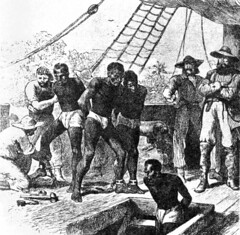
7360969296Goods Produced by Africa in the Triangle TradeSlaves33
7360969297Define MercantillismCommercialism, having benefits with trading with other countries34
7360969298Describe the Navigation ActsThe Navigation Acts were made so that the government could regulate and control the trade and enabled England to take taxes in the Colonies35

Period 6 (1865-1898) AP US History Flashcards

Terms : Hide Images
9833162851People's (Populist) Party(1892-96) An agrarian political party; Drew support from angry farmers in the West and South; Highly critical of capitalism, especially banks and railroads; Allied itself with the labor movement.0
9833162852populisma philosophy supporting the rights and empowerment of the masses as opposed to elites1
9833162853assimilationthe process by which a person or a group's language and/or culture come to resemble those of another group2
9833162854"Gilded Age"A sarcastic description of the late 19th century in the United States; Suggested both the extravagant wealth of the time and the terrible poverty that lay underneath; Coined by Mark Twain.3
9833162855Social Darwinism"survival of the fittest"; Provided a justification for the enormous wealth and power wielded by industrialists in the latter half of the 19th century.4
9833162856trustA set of companies managed by a small group known as trustees, who can prevent companies in the trust from competing with each other.5
9833162857Gospel of Wealth(1889) Andrew Carnegie and others; The idea that those who accumulated wealth to share their riches for the betterment of society.6
9833162858Jane AddamsReformer who helped poor immigrants; Established Hull House.7
9833162859Hull Housesettlement house founded by Progressive reformer Jane Addams in Chicago in 18898
9833162860Plessy v. Ferguson(1896) Legalized segregation in publicly owned facilities on the basis of "separate but equal."9
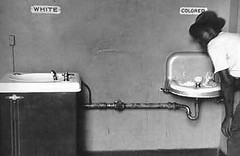
9833162861segregationThe separation into ethnic or racial groups in daily life: Restaurants, water fountains, public toilet, school, entertainment venues, transportation, residential neighborhoods.10
9833162862tenementa multi-dwelling building, often poor or overcrowded11
9833162863land grantsland given by government to universities and railroad companies12
9833162864Dawes Act(1887) land given to individual Indians to discourage tribal mindset; encouraged Indians to farm for a living instead of communally owning land13
9833162865open rangethe idea that cattle can be grazed on large tracts of public and/or private property; invention of barbed wire ended this idea and drove many small cattle ranches out of business and off their small plots of land14
9833162866Bessemer processA cheap and efficient process for making steel, developed around 1850; Widespread adoption in the US allowed steel production and industrialization to outpace all global industrial competitors.15
9833162867vertical IntegrationStrategy to maximize profits by attempting to own every step of the manufacturing process (ex. Carnegie Steel)16
9833162868horizontal IntegrationStrategy to maximize profits by attempting to purchase competing companies in the same industry; monopoly-building (ex. Rockefeller's Standard Oil)17
9833162869prohibitionforbidding by law the manufacture, sale, or consumption of liquor18
9833162870Haymarket Riot(1886) Labor dispute in Chicago that ended with a bomb being thrown at police resulting in many deaths. Led to an unfavorable public opinion of organized labor.19
9833162871American Federation of LaborThe first federation of labor unions in the United States. Founded by Samuel Gompers in 188620
9833162872lobbyistsomeone who promotes an interest or cause before a political body, often for pay21
9833162873urbanizationmovement of people from rural communities and settlements to big cities22
9833162874"New Immigrants"from southern and eastern Europe such as Russia, Poland, Italy, etc. that arrived in the US in the latter half of the 19th century23
9833162875Chinese Exclusion Act(1882) First law limiting immigration based on race; effectively stopped immigration from China.24
9833162876political machineUnofficial political organization that works to win elections in order to exercise power; Mostly affiliated with urban immigrant groups. E.G. Tweed Ring, Tammany Hall.25
9833162877Plessy v. Ferguson (1896)Legalized racial segregation in publicly owned facilities on the basis of "separate but equal."26
9833162878Knights of LaborAmerican labor organization in the 1880s led by Terence V. Powderly. Organized a wide range of workers, including skilled and unskilled, and had broad reform goals.27
9833162879William Jennings BryanDemocratic and Populist candidate for President in 1896 who advocated a policy of free silver28
9833162880"New South"After the Civil War, southerners promoted a new vision for a self-sufficient southern economy built on modern capitalist values, industrial growth, and improved transportation. In reality, this growth was fairly slow.29
9833162881Homestead and Pullman StrikesIndustrial lockouts and strikes that showed battle between corporations and labor unions. Ended with government intervention on the side of big business.30
9833162882Tammany HallPolitical machine of New York City that was well-known for its corruption; lead by William Boss Tweed31
9833162883Andrew CarnegieTitan of Industry: Steel; Author of Gospel of Wealth32
9833162884transcontinental railroadsRail line that crosses the continent connecting East to West; Opened new markets and helped spur the Industrial Revolution33
9833162885Social GospelProtestant movement preaching that all true Christians should be concerned with the plight of immigrants and other poor residents of American cities and should financially support efforts to improve lives of these poor urban dwellers. Settlement houses were often financed by funds raised by ministers of this movement.34
9833162886Grange Movement and Farmers AllianceGrassroots movements that attempted to address the plight of farmers in the late 1800s; attempted to regulate railroads and enlarge opportunity for credit; evolved into Populist movement.35
9833162887AmericanizationProcess of assimilating immigrants into American culture by teaching English, American history, and citizenship.36
9833162888John D. RockefellerTitan of industry: Oil37
9833162889Second Industrial RevolutionSpurred by machine tools, interchangeable parts, Bessemer process of mass steel production, transcontinental railroad, immigrant labor38
9833162890J.P. MorganTitan of industry: Banking39
9833162891Cornelius VanderbiltTitan of industry: Railroads40
9833162892middle classa social class made up of skilled workers, professionals, business people, and wealthy farmers41
9833162893Standard OilJohn D. Rockefeller's company that gained a monopoly over the world petroleum market with the practice of trusts and swift elimination of competition.42
9833162894Carnegie SteelA steel producing company created by Andrew Carnegie to manage business at his steel mills in the Pittsburgh, Pennsylvania area in the late 19th century. Significance: had a monopoly in the steel industry. vertical integrations.43
9833162895Credit Mobilier scandalcorruption in the railroads allowing men to change the government very high amounts for the work to be done44
9833162896Rutherford B. Hayeswon the election of 1876 in exchange for withdrawing the federal troops from the remaining southern states45
9833162906Ulysses S. Grant46
9833162897Compromise of 1877South to gain removal of last troops from Reconstruction; North wins Hayes as president47
9833162898Jim Crow lawsState-level legal codes, literacy requirement for voting, voter registration laws and poll taxes meant to deter blacks from voting48
9833162899Pendleton Act(1883) Legislation that began the federal merit system49
9833162900Civil Service CommissionCreated by Pendleton Act to oversee examinations for potential government employees50
9833162901Sherman Anti-Trust Act of 1890an 1890 law that banned the formation of trusts and monopolies in the United States51
9833162902yellow journalismsensational and exaggerated news stories52
9833162903Ghost DanceA religious revitalization campaign reminiscent of the pan-Indian movements led by earlier prophets.53
9833162904Enforcement Actequal accommodations in public places and no racial discrimination in court54

AMSCO AP US History Chapter 7 Flashcards

AMSCO United States History 2015 Edition, Chapter 7 The Age of Jefferson, 1800-1816

Terms : Hide Images
9755777955Thomas JeffersonHe was George Washington's first secretary of state. A Democrat-Republican, he was the nation's third president from 1801 to 1809. He stressed the basic principles of constitutional government and limited central government. He appeased the Federalists by maintaining the national bank and debt repayment plan of Hamilton, and carried on the neutrality policies of Washington and Adams. He reduced the size of the military, eliminated some federal jobs, repealed excise taxes, and lowered the national debt. In 1803, he made the Louisiana Purchase from France. (p. 131)0
9755777956Louisiana PurchaseIn 1803, President Thomas Jefferson purchased the Louisiana territory from France for $15 million. The purchase more that doubled the size of the United States, removed a European presence from the nation's borders, and extended the western frontier well beyond the Mississippi River. (p. 133)1
9755777957war hawksThe 1810 congressional election brought a group of young Democratic-Republicans to Congress. Led by Henry Clay and John C. Calhoun they gained influence in the House of Representatives. They argued that war with Britain was the only way to defend American honor, gain Canada, and destroy American Indian resistance on the frontier. (p. 139)2
9755777958Henry ClayIn 1810, he was a Kentucky member of the House of Representatives. He was a war hawk who argued for war with Britain. (p. 139)3
9755777959John C. CalhounIn 1810, he was a South Carolina member of the House of Representatives. He was a war hawk who argued for war with Britain. (p. 139)4
9755777960TecumsehThis Shawnee warrior, who along with his brother, attempted to unite all American Indian tribes east of the Mississippi River. (p. 138)5
9755777993ProphetThis Shawnee religious leader, who along with his brother, attempted to unite all American Indian tribes east of the Mississippi River. (p. 138)6
9755777961William Henry HarrisonIn 1811, this governor of the Indiana Territory, destroyed Shanee headquarters and put an end to Tecumseh's efforts to form an American Indian confederacy. (p. 138)7
9755777962Battle of TippecanoeAn 1811 battle, where U.S. troops led by William Henry Harrison did battle against American Indians led by Tecumseh. (p. 138)8
9755777963strict interpretation of ConstitutionPresident Thomas Jefferson was committed to a strict interpretation of the Constitution and rejected Alexander Hamilton's argument that certain powers were implied. When Jefferson made the Louisiana Purchase he was troubled because the Constitution did not state explicitly that a president could purchase foreign land. He finally argued that the president's powers to make treaties allowed for the purchase. (p. 133)9
9755777964John MarshallThis Federalist Chief Justice of the Supreme Court served in the position for 34 years. His decisions in landmark cases generally strengthened the federal government, often at the expense of states rights. (p. 134)10
9755777965judicial reviewIn 1803, Marbury v. Madison case, the Marshall court established the doctrine of judicial review by ruling that a law passed by Congress was unconstitutional. From this point on, the Supreme Court could overrule the legislative or executive branches if they believed a law was unconstituional. (p. 134)11
9755777994Marbury v. MadisonA Supreme Court case in 1803 where Chief Justice John Marshall ruled that a law passed by Congress was unconstitutional. This established the doctrine of judicial review, where the Supreme Court could overrule actions taken by the legislative and executive branches of the government. (p. 134)12
9755777966Aaron BurrHe was Thomas Jefferson's vice president from 1801 to 1804. A new vice president was chosen for Jefferson's second term. He then organised a failed conspiracy, attempting to unite New England states and secede from the United States. He killed Alexander Hamilton in a duel. In 1806 was tried for treason because of a plan to capture Mexico and possibly unite it with Louisiana. He was acquitted of the charge. (p. 135)13
9755777967QuidsIn 1812, they were "Old" Democratic-Republicans who criticized the War of 1812 because it violated the classic Democratic-Republican commitment to limited federal power and the maintenance of peace. (p. 140)14
9755777968Hartford Convention (1814)In December 1814, a special convention was held in Hartford, Connecticut. Bitterly opposed to the the War of 1812, some radical Federalist in the Northeast wanted to secede from the United States, but it was rejected. However, to limit the power of the Democratic-Republicans they adopted a proposal that a two-thirds vote of both houses would be required for any future declaration of war. (p. 141)15
9755777969Napoleon BonaparteIn the War of 1812 the United States based their hope for victory on Napoleon successfully fighting the British in Europe. However, in the spring of 1814, Napoleon's losses enabled the British to increase their forces in North America. (p. 141)16
9755777970Toussaint I'OuvertureHe led a rebellion against French rule on the island of Santo Domingo which resulted in heavy French losses. (p. 132)17
9755777971Barbary piratesThe United States had been paying the Barbary states on the North African coast in exchange for safe passage of U.S. ships in the Mediterranean. President Jefferson stopped paying the tribute, and the U.S. fought the Barbary Wars from 1801 to 1805. There was no decisive victory but it did offer some protection to U.S. ships in the region. (p. 136)18
9755777972neutralityAround 1804, the Napoleonic wars dominated Europe. Britain was seizing U.S. ships, confiscating the cargo and forcing sailors to join the British navy. This made it difficult for President Jefferson to maintain a position of not taking sides in the conflict. (p. 136)19
9755777973impressmentThe British practice of taking American sailors from American ships and forcing them to serve in the British navy. (p. 136)20
9755777974Chesapeake-Leopard affairIn 1807, the British warship Leopard attacked the American warship Chesapeake. Three U.S. sailors were killed and four were taken captive. Many Americans demanded war but Jefferson used diplomacy and economic pressure in response. (p. 136)21
9755777975Embargo Act (1807)In 1807, this act prohibited American trading ships from sailing to any foreign port. It was meant to force Britain and France to change their policies towards neutral vessels, by depriving them of American trade. The embargo backfired and brought greater economic hardship to the United States than Britain. In 1809 it was repealed. (p 136)22
9755777976James MadisonThe fourth President of the United States from 1809 to 1817. A Democrat-Republican and a close friend of Thomas Jefferson. A member of the Continental Congress and the Constitutional Convention, he strongly supported ratification of the Constitution. He was a contributor to The Federalist Papers. His presidency was marked by the War of 1812. (p. 137)23
9755777977Nonintercourse Act (1809)In 1809, this act provided that America could now trade with all nations except Britain and France. (p. 137)24
9755777978Macon's Bill No. 2 (1810)When economic hardships continued into 1810, Nathaniel Macon, a member of Congress, introduced a bill that restored U.S. trade with both Britain & France. It also provided that if either France or Britain formally agreed to respect neutral rights at sea, then the U.S. would prohibit trade with the foe of that nation. (p. 138)25
9755777979War of 1812A war between the United States and Great Britain caused by American outrage over the impressment of American sailors by the British and British aid to the Indians attacking the Americans on the western frontier. The War Hawks (young westerners led by Henry Clay and John C. Calhoun) argued for war in Congress. American troops attempted an invasion of Canada, but it was repulsed by British defenders. Numerous naval battles occurred and at one point the British marched through Washington, D.C. and burned the White House. In December 1814 the Treaty of Ghent was reached and territory was returned to the pre-war status. Two weeks later, Andrew Jackson's troops defeated the British at the Battle of New Orleans, not knowing that a peace treaty had already been signed. (p. 138)26
9755777980Old IronsidesThe nickname for the U.S. warship, Constitution. In 1812, it raised American morale by sinking a British ship off the coast of Nova Scotia. (p. 140)27
9755777981Battle of Lake ErieProbably the most important U.S. naval victory in the War of 1812. Captain Oliver Hazard Perry led the U.S. to victory against the British. (p. 140)28
9755777982Oliver Hazard PerryThis naval captain won the Battle of Lake Erie in the War of 1812. His famous quote was, "We have met the enemy, and they are ours." (p. 140)29
9755777983Battle of the Thames RiverThis naval battle, near Detroit, was led by General William Henry Harrison. The U.S. defeated the British, and the American Indian Tecumseh was killed. (p. 140)30
9755777984Thomas MacdonoughIn 1814, this U.S. naval commander defeated a British fleet on Lake Champlain. As a result the British had to retreat and abandon their plan to invade New York and New England. (p. 140)31
9755777985Battle of Lake ChamplainA battle where the British fleet was defeated and was forced to retreat and to abandon their plans to invade New York and New England. (p. 140)32
9755777986Andrew JacksonIn the War of 1812 this U.S. general defeated the Creek nation at the Battle of Horseshoe Bend. The British were trying to control the Mississippi River and he defeated them at the Battle of New Orleans. He would later become the seventh president of the United States. (p. 141)33
9755777987Battle of Horseshoe BendIn March 1814, General Andrew Jackson defeated the Creek nation, an important British ally. The battle was fought in present-day Alabama and ended American Indian resistance in that area. (p. 141)34
9755777988Creek NationThis American Indian tribe was an important British ally in the War of 1812 until being defeated by Andrew Jackson. (p. 141)35
9755777989Battle of New OrleansOn January 8, 1815, General Andrew Jackson led U.S. troops that defeated the British at New Orleans. At that time communications were much slower and the armies did not know that the Treaty of Ghent had ended the war two weeks earlier. (p. 141)36
9755777990Treaty of Ghent (1814)The peace treaty that ended the War of 1812. The terms halted fighting, returned all conquered territory to the prewar claimant, and recognized the pre war boundary between Canada and the United States. (p. 141)37
9755777991Lewis and Clark ExpeditionIn 1804, Captain Meriwether Lewis and Lieutenant William Clark left St. Louis, Missouri on an expedition to the Pacific coast. They travelled up the Missouri River to the Great Divide, and then down the Columbia River to the Pacific Ocean. the expedition provided greater scientific knowledge of the region, stronger claims to the Oregon Territory, better relationships with the American Indians, and more accurate maps. (p. 134)38
9755777992Francis Scott KeyHe wrote our national anthem while observing the British attack on Fort McHenry in Baltimore. (p. 141)39
9755777995The Star Spangled BannerThe United States national anthem composed by Francis Scott Key in 1814. (p. 141)40

AMSCO AP US History Chapter 10 Flashcards

AMSCO United States History 2015 Edition, Chapter 10 The Age of Jackson, 1824-1844

Terms : Hide Images
5447646421Indian Removal ActIn 1830, this act forced the resettlement of thousands of Native Americans west of the Mississippi. (p. 195)0
5447646422Cherokee Nation v. GeorgiaThe Supreme Court ruled that the Cherokees were not a foreign nation with the right to sue in a federal court. (p. 195)1
5447646423Worcester v. GeorgiaHigh court ruled that the laws of Georgia had no force within the boundaries of Cherokee territory. However Jackson sided with Georgia and the decision was not enforced. (p 196)2
5447646424Cherokee trail of tearsIn 1838 the U.S. Army forced 15,000 Cherokees to leave Georgia and move to Oklahoma. 4,000 Cherokees died on the march. (p. 196)3
5447646425Bank of the United StatesPresident Andrew Jackson vetoed a bank-recharter bill, denouncing the bank as a private monopoly that enriched the wealthy and foreigners. (p. 197)4
5447646426Nicholas BiddlePresident of the Bank of the United States. (p. 197)5
5447646427Roger TaneySecretary of Treasury, he transferred funds from the Bank of the United States to various state banks. (p. 198)6
5447646429Specie CircularTo check inflationary Jackson issued a presidential order that required all future purchases of federal lands be made with gold or silver rather than in paper bank notes. (p. 198)7
5447646430Panic of 1837Just as Martin Van Buren became the president the country suffered a financial panic as many banks closed their doors. (p. 199)8
5447646431Martin Van BurenHe won the 1836 presidential election as a Democratic. He had been Andrew Jackson's vice president. (p. 198)9
5447646432common manA self-made man10
5447646433universal white male sufferageNew western states adopted state constitutions that allowed all white males to vote and hold office. (p. 192)11
5447646434party nominating conventionIn the 1830 caucuses were replaced by this public process of nominating candidates in a large hall. (p. 192)12
5447646435King CaucusA closed door meeting of political party's leaders in Congress that nominated candidates. (p. 192)13
5447646436popular election of presidentIn the 1832 presidential election all states except South Carolina allowed voters to choose their state's slate of presidential electors. (p. 192)14
5447646437Anti-Masonic PartyA political party that attacked the secret societies of Masons and accused them of belonging to a privileged, anti democratic elite. (p. 192)15
5447646438Workingmen's PartyA political party that was not as large as the Democrat or Whig party. (p. 192)16
5447646439popular campaigningCampaigns of the 1830s and 1840s featured parades and large rallies with free food and drink. (p. 193)17
5447646440spoils systemAndrew Jackson appointed people to federal jobs strictly according to whether they had campaigned for the Demo. Previous office holders were fired and replaced with a loyal Democrat. (p. 193)18
5447646441rotation in officeAndrew Jackson's policy of limiting a person to one term in office so he could then appoint a Democrat to replace them. (p. 193)19
5447646442John Quincy AdamsIn the 1824 he was elected president. Henry Clay used his influence in the House to provide him with enough votes to win the election. Clay was made Secretary of State. (p. 194)20
5447646443Henry ClayHe was Secretary of State under John Quincy Adams. He was Andrew Jackson's chief opponent. In 1832 he challenged Jackson by persuading Congress to pass a bank-recharter bill. (p. 197)21
5447646444corrupt bargainThe term that Andrew Jackson and followers called the Adams and Clay deal of the 1824 election. The House of Representatives had to choose the president and Henry Clay used his influence have John Quincy Adams elected. (p. 194)22
5447646445Tariff of 1828; Tariff of AbominationsIn 1828, during Adams' term, Congress created a new tariff law which made northern manufacturers happy, but alienated southern planters. (p. 194)23
5447646446Revolution of 1828Andrew Jackson became president after a mudslinging campaign. Jackson was a champion of the working class and middle class (common man). p. 195)24
5447646447Andrew JacksonIn the Revolution of 1828 he won the presidential election handily, winning every state west of the Appalachians. He was know as "Old Hickory" and presented himself as a comman man. (p. 195)25
5447646451nullification crisisIn 1832 South Carolina passed a resolution forbidding the collection of tariffs in the state, which was nullifying a federal law at the state level. President Jackson threatened use of federal troops and a compromise was reached. (p. 197)26
5447646452Webster-Hayne DebateIn 1830 Daniel Webster of Massachusetts debated Robert Hayne of South Carolina on the nature of the federal union. Webster declared that a state could not defy or leave the union. (p. 196)27
5447646453John C. CalhounAndrew Jackson's vice president. He advanced the nullification theory, each state had the right to declare a federal law null and void. (p. 196)28
5447646454Proclamation to the People of South CarolinaPresident Jackson's edict stating nullification and disunion were treason. (p. 197)29
5447646455two-party systemSupporters of Andrew Jackson were Democrats, while supporters of Henry Clay were Whigs. (p. 197)30
5447646456DemocratsThis party were supporters of Andrew Jackson and similar to old Republican party of Thomas Jefferson. (p. 197)31
5447646457WhigsThis party were supporters of Henry Clay and similar to old Federalist party of Hamilton. (p. 197)32
5447646458log Cabin and hard cider campaignIn 1840 presidential election the Whigs with popular war hero William Henry Harrison as their candidate used log cabins and hard cider to portray his down-home heritage. They attacked Martin Van Buren as an aristocrat. Harrison and John Tyler, the vice president won the elction. (p. 199)33

AP US History Period 3 (1754-1800) Flashcards

Terms : Hide Images
9879679336Seven Years' (French and Indian) Warfought between the colonies of British America and New France, with both sides supported by military units from their parent countries of Great Britain and France, as well as Native American allies0
9879679337"No Taxation Without Representation."a phrase, generally attributed to James Otis about 1761, that reflected the resentment of American colonists at being taxed by a British Parliament to which they elected no representatives and became an anti-British slogan before the American Revolution; in full, "Taxation without representation is tyranny.".1
9879679338Enlightenmenta philosophical movement which dominated the world of ideas in Europe in the 18th century. The Enlightenment included a range of ideas centered on reason as the primary source of authority andlegitimacy, and came to advance ideals such as liberty, progress, tolerance, fraternity, constitutional governmentand ending the perceived abuses of the church and state2
9879679339Benjamin FranklinOne of the founding fathers, famous for presence in the American Enlightenment. earned the title of "The First American" for his early and indefatigable campaigning for colonial unity, initially as an author and spokesman in London for several colonies.3
9879679340The Patriot MovementMovement or push toward independence in the colonies. Those that supported colonial independence were referred to as "Patriots" while those that were loyal to the British crown were called "Loyalists."4
9879679341Colonial MilitiasGroups of able-bodied colonialist men without proper military training that banded together to revolt against British tyrannny.5
9879679342The Continental Armyformed by the Second Continental Congress after the outbreak of the American Revolutionary War by the colonies, created to coordinate the military efforts of the Thirteen Colonies in their revolt against the rule of Great Britain. Commanded by General George Washington (Commander-in-Chief)6
9879679343George WashingtonGeneral, Commander-in-Chief of the Continental Army during the American Revolution. Later named the first President of the United States.7
9879679344Thomas Paine's Common SensePublished in 1776. Pamphlet that challenged the authority of the British government and the royal monarchy. Used "Common Sense" and plain language to appeal to the average colonist. First work to ask for independence outright.8
9879679345The Declaration of Independencethe statement adopted by the Second Continental Congress meeting atPhiladelphia, Pennsylvania on July 4, 1776, which announced that the thirteen American colonies,[2] then at war with the Kingdom of Great Britain, regarded themselves as thirteen newly independent sovereign states, and no longer under British rule.9
9879679346Republican MotherhoodPredominant conception of women's roles before, during and after the American Revolution: the "Republican Mother" was considered a custodian of civic virtue responsible for upholding the morality of her husband and children. Though this idea emphasized the separation of women's and men's roles, it did weight heavily the influence of the mother on the family and advocated for this influence to be taken seriously.10
9879679347Legislative BranchThe branch of government tasked with writing laws.11
9879679348Judicial BranchThe branch of government tasked with interpreting laws.12
9879679349Executive BranchThe branch of government tasked with enforcing laws.13
9879679350The Articles of ConfederationAn agreement among all thirteen original states in the United States of America that served as its first constitution. Drafted by a committee appointed by the Second Continental Congress, ratified in late 1777. Later replaced by the Constitution of the United States of America.14
9879679351Constitutional ConventionTook place from May 25 to September 17, 1787, in Philadelphia, Pennsylvania. Although the Convention was intended to revise the Articles of Confederation, the intention from the outset of many of its proponents, chief among them James Madison and Alexander Hamilton, was to create a new government rather than fix the existing one. The delegates elected George Washington to preside over the Convention. The result of the Convention was the creation of the United States Constitution, placing the Convention among the most significant events in the history of the United States.15
9879679352Federalisma system of government in which entities such as states or provinces share power with a national government.16
9879679353Separation of PowersInspired by Montesquieu in The Spirit of the Laws, the idea of a constitutional government with three separate branches of government. Each of the three branches would have defined abilities to check the powers of the other branches.17
9879679354The Federalist Papersa collection of 85 articles and essays written by Alexander Hamilton, James Madison, and John Jay promoting the ratification of the United States Constitution.18
9879679355Alexander HamiltonFounder of the Federalist Party, Co-author of The Federalist Papers, First Secretary of the Treasury19
9879679356James MadisonCo-Author of the Federalist Papers, hailed as "the Father of the Constitution," Fourth President of the United States20
9879679357Bill of Rightsthe collective name for the first ten amendments to the United States Constitution. These amendments add to the Constitution specific guarantees of personal freedoms and rights, clear limitations on the government's power in judicial and other proceedings, and explicit declarations that all powers not specifically delegated to Congress by the Constitution are reserved for the states or the people.21
9879679358Democratic-Republican Partyformed by Thomas Jefferson and others who believed in an agrarian-based, decentralized,democratic government. The party was established to oppose the Federalists who had supported and pushed through the ratification of the US Constitution.22
9879679359National Identityone's identity or sense of belonging to one state or to one nation. It is the sense of a nation as a cohesive whole, as represented by distinctive traditions, culture, language and politics.23
9879679360The Northwest Ordinancecreated the Northwest Territory, the first organized territory of the United States, from lands beyond the Appalachian Mountains, between British North America and the Great Lakes to the north and the Ohio River to the south.established the precedent by which the Federal government would be sovereign and expand westward with the admission of new states, rather than with the expansion of existing states and their established sovereignty under the Articles of Confederation.24
9879679361French Revolutiona period of far-reaching social and political upheaval in France that lasted from 1789 until 1799, and was partially carried forward by Napoleon during the later expansion of the French Empire. The Revolution overthrew the monarchy, established a republic, experienced violent periods of political turmoil, and finally culminated in a dictatorship under Napoleon that rapidly brought many of its principles to Western Europe and beyond.25
9879679362Popular Sovereigntythe principle that the authority of a state and its government is created and sustained by the consent of its people, through their elected representatives (Rule by the People), who are the source of all political power.26
9879679363Public VirtueSacrificing one's self-interest for the public good.27
9879679364insurrectionRebellion against political authority.28
9879679365mercantilismThe economic theory that all parts of an economy should be coordinated for the good of the whole state; hence, that colonial economics should be subordinated for the benefit of an empire.29
9879679366depreciateTo decrease in value, as in the decline of the purchasing power of money.30
9879679367protective tariffsTaxes places on imported goods, often to raise prices and thus protect domestic producers.31
9879679368admiralty courtsIn British law, special administrative courts designed to handle maritime cases without a jury.32
9879679369virtual representationThe political theory that a class of persons is represented in a lawmaking body without direct vote.33
9879679370nonimportation agreementA pledge to boycott, or decline to purchase, certain goods from abroad.34
9879679371dutyA customs tax on the export or import of goods.35
9879679372propagandaA systematic program or particular materials designed to spread certain ideas; sometimes but not always the term implies the use of manipulative or deceptive means.36
9879679373boycottAn organized refusal to deal with some person, organization, or product.37
9879679374inflationAn increase in the supply of currency relative to the goods available, leading to a decline in the purchasing power of money.38
9879679375mercenaryA professional soldier who serves in a foreign army for pay.39
9879679376indictmentA formal written accusation charging someone with a crime.40
9879679377confiscateTo seize private property for public use, often as a penalty.41
9879679378envoyA messenger or agent sent by a government on official business.42
9879679379rabbleA mass of disorderly and crude common people.43
9879679380isolationistConcerning the belief that a country should take little or no part in foreign affairs, especially through alliances or wars.44
9879679381blockadeThe isolation of a place by hostile ships or troops.45
9879679382emancipationSetting free from servitude or slavery46
9879679383abolitionistfavoring the end of slavery47
9879679384ratificationThe confirmation or validation of an act (such as the constitution) by authoritative approval.48
9879679385aliensForeigners; also, persons resident in but not citizens of a country.49
9879679386townshipin America, a surveyed territory six miles square; the term also refers to a unit of social government, smaller than a country that is often based on these survey units.50
9879679387territoryIn America, government an organized political entity not yet enjoying full equal terms of a state.51
9879679388quorumThe minimum number of persons who must be present in a group before it can conduct valid business.52
9879679389anarchyThe theory that formal government is unnecessary and wrong in principle; the term is also used generally for lawlessness or anti-governmental disorder.53
9879679390bicameralReferring to a legislative body with two houses54
9879679391public debtThe debt of a government or nation to individual creditors, also called the national debt.55
9879679392cabinetThe body of official advisers to the head of a government; in the United States, it consists of the heads of the major executive departments.56
9879679393fiscalConcerning public finances-expenditures and revenues.57
9879679394exciseA tax on the manufacture, sale, or consumption of certain products.58
9879679395despotismArbitrary or tyrannical rule.59
9879679396impressmentTo force people or property into public service without choice.60
9879679397compactAn agreement or covenant between states to perform some legal act.61
9879679398nullificationIn American politics, the assertion that a state may legally invalidate a federal act deemed inconsistent with its rights or sovereignty.62

AP US History Acts Flashcards

Terms : Hide Images
4926715268Stamp ActDesgined to raise revenue. Direct tax on colonists. It imposed tax on all sorts of printed matter in the colonies. It was the most opposed act, led to the stamp act congress (no taxation w/o representation) **turning point for the colonist.0
4926715269Coercive Acts (Intolerable Acts)Was a consequence of the boston tea party. Had 5 acts. Massachuetts government act (gov of mass. under british control) Justice Act (allowed to move trials to britian) Boston Port Act (closed port) Quartering Act (british soilders stay in american homes) Quebec Act (let catholics in quebec freely practice religion)1
4926715270Alien & Sedition ActFederalist congress w president adams. Created powers to deport foreigners & made it harder for immigrants to vote2
4926715271Kansas-Nebraska ActIt allowed citizens in kansas & nebraska to vote if they wanted slavery in their territories. Popular soviernty.3
4926715272Homestead ActWestward expanision. Go westward, live for 5 years on 160 acres of land for small fees.4
4926715273Dawes ActSame thing as homestead act, live there for 25 yrs to have more american ideals and convert them from their native ways5
4926715274National Origins Act 1924Congress imposed restrictions on immigrants, lowered immigration from asia6
4926715275Social Security ActCreated a program that had automatic taxes on people thruought their working carrer so @ the agenof 65 they could collect money for a monthly pension.7
4926715276Lend-Lease ActMilitary aid to britian or any country that the president would see as a good defense move for the US. Exchange, lease and sales of equitment and arms.8
4926715277Highway ActBasically built the highway. (Eishienhower). Made quicker travel,expanded cities and suburbs, quick military transportation9

AP US History Constitution Flashcards

Terms : Hide Images
6299572839Shays' Rebellion (1786-87)An armed uprising that took place in central and western Massachusetts protesting mortgage foreclosures. Historical Significance: Highlighted the need for a strong national government.0
6299572840Annapolis Convention (1786)Held to discuss the barriers that limited trade or commerce between the largely independent states under the Articles of Confederation. Historical Significance: Led to the Constitutional (Philadelphia) Convention in 1787.1
6299572841Great (Connecticut) CompromiseProvisions: 1) A state's representation in the House of Representatives was to be based on population. 2) The states' representation in the Senate would be equal. 3) All money bills would originate in the House. 4) Direct taxes on states were to be assessed by population.2
6299572842Commerce CompromiseProvisions: The South agreed to federal control over foreign and interstate trade. The importation of slaves would be permitted for 20 years, until 1808. The federal government was given the authority to collect import taxes, but there would be no duties on exports.3
6299572843Three-Fifths CompromiseProvisions: Three-fifths of a state's slave population would be counted for purposes of taxation and representation. A fugitive slave law required that runaway slaves who escaped to a free state must be returned to their owners.4
6299572844FederalistsLeaders: Washington, Hamilton, Madison, Franklin Characteristics: Support came mainly from coastal and urban areas and the upper class. Ideas: Favored a strong central government to maintain peace and stability.5
6299572845Anti-FederalistsLeaders: Patrick Henry, John Hancock, George Mason Characteristics: Support came mainly from the backcountry and agricultural areas and debtors. Ideas: Opposed a central government that did not guarantee protection of individual rights.6
6299572846Federalist PapersSeries of 85 essays written by James Madison, John Jay and Alexander Hamilton supporting the ratification of the Constitution.7
6299572847FederalismThe division of power between the state and national governments.8

Pages

Subscribe to CourseNotes RSS

Need Help?

We hope your visit has been a productive one. If you're having any problems, or would like to give some feedback, we'd love to hear from you.

For general help, questions, and suggestions, try our dedicated support forums.

If you need to contact the Course-Notes.Org web experience team, please use our contact form.

Need Notes?

While we strive to provide the most comprehensive notes for as many high school textbooks as possible, there are certainly going to be some that we miss. Drop us a note and let us know which textbooks you need. Be sure to include which edition of the textbook you are using! If we see enough demand, we'll do whatever we can to get those notes up on the site for you!