AP Notes, Outlines, Study Guides, Vocabulary, Practice Exams and more!

AP World History Strayer Chapter 7 Commerce and Culture Flashcards

Get a quick crash course on this chapter!!!

Terms : Hide Images
7327633292Silk Roads-Commercial Network across Eurasia -Began as linking China & Central Asia -Merchant communities introduced -Contributed to spread of Bubonic Plague -Spread of Buddhism (especially in China)0
7327633293Sand Roads-Used mostly camels to travel -Connected East Africa to North Africa, and East Africa1
7327633294Indian Ocean Trade-Connected Eastern Hemisphere (through water) -Carried larger cargo than the Silk Road2
7327633295Trade-Motivated creation of states and sustained them -Spread of objects, religion, ideas, & disease3
7327633296Buddhism- Spread to China and Central Asia through Silk Roads -Used silk to represent high honor -Monasteries in Silk Roads - Borobudur largest _______ monument4
7327633297Islam-Raised in 7th century -Big role in Swahili5
7327633298Silk-Symbol of high status in China & Byzantine -Used as currency in Central Asia -Represented high honor in Buddhism -Represented devotion and piety in Christianity -Used as fishing line and to write with in China6
7327633299Black Death- Killed 30-60% of Europe's Population -Rats and Fleas carried it -a.k.a Bubonic Plague -Due to this Tenant farmers & Urban workers demanded higher wages and better terms since there where less workers7
7327633300Monsoons"Common highway of Indian Ocean"8
7327633301Srivijaya-Rich in gold -Funded embryonic societies -Malay kingdom which dominated Indian Ocean trade from 670 to 1025 C.E9
7327633302Swahili-East African Civilization -City-States -Urban -Dominant religion: Islam10
7327633303Inca Roads-Developed no merchant class11
7327633304China-exported silk, porcelain, tea (IOT) - (SR) bamboo, mirrors, gunpowder, paper, rhubarb, ginger lacquer-ware, chrysanthemum -Absorbed Buddhism12
7327633305India-Exported ivory, gold, precious stones, cotton textiles, spices, timber, and tortoiseshells (IOT) -cotton textiles, herbal medicine, precious stones, spices (SR) -where Buddhism originated from -Center of IOT13
7327633306East Africa-Exported Ivory, gold, iron goods, slaves, tortoiseshells, quartz, and leopard skins (IOT) -Swahili -Great Zimbabwe -Sand Roads -Trans Saharan trades14
7327633307Arabia-exported frankincense, myrrh, and perfumes (IOT)15
7327633308Mediterranean Basin-Exported ceramics, glassware, wine, gold, and olive oil (IOT) -gold coins, glassware, glazes, grapevines, jewelry, artworks, perfume, wool and linen textiles, olive oil (SR) -greatly affected by disease16
7327633309South East Asia-Exported tin, sandlewood, cloves, nutmeg, and mace (IOT)17
7327633310Central Asia-Exported furs, walrus tusks, amber, livestock, horses, falcons, hides, copper vessel, tents, saddles, slaves (SR)18
7327633311The Americas-No equivalent to Silk Roads, Sand Roads, or Indian Ocean trade19

AP World History Chapter 16 Flashcards

Terms : Hide Images
8803896640North American RevolutionSuccessful rebellion conducted by the colonists of North America (not Canada) against British rule (1775-1783); established republican government in place of monarchy.0
8803920515French RevolutionMassive dislocation of French society (1789-1799) that overthrew the monarchy, destroyed most of the French aristocracy, and launched radical reforms of society that were lost again, though only in part, under Napoleon's imperial rule and after the restoration of the monarchy.1
8803962445Haitian RevolutionThe only fully successful slave rebellion in world history;the uprising in the French Caribbean colony was sparked by the French Revolution and led to the establishment of an independent state.2
8829582544Abolitionist movementAn international movement that between approximately 1780 and 1890 succeeded in condemning slavery as morally repugnant and abolishing it in much of the world.3
8829601970NationalismThe focusing of citizens' loyalty on the notion that they are part of a "nation" with a unique culture, territory, and destiny; first became prominent in the nineteenth century.4
8829624042FreetownWest African settlement in what is now Sierra Leone at which British naval commanders freed Africans they rescued from illegal slave ships.5
8829641423Latin American revolutionsSeries of uprisings in the Spanish colonies of Latin America (1810-1825) that established the independence of new states from Spanish rule but that for the most part retained the privileges of the elites despite efforts at more radical social rebellion by the lower classes.6
8829687788Louverture, ToussaintFirst leader of the Haitian Revolution, former slave who wrote the first constitution of Haiti. Served as the first governor of the newly independent state.7
8829687789Seneca Falls ConferenceThe first organized women's rights conference, which took place at Seneca Falls, New York, in 1848.8

AP World History Unit 1 and 2 Vocab Flashcards

Terms : Hide Images
7255227253Agricultural RevolutionsThe change from food gathering to food production that occurred between ca. 8000 and 2000 B.C.E. Also known as the Neolithic Revolution.0
7255234622BantuCollective name of a large group of sub-Saharan African languages and of the peoples speaking these languages.1
7255246868BuddhismA religion, originated in India by Buddha (Gautama) and later spreading to China, Burma, Japan, Tibet, and parts of southeast Asia, holding that life is full of suffering caused by desire and that the way to end this suffering is through enlightenment that enables one to halt the endless sequence of births and deaths2
7255248363CarthageCity located in present-day Tunisia, founded by Phoenicians ca. 800 B.C.E. It became a major commercial center and naval power in the western Mediterranean until defeated by Rome in the third century B.C.E.3
7255253210ChavinThe first major urban civilization in South America (900-250 B.C.E.). Its capital, Chavín de Huántar, was located high in the Andes Mountains of Peru. Chavín became politically and economically dominant in a densely populated region that included two distinct ecological zones, the Peruvian coastal plain and the Andean foothills.4
7255255923ChristianityThe religion based on the person and teachings of Jesus of Nazareth, or its beliefs and practices.5
7255260321City-stateA small independent state consisting of an urban center and the surrounding agricultural territory. A characteristic political form in early Mesopotamia, Archaic and Classical Greece, Phoenicia, and early Italy.6
7255264688ConfucianismWestern name for the Chinese philosopher Kongzi (551-479 B.C.E.). His doctrine of duty and public service had a great influence on subsequent Chinese thought and served as a code of conduct for government officials.7
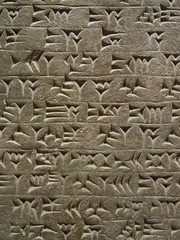
7255267926CuneiformA system of writing in which wedge-shaped symbols represented words or syllables. It originated in Mesopotamia and was used initially for Sumerian and Akkadian but later was adapted to represent other languages of western Asia. Because so many symbols had to be learned, literacy was confined to a relatively small group of administrators and scribes.8
7255270585DaoismChinese school of thought, originating in the Warring States Period with Laozi (604-531 B.C.E.). Daoism offered an alternative to the Confucian emphasis on hierarchy and duty. Daoists believe that the world is always changing and is devoid of absolute morality or meaning. They accept the world as they find it, avoid futile struggles, and deviate as little as possible from theDao, or "path of nature."9
7255274691DiasporaGreek word meaning "dispersal, used to describe the communities of a given ethnic group living outside their homeland. Jews, for example, spread from Israel to western Asia and Mediterranean lands in antiquity and today can be found throughout the world.10
7255277648ForagersPeople who support themselves by hunting wild animals and gathering wild edible plants and insects.11
7255281410HieroglyphicsA system of writing in which pictorial symbols represented sounds, syllables, or concepts. It was used for official and monumental inscriptions in ancient Egypt. Because of the long period of study required to master this system, literacy in hieroglyphics was confined to a relatively small group of scribes and administrators. Cursive symbol-forms were developed for rapid composition on other media, such as papyrus.12
7255284404IsraelIn antiquity, the land between the eastern shore of the Mediterranean and the Jordan River, occupied by the Israelites from the early second millennium B.C.E. The modern state of Israel was founded in 1948.13
7255288162Linear BA set of syllabic symbols, derived from the writing system of Minoan Crete, used in the Mycenaean palaces of the Late Bronze Age to write an early form of Greek. It was used primarily for palace records, and the surviving Linear B tablets provide substantial information about the economic organization of Mycenaean society and tantalizing clues about political, social, and religious institutions.14
7255292480LegalismIn China, a political philosophy that emphasized the unruliness of human nature and justified state coercion and control. The Qin ruling class invoked it to validate the authoritarian nature of their regime and its profligate expenditure of subjects' lives and labor. It was superseded in the Han era by a more benevolent Confucian doctrine of governmental moderation. "legitimate trade Exports from Africa in the nineteenth century that did not include the newly outlawed slave trade."15
7255296295Mandate of HeavenChinese religious and political ideology developed by the Zhou, according to which it was the prerogative of Heaven, the chief deity, to grant power to the ruler of China and to take away that power if the ruler failed to conduct himself justly and in the best interests of his subjects.16
7255298092MesoamericaA region and cultural area in the Americas, extending approximately from central Mexico to Belize, Guatemala, El Salvador, Honduras, Nicaragua, and northern Costa Rica17
7255303689MesopotamiaMesopotamia was a historical region situated within the Tigris-Euphrates river system, in modern days roughly corresponding to most of Iraq plus Kuwait, the eastern parts of Syria, Southeastern Turkey18
7255306226PhoeniciansSemitic-speaking Canaanites living on the coast of modern Lebanon and Syria in the first millennium B.C.E. From major cities such as Tyre and Sidon, Phoenician merchants and sailors explored the Mediterranean, engaged in widespread commerce, and founded Carthage and other colonies in the western Mediterranean.19
7255309590PolytheismThe belief in or worship of more than one god.20
7255314168Darius IThird ruler of the Persian Empire (r. 521-486 B.C.E.). He crushed the widespread initial resistance to his rule and gave all major government posts to Persians rather than to Medes. He established a system of provinces and tribute, began construction of Persepolis, and expanded Persian control in the east (Pakistan) and west (northern Greece).21
7255316958ZoroastrianismA religion originating in ancient Iran with the prophet Zoroaster. It centered on a single benevolent deity?Ahuramazda?who engaged in a twelve-thousand-year struggle with demonic forces before prevailing and restoring a pristine world. Emphasizing truth-telling, purity, and reverence for nature, the religion demanded that humans choose sides in the struggle between good and evil. Those whose good conduct indicated their support for Ahuramazda would be rewarded in the afterlife. Others would be punished. The religion of the Achaemenid and Sasanid Persians, Zoroastrianism may have spread within their realms and influenced Judaism, Christianity, and other faiths.22
7255318877HopliteA heavily armored Greek infantryman of the Archaic and Classical periods who fought in the close-packed phalanx formation. Hoplite armies?militias composed of middle- and upper-class citizens supplying their own equipment?were for centuries superior to all other military forces.23
7255321380DemocracySystem of government in which all "citizens (however defined) have equal political and legal rights, privileges, and protections, as in the Greek city-state of Athens in the fifth and fourth centuries B.C.E.24
7255325977HerodotusHeir to the technique of historia "investigation?developed by Greeks in the late Archaic period. He came from a Greek community in Anatolia and traveled extensively, collecting information in western Asia and the Mediterranean lands. He traced the antecedents of and chronicled the Persian Wars between the Greek city-states and the Persian Empire, thus originating the Western tradition of historical writing.25
7255329085Persian WarsConflicts between Greek city-states and the Persian Empire, ranging from the Ionian Revolt (499-494 B.C.E.) through Darius's punitive expedition that failed at Marathon (490 B.C.E.) and the defeat of Xerxes' massive invasion of Greece by the Spartan-led Hellenic League (480-479 B.C.E.). This first major setback for Persian arms launched the Greeks into their period of greatest cultural productivity. Herodotus chronicled these events in the first "history in the Western tradition.26
7255993603SocratesAthenian philosopher (ca. 470-399 B.C.E.) who shifted the emphasis of philosophical investigation from questions of natural science to ethics and human behavior. He attracted young disciples from elite families but made enemies by revealing the ignorance and pretensions of others, culminating in his trial and execution by the Athenian state.27
7255996461Hellenistic AgeHistorians' term for the era, usually dated 323-30 B.C.E., in which Greek culture spread across western Asia and northeastern Africa after the conquests of Alexander the Great. The period ended with the fall of the last major Hellenistic kingdom to Rome, but Greek cultural influence persisted until the spread of Islam in the seventh century C.E.28
7255999417AlexandriaCity on the Mediterranean coast of Egypt founded by Alexander. It became the capital of the Hellenistic kingdom of the Ptolemies. It contained the famous Library and the Museum?a center for leading scientific and literary figures. Its merchants engaged in trade with areas bordering the Mediterranean and the Indian Ocean.29
7256002525Alexander(356-323 B.C.E.) King of Macedonia in northern Greece. Between 334 and 323 B.C.E. he conquered the Persian Empire, reached the Indus Valley, founded many Greek-style cities, and spread Greek culture across the Middle East. Later known as Alexander the Great.30

Chapter 7, 8, & 9 Vocab AP World History Flashcards

Terms : Hide Images
7685839528Quanat(in the Middle East) a gently sloping underground channel or tunnel constructed to lead water from the interior of a hill to a village below.0
7685839529Persian WarsThe wars fought between Greece and Persia in the 5th century BC, in which the Persians sought to extend their territory over the Greek world.1
7685843925Alexander the Great356-323 b.c, king of Macedonia 336-323: conqueror of Greek city-states and of the Persian empire from Asia Minor and Egypt to India.2
7685847120Contributions of the Seleucid3
7685851332Parthian and Sasanid Empiresalso known as the Arsacid Empire, was a major Iranian political and cultural power in ancient Iran and Iraq. The sasanid empire is the name used for the Persian dynasty which lasted from 224 to 651 AD4
7685859392Satrapies and Satrapthe governor of a province in ancient Persia5
7685859393Zoroastrianisma monotheistic pre-Islamic religion of ancient Persia founded by Zoroaster in the 6th century BC.6
7685862467Zarathustraflourished 6th century b.c, Persian religious teacher.7
7685862468Gathasone of several groups of hymns (the Gathas) forming the oldest part of the Avesta.8
7685864569ConfuciusChinese philosopher and teacher.9
7685866793LaoziChinese philosopher: reputed founder of Taoism.10
7685895602analectsselected passages from the writings of an author or of different authors.11
7685895603Daoismalternative Romanization of Taoism12
7685898251Daodead on arrival.13
7685898252Wuwei(in philosophical Taoism) action accomplishing its purpose in accordance with the natures of things and events.14
7685901075Legalismthe principles and practices of a school of political theorists advocating strict legal control over all activities, a system of rewards and punishments uniform for all classes, and an absolute monarchy.15
7685903724Contributions of Qin Dynasty16
7685903725Terra cotta armymade of or having the color of terra cotta.17
7685907279Contributions of Han Dynast18
7685913350Han Wudii19
7685913351Filial Piety(in Confucianism) the important virtue and primary duty of respect, obedience, and care for one's parents and elderly family members.20
7685915655AryansEthnology. a member or descendant of the prehistoric people who spoke Indo-European.21
7685915656ArthashastraThe Arthashastra is an ancient Indian treatise on statecraft, economic policy and military strategy, written in Sanskrit.22
7685915698Asokadied 232 b.c, Buddhist king in India 269?-232? b.c.23
7685919224Edits of Asokaare a collection of 33 inscriptions on the Pillars of Ashoka as well as boulders and cave walls made by the Emperor Ashoka of the Mauryan Empire during his reign from 269 BCE to 232 BCE.24
7685924537Mauryan Dynasty contributions25
7685927437Gupta Dynasty contributionshe Gupta Empire stretched across northern, central and parts of southern India between c. 320 and 550 CE. The period is noted for its achievements in the arts, architecture, sciences, religion, and philosophy.26
7685930630caste systemthe rigid Hindu system of hereditary social distinctions based on castes.27
7685936603Mahabharata and Ramayanaan epic Sanskrit poem of India, dealing chiefly with the struggle between two rival families. It contains many separate episodes, the most notable of which is the Bhagavad-Gita.28
7685939747Jainism beliefsa belief in reincarnation which eventually leads to liberation its ascetic beliefs. Both these religions emphasis on non-violence, but in Jainism non-violence is its main core.29
7685943751Siddharthaan epithet of Buddha meaning "he who has attained his goal.".30
7685946765Gautamaalso known as Siddhārtha Gautama, Shakyamuni Buddha, or simply the Buddha, after the title of Buddha, was an ascetic and sage, on whose teachings Buddhism was founded also known as Siddhārtha Gautama, Shakyamuni Buddha, or simply the Buddha, after the title of Buddha, was an ascetic and sage, on whose teachings Buddhism was founded31
7685946766Buddhisma religion, originated in India by Buddha32
7685949487dharmathe teaching or religion of the Buddha.33
7685951687four noble truthshe four central beliefs containing the essence of Buddhist teaching.34
7685951688eightfold paththe path to nirvana, comprising eight aspects in which an aspirant must become practiced: right views, intention, speech, action, livelihood, effort, mindfulness, and concentration.35
7685955273Hinduisma major religious and cultural tradition of South Asia, developed from Vedic religion.36
7685955274Vishnuis one of the most important gods in the Hindu pantheon and, along with Brahma and Shiva, is considered a member of the holy trinity (trimurti) of Hinduism. He is the most important god of Vaishnaism, the largest Hindu sect.37

AP World History Chapter 4 Vocabulary Flashcards

Chapter 3 - Eurasian Empires
Chapter 4 - Eurasian Cultural Traditions

Terms : Hide Images
7391598348LegalismA Chinese philosophy distinguished by an adherence to clear laws with vigorous punishments.0
7391598349ConfucianismKong Fuzi founder. In china. Analects1
7391598350Ban ZhaoA major female Confucian author of Han dynasty China (45-116 C.E.) whose works give insight into the implication of Confucian thinking for women.2
7391598351DaoismA Chinese philosophy/popular religion that advocates simplicity and understanding of the world of nature, founded by the legendary figure Laozi.3
7391598353VedasThe earliest religious texts of India, a collection of ancient poems, hymns, and rituals that were transmitted orally before being written down ca. 600 B.C.E.4
7391598352UpanishadsIndian mystical and philosophical works, written between 800 and 400 B.C.E.5
7391598357Siddhartha Gautama (the Buddha)The Indian prince who turned ascetic (ca. 566-486 B.C.E.) who founded Buddhism.6
7391598360Bhagavad GitaA great Hindu epic text, part of the much larger Mahabharata, which affirms the performance of caste duties as a path to religious liberation.7
7391598361ZoroastrianismPersian monotheistic religion founded by the prophet Zarathustra.8
7391598363JudaismThe monotheistic religion developed by the Hebrews, emphasizing a sole personal god (Yahweh/YHWH) with concerns with social justice.9
7391598365Greek rationalismA secularizing system of scientific and philosophic thought that developed in Classical Greece in the period 600 to 300 B.C.E.; it emphasized the power of education and human reason to understand the world in nonreligious terms.10
7391598355Theravada/Mahayana1.) "The Teaching of the Elders," the early form of Buddhism according to which the Buddha was a wise teacher but not divine and which emphasizes practices rather than beliefs. 2.) "Great Vehicle," the popular development of Buddhism in the early centuries of the Common Era, which gives a much greater role to supernatural beings and proved to be more popular than original (Theravada) Buddhism.11
7391598367Socrates, Plato, AristotleThe first great Greek philosopher to turn rationalism toward questions of human existence (469-399 B.C.E.)///A disciple of Socrates whose Dialogues convey the teachings of his master while going beyond them to express Plato's own philosophy; lived from 429 to 348 B.C.E./// A Greek polymath philosopher (384-322 B.C.E.); student of Plato and teacher of Alexander the Great.12
7391598370Jesus of NazarethThe prophet/god of Christianity (ca. 4 B.C.E.-30 B.C.E.).13
7391598369Saint PaulThe first great popularize of Christianity (10-65 C.E.)14
7391598373Church of the EastPlanted churches in Syria and Persia that were distinct in theology and practice from the Roman Church15
7391598374PerpetuaChristian martyr (one who was killed for their beliefs) from Carthage. Educated and wealthy, she died being fed to leopards.16

AP WORLD HISTORY CH 15 Flashcards

AP World History, "Ways of The World" Second Thoughts column.

Terms : Hide Images
8629642147Indian Ocean commercial networkThe massive web of commerce in the premodern times between the lands that bordered the Indian Ocean0
8629642148trading post empireForm of imperial dominance based on control of trade rather than on control of subject peoples.1
8629642149Philippines (Spanish)Spainish influence on the Philippines with Christianity and including the state into the Pacific Web2
8629642150British/Dutch East India CompaniesAimed to monopolize the spice trade. Made Taiwan become ethically Chinese. Private companies to raise money trading monopolies.3
8629642151Tokugawa ShogunateJapanese ruling dynasty that strove to isolate it from foreign influences4
8629642152Silver DrainEvent in which almost all silver extracted from Americas was sent to Asia on Manilla Galleons. Where most ended up in China.5
8629642153PotosíA rich silver mine in Bolivia that enriched Spain with lots of wealth.6
8629642154Soft GoldNickname for animal furs due to their high value, primarily from Russia7
8629642155African DiasporaName given to the spread of African peoples across the Atlantic via the slave trade. Spread a new culture to the Americasz8
8629642156Benin KingdomThis ancient African society was famous for its bronze statues of the oba, or king. Avoided Slave Trade9
8629642157DahomeyWest African kingdom that became strong through its rulers' exploitation of the slave trade.10

AP World History: Ancient Greece (Unit 2) Flashcards

Terms : Hide Images
7014169722What was the Geography of Ancient Greece?Mild climate, mountainous, fertile plains, many harbors0
7014175942Why cause Greece to be split into different city states?Mountainous topography1
7014179771What made Sparta self-reliant?Agriculture2
7014185724What were Spartans known as being? What does this mean?Militaristic meaning glorification of the military and a constant readiness for war3
7014194880What did Sparta's government look like?Oligarchy. Had 2 kings and a council of elders.4
7014198564What was the council of elders in Sparta? Who did they consist of?28 members aged 60 and above5
7014209967What did Sparta discourage? What did Sparta value?Knowledge (philosophy). Valued physical strength6

Ap world history cram Flashcards

Terms : Hide Images
8297483412The world became truly globalThe western hemisphere came into continued contact with the eastern hemisphere. Technological innovations, strengthened political organization, and economic prosperity all contributed to this change that completely altered world trade patterns0
8297489036Maritime trade dominated the worldTechnological advancements and willingness of political leaders to invest in it meant that sea-based trade became much more important. As a result, old land-based empires lost relative power to the new sea-based powers.1
8297494728European kingdoms gained world powerThe relative power and prosperity of Europe increased dramatically during this time in comparison to empires in the longer- established civilization areas.2
8297508589Nomads began to become a thing of a pastNomads continued to play an important role in trade and cultural diffusion, and they continued to threaten the borders of the large land based empires. However, their power dwindled as travel and trade by water became more important.3
8297515879Labor systems were transformedThe acquisition of colonies in North and South America led to major changed in labor systems. After many Amerindians died from disease transmitted by contact with Europeans, a vigorous slave trade from Africa began and continued through out most of the era. Slave labor became very important all over the Americas. Other labor systems, such as the mita and encomienda in South America , were adapted from previous native traditions by the Spanish and Portuguese4
8297525366"gunpowder empires" emerged in the Middle East and AsiaEmpires in older civilization areas gained new strength from new technologies in weaponry. Basing their new power on "gunpowder," they still suffered from the old issues that had plagued land- based empires for centuries: defense of borders, communication within the empire, and maintenance of an army adequate to defend the large territory. By the end of the era, many were less powerful than the new sea-based kingdoms of Europe.5
8297528492Ottoman EmpireFounded by Osman, included a collection of Turkish tribes from Asia Minor. In 1453 they conquered Constantinople and ended the Byzantine empire. From Constantinople they launched raids into the Balkans of Europe.6
8318726433Ottoman EmpireUnder Suleiman the magnificent, they controlled land on three continents. They took land from Baghdad to Belgrade and laid siege to Vienna. The siege was a turning point in their expansion and European unity to fight Muslim invaders7
8318768552Ottoman EmpireThey used an extensive civil service and bureaucracy, they maintained a large multi ethnic empire for 600 years. The sultan was an absolute ruler; however,he allowed for petition from the people. Their wealth came form the control of the Dardanelles and Black sea.8
8318825755Ottoman EmpireGreat army of mounted and foot soldiers; made use of janissaries, Balkan Christians captured as boys who became skilled soldiers. Slaves were used for labor.9
8318881506Ottoman empireMost Turks were Sunni; however, Orthodox Christians and Jews also made up seizable portions of the empire. The empire was culturally diverse largely due to trade connections and diversity of lands governed. The merchant class was important.10
8318929980Ottoman empirewomen had more equality than other areas, including the right to own property11
8297548954Mughal empire- Continuation of the Delhi sultanate- descendants of the mongol invaders -land included modern day India, Pakistan, and Afghanistan -strong military required high taxes12
8319006405Mughal empire- Military service was rewarded with land grants- upset regional ruler -Muslim authority over Hindus; Akbar married a a Hindu women in the hope of reconciling with the majority Hindu population - There was limited trade13
8297570428The Ming14
8297579545Pirates (Ming decline)A sea-based trade became more and more important, the number of them also increased in the Chinese seas, just as they did in the Americas. They were both Chinese and Japanese, and they lay in wait for ships going in and out of ports.15
8297575967Climate change (Ming decline)A broad change of climate swept from Europe to China during the 1600s, with the weather turning much colder. This change seriously affected agriculture and health, and also contributed to serious famine across china. These conditions led frustrated peasants to frequent rebellion.16
8297606845The Early Qing Dynasty17
8297579544Nomadic invasions (Ming decline)The 1500s saw the reemergence of the mongols as a regional power, this time with the help and support of Tibet. In gratitude, the mongols bestowed the Tibetan leader with the title of Dalai Lama, or "universal teacher" of Tibetan Buddhism. The Japanese also attacked Korea, a Chinese tributary state, requiring Ming armies to defend the area.18
8297638789Manchus19
8297592262Decline of the Silk Road (Ming decline)After so many centuries, the famed silk road trade finally fell into decline during this era. New technologies and European control meant that more and more trade was conducted by water, and land-based trade decreased.20
8297597762Inept rulers (Ming decline)The last emperors lived in luxury in the forbidden city, and had little to do with governing the empire. For example, the last emperor was so disengaged that he did not know that he was under attack until the enemy literally was climbing over the palace walls.21
8297648872Golden age22
8297672271Chinese contact with Europeans23
8297697305Cultural and intellectual life in China- Based upon Chinese traditions - Neo-Confucianism - Civil service Exams - Printing press increased the number of books, including novels which confusion scholars condemned24
8297697306Kongo (African empire)- African merchant princes connected to Atlantic trade network economy - Women traders used marriage to European merchants to ensure power - set up trade with Portuguese -Converted to Christianity - Became a major center of the slave trade25
8297738142Songhai (African empire)- Trade city controlled salt, gold, and copper - was once controlled by Mali - Sunni Ali was the leader who brought Timbuktu and other trading cities under his control - Lacked gunpowder; was defeated by Moroccan forces in 1591 difficult to find evidence.26
8297761919European empiresPortugal, Spain, England, France27
8297702664Benin (African empire)- Trade economy - palace in walled city - skilled in bronze work28
8297761920PortugalPower came from exploration and colonization; important in the early salve trade; first set up trading centers along Africa's coast and to trade directly with India and China through maritime trade.29
8297767761SpainUnified by the marriage of Isabella and Ferdinand; wealth came from exploration and colonization; expelled Muslims and Jews; Inquisition; Spanish control of Latin America; decimation of the Native Americas; beginning of American salve trade.30
8297771078Englandpower from trade and colonization; mercantilism- economic system where the "mother country" has colonies and restricts them to trade only with the mother; long history of constitutionalism- power to parliament and limited monarchy; King Henry VII and Queen Elizabeth ring England to its height in power and prestige.31
8297789300FrancePower from trade and colonization; Louis XIV highlighted the system of absolutism- total power to the monarchy; controlled nobles by having them live at Versailles.32
8337099853Patterns of social and gender change- Major cities included Paris, London, and Amsterdam - Rise of middle class emerges -Rising gap between poor and everyone else -marriages took place later in life; less likely to be arranged, more freedom for women - more women became educated -Renaissance brought a new age of art and literature to Europe -Reformation brought an end to unified European catholicism33
8337391471Russia34
8297836315Exploration and Colonization of the Americas35
8297854596Major changes and results from the interaction between European and Native Americans(columbian Exchange)diseases, Animals, crops36
8297861424Diseasessmall pox, tuberculosis, measles, and influenza attacked the native Americans who did not have the immune systems to fight exposure; Europeans contracted a more deadly form of syphilis37
8297861425Animalspigs, cows, and horses were taken to the Americas leading to an increase in transportation and food stuff38
8297872489CropsNative American crops of corn, squash, beans, tomatoes, potatoes, and chilies led to a population increase in Europe.39
8297884054A rise in the population of EuropeEurope's population had been decimated bu the 14th century plague epidemic, so during the 15th and 16th centuries, population levels were growing to match previous levels.40
8297893046A decrease in the population of the Americas41
8297902523No overall population decrease occurred in Africa42
8297916880Between 1000 and 1700 C., the population of Asia43
8297935629Colombian Exchange44
8318378581Major environmental changes occurred in the New World in two major wayssoil exhaustion and deforestation45
8318381623soil exhaustion46
8318393884Deforestation47
8318395969Scientific revolution- Copernicus, Galileo, Francis Bacon, William Harvey - World could be explained through natural laws rather than superstition - sun was the center of the universe - It happened throughout Europe and American colonies48
8318397780The enlightenment-John Locke, Jean-Jacques, Rousseau, Thomas, Hobbes, Voltaire -Natural rights- life, liberty and property - Right of people to overthrow government -freedom of speech, press, and religion -Throughout European and American colonies49
8318406946Neoconfucianism- Zhu Xi -combined elements of Buddhism and Daoism to make Confucianism more accessible for less literate Chinese - happened in china, Korea, and Japan50
8318412238Major developments and exchanges in the arts- Italian Renaissance paintings, Mughal miniature paintings, and Taj Mahal - celebration of beauty focus on individual achievement - Europe and its colonies plus south asia51
8318432360Diverse Interpretations- what are the debates about the timings and extent of European predominance in the world economy?The first argument is that Europe was visionary in thinking and that a few greats, such as Prince Henry the Navigator and Sir Isaac Newton spurred others on. The idea was that a "great man" such as one just mentioned caused Europe to be great.52
8337897437Diverse InterpretationsThe second argument is that European culture caused Europe to ultimately dominate the world. From the Renaissance, Europeans developed the idea that life on earth was to be enjoyed and dominated.53
8337897438Diverse interpretationsThe third theory is economic. Europe needed markets and resources, so they went and got them.54
8337905092Diverse interpretatationsA final theory is that political theory was the driving force for Europe dominating the world. Monarchs needed monarchs to finance wars and increase their power.55

AP World History- SAQ Flashcards

Terms : Hide Images
9357396573Vladimir Lenin-Economiche introduced the New Economic Policy which included return of most agriculture, retail trade, and small-scale light industry to private ownership and management while the state retained control of heavy industry, transport, banking, and foreign trade0
9357413496Vladimir Lenin-Politicalbelieved in legal system/ wanted to replace the government of the capitalist class with the rule of the working people, had secret police working for him1
9357480303Vladimir Lenin-Workersbelieved workers should take over government to run the other classes of workers since they were the most politically advanced class2
9357496171Joseph Stalin-Economicbuilt a society of peasants to an industrial and military superpower with the First Five Year Plan3
9357525043Joseph Stalin-Politicalwas a dictator over the Soviet Union4
9357572766Mao Zedong-Economicviewed peasants as dirty and ignorant,5
9357660170Mao Zedong-Politicalrelied on the army for support in conflicts in his party, later changed his view on peasants to be a political power in a revolution,6

Pages

Subscribe to CourseNotes RSS

Need Help?

We hope your visit has been a productive one. If you're having any problems, or would like to give some feedback, we'd love to hear from you.

For general help, questions, and suggestions, try our dedicated support forums.

If you need to contact the Course-Notes.Org web experience team, please use our contact form.

Need Notes?

While we strive to provide the most comprehensive notes for as many high school textbooks as possible, there are certainly going to be some that we miss. Drop us a note and let us know which textbooks you need. Be sure to include which edition of the textbook you are using! If we see enough demand, we'll do whatever we can to get those notes up on the site for you!