

Coral Facts & Figures Flashcards
Terms : Hide Images
| 7326332839 | Percent of world's reefs that are threatened | 75% | 0 | |
| 7326334774 | Percent of marine life that depends on reefs | 25% | 1 | |
| 7326336303 | Number of people that depend on coral reefs for food and income | 275 million | 2 | |
| 7326341847 | Number of countries that have coral reefs | 109 countries | 3 | |
| 7326345054 | Percent of world's coral reefs that have already been lost | 27% | 4 | |
| 7326347543 | Economic value that coral reefs provide | $375 billion in goods and services | 5 | |
| 7326356988 | Percent of the world's surface that coral reefs cover | 0.1% | 6 | |
| 7326359428 | Estimated number of species living in and around coral reefs | 1 to 8 million | 7 | |
| 7326361774 | Number of zooxanthallate reef-building coral species | 875 | 8 | |
| 7326366849 | Number of countries in which people have significantly damaged or destroyed reefs | 93 | 9 | |
| 7326370187 | World's most economically valuable natural asset | Coral reefs | 10 |
Flashcards
Chapter 2 - AP Biology Flashcards
Terms : Hide Images
| 7332840871 | Matter | anything that takes up space and has mass |  | 0 |
| 7332840872 | Element | any substance that cannot be broken down to any other substance |  | 1 |
| 7332840873 | Compound | a substance consisting of two or more elements in a fixed ratio |  | 2 |
| 7332840874 | Trace Elements | an element indispensable for life but required in extremely minute amounts | 3 | |
| 7332840875 | Atom | the smallest unit of matter that retains the properties of an element |  | 4 |
| 7332840876 | Neutron | an electrically neutral particle (a particle having no electrical charge), found in the nucleus of an atom |  | 5 |
| 7332840877 | Electron | a subatomic particle with a single negative charge; one or more electrons move around the nucleus of an atom | | 6 |
| 7332840878 | Proton | a subatomic particle with a single positive electrical charge, found in the nucleus of an atom | | 7 |
| 7332840879 | Atomic Nucleus | an atom's central core, containing protons and neutrons |  | 8 |
| 7332840880 | Atomic Number | the number of protons in the nucleus of an atom, unique for each element and designated by a subscript to the left of the elemental symbol |  | 9 |
| 7332840881 | Atomic Mass; Atomic Weight | the total mass of an atom, which is the mass in grams of one mole of the atom | | 10 |
| 7332840882 | Mass Number | the sum of the number of protons and neutrons in an atom's nucleus | | 11 |
| 7332840883 | Dalton | a measure of mass for atoms and subatomic particles | 12 | |
| 7332840884 | Isotope | one of several atomic forms of an element, each containing a different number of neutrons and thus differing in atomic mass | 13 | |
| 7332840885 | Radioactive Isotope | an isotope that is unstable; the nucleus decays spontaneously, giving off detectable particles and energy | 14 | |
| 7332840886 | Energy | the capacity to do work (to move matter against an opposing force) | 15 | |
| 7332840887 | Energy Levels | the different states of potential energy for electrons in an atom | 16 | |
| 7332840888 | Potential Energy | the energy stored by matter as a result of its location or spatial arrangement |  | 17 |
| 7332840889 | Electron Shell | an energy level representing the distance of an electron from the nucleus of an atom | 18 | |
| 7332840890 | Valence Shell | the outermost energy shell of an atom, containing the valence electrons involved in the chemical reactions of that atom | 19 | |
| 7332840891 | Valence Electrons | the electrons in the outermost electron shell | 20 | |
| 7332840892 | Orbital | the three-dimensional space where an electron is found 90% of the time | 21 | |
| 7332840893 | Molecule | two or more atoms held together by covalent bonds | 22 | |
| 7332840894 | Single Bond | a chemical bond in which one pair of electrons is shared between two atoms |  | 23 |
| 7332840895 | Chemical Bond | an attraction between two atoms resulting from a sharing of outer-shell electrons or the presence of opposite charges on the atoms; the bonded atoms gain complete outer electron shells |  | 24 |
| 7332840896 | Double Bond | a chemical bond in which two pairs of electrons are shared between two atoms |  | 25 |
| 7332840897 | Nonpolar Covalent Bond | a chemical bond in which two pairs of electrons are shared between two atoms |  | 26 |
| 7332840898 | Polar Covalent Bond | the shared electrons are pulled closer to the more electronegative atom, making it slightly negative and the other atom slightly positive |  | 27 |
| 7332840899 | Valence | the bonding capacity of an atom generally equal to the number of unpaired electrons in the atom's outermost shell | 28 | |
| 7332840900 | Electronegativity | the attraction of an atom for the electrons of a covalent bond | 29 | |
| 7332840901 | Cation | an ion with a positive charge, produced by the loss of one or more electrons | 30 | |
| 7332840902 | Anion | a negatively charged ion | 31 | |
| 7332840903 | Ion | an atom that has gained or lost electrons, thus acquiring a charge | 32 | |
| 7332840904 | Ionic Bond | a chemical bond resulting from the attraction between oppositely charged ions | 33 | |
| 7332840905 | Ionic Compound | compounds resulting from the formation of ionic bonds; a salt | 34 | |
| 7332840906 | Hydrogen Bond | a type of weak chemical bond formed when the slightly positive hydrogen atom of a polar covalent bond in one molecule is attracted to the slightly negative atom of a polar covalent bond in another molecule | 35 | |
| 7332840907 | Structural Formula | a type of molecular notation in which the constituent atoms are joined by lines representing covalent bonds | 36 | |
| 7332840908 | Molecular Formula | a type of molecular notation indicating only the quantity of the constituent atoms | 37 | |
| 7332840909 | van der Waals interactions | weak attractions between molecules or parts of molecules that are brought about by localized charge fluctuations | 38 | |
| 7332840910 | Chemical Reactions | a process leading to chemical changes in matter; involves the making and/or breaking of chemical bonds | 39 | |
| 7332840911 | Reactant | a starting material in a chemical reaction | 40 | |
| 7332840912 | Product | an ending material in a chemical reaction | 41 | |
| 7332840913 | Chemical Equilibrium | in a reverse chemical reaction, the point at which the rate of the forward reaction equals the rate of the reverse reaction | 42 |
AP Government - Chapter 7 Flashcards
Terms : Hide Images
| 6682624919 | high-tech politics | a politics in which the behavior of citizens and policymakers and the political agenda itself are increasingly shaped by technology | 0 | |
| 6682624920 | mass media | television, radio, newspapers, magazines, the Internet, and other means of popular communication | 1 | |
| 6682624921 | media events | events purposely staged for the media that nonetheless look spontaneous. In keeping with politics as theater, media events can be staged by individuals, groups, and government officials, especially presidents. *effective communication through media is key to political success* | 2 | |
| 6682624922 | press conference | meetings of public officials with reporters | 3 | |
| 6682624923 | investigative journalism | the use of in-depth reporting to unearth scandals, scams, and schemes, at times putting reporters in adversarial relationships with political leaders | 4 | |
| 6682624924 | print media | newspapers and magazines | 5 | |
| 6682624925 | broadcast media | television and radio | 6 | |
| 6682624926 | narrowcasting | media programming on cable TV or the internet that is focused on one topic and aimed at a particular audience. (Ex: MTV, ESPN, C-SPAN) | 7 | |
| 6682624927 | chains | newspapers published by massive media conglomerates that account for over four-fifths of the nation's daily newspaper circulation. (often control broadcast media) | 8 | |
| 6682624928 | beats | specific locations from which news frequently emanates, such as Congress or the White House. Most reporters work at a particular beat, thereby becoming specialists on what goes on at that location | 9 | |
| 6682624929 | trial balloons | an intentional news leak for the purpose of assessing political reaction | 10 | |
| 6682624930 | sound bites | short video clips of approximately 10 seconds. (typically they are all that is shown from a politician's speech on the nightly television news) | 11 | |
| 6682624931 | talking head | a shot of a person's face talking directly to the camera (the media rarely shows a politician talking one on one with someone, it's not appealing to the audience) | 12 | |
| 6682624932 | policy agenda | the issues that attract the serious attention of public officials and other people actively involved in politics at the time | 13 | |
| 6682624933 | policy entrepreneurs | people who invest their political "capital" in an issue | 14 | |
| 6682624934 | Richard Nixon | those who listened to the 1960 presidential debate thought _____ had won | 15 | |
| 6682624935 | Lyndon Johnson | president who used the media to convince the American people that they were winning the Vietnam War | 16 | |
| 6682624936 | John Kennedy | those who watched the 1960 presidential debate thought _______ had won | 17 | |
| 6682624939 | key linkage institution | The media can be seen as a ___ _______ ___________ between the people and the government. | 18 |
AP Vocab 8 Flashcards
Terms : Hide Images
| 8695978100 | Assiduous | (adj.) persistent, attentive, diligent | 0 | |
| 8695978101 | Compelling | Forceful; urgently demanding attention | 1 | |
| 8695978102 | Diligent | Hard-working and careful | 2 | |
| 8695978103 | Dogged | Stubbornly persevering | 3 | |
| 8695978104 | Endure | To carry on through despite hardships; to put up with | 4 | |
| 8695978105 | Intrepid | Very brave, fearless, unshakable | 5 | |
| 8695978106 | Maverick | One who is independent and resists adherence to a group | 6 | |
| 8695978107 | Obdurate | stubbornly refusing to change one's opinion or course of action | 7 | |
| 8695978108 | Obstinate | (adj) stubborn or hard to control | 8 | |
| 8695978109 | Proliferate | To reproduce, increase, or spread rapidly | 9 |
Renewable Energy Flashcards
Terms : Hide Images
| 7198223587 | solar energy | sunlight that is converted into usable renewable energy |  | 0 |
| 7198223588 | hydroelectric energy | renewable energy obtained from the movement of flowing water |  | 1 |
| 7198223589 | geothermal energy | renewable energy derived from the heat in the interior of the earth |  | 2 |
| 7198223590 | wind energy | renewable energy captured by transforming the motion of air into electrical energy using a turbine | 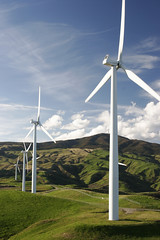 | 3 |
| 7198223591 | biomass energy | energy created through the burning of biological materials, such as wood |  | 4 |
| 7198223592 | tidal energy | renewable energy produced by the rise and fall of ocean levels; used to generate electricity |  | 5 |
| 7198223593 | energy conservation | the practice of finding ways to use less energy or to use energy more efficiently | 6 | |
| 7198223594 | efficiency | the percentage of energy that is actually used to perform work | 7 | |
| 7198223595 | insulation | building material that blocks heat transfer between air inside and the air outside |  | 8 |
| 7198223596 | renewable energy | a resource that has a theoretically unlimited supply and is not depleted when used by humans. |  | 9 |
| 7198223597 | nonrenewable energy | a source of energy that has a finite supply capable of being exhausted. | 10 | |
| 7198223598 | fossil fuels | coal, oil, natural gas, and other fuels that are ancient remains of plants and animals. |  | 11 |
AP Flashcards
Terms : Hide Images
| 8739388922 | Deductive | Characterized by reasoning that cites a specific isntance to draw a larger or more general conclusion | 0 | |
| 8739388923 | Evidence | Information used to strengthen or prove a writer's desired conclusion | 1 | |
| 8739388924 | Ethos | The element of an author's distinctive character in his or her work conned to the audience in the way he or she values evidence and foresees potential objections by that audience | 2 | |
| 8739388925 | Ideas or statements | Claims | 3 | |
| 8739388926 | Inductive | Characterized by reasoning which arrives at a conclusion dependent on a major premise | 4 | |
| 8739388927 | Voice | The unique identity that emerges from an individual's inflections, content, and purpose | 5 | |
| 8739388928 | Pathos | The element of emotion in an author's work | 6 | |
| 8739388929 | Primary sources | Material that stems directly from the time or event to which it pertains. | 7 | |
| 8739388930 | Logos | The element of rational argument in an author's work | 8 | |
| 8739388931 | Patterns of Inquiry | Methods used to simulate thought about and convey a topic | 9 | |
| 8739388932 | Equanimity | Composure, level head ness or rationally. | 10 | |
| 8739388933 | Ethos | The element of an author;s distinctive character in his or her work, conveyed to the audience in the way he or she values evidence and foresees potential objections | 11 | |
| 8739388934 | Concession | An acknowledgment of weakness, fault, or complication existing in one's own stance or p o v . | 12 | |
| 8739452075 | Persona | An identity or character | 13 | |
| 8739452076 | Fallacy | An error in reasoning that leads to a false conclusion | 14 | |
| 8739452078 | Rhetoric | Communication aimed to persuade an audience of the validity of a particular point or idea. | 15 | |
| 8739452077 | Faulty reasoning | Analysis that is not logical because of various inherent flaws | 16 | |
| 8739497580 | Pathos | The element of emotion in an author's work | 17 | |
| 8739497581 | Empathy | The quality of understanding other's vies and why they hold them | 18 | |
| 8739497582 | Logos | The elements of rational argument in an author's work | 19 |
AP Government Court Cases Flashcards
Terms : Hide Images
| 9603020268 | Engel v Vitale | First Amendment/Establishment Clause - Government-directed prayer in public schools violates the Establishment Clause of the First Amendment, even if the prayer is denominationally neutral and students may remain silent or be excused from the classroom during its recitation. |  | 0 |
| 9603020269 | Lemon v Kurtzman | Parochial schools must be private schools. They cannot be publicly funded via state law. Lemon Test: 1. The statute must have a secular legislative purpose. (Also known as the Purpose Prong) 2. The principal or primary effect of the statute must not advance nor inhibit religion. (Also known as the Effect Prong) 3. The statute must not result in an "excessive government entanglement" with religion. (Also known as the Entanglement Prong) |  | 1 |
| 9603020270 | Reynolds v U.S. | First Amendment/Free Exercise Clause - the statute can punish criminal activity without regard to religious belief. The First Amendment protected religious belief, but it did not protect religious practices that were judged to be criminal such as bigamy. Those who practice polygamy could no more be exempt from the law than those who may wish to practice human sacrifice as part of their religious belief. |  | 2 |
| 9603020271 | Baker v. Carr | 1962 in Tennessee, federal government has the ability to intervene in a state's redistricting to ensure fairness because redistricting is not just a political question |  | 3 |
| 9603020272 | NY Times v. U.S. | First Amendment/Freedom of the Press - New York Times and Washington Post could print the Pentagon Papers without risk of government censorship or punishment | 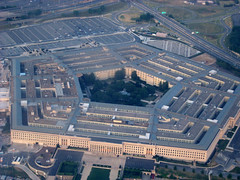 | 4 |
| 9603020273 | Schenck v. U.S. | First Amendment/Freedom of Speech/non-protected - The circulars urged "Do not submit to intimidation" but advised only peaceful action such as petitioning to repeal the Conscription Act. Schenck was charged with conspiracy to violate the Espionage Act by attempting to cause insubordination in the military and to obstruct recruitment. During wartime, utterances tolerable in peacetime can be punished. Clear and present danger test. |  | 5 |
| 9603020274 | Gitlow v. New York | First Amendment/Freedom of Speech/non-protected - the government may suppress or punish speech that directly advocates the unlawful overthrow of the government and it upheld the constitutionality of the state statute at issue, which made it a crime to advocate the duty, need, or appropriateness of overthrowing government by force or violence, selective incorporation of 14th amendment. |  | 6 |
| 9603020275 | Buckley v. Valeo | First Amendment/Freedom of Speech/protected - campaign finance - upheld federal limits on campaign spending and identified spending money to influence elections is a form of free speech |  | 7 |
| 9603020276 | Tinker v. Des Moines | First Amendment/Freedom of Speech/symbolic speech - students' wearing of armbands in support of Vietnam truce did not interrupt school activities, pure speech |  | 8 |
| 9603020277 | U.S. v. Lopez | Second Amendment - gun laws about schools not related to interstate commerce and not under federal authority |  | 9 |
| 9603020278 | Mapp v. Ohio | Fourth Amendment/Exclusionary Rule - evidence taken in unreasonable searches and seizures may not be used in court. |  | 10 |
| 9603020279 | Miranda v. Arizona | Fifth and Sixth Amendment - unless the accused is notified of the reason for their arrest, the ability to consult with an attorney, the ability to not self-incriminate their testimony is not permissible in court. |  | 11 |
| 9603020280 | Korematsu v. U.S. | Fifth and Sixth Amendment - internment of Japanese-Americans during WWII was Constitutional, justified during times of emergency and peril |  | 12 |
| 9603020281 | Griswold v. Connecticut | Ninth Amendment - state ban on use of contraceptives violates the right of marital privacy |  | 13 |
| 9603020282 | Roe v. Wade | Ninth & Fourteenth Amendments/privacy Abortion is a private matter |  | 14 |
| 9603020283 | Plessy v. Ferguson | Fourteenth Amendment/Separate is Equal - ruled that railway cars provided were essentially equal so no violation of equal protection. |  | 15 |
| 9603020284 | Brown v. Board of Education | Fourteenth Amendment/Separate not Equal - Integration of Schools - racial segregation violates the equal protection clause |  | 16 |
| 9603020285 | Regents of California v. Bakke | Fourteenth Amendment/Upheld Affirmative Action - race may be one of several factors in college admission policies. |  | 17 |
| 9603020286 | Marbury v. Madison | Establishes the Supreme Court as having the power of Judicial Review/interpret the Constitution |  | 18 |
| 9603020287 | McCulloch v. Maryland | Implied powers under the Necessary and Proper Clause - Creation of the bank was implied based upon the enumerated power of Congress to tax. State of Maryland could not tax federal bank due to Supremacy Clause |  | 19 |
| 9603020288 | Gibbons v. Ogden | Supreme Court of the United States held that the power to regulate interstate commerce, granted to Congress by the Commerce Clause of the United States Constitution, encompassed the power to regulate navigation |  | 20 |
| 9603020289 | Shaw v. Reno | 1993 case in NC with majority-minority districts, court ruled it was an example of racial gerrymandering and thus these districts were unconstitutional. The case was a problem of reverse discrimination. (Redistricting cannot be based on race!) |  | 21 |
| 9603020290 | New York times v. Sullivan | 1964 - public official may not win a libel suit unless they can prove the statement was made knowing to be false or with reckless disregard of its truth |  | 22 |
| 9603020291 | Texas v. Johnson | A 1989 case in which the Supreme Court struck down a law banning the burning of the American flag on the grounds that such action was symbolic speech protected by the First Amendment. |  | 23 |
| 9603020292 | Barron v. Baltimore | Ruled that the Bill of Rights cannot be applied to the states. (Before selective incorporation and the 14th amendment) |  | 24 |
| 9603020293 | Gideon v. Wainwright | A landmark case in United States Supreme Court history. In the case, the Supreme Court unanimously ruled that state courts are required under the Sixth Amendment of the Constitution to provide counsel in criminal cases for defendants unable to afford their own attorneys. |  | 25 |
| 9603020294 | Obergefell v. Hodges | Upholds same sex marriage via 14th amendment equal protection clause |  | 26 |
| 9603020295 | Wisconsin v. Yoder | Compelling Amish students to attend school past the 8th grade violates the free exercise clause of Amendment I |  | 27 |
| 9603020296 | McDonald v. Chicago | Held that the 14th Amendment allows for the 2nd Amendment to be applied to the states and citizens have the right to bear arms. |  | 28 |
| 9603020297 | Citizens United v. FEC | Political spending by corporations and unions is a form of Constitutionally-protected free speech |  | 29 |
| 9603020298 | Near v. MN | the press is protected from prior restraint in accordance with the press clause of the First Amendment | 30 |
Ap Biology Chapter 16 Flashcards
Terms : Hide Images
| 6020014298 | Transformation | A change in genotype and phenotype due to assimilation of foreign DNA | 0 | |
| 6020020655 | Bacteriophages | Viruses that infect bacteria | 1 | |
| 6020022695 | Phosphorus | The element that DNA contains | 2 | |
| 6020027355 | Sulfur | The element that proteins contain | 3 | |
| 6020032531 | Semi-conservative model | Predicts that when a double helix replicates, each daughter molecule will have one strand and one newly made strand | 4 | |
| 6020039892 | Replication fork | A Y-shaped region where new DNA strands are elongated | 5 | |
| 6020046057 | Helicases | Enzymes that untwist the double helix at the replication forks | 6 | |
| 6020051906 | Single strand binding protein | Binds to and stabilizes single-stranded DNA until it can be used as a template | 7 | |
| 6020102144 | Topoisomerase | Corrects over-winding ahead of replication forks by breaking, swiveling, and rejoining DNA strands | 8 | |
| 6020114222 | Primase | Synthesizes an RNA primer at the 5' end of the leading strand and of each Okazaki fragment of the lagging strand | 9 | |
| 6020122082 | DNA polymerase | Enzymes that catalyze the elongation of new DNA at a replication fork | 10 | |
| 6020134750 | Pyrophosphate | Two phosphate groups that are lost as each monomer of dATP joins the DNA | 11 | |
| 6020144469 | Leading strand | The strand that is continuously synthesized by DNA polymerase along one template strand of DNA | 12 | |
| 6020180805 | Lagging strand | The strand that is synthesized in a series of segments and has DNA polymerase working away from the replication fork | 13 | |
| 6020203621 | Okazaki strands | The series of short segments on the lagging strand that must be joined together by DNA ligase | 14 | |
| 6020219605 | DNA ligase | Joins the 3' end of DNA, that replaces primer, to the rest of the leading strand and joins the Okazaki fragments of the lagging strand | 15 | |
| 6020222548 | Mismatch fragments | Repair enzymes correct enzymes correct errors in base pairing of DNA | 16 | |
| 6020232777 | Nucleotide excision repair | A nuclease cuts out and replaces damaged stretches of DNA | 17 | |
| 6020282763 | DNA pol 1 | Removes RNA nucleotides of the primer from the 5' end and replaces them with DNA nucleotides | 18 | |
| 6020389366 | DNA pol III | Using parental DNA as a template, this synthesizes a new DNA strand by covalently adding nucleotides to the 3' end of a pre-existing DNA strand or primer | 19 |
Pages

Need Help?
We hope your visit has been a productive one. If you're having any problems, or would like to give some feedback, we'd love to hear from you.
For general help, questions, and suggestions, try our dedicated support forums.
If you need to contact the Course-Notes.Org web experience team, please use our contact form.
Need Notes?
While we strive to provide the most comprehensive notes for as many high school textbooks as possible, there are certainly going to be some that we miss. Drop us a note and let us know which textbooks you need. Be sure to include which edition of the textbook you are using! If we see enough demand, we'll do whatever we can to get those notes up on the site for you!
