

AP Language Rhetorical Strategies Flashcards
Terms : Hide Images
| 6177575367 | Allusion | short reference to a famous thing; ex: reference to bible, famous literature, mythology | 0 | |
| 6177596129 | amplification | embellishes the sentence by adding more information to it in order to increase its worth and understandability. | 1 | |
| 6177623189 | anadiplosis | fear leads to anger, anger leads to hate, hate leads to suffering | 2 | |
| 6177633947 | anaphora | Repetition of a word or phrase at the beginning of successive sentences or clauses. | 3 | |
| 6177656083 | anastrophe | speech inversion | 4 | |
| 6177664004 | anecdote | a short account of an incident or event | 5 | |
| 6177695087 | antanagoge | a negative point is balanced with a positive one (how I talk to my mother about racism) | 6 | |
| 6177703601 | antistrophe | repetition of words at the end of successive phrases or sentences | 7 | |
| 6177708878 | antimetabole | the arrangement of a phrase so that the first part means once thing and the second part means the opposite but using the same words; ex: "eat to live, not live to eat."; "ask not what your country can do for you, ask what you can do for your country." | 8 | |
| 6177736444 | antithesis | contrast w/in a sentence; ex: "one small step for man, one giant step for mankind." | 9 | |
| 6177763038 | aphorism | A saying or expression; ex: "Oh yes the past can hurt. But, you run from it or learn from it." | 10 | |
| 6177769521 | aporia | an expression of doubt. "to be or not to be" | 11 | |
| 6177776533 | apostrophe | when a speaker breaks off from addressing one party and instead addresses a third party. This third party may be an individual, either present or absent in the scene; ex: "O holy night! The stars are brightly shining!" | 12 | |
| 6177818139 | appositive | An appositive phrase is a noun phrase that identifies or renames another noun phrase directly before or after it. For example, you might say, "I'm going to see my dentist, Dr. Parkins." | 13 | |
| 6177844266 | archaic diction/ archaism | using words from an earlier time period; "he stoppeth" | 14 | |
| 6177863729 | apostrophe | some absent or nonexistent person or thing is addressed as if resent and capable of responding | 15 | |
| 6177875702 | asyndeton | omission of conjunctions b/w parts f a sentence; "I saw lightning, fast, bright, right before my eyes." | 16 | |
| 6177882201 | biased language | words and phrases that can be considered prejudiced, offensive, and hurtful; "american is the greatest country." | 17 | |
| 6177890203 | chiasmus | repeating ideas in opposite order; "fair is foul, foul is fair"; "Life is music and music is a part of life." | 18 | |
| 6177903094 | colloquialism | using phrases or words in an informal was instead off forms way. "she's out" instead of "she's not home" | 19 | |
| 6177909340 | conduplicatio | repeating words | 20 | |
| 6177912781 | doublespeak | use of words to deceive and twist what is meant by the speaker to cloak the truth ; language that can be understood in more than one way to trick people. "we killed 50 people with the PRE-EMPTIVE STRIKE on our enemy yesterday." | 21 | |
| 6177952728 | isocolon (tricolon) | a figure of speech where two clauses contain parallel thoughts or ideas. "I came; I saw; I conquered.", "the stronger they were, the harder they fell." | 22 | |
| 6177971645 | litotes | when you say something positive but you mean it in a negative way "Wow you're so good painting. My four year old niece can paint better than that." | 23 | |
| 6177981613 | metabasis | switching from one topic to another | 24 | |
| 6177988580 | enumeratio | using an immense amount of examples or lists to prove a point | 25 | |
| 6177994129 | epigram | sort concise statement that makes an interesting observation about the world. "speech is silver but silence is golden." | 26 | |
| 6178010454 | epigraph | a quote at the beginning of a literary work or one of its divisions to suggest its theme. usually a quote form a famous person. (think quotes at the beginning of Dune.) | 27 | |
| 6178019388 | epistrophe | repeating certain word at the end of a phrase for dramatic effect; "Of the people, by the people, for the people." | 28 | |
| 6178031519 | epithet | an adjective used to describe a person or thing. "His midnight blue eyes could make any girl fall for him."; "The snotgreen sea. The scrotumtightening sea." | 29 | |
| 6178052471 | euphemism | replacement of a possibly rude statement with a more gentle and inoffensive phrase or expression.: "passed away" rather than "died" | 30 | |
| 6178072542 | eponym | a person whom a a place, thing, or era was named after. ex: elizabethan era was named after queen elizabeth | 31 | |
| 6178085970 | hendiadys | when a complex idea (usually two nouns) are joined by a conjunction (usually "and") EX: He cam despite the ran and weather instead of "He came despite the rainy weather." or We were sweating profusely in the heat and sun. instead of "We were sweating profusely in the hot midday sun." | 32 | |
| 6178142569 | hyperbaton | the movement of words from their original order... kinda like anastrophe "winter kept us warm, covering." "Earth is forgetful snow, feeding." | 33 | |
| 6178167683 | hypophora | When speaker asks a question and then immediately answers it "There are those who are asking the devotees of civil rights, "When will you be satisfied?" We can never be satisfied as long as the Negro is the victim of the unspeakable horrors of police brutality." | 34 | |
| 6178173166 | parataxis | the placing or clauses or phrases one after another without coordinating or subordinating. "Maybe she's born with it. Maybe it's Maybelline." "Pork. The other white meat." | 35 | |
| 6178230496 | metonymy | a figurative phrase that is used to stand in for another word. A type of "trope" "Friends, Romans, countrymen, lend me your ears." (ears used to describe listening) | 36 | |
| 6178244734 | Nominalization | A type or word formation in which a verb or an adjective is used as a noun "The scientists generated a report of their findings" --> the word "report" instead of using it as a verb with: "The scientists reported their findings." | 37 | |
| 6178411270 | parallelism | similarity in syntactical structure | 38 | |
| 6178415521 | parenthetical expression | an expression that is added into a sentence, even through it is not part of the main idea "The tortoise, as we know, has not been around for thousands of years." "The aim of this meeting, ladies and gentlemen, is to come to an agreement." | 39 | |
| 6178447917 | paronomasia | to make a word has different possible meanings; word play; funny language. "I use to tap dance until i fell in the sink." | 40 | |
| 6178455153 | pleonasm | using several more words than needed to describe an object or idea; to use more obvious words then needed to fully get your meaning across "all this I saw with my own eyes, and it was the most fearsome sight I ever witnessed." "ATM machine, HIV virus, RAM memory" | 41 | |
| 6178471989 | polysyndeton | the use of a number of conjunctions in close succession "When you are harried by day and haunted by night by the fact that you are Negro, living constantly at tiptoe stance, never quite knowing what to expect next, and are plagued with inner fears and other resentments;..." "We did our homework, watched television, and went to bed." | 42 | |
| 6178488419 | Procatalepsis (Prebuttal) | rating an objection to one's own argument and then answering it "It is difficult to see how a pilot boat could be completely immune to capsizing or plunging, but pilot boat design criteria must meet the needs of the industry and pilotage authorities." | 43 | |
| 6178503975 | racist language | whiting or speech that shows prejudice to other races "Take up the white man's burden..." | 44 | |
| 6178513874 | rhetorical question | a questioned asked just for the effect with no answer expected "Marriage is a wonderful institution, but who would want to live in an institution?" | 45 | |
| 6178523655 | sentential | A word or short phrase emphasizing the word immediately after it. "But the lake was not, in fact, drained before April." "The internet is, without a doubt, one of the most effective means of communication and gossip." | 46 | |
| 6178534863 | syllogism | two phrases followed by a logical conclusion based on those two phrases "every virtue is laudable; kindness is a virtue; therefore kindness is laudable." | 47 | |
| 6178544688 | symploce | when the beginning and end of two parts of a sentence have the same phrase. "When there is talk of hatred, let us stand up and talk against it. When there is talk of violence, let us stand up and talk against it." "Even when it hurts we don't give up, even when we don't want to continue the don't give up." | 48 | |
| 6178568020 | Synesthesia | describing one sense to explain another "frozen silence" "bitter cold" "warm colors" | 49 | |
| 6178600324 | sexist language | language used that sis biased toward and offensive about either gender, or that subtly disregards one of the genders "Honey, ladies are bad drivers." | 50 | |
| 6178608979 | synecdoche | a part is used to represent a whole "all hands on deck!" "..was on in the market for a new set of wheels." "Take thy face sense!" | 51 | |
| 6178614665 | syntax | changing the order of words to give a different meaning "colorless green ideas sleep furiously." | 52 | |
| 6178629860 | taboo language | words and phrases that are generally considered inappropriate in certain contexts "Life does not stop and start at your convenience, you miserable piece of shit." | 53 | |
| 6178637002 | tautology | needless repetition of the same sense in different words "I want to live while I am alive" "With malice toward none, with charity toward all." | 54 | |
| 6178644803 | understatement | making something seem less important than it actually is. "The 1906 San Francisco earthquake interrupted business somewhat in the downtown area." | 55 | |
| 6178655093 | zeugma | Using a word that applies to two other words but in different senses, or applied logically to one one out of the two words; word distribution. "She arrived in a taxi and a flaming rage." | 56 |
Rhetorical Vocabulary - AP Language and Composition Flashcards
Terms : Hide Images
| 8916234685 | Rhetorical Appeals | Tools of rhetoric to persuade an audience. |  | 0 |
| 8916234686 | Context | The circumstances, atmosphere, attitudes and events surrounding the text. |  | 1 |
| 8916234687 | Logos | An appeal to logic or reason, using statistics and data in an argument. |  | 2 |
| 8916234688 | Persona | The difference between the person who speaks in real life and the role he plays when delivering the speech. |  | 3 |
| 8916234689 | Concession | Agreeing, especially to a counterargument. |  | 4 |
| 8916234690 | Counterargument | objections or opposing views to an article or speaker's argument. |  | 5 |
| 8916234691 | Occasion | The time and place an article talks about or takes place in. |  | 6 |
| 8916234692 | Connotation | An idea or feeling that a word invokes on a person. |  | 7 |
| 8916234693 | Ethos | An appeal to credibility or character in an argument. |  | 8 |
| 8916234694 | Pathos | An appeal to emotions in an argument. |  | 9 |
| 8916234695 | Propaganda | Information, usually biased, used to promote a political cause or point of view. |  | 10 |
| 8916234696 | Purpose | The reason someone wrote the article: main objective to change something |  | 11 |
| 8916234697 | Rhetoric | The faculty of observing in any given case the available means of persuasion |  | 12 |
| 8916234698 | Refutation | To refuse a counterargument or other argument; deny its validity |  | 13 |
| 8916234699 | Polemic | A strong verbal or written attack on someone or something. |  | 14 |
| 8916259948 | Ad Hominem | appealing to personal considerations rather than to reason - usually taking the form of a personal attack on one's opponent. |  | 15 |
| 8916270698 | Allusion | passing reference or indirect mention |  | 16 |
| 8916275005 | Analogy | drawing a comparison in order to show a similarity |  | 17 |
| 8916278573 | Anaphora | repetition of a word or phrase to begin successive clauses |  | 18 |
| 8916283525 | Anecdote | short account of an incident |  | 19 |
| 8916286104 | Antecedent | a preceding occurrence or cause or event |  | 20 |
| 8916288100 | Antithesis | the juxtaposition of contrasting words or ideas for balance |  | 21 |
| 8916291458 | Apostrophe | an address to an absent or imaginary person |  | 22 |
| 8916294260 | Asyndenton | omission of conjunctions where they would normally be used |  | 23 |
| 8916297826 | Polysyndenton | using several conjunctions in close succession, especially where some might be omitted (as in `he ran and jumped and laughed for joy') |  | 24 |
| 8916306191 | Caricature | a representation of a person exaggerated for comic effect |  | 25 |
| 8916309498 | Chiasmus | inversion in the second of two parallel phrases |  | 26 |
| 8916314338 | Diction | the manner in which something is expressed in words |  | 27 |
| 8916317139 | Ellipsis | omission or suppression of parts of words or sentences |  | 28 |
| 8916321549 | Epigram | a witty saying |  | 29 |
| 8916323563 | Epigraph | a quotation at the beginning of some piece of writing |  | 30 |
| 8916329754 | Euphemism | an inoffensive expression substituted for an offensive one |  | 31 |
| 8916333579 | Exposition | a systematic interpretation or explanation of a topic |  | 32 |
| 8916338630 | Generalization | the process of abstracting common properties of instances |  | 33 |
| 8916341959 | Hyperbole | extravagant exaggeration |  | 34 |
| 8916345678 | Idiom | expression whose meaning cannot be inferred from its words |  | 35 |
| 8916349807 | Sensory | involving or derived from the senses | 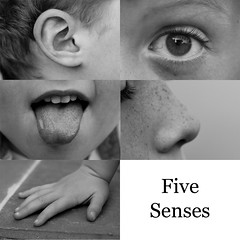 | 36 |
| 8916353063 | Implication | a meaning that is not expressly stated but can be inferred |  | 37 |
| 8916357920 | Inference | drawing a conclusion on the basis of circumstantial evidence | 38 | |
| 8916360924 | Invective | abusive language used to express blame or censure |  | 39 |
| 8916363402 | Inversion | the reversal of the normal order of words |  | 40 |
| 8916366314 | Jargon | technical terminology characteristic of a particular subject |  | 41 |
| 8916368713 | Juxtaposition | the act of positioning close together |  | 42 |
| 8916383009 | Litotes | understatement for rhetorical effect |  | 43 |
| 8916386405 | Malapropism | misuse of a word by confusion with one that sounds similar |  | 44 |
| 8916392008 | Maxim | a saying that is widely accepted on its own merits |  | 45 |
| 8916395773 | Metaphor | a figure of speech that suggests a non-literal similarity |  | 46 |
| 8916397922 | Metonym | substituting the name of a feature for the name of the thing |  | 47 |
| 8916405607 | non-sequitur | a reply that has no relevance to what preceded it |  | 48 |
| 8916411237 | Objectivity | judgment based on observable phenomena |  | 49 |
| 8916417161 | Oxymoron | conjoining contradictory terms |  | 50 |
| 8916422428 | Paradox | a statement that contradicts itself and remains true |  | 51 |
| 8916425126 | Parallelism | similarity by virtue of corresponding |  | 52 |
| 8916430402 | Paraphrase | express the same message in different words |  | 53 |
| 8916435687 | reductio ad absurdum | (reduction to the absurd) a disproof by showing that the consequences of the proposition are absurd; or a proof of a proposition by showing that its negation leads to a contradiction |  | 54 |
| 8916437716 | Resolution | the logical ending of a piece of writing, speech, or narrative |  | 55 |
| 8916441488 | Rhetoric | using language effectively to please or persuade |  | 56 |
| 8916443934 | Subjective | judgment based on individual impressions and feelings |  | 57 |
| 8916460876 | Syntax | the grammatical arrangement of words in sentences | 58 | |
| 8916462775 | Zuegma | a figure of speech in which a word applies to two others in different senses (e.g., John and his license expired last week ) or to two others of which it semantically suits only one (e.g., with weeping eyes and hearts ) |  | 59 |
AP Psychology - Myers Language and Cognition Flashcards
Advanced Placement Psychology
Enterprise High School, Redding, CA
All terms from Myers Psychology for AP (BFW Worth, 2011)
Terms : Hide Images
| 5625323190 | cognition | all the mental activities associated with thinking, knowing, remembering, and communicating. |  | 0 |
| 5625323191 | concept | a mental grouping of similar objects, events, ideas, or people. |  | 1 |
| 5625323192 | prototype | a mental image or best example of a category. |  | 2 |
| 5625323193 | algorithm | a methodical, logical rule or procedure that guarantees solving a particular problem. Contrasts with the usually speedier—but also more error-prone—use of heuristics. |  | 3 |
| 5625323194 | heuristic | a simple thinking strategy that often allows us to make judgments and solve problems efficiently; usually speedier but also more error-prone than algorithms. |  | 4 |
| 5625323195 | insight | a sudden and often novel realization of the solution to a problem; it contrasts with strategy-based solutions. |  | 5 |
| 5625323196 | behaviorist theory | the theory of language development that argues humans learn language through trial/error and gradually learn more effective ways to speak to get what they want |  | 6 |
| 5625323197 | confirmation bias | a tendency to search for information that supports our preconceptions and to ignore or distort contradictory evidence. |  | 7 |
| 5625323198 | fixation | the inability to see a problem from a new perspective, by employing a different mental set. |  | 8 |
| 5625323199 | mental set | a tendency to approach a problem in one particular way, often a way that has been successful in the past. |  | 9 |
| 5625323200 | functional fixedness | the tendency to think of things only in terms of their usual functions; an impediment to problem solving. |  | 10 |
| 5625323201 | representativeness heuristic | judging the likelihood of things in terms of how well they seem to represent, or match, particular prototypes; may lead us to ignore other relevant information. |  | 11 |
| 5625323202 | availability heuristic | estimating the likelihood of events based on their availability in memory; if instances come readily to mind (perhaps because of their vividness), we presume such events are common. |  | 12 |
| 5625323203 | nativist theory | the theory of language development that states that humans have a natural, innate ability to develop language (theorized by Chomsky) |  | 13 |
| 5625323204 | belief perseverance | clinging to one's initial conceptions after the basis on which they were formed has been discredited. |  | 14 |
| 5625323205 | Language Acquisition Device | this structure allows for the innate development of language (theorized by Chomsky) |  | 15 |
| 5625323206 | framing | the way an issue is posed; how an issue is framed can significantly affect decisions and judgments. |  | 16 |
| 5625323207 | language | our spoken, written, or signed words and the ways we combine them to communicate meaning. |  | 17 |
| 5625323208 | phoneme | in language, the smallest distinctive sound unit. |  | 18 |
| 5625323209 | morpheme | in a language, the smallest unit that carries meaning; may be a word or a part of a word (such as a prefix). |  | 19 |
| 5625323210 | grammar | in a language, a system of rules that enables us to communicate with and understand others. |  | 20 |
| 5625323211 | semantics | the set of rules by which we derive meaning from morphemes, words, and sentences in a given language; also, the study of meaning. |  | 21 |
| 5625323212 | syntax | the rules for combining words into grammatically sensible sentences in a given language. |  | 22 |
| 5625323213 | babbling stage | babies spontaneously uttering a variety of words, such as ah-goo |  | 23 |
| 5625323214 | one-word stage | the stage in which children speak mainly in single words | | 24 |
| 5625323215 | two-word stage | they start uttering two word sentences | | 25 |
| 5625323216 | telegraphic speech | early speech stage in which a child speaks like a telegram—"go car"—using mostly nouns and verbs. |  | 26 |
| 5625323217 | linguistic determinism | Whorf's hypothesis that language determines the way we think. |  | 27 |
Journal words (Scarlet Letter) Flashcards
Terms : Hide Images
| 10299064039 | Diction | _____________ is word choice, or the style of speaking that a writer, speaker, or character uses and should be matched to purpose or audience. (vocabulary) Connotation: (Emotional/Curtural Meanings) Denotation: (Literal dictinary defintion) What is the significance? What does it show us about characters? What does it show about the author? What does it show about the setting? Example: In this excerpt, the author describes the boy "[surveying] the class." When one "surveys" something, one is usually placed above that which is being surveyed, causing them to look down. Therefore, it is as if the boy sees himself on a kind of Mt. Olympus, placed above his classmates, sitting with other gods and looking down on lesser mortals surveying their reactions. This emotional response seems to purposefully pit the protagonist against the reader. Thus, the diction causes the reader not to like this character and speculate on the integrity of this character. |  | 0 |
| 10308626985 | Syntax | Syntax in literature refers to the actual way in which words and sentences are placed together in the writing.(subject-verb-object) |  | 1 |
| 10299073213 | Tone | _________ is the atmosphere, attitude or mood expressed by the author's writing. The author's choice of words and detail convey his/her attitude toward a subject or character. (attitude) |  | 2 |
| 10308621879 | Syntax vs. Diction | Diction refers to the choice of words in a particular situation, while syntax determines how the chosen words are used to form a sentence. |  | 3 |
| 10299074006 | Author's Purpose | _________ is his reason for or intent in writing. It may be used to amuse the reader, to persuade the reader, to inform the reader, or to satirize (ridicule) a condition. |  | 4 |
| 10299075277 | Characters | A character can be any person, a figure, an inanimate object, or animal. There are different types of characters, and each serves its unique function in a story or a piece of literature. | 5 | |
| 10299075278 | Plot | Plot is a literary term used to describe the events that make up a story, or the main part of a story. These events relate to each other in a pattern or a sequence. |  | 6 |
| 10299075279 | Setting | The setting of a piece of literature is the time and place in which the story takes place. The definition of setting can also include social statuses, weather, historical period, and details about immediate surroundings. | 7 | |
| 10299076410 | Themes | Theme is defined as a main idea or an underlying meaning of a literary work, which may be stated directly or indirectly. |  | 8 |
| 10299078175 | Symbols | A symbols representative of several other aspects, concepts or traits. Symbol is using an object or action that means something more than its literal meaning. |  | 9 |
AP English Language terms "B" - "D" Flashcards
Terms : Hide Images
| 9637219750 | chiasmus | A verbal pattern in which the second half of an expression is inverted; a statement consisting of two parallel parts in which the second part is structurally reversed. |  | 0 |
| 9637219751 | claim | An arguable statement, which may be a claim of fact, value, or policy; An assertion supported by evidence. |  | 1 |
| 9637219752 | clause | A grammatical unit that contains both a subject and a verb. |  | 2 |
| 9637219753 | colloquial | Informal language; not professional; slang. |  | 3 |
| 9637219754 | concession | An argumentative strategy by which a speaker or writer acknowledges the validity of an opponent's point; the act of yielding/conceding. | 4 | |
| 9637219755 | conjunction | A word that individual words or groups of words (for, and, nor, but, or, yet). |  | 5 |
| 9637219756 | connotation | The emotional implications (+,-, neutral) and associations that a word may carry. |  | 6 |
| 9637219757 | denotation | The direct or dictionary meaning of a word; literal meaning of a word. |  | 7 |
| 9637219758 | diction | Related to style, this refers to the writer's word choices, especially with regard to their correctness, clearness, or effectiveness. |  | 8 |
| 9637219759 | dialect | Geographically distinct versions of a single language that vary somewhat from the parent form. |  | 9 |
| 9637219760 | didactic | Instructive; intended or inclined to teach, often excessively. |  | 10 |
| 9637219761 | cacophony | Harsh-sounding mixture of words, voices, or sounds; dissonance. |  | 11 |
| 9637219762 | cliche | A phrase or opinion that is overused and betrays a lack of original thought. |  | 12 |
AP English Language Glossary Flashcards
Terms : Hide Images
| 9488644775 | Personification | The assigning of human qualities to inanimate objects or concepts. An example: Wordsworth's "the sea that bares her bosom to the moon." | 0 | |
| 9488644776 | Oxymoron | From the Greek for "pointedly foolish," ___ is a figure of speech wherein the author groups apparently contradictory terms. Simple examples include "jumbo shrimp" and "cruel kindness." | 1 | |
| 9488644777 | Sarcasm | from the Greek meaning "to tear flesh," ___ involves bitter, caustic language that is meant to hurt or ridicule someone or something. It may use irony as a device. | 2 | |
| 9488644778 | Synecdoche | . a figure of speech that utilizes a part as representative of the whole. "All hands on deck" is an example. | 3 | |
| 9488644779 | Hyperbole | a figure of speech using deliberate exaggeration or overstatement | 4 | |
| 9488644780 | Anaphora | repetition of a word, phrase, or clause at the beginning of two or more sentences in a row. This is a deliberate form of repetition and helps make the writer's point more coherent. | 5 | |
| 9488644782 | Theme | The central idea or message of a work, the insight it offers into life. Usually, __ is unstated in fictional works, but in nonfiction, the __ may be directly stated, especially in expository or argumentative writing. | 6 | |
| 9488644783 | Metonomy | a term from the Greek meaning "changed label" or "substitute name" __ is a figure of speech in which the name of one object is substituted for that of another closely associated with it. For example: a news release that claims "The White House declared" rather than "The President declared" | 7 | |
| 9488644784 | Paradox | A statement that appears to be self-contradictory or opposed to common sense but upon closer inspection contains some degree of truth or validity. | 8 | |
| 9488644785 | Transition | a word or phrase that links one idea to the next and carries the reader from sentence to sentence, paragraph to paragraph. | 9 | |
| 9488644788 | Metaphor | a direct comparison between dissimilar things. "Your eyes are stars" is an example. | 10 | |
| 9488644789 | Symbol | generally, anything that represents, stands for, something else. Usually, a ___ is something concrete—such as an object, action, character, or scene—that represents something more abstract. | 11 | |
| 9488644790 | Begging the Question/Circular Reasoning | Occurs when the believability of the evidence depends on the believability of the claim. | 12 | |
| 9488644792 | Understatement | the opposite of exaggeration. It is a technique for developing irony and/or humor where one writes or says less than intended. | 13 | |
| 9488644793 | Either-or reasoning/ false dilemma | When the writer reduces an argument or issue to two polar opposites and ignores any alternatives. | 14 | |
| 9488644796 | Causal Relationship | In __, a writer asserts that one thing results from another. To show how one thing produces or brings about another is often relevant in establishing a logical argument. | 15 | |
| 9488644798 | Imagery | The sensory details or figurative language used to describe, arouse emotion, or represent abstractions. On a physical level, __ uses terms related to the five senses; we refer to visual, auditory, tactile, gustatory, or olfactory. For example, a rose may present visual __ while also representing the color in a woman's cheeks. | 16 | |
| 9488644799 | Euphemism | a more acceptable and usually more pleasant way of saying something that might be inappropriate or uncomfortable. "He went to his final reward" is a common __ for "he died." They are also used to obscure the reality of the situation. | 17 | |
| 9488644801 | Irony | The contrast between what is stated explicitly and what is really meant. The difference between what appears to be and what actually is true. | 18 | |
| 9488644802 | Satire | A work that targets human vices and follies or social institutions and convention for reform or ridicule. Regardless of whether or not the work aims to reform humans or their society, ___ is best seen as a style of writing rather than a purpose for writing. The effect of __, often humorous, is thought provoking and insightful about the human condition. | 19 | |
| 9488644803 | Alliteration | The repetition of initial consonant sounds, such as "Peter Piper picked a peck of pickled peppers." | 20 | |
| 9488644804 | Epigraph | The use of a quotation at the beginning of a work that hints at its theme. Hemingway begins The Sun Also Rises with two. One of them is "You are all a lost generation" by Gertrude Stein. | 21 | |
| 9488644805 | Periodic Sentence | A sentence that presents its central meaning in a main clause at the end. The independent clause is preceded by a phrase or clause that cannot stand alone. The effect is to add emphasis and structural variety. | 22 | |
| 9488644806 | Narrative | The telling of a story or an account of an event or series of events. | 23 | |
| 9488644807 | Ethos | an appeal based on the character of the speaker. An __-driven document relies on the reputation of the author. | 24 | |
| 9488644808 | Situational Irony | a type of irony in which events turn out the opposite of what was expected. | 25 | |
| 9488644810 | Pathos | an appeal based on emotion. | 26 | |
| 9488644811 | Syllogism | From the Greek for "reckoning together," a __ is a deductive system of formal logic that presents two premises that inevitably lead to a sound conclusion. | 27 | |
| 9488644812 | Logos | an appeal based on logic or reason | 28 | |
| 9488644813 | Verbal Irony | In this type of irony, the words literally state the opposite of the writer's true meaning | 29 | |
| 9488644814 | Anecdote | A story or brief episode told by the writer or a character to illustrate a point. | 30 | |
| 9488644816 | Ad Hominem | In an argument, this is an attack on the person rather than on the opponent's ideas. It comes from the Latin meaning "against the man." | 31 | |
| 9488644817 | Denotation | the literal or dictionary meaning of a word | 32 | |
| 9488644818 | Cumulative | Sentence which begins with the main idea and then expands on that idea with a series of details or other particulars | 33 | |
| 9488644819 | Dramatic Irony | In this type of irony, facts or events are unknown to a character in a play or a piece of fiction but known to the reader, audience, or other characters in the work | 34 | |
| 9488644821 | Connotation | the interpretive level or a word based on its associated images rather than its literal meaning. | 35 | |
| 9488644822 | Repetition | The duplication, either exact or approximate, or any element of language, such as sound, word, phrase, clause, sentence, or grammatical pattern. | 36 | |
| 9488644823 | Syntax | The grammatical structure of prose and poetry. | 37 | |
| 9488644825 | Voice | can refer to two different areas of writing. One refers to the relationship between a sentence's subject and verb (active and passive). The second refers to the total "sound" of the writer's style. | 38 | |
| 9488644826 | Infer | To draw a reasonable conclusion from the information presented. | 39 | |
| 9488644827 | Argument | A single assertion or a series of assertions presented and defended by the writer | 40 | |
| 9488644828 | Allusion | A reference contained in a work | 41 | |
| 9488644833 | Parallelism | refers to the grammatical or rhetorical framing of words, phrases, sentences, or paragraphs to give structural similarity. | 42 | |
| 9488644836 | Analogy | a literary device employed to serve as a basis for comparison. It is assumed that what applies to the parallel situation also applies to the original circumstance. In other words, it is the comparison between two different items. | 43 | |
| 9488644837 | Figurative Language | Writing or speech that is not intended to carry literal meaning and is usually meant to be imaginative and vivid. | 44 | |
| 9488644838 | Example | an individual instance taken to be representative of a general pattern | 45 | |
| 9488644843 | Attitude | the relationship an author has toward his or her subject, and/or his or her audience | 46 | |
| 9488644845 | Ellipsis | Indicated by a series of three periods, the __ indicates that some material has been omitted from a given text. | 47 | |
| 9488644846 | Argumentation | The purpose of this rhetorical mode is to prove the validity of an idea, or point of view, by presenting sound reasoning, discussion, and argument that thoroughly convince the reader. | 48 | |
| 9488644850 | Rhetoric | from the Greek for "orator," this term describes the principle governing the art of writing effectively, eloquently, and persuasively. | 49 | |
| 9488644855 | Colloquial | the use of slang in writing, often to create local color and to provide an informal tone. Huckleberry Finn in written in a __ style. | 50 | |
| 9488644856 | Antecedent | the word, phrase, or clause to which a pronoun refers. | 51 | |
| 9488644857 | Style | an evaluation of the sum of the choices an author makes in blending diction, syntax, figurative language, and other literary devices. | 52 | |
| 9488644858 | Thesis | The sentence or group of sentences that directly expresses the author's opinion, purpose, meaning, or proposition. | 53 | |
| 9488644859 | Appeal to authority | Arguments that draw on recognized experts or persons with highly relevant experience. | 54 | |
| 9488644862 | Balance | a situation in which all parts of the presentation are equal, whether in sentences or paragraphs or sections of a longer work. | 55 | |
| 9488644864 | Tone | Similar to mood, __ describes the author's attitude toward his or her material, the audience, or both. | 56 | |
| 9488644865 | Prose | One of the major divisions of genre, ___ refers to fiction and nonfiction, including all its forms, because they are written in ordinary language and most closely resemble everyday speech. | 57 | |
| 9488644867 | Asyndeton | Commas used (with no conjunction) to separate a series of words. The parts are emphasized equally when the conjunction is omitted; in addition, the use of commas with no intervening conjunction speeds up the flow of the sentence. X, Y, Z as opposed to X, Y, and Z. | 58 | |
| 9488644869 | Point of View | In fictive and non-fictive literature, the perspective from which a story is told. | 59 | |
| 9488644870 | Deduction | The process of moving from a general rule to a specific example. | 60 | |
| 9488644871 | Annotation | explanatory notes added to a text to explain, cite sources, or give bibliographical data. | 61 | |
| 9488644873 | Diction | the author's choice of words that creates tone, attitude, and style, as well as meaning | 62 | |
| 9488644874 | Antithesis | the presentation of two contrasting images. The ideas are balanced by word, phrase, clause, or paragraphs. "To be or not to be..." "Ask not what your country can do for you, ask what you can do for your country." | 63 | |
| 9488644875 | Synthesis | locating a number of sources and integrating them into the development and support of a writer's thesis/claim. | 64 | |
| 9488644878 | Exhortation | an address or communication emphatically urging someone to do something | 65 |
AP Language Vocabulary Unit 12 Flashcards
Terms : Hide Images
| 6916368295 | Aesthetic | adjective 1. pertaining to beauty 2. sensitive or responsive to beauty | 0 | |
| 6916368296 | Defunct | adjective 1. no longer in existence or functioning, dead | 1 | |
| 6916371948 | Discomfit | verb 1. to frustrate, thwart, or defeat 2. to confuse, perplex, or embarrass | 2 | |
| 6916371949 | Espouse | verb 1. to take up and support 2. to become attached to, adopt 3. to marry | 3 | |
| 6916371950 | Fetish | noun 1. an object believed to have magical powers 2. an object of unreasoning devotion or reverence | 4 | |
| 6916376288 | Gregarious | adjective 1. living together in a herd or group 2. sociable, seeking the company of others | 5 | |
| 6916376289 | Hapless | adjective 1. marked by a persistent absence of good luck | 6 | |
| 6916376290 | Impeccable | adjective 1. faultless, beyond criticism or blame | 7 | |
| 6916377527 | Importune | verb 1. to trouble with demands 2. to beg for insistently | 8 | |
| 6916377528 | Interpolate | verb 1. to insert between other parts or things 2. to present as an addition or correction | 9 | |
| 6916381343 | Irreparable | adjective 1. incapable of being repaired or rectified | 10 | |
| 6916381344 | Laconic | adjective 1. concise, using few words | 11 | |
| 6916383459 | Languish | verb 1. to become weak, feeble, or dull 2. to droop 3. to be depressed or dispirited 4. to suffer neglect | 12 | |
| 6916385581 | Mendacious | adjective 1. given to lying or deception 2. untrue | 13 | |
| 6916385582 | Nadir | noun 1. the lowest point | 14 | |
| 6916385583 | Omnipresent | adjective 1. present in all places at all times | 15 | |
| 6916387151 | Perfunctory | adjective 1. done in a superficial or halfhearted manner 2. without interest or enthusiasm | 16 | |
| 6916387152 | Plaintive | adjective 1. expressive of sorrow or woe, melancholy | 17 | |
| 6916387153 | Requite | verb 1. to make suitable repayment, as for a kindness, service, or favor 2. to make retaliation, as for an injury or wrong 3. to reciprocate | 18 | |
| 6916389661 | Tantamount | adjective 1. equivalent, having the same meaning, value, or effect | 19 |
Flashcards
AP Language Flashcards
Terms : Hide Images
| 8570818528 | Alliteration | the occurrence of the same letter or sound at the beginning of adjacent or closely connected words. | 0 | |
| 8570818529 | Allude | suggest or call attention to indirectly; hint at. | 1 | |
| 8570818530 | Anecdote | a short and amusing or interesting story about a real incident or person. | 2 | |
| 8570820730 | Analogous | comparable in certain respects, typically in a way that makes clearer the nature of the things compared. | 3 | |
| 8570820731 | Anaphora | the repetition of a word or phrase at the beginning of successive clauses. | 4 | |
| 8570822834 | Antithesis | the opposite | 5 | |
| 8570825126 | Chiasmus | a rhetorical or literary figure in which words, grammatical constructions, or concepts are repeated in reverse order, in the same or a modified form; e.g. 'Poetry is the record of the best and happiest moments of the happiest and best minds.'. | 6 | |
| 8570825127 | Contradiction | a combination of statements, ideas, or features of a situation that are opposed to one another. | 7 | |
| 8570826361 | Diction | the choice and use of words and phrases in speech or writing. | 8 | |
| 8570826362 | Hyperbole | exaggerated statements or claims not meant to be taken literally. | 9 | |
| 8570826379 | Imagery | visually descriptive or figurative language, especially in a literary work. | 10 | |
| 8570829139 | Juxtaposition | the fact of two things being seen or placed close together with contrasting effect. | 11 | |
| 8570829140 | Metaphor | a figure of speech in which a word or phrase is applied to an object or action to which it is not literally applicable. | 12 | |
| 8570830950 | Parallelism | Phrases or sentences of a similar construction/meaning placed side by side, balancing each other | 13 | |
| 8570830951 | Paradox | a contradiction or dilemma | 14 | |
| 8570832730 | Personification | A figure of speech in which an object or animal is given human feelings, thoughts, or attitudes | 15 | |
| 8570832731 | Qualify | to be entitled to a particular benefit or privilege | 16 | |
| 8570835588 | Repetition | Repeated use of sounds, words, or ideas for effect and emphasis | 17 | |
| 8570835589 | Satire | A literary work that criticizes human misconduct and ridicules vices, stupidities, and follies. | 18 | |
| 8570835590 | Syntax | Sentence structure | 19 | |
| 8570835591 | Tone | Attitude a writer takes toward the audience, a subject, or a character | 20 | |
| 8570838371 | Strident | Loud and harsh | 21 | |
| 8570838372 | Conflate | To combine into one | 22 | |
| 8570838373 | Bourgeoisie | The middle class | 23 | |
| 8570840059 | Erudite | Scholarly, learned, bookish, pedantic | 24 | |
| 8570840060 | Oblige | provide a service or favor for someone | 25 | |
| 8570842297 | Equivocal | Ambiguous; intentionally misleading | 26 | |
| 8570842298 | Frivolous | (adj.) of little importance, not worthy of serious attention; not meant seriously | 27 | |
| 8570844477 | Digress | wander off the subject | 28 | |
| 8570844478 | Dispassionate | Impartial; calm, free from emotion | 29 | |
| 8570844479 | Disparage | To degrade, to speak of someone or something in a derogatory manner | 30 | |
| 8570846704 | Transcend | To rise above or beyond | 31 | |
| 8570846705 | Provincial | Limited in knowledge of the world; narrow-minded | 32 | |
| 8570846706 | Elysian | blissful; delightful | 33 | |
| 8570849084 | Provocative | Causing disturbance or excitement | 34 | |
| 8570849085 | Speculate | To form opinions without definite knowledge or evidence | 35 | |
| 8570849113 | Cynical | Doubtful or distrustful of the goodness or sincerity of human motives | 36 | |
| 8570851676 | Pessimistic | tending to see the worst aspect of things or believe that the worst will happen. | 37 | |
| 8570851677 | Sanctify | To set apart for sacred use, to make holy, to purify | 38 | |
| 8570851678 | Speculate | Contemplate; make a guess or educated guess about; engage in a risky business transaction, gamble | 39 | |
| 8570854088 | Vindictive | having or showing a strong or unreasoning desire for revenge | 40 | |
| 8570857740 | Disdain | lack of respect accompanied by a feeling of intense dislike | 41 | |
| 8570857741 | Enigmatic | (adj.) puzzling, perplexing, inexplicable, not easily understood | 42 | |
| 8570859706 | Halcyon | denoting a period of time in the past that was idyllically happy and peaceful | 43 | |
| 8570859707 | Nepenthe | Anything that produces euphoria | 44 | |
| 8570861510 | Lethe | river of forgetfulness, dead souls drink it to forget their past life (River of Forgetfulness) | 45 |
Pages

Need Help?
We hope your visit has been a productive one. If you're having any problems, or would like to give some feedback, we'd love to hear from you.
For general help, questions, and suggestions, try our dedicated support forums.
If you need to contact the Course-Notes.Org web experience team, please use our contact form.
Need Notes?
While we strive to provide the most comprehensive notes for as many high school textbooks as possible, there are certainly going to be some that we miss. Drop us a note and let us know which textbooks you need. Be sure to include which edition of the textbook you are using! If we see enough demand, we'll do whatever we can to get those notes up on the site for you!
