AP Notes, Outlines, Study Guides, Vocabulary, Practice Exams and more!

AMSCO AP US History Chapter 12 Flashcards

AMSCO United States History 2015 Edition, Chapter 12 Territorial and Economic Expansion, 1830-1860

Terms : Hide Images
5522639479manifest destinyThe belief that the United States had a divine mission to extend its power and civilization across the breadth of North America. (p. 230)0
5522639480industrial technologyAfter 1840, industrialization spread rapidly throughout most of the Northeast. New factories produced shoes, sewing machines, ready-to-wear clothing, firearms, precision tools, and iron products for railroads and other new products. (p. 238)1
5522639481Elias HoweThe U.S. inventor of the sewing machine, which moved much of clothing production from homes to factories. (p. 238)2
5522639482Samuel F. B. MorseIn 1844, he invented the electric telegraph which allowed communication over longer distances. (p. 238)3
5522639483railroadsIn the 1840s and the 1850s this industry expanded very quickly and would become America's largest industry. It required immense amounts of capital and labor and gave rise to complex business organizations. Local and state governments gave the industry tax breaks and special loans to finance growth. (p. 238)4
5522639484Panic of 1857Financial crash which sharply lowered Midwest farmers prices and caused unemployment in the Northern cities. The South was not affected as much because cotton prices remained high. (p. 239)5
5522639485Great American DesertIn the 1850s and 1860s, the arid area between the Mississippi River and the Pacific Coast, was known by this name. (p. 236)6
5522639486mountain menThe first non-native people to open the Far West. These fur trappers and explorers included James Beckwourth, Jim Bridger, Kit Carson, and Jedediah Smith. (p. 237)7
5522639487Far WestIn the 1820s the Rocky Mountains would be known by this name. (p. 237)8
5522639488overland trailsThe wagon train trails that led from Missouri or Iowa to the west coast. They traveled only 15 miles per day and followed the river valleys through the Great Plains. Months later, the wagon trains would finally reach the foothills of the Rockies or face the hardships of the southwestern deserts. The final challenge was to reach the mountain passes before the first heavy snows. Disease was even a greater threat than Indian attack. (p. 237)9
5522639489mining frontierThe discovery of gold in California in 1848 caused the first flood of newcomers to the West. A series of gold strikes and silver strikes in what became the states of Colorado, Nevada, Idaho, Montana, Arizona, and South Dakota kept a steady flow of hopeful young prospectors pushing into the West. (p. 237)10
5522639490gold rushCalifornia's population soared from 14,000 in 1848 to 380,000 in 1860, primarily because of this event. (p. 237)11
5522639491silver rushThe discovery of silver in Colorado, Nevada, the Black Hills of the Dakotas, and other western territories, created a mining boom. (p 237)12
5522639492farming frontierIn the 1830s and 1840s pioneer families moved west to start homesteads and begin farming. Government programs allowed settlers to purchase inexpensive parcels of land. (p. 237)13
5522639493urban frontierWestern cities that arose as a result of railroads, mineral wealth, and farming. They included San Francisco, Denver, and Salt Lake City. (p. 238)14
5522639494federal land grantsIn 1850, the U.S. government gave 2.6 million acres of federal land to build the Illinois Central railroad from Lake Michigan to Gulf of Mexico. (p. 238)15
5522639495John TylerHe was elected Vice President, then he became the tenth president (1841-1845) when Benjamin Harrison died. He was responsible for the annexation of Mexico after receiving a mandate from Polk. He opposed many parts of the Whig program for economic recovery. (p. 231)16
5522639496Oregon territoryThis was a vast territory on the Pacific coast that stretched as far north as the Alaskan border. Originally the United States was interested in all the territory, but in 1846 Britain and the U.S. agreed to divide the territory at the 49th Parallel, today's border between Canada and the United States. (p. 232)17
5522639497Fifty-four Forty or FightThe slogan of James K. Polk's plan for the Oregon Territory. They wanted the border of the territory to be on 54' 40° latitude (near present-day Alaska) and were willing to fight Britain over it. Eventually, 49 degrees latitude was adopted as the northern border of the United States, and there was no violence. (p. 232)18
5522639498James K. PolkThe eleventh U.S. president (1845-1849). Polk was a slave owning southerner dedicated to Democratic party. In 1844, he was a "dark horse" candidate for president, and a protege of Andrew Jackson. He favored American expansion, especially advocating the annexation of Texas, California, and Oregon. (p. 232)19
5522639499Wilmot ProvisoIn 1846, the first year of the Mexican War, this bill would forbid slavery in any of the new territories acquired from Mexico. the bill passed the House twice, but was defeated in the Senate. (p. 234)20
5522639500Franklin PierceIn 1852, he was elected the fourteenth president of the United States. (p. 236)21
5522639501Ostend ManifestoThe United States offer to purchase Cuba from Spain. When the plan leaked to the press in the United States, it provoked an angry reaction from antislavery members of Congress, forcing President Franklin Pierce to drop the plan. (p. 235)22
5522639502TexasIn 1823, Texas won its national independence from Spain. The annexation of this state was by a joint resolution of Congress, supported by President-elect James Polk. This annexation contributed to the Mexican War because the border with Mexico was in dispute. Land from the Republic of Texas later became parts of New Mexico, Colorado, Oklahoma, Kansas, and Wyoming. (p. 233)23
5522639503Stephen AustinIn the 1820s, his father had obtained and large land grant in Texas. He brought 300 families from Missouri to settle in Texas. (p. 231)24
5522639504Antonio Lopez de Santa AnnaIn 1834, he established himself as dictator of Mexico and attempted to enforce Mexico's laws in Texas. In March 1836 a group of American settlers revolted and declared Texas to be an independent republic. He then led an army which attacked the Alamo in San Antonio, killing all the American defenders. Shortly after that, Sam Houston led an army that captured him and he was forced to sign a treaty that recognized the independence of Texas. (p. 231)25
5522639505Sam HoustonIn March 1836, he led a group of American settlers that revolted against Mexico and declared Texas to be an independent republic. He led an army that captured Santa Anna and forced him to sign a treaty that recognized Texas as an independent republic. As the first president of the Republic of Texas, he applied to the U.S. government for Texas to be added as a new state. It was many years before the U.S. would act to add Texas as a state. (p. 231)26
5522639506AlamoThe mission and fort that was the site of a siege and battle during the Texas Revolution, which resulted in the massacre of all its defenders. The event helped galvanize the Texas rebels and led to their victory at the Battle of San Jacinto. Eventually Texas would join the United States. (p. 231)27
5522639507Aroostook WarIn the early 1840s, there was a dispute over the the British North America (Canada) and Maine border. Open fighting broke out between rival groups of lumbermen. The conflict was soon resolved by the Webster-Ashburton Treaty of 1842. (p. 231)28
5522639508Webster-Ashburton TreatyIn this 1842 treaty US Secretary of State Daniel Webster and British ambassador Lord Alexander Ashburton created a treaty splitting New Brunswick territory into Maine and British Canada. It also settled the boundary of the Minnesota territory. (p. 232)29
5522639509Rio Grande; Nueces RiverIn the 1840s the United States believed the southern Texas border was the Rio Grande River. Mexico believed the border was further north on the Nueces River. (p. 233)30
5522639510Mexican War (1846-1847)A war between the United States and Mexico from 1846 to 1848. President James Polk attempted to purchase California and the New Mexico territories and resolve the disputed Mexico-Texas border. Fighting broke out before the negotiations were complete and the war lasted about two years, ending when the United States troops invaded Mexico City. (p. 233-235)31
5522639511Zachary TaylorIn 1845, this U.S. general, moved his troops into disputed territory in Texas, between the Nueces and Rio Grande Rivers. Eleven of his soldiers were killed by Mexican troops and President James Polk used the incident to justify starting the Mexican War. He used of force of 6,000 to invade northern Mexico and won a major victory at Buena Vista. In 1848, he was elected president. (p. 233, 234)32
5522639512Winfield ScottThis U.S. general invaded central Mexico with an army of 14,000. They took the coastal city of Vera Cruz and then captured Mexico City in September 1847. (p. 234)33
5522639513Stephen KearneyThis U.S. general led a small army of less than 1,500 that succeeded in taking Santa Fe, the New Mexico territory, and southern California during the Mexican War. (p. 234)34
5522639514John C. FremontIn June 1846, he overthrew Mexican rule in northern California and proclaimed California to be an independent republic, the Bear Flag Republic. (p. 234)35
5522639515California; Bear Flag RepublicIn June 1846, John C. Fremont quickly overthrew Mexican rule in Northern California to create this independent republic. (p. 234)36
5522639516Treaty of Guadalupe HidalgoIn 1848, this treaty ended the Mexican War. Under its terms, Mexico recognized the Rio Grande as the border with Texas, Mexico ceded the California and New Mexico territories to the United States. The United States agreed to pay Mexico $15 million and assumed responsibility for any claims of American citizens against Mexico. (p. 234)37
5522639517Mexican CessionHistorical name for the former Mexican provinces of California and New Mexico that were ceded to the U.S. by Mexico in 1848 under the Treaty of Guadalupe Hidalgo. (p 234)38
5522639518Walker ExpeditionAn expedition by a Southern adventurer who unsuccessfully tried to take Baja California from Mexico in 1853. He took over Nicaragua in 1855 to develop a proslavery empire. His scheme collapsed when a coalition of Central American countries invaded and defeated him, and he was executed. (p. 236)39
5522639519Clayton-Bulwer TreatyAn 1850 treaty between the U.S. and Great Britain agreeing that neither country would attempt to take exclusive control of any future canal route in Central America. (p. 236)40
5522639520Gadsden PurchaseIn 1853, the U.S. acquired land (present day southern New Mexico and Arizona) from Mexico for $10 million. (p. 236)41
5522639521foreign commerceIn the mid-1800s, the growth in manufactured goods as well as in agriculture products (Western grains and Southern cotton) caused a significant growth of exports and imports. (p. 238, 239)42
5522639522exports and importsIn the mid-1800s, the U.S. was exporting primarily manufactured goods and agriculture products such as Western grains and Southern cotton. Imports also increased during this period. (p. 238, 239)43
5522639523Matthew C. Perry; JapanCommodore of the U.S. Navy who was sent to force Japan to open up its ports to trade with the U.S. (p. 239)44

AMSCO AP US History Chapter 16 Flashcards

AMSCO United States History 2015 Edition, Chapter 16 The Rise of Industrial America, 1865-1900

Terms : Hide Images
7563282145nation's first big businessRailroads created a nationwide market for goods. This encouraged mass production, mass consumption, and economic specialization. (p. 320)0
7563282146Cornelius VanderbiltHe merged local railroads into the New York Central Railroad, which ran from New York City to Chicago. (p. 320)1
7563282147Eastern Trunk LinesIn the early days of the railroads, from the 1830s to the 1860s, railroad lines in the east were different incompatible sizes which created inefficiencies. (p. 320)2
7563282148transcontinental railroadsDuring the Civil War, Congress authorized land grants and loans for the building of the first transcontinenal railroad. Two new companies were formed to share the task of building the railroad. The Union Pacific started in Omaha, Nebraska, and the Central Pacific started in Sacramento, California. On May 10, 1869, at Promontory Point, Utah, a golden spike was driven into the rail ties to mark the completion of the railroad. (p. 321)3
7563282149Union Pacific and Central PacificTwo railroad companies, one starting in Sacramento, California and the other in Omaha, Nebraska were completed in Utah in 1869 to create the first first transcontinental railroad. (p. 321)4
7563282150American Railroad AssociationIn 1883, this organization divided the country into four different time zones, which would become the standard time for all Americans. (p. 320)5
7563282151railroads and time zonesThe United States was divided into four time zones by the railroad industry. (p. 320)6
7563282152speculation and overbuildingIn the 1870s and 1880s railroad owners overbuilt. This often happens during speculative bubbles, created by exciting new technology. (p. 321)7
7563282153Jay Gould, watering stockEntered railroad business for quick profits. He would sell off assets inflate the value of a corporation's assets and profits before selling its stock to the public. (p. 321)8
7563282154rebates and poolsIn a scramble to survive, railroads offered rebates (discounts) to favored shippers, while charging exorbitant freight rates to smaller customers. They also created secret agreements with competing railroads to fix rates and share traffic. (p. 321)9
7563282155bankruptcy of railroadsA financial panic in 1893 forced a quarter of all railroads into bankruptcy. J.P. Morgan and other bankers moved in to take control of bankrupt railroads and consolidate them. (p.321)10
7563282156Panic of 1893In 1893, this financial panic led to the consolidation of the railroad industry. (p. 321)11
7563282157causes of industrial growthAfter the Civil War, a "second Industrial Revolution" because of an increase in steel production, petroleum, electrical power, and industrial machinery. (p. 323)12
7563282158Andrew CarnegieA Scottish emigrant, in the 1870s he started manufacturing steel in Pittsburgh. His strategy was to control every stage of the manufacturing process from mining the raw materials to transporting the finished product. His company Carnegie Steel became the world's largest steel company. (p. 323)13
7563282159vertical integrationA business strategy by which a company would control all aspects of a product from raw material mining to transporting the finished product. Pioneered by Andrew Carnegie. (p. 323)14
7563282160U.S. SteelIn 1900, Andrew Carnegie sold Carnegie Steel to a group headed by J. P. Morgan. They formed this company, which was the largest enterprise in the world, employing 168,000 people, and controlling more than three-fifths of the nation's steel business. (p. 323)15
7563282161John D. RockefellerHe started Standard Oil in 1863. By 1881, Standard Oil Trust controlled 90 percent of the oil refinery business. His companies produced kerosene, which was used primarily for lighting at the time. The trust that he created consisted of various acquired companies, all managed by a board of trustees he controlled. (p. 323)16
7563282162horizontal integrationBuying companies out and combining the former competitors under one organization. This strategy was used by John D. Rockefeller to build Standard Oil Trust. (p. 323)17
7563282163Standard Oil TrustIn 1881, the name of John D. Rockefeller's company, which controlled 90 percent of the oil refinery business in the United States. (p. 323)18
7563282164interlocking directoratesThe term for the same directors running competing companies. (p. 322)19
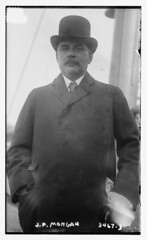
7563282165J. P. MorganA banker who took control and consolidated bankrupt railroads in the Panic of 1893. In 1900, he led a group in the purchase of Carnegie Steel, which became U.S. Steel. (p. 321, 323)20
7563282166leading industrial powerBy 1900, the United States was the leading industrial power in the world, manufacturing more than an of its rivals, Great Britain, France, or Germany. (p. 319)21
7563282167Second Industrial RevolutionThe term for the industrial revolution after the Civil War. In the early part of the 19th century producing textiles, clothing, and leather goods was the first part of this revolution. After the Civil War, this second revolution featured increased production of steel, petroleum, electric power, and industrial machinery. (p. 323)22
7563282168Bessemer processIn the 1850s, Henry Bessemer discovered this process. By blasting air through molten iron you could produce high-quality steel. (p. 323)23
7563282169transatlantic cableIn 1866, Cyrus W. Field's invention allowed messages to be sent across the oceans. (p. 325)24
7563282170Alexander Graham BellIn 1876, he invented the telephone. (p. 325)25
7563282171Thomas EdisonPossibly the greatest inventor of the 19th century. He established the first modern research labratory, which produced more than a thousand patented inventions. These include the phonograph, first practical electric light bulb, dynamo for electric power generation, mimeograph machine, and a motion picture camera. (p. 326)26
7563282172Menlo Park Research LabThe first modern research laboratory, created in 1876, by Thomas Edison in Menlo Park, New Jersey. (p. 326)27
7563282173electric power, lightingIn 1885, George Westinghouse produced a transformer for producing high-voltage alternating current, which made possible the lighting of cities, electric streetcars, subways, electrically powered machinery, and appliances. (p. 326)28
7563282174George WestinghouseHe held more than 400 patents. He invented the high-voltage alternating current transformer, which made possible the nationwide electrial power system. (p. 326)29
7563282175Eastman's Kodak cameraIn 1888, George Eastman invented the camera. (p. 325)30
7563282176large department storesR.H. Macy and Marshall Field made these stores the place to shop in urban centers. (p. 326)31
7563282177R.H. MacyHe created a New York department store. (p. 326)32
7563282178mail-order companiesTwo companies, Sears Roebuck, and Montgomery Ward, used the improved rail system to ship to rural customers to sell many different products. The products were ordered by mail from a thick paper catalog. (p. 326)33
7563282179Sears-RoebuckMail order company that used the improved rail system to ship to rural customers. (p. 326)34
7563282180packaged foodsBrand name foods created by Kellogg and Post became common items in American homes. (p. 326)35
7563282181refrigeration; canningThese developments in the food industry changed American eating habits. (p. 326)36
7563282182Gustavus SwiftHe changed American eating habits by making mass-produced meat and vegetable products. (p. 326)37
7563282183advertisingThis new technique was important to creating the new consumer economy. (p. 326)38
7563282184consumer economyAdvertizing and new marketing techniques created a new economy. (p. 326)39
7563282185federal land grants and loansThe federal government provided land and loans to the railroad companies in order to encourage expansion of the railroads. (p. 320)40
7563282186fraud and corruption, Credit MobilierInsiders used construction companies to bribe government officials and make huge profits. (p. 321)41
7563282187Interstate Commerce Act of 1886This act, created in 1886, did little to regulate the railroads. (p. 322)42
7563282188anti-trust movementMiddle class people feared a growth of new wealth due to the trusts. In the 1880s trust came under widespread scrutiny and attack. In 1890, the Sherman Antitrust Act was passed, but it was too vaguely worded to stop the development of trusts. Not until the Progressive era, would the trusts be controlled. (p. 324)43
7563282189Sherman Antitrust Act of 1890In 1890, Congress passed this act, which prohibited any "contract, combination, in the form of trust or otherwise, or conspiracy in restraint of trade or commerce." The U.S. Department of Justice secured few convictions until the law was strenghted during the Progressive era. (p. 324)44
7563282190federal courts, U.S. v. E.C. KnightIn 1895, the Supreme Court ruled that the Sherman Antitrust Act could be applied only to commerce, not manufacturing. (p. 324)45
7563282191causes of labor discontentWorker's discontent was caused by performing monotonous task required completion within a certain time, dangerous working conditions, and exposure to chemicals and pollutants. (p. 328)46
7563282192iron law of wagesDavid Ricardo developed this theory which stated that low wages were justified. He argued that raising wages would only increase the working population, the availability of more workers would cause wages to fall, thus creating a cycle of misery. (p. 327)47
7563282193anti-union tacticsEmployers used the following tactics to defeat unions: the lockouts (closing the factory), blacklists (lists circulated among employers), yellow dog contracts (contracts that forbade unions), private guards to quell strikes, and court injunctions against strikes. (p. 329)48
7563282194railroad strike of 1877In 1887, this strike spread across much of the nation and shut down two-thirds of the country's railroads. An additional 500,000 workers from other industries joined the strike. The president used federal troops to end the violence, but more than 100 people had died in the violence. (p. 329)49
7563282195Knights of LaborStarted in 1869 as a secret national labor union. It reached a peak of 730,000 members. (p. 330)50
7563282196Haymarket bombingOn May 4, 1886 workers held a protest in which seven police officers were killed by a protester's bomb. (p. 330)51
7563282197American Federation of LaborThe labor union focused on just higher wages and improved working conditions. By 1901 they had one million members. (p. 330)52
7563282198Samuel GompersHe led the American Federation of Labor until 1924. (p. 330)53
7563282199Pullman StikeIn 1894, workers at Pullman went on strike. The American Railroad Union supported them when they refused to transport Pullman rail cars. The federal government broke the strike. (p. 331)54
7563282200Eugene DebsThe American Railroad Union leader, who supported the Pullman workers. The government broke the strike and he was sent to jail for six months. (p. 331)55
7563282201railroad workers: Chinese, Irish, veteransIn the construction of the first transcontinental railroad, the Union Pacific, starting in Omaha, employed thousands of war veterans and Irish immigrants. The Central Pacific, starting from Sacramento, included 6,000 Chinese immigrants among their workers. (p. 321)56
7563282202old rich vs. new richThe trusts came under widespread scrutiny and attack in the 1880s, urban elites (old rich) resented the increasing influence of the new rich. (p. 324)57
7563282203white-collar workersThe growth of large corporation required thousands of white-collar workers (jobs not involving manual labor) to fill the highly organized administrative structures. (p. 327)58
7563282204expanding middle classIndustrialization helped expand the middle class by creating jobs for accountants, clerical workers, and salespeople. The increase in the number of good-paying jobs after the Civil War significantly increased the size of the middle class. (p. 327)59
7563282205factory wage earnersBy 1900, two-thirds of all working Americans worked for wages, usually at jobs that required them to work ten hours a day, six days a week.(p. 327)60
7563282206women and children factory workersBy 1900, 20 percent of adult woman working for wages in the labor force. Most were young and single women, only 5 percent of married women worked outside the home. (p. 327)61
7563282207women clerical workersAs the demand for clerical workers increased, women moved into formerly male occupations as secretaries, bookkeepers, typists, and telephone operators. (p. 328)62
7563282208Protestant work ethicThe believe that hard work and material success are signs of God's favor. (p. 325)63
7563282209Adam SmithIn 1776, this economist wrote "The Wealth of Nations" which argued that business should not be regulated by government, but by the "invisible hand" (impersonal econmic forces). (p. 324)64
7563282210laissez-faire CapitalismIn the late 19th century, american industrialists supported the theory of no government intervention in the economy, even as they accepted high tariffs and federal subsidies. (p. 324)65
7563282211concentration of wealthBy the 1890s, the richest 10 percent of the U.S. population controlled 90 percent of the nation's wealth. (p. 326)66
7563282212Social DarwinismThe belief that government's helping poor people weakened the evolution of the species by preserving the unfit. (p. 324)67
7563282213William Graham SumnerAn English social philosopher, he argued for Social Darwism, the belief that Darwin's ideas of natural slection and survival of the fittest should be applied to the marketpalce and society. (p. 324)68
7563282214survival of the fittestThe belief that Charles Darwin's ideas of natural selection in nature applied to the economic marketplace. (p. 324)69
7563282215Gospel of WealthSome Americans thought religion ideas justified the great wealth of successful industrialists. (p. 325)70
7563282216Horatio Alger Stories self-made manHis novels portrayed young men who became wealth through honesty, hard work and a little luck. In reality these rags to riches stories were somewhat rare. (p. 327)71

AP US History Chapter 11 Flashcards

Terms : Hide Images
7697797308Issues with the Federalists- Alien and Sedition Acts - Hamilton made a private pamphlet attacking Adams - published to the public - Adams refused to give them a war with France - taxes with no use0
7697797309Adams became known as...The Father of the American Navy1
7697797310Federalist accusations of Thomas Jefferson- Accused of robbing a widow and son - Sally Hemmings relationship - Separated church and state in VA - Alleged athiest2
7697797311Sally Hemmingsthe now-proven "wife" of Thomas Jefferson3
7697797312Jefferson winning the election- 73-65 - Won NY because of Aaron Burr - Won South states and West states because of male suffrage - 3/5 Compromise helped him - more representatives4
7697797313Revolution of 1800- Election of Jefferson was the original spirit of the Revolution - Believed Adams and Jefferson betrayed ideas of 1776 and 1787 - Peaceful transfer of power5
7697797314Goals of Jefferson's presidency- Restore Republican government - Check growth of government power - Stop decay of virtue under the Federalists6
7697797315T/F: There was an orderly transfer of power from Adams to JeffersonTrue7
7697797316"We are all Republicans, we are all Federalists"Jefferson's Inaugural Address8
7697797317Characteristics of Jefferson's presidency- Extended idea of seating without regard to rank - Sent messages to Congress to be read by a clerk - Didn't make public appearances - Didn't dismiss many public servants for political reasons9
7697797318Patronage"the power to control appointments to office or the right to privileges" by favoritism - Jeffersonians complained about Federalist appointees10
7697797319Democratic-Republican disunity- Opposition to Federalists was a uniting factor - As the Federalists faded, so did the unity11
7697797320Laws Jefferson undid by Federalists- Pardoned martyrs under Sedition Act - Remitted fines - Convinced Congress to repeal excise tax12
7697797321Naturalization Law of 1802Reduced citizen residency requirement from 14 to 5 years13
7697797322Albert Gallatin- Secretary of the Treasury under Jefferson - Believed debt was bane14
7697797323Restraints in not repealing every law showed that...the defeated party doesn't have to be disastrous afterwards15
7697797324Judiciary Act of 1801- One of the last important laws passed by Federal Congress - Made up new federal judgeships and other judicial offices16
7697797325Midnight judges- Judges selected by Adams - Appointments continued to midnight - Stayed up until 9 pm in last day of office signing commissions17
7697797326Result of the Judiciary ActJeffersonians claimed that the Federalists attempted to entrench themselves in one branch of government18
7697797327Chief Justice John Marshall- Adams appointed to Supreme Court as 4th choice - Cousin of Thomas Jefferson - Served at Valley Forge19
7697797328Reasons John Marshall became a FederalistWhen he was in Valley Forge, he was impressed with the drawbacks of the weak federal government20
7697797329Marbury v. Madison 1803- William Marbury sued James Madison for shelving his commission - Marshall said that under the Judiciary Act of 1789 on which Marbury tried to base his case was unconstitutional. The Act attempted to assign Supreme Court powers the Constitution did not foresee - Marshall dismissed the case to avoid Jeffersonian rivalry too21
7697797330Judicial ReviewThe Supreme Court alone had the last word on the question of constitutionality22
7697797331Samuel Chase- Jefferson urged impeachment of him - Accused him of prejudice of Jeffersonians in sedition trials - Jefferson's attempt at judge breaking reassured the judiciary independence and separation of powers - *Political powers should not be abused*23
7697797332Jefferson's military- 2,500 men and officers - Wanted to set an example of the world - Jeffersonians distrusted large armies to prevent military dictatorship24
7697797333North African Barbary States- Made industry of blackmailing and plundering ships that came into the Meditteranean - Federalists earlier forced to pay for protection25
7697797334Tripolitan War- Pasha of Tripoli dissatisfied with share of money - Informally declared war on the US - Jefferson got a treaty after four years with a ransom of $60,000 for Americans26
7697797335Small gunboats- Called "Jeffs" or "mosquito fleet" - Jefferson believed they would be useful in defense and made 200 of them27
7697797336Explain the transfer of Louisiana from Spain to France- Napoleon had the king of Spain give up LA - Guaranteed to be true when warehouse privileges were taken away - Thomas would have to seek foreign ally help28
7697797337Event when Jefferson sent James Monroe to discuss the treaty- Joined Robert R. Livingston - Was to only pay $10 million for New Orleans and the rest of the East - If the proposal failed, they would ally with Britain29
7697797338Why did Napoleon sell Louisiana?- Haitian Revolution - End of the 20-month conflict with Britain - feared he might have to gift it to Britain30
7697797339Haitian Revolution- Led by Toussaint L'Ouverture - Inspired by the French Revolution - Revolt was broken, but mosquitoes with yellow fever killed French army - Santo Domingo not needed, so no need for Louisiana31
7697797340The event of the end of the 20-month conflict with Britain showed that...France hoped America would be a naval power in the future32
7697797341Louisiana Purchase- Livingston paid $15 million for all of Louisiana - Jefferson submitted treaties to Senate and admitted it was unconstitutional - 828,000 sq mi for 3¢ an acre33
7697797342Effects of the Louisiana Purchase- Larger power - Incorporation of states as one equal membership - Removed most of the Old World power - Avoided unnecessary alliances34
7697797343Corps of Discovery- Meriwether Lewis and William Clark sent by Jefferson to explore north part of LA - went by MS River - Assisted by Sacajawea35
7697797344Merriwether Lewis and William Clark- Lewis - personal secretary of Jefferson - Clark - army officer36
7697797345SacajaweaShoshone woman that helped Lewis and Clark37
7697797346Effects of the Corps of DiscoveryGreater scientific knowledge, maps, Indians in the region, wilderness adventure stories, and allowed other explorers venture like Zebulon M. Pike *Original purpose: find a path to the Pacific (MS River to the West)*38
7697797347Marias River- Lewis and three other men went to explore - Attacked by teen Blackfoot Indians and horses got stolen - Shot them and left the peace necklace on their neck39
7697797348Aaron Burr- Dropped from Cabinet second term - Joined group of Federalists to secede New England and NY - Hamilton exposed them - Burr challenged Hamilton to a duel and shot him40
7697797349General James Wilkinson- He and Burr planned to separate the West part of the US to expand - Burr and 60 followers went to him in Natchez - Jefferson learned of the plan - He fled to France and told Napoleon to make an alliance with Britain in America41
7697797350Effect of General James WilkinsonShowed it was hard for the US govt to govern that much land42
7697797351Battle of Trafalgar1805 Horatio Lord Nelson destroyed French and Spanish fleets off the coast of Spain43
7697797352Battle of Austerlitz1805 Napoleon crushed Austrian and Russian armies44
7697797353Orders in CouncilBegan in 1806 Series of edicts closing European ports unless stopped at a British port first45
7697797354Berlin Decree1806 Napoleon ordered seizure of all ships that entered British port46
7697797355Impressment- Forcible enlistment of sailors - 6,000 US citizens captured by British in 1808-181147
7697797356Chesapeake Affair1807 - British demanded surrender of American deserters - American captain refused - British killed 3 Americans and wounded 18 *Led to resentment by Americans*48
7697797357Embargo Act of 1807- Passed so powers would be forced to respect its rights (they got food from them) - Forbade the export of all goods from the US whether in American or foreign ships49
7697797358If the Embargo Act worked, then... If it didn't work, then...-> Would point a new way for foreign affairs and show rights of neutral nations -> Republic would perish under European power50
7697797359Effects of the Embargo Act- Dead ships and harbor in New England - Unexportable cotton, grain, and tobacco in the South - Illicit trade - Revived Federalist party51
7697797360Non-Intercourse ActMarch 1, 1809, expired 1810 Formally reopened trade with the rest of the world other than Britain and France52
7697797361Why did the embargo collapse after 15 months?- Underestimated determination of British and overestimated the two nations' reliance on America - Latin America opened its ports - Unpopularity - Didn't continue on long enough53
7697797362The Embargo Act did allow Yankees in New England to...make a manufacturing industry54
7697797363Macon's Bill No. 2- Reopened trade with the rest of the world - Replaced Non-Intercourse Act - If either France or Britain would respect American shipping, US would cut off trade with the other55
7697797364Effect of Macon's Bill No. 2- Napoleon wanted an embargo on Britain, and Madison accepted - Gave Britain three months to repeal their acts, yet the didn't - Virtually guaranteed future conflict with Britain56
7697797365War Hawks- Name for the young hotheads from the N & S - Disliked impressment and British policy - West Warhawks wiped out Indians for the safety of pioneers57
7697797366Tecumseh and Tenskwatawa- Concluded it was time to end the conflict - Gathered tribes for a confederacy - Tecumseh said to never cede land to whites unless all Indians agreed58
7697797367Tenskwatawa was known asthe Prophet59
7697797368Battle of TippecanoeFall 1811 - William Henry Harrison - gov. of Indiana - gathered army - Advanced to Tecumseh's HQ - Tecumseh was absent b/c he was recruiting Southern support - Tenskwatawa attacked Harrison's army with small force of Shawnees60
7697797369Results of Tippecanoe- Harrison became a national hero - Killed and discredited Tenskwatawa - Drove Tecumseh into an alliance with Britain61
7697797370American war with Britain- Madison believed it was inevitable - Only the vigorous assertion of American rights could show nationhood and democracy62
7697797371War hawks wanted... Southern expansionists wanted...- Expansion in Canada - Florida63
7697797372Congress declaring warJune 1, 1812 - Showed division over wisdom of fighting - Support from S & W and Republicans in populous states (VA, PN) - Federalists in N & S disliked the war64
7697797373Federalists in New England regarding the war- Sympathized with Britain and disliked Napoleon - Disliked Canadian acquisition - more voting for Republicans65

AMSCO AP US History Chapter 19 Flashcards

AMSCO United States History 2015 Edition, Chapter 19 The Politics of the Gilded Age, 1877-1900

Terms : Hide Images
6748835241laissez-faire economics and politicsThe idea that government should do little to interfer with the free market. (p. 380)0
6748835242divided electorateIn the late 1800s, Republicans kept memories of the Civil War alive to remind war veterans of the pain caused by the Southern Democrats. Democrats could count on winning every former Confederate state. (p. 381)1
6748835243identity politicsPolitical activity and ideas based on the shared experiences of an ethnic, religious, or social group emphasizing gaining power and benefits for the group rather than pursuing ideological goals. (p. 381)2
6748835244"Rum, Romanism, and Rebellion"In the 1884 election, the Democratic party was labeled with this phrase. (p. 383)3
6748835245close electionsNational elections between 1856 and 1912, were very evenly matched. The objective was to get out the vote and not alienate voters on the issues. (p. 381)4
6748835246divided governmentGovernance divided between the parties, as when one party holds the presidency and the other party controls one or both houses of Congress. (p. 381)5
6748835247weak presidentsThe Gilded Age presidents were not memorable and only served one term. (p. 380)6
6748835248patronage politicsThe use of government resources to reward individuals for their electoral support. (p. 381)7
6748835249corrupt politiciansParty patronage, the process of providing jobs to faithful party members was more important than policy issues during the Gilded Age. (p. 381)8
6748835250Union veterans, "bloody shirt"A form of politics that involved reminding Union veterans of how the Southern Democrats had caused the Civil War. (p. 381)9
6748835251Whig past, pro-businessRepublicans followed the tradition of Hamilton and the Whigs, supporting a pro-business economic program of high protective tariffs. (p. 381)10
6748835252Hamiltonian traditionThe Hamilton tradition supported a strong central government. (p. 381)11
6748835253social reformers, temperanceThe core of Republican support came from middle-class Anglo-Saxon Protestants who supported temperance or prohibition, along with business men. (p. 381)12
6748835254Anglo-Saxon heritageMost supported Republicans and temperance or prohibition. (p. 381)13
6748835255Protestant religionThese religious groups usually supported Republicans. (p. 381)14
6748835256African AmericansAround 1890, a bill to protect voting rights of African Americans passed the House but was defeated in the Senate. (p. 386)15
6748835257former Confederacy, "Solid South"From 1877 until the 1950s, the Democrats could count on winning every election here. (p. 381)16
6748835258states rights, limited governmentDemocrats of the Gilded Age were in favor of these ideas. (p. 381)17
6748835259Jeffersonian traditionDemocrats of the Gilded Age followed this tradition, which included states rights and limited government. (p. 381)18
6748835260big-city political machinesIn the North, one source of Democratic strength came from big-city political machines. (p. 381)19
6748835261immigrant voteIn the North, one source of Democratic strength came from the immigrant vote. (p. 381)20
6748835262against prohibitionThe Catholics, Lutherans, and Jews were generally against this policy. (p. 381)21
6748835263Catholics, Luterans, JewsDemocrats were usually from these religions and they were against temperance and prohibition campaigns. (p. 381)22
6748835264federal government jobsDuring the Gilded Age, these jobs were given to those who were loyal their political party. (p. 381)23
6748835265Stalwarts, Halfbreeds, and MugwumpsGroups which competed for lucrative jobs in the patronage system. (p. 381)24
6748835266Election of 1880In 1880, James A. Garfield was elected president in a very close election. His vice president was Chester A. Arthur. (p. 382)25
6748835267assassination of James GarfieldPresident James Garfield was shot while preparing to board a train. He died after an 11 week struggle. (p. 383)26
6748835268Chester A. ArthurHe became president after James Garfield died of a gun shot wound. (p. 383)27
6748835269Pendleton Act of 1881Set up by the Civil Service Commission, it created a system where federal jobs were awarded based on competitive exams. (p. 384)28
6748835270civil service reformPublic outrage over the assassination of President Garfield pushed Congress to remove some jobs from control of party patronage. (p. 384)29
6748835271election of 1884Grover Cleveland won the 1884 presidential election. (p. 383)30
6748835272Grover ClevelandIn 1884, he was elected president of the United States. He was the first Democratic president since 1856. (p. 383)31
6748835273high tariffIn the 1890s, tariffs provided more than half of the federal revenue. Some Democrats objected to the tariffs because the raised the price on consumer goods and made it for difficult for farmers to sell to export because foreign countries enacted their own tariffs. (p. 385)32
6748835274business vs. consumersSome people objected to the high tariffs because the raised the prices on consumer goods. (p. 385)33
6748835275Cleveland threatens lower tariffToward the end of Grover Cleveland's first term he urged Congress to lower the tariff rates. (p. 385)34
6748835276McKinley Tariff of 1890In 1890, this tariff raised the tax on foreign products to a peacetime high of 48 percent. (p 386)35
6748835277Wilson-Gorman Tariff of 1894This tariff provided a moderate reduction in tariff rates and levied a 2 percent income tax. (p. 388)36
6748835278Dingley Tariff of 1897Increased the tariff rate to more than 46 percent and made gold the official standard of U.S. currency. (p. 390)37
6748835279"hard" money vs. "soft" moneyMoney backed by gold vs. paper money not backed by specie (gold or silver). (p. 384)38
6748835280banks, creditors vs. debtorsDebtors wanted more "easy, soft" money in circulation. On the opposite side creditors stood for "hard, sound" money - meaning currency backed by gold. (p. 384)39
6748835281Panic of 1873, "Crime of 73"Congress stopped making silver coins. (p. 385)40
6748835282Specie Resumption Act of 1875Congress sided with creditors and investors when it passed this act which withdrew all greenbacks (paper money not backed by gold or silver) from circulation. (p. 385)41
6748835283Greenback partyThis political party was formed by supporters of paper money not backed by gold or silver. (p. 384)42
6748835284James B. WeaverIn 1892, he was the Populist candidate for president. He is one of the few third party candidates in history to have ever won any electoral votes. (p. 387)43
6748835285Bland-Allison Act of 1878In 1878, this act allowed a limited coinage of silver each month at the standard silver-to-gold ratio of 16 to 1. (p. 385)44
6748835286Sherman Silver Purchase Act of 1890This act increased the coinage of silver but it was not enough to satisfy the farmers and miners. (p. 386)45
6748835287run on gold reserves, J.P. Morgan bail outA decline in silver prices encouraged investors to trade their silver dollars for gold dollars. The gold reserve fell dangerously low and President Grover Cleveland was forced to repeal the Sherman Silver Purchase Act of 1890. The president then turned to J.P. Morgan to borrow $65 million in gold to support the dollar and the gold standard. (p. 387)46
6748835288repeal of Sherman Silver Purchase ActA decline in silver prices encouraged investors to trade their silver dollars for gold dollars. The gold reserve fell dangerously low and President Grover Cleveland was forced to repeal the Sherman Silver Purchase Act of 1890. (p. 387)47
6748835289election of 1888, Harrison "Billion Dollar Congress"In 1888, the Republican Benjamin Harrison became the president and the Republicans controlled Congress. They passed the first billion dollar budget in U.S. history. (p. 386)48
6748835290rise of the Populist PartyIn 1892, delegates met in Omaha, Nebraska to draft a political platform that would reduce the power of trusts and bankers. They nominated James Weaver as their candidate for president. (p. 386)49
6748835291Farmers' Alliances in South and WestIn 1890, this group of discontented farmers elected senators, representatives, governors, and majorities in state legislatures in the West. (p. 386)50
6748835292Alliance of whites and blacks in SouthThe Populist party tried to form a political alliance with these poor farmers. (p. 387)51
6748835293Thomas WatsonHe was from Georgia and he appealed to poor farmers of both races to join the Populists party. (p. 387)52
6748835294reformers vs. rasism in SouthIn the presidential election of 1892, Southern Democrats feared the Populist party and used every technique possible to keep blacks from voting. (p. 387)53
6748835295Omaha PlatformIn 1892, the Populist party met in Omaha, Nebraska to draft this political platform and nominate a presidential candidate. (p 386)54
6748835296government regulation and ownershipThe Populist movement attacked laissez-faire capitalism and attempted to form a political alliance between poor whites and poor blacks. (p. 387)55
6748835297election of 1892, Cleveland returnsThe 1892 presidential election was between President Benjamin Harrison and former president Grover Cleveland. Cleveland became the only president to win a presidential election after having left the office. (p. 387)56
6748835298Panic of 1893In 1893, the stock market crashed as a result of speculation in railroad companies. One of the worst and longest depressions in U.S. history. (p. 387)57
6748835299Coxey's Army, March on WashingtonIn 1894, Populist Jacob A. Coxey led a march to Washington to demand that the federal government spend $500 million on public works programs. (p. 388)58
6748835300Coin's Financial SchoolIn 1894, this book taught Americans that unlimited silver coining would end the economic problems. (p. 388)59
6748835301William Jennings BryanThe 1896 Democratic nominee for president. (p. 388)60
6748835302"Cross of Gold" SpeechWilliam Jennings Bryan gave this speech at the 1896 Democratic convention. The prosilver and anti-gold speech assured him of the nomination. (p. 389)61
6748835303fusion of Democrats and PopulistsIn the 1896 presidential election the Democrats and Populists both nominated William Jennings Bryan for president in fused campaign. (p. 389)62
6748835304unlimited coinage of silver at 16 to 1In 1896, the Democrats favored silver coinage at this traditional but inflationary rate. (p. 389)63
6748835305"Gold Bug" DemoratsDemocrats who favored gold. (p. 389)64
6748835306Mark Hanna, Money and mass mediaA master of high-finance politics, he managed William McKinley's winning presidential campaign by focusing on getting favorable publicity in newspapers. (p. 390)65
6748835307McKinley victoryWilliam McKinley won the presidential election of 1896 by carrying the all the Northeast and the upper Midwest. (p. 389)66
6748835308gold standard and higher tariffIn 1897, William McKinley became president just as gold discoveries in Alaska increased the money supply under the gold standard. The Dingley Tariff increased the tariff rate to 46 percent. (p. 390)67
6748835309rise of modern urban industrial societyThe 1896 election was a victory for big business, urban centers, conservative economics, and moderate middle-class values. Rural America lost its dominance of American politics. (p. 390)68
6748835310decline of traditional rural-agricultualThe 1896 election marked the point of decline of rural America's power in national politics. (p. 390)69
6748835311start of the modern presidencyWilliam McKinley emerged as the first modern president, he would make America an important country in international affairs. (p. 390)70
6748835312era of Republican dominanceThe election of McKinley in 1896 started an era of Republican dominance of the presidency (seven of next nine elections) and Congress. (p. 390)71

US AP History Period 1 Flashcards

Terms : Hide Images
6734160659How did early Americans reach North and South America?They crossed a land bridge from Asia0
6734160660When was the land bridge formed? What was it made of?During the ice age, ice/land1
6734160661What were the Indians doing when they crossed the land bridge?Following food or herds2
6734160662What were the most complex Indian communities?Mayan, Inca and Aztecs3
6734160663What did the cultivation of maize do?Transform nomadic hunter-gather societies into settled farming communities4
6734160664What kinds of items did Europeans desire from Persia and China?Silk, Spices, Oils/Perfumes5
6734160665What were the Spanish 3 motives for exploration?1. God 2. Gold 3. Glory6
6734160666Which direction did Portugal head to reach Asia and India?South along the West coast of Africa.7
6734160667Who married to make Spain whole?Ferdinand of Aragon and Isabella of Castille8
6734160668Where did Columbus land?Hispainola9
6734160669Columbus died thinking what?That he had found a trade route to Asia and that he had landed on the outskirts of India10
6734160670When Spain and Portugal went to the pope to see how to divide the world, the pope made what?The Treaty of Tordesillas11
6734160671What did the Treaty of Tordesillas say?Divided the trade routes to Asia: Spain gets the route across the Atlantic and Portugal gets the route around Africa. Also, Spain got a lot of land in the New World and Portugal got present-day Brazil.12
6734160672Who came to the New World once it was discovered?Spanish conquistadors13
6734160673Who conquered the Aztecs? Who conquered the Incas?Cortes-Aztecs Pizzaro- Incas14
6734160674What are the 2 things the Spanish give the Indians in exchange for their work (in the Encomienda System)1. Provide food, shelter, and good treatment to the Indians 2. Convert them to Christians15
6734160675What was the Encomienda System basically?Slavery16
6734160676Who worked for Indian's rights?Bartolome de las Casas17
6734160677What happened when the Spanish ran out of Indians to do work?They went and got Africans18
6734160678Who was the explorer sent by England to the New World? Where did he explore?John Cabot- coastline of North America19
6734160679Who was an explorer sent by Spain to the New World? (not Columbus) Where did he explore?Vasco Nunez de Balboa- Pacific Ocean20
6734160680What is Ferdinand Magellan credited with?The 1st circumnavigation of the earth21
6734160681When the Spanish moved north, what did they establish? Where?A fort (outpost) in St. Augustine, Fl22
6734160682What is the Biological (Columbian) Exchange?Exchange of plants, animals, and diseases between Old World and New World after the time of Columbus.23
6734160683What 3 crops from the Americas ended up being staple crops in Europe?1. Corn 2. Beans 3. Potatoes24
6734160684What was the "big" animal brought to the Americas that changed Indian life?Horses25
6734160685What diseases were from the Old World and went to the New World?Smallpox, malaria, yellow fever, influenza26
6734160686What disease did the Indians give Europeans?Syphillis27
6734160687Columbian ExchangeAn exchange of goods, ideas and skills from the Old World (Europe, Asia and Africa) to the New World (North and South America) and vice versa.28
6734160688EncomiendaA grant of land made by Spain to a settler in the Americas, including the right to use Native Americans as laborers on it29
6734160689Atlantic slave tradeLasted from 16th century until the 19th century. Trade of African peoples from Western Africa to the Americas. 98% of Africans were sent to the Caribbean, South and Central America.30
6734160690Bartolome de las CasasFirst bishop of Chiapas, in southern Mexico. He devoted most of his life to protecting Amerindian peoples from exploitation. His major achievement was the New Laws of 1542, which limited the ability of Spanish settlers to compel Amerindians to labor; however his suggestion to replace Natives with Africans was won he would regret.31
6734160691MaizeAn early form of corn grown by Native Americans32
6734160692AnasaziA Native American who lived in what is now southern Colorado and Utah and northern Arizona and New Mexico and who built cliff dwellings33
6734160693IroquoisA later native group to the eastern woodlands. They blended agriculture and hunting living in common villages constructed from the trees and bark of the forests34
6734160694CherokeeAre a Native American people historically settled in the Southeastern United States (principally Georgia, the Carolinas and Eastern Tennessee). Linguistically, they are part of the Iroquoian-language family. In the 19th century, historians and ethnographers recorded their oral tradition that told of the tribe having migrated south in ancient times from the Great Lakes region, where other Iroquoian-speaking peoples were located.35
6734160695InuitA member of a people inhabiting the Arctic (northern Canada or Greenland or Alaska or eastern Siberia)36
6734160696MayaMesoamerican civilization concentrated in Mexico's Yucatan Peninsula and in Guatemala and Honduras but never unified into a single empire. Major contributions were in mathematics, astronomy, and development of the calendar.37
6734160697Aztec(1200-1521) 1300, they settled in the valley of Mexico. Grew corn. Engaged in frequent warfare to conquer others of the region. Worshipped many gods (polytheistic). Believed the sun god needed human blood to continue his journeys across the sky. Practiced human sacrifices and those sacrificed were captured warriors from other tribes and those who volunteered for the honor.38
6734160698IncaTheir empire stretched from what is today Ecuador to central Chili in the Andes Mountain region of South America. Called the Children of the Sun.39
6734160699TenochtitlanCapital of the Aztec Empire, located on an island in Lake Texcoco. Its population was about 150,000 on the eve of Spanish conquest. Mexico City was constructed on its ruins.40
6734160700Aztec calendar365 days, divided into 18 months each with 20 days.41
6734160701Terrace farmingThe cutting out of flat areas (terraces) into near vertical slopes to allow farming. Terrace farms appears as steps cut into a mountainside. This adaptation allowed both the early Chinese, and the Inca of Mesoamerica to grow enough food for their large populations.42
6734160702NomadEarly, simplistic man that migrated across the land bridge.43
6734160703Causes for European interest in exploration?The Holy Crusades, Renaissance and The Protestant Reformation.44
6734160704Martin LutherBroke away from the Catholic Church because of his 95 problems with the Catholic Church.45
6734160705King Henry VIIIBroke away from the Catholic Church because of his disagreement with his inability to get divorced; which eventually led to civil unrest in his country.46
6734160706New FranceEstablished in Canada and along the Mississippi River, focused on fur trade.47

AMSCO AP US History Chapter 17 Flashcards

AMSCO United States History 2015 Edition Chapter 17 The Last West and the New South, 1865-1900

Terms : Hide Images
7563284245The Great American DesertName given to lands between the Mississippi and the Pacific Coast before 1860. There was very little rainfall in this area and the conditions were poor for settlement. (p. 339)0
7563284246100th meridianThe plains west of this meridian had few trees and usually received less than 15 inches of rain per year. This meridian crosses near the middle of Nebraska. (p. 339)1
7563284247buffalo herdsThese animals were essential to the nomadic Native American tribes. In early 19th century there were 15 million of these animals on the Great Plains, but by 1900 they were nearly wiped out. (p. 339)2
7563284248Great PlainsThe region west of the Mississippi River and east of the Rocky Mountains. (p. 339)3
7563284249mineral resourcesFrom 1848 to the 1890s, gold and silver strikes occurred in what became the states of California, Colorado, Nevada, Montana, Arizona, and South Dakota. (p. 340)4
7563284250mining frontier, boomtownsIn 1848, the discovery of gold in California caused the first flood of newcomers to the territory. Gold and silver were later discovered in many other areas of the west. These discoveries caused towns to grow up very quickly, then often lose population and collapse after the mining was no longer profitable. (p. 340)5
7563284251Chinese Exclusion Act of 1882In the 1860s, about one-third of the western miners were Chinese immigrants. Native-born Americans resented the competition of these immigrants. In 1862, this act was passed to prohibit further immigration by Chinese laborers to the United States. (p. 341)6
7563284252commercial citiesA few towns that served the mines, such as San Francisco, Sacramento, and Denver, grew into prosperous cities. (p. 341)7
7563284253longhorns, vaquerosThe name for the cattle which were brought to Texas from Mexico. The name for the Mexican cowboys who raised and rounded up the cattle in Texas. (p. 341)8
7563284254cattle drivesMoving the cattle from Texas to railroad towns in Kansas. (p. 342)9
7563284255barbed wireThese fences became common, they cut off the cattle's access to the open range. (p. 342)10
7563284256Joseph GliddenHe invented barbed wire to help farmers fence in their lands on the plains. (p. 342)11
7563284257Homestead ActIn 1862, this act offered 160 acres of public land free to any family that settled on it for 5 years. (p. 342)12
7563284258dry farmingThis technique along with deep-plowing enabled settlers to survive on the Great Plains. (p. 342)13
7563284259Great Plains tribesThese nomadic tribes, such as the Sioux, Blackfoot, Cheyenne, Crow, and Comanche, had given up farming in colonial times after the introduction of the horse by the Spanish. By the 1700s, they had become skillful horse riders and their lives centered on hunting buffalo. (p. 343)14
7563284260Southwest tribesThese tribes in the Southwest, such as Navajo and Apache adopted a settled life, raising crops and livestock, and producing arts and crafts. (p. 343)15
7563284261federal treaty policiesThe Indian Appropriation Act of 1871 ended recognition of tribes as independent nations by the federal government and nullified previous treaties made with the tribes. (p. 345)16
7563284262causes of Indian warsIn the late 19th century, the settlement of the thousands of miners, ranchers, and homesteaders on American Indian lands led to violence. (p. 344)17
7563284263Little Big HornIn 1876, the Sioux Indians, led by Crazy Horse and Sitting Bull, massacred the U.S. 7th Cavalry led by General Custer. This was the last major battle between the U.S. Army and the American Indians. (p. 345)18
7563284264assimilationistsThe idea that Native Americans should be integrated into American society by becoming educated, adopting American culture, customs, and Christianity. (p. 345)19
7563284265Helen Hunt JacksonThe author of "A Century of Dishonor", which created sympathy for Native Americans, but also generated support for ending American Indian culture through assimilation. (p. 345)20
7563284266Dawes Act of 1887This act supported the idea of assimilation of the American Indians. It divided tribal lands into plots of up to 160 acres. U.S. citizenship was granted to those who stayed on the land for 25 years and adopted the habits of American life. (p. 345)21
7563284267Ghost Dance movementThis religious movement was a last effort of Native Americans to resist U.S. government domination and drive whites from their ancestral lands. In an effort to suppress the movement, at the Battle of Wounded Knee more that 200 American Indians were killed. This battle marked the end of the Indian Wars. (p. 345)22
7563284268Indian Reorganization Act of 1934In 1934, this act promoted the re-establishment of tribal organization and culture. Today, more than 3 million American Indians, belonging to 500 tribes, live within the United States. (p. 346)23
7563284269Mexican War aftermathAfter the Mexican War ended in 1848, the Spanish-speaking landowners in California and the Southwest were guaranteed their property rights and granted citizenship. However, drawn-out legal proceeding after resulted in the sale or la of lands to new Anglo arrivals. (p. 346)24
7563284270Spanish-speaking areasIn 1848, the New Mexico territories, border towns, and the barrios of California were dominant spanish-speaking regions. (p. 346)25
7563284271Migration for jobsMexican Americans moved to find work, such as the sugar beet fields and mines of Colorado, and the building of western railroads. (p. 346)26
7563284272deforestationThe conservation movement was sparked by removal of large number of trees. (p. 346)27
7563284273Yellowstone, YosemiteIn 1872, this area of Wyoming was declared the first national park. In 1864 this area in California was declared a state park, later it became a national park. (p. 346)28
7563284274Department of the InteriorCarl Schurz, as Secretary of the Interior in the 1880s, advocated the creation of a forest reserves and a federal forest service to protect federal lands from exploitation. (p. 347)29
7563284275conservationists and preservationistsConservationist believed in scientific management and regulated use of natural resources, preservationists went a step further, and aimed to preserve natural areas from human interference. (p. 347)30
7563284276Forest Reserve Act of 1891This act withdrew federal timberland from development and regulated their use. (p. 347)31
7563284277Forest Management Act of 1897This act withdrew federal timberland from development and regulated their use. (p. 347)32
7563284278John Muir, Sierra ClubIn 1892, he founded this organization, with the goal of preserving some natural areas from human intervention. (p. 347)33
7563284279New SouthAfter the Civil War, the South was in a period of recovery. There was a new vision for a self-sufficient southern economy built on economic diversity and laissez-faire capitalism. (p. 347)34
7563284280Henry GradyJournalist from Georgia who coined the phrase "New South". Promoted his ideas through the Atlanta Constitution, as editor. (p. 347)35
7563284281Birmingham steelThis Southern city developed into one the nation's leading steel producers. (p. 347)36
7563284282Memphis lumberThis Southern city prospered as the center of the South's growing lumber industry. (p. 347)37
7563284283Richmond tobaccoThis Southern city became the capital of the nation's tobacco industry. (p. 347)38
7563284284integrated rail networkAfter the Civil War, the Southern railroad companies rapidly converted to standard-guage rails, which integrated them into the national rail system. (p. 347)39
7563284285agriculture's dominanceDespite progress and growth after the Civil War, the South remained a mostly agricultural based economy. (p. 347)40
7563284286sharecropping; tenant farmersAfter the Civil War, most Southerners of both races remained in traditional roles and barely got by from year to year as sharecroppers and farmers. (p. 348)41
7563284287George Washington CarverAn African-American scientist, who promoted planting of diverse crops such as peanuts, sweet potatoes, and soybeans. (p. 348)42
7563284288Tuskegee InstituteAn industrial and agricultural school established by Booker T. Washington to train blacks. (p. 348)43
7563284289white supremacistsThis group favored separating (segregating) public facilities, as a means of treating African American as social inferiors. (p. 349)44
7563284290Civil Rights Cases of 1883In 1883, the Supreme Court ruled that Congress could not legislate against the racial discrimination practiced by private citizens, which included public businesses. (p. 349)45
7563284291Plessy v. FergusonAn 1896, Supreme Court landmark case, which ruled that separate but equal accommodations in public places were constitutional and did not violate the 14th amendment. (p. 349)46
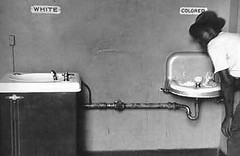
7563284292Jim Crow lawsIn the 1870s, the South passed segregation laws which required separate washrooms, drinking fountains, park benches, and most other public facilities, for blacks and whites. (p. 349)47
7563284293literacy tests, poll taxes, grandfather clausesAfter Reconstruction, various political and legal devices were created to prevent southern blacks from voting.48
7563284294white primaries, white juriesAfter Reconstruction, discrimination took many forms. Political party primaries were created for whites only, and African Americans were barred from serving on juries. (p. 349)49
7563284295lynch mobsIn the 1890s, more than 1,400 African American men were lynched (hung by a mob without trial) by Southerns.50
7563284296economic discriminationAfter Reconstruction, economic discrimination was widespread in the South. Most African Americans were kept out of skilled trades and factory jobs. African Americans remained in farming and low-paying domestic work. (p. 349)51
7563284297African American migrationIn 1894, the International Migration Society was formed to help blacks emigrate to Africa. Other blacks moved to Kansas and Oklahoma. (p. 350)52
7563284298Ida B. WellsShe was the editor of a black newspaper, she campaigned against lynching and Jim Crow laws. (p. 349)53
7563284299Booker T. WashingtonFamous African-American, who established an industrial and agricultural school for African Americans in 1881. He taught the virtues of hard work, moderation, and economic self-help. In 1900, he organized the National Negro Business League to support businesses owned by African Americans. (p. 350)54
7563284300economic cooperationBooker T. Washington's National Negro Business League emphasized racial harmony and economic cooperation. (p. 350)55
7563284301markets and farmersIn the late 1800s, farming became increasingly commercialized and specialized. They became dependent on large and expensive machinery and small, marginal farms were often driven out of business. (p. 350)56
7563284302crop price deflationAfter the Civil War, increased American and foreign food production caused a downward pressure on prices. For instance, corn per bushel prices, went from $.78 in 1867 to .$.28 in 1889. (p. 351)57
7563284303railroads and middlemenRailroads and middlemen were able to charge high or discriminatory rates in the food supply chain because they had little competition. (p. 351)58
7563284304National Grange MovementIn 1868, this organization was created primarily as a social and educational help for farmers. (p. 351)59
7563284305cooperativesGrangers established these business, owned and run by the farmers, to save the costs charged by middlemen. (p. 351)60
7563284306Granger lawsIn some states, the Grangers, with help from local businesses, successfully lobbied their state legislatures to pass laws regulating the rates charged by railroads and elevators. (p. 351)61
7563284307Munn v. IllinoisSupreme Court case in 1877, which upheld the right of a state to regulate businesses of a public nature, such as railroads. (p. 352)62
7563284308Wabash v. IllinoisSupreme Court case in 1886, which ruled that individual states could not regulate interstate commerce. (p. 352)63
7563284309Interstate Commerce CommissionThe first federal regulatory agency created to regulate interstate commerce which had the power to investigate and prosecute pools, rebates, and other discriminatory practices. (p. 352)64
7563284310Ocala Platform of 1890In 1890, a national organization of farmers, called the National Alliance, met in Florida to address the problems of rural America. It fell short of becoming a political party, but many of the reform ideas would become part of the Populist movement. (p. 352)65
7563284311census of 1890The census of 1890 declared that except for a few pockets, the entire frontier had been settled. (p. 343)66
7563284312Frederick Jackson Turner, "The Significance of the Frontier in American History"He argued that 300 years of frontier experience had shaped American culture by promoting independence and individualism. (p. 343)67
7563284313role of cities, "Nature's Metropolis"Book written by William Cronon, it argued that the frontier and cities grew up together, they were dependent on each other. (p. 353)68

AMSCO AP US History Chapter 25 Flashcards

AMSCO United States History 2015 Edition, Chapter 25 Diplomacy and World War II, 1929-1945

Terms : Hide Images
7563392405Good Neighbor PolicyPresident Franklin Roosevelt's foreign policy of promoting better relations with Latin America by using economic influence rather than military force in the region. (p. 523)0
7563392406Pan-American conferencesIn 1933, the United States attended a conference in Montevideo, Uruguay, in which we pledged to never again intervene in the internal affairs of any Latin American country. At a second conference in 1936, the U.S. agreed to the cooperation between the U.S. and Latin American countries to defend the Western Hemisphere against foreign invasion. (p. 523)1
7563392407Soviet Union recognizedThe Republican presidents of the 1920's had refused to grant diplomatic recognition to the Communist regime that ruled the Soviet Union. President Franklin Roosevelt promptly changed this policy by granting recognition in 1933. (p. 524)2
7563392408Independence for PhilippinesIn 1934, President Roosevelt persuaded Congress to pass the Tydings-McDuffie Act which provided independence for the Philippines by 1946. (p. 524)3
7563392409reciprocal trade agreementsIn 1934, Congress enacted a plan that would reduce tariffs for nations that reciprocated with comparable reductions for U.S. imports. (p. 524)4
7563392410Japan takes ManchuriaIn September 1931, Japanese troops invaded Manchuria, on China's eastern seaboard. The League of Nations passed a resolution condemning the action but did not take action. (p. 521)5
7563392411Stimson DoctrineIn 1932, Secretary of State Henry Stimson said the United States would not recognize territorial changes resulting from Japan's invasion of Manchuria. (p. 522)6
7563392412fascismA political system in which people glorify their nation and their race through an aggressive show of force. Economic hardships led to the rise of military dictatorships, first in Italy, then in Japan and Germany. (p. 524)7
7563392413Italian Fascist partyIn 1922, they seized power in Italy. They attracted dissatisfied war veterans, nationalists, and those afraid of rising communism. They marched on Rome and installed Mussolini in power. (p. 524)8
7563392414Benito MussoliniHe founded the Italian Fascist Party, and sided with Hitler and Germany in World War II. In 1945, he was overthrown and assassinated by the Italian Resistance. (p. 524)9
7563392415EthiopiaIn 1935, fascist Italy invaded this African nation. (p. 526)10
7563392416German Nazi partyThis party arose in 1920's Germany in reaction to deplorable economic conditions after war and national resentments over the Treaty of Versailles. By 1933, the party under leader Adolph Hitler, had gained control of the German legislature. (p. 524)11
7563392417Adolf HitlerAustrian-born founder of the German Nazi Party and chancellor of the Third Reich (1933-1945). His fascist philosophy, embodied in the book Mein Kampf attracted widespread support, and after 1934 he ruled as an absolute dictator. Hitler's pursuit of aggressive nationalist policies resulted in the invasion of Poland (1939) and the subsequent outbreak of World War II. His regime was infamous for the extermination of millions of people, especially European Jews. He committed suicide in 1945, when the collapse of the Third Reich was imminent. (p. 524)12
7563392418Axis PowersAlliance of Germany, Italy, and Japan during World War II.13
7563392419Spanish Civil WarIn 1936, a rebellion erupted in Spain after a coalition of Republicans, Socialists, and Communists was elected. General Francisco Franco led the rebellion. The revolt quickly became a civil war, by 1939 Franco had established a military dictatorship. (p. 525)14
7563392420Francisco FrancoIn 1936, he plunged Spain into a Civil War. By 1939, Franco's Fascist had established a military dictatorship. (p. 525)15
7563392421RhinelandIn 1936, Adolf Hitler invaded this region. This was in violation of the Treaty of Versailles which had declared the area a demilitarized zone. (p. 526)16
7563392422SudetenlandIn 1938, Hitler insisted Germany had the right to take over an area in western Czechoslovakia. (p. 526)17
7563392423MunichA 1938 conference, at which European leaders attempted to appease Hitler by turning over the Sudetenland to him in exchange for promise that he would not expand Germany's territory any further. (p. 526)18
7563392424appeasementA policy of making concessions to an aggressor in the hopes of avoiding war. In the years 1935 to 1938, a series of military actions by Fascist dictatorships made Britain, France, and the United States nervous, but they did nothing to stop the actions. * 1935 - Italy invades Ethiopia * 1936 - German troops invade the Rhineland * 1937 - Japan invades China * 1938 - Germany takes the Sudetenland (p. 526)19
7563392425Poland; blitzkriegOn September 1, 1939, Germany invaded this country using overwhelming air power and fast-moving tanks, a term of warfare called lightning war. Britain and France then declared war against Germany. (p. 528)20
7563392426isolationismA policy of non-participation in international economic and political relations. A 1934 committee led by Senator Gerald Nye concluded the main reason for participation in World War I was because of the bankers and arm manufacturers greed. This caused the U.S. public to be against any involvement in the early stages of World War II. (p.. 525)21
7563392427Nye CommitteeIn 1934, a Senate committee led by South Dakota Senator Gerald Nye to investigate why America became involved in World War I. They concluded that bankers and arm manufacturers pushed the U.S. into the war so they could profit from selling military arms. This committee's work pushed America toward isolationism for the following years. (p. 525)22
7563392428Neutrality ActsLaws passed by isolationists in the late 1930s, that were designed to keep the United States out of international wars. (p. 525)23
7563392429America First CommitteeIn 1940, after World War II had begun in Asia and Europe, isolationists became alarmed by President Roosevelt's support for Britain. To mobilize American public opinion against the war, they formed this committee. Charles A. Lindbergh was one of it spokesmen. (p. 525)24
7563392430Charles LindberghIn 1927, this U.S. aviator thrilled the world, by making the first nonstop flight from Long Island to Paris. In 1940, he was a speaker for the isolationist America First Committee. (p. 480, 525)25
7563392431Quarantine speechIn 1937, President Franklin D. Roosevelt made this speech after Japan invaded China. He proposed that democracies act together to "quarantine" Japan. Public reaction to the speech by the American public was negative, and the idea was abandoned. (p. 526)26
7563392432cash and carryPolicy adopted by the United States in 1939 to preserve neutrality, while aiding Great Britain. Great Britain could buy U.S. military arms if it paid in full and used its own ships to transport them. (p. 528)27
7563392433Selective Training and Service ActIn 1940, Roosevelt passed this law requiring all males aged 21 to 36 to register for military service. (p. 528)28
7563392434destroyers-for-bases dealIn September 1940, Roosevelt cleverly arranged a trade that would help Great Britain. The United States gave Britain fifty older but still serviceable US destroyers, in exchange the U.S. was given the right to build military bases on British Islands in the Caribbean. (p. 528)29
7563392435FDR, third termIn the 1940 presidential election, Franklin D. Roosevelt won a third term in office. (p. 529)30
7563392436Wendell WillkieFranklin Roosevelt's Republican opponent in the 1940 Presidential election. (p. 529)31
7563392437Four Freedoms speechA speech by President Franklin Roosevelt on January 6, 1941 that proposed lending money to Britain for the purchase of U.S. military weapons. He argued that the U.S. must help other nations defend "four freedoms" (freedom of speech, freedom of religion, freedom from want, and freedom from fear). (p. 529)32
7563392438Lend-Lease ActIn March 1941, this act permitted Britain to obtain all U.S. arms they needed on credit during World War II. (p. 529)33
7563392439Atlantic CharterIn August 1941, U.S. president Franklin D. Roosevelt and British prime minister Winston Churchill met aboard a ship off the coast of Newfoundland. They created this agreement which outlined the principles for peace after the war. (p. 530)34
7563392440escort convoysIn July 1941, the U.S. began to provide protection for British ship carrying U.S. arms being transported to Britain. (p. 530)35
7563392441oil and steel embargoIn September 1940, Japan joined the Axis powers. The United States responded by prohibiting export of steel and scrap iron to Japan and other countries. In July 1941, when Japan invaded French Indochina, the U.S. cut off Japanese access to many vital materials, including U.S. oil. (p. 530)36
7563392442Pearl HarborOn December 7, 1941, a date that will live in infamy, this U.S. naval base in Honolulu, Hawaii was bombed by Japanese planes. 2,400 Americans were killed and 20 warships were sunk or severely damaged. The next day, the United States declared war on Japan. (p. 531)37
7563392443War Production BoardDuring World War II, President Roosevelt established this agency to allocated scarce materials, limit or stop the production of civilian goods, and distribute contracts among competing manufacturers. (p. 531)38
7563392444Office of Price AdministrationThis World War II federal agency regulated most aspects of civilian lives by freezing prices, wages, and rents and rationing commodities in order to control inflation. (p. 532)39
7563392445government spending, debtDuring World War II federal spending increased 1000 percent between 1939 and 1945, and the gross national product grew by 15 percent or more each year. By the war's end, the national debt was $250 billion, five times what it had been in 1941. (p. 532)40
7563392446role of large corporationsDuring World War II, the 100 largest corporations accounted for 70 percent of wartime manufacturing. (p. 532)41
7563392447research and developmentThe United States government worked closely with industrial companies, universities, and research labs to create and improve technologies that could be used to defeat the enemy. (p. 532)42
7563392448Manhattan ProjectCode name for the secret United States project set up in 1942 to develop atomic bombs for use in World War II. (p. 532)43
7563392449Office of War InformationEstablished by the government to promote patriotism and help keep Americans united behind the World War II effort. (p. 533)44
7563392450the Good WarThe term for the unity of Americans supporting the democratic ideals in fighting World War II. (p. 533)45
7563392451wartime migrationDuring World War II, over 1.5 million African-Americans migrated from the South to job opportunities in the North and the West. (p. 533)46
7563392452civil rights, Double VDuring World War II civil rights leaders encouraged African Americans to adopt the Double V slogan - one for victory, one for equality. (p 533)47
7563392453executive order on jobsDuring World War II, President Roosevelt issued an executive order to prohibit discrimination in government and in businesses that received federal contracts. (p. 533)48
7563392454Smith v. AllwrightThis Supreme Court case in 1944 ruled that it was unconstitutional to deny membership in political parties to African Americans as a way of excluding them from voting in primaries. (p. 533)49
7563392455Braceros programA program the American and Mexican governments agreed to, in which contract laborers would be admitted to the United States for a limited time as migrant farm workers (p. 533)50
7563392456Japanese internmentIn 1942, over 100,000 Japanese Americans living on the United States West coast were rounded up and put in internment camps. (p. 534)51
7563392457Korematsu v. U.S.A 1944 Supreme Court case which upheld the order providing for the relocation of Japanese Americans. It was not until 1988 that Congress formally apologized and agreed to pay financial compensation to each survivor. (p. 534)52
7563392458Rosie the RiveterA propaganda character designed to increase production of female workers in industrial jobs in the shipyards and defense plants during World War II. (p. 534)53
7563392459wartime solidarityThe New Deal helped immigrant groups feel more included, and serving together in combat or working together in defense plants helped to reduce prejudices. (p. 534)54
7563392460election of 1944In this presidential election, Franklin D. Roosevelt replaced his vice president with Harry S. Truman, as they ran against Republican Thomas Dewey. Roosevelt won an unprecedented fourth term, but he died within three months. (p. 534)55
7563392461Harry S. TrumanHe became president on April 12, 1945, when President Franklin Roosevelt died suddenly. In August 1945, he order an atomic bomb be dropped on Hiroshima then on Nagasaki, to end the war with Japan. Japan surrendered on September 2, 1945. (p. 537, 538)56
7563392462Battle of the AtlanticThe protracted naval war to control the shipping lanes in the North Atlantic. (p. 535)57
7563392463strategic bombingUnited States bomber carried out daylight bombing raids on military targets in Europe, but the lines between military and civilian targets became blurred as war went on. (p. 535)58
7563392464Dwight EisenhowerThe United States general who commanded the invasion of Normandy (D-Day), Casablanca and the defeat of Nazi Germany. (p. 536)59
7563392465D-DayOn June 6, 1944 the Allies landed in northern France with the largest invasion by sea in history. By the end of August Paris was liberated from the Nazis, and by September Allied troops had crossed the German border. (p. 536)60
7563392466HolocaustA methodical plan, orchestrated by Germany's Adolph Hitler to eliminate Jews, non-conformists, homosexuals, non-Aryans, and mentally and physically disabled. Six million Jews and several million non-Jews would be murdered by the Nazis. (p. 536)61
7563392467island-hoppingThe United States strategy in the Pacific, which called for capturing Japanese-held islands in the Pacific and moving on to others to bring the American military closer and closer to Japan itself. (p. 536)62
7563392468Battle of MidwayOn June 4-7, 1942, the U.S. naval victory over the Japanese fleet at Midway Island. The Japanese lost four of their best aircraft carriers. The battle marked a turning point in the war in the Pacific. (p. 536)63
7563392469Douglas MacArthurUnited States general who served as chief of staff and commanded Allied forces in the South Pacific during World War II. (p. 537)64
7563392470kamikaze attacksJapanese pilots would deliberately crash their planes into American ships, killing themselves, but also inflicting severe damage to the ships. (p. 537)65
7563392471J. Robert OppenheimerAmerican theoretical physicist and professor of physics. He led the top-secret Manhattan Project, which built the world's first atomic bomb. (p. 537)66
7563392472atomic bombA nuclear weapon in which enormous energy is released by nuclear fission. (p. 537)67
7563392473Hiroshima; NagasakiOn August 6, 1945, the United States dropped the first atomic bomb on Hiroshima, Japan. Then on August 9, a second atomic bomb was dropped on Nagasaki. About 250,000 Japanese died as a result. Within a week after the second bomb was dropped, Japan agreed to surrender. (p. 537)68
7563392474Big ThreeThe leaders of the Allies during World War II included: Soviet Union - Joseph Stalin, Great Britain - Winston Churchill, United States - Franklin Roosevelt. (p. 537)69
7563392475Casablanca ConferenceThe conference attended by Roosevelt and Churchill in January 1943, to discuss the strategy to win World War II. The plan called for the invasion of Sicily and Italy by British and American troops. They resolved to accept nothing less than unconditional surrender of Axis powers. (p. 537)70
7563392476unconditional surrenderA surrender with any demands or requests. (p. 538)71
7563392477Tehran, Yalta, PotsdamThe three cities that held conferences for the leaders of the Allied powers, United States, Great Britain, and Soviet Union during World War II. (p. 538)72
7563392478United NationsOn October 24, 1945, this international organization formed after World War II to promote international peace, security, and cooperation. (p. 539)73

AMSCO AP US History Chapter 9 Flashcards

AMSCO United States History 2015 Edition, Chapter 9 Sectionalism, 1820-1860

Terms : Hide Images
6683070588NortheastIn the early 19th century, the area which included New England and the Middle Atlantic states. (p. 173)0
6683070589Old NorthwestIn the early 19th century, the territory which stretched from Ohio to Minnesota. (p. 173)1
6683070590sectionalismLoyalty to a particular region of the country. (p. 173)2
6683070591NativistsNative-born Americans who reacted strongly against the immigrants, they feared the newcomers would take their jobs and weaken the culture of the Protestant and Anglo majority. (p. 176)3
6683070592American partyIn the early 1850s, this party which opposed immigrants, nominated candidates for office. They were also called the Know-Nothing party. (p. 176)4
6683070593Supreme Order of the Star-Spangled BannerA secret anti-foreign society in the 1840s. In the 1850s the society turned to politics by forming the American party. (p. 176)5
6683070594Know-Nothing PartyNativists, also known as the American party. (p. 176)6
6683070595Free African AmericansBy 1860 as many as 250,000 African Americans in the South were free citizens. Most of them lived in the cities where they could own property. However, they were not allowed to vote or work in most skilled professions. (p. 179)7
6683070596plantersThe South's small wealthy elite that owned more than 100 slaves and more than 1000 acres. (p. 180)8
6683070597Codes of ChivalryThe Southern aristocratic planter class ascribed to a code of chivalrous conduct, which included a strong sense of personal honor, defense of womanhood, paternalistic attitudes toward all who were deemed inferior. (p. 180)9
6683070598poor whitesThe term for the three-fourths of the South's white population who owned no slaves. (p. 180)10
6683070599hillbilliesDerisive term for poor white subsistence farmers, they often lived in the hills and farmed less productive land. (p. 180)11
6683070600mountain menIn the 1820s, these were the earliest white people in the Rocky Mountains. They trapped for furs and served as guides for settlers traveling to the West coast. (p. 181)12
6683070601the WestThe term that referred to the new area that was being settled, the location changed as the white settlements moved westward. (p. 181)13
6683070602the frontierThe area that was newly settled in the West, it moved further west over time. (p. 181)14
6683070603Deep SouthThe cotton rich area of the lower Mississippi Valley. (p. 178)15
6683070604American Indian removalBy 1850, most American Indians were living west of the Mississippi River. The Great Plains provide temporary relief from white settlers encroaching on their territory. (p. 181)16
6683070605Great PlainsNative Americans in this area used the horse to hunt buffalo. Tribes such as the Cheyenne and the Sioux, became nomadic hunters following the buffalo herds. (p. 181)17
6683070606white settlersIn the 1840s and 1850s, they settled the Western frontier. They worked hard, lived in log cabins or sod huts. Disease and malnutrition were even greater dangers than attacks by American Indians. (p. 182)18
6683070607urbanizationEarly 19th century urban working class neighborhoods featured crowded housing, poor sanitation, infectious diseases, and high rates of crime. (p. 174)19
6683070608urban lifeThe North's urban population grew from about 5 percent of the population in 1800 to 15 percent by 1850. (p. 174)20
6683070609new citiesAfter 1820, Buffalo, Cleveland, Detroit, Chicago, Cincinnati, and St. Louis developed as transportation points for shipping agricultural products to the East, and receiving manufactured goods from the East. (p. 175)21
6683070610Irish potato famineFrom 1820 to 1860, almost 2 million immigrants came from Ireland. Most of them were tenant farmers driven from their homeland by potato crop failures. (p. 176)22
6683070611Roman CatholicMost of the Irish were this religion and they faced strong discrimination because of it. (p. 176)23
6683070612Tammany HallNew York City's Democratic organization. (p. 176)24
6683070613GermansIn the 1840s and 1850s, because of economic hardship and the failure of democratic revolutions, one million of these people came to the United States. They often established homesteads in the Old Northwest and generally prospered. (p. 176)25
6683070614immigrationFrom the 1830s to the 1850s, four million people came from northern Europe to the United States. (p. 175)26
6683070615King CottonBy the 1850s, this agricultural product was by far the South's most important economic force. (p. 177)27
6683070616Eli WhitneyThe United States inventor of the mechanical cotton gin, which made cotton affordable throughout the world. (p. 178)28
6683070617peculiar institutionA term that referred to slavery because many southern whites were uneasy with the fact that slaves were human beings yet treated so unfairly. Some used historical and religious arguments to support their claim that it was good for both slave and master. (p. 178)29
6683070618Denmark VeseyIn 1822, he led a major slave uprising which was quickly and violently suppressed. However, it gave hope to enslaved African Americans, drove Southern states to tighten already strict slave codes, and demonstrated to many the evils of slavery. (p. 179)30
6683070619Nat TurnerIn 1831, he led a major slave uprising. (p. 179)31
6683070620slave codesIn parts of the Deep South, slaves made up nearly 75 percent of the population. Fearing slave revolts, laws were passed which restricted blacks movements and education. (p. 178)32
6683070621Industrial RevolutionOriginally this revolution was centered in the textile industry, but by the 1830's, northern factories were producing a wide range of goods - everything from farm implements to clocks and shoes. (p. 174)33
6683070622unionsFor a brief period in the 1830s an increasing number of urban workers joined unions and participated in strikes. (p. 174)34
6683070623Commonwealth v. HuntIn 1842, the Massachusetts Supreme Court ruled that peaceful unions had the right to negotiate labor contracts with employers. (p. 174)35
6683070624ten-hour workdayDuring the 1840s and 1850s, most northern state legislatures passed laws establishing a ten-hour workday for industrial workers. (p. 174)36
6683070625Cyrus McCormickUnited States inventor and manufacturer of a mechanical reaper, which made farms more efficient. (p. 175)37
6683070626John DeereUnited States inventor of the steel plow, which made farms more efficient. (p. 175)38
6683070627Daniel WebsterA senator, who warned that sectionalism was dangerous for the United States. (p. 173)39
6683070628environmental damageThis term, described what occurred when settlers cleared forests and exhausted the soil. (p. 182)40
6683070629extinctionThis term, described what trappers and hunters did to the beaver and buffalo populations. (p. 182)41

Pages

Subscribe to CourseNotes RSS

Need Help?

We hope your visit has been a productive one. If you're having any problems, or would like to give some feedback, we'd love to hear from you.

For general help, questions, and suggestions, try our dedicated support forums.

If you need to contact the Course-Notes.Org web experience team, please use our contact form.

Need Notes?

While we strive to provide the most comprehensive notes for as many high school textbooks as possible, there are certainly going to be some that we miss. Drop us a note and let us know which textbooks you need. Be sure to include which edition of the textbook you are using! If we see enough demand, we'll do whatever we can to get those notes up on the site for you!