AP Notes, Outlines, Study Guides, Vocabulary, Practice Exams and more!

AP US History Period 8 (1945-1980) Flashcards

Terms : Hide Images
8356316861Cold WarA state of political and military tension after World War II between powers in the Western Bloc and powers in the Eastern Bloc. Historians do not fully agree on the dates, but 1947-91 is common.0
8356316862authoritarianA form of government characterized by strong central power and limited political freedoms.1
9822745864containmenta foreign policy of collective security, in which economic security was recognized as a major component2
8356316863communistA political system focused on creating a socioeconomic order structured upon the common ownership of the means of production and the absence of social classes, money, and the state. Purists of the communist movement also advocated for a violent overthrow of the upper class by the lower classes in order to create such a society.3
8356316864free-market economyA system in which the prices for goods and services are set freely by consent between vendors and consumers, in which the laws and forces of supply and demand are free from any intervention by a government, price-setting monopoly, or other authority.4
8356316865collective securityA type of coalition building strategy in which a group of nations agrees not to attack each other and to defend each other against an attack from one of the others, if such an attack is made.5
8356316866DétenteA French term often used in reference to the general easing of the geo-political tensions between the Soviet Union and the United States which began in 1969, as a foreign policy of U.S. presidents Richard Nixon and Gerald Ford called détente; a "thawing out" or "un-freezing" at a period roughly in the middle of the Cold War.6
9822834416nuclearU.S. policy following World War II, was one of maintaining a strong military and building up a ______________ arsenal.7
8356316867ICBMInter-continental Ballistic Missile - a ballistic missile with a minimum range of more than 5,500 kilometers (3,400 mi) primarily designed for nuclear weapons delivery (delivering one or more nuclear warheads).8
9822846838civil libertiesDuring the quest to stop the spread of communism in the American ____________ were under threat.9
8356316868SALT TalksTwo rounds of bilateral conferences and corresponding international treaties involving the United States and the Soviet Union—the Cold War superpowers—on the issue of armament control. The two rounds of talks and agreements were SALT I and SALT II.10
9823370786McCarthyHis investigative tactics found support among many Americans because there was widespread fear of communist infiltration in the United States.11
8356316869Tet OffensiveOne of the largest military campaigns of the Vietnam War, launched on January 30, 1968, by forces of the Viet Cong and North Vietnamese People's Army of Vietnam against the forces of the South Vietnamese Army of the Republic of Vietnam, the United States, and their allies. A campaign of surprise attacks against military and civilian commands and control centers throughout South Vietnam12
8356316870Students for a Democratic Society (SDS)A student activist movement in the United States that was one of the main representations of the New Left. The organization developed and expanded rapidly in the mid-1960s before dissolving at its last convention in 1969.13
8356316871Martin Luther King, Jr.An American Baptist minister, activist, humanitarian, and leader in the African-American Civil Rights Movement.14
9823410468communistsJoseph McCarthy used various methods to root out possible __________ within the United States15
8356316872nonviolent resistanceThe practice of achieving goals such as social change through symbolic protests, civil disobedience, economic or political noncooperation, satyagraha, or other methods, without using violence. Common examples: Boycotts, Sit-ins16
8356316873boycottTo withdraw from commercial or social relations with (a country, organization, or person) as a punishment or protest.17
9823430470WWIThe political climate during McCarthy's era had the most in common with the attacks on radicals and immigrants following _________.18
8356316874sit-InA form of direct action that involves one or more people occupying an area for a protest, often to promote political, social, or economic change.19
8356316875Executive Order 9981Issued by President Harry S. Truman on July 26, 1948. It abolished racial discrimination in the United States Armed Forces and eventually led to the end of segregation in the services.20
8356316876Brown v. Board of Education of Topeka, Kansas (1954, Warren)Unanimous decision declaring the "separate but equal" clause of the Plessy v. Ferguson ruling unconstitutional.21
8356316877Civil Rights Act of 1964A landmark piece of civil rights legislation in the United States[5] that outlawed discrimination based on race, color, religion, sex, or national origin.22
8356316878The Great SocietyA set of domestic programs in the United States launched by Democratic President Lyndon B. Johnson in 1964-65. The main goal was the elimination of poverty and racial injustice.23
9823485951containingThe Truman Doctrine and the Marshall Plan were similar in that they provided economic aid while ____________ Soviet influence.24
8356316879The Baby Boom(1946-1964) The period of time when the number of annual births exceeded 2 per 100 women (or approximately 1% of the total population size) in the United States.25
8356316880social mobilityThe movement of individuals, families, households, or other categories of people within or between layers or tiers in an open system of social stratification.26
8356316881suburbA residential area or a mixed use area, either existing as part of a city or urban area or as a separate residential community within commuting distance of a city.27
8356316882Sun BeltA region of the United States generally considered to stretch across the Southeast and Southwest (the geographic southern United States). Another rough boundary of the region is the area south of the 36th parallel, north latitude.28
8356316883CountercultureA subculture whose values and norms of behavior differ substantially from those of mainstream society, often in opposition to mainstream cultural mores. Such opinions became more visible and popular, especially in the 1960s and early 1970s in response to the Vietnam War.29
9823502553AsiaThe U.S. applied the policy of containment in _________ as well as in Europe.30
8356316884Gideon v. Wainwright (1963)Extends to the defendant the right of counsel in all state and federal criminal trials regardless of their ability to pay.31
8356316885Escobedo v. Illinois (1964)Ruled that a defendant must be allowed access to a lawyer before questioning by police.32
8356316886Miranda v. Arizona (1966)The court ruled that those subjected to in-custody interrogation be advised of their constitutional right to an attorney and their right to remain silent.33
9823518153insubordination to TrumanWhy was Douglas MacArthur removed from command during the Korean War?34
8356316887Roe v. Wade (1973)The court legalized abortion by ruling that state laws could not restrict it during the first three months of pregnancy. Based on 4th Amendment rights of a person to be secure in their persons.35
8356316888Dwight D. EisenhowerA World War II hero and former supreme commander of NATO who became U.S. president in 1953 after easily defeating Democratic opponent Adlai E. Stevenson.36
8356316889DixiecratsConservative southern Democrats who objected to President Truman's strong push for civil-rights legislation. Southern Democrats who broke from the party in 1948 over the issue of civil rights and ran a presidential ticket as the States' Rights Democrats with J. Strom Thurmond of South Carolina as a canidate.37
8356316890Truman DoctrinePresident Truman's policy of providing economic and military aid to any country threatened by communism or totalitarian ideology; mainly helped Greece and Turkey.38
8356316891Marshall PlanA plan that the US came up with to revive war-torn economies of Europe and encourage loyalty and friendliness to the United States and democracy (instead of influence from the Soviet Union). This plan offered $13 billion in aid to western and Southern Europe.39
8356316892Joseph McCarthyThe senator of Wisconsin; he charged 205 State Department employees, and accused them of being communist party members, but they were never proven. Eventually he came across as a bully, and his popularity plunged.40
8356316893Soviet UnionA Communist nation, consisting of Russia and 14 other states, that existed from 1922 to 1991.41
8356316894ContainmentA U.S. foreign policy adopted by President Harry Truman in the late 1940s, in which the United States tried to stop the spread of communism by creating alliances and helping weak countries to resist Soviet advances.42
9850107824Rosa ParksThe actions of ________ led to the Reverend Martin Luther King becoming a national figure in politics.43
8356316895NSC-68A National Security Council document, approved by President Truman in 1950, developed in response to the Soviet Union's growing influence and nuclear capability; it called for an increase in the US conventional and nuclear forces to carry out the policy of containment.44
8356316896Domino TheoryA theory that if one nation comes under Communist control, then neighboring nations will also come under Communist control.45
9850095281Beat GenerationThe 1950s literary and cultural movement that rejected the decade's social conformity was called the46
9850088601collective securityThe formation of NATO and the Warsaw Pact were similar in that they called for47
8356316897Martin Luther King, Jr.U.S. Baptist minister and civil rights leader. A noted orator, he opposed discrimination against blacks by organizing nonviolent resistance and peaceful mass demonstrations. He was assassinated in Memphis, Tennessee. Nobel Peace Prize (1964)48
8356316898Malcolm XMinister of the Nation of Islam, urged blacks to claim their rights by any means necessary, more radical than other civil rights leaders of the time.49
8356316899Little Rock NineIn September 1957 the school board in Little rock, Arkansas, won a court order to admit nine African American students to Central High a school with 2,000 white students. The governor ordered troops from Arkansas National Guard to prevent the nine from entering the school. The next day as the National Guard troops surrounded the school, an angry white mob joined the troops to protest the integration plan and to intimidate the AA students trying to register. The mob violence pushed Eisenhower's patience to the breaking point. He immediately ordered the US Army to send troops to Little Rock to protect and escort them for the full school year.50
9850039402expanding federal aid to education with the National Defense Education ActWhen the Soviet Union successfully launched the first artificial satellite Sputnik in 1957, Congress responded by51
8356316900Voting Rights Act of 1965A law designed to help end formal and informal barriers to African American suffrage. Under the law, hundreds of thousands of African Americans were registered and the number of African American elected officials increased dramatically.52
8356316901SputnikFirst artificial Earth satellite, it was launched by Moscow in 1957 and sparked U.S. fears of Soviet dominance in technology and outer space. It led to the creation of NASA and the space race.53
8356316902John F. Kennedy35th President of the United States 35th President of the United States; only president to have won a Pulitzer Prize; events during his administration include the Bay of Pigs Invasion, the Cuban Missile Crisis, the building of the Berlin Wall, the Space Race, the African American Civil Rights Movement and early events of the Vietnam War; assassinated in Dallas, TX in 196354
8356316903Election of 1960Brought about the era of political television. Between Kennedy and Nixon. Issues centered around the Cold War and economy. Kennedy argued that the nation faces serious threats from the soviets. Nixon countered that the US was on the right track under the current administration. Kennedy won by a narrow margin.55
9849995631massive buildup of conventional troopsPresident Eisenhower's Cold War strategy relied on56
8356316904Kent State ShootingsIncident in which National Guard troops fired at a group of students during an antiwar protest at Kent State University in Ohio, killing four people.57
8356316905Golf of Tonkin ResolutionBill passed in 1964 that gave President Johnson authority to take "all necessary measures to repel any armed attack against forces of the U.S." after an alleged attack on a naval vessel off the coast of Vietnam. It gave Johnson the ability to send over a large amount of combat troops to Vietnam.58
9849980200Truman Doctrine of 1947Its purpose was to prevent communism from spreading further through military aggression59
8356316906War Powers Act1973. A resolution of Congress that stated the President can only send troops into action abroad by authorization of Congress or if America is already under attack or serious threat.60
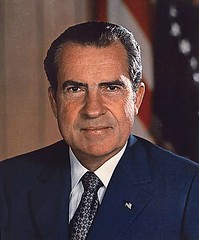
8356316907Richard NixonElected President in 1968 and 1972 representing the Republican party. He was responsible for getting the United States out of the Vietnam War by using "Vietnamization", which was the withdrawal of 540,000 troops from South Vietnam for an extended period. He was responsible for the Nixon Doctrine. Was the first President to ever resign, due to the Watergate scandal.61
8356316908New ConservatismThis mostly republican political movement started as a reaction to the New Deal policies of the 1930's. Its goal was to reduce the role of government.62
8356316909Iron CurtainA term popularized by British Prime Minister Winston Churchill to describe the Soviet Union's policy of isolation during the Cold War. The barrier isolated Eastern Europe from the rest of the world.63
9849969387Joseph McCarthyHe effectively played on the fears of Americans that communists had infiltrated the State department and other federal agencies64
8356316910Fair DealAn economic extension of the New Deal proposed by Harry Truman that called for higher minimum wage, housing and full employment. It led only to the Housing Act of 1949 and the Social Security Act of 1950 due to opposition in congress.65
9849946067extension of Social Security, desegregation of military, and the Employment ActDuring Truman's administration there were three major accomplishments66
8356316911Rosenberg TrialThe controversial 1951 trial of two Americans, Ethel and Julius Rosenberg, charged with passing atomic secrets to the Soviet Union; the two were sentenced to death and executed in 1953, making them the only American civilians to be put to death for spying during the Cold War.67
8356316912RollbackA strategy that called for liberating countries that were under Soviet dominion.68
8356316913House Un-American Activities CommitteeThe House of Representatives established the Committee on Un-American Activities, popularly known as "HUAC," in order to investigate "subversion." Represented the political group associated with McCarthy's anti-communism.69
9849922533migration of southern blacks to urban centers in the NorthThe origins of the modern civil rights movement can be traced back to70
9822161983Post WWIIIn reshaping the role of the U.S. in global affairs, the U.S. became the political and economic leader of the Western world.71
8356316914Interstate ActThe largest public works project in the US history in acted during the Eisenhower administration it was designed for military and economic purposes.72
8356316915Suez CrisisNasser took over the Suez Canal to show separation of Egypt from the West, but Israel, the British, Iraq, and France were all against Nasser's action. The U.S. stepped in before too much serious fighting began.73
9849915260acceptance of the New Deal, but moderation in the expansion of governmental social programsPresident Eisenhower's economic policy can be best characterized as74
9822107927political and economic resistance to the spread of Soviet communismWhich broad U.S. policy goal of the mid-twentieth century was supported by George C. Marshall?75
9849873948Federal Highway Act of 1956The growth of suburbia was vastly accelerated by the76
8356316916Massive RetaliationThe "new look" defense policy of the Eisenhower administration of the 1950's was to threaten "massive retaliation" with nuclear weapons in response to any act of aggression by a potential enemy.77
8356316917U-2 IncidentThe incident when an American U-2 spy plane was shot down over the Soviet Union. The U.S. denied the true purpose of the plane at first, but was forced to when the U.S.S.R. produced the living pilot and the largely intact plane to validate their claim of being spied on aerially. The incident worsened East-West relations during the Cold War and was a great embarrassment for the United States.78
8356316918LevvitownPost-WWII Suburban areas that were practically factory made and then put together which each house look the same.79
8356316919Operation WetbackProgram which apprehended and returned some one million illegal immigrants to Mexico - end of the Braceros program started during WWII.80
9849866408to finance the economic reconstruction of Western EuropeMain goal of the Marshall Plan81
8356316920Affluent SocietyTerm used by economist John Kenneth Galbraith to describe the American economy in the 1950s, during which time many Americans joined the middle class and became enraptured with appliances and homes in the suburbs.82
9822092919Mortgages were at low rates, government-insured, and tax deductible.The main reason for the dramatic increase in personal ownership of homes after World War II was83
8356316921BeatsYoung people, many of whom were writers and artists, who discussed their dissatisfaction with the American society of the 1950s.84
9849858345Americans from urban centers to the suburbsMigration pattern that had the greatest impact on U.S. society in the 1950s85
8356316922HippiesMembers of the youthful counterculture that dominated many college campuses in the 1960s; rather than promoting a political agenda, they challenged conventional sexual standards, rejected traditional economic values, and encouraged the use of drugs.86
8356316923Betty FriedenAuthor of The Feminine Mystique (1963) she spoke out against women seeking fulfillment solely as wives and mothers and wanted women to "establish goals that will permit them to find their own identity."87
9821961610William LevittHelped the expansion of the American suburbs by D. introducing mass-produced housing developments88
8356316924Warren CourtThe Supreme Court during the period when Earl Warren was chief justice, noted for its activism in the areas of civil rights and free speech.89
9849851490braceroA program in which Mexican workers to come to the U.S. as temporary laborers from the 1940s to the 1960s90
8356316925CORECongress of Racial Equality, and organization founded in 1942 that worked for black civil rights.91
8356316926NAACPNational Association for the Advancement of Colored People, founded in 1909 to abolish segregation and discrimination, to oppose racism and to gain civil rights for African Americans, got Supreme Court to declare grandfather clause unconstitutional.92
9849827539Castro in Cuba, Sputnik, U-2 spy planeThree crisis points during Eisenhower's presidency93
9821934385consumerismThe baby boom generation spurred ___________ as manufacturers produced age-specific products for "boomers."94
8356316927SCLCThe Southern Christian Leadership Conference is an African-American civil rights organization. SCLC, which is closely associated with its first president, Dr. Martin Luther King, Jr., had a large role in the American Civil Rights Movement.95
8356316928Freedom rides1961 event organized by CORE and SNCC in which an interracial group of civil rights activists tested southern states' compliance to the Supreme Court ban of segregation on interstate buses.96
8356316929SNCC(Student Non-Violent Coordinating Committee) a group established in 1960 to promote and use non-violent means to protest racial discrimination; they were the ones primarily responsible for creating the sit-in movement.97
9849815972rapid increase of suburbsA significant demographic development in the two decades following the Second World War was a98
8356316930March on WashingtonIn August 1963, civil rights leaders organized a massive rally in Washington to urge passage of President Kennedy's civil rights bill. The high point came when MLK Jr., gave his "I Have a Dream" speech to more than 200,000 marchers in front of the Lincoln Memorial.99
8356316931Black PowerA slogan used to reflect solidarity and racial consciousness, used by Malcolm X. It meant that equality could not be given, but had to be seized by a powerful, organized Black community.100
9821923152traditionalAs the baby boom generation reached late adolescence in the early 1960s, they tended to challenge the ____________ views and values of the older generation.101
8356316932Black PanthersA black political organization that was against peaceful protest and for violence if needed. The organization marked a shift in policy of the black movement, favoring militant ideals rather than peaceful protest.102
984978119938th ParallelKorea was divided at the103
8356316933Cesar ChavezNon-violent leader of the United Farm Workers from 1963-1970. Organized laborers in California and in the Southwest to strike against fruit and vegetable growers. Unionized Mexican-American farm workers.104
8356316934Elvis Presley1950s; a symbol of the rock-and-roll movement of the 50s when teenagers began to form their own subculture, dismaying to conservative parents; created a youth culture that ridiculed phony and pretentious middle-class Americans, celebrated uninhibited sexuality and spontaneity; foreshadowed the coming counterculture of the 1960s.105
9849808338D. Plessy v. FergusonThe Supreme Court case of Brown v. Board of Education of Topeka directly contradicted the legal principle established by106
9849789338separation of students based solely on race constituted inherently unequal treatmentThe unanimous Supreme Court decision in Brown v. Board of Education of Topeka stated that segregated schools were unconstitutional because107
9821899927baby boomThe ______________ generation was sometimes referred to as a "pig in a python" because society had to adjust to baby boomers as they passed through various life stages108
8356316935Equal Rights AmendmentA constitutional amendment originally introduced in Congress in 1923 and passed by Congress in 1972, stating that "equality of rights under the law shall not be denied or abridged by the United States or by any state on account of sex." Despite public support, the amendment failed to acquire the necessary support from three-fourths of the state legislatures.109
9849802875seek collective action against North Korea through the United NationsThe initial response of the United States to the outbreak of war in Korea was to110
8356316936Silent SpringA book written (Rachel Carson) to voice the concerns of environmentalists. Launched the environmentalist movement by pointing out the effects of civilization development.111
9821885132Berlin Airliftthe delivery of goods and necessities after a Soviet blockade of West Berlin112
9849771881Koren WarTruman's containment policy worked by stopping Communist aggression without allowing the conflict to develop into a world war.113

AMSCO AP US History Chapter 24 Flashcards

AMSCO United States History 2015 Edition, Chapter 24 The Great Depression and the New Deal, 1929-1939

Terms : Hide Images
7563310065stock market crashA boom stock market of 1928 led to a sell off starting in October 1929. Within three years the stock market would decline to one-ninth of its peak. (p. 497)0
7563310066Black TuesdayOn October 29, 1929, millions of panicky investors sold, as the bottom fell out of the stock market. (p. 497)1
7563310067Dow Jones indexThe Wall Street stock market index. In September 1929 the index was at a high of 381, in three months it fell to 198. Three years later, the index would finally hit bottom at 41, less than one-ninth of the peak. (p. 497)2
7563310068buying on marginThis purchase method allowed people to borrow most of the cost of the stock, making down payments as low as 10 percent. Investors depended on the price of the stock increasing so they could repay their loans. (p. 497)3
7563310069uneven income distributionWages had risen relatively little compared to the large increases in productivity and corporate profits. Economic success was not shared by all, as the top 5 percent of the richest Americans received over 33 percent of all income. (p. 497)4
7563310070excessive debtConsumers and businesses believed the economic boom was permanent so they increased borrowing, which later led to loan defaults and bank failures. (p. 498)5
7563310071overproductionBusiness growth, aided by increased productivity and use of credit, had produced a volume of goods that workers with stagnant wages could not continue to purchase. (p. 498)6
7563310072Federal ReserveDuring the Great Depression, the Federal Reserve followed a tight money policy. Instead of trying to stabilize banks, the money supply and prices, they tried to preserve the gold standard. (p. 498)7
7563310073postwar EuropeEurope had not recovered from World War I and the U.S. insistence on loan repayment and tariffs weaken Europe and contributed to the Worldwide depression. (p. 498)8
7563310074debts and high tariffsLeading up to the Great Depression, the United States insisted on full World War I loan repayments and high tariffs on imports. This weakened Europe and contributed to the worldwide depression. (p. 498)9
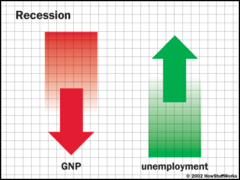
7563310075Gross National ProductThe value of all the goods and services produced by a nation in one year. In 1929, the United States Gross National Product was $104 billion, but it dropped to $56 billion in 1932. (p. 498)10
7563310076unemploymentBy 1933 25% of the workforce, not including farmers, did not have employment. (p. 498)11
7563310077bank failuresDuring the Great Depression 20 percent of all banks failed. (p. 498)12
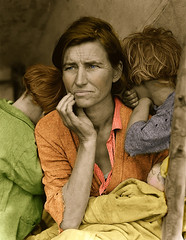
7563310078poverty and homelessDuring the Great Depression poverty and homelessness increased. (p. 499)13
7563310079Herbert HooverHe was President of the United States at the time of the stock market crash. He thought that prosperity would soon return. He was slow to call for legislative action and he thought public relief should come from the state and local governments, not the federal government. (p. 500)14
7563310080self-reliancePresident Herbert Hoover did not ask Congress for legislative action on the economy until the summer of 1930. He was concerned that government assistance to individuals would destroy their self-reliance. (p. 500)15
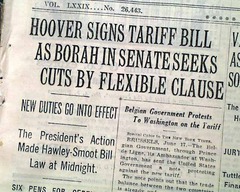
7563310081Hawley-Smoot TariffIn June 1930, President Hoover signed into law the highest tariff rates in history, ranging from 31 to 49 percent. In retaliation, European countries enacted their own tariffs. This reduced trade for all nations and worsened the worldwide depression. (p. 500)16
7563310082debt moratoriumSuspension on the payment of international debts. In 1931, President Hoover proposed a suspension of international debt payments. (p. 500)17
7563310083Farm BoardIt was authorized to help farmers stabilize prices by temporarily holding surplus grain and cotton in storage. (p. 500)18
7563310084Reconstruction Finance CorporationIn 1932, Congress funded this government-owned corporation as a measure for propping up faltering railroads, banks, life insurance companies, and other financial institutions. President Hoover thought that emergency loans would stabilize key business and the benefits would "trickle down" to smaller businesses and ultimately bring recovery. (p. 501)19
7563310085Twentieth AmendmentAlso known as the lame-duck amendment, this amendment shortened the period between the presidential election and inauguration. The new president's term would start on January 20. (p. 502)20
7563310086bonus marchThousands of unemployed World War I veterans marched to Washington, D.C. and set up encampments to demand immediately payment of the bonuses promised to them at a later date. The Army, led by General Douglas MacArthur broke up the encampment. (p. 501)21
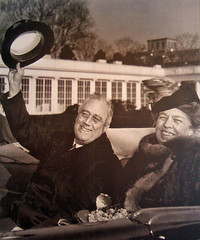
7563310087Franklin D. RooseveltThis Democratic candidate won the 1932 presidential election. As a candidate, he promised a "new deal" for the American people, the repeal of Prohibition, aid for the unemployed, and cuts in government spending. (p. 502)22
7563310088Eleanor RooseveltShe was the most active first lady in history, writing a newspaper column, giving speeches, and traveling the country. She served as the president's social conscience and influenced him to support minorities. (p. 502)23
7563310089New DealFranklin D. Roosevelt's plan to help people at the bottom of the economic pyramid. (p. 503)24
7563310090relief, recovery, reformThe New Deal included the three R's: relief for people out of work, recovery for business and the economy, and reform of American economic institutions. (p. 503)25
7563310091Brain TrustFor advice on economic matters, Roosevelt turned to a group of university professors. (p. 503)26
7563310092Frances PerkinsRoosevelt's secretary of labor, she was the first woman to serve in a president's cabinet. (p. 503)27
7563310093Hundred DaysOn March 4, 1933, Franklin Roosevelt started his term and called Congress into a one hundred day session. They passed into law all of Roosevelt's legislation. (p. 503)28
7563310094repeal of ProhibitionIn 1933, the 21st Amendment was passed. It repealed the 18th Amendment. This ended Prohibition. (p. 503)29
7563310095bank holidayPresident Franklin Roosevelt ordered the banks to be closed on March 6, 1933. He made a radio address explaining that the banks would be reopened after allowing enough time for the government to reorganize them on a sound basis. (p. 503)30
7563310096fireside chatsPresident Franklin Roosevelt spoke on the radio to the American people. (p. 504)31
7563310097Federal Deposit Insurance CorporationThis agency guaranteed individual bank deposits. (p. 504)32
7563310098Public Works AdministrationDirected by Secretary of the Interior Harold Ickes, it allotted money to state and local governments for building roads, bridges, dams, and other public works. (p. 504)33
7563310099Harold IckesPresident Franklin D. Roosevelt's secretary of the interior. (p. 504)34
7563310100Civilian Conservation CorpThis organization employed young men for projects on federal lands and paid their families small monthly sums. (p. 504)35
7563310101Tennessee Valley AuthorityA government corporation that hired thousands of people in the Tennessee Valley, to build dams, operate electric power plants, control flooding, and erosion, and manufacture fertilizer. (p. 505)36
7563310102National Recovery AdministrationDirected by Hugh Johnson, this agency attempted to guarantee reasonable profits for business and fair wages and hours for labor. The complex program operated with limited success for two years before the Supreme Court declared it unconstitutional. (p. 505)37
7563310103Schechter v. U.S.In 1935, the Supreme Court declared the National Recovery Administration (NRA) unconstitutional. (p. 505)38
7563310104Securities and Exchange CommissionThis agency was created to regulate the stock market and to place strict limits on the kind of speculative practices that led to the 1929 stock crash. (p. 505)39
7563310105Federal Housing AdministrationIt insured bank loans for building new houses and repairing old ones. (p. 505)40
7563310106Works Progress AdministrationThis agency created in 1935, part of the Second New Deal, it was much more ambitious than earlier efforts. Between 1935 and 1940 up to 3.4 million people were hired to construct bridges, roads, airports, and public buildings. Artists, writers, actors, and photographers were also employed. (p. 506)41
7563310107Harry HopkinsHe headed the Works Progress Administration (WPA) in the 1930s. (p. 506)42
7563310108National Labor Relations (Wagner) ActA 1935 act that guaranteed a worker's right to join a union and a union's right to bargain collectively. It outlawed business practices that were unfair to labor. (p. 507)43
7563310109Social Security ActIn 1935, this act created a federal insurance program based on the automatic collection of taxes from employees and employers throughout people's working careers. Monthly payments would be made to retired people over the age of 65. (p. 507)44
7563310110election of 1936Franklin D. Roosevelt easily defeated the Republican nominee, Alf Landon. (p. 507)45
7563310111New Deal coalitionFrom the 1930s to 1960s, this political coalition consisted of the Solid South, white ethnic groups in cities, midwestern farmers, labor unions, and liberals. (p. 508)46
7563310112John Maynard KeynesBritish economist, whose theory said that in difficult times government needed to spend well above its tax revenues in order to stimulate economic growth. After the 1937 recession, Roosevelt adopted this strategy, which was successful. (p. 511)47
7563310113recession of 1937In the winter of 1937 the economy went into recession again. The new Social Security tax had reduced consumer spending and at the same time Roosevelt had cut back government spending in hopes of balancing the budget. (p. 511)48
7563310114Father Charles CoughlinA Catholic priest who founded the National Union for Social Justice, which called for issuing inflated currency and nationalizing all banks. His radio program attacks on the New Deal were anti-Semitic and Fascist. (p. 508)49
7563310115Francis TownsendHe proposed a simple plan for guaranteeing a secure income for the elderly. He proposed that a 2 percent federal sales tax be used to create a special fund from which every retired person over the age of 60 would receive $200 a month thus stimulating the economy. (p. 509)50
7563310116Huey LongHe proposed a "Share Our Wealth" program that promised a minimum annual income of $5000 for every American family to be paid for by taxing the wealthy. In 1935 he challenged Roosevelt's leadership of the Democratic party by becoming a candidate for president but was soon assassinated. (p. 509)51
7563310117Supreme CourtIn 1935, they declared two of President Roosevelt's recovery programs unconstitutional. (p. 509)52
7563310118reorganization planPresident Franklin Roosevelt proposed a plan that allowed the president to appoint a new Supreme Court justice for each current justice over the age of 70. Congress refused to pass this legislation. (p. 509)53
7563310119conservative coalitionRepublicans and many Democrats were outraged by President Franklin Roosevelt's plan to reorganize the Supreme Court. (p. 509)54
7563310120Congress of Industrial OrganizationsThis labor union concentrated on organizing unskilled workers in the automobile, steel, and southern textile industries. (p. 510)55
7563310121John L. LewisHe was President of the United Mine Workers Union and Leader of the Congress of Industrial Organizations. (p. 510)56
7563310122sit-down strikeIn 1937 workers at the General Motors plant in Flint, Michigan insisted on the right to join a union by sitting down at the assembly line. (p. 510)57
7563310123Fair Labor Standards ActIn 1938 this act established a minimum wage, a maximum standard workweek with extra pay for overtime, and child labor restrictions. (p. 511)58
7563310124minimum wageEstablish minimum pay for workers, initially set at 40 cents per hour. (p. 511)59
7563310125depression mentalityMillions of people who lived through the Great Depression developed an attitude of insecurity and economic concern that remained throughout their lives. (p. 512)60
7563310126drought, dust bowl, OkiesA severe drought in the early 1930s and poor farming practices led to the Oklahoma dust bowl. High winds away large amounts of topsoil. (p. 512)61
7563310127John Steinbeck, "The Grapes of Wrath"A novelist that wrote about hardships in his classic study of economic heartbreak in 1939, "The Grapes of Wrath". (p. 512)62
7563310128Marian AndersonAn African American singer who had been refused the use of Constitution Hall, she performed a special concert at the Lincoln Memorial. (p. 513)63
7563310129Mary McLeod BethuneOne of the African Americans that was appointed to middle-level positions in federal government. She was a leader of efforts for improving education and economic opportunities for women. (p. 513)64
7563310130Fair Employment Practices CommitteeIt was set up to assist minorities in gaining jobs in defense industries. (p. 513)65
7563310131A. Phillip RandolphHead of Railroad Porters Union who threatened a march on Washington D.C. to demand equal job opportunities for African Americans. (p. 513)66
7563310132Indian Reorganization (Wheeler-Howard) ActIn 1934 Congress repealed the Dawes Act of 1887 and replaced it with this act which returned lands to the control of tribes and supported preservation of Indian cultures. (p. 513)67
7563310133Mexican deportationDiscrimination in the New Deal programs and competition for jobs forced thousands of Mexican Americans to return to Mexico. (p. 513)68

AMSCO AP US History Chapter 13 Flashcards

AMSCO United States History 2015 Edition, Chapter 13 The Union in Peril, 1848-1861

Terms : Hide Images
5056678756free-soil movementThis movement did not oppose slavery in the South, but they did not want the Western states to allow slavery. (p. 247)0
5182433133Free-Soil partyIn 1848, Northerns organized this party to advocate that the new Western states not allow slavery and provide free homesteads. Their slogan was, "free soil, free labor, free men". (p. 248)1
5056678757conscience WhigsWhigs that opposed slavery. (p. 248)2
5056678758barnburnersAntislavery Democrats, whose defection threatened to destroy the the Democratic party. (p 248)3
5056678777New England Emigrant Aid CompanyNorthern abolitionist and Free-Soilers set up this company to pay for the transportation of antislavery settlers to the Kansas Territory. They did this to shift the balance of power against slavery in this new territory. (p. 253)4
5056678778bleeding KansasAfter 1854, the conflicts between antislavery and proslavery forces exploded in the Kansas Territory. (p. 252)5
5056678779Pottawatomie CreekIn 1856, abolitionist John Brown and his sons attacked this proslavery farm settlement and killed five settlers. (p. 253)6
5056678781Lecompton constitutionIn 1857, President James Buchanan asked that Congress accept this document and admit Kansas as a slave state. Congress did not accept it. (p. 255)7
5056678759popular sovereigntyAround 1850, this term referred to the idea that each new territory could determine by vote whether or not to allow slavery would be allowed in that region. (p. 248)8
5056678760Lewis CassThis Democratic senator from Michigan, proposed popular sovereignty as the solution to the slavery question in the territories. (p. 248)9
5056685751Henry ClayHe proposed the Compromise of 1850. (p. 249)10
5056678761Zachary TaylorThe twelfth president of the United States from 1849 to 1850. He was a general and hero in the Mexican War. He was elected to the presidency in 1848, representing the Whig party. He died suddenly in 1850 and Millard Fillmore became the president. (p 248, 249)11
5056678762Compromise of 1850Henry Clay proposed and it was signed into law by President Millard Fillmore. It proposed: * Admit California to the Union as a free state * Divide the remainder of the Mexican Cession into New Mexico and Utah (popular sovereignty) * Give land in dispute between Texas and New Mexico to federal government in return for paying Texas' public debt of 10 million * Ban slave trade in D. C., but permit slaveholding * New Fugitive Slave Law to be enforced (p. 249)12
5056678763Stephen A. DouglasIn 1854, he devised the Kansas-Nebraska Act, which in effect overturned the Missouri Compromise, and allowed the South the opportunity to expand slavery. In 1858, he debated Abraham Lincoln in a famous series of seven debates in the campaign for the Illinois senate seat. He won the campaign for reelection to the Senate, but he alienated Southern Democrats. In 1860, he won the Democratic presidential nomination, but Southern Democrats nominated their own candidate, John Breckinridge. He was easily defeated by Abraham Lincoln in the presidential election that year. (p. 252, 256, 258)13
5056678764Millard FillmoreThe thirteenth president of the United States, serving from 1850 until 1853, and the last member of the Whig Party to hold that office. He was the second Vice President to become president upon the death of a sitting President, when he succeeded Zachary Taylor. As vice president he helped pass the Compromise of 1850. (p. 249, 255)14
5056678772Kansas-Nebraska ActThis 1854 act, sponsored by Senator Stephen A Douglas, would build a transcontinental railroad through the central United States. In order gain approval in the South, it would divide the Nebraska territory into Nebraska and Kansas and allow voting to decide whether to allow slavery. This increased regional tensions because it effectively repealed the Missouri Compromise, which had already determined that this area would not allow slavery. (p. 252)15
5056678788Crittenden compromiseIn the winter of 1860-1861, Senator John Crittenden proposed a constitutional amendment to appease the South. He proposed that slavery would be allowed in all areas south of the 36 30 line. The Republicans rejected the proposal because it would allow extension of slavery into the new territories. (p. 260)16
5056678771Franklin PierceThe fourteenth President of the United States from 1853 to 1857. A Democrat from New Hampshire, he was acceptable to Southern Democrats because he supported the Fugitive Slave Law. (p. 252)17
5056678773Know-Nothing partyThis political party started in the mid-1850s. Also known as the American party, they were mostly native-born Protestant Americans. Their core issue was opposition to Catholics and immigrants who were entering Northern cities in large numbers. (p. 254)18
5056678774Republican partyThis political party formed in 1854, in response to the passage of the Kansas-Nebraska Act. It was composed of a coalition of Free-Soilers, antislavery Whigs, and Democrats. Although not abolitionist, it sought to block the spread of slavery in the territories. (p. 254)19
5056678775John C. FremontIn the presidential election of 1856, this California senator was the Republican nominee. The Republican platform called for no expansion of slavery, free homesteads, and a probusiness protective tariff. He lost the election to James Buchanan, but won 11 of the 16 free states, which foreshadowed the emergence of a powerful Republican party. (p. 255)20
5056678776James BuchananThe fifteenth President of the United States from 1857 to 1861. He tried to maintain a balance between proslavery and antislavery factions, but his moderate views angered radicals in both North and South, and he was unable to forestall the secession of South Carolina to December 20, 1860. During his term: "Bleeding Kansas" (1856), Caning of Senator Sumner (1856), Lecompton Constitution (1857), Dred Scott case (1857) (p. 255)21
5056678787election of 1860In this presidential election, the Republican candidate, Abraham Lincoln won. Lincoln won all the northern states, while John C. Breckinridge, a South Democrat, won all the southern states. The South felt like it no longer had a voice in national politics and a number of states soon seceded from the Union. (p. 258)22
5056704738sucessionThe election of Abraham Lincoln was the final event that caused the southern states to leave the Union. In December 1860, South Carolina voted unanimously to secede. Within the next six weeks Georgia, Florida, Alabama, Mississippi, Louisiana, and Texas had all seceded. In February 1861, representatives of seven states met in Montgomery, Alabama to create the Confederate States of America. (p. 259)23
5056678765Fugitive Slave LawCongress passed a second version of this law in 1850. The law's chief purpose was to track down runaway slaves who had escaped to a Northern state, capture them, and return them to their Southern owners. Enforcement of the law in the North was sometimes opposed even though there were penalties for hiding a runaway slave or obstructing enforcement of the law. (p. 250)24
5056678766Underground RailroadA network of people who helped thousands of enslaved people escape to the North by providing transportation and hiding places. (p. 250)25
5056678767Harriet TubmanBorn a slave, she escaped to the North and became the most renowned conductor on the Underground Railroad, leading more than 300 slaves to freedom. (p. 250)26
5056678782Dred Scott v. SandfordAn 1857 Supreme Court case, in which Chief Justice Roger Taney ruled that African Americans (free or slave), were not citizens of the United States, that Congress could not exclude slavery from any federal territory, and that the Missouri Compromise was unconstitutional. The ruling delighted Southern Democrats and infuriated Northern Republicans. (p. 255)27
5056706598Roger TaneyHe was a Southern Democrat and chief justice of the Supreme Court during the Dred Scott v. Sandford case. (p. 255)28
5056708687Abraham LincolnHe was elected president of the United States in 1860. He was a Republican, who ran on a platform that appealed to those in the North and the West. It called for the exclusion of slavery in the new territories, a protective tariff for industry, free land for homesteaders, and a railroad to the Pacific. (p. 258)29
5056678783Lincoln-Douglas debatesIn 1858, Stephen Douglas and Abraham Lincoln had seven debates in the campaign for the Illinois senate seat. Lincoln was not an abolitionist, but he attacked Douglas's seeming indifference to slavery as a moral issue. Although Lincoln lost the election to Douglas, he emerged as a national figure and leading contender for the Republican nomination for president. (p. 256)30
5056678784house-divided speechThe speech given by Abraham Lincoln when accepting the Republican nomination for the Illinois senate seat. He said, "This government cannot endure permanently half slave and half free". (p. 256)31
5056678785Freeport DoctrineDoctrine developed by Stephen Douglas that said slavery could not exist in a community if the local citizens did not pass laws (slave codes) maintaining it. This angered Southern Democrats. (p. 257)32
5056678780Sumner-Brooks incidentThis incident took place in 1856, when Congressman Preston Brooks severely beat Massachusetts Senator Charles Sumner. The attack occurred in the Senate chamber, after Sumner gave a vitriolic speech, "The Crime Against Kansas". (p. 254)33
5056715641John BrownHe led his four sons and some former slaves, in an attack on the federal arsenal, called the Harpers Ferry raid. (p. 257)34
5056678786Harpers Ferry raidIn October 1859, John Brown led his four sons and some former slaves, in an attack on the federal arsenal at Harpers Ferry. His impractical plan was to obtain guns to arm Virginia's slaves, whom he hoped would rise up in a general revolt. He and six of his followers were captured and hanged. Southern whites saw the raid as proof of the north's true intentions - to use slave revolts to destroy the South. (p. 257)35
5056678768Harriet Beecher Stowe, Uncle Tom's CabinIn 1852, she wrote this influential book about the conflict between a slave named Tom, and a brutal white slave owner, Simon Legree. It caused a generation of Northerners and many Europeans to regard all slave owners as cruel and inhuman. Southerners believed it to be proof of Northern prejudice against the Southern way of life. (p. 250)36
5056678769Hinton R. Helper, Impending Crisis of the SouthIn 1857, he wrote this nonfiction book, that attacked slavery using statistics to demonstrate to fellow Southerners that slavery weakened the South's economy. Southern states banned the book, but it was widely read in the North. (p. 250)37
5056678770George Fitzhugh, Sociology of the SouthIn 1854, he wrote this proslavery book which argued that slavery was a positive good for slave and master alike. He was the boldest and most well known of proslavery authors. He questioned the principle of equal rights for unequal men and attacked the capitalist wage system as worse than slavery. (p. 251)38

AP US History Period 7 (1890-1945) Flashcards

Terms : Hide Images
6734523952imperialistA policy of extending a country's power and influence through diplomacy or military force.0
6734523953isolationismA category of foreign policies institutionalized by leaders who asserted that their nations' best interests were best served by keeping the affairs of other countries at a distance.1
6734523976Open Door PolicyThe policy that China should be open to trade with all of the major powers, and that all, including the United States, should have equal right to trade there. This was the official American position toward China as announced by Secretary of State John Hay in 1899.2
6734523954Spanish-American WarA conflict fought between Spain and the United States in 1898. Hostilities began in the aftermath of sinking of the USS Maine in Havana harbor leading to American intervention in the Cuban War of Independence.3
6734523943Progressive EraA period of widespread social activism and political reform across the United States, from the 1890s to 1920s.4
6734523967progressiveIn politics, one who believes in continuing progress, improvement, or reform.5
6734523968initiativeIn politics, the procedure whereby voters can, through petition, present proposed legislation directly to the electorate.6
6734523969referendumThe submission of a law, proposed or already in effect, to a direct vote of the electorate.7
6734523970recallIn politics, a procedure for removing an official from office through popular election or other means.8
6734523944ProhibitionA nationwide constitutional ban on the production, importation, transportation and sale of alcoholic beverages that remained in place from 1920 to 1933.9
6734523945Women's suffrageThe women's right to vote, granted by the 19th amendment to the U.S. Constitution (1920).10
6734523942The Great DepressionThe deepest and longest-lasting economic downturn in the history of the Western industrialized world. In the United States, the Great Depression began soon after the stock market crash of October 1929, which sent Wall Street into a panic and wiped out millions of investors.11
6734523947conservationistsThose who advocate for the sustainable use and management of natural resources including wildlife, water, air, and earth deposits, both -- renewable and non-renewable.12
6734523948Welfare StateA system whereby the government undertakes to protect the health and well-being of its citizens, especially those in financial or social need, by means of grants, pensions, and other benefits. The foundations for the modern welfare state in the US were laid by the New Deal programs of President Franklin D. Roosevelt.13
6734523949LiberalismA viewpoint or ideology associated with free political institutions and religious toleration, as well as support for a strong role of government in regulating capitalism and constructing the welfare state.14
6734523950mass mediaDiversified mediatechnologies that are intended to reach a large audience by mass communication.15
6734523951The Great MigrationThe movement of 6 million African-Americans out of the rural Southern United States to the urban Northeast, Midwest, and West that occurred between 1910 and 1970.16
6734523955Treaty of VersaillesOne of the peace treaties at the end of World War I. It ended the state of war between Germany and the Allied Powers. Signed on 28 June 1919, exactly five years after the assassination of Archduke Franz Ferdinand.17
6734523956League of NationsAn intergovernmental organization founded on 10 January 1920 as a result of the Paris Peace Conference that ended the First World War. It lacked an armed force to enforce policy and was not joined by the United States.18
6734523957fascismAn authoritarian and nationalistic right-wing system of government and social organization.19
6734523958Axis PowersGermany, Italy, and Japan, which were allied before and during World War II.20
6734523959Allied PowersU.S., Britain, France, which were allied before and during World War II.21
6734523960Nazi Concentration CampA guarded compound for the detention or imprisonment of aliens, members of ethnic minorities, political opponents. Primarily Jewish Europeans during WWII.22
6734523961HolocaustA genocide in which Adolf Hitler's Nazi Germany and its collaborators killed about six million Jews and members from other fringe social groups during World War II.23
6734523962Internment of Japanese AmericansForced relocation and incarceration in camps in the interior of the U.S. of between 110,000 and 120,000 people of Japanese ancestry who had lived on the Pacific coast.24
6734523963Pacific "Island Hopping"A military strategy employed by the Allies in the Pacific War against Japan and the Axis powers during World War II. The idea was to bypass heavily fortified Japanese positions and instead concentrate the limited Allied resources on strategically important islands that were not well defended but capable of supporting the drive to the main islands of Japan.25
6734523964D-DayThe landing operations on Tuesday, 6 June 1944 of the Allied invasion of Normandy in Operation Overlord during World War II.26
6734523965atomic bombA "fission" bomb dropped on Nagasaki and Hiroshima at the end of World War II.27
6734523966americanizationThe process of assimilating American character, manner, ideals, culture, and so on.28
6734523971self-determinationIn politics, the right of a people (usually based on ethnicity) to shape its own national identity and form a government, without outside coercion of influence.29
6734523972graduated income taxA tax on income in which the taxation rates are progressively higher for those whit higher income.30
6734523973Muller v. Oregon (1908)First case to use the "Brandeis brief"; recognized a 10-hour work day for women laundry workers on the grounds of health and community concerns.31
6734523974Schenck v. U. S. (1919)Unanimously upheld the Espionage Act of 1917 which declared that people who interfered with the war effort were subject to imprisonment; declared that the 1st Amendment right to freedom of speech was not absolute; free speech could be limited if its exercise presented a "clear and present danger."32
6734523975Korematsu v. U. S. (1941)The court upheld the constitutionality of detention camps for Japanese-Americans during World War 2.33
6734523977socialismAn economic and governmental system based on public ownership of the means of production and exchange.34
6734523978Eugene DebsProminent socialist leader (and five time presidential candidate) who founded the American Railroad Union and led the 1894 Pullman Strike35
6734523979Roosevelt CorollaryRoosevelt's 1904 extension of the Monroe Doctrine, stating that the United States has the right to protect its economic interests in South And Central America by using military force.36
6734523980Industrial Workers of the World (IWW)Founded in 1905, this radical union, also known as the Wobblies aimed to unite the American working class into one union to promote labor's interests. It worked to organize unskilled and foreign-born laborers, advocated social revolution, and led several major strikes. Stressed solidarity.37
6734523981Pure Food and Drug ActForbade the manufacture or sale of mislabeled or adulterated food or drugs, it gave the government broad powers to ensure the safety and efficacy of drugs in order to abolish the "patent" drug trade. Still in existence as the FDA.38
6734523982Teddy RooseveltTwenty-sixth president of the United States; he focused his efforts on trust busting, environment conservation, and strong foreign policy.39
6734523983William Taft27th president of the U.S.; he angered progressives by moving cautiously toward reforms and by supporting the Payne-Aldrich Tariff; he lost Roosevelt's support and was defeated for a second term.40
6734523984Triangle Shirtwaist FireMarch 1911 fire in New York factory that trapped young women workers inside locked exit doors; nearly 50 ended up jumping to their death; while 100 died inside the factory; led to the establishment of many factory reforms, including increasing safety precautions for workers41
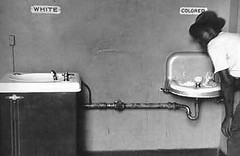
6734523985segregationSeparation of people based on racial, ethnic, or other differences. Common in the South after the Civil War through the 1960s.42
6734523986Harlem RenaissanceBlack literary and artistic movement centered in Harlem that lasted from the 1920s into the early 1930s that both celebrated and lamented black life in America; Langston Hughes and Zora Neale Hurston were two famous writers of this movement.43
6734523987Fourteen PointsThe war aims outlined by President Wilson in 1918, which he believed would promote lasting peace; called for self-determination, freedom of the seas, free trade, end to secret agreements, reduction of arms and a league of nations.44
6734523988Red ScareA social/political movement designed to prevent a socialist/communist/radical movement in this country by finding "radicals," incarcerating them, deporting them, and subverting their activities. Periods of Red Scare occurred after both World Wars in the United States.45
6734523989Sedition ActA law passed by Congress in 1918 (during World War I) to make it illegal to say anything disloyal, profane, or abusive about the government or the war effort in WWI. Seen as a military necessity by some for effectively fighting in WWI.46
6734523990Scopes TrialAlso known as the Scopes Monkey Trial; 1925 court case argued by Clarence Darrow and William Jennings Bryan in which the issue of teaching evolution in public schools was debated. Highlighted the growing divide between rural (more conservative) and urban (more liberal) interests in the United States.47
6734523991Sacco and Vanzetti TrialNicola Sacco and Bartolomeo Vanzetti were Italian immigrants charged with murdering a guard and robbing a shoe factory in Braintree, Massachusetts. The trial lasted from 1920-1927. Convicted on circumstantial evidence; many believed they had been framed for the crime because of their anarchist and pro-union activities.48
6734523992Kellog-Briand PactIdealistic agreement signed in 1928 in which nations agreed not to pose the threat of war against one another.49
6734523993Herbert HooverRepublican president at the outset of the Great Depression. As a Republican, he believed that the federal government should not interfere in economic problems; the severity of the Great Depression forced his hand to provide some federal assistance to those in need, but he mostly left these efforts to the states.50
6734523994Smoot-Hawley TariffOne of Herbert Hoover's earliest efforts to protect the nation's farmers following the onset of the Great Depression. Tariff raised rates to an all-time high.51
6734523995Platt AmendmentThis amendment to the new Cuban constitution authorized U.S. intervention in Cuba to protect its interests. Cuba pledged not to make treates with other countries that might compromise its independence, and it granted naval bases to the United States, most notable being Guantanamo Bay.52
6734523997Zoot Suit RiotsA series of riots in 1944 during World War II that broke out in Los Angeles, California, between Anglo American sailors and Marines stationed in the city, and Latino youths, who were recognizable by the zoot suits they favored.53
6734523998Yalta ConferenceFDR, Churchill and Stalin met at Yalta. Russia agreed to declare war on Japan after the surrender of Germany and in return FDR and Churchill promised the USSR concession in Manchuria and the territories that it had lost in the Russo-Japanese War.54
6734523999William Jennings BryanUnited States lawyer and politician who advocated free silver and prosecuted John Scopes (1925) for teaching evolution in a Tennessee high school (1860-1925).55
6734524000Woodrow Wilson(1856-1924) President of the United States (1913-1921) and the leading figure at the Paris Peace Conference of 1919. He was unable to persuade the U.S. Congress to ratify the Treaty of Versailles or join the League of Nations.56
6734524001United NationsAn international organization formed after WWII to promote international peace, security, and cooperation.57
6734524002communismA political theory derived from Karl Marx, advocating class war and leading to a society in which all property is publicly owned and each person works and is paid according to their abilities and needs.58
6734524003Bolshevik RevolutionThe overthrow of Russia's Provisional Government in the fall of 1917 by Lenin and his Bolshevik forces, made possible by the government's continuing defeat in the war, its failure to bring political reform, and a further decline in the conditions of everyday life.59
6734524004Wagner ActEstablished the National Labor Relations Board; allowed employees to collectively bargain60

US AP History Period 1 Flashcards

Terms : Hide Images
6674776470How did early Americans reach North and South America?They crossed a land bridge from Asia0
6674776472What were the Indians doing when they crossed the land bridge?Following food or herds1
6674776474What did the cultivation of maize do?Transform nomadic hunter-gather societies into settled farming communities2
6674776476What were the Spanish 3 motives for exploration?1. God 2. Gold 3. Glory3
6674776479Where did Columbus land?Hispainola4
6674776483Who came to the New World once it was discovered?Spanish conquistadors5
6674776485What are the 2 things the Spanish give the Indians in exchange for their work (in the Encomienda System)1. Provide food, shelter, and good treatment to the Indians 2. Convert them to Christians6
6674776486What was the Encomienda System basically?Slavery7
6674776487Who worked for Indian's rights?Bartolome de las Casas8
6674776488What happened when the Spanish ran out of Indians to do work?They went and got Africans9
6674776493What is the Biological (Columbian) Exchange?Exchange of plants, animals, and diseases between Old World and New World after the time of Columbus.10
6674776494What 3 crops from the Americas ended up being staple crops in Europe?Corn, Beans and Squash11
6674776496What diseases were from the Old World and went to the New World?Smallpox, malaria, yellow fever, influenza12
6674776498Columbian ExchangeAn exchange of goods, ideas and skills from the Old World (Europe, Asia and Africa) to the New World (North and South America) and vice versa.13
6674776499EncomiendaA grant of land made by Spain to a settler in the Americas, including the right to use Native Americans as laborers on it14
6674776500Atlantic slave tradeLasted from 16th century until the 19th century. Trade of African peoples from Western Africa to the Americas. 98% of Africans were sent to the Caribbean, South and Central America.15
6674776501Bartolome de las CasasFirst bishop of Chiapas, in southern Mexico. He devoted most of his life to protecting Amerindian peoples from exploitation. His major achievement was the New Laws of 1542, which limited the ability of Spanish settlers to compel Amerindians to labor; however his suggestion to replace Natives with Africans was won he would regret.16
6674776502MaizeAn early form of corn grown by Native Americans17
6674776503AnasaziA Native American who lived in what is now southern Colorado and Utah and northern Arizona and New Mexico and who built cliff dwellings18
6674776504IroquoisA later native group to the eastern woodlands. They blended agriculture and hunting living in common villages constructed from the trees and bark of the forests19
6674776505CherokeeAre a Native American people historically settled in the Southeastern United States (principally Georgia, the Carolinas and Eastern Tennessee). Linguistically, they are part of the Iroquoian-language family. In the 19th century, historians and ethnographers recorded their oral tradition that told of the tribe having migrated south in ancient times from the Great Lakes region, where other Iroquoian-speaking peoples were located.20
6674776513NomadEarly, simplistic man that migrated across the land bridge.21
6674776514Causes for European interest in exploration?The Holy Crusades, Renaissance and The Protestant Reformation.22

Period 4: 1800-1848 AP US History Flashcards

Terms : Hide Images
8044246863FederalistPolitical party created in the 1790s led by Alexander Hamilton; favored a stronger national government; supported primarily by the bankers and moneyed interests0
8044246864Democratic-RepublicansPolitical party created in the 1790's; led by Thomas Jefferson; favored limited government and state rights; supported primarily by the "common man"1
8044246865Election of 1800(AKA Revolution of 1800) election that led to a peaceful transfer of power from the Federalist party to the Democratic Republican Party2
8044246866Hartford Convention, 1814Meeting of Federalists during the War of 1812 discuss strategy to gain more power in government; viewed as unpatriotic by many; as a result, the Federalist Party was no longer a significant force in American politics3
8044246867Era of Good FeelingsTerm used to describe the time period after the 2nd Party System in the United States after the Federalist Party fell from the national stage, leaving only the Democratic Party; associated with the presidency of James Monroe4
8044246868DemocratsPolitical party that brought Andrew Jackson into office in 1829; part of the 2nd Party System of the United States; supported Jeffersonian ideas of limited government and individualism; drew its support from the "common Man"5
8044246869Whig PartyPolitical Party created in 1834 as a coalition of anti-Jackson political leaders and dedicated to internal improvements funded by the national government6
8044246870Andrew JacksonLeader of the Democrats who became the seventh president of the US (1829-1837); known for his opposition to the 2nd Bank of the US, the Indian Removal Act, and opposition to nullification7
8044246871Henry ClayLeader of the Whig Party who proposed an "American System" to make the United States economically self-sufficient, mostly through protective tariffs; worked to keep the Union together through political compromise8
8044246872Nullification Crisis (1832-1833)After South Carolina declared the federal tariff null and void, President Jackson obtained a Force Bill to use military actions against South Carolina; ended with a compromise to lower tariffs over an extended time; overall significance was the challenge of states to ignore federal law (later on with laws regarding slavery).9
8044246873John C. CalhounSouth Carolina political leader who defended slavery as a positive good and advocated the doctrine of nullification, a policy in which state could nullify federal law.10
8044246874John MarshallAppointed to the Supreme Court by John Adams in 1801; served as a chief justice until 1835; legal decisions gave the Supreme Court more power, strengthened the federal government, and supported protection of private property.11
8044246875Cotton BeltSouthern region in the US where most of the cotton is grown/deep; stretched from South Carolina to Georgia to the new states in the southwest frontier; had the highest concentration of slaves12
8044246876Judicial ReviewThe power of the Supreme Court to review the constitutionality of laws passed by Congress13
8044246877Market EconomyEconomic system based on the unregulated buying and selling of goods and services; prices are determined by the forces of supply and demand14
8044246878Embargo Act (1807)Passed by President Jefferson in order to pressure Britain and France to stop impressment and support the American rights to free trade with the other; a government-order ban on international trade; went into effect in 1808 and closed down virtually all U.S. trade with foreign nations; led to steep depression in the economy15
8044246879Panic of 1819Financial panic that began when the Second Bank of the US tightened credit and recalled government loans after the price of cotton dropped16
8044246880Second Bank of the United States (1816)Privately owned bank that operated as both a commercial and fiscal agent for the US government; established in 1816 under a charter that was supposed to last 20 years; Andrew Jackson was critical of the bank and its potential for corruption; ended when Jackson vetoed the extension of its charter and won reelection in the process17
8044246881Tariff of 1816First protective tariff in US history; designed primarily to help America's textile industry18
8044246882Tariff of Abominations 1828Tariff with such high rates that it set off tension between northerners and southerners over tariff issues (called the Nullification Crisis)19
8044246883Panic of 1837Economic collapse caused primarily by President Jackson's destruction of the Second Bank of the United States20
8044246884Slave CodesLaws that established the status of slaves denying them basic rights and classifying them as the property of slaveholders21
8044246885Second Great AwakeningAn upsurge in religious activity that began around 1800 and was characterized by emotional revival meetings; led to several reform movements (temperance, abolition) designed to perfect society with religious morals22
8044246886Charles FinneyPresbyterian minister who is credited and is known as the "Father of modern Revivalism"; advocated the abolition of slavery and equal education for women and African Americans23
8044246887Elizabeth Cady StantonAdvocate of women right's, including the right to vote; organized (with Lucretia Mott) the first women's rights convention at Seneca Falls, NY24
8044246888Dorothea DixPioneer in the moment for special treatment for the mentally ill25
8044246889Horace MannMassachusetts educator who called for publicly funded education for all children; called the "Father of Public Education in America"26
8044246890Utopian CommunitiesIdealistic reform movement based on the belief that a perfect society could be created on Earth; significant Utopian experiments were established at New Harmony, Indiana, Book Farm, Massachusetts and the Oneida Community in New York; usually such attempts were short-lived27
8044246891William Lloyd GarrisonRadical abolitionist in Massachusetts who published the liberator, an antislavery newspaper28
8044246892Hudson River School 1825-1875The first native school of painting in the US; painted primarily landscapes; themes included deep nationalism, grandeur of nature, and transcendentalism29
8044246893TranscendentalismPhilosophical and literary movement that believed God existed within human being and nature; believed intuition was the highest source of knowledge; advocated for introspection by surrounding oneself with nature30
8044246894Ralph Waldo EmersonPhilosopher, writer, and poet who became a central figure in the Transcendalist movement in American31
8044246895Henry David ThoreauWriter and naturalist; with Ralph Waldo Emerson, he was one of America's best known transcendentalists32
8044246896Richard AllenAfrican American minister who established the first independent African American denomination in the US, the African Methodist Episcopalian Church33
8044246897Samuel SlaterKnown as the "Father of the American Industrial Revolution"; brought British textile technology to the United States to create the first factory34
8044246898John DeereInvented the steel plow in 1837, which revolutionized farming; the steel plow broke up soil without the soil getting stuck to the plow35
8044246899Lowell SystemMethod of factory management that evolved in the textile mills of Lowell, MA36
8044246900Erie Canal (1817-1825)350 mile canal built by the state of NY that stretched from Buffalo to Albany; the canal revolutionized shipping in NY and opened up new markets (evidence of the Market Revolution)37
8044246901National Road (1811)AKA Cumberland Road; first significant road built in the US at the expense of the federal government; stretched from the Potomac River to the Ohio River38
8044246902Mason-Dixon LineBoundary between PA and MD that marked the division between free and slave states before the Civil War39
8044246903Cult of DomesticityThe belief that a woman's proper role in life was found in domestic pursuits (raising children, taking care of the house); strongly believed by many throughout the 19th century40
8044246904Louisiana Purchase (1803)U.S. purchased the Louisiana Territory from France for $15 million, doubling the size of the U.S. and giving the U.S. full control of the Mississippi River41
8044246905Lewis and Clark expedition (1804-1806)Expedition to explore the Louisiana Territory led by Meriwether Lewis and William Clark42
8044246906War HawksMembers of Congress from the West and South elected in 1810 who wanted war with Britain in the hopes of annexing new territory and ending British trade with the Indians of the Northwest43
8044246907War of 18121812-1815, War between the U.S. and Great Britain caused primarily by the perceived British violation of American neutral rights on the high seas (impressment); ended with an agreement of "status quo ante" (a return to how things were before the war)44
8044246908Adams-Onis Treaty (1819)Treaty between the U.S. and Spain that ceded Florida to the U.S45
8044246909Monroe Doctrine (1823)President Monroe's unilateral declaration that the Americas would be closed to further European colonization and that the U.S. would not allow European interference in the affairs of the Western Hemisphere; in return the U.S. pledged to stay out of European conflicts and affairs; significant foreign policy state that lasted through most of the 19th century46
8044246910Oregon Treaty of 1846After years of conflict over ownership of the Pacific Northwest, the U.S. and England established the boundary at 49° latitude, essentially splitting the Oregon Country down the middle47
8044246911Manifest DestinyPopular belief amongst early-19th century Americans that the U.S. was destined to expand across the North American continent, that this belief was obvious, and that God willed it to take place48
8044246912TecumsehShawnee leader who attempted to establish an Indian confederacy among tribes from around the continent that he hoped would be a barrier to white expansion; defeated at the Battle of Tippecanoe in 1811 by U.S. forces led by General William Henry Harrison, slowing the momentum of Pan-Indian unity49
8044246913Indian Removal Act (1830)Law that provided for the removal of all Indian tribes east of the Mississippi and the purchase of Indian lands for white resettlement50
8044246914Worcester v. Georgia (1832)A Supreme Court ruling that declared a state did not have the power to enforce laws on lands that were not under state jurisdiction; John Marshall wrote that the state of Georgia did not have the power to remove Indians; this ruling was largely ignored by President Andrew Jackson51
8044246915Trail of Tears (1838)Forced march of the Cherokee people from Georgia to Indian Territory in the winter; a large percentage of Cherokee died on the journey52
8044246916The American SystemConsisted of three mutually reinforcing parts: (1) a tariff to protect and promote American industry; (2) a national bank to foster commerce; (3) federal subsidies for roads, canals, and other "internal improvements" to develop profitable markets for agriculture; supported heavily by Henry Clay53
8044246917Missouri Compromise (1820)Admitted Missouri as a slave state and Maine as a free state, maintaining the balance between slave and free states in representation in the federal government; established a geographic line that would determine whether new states (made from the western territories) would be added to the union as slave or free states54
8044246918Spoils SystemPublic offices given as a reward for political support. Most iconically used by Andrew Jackson after his first election, which then became a precedent for future federal leaders.55
8044246919Marbury v. Madison (1803, Marshall)The Court established its role as the arbiter of the constitutionality of federal laws, the principle is known as judicial review.56
8044246920McCulloch v. Maryland (1819, Marshall)The Court ruled that states cannot tax the federal government, i.e. the Bank of the United States; the phrase "the power to tax is the power to destroy"; confirmed the constitutionality of the Bank of the United States.57
8044246921Cherokee Nation v. Georgia (1831, Marshall)"The conditions of the Indians in relation to the United States is perhaps unlike that of any two people in existence," Chief Justice John Marshall wrote, "their relation to the United States resembles that of a ward to his guardian. . .(they were a) domestic dependent nation." Established a "trust relationship" with the tribes directly under federal authority.58
8044246922interchangeable partsParts that were identical and which could be substituted for one another; developed by Eli Whitney for the manufacturing of muskets; became a hallmark of the American factory system59
8044246923tariffA tax imposed on imported goods and services. Tariffs are used to restrict trade, as they increase the price of imported goods and services, making them more expensive to consumers.60
8044246924embargoA government order prohibiting commerce in or out of a port61

Pages

Subscribe to CourseNotes RSS

Need Help?

We hope your visit has been a productive one. If you're having any problems, or would like to give some feedback, we'd love to hear from you.

For general help, questions, and suggestions, try our dedicated support forums.

If you need to contact the Course-Notes.Org web experience team, please use our contact form.

Need Notes?

While we strive to provide the most comprehensive notes for as many high school textbooks as possible, there are certainly going to be some that we miss. Drop us a note and let us know which textbooks you need. Be sure to include which edition of the textbook you are using! If we see enough demand, we'll do whatever we can to get those notes up on the site for you!