AP Notes, Outlines, Study Guides, Vocabulary, Practice Exams and more!

AP US History Period 8 (1945-1980) Flashcards

Terms : Hide Images
6643694260Lend LeaseLegislation proposed by FDR and adopted by congress, stating that the U.S could either sell or lease arms and other equipment to any country whose security was vital to America's interest -> military equipment to help Britain war effort was shipped from U.S0
6643694261Cash and Carry Policy1939. Law passed by Congress which allowed a nation at war to purchase goods and arms in US as long as they paid cash and carried merchandise on their own ships. This benefited the Allies, because Britain was dominant naval power.1
6643694262Neutrality Act4 laws passed in the late 1930s that were designed to keep the US out of international incidents. Originally designed to avoid American involvement in World War II by preventing loans to those countries taking part in the conflict; they were later modified in 1939 to allow aid to Great Britain and other Allied nations.2
6643694263Pearl Harbor7:50-10:00 AM, December 7, 1941 - Surprise attack by the Japanese on the main U.S. Pacific Fleet harbored in Pearl Harbor, Hawaii destroyed 18 U.S. ships and 200 aircraft. American losses were 3000, Japanese losses less than 100. In response, the U.S. declared war on Japan and Germany, entering World War II.3
6643694264Midway1942, An important battle in the Asian part of the war, the Americans sank 4 Japanese aircraft carriers4
6643694265MobilizationAct of assembling and putting into readiness for war or other emergency: "mobilization of the troops"5
6643694266Victory GardensBackyard gardens; Americans were encouraged to grow their own vegetables to support the war effort6
6643694267RationingA system of allocating scarce goods and services using criteria other than price7
6643694268D-Day(FDR) , June 6, 1944, 160,000 Allied troops landed along a 50-mile stretch of heavily-fortified French coastline to fight Nazi Germany on the beaches of Normandy, France. General Dwight D. Eisenhower called the operation a crusade in which "we will accept nothing less than full victory." More than 5,000 Ships and 13,000 aircraft supported the D-Day invasion, and by day's end on June 6, the Allies gained a foot- hold in Normandy.8
6643694269Battle of the BulgeDecember, 1944-January, 1945 - After recapturing France, the Allied advance became stalled along the German border. In the winter of 1944, Germany staged a massive counterattack in Belgium and Luxembourg which pushed a 30 mile "bulge" into the Allied lines. The Allies stopped the German advance and threw them back across the Rhine with heavy losses.9
6643694270Manhattan ProjectCode name for the U.S. effort during World War II to produce the atomic bomb. Much of the early research was done in New York City by refugee physicists in the United States.10
6643694271HiroshimaCity in Japan, the first to be destroyed by an atomic bomb, on August 6, 1945. The bombing hastened the end of World War II.11
6643694272Island HoppingA military strategy used during World War II that involved selectively attacking specific enemy-held islands and bypassing others12
6643694273Iwo Jimaa bloody and prolonged operation on the island of Iwo Jima in which American marines landed and defeated Japanese defenders (February and March 1945)13
6643694274United NationsAn international organization whose stated aims are to facilitate co-operation in international law, international security, economic development, social progress and human rights issues. It was founded in 1945 at the signing of the United Nations Charter by 50 countries, replacing the League of Nations, founded in 1919.14
6643694275Yalta ConferenceFDR, Churchill and Stalin met at Yalta. Russia agreed to declare war on Japan after the surrender of Germany and in return FDR and Churchill promised the USSR concession in Manchuria and the territories that it had lost in the Russo-Japanese War15
6643694276Potsdam ConferenceJuly 26, 1945 - Allied leaders Truman, Stalin and Churchill met in Germany to set up zones of control and to inform the Japanese that if they refused to surrender at once, they would face total destruction.16
6643694277Rosie the RiveterA propaganda character designed to increase production of female workers in the factories. It became a rallying symbol for women to do their part.17
6643694278LevittownIn 1947, William Levitt used mass production techniques to build inexpensive homes in surburban New York to help relieve the postwar housing shortage. Levittown became a symbol of the movement to the suburbs in the years after WWII.18
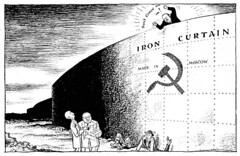
6643694279Iron CurtainA political barrier that isolated the peoples of Eastern Europe after WWII, restricting their ability to travel outside the region19
6643694280Truman Doctrine1947, President Truman's policy of providing economic and military aid to any country threatened by communism or totalitarian ideology, mainly helped Greece and Turkey20
6643694281Marshall PlanA United States program of economic aid for the reconstruction of Europe (1948-1952)21
6643694282Berlin BlockadeThe blockade was a Soviet attempt to starve out the allies in Berlin in order to gain supremacy. The blockade was a high point in the Cold War, and it led to the Berlin Airlift.22
6643694283Korean WarThe conflict between Communist North Korea and Non-Communist South Korea. The United Nations (led by the United States) helped South Korea.23
6643694284McCarthyismThe term associated with Senator Joseph McCarthy who led the search for communists in America during the early 1950s through his leadership in the House Un-American Activities Committee.24
6643694285Brown v Board of Education, 19541954 - The Supreme Court overruled Plessy v. Ferguson, declared that racially segregated facilities are inherently unequal and ordered all public schools desegregated.25
6643694286Montgomery Bus BoycottIn 1955, after Rosa Parks was arrested for refusing to give up her seat on a city bus, Dr. Martin L. King led a boycott of city busses. After 11 months the Supreme Court ruled that segregation of public transportation was illegal.26
6643694287Interstate Highway Act1956 law that authorized the spending of $32 billion to build 41,000 miles of highway27
6643694288Little Rock ArkansasIncident where President Eisenhower sent federal troops to allow black students into the high school.28
6643694289SputnikFirst artificial Earth satellite, it was launched by Moscow in 1957 and sparked U.S. fears of Soviet dominance in technology and outer space. It led to the creation of NASA and the space race. Led the US to focus on Math & Science in American schools.29
6643694290Sit insProtests by black college students, 1960-1961, who took seats at "whites only" lunch counters and refused to leave until served; in 1960 over 50,000 participated in sit-ins across the South. Their success prompted the formation of the Student Non-Violent Coordinating Committee.30
6643694291NASAThe National Aeronautics and Space Administration (NASA) is the United States government agency responsible for the civilian space program as well as aeronautics and aerospace research.31
6643694292Berlin WallA fortified wall surrounding West Berlin, Germany, built in 1961 to prevent East German citizens from traveling to the West. Its demolition in 1989 symbolized the end of the Cold War. This wall was both a deterrent to individuals trying to escape and a symbol of repression to the free world.32
6643694293Bay of PigsIn April 1961, a group of Cuban exiles organized and supported by the U.S. Central Intelligence Agency landed on the southern coast of Cuba in an effort to overthrow Fidel Castro. When the invasion ended in disaster, President Kennedy took full responsibility for the failure.33
6643694294Freedom Rides1961 event organized by CORE and SNCC in which an interracial group of civil rights activists tested southern states' compliance to the Supreme Court ban of segregation on interstate buses34
6643694295Cuban Missile CrisisAn international crisis in October 1962, the closest approach to nuclear war at any time between the U.S. and the USSR. When the U.S. discovered Soviet nuclear missiles on Cuba, President John F. Kennedy demanded their removal and announced a naval blockade of the island; the Soviet leader Khrushchev acceded to the U.S. demands a week later, on condition that US doesn't invade Cuba35
6643694296Rachel CarsonUnited States biologist remembered for her opposition to the use of pesticides that were hazardous to wildlife (1907-1964) in her book Silent Spring. Considered the birth of environmentalism36
6643694297March on WashingtonHeld in 1963 to show support for the Civil Rights Bill in Congress. Martin Luther King gave his famous "I have a dream..." speech. 250,000 people attended the rally37
6643694298JFK AssassinatedNovember 1963, President John F Kennedy was assassinated in Dallas, Texas.38
6643694299Civil Rights Act of 19641964; banned discrimination in public acomodations, prohibited discrimination in any federally assisted program, outlawed discrimination in most employment; enlarged federal powers to protect voting rights and to speed school desegregation; this and the voting rights act helped to give African-Americans equality on paper, and more federally-protected power so that social equality was a more realistic goal39
6643694300Voting Rights Act of 19651965; invalidated the use of any test or device to deny the vote and authorized federal examiners to register voters in states that had disenfranchised blacks; as more blacks became politically active and elected black representatives, it rboguth jobs, contracts, and facilities and services for the black community, encouraging greater social equality and decreasing the wealth and education gap40
6643694301Gulf of Tonkin Resolution1964 Congressional resolution that authorized President Johnson to commit US troops to south vietnam and fight a war against north Vietnam41
6643694302Cesar Chavez1927-1993. Farm worker, labor leader, and civil-rights activist who helped form the National Farm Workers Association, later the United Farm Workers.42
6643694303Malcolm X1952; renamed himself X to signify the loss of his African heritage; converted to Nation of Islam in jail in the 50s, became Black Muslims' most dynamic street orator and recruiter; his beliefs were the basis of a lot of the Black Power movement built on seperationist and nationalist impulses to achieve true independence and equality. Assassinated in 1965 by the Nation of Islam.43
6643694304Stonewall RiotIn New York City, 1969 - Triggered activist protests among gays and lesbians - police raided gay bar - people fought back - became symbol of oppression of gays, began the gay pride movement44
6643694305WoodstockA free music festival that attracted more than 400,000 young people to a farm in upstate New York in August 196945
6643694306Earth DayA holiday conceived of by environmental activist and Senator Gaylord Nelson to encourage support for and increase awareness of environmental concerns; first celebrated on March 22, 197046
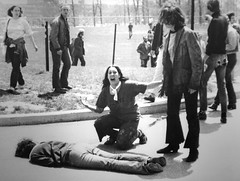
6643694307Kent State MassacreProtests to the war that lead to National Guard being called in and shot students because they burned the ROTC building. Three students were killed, 1970.47
6643694308Nixon in ChinaFebruary 21, 1972 - Nixon visited for a week to meet with Chairman Mao Tse-Tung for improved relations with China, Called "ping-pong diplomacy" because Nixon played ping pong with Mao during his visit. Nixon agreed to support China's admission to the United Nations.48
6643694309SALT I TreatyA five-year agreement between the U.S. and the Soviet Union, sighned in 1972, that limited the nations' numbers of intercontinental ballistic missiles and submarine-launched missiles.49
6643694310Roe v WadeEstablished national abortion guidelines; trimester guidelines; no state The 1973 Supreme Court decision holding that a state ban on all abortions was unconstitutional. The decision forbade state control over abortions during the first trimester of pregnancy, permitted states to limit abortions to protect the mother's health in the second trimester, and permitted states to protect the fetus during the third trimester.50
6643694311Watergate1972; Nixon feared loss so he approved the Commission to Re-Elect the President to spy on and espionage the Democrats. A security gaurd foiled an attempt to bug the Democratic National Committe Headquarters, exposing the scandal. Seemingly contained, after the election Nixon was impeached and stepped down51
6643694312Jimmy Carter(1977-1981), Created the Department of Energy and the Depatment of Education. He was criticized for his return of the Panama Canal Zone, and because of the Soviet war in Afghanistan, he enacted an embargo on grain shipments to USSR and boycotted the 1980 Olympics in Moscow and his last year in office was marked by the takeover of the American embassy in Iran, fuel shortages, and the Soviet Invasion of Afghanistan, which caused him to lose to Ronald Regan in the next election.52
6643694313Camp David Accords(1978) were negotiated at the presidential retreat of Camp David by Egypt's Anwar Sadat and Israel Menachem Begin; they were brokered by U.S. President Jimmy Carter. They led to a peace treaty the next year that returned the Sinai Peninsula to Egypt, guaranteed Israeli access to the Red Sea and Suez Canal, and more-or-less normalized diplomatic and economic relations between the two countries. This isolated Egypt from the other Arab countries and led to Sadat's assassination in 1981.53
6643694314Iran Hostage CrisisIn November 1979, revolutionaries stormed the American embassy in Tehran and held 52 Americans hostage. The Carter administration tried unsuccessfully to negotiate for the hostages release. On January 20, 1981, the day Carter left office, Iran released the Americans, ending their 444 days in captivity.54
6643694315Salt II TreatyThis treaty was a controversial experiment of negotiations between Jimmy Carter and Leonid Brezhnev from 1977 to 1979 between the U.S. and the Soviet Union, which sought to curtail the manufacture of strategic nuclear weapons.55

AMSCO AP US History Chapter 17 Flashcards

AMSCO United States History 2015 Edition Chapter 17 The Last West and the New South, 1865-1900

Terms : Hide Images
5088471626The Great American DesertName given to lands between the Mississippi and the Pacific Coast before 1860. There was very little rainfall in this area and the conditions were poor for settlement. (p. 339)0
5088784185100th meridianThe plains west of this meridian had few trees and usually received less than 15 inches of rain per year. This meridian crosses near the middle of Nebraska. (p. 339)1
5088471627buffalo herdsThese animals were essential to the nomadic Native American tribes. In early 19th century there were 15 million of these animals on the Great Plains, but by 1900 they were nearly wiped out. (p. 339)2
5088787044Great PlainsThe region west of the Mississippi River and east of the Rocky Mountains. (p. 339)3
5088788782mineral resourcesFrom 1848 to the 1890s, gold and silver strikes occurred in what became the states of California, Colorado, Nevada, Montana, Arizona, and South Dakota. (p. 340)4
5088794074mining frontier, boomtownsIn 1848, the discovery of gold in California caused the first flood of newcomers to the territory. Gold and silver were later discovered in many other areas of the west. These discoveries caused towns to grow up very quickly, then often lose population and collapse after the mining was no longer profitable. (p. 340)5
5088471635Chinese Exclusion Act of 1882In the 1860s, about one-third of the western miners were Chinese immigrants. Native-born Americans resented the competition of these immigrants. In 1862, this act was passed to prohibit further immigration by Chinese laborers to the United States. (p. 341)6
5088799482commercial citiesA few towns that served the mines, such as San Francisco, Sacramento, and Denver, grew into prosperous cities. (p. 341)7
5088471636longhorns, vaquerosThe name for the cattle which were brought to Texas from Mexico. The name for the Mexican cowboys who raised and rounded up the cattle in Texas. (p. 341)8
5088805233cattle drivesMoving the cattle from Texas to railroad towns in Kansas. (p. 342)9
5088805234barbed wireThese fences became common, they cut off the cattle's access to the open range. (p. 342)10
5088471640Joseph GliddenHe invented barbed wire to help farmers fence in their lands on the plains. (p. 342)11
5088822148Homestead ActIn 1862, this act offered 160 acres of public land free to any family that settled on it for 5 years. (p. 342)12
5088822149dry farmingThis technique along with deep-plowing enabled settlers to survive on the Great Plains. (p. 342)13
5088825827Great Plains tribesThese nomadic tribes, such as the Sioux, Blackfoot, Cheyenne, Crow, and Comanche, had given up farming in colonial times after the introduction of the horse by the Spanish. By the 1700s, they had become skillful horse riders and their lives centered on hunting buffalo. (p. 343)14
5088827935Southwest tribesThese tribes in the Southwest, such as Navajo and Apache adopted a settled life, raising crops and livestock, and producing arts and crafts. (p. 343)15
5088829818federal treaty policiesThe Indian Appropriation Act of 1871 ended recognition of tribes as independent nations by the federal government and nullified previous treaties made with the tribes. (p. 345)16
5088832834causes of Indian warsIn the late 19th century, the settlement of the thousands of miners, ranchers, and homesteaders on American Indian lands led to violence. (p. 344)17
5088471645Little Big HornIn 1876, the Sioux Indians, led by Crazy Horse and Sitting Bull, massacred the U.S. 7th Cavalry led by General Custer. This was the last major battle between the U.S. Army and the American Indians. (p. 345)18
5088471648assimilationistsThe idea that Native Americans should be integrated into American society by becoming educated, adopting American culture, customs, and Christianity. (p. 345)19
5088471647Helen Hunt JacksonThe author of "A Century of Dishonor", which created sympathy for Native Americans, but also generated support for ending American Indian culture through assimilation. (p. 345)20
5088471649Dawes Act of 1887This act supported the idea of assimilation of the American Indians. It divided tribal lands into plots of up to 160 acres. U.S. citizenship was granted to those who stayed on the land for 25 years and adopted the habits of American life. (p. 345)21
5088471651Ghost Dance movementThis religious movement was a last effort of Native Americans to resist U.S. government domination and drive whites from their ancestral lands. In an effort to suppress the movement, at the Battle of Wounded Knee more that 200 American Indians were killed. This battle marked the end of the Indian Wars. (p. 345)22
5088854266Indian Reorganization Act of 1934In 1934, this act promoted the re-establishment of tribal organization and culture. Today, more than 3 million American Indians, belonging to 500 tribes, live within the United States. (p. 346)23
5088858296Mexican War aftermathAfter the Mexican War ended in 1848, the Spanish-speaking landowners in California and the Southwest were guaranteed their property rights and granted citizenship. However, drawn-out legal proceeding after resulted in the sale or la of lands to new Anglo arrivals. (p. 346)24
5088861668Spanish-speaking areasIn 1848, the New Mexico territories, border towns, and the barrios of California were dominant spanish-speaking regions. (p. 346)25
5088861669Migration for jobsMexican Americans moved to find work, such as the sugar beet fields and mines of Colorado, and the building of western railroads. (p. 346)26
5088866490deforestationThe conservation movement was sparked by removal of large number of trees. (p. 346)27
5088868647Yellowstone, YosemiteIn 1872, this area of Wyoming was declared the first national park. In 1864 this area in California was declared a state park, later it became a national park. (p. 346)28
5088872030Department of the InteriorCarl Schurz, as Secretary of the Interior in the 1880s, advocated the creation of a forest reserves and a federal forest service to protect federal lands from exploitation. (p. 347)29
5088874854conservationists and preservationistsConservationist believed in scientific management and regulated use of natural resources, preservationists went a step further, and aimed to preserve natural areas from human interference. (p. 347)30
5088877397Forest Reserve Act of 1891This act withdrew federal timberland from development and regulated their use. (p. 347)31
5512736586Forest Management Act of 1897This act withdrew federal timberland from development and regulated their use. (p. 347)32
5088882861John Muir, Sierra ClubIn 1892, he founded this organization, with the goal of preserving some natural areas from human intervention. (p. 347)33
5088471653New SouthAfter the Civil War, the South was in a period of recovery. There was a new vision for a self-sufficient southern economy built on economic diversity and laissez-faire capitalism. (p. 347)34
5088471654Henry GradyJournalist from Georgia who coined the phrase "New South". Promoted his ideas through the Atlanta Constitution, as editor. (p. 347)35
5088898548Birmingham steelThis Southern city developed into one the nation's leading steel producers. (p. 347)36
5088898549Memphis lumberThis Southern city prospered as the center of the South's growing lumber industry. (p. 347)37
5088902034Richmond tobaccoThis Southern city became the capital of the nation's tobacco industry. (p. 347)38
5088907161integrated rail networkAfter the Civil War, the Southern railroad companies rapidly converted to standard-guage rails, which integrated them into the national rail system. (p. 347)39
5088910419agriculture's dominanceDespite progress and growth after the Civil War, the South remained a mostly agricultural based economy. (p. 347)40
5088913819sharecropping; tenant farmersAfter the Civil War, most Southerners of both races remained in traditional roles and barely got by from year to year as sharecroppers and farmers. (p. 348)41
5088471655George Washington CarverAn African-American scientist, who promoted planting of diverse crops such as peanuts, sweet potatoes, and soybeans. (p. 348)42
5088921733Tuskegee InstituteAn industrial and agricultural school established by Booker T. Washington to train blacks. (p. 348)43
5088927248white supremacistsThis group favored separating (segregating) public facilities, as a means of treating African American as social inferiors. (p. 349)44
5088940115Civil Rights Cases of 1883In 1883, the Supreme Court ruled that Congress could not legislate against the racial discrimination practiced by private citizens, which included public businesses. (p. 349)45
5088471657Plessy v. FergusonAn 1896, Supreme Court landmark case, which ruled that separate but equal accommodations in public places were constitutional and did not violate the 14th amendment. (p. 349)46
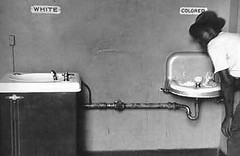
5088471658Jim Crow lawsIn the 1870s, the South passed segregation laws which required separate washrooms, drinking fountains, park benches, and most other public facilities, for blacks and whites. (p. 349)47
5088954899literacy tests, poll taxes, grandfather clausesAfter Reconstruction, various political and legal devices were created to prevent southern blacks from voting.48
5088957504white primaries, white juriesAfter Reconstruction, discrimination took many forms. Political party primaries were created for whites only, and African Americans were barred from serving on juries. (p. 349)49
5088957540lynch mobsIn the 1890s, more than 1,400 African American men were lynched (hung by a mob without trial) by Southerns.50
5088962423economic discriminationAfter Reconstruction, economic discrimination was widespread in the South. Most African Americans were kept out of skilled trades and factory jobs. African Americans remained in farming and low-paying domestic work. (p. 349)51
5088964735African American migrationIn 1894, the International Migration Society was formed to help blacks emigrate to Africa. Other blacks moved to Kansas and Oklahoma. (p. 350)52
5088471661Ida B. WellsShe was the editor of a black newspaper, she campaigned against lynching and Jim Crow laws. (p. 349)53
5088471662Booker T. WashingtonFamous African-American, who established an industrial and agricultural school for African Americans in 1881. He taught the virtues of hard work, moderation, and economic self-help. In 1900, he organized the National Negro Business League to support businesses owned by African Americans. (p. 350)54
5088986733economic cooperationBooker T. Washington's National Negro Business League emphasized racial harmony and economic cooperation. (p. 350)55
5088986768markets and farmersIn the late 1800s, farming became increasingly commercialized and specialized. They became dependent on large and expensive machinery and small, marginal farms were often driven out of business. (p. 350)56
5088990894crop price deflationAfter the Civil War, increased American and foreign food production caused a downward pressure on prices. For instance, corn per bushel prices, went from $.78 in 1867 to .$.28 in 1889. (p. 351)57
5088990895railroads and middlemenRailroads and middlemen were able to charge high or discriminatory rates in the food supply chain because they had little competition. (p. 351)58
5088996054National Grange MovementIn 1868, this organization was created primarily as a social and educational help for farmers. (p. 351)59
5089001152cooperativesGrangers established these business, owned and run by the farmers, to save the costs charged by middlemen. (p. 351)60
5089003061Granger lawsIn some states, the Grangers, with help from local businesses, successfully lobbied their state legislatures to pass laws regulating the rates charged by railroads and elevators. (p. 351)61
5088471664Munn v. IllinoisSupreme Court case in 1877, which upheld the right of a state to regulate businesses of a public nature, such as railroads. (p. 352)62
5088471665Wabash v. IllinoisSupreme Court case in 1886, which ruled that individual states could not regulate interstate commerce. (p. 352)63
5088471667Interstate Commerce CommissionThe first federal regulatory agency created to regulate interstate commerce which had the power to investigate and prosecute pools, rebates, and other discriminatory practices. (p. 352)64
5088471668Ocala Platform of 1890In 1890, a national organization of farmers, called the National Alliance, met in Florida to address the problems of rural America. It fell short of becoming a political party, but many of the reform ideas would become part of the Populist movement. (p. 352)65
5089018886census of 1890The census of 1890 declared that except for a few pockets, the entire frontier had been settled. (p. 343)66
5089025397Frederick Jackson Turner, "The Significance of the Frontier in American History"He argued that 300 years of frontier experience had shaped American culture by promoting independence and individualism. (p. 343)67
5089035882role of cities, "Nature's Metropolis"Book written by William Cronon, it argued that the frontier and cities grew up together, they were dependent on each other. (p. 353)68

AMSCO AP US History Chapter 21 Flashcards

AMSCO United States History 2015 Edition, Chapter 21 The Progressive Era, 1901-1917

Terms : Hide Images
5811780043William Jameswas an advocate of the new philosophy of PRAGMATISM. He argued that people should take a practical approach to morals, ideals, and knowledge. (p. 433)0
5811780044John DeweyHe was a philosopher who believed in "learning by doing" which formed the foundation of progressive education. (p. 433)1
5811780045Frederick W. TaylorAn engineer who sought to eliminate wasted motion. Famous for scientific-management, especially time-management studies. (p. 433)2
5811780046scientific managementtheory using efficiency experts to examine each work operation, then find ways to minimize the time needed to complete the work. (p. 433)3
5811780047Henry Demarest LloydIn 1894, he wrote the book "Wealth Against Commonwealth". He attacked the practices of Standard Oil and the railroads. (p. 434)4
5811780049Lincoln SteffansHe wrote "The Shame of the Cities" (1904) which described in detail the corruption that characterized big-city politics. (p. 434)5
5811780050Ida TarbellA leading magazine editor, she exposed the corruption of the oil industry with her 1902 series "The History of the Standard Oil Company". (p. 434)6
5811780051Jacob Riiswrote "How The Other Half Lives", which showed the terrible conditions of the tenement houses of the big cities where immigrants lived during the late 1800s. (p. 434)7
5811780052Theodore Dreiserwrote "The Financier" and "The Titan", novels which portrayed the avarice and ruthlessness of an industrialist. (p. 434)8
5811780053secret ballot(p. 435) Anonymous voting method that helps to make elections fair and honest. Adopted by many states at this time.9
5811780054direct primaryA nominating process where voters directly select the candidates who will run for office. (p. 435)10
5811780055Robert La Follett(p. 435)Progressive Wisconsin governor who attacked machine politics and pressured the state legislature to require each party to hold a direct primary11
5811780056Seventeenth AmendmentIn 1913, this constitutional amendment; required that all U.S. senators be elected by a popular vote. (p. 435)12
5811780057direct election of senatorsIn 1899, Nevada became the first state to elect U.S. senators directly. Previously state legislatures had chosen them. (p. 435)13
5811780058initiative, referendum, and recall(p. 435) a process that allows citizens of many U.S. states to place new legislation on a popular ballot, or to place legislation that has recently been passed by a legislature on a ballot and vote on it.14
5811780059municipal reformCity bosses and their corrupt alliance with local businesses such as trolley lines and utility companies were targeted for reform by Progressives. (p. 436)15
5811780060Samuel M. JonesThis Toledo mayor used "Golden Rule" as his middle name. He instituted free kindergartens, night schools, and public playgrounds. (p. 436)16
5811780062commission planA city's government would be divided into several departments, which would each be placed under the control of an expert commissioner. (p. 436)17
5811780063city manager planLegislation designed to break up political machines and replace traditional political management of cities with trained professional urban planners and managers. (p. 436)18
5811780066Wisconsin IdeaA series of Progressive measures that included a direct primary law, tax reform, and state regulatory commissions. (p. 436)19
5811780067regulatory commissionsProgressives created state commissions to monitor railroads, utilities, and business such as insurance. (p. 436)20
5811780069National Child Labor CommitteeThey proposed child labor laws which were adopted by many of the states. (p. 437)21
5811780070compulsory school attendanceMany states passed laws, which made it mandatory for children to go to public schools. (p. 437)22
5811780071Florence KelleyShe was a reformer who promoted state laws which protected women from long working hours. (p. 437)23
5811780072National Consumers' LeagueThis organization was formed in the 1890's, under leadership of Florence Kelly.; attempted to mobilize the power of women as consumers to force retailers and manufacturing to improve wages & working conditions. (p. 437)24
5811780073Lochner v. New YorkA 1905, this Supreme Court case ruled against a state law that limited workers to a ten-hour workday. (p 437)25
5811780074*Muller v. OregonA 1908 Supreme Court case, it ruled that women needed special protection against working long hours. (p. 437)26
5811780075*Triangle Shirtwaist fireIn 1911, a high-rise garment factory burned, killing 146 people, mostly women. (p. 437)27
5811780076*Square DealEconomic policy by President Theodore Roosevelt that favored fair relationships between companies and workers. (p. 438)28
5811780077*Coal miners' strike 1902Pennsylvania coal miners went on strike for an increase in pay and a shorter working day. When the mine owners refused to negotiate, Pres. T Roosevelt threatened to seize control of the mines. A compromise was finally agreed upon. (p. 438)29
5811780078*trust-bustingPresident Theodore Roosevelt broke up the railroads and Standard Oil by using the Sherman Antitrust Act. (p. 438)30
5811780079bad vs. good trustsPresident Theodore Roosevelt did make a distinction between breaking up "bad trusts", which harmed the public and stifled competition, and regulating "good trusts" which through efficiency and low prices dominated a market. (p. 438)31
5811780080Elkins ActThis 1903 act allowed the Interstate Commerce Commission (ICC) to stop railroads from granting rebates to favored customers. (p. 438)32
5811780081Hepburn ActThis 1906 act tightened existing railroad regulation. It empowered the Interstate Commerce Commission to set maximum railroad rates and to examine railroad's financial records. (p. 438)33
5811780082Uptown Sinclair; "The Jungle"He wrote "The Jungle" which described the Chicago stockyards and meatpacking industry. (p. 438)34
5811780083Pure Food and Drug ActThis 1906 act forbade the manufacture or sale of mislabeled or adulterated food or drugs, it gave the government broad powers to ensure the safety and efficacy of drugs in order to abolish the "patent" drug trade. (p. 438)35
5811780084Meat Inspection ActThis 1906 act provided federal inspectors to visit meatpacking plants to insure that they met sanitation standards. (p. 439)36
5811780086Newlands Reclamation ActA 1902 act that provide public land for irrigation projects in western states. (p. 439)37
5811780087White House Conference of GovernorsA conference at the White House which publicized the need for conservation. (p. 439)38
5811780088Gifford PinchotFirst head of the U.S. Forest Service under President Theodore Roosevelt (p. 439)39
5811780089Socialist Party of AmericanThis third party was dedicated to the welfare of the working class. Their platform called for radical reforms such as public ownership of the railroads, utilities, and even some major industries such as oil and steel. (p. 440)40
5811780090Eugene V. DebsOne of the founders of the Socialist party and the party's presidential candidate from 1900 to 1920. (p. 440)41
5811780091Bull Moose PartyNickname for the new Progressive Party, which was formed to nominate Theodore Roosevelt in the 1912 presidential election. (p. 441)42
5811780092New Nationalism; New FreedomIn the election of 1912, the Theodore Roosevelt and Woodrow Wilson were the main competitors. Roosevelt called for a "New Nationalism", with more government regulation of business and unions, women's suffrage (voting rights), and more social welfare programs. Wilson supported a "New Freedom", which would limit both big business and big government, bring about reform by ending corruption, and revive competition by supporting small business. (p. 441)43
5811780093Mann-Elkins ActThis 1910 act gave the Interstate Commerce Commission the power to suspend new railroad rates and oversee telephone, telegraph, and cable companies. (p. 432)44
5811780094Sixteenth Amendment, federal income taxRatified in 1913, this constitutional amendment, explicitly permitted Congress to levy a federal income tax. (p. 439)45
5811780095Payne-Aldrich Tariff 1909In 1909, President William Howard Taft signed this bill which raised the tariffs on most imports. (p. 440)46
5811780097Underwood TariffIn 1913, this tariff substantially lowered tariffs for the first time in over 50 years. To compensate for the reduced tariff revenues, the bill included a graduated income tax with rates from 1 to 6 percent. (p. 442)47
5811780098Federal Reserve ActIn 1914, this act created a central banking system, consisting of twelve regional banks governed by the Federal Reserve Board. It was an attempt to provide the United States with a sound yet flexible currency. It still plays a major role in the American economy today. (p. 442)48
5811780099Federal Reserve BoardThis board was organized to supervise twelve district banks in the Federal Reserve Bank system. (p. 442)49
5811780100Clayton Antitrust ActIn 1914, this antitrust legislation strengthened the provisions in the Sherman Antitrust Act for breaking up monopolies. It exempted unions from being prosecuted as trusts. (p. 442)50
5811780101Federal Trade CommisionA federal regulatory agency, established in 1914 to prevent unfair business practices and help maintain a competitive economy. (p. 442)51
5811780102Federal Farm Loan ActA 1916, 12 regional federal farm loan banks were established to provide farm loans at low interest rates. (p. 443)52
5811780103racial segregation lawsIn the Progressive era (1901 - 1917), racial segregation was the rule in the South and the unofficial policy in the North. (p. 443)53
5811780104increased lynchingIn the Progressive era, thousands of blacks were lynched (hung) by racist mobs. (p. 443)54
5811780105Booker T. WashingtonThis African American progressive argued that African Americans should concentrate on learning industrial skills in order to get better wages. (p. 443)55
5811780106W. E. B. Du BoisHe argued that African American should demand equal political and social rights, which he believed were a prerequisite for economic independence. (p. 444)56
5811780107National Association for the Advancement of Colored PeopleThis organization's mission was to abolish all forms of segregation and to increase educational opportunities for African Americans. (p. 444)57
5811780108National Urban Leaguethis organization helped African Americans migrating from the south to northern cities. (p. 444)58
5811780109Carrie Chapman CattA suffragette, She was president of the National Women's Suffrage Association, and founder of the International Woman Suffrage Alliance. Instrumental in obtaining passage of the 19th Amendment in 1920. (p. 445)59
5811780110National American Woman Suffrage AssociationA group formed in the late 1800s to organize the women's suffrage movement. (p. 445)60
5811780112National Woman's partyALICE PAUL formed this organization to focus on winning the support of Congress and the president for a Constitutional amendment for women's suffrage. (p. 445)61
5811780113Nineteenth AmendmentIn 1920, this amendment passed which gave women the right to vote. (p. 445)62
5811780114League of Woman VotersOrganized by Carrie Chapman Catt. A civic organization dedicated to keeping voters informed about candidates and issues. (p. 445)63
5811780115Margaret SangerShe founded an organization the became Panned Parenthood. They advocated for birth-control education. (p. 445)64

AMSCO AP US History Chapter 19 Flashcards

AMSCO United States History 2015 Edition, Chapter 19 The Politics of the Gilded Age, 1877-1900

Terms : Hide Images
5811772855laissez-faire economics and politicsThe idea that government should do little to interfer with the free market. (p. 380)0
5811772856divided electorateIn the late 1800s, Republicans kept memories of the Civil War alive to remind war veterans of the pain caused by the Southern Democrats. Democrats could count on winning every former Confederate state. (p. 381)1
5811772857identity politicsPolitical activity and ideas based on the shared experiences of an ethnic, religious, or social group emphasizing gaining power and benefits for the group rather than pursuing ideological goals. (p. 381)2
5811772862patronage politicsThe use of government resources to reward individuals for their electoral support. (p. 381)3
5811772871"Solid South"From 1877 until the 1950s, the Democrats could count on winning every election here. (p. 381)4
5811772875immigrant voteIn the North, one source of Democratic strength came from the immigrant vote. (p. 381)5
5811772879Stalwarts, Halfbreeds, and MugwumpsGroups which competed for lucrative jobs in the patronage system. (p. 381)6
5811772883Pendleton Act of 1881Set up by the Civil Service Commission, it created a system where federal jobs were awarded based on competitive exams. (p. 384)7
5811772886Grover ClevelandIn 1884, he was elected president of the United States. He was the first Democratic president since 1856. (p. 383)8
5811772887high tariffIn the 1890s, tariffs provided more than half of the federal revenue. Some Democrats objected to the tariffs because the raised the price on consumer goods and made it for difficult for farmers to sell to export because foreign countries enacted their own tariffs. (p. 385)9
5811772893"hard" money vs. "soft" moneyMoney backed by gold vs. paper money not backed by specie (gold or silver). (p. 384)10
5811772894creditors vs. debtorsDebtors wanted more "easy, soft" money in circulation. On the opposite side creditors stood for "hard, sound" money - meaning currency backed by gold. (p. 384)11
5811772895Panic of 1873, "Crime of 73"Congress stopped making silver coins. (p. 385)12
5811772896Specie Resumption Act of 1875Congress sided with creditors and investors when it passed this act which withdrew all greenbacks (paper money not backed by gold or silver) from circulation. (p. 385)13
5811772897Greenback partyThis political party was formed by supporters of paper money not backed by gold or silver. (p. 384)14
5811772898James B. WeaverIn 1892, he was the Populist candidate for president. He is one of the few third party candidates in history to have ever won any electoral votes. (p. 387)15
5811772899Bland-Allison Act of 1878In 1878, this act allowed a limited coinage of silver each month at the standard silver-to-gold ratio of 16 to 1. (p. 385)16
5811772901run on gold reserves, J.P. Morgan bail outA decline in silver prices encouraged investors to trade their silver dollars for gold dollars. The gold reserve fell dangerously low and President Grover Cleveland was forced to repeal the Sherman Silver Purchase Act of 1890. The president then turned to J.P. Morgan to borrow $65 million in gold to support the dollar and the gold standard. (p. 387)17
5811772904rise of the Populist PartyIn 1892, delegates met in Omaha, Nebraska to draft a political platform that would reduce the power of trusts and bankers. They nominated James Weaver as their candidate for president. (p. 386)18
5811772909Omaha PlatformIn 1892, the Populist party met in Omaha, Nebraska to draft this political platform and nominate a presidential candidate. (p 386)19
5811772912Panic of 1893In 1893, the stock market crashed as a result of speculation in railroad companies. One of the worst and longest depressions in U.S. history. (p. 387)20
5811772913Coxey's Army, March on WashingtonIn 1894, Populist Jacob A. Coxey led a march to Washington to demand that the federal government spend $500 million on public works programs. (p. 388)21
5811772915William Jennings BryanThe 1896 Democratic nominee for president. (p. 388)22
5811772916"Cross of Gold" SpeechWilliam Jennings Bryan gave this speech at the 1896 Democratic convention. The prosilver and anti-gold speech assured him of the nomination. (p. 389)23
5811772925start of the modern presidencyWilliam McKinley emerged as the first modern president, he would make America an important country in international affairs. (p. 390)24
5811772926era of Republican dominanceThe election of McKinley in 1896 started an era of Republican dominance of the presidency (seven of next nine elections) and Congress. (p. 390)25

AMSCO AP US History Chapter 24 Flashcards

AMSCO United States History 2015 Edition, Chapter 24 The Great Depression and the New Deal, 1929-1939

Terms : Hide Images
5260081410stock market crashA boom stock market of 1928 led to a sell off starting in October 1929. Within three years the stock market would decline to one-ninth of its peak. (p. 497)0
5065229051Black TuesdayOn October 29, 1929, millions of panicky investors sold, as the bottom fell out of the stock market. (p. 497)1
5260633966Dow Jones indexThe Wall Street stock market index. In September 1929 the index was at a high of 381, in three months it fell to 198. Three years later, the index would finally hit bottom at 41, less than one-ninth of the peak. (p. 497)2
5065229056buying on marginThis purchase method allowed people to borrow most of the cost of the stock, making down payments as low as 10 percent. Investors depended on the price of the stock increasing so they could repay their loans. (p. 497)3
5065229054uneven income distributionWages had risen relatively little compared to the large increases in productivity and corporate profits. Economic success was not shared by all, as the top 5 percent of the richest Americans received over 33 percent of all income. (p. 497)4
5260108064excessive debtConsumers and businesses believed the economic boom was permanent so they increased borrowing, which later led to loan defaults and bank failures. (p. 498)5
5065229058overproductionBusiness growth, aided by increased productivity and use of credit, had produced a volume of goods that workers with stagnant wages could not continue to purchase. (p. 498)6
5540908186Federal ReserveDuring the Great Depression, the Federal Reserve followed a tight money policy. Instead of trying to stabilize banks, the money supply and prices, they tried to preserve the gold standard. (p. 498)7
5260131544postwar EuropeEurope had not recovered from World War I and the U.S. insistence on loan repayment and tariffs weaken Europe and contributed to the Worldwide depression. (p. 498)8
5260137860debts and high tariffsLeading up to the Great Depression, the United States insisted on full World War I loan repayments and high tariffs on imports. This weakened Europe and contributed to the worldwide depression. (p. 498)9
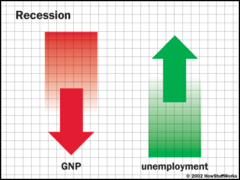
5260137861Gross National ProductThe value of all the goods and services produced by a nation in one year. In 1929, the United States Gross National Product was $104 billion, but it dropped to $56 billion in 1932. (p. 498)10
5260147477unemploymentBy 1933 25% of the workforce, not including farmers, did not have employment. (p. 498)11
5260147478bank failuresDuring the Great Depression 20 percent of all banks failed. (p. 498)12
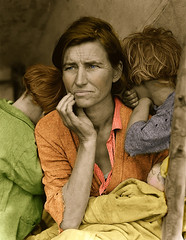
5260150740poverty and homelessDuring the Great Depression poverty and homelessness increased. (p. 499)13
5065229064Herbert HooverHe was President of the United States at the time of the stock market crash. He thought that prosperity would soon return. He was slow to call for legislative action and he thought public relief should come from the state and local governments, not the federal government. (p. 500)14
5260163021self-reliancePresident Herbert Hoover did not ask Congress for legislative action on the economy until the summer of 1930. He was concerned that government assistance to individuals would destroy their self-reliance. (p. 500)15
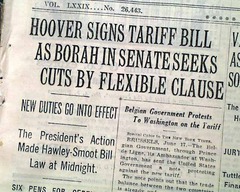
5065229065Hawley-Smoot TariffIn June 1930, President Hoover signed into law the highest tariff rates in history, ranging from 31 to 49 percent. In retaliation, European countries enacted their own tariffs. This reduced trade for all nations and worsened the worldwide depression. (p. 500)16
5260177243debt moratoriumSuspension on the payment of international debts. In 1931, President Hoover proposed a suspension of international debt payments. (p. 500)17
5065229067Farm BoardIt was authorized to help farmers stabilize prices by temporarily holding surplus grain and cotton in storage. (p. 500)18
5065229068Reconstruction Finance CorporationIn 1932, Congress funded this government-owned corporation as a measure for propping up faltering railroads, banks, life insurance companies, and other financial institutions. President Hoover thought that emergency loans would stabilize key business and the benefits would "trickle down" to smaller businesses and ultimately bring recovery. (p. 501)19
5260202698Twentieth AmendmentAlso known as the lame-duck amendment, this amendment shortened the period between the presidential election and inauguration. The new president's term would start on January 20. (p. 502)20
5065229070bonus marchThousands of unemployed World War I veterans marched to Washington, D.C. and set up encampments to demand immediately payment of the bonuses promised to them at a later date. The Army, led by General Douglas MacArthur broke up the encampment. (p. 501)21
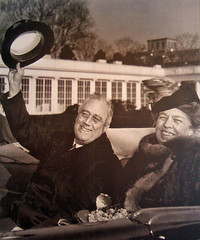
5065229071Franklin D. RooseveltThis Democratic candidate won the 1932 presidential election. As a candidate, he promised a "new deal" for the American people, the repeal of Prohibition, aid for the unemployed, and cuts in government spending. (p. 502)22
5065229073Eleanor RooseveltShe was the most active first lady in history, writing a newspaper column, giving speeches, and traveling the country. She served as the president's social conscience and influenced him to support minorities. (p. 502)23
5260222933New DealFranklin D. Roosevelt's plan to help people at the bottom of the economic pyramid. (p. 503)24
5260222934relief, recovery, reformThe New Deal included the three R's: relief for people out of work, recovery for business and the economy, and reform of American economic institutions. (p. 503)25
5065229074Brain TrustFor advice on economic matters, Roosevelt turned to a group of university professors. (p. 503)26
5065229075Frances PerkinsRoosevelt's secretary of labor, she was the first woman to serve in a president's cabinet. (p. 503)27
5260236931Hundred DaysOn March 4, 1933, Franklin Roosevelt started his term and called Congress into a one hundred day session. They passed into law all of Roosevelt's legislation. (p. 503)28
5260248314repeal of ProhibitionIn 1933, the 21st Amendment was passed. It repealed the 18th Amendment. This ended Prohibition. (p. 503)29
5260240359bank holidayPresident Franklin Roosevelt ordered the banks to be closed on March 6, 1933. He made a radio address explaining that the banks would be reopened after allowing enough time for the government to reorganize them on a sound basis. (p. 503)30
5065229079fireside chatsPresident Franklin Roosevelt spoke on the radio to the American people. (p. 504)31
5065229081Federal Deposit Insurance CorporationThis agency guaranteed individual bank deposits. (p. 504)32
5065229085Public Works AdministrationDirected by Secretary of the Interior Harold Ickes, it allotted money to state and local governments for building roads, bridges, dams, and other public works. (p. 504)33
5260302547Harold IckesPresident Franklin D. Roosevelt's secretary of the interior. (p. 504)34
5065229086Civilian Conservation CorpThis organization employed young men for projects on federal lands and paid their families small monthly sums. (p. 504)35
5065229087Tennessee Valley AuthorityA government corporation that hired thousands of people in the Tennessee Valley, to build dams, operate electric power plants, control flooding, and erosion, and manufacture fertilizer. (p. 505)36
5065229088National Recovery AdministrationDirected by Hugh Johnson, this agency attempted to guarantee reasonable profits for business and fair wages and hours for labor. The complex program operated with limited success for two years before the Supreme Court declared it unconstitutional. (p. 505)37
5065229089Schechter v. U.S.In 1935, the Supreme Court declared the National Recovery Administration (NRA) unconstitutional. (p. 505)38
5065229093Securities and Exchange CommissionThis agency was created to regulate the stock market and to place strict limits on the kind of speculative practices that led to the 1929 stock crash. (p. 505)39
5065229094Federal Housing AdministrationIt insured bank loans for building new houses and repairing old ones. (p. 505)40
5065229095Works Progress AdministrationThis agency created in 1935, part of the Second New Deal, it was much more ambitious than earlier efforts. Between 1935 and 1940 up to 3.4 million people were hired to construct bridges, roads, airports, and public buildings. Artists, writers, actors, and photographers were also employed. (p. 506)41
5260356407Harry HopkinsHe headed the Works Progress Administration (WPA) in the 1930s. (p. 506)42
5260361280National Labor Relations (Wagner) ActA 1935 act that guaranteed a worker's right to join a union and a union's right to bargain collectively. It outlawed business practices that were unfair to labor. (p. 507)43
5065229101Social Security ActIn 1935, this act created a federal insurance program based on the automatic collection of taxes from employees and employers throughout people's working careers. Monthly payments would be made to retired people over the age of 65. (p. 507)44
5260366866election of 1936Franklin D. Roosevelt easily defeated the Republican nominee, Alf Landon. (p. 507)45
5260370432New Deal coalitionFrom the 1930s to 1960s, this political coalition consisted of the Solid South, white ethnic groups in cities, midwestern farmers, labor unions, and liberals. (p. 508)46
5065229112John Maynard KeynesBritish economist, whose theory said that in difficult times government needed to spend well above its tax revenues in order to stimulate economic growth. After the 1937 recession, Roosevelt adopted this strategy, which was successful. (p. 511)47
5260384250recession of 1937In the winter of 1937 the economy went into recession again. The new Social Security tax had reduced consumer spending and at the same time Roosevelt had cut back government spending in hopes of balancing the budget. (p. 511)48
5065229104Father Charles CoughlinA Catholic priest who founded the National Union for Social Justice, which called for issuing inflated currency and nationalizing all banks. His radio program attacks on the New Deal were anti-Semitic and Fascist. (p. 508)49
5065229105Francis TownsendHe proposed a simple plan for guaranteeing a secure income for the elderly. He proposed that a 2 percent federal sales tax be used to create a special fund from which every retired person over the age of 60 would receive $200 a month thus stimulating the economy. (p. 509)50
5065229106Huey LongHe proposed a "Share Our Wealth" program that promised a minimum annual income of $5000 for every American family to be paid for by taxing the wealthy. In 1935 he challenged Roosevelt's leadership of the Democratic party by becoming a candidate for president but was soon assassinated. (p. 509)51
5260410248Supreme CourtIn 1935, they declared two of President Roosevelt's recovery programs unconstitutional. (p. 509)52
5260410249reorganization planPresident Franklin Roosevelt proposed a plan that allowed the president to appoint a new Supreme Court justice for each current justice over the age of 70. Congress refused to pass this legislation. (p. 509)53
5260414319conservative coalitionRepublicans and many Democrats were outraged by President Franklin Roosevelt's plan to reorganize the Supreme Court. (p. 509)54
5065229109Congress of Industrial OrganizationsThis labor union concentrated on organizing unskilled workers in the automobile, steel, and southern textile industries. (p. 510)55
5065229108John L. LewisHe was President of the United Mine Workers Union and Leader of the Congress of Industrial Organizations. (p. 510)56
5260432820sit-down strikeIn 1937 workers at the General Motors plant in Flint, Michigan insisted on the right to join a union by sitting down at the assembly line. (p. 510)57
5065229110Fair Labor Standards ActIn 1938 this act established a minimum wage, a maximum standard workweek with extra pay for overtime, and child labor restrictions. (p. 511)58
5260440045minimum wageEstablish minimum pay for workers, initially set at 40 cents per hour. (p. 511)59
5065229114depression mentalityMillions of people who lived through the Great Depression developed an attitude of insecurity and economic concern that remained throughout their lives. (p. 512)60
5260445675drought, dust bowl, OkiesA severe drought in the early 1930s and poor farming practices led to the Oklahoma dust bowl. High winds away large amounts of topsoil. (p. 512)61
5065229115John Steinbeck, "The Grapes of Wrath"A novelist that wrote about hardships in his classic study of economic heartbreak in 1939, "The Grapes of Wrath". (p. 512)62
5065229117Marian AndersonAn African American singer who had been refused the use of Constitution Hall, she performed a special concert at the Lincoln Memorial. (p. 513)63
5065229118Mary McLeod BethuneOne of the African Americans that was appointed to middle-level positions in federal government. She was a leader of efforts for improving education and economic opportunities for women. (p. 513)64
5065229119Fair Employment Practices CommitteeIt was set up to assist minorities in gaining jobs in defense industries. (p. 513)65
5065229120A. Phillip RandolphHead of Railroad Porters Union who threatened a march on Washington D.C. to demand equal job opportunities for African Americans. (p. 513)66
5260601722Indian Reorganization (Wheeler-Howard) ActIn 1934 Congress repealed the Dawes Act of 1887 and replaced it with this act which returned lands to the control of tribes and supported preservation of Indian cultures. (p. 513)67
5260606854Mexican deportationDiscrimination in the New Deal programs and competition for jobs forced thousands of Mexican Americans to return to Mexico. (p. 513)68

AP US History Period 3 (1754-1800) Flashcards

Terms : Hide Images
7479815451Seven Years' (French and Indian) Warfought between the colonies of British America and New France, with both sides supported by military units from their parent countries of Great Britain and France, as well as Native American allies0
7479815452"No Taxation Without Representation."a phrase, generally attributed to James Otis about 1761, that reflected the resentment of American colonists at being taxed by a British Parliament to which they elected no representatives and became an anti-British slogan before the American Revolution; in full, "Taxation without representation is tyranny.".1
7479815453Enlightenmenta philosophical movement which dominated the world of ideas in Europe in the 18th century. The Enlightenment included a range of ideas centered on reason as the primary source of authority andlegitimacy, and came to advance ideals such as liberty, progress, tolerance, fraternity, constitutional governmentand ending the perceived abuses of the church and state2
7479815454Benjamin FranklinOne of the founding fathers, famous for presence in the American Enlightenment. earned the title of "The First American" for his early and indefatigable campaigning for colonial unity, initially as an author and spokesman in London for several colonies.3
7479815455The Patriot MovementMovement or push toward independence in the colonies. Those that supported colonial independence were referred to as "Patriots" while those that were loyal to the British crown were called "Loyalists."4
7479815456Colonial MilitiasGroups of able-bodied colonialist men without proper military training that banded together to revolt against British tyrannny.5
7479815457The Continental Armyformed by the Second Continental Congress after the outbreak of the American Revolutionary War by the colonies, created to coordinate the military efforts of the Thirteen Colonies in their revolt against the rule of Great Britain. Commanded by General George Washington (Commander-in-Chief)6
7479815458George WashingtonGeneral, Commander-in-Chief of the Continental Army during the American Revolution. Later named the first President of the United States.7
7479815459Thomas Paine's Common SensePublished in 1776. Pamphlet that challenged the authority of the British government and the royal monarchy. Used "Common Sense" and plain language to appeal to the average colonist. First work to ask for independence outright.8
7479815460The Declaration of Independencethe statement adopted by the Second Continental Congress meeting atPhiladelphia, Pennsylvania on July 4, 1776, which announced that the thirteen American colonies,[2] then at war with the Kingdom of Great Britain, regarded themselves as thirteen newly independent sovereign states, and no longer under British rule.9
7479815461Republican MotherhoodPredominant conception of women's roles before, during and after the American Revolution: the "Republican Mother" was considered a custodian of civic virtue responsible for upholding the morality of her husband and children. Though this idea emphasized the separation of women's and men's roles, it did weight heavily the influence of the mother on the family and advocated for this influence to be taken seriously.10
7479815462Legislative BranchThe branch of government tasked with writing laws.11
7479815463Judicial BranchThe branch of government tasked with interpreting laws.12
7479815464Executive BranchThe branch of government tasked with enforcing laws.13
7479815465The Articles of ConfederationAn agreement among all thirteen original states in the United States of America that served as its first constitution. Drafted by a committee appointed by the Second Continental Congress, ratified in late 1777. Later replaced by the Constitution of the United States of America.14
7479815466Constitutional ConventionTook place from May 25 to September 17, 1787, in Philadelphia, Pennsylvania. Although the Convention was intended to revise the Articles of Confederation, the intention from the outset of many of its proponents, chief among them James Madison and Alexander Hamilton, was to create a new government rather than fix the existing one. The delegates elected George Washington to preside over the Convention. The result of the Convention was the creation of the United States Constitution, placing the Convention among the most significant events in the history of the United States.15
7479815467Federalisma system of government in which entities such as states or provinces share power with a national government.16
7479815468Separation of PowersInspired by Montesquieu in The Spirit of the Laws, the idea of a constitutional government with three separate branches of government. Each of the three branches would have defined abilities to check the powers of the other branches.17
7479815469The Federalist Papersa collection of 85 articles and essays written by Alexander Hamilton, James Madison, and John Jay promoting the ratification of the United States Constitution.18
7479815470Alexander HamiltonFounder of the Federalist Party, Co-author of The Federalist Papers, First Secretary of the Treasury19
7479815471James MadisonCo-Author of the Federalist Papers, hailed as "the Father of the Constitution," Fourth President of the United States20
7479815472Bill of Rightsthe collective name for the first ten amendments to the United States Constitution. These amendments add to the Constitution specific guarantees of personal freedoms and rights, clear limitations on the government's power in judicial and other proceedings, and explicit declarations that all powers not specifically delegated to Congress by the Constitution are reserved for the states or the people.21
7479815473Democratic-Republican Partyformed by Thomas Jefferson and others who believed in an agrarian-based, decentralized,democratic government. The party was established to oppose the Federalists who had supported and pushed through the ratification of the US Constitution.22
7479815474National Identityone's identity or sense of belonging to one state or to one nation. It is the sense of a nation as a cohesive whole, as represented by distinctive traditions, culture, language and politics.23
7479815475The Northwest Ordinancecreated the Northwest Territory, the first organized territory of the United States, from lands beyond the Appalachian Mountains, between British North America and the Great Lakes to the north and the Ohio River to the south.established the precedent by which the Federal government would be sovereign and expand westward with the admission of new states, rather than with the expansion of existing states and their established sovereignty under the Articles of Confederation.24
7479815476French Revolutiona period of far-reaching social and political upheaval in France that lasted from 1789 until 1799, and was partially carried forward by Napoleon during the later expansion of the French Empire. The Revolution overthrew the monarchy, established a republic, experienced violent periods of political turmoil, and finally culminated in a dictatorship under Napoleon that rapidly brought many of its principles to Western Europe and beyond.25
7479815477Popular Sovereigntythe principle that the authority of a state and its government is created and sustained by the consent of its people, through their elected representatives (Rule by the People), who are the source of all political power.26
7479815478Public VirtueSacrificing one's self-interest for the public good.27
7479815479insurrectionRebellion against political authority.28
7479815480mercantilismThe economic theory that all parts of an economy should be coordinated for the good of the whole state; hence, that colonial economics should be subordinated for the benefit of an empire.29
7479815481depreciateTo decrease in value, as in the decline of the purchasing power of money.30
7479815482protective tariffsTaxes places on imported goods, often to raise prices and thus protect domestic producers.31
7479815483admiralty courtsIn British law, special administrative courts designed to handle maritime cases without a jury.32
7479815484virtual representationThe political theory that a class of persons is represented in a lawmaking body without direct vote.33
7479815485nonimportation agreementA pledge to boycott, or decline to purchase, certain goods from abroad.34
7479815486dutyA customs tax on the export or import of goods.35
7479815487propagandaA systematic program or particular materials designed to spread certain ideas; sometimes but not always the term implies the use of manipulative or deceptive means.36
7479815488boycottAn organized refusal to deal with some person, organization, or product.37
7479815489inflationAn increase in the supply of currency relative to the goods available, leading to a decline in the purchasing power of money.38
7479815490mercenaryA professional soldier who serves in a foreign army for pay.39
7479815491indictmentA formal written accusation charging someone with a crime.40
7479815492dictatorshipA form of government characterized by absolute state power and the unlimited authority of the ruler.41
7479815493neutralA nation or person not taking sides in a war.42
7479815494civilianA citizen not in military service.43
7479815495confiscateTo seize private property for public use, often as a penalty.44
7479815496envoyA messenger or agent sent by a government on official business.45
7479815497rabbleA mass of disorderly and crude common people.46
7479815498isolationistConcerning the belief that a country should take little or no part in foreign affairs, especially through alliances or wars.47
7479815499hereditaryPassed down from generation to generation.48
7479815500blockadeThe isolation of a place by hostile ships or troops.49
7479815501privateerA private vessel temporarily authorized to capture or plunder enemy ships in wartime.50
7479815502disestablishTo separate an official state church from its connection with the government.51
7479815503emancipationSetting free from servitude or slavery52
7479815504abolitionistfavoring the end of slavery53
7479815505ratificationThe confirmation or validation of an act (such as the constitution) by authoritative approval.54
7479815506aliensForeigners; also, persons resident in but not citizens of a country.55
7479815507townshipin America, a surveyed territory six miles square; the term also refers to a unit of social government, smaller than a country that is often based on these survey units.56
7479815508territoryIn America, government an organized political entity not yet enjoying full equal terms of a state.57
7479815509annexTo make a smaller territory or political unit part of a larger one.58
7479815510quorumThe minimum number of persons who must be present in a group before it can conduct valid business.59
7479815511anarchyThe theory that formal government is unnecessary and wrong in principle; the term is also used generally for lawlessness or anti-governmental disorder.60
7479815512bicameralReferring to a legislative body with two houses61
7479815513censusAn official count of population; in the United States, the federal census occurs every ten years.62
7479815514public debtThe debt of a government or nation to individual creditors, also called the national debt.63
7479815515cabinetThe body of official advisers to the head of a government; in the United States, it consists of the heads of the major executive departments.64
7479815516fiscalConcerning public finances-expenditures and revenues.65
7479815517exciseA tax on the manufacture, sale, or consumption of certain products.66
7479815518stockThe shares of capital ownership gained from investing in a corporate enterprise; the term also refers to the certificates representing such shares.67
7479815519despotismArbitrary or tyrannical rule.68
7479815520impressmentTo force people or property into public service without choice.69
7479815521assimilationThe merging of diverse cultures or peoples into one.70
7479815522witch-huntAn investigation carried on with much publicity, supposedly to uncover dangerous activity but actually intended to weaken the political opposition.71
7479815523compactAn agreement or covenant between states to perform some legal act.72
7479815524nullificationIn American politics, the assertion that a state may legally invalidate a federal act deemed inconsistent with its rights or sovereignty.73

AMSCO AP US History Chapter 30 Flashcards

AMSCO United States History 2015 Edition, Chapter 30 Conservative Resurgence, 1980-2000

Terms : Hide Images
7563404082Milton FriedmanFree market economist who gave evidence in the 1970s of a steady shift to the right, away from the liberalism of the 1960s. (p. 654)0
7563404083political action committees (PACs)Political action committees which became a force for change. Opposed big government, New Deal liberalism, gun control, feminism, gay rights, welfare, affirmative action, sexual permissiveness, abortion, and drug use. (p. 654)1
7563404084Proposition 13In 1978, California voters passed this measure that sharply cut property taxes. (p. 654)2
7563404085Arthur LafferConservative economist who believed that tax cuts would increase government revenues. (p. 655)3
7563404086religious fundamentalismPeople who attacked secular humanism as a godless creed taking over public education. They campaigned for the return of prayers and the teaching of the Biblical account of creation in public schools. (p. 655)4
7563404087televangelistsPat Robertson, Oral Roberts, and Jim Baker brought in 100 million viewers in which religion became an instrument of electoral politics. (p. 655)5
7563404088Moral MajorityReligion became an instrument for electoral politics when an evangelist from Virginia, Jerry Falwell founded this organization, which helped financed campaigns to unseat liberal members of Congress. (p. 655)6
7563404089abortion rights; Roe v. WadeThe legalization of abortion in the 1973 Roe v. Wade Supreme Court case, sparked the right-to-life movement. The movement united Catholics and fundamentalist Protestants, who believed that life begins at conception. (p. 655)7
7563404090reverse discriminationAfter years of stagflation in the 1970s, many whites blamed their troubles on affirmative action, calling it reverse discrimination. (p. 655)8
7563404091Regents of University of California v. BakkeThe admissions policies of one medical school were challenged. The Supreme Court ruled that while race could be considered, the school had created racial quotas, which were unconstitutional. Conservatives used this decision to intensified their campaign to end all preferences based on race and ethnicity. (p. 655)9
7563404092election of 1980Ronald Reagan won this presidential election, defeating Jimmy Carter because of the Iranian hostage crisis and America's stagflation. It was significant because the Senate had Republican majority and more seats in the house allowing them to pass many key Republican programs. The 1980 election ended a half-century of Democratic dominance of Congress. (p. 655)10
7563404093Ronald ReaganHe was president from 1981 to 1988, he led a conservative movement against détente with the Soviet Union and the growth of the federal government. Some people credit him with America's victory in the Cold War while others fault his insensitive social agenda and irresponsible fiscal policies. (p. 656)11
7563404094supply-side economics (Reaganomics)This economic theory argued that tax cuts and reduced government spending would increase investment by the private sector, which would lead to increased production, jobs, and prosperity. (p. 656)12
7563404095"trickle down" economicsReaganomics was compared to the "trickle-down" economics of the 1920s, in which wealthy Americans prospered, and some of their increased spending benefited the middle class and the poor. (p. 656)13
7563404096Economic Recovery Tax ActA measure signed by Reagan in 1981 which cut personal income taxes by 25 percent over three years, cut the corporate income tax, capital gains tax, and the gift and inheritance taxes. It offered the wealthy a broad array of other tax concessions. (p. 656)14
7563404097business deregulationReagan followed up on the promise of "getting governmnet off the backs of people" by reducing federal regulations on business and industry. Restrictions were eased on savings and loans, mergers and takeovers by large corporations, and environmental protection. (p. 657)15
7563404098PACTO strikeReagan took a tough stand against unions, he fired thousands of striking federal air traffic controllers for violating their contract and decertified their union. (p. 657)16
7563404099Sandra Day O'ConnorPresident Reagan appointed this conservative judge to the Supreme Court, she was the first woman to serve on the Court. (p. 658)17
7563404100William RehnquistDuring the Reagan administration, he was the new Supreme Court chief justice. Under his leadership the court scaled back on affirmative action in hiring and promotions and limited Roe v. Wade influence by allowing states to impose some restrictions on abortions. (p. 658)18
7563404101growth of upper incomesIn the 1980s, well educated workers and yuppies (young urban professionals) enjoyed higher incomes from the deregulated marketplace while the standard of living for the middle class remained stagnant or declined. (p. 658)19
7563404102budget and trade deficitsPresident Reagan's tax cuts combined with large increases in military spending lead to federal deficits of more than $200 million a year. During his two terms the national debt tripled from $900 million to $2.7 trillion. The U.S. trade deficit reached $150 billion a year. (p. 658)20
7563404103election of 1984In this presidential election, Ronald Reagan ran against Walter Mondale, who chose Geraldine Ferraro as the first woman for vice presidential candidate. Reagan won by a landslide winning every state except for Mondale's home state of Minnesota. (p. 658)21
7563404104expand militaryPresident Reagan expanded the military to fight against the Soviet Union which he referred to as the "evil empire". The defense budget grew from $171 billion in 1981 to $300 billion in 1985. (p. 659)22
7563404105Strategic Defense Initiative (Star Wars)An ambitious plan for building a high-tech system of laser and particle beams to destroy enemy missiles before they could reach the United States. Critics called it "Star Wars" and argued that the costly program would only escalate the arms races. (p. 659)23
7563404106Nicaragua; SandinistasIn Central America, Reagan supported right-wing dictators as long as they were friendly to the United States and anti-Communists. In Nicaragua, a Marxist movement known as the Sandinistas had overthrown the dictator. The U.S. responded by providing military aid to the "contras" in their efforts to remove the Sandinistas. (p. 660)24
7563404107Boland AmendmentIn 1985, the Democrats passed this amendment which prohibited further aid to the contras in Nicaragua. (p. 660)25
7563404108Iran-contra affairIran and Iraq were at war, the United States sold antitank and antiaircraft missiles to Iran's government for their help in freeing Americans held hostage by radical Arab group. The U.S. then used the profits from the sale to fund the contras in Nicaragua. This violated the Boland Amendment and congressional budget authority. (p. 660)26
7563404109Beirut bombingsIn April 1983, an Arab suicide bomber killed 63 people at the U.S. embassy in Beirut. A few months later, an Arab terrorist drove a bomb-filled truck into a U.S. Marines barracks, killing 241 servicemen. (p. 660)27
7563404110Palestine Liberation Organization (PLO)The terrorist group that Israel fought with U.S. support. (p. 660)28
7563404111Yasser ArafatThe PLO leader who agreed in 1988 to recognize Israel's right to exist. (p. 661)29
7563404112evil empireReagan's term for the Soviet Communists and also "focus of evil in the modern world". (p. 659)30
7563404113Mikhail Gorbachev; glasnost, perestroikaNew Soviet leader who impletmented changes in their domestic politics with these reforms: 1) glasnost: an openness to end political repression and move toward greater political freedom for Soviet citizens. 2) perestroika: reconstruction of the Soviet economy by introducing some free-market practices. (p. 661)31
7563404114tear down this wallReagan said this in a speech in front of the Berlin Wall to challenge Mikhail Gorbachev into falling through with his reforms. (p. 661)32
7563404115INF agreementWith this agreement, Reagan and Gorbachev agreed to remove and destroy all intermediate-range missiles. (p. 661)33
7563404116Tiananmen SquareIn 1989, Chinese pro democracy students demonstrated for freedom in Beijing's Tiananmen Square. The Chinese government crushed the protest with tanks, killing hundreds. (p 662)34
7563404117Soviet satellitesGorbachev declared that he would no longer support the various Communist governments of Eastern Europe with Soviet armed forces. (p 662)35
7563404118Poland, Lech WalesaStarting in Poland 1989 the election of Lech Walesa, the leader of the once-outlawed Solidarity movement, the communist party fell from power in many countries in eastern Europe. (p. 663)36
7563404119Berlin Wall fallsIn 1989, the Communists in East Germany were forced out of power after protesters tore down the Berlin Wall. In October 1990, the two Germanys reunited into one country. (p. 663)37
7563404120Soviet Union breakupMany republics declared independence; the Soviet government was clearly powerless to stop the fragmentation. The Communist Party and Soviet government became powerless and ceased to exist. (p. 663)38
7563404121Russia Republic, CISBoris Yeltsin, joined with nine former Soviet republics to form a loose confederation, The Common Wealth of Independent States. (p. 663)39
7563404122Boris YeltsinPresident of the Russian Republic, he formed the Commonwealth of Independent States (CIS). He disbanded the Communist party in Russia and attempted to establish a democracy and a free-market economy. (p. 663)40
7563404123START I and IIIn 1991, U.S. President George H. W. Bush and Gorbachev signed the START I agreement which reduced the number of nuclear warheads to under 10,000 for each side. In 1992, President Bush and Yeltsin signed the START II agreement which reduced the number of nuclear weapons to just over 3,000 each. The U.S offered economic assistance to the troubled Russian economy. (p. 663)41
7563404124Yugoslavia civil warYugoslavia started to disintegrate in 1991, a civil war broke out in Bosnia and Herzegovina in 1992. (p. 664)42
7563404125election of 1988In this presidential election George H. W. Bush defeated Michael Dukakis. Bush had been Reagan's vice president. (p. 662)43
7563404126George H. W. BushHe won the 1988 presidential election. He was president during the Persian Gulf War. His ability to quickly bring the war to a conclusion while suffering relatively few casualties resulted in a very high approval rating of nearly 90 percent after the war. (p. 662)44
7563404127Panama invasionIn December 1989, President George H. W. Bush ordered the invasion of Panama to remove the autocratic General Manuel Noriega. The alleged purpose of the invasion was to stop Noriega from using his country as a drug pipeline to the United States. U.S. troops remained in Panama until elections established a more credible government. (p. 664)45
7563404128Saddam HusseinIn August 1990, this Iraqi dictator invaded oil-rich Kuwait. This invasion threatened Western oil sources. (p. 664)46
7563404129Persian Gulf WarAfter Saddam Hussein invaded oil rich Kuwait, President George H. W. Bush built a coalition of United Nations members to pressure Hussein to withdraw from Kuwait. The U.N. embargo had little effect. In January 1991, the massive Operation Desert Storm brought air strikes down on Iraq. After only 100 hours of fighting on the ground, Iraq conceded defeat. (p. 664)47
7563404130Operation Desert StormMassive operation in which more than 500,000 Americans were joined by military units from 28 nations. For 5 weeks they carried out relentless airstrikes and followed up with an invasion led by U.S. General Norman Schwarzkopf. After 100 hours of ground fighting, Iraq conceded defeat. (p. 664)48
7563404131Clarence ThomasPresident George H. W. Bush nominated this man to replace the retiring Thurgood Marshall on the Supreme Court. It was controversial because of his conservative views on judicial issues and the charges of sexual harassment against him. Nevertheless, the Senate confirmed him. (p. 664)49
7563404132no new taxesPresident George H. W. Bush had promised "no new taxes" during the presidential campaign, but he agreed to accept the Democratic Congress' proposed $133 billion in new taxes. (p. 665)50
7563404133Americans With Disabilities ActIn 1990, this act prohibited the discrimination against citizens with physical and mental disabilities in hiring, transportation, and public accommodation. (p. 665)51
7563404134election of 1992In the 1992 presidential election, Democrat Bill Clinton defeated George H. W. Bush. Clinton presented himself as a moderate "New Democrat" who focused on economic issues. (p. 666)52
7563404135William (Bill) ClintonHe served as president from 1993 to 2000. He was a moderate "New Democrat" who focused on economic issues such as jobs, education, and health care. (p. 666)53
7563404136H. Ross PerotHe was a Texas billionaire, who entered the 1992 presidential election as an independent. He received nearly 20% of the vote, the best showing by an independent since Teddy Roosevelt in 1912. (p. 666)54
7563404137failure of health reformPresident Clinton asked Hillary Rodham Clinton (his wife) to head a task force to propose a plan for universal health coverage. It ran into opposition from the insurance industry, small business organizations, and the Republicans. It failed to pass. (p. 666)55
7563404138don't ask, don't tellPresident Clinton failed to end discrimination against gays in the military and settled for the rule, "Don't ask, don't tell". Under this policy a member of the military could still be dismissed for being gay or lesbian but was not required to provide sexual orientation information. (p. 666)56
7563404139NAFTANorth American Free Trade Agreement, which created a free-trade zone with Canada and Mexico. (p. 667)57
7563404140Brady BillThis bill mandated a five-day waiting period for the purchase of handguns. (p. 666)58
7563404141National Rifle Association (NRA)In 1974, this organization, which led the gun lobby, was angered when the Anti-Crime Bill banned the sale of most assault rifles. (p. 666)59
7563404142deficit reduction budgetIn 1994, Congress passed this budget which included $225 billion in spending cuts and $241 billion in tax increases. Part of the budget would go towards increased spending on education and job training. (p. 666)60
7563404143Anti-Crime BillBill Clinton's bill that provided $30 billion in funding for more police protection and crime prevention programs, also banned the sale of most assault rifles. (p. 666)61
7563404144election of 1994In these midterm elections, Republicans gained control of both houses of Congress for the first time since 1954. (p. 667)62
7563404145Newt GingrichNew Speaker of the House, who led the Republicans in an attack on federal programs and spending, outlined in their campaign manifesto "Contract with America". (p. 667)63
7563404146Contract with AmericaRepublican plan headed by Newt Gingrich that focused on scaling back the government, balancing the budget, and cutting taxes. (p. 667)64
7563404147government shutdownsThe confrontations of between Newt Gingrich and President Clinton resulted in two shutdowns of the federal government in late 1995. Many Americans blamed overzealous Republicans in Congress for the shutdown. (p 667)65
7563404148Oklahoma City bombingIn 1995, a federal building in Oklahoma City was bombed by militia-movement extremists. The bombing took 169 lives, the worse act of domestic terrorism in the nation's history until the attack on 9/11. (p. 667)66
7563404149welfare reformThe 1996 budget reform which left Medicare and Social Security benefits intact, limited welfare benefits to five years under the Personal Responsibility and Work Opportunity Act. (p. 667)67
7563404150balanced budgetsThe spending cuts and tax increases during President Clinton's first term, along with record growth in the economy, created this budget in 1998. (p. 667)68
7563404151election of 1996In this presidential election, Democrats Bill Clinton and Al Gore defeated Republicans Bob Dole and Jack Kemp. (p. 668)69
7563404152Clinton impeachmentIn December 1998, the House voted to impeach President Bill Clinton on two counts, perjury and obstruction of justice. Neither impeachment charge was upheld by the Senate. (p. 669)70
7563404153Madeleine K. AlbrightIn 1997, she became the first woman to serve as secretary of state. (p. 669)71
7563404154humanitarian missionsIn 1993, United States soldiers were killed in the civil war in Somalia while on a humanitarian mission. In 1994, President Clinton sent 20,000 troops into Haiti to restore its elected president after a military coup. (p. 669)72
7563404155Northern Ireland accordsIn 1998, the U.S. played a key diplomatic role in negotiating an end to British rule and the armed conflict in Northern Ireland. (p. 669)73
7563404156Yugoslavia breakupSerbian dictator, Slobodan Milosevic carried out a series of armed conflicts to suppress independence movements in the former Yugoslav provinces of Slovenia, Croatia, Bosnia-Herzegovina, and Kosovo. (p. 670)74
7563404157Balkan Wars; Bosnia, KosovoDiplomacy, bombing, and NATO ground troops stopped the bloodshed in Bosnia in 1995, then in Kosovo in 1999. These were the worst battles Europe had seen since World War II. (p. 670)75
7563404158ethnic cleansingHundred of thousands of ethnic and religious minorities were killed in Bosnia and Kosovo by the Serbian dictator Milosevic. (p. 670)76
7563404159nuclear proliferationIn the 1990s there were growing nuclear programs in North Korea, India, and Pakistan. (p. 670)77
7563404160West Bank, Gaza StripIsrael granted home rule to the Palestinians in the Gaza Strip and parts of the West Bank territories, and signed a peace treaty with Jordan in 1994. Israeli-Palestinian peace process slowed down after the assassination of the Israeli Prime Minister Yitzhak Rabin in 1995. (p. 670)78
7563404161European Union (EU); euroIn 2002, the European Union (EU) became a unified market of 15 nations, 12 of which adopted the euro as their currency. The EU grew to include 27 European nations by 2007, including ten former satellites of the USSR. (p. 669)79
7563404162World Trade OrganizationIn 1994, this organization was established to oversee trade agreements, enforce trade rules, and settle disputes. (p. 670)80
7563404163World Bank, G-8This powerful bank made loans to and supervised the economic policies of poorer nations with debt problems. The Group of Eight, made up of the world's largest industrial powers (Canada, France, Germany, Italy, Japan, Russia, United Kingdom, and United States), controlled two-thirds of the world's wealth. (p 670)81
7563404164China, India, BrazilIn the 21st century, these three countries would soon surpass many of the older industrial powers. The growing gap between rich and poor nations of the world caused tensions. (p. 671)82
7563404165effects on jobsWorkers and unions in the richest nations often resented globalization, because they lost their jobs to cheaper labor markets in the developing world. (p. 671)83
7563404166prosperity of 1990sDuring President Clinton's two terms in office the U.S. enjoyed the longest peacetime economic expansion in history, with annual growth rates of more than 4 percent. (p 668)84
7563404167technology boomIn the 1990's national productivity was improved by personal computers, software, Internet, cable, and wireless communications. (p. 668)85
7563404168Internet, e-commerceThe 1990s saw growth in the Internet and in electronic commerce (purchases made online). (p. 668)86
7563404169rise of South and WestThe 2000 census reported the population of the United States was 281.4 million people. The fastest growing regions were the West and the South. Greater populations meant more congressional representatives and electoral votes. (p. 671)87
7563404170Immigration Act of 1986This act attempted to create a fair entry process for immigrants, but failed to stop the problem of illegal entry into the U.S. from Mexico. It was criticized for granting amnesty to undocumented immigrants from Mexico and the Americas. (p. 671)88
7563404171growth of HispanicsIn 2000, the Hispanic population was the fasted growing segment of the population and emerged as the largest minority part in the nation. (p. 671)89
7563404172"graying" AmericaIn 2000, 35 million people were over 65, but the fastest growing segment of the population were those 85 and over. As the baby-boom generation aged, concerns about health care, prescription drugs, senior housing, and Social Security increased. (p. 671)90
7563404173single-parent familiesIn the 1990s there was a decline of traditional family, and a growing number of single-parent families. By 2000, there were 12.8 million single-parent families. (p. 671)91
7563404174distribution of incomeIn 1999, the top fifth of American households received more than half of all income. (p. 672)92
7563404175concentration of wealthAmong industrialized nations, the United States had the largest gap between the lowest and the highest paid workers and the greatest concentration of wealth at the top. (p. 672)93
7563404176debate over freedomFreedom is a main theme in American history, but an essentially contested concept. Through the years it has meant many different things to different people: freedom to enslave others, equal rights for all, liberation from big government and federal regulations, unregulated capitalism, among others. (p. 672)94

AMSCO AP US History Chapter 10 Flashcards

AMSCO United States History 2015 Edition, Chapter 10 The Age of Jackson, 1824-1844

Terms : Hide Images
7563265797Indian Removal ActIn 1830, this act forced the resettlement of thousands of Native Americans west of the Mississippi. (p. 195)0
7563265798Cherokee Nation v. GeorgiaIn 1831, this Supreme Court case ruled that the Cherokees were not a foreign nation with the right to sue in a federal court. (p. 195)1
7563265799Worcester v. GeorgiaIn 1832, this Supreme Court case ruled that the laws of Georgia had no force within the Cherokee territory. However, President Jackson sided with Georgia and the decision could not be enforced without Jackson's support. (p 196)2
7563265800Cherokee trail of tearsIn 1838, the U.S. Army forced 15,000 Cherokees to leave Georgia and march to Oklahoma. 4,000 Cherokees died on the trip. (p. 196)3
7563265801Bank of the United StatesIn 1832, President Andrew Jackson vetoed this bank's recharter bill, denouncing the bank as a private monopoly that enriched the wealthy and foreigners. (p. 197)4
7563265802Nicholas BiddleDuring the 1830s, he was president of the Bank of the United States. (p. 197)5
7563265803Roger TaneyHe was Andrew Jackson's secretary of Treasury. In an attempt to destroy the Bank of the United States, he transferred funds from the national bank to various state banks. (p. 198)6
7563265804pet banksA term for the state banks. President Andrew Jackson was trying to destroy the Bank of the United States, so he transferred federal funds to these state banks. (p. 198)7
7563265805Specie CircularTo control inflation, President Andrew Jackson issued a presidential order that required all future purchases of federal lands be made with gold or silver rather than paper bank notes. (p. 198)8
7563265806Panic of 1837Just as Martin Van Buren became the president, the country suffered a financial panic as many banks closed their doors. (p. 199)9
7563265807Martin Van BurenHe won the 1836 presidential election as a Democratic. He had been Andrew Jackson's vice president. (p. 198)10
7563265808common manBetween 1824 and 1840, the middle and lower classes became more involved in politics. Several factors contributed to this including new suffrage laws, changes in political parties and campaigns, improved education, and increased newspaper circulation. (p. 192)11
7563265809universal white male sufferageIn the 1810s, new Western states adopted state constitutions that allowed all white males to vote and hold office. Most Eastern states soon followed suit. Voting for president rose from about 350,000 in 1824 to 2.4 million in 1840. (p. 192)12
7563265810party nominating conventionIn the 1830s, caucuses were replaced by this public process of nominating candidates in a large hall. (p. 192)13
7563265811King CaucusA closed door meeting of a political party's leaders in Congress which nominated candidates. (p. 192)14
7563265812popular election of presidentIn the 1832 presidential election, all states except South Carolina, allowed voters to choose their state's slate of presidential electors. (p. 192)15
7563265813Anti-Masonic PartyA political party, that attacked the secret societies of Masons and accused them of belonging to a privileged, anti democratic elite. (p. 192)16
7563265814Workingmen's PartyA political third party that was not as large as the Democrat or Whig party. (p. 192)17
7563265815popular campaigningCampaigns of the 1830s and 1840s featured parades and large rallies with free food and drink. (p. 193)18
7563265816spoils systemPresident Andrew Jackson appointed people to federal jobs strictly according to whether they had campaigned for the Democratic party. Previous office holders were fired and replaced with a loyal Democrat. (p. 193)19
7563265817rotation in officePresident Andrew Jackson's policy of limiting a person to one term in office so he could then appoint a Democrat to replace them. (p. 193)20
7563265818Henry ClayHe was secretary of state under President John Quincy Adams. He was President Andrew Jackson's chief opponent. In 1832, he challenged Jackson by persuading Congress to pass a bank-recharter bill. (p. 197)21
7563265819corrupt bargainThe term that President Andrew Jackson and followers called the Adams and Clay deal of the 1824 election. The House of Representatives had to choose the president and Henry Clay used his influence have John Quincy Adams elected. (p. 194)22
7563265820John Quincy AdamsIn 1824, he was elected president. Henry Clay used his influence in the House of Representatives to provide him with enough votes to win the election. Clay was made secretary of state. (p. 194)23
7563265821Tariff of 1828; tariff of abominationsIn 1828, during President John Quincy Adams' term, Congress created a new tariff law which pleased northern manufacturers, but alienated southern planters. (p. 194)24
7563265822Revolution of 1828In the 1828 election, Andrew Jackson became president after a mudslinging campaign. Jackson was a champion of the working class and middle class (common man). p. 195)25
7563265823Andrew JacksonHe won the 1828 presidential election easily, winning every state west of the Appalachians. He was know as "Old Hickory" and presented himself as a comman man. (p. 195)26
7563265824role of the presidentPresident Andrew Jackson presented himself as the representative of all the people and the protector of the common man against abused of power by the rich and privileged. He thought this was the role he should play. (p. 195)27
7563265825Peggy Eaton affairWhen President Andrew Jackson's secretary of war's wife was the target of malicious gossip by other cabinet wives, Jackson supported her. The majority of cabinet resign because Jackson tried to force the wives to accept Peggy Eaton. (p. 195)28
7563265826states' rightsPresident Andrew Jackson favored this form of power for the state governments. (p. 196)29
7563265827nullification crisisIn 1832, South Carolina passed a resolution forbidding the collection of tariffs in the state, which was nullifying a federal law at the state level. President Jackson threatened South Carolina with the use of federal troops and a compromise was reached. (p. 197)30
7563265828Webster-Hayne debateIn 1830, Daniel Webster of Massachusetts, debated Robert Hayne of South Carolina on the nature of the federal union under the Constitution. Daniel Webster declared that a state could not defy or leave the union. (p. 196)31
7563265829John C. CalhounHe was Andrew Jackson's vice president, but he opposed Jackson on nullification theory. He advanced the theory that a state had the right to declare a federal law null and void. (p. 196)32
7563265830Proclamation to the People of South CarolinaPresident Andrew Jackson's edict stating nullification and disunion were treason. (p. 197)33
7563265831two-party systemThis system developed in the 1820s. Supporters of Andrew Jackson were Democrats, while supporters of Henry Clay were Whigs. (p. 197)34
7563265832DemocratsIn the 1820s, this party was led by President Andrew Jackson. It harked back to the old Republican party of Thomas Jefferson. (p. 197)35
7563265833WhigsIn the 1820s, this party was led by Henry Clay. It was similar to the old Federalist party of Alexander Hamilton. (p. 197)36
7563265834log cabin and hard cider campaignThe term for the 1840 presidential campaign. Popular war hero, William Henry Harrison was the Whig candidate. He used log cabins and hard cider to portray his down-home heritage. He attacked Martin Van Buren as an aristocrat. Harrison and John Tyler won the election. (p. 199)37

Pages

Subscribe to CourseNotes RSS

Need Help?

We hope your visit has been a productive one. If you're having any problems, or would like to give some feedback, we'd love to hear from you.

For general help, questions, and suggestions, try our dedicated support forums.

If you need to contact the Course-Notes.Org web experience team, please use our contact form.

Need Notes?

While we strive to provide the most comprehensive notes for as many high school textbooks as possible, there are certainly going to be some that we miss. Drop us a note and let us know which textbooks you need. Be sure to include which edition of the textbook you are using! If we see enough demand, we'll do whatever we can to get those notes up on the site for you!