

Flashcards
Flashcards
Flashcards
AP US History Dates Test 2017 Flashcards
Terms : Hide Images
| 6680107161 | 1492 | Columbus sails ocean blue. What a loser. | 0 | |
| 6680107162 | 1607 | Jamestown established. | 1 | |
| 6680107163 | 1619 | First African slaves brought to North America. | 2 | |
| 6680107164 | 1754 | French and Indian War Begins | 3 | |
| 6680107165 | 1763 | French and Indian War Ends; Proclamation Line; End of Salutary Neglect. | 4 | |
| 6680107166 | 1776 | Declaration of Independence | 5 | |
| 6680107167 | 1781 | Battle of Yorktown; End of Revolutionary War Fighting (war not officially ended until Treaty of Paris #2 in 1783) | 6 | |
| 6680107168 | 1789 | Ratification of the Constitution | 7 | |
| 6680107169 | 1800 | Peaceful transition of power from John Adams to Thomas Jefferson | 8 | |
| 6680107170 | 1803 | Louisiana Purchase |  | 9 |
| 6680107171 | 1815 | Battle of New Orleans; I love you Andrew Jackson. | 10 | |
| 6680107172 | 1820 | Missouri Compromise |  | 11 |
| 6680107173 | 1823 | Monroe Doctrine | 12 | |
| 6680107174 | 1828 | Andrew Jackson elected - Age of the common man |  | 13 |
| 6680107175 | 1846 | Beginning of the Mexican-American War | 14 | |
| 6680107176 | 1850 | Popular Soverignty; New, more harsh fugitive slave law. | 15 | |
| 6680107177 | 1854 | Kansas-Nebraska Act; Birth of the Republican Party | 16 | |
| 6680107178 | 1860 | Abraham Lincoln Elected; South Carolina Secedes | 17 | |
| 6680107179 | 1865 | Civil War Ends; Reconstruction Begins | 18 | |
| 6680107180 | 1869 | Transcontinental Railroad completed |  | 19 |
| 6680107181 | 1877 | Reconstruction Ends; Rutherford B. Hayes Elected | 20 | |
| 6680107182 | 1896 | Plessy v. Fergusson | 21 | |
| 6680107183 | 1898 | Spanish-American War; Beginning of American imperialism | 22 | |
| 6680107184 | 1906 | Upton Sinclair writes The Jungle | 23 | |
| 6680107185 | 1911 | Triangle Shirtwaist Factory Fire | 24 | |
| 6680107186 | 1919 | Treaty of Versailles; Race Riot in Chicago; First Red Scare | 25 | |
| 6680107187 | 1929 | Stock Market Crash; Onset of Great Depression | 26 | |
| 6680107188 | 1933 | FDR Inaugurated; Beginning of New Deal | 27 | |
| 6680107189 | 1941 | Pearl Harbor; America Enters World War II | 28 | |
| 6680107190 | 1945 | End of World War II; Dropping of Atomic Bombs | 29 | |
| 6680107191 | 1949 | Soviets get Atomic Bomb; Communist Revolution in China; NATO formed | 30 | |
| 6680107192 | 1954 | Brown v. Board of Education decided - Segregation illegal. | 31 | |
| 6680107193 | 1964 | Civil Rights Act; Gulf of Tonkin Resolution | 32 | |
| 6680107194 | 1968 | MLK Assassinated; Chicago Democratic Convention; Tet Offensive; Richard Nixon Elected ushering in a period of conservativism. | 33 | |
| 6680107195 | 1974 | Watergate Scandal | 34 | |
| 6680107196 | 1980 | Ronald Reagan Elected | 35 | |
| 6680107197 | 1991 | Operation Desert Storm; End of the Cold War | 36 | |
| 6680107198 | 2001 | 9/11 | 37 | |
| 6680107199 | 1890 | Massacre of wounded knee; Sherman Anti-Trust Act; frontier closes | 38 |
Flashcards
Period 4: 1800-1848 AP US History Flashcards
Terms : Hide Images
| 8105813744 | Federalist | Political party created in the 1790s led by Alexander Hamilton; favored a stronger national government; supported primarily by the bankers and moneyed interests |  | 0 |
| 8105813745 | Democratic-Republicans | Political party created in the 1790's; led by Thomas Jefferson; favored limited government and state rights; supported primarily by the "common man" | | 1 |
| 8105813746 | Election of 1800 | (AKA Revolution of 1800) election that led to a peaceful transfer of power from the Federalist party to the Democratic Republican Party |  | 2 |
| 8105813748 | Era of Good Feelings | Term used to describe the time period after the 2nd Party System in the United States after the Federalist Party fell from the national stage, leaving only the Democratic Party; associated with the presidency of James Monroe |  | 3 |
| 8105813749 | Democrats | Political party that brought Andrew Jackson into office in 1829; part of the 2nd Party System of the United States; supported Jeffersonian ideas of limited government and individualism; drew its support from the "common Man" |  | 4 |
| 8105813750 | Whig Party | Political Party created in 1834 as a coalition of anti-Jackson political leaders and dedicated to internal improvements funded by the national government |  | 5 |
| 8105813751 | Andrew Jackson | Leader of the Democrats who became the seventh president of the US (1829-1837); known for his opposition to the 2nd Bank of the US, the Indian Removal Act, and opposition to nullification | | 6 |
| 8105813752 | Henry Clay | Leader of the Whig Party who proposed an "American System" to make the United States economically self-sufficient, mostly through protective tariffs; worked to keep the Union together through political compromise |  | 7 |
| 8105813753 | Nullification Crisis (1832-1833) | After South Carolina declared the federal tariff null and void, President Jackson obtained a Force Bill to use military actions against South Carolina; ended with a compromise to lower tariffs over an extended time; overall significance was the challenge of states to ignore federal law (later on with laws regarding slavery). |  | 8 |
| 8105813754 | John C. Calhoun | South Carolina political leader who defended slavery as a positive good and advocated the doctrine of nullification, a policy in which state could nullify federal law. |  | 9 |
| 8105813755 | John Marshall | Appointed to the Supreme Court by John Adams in 1801; served as a chief justice until 1835; legal decisions gave the Supreme Court more power, strengthened the federal government, and supported protection of private property. |  | 10 |
| 8105813756 | Cotton Belt | Southern region in the US where most of the cotton is grown/deep; stretched from South Carolina to Georgia to the new states in the southwest frontier; had the highest concentration of slaves |  | 11 |
| 8105813757 | Judicial Review | The power of the Supreme Court to review the constitutionality of laws passed by Congress, established during Marbury v. Madison |  | 12 |
| 8105813759 | Embargo Act (1807) | Passed by President Jefferson in order to pressure Britain and France to stop impressment and support the American rights to free trade with the other; a government-order ban on international trade; went into effect in 1808 and closed down virtually all U.S. trade with foreign nations; led to steep depression in the economy |  | 13 |
| 8105813760 | Panic of 1819 | Financial panic that began when the Second Bank of the US tightened credit and recalled government loans after the price of cotton dropped |  | 14 |
| 8105813761 | Second Bank of the United States (1816) | Privately owned bank that operated as both a commercial and fiscal agent for the US government; established in 1816 under a charter that was supposed to last 20 years; Andrew Jackson was critical of the bank and its potential for corruption; ended when Jackson vetoed the extension of its charter and won reelection in the process |  | 15 |
| 8105813762 | Tariff of 1816 | First protective tariff in US history; designed primarily to help America's textile industry |  | 16 |
| 8105813763 | Tariff of Abominations 1828 | Tariff with such high rates that it set off tension between northerners and southerners over tariff issues (called the Nullification Crisis) |  | 17 |
| 8105813764 | Panic of 1837 | Economic collapse caused primarily by President Jackson's destruction of the Second Bank of the United States |  | 18 |
| 8105813765 | Slave Codes | Laws that established the status of slaves denying them basic rights and classifying them as the property of slaveholders |  | 19 |
| 8105813766 | Second Great Awakening | An upsurge in religious activity that began around 1800 and was characterized by emotional revival meetings; led to several reform movements (temperance, abolition) designed to perfect society with religious morals |  | 20 |
| 8105813768 | Elizabeth Cady Stanton | Advocate of women right's, including the right to vote; organized (with Lucretia Mott) the first women's rights convention at Seneca Falls, NY |  | 21 |
| 8105813769 | Dorothea Dix | Pioneer in the moment for special treatment for the mentally ill |  | 22 |
| 8105813770 | Horace Mann | Massachusetts educator who called for publicly funded education for all children; called the "Father of Public Education in America" |  | 23 |
| 8105813771 | Utopian Communities | Idealistic reform movement based on the belief that a perfect society could be created on Earth; significant Utopian experiments were established at New Harmony, Indiana, Book Farm, Massachusetts and the Oneida Community in New York; usually such attempts were short-lived |  | 24 |
| 8105813772 | William Lloyd Garrison | Radical abolitionist in Massachusetts who published The Liberator, an antislavery newspaper |  | 25 |
| 8105813774 | Transcendentalism | Philosophical and literary movement that believed God existed within human being and nature; believed intuition was the highest source of knowledge; advocated for introspection by surrounding oneself with nature |  | 26 |
| 8105813779 | John Deere | Invented the steel plow in 1837, which revolutionized farming; the steel plow broke up soil without the soil getting stuck to the plow |  | 27 |
| 8105813780 | Lowell System | Method of factory management that evolved in the textile mills of Lowell, MA |  | 28 |
| 8105813781 | Erie Canal (1817-1825) | 350 mile canal built by the state of NY that stretched from Buffalo to Albany; the canal revolutionized shipping in NY and opened up new markets (evidence of the Market Revolution) |  | 29 |
| 8105813782 | National Road (1811) | AKA Cumberland Road; first significant road built in the US at the expense of the federal government; stretched from the Potomac River to the Ohio River |  | 30 |
| 8105813783 | Mason-Dixon Line | Boundary between PA and MD that marked the division between free and slave states before the Civil War |  | 31 |
| 8105813784 | Cult of Domesticity | The belief that a woman's proper role in life was found in domestic pursuits (raising children, taking care of the house); strongly believed by many throughout the 19th century |  | 32 |
| 8105813785 | Louisiana Purchase (1803) | U.S. purchased the Louisiana Territory from France for $15 million, doubling the size of the U.S. and giving the U.S. full control of the Mississippi River | | 33 |
| 8105813786 | Lewis and Clark expedition (1804-1806) | Expedition to explore the Louisiana Territory led by Meriwether Lewis and William Clark |  | 34 |
| 8105813787 | War Hawks | Members of Congress from the West and South elected in 1810 who wanted war with Britain in the hopes of annexing new territory and ending British trade with the Indians of the Northwest |  | 35 |
| 8105813788 | War of 1812 | 1812-1815, War between the U.S. and Great Britain caused primarily by the perceived British violation of American neutral rights on the high seas (impressment); ended with an agreement of "status quo ante" (a return to how things were before the war) |  | 36 |
| 8105813790 | Monroe Doctrine (1823) | President Monroe's unilateral declaration that the Americas would be closed to further European colonization and that the U.S. would not allow European interference in the affairs of the Western Hemisphere; in return the U.S. pledged to stay out of European conflicts and affairs; significant foreign policy state that lasted through most of the 19th century |  | 37 |
| 8105813791 | Oregon Treaty of 1846 | After years of conflict over ownership of the Pacific Northwest, the U.S. and England established the boundary at 49° latitude, essentially splitting the Oregon Country down the middle |  | 38 |
| 8105813794 | Indian Removal Act (1830) | Law that provided for the removal of all Indian tribes east of the Mississippi and the purchase of Indian lands for white resettlement |  | 39 |
| 8105813795 | Worcester v. Georgia (1832) | A Supreme Court ruling that declared a state did not have the power to enforce laws on lands that were not under state jurisdiction; John Marshall wrote that the state of Georgia did not have the power to remove Indians; this ruling was largely ignored by President Andrew Jackson |  | 40 |
| 8105813796 | Trail of Tears (1838) | Forced march of the Cherokee people from Georgia to Indian Territory in the winter; a large percentage of Cherokee died on the journey |  | 41 |
| 8105813797 | The American System | Consisted of three mutually reinforcing parts: (1) a tariff to protect and promote American industry; (2) a national bank to foster commerce; (3) federal subsidies for roads, canals, and other "internal improvements" to develop profitable markets for agriculture; supported heavily by Henry Clay | | 42 |
| 8105813798 | Missouri Compromise (1820) | Admitted Missouri as a slave state and Maine as a free state, maintaining the balance between slave and free states in representation in the federal government; established a geographic line that would determine whether new states (made from the western territories) would be added to the union as slave or free states | | 43 |
| 8105813799 | Spoils System | Public offices given as a reward for political support. Most iconically used by Andrew Jackson after his first election, which then became a precedent for future federal leaders. |  | 44 |
| 8105813800 | Marbury v. Madison (1803, Marshall) | The Court established its role as the arbiter of the constitutionality of federal laws, the principle is known as judicial review. |  | 45 |
| 8105813803 | interchangeable parts | Parts that were identical and which could be substituted for one another; developed by Eli Whitney for the manufacturing of muskets; became a hallmark of the American factory system |  | 46 |
AMSCO AP US History Chapter 3 Flashcards
AMSCO United States History 2015 Edition, Chapter 3 Colonial Society in the 18th Century
Terms : Hide Images
| 7236593496 | English cultural domination | In the 18th century, cultural life in the colonies was dominated by English culture. Architecture, painting, and literature were strongly influenced by the English. (p. 50) |  | 0 |
| 7236593499 | Benjamin Franklin | He was the most popular and successful American writer of the 18th century. (p. 51) |  | 1 |
| 7236593500 | Poor Richard's Almanack | Written by Benjamin Franklin, this book written in 1732 and annually revised, contained aphorisms and advice. (p. 51) |  | 2 |
| 7236593501 | Phillis Wheatley | Her poetry is noteworthy for her triumph over slavery and the quality of her verse. (p. 51) |  | 3 |
| 7236593504 | religious toleration | The overwhelming majority of colonists were Protestants. Jews, Catholics, and Quakers suffered from the most serious discrimination and even persecution. (p. 49) |  | 4 |
| 7236593505 | established church | Churches that were financed by the government. (p. 49) |  | 5 |
| 7236593506 | Great Awakening | This religious movement was at its peak in the 1730s and 1740s. It was characterized by fervent expressions of religious feeling among masses of people. (p. 49) |  | 6 |
| 7236593507 | Jonathan Edwards | This reverend from Massachusetts argued that God was rightfully angry with human sinfulness. Those who repented could be saved by God's grace, but those who did not would suffer eternal damnation. (p. 49) |  | 7 |
| 7236593508 | George Whitefield | He came to the colonies from England in 1739. He spread the Great Awakening throughout the colonies, sometime attracting crowds of 10,000 people. His sermons stressed that God was all powerful and would save only those who openly professed belief in Jesus Christ. He taught that ordinary people could understand scripture without depending on ministers to lead them. (p. 50) |  | 8 |
| 7236593510 | sectarian | The first colonial colleges were sectarian, meaning they promoted the doctrines of a particular religion. The Puritans founded Harvard in Cambridge, Massachusetts, in 1636. (p. 51) | 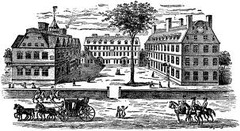 | 9 |
| 7236593511 | nonsectarian | In the mid 18th century, one nonsectarian colleges was founded. The College of Philadelphia (later University of Pennsylvania) was founded, with no religious sponsors. (p. 52) |  | 10 |
| 7236593512 | subsistence farming | In the mid 18th century the colonies had little manufacturing and were devoted almost entirely to agriculture. In New England colonies, most farms were under 100 acres and farming was limited to subsistence levels that provided just enough for a farm family to survive. In the southern colonies, most people lived on small subsistence family farms with no slaves. (p. 48) |  | 11 |
| 7236593514 | colonial families | In the mid 18th century, there was an abundance of fertile land and a dependable food supply in the colonies. This attracted thousands of European settlers each year and supported the raising of large families. (p. 45) |  | 12 |
| 7236593515 | Germans | This group of immigrants settled chiefly on the rich farmlands west of Philadelphia. By 1775, they comprised 6 percent of the colonial population. (p. 46) |  | 13 |
| 7236593516 | Scotch-Irish | These English-speaking people emigrated from northern Ireland. They were known as Scotch-Irish because their ancestors had moved to Ireland from Scotland. By 1775, they comprised 7 percent of the colonial population. (p.46) |  | 14 |
| 7236593517 | Huguenots; Dutch; Swedes | The Huguenots (French Protestants), the Dutch, and the Swedes came to the colonies. By 1775, these groups comprised 5 percent of the colonial population. (p. 46) |  | 15 |
| 7236593518 | Africans | The largest single group of non-English immigrants did not come to America by choice. By 1775, the African American population (slave and free) comprised 20 percent of the colonial population. About 90 percent were in the southern colonies. (p. 46) |  | 16 |
| 7236593519 | immigrants | Newcomers to the colonies, were mostly Protestant, and came from England, Scotland, Wales, and Ireland, and Western and Central Europe. Some left Europe to escape religious persecution and wars. Others sought economic opportunities in farming, or setting up shop as an artisan or merchant. Africans were also brought in large numbers to the colonies, albeit unwillingly. (p. 45) |  | 17 |
| 7236593520 | social mobility | Everyone in colonial society, except African Americans, could improve their standard of living and social status with hard work. (p. 47) |  | 18 |
| 7236593521 | hereditary aristocracy | There was no hereditary aristocracy in the colonies (father in power dies, son takes over). Their class system was based on economics with wealthy landowners at the top. Craft workers and small farmers made up the majority of the population. (p. 47) |  | 19 |
| 7236593522 | John Peter Zenger | In 1735, he published a true, but unflattering article about New York's royal governor. According to English common law at the time this was a criminal act, but he was acquitted by a jury. This encouraged newspapers in the colonies to take greater risks in criticising the government. (p. 52) |  | 20 |
| 7236593524 | Enlightenment | In the 18th century, some colonists were attracted to this European movement in literature and philosophy. They believed that human reason could be used to solve most of humanity's problems. They reasoned that while the state is supreme, it is bound to follow natural law based on the rights of individual. The movement influenced early American politicians. (p. 53) |  | 21 |
| 7236593525 | colonial governors | In 1750, there were 13 colonies. In the eight royal colonies the governors were appointed by the King, in the three proprietary colonies the governors were appointed by the proprietors, and in Rhode Island and Connecticut the governors were elected by popular vote. (p. 54) |  | 22 |
| 7236593526 | colonial legislatures | In every colony, the legislature consisted of two houses. In every colony, the members of the lower house were elected by eligible voters. In the royal and proprietary colonies, the members of the upper house were appointed by the king or the proprietor. Only in Rhode Island and Connecticut, the members of both houses were elected by eligible voters. (p. 54) |  | 23 |
| 7236593527 | town meetings | The dominant form of local government in the New England colonies, in which the people of the town would regularly come together to vote directly on public issues. (p. 54) |  | 24 |
| 7236593529 | limited democracy | In the mid 18th century, colonial democracy was limited to mostly white men that owned land. Those barred from voting included white women, poor white men, all slaves, and most free blacks. (p. 54) |  | 25 |
Flashcards
AMSCO AP US History Chapter 2 Flashcards
AMSCO United States History 2015 Edition, Chapter 2 The Thirteen Colonies and the British Empire, 1607-1754
Terms : Hide Images
| 5522668733 | corporate colonies | Colonies operated by joint-stock companies during the early years of the colonies, such as Jamestown. | 0 | |
| 5522668734 | royal colonies | Colonies under the direct authority and rule of the king's government, such as Virginia after 1624. | 1 | |
| 5522668735 | proprietary colonies | Colonies under the authority of individuals granted charters of ownership by the king, such as Maryland and Massachusetts The king believed that proprietary colonies would give him almost total control, as the individual granted the charter would be loyal to the king and obey his wishes | 2 | |
| 5522668736 | Jamestown | 1607 Colony in Virginia, The first successful settlement in the Virginia colony founded in May, 1607. Harsh conditions nearly destroyed the colony. The settlement became part of the Joint Stock Virginia Company of London in 1620. (p. 25) |  | 3 |
| 5522668737 | Pilgrims | Radical dissenters to the Church of England. They moved to Holland, then sailed to to America on the Mayflower in 1620 in search of religious freedom. The established a new colony at Plymouth on the Massachusetts coast. (p. 26) |  | 4 |
| 5522668738 | Puritans | Group of dissenters that wanted to purify the Church of England. In 1630 they founded the Massachusetts Bay Colony at Boston. (p. 26) |  | 5 |
| 5522668739 | Mayflower Compact | Document that Pilgrims signed to pledge that they would make decisions by the will of the majority. It was an early form of colonial self-government and one of the first simple written constitutions. (p. 27) |  | 6 |
| 5522668740 | Chesapeake Colonies | The now divided area once known as the Virginia company; composed of Maryland and Virginia (1632). Maryland becomes first proprietary colony (1632). | 7 | |
| 5522668741 | George Calvert (Lord Baltimore) | As a reward for loyal service, the king granted George Calvert, a Catholic nobleman, control of the first proprietary colony, Maryland. |  | 8 |
| 5522668742 | Cecil Calvert (Second Lord Baltimore) | Son of George Calvert, Cecil Calvert set about making his father's dream come alive in Maryland (1634). |  | 9 |
| 5522668743 | Act of Toleration | The first colonial statue granting religious freedom to all Christians, but it called for death of all non-Christians. It was created to provide a safe haven for Catholics. (p.27) | 10 | |
| 5522668744 | slavery | The first slaves arrived in the colonies in 1619, and were not slaves for life, but worked for a period of time, like an indentured servant. Then discriminatory laws were passed, slaves and their offspring were kept in permanent bondage. (p. 28) | 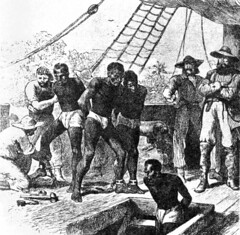 | 11 |
| 5522668745 | headright system | A method for attracting immigrants, Virginia offered 50 acres of land to each immigrant who paid for passage to America and to any plantation owner who paid for an immigrants passage. (p. 28) |  | 12 |
| 5522668746 | indentured servant | Young people from England under contract with a master who paid for their passage. Worked for a specified period for room and board, then they were free. (p. 28) |  | 13 |
| 5522668747 | Sir William Berkeley | Royal Governor of Virginia (1641-1652, 1660-1677) who favored large plantation owners and did not support or protect smaller farms from Indian raids. Put down Bacon's rebellion in 1676. (p. 29) |  | 14 |
| 5522668748 | Bacon's Rebellion | Nathaniel Bacon led a group of army volunteers in 1676 that raided Native American villages, fought the governor's forces, and set fire to Jamestown. The rebellion lost momentum when Bacon died of dysentery. This was caused by the Governor's unfair favoritism of large plantation owners and refusal to protect small farms from Native American raids. (p. 29) | 15 | |
| 5522668749 | Roger Williams | A respected Puritan minister who believed that the individual's conscience was beyond the conrol of any civil or church authority, and was banished from the bay colony for his beliefs. He founded the settlement of Providence in 1636. |  | 16 |
| 5522668750 | Anne Hutchinson | Puritan who believed in antinomianism and was banished from the bay colony because of her beliefs. Founded the colony of Portsmouth in 1638. |  | 17 |
| 5522668751 | antinomianism | The idea that faith alone, not deeds, is necessary for salvation. | 18 | |
| 5522668752 | Rhode Island | In 1644, Parliment granted Roger Williams a charter, joining Providence and Portsmouth into Rhode Island. |  | 19 |
| 5522668753 | Thomas Hooker | Led a group of Boston Puritans dissatisfied with the Massachusetts Bay colony. Founded Hartford in 1636, which is now Connecticut. |  | 20 |
| 5522668754 | Fundamental Orders of Connecticut | First written constitution in 1639. Established a representative government made up of a legislature elected by the people and a governor chosen by the legislature. | 21 | |
| 5522668755 | John Davenport | Founder of New Haven (1637) | 22 | |
| 5522668756 | Connecticut | In 1665, New Haven and Hartford joined to form Connecticut under a royal charter. |  | 23 |
| 5522668757 | New Hampshire | Hoping to increase royal control in the colonies, King Charles II separated New Hampshire from Massachusetts in 1679 and made it a royal colony. |  | 24 |
| 5522668758 | Halfway Covenant | People could now take part in church services and activities without making a formal commitment to Christ. It was created because the next generation of colonists were less committed to religious faith, but churches still needed members. (p. 31) | 25 | |
| 5522668759 | New England Confederation | In 1643, Plymouth, Massachusetts Bay, Connecticut, and New Haven formed a military alliance to deal with the threat from the Native Americans. It lasted until 1684. | 26 | |
| 5522668760 | Wampanoags | Indian tribe led by Metacom. | 27 | |
| 5522668761 | Metacom | Metacom, aka King Phillip, joined together the Native American tribes to fight the colonists in King Phillips War, a war that lasted from 1675 to 1676. | 28 | |
| 5522668762 | Restoration colonies | Colonies founded during the Restoration era in Europe, the restoration of the power of King Charles II. | 29 | |
| 5522668763 | The Carolinas | King Charles II granted eight nobles who had helped him gain the throne the Carolinas in 1663. In 1729, the Carolinas were split into to royal colonies. In South Carolina, the economy was based on the fur trade and growing food for the West Indies, which led to many plantations. In North Carolina, there were many small tobacco farms and fewer plantations. |  | 30 |
| 5522668764 | rice plantations | These plantations grew food for the West Indies, and relied on slave labor. Found in South Carolina. |  | 31 |
| 5522668765 | tobacco farms | These were mainly small farms in North Carolina, but larger tobacco plantations were found in other parts of the colonies. |  | 32 |
| 5522668766 | New York | In 1664, King Charles II granted his brother James (the Duke of York) the land now known as New York. James took the land from the Dutch, but treated them fairly. James was unpopular because of his taxes and refusal to institute representative government. He relented in 1683. |  | 33 |
| 5522668767 | New Jersey | Land granted by James to Lord John Berkeley and Sir George Carteret, 1664. Eventually sold to Quakers, and later (1702), became a royal colony. (p. 33) |  | 34 |
| 5522668768 | Quakers | Members of the Religious Society of Friends who believed in the equality of men and women, nonviolence, and resistance to military service. (p. 34) |  | 35 |
| 5522668769 | William Penn | Founder of Pennsylvania, he wanted his colony to generate wealth, provide a safe place for Quakers, and enable him to try new, liberal ideas in government |  | 36 |
| 5522668770 | Holy Experiment | Penn put his Quaker beliefs to the test in his colony. He created a government for his colony, and planned his cities. | 37 | |
| 5522668771 | Frame of Government (1682-1683) | Guaranteed a representive assembly elected by land owners | 38 | |
| 5522668772 | Charter of Liberties (1701) | Guaranteed freedom of worship for all and unrestricted immigration | 39 | |
| 5522668773 | Delaware | In 1702, Penn granted the lower three colonies their own legislature, but Delaware and Pennsylvania had the same governor until the American Revolution |  | 40 |
| 5522668774 | Georgia | Georgia was formed in 1732 to provide a buffer between wealthy Georgia from Spanish controlled Florida, and to provide a place for the many debtors of England to begin again |  | 41 |
| 5522668775 | James Oglethorpe | Founder of Georgia's first settlement, Savannah, in 1733. Acted as governor of Georgia and had strict laws which included a ban on rum and slavery. (p. 35) |  | 42 |
| 5522668776 | Mercantilism | An economic policy in which the colonies were to provide raw materials to the parent country of growth and profit of the parent country. (p. 35) | 43 | |
| 5522668777 | Navigation Acts | Basically, the colonies could only trade with England, and only ship goods on colonist or English ships. This helped the shipbuilding industry, and helped protect the colonists, but farmers received low prices for their goods and colonists had to pay high prices for manufactured goods. | 44 | |
| 5522668778 | Dominion of New England | James II wanted to increase royal control in the colonies, so he combined them into larger units and abolished their representative assemblies. The Dominion of New England was combined New York, New Jersey, and the other New England colonies into a single unit. (p. 36) | 45 | |
| 5522668779 | Sir Edmund Andros | Sent from England to govern the dominion; was very unpopular due to increase of taxes, limiting town meetings, and revoking land titles. |  | 46 |
| 5522668780 | Glorious Revolution | In 1688, James was deposed and replaced with William and Mary, ending the Dominion of England. (p. 37) | 47 | |
| 5522668781 | Triangular Trade | Merchants traded colonist rum for African slaves, African slaves for West Indies sugar cane, and sugar cane was brought back to the colonies to make rum. (p. 37) |  | 48 |
| 5522668782 | Middle Passage | Voyage from Africa to the West Indies; miserable for the slaves transported, many died |  | 49 |
| 5522668783 | John Cabot | First Englishman to explore lands in North America which England would later settle in the early 1600's |  | 50 |
| 5522668784 | Captain John Smith | Because of his leadership, Jamestown survived its first five years barely, with his forceful leadership and the establishment of a tobacco industry by john rolfe, the jamestown colony survived |  | 51 |
| 5522668785 | John Rolfe | Helped Jamestown develop a new type of tobacco which became popular in Europe and became very profitable |  | 52 |
| 5522668786 | John Winthrop | Led a ship full of Puritans from England to Massachusetts and founded Boston and a few other towns |  | 53 |
| 5522668787 | Virginia House of Burgesses | Legislative Assembly of Virginia that enacted laws in the late 1660's that made African slaves permanently bonded to their owners for life | 54 | |
| 5522668788 | joint-stock company | given the privilege of taking control of the region for economic gain (dutch west india company) | 55 | |
| 5522668789 | Virginia Company | Jamestown chartered by England's King James i and established the first permanent english colony in america in 1607. | 56 | |
| 5522668790 | Pocahontas | daughter of Powhatan; saved John Smith from his captors; her marriage to John Rolfe sealed peace agreement of First Anglo-Powhatan War | 57 |
Pages

Need Help?
We hope your visit has been a productive one. If you're having any problems, or would like to give some feedback, we'd love to hear from you.
For general help, questions, and suggestions, try our dedicated support forums.
If you need to contact the Course-Notes.Org web experience team, please use our contact form.
Need Notes?
While we strive to provide the most comprehensive notes for as many high school textbooks as possible, there are certainly going to be some that we miss. Drop us a note and let us know which textbooks you need. Be sure to include which edition of the textbook you are using! If we see enough demand, we'll do whatever we can to get those notes up on the site for you!
