AP Notes, Outlines, Study Guides, Vocabulary, Practice Exams and more!

AP US History Period 2 (1607-1754) Flashcards

Terms : Hide Images
8977371204MarylandWhich colony was established religious goals similar to Pennsylvania?0
8357011995disenfranchiseTo take away the right to vote.1
8980040618proprietary coloniesWhich term best describes colonies such as Pennsylvania and Maryland that were granted to a group by the English monarchy and given the right to self-government?2
8357011994headrightThe right to acquire a certain amount of land granted to the person who finances the passage of a laborer.3
8963185926(1) reduced migration (2) the need for cheap labor (3) need for a stable workforceWhy did slavery become increasingly important (3 reasons)?4
8357011998middle passageThat portion of a slave ship's journey in which slaves were carried from Africa to the Americas.5
8980055926Elementary education was offered to both male and female children. Towns over 50 families were required to support an elementary school.Compared to the Southern colonies, why was there a higher literacy rate in New England?6
8357012000militiaAn armed force of citizens called out only in emergencies.7
8986288290(1) Africans were better able to withstand disease (2) some former indentured servants caused problems (Bacon's rebellion) and they were owed land at the end of the contract (3) slaves were more expensive upfront but cheaper in the long-term (due to hereditary factor)Three reasons American colonists began using African slaves were8
8357012001hierarchyA social group arranged in ranks or classes.9
8977344280EnglightenmentIn William Penn's "Pennsylvania Charter of Privileges," the stated principles were clearly influenced by the _______.10
8357012002corporationA group or institution granted legal rights to carry on certain specified activities.11
8986336293the colony was to serve as an example of Christian virtue and charityWhy did John Winthrop refer to Massachusetts Colony as "a city upon a hill"?12
8357012005sectA small religious group that has broken away from some larger mainstream church.13
8986352558It protected Catholic rights in Maryland from the influx of Protestant colonists.What was the major purpose of the Toleration Act of 1649?14
8357012015secularBelonging to the worldly sphere rather than to the specifically sacred or churchly.15
8986360654tobacco, rice, and indigoWhat were the major staple crops of southern colonies during the late 17th century?16
8986375279religious freedom requires a separation of church and stateRoger William's view of "liberty of conscience" was17
8977324187It allowed a way for poor people to seek opportunity in America.How did the system of indentured servitude help the people of Europe?18
8357012016indentured servantsA person under contract to work for another person for a definite period of time, usually without pay but in exchange for free passage to a new country. During the seventeenth century most of the white laborers in Maryland and Virginia came from England as indentured servants.19
8986400053Hutchinson openly promoted the idea of an individual personal relationship with God without the guidance of church leaders.What ideas caused division between Anne Hutchinson and the Puritan church?20
8977315275economic profitWhat were the primary motives of those who established the colony of Virginia?21
8986409622wheat, oats, and barleyWhat were the primary staple crops in the middle colonies?22
8986416856indentured servantsThe majority of colonists who migrated to Maryland and Virginia during the 17th century were ____.23
8963112997mercantilismOne of England's top goals for North American colonies was integrating them into a coherent imperial structure based on _______.24
8986426104New England soil and growing season didn't permit the growth of large quantities of cash crops.Regarding agriculture, a major difference between the New England and southern colonies was that25
8357012017PuritanA member of a group of English Protestants of the late 16th and 17th centuries who regarded the Reformation of the Church of England under Elizabeth as incomplete and sought to simplify and regulate forms of worship.26
8977303445sharp economic class differencesBacon's Rebellion highlighted the long-lasting dispute over ______.27
8357012019Town MeetingsOriginated in New England - town meetings at which normal citizens can participate in making decisions related to politics, government, current events, etc. Noted as one of the first instances of democracy in America.28
8986462009Virginia's House of BurgessesWhich governing body fits the following characteristics? representatives voted on by land-owning males; all laws passed could be vetoed by the governor; it's power was restricted when the colony changed from joint-stock to royal29
8986441840the Tidewater region that was adjacent to the Chesapeake BayWhere were the wealthiest Virginian plantations located?30
8963162568England's Acts of Trade and NavigationWhat act refers to the following? (1) trade in and out of the colonies could only be carried on English or colonial-built ships (2) all goods imported to the colonies, except perishables, had to pass through ports in England (3) certain goods such as tobacco could only be exported to England31
8977283902Christians should be able to practice their faith without fear of persecution.What attitude did writers of the Act of Toleration have towards religion?32
8357012020Metacome's War (King Phillip's War)An armed conflict between Native American inhabitants of present-day New England and English colonists and their Native American allies in 1675-78. King Phillip (Metacomet) reacted against European encroachment onto the Wampanoag territory, was defeated and humiliated by colonists, forced him to sign a new peace agreement that included the surrender of Indian guns.33
8986474594John Peter Zenger trialWhich trial is most associated with the First Amendment's idea of freedom of the press?34
8977431582average Virginians were unable to earn enough income from their tobacco cropsAside from conflicts with American Indians, what was an underlying cause of Bacon's Rebellion?35
8357012021Pueblo Revolt1680 - An uprising of most of the indigenous Pueblo people against the Spanish colonizers in the province of Santa Fe de Nuevo México, present day New Mexico. The Pueblo Revolt killed 400 Spanish and drove the remaining 2,000 settlers out of the province.36
8986507267to profit economicallySettlers who established the British colony in Virginia during the 17th century were primarily seeking ______.37
8357012023Great AwakeningAn evangelical and revitalization movement that swept Protestant Europe and British America, and especially the American colonies in the 1730s and 1740s38
8986515571granted religious freedom to all Christians who accepted the TrinityWhat did the 1649 Maryland Toleration Act do?39
8977355862Pennsylvania became one of England's most diverse North American colonies.How did the principles in William Penn's "Pennsylvania Charter of Privileges," affect the demographic makeup of Pennsylvania?40
8986750805the state was an improper and ineffectual agency in matters of the spiritLiberty of conscience was defended by Roger Williams on the ground that41
8357012024EnlightenmentThe Enlightenment included a range of ideas centered on reason as the primary source of authority andlegitimacy. Advanced ideals such as liberty, progress, tolerance, fraternity, constitutional governmentand ending the perceived abuses of the church and state.42
8986768640MassachusettsWhich colony required each community of 50 or more families to provide a teacher of reading and writing?43
8977419000the colonial governor -- BerkeleyWho became a target of Bacon's Rebellion?44
8986795167They tolerated no one whose expressed religious views varied from their own views.In the 17th century, what was the Puritan attitude toward religious liberty?45
8977273719CatholicsWhich religious group wrote Maryland's Act of Toleration?46
8986814170royal coloniesIn the 18th century, colonial Virginia and colonial Massachusetts were most alike in that both were47
8977261702a strict, religiously intolerant societyWhat did John Winthrop's vision of a "City Upon a Hill" result in?48
8357012025AnglicizationThe act of making something English in either form or character.49
8986850229mercantilismWhat was the prevailing economic philosophy of the 1600s? It was founded on the belief that the world's wealth was limited and, therefore, that one nation's gain was another nation's loss. Colonies were to serve the ruling country by providing raw materials and purchasing manufactured goods instead of creating their own.50
8963363044greater independence and diversity of thoughtWhitefield's preaching contributed most directly to ______.51
8357012027MercantilismAn enconomic theory that promoted governmental regulation of a nation's economy for the purpose of augmenting state power at the expense of rival national powers. (Think: the economic counterpart of political absolutism)52
8977253941mixedWhat type of economy did Massachusetts have?53
8357012028SeparatistsPeople who believed the Church of England retained too many traces of its Catholic origin and thus, could not be made holy again. Those who formally left the established state church.54
8357012029CongregationalismA system of organization among Christian churches whereby individual local churches are largely self-governing.55
8964684309slavery was more stable and displaced the labor of indentured servantsWhat happened to Virginia using indentured servants for labor?56
8357012030John WinthropPuritan leader credited with the establishment of the Massachusetts Bay Colony57
8357012031QuakerChristians basing their message on the religious belief that "Christ has come to teach his people himself", stressing the importance of a direct relationship with God through Jesus Christ, and a direct religious belief in the universal priesthood of all believers.58
8964647414They were intolerant of people who expressed views different from their own.What was the attitude of 17th century Puritans toward religious liberty?59
8963394834the expansion of Protestant evangelismWhitefield's preaching in the 1700s is an example of ________.60
8357012032pacifistOne who holds the belief that war and violence are unjustifiable.61
8357012033VirginiaThe first colony of the original thirteen. The birthplace of both presidents and future generals, but also the birthplace of African slavery in English America. This company eventually went bankrupt and was salvaged by becoming a royal colony with a royal governor, William Berkeley, in 1642.62
8980022714PennsylvaniaWhich colony used pamphlets to recruit people, supported upholding land treaties with the American Indians, and didn't require taxes to fund a state-held church?63
8357012034House of BurgessesFrist representative assembly in the Western Hemisphere, established in Jamestown to protect the property and other rights of Englishmen.64
8357012035Plymouth ColonyA short-lived but symbolically important colony founded in 1620 at Cape Cod by Separatists and other more secularly-minded colonists. There, 100 surviving colonists signed the Mayflower Compact to increase obligation to stand together. This colony was eventually absorbed by its much larger neighbor, the Massachusetts Bay Colony. William Bradford, the long-term governor of the colony, recorded this history in Of Plymouth Plantation.65
8979726855EnglandInitially (in the early 1600s), the primary market for tobacco was ______.66
8964555869spread of the Great AwakeningWhat impacted attitudes towards traditional authority (similar to the effect of the Zenger case)?67
8977410318conflicts with American IndiansParticipants in Bacon's Rebellion felt most directly threatened by ______.68
8357012036Mayflower CompactConsidered the first written constitution of the English-speaking world. Signed by members of the Plymouth colony upon arrival to the New World.69
8357012037Massachusetts Bay ColonyA Puritan Colony founded by the Massachusetts Bay Company in 1629. Made up of Puritans coming to America during the Great Migration.70
8963992369urban residentsIn the Zenger case, which segment of society (rural or urban) would most strongly support Zenger's position on the press?71
8979748921a royal colonyAfter Virginia failed as a joint-stock colony, what did it become?72
8357012038Anne HutchinsonA Bostonian who taught doctrines the Puritans believed to be heretical in her home with several men, even ministers, in attendance. For these acts, she was put on trial for heresay and was banished from Massachusetts.73
8357012039Roger WilliamsA Puritan minister; one of the first colonists ot advocate the separation of church and state.74
8357012040MarylandFounded by George Calvert, the Lord Baltimore, as a refuge for Roman Catholics facing persecution from Anglican Church.75
8979772705British rule in the coloniesBy 1750, a growing number of colonists increasingly were upset over __________.76
8963784602the colonial press became more willing to criticize the BritishWhat was a long-term effect of the jury's decision in the Zenger case?77
8357012041John LockePolitical philosopher that theorized governments were instituted among men for the preservation of life, liberty and property and that they should employ balance of powers. Wrote the Constitution for the Carolina colony as secretary to one of its eight proprietors.78
8357012042William PennFounder of the Quaker colony Pennsylvania.79
8979849522the truth couldn't be libelJohn Peter Zenger won acquittal on the grounds that ______.80
8357012044Cash-Crop EconomyAn economic system based on the exportation of certain crops such as sugar, cotton, and coffee.81
8963777022trueIn the Zenger case, the accused argued a printed statement could NOT be libel if it was _______.82
8357012045First Great AwakeningA revival of the Christian Religion as an act of God through the Holy Spirit. The first unifying event int he history of colonial America.83
8357012046Jonathan EdwardsPreacher from Northampton, Massachusetts, that spread the First Great Awakening through famous sermons, notably "Sinners in the Hands of an Angry God."84
8986853929mercantilismColonies were to serve the ruling country by providing raw materials and purchasing manufactured goods instead of creating their own. What was this economic theory?85
8979911318politicsJohn Locke's writings had the most direct influence on the American Revolution. What were most of his writings about?86
8979920781slave ownersWhat group of colonials would have disliked John Locke's writings the most?87
8979990385introducing a type of tobacco that would sell in Europe -it was the colony's first staple cropWhat was John Rolfe's main contribution to the Jamestown settlement?88
8986864934John SmithWhose harsh, charismatic leadership saved Jamestown?89
8357012047domesticConcerning the internal affairs of a country.90
8986885322headrightThe __________ system promised colonists parcels of land (about 50 acres) if they came to America. It also gave nearly 50 acres for each servant that a colonist brought. This is how the wealthy obtained large tracts of land.91
8979971995indentured servants, slavesOne direct result of Bacon's Rebellion was that Southern labor moved away from _________ and began to rely on ________.92
8963530424(1) increased emotionalism in church services (2) a belief that common people could make their own decisions (3) a decline in the authority of Protestant ministersList three consequences of the Great Awakening.93
8977390802Some Virginians felt that the men involved in Bacon's Rebellion were frustrated and took action because the government refused to help them.Why did some people in Virginia have a more understanding view of Bacon's Rebellion?94
8986908783Navigation ActsThe ____________ dictated that certain goods shipped from a New World port were to go only to Britain or to another New World port. This caused tension between Britain and the colonies.95
8979983723Massachusetts Bay didn't suffer from the same hardships as Jamestown during its first years.In what way did the Jamestown Colony and the Massachusetts Bay Colony differ greatly?96
8986926998Fundamental OrdersThomas Hooker led a large group of Puritans to Connecticut and formed a set a laws known as the __________, which provided for representative government by those who were permitted to vote.97
8986936707slave codesWhat term refers to a series of laws limiting slave rights?98
8986950250John LockeWhich English philosopher asserted that if governments did not protect life, liberty, and property--then their people had the right to overthrow them.99
8986967838Triangular tradeWhat was created as the result of mercantilism? It involved the middle passage (from West Africa), goods being traded in the Caribbean, North America, and Europe.100
8987146319Pueblo Indians grew resentful of Spanish rule and they killed more than 300 SpaniardsWhat happened during the Pueblo Revolt?101
8987195127(1) believed human religious institutions were largely unnecessary. (2) Thought they could receive revelations directly from God. (3) They were pacifists. (4) They opposed slavery and favored decent treatment of American Indians.Describe the Quaker faith.102
8987216094a relationship in which Britain somewhat ignored the colonies--allowing them to develop their own character without interferenceWhat was salutary neglect?103
8987232970(1) James Oglethorpe, an English philanthropist, chartered the colony (2) the colony served as a "buffer zone" between Spanish-held Florida and the rich plantations of South Carolina (3) some prisoners from British jails were resettled in GeorgiaHow did the colony of Georgia develop?104
8987648247(1) a series of emotional religious revivals that occurred throughout the colonies (2) George Whitefield and Jonathan Edwards became the most dynamic preachers (3) it helped build connections between the coloniesWhat was the First Great Awakening?105
8987665163It was the North American portion of the Seven Years War between France and England. The Treaty of Paris ended the war.What was the French and Indian War?106
8987676524Enlightenment philosophy suggested the importance of individual talent over inherited privilege. It influenced culture and intellectualism in the colonies.What was the Enlightenment?107

AMSCO AP US History Chapter 6 Flashcards

AMSCO United States History 2015 Edition, Chapter 6 The Constitution and the New Republic, 1787-1800

Terms : Hide Images
7236752599James MadisonHe is one of the major authors of the Constitution, and is known as the Father of the Constitution. He was later elected president in 1808, and served for two terms. (p. 104)0
7236752600Alexander HamiltonOne of the authors of the Federalist Papers. He favored a strong central government. He was George Washington's Secretary of the Treasury. (p. 106)1
7236752601Framers of the ConstitutionIn the summer of 1787, 55 delegates met in Philadelphia to create a federal constitution. As a group they were wealthy, white, male, educated and most were heavily involved in state governments. (p. 104)2
7236752604FederalistsFavored a strong central government, and a Constitution to improve on the Articles of Confederation. They were most common along the Atlantic coast and in the large cities. (p. 106)3
7236752605Anti-FederalistArgued that the proposed Constitution contained no protection of individual rights, and that it gave the federal government too much power. They tended to be small farmers and settlers on the western frontier. (p. 106)4
7236752606The Federalist PapersSeries of essays, later published as a book, written by James Madison, Alexander Hamilton, and John Jay. They argued effectively in favor of Constitution. (p. 106)5
7236752607Bill of Rights; amendmentsThe first ten amendments to the Constitution, added to protect the rights of individual citizens, and adopted in 1781. (p. 108)6
7236752608Washington's Farewell AddressIn late 1796, George Washington wrote this address for publication in newspapers. It warned Americans: not to get involved in European affairs, not to make permanent alliances in foreign affairs, not to from political parties, and not to fall into sectionalism. (p. 115)7
7236752610Alien and Sedition ActsActs by the Federalists, which authorized the president to deport dangerous aliens, and detain enemy aliens in wartime. Made it illegal for newspaper editors to criticize the president or Congress. (p. 117)8
7236752611Kentucky and Virginia ResolutionsIn 1799, two states passed resolutions that argued states had the right to nullify laws passed at the federal level. (p. 117)9
7236752614national bankThis was part of Federalist Alexander Hamilton's economic plan. He favored a bank for depositing government funds, assuming state debts, and printing banknotes that could provide the basis for a stable U.S. currency. (p. 110)10
7236752615tariffs; excise taxesThis was part of Federalist Alexander Hamilton's economic plan. High tariffs were placed on imported goods to help new and developing industries. (p. 110)11
7236752617Treaty of GreenvilleIn this treaty in 1795, the American Indians surrendered claims to the Ohio Valley and promised to open it to settlement. (p. 113)12
7236752621Constitutional ConventionIn the summer of 1787, 55 delegates from the thirteen states, excluding Rhode Island, met in Philadelphia, Pennsylvania. The purpose was to create the Constitution, which would replace the Articles of Confederation. (p. 104)13
7236752622checks and balancesSo that one one branch of government could not dominate, the Constitution divided the government into three branches: 1) executive branch led by the president, 2) legislative branch consisting of the Senate and the House of Representatives 3) judicial branch lead by the Supreme Court (p. 109)14
7236752623Virginia PlanJames Madison's proposal at the Constitutional Convention, which favored the large states. (p. 105)15
7236752624New Jersey PlanThe counter proposal to the Virginia plan at the Constitutional Convention, it favored the small states. (p 105)16
7236752625Great CompromiseThe compromise solution that was adopted at the Constitutional Convention. It was created by Roger Sherman of Connecticut, it provided for a two house Congress. In the Senate, states would have two senators each, but in the House of Representatives, each state would be represented according to the size of its population. (p. 105)17
7236752626House of RepresentativesPart of the legislative branch, representation would be based on population of each state. (p. 105)18
7236752627SenatePart of the legislative branch, there would be two senators from each state. (p. 105)19
7236752628Three Fifths CompromiseAt the Constitutional Convention it was agreed that each slave would be counted as three-fifths of a person for the purpose of determining a state's level of taxation and representation. (p. 105)20
7236752630electoral college systemThis system would determine the president of the United States. Each state was given a number of electors equal to the total of their number of representatives and senators. These electors would then vote to determine the president. (p. 106)21
7236752632CongressThe legislative branch consisting of the Senate and the House of Representatives. (p. 105)22
7236752633cabinetGeorge Washington organized new departments of the executive (law-enforcing) branch. These appointments had to be confirmed by the Senate. Ex: Secretary of Treasury, Secretary of State, etc. (p. 110)23
7236752636Judiciary Act (1789)In 1789, this act established a Supreme Court with one chief justice and five associate justices. The Supreme Court was able to rule on the constitutionality of state courts. It provided for a system of thirteen district courts and three courts of appeals. (p. 110)24
7236752638Supreme CourtThe only court mentioned in the Constitution. Although, other federal courts were created. (p. 110)25
7236752639national debtThis was part of Federalist Alexander Hamilton's economic plan. He insisted that the federal government assume the war debts of the states and pay off the national debt at face value. This would build the nation's credit, giving other countries the confidence to lend the U.S. more money. (p. 110)26
7236752640Whiskey RebellionIn 1794, a group of farmers in western Pennsylvania, refused to pay a federal excise tax (tax on a specific product) on whiskey they were producing. President Washington responded by using 15,000 militiamen to stop the rebellion with almost no bloodshed. (p. 113)27
7236752641Federalists eraThe period of U.S. history in the 1790s when Federalists, led by Alexander Hamilton, dominated the government. (p. 114)28
7236752642Democratic-Republican PartyPolitical party that were against the Federalists. They opposed strong central government and favored states rights. They were led by Thomas Jefferson. (p. 114)29
7236752643political partiesNot anticipated by founders of the United States. However, by 1787, the Federalists and Democratic-Republicans parties were forming to push their agendas. (p. 113)30
7236752644two-term traditionIn 1796, George Washington decided to step down after two terms (four years per term) as president. This set the precedent, until Franklin Delano Roosevelt won four elections. In 1951, the 22nd amendment made two-term limit part of the Constitution. (p. 115)31
7236752645John AdamsIn 1796, this Federalist, was elected as the second president of the United States. In 1800, he lost the presidential election to Thomas Jefferson, a Democratic-Republican. (p. 115, 117)32
7236752646Revolution of 1800In the 1800 election, Democratic-Republicans came into power in both the executive and legislative branches of government. They defeated the Federalists and peacefully took power, which was an uncommon event at that time in history. (p. 118)33
7236752647French RevolutionAmericans generally supported the French people's aspiration to establish a republic, but many were horrified by the reports of mob hysteria and mass executions. Thomas Jefferson and his supporters argued that the U.S. should join France in its defensive war against Britain. However, George Washington believed that the U.S. was too young a nation and not strong enough to engage in a European war. (p. 111)34
7236752648Proclamation of Neutrality (1793)In 1793, President George Washington issued a proclamation the U.S. would remain neutral in the war between Britain and France. (p. 111)35
7236752650Jay Treaty (1794)In 1794, this unpopular treaty with Britain, was negotiated by Chief Justice John Jay. The U.S. wanted Britain to stop seizing U.S. ships and impressing our sailors. However, the treaty said nothing about ship seizures, and Britain only agreed to evacuate posts on the U.S. frontier. (p. 111)36
7236752651Pinckney Treaty (1795)In 1795, Thomas Pinckney, the U.S. minister to Spain, negotiated this treaty with Spain. Spain agreed to open the lower Mississippi and New Orleans to trade. The right of deposit was granted to Americans so they could transfer cargos in New Orleans without paying duties. It was agreed that Spain would only control area south of the 31st parallel. (p 112)37
7236752653XYZ AffairPresident John Adams sent a delegation to Paris to negotiate over U.S. merchant ships being attacked by French ships. French ministers, known as X, Y, and Z, because there names were never revealed, requested bribes. President Adams resisted a call for war, by sending a new delegation to France. (p. 116)38

AP US History Period 8 (1945-1980) Flashcards

Terms : Hide Images
9665786247Lend LeaseU.S could either rent arms and other equipment to any country whose security was vital to America's interest -> i.e. Britain0
9665786248Cash and Carry Policy1939. Allowed a nation at war to purchase goods and arms in US as long as they paid cash and carried merchandise on their own ships.1
9665786249Neutrality Act1935, Designed to keep the US out of international incidents (WWII). Later modified to allow for support of Allies in Europe2
9665786250Pearl HarborDecember 7, 1941 - Surprise attack by the Japanese on the main U.S. Pacific Fleet in Hawaii Led to declaration of war on Japan and Germany, entering World War II.3
9665786253Victory GardensBackyard gardens during WWII; Americans were encouraged to grow their own vegetables to support the war effort4
9665786254RationingA system of allocating scarce goods and services using criteria other than price, during WWII on food5
9665786255D-DayJune 6, 1944, Allied invasion of France by sea, land and air; Commanded by Dwight D. Eisenhower, the Allies gained a foot- hold in Normandy.6
9665786257Manhattan ProjectCode name for the U.S. effort during World War II to produce the atomic bomb. Much of the early research was done in New York City by refugee physicists in the United States.7
9665786258HiroshimaCity in Japan, the first to be destroyed by an atomic bomb, on August 6, 1945. The bombing hastened the end of World War II.8
9665786259Island HoppingA military strategy used during World War II that involved selectively attacking specific enemy-held islands and bypassing others9
9665786261United NationsInternational organization created after WWII to foster cooperation among international powers to prevent war, promote international security and recognition of human rights.10
9665786264Rosie the RiveterA propaganda character designed to increase production of female workers in the factories. It became a rallying symbol for women to do their part.11
9665786265LevittownMass production techniques to build inexpensive homes in suburban Long Island, New York to help relieve the postwar housing shortage. Symbol of the movement "White flight" to suburbs12
9665786266Iron CurtainA political barrier that isolated the peoples of Eastern Europe after WWII, restricting their ability to travel outside the region13
9665786267Truman DoctrineTruman's post-WWII policy of providing economic and military aid to any country threatened by communism or totalitarian ideology, mainly helped Greece and Turkey14
9665786268Marshall PlanA United States program of economic aid for the reconstruction of Europe (1948-1952), designed to promote democracy/capitalism15
9665786269Berlin BlockadeSoviet attempt to starve out the allies in Berlin in order to gain supremacy. Led to Berlin Airlift., 194916
9665786270Korean WarThe conflict between Communist North Korea and Non-Communist South Korea. The United Nations (led by the United States) helped South Korea.17
9665786271McCarthyismsearch for communists in America during the early 1950s18
9665786272Brown v Board of Education, 19541954 - The Supreme Court overruled Plessy v. Ferguson, declared that racially segregated facilities are inherently unequal and ordered all public schools desegregated.19
9665786273Montgomery Bus Boycott1955, after Rosa Parks was arrested for refusing to give up her seat on a city bus, ultimately ended when SCOTUS declared segregation of public transportation was illegal.20
9665786274Interstate Highway Act1956 law that authorized the spending of $32 billion to build 41,000 miles of highway21
9665786275Little Rock 9Incident where President Eisenhower sent federal troops to allow black students into Central high school.22
9665786276SputnikFirst artificial Earth satellite, it was launched by Moscow in 1957 and sparked U.S. fears of Soviet dominance in technology and outer space. It led to the creation of NASA23
9665786277Sit insProtests by black college students, 1960-1961, who took seats at "whites only" lunch counters and refused to leave until served; in 1960 over 50,000 participated in sit-ins across the South. Their success prompted the formation of the Student Non-Violent Coordinating Committee.24
9665786278NASAThe United States government agency responsible for the civilian space program as well as aeronautics and aerospace research.25
9665786279Berlin WallSurrounding West Berlin, Germany, built in 1961 to prevent East German citizens from traveling to the West. Its demolition in 1989 symbolized the end of the Cold War.26
9665786280Bay of PigsApril 1961, a group of Cuban exiles organized and supported by the U.S. Central Intelligence Agency landed on the southern coast of Cuba in an effort to overthrow Fidel Castro. When the invasion ended in disaster, President Kennedy took full responsibility for the failure.27
9665786281Freedom Rides1961 event organized by CORE and SNCC in which an interracial group of civil rights activists tested southern states' compliance to the Supreme Court ban of segregation on interstate buses28
9665786282Cuban Missile Crisis1962- the closest approach to nuclear war at any time between the U.S. and the USSR. over question of Soviet missiles on Cuba, Presidency of JFK29
9665786283Rachel CarsonBiologist who opposed the use of pesticides that were hazardous to wildlife (1907-1964) in her book Silent Spring. Considered the birth of environmentalism30
9665786284March on Washington1963 to show support for the Civil Rights Bill in Congress. Martin Luther King gave his famous "I have a dream..." speech. 250,000 people attended the rally31
9665786285JFK AssassinatedNovember 1963, President John F Kennedy was assassinated in Dallas, Texas.32
9665786286Civil Rights Act of 19641964; banned discrimination in public accommodations and outlawed discrimination in most employment; enlarged federal powers to protect voting rights and to speed school desegregation;33
9665786287Voting Rights Act of 19651965; invalidated the use of any test or device to deny the vote and authorized federal examiners to register voters in states that had disenfranchised blacks34
9665786288Gulf of Tonkin Resolution1964 Congressional resolution that authorized President Johnson to commit US troops to south vietnam and fight a war against north Vietnam35
9665786289Cesar Chavez1927-1993. Farm worker, labor leader, and civil-rights activist who helped form the National Farm Workers Association, later the United Farm Workers.36
9665786290Malcolm X1952; Leader in Nation of Islam, his beliefs were the basis of a lot of the Black Power movement built on separation of races and nationalist impulses to achieve true independence and equality.37
9665786291Stonewall RiotIn New York City, 1969 - Triggered activist protests among gays and lesbians - police raided gay bar - people fought back - became symbol of oppression of gays, began the gay pride movement38
9665786292WoodstockA free music festival that attracted more than 400,000 young people to a farm in upstate New York in August 196939
9665786293Earth DayA holiday conceived of by environmental activist and Senator Gaylord Nelson to encourage support for and increase awareness of environmental concerns; first celebrated on March 22, 197040
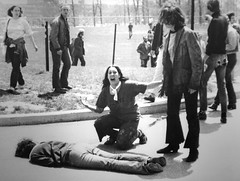
9665786294Kent State MassacreProtests to the war that lead to National Guard being called in and shot students because they burned the ROTC building. Three students were killed, 1970.41
9665786295Nixon in ChinaFebruary 21, 1972 - First visit to Communist China by sitting U.S. president, symbolized softening relations with communist China42
9665786296SALT I TreatyA five-year agreement between the U.S. and the Soviet Union, signed in 1972, that limited the nations' numbers of intercontinental ballistic missiles and submarine-launched missiles.43
9665786297Roe v WadeEstablished national abortion guidelines disallowing state prohibitions on abortion; trimester guidelines because of a woman's "right to privacy"44
9665786298WatergateScandal that began with a break-in of Democratic Headquarters and resulted in a massive cover-up by the Nixon Administration. Ultimately led to his resignation before impeachment could occur45
9665786299Jimmy Carter(1977-1981), Created the Department of Energy and the Dept. of Education, Return the Panama Canal Zone, negotiated Camp David Accords, failed to secure hostages from Iranian embassy46
9665786300Camp David Accords(1978) Negotiated by Carter between Egypt and Israel, returned the Sinai Peninsula to Egypt, guaranteed Israeli access to the Red Sea and Suez Canal, and more-or-less normalized diplomatic and economic relations between the two countries.47
9665786301Iran Hostage Crisis1979, revolutionaries stormed the American embassy in Tehran and held 52 Americans hostage. Released after Reagan's inauguration48
9665786302Salt II TreatyThis treaty was a controversial experiment of negotiations between Jimmy Carter and Leonid Brezhnev from 1977 to 1979 between the U.S. and the Soviet Union, which sought to curtail the manufacture of strategic nuclear weapons.49
9665786303War Production BoardGovernment organization that controlled what and how much of anything was made during WWII. Stopped production of nonessential goods50
9665786305Code TalkersNavajos who were employed during WWII to make and relay coded messages51
9665786306Bracero ProgramProgram established by agreement with the Mexican government to recruit temporary Mexican agricultural workers to the United States to make up for wartime labor shortages in the Far West. The program persisted until 1964, by when it had sponsored 4.5 million border crossings.52
9665786310NagasakiJapanese city in which the second atomic bomb was dropped (August 9, 1945).53

AMSCO AP US History Chapter 14 Flashcards

AMSCO United States History 2015 Edition Chapter 14 The Civil War, 1861-1865

Terms : Hide Images
5522547691border statesDuring the Civil War the term for the the states of Delaware, Maryland, Kentucky and Missouri. Keeping these states in the Union was a primary political and military goal of President Lincoln. They were slave states, but did not secede. (p. 269)0
5522547692Confederate States of AmericaIn February 1861, representatives of South Carolina, Georgia, Florida, Alabama, Mississippi, Louisiana, and Texas met in Montgomery, Alabama to form this new country. After the attack on Fort Sumter, the states of Virginia, North Carolina, Tennessee, Arkansas also seceded and joined the Confederacy. The Confederate capital was moved to Richmond, Virginia. The Confederate Constitution was modeled after the U.S. Constitution, except that it provided a single six-year term for the president and gave the president an item veto (power to veto part of a bill). (p. 269, 270)1
5522547693Jefferson DavisHe served as President of the Confederate States during the Civil War. (p. 270)2
5522547694Alexander H. StephensHe served as vice president of the Confederate States of America during the Civil War. He acted in defense of states' rights, and even urged the secession of Georgia in response to the "despotic" actions of the Confederate government. (p. 270)3
5522547695Second American RevolutionA term sometimes used for the Civil War. (p. 282)4
5522547696greenbacksName given to paper money issued by the Union government during the Civil War. They bills were not redeemable for gold, which contributed to creeping inflation. (p. 280)5
5522547697Morrill Tariff ActIn 1861, this tariff act raised rates to increase revenue and protect American manufacturers. (p. 281)6
5522547698Morrill Land Grant ActIn 1862, this act encouraged states to use the sale of federal land grants to maintain agricultural and technical colleges. (p. 281)7
5522547699Pacific Railway ActIn 1862, this act authorized the building of a transcontinental railroad over a northern route in order to link the economies of California and the western territories to the eastern states. (p. 281)8
5522547700Homestead ActIn 1862, this act promoted settlement of the Great Plains by offering parcels of 160 acres of public land free to any person or family that farmed that land for at least five years. (p. 281)9
5522547701Fort SumterA federal fort in the harbor of Charleston, South Carolina. It was cut off from vital supplies because the South controlled the harbor. President Lincoln announced that he was sending provisions to the Union fort. On April 12, 1861, Carolina guns opened on the Union, and the Civil War began. (p. 269)10
5522547702Bull RunIn July 1861, 30,000 federal troops marched from Washington D.C. to attack Confederate forces near Bull Run Creek at Manassas Junction, Virginia. In the first major battle of the Civil War, Union forces seemed close to victory, but then Confederate reinforcements counterattacked and sent the inexperienced Union troops in retreat. (p. 271)11
5522547703Thomas (Stonewall) JacksonIn July 1861, at the First Battle of Bull Run, this Confederate general counterattacked the Union and sent their troops in a retreat back to Washington D.C. (p. 271)12
5522547704Winfield ScottHe was the Union General-in-Chief at the start of the Civil War. (p. 271)13
5522547705Anaconda PlanThe Union's Civil War plan, created by General Winfield Scott. It called for the U.S. Navy to blockade Southern ports cutting off essential supplies from reaching the Confederacy. (p. 271)14
5522547706George McClellanThe commander of the Union army in the East. After extensive training of his army, he invaded Virginia in March 1862. The Union army was stopped as a result of brilliant tactical moves by the Confederate army. After five months he was forced to retreat to the Potomac, and was replaced by General John Pope. (p. 271)15
5522547707Robert E. LeeConfederate general who defeated the Union at the Second Battle of Bull Run. At the Battle of Antietam (in Maryland) he was unable to break through the Union line and had to retreat back to Virginia. At Fredericksburg, Virginia his army suffered 5,000 casualties compared to 12,000 casualties for the Union army. His army was finally defeated and he surrendered to Union General Grant at Appomattox Court House on April 9, 1865. (p. 272 273, 277, 278)16
5522547708AntietamThis battle took place in September 1862, when Confederate General Robert E. Lee moved his troops into Union territory in Maryland. The Union army met them at Antietam Creek, in Sharpsburg, Maryland. It was the bloodiest single-day battle in American history, with more than 22,000 killed or wounded. Unable to break through the Union lines the Confederate army retreated to Virginia. The win was important because it stopped the Confederate invasion of the North and gave Lincoln the victory he was waiting for. He could now act against slavery. (p. 273)17
5522547709FredericksburgOn December 13, 1862, General Ambrose Burnside launched a frontal attack on General Lee's strong position at this Virginia city. The Union army suffered 12,000 casualties (dead or wounded), while the Confederates only 5,000 casualties. (p. 273)18
5522547710Monitor vs. MerrimacFirst engagement ever between two iron-clad naval vessels. On March 9, 1862, the two ships battled for five hours, ending in a draw. This marked a turning point in naval warfare, wooden ships would be replaced by ironclad ones. (p. 273)19
5522547711Ulysses S. GrantIn early 1862, this Union general led his troops from Illinois to capture Fort Henry and Fort Donelson on the Cumberland River (branch of the Mississippi). These victoires opened up the state of Mississippi to attack by the Union. A Confederate army surprised him at Shiloh, Tennessee, but the his army held its ground and finally forced the Confederates to retreat after 23,000 total casualties. In July 1863, he captured Vicksburg, Mississippi and the Union now controlled the Mississippi River. In early 1864 Lincoln made him commander of all the Union armies. As General Robert E. Lee tried to flee to mountains with army of less than 30,000 men he cut off his army and forced them to surrender at Appomattox Court House. (p. 273, 274, 277, 278)20
5522547712ShilohMajor battle in the American Civil War, fought in 1862, in southwestern Tennessee. Confederate forces led by Albert Johnston launched a surprise attack against the Union army led by General Ulysses S. Grant. The Union army held its ground and finally forced the Confederates to retreat after 23,000 casualties (dead and wounded) on both sides. (p. 274)21
5522547713David FarragutHe led the Union navy when they captured New Orleans, in April 1862. (p. 274)22
5522547714GettysburgOn July 1, 1863, General Robert E. Lee led a Confederate army into Pennsylvania. He surprised the Union troops, and started the most crucial and bloodiest battle of the war. There were 50,000 casualties, but the Confederate army eventually retreated to Virginia, never to regain the offensive. (p. 277)23
5522547715VicksburgIn May 1863, Union General Ulysses S. Grant began an artillery bombardment of this Mississippi city, which last for seven weeks. On July 4, 1863, the Confederates finally surrendered the city, along with 29,000 soldiers. The Union now controlled the full length of the Mississippi River. (p. 277)24
5522547716Sherman's MarchUnion General William Tecumseh Sherman led a force of 100,000 troops on a destructive march through Georgia. Destroying everything in their path, they captured Atlanta, Georgia in September 1864, then marched into Savannah by that December, then they captured and burned Columbia, South Carolina in February 1865. (p. 277)25
5522547717Appomattox Court HouseSite of the surrender of the Confederate army led by Robert E. Lee to Union commander Ulysses S. Grant, on April 9, 1865. (p. 278)26
5522547718executive powerDuring the Civil War, President Abraham Lincoln acted in unprecedented ways, often without the approval of Congress. He called for 75,000 volunteers to stop the Confederacy, authorized spending for the war, and suspended habeas corpus. (p. 270)27
5522547719habeas corpusThis is the term for the constitutional right to be informed of charges and to be given a fair trial. During the Civil War Abraham Lincoln suspended this right, and arrested an estimated 13,000 people on suspicion of aiding the Confederates. (p. 279)28
5522547720insurrectionA term President Lincoln used, to describe the Confederacy actions at the start of the Civil War. (p. 269)29
5522547721Confiscation actsSeries of acts passed by the Union government, designed to liberate slaves in Confederate states. The second act in July 1862, freed slaves from anyone engaged in rebellion against the United States (Union). (p. 275)30
5522547722Emancipation ProclamationAfter the Battle of Antietam, on September 22, 1862, President Lincoln warned that enslaved people in all states still in rebellion on January 1, 1863 would be freed. He also urged the border states to draft plans for emancipation of slaves in their states. On January 1, 1863, Lincoln as promised issued this famous proclamation. This led to slaves joining the Union army and increased Union support from Europe. (p. 276)31
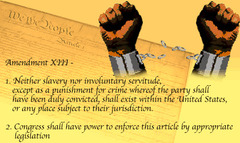
552254772313th AmendmentThis constitutional amendment, ratified in December 1865, forbade slavery and involuntary servitude in all states. (p. 276)32
5522547724Ex Parte MilliganIn 1866, the Supreme Court ruled that the government had acted improperly in Indiana where, certain civilians had been subject to a military trial during the war. The Court ruled that such trials could be used only when regular civilian courts were unavailable. (p. 279)33
5522547725draft riotsIn July 1863 riots against the draft erupted in New York City. Some 117 people were killed before federal troops and a temporary suspension of the draft restored order. (p. 280)34
5522547726CopperheadsNorthern Democrats who opposed the Civil War and wanted a negotiated peace. (p. 279)35
5522547727election of 1864In this presidential election, the Democrats nominated the popular General George McClellan. The Republicans renamed to the Unionist party, nominated President Abraham Lincoln. Abraham Lincoln won the election, however McClellan did win 45 percent of the popular vote. (p. 278)36
5522547728Trent AffairIn 1861, the Confederacy sent diplomats to Britain on a British steamer, to gain recognition for their government. A Union ship captured both men and took them as prisoners of war. The British threatened war if they were not released, and Lincoln gave into their demands. However, the diplomats were not able to get recognition for the Confederacy, from Britain or France. (p. 274)37
5522547729AlabamaA Confederate war ship purchased from Britain. It captured more than 60 Union merchant ships before being sunk off the coast of France. (p. 274)38
5522547730Laird ramsThese ships with iron rams could have been used against the Union's naval blockade. However, the Union persuaded the British government to cancel the sale of these ships to the Confederacy, rather than risk war with the Union. (p. 274)39
5522547731John Wilkes BoothAn American stage actor who, as part of a conspiracy plot, assassinated President Abraham Lincoln at Ford's Theatre in Washington, D.C., on April 14, 1865. (p. 278)40
5522547732segregated black troopsAlmost 200,000 African Americans joined the Union army during the Civil War. (p. 276)41
5522547733Massachusetts 54th RegimentAn all black regiment in the Civil War. (p. 276)42
5522547734women in the workplaceAs men went off to battle in the Civil War, women stepped into the labor vacuum, operated farms and took factory jobs customarily held by men. (p. 282)43
5522547735women in nursingDuring the Civil War women played a critical role as military nurses. (p. 282)44
5522547736war's long term effectsThe Civil War had long term effects on women. The field of nursing was now open to women for the first time. The enormous responsibilities undertaken by women gave impetus to the movement to obtain equal voting rights for women. (p. 282)45
55225477374 million freedmenWith the passage of the thirteenth amendment in 1865, 4 million African Americans were now free. (p. 282)46

AMSCO AP US History Chapter 5 Flashcards

AMSCO United States History 2015 Edition, Chapter 5 The American Revolution and Confederation, 1774-1787

Terms : Hide Images
7579293269Intolerable ActsIn 1774, the British Parliament passed the Intolerable Acts, which intensified the conflict between the colonies and Great Britain. (p. 85)0
7579293270Patrick HenryRadical delegate from Virginia to the Continental Congress. Radical delegates were those demanding the greatest concessions from Great Britain. (p. 85)1
7579293271Samuel AdamsRadical delegate from Massachusetts to the Continental Congress. He started Committees of Correspondence. (p. 85)2
7579293272John AdamsRadical delegate from Massachusetts to the Continental Congress. He had acted as a lawyer for British soldiers involved in the Boston Massacre. (p. 85)3
7579293275First Continental CongressIn September 1774, all of the colonies except Georgia sent delegates to a convention in Philadelphia. The purpose was to determine how the colonies should react to the threat to their rights and liberties caused by Intolerable Acts. (p. 85)4
7579293277Suffolk ResolvesThe First Continental Congress adopted this statement. It rejected the Intolerable Acts and called for their repeal. It also urged the colonies to make military preparations and organize boycotts against British goods. (p. 86)5
7579293278Declaration for Rights and GrievancesThe First Continental Congress passed this resolutions urging the king to make right colonial grievances and restore colonial rights. (p. 86)6
7579293279economic sanctionsIn September 1774, the First Continental Congress created the Continental Association, a network of committees to enforce the economic sanctions of the Suffolk Resolves. (p. 86)7
7579293280Second Continental CongressIn May 1775, representatives met in Philadelphia. They adopted the Declaration of the Causes and Necessities for Taking Up Arms. In July 1775 they sent the Olive Branch Petition to King George III. (p. 87)8
7579293281Olive Branch PetitionIn July 1775, the Second Continental Congress tried a last effort for peace. Colonists pledged their loyalty and asked the king to go to Parliament to secure peace and protect their colonial rights. (p. 87)9
7579293282Declaration of the Causes and Necessities for Taking Up ArmsIn May 1775, in Philadelphia, delegates to the Sencond Continental Congress met. This declaration called on all colonies to provide troops to the central government. (p. 87, 128)10
7579293283Thomas JeffersonIn 1776, he was the primary author of the Declaration of Independence. (p. 88)11
7579293284Declaration of IndependenceThis declaration, written by Thomas Jefferson, declared independence and expressed the basic principles of the American revolution. It was ratified on July 4, 1776. (p. 88)12
7579293285George WashingtonModerate delegate from Virginia to the Continental Congress. In 1775, at the Second Continental Congress he was appointed commander-in chief of a new colonial army and sent to Boston to lead the Massachusetts militia and volunteer units from other colonies. He later became the first president of the United States. (p. 88-89)13
7579293286Land Ordinance of 1785A policy that established surveying and selling of western lands. It was part of the Articles of Confederation. (p. 93)14
7579293287Northwest Ordinance of 1787Created the Northwest Territory (area north of the Ohio River and west of Pennsylvania), established conditions for creating new states. Granted limited self-government and prohibited slavery in the region. (p. 93)15
7579293288Paul RevereHe warned the militia that the British were coming along with William Dawes at the Battle of Lexington and Concord. (p. 86)16
7579293290LexingtonOn April 18, 1775 British soldiers in Boston marched to this town to seize colonial military supplies. This is where the first shot of the Revolutionary War was fired. (p. 86)17
7579293291ConcordAfter the British had marched to Lexington, they marched on to this town to destroy colonial military supplies. (p. 86)18
7579293292Battle of Bunker HillOn June 17, 1775 a colonial militia lost this battle to British on the outskirts of Boston. However, the British suffered heavy casualties in this first true battle of the Revolutionary War. (p. 87)19
7579293293Battle of SaratogaIn October 1777, General John Burgoyne's British forces were defeated by American Generals Horatio Gates and Benedict Arnolds army. This was a turning point of the war because it led to the French joining the war against Great Britain. (p. 90)20
7579293295Battle of YorktownIn 1781, the last major battle of the Revolutionary War was fought on the shores of Chesapeake Bay. Supported by French naval and military forces, Washington's army forced the surrender of a large British army commanded by General Charles Cornwallis. (p. 90)21
7579293296Articles of ConfederationAdopted by Congress in 1777, it created a central government with limited powers. In 1788, it was was replaced by the Constitution. (p. 91)22
7579293297unicameral LegislatureThe Articles of Confederation established a central government that consisted of just one body, a Congress. In this unicameral (one-house) legislature, each state was given one vote, with at least 9 of 13 votes required to pass important laws. (p. 92)23
7579293298absolute monarchAlthough France had this kind of government, King Louis XVI decided to help the colonies succeed in their rebellion in order to weaken Great Britain. (p. 90)24
7579293299Prohibitory ActIn August 1775, Britain's King George III agreed to this act passed by Parliament, and declared the colonies were in rebellion. (p. 87)25
7579293300Treaty of ParisIn 1783, this treaty between Britain and the United States brought an end to the Revolutionary War. It stated that: 1. Britain would recognize the existence of the US. 2. The Mississippi River would be the western border of the US. 3. Americans would have fishing rights off the coast of Canada. 4. Americans would pay debts owed to British merchants and honor Loyalist claims for property confiscated during the war. (p. 91)26
7579293301Thomas Paine; Common SenseIn January 1776, Thomas Paine wrote this pamphlet that argued in clear and forceful language that the colonies should break with Britain. (p. 88)27
7579293302PatriotsMost of these soldiers came from New England or Virginia and wanted freedom for the colonies. (p. 88)28
7579293303Loyalists (Tories)The pro-British Loyalists, the majority of this group tended to be wealthy and conservative and many were clergy and government officials. (p. 89)29
7579293304MinutemenThe colonial militia. (p. 86)30
7579293305ContinentalsPaper money issued by Congress which became almost worthless due to inflation. (p. 90)31
7579293306Abigail AdamsShe was the wife of John Adams. During the Revolutionary War, she wrote letters to her husband describing life on the homefront. She urged her husband to remember America's women in the new government he was helping to create. (p. 94)32
7579293308Valley ForgeWashington's troops spent the harsh winter of 1777-1778 here after losing Philadelphia to the British. (p. 89)33
7579293309Mary McCauleyAlso know as Molly Pitcher, she carried water to soldiers during the Battle of Monmouth Court House and took over her husband's gun when he was overcome by heat. (p. 94)34
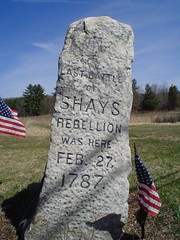
7579293310Shay's RebellionDaniel Shays led other farmers in this uprising against high state taxes, imprisonment for debt, and lack of paper money. (p. 93)35

Pages

Subscribe to CourseNotes RSS

Need Help?

We hope your visit has been a productive one. If you're having any problems, or would like to give some feedback, we'd love to hear from you.

For general help, questions, and suggestions, try our dedicated support forums.

If you need to contact the Course-Notes.Org web experience team, please use our contact form.

Need Notes?

While we strive to provide the most comprehensive notes for as many high school textbooks as possible, there are certainly going to be some that we miss. Drop us a note and let us know which textbooks you need. Be sure to include which edition of the textbook you are using! If we see enough demand, we'll do whatever we can to get those notes up on the site for you!