AP Notes, Outlines, Study Guides, Vocabulary, Practice Exams and more!

AP US History Period 4: 1800 - 1848 Flashcards

AMSCO United States History 2015 Edition, Period 4: 1800 - 1848 Chapter 7 - 11

Terms : Hide Images
6735028558Second Great AwakeningsBegan in the early decades of the 19th century. Partly a reaction against the rationalism of the Enlightenment and the American Revolution. It affected all sections of the country, but in the northern states it touched off social reform that drove the reform movements of this period. (p. 207)0
6735028559market revolutionStarting in the early 19th century, this revolution produced vast economic growth. Farmers fed the workers in the cities, the cities provided farm families with an array of mass produced goods.1
6735028560Thomas JeffersonHe was George Washington's first secretary of state. A Democrat-Republican, he was the nation's third president from 1801 to 1809. He stressed the basic principles of constitutional government and limited central government. He appeased the Federalists by maintaining the national bank and debt repayment plan of Hamilton, carried on the neutrality policies of Washington and Adams, reduced the size of the military. He eliminated some federal jobs, repealed excise taxes, and lowered the national debt. In 1803, he made the Louisiana Purchase from France.2
6735028561Battle of New OrleansGeneral Andrew Jackson won this battle in New Orleans against the British on January 8, 1815. The War of 1812 had officially ended with the signing of the Treaty of Ghent two weeks earlier, but word had not yet reached the United States.3
6735028562Era of Good FeelingsTerm to describe James Monroe's period as president (1817-1825). The Democratic-Republicans party dominated politics. On the surface everything looked fine, however there were conflicts over tariffs, the national bank, internal improvements, and public land sales.4
6735028563Jacksonian DemocracyThe time period 1829 to 1837 when _______________ was president. This era was also known as the Age of the Common Man.5
6735028564American Indian removalPresident Andrew Jackson supported the land-hungry citizens who want to take over lands held by the American Indians. In 1830, he passed the Indian Removal Act, which forced the resettlement o many thousands of American Indians. By 1835 most of the eastern tribes had reluctantly moved to an area in today's Oklahoma.6
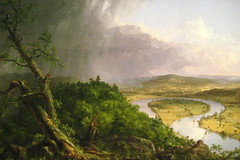
6735028565Romanticism in paintings and literature - romantic movementEvoked the wonder of the nation's landscape. The Hudson River School of painters were the most prominent. Noted authors of the period included Ralph Waldo Emerson, Henry David Thoreau, Washington Irving, and James Fenimore Cooper.7
6735028566Nullification CrisisIn 1832, South Carolina passed a resolution forbidding the collection of tariffs in the state. This was nullifying a federal law at the state level. President Andrew Jackson threatened use of federal troops against South Carolina and a compromise was reached.8
6735028567Elizabeth Cady StantonA women's rights reformer who was not allowed to speak at an antislavery convention.9
6735028568cotton ginThis machine was invented by Eli Whitney in 1793. It removed seeds from cotton fibers so cotton could be processed quickly and cheaply. As a result more cotton was grown in the South and more slaves were needed to pick cotton in the fields.10
6735028569War HawksThe 1810 congressional election brought a group of young Democratic-Republicans to Congress. Led by Henry Clay and John C. Calhoun they gained influence in the House of Representatives. They argued that war with Britain was the only way to defend American honor, gain Canada, and destroy American Indian resistance on the frontier.11
6735028570William Lloyd GarrisonAdvocated the immediate emancipation of slaves without compensation to their owners. He was also the writer of the "Liberator."12
6735028571Lucretia MottEarly feminist who advocated for women's rights and against slavery.13
6735028572Republican Motherhood/Cult of DomesticityAfter industrialization occurred women became the moral leaders in the home and educators of children. Men were responsible for economic and political affairs.14
6735028573Sectionalism: The NorthLargely urban population that worked in factories.15
6735028574Sectionalism: The SouthLargely agricultural, mostly cotton from 1830-1850.16
6735028575Sectionalism: The WestLargely trapping and hunting, citizens lived a secluded life away from others.17
6735028576Democratic-RepublicansFavored the common man, weak central government, hated the National Bank, was pro-immigration, wanted slow and cautious westward expansion.18
6735028577FederalistsFavored the wealthy and educated, strong central government, supported the National Bank, limited immigration, slow/against westward expansion.19
6735028578National RepublicansFavored the wealthy and educated, strong central government, supported the National Bank, favored internal improvements.20
6735028579WhigsFavored the wealthy and educated, strong central government, supported the National Bank and Internal Improvements, limited immigration, slow/against westward expansion; above all else HATED Andrew Jackson.21
6735028580ImpressmentPractice of the British navy of stealing Americans and forcing them into service in the British Navy.22
6735028581Treaty of GhentEnded the War of 1812, establish status quo antebellum.23
6735028582Oliver Hazard Perry"We have met the enemy, and they are ours." Battle of Lake Erie.24
6735028583Frances Scott KeyWrote the Star Spangled banner at the Battle of Fort McHenry.25
6735028584Monroe DoctrineWarning European powers to refrain from seeking any new territories in the Americas. The United States largely lacked the power to back up the pronouncement, which was actually enforced by the British, who sought unfettered access to Latin American markets.26
6735028585Missouri CompromiseAn 1820 compromise crafted by Henry Clay, it consisted of three bills. * Admit Missouri as a slave-holding state * Admit Maine as a free state * Prohibit slavery in the rest of the Louisiana Territory north of latitude 36 30.27
6735028586King AndrewNickname given to President Andrew Jackson when his opponents did not like his use of the veto power.28
6735028587Nat Turner RebellionIn 1831, this Virginia slave led a revolt in which 55 whites were killed. In retaliation, whites killed hundreds of African American and put down the revolt.29
6735028588Marbury v. MadisonEstablished the Supreme Court's policy of judicial review.30
6735028589American SystemHenry Clay, a leader in the House of Representatives proposed this system to advance the nation's economy. It consisted of: * Protective Tariffs: * National Bank * Internal Improvements31
6735028590The Lowell Mill FactoryThe system that recruited young farm women to work in the textile mills in Lowell, Massachusetts. The were housed in company dormitories near the mills.32
6735028591Seneca Falls ConventionIn 1848, this was the first women's rights convention in U.S. history. They wrote a "Declaration of Sentiments", modeled after the Declaration of Independence, which declared all men and women equal and listed grievances.33
6735028592TranscendentalistsThey questioned the doctrines of established churches and business practices of the merchant class. Mystical and intuitive way of thinking to discover inner self and look for essence of God in nature. Artistic expression was more important than pursuit of wealth. They valued individualism and supported the antislavery movement.34
6735028593Virginia and Kentucky ResolutionsIn 1799, Democratic-Republican leaders passed resolutions in two state legislatures that challenged federal laws enacted by the Federalist party. The states argued that they had the right to nullify laws passed at the federal level.35
6735028594Trail of TearsIn 1838 the U.S. Army forced 15,000 Cherokees to leave Georgia and move to Oklahoma. 4,000 Cherokees died on the march.36
6735028595Hartford Convention (1814)In December 1814, a special convention was held due to opposition to the the War of 1812, some radical Federalist in the Northeast want to secede from the United States, but that it was rejected. However, to limit the power of the Democratic-Republicans they adopted a proposal that a two-thirds vote of both houses would be required for any future declaration of war.37
6735028596Panic 1837Was a result of Jackson's defeat of the National Bank.38
6735028597Martin Van BurenBecame President after Andrew Jackson, won the election because of Jackson's popularity. Was faced with economic troubles.39
6735028598Tippecanoe and Tyler Too!William Henry Harrison's campaign slogan.40
6735028599Tecumseh"They have pushed us from the seas to the lakes, we can go no further." Advocated fighting Americans to stop westward progression and renew British alliances.41
6735028600The ProphetAdvocated relocation rather than fighting Americans westward progression in order to preserve remnants of Native culture.42
6735028601The Embargo of 1807Cut off all US trade with the world, attempting to maintain American neutrality.43
6735028602Non-intercourse ActAllowed the US to trade with any nations other than Great Britain and France44
6735028603Macon's Bill no. 2Allowed the US to trade with either Great Britain or France depending on who recognized American sovereignty and neutrality first.45
6735028604Adams-Onis TreatyGrave the United States Florida in exchange for taking on Spain's $5 million debt to American citizens.46
6735028605Old HickoryNickname for Andrew Jackson gained from the Battle of New Orleans.47
6735028606Treaty of 1818Granted the United States join occupation of Oregon with Great Britain.48
6735028607Worcester v. GeorgiaSupreme Court case regarding Cherokee rights to land in the United States.49
6735028608John Q. AdamsElected in 1824 as a result of a bargain struck by Henry Clay.50
6735028609The Tariff of 1828Increased taxes on imported goods to almost 50%; which positively effected American manufacturing.51
6735028610Force BillPermitted Andrew Jackson to organize troops to prevent South Carolina from secession.52
6735028611Increased Voter Turnout-elimination of landownership, -increased news circulation, -increased education/literacy -changes to candidate selection53
6735028612Henry ClayCreated the Tariff of 1833 to solve the Nullification Crisis, developed the American System, Speaker of the House, Secretary of State under JQA, Whig leaders, leader of the War Hawks (face it the most awesome historical figure after the death of GW)54
6735028613Virginia DynastyThomas Jefferson, James Madison, James Monroe55
6735028614Results of the War of 1812-American Nationalism -War Heroes -Death of the Federalist Party56

AMSCO AP US History Chapter 8 Flashcards

AMSCO United States History 2015 Edition Chapter 8 Nationalism and Economic Development, 1816-1848

Terms : Hide Images
5522648122Era of Good FeelingsTerm to describe James Monroe's period as president (1817-1825). The Democratic-Republicans party dominated politics. On the surface everything looked fine, however there were conflicts over tariffs, the national bank, internal improvements, and public land sales. (p. 150)0
5522648123sectionalismThe Era of Good Feelings was damaged by the sectional controversy of the Missouri Compromise. Sectionalist tension over slavery became apparent during that time. (p. 150, 157)1
5522648124James MonroeThe fifth President of the United States (1817-1825). His administration was marked by the Tariff of 1816, Rush-Bagot Agreement with Britain (1817), acquisition of Florida (1819), the Missouri Compromise (1820), and the profession of the Monroe Doctrine (1823). (p 151)2
5522648125cultural nationalismA new generation was interested in expanding west, had little interest in European politics, and patriotic themes were everywhere in society. (p. 151)3
5522648126economic nationalismPolitical movement to subsidize internal improvements such as roads and canals. Also the protecting of US industries from European competition. (p. 151)4
5522648127Tariff of 1816The first protective tariff in U.S. history. It helped protect American industry from British competition by placing a tax on imported British manufactured goods. (p. 151)5
5522648128protective tariffA tax on imported goods that is intended to protect a nation's businesses from foreign competition. (p. 151)6
5522648129Henry Clay; American SystemHis proposed plan for advancing the nation's economic growth consisted of three parts: 1) protective tariffs, 2) a national bank, and 3) internal improvements. The internal improvements, to be funded by the national government, were not approved because James Monroe felt that the Constitution did not allow it. (p. 152)7
5522648130Second Bank of the United StatesThis institution was chartered in 1816 under President James Madison and became a depository for federal funds and a creditor for (loaning money to) state banks. It became unpopular after being blamed for the Panic of 1819. Suspicion of corruption and mismanagement haunted it, until its charter expired in 1836. (p. 152)8
5522648131Panic of 1819In 1819, this was the first major financial panic since the Constitution had been ratified. Many state banks closed, and unemployment, bankruptcies, and imprisonment for debt increased sharply. the depression was most severe in the West, where many people had speculated on land. (p. 153)9
5522648132Lancaster TurnpikeBuilt in the 1790s, this first highway was developed in response to the ineffectiveness of slow water transportation and uncertain road transportation. It stretched from Philadelphia to Lancaster and inspired many other turnpike projects. (p. 161)10
5522648133National (Cumberland) RoadA paved highway that extended more than a thousand miles from Maryland to Illinois. It was built using state and federal money over many years (1811-1852). One of the few roads crossing state boundaries. (p. 161)11
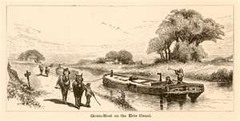
5522648134Erie CanalA New York canal, completed in 1825, that linked the economies of western and eastern cities. It lead to more canal building, lower food prices in the East, more settlers in the West, and stronger economic ties between the regions. (p. 161)12
5522648135Robert Fulton; steamboatsIn 1807, he built a boat powered by a steam engine. Commercial steamboat lines soon made river shipping faster and cheaper. (p. 161)13
5522648136railroadsA major economic development of the 1820s. By the 1830s they were competing directly competing with canals as a method for carrying passengers and freight. Towns such as Cleveland, Cincinnati, Detroit, and Chicago soon became booming commercial centers. (p. 161)14
5522648137Eli Whitney; interchangeable partsIn 1793, he built the first cotton gin, which would have a huge impact on the Southern economy. During the War of 1812 he devised a system to make rifles with mass produced interchangeable parts. (p. 162)15
5522648138corporationsIn 1811, New York state passed a law that made it easier for business to incorporate and raise capital by selling shares of stock. Owners of a corporation only risked the money they had invested in a venture. This allowed large sums of money to be raised to build factories, canals, and railroads. (p. 162)16
5522648139Samuel SlaterBritish-born textile producer and one of the first industrialists in America. In 1791, he helped establish the nation's first factory using cotton spinning machine technology. (p. 162)17
5522648140factory systemIn the 1820s, New England emerged as the country's leading manufacturing center because of abundant water power to drive machinery and seaports to ship goods. (p. 162)18
5522648141Lowell System; textile millsThe system that recruited young farm women to work in textile mills and house them in company dormitories. (p. 163)19
5522648142industrializationCaused a shift from farming economy to using manufacturing machines in a factory economy. (p. 164)20
5522648143specializationFarmers produced food, workers in the cities produced manufactured goods. (p. 164)21
5522648144unionsTrade unions were organized as early as the 1790s when the factory system started to take hold. A prime goal of the early unions was a 10 hour workday. (p. 163)22
5522648145cotton ginIn 1793, this machine was invented by Eli Whitney. It removed seeds from cotton fibers so cotton could be processed quickly and cheaply. As a result more cotton was grown in the South and more slaves were needed in the cotton fields. (p. 162)23
5522648146market revolutionThis revolution was a result of specialization on the farm, growth of the cities, industrialization, and the development of modern capitalism. It brought the end of self-sufficient households and a growing interdependence among people. (p. 164)24
5522648147John MarshallChief Justice of the Supreme Court from 1801 to 1835. A Federalist, whose decisions favored the central government and the rights of property against advocates of state's rights. Several of his decisions became landmark ruling that defined the relationship between the central government and the states. (p. 153)25
5522648148Fletcher v. PeckAn 1810 Supreme Court case, in which Georgia tried to revoke a land grant on the grounds that it had been obtained by corruption. The Supreme Court ruled that a state cannot arbitrarily interfere with a person's property rights. Since the land grant was a legal contract, it could not be repealed. This was the first time that the Supreme Court declared a state law to be unconstitutional and invalid. (p. 154)26
5522648149McCulloch v. MarylandThis 1819 Supreme Court case, ruled that states could not tax a federal institution, the Bank of the United States. The court ruled that, even though no clause in the Constitution specifically mentions a national bank, the Constitution gives the federal government the implied power to create one. (p. 154)27
5522648150Dartmouth College v. WoodwardAn 1819 Supreme Court case, in which New Hampshire attempted to change Dartmouth College from a private college into a public institution. The court struck down the state law as unconstitutional, arguing that a contract for a private corporation could not be altered by the state. (p. 154)28
5522648151Gibbons v. OgdenThis 1821 Supreme Court case ruled that New York state could not grant a monopoly to a steamboat company. This case established the federal government's control of interstate commerce. (p. 154)29
5522648152implied powersEven though a power is not specifically stated in the Constitution, it may be possible for the federal government to exercise a power. (p. 154)30
5522648153Tallmadge AmendmentProposed solution to Missouri becoming a state. It forbade slavery in Missouri and said that all black children would be free after the age of 25. It did not pass in the Senate and angered the South. (p. 156)31
5522648154Missouri CompromiseAn 1820 compromise, that allowed Missouri to join the Union as a slave state, and Maine to join as a free state. It also established a line across the southern border of Missouri (36°,30') stating that except for the state of Missouri, all states north of that line must be states without slavery. (p. 157)32
5522648155Stephen DecaturIn 1815, this naval officer led a U.S. fleet to force the leaders of North Africa to allow safe American shipping in the Mediterranean. (p. 157)33
5522648156Rush-Bagot AgreementAn 1817 disarmament pact between U.S. and Britain, it strictly limited Naval armament on the Great Lakes. The agreement was extended to place limits on U.S. and Canadian border fortifications. (p. 157)34
5522648157Treaty of 1818Treaty between U.S. and Britain which 1) shared fishing rights off the coast of Newfoundland, 2) joint occupation of the Oregon Territory for ten years, 3) set the northern limits of the Louisiana Territory at the 49th parallel. (p. 157)35
5522648158Andrew JacksonIn 1817, this general lead a militia force to Florida where he destroyed Seminole villages and hung Seminole sympathizers. He would later become president. (p. 158)36
5522648159Florida Purchase TreatyAn 1819 treaty, in which Spain turned over Florida and the Oregon Territory to the United States. The U.S. agree to assume $5 million debt and give up any claims in Texas. (p. 158)37
5522648160Monroe DoctrineAn 1823 doctrine by President James Monroe, warning European powers to refrain from seeking any new territories in the Americas. The United States largely lacked the power to back up the pronouncement, which was actually enforced by the British, who sought unfettered access to Latin American markets. (p. 158)38

AP US History Period 1 (1491-1607) Flashcards

Terms : Hide Images
6453634972Columbian Exchange"Triangle Trade: Widespread transfer of animals, plants, culture, human populations, technology and ideas between the American and Afro-Eurasian hemispheres in 15th-16th centuries, related to European colonization and trade after Christopher Columbus' 1492 voyage.0
6453634973FeudalismA way of structuring society around relationships derived from the holding of land in exchange for service or labour.1
6453634974CapitalismAn economic and political system in which a country's trade and industry are controlled by private owners for profit, rather than by the state.2
6453634975Joint-Stock CompaniesA business entity where different stocks can be bought and owned by shareholders. Each shareholder owns company stock in proportion, evidenced by his or her shares (certificates of ownership).[1]This allows for the unequal ownership of a business with some shareholders owning a bigger proportion of a company than others do.3
6453634976Encomienda SystemA system in which the Spanish crown granted a person a specified number of natives of a specific community, with the indigenous leaders in charge of mobilizing the assessed tribute and labor. In turn, encomenderos were to take responsibility for instruction in the Christian faith, protection from warring tribes and pirates, instruction in the Spanish language and development and maintenance of infrastructure.4
6453634977subjugateto bring under complete control or subjection; conquer; master, enslave.5
6453634978Northwest PassageThe Northwest Passage is a sea route connecting the northern Atlantic and Pacific Oceans through the Arctic Ocean, along the northern coast of North America via waterways through the Canadian Arctic Archipelago6
6453634979Bering StraitStretch of ocean separating North America from Asia that was, during the Ice Age, the location of a land bridge as wide as Alaska. Then, human migration was possible over the land bridge from Siberia, and human beings came across likely in pursuit of game. From this point of origin, American Indians dispersed down across the entire Western hemisphere.7
6453634980IroquoisThe name not of a tribe but of a confederacy of six separate tribes centered in what would become New York. Coposed of the Mohawk, Seneca, Cayuga, Onondaga, Oneida and Tuscarora Tribes united in a military alliance against the Huron tribe located in the Great Lakes Region.8
6453634981Marco PoloExplorer whose famous journey along the Silk Road (from Mongolia to China) inspired the Discourse Containing Various Experiences, which became the basis for overland trade with China. Established Europe as a market hungry for Asian goods and vice versa.9
6453634982RenaissanceThe flowering of scholarship and individualistic, humanistic endeavor that ended the medieval period of European history. In English: "Rebirth."10
6453634983Prince Henry the NavigatorRegarded as the main initiator of what would be known as the Age of Discoveries, responsible for the early development of Portuguese exploration and maritime trade with other continents through the systematic exploration of Western Africa, the islands of the Atlantic Ocean, and the search for new routes.11
6453634984Ferdinand and Isabella of SpainChristopher Columbus' patrons; launched the Spanish Empire after hearing of his discoveries of a supposed water route to Asia. Established management precedents that cpaitalized on treasures discovered in the New World, served as a model for other European nations attempting similar exploits.12
6453634985Pope's RebellionAn uprising of most of the indigenous Pueblo people against the Spanish colonizers in the province of Santa Fe de Nuevo México, present day New Mexico. Killed 400 Spanish and drove the remaining 2,000 settlers out of the province13
6453634986viceroyIn the Spanish Empire's power structure, the first representative position sent to govern divisions in the New World. Handpicked, loyal men were chosen to this position, which served as the head of civil government but also as the commander in chief of Spanish military forces in his region. Served as a model for other European nations that sought stricter control over their colonies.14
6453634987Bartolome de las CasasDominican friar, priest and scholar that worked tirelessly throughout the sixteenth century, decrying the plight of the American Indians.15
6453634988Protestant ReformationEarly 16th century writings by the priest and scholar Martin Luther, focusing primarily on biblical doctrines of grace, inspired this movement. Its key doctrine: each person having an individual calling and a Christian duty to work diligently at that calling for the Glory of God. This idea became a seminal attribute of American society through the influence of Dutch, English, Swedish, Germany and French Huguenot colonists.16
6453634989Martin LutherA German priest and scholar who defied Rome and launched the Protestant Reformation by contesting certain teachings of the Roman Catholic Church, beginning in 1517.17
6453634990John CalvinFrenchman that began as a priest but joined the Protestant cause as a legal scholar and minister in Geneva, Switzerland. Wrote the Institutes of Christian Religion, emphasizing the sovereignty of God in salvation. His student, John Knox, formed the Scottish Presbyterian Church brought to the shores of America by Scots-Irish immigrants. The Puritans were also Calvinist in doctrine and were the founders of Congregational Churches in New England.18
6453634991Henry VIII of EnglandTudor King of England who launched the English Reformation because the Roman Catholic Church opposed his actions of divorcing Catherine of Aragon and marrying Anne Boleyn. Also: severed ties with Rome and allowed the Bible to be printed in English legally for the first time.19
6453634992New AmsterdamDutch Colony in North America that began when Peter Minuit purchased the best harbor on the Atlantic Seaboard from local Indians with a few trading goods. Established the Dutch as competent fur traders, excellent merchants, responsible for founding the most ethnically diverse colony that fittingly, became the site of the trade and culture capital of the world, New York City.20
6453634993Elizabeth IThe daughter of Henry VIII and Anne Boleyn, who was more responsible than any other monarch for positioning her country to take advantage of New World discoveries.21
6453634994nation-stateThe modern form of political society that combines centralized government with a high degree of ethnic and cultural unity.22
6453634995confederacyAn alliance or league of nations or peoples looser than a federation.23
6453634996primevalConcerning the earliest origin of things.24
6453634997middlemenIn trading systems, those dealers who operate between the original buyers and the retail merchants who sell to consumers.25
6453634998caravelA small vessel with a high deck and three triangular sails.26
6453634999plantationA large-scale agricultural enterprise growing commercial crop and usually employing coerced or slave labor.27
6453635000ecosystemA naturally evolved network of relations among organisms in a stable environment.28
6453635001demographicConcerning the general characteristic of a given population, including such factors as numbers, age, gender, birth and death rates, and so on.29
6453635002conquistadorA Spanish conqueror or adventurer in the Americas.30
6453635003capitalismAn economic system characterized by private property , generally free trade, and open and accessible markets.31
6453635004mestizoA person of mixed Native American and European ancestry.32
6453635005provinceA medium sized sub-unit of territory and governmental administration within a larger nation or empire.33
6453635006nationalismFervent belief and loyalty given to the political unit of the nation-state, leading to a belief in the superiority of one's culture over another.34
6453635007charterA legal document granted by a government to some group or agency to implement a stated purpose, and spelling out the attending rights and obligations.35
6453635008censusAn official count of population, often also describing other information about the population.36
6453635009indentured servantA poor person obligated to a fixed term of labor.37
6453635010tolerationOriginally, religious freedom granted by an established church to a religious minority.38
6453635011squatterA frontier farmer who illegally occupied land owned by others or not yet officially opened for settlement.39
6453635012matriarchA respected, usually elderly, female head of a household or extended clan.40
6453635013melting potPopular term for an ethnically diverse population that is presumed to be "melting" towards some eventual commonality.41
6453635014conversionA religious turn to God, thought by Calvinists to involve an intense, identifiable person experience.42
6453635015heresyDeparture from correct or officially defined belief.43
6453635016seditiousConcerning resistance to or rebellion against the government.44
6453635017commonwealthAn organized civil government or social order.45
6453635018autocraticAbsolute or dictatorial rule.46
6453635019proprietaryConcerning exclusive legal ownership, as of colonies granted to individuals by the monarch.47
6453635020naturalizationThe granting of citizenship to foreigners or immigrants.48
6453635021ethnicConcerning diverse peoples or cultures, specifically those of non-Anglo-Saxon background.49

Richey AP US History Chapter 15 Flashcards

AMSCO United States History 2015 Edition, Chapter 15 Reconstruction, 1863-1877

Terms : Hide Images
7563278154Civil Rights Act of 1866This act declared that all African Americans were U.S. citizens and also attempted to provide a shield against the operation of the Southern states' Black Codes. (p. 295)0
756327815514th AmendmentRatified in 1868, this Constitutional amendment, declares that all persons born or naturalized in the United States were citizens, and it obligated the states to respect the rights of U.S. citizens and provide them with "equal protection of the laws" and "due process of law". Other parts of the amendment related to Congress' plan for Reconstruction. (p. 295)1
7563278156equal protection of the lawsPart of the 14th amendment, it emphasizes that the laws must provide equivalent "protection" to all people. (p. 295)2
7563278157due process of lawPart of the 14 Amendment, it denies the government the right, without due process, to deprive people of life, liberty, and property. (p. 295)3
756327815815h AmendmentRatified in 1870, this Constitutional amendment, prohibited any state from denying or abridging a citizen's right to vote "on account of race, color, or previous condition of servitude." (p. 297)4
7563278159Civil Rights Act of 1875The last major piece of Reconstruction legislation, this law prohibited racial discrimination in all public accommodation and transportation. It also prohibited courts from excluding African Americans from juries. However, the law was poorly enforced. (p. 297)5
7563278160Jay GouldIn 1869, this Wall Street financier obtained the help of President Grant's brother in law, to corner the gold market. The Treasury Department broke the scheme, but after he had already made a huge profit. (p. 300)6
7563278161Credit MobilierIn this affair, insiders gave stock to influential members of Congress, to avoid investigation of the huge profits they were making from government subsidies for building the transcontinental railroad. (p. 300)7
7563278162William (Boss) TweedThis New York City politician, arranged schemes that allowed he and his cronies to steal about $200 million dollars from New York. He was eventually sentenced to prison in 1871. (p. 301)8
7563278163spoilsmenIn the 1870s, political manipulators such as Senator Roscoe Conkling and James Blaine, used patronage - giving jobs and government favors to their supporters. (p. 300)9
7563278164patronageTerm for one of the key inducements used by party machines. A job, promotion, or contract that is given for political reasons rather than for merit or competence. (p. 300)10
7563278165Thomas NastNew York Times political cartoonist who exposed the abuses of the "Boss" Tweed ring. Tweed was eventually arrested and imprisoned in 1871. (p. 310)11
7563278166Liberal RepublicansIn 1872, this party advocated civil service reform, an end of railroad subsidies, withdrawal of troops from the South, reduced tariffs, and free trade.12
7563278167Horace GreeleyIn the presidential election of 1872, both the Liberal Republicans and the Democrats made this newspaper editor their nominee. He lost the election to Ulysses S. Grant, he died just days before the counting of the electoral vote count. (p. 301)13
7563278168Panic of 1873Economic panic caused by over speculation by financiers and over building by industry and railroads. In 1874, President Grant sided with the hard-money bankers who wanted gold backing of the money supply. He vetoed a bill calling for the release of additional greenbacks. (p. 302)14
7563278169greenbacksName given to paper money issued by the government, so called because the back side was printed with green ink. They were not redeemable for gold. (p 302)15
7563278170redeemersBy 1877, these Southern conservatives had taken control of state governments in the South. Their foundation rested on states rights, reduced taxes, reduced social programs, and white supremacy. (p. 302)16
7563278171Rutherford B. HayesHe won the presidential election of 1876, which was a highly contested election. He was a Republican governor from Ohio. (p. 302)17
7563278172Samuel J. TildenIn the presidential election of 1876, this New York reform governor was the Democrat nominee. He had gained fame for putting Boss Tweed behind bars. He collected 184 of the necessary 185 electoral votes, but was defeated by Rutherford B. Hayes, when all of the electoral votes from the contested states of South Carolina, Florida, and Louisiana went to Hayes. (p. 303)18
7563278173Compromise of 1877This informal deal settled the 1876 presidential election contest between Rutherford Hayes (Republican) and Samuel Tilden (Democrat). It was agreed that Hayes would become president. In return, he would remove all federal troops from the South and support the building of a Southern transcontinental railroad. (p. 303)19
7563278174presidential reconstructionPresident Abraham Lincoln believed that the Southern states could not leave the Union and therefore never did leave. He consider them a disloyal minority. After Lincoln's assassination, President Andrew Johnson attempted to carry out Lincoln's plan for reconstruction. (p. 292)20
7563278175Proclamation of Amnesty and ReconstructionIn 1863, President Lincoln's proclamation set up a process for political reconstruction, creating state governments in the South so that Unionists were in charge rather than secessionists. It include a full presidential pardon for most Confederates who took an oath of allegiance to the Union and the U.S. Constitution, and accepted the emancipation of slaves. It also reestablished state governments as soon as at least 10 percent of the voters in the state took the loyalty oath. In practice, the proclamation meant that each Southern state would need to rewrite its state constitution to eliminate existence of slavery. (p. 292)21
7563278176Wade-Davis BillIn 1864, this harsh Congressional Reconstruction bill stated that the president would appoint provisional governments for conquered states until a majority of voters took an oath of loyalty to the Union. It required the abolition of slavery by new state constitutions, only non-Confederates could vote for a new state constitution. President Lincoln refused to sign the bill, pocket vetoing it after Congress adjourned. (p. 292)22
7563278177Andrew JohnsonThe 17th President of the United States from 1865 to 1869. This Southerner from Tennessee was Lincoln's vice president, and he became president after Lincoln was assassinated. He opposed radical Republicans who passed Reconstruction Acts over his veto. The first U.S. president to be impeached, he survived the Senate removal by only one vote. (p. 297)23
7563278178Freedmen's BureauIn March 1865, an organization created at end of Civil War, which provided aid to the both black and whites in the South. It provided food, shelter, and medical aid for those made destitute by the Civil War. (p. 292)24
7563278179Black CodesSouthern state legislatures created these codes after the Civil War. They restricted the rights and movements of newly freed African Americans. 1) prohibited blacks from either renting land or borrowing money to buy land, 2) placed freemen into a form of semi bondage by forcing them, as "vagrants" and "apprentices" to sign work contracts, 3) prohibited blacks from testifying against whites in court. (p. 294)25
7563278180Congressional ReconstructionIn the spring of 1866, many in Congress were unhappy with President Andrew Johnson's policies and this led to the second round of reconstruction. Its creation was dominated by Congress and featured policies that were harsher on Southern whites and more protective of freed African Americans. (p. 295)26
7563278181Radical RepublicansIn the 1860s, this was the smaller portion of the Republican party than the moderates. They were led by Senator Charles Sumner and Congressman Thaddeus Stevens. They supported various programs that were most beneficial to the newly freed African Americans in the South. (p. 295)27
7563278182Charles SumnerThe leading Radical Republican in the Senate from Massechusetts. (p. 295)28
7563278183Thaddeus StephensThis Pennsylvania Congressman was a Radical Republican. He hoped to revolutionize Southern society through an extended period of military rule in which blacks would be free to exercise their civil rights, receive education, and receive lands confiscated from planter class. (p. 295)29
7563278184Benjamin WadeRadical Republican who endorsed woman's suffrage, rights for labor unions, and civil rights for northern blacks. (p. 295)30
7563278185Reconstruction ActsIn 1867, Congress passed three acts which placed the South under military occupation. They created five military districts in the former Confederate states, each under control of the Union army. To rejoin the Union, ex-Confederate states were required to ratify the 14th amendment and place guarantees in their state constitution that all adult males of all races would be guaranteed the right to vote. (p. 296)31
7563278186Tenure of Office ActIn 1867, this act prohibited the president from removing a federal official or military commander, without the approval of the Senate. The purpose of the law was purely political, to protect the Radical Republicans in Johnson's cabinet from dismissal. (p. 297)32
7563278187Edwin StantonHe was President Andrew Johnson's secretary of war. President Johnson believed the new Tenure of Office Act was unconstitutional and he challenged the law, by dismissing him from his position. This led to Johnson's impeachment. (p. 297)33
7563278188impeachmentPresident Johnson was the first president impeached, for the charge of High Crimes and Misdemeanors on February 24, 1868. One of the articles of impeachment was violating the Tenure of Office Act. He had removed Edwin M. Stanton, the Secretary of War, from office. The impeachment failed, falling just one vote short. (p. 297)34
7563278189scalawagsThe term for White Republican Southerners who cooperated with and served in Reconstruction governments. (p. 298)35
7563278190carpetbaggersThe term for Northern newcomers who came to the South during Reconstruction. (p. 298)36
7563278191Blanche K. BruceDuring the Reconstruction era, he represented Mississippi as a Republican U.S. Senator, from 1875 to 1881. He was the first black to serve a full term in the Senate. (p. 298)37
7563278192Hiram RevelsDuring the Reconstruction era, this black politician, was elected to the Mississippi senate seat that had been occupied by Jefferson Davis before the Civil War. (p. 298)38
7563278193sharecroppingCommon form of farming for freed slaves in the South. They received a small plot of land, seed, fertilizer, tools from the landlord who usually took half of the harvest. It evolved into a new form of servitude. (p. 300)39
7563278194Ku Klux KlanFounded in 1867, by ex-Confederate general, Nathaniel Bedford Forrest. This organization of white supremacists used lynchings, beatings, and threats to control the black population in the South. (p. 302)40
7563278195Force Acts (1870, 1871)These act passed in 1870 and 1871, gave power to federal authorities to stop Ku Klux Klan violence and to protect the civil rights of citizens in the South. (p. 302)41
7563278196Amnesty Act of 1872This act removed the last of the restrictions on ex-Confederates, except for the top leaders. Allowed southern conservatives to vote for Democrats to retake control of state governments. (p. 302)42

AMSCO AP US History Chapter 4 Flashcards

AMSCO United States History 2015 Edition, Chapter 4 Imperial Wars and Colonial Protest, 1754-1774

Terms : Hide Images
7236636480Patrick HenryYoung Virginian lawyer who coined the phrase "No taxation without representation" in his speech to the House of Burgesses. (p. 73)0
7236636481Stamp Act CongressRepresentatives from nine colonies met in New York in 1765 and decided that only their own elected representatives had the power to approve taxes. (p. 73)1
7236636482Sons and Daughters of LibertySecret society organized to intimidated tax agents. Sometimes they destroyed revenue stamps and tarred and feathered tax collectors. (p. 73)2
7236636483John Dickinson; Letters from a Farmer in PennsylvaniaIn 1767 and 1768, he argued that the idea of no taxation without representation, was an essential principle of English law. (p. 74)3
7236636484Samuel AdamsIn 1768, he was one of the authors of the the Massachusetts Circular Letter which urged colonies to petition Parliament to repeal the Townshend Acts. (p. 74)4
7236636486Massachusetts Circular LetterIn 1768, this document was distributed to every colonial legislature. It urged the colonies to petition Parliament to repeal the Townshend Acts. (p. 74)5
7236636487Committees of CorrespondenceInitiated by Samuel Adams in 1772, these letters spread news of suspicious or threatening acts by the British throughout the colonies. (p. 74)6
7236636488Intolerable ActsColonist nickname for the Coercive Acts of 1774, a series of acts created to punish the colonists for the Boston Tea Party. (p. 75)7
7236636489George IIIIn the 1760s, he was the King of England. (p. 71)8
7236636491ParliamentThe legislative house of Great Britain. (p. 71)9
7236636492salutary neglectGreat Britain had exercised little direct control over the colonies and did not enforce its navigation laws. This changed after the French and Indian War, as the British adopted more forceful policies for taking control of the colonies. (p. 71)10
7236636494Pontiac's RebellionIn 1763, American Indian chief Pontiac led a major attack against the colonial settlements on the western frontier. The British did not rely on colonial forces, but instead sent their army to deal with the rebellion. This led to the creation of the Proclamation of 1763. (p. 72)11
7236636495Proclamation Act of 1763This proclamation prohibited colonists from settling west of the Appalachian Mountains. The British hoped it would prevent violence between Native Americans and colonists. The colonists were angry and disobeyed the law, moving to the west of the imaginary boundary in large numbers. (p. 72)12
7236636496Seven Years' War (French and Indian War)War fought in the colonies from 1754 to 1763 between the English and the French for possession of the Ohio River Valley area. The English won the war and the Peace of Paris was negotiated in 1763. (p. 70)13
7236636497Albany Plan of UnionThe British government called for representatives from several colonies to meet in Albany, New York in 1754, to provide for an inter-colonial government to recruit troops and collect taxes. Each colony was too jealous of its own taxation powers to accept the plan. (p. 70)14
7236636498Edward BraddockIn 1755, this general led an army from colonial Virginia, to attack the French near Ft. Duquesne. More than 2,000 of his British and colonial troops were defeated by a smaller force of French and American Indians. (p. 70)15
7236636499George WashingtonHe led a small militia from the Virginia colony, to halt the completion of the French fort in the Ohio River Valley, Fort Duquesne. In July 1974, he was forced to surrender to a superior force of Frenchmen and their American Indian allies. This was the beginning of the French and Indian War. (p. 70)16
7236636500Peace of ParisPeace treaty signed to end the French and Indian War (The Seven Years' War) in 1763. Great Britain gained French Canada and Spanish Florida. France gave Spain its western territory. (p. 71)17
7236636501Sugar ActA 1764 British act which placed duties on foreign sugar and other luxuries. Its primary purpose was to raise money for the English Crown. (p. 72)18
7236636502Quartering ActThis 1765 act required the colonists to provide food and living quarters for British soldiers. (p. 72)19
7236636503Stamp ActThis 1765 act required that revenue stamps be placed on almost all printed paper, such as legal documents, newspapers, and pamphlets. This was the first tax paid directly by the colonists, rather than merchants. Boycotts were effective in repealing this act. (p. 72)20
7236636504Declaratory ActIn 1766, Parliament declared that it had the right to tax and make laws for the colonies in all cases whatsoever. (p. 73)21
7236636505Townshend ActsIn 1767, Parliament enacted new taxes to be collected on imports of tea, glass, and paper. It also created the writs of assistance, which was a general license to search for smuggled goods anywhere. (p. 73)22
7236636506Writs of AssistanceA general license to search anywhere for smuggled goods without a warrant for a specific property. (p. 73)23
7236636507Tea ActIn 1773, Parliament passed this act which taxed imported tea. The result was that British tea was even cheaper than smuggled Dutch tea. Colonists responded with the Boston Tea Party because they still felt this was taxation without representation. (p. 75)24
7236636508Coercive ActsIn 1774, after the Boston Tea Party, Great Britain created four Coercive Acts to punish the people of Boston and Massachusetts. They closed the port of Boston until the spilled tea was paid for, reduced the power of the Massachusetts legislature, and forced those accused of crimes to be tried in England. (p. 75)25
7236636514DeismBelieve that God established natural laws in creating the universe, but that the role of divine intervention in human affairs was minimal. It influenced American Revolutionary thinkers such as Washington and Jefferson. (p. 77)26
7236636516John LockeEnglish philosopher who said that all people have rights, simply because they are human and that people have a right and a responsibility to revolt against any government that failed to protect their rights. (p. 77)27
7236654228Boston Tea PartyIn 1773, a group of Bostonians disguised themselves as American Indians and dumped chests of tea into the harbor. The British responded with the Coercive (Intolerable) Acts in 1774. (p.75)28

Period 1: 1491-1607 AP US History Flashcards

Terms : Hide Images
7559025407Bering StraitPlace where Siberian tribes crossed into present-day Alaska and the Americas approximately 20,000 years ago0
7559025408Three-sister farmingmaize, squash, and beans1
7559025409CahokiaLarge settlement in the Mississippi Valley; Site of sedentary agriculture cultivators2
7559025410PuebloSpanish for "village"; Indians in the Southwest who built fortified settlements3
7559025411Iroquois ConfederacyFive Indian tribes form an alliance and control trade east of the Great Lakes4
7559025412Algonquian IndiansMajor native group distributed in the Northeast and along the Atlantic seaboard who cultivated three sisters. Notably included the Powhatan Confederacy of the Chesapeake Bay and Wampanoag of New England, both of which clashed with English settlers).5
7559025413Sioux IndiansGreat Plains Indians; Hunter-gatherers; Buffalo hunters6
7559025414Shoshone IndiansSocieties in the Northwest and present-day California who supported themselves by hunting and gathering, and in some areas developed settled communities supported by the vast resources of the ocean.7
7559025415Catholic ChurchThe most powerful organization in history; Controlled mostly all of Europe during the Middle Ages8
7559025416caravelnaval technology developed by the Purtuguese and used by Henry the Navigator along the African Coast, Vasco de Gama to India, and Christopher Columbus to the New World9
7559025417capitalismPrivate property; Market prices; Investment in ventures10
7559025418Renaissance"Rebirth"; Humanism11
7559025419Protestant ReformationMartin Luther's demand that the Catholic Church reform. When the church refused, he started a competing church, the Protestant (Reformed) church.12
7559025420Ferdinand and Isabella"The Catholic Monarchs"; United Spain, reconquered Spain (Reconquista), and commissioned Columbus13
7559025421ReconquistaFerdinand and Isabella's successful campaign to expel Muslim Moors (and Jews) from the Iberian Peninsula and unify Spain Under the Spanish crown and Catholic religion.14
7559025422Doctrine of Discovery (1493)A.K.A. Inter caetera; Papal Bull that declared all non-Christian land "discoverable" by Christian powers.15
7559025423Treaty of Tordesillas (1494)Divides America between Portugal and Spain for exploration16
7559025424Colombian ExchangeThe trade of biological elements, ideas, and goods; Transformed mostly all of the world as a result.17
7559025425Middle PassageThe route in the Triangular Trade where slaves passed from West Africa to the New World18
7559025426conquistadoresHernan Cortez and Francisco Pizarro, for example; agents of both the Reconquista and the conquest of the New World19
7559025427EncomiendaSpanish labor system; included a caste system with Peninsulares at the top20
7559025428casta systemThe Spanish developed a caste system that incorporated, and carefully defined the status of, the diverse population of Europeans, Africans, and Native Americans in their empire.21
7559025429MestizosMixed blood Spanish and Indian; Result of lack of Spanish ladies in the New World22
7559025430San Diego (Est. 1769)First and southernmost Spanish mission in California; Established to "civilize" the Indians and create a buffer between New Spain and competing colonial powers.23
7559025431San Francisco (Est. 1776)Last and northernmost Spanish mission in California; Established to "civilize" the Indians and create a buffer between New Spain and competing colonial powers.24
7559025432Spanish missionEstablished in the New World, especially in California, to "civilize" the Indians and create a buffer between New Spain and competing colonial powers.25
7559025433Bartolome de Las CasasIndian apologist who preached against the cruel treatment of the Indians; His writings and activities led to the "Black Legend"26
7559025434Juan Gines de SepulvedaSaw the Indians as uncivilized and barbaric27
7559025435"Black Legend"The (historically debatable) reputation that the Spanish destroyed the Indians through slavery and disease28
7559025436St. Augustine (Est. 1565)First enduring European settlement in North America; Established by the Spanish in modern-day Florida.29
7559025437Pueblo Revolt (1680)Rebellion of Pueblo Indians against Spanish rule in New Mexico; Led by the Indian Popé.30

AMSCO AP US History Chapter 8 Flashcards

AMSCO United States History 2015 Edition Chapter 8 Nationalism and Economic Development, 1816-1848

Terms : Hide Images
5027258497Era of Good FeelingsTerm to describe James Monroe's period as president (1817-1825). The Democratic-Republican party dominated politics. On the surface everything looked fine, however there were conflicts over tariffs, the national bank, internal improvements, and public land sales. (p. 150)0
5027258498sectionalismThe Era of Good Feelings was damaged by the sectional controversy of the Missouri Compromise. Sectionalist tension over slavery became apparent during this period (1817-1825). (p. 150, 157)1
5027258499James MonroeThe fifth President of the United States (1817-1825). His administration was marked by the Tariff of 1816, Rush-Bagot Agreement with Britain (1817), acquisition of Florida (1819), the Missouri Compromise (1820), and the profession of the Monroe Doctrine (1823). (p 151)2
5027258500cultural nationalismA new generation was interested in expanding west, had little interest in European politics, and patriotic themes were everywhere in society. (p. 151)3
5027258526economic nationalismPolitical movement to subsidize internal improvements such as roads and canals. Also the protecting of US industries from European competition. (p. 151)4
5027258501Tariff of 1816The first protective tariff in U.S. history. It helped protect American industry from British competition by placing a tax on imported British manufactured goods. (p. 151)5
5027258502protective tariffA tax on imported goods that is intended to protect a nation's businesses from foreign competition. (p. 151)6
5027258503Henry Clay; American SystemHis proposed plan for advancing the nation's economic growth consisted of three parts: 1) protective tariffs, 2) a national bank, and 3) internal improvements. The internal improvements, to be funded by the national government, were not approved because James Monroe felt that the Constitution did not allow it. (p. 152)7
5027258504Second Bank of the United StatesThis institution was chartered in 1816 under President James Madison and became a depository for federal funds and a creditor for (loaning money to) state banks. It became unpopular after being blamed for the Panic of 1819. Suspicion of corruption and mismanagement haunted it, until its charter expired in 1836. (p. 152)8
5027258505Panic of 1819In 1819, this was the first major financial panic since the Constitution had been ratified. Many state banks closed, and unemployment, bankruptcies, and imprisonment for debt increased sharply. the depression was most severe in the West, where many people had speculated on land. (p. 153)9
5027258518Lancaster TurnpikeBuilt in the 1790s, this first highway was developed in response to the ineffectiveness of slow water transportation and uncertain road transportation. It stretched from Philadelphia to Lancaster and inspired many other turnpike projects. (p. 161)10
5027258519National (Cumberland) RoadA paved highway that extended more than a thousand miles from Maryland to Illinois. It was built using state and federal money over many years (1811-1852). One of the few roads crossing state boundaries. (p. 161)11
5027258534Erie CanalA New York canal, completed in 1825, that linked the economies of western and eastern cities. It lead to more canal building, lower food prices in the East, more settlers in the West, and stronger economic ties between the regions. (p. 161)12
5027258535Robert Fulton; steamboatsIn 1807, he built a boat powered by a steam engine. Commercial steamboat lines soon made river shipping faster and cheaper. (p. 161)13
5027258536railroadsA major economic development of the 1820s. By the 1830s they were competing directly competing with canals as a method for carrying passengers and freight. Towns such as Cleveland, Cincinnati, Detroit, and Chicago soon became booming commercial centers. (p. 161)14
5027258520Eli Whitney; interchangeable partsIn 1793, he built the first cotton gin, which would have a huge impact on the Southern economy. During the War of 1812 he devised a system to make rifles with mass produced interchangeable parts. (p. 162)15
5027258538corporationsIn 1811, New York state passed a law that made it easier for business to incorporate and raise capital by selling shares of stock. Owners of a corporation only risked the money they had invested in a venture. This allowed large sums of money to be raised to build factories, canals, and railroads. (p. 162)16
5027258521Samuel SlaterBritish-born textile producer and one of the first industrialists in America. In 1791, he helped establish the nation's first factory using cotton spinning machine technology. (p. 162)17
5027258540factory systemIn the 1820s, New England emerged as the country's leading manufacturing center because of abundant water power to drive machinery and seaports to ship goods. (p. 162)18
5027258541Lowell System; textile millsThe system that recruited young farm women to work in textile mills and house them in company dormitories. (p. 163)19
5027258542industrializationCaused a shift from farming economy to using manufacturing machines in a factory economy. (p. 164)20
5027258543specializationFarmers produced food, workers in the cities produced manufactured goods. (p. 164)21
5027258544unionsTrade unions were organized as early as the 1790s when the factory system started to take hold. A prime goal of the early unions was a 10 hour workday. (p. 163)22
5027258545cotton ginIn 1793, this machine was invented by Eli Whitney. It removed seeds from cotton fibers so cotton could be processed quickly and cheaply. As a result more cotton was grown in the South and more slaves were needed in the cotton fields. (p. 162)23
5027258546market revolutionThis revolution was a result of specialization on the farm, growth of the cities, industrialization, and the development of modern capitalism. It brought the end of self-sufficient households and a growing interdependence among people. (p. 164)24
5027258506John MarshallChief Justice of the Supreme Court from 1801 to 1835. A Federalist, whose decisions favored the central government and the rights of property against advocates of state's rights. Several of his decisions became landmark ruling that defined the relationship between the central government and the states. (p. 153)25
5027258507Fletcher v. PeckAn 1810 Supreme Court case, in which Georgia tried to revoke a land grant on the grounds that it had been obtained by corruption. The Supreme Court ruled that a state cannot arbitrarily interfere with a person's property rights. Since the land grant was a legal contract, it could not be repealed. This was the first time that the Supreme Court declared a state law to be unconstitutional and invalid. (p. 154)26
5027258508McCulloch v. MarylandThis 1819 Supreme Court case, ruled that states could not tax a federal institution, the Bank of the United States. The court ruled that, even though no clause in the Constitution specifically mentions a national bank, the Constitution gives the federal government the implied power to create one. (p. 154)27
5027258509Dartmouth College v. WoodwardAn 1819 Supreme Court case, in which New Hampshire attempted to change Dartmouth College from a private college into a public institution. The court struck down the state law as unconstitutional, arguing that a contract for a private corporation could not be altered by the state. (p. 154)28
5027258510Gibbons v. OgdenThis 1821 Supreme Court case ruled that New York state could not grant a monopoly to a steamboat company. This case established the federal government's control of interstate commerce. (p. 154)29
5027258552implied powersEven though a power is not specifically stated in the Constitution, it may be possible for the federal government to exercise a power. (p. 154)30
5027258511Tallmadge AmendmentProposed solution to Missouri becoming a state. It forbade slavery in Missouri and said that all black children would be free after the age of 25. It did not pass in the Senate and angered the South. (p. 156)31
5027258512Missouri CompromiseAn 1820 compromise, that allowed Missouri to join the Union as a slave state, and Maine to join as a free state. It also established a line across the southern border of Missouri (36°,30') stating that except for the state of Missouri, all states north of that line must be states without slavery. (p. 157)32
5027258513Stephen DecaturIn 1815, this naval officer led a U.S. fleet to force the leaders of North Africa to allow safe American shipping in the Mediterranean. (p. 157)33
5027258514Rush-Bagot AgreementAn 1817 disarmament pact between U.S. and Britain, it strictly limited Naval armament on the Great Lakes. The agreement was extended to place limits on U.S. and Canadian border fortifications. (p. 157)34
5027258515Treaty of 1818Treaty between U.S. and Britain which 1) shared fishing rights off the coast of Newfoundland, 2) joint occupation of the Oregon Territory for ten years, 3) set the northern limits of the Louisiana Territory at the 49th parallel. (p. 157)35
5027258558Andrew JacksonIn 1817, this general lead a militia force to Florida where he destroyed Seminole villages and hung Seminole sympathizers. He would later become president. (p. 158)36
5027258516Florida Purchase TreatyAn 1819 treaty, in which Spain turned over Florida and the Oregon Territory to the United States. The U.S. agree to assume $5 million debt and give up any claims in Texas. (p. 158)37
5027258517Monroe DoctrineAn 1823 doctrine by President James Monroe, warning European powers to refrain from seeking any new territories in the Americas. The United States largely lacked the power to back up the pronouncement, which was actually enforced by the British, who sought unfettered access to Latin American markets. (p. 158)38

Pages

Subscribe to CourseNotes RSS

Need Help?

We hope your visit has been a productive one. If you're having any problems, or would like to give some feedback, we'd love to hear from you.

For general help, questions, and suggestions, try our dedicated support forums.

If you need to contact the Course-Notes.Org web experience team, please use our contact form.

Need Notes?

While we strive to provide the most comprehensive notes for as many high school textbooks as possible, there are certainly going to be some that we miss. Drop us a note and let us know which textbooks you need. Be sure to include which edition of the textbook you are using! If we see enough demand, we'll do whatever we can to get those notes up on the site for you!