

AP Flashcards
Terms : Hide Images
| 8082357785 | 633-637 ce | Byzantine, syria, palestine! (Middle east) | 0 | |
| 8082357786 | 640 | North africa | 1 | |
| 8082357787 | 651 | Middle east | 2 | |
| 8082357788 | 711 | India | 3 | |
| 8082357789 | 711-718 | Spain | 4 |
AP Notes, Outlines, Study Guides, Vocabulary, Practice Exams and more!
| 8082357785 | 633-637 ce | Byzantine, syria, palestine! (Middle east) | 0 | |
| 8082357786 | 640 | North africa | 1 | |
| 8082357787 | 651 | Middle east | 2 | |
| 8082357788 | 711 | India | 3 | |
| 8082357789 | 711-718 | Spain | 4 |
| 6479770553 | Lumen | Cavity/hole inside of tube, blood vessel, or hollow organ. ex: blood flows through lumen of a blood vessel | 0 | |
| 6479801611 | Acini | Small, ball shaped cluster of secretory cells surrounding ducts | 1 | |
| 6479807096 | Duct | Tubular structure that transports secretions of a gland. They are comprised of simple cuboidal epithelium, arranged in a doughnut pattern | 2 | |
| 6479810158 | Lobes | Large, roundish projections or divisions of an organ. can be seen with the naked eye | 3 | |
| 6479869569 | Lobules | Small divisions of the cells in an organ, forming a functional unit. usually require a microscope to be seen | 4 | |
| 6479886511 | Serosa | -Surrounds outside of the stomach thin tunic made of simple squamous epithelium difficult to see because it is so thin, always present | 5 | |
| 6479910269 | Muscularis Externa | -lies immediately inside of the serosa | 6 | |
| 6479923787 | Submucosa | lays next to the muscularis externa | 7 | |
| 6479929113 | Muscosa | closest to the lumen of the stomach | 8 | |
| 6479953753 | Muscularis Mucosa | Outermost part of mucosa | 9 | |
| 6479961503 | Lamina propria | middle part of mucosa | 10 | |
| 6479962873 | epithelium | the part of the mucosa that is closest to the lumen | 11 |
| 9820081564 | Anaphase | the stage of meiotic or mitotic cell division in which the chromosomes move away from one another to opposite poles of the spindle. | 0 | |
| 9820089703 | autosomal | is a term used in genetic genealogy to describe DNA which is inherited from the autosomal chromosomes. An autosome is any of the numbered chromosomes, as opposed to the sex chromosomes. Humans have 22 pairs of autosomes and one pair of sex chromosomes | 1 | |
| 9820100937 | cancer | the disease caused by an uncontrolled division of abnormal cells in a part of the body. | 2 | |
| 9820106734 | cell cycle |  | 3 | |
| 9820122486 | cell division |  | 4 | |
| 9820159032 | centrioles | a minute cylindrical organelle near the nucleus in ANIMAL cells, occurring in pairs and involved in the development of spindle fibers in cell division. |  | 5 |
| 9820185905 | chromosome | a threadlike structure of nucleic acids and protein found in the nucleus of most living cells, carrying genetic information in the form of genes. |  | 6 |
| 9820365986 | co dominance | is a form of dominance wherein the alleles of a gene pair in a heterozygote are fully expressed. This results in offspring with a phenotype that is neither dominant nor recessive. |  | 7 |
| 9820373691 | crossing over | the exchange of genes between homologous chromosomes, resulting in a mixture of parental characteristics in offspring. |  | 8 |
| 9820387366 | cyclin dependent kinase | any of a number of proteins associated with the cycle of cell division that are thought to initiate certain processes of mitosis. | 9 | |
| 9820477163 | cytokineses | the cytoplasmic division of a cell at the end of mitosis or meiosis, bringing about the separation into two daughter cells. | 10 | |
| 9820483290 | diploid | containing two complete sets of chromosomes, one from each parent. | 11 | |
| 9820485930 | dominant | is a relationship between alleles of one gene, in which the effect on phenotype of one allele masks the contribution of a second allele at the same locus. | 12 | |
| 9820497818 | F1 Generation | the first filial generation of offspring | 13 | |
| 9820574348 | fertilization | involving the fusion of male and female gametes to form a zygote. | 14 | |
| 9820583008 | gamete | a mature haploid male or female germ cell that is able to unite with another of the opposite sex in sexual reproduction to form a zygote. | 15 | |
| 9820586822 | genotype | he genetic constitution of an individual organism |  | 16 |
| 9820597352 | haploid | having a single set of unpaired chromosomes |  | 17 |
| 9820615274 | heterozygous |  | 18 | |
| 9820644981 | homozygous |  | 19 | |
| 9820650699 | incomplete dominance | ne allele for a specific trait is not completely expressed over its paired allele. |  | 20 |
| 9820659208 | independent assortment | describes how different genes separate from one another when reproductive cells develop. |  | 21 |
| 9821167337 | homologous chromosome | The cell has two sets of each chromosome; one of the pair is derived from the mother and the other from the father. | | 22 |
| 9821178256 | interphase | Cell at rest |  | 23 |
| 9821186739 | meiosis | a type of cell division that results in four daughter cells each with half the number of chromosomes of the parent cell, as in the production of gametes and plant spores. | 24 | |
| 9821305605 | metaphase |  | 25 | |
| 9821308400 | mitosis |  | 26 | |
| 9821312673 | nuclear division | either a diploid (2N) or haploid (N) eukaryotic cell whereby two daughter nuclei are produced that are genetically identical to the parent nucleus | 27 | |
| 9821415944 | phenotype | the set of observable characteristics of an individual resulting from the interaction of its genotype with the environment. | 28 | |
| 9821424141 | prophase | the first stage of cell division, before metaphase, during which the chromosomes become visible as paired chromatids and the nuclear envelope disappears. The first prophase of meiosis includes the reduction division. | 29 | |
| 9821427006 | recessive | relating to or denoting heritable characteristics controlled by genes that are expressed in offspring only when inherited from both parents, i.e., when not masked by a dominant characteristic inherited from one parent. | 30 | |
| 9821453365 | recombination | the rearrangement of genetic material, especially by crossing over in chromosomes or by the artificial joining of segments of DNA from different organisms. | 31 | |
| 9821460897 | segregation | the action or state of setting someone or something apart from other people or things or being set apart. | 32 | |
| 9821464865 | sex chromosome | a chromosome involved with determining the sex of an organism, typically one of two kinds. | 33 | |
| 9821472086 | sex-linked | of a gene or heritable characteristic) carried by a sex chromosome. | 34 | |
| 9821492598 | somatic cell | any cell of a living organism other than the reproductive cells. | 35 | |
| 9821494622 | telophase |  | 36 | |
| 9821501576 | synapsis | the fusion of chromosome pairs at the start of meiosis. | 37 |
| 7800502842 | the federal law says that the benefits must be paid to those who meet the requirements | entitlement | 0 | |
| 7800544156 | the doctrine that claims that the national government is supreme in its sphere and the state here and the government is supreme in their sphere and the two spheres should be kept separate | dual federalism | 1 | |
| 7800702102 | the procedure allows votes to reject a measure passed by the legislature | referendum | 2 | |
| 7800722105 | a legally and politically independent government | sovereignty | 3 | |
| 7800754806 | the state power to enact laws dealing with health, safety and morals | police powers | 4 | |
| 7800769468 | the constitution clause that gives the national government the power to make all laws that will help them carry out their expressed powers | necessary and proper clause | 5 | |
| 7800793321 | block grants | 6 | ||
| 7800797932 | terms given by the national government that the states must meet in order to receive federal funds | conditions of aid | 7 | |
| 7800833749 | grants of federal money given to the states from the national government | grants in aid | 8 | |
| 7800866024 | federal grants in aid made for specific closely defined purposes | categorical grants | 9 | |
| 7800892510 | the delegation of authority from central government from the central government to regional government | devolution | 10 |
| 8315400015 | prosencephalon | forebrain | 0 | |
| 8315402521 | mesencephalon | midbrain | 1 | |
| 8315403840 | rhombencephalon | hindbrain | 2 | |
| 8315406646 | what two sections of the brain change | prosencephalon and rhombencephalon | 3 | |
| 8315408606 | dicencephalon | part of prosencephalon, holds the thalamus and hypothalamus, link between cerebral hemispheres and the rest of the CNS | 4 | |
| 8315431138 | telencephalon | part of prosencephalon, becomes cerebrum largest part of brain | 5 | |
| 8315435605 | metencephalon | part of rhombencephalon, is cerebellum and pons | 6 | |
| 8315437715 | myelencephalon | medulla oblongata | 7 | |
| 8315443808 | fissures | deep grooves that subdivide the cerebral hemispheres | 8 | |
| 8315445128 | gyri | folds in the cerebral cortex that increase its surface area | 9 | |
| 8315446876 | sulci | shallow depressions in the cerebral cortex that separate adjacent gyro | 10 | |
| 8315450940 | thalamus | part of diencephalon, contains relay and processing centers for sensory information | 11 | |
| 8315452536 | hypothalamus | floor of the diencephalon, contains centers involved with emotions, autonomic function, and hormone production | 12 | |
| 8315455226 | cerebellum | coordination, motor cortex demands | 13 | |
| 8315462091 | midbrain | visual and auditory information ans control reflexes triggered by these stimuli, consiousness | 14 | |
| 8315468424 | pons | connect cerebellum to brain stem, somatic and visceral function | 15 | |
| 8315470651 | medulla oblongata | relays sensory information, heart rate and blood pressure | 16 |
| 7514048565 | Consciousness | our awareness of ourselves and our environment | 0 | |
| 7514056843 | dual processing | the principle that information is often simultaneously processed on separate conscious and unconscious tracks | 1 | |
| 7514097296 | behavior genetics | the study of the relative power and limits of genetics and environmental influences on behavior | 2 | |
| 7514110997 | environment | every non genetic influence from prenatal nutrition to the people and things around us | 3 | |
| 7514123801 | chromosomes | threadlike structures made of DNA molecules that contain the genes | 4 | |
| 7514131136 | DNA | a complex molecule containing the genetic information that makes up the chromosomes | 5 | |
| 7514145752 | genes | the biochemical units of heredity that make up the chromosomes | 6 | |
| 7514183863 | genome | the complete instructions for making an organism consisting of all the genetic material in that organisms chromosomes | 7 | |
| 7514197409 | identical twins | twins who develop from a single fertilized egg that splits in two creating two genetically identical organisms | 8 | |
| 7514214165 | fraternal twins | twins who develop from separate fertilized eggs | 9 | |
| 7514226587 | molecular genetics | the subfield of biology that studies the molecular structure and functions of genes | 10 | |
| 7514237777 | evolutionary psychology | the study of the evolution of behavior and the mind using principles of natural selection | 11 | |
| 7514249573 | natural selection | the principle that among the range of inherited trait variations, those that lead to increased reproduction and survival will most likely be assed on to the succeeding generations | 12 | |
| 7514274475 | mutation | a random error in the gene replication that lead to a change | 13 |
| 7516871743 | Government | Institution through which a society makes and enforces its public policies (law or laws) | 0 | |
| 7516871744 | Public policies | all the things a government decides to do (majority party in legislative and executive branches decide) | 1 | |
| 7516871745 | Legislative power | Power to make laws | 2 | |
| 7516871746 | Executive power | Power to enforce and administer laws | 3 | |
| 7516871747 | Judicial power | The power to interpret laws | 4 | |
| 7516871748 | Dictatorship | a government in which all power rests with an individual (or small group)---(more like an oligarchy) | 5 | |
| 7516871749 | Democracy | a government in which supreme authority rests with the people | 6 | |
| 7516871750 | State | a body of people, living in a defined territory, with a government that can make and enforce law without the consent of any higher authority | 7 | |
| 7516871751 | Sovereign | to have supreme and absolute power within a territory | 8 | |
| 7516871752 | Divine Right | the theory that governments gain their authority from the Will of God | 9 | |
| 7516871753 | Requirements of a state | Population; territory (in control); sovereignty (absolute power---no answer to higher power); government | 10 | |
| 7516871754 | The force theory | An individual or group claims control over a territory and forces the population to submit; The state then becomes sovereign and those in control form a government | 11 | |
| 7516871755 | Evolutionary theory | A population formed out of primitive families (or tribes); The heads of these families become the government (i.e. Saudi Arabia); When these families settled in one territory and claimed it as their own, they became a sovereign state | 12 | |
| 7516871756 | Divine Right Theory | God created the state, making it sovereign; The government is made up of those chosen by God to rule a certain territory. The population must obey their ruler. | 13 | |
| 7516871757 | Social Contract Theory | Developed by philosophers such as Thomas Hobbes, John Locke, and Jean Jacques Rousseau and has had the greatest influence on US government; People chose to give the state enough power to promote the well-being of everyone and that all political power comes from the will of the people (voting); promotes popular sovereignty, limited gov't, and individual rights | 14 | |
| 7516871758 | Autocracy | government in which a single person holds all political power (i.e. Dictatorship) | 15 | |
| 7516871759 | Oligarchy | government in which a small, usually self-appointed group has the sole power to rule (Elite) | 16 | |
| 7516871760 | Unitary government | a government in which all power belongs to one central agency (e.g. Parliament in Great Britain) | 17 | |
| 7516871761 | Federal government | a government in which power is divided between one central (Fed) and several local governments (state, local: city, county) | 18 | |
| 7516871762 | Division of powers | the split of power between central and local governments (i.e. Conceptual federalism) | 19 | |
| 7516871763 | Confederation | an alliance of independent states (e.g. Articles of Confederation, EU) | 20 | |
| 7516871764 | Presidential government | a government with separate executive and legislative branches (USA) | 21 | |
| 7516871765 | Parliamentary government | a government in which the executive branch is part of the legislative branch and subject to its control (GB legislation picks Prime Minister) | 22 | |
| 7516871766 | Constitutional monarchy | UK's gov't | 23 | |
| 7516871767 | Constitution-based federal republic | US's gov't | 24 | |
| 7516871768 | Political ideology | the coherent set of values and beliefs people hold about the government | 25 |
AP Psychology terminology for sensation and perception
| 9371678660 | Sensation | the raw data of experience; sensory stimulation; example are eyes only register light energy and ears only register wave energy |  | 0 |
| 9371678661 | difference threshold | Just Noticeable Difference (JND); the smallest change in stimulation that you can detect 50% of the time; differs from one person to the other (and from moment to moment); tells us the flexibility of sensory systems |  | 1 |
| 9371678662 | perception | the mental process of sorting, identifying, and arranging raw sensory data into meaningful patterns; Ex. how we distinguish between music and crying, how we take light and form a tree | 2 | |
| 9371678663 | Weber's law | states that the change in a stimulus that will be just noticeable is a constant ratio of the original stimulus. |  | 3 |
| 9371678664 | Cornea | transparent protective coating over the front of the eye |  | 4 |
| 9371678665 | Pupil | small opening in the center of the iris; color part of the eye |  | 5 |
| 9371678666 | Sensory Adaptation | process by which our senses adjust to different levels of stimulation; in addition there are two types-light and dark; the sensitivity of rods and cones change accord how much light is available | 6 | |
| 9371678667 | Iris | the color part of the eye; made of muscle that contracts/relaxes to control the size of the people allowing light to enter the eye |  | 7 |
| 9371678668 | Lens | transparent part of the eye behind the iris; focuses light on the retina; change shape to focus on objects;-if object is closed, muscles attach to the land contract to make lens around,-if object is far away, the muscles pull to flatten the lens |  | 8 |
| 9371678669 | Rods | visual receptor cell; located in retina; 120 million in each eye; respond to varying degrees of light and dark; chiefly responsible for night vision and perception of brightness |  | 9 |
| 9371678670 | Retina | the light-sensitive inner lining of the back of the eyeball; contains receptor cells |  | 10 |
| 9371678671 | Cones | visual receptor cells; located in retina; 8 million in each eye; works best in bright light; chiefly responsible for viewing color; greatest density in the fovea |  | 11 |
| 9371678672 | Fovea | located on retina, directly behind lens; is a depressed spot; Center a visual field; images are sharpest here; contains mostly cones |  | 12 |
| 9371678673 | bipolar cells | specialize neuron located in the eye; as one dendrite and one axon; connects rods/cones to ganglion cells | 13 | |
| 9371678674 | light | electromagnetic energy; eyes are sensitive to this energy |  | 14 |
| 9371678675 | visual acuity | the ability to distinguish fine details |  | 15 |
| 9371678676 | wavelengths | physical energy | 16 | |
| 9371678677 | dark adaptation | process by which rods and cones become more sensitive to light in lower levels of light; maximum sensitivity is achieved in 30 minutes; in dark, there is not enough energy to see colors, therefore only see black, white, gray | 17 | |
| 9371678678 | light adaptation | process by which rods and cones become less sensitive to light in increased levels of light; takes approximately 1 minute to adjust | 18 | |
| 9371678679 | optic chiasm | located near the base of the brain; point where some the fibers in the optic nerve crossover to the other side of the brain |  | 19 |
| 9371678680 | afterimage | sensory experience that occurs after a visual experience has been removed; when eyes adjust to stimulation (or lack of) but they do not completely adjust/adapt |  | 20 |
| 9371678681 | hue | color, or aspects of colors; most people can name 150 |  | 21 |
| 9371678682 | ganglion cells | neurons that connect the bipolar cells to the optic nerve; an interneuron; one million in each eye; summarizes and organizes data from rods/cones and sends it to the brain | 22 | |
| 9371678683 | saturation | how rich or vivid a color is/deep | 23 | |
| 9371678684 | optic nerve | bundle of axons from ganglion cells that carries messages from the eye to the brain |  | 24 |
| 9371678685 | brightness | how bright or dark a color is; based on the strength of light entering your eyes |  | 25 |
| 9371678686 | blind spot | place on the retina out where the ganglion cells axons leads the eye; no receptors fantasy rods/cones) are located here |  | 26 |
| 9371678687 | additive color mixing | mixing light waves to create new hues privacy colors) |  | 27 |
| 9371678688 | subtractive color mixing | mixing of pigments to create hues; depending on the pigment, light may be absorbed or reflected |  | 28 |
| 9371678689 | dichromats | people who only see two of the three primary colors; blind to read-green or blue-yellow; colorblind individuals |  | 29 |
| 9371678690 | trichromatic theory | created by Hermann von Helmholtz; theory of color vision based on additive color mixing; suggest that the retina contains three types of color receptors, cones: red, green, blue |  | 30 |
| 9371678691 | opponent-process theory | created by Edward Hering; alternative theory used to explain after images; suggest that the retina contains three pairs color receptors or cones-yellow-blue, red-green, black-white; pairs work in opposition |  | 31 |
| 9371678692 | colorblindness | inability to see certain color combinations: red-green or blue-yellow; 10% are male and 1% are female |  | 32 |
| 9371678693 | sound | brains interpretation to changes in air pressure purposely soundwaves) as it passes through the ear |  | 33 |
| 9371678694 | trichromats | individuals with normal color vision |  | 34 |
| 9371678695 | soundwaves | changes in air pressure caused when the molecules of air or fluid collide with one another and move apart again |  | 35 |
| 9371678696 | monochromats | individuals who see no color at all; respond only to shades of light and dark; very rare |  | 36 |
| 9371678697 | ossicles | the middle ear; contains the hammer, anvil, and stirrup which are the smallest three bones the body; when the eardrum quivers it causes the hammer, anvil, and stirrup to hit each other in sequence, then carry the vibrations to the inner ear; stirrup catch the oval window |  | 37 |
| 9371678698 | frequency | the number of cycles per second in a soundwaves; the primary determinant of page; expressed in hertz (Hz) unit |  | 38 |
| 9371678699 | Hertz (Hz) | unit that measures frequency as soundwaves or cycles per second |  | 39 |
| 9371678700 | Timbre | the quality or texture of sound; caused by overtones | 40 | |
| 9371678701 | Pitch | auditory experience corresponding to the frequency of sound vibrations, resulting in a higher or lower tone; humans respond to 20 Hz to 20,000 Hz | 41 | |
| 9371678702 | absolute threshold | minimal amount of energy required to produce any sensation; taste-1 g salt and 500 L of water, smell-one draw perfume in a three room apartment, touch-wing of the bee at 1 cm, hearing-pick of the watch 20 feet in a quiet room, vision-candle flame 30 miles on a clear night |  | 42 |
| 9371678703 | Hammer, anvil, and stirrup | middle ear; free tiniest bones in the body; quivering of eardrum causes these bounds to hate in sequence and carry vibrations to the oval window |  | 43 |
| 9371678704 | amplitude | the magnitude of the wave; combined with frequency, it determines loudness; measured in decibels |  | 44 |
| 9371678705 | oval window | membrane between the middle and inner ear; attach to stirrup of middle ear and cochlea of the inner ear; since vibrations to the cochlea |  | 45 |
| 9371678706 | decibel (dB) | unit of measurement; measures loudness |  | 46 |
| 9371678707 | round window | located just below the oval window; equalize pressure in the inner ear |  | 47 |
| 9371678708 | overtones | tones that result from soundwaves that are multiples of the basic town; primary determinant of timbre; created by musical instruments | 48 | |
| 9371678709 | cochlea | snail-shaped structure in the inner ear; contains fluid that vibrate; attach the oval window and basilar membrane |  | 49 |
| 9371678710 | basilar membrane | part of the inner ear; divides the cochlea lengthwise; stiff near the oval window but becomes flexible by the other end; as the fluid in the cochlea begins to move, the basilar membrane ripples in response |  | 50 |
| 9371678711 | volley principle | a modified or refined frequency theory; suggest that the auditory neurons fire in the sequence increasing to a rapid series of impulses; the complete pattern corresponds to the frequency of a soundwave | 51 | |
| 9371678712 | organ of Corti | part of the inner ear; structure on service and basilar membrane that connects thousands of tiny hair cells (receptor cells) for hearing; each hair is taught by fibers that push and pull the vibrations of the basilar membrane and brain pools the information |  | 52 |
| 9371678713 | olfactory epithelium | patch of tissue in nasal cavity that contains receptor cells | 53 | |
| 9371678714 | auditory nerve | bundle of axons from the organ of Corti to the brain |  | 54 |
| 9371678715 | olfactory bulb | axons of olfactory epithelium connects to ________, which is considered the smell center of the brain; olfactory bulb records messages and send them to the temporal lobe and brain core |  | 55 |
| 9371678716 | Place theory | one unto basic views of pitch discrimination; brain determines pitch by the place on the basilar membrane with the messages strongest; the highest frequency sounds cause the greatest vibrations at the stiff base of the basilar membrane | 56 | |
| 9371678717 | pheromones | often considered a nonfunctional relic of human past; it animals, it provides information about another animals identity or status (i.e. stress); secreted by glands or in urine that has effects on other animals behavior; stimulates vomeronasal organ (VNO); colorless molecules |  | 57 |
| 9371678718 | vomeronasal organ (VNO) | located in the root of the nasal cavity; stimulated by pheromones; sends messages to a second olfactory bulb (and animals) that is designed to enter their mobile communication; activates hypothalamus and amygdala; dismissed as nonfunctional in humans |  | 58 |
| 9371678719 | taste buds | receptor cells onsides, depth, and back of tongue; pairs with smell to determine flavors; recognizes for basic taste qualities: sweet, sour, salty, and bitter; adults have 10,000 but they decrease with age; research looking at umami<-- sensitivity to MSG and proteins |  | 59 |
| 9371678720 | vestibular sense | sense of equilibrium-orientation and/or position in space; originates in inner ear-movement of fluid in the semicircular canals relays messages about speed and direction of body rotation | 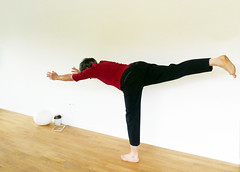 | 60 |
| 9371678721 | papillae | small bulbs on tongue that contain taste buds; the eye and replace every seven days |  | 61 |
| 9371678722 | semicircular canals | three circular-like canals attached to the cochlea their relays messages about speed and direction of body rotation (vestibular sense) |  | 62 |
| 9371678723 | kinesthetic senses | sense of muscle movement, posture, and strain on muscles/joints; provides information on speed and direction of movement; works with vestibular sense |  | 63 |
| 9371678724 | vestibular sacs | two sacks in the inner ear by the semicircular canals that since gravitation forward, backward, and vertical movement |  | 64 |
| 9371678725 | stretch receptors | works with kinesthetic senses; specialized nerve endings that are attached to muscle fibers that sense of muscle stretches and contractions | 65 | |
| 9371678726 | gate control theory | theory of pain sensitivity; suggest that there is a "neurological gate" in spinal cord that controls transmission of pain impulses to the brain; individual differences vary the control of the gate | 66 | |
| 9371678727 | golgi tendon organs | works with kinesthetic senses; specialized nerve endings attached to tendon (attaches muscles and bones) and sense movement | 67 | |
| 9371678728 | placebo effect | pain relief that occurs when a person believes that a pill or procedure will reduce pain; most likely caused by endorphin release |  | 68 |
| 9371678729 | figure/ground | a gestalt-like illusion; an illusion where a figure of merges from the background (ground) using perceptual cues |  | 69 |
| 9371678730 | shape constancy | tendency to see an object as the same shape no matter the angle it is viewed from; example-closed door collusion |  | 70 |
| 9371678731 | brightness constancy | tendency to see an object | 71 | |
| 9371678732 | feature detectors | specialized brain cells that respond to particular elements such as movement or lines; discovered by David Hubel and Torsten Weisel | 72 | |
| 9371678733 | color constancy | tendency to perceive familiar objects as a color despite changes in sensory information; example-blue under fluorescent lights but not so blue and natural light--> it is still blue |  | 73 |
| 9371678734 | perceptual constancy | tendency to see/perceive objects as stable and unchanging; example-a white house is still white no matter the elimination or angle | 74 | |
| 9371678735 | monocular cues | visual messages/cues that only require one eye |  | 75 |
| 9371678736 | size constancy | the perception of an object as the same size regardless of the distance from which it is viewed; example someone height | 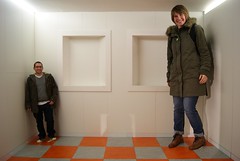 | 76 |
| 9371678737 | binoculars cues | visual messages/cues that require the use of two eyes |  | 77 |
| 9371678738 | superposition | an object appears closer because the images superimposed on the top of the other image; example-one card laying on top of another card | 78 | |
| 9371678739 | shadowing | illusion that gives depth to spherical objects to give it a three-dimensional quality | 79 | |
| 9371678740 | linear perspective | binocular cue; used to cue distance in depth by allowing two parallel lines to come together at a horizon |  | 80 |
| 9371678741 | motion parallex | binocular distance cubed; objects close to you seem to move in the direction opposite from the way in which your head is moving; objects far away seem to move in the same direction; example-when you're driving in the car |  | 81 |
| 9371678742 | aerial perspective | binocular cue; distance and depth; distant objects appear hazy and blurred |  | 82 |
| 9371678743 | stereoscopic vision | combination of two retinal images to give a 3-D perceptual experience | 83 | |
| 9371678744 | elevation | suggestion of depth because one object is appreciatively smaller; vestibular | 84 | |
| 9371678745 | retinal disparity | binocular distance cue; based on the overlay of two retinal fields when both eyes focus on one object | 85 | |
| 9371678746 | texture gradient | binocular cue; judges distance and depth in the objects in the foreground are large and clear but distant objects are smooth and less textured |  | 86 |
| 9371678747 | convergence | binoculars cue; visual depth cue; muscles controlling eye movement as the eyes turned inward to view a nearby stimulus | 87 | |
| 9371678748 | monaural cues | cues sound location that requires just one ear |  | 88 |
| 9371678749 | binaural cues | cues sound location that requires both ears |  | 89 |
| 9371678750 | autokinetic illusion | illusion of apparent movement; when a stationary object is perceived to move |  | 90 |
| 9371678751 | stroboscopic motion | illusion of apparent movement; result from flashing a series of still pictures in rapid succession; example-motion picture |  | 91 |
| 9371678752 | phi phenomenon | illusion of apparent movement; caused by flashing lights in the sequence; example-neon lights |  | 92 |
| 9371678753 | physical illusion | optical phenomenon; illusion produced by reflection of light into hot air; example-mirage | 93 | |
| 9371678754 | perceptual illusion | illusion due to misleading cues in stimuli; inaccurate or impossible perceptions |  | 94 |
| 9833823154 | Chapter 12 | 0 | ||
| 9833823157 | Nonrenewable | Once they're gone, there's no more | 1 | |
| 9833823158 | Fossil fuels | Derived from biological material that became fossilized millions of years ago. (Coal, Oil, Natural gas) | 2 | |
| 9833823159 | Nuclear Fuels | Derived from radioactive materials that give off energy | 3 | |
| 9833823160 | Commercial energy sources | Those that are bought and sold, (coal, oil, wood, etc) | 4 | |
| 9833823161 | Subsistence energy sources | Those gathered by individuals for their own immediate needs. More used in developing countries. | 5 | |
| 9833823162 | Energy Carrier | Something that can move and deliver energy into a convenient, usable form to end users. | 6 | |
| 9833823163 | Turbine | Large device that will turn to spin a shaft of a generator which produces electricity. | 7 | |
| 9833823164 | Electrical Grid | Connects power plants together and links them with end users of electricity. | 8 | |
| 9833823165 | Combined Cycle | Natural gas-fired power plant. 2 turbines and generators. Natural gas is burned to spin a turbine and the waste heat will boil water which will turn another turbine. | 9 | |
| 9833823166 | Capacity | Maximum Electrical output of a plant | 10 | |
| 9833823167 | Capacity Factor | Fraction of time a plant is operating. | 11 | |
| 9833823168 | Cogeneration | Combined heat and power. Use of fuel to generate electricity and heat. | 12 | |
| 9833823169 | Coal | Solid fuel formed by remains of plants that were preserved at least 280 million years ago. | 13 | |
| 9833823170 | Petroleum | Widely used fossil fuel. Mixture of hydrocarbons, water and sulfur that occurs in underground deposits. | 14 | |
| 9833823171 | Crude Oil | Liquid petroleum that is removed from the ground. Oil=crude oil=petroleum | 15 | |
| 9833823172 | Oil Sands | Slow flowing viscous deposits of bitumen mixed with sand, water and clay. | 16 | |
| 9833823173 | Bitumen | (Tar/Pitch) Degraded type of petroleum that forms when a petroleum deposit is not capped with nonporous rock. | 17 | |
| 9833823174 | CTL | Coal to liquid. Process to make solid coal a liquid fuel | 18 | |
| 9833823175 | Energy Intensity | Total energy is increasing, but energy per person is staying constant. | 19 | |
| 9833823155 | Hubbert Curve (Dealing with Oil) |  | 20 | |
| 9833823176 | Peak Oil | Maximum amount of oil that can be extracted before it begins to decline. | 21 | |
| 9833823177 | Fission | Nuclear reaction in which a neutron strikes a relatively large atomic nucleus which then splits into 2 or more parts. | 22 | |
| 9833823178 | Fuel Rods | Containment structure enclosing the nuclear fuel which is contained in a cylindrical tube. | 23 | |
| 9833823179 | Control Rods | Cylindrical devices that can be inserted between the fuel rods to absorb excess neutrons. thus slowing and stopping the fission reaction. | 24 | |
| 9833823180 | Radioactive Waste | Waste after the nuclear fuel is used up and can't produce heat, but still emits radioactivity. | 25 | |
| 9833823181 | Becquerel (Bq) | Measures the rate at which a sample of radioactive material decays. | 26 | |
| 9833823182 | Curie | Another unit of measure for radiation. 37 billion decays per second. | 27 | |
| 9833823183 | Nuclear Fusion | Reaction that powers the Sun and other stars. Lighter nuclei are forced together to produce heavier nuclei. Lots of heat is generated. | 28 | |
| 9833823156 | Chapter 13 | 29 | ||
| 9833823184 | Nonrenewable | Once gone, no more. Oil Coal Nuclear | 30 | |
| 9833823185 | Potentially Renewable | As long as we do not consume them more quickly than can be replenished. Wood Biofuel | 31 | |
| 9833823186 | Nondepletable | Solar, Wind, Hydro etc. Energy for all time. | 32 | |
| 9833823187 | Renewable | Potentially Renewable and Nondepletable | 33 | |
| 9833823188 | Energy Conservation | Finding ways to use less energy | 34 | |
| 9833823189 | Tiered Rate System | Customers pay a low rate for the first increment of electricity they use and pay higher rates as their use goes up. | 35 | |
| 9833823190 | Peak Demand | Greatest quantity of energy used at any one time. | 36 | |
| 9833823191 | Passive Solar Design | Technique that takes advantage of solar radiation to maintain a comfortable temperature in a building. | 37 | |
| 9833823192 | Thermal Inertia | Ability of a material to retain heat or cold. Stay hot when heated or cold when cooled. | 38 | |
| 9833823193 | Biofuels | Biomass can be processed or refined into liquid fuels such as ethanol and biodiesel. | 39 | |
| 9833823194 | Modern Carbon | Carbon in biomass | 40 | |
| 9833823195 | Fossil Carbon | Carbon in fossil fuels. | 41 | |
| 9833823196 | Carbon Neutral | An activity that does not change atmospheric CO2 concentrations | 42 | |
| 9833823197 | Net Removal | Removing more timber than is replaced by growth. Unsustainable practice -> Deforestation. | 43 | |
| 9833823198 | Ethanol | Alcohol. Made by converting starches and sugars from plant material into alcohol and CO2. | 44 | |
| 9833823199 | Flex-Fuel Vehicles | Can run on either gas or E-85 (85% ethanol, 15% gas) fuel. | 45 | |
| 9833823200 | Hydroelectricity | Electricity generated by the kinetic energy of moving water. 2nd most common form of renewable energy. | 46 | |
| 9833823201 | Run-of-the-river | Hydroelectricity generation, water behind a low dam and runs through a channel before returning to the river. | 47 | |
| 9833823202 | Water Impoundment | Storing water in a reservoir behind a dam. Allows for on demand electricity generation. | 48 | |
| 9833823203 | Tidal Energy | Comes from the movement of water. This is driven by the gravitational pull of the moon. | 49 | |
| 9833823204 | Active Solar Energy | Technologies capture the energy of sunlight with the use of technologies. Includes, Small scale solar water heating systems, photovoltaic solar cells etc. | 50 | |
| 9833823205 | Photovoltaic Solar Cells | Capture energy from the sun as light, not heat, and convert it directly to electricity. | 51 | |
| 9833823206 | Geothermal Energy | Heat that comes from the natural radioactive decay of elements deep within the earth. | 52 | |
| 9833823207 | Ground Source Heat Pumps | Take advantage of the high thermal inertia of the ground. | 53 | |
| 9833823208 | Wind Energy | Widely used in some countries and making a comeback in others. | 54 | |
| 9833823209 | Wind Turbine | Converts kinetic energy of moving air into electricity. | 55 | |
| 9833823210 | Fuel Cell | Operates like a battery. This reaction happens in a closed container to which no additional elements are added. | 56 | |
| 9833823211 | Electrolysis | Electric current is applied to water to split it into hydrogen and oxygen. | 57 | |
| 9833823212 | Smart grid | Efficient, Self-Regulating electricity distribution network that accepts any source of electricity and distributes it automatically to end users. | 58 |

We hope your visit has been a productive one. If you're having any problems, or would like to give some feedback, we'd love to hear from you.
For general help, questions, and suggestions, try our dedicated support forums.
If you need to contact the Course-Notes.Org web experience team, please use our contact form.
While we strive to provide the most comprehensive notes for as many high school textbooks as possible, there are certainly going to be some that we miss. Drop us a note and let us know which textbooks you need. Be sure to include which edition of the textbook you are using! If we see enough demand, we'll do whatever we can to get those notes up on the site for you!
