

Flashcards
Flashcards
Flashcards
AP US History Period 1_Baker Flashcards
Terms : Hide Images
| 6970485154 | maize cultivation | The growing of Indian corn, a staple of many Indians diets, leading many nomadic tribes to settle and develop great civilizations such as the Aztecs incas and Mayans. | 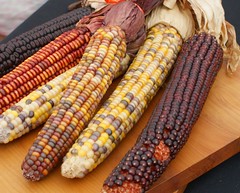 | 0 |
| 6970485155 | hunter-gatherer economy | A nomadic way of life with no agriculture focused on following food sources including animals and wild plants |  | 1 |
| 6970485156 | western hemisphere | The Americas |  | 2 |
| 6970485157 | West Africa | A area of Africa that was previously unreachable until the invention of the caravel by the Portuguese, leading to exploitation of the region for its gold and slaves |  | 3 |
| 6970485158 | plantation-based agriculture | Large scale agriculture worked by slaves |  | 4 |
| 6970485159 | capitalism | Economic system based on private investment and possessions |  | 5 |
| 6970485160 | Cultural autonomy | Freedom of a group to express ones own culture without outside control i.g. The Christianization of the natives took away there Cultural autonomy | 6 | |
| 6970485161 | Great Basin | Desert area with no drainage to the ocean |  | 7 |
| 6970485162 | agricultural economy | economy based on the production of crops | 8 | |
| 6970485163 | Spanish exploration | Colonization of the Americas by the conquistadors in search for gold, glory and God |  | 9 |
| 6970485164 | encomienda system | created by the Spanish to control and regulate American Indian labor and behavior during the colonization of the Americas. |  | 10 |
| 6970485165 | empire building | The Spanish increasing their empire through grafting their culture onto the natives and taking over the land | 11 | |
| 6970485166 | white superiority | The European idea they were superior to other cultures/ races and needed to enforce European culture/religion on them | 12 | |
| 6970485167 | Great Plains | The open plains of the Midwest where the natives adapted to roming the prairies on horseback |  | 13 |
| 6970485168 | permanent villages | The settlements of Indians tribes based on the spread of agriculture | 14 | |
| 6970485169 | Portuguese exploration | Due to advancements in sailing technology the Portuguese were able to sail down the coast of Africa and open trade of gold and slaves, settle and make plantations and eventually find the way around Africa to the indies |  | 15 |
| 6970485170 | slave labor | Forced labor of people considered property by the people in charge | 16 | |
| 6970485171 | feudalism | A political, economic, and social system based on the relationship between lord and vassal in order to provide protection |  | 17 |
| 6970485172 | political autonomy | the ability of a state to govern themselves without outside control | 18 | |
| 6970485173 | Colombian Exchange | the exchange between the new world and the old world consisting of the old world bringing wheat, cows, horses, sheep, pigs, sugar, rice, coffee, smallpox, malaria and yellow fever. while the new world sent gold, silver, corn, potatoes, tobacco, and syphills |  | 19 |
Flashcards
Flashcards
AP Human Geography: Language Flashcards
Language
Terms : Hide Images
| 9796867372 | Accent | A distinctive mode of pronunciation of a language, especially one associated with a particular nation, locality, or social class. | 0 | |
| 9796867373 | Dialect | A regional variation of a language distinguished by vocabulary, spelling, and pronunciation, particular to a specific region or social group. |  | 1 |
| 9796867374 | Extinct Language | A language that no longer has any speakers, or that is no longer in current use. |  | 2 |
| 9796867375 | Ideogram | A written character symbolizing the idea of a thing without indicating the sounds used to say it. Used in Mandarin (Chinese) |  | 3 |
| 9796867376 | Isogloss | A geographic boundary line delimiting the area in which a given linguistic feature occurs. |  | 4 |
| 9796867377 | Isolated Language | A natural language with no demonstrable genealogical (or "genetic") relationship with other languages or language families; that is, one that has not been demonstrated to descend from an ancestor common with any other language. i.e A language family with only one language. (Basque) |  | 5 |
| 9796867378 | Language Branch | A Subsection of a Language Family. Differences are not as extensive or old as with language families. i.e The Romance "-------" of the Indo-European language family. |  | 6 |
| 9796867379 | Language | The method of human communication, either spoken or written, consisting of the use of words in a structured and conventional way. |  | 7 |
| 9796867380 | Language Group | A Collection of languages within a branch that share a common origin in the relatively recent past and display relatively few differences in grammar and vocabulary. An individual language, including all dialects (I.e. Italian, German, English) |  | 8 |
| 9796867381 | Language Family | A collection of languages related to each other through a common ancestor long before recorded history. The trunk of the language tree, from which language branches come from. |  | 9 |
| 9796867382 | Indo European language family | Largest language family that includes English and most other languages in the Western Hemisphere. Also used in South and Southwest Asia. Includes the Germanic branch, Indo-Iranian branch, Balto-Slavic branch, and Romance branch. |  | 10 |
| 9796867383 | Sino-Tibetan Language Family | 2nd largest language family. Includes Madarin, Thai, Cantonese and Burmese |  | 11 |
| 9796867384 | Lingua Franca | A Language mutually understood and commonly used in trade by people who have different native languages (currently English worldwide). |  | 12 |
| 9796867385 | Literary Tradition | A Language that is written as well as spoken. | 13 | |
| 9796867386 | Monolingual State | A country in which only one language is spoken (i.e. Japan, Korea) |  | 14 |
| 9796867387 | Bilingual | The ability to speak two languages. |  | 15 |
| 9796867388 | Multilingual State | A country in which more than one language is in use (India, Nigeria, Belgium, Switzerland) |  | 16 |
| 9796867389 | Official Language | The language adopted for use by the government for the conduct of business and publication of documents, a language that is given special legal status. |  | 17 |
| 9796867390 | Orthography | The conventional spelling system of a language. |  | 18 |
| 9796867391 | Pidgin Language | A Form of speech that adopts a simplified grammar and limited vocabulary of a lingua franca, used for communications among speakers of two different languages. |  | 19 |
| 9796867392 | Standard Language | The specific form of a language used for official government business, education, and mass communications. |  | 20 |
| 9796867393 | Toponym | The name of a place, often reflecting that place's history and culture. |  | 21 |
| 9796867394 | Vernacular | Using a language or dialect native to a region or country rather than a literary, cultured, or foreign language. It is usually the language of the common people. | 22 | |
| 9796867395 | Creole | A language that results from the mixing of a colonizer's language with the indigenous language of the people being dominated. Developed out of an earlier pidgin stage. |  | 23 |
| 9796867396 | Denglish | The term is used in all German-speaking countries to refer to the increasingly strong influx of English or pseudo-English vocabulary into German. |  | 24 |
| 9796867397 | Franglais | A form of French using many words and idioms borrowed from English. |  | 25 |
| 9796867398 | Ebonics | A dialect of English spoken by some African Americans. |  | 26 |
| 9796867399 | Spanglish | A hybrid language combining words and idioms from both Spanish and English, especially Spanish speech that uses many English words and expressions. |  | 27 |
| 9796867400 | Francophone | Places and countries where French is spoken around the world. (Quebec in Canada, Vietnam, Haiti, Sub-Saharan Africa, Belgium, Switzerland, France). | 28 | |
| 9796867401 | Hankul | The system of writing Korean is written in. In this system, each letter represents a sound. | 29 | |
| 9796867402 | Romance Branch | A language branch of the Indo-European Language Family. This branch includes languages that evolved from Latin (the language of the Romans). The 5 main languages include: Spanish, Portuguese, French, Italian, and Romanian. | 30 | |
| 9796867403 | Germanic Branch | A language branch of the Indo-European Language Family. This branch is divided into North and West Germanic. North Germanic includes Scandinavian languages (Swedish, Danish, Norwegian, Icelandic), which all came from Old Norse. West Germanic is further divided into High Germanic and Low Germanic subgroups. High German includes the standard German language. Low German includes English, Dutch, Flemish (Dialect of Dutch), Afrikaaans, and Frisian. | 31 | |
| 9796867404 | Indo-Iranian Branch | The branch of the Indo-European language family with the most speakers. This branch includes more than 100 individual languages divided into an eastern group (Indic), which includes the languages of Hinid and Urdu and a western group (Iranian), which includes Farsi and Kurdish. | 32 | |
| 9796867405 | Balto-Slavic Branch | This branch of the Indo-European language family can be broken down into four groups: East Slavic (Russian, Ukrainian, Belarusian), Baltic (Latvian, Lithuanian), West Slavic (Polish, Czech, and Slovak), and South Slavic (Serbo-Croatian). Russian is the most widely used language in this branch, due to the spread of the Soviet Union. | 33 | |
| 9796867406 | Celtic Branch | A language branch of the Indo-European Language Family. This branch includes the languages of the British Isles before the invasion of the Angles, Saxons, and Jutes. This branch is divided into two language groups: Goidelic(Gaelic), which includes Irish Gaelic and Scottish Gaelic, and Brythonic, which includes Welsh, Breton, and Cornish. These languages declined because the Celts lost most of their territory and the English colonizers forbid the use of the Celtic languages. | 34 | |
| 9796867407 | Uralic Language Family | Language Family in Europe that includes the languages of Estonian, Finnish, and Hungarian. Languages in this family originated from the Ural mountains in Russia, spreading through migration. | 35 | |
| 9796867408 | Austronesian Language Family | Language Family spoken mostly in Indonesia. This family includes the languages of Javanese, Indonesian, Malay, and Malagasy. The most spoken language in this family is Javanese, since Java is the populous island of Indonesia. The Indonesian language is used as a lingua franca in Indonesia, due to so many different native languages (739 active languages). Malay is spoken in Malaysia, Malagasy is spoken in Madagascar. | 36 | |
| 9796867409 | Afro-Asiatic Language Family | This language family is found in northern Africa and southwestern Asia (Middle East), where Islam is the dominant religion. This family includes the languages of Arabic and Hebrew. Hebrew is spoken in Israel, a Jewish state, and Arabic is spoken throughout the region since it is the language of the Koran, the Islamic holy book. | 37 | |
| 9796867410 | Niger-Congo Language Family | More than 95% of people in Sub-Saharan Africa speak languages from this family. This family includes Swahili, the lingua franca in Africa, used by many to communicate as a second language, due to so many different native languages. | 38 | |
| 9796867411 | Prehistoric Subgroup | A language that predates the current language family, before the written record. Ex: Proto-Indo-European | 39 | |
| 9796867412 | Altaic Language Family | A language family spoken across central Asia named after the Altai Mountains. The most spoken language in this family is Turkish. The family also includes the languages spoken in the Caucasus Region and across Central Asia, previously controlled by the Soviet Union. With the collapse of the Soviet Union, newly independent countries in these regions reverted to their native languages in this family, including the countries of Azerbaijan, Kazakhstan, Kyrgyzstan, Turkmenistan, Uzbekistan, Mongolia and Georgia. | 40 | |
| 9796867413 | Kurgan Theory | Proposed by Marija Gimbutas, this theory argues the Proto-Indo-European language diffused by military conquest as nomadic herders on horseback (Kurgans) invaded west from the Asian Steppe ( border between Russia and Kazakhstan) around 4300 B.C in search of grasslands. | 41 | |
| 9796867414 | Renfrew (Anatolian) Theory | Proposed by Colin renfrew, this theory argues the Proto-Indo-European language diffused by way of agriculktural practices from Anatolia (Turkey) in 6300 BC. | 42 | |
| 9796867415 | British Received Pronunciation (BRP) | The dialect of English associated with upper class Britons living in the London area now considered the standard form of British speech. | 43 | |
| 9796867416 | Language Divergence | When a lack of spatial interaction (isolation) among speakers of a language breaks the language into dialects and then new languages. | 44 | |
| 9796867417 | Language Convergence | When peoples with different languages have consistent spatial interaction and their languages collapse into one (i.e. pidgin and creole). | 45 | |
| 9796867418 | Backward Reconstruction | When linguists track sound shifts and the hardening of consonants backward to reveal an "original" language. | 46 | |
| 9796867419 | Sound Shift | Slight word change in language within the subfamilies and language family from present time, backward to its origin (i.e: lacte in Latin, latta in Italian). | 47 | |
| 9796867420 | Treaty of Tordesillas | Pope Alexander VI's 1493 decision that officially split the New World into two empires, with Spain getting the West and Portugal the East. | 48 | |
| 9796867421 | Hindi | Approximately one-third of Indians, mostly in the north, use this Indic language. This language can be spoken in many different ways, but there is only one official way to write the language, using a script called Devanagari. It serves as the lingua franca in India and is used by the government, growing into a national language in the nineteenth century when the British encouraged its use in government. It is part of the Indo-Iranian branch. | 49 | |
| 9796867422 | Swahili | The lingua franca in Africa, used by many to communicate as a second language, due to so many different native languages. This language was developed between African and Arab traders and is one for the few African languages with extensive literature. It is part of the Niger-Congo language family. | 50 | |
| 9796867423 | Urdu | Pakistan's principal language, spoken very much like Hindi but written with the Arabic alphabet, a legacy of the fact that most Pakistanis are Muslims, and their holiest book (the Quran) is written in Arabic. It is part of the Indo-Iranian branch. | 51 | |
| 9796867424 | Farsi | The principle language of Iran, a remnant of the Persian Empire. It is written with the Arabic alphabet since Iran is a Muslim country. This language is part of the Indo-Iranian branch. | 52 | |
| 9796867425 | Mandarin | This language is the most spoken language in the world. It is spoken by approximately three-fourths of the Chinese people, and is used by the Chinese government. There is no single Chinese language. Instead of letters, Chinese languages use ideograms (characters) that mostly represent concepts rather than sounds. | 53 | |
| 9796867426 | Arabic | This language serves as a unifying force in the Middle East (Northern Africa and Southwest Asia), typically referred to as the Arab World. This language is the language of Islam (used in the Koran),, which is predominant throughout the region. This language belongs to the Afro-Asiatic language family and is the official language in two dozen countries of North Africa and southwestern Asia, from Morocco to the Arabian Peninsula. | 54 | |
| 9796867427 | Hebrew | This language was an extinct language that has been revived. It diminished in use in the fourth century B.C. and was thereafter retained only for Jewish religious services. When Israel was established in 1948, this language became one of the new country's two official languages, along with Arabic. This language was chosen to unify the Jews of Israel and give them a sense of nationalism, since Israel was created by Jewish refugees and migrants who spoke many different languages. Reviving this language required the creation of many new words for the modern world. | 55 | |
| 9796867428 | Irish Gaelic | This is one of the two official languages of Ireland, along with English. This language was forbidden under English rule. When Ireland got their independence form England in 1922, this language became an important part of their cultural identity and sense of nationalism and became a compulsory course in all public schools and required for public service jobs. | 56 | |
| 9796867429 | Basque | Also known as Euskera, this isolated language predates the Indo-European language and is not related to any other language family in Europe. Spoken in the Pyrenees Mountains (between Spain and France), the mountainous homeland created isolation, making the preservation of the language possible. | 57 | |
| 9796867430 | Welsh | This is one of the two official languages of Wales, along with English. This language was forbidden under English rule, but has been revived in recent years. This language is a compulsory subject in all schools in Wales and knowledge of the language is now required for many jobs in Wales. Bilingual signs and television and radio programs have also been added to help preserve this language. | 58 | |
| 9796867431 | Inuktitut | The language spoken by the Inuits (indigenous tribe) of northern Canada. It is recognized as an official language, along with English and French in Nunavut, the Inuit territory of Canada. Similar to the Celtic languages, it has declined with the forces of globalization and is undergoing a revival since it is an important part of the Inuit culture and is taught in schools and represented on bilingual signs and in the government. | 59 | |
| 9796867432 | Globalization | The process by which businesses or other organizations develop international influence and operate on an international scale. Currently, America dominates the world with multinational corporations and media, which has made English the world's current lingua franca (international language of business). | 60 | |
| 9796867433 | Quebec | This province in Canada primarily speaks French, due to its history of colonization. As a result, Canada is officially bilingual, recognizing both English and French as official languages. | 61 | |
| 9796867434 | Vulgar Latin | This language was spoken by the Roman army at the time of occupation and is the basis of the Romance languages, which evolved out of this language overtime due to isolation. | 62 | |
| 9796867435 | Latin America | This region of the Americas primarily speaks Romance Languages, which derived from Latin. Brazil speaks Portuguese, Haiti and French Guiana speak French, while the majority of the other countries speak Spanish, all due to the patterns of colonization. | 63 | |
| 9796867436 | Belgium | This multilingual state in Europe, which is part of the francophone world, has experienced tensions between its two language groups. The Flemings live in the north province Flanders and speak Flemish, a Dutch dialect. The Walloons live in the south province Wallonia and speak French. Brussels, the capital city if officially bilingual to create a since of unity in the country. Antagonism between the Flemings and Walloons is aggravated by economic and political differences. Historically, the Walloons dominated Belgium's economy and politics and French was the official state language. | 64 | |
| 9796867437 | Switzerland | This multilingual state in Europe, which is part of the francophone world, remains peaceful with four official languages (German, French, Italian, and Romanish). This country has institutionalized cultural diversity by creating a form of government that places considerable power in local, small communities (Decenetralization). | 65 |
AP Psych: Social Psychology Flashcards
Terms : Hide Images
| 4815499537 | Social Psychology | a branch of psychology concerned with the way individuals' thoughts, feelings, and behaviors are influenced by others | 0 | |
| 4815518822 | Stereotypes | widely held beliefs people have certain characteristics because they belong to a particular group | 1 | |
| 4815530557 | Attractive | A person who is ____ are seen as more sociable, friendly, poised, warm, and more competent. | 2 | |
| 4815535318 | Illusory Correlation | occurs when people overestimate how often they have encountered people who confirm association between SOCIAL TRAITS then they have actually seen. Also tend to underestimate disconfirmations of stereotypes. | 3 | |
| 4815544607 | Ingroup | group one identifies with | 4 | |
| 4815549033 | Outgroup | group one does not identify with (negative stereotypes) | 5 | |
| 4815553532 | Attributions | Inferences people draw about the causes of events, others behavior, and their own behavior | 6 | |
| 4815560245 | Internal attributions | Ascribing the causes of behavior to personal dispositions, traits, abilities, and feelings. | 7 | |
| 4815567404 | External attributions | Ascribing causes of behavior to situational demands and environmental constraints. | 8 | |
| 4815574538 | Weiners model | the four types of attributions are Internal, external, unstable, and stables causes |  | 9 |
| 4815588695 | Hindsight Bias | tendency to mold ones interpretation of the past to fit how events actually turned out "i knew it all along" | 10 | |
| 4815593790 | Self serving bias | tendency to take personal credit for your successes but blame external sources for your failures | 11 | |
| 4815596080 | Just world phenomenon | people's tendency to believe that the world is just and that people get what they deserve. Because people want to believe that the world is fair, they will look for ways to explain or rationalize away injustice - often by blaming the victim. | 12 | |
| 4815601583 | Fundamental attribution error | observe someones behavior and attribute it to a internal factor | 13 | |
| 4815606316 | Actor-observer Bias | our behavior is caused by external factors while others behavior is caused by internal factors | 14 | |
| 4815613259 | Defensive attribution | tendency to blame victims for their misfortune, so that one feels less likely to be victimized in a similar way | 15 | |
| 4815622706 | Individualism | putting personal goals ahead of group goals and DEFINING identity in terms of personal attributes rather than group memberships | 16 | |
| 4815629697 | Collectivism | putting group goals ahead of personal and DEFINING identity in terms of group attributes rather than group memberships | 17 | |
| 4815640933 | yes | Are collectivist or individualists more prone to fundamental attribution error | 18 | |
| 4815647744 | Stereotype threat | causes range of Hispanic/Black students to under perform on the SATs | 19 | |
| 4815652860 | Psychology | The study that studies behavior and the psychological and cognitive processes that underlie it, and it's the profession that applies the accumulated knowledge of this science to practical problems | 20 | |
| 4815937506 | Interpersonal attraction | refers to positive feeling toward another | 21 | |
| 4815939248 | Matching Hypothesis | proposes males and females of equal physical attractiveness are likely to select each other as partners | 22 | |
| 4815942730 | Passionate love | Complete absorption in another including sexual feelings and agony/ecstasy of intense emotion | 23 | |
| 4815946498 | Compassionate love | warm, trusting, tolerant affection for another who's life is deeply intertwined with ones own | 24 | |
| 4815950056 | Secure attachment | can get close to others, dependent | 25 | |
| 4815951736 | Avoidant attachment | uncomfortable getting close, trust problems, can't depend on partner, don't want to get close | 26 | |
| 4815957550 | Anxious/Ambivalent attachment | can't get others to be close, partner doesn't love me, scare people away | 27 | |
| 4815960814 | Attitudes | positive or negative evaluations of object of though (groups, issues, people..) | 28 | |
| 4815964081 | Cognitive attitude | attitude made up of BELIEFS people hold about the object of an attitude (beliefs, ideas) | 29 | |
| 4815970352 | Affective attitude | consists of EMOTIONAL feelings stimulated by an object of thought (emotions, feelings) | 30 | |
| 4815975480 | Behavioral attitude | consists of PREDISPOSITIONS TO ACT in certain ways toward an attitude object | 31 | |
| 4815999371 | Explicit attitudes | conscious beliefs that can guide decisions and behavior. | 32 | |
| 4816002917 | Implicit attitudes | unconscious beliefs that can still influence decisions and behavior | 33 | |
| 4816026634 | Leon Festinger | created dissonance theory | 34 | |
| 4816028378 | Observational learning | attitudes influenced by parents, media, teachers, friends, ect. | 35 | |
| 4816031224 | Classical conditioning | Learning by association | 36 | |
| 4816033487 | Operant conditioning | reinforcements and punishments. openly expressing attitude can call for positive of negative responses | 37 | |
| 4816035815 | Evaluative conditioning | effort to transfer emotion attached to an unconditioned stimulus to a new conditioned stimulus. ASSOCIATION BY EMOTION | 38 | |
| 4816042704 | Dissonance Theory | assumes that inconsistency among attitudes propels people in the direction of attitude change. | 39 | |
| 4816045338 | Cognitive dissonance | when related cognition are inconsistent- when they contradict eachother (person feels bad) | 40 | |
| 4816050858 | Effort justification | people's tendency to attribute a greater value (greater than the objective value) to an outcome they had to put effort into acquiring or achieving. | 41 | |
| 4816056664 | Decrease | people want to ___ dissonance by reducing cognitions | 42 | |
| 4816060969 | High dissonance | Believing your own lie is an example of | 43 | |
| 4816064400 | Festinger | who was the psychologist who had participants engage in a boring knob turning experiment in which those who were paid the least expressed the most positive attitude (high dissonance, believing your own lie) | 44 | |
| 4816069662 | Central route to persuasion | people carefully ponder content and logic of messages | 45 | |
| 4816071198 | Peripheral route to persuasion | persuasion depends on non message factors such as attractiveness, credibility of source, or conditioned emotional responses. | 46 | |
| 4817950790 | Conformity | Occurs when people yield to real or imagined social pressures | 47 | |
| 4817956352 | Asch | Who created the line test for conformity? | 48 | |
| 4817957763 | Normative influence | operates when people conform to social norms for fear of negative social consequences. BEING LIKED | 49 | |
| 4817961760 | Informational influence | operates when people look to others for guidance about how to behave in ambiguous situations BEING RIGHT | 50 | |
| 4817968890 | Obediance | a form of compliance that occurs when people follow direct commands, usually from someone in a position of authority | 51 | |
| 4817974581 | Milgrams studies | Created (unethical?) shock test to measure obedience. 65% of people obeyed the experimenter | 52 | |
| 4817980739 | Zimbardo | Created Stanford prison experiment | 53 | |
| 4817984578 | Social roles | widely shared expectations about how people in certain positions are supposed to behave. Stanford prison experiment demonstrated this | 54 | |
| 4817992107 | Foot in door | involves getting people to agree to small requests to increase chances that they will agree to a larger request later | 55 | |
| 4817996959 | Reciprocity norm | we should pay back in kind what we receive from others | 56 | |
| 4818002385 | Lowball technique | involves getting someone to commit to an attractive proposition before its hidden costs are revealed | 57 | |
| 4818006153 | Scarcity | threatens your freedom to choose a product, thus creating an increased desire for the scarce commodity | 58 | |
| 4818011949 | Door in face | making large request that is likely to be turned down as a way to increase the chances people will agree to a smaller request later | 59 | |
| 4818020198 | Group | consists of two or more individuals who interact and are independent | 60 | |
| 4818023925 | Bystander effect | people are less likely to provide needed help when they are in groups than when they are alone | 61 | |
| 4818026994 | Diffusion of responsibility | someone else will help | 62 | |
| 4818029382 | Social loafing | reduction in effort by individuals when they work in groups as compared to when they work by themselves -Less likely in collectivist cultures | 63 | |
| 4818036402 | Group polarization | occurs when group discussion strengthens a groups dominant POV and produces a shift toward a more extreme decision in that direction | 64 | |
| 4818042336 | Groupthink | occurs when a members of a cohesive group emphasize concurrence at the expense of critical thinking in arriving at a decision | 65 | |
| 4818050595 | Group cohesiveness | strength of the relationships linking group members to eachother and to the group itself TEAM SPIRIT | 66 | |
| 4818059423 | Empiricism | Psychologist put their faith in ____ | 67 | |
| 4818071778 | False | People see members of their ingroup as being more alike than members of their outgroup | 68 | |
| 4818074185 | Prejudice | negative ATTITUDE held toward members of a group. | 69 | |
| 4818075447 | Discrimination | BEHAVING differently, usually unfairly, toward the members of a group | 70 | |
| 4818089131 | Operant conditioning | if prejudice is praised then it will be strengthened by | 71 | |
| 4818093352 | Realistic group conflict theory | when intergroup hostility and prejudice are natural outgrowth of competition | 72 | |
| 4818100885 | Social identity perspective | Self esteem depends on one's personal and social identity | 73 | |
| 4818104870 | Social identity | refers to pride individuals derive from their membership in various groups | 74 | |
| 4819721458 | Social facilitation | presence of others can improve a persons performance | 75 | |
| 4819722619 | Self handicapping | making an excuse will justify the outcome before an event occurs | 76 | |
| 4819726772 | Self fulfilling prophecy | an initial impression leads person to believe in accordance with that impression | 77 | |
| 4819728321 | Spotlight effect | self focused perspective. We assume more people notice and evaluate us | 78 | |
| 4819732613 | Confirmation Bias | tendency to seek info that only supports your beliefs/views | 79 | |
| 4819767730 | Social psychology | the branch of psychology concerned with the way individuals thoughts, feelings, and behaviors are influenced by others | 80 | |
| 4819772674 | Person Perception | involves forming impressions of others | 81 | |
| 4819775722 | Sterotypes | widely held beliefs about groups of people based on their group membership defines | 82 | |
| 4819794940 | Self concept | ones perception of who one is | 83 | |
| 4819796026 | Self esteem | how valuable one feels oneself to be | 84 | |
| 4819798268 | Social Comparison | comparing ourselves to those around us as a way of judging or evaluating ourselves | 85 | |
| 4819803039 | Reference Group | people we use as a comparison to ourselves and with whom we identify most strongly | 86 | |
| 4819808460 | Relative deprivation | being denied access to wheat we feel we are entitled to have | 87 | |
| 4819811477 | Temporal comparisons | using our past experiences to judge and evaluate ourselves in the current moment | 88 | |
| 4819814921 | Self schemas | mental frameworks or blueprints that people have about themselves | 89 | |
| 4819818519 | Unrealistic optimism | the belief that favorable events are more likely to occur to you than other people | 90 | |
| 4819821998 | A-B problem | when one's attitudes do not necessarily predict future behavior | 91 | |
| 4819827892 | Social norms | implicit or explicit rules that guide daily behavior and are based on societal expactancies | 92 | |
| 4819829997 | Compliance | changing behavior due to direct request | 93 | |
| 4819832324 | Reciprocity | responding to a behavior with the same behavior | 94 | |
| 4819833585 | Confederates | subjects unknown to the actual participants in an experiment in an experiment assigned by he researcher to influence the experiment | 95 | |
| 4819843088 | Aggression | any act that is intended to cause harm to another | 96 | |
| 4819845055 | Altruism | a genuine concern for the safety and well being of another | 97 | |
| 4819849128 | Arousal cost reward theory | weighing several options in order to reduce the unpleasant feeling associated with seeing a person in distress | 98 | |
| 4819852890 | Reciprocal altruism | assisting another person with the expectation that that person will repay the deed in the future | 99 | |
| 4821857607 | Competition | pursuit of a desired outcome while refuting that same outcome to others | 100 | |
| 4821869676 | Social inhibition | performance decreases in the presence of others for fear of being embarrassed | 101 | |
| 4821874603 | Deindividuation | lowered sense of self identity due to anonymity produced by being in a large crowd | 102 |
AP Psychology-Learning Flashcards
AP Psychology terminology that deals with learning.
Terms : Hide Images
| 10390346261 | Learning | process by which humans and animals acquire behavior patterns; experience or practice results in a relatively permanent change in behavior or potential behavior; more broad than studying | 0 | |
| 10390346262 | Conditioning | a natural stimulus that evokes a natural response; acquisition of specific patterns of behavior in the presence of well defined stimuli; general term for humans and animals; basic form of learning |  | 1 |
| 10390346263 | Classical Conditioning | expanded by John Watson and Rosalie Rayner; Learning where a response, normally elicited by one stimulus, is taught to respond to another, normally, neutral stimulus; AKA Pavlovian; pairing an involuntary response |  | 2 |
| 10390346264 | Unconditioned Stimulus | US or UCS; a stimulus that causes an organism to respond in a natural manner; in Pavlov's experiment, the meat powder |  | 3 |
| 10390346265 | Conditioned Stimulus | CS; ordinarily a neutral stimulus paired with a unconditioned stimulus to achieve a desired result and eventually produces the desired response in an organism when presented alone; in Pavlov's experiment, the bell |  | 4 |
| 10390346266 | Unconditioned Response | UR or UCR; a natural response that occurs when the UCS occurs, like salivating in Pavlov's experiment |  | 5 |
| 10390346267 | Conditioned Response | CR; a response (after conditioning) that occurs after the CS; in Pavlov's experiment, salivation |  | 6 |
| 10390346268 | Desensitization Therapy | created by Joseph Wolpe; Wolpe adapted Mary Cover Jones's method of unlearning fears (of children) to treat certain kinds of anxiety; a conditioning technique designed to gradually reduce anxiety about a particular object or situation; thought is that if a person can associate relaxation with the fearful stimulus then they could change human behavior | 7 | |
| 10390346269 | Backward Conditioning | when the natural stimulus is presented and terminated before the conditioned stimulus is presented. If Pavlov had presented the food and then, after the dog ate, presented the sound of the bell, the tone alone would not elicit much salivation, since it no longer signals that food is imminent. Backward conditioning is controversial because many psychologists argue that it does not work. | 8 | |
| 10390346270 | Interstimulus Interval | time between two stimulus; best used in the eyeblink conditioning experiment; Max Wertheimer did experiments with two stationary, flashing lights that at some | 9 | |
| 10390346271 | Intermittent Pairing | pairing the conditioned stimulus and the unconditioned stimulus on only a portion of learning rituals; this procedure reduces both the rate of learning and the final level of learning achieved | 10 | |
| 10390346272 | Conditioned Food Aversion | AKA taste aversion; discovered by John Garcia by accident during an experiment using rats and radiation; learned association between a food (taste) and nausea/revulsion; avoiding a particular food because it was paired with a bad experience | 11 | |
| 10390346273 | Extinction | a decrease in the frequency of a conditioned response because of a failure to continue pairing the US and CS (in classical conditioning) or withholding of reinforcement (operant conditioning) | 12 | |
| 10390346274 | Spontaneous Recovery | the reappearance of an extinguished response after the passage of time, without further training | 13 | |
| 10390346275 | Stimulus Generalization | the transfer of behavior (learned response) from one stimulus to another stimulus that is similar in nature; in Little Albert's case, Little Albert was afraid of not only white, furry rats but any white and furry objects. | 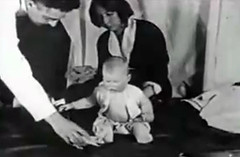 | 14 |
| 10390346276 | Discrimination | Learning to respond to only one stimulus and to inhibit the response to all other stimuli; when Little Albert was able discern between a white rat and a white rabbit | 15 | |
| 10390346277 | Higher Order Conditioning | conditioning based on previous learning; the CS serves as an US for further training |  | 16 |
| 10390346278 | Operant Behavior | expanded by BF Skinner; learning based on rewards or punishment; not automatic reflexes |  | 17 |
| 10390346279 | Vicarious Learning | AKA observational learning or modeling; component of social learning theory; expanded by Albert Bandura; states that people pay attention to a model and convert the learning into action |  | 18 |
| 10390346280 | Shaping | reinforcing successive approximations to desired behavior; example: Skinner box, tiger jumping through a hoop; teaching dog to pee outside, teach a penguin to do a figure 8, driving, etc | 19 | |
| 10390346281 | Law Of Effect | Thorndike; used in an experiment with cats and a puzzle box; principle of reinforcement; behavior consistently rewarded will be 'stamped in' as learned behavior, and behavior that brings about discomfort will be 'stamped out'; satisfying effect (reinforcement) is likely to be performed again, whereas behavior that brings about negative effect (punishment) is likely to be suppressed |  | 20 |
| 10390346282 | Negative Reinforcer | the removal of an unpleasant stimulus that increases the likelihood that behavior will continue; is more effective in learning than punishment | 21 | |
| 10390346283 | Positive Reinforcer | a reward; any event whose presence increase the likelihood that behavior will continue |  | 22 |
| 10390346284 | Primary Reinforcer | reinforcer such as water, food, or sex |  | 23 |
| 10390346285 | Secondary Reinforcer | reinforcer whose value allows an individual to acquire other reinforcers like food and water; examples: money, credit cards |  | 24 |
| 10390346286 | Schedules Of Reinforcement | the rule for determining when and how often reinforcers will continue; Four types of schedules: fixed ratio, variable ratio, fixed interval, and variable interval; interval means over a time and ratio means an act; partial reinforcement is on a variable schedule whereas continuous reinforcement is on a fixed schedule; variable schedules are more effective in learning |  | 25 |
| 10390346287 | Punishment | any event whose presence decreases the likelihood that behavior will occur | 26 | |
| 10390346288 | Response Generalization | giving a response that is somewhat different from the response originally learned to that stimulus; when Little Albert responds the same way to a white rat or a white coat | 27 | |
| 10390346289 | Cognitive Learning | impossible to observe and measure; learning that depends on processes which are not directly observable; learning is inferred from the behavior |  | 28 |
| 10390346290 | Latent Learning | pioneered by Edward Chace Tolman; learning that is not immediate in behavior; knowledge that is used when needed, like riding a bike or using a cognitive map |  | 29 |
| 10390346291 | Cognitive Map | example of a cognitive learning; mental image of a spatial environment that is used to problem solve when stimulated |  | 30 |
| 10390346292 | Insight | learning resulting from rapid understanding of all elements of a problem; sudden 'coming together'; an 'A HA' moment |  | 31 |
| 10390346293 | Learning Set | used by Harry Harlow in an experiment using Rhesus monkeys; ability to become increasingly more effective in solving problems as problems are solved; learning how to learn; Köhler's chimps, Epstein's pigeons | 32 | |
| 10390346294 | Contingency Set | Robert Rescorla shock and tone experiment; an "if then" (informative) relationship between stimuli | 33 | |
| 10390346295 | Blocking | determined by Leon Kamin; when a second stimulus does not elicit desired behavior because behavior occurs with the first stimulus | 34 | |
| 10390346296 | Learned Helplessness | experiment by Martin Seligman and dogs; when an individual gives up because any behavior causes the same ill result; punishment is unrelated to a child's behavior (in abused families) often develop feelings of powerlessness |  | 35 |
| 10390346297 | Social Learning Theory | learning by observing without firsthand experience; often used as an argument against violent video games or immoral television shows. | | 36 |
Pages

Need Help?
We hope your visit has been a productive one. If you're having any problems, or would like to give some feedback, we'd love to hear from you.
For general help, questions, and suggestions, try our dedicated support forums.
If you need to contact the Course-Notes.Org web experience team, please use our contact form.
Need Notes?
While we strive to provide the most comprehensive notes for as many high school textbooks as possible, there are certainly going to be some that we miss. Drop us a note and let us know which textbooks you need. Be sure to include which edition of the textbook you are using! If we see enough demand, we'll do whatever we can to get those notes up on the site for you!
