

Flashcards
Vocabulary List #3 - Latin Roots - AP Language and Comp. Flashcards
Terms : Hide Images
| 6121617981 | extradition (n.) | = the surrender by a government of a person accused of a crime to the justice of another government. | 0 | |
| 6121620938 | precedent (n.) | = an instance that may serve as a guide or basis for a rule. | 1 | |
| 6121622321 | circumspect (adj.) | = showing watchfulness, caution, or careful consideration. | 2 | |
| 6121624416 | preamble (n.) | = a statement introductory to and explanatory of what follows. | 3 | |
| 6121625889 | conducive (adj.) | = contributing leading to an end, tending to promote or assist towards a particular purpose. | 4 | |
| 6121627232 | fraternal (adj.) | = brotherly | 5 | |
| 6121658504 | cognizant (adj.) | = taking notice, knowledgeable of something. | 6 | |
| 6121660641 | rejuvenate (v.) | = to restore youth or youthfulness, vitality. | 7 | |
| 6121664043 | linguistics (n.) | = the science of languages, or of the origin, history, and significance of words. | 8 | |
| 6121664044 | moratorium (n.) | = an emergency legislation authorizing a government to suspend some action temporarily. | 9 | |
| 6121667147 | recidivism (n.) | = a tendency to relapse into a previous condition or mode of behavior. | 10 | |
| 6121668402 | confer (v.) | = to bestow, give or compare views or take counsel. | 11 | |
| 6121672779 | homicide (n.) | = the killing of another human being by another. | 12 | |
| 6121668403 | clemency (n.) | = mercy, an act or instance of leniency | 13 | |
| 6121671270 | conjugal (adj.) | = pertaining to marriage, marital rights, or married persons. | 14 |
AP Literature Vocabulary: Literary Devices Flashcards
Terms : Hide Images
| 7586510730 | Imagery | visually descriptive or figurative language, especially in a literary work. | 0 | |
| 7586513011 | Sensory Language | a way for a writer to help the reader see or connect with an image, description, action, or scene. | 1 | |
| 7586517881 | Tone | the general character or attitude of a place, piece of writing, situation, etc. | 2 | |
| 7586522456 | Dialogue | conversation between two or more people as a feature of a book, play, or movie. | 3 | |
| 7586526096 | Point-of-View | the narrator's position in relation to the story being told. | 4 | |
| 7586536095 | Adage | a proverb or short statement expressing a general truth. | 5 | |
| 7586544984 | Ad Hominem Fallacy | A Latin expression meaning "to the man." An ad hominem argument is one that relies on personal attacks rather than reason or substance. | 6 | |
| 7586551433 | Allegory | a story, poem, or picture that can be interpreted to reveal a hidden meaning, typically a moral or political one. | 7 | |
| 7586554810 | Analogy | a comparison between two things, typically for the purpose of explanation or clarification. | 8 | |
| 7586559495 | Alliteration | the occurrence of the same letter or sound at the beginning of adjacent or closely connected words. | 9 |
Ap Language Flashcards
Terms : Hide Images
| 8829230753 | cartographic | of or relating to the making of maps or charts | 0 | |
| 8829230754 | Patronage | Support or encouragement | 1 | |
| 8829230755 | Gabble | Support roofing | 2 | |
| 8829230756 | Albeit | Although, even though | 3 | |
| 8829230757 | Monochromatically | Having only one color | 4 | |
| 8829230758 | Bouggainvillaea | 7 American tropical vines | 5 | |
| 8829230759 | Imparative | Gives a command | 6 | |
| 8829230760 | Dynamic | Active, energetic, forceful | 7 | |
| 8829230761 | drudgery | work that is hard and tiresome | 8 | |
| 8829230762 | valorize (v) | To establish and maintain the price of by gov action | 9 | |
| 8829230763 | Strident | Loud and harsh | 10 | |
| 8829230764 | self efficacy | One's belief in his or her own ability. | 11 | |
| 8829230765 | ingratiating | calculated to please or gain favor | 12 | |
| 8829230766 | Cocede | To grant permission | 13 | |
| 8829230767 | Onerous | Involving, imposing, or constituting a burden | 14 | |
| 8829230768 | Economize | to save money | 15 | |
| 8829230769 | Commentary | (n.) a series of notes clarifying or explaining something; an expression of opinion | 16 | |
| 8829230770 | exuberance | joyful enthusiasm | 17 | |
| 8829230771 | cultivated | refined or cultured in manner | 18 | |
| 8829230772 | unwarranted | lacking justification | 19 | |
| 8829230773 | inquisitivenous | Given to examination | 20 | |
| 8829230774 | Amphibucant | 21 |
AP English Language and Composition Exam: 101 Key Terms Flashcards
Mrs. Nethercutt, Mrs. Spriggs
Terms : Hide Images
| 4177529938 | Ad Hominem | An argument based on the failings of an adversary rather than on the merits of the case; a logical fallacy that involves a personal attack. | 0 | |
| 4177529939 | Adjective | The part of speech (or word class) that modifies a noun or a pronoun. | 1 | |
| 4177529940 | Adverb | The part of speech (or word class) that modifies a verb, adjective, or other adverb. | 2 | |
| 4177529941 | Allegory | Extending a metaphor so that objects, persons, and actions in a text are equated with meanings that lie outside the text. | 3 | |
| 4177529942 | Alliteration | The repetition of an initial consonant sound. | 4 | |
| 4177529943 | Allusion | A brief, usually indirect reference to a person, place, or event--real or fictional. | 5 | |
| 4177529944 | Ambiguity | The presence of two or more possible meanings in any passage. | 6 | |
| 4177529945 | Analogy | Reasoning or arguing from parallel cases. | 7 | |
| 4177529946 | Anaphora | The repetition of the same word or phrase at the beginning of successive clauses or verses. | 8 | |
| 4177529947 | Antecedent | The noun or noun phrase referred to by a pronoun. | 9 | |
| 4177529948 | Antithesis | The juxtaposition of contrasting ideas in balanced phrases. | 10 | |
| 4177529949 | Aphorism | (1) A tersely phrased statement of a truth or opinion. (2) A brief statement of a principle. | 11 | |
| 4177529950 | Apostrophe | A rhetorical term for breaking off discourse to address some absent person or thing. | 12 | |
| 4177529951 | Appeal to Authority | A fallacy in which a speaker or writer seeks to persuade not by giving evidence but by appealing to the respect people have for a famous person or institution. | 13 | |
| 4177529952 | Appeal to Ignorance | A fallacy that uses an opponent's inability to disprove a conclusion as proof of the conclusion's correctness. | 14 | |
| 4177529953 | Argument | A course of reasoning aimed at demonstrating truth or falsehood. | 15 | |
| 4177529954 | Assonance | The identity or similarity in sound between internal vowels in neighboring words. | 16 | |
| 4177529955 | Asyndeton | The omission of conjunctions between words, phrases, or clauses (opposite of polysyndeton). | 17 | |
| 4177529956 | Character | An individual (usually a person) in a narrative (usually a work of fiction or creative nonfiction). | 18 | |
| 4177529957 | Chiasmus | A verbal pattern in which the second half of an expression is balanced against the first but with the parts reversed. | 19 | |
| 4177529958 | Circular Argument | An argument that commits the logical fallacy of assuming what it is attempting to prove. | 20 | |
| 4177529959 | Claim | An arguable statement, which may be a claim of fact, value, or policy. | 21 | |
| 4177529960 | Clause | A group of words that contains a subject and a predicate. | 22 | |
| 4177529961 | Climax | Mounting by degrees through words or sentences of increasing weight and in parallel construction with an emphasis on the high point or culmination of a series of events. | 23 | |
| 4177529962 | Colloquial | Characteristic of writing that seeks the effect of informal spoken language as distinct from formal or literary English. | 24 | |
| 4177529963 | Comparison | A rhetorical strategy in which a writer examines similarities and/or differences between two people, places, ideas, or objects. | 25 | |
| 4177529964 | Complement | A word or word group that completes the predicate in a sentence. | 26 | |
| 4177529965 | Concession | An argumentative strategy by which a speaker or writer acknowledges the validity of an opponent's point. | 27 | |
| 4177529966 | Confirmation | The main part of a text in which logical arguments in support of a position are elaborated. | 28 | |
| 4177529967 | Conjunction | The part of speech (or word class) that serves to connect words, phrases, clauses, or sentences. | 29 | |
| 4177529968 | Connotation | The emotional implications and associations that a word may carry. | 30 | |
| 4177529969 | Coordination | The grammatical connection of two or more ideas to give them equal emphasis and importance. Contrast with subordination. | 31 | |
| 4177529970 | Deduction | A method of reasoning in which a conclusion follows necessarily from the stated premises. | 32 | |
| 4177529971 | Denotation | The direct or dictionary meaning of a word, in contrast to its figurative or associated meanings. | 33 | |
| 4177529972 | Dialect | A regional or social variety of a language distinguished by pronunciation, grammar, and/or vocabulary. | 34 | |
| 4177529973 | Diction | (1) The choice and use of words in speech or writing. (2) A way of speaking, usually assessed in terms of prevailing standards of pronunciation and elocution. | 35 | |
| 4177529974 | Didactic | Intended or inclined to teach or instruct, often excessively. | 36 | |
| 4177529975 | Encomium | A tribute or eulogy in prose or verse glorifying people, objects, ideas, or events. | 37 | |
| 4177529976 | Epiphora | The repetition of a word or phrase at the end of several clauses. (Also known as epistrophe.) | 38 | |
| 4177529977 | Epitaph | (1) A short inscription in prose or verse on a tombstone or monument. (2) A statement or speech commemorating someone who has died: a funeral oration. | 39 | |
| 4177529978 | Ethos | A persuasive appeal based on the projected character of the speaker or narrator. | 40 | |
| 4177529979 | Eulogy | A formal expression of praise for someone who has recently died. | 41 | |
| 4177529980 | Euphemism | The substitution of an inoffensive term for one considered offensively explicit. | 42 | |
| 4177529981 | Exposition | A statement or type of composition intended to give information about (or an explanation of) an issue, subject, method, or idea. | 43 | |
| 4177529982 | Extended Metaphor | A comparison between two unlike things that continues throughout a series of sentences in a paragraph or lines in a poem. | 44 | |
| 4177529983 | Fallacy | An error in reasoning that renders an argument invalid. | 45 | |
| 4177529984 | False Dilemma | A fallacy of oversimplification that offers a limited number of options (usually two) when in fact more options are available. | 46 | |
| 4177529985 | Figurative Language | Language in which figures of speech (such as metaphors, similes, and hyperbole) freely occur. | 47 | |
| 4177529986 | Figures of Speech | The various uses of language that depart from customary construction, order, or significance. | 48 | |
| 4177529987 | Flashback | A shift in a narrative to an earlier event that interrupts the normal chronological development of a story. | 49 | |
| 4177529988 | Genre | A category of artistic composition, as in film or literature, marked by a distinctive style, form, or content. | 50 | |
| 4177529989 | Hasty Generalization | A fallacy in which a conclusion is not logically justified by sufficient or unbiased evidence. | 51 | |
| 4177529990 | Hyperbole | A figure of speech in which exaggeration is used for emphasis or effect; an extravagant statement. | 52 | |
| 4177529991 | Imagery | Vivid descriptive language that appeals to one or more of the senses. | 53 | |
| 4177529992 | Induction | A method of reasoning by which a rhetor collects a number of instances and forms a generalization that is meant to apply to all instances. | 54 | |
| 4177529993 | Invective | Denunciatory or abusive language; discourse that casts blame on somebody or something. | 55 | |
| 4177529994 | Irony | The use of words to convey the opposite of their literal meaning. A statement or situation where the meaning is directly contradicted by the appearance or presentation of the idea. | 56 | |
| 4177529995 | Isocolon | A succession of phrases of approximately equal length and corresponding structure. | 57 | |
| 4177529996 | Jargon | The specialized language of a professional, occupational, or other group, often meaningless to outsiders. | 58 | |
| 4177529997 | Litotes | A figure of speech consisting of an understatement in which an affirmative is expressed by negating its opposite. | 59 | |
| 4177529998 | Loose Sentence | A sentence structure in which a main clause is followed by subordinate phrases and clauses. Contrast with periodic sentence. | 60 | |
| 4177529999 | Metaphor | A figure of speech in which an implied comparison is made between two unlike things that actually have something important in common. | 61 | |
| 4177530000 | Metonymy | A figure of speech in which one word or phrase is substituted for another with which it is closely associated (such as "crown" for "royalty"). | 62 | |
| 4177530001 | Mode of Discourse | The way in which information is presented in a text. The four traditional modes are narration, description, exposition, and argument. | 63 | |
| 4177530002 | Mood | (1) The quality of a verb that conveys the writer's attitude toward a subject. (2) The emotion evoked by a text. | 64 | |
| 4177530003 | Narrative | A rhetorical strategy that recounts a sequence of events, usually in chronological order. | 65 | |
| 4177530004 | Noun | The part of speech (or word class) that is used to name a person, place, thing, quality, or action. | 66 | |
| 4177530005 | Onomatopoeia | The formation or use of words that imitate the sounds associated with the objects or actions they refer to. | 67 | |
| 4177530006 | Oxymoron | A figure of speech in which incongruous or contradictory terms appear side by side. | 68 | |
| 4177530007 | Paradox | A statement that appears to contradict itself. | 69 | |
| 4177530008 | Parallelism | The similarity of structure in a pair or series of related words, phrases, or clauses. | 70 | |
| 4177530009 | Parody | A literary or artistic work that imitates the characteristic style of an author or a work for comic effect or ridicule. | 71 | |
| 4177530010 | Pathos | The means of persuasion that appeals to the audience's emotions. | 72 | |
| 4177530011 | Periodic Sentence | A long and frequently involved sentence, marked by suspended syntax, in which the sense is not completed until the final word--usually with an emphatic climax. | 73 | |
| 4177530012 | Personification | A figure of speech in which an inanimate object or abstraction is endowed with human qualities or abilities. | 74 | |
| 4177530013 | Point of View | The perspective from which a speaker or writer tells a story or presents information. | 75 | |
| 4177530014 | Predicate | One of the two main parts of a sentence or clause, modifying the subject and including the verb, objects, or phrases governed by the verb. | 76 | |
| 4177530015 | Pronoun | A word (a part of speech or word class) that takes the place of a noun. | 77 | |
| 4177530016 | Prose | Ordinary writing (both fiction and nonfiction) as distinguished from verse. | 78 | |
| 4177530017 | Refutation | The part of an argument wherein a speaker or writer anticipates and counters opposing points of view. | 79 | |
| 4177530018 | Repetition | An instance of using a word, phrase, or clause more than once in a short passage--dwelling on a point. | 80 | |
| 4177530019 | Rhetoric | The study and practice of effective communication. | 81 | |
| 4177530020 | Rhetorical Question | A question asked merely for effect with no answer expected. | 82 | |
| 4177530021 | Running Style | Sentence style that appears to follow the mind as it worries a problem through, mimicking the "rambling, associative syntax of conversation"--the opposite of periodic sentence style. | 83 | |
| 4177530022 | Sarcasm | A mocking, often ironic or satirical remark. | 84 | |
| 4177530023 | Satire | A text or performance that uses irony, derision, or wit to expose or attack human vice, foolishness, or stupidity. | 85 | |
| 4177530024 | Simile | A figure of speech in which two fundamentally unlike things are explicitly compared, usually in a phrase introduced by "like" or "as." | 86 | |
| 4177530025 | Style | Narrowly interpreted as those figures that ornament speech or writing; broadly, as representing a manifestation of the person speaking or writing. | 87 | |
| 4177530026 | Subject | The part of a sentence or clause that indicates what it is about. | 88 | |
| 4177530027 | Syllogism | A form of deductive reasoning consisting of a major premise, a minor premise, and a conclusion. | 89 | |
| 4177530028 | Subordination | Words, phrases, and clauses that make one element of a sentence dependent on (or subordinate to) another. Contrast with coordination. | 90 | |
| 4177530029 | Symbol | A person, place, action, or thing that (by association, resemblance, or convention) represents something other than itself. | 91 | |
| 4177530030 | Synecdoche | A figure of speech in which a part is used to represent the whole or the whole for a part. | 92 | |
| 4177530031 | Syntax | (1) The study of the rules that govern the way words combine to form phrases, clauses, and sentences. (2) The arrangement of words in a sentence. | 93 | |
| 4177530032 | Thesis | The main idea of an essay or report, often written as a single declarative sentence. | 94 | |
| 4177530033 | Tone | A writer's attitude toward the subject and audience. Tone is primarily conveyed through diction, point of view, syntax, and level of formality. | 95 | |
| 4177530034 | Transition | The connection between two parts of a piece of writing, contributing to coherence. | 96 | |
| 4177530035 | Understatement | A figure of speech in which a writer deliberately makes a situation seem less important or serious than it is. | 97 | |
| 4177530036 | Verb | The part of speech (or word class) that describes an action or occurrence or indicates a state of being. | 98 | |
| 4177530037 | Voice | (1) The quality of a verb that indicates whether its subject acts (active voice) or is acted upon (passive voice). (2) The distinctive style or manner of expression of an author or narrator. | 99 | |
| 4177530038 | Zeugma | The use of a word to modify or govern two or more words although its use may be grammatically or logically correct with only one. | 100 |
AP Language Vocabulary Unit 6 Flashcards
Terms : Hide Images
| 4944607546 | Chastise | To criticize severely | 0 | |
| 4944609093 | Chimerical | Absurd; wildly fanciful | 1 | |
| 4944610192 | Chronic | Lasting a long time; constant | 2 | |
| 4944611834 | Circumspect | Careful | 3 | |
| 4944611835 | Clairvoyant | Having exceptional insight; power to see or know things that are beyond the range of natural vision | 4 | |
| 4944616103 | Clandestine | Secret | 5 | |
| 4944616104 | Clemency | Mercy; mildness | 6 | |
| 4944617823 | Coalesce | To grow together; to combine/join forces | 7 | |
| 4944619222 | Colloquial | Conversational; used in informal speech or writing | 8 | |
| 4944622436 | Commiserate | To sympathize with; to feel sorrow for another's suffering | 9 |
AP Literature Key Terminology Flashcards
Terms : Hide Images
| 6665666124 | Allegory | A prose or poetic narrative in which the characters, behavior, and even the setting demonstrates multilevels of meaning and significance. | 0 | |
| 6665677110 | Alliteration | The sequential initial repetition of a similar sound, usually applied to consonants | 1 | |
| 6665681937 | Allusion | A reference to a literary or historical event, person, or place. | 2 | |
| 6665687612 | Anaphora | The regular repetition of the same word or phrase at the beginning of successive phrases or clauses. | 3 | |
| 6665692221 | Anecdote | A brief story of tale told by a character in a piece of literature | 4 | |
| 6665695712 | Antagonist | Any force that is in opposition to the main character, or protagonist | 5 | |
| 6665699205 | Antithesis | The juxtaposition of sharply contrasting ideas in balanced or parallel words, phrases, grammatical structures, or ideas. | 6 | |
| 6665712602 | Apostrophe | An address or invocation to something that is inanimate | 7 | |
| 6665718081 | Archetype | Recurrent designs, patterns of action, character types, themes, or images which are identifiable in a wide range of literature | 8 | |
| 6665725828 | Assonance | A repetition of identical or similar vowel sounds, usually those found in stressed syllables of close proximity | 9 | |
| 6666023162 | Asyndeton | A style in which conjunctions are omitted, usually producing a fast-paced, more rapid prose. "I came, I saw, I conquered" | 10 | |
| 6666032176 | Attitude | The sense expressed by the tone of voice and/or the mood of a piece of writing; the feelings the author holds towards his subject, the people in his narrative, the events, the setting or even the theme. | 11 | |
| 6666039869 | Ballad | A narrative poem that is, or originally was, meant to be sung. (Repetition and refrain) | 12 | |
| 6666047801 | Ballad Stanza | A common stanza form, consisting of a quatrain that alternates four-beat and three-beat lines; one and three are unrhymed iambic tetrameter and two and four are rhymed iambic trimeter | 13 | |
| 6666061447 | Blank Verse | The verse from that most resembles common speech, consisted of unrhymed lines in iambic pentameter | 14 | |
| 6666069153 | Caesura | A pause in a line or verse, indicated by natural speech patterns rather than due to specific metrical patterns | 15 | |
| 6666074473 | Caricature | A depiction in which a character's characteristics or features are so deliberately exaggerated as to render them absurd | 16 | |
| 6666081596 | Chiasmus | A figure of speech by which the order of the terms in the first of two parallel clauses is reversed in the second. "Pleasure is a sin, and sin is a pleasure" | 17 | |
| 6666090378 | Colloquial | Ordinary language, the vernacular | 18 | |
| 6666092993 | Conceit | A comparison of two unlikely things that is drawn out within a piece of literature, in particular an extended metaphor within a poem | 19 | |
| 6666103932 | Connotation | What is suggested by a word, apart from what it explicitly describes, often referred to as the implied meaning of the word. | 20 | |
| 6666107995 | Consonance | The repetition of a sequence of two or more consonants, but with a change in the intervening vowels. "clinging and clanging" | 21 | |
| 6666117913 | Couplet | Two rhyming lines of iambic pentameter that together present a singe idea or connection. | 22 | |
| 6666121453 | Dactylic | The metrical pattern, as used in poetry, in which each foot consisted of a stressed syllable followed by two unstressed syllables | 23 | |
| 6666129143 | Denotation | A direct and specific meaning, often referred to as the dictionary meaning of a word | 24 | |
| 6666132549 | Dialect | The language and speech idiosyncrasies of a specific area, region, or group of people | 25 | |
| 6666137705 | Diction | The specific word choice an author uses to persuade or convey tone, purpose, or effect. | 26 | |
| 6666143527 | Dramatic Monologue | A monologue set in a specific situation and spoken to an imaginary audience. Synonym for "soliloquy" | 27 | |
| 6666149636 | Elegy | A poetic lament upon the death or a particular person, usually ending in consolation | 28 | |
| 6666153718 | Enjambment | The continuation of a sentence from one line or couplet of a poem to the next | 29 | |
| 6666180728 | Epic | A poem that celebrates, in a continuous narrative, the achievements of mighty heroes and heroines, often concerned with the founding of a nation or developing of a culture; it uses elevated language and grand, high style | 30 | |
| 6666191082 | Exposition | That part of the structure that sets the scene, introduces and identifies characters, and establishes the situation at the beginning of a story or play | 31 | |
| 6666202051 | Extended metaphor | A detailed and complex metaphor that extended over a long section of a work, also known as a "conceit" | 32 | |
| 6666206551 | Falling Action | That part of plot structure in which the complications of the rising action are untangled. This is also known as "denouement" | 33 | |
| 6666212573 | Farce | A play or scene in a play or book that is characterized by broad humor, wild antics, and often slapstick and physical humor | 34 | |
| 6666218383 | Foreshadowing | To hint at or present an indication of the future beforehand | 35 | |
| 6666223521 | Formal Diction | Language that is lofty, dignified, and impersonal. Such diction is often used in narrative epic poetry | 36 | |
| 6666227813 | Flashback | Retrospection, where an earlier event is inserted into the normal chronology of the narrative | 37 | |
| 6666232742 | Free Verse | Poetry that is characterized by varying line lengths, lack of traditional meter, and nonrhyming lines | 38 | |
| 6666448647 | Genre | A type of class of literature such as epic or narrative or poetry or belles letters | 39 | |
| 6666452349 | Hyperbole | Overstatement characterized by exaggerated language | 40 | |
| 6666454757 | Iambic | A metrical form in which each foot consists of a unstressed syllable followed by a stressed one | 41 | |
| 6666457624 | Imagery | Broadly defined, any sensory detail or evocation in a work; the use of figurative language to evoke a feeling | 42 | |
| 6666463280 | Informal Diction | Language that is not as lofty or impersonal as formal diction, similar to everyday speech | 43 | |
| 6666468717 | In medias res | "In the midst of things"; refers to opening a story in the middle of the action, necessitating filling in past details by exposition or flashback | 44 | |
| 6666472631 | Irony | A situation or statement characterized by significant difference between what is expected or understood and what actually happens or is meant. Often humorous or sarcastic | 45 | |
| 6666477357 | Jargon | Specialized or technical language of a trade, profession, or similar group. | 46 | |
| 6666481196 | Juxtapostion | The location of one thing as being adjacent or juxtaposed with another. | 47 | |
| 6666487566 | Limited POV | A perspective confined to a single character, whether a first person or third person; the reader cannot know for sure what is going on in the minds of the other characters | 48 | |
| 6666492340 | Litote | A figure of speech that emphasizes its subject by conscious understatement. "not bad" for exceptional work | 49 | |
| 6666496618 | Loose Sentence | A sentence grammatically correct, and usually stating its main idea, before the end | 50 | |
| 6666504249 | Lyric | Originally designed poems meant to be sung to the accompaniment of a lyre; now any short poem in which the speaker expresses intense personal emotion | 51 | |
| 6666511653 | Message | A misleading term for "theme". The central idea or statement of a story, or area of inquiry or explanation | 52 | |
| 6666520466 | Metaphor | One thing pictured as if it were something else, suggesting a likeness or analogy between them. | 53 | |
| 6666524175 | Meter | The more or less regular pattern of stressed and unstressed syllables in a line of poetry | 54 | |
| 6677932758 | Metonymy | A figure of speech in which an attribute or commonly associated figure is used to name or designate something | 55 | |
| 6677939539 | Mood | A feeling of ambiance resulting from the tone of a piece as well as the writer/narrator's attitude and POV | 56 | |
| 6677945175 | Motif | A recurrent device, formula, or situation that often serves as a signal for the appearance of a character or event | 57 | |
| 6677951529 | Narrative Structure | A textual organization based on sequences of connected events, usually presented in a straightforward, chronological framework | 58 | |
| 6677960382 | Narrator | The "character" who "tells" the story, also known as the persona | 59 | |
| 6677964541 | Occasional Poem | A poem written about or for a specific occasion, public or private. An epithalamium is a wedding poem, for example | 60 | |
| 6677973926 | Ode | A lyrical poem that is somewhat serious in subject and treatment, elevated in style and uses elaborate stanza structure | 61 | |
| 6677982669 | Omniscient POV | A perspective that can be seen from all the character's views. Access to all perceptions and thoughts | 62 | |
| 6677988378 | Onomatopoeia | A word capturing or approximating the sound of what it describes. "buzz" | 63 | |
| 6678013469 | Overstatement | Exaggerated language, also called hyperbole | 64 | |
| 6678016029 | Oxymoron | A figure of speech that combines two apparently contradictory elements, as in "wise fool" | 65 | |
| 6678019066 | Parable | A short fiction that illustrates an explicit moral lesson through the use of an analogy | 66 | |
| 6678024684 | Paradox | A statement that seems contradictory, but may actually be true. "fight for peace" | 67 | |
| 6678032708 | Parody | A work that imitates another work for comic effect by exaggerating the style and changing the content of the original | 68 | |
| 6678037244 | Parallel Structure | The use of similar forms of writing for nouns, verbs, phrases, or thoughts | 69 | |
| 6678045068 | Pastoral | A poem that describes the simple life of country folk, usually shepherds | 70 | |
| 6678050516 | Periodic Sentence | A sentence which is not grammatically correct until the end | 71 | |
| 6678054912 | Persona | The voice or figure of the author who tells and structures the story and who may or may not share the values of the actual author | 72 | |
| 6678059233 | Personification | Treating an abstraction or nonhuman object as if it were a person (giving it human qualities) | 73 | |
| 6678065548 | Petrarchan Sonnet | Italian Sonnet; One octave and one sestet. abba abba cde cde rhyme scheme | 74 | |
| 6678071632 | Plot | The arrangement of the narration based on the cause-effect relationship of the events | 75 | |
| 6678078421 | Protagonist | The main character in a work, who may or may not be heroic | 76 | |
| 6678079733 | Quatrain | A poetic stanza of four lines | 77 | |
| 6678082779 | Realism | The practice in literature of attempting to describe nature and life without idealism and with attention to detail | 78 | |
| 6678087471 | Refrain | A repeated stanza of line(s) in a poem or song | 79 | |
| 6678091202 | Rising Action | The development of action in a work, usually at the beginning | 80 | |
| 6678093470 | Rhyme | The repetition of the same or similar sounds, most often at the ends of lines | 81 | |
| 6678096073 | Rhythm | The modulation of weak and strong (stressed and unstressed) elements in the flow of speech | 82 | |
| 6678100038 | Sarcasm | A form of verbal irony in which apparent praise is actually harshly or bitterly critical | 83 | |
| 6678103745 | Satire | A literary work that holds up human failings to ridicule and censure | 84 | |
| 6678107036 | Scansion | The analysis of verse to show its meter | 85 | |
| 6678108614 | Setting | The time and place of the action in a story, poem, or play | 86 | |
| 6678115605 | Shakespearean Sonnet | Also called an English Sonnet; The quatrains, one couplet. abab cdcd efef gg rhyme scheme | 87 | |
| 6678125633 | Shaped Verse | Another name for concrete poetry. Poetry that is shaped like an object | 88 | |
| 6678130381 | Simile | A direct, explicit comparison to one thing or another, using the words "like" or "as" | 89 | |
| 6678135321 | Soliloquy | A monologue in which the character in a play is alone and speaking only to themself | 90 | |
| 6678141156 | Speaker | The person who is the voice of a poem | 91 | |
| 6678143015 | Stanza | A section of a poem demarcated by extra line spacing | 92 | |
| 6678146069 | Sterotype | A characterization based on conscious or unconscious assumptions that some one aspect, such as gender, age, etc are accompanied by certain characteristics or values | 93 | |
| 6678155219 | Stock Character | One who appears in a number of stories or plays such as the cruel stepmother | 94 | |
| 6678159360 | Style | A distinctive manner of expression | 95 | |
| 6678161155 | Symbolism | A person, place, thing, event, or pattern in a literary work that designates itself and at the same time figuratively represents or "stands for" something else | 96 | |
| 6678169604 | Synecdoche | When a part is used to signify a whole, as in "all hands on deck" | 97 | |
| 6678172574 | Syntax | The way words are put together to form phrases, clauses, or sentences | 98 | |
| 6678177696 | Terza Rima | A verse form consisting of three-line stanzas in which the second line of each rhymes with the first and third of the next. | 99 | |
| 6678183497 | Theme | A generalized, abstract paraphrase of the inferred central of dominant idea or concern of a work | 100 | |
| 6678186750 | Tone | The attitude a literary work takes toward its subject and theme | 101 | |
| 6678189050 | Tragedy | A drama in which a character is brought to a disastrous end in his or her confrontation with a superior force | 102 | |
| 6678195787 | Trochee | A metrical form in which each foot consists of stressed syllable followed by an unstressed one | 103 | |
| 6678198850 | Turning Point | The third part of plot structure, the point at which the action stops rising and begins falling or reversing | 104 |
AP Language Flashcards
Terms : Hide Images
| 9954689220 | Rhetoric | the art of effective or persuasive speaking or writing, especially with the use of figures of speech and other compositional techniques. (The very act of defending has itself been a central part of rhetoric). | 0 | |
| 9954689221 | Bombastic | High sounding but with little meaning; inflated;grandiloquent. | 1 | |
| 9954689222 | Ethos | Appeal based on the character of speaker. Meaning convincing someone of the character or credibility of the persuader (speaker). | 2 | |
| 9954689223 | Logos | An appeal to logic or reason. For example scholarly documents. |  | 3 |
| 9954689224 | Pathos | Appeal on emotion. The quality that evokes pity or sadness. |  | 4 |
| 9954689225 | Capricious | Impulsive; unpredictable. Sudden and unaccountable changes of mood or behavior. |  | 5 |
| 9954689226 | Tone | Writer's attitude, mood or moral outlook toward the subject and/or the readers. |  | 6 |
| 9954689227 | Appeal | the power of arousing a sympathetic response, to arouse a sympathetic response. |  | 7 |
| 9954689228 | Argument | Discourse intended to persuade; process of reasoning; exchange of diverging/ opposite views. |  | 8 |
| 9954689229 | Colloquialism (Colloquial) | a word or phrase that is not formal or literary. It is still used in literature to provide a sense of actual conversation and the use of pronunciation, grammar, and vocabulary of everyday speech. |  | 9 |
| 9954689230 | Connotation | and idea or feeling that a word evokes in addition to its literal or primary meaning. Words imply or suggest qualities, attributes, and characteristics. |  | 10 |
| 9954689231 | Apathy | lack of interest, enthusiasm or concern. No emotion |  | 11 |
| 9954689232 | Dialect | A variety of language confined to a region or group, manner or means of expressing oneself. |  | 12 |
| 9954689233 | Understatement | Statement which says less than is really meant. Opposite of hyperbole. Made smaller, worse, or less important than really is. Minimizing. |  | 13 |
| 9954689234 | Hyperbole | Deliberate and obvious exaggeration for effect. |  | 14 |
| 9954689235 | Anecdote | a short and amusing or interesting story about a real person or incident. | 15 | |
| 9954689236 | Condescending | Having or feeling superior. patronizing or assuming superiority. |  | 16 |
| 9954689237 | Voice | An authors distinctive literary style, basic vision and general attitude toward the world. Revealed through the use of Syntax, Diction, Punctuation, Characterization, and Dialogue. |  | 17 |
| 9954689238 | Syntax | Sentence construction |  | 18 |
| 9954689239 | Diction | Author's choice of words. Distinctive vocabulary. |  | 19 |
| 9954689240 | Assertion | A confident and forceful statement of fact or belief. A declaration that's made em pathetically in an argument as it to be understood as a statement of fact. |  | 20 |
| 9954689241 | Cogent | (of an argument or case) clear, logical, and convincing. |  | 21 |
| 9954689242 | Coherent | (of an argument, theory, or policy) logical and consistent |  | 22 |
| 9954689243 | Cohesive | characterized by or causing cohesion (act or state of being uniting, cohering, or sticking together). |  | 23 |
| 9954689244 | Didactic | intended to teach, particularly in having moral instruction as an ulterior motive. |  | 24 |
| 9954689245 | Discourse | written or spoken communication or debate. (verb) speak or write authoritatively about a topic. |  | 25 |
| 9954689246 | Eloquence | fluent or persuasive speaking or writing. |  | 26 |
| 9954689247 | Fluid | able to flow easily. | 27 | |
| 9954689248 | implication | the conclusion that can be drawn from something, although it is not explicitly stated. |  | 28 |
| 9954689249 | lucid | expressed clearly; easy to understand |  | 29 |
| 9954689250 | rhetor | a teacher of rhetoric |  | 30 |
| 9954689251 | Arbiter | a person who settles a dispute or has ultimate authority in a matter |  | 31 |
| 9954689252 | Biased | unfairly prejudiced for or against something or someone. |  | 32 |
| 9954689253 | Exculpate | show or declare that (someone) is not guilty of wrongdoing |  | 33 |
| 9954689254 | Impartial | treating all rivals or disputants equally; fair and just. |  | 34 |
| 9954689255 | Incontrovertible | not able to be denied or disputed. |  | 35 |
| 9954689256 | Integrity | the quality of being honest and having strong moral principles; moral uprightness. | 36 | |
| 9954689257 | Objectivity | the quality of being objective; justice; neutrality | 37 | |
| 9954689258 | Plausible | (of an argument or statement) seeming reasonable or probable. | 38 | |
| 9954689259 | Substantiated | provide evidence to support or prove that truth of. |  | 39 |
| 9954689260 | vindicated | clear (something) of blame or suspicion. |  | 40 |
| 9954689261 | Condescending | Having or feeling superior. patronizing or assuming superiority. | 41 | |
| 9954689262 | Contemptuous | showing contempt; scornful |  | 42 |
| 9954689263 | Despotic | of, relating to, or characteristics of a despot (ruler with total power; usually unfair) |  | 43 |
| 9954689264 | Dictatorial | of or typical of a ruler with total control |  | 44 |
| 9954689265 | Disdain | the feeling that someone or something is unworthy of one's consideration or respect; contempt. |  | 45 |
| 9954689266 | Haughty | arrogantly superior and disdainful. |  | 46 |
| 9954689267 | Imperious | assuming power or authority without justification; arrogant and domineering. |  | 47 |
| 9954689268 | Patronizing | treat with an apparent kindness that betrays a feeling of superiority. |  | 48 |
| 9954689269 | Listless | lacking energy or enthusiasm. |  | 49 |
| 9954689270 | Melancholy | a feeling of pensive sadness, typically with no obvious cause. |  | 50 |
| 9954689271 | Torpor | a state of physical or mental inactivity |  | 51 |
| 9954689272 | alliance | a relationship based on an affinity in interests, nature, or qualities. |  | 52 |
| 9954689273 | disparity | a great difference, imbalance. |  | 53 |
| 9954689274 | impinge | have an affect or impact, especially a negative one. Influence. | 54 | |
| 9954689275 | Paradox | a state or proposition that, despite reasoning, leads to a conclusion that seems senseless, logically unacceptable, self-contradictory. |  | 55 |
| 9954689276 | allusion | an expression to call something to mind without mentioning it exactly; an indirect or passing reference. | 56 | |
| 9954689277 | parallelism | the act of being parallel or corresponding in some way. |  | 57 |
| 9954689278 | indolent | wanting to avoid activity or exertion; lazy. |  | 58 |
| 9954689279 | insipid. | lacking flavor, vigor or interest. |  | 59 |
| 9954689280 | lament | a passionate expression or grief or sorrow. |  | 60 |
| 9954689281 | Sanction | a threatening penalty for disobeying a law or rule |  | 61 |
| 9954689282 | servile | having or showing an excessive willingness to serve or please others. |  | 62 |
| 9954689283 | suppressed | forcibly to an end to. |  | 63 |
| 9954689284 | Embellish | make (something) more attractive by the addition of decorative details or features. |  | 64 |
| 9954689285 | florid | having a red or flushed complexion | 65 | |
| 9954689286 | opulent | ostentatiously rich and luxurious or lavish |  | 66 |
| 9954689287 | ornate | made in an intricate shape or decorated with complex patterns. |  | 67 |
| 9954689288 | ostentatious | characterized by vulgar or pretentious display; designed to impress or attract notice. |  | 68 |
| 9954689289 | poignant | evoking a keen sense or sadness or regret. |  | 69 |
| 9954689290 | Ebullience | the quality of being cheerful and full of energy; exuberance. |  | 70 |
| 9954689291 | effusive | expressing feelings of gratitude, pleasure, or approval in an unrestrained or heartfelt manner. | 71 | |
| 9954689292 | egregious | outstandingly bad; shocking. | 72 | |
| 9954689293 | frenetic | fast and energetic in a rather wild and uncontrolled way. |  | 73 |
| 9954689294 | gratuitous | uncalled for; lacking good reason; unwarranted |  | 74 |
| 9954689295 | flagrant | (of something considered wrong or immoral) conspicuously or obviously offensive | 75 | |
| 9954689296 | superfluous | unnecessary, especially through being more than enough. |  | 76 |
| 9954689297 | convoluted | extremely complex and difficult to follow (especially or a story, sentence, or argument). | 77 | |
| 9954689298 | cryptic | having a meaning that is mysterious or obscure |  | 78 |
| 9954689299 | Obscure | uncertain; not discovered or know about. |  | 79 |
| 9954689300 | futile | incapable of producing any useful result; pointless. |  | 80 |
| 9954689301 | impede | delay or prevent by obstructing them; hinder. |  | 81 |
| 9954689302 | quandary | a state of perplexity or uncertainty over what what to do in a difficult situation. |  | 82 |
| 9954689303 | alleviate | make (suffering or a problem) less severe. |  | 83 |
| 9954689304 | asylum | the protection granted by a nation to someone who has left their native country as a political refugee. ( or it can be a mental hospital). |  | 84 |
| 9954689305 | auspicious | conductive to success; favorable. |  | 85 |
| 9954689306 | benevolent | well meaning and kindly | 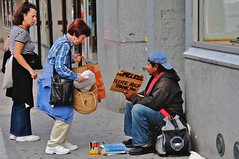 | 86 |
| 9954689307 | benign | gentle, kindly. |  | 87 |
| 9954689308 | Mollify | appease the anger or anxiety of (someone) |  | 88 |
| 9954689309 | reclamation | reclaiming; reformation, recovery. (or it can be land obtained from water) | 89 | |
| 9954689310 | Sanction | Approval or permission for an action |  | 90 |
| 9954689311 | Dubious | Not to be relied upon; suspect (hesitating or doubting) |  | 91 |
| 9954689312 | Fabricated | invent or concoct (something), typically with deceitful intent | 92 | |
| 9954689313 | Hypocrisy | the practice of claiming to have moral standards or beliefs to which one's own behavior does not conform; pretense |  | 93 |
| 9954689314 | Slander | make false and damaging statements about (someone). |  | 94 |
| 9954689315 | spurious | not being what it purports to be; false or fake |  | 95 |
| 9954689316 | Astute | having or showing an ability to accurately assess situations or people and turn this to one's advantage |  | 96 |
| 9954689317 | clandestine | operation is an intelligence or millitary operation carried out in such a way that the operation goes unnoticed by the general population |  | 97 |
| 9954689318 | disingenuous | not candid or sincere, typically by pretending that one knows less about something than one really does. |  | 98 |
| 9954689319 | ruse | an action intended to deceive someone; a trick |  | 99 |
| 9954689320 | stratagem | a plan or scheme, especially one used to outwit an opponent or achieve an end |  | 100 |
| 9954689321 | surreptitious | kept secret, especially because it would not be approved of. |  | 101 |
| 9954689322 | wary | feeling or showing caution about possible dangers or problems |  | 102 |
| 9954689323 | wily | skilled at gaining an advantage, especially deceitfully. |  | 103 |
| 9954689324 | inconsequential | not important or significant |  | 104 |
| 9954689325 | superficial | existing or occurring at or on the surface. (appearing to be true or real only until examined more closely). | 105 | |
| 9954689326 | tenuous | very weak or slight >( small in degree). |  | 106 |
| 9954689327 | trivial | of little value or importance |  | 107 |
| 9954689328 | coup | a sudden, violent, and illegal seizure of power from a government. |  | 108 |
| 9954689329 | Ambiguous | (of language) open to more than one interpretation; having a double meaning. |  | 109 |
| 9954689330 | ambivalent | having mixed feelings or contradictory ideas about something or someone. |  | 110 |
| 9954689331 | apathetic | showing or feeling no interest, enthusiasm, or concern. |  | 111 |
| 9954689332 | Arbitrary | based on random choice or personal whim, rather than any reason or system. | 112 | |
| 9954689333 | capricious | given to sudden and unaccountable changes of mood or behavior | | 113 |
| 9954689334 | equivocate | use ambiguous language so as to conceal the truth or avoid committing oneself. |  | 114 |
| 9954689335 | indifferent | having no particular interest or sympathy; unconcerned. | | 115 |
| 9954689336 | whimsical | playfully quaint or fanciful, especially in an appealing and amusing way |  | 116 |
| 9954689337 | assiduous | showing great care and perseverance |  | 117 |
| 9954689338 | compelling | evoking interest, attention, or admiration in a powerfully irresistible way |  | 118 |
| 9954689339 | diligent | having or showing care and conscientiousness in one's work or duties |  | 119 |
| 9954689340 | dogged | having or showing tenacity and grim persistence. |  | 120 |
| 9954689341 | endure | suffer (something painful or difficult) patiently |  | 121 |
| 9954689342 | intrepid | fearless; adventurous (often used for rhetorical or humorous effect) |  | 122 |
| 9954689343 | maverick | an unorthodox or independent-minded person |  | 123 |
| 9954689344 | obdurate | stubbornly refusing to change one's opinion or course of action |  | 124 |
| 9954689345 | obstinate | stubbornly refusing to change one's opinion or chosen course of action, despite attempts to persuade one to do so |  | 125 |
| 9954689346 | proliferate | increase rapidly in numbers; multiply |  | 126 |
| 9954689347 | tenacity | the quality or fact of being able to grip something firmly; grip. |  | 127 |
| 9954689348 | vitality | the state of being strong and active; energy | 128 | |
| 9954689349 | assimilation | the process by which a person or a group's language and/or culture come to resemble those of another group |  | 129 |
| 9954689350 | consensus | general agreement. |  | 130 |
| 9954689351 | context | the set of facts or circumstances that surround a situation. | 131 | |
| 9954689352 | derived | obtain something from (a specified source) | 132 | |
| 9954689353 | incumbent | necessary for (someone) as a duty or responsibility. |  | 133 |
| 9954689354 | inevitable | certain to happen; unavoidable |  | 134 |
| 9954689355 | malleable | easily influenced; pliable |  | 135 |
| 9954689356 | subdue | overcome, quieten, or bring under control (a feeling or person) |  | 136 |
| 9954689357 | Inoculate | medical : to give (a person or animal) a weakened form of a disease in order to prevent infection by the disease | 137 | |
| 9954689358 | Lurid | : causing shock or disgust : involving sex or violence in a way that is meant to be shocking : shining or glowing with a bright and unpleasant color | 138 | |
| 9954689359 | Putrefying | to be slowly destroyed by natural processes : to rot and become putrid | 139 | |
| 9954689360 | Somnolent | 1 : of a kind likely to induce sleep 2 a : inclined to or heavy with sleep : drowsy | 140 | |
| 9954689361 | Dour | serious and unfriendly : silent and gloomy | 141 | |
| 9954689362 | Errant | serious and unfriendly : silent and gloomy | 142 | |
| 9954689363 | Bewildered | 1 : to cause to lose one's bearings 2 : to perplex or confuse especially by a complexity, variety, or multitude of objects or considerations | 143 | |
| 9954689364 | Astroturfed | —used for an artificial surface that resembles grass | 144 | |
| 9954689365 | Geriatric | An old person y | 145 | |
| 9954689366 | Tromped | 1 : tramp 1
2 : to step hard : stamp | 146 | |
| 9954689367 | Connoisseur | : a person who knows a lot about something (such as art, wine, food, etc.) : an expert in a particular subject | 147 | |
| 9954689368 | Attesting | to show, prove, or state that something is true or real | 148 | |
| 9954689369 | Soporific | : causing a person to become tired and ready to fall asleep | 149 |
Flashcards
Pages

Need Help?
We hope your visit has been a productive one. If you're having any problems, or would like to give some feedback, we'd love to hear from you.
For general help, questions, and suggestions, try our dedicated support forums.
If you need to contact the Course-Notes.Org web experience team, please use our contact form.
Need Notes?
While we strive to provide the most comprehensive notes for as many high school textbooks as possible, there are certainly going to be some that we miss. Drop us a note and let us know which textbooks you need. Be sure to include which edition of the textbook you are using! If we see enough demand, we'll do whatever we can to get those notes up on the site for you!
